

1. Search Result
Search Result
Results for "

cancerous

" in MedChemExpress (MCE) Product Catalog:

36

Inhibitors & Agonists

1

Screening Libraries

3

Peptides

7

Natural
Products

2

Recombinant Proteins

3

Click Chemistry

1

Oligonucleotides

Cat. No. Product Name Target Research Areas Chemical Structure
  • HY-100437
    HA15
    Maximum Cited Publications
    33 Publications Verification

    HSP Autophagy Apoptosis Cancer
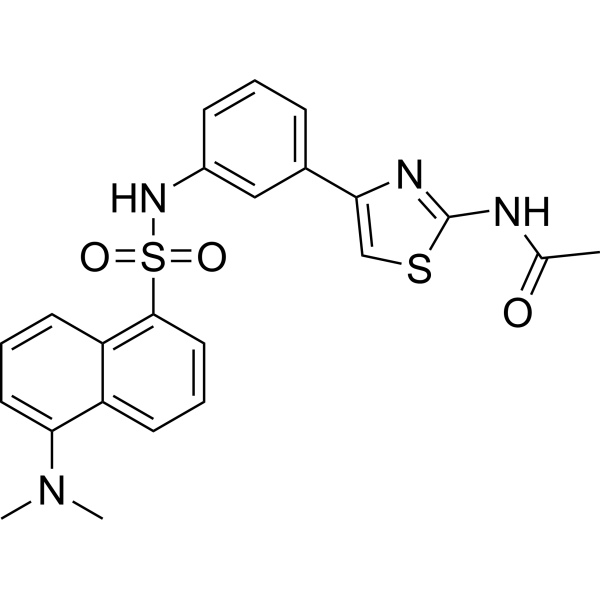
    HA15 is a potent and specific inhibitor of ER chaperone BiP/GRP78/HSPA5, inhibits the ATPase activity of BiP, with anti-cancerous activity .
    HA15
  • HY-N6258
    Kahweol
    1 Publications Verification

    AMPK Apoptosis Metabolic Disease Cancer
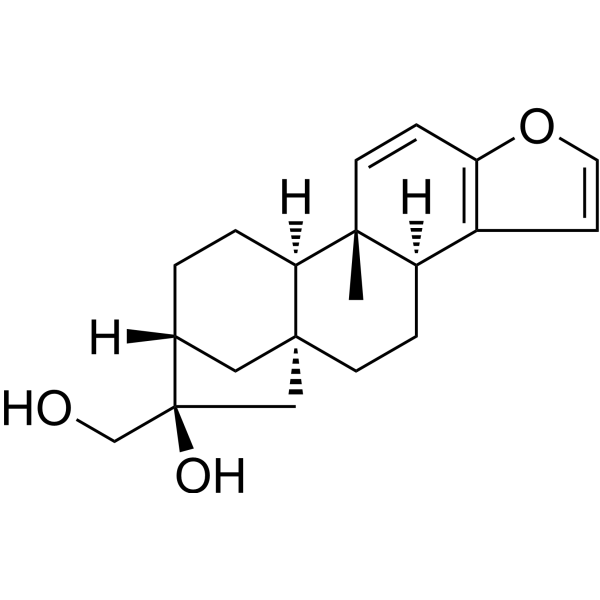
    Kahweol is one of the consituents of the coffee from Coffea Arabica with anti-inflammatory anti-angiogenic, and anti-cancerous activities. Kahweol inhibits adipogenesis and increase glucose uptake by AMP-activated protein kinase (AMPK) activation. Kahweol induces apoptosis.
    Kahweol
  • HY-P5589

    PlnA

    Bacterial Reactive Oxygen Species (ROS) Infection Inflammation/Immunology
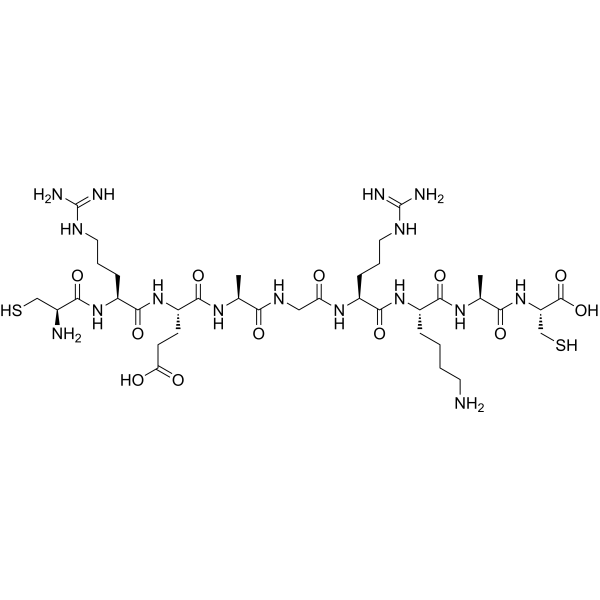
    Plantaricin A is an antimicrobial peptide that can be derived from Lactobacillus plantarum. Plantaricin A has a synergistic effect with Ciprofloxacin. Plantaricin A shows anti-microbial activity. Plantaricin A increases the membrane potential of S. aureus and the level of intracellular ROS. Plantaricin A inhibits the function of the efflux pump by binding it and altering the structure of MepA, NorA, and LmrS. Plantaricin A significantly relieves inflammation, and promotes wound healing. Plantaricin A permeabilizes cancerous rat pituitary cells [1][2].
    Plantaricin A
  • HY-N4317
    Ethoxysanguinarine
    1 Publications Verification

    Apoptosis Cancer
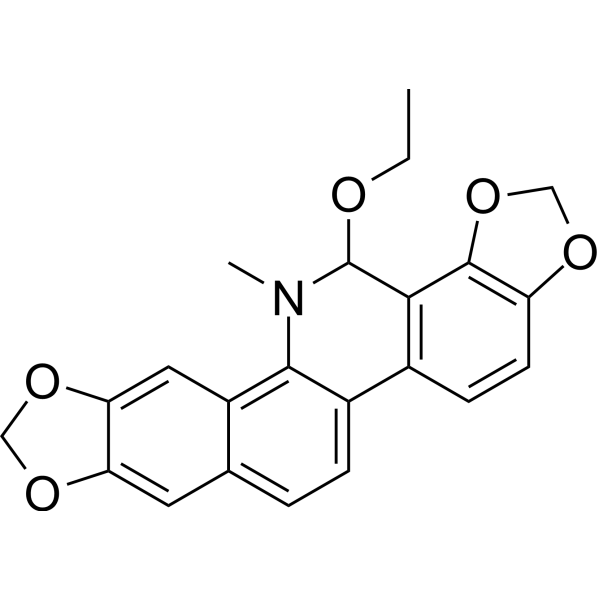
    Ethoxysanguinarine is a benzophenanthridine alkaloid natural product that is mainly found in Macleaya cordata. Ethoxysanguinarine is an inhibitor of protein phosphatase 2A (CIP2A). Ethoxysanguinarine induces cell apoptosis and inhibits colorectal cancer cells growth .
    Ethoxysanguinarine
  • HY-135699
    TD52
    2 Publications Verification

    Apoptosis Phosphatase Akt Cancer
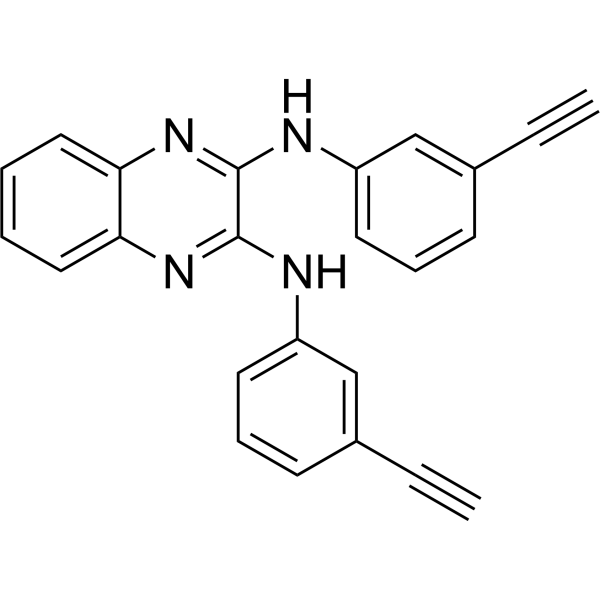
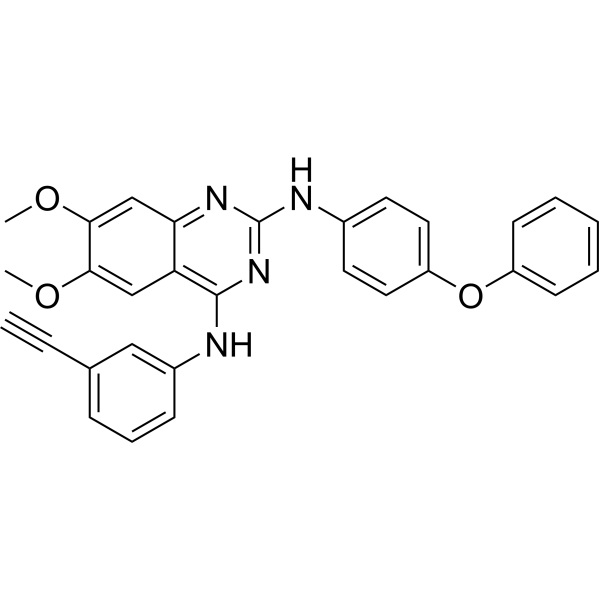
    TD52, an Erlotinib (HY-50896) derivative, is an orally active, potent cancerous inhibitor of protein phosphatase 2A (CIP2A) inhibitor. TD52 mediates the apoptotic effect in triple-negative breast cancer (TNBC) cells via regulating the CIP2A/PP2A/p-Akt signalling pathway. TD52 indirectly reduced CIP2A by disturbing Elk1 binding to the CIP2A promoter. TD52 has less p-EGFR inhibition and has potent anti-cancer activity . TD52 is a click chemistry reagent, it contains an Alkyne group and can undergo copper-catalyzed azide-alkyne cycloaddition (CuAAc) with molecules containing Azide groups.
    TD52
  • HY-135699A
    TD52 dihydrochloride
    2 Publications Verification

    Akt Phosphatase Apoptosis Cancer
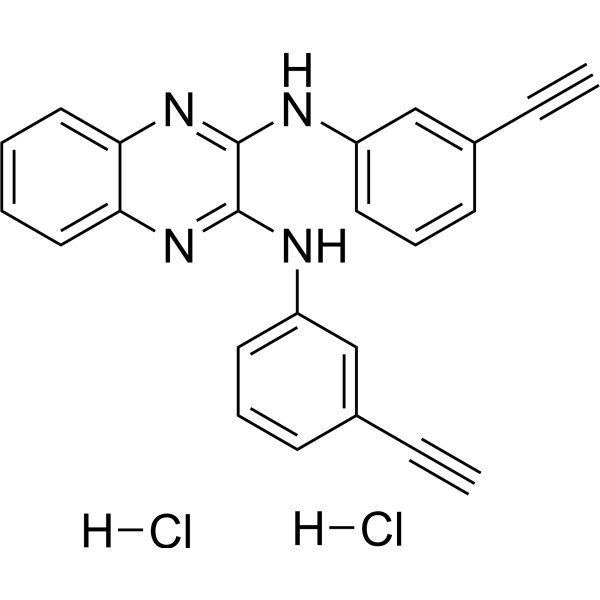
    TD52 dihydrochloride, an Erlotinib (HY-50896) derivative, is an orally active, potent cancerous inhibitor of protein phosphatase 2A (CIP2A) inhibitor. TD52 dihydrochloride mediates the apoptotic effect in triple-negative breast cancer (TNBC) cells via regulating the CIP2A/PP2A/p-Akt signalling pathway. TD52 dihydrochloride indirectly reduced CIP2A by disturbing Elk1 binding to the CIP2A promoter. TD52 dihydrochloride has less p-EGFR inhibition and has potent anti-cancer activity . TD52 (dihydrochloride) is a click chemistry reagent, it contains an Alkyne group and can undergo copper-catalyzed azide-alkyne cycloaddition (CuAAc) with molecules containing Azide groups.
    TD52 dihydrochloride
  • HY-139296

    Akt Cancer
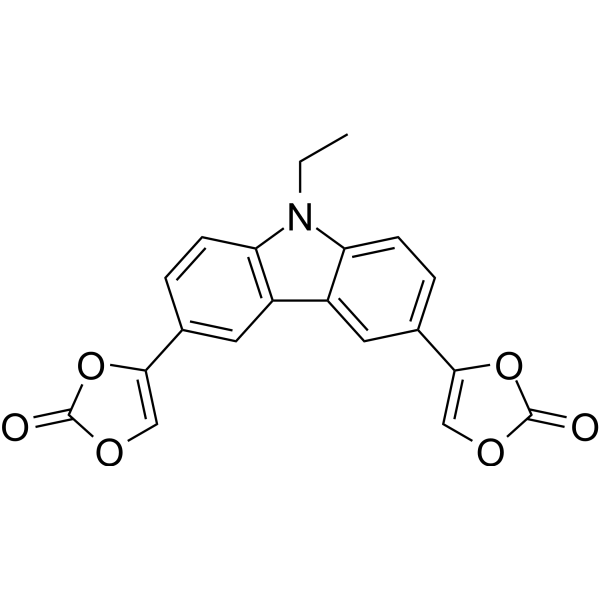
    PP2A Cancerous-IN-1 is a strong and potent CIP2A (Cancerous inhibitor of PP2A) and p-Akt inhibitor. PP2A Cancerous-IN-1 shows the most potent antiproliferative activities . PP2A Cancerous-IN-1 is a click chemistry reagent, it contains an Alkyne group and can undergo copper-catalyzed azide-alkyne cycloaddition (CuAAc) with molecules containing Azide groups.
    PP2A Cancerous-IN-1
  • HY-W437569

    Parasite Insecticide Infection Cancer
    Melicopine is an alkaloid found in Z. simulans with antimalarial and anticancer activities. It exhibits inhibitory activity against chloroquine-sensitive 3D7 and chloroquine-resistant Dd2 strains of P. falciparum, with IC50 values of 29.7 and 33.7 µg/mL, respectively. Melicopine is cytotoxic to prostate cancer cells PC-3M and LNCaP (IC50 values of 47.9 and 37.8 µg/mL), but has no effect on non-cancerous HEK293 cells (IC50 greater than 100 µg/mL). Melicopine holds promise for research in anticancer and anti-infection fields .
    Melicopine
  • HY-175261

    CDK Wee1 Checkpoint Kinase (Chk) Cancer
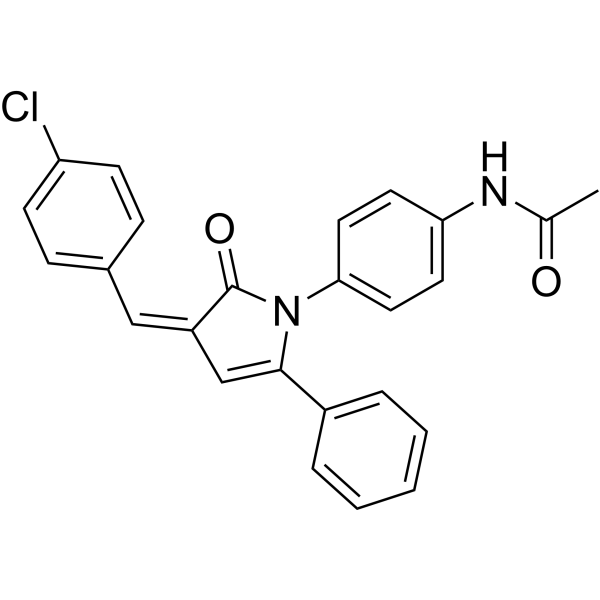
    DHI1 is an anti-leukemia agent with high selectivity for Jurkat (IC50 = 21.83 μM) and HL-60 (IC50 = 19.14 μM) leukemia cells and has low toxicity to non-cancerous cells. DHI1 can induce G2/M phase cell arrest in Jurkat and HL-60 leukemia cells, as well as S phase arrest in HL-60 cells, and has significant effects on cell cycle signaling molecules Wee1, cyclin B1, cdc2 on Tyr15, and Chk1. DHI1 inhibits the migration and invasion of Jurkat and HL-60 cells by disrupting cytoskeletal actin filaments. DHI1 can be used to study hematological malignancies .
    DHI1
  • HY-139062

    C6 Ceramide (d18:1/6:0) Urea; Cer(d18:1/6:0) Urea; D-erythro-Urea-C6-Ceramide

    Apoptosis Ceramidase Autophagy β-catenin Cancer
    C6 Urea Ceramide (Cer(d18:1/6:0) Urea) is an inhibitor of neutral ceramidase. C6 Urea Ceramide increases total ceramide levels in wild-type mouse embryonic fibroblasts (MEFs) and HT-29 colon cancer cells. C6 Urea Ceramide (5-10 μM) inhibits proliferation of HT-29 cells and induces apoptosis and autophagy, but is not toxic to non-cancerous cells. C6 Urea Ceramide decreases total and phosphorylated β-catenin levels in HT-29 and HCT116 cells, and induces colocalization of β-catenin with the 20S proteasome. C6 Urea Ceramide (1.25, 2.5, and 5 mg/kg) reduced tumor growth and increased C16, C18, C20, and C24 ceramide levels in tumor tissues in the HT-29 mouse xenograft model.
    C6 Urea Ceramide
  • HY-145379

    Parasite Endogenous Metabolite Infection
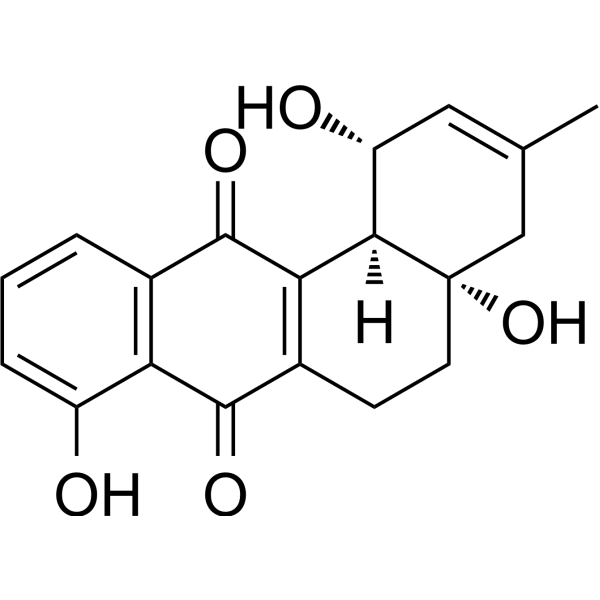
    Miaosporone A, an angucyclic quinone, exhibits antimalarial activity against Plasmodium falciparum K1 and antibacterial activity against Mycobacterium tuberculosis with respective IC50 values of 2.5 and 2.4 μM and displays cytotoxic activities against both cancerous (MCF-7 and NCI-H187) and nonmalignant (Vero) cells .
    Miaosporone A
  • HY-118081

    STAT Cancer
    inS3-54-A26 is a STAT3 inhibitor. inS3-54-A26 has a toxic IC50 of 4.0 μM for non-cancerous lung fibroblasts .
    inS3-54-A26
  • HY-155003

    Fluorescent Dye Cancer
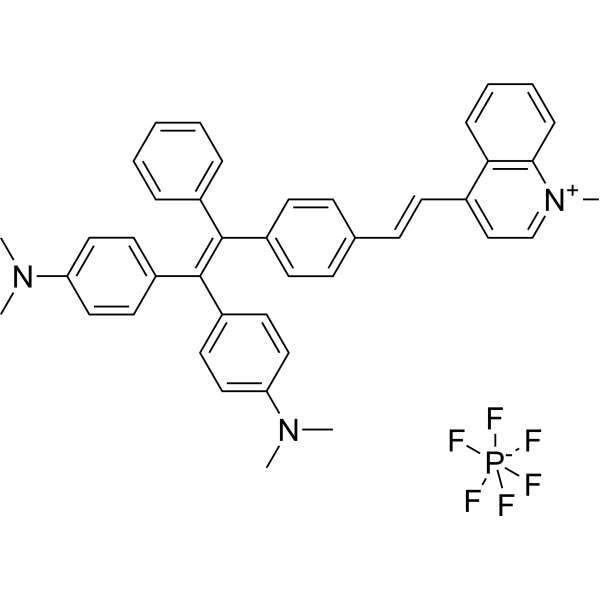
    TPEQM-DMA is a NIR-II photosensitizer. TPEQM-DMA accumulates in cancerous mitochondria, and inhibits cancer cell growth. TPEQM-DMA has potent type-I phototherapeutic efficacy to overcome the intrinsic pitfalls of PDT in combating hypoxic tumors .
    TPEQM-DMA
  • HY-142955

    Biochemical Assay Reagents Cancer
    Dual photoCORM 1 (compound 5) is metal-free, photochemically active dual CORM. Dual photoCORM 1 exhibits good cellular uptake and real-time monitoring ability of CO uncaging by a color change approach in cancerous B16F10 cells .
    Dual photoCORM 1
  • HY-161747

    Microtubule/Tubulin Cancer
    Tubulin inhibitor 46 (Compound 21) is a potent tubulin assembly inhibitor. Tubulin inhibitor 46 has antiproliferative activities, with GI50 values of 0.0095-33 μM for cancer and non-cancerous cells. Tubulin inhibitor 46 can be used for the reserch of cancer .
    Tubulin inhibitor 46
  • HY-160049

    Nucleoside Antimetabolite/Analog Biochemical Assay Reagents Cancer
    BC15 aptamer sodium is an ssDNA aptamer targeting the intracellular protein hnRNP A1, which is highly expressed in cancerous liver tissue. BC15 aptamer sodium specifically recognizes breast cancer cells and can be used to detect cancer cells in other pathological types of breast cancer tissue .
    BC15 aptamer sodium
  • HY-N6258R

    Reference Standards AMPK Apoptosis Metabolic Disease
    Kahweol (Standard) is the analytical standard of Kahweol. This product is intended for research and analytical applications. Kahweol is one of the consituents of the coffee from Coffea Arabica with anti-inflammatory anti-angiogenic, and anti-cancerous activities. Kahweol inhibits adipogenesis and increase glucose uptake by AMP-activated protein kinase (AMPK) activation. Kahweol induces apoptosis.
    Kahweol (Standard)
  • HY-146437

    Topoisomerase Cancer
    Topoisomerase I inhibitor 6 (Compound 3) is a potent inhibitor of Topoisomerase I. Topoisomerase I inhibitor 6 is able to trap DNA-Top1 cleavage complex and found to be less cytotoxic in non-cancerous cell line. Topoisomerase I inhibitor 6 has the potential for the research of cancer diseases .
    Topoisomerase I inhibitor 6
  • HY-P11173

    DNA Alkylator/Crosslinker Apoptosis Cancer
    Cr-ACP1 is an anti-cancerous peptide. Cr-ACP1 binds to DNA, inducing cell cycle arrest in the G0-G1 phase, leading to the initiation of Apoptosis mechanisms. Cr-ACP1 exhibits anticancer effects against colon cancer and epidermoid carcinoma .
    Cr-ACP1
  • HY-161353

    P-glycoprotein c-Met/HGFR Cancer
    c-Met-IN-23 (Compound 12g) is a c-Met inhibitor (IC50 = 0.052 μM for c-Met). c-Met-IN-23 also inhibits MDR1 and MRP1/2 pumps in the cancerous HepG2 and BxPC3 cells. c-Met-IN-23 is an anticancer agent .
    c-Met-IN-23
  • HY-159515

    Apoptosis DNA/RNA Synthesis Reactive Oxygen Species (ROS) Cancer
    PBE-AMF is a prodrug that activates H2O2 with anticancer activity. PBE-AMF impedes tumor proliferation by inhibiting DNA synthesis, reducing ATP levels, inducing apoptosis, and arresting the cell cycle. PBE-AMF potently and selectively inhibits the proliferation of MDA-MB-231 cells (IC50=6.4 μM) while sparing non-cancerous MCF-10A cells .
    PBE-AMF
  • HY-N9475

    Parasite Infection Inflammation/Immunology Cancer
    Betulonaldehyde is a pentacyclic triterpenoid that can be isolated from Diospyros filipendula. Betulonaldehyde has antiplasmodial activity (IC50: 3.36 µg/mL). Betulonaldehyde has cytotoxic to NCI H187 lung cancer cells and non-cancerous Vero cells (IC50s: 19.23 and 17.09 µg/mL, respectively). Betulonaldehyde inhibits Phorbol 12-myristate 13-acetate (HY-18739) induced inflammation in mice .
    Betulonaldehyde
  • HY-159560

    Apoptosis DNA/RNA Synthesis Cancer
    PBA-AMF can be activated by H2O2 to release Amonafide (AMF) (HY-10982). PBA-AMF selectively inhibited the proliferation of breast cancer cells, while sparing non-cancerous cells. PBA-AMF inhibits tumor proliferation by inhibiting DNA synthesis, reducing ATP levels, inducing apoptosis, and arresting the cell cycle. PBA-AMF can be used for research of tumors and other diseases associated with increased H2O2 levels .
    PBA-AMF
  • HY-177482

    Drug Intermediate Neurological Disease Cancer
    Pro-PTX is a Pd-sensitive Paclitaxel (HY-B0015) prodrug with anticancer activity. Pro-PTX triggers intramolecular cyclization via Pd-catalyzed depropargylation to release active Paclitaxel (HY-B0015) and a non-toxic byproduct. Pro-PTX exhibits low cytotoxicity and antiproliferative activity in cancer cells and non-cancerous human cerebrovascular pericytes. Pro-PTX is applicable for research related to non-small cell lung cancer, glioblastoma and lung cancer .
    Pro-PTX
  • HY-175779

    Phosphodiesterase (PDE) Cancer
    TDP1-IN-4 (Compound 33) is a Tyrosyl-DNA phosphodiesterase 1 (TDP1) inhibitor with an IC50 of 0.90  μM. TDP1-IN-4 has a strong synergistic effect with Camptothecin (HY-16560) in SK-Mel-2 cells, but not in cancer cells (A549, HCT-116 and MCF-7 cells) and non-cancerous Ges-1 cells. TDP1-IN-4 can be used for cancer chemotherapy and radiotherapy research .
    TDP1-IN-4
  • HY-111970

    IKK Inflammation/Immunology Cancer
    SAR113945 (compound 1) is a highly potent IKK-β inhibitor with an IC50 of 0.4 nM. SAR113945 is used for research on inflammatory and cancerous diseases .
    SAR113945
  • HY-100437R

    HSP Reference Standards Autophagy Apoptosis Cancer
    HA15 (Standard) is the analytical standard of HA15 (HY-100437). This product is intended for research and analytical applications. HA15 is a potent and specific inhibitor of ER chaperone BiP/GRP78/HSPA5, inhibits the ATPase activity of BiP, with anti-cancerous activity .
    HA15 (Standard)
  • HY-N18168

    Others Cancer
    Esculentoside L is a triterpene saponin present in the roots of Phytolacca americana. Esculentoside L increases the intracellular accumulation of calcein in multidrug-resistant human ovarian cancer cells. Esculentoside L exerts no significant cytotoxic activity against non-cancerous cells and hepatocytes. Esculentoside L can be used in studies related to multidrug-resistant human ovarian cancer .
    Esculentoside L
  • HY-186145

    Ferroptosis Drug Derivative Cancer
    WMK-1 is a 1,2,4,5-tetraoxane derivative and ferroptosis inducer, with significantly higher cytotoxicity against cancer cells than non-cancerous cells. WMK-1 triggers ferroptosis in cancer cells and cancer stem cells. WMK-1 can be used for the research of cancer .
    WMK-1
  • HY-178822

    Drug Derivative Cancer
    AQ-13 (Compound 7) is a Chloroquine (HY-17589A) analogue with anti-breast cancer property. AQ-13 shows antiproliferative activities against MDA-MB231 and MCF7 with GI50 of 27.81 and 17.85 μM. AQ-13 shows low cytotoxicity against non-cancerous breast epithelial cells MCF10A (GI50 = 65.26 μM). AQ-13 can be used for the research of breast cancer .
    AQ-13
  • HY-182073

    EGFR Apoptosis Cancer
    EGFR-IN-207 (Compound 5h) is an epidermal growth factor receptor (EGFR) kinase inhibitor with an IC50 of 0.21 μM. EGFR-IN-207 induces cell cycle arrest at the Sub-G1 phase and promotes Apoptosis. EGFR-IN-207 exhibits anticancer activity against lung cancer. EGFR-IN-207 shows extremely low toxicity in non-cancerous cell lines. EGFR-IN-207 can be used in lung cancer-related research .
    EGFR-IN-207
  • HY-183258

    TGF-β Receptor Neurological Disease Cancer
    TGFβ1-IN-5 is a TGF-β1 inhibitor with blood-brain barrier permeability. TGFβ1-IN-5 reduces extracellular TGF-β1 levels in glioblastoma cells. TGFβ1-IN-5 exerts antiproliferative, antimigratory and clonogenic inhibitory effects in glioblastoma cells while maintaining the viability of non-cancerous cells. TGFβ1-IN-5 can be used for the research of glioblastoma .
    TGFβ1-IN-5
  • HY-181100

    Dihydrofolate reductase (DHFR) Bacterial Infection
    DHFR-IN-26 is an Escherichia coli dihydrofolate reductase (ecDHFR) inhibitor with an IC50 of 0.75 nM. DHFR-IN-26 exerts broad-spectrum antibacterial activity. DHFR-IN-26 disrupts folate metabolism, nucleotide synthesis, and bacterial amino acid metabolic pathways. DHFR-IN-26 disrupts bacterial inner membranes, inhibited biofilm formation, and attenuated phage-related processes. DHFR-IN-26 shows lower toxicity to non-cancerous cells. DHFR-IN-26 can be used for the research of bacterial infections (including infections caused by methicillin-resistant Staphylococcus aureus, multidrug-resistant Escherichia coli, multidrug-resistant Pseudomonas aeruginosa, and lysogenic bacteria) .
    DHFR-IN-26
  • HY-181075

    Bacterial Reactive Oxygen Species (ROS) Infection
    Antibacterial agent 318 is an antibacterial agent that binds to bacterial DNA, blocks its replication, and forms supramolecular complexes. Antibacterial agent 318 acts as an oxidative stress inducer, elevating intracellular reactive oxygen species (ROS) levels, oxidizing glutathione (GSH) to glutathione disulfide (GSSG), depleting cellular GSH reserves, and inducing bacterial cell death through oxidative damage. Antibacterial agent 318 disrupts the bacterial cell membrane and reduces bacterial metabolic activity. Antibacterial agent 318 exhibits rapid bactericidal activity, inhibits bacterial biofilm formation, and displays minimal cytotoxicity toward non-cancerous mammalian cells. Antibacterial agent 318 is applicable in research on drug-resistant bacterial infections .
    Antibacterial agent 318
  • HY-182349

    Bcl-2 Family Cancer
    Bax activator-2 (compound 27c) is a pro-apoptotic agent targeting BAX, with an IC50 of 0.30 μmol/L against human BAX. Bax activator-2 binds to the trigger site of BAX and induces its conformational change. Bax activator-2 induces mitochondrial depolarization, cytochrome c release, caspase-3/9 cleavage and PARP cleavage, thereby initiating apoptosis. Bax activator-2 exhibits cytotoxicity against various cancer cell lines, shows reduced cytotoxicity in BAX-knockout A549 cells, and has low cytotoxicity against non-cancerous cell lines. Bax activator-2 can be used in studies related to acute myeloid leukemia and solid tumors .
    Bax activator-2
  • HY-179535

    TAM Receptor Discoidin Domain Receptor TGF-β Receptor Hedgehog Cancer
    Axl-IN-21 is an orally active and selective AXL inhibitor (Kd = 2.7 nM, IC50 = 4.0 nM). Axl-IN-21 displays kinase selectivity and retains strong activity against cancer-related mul-kinases (Mer with Kd = 1.4 nM, DDR1 with IC50 = 22.2 nM, HIPK4 with Kd = 11.0 nM and LOK with Kd =10 nM). Axl-IN-21 overcomes tumor microenvironment-driven resistance by blocking CAF-derived GAS6-induced AXL/STAT3/ABCG1 signaling, restoring chemosensitivity and inhibiting drug efflux in gastric cancer (GC). Axl-IN-21 suppresses TGF-β1-induced epithelial-mesenchymal transition (EMT), migration, and invasion in MDA-MB-231 cells. Axl-IN-21 exhibits no significant cytotoxicity in non-cancerous cells. Axl-IN-21 can be research for triple negative breast cancer and gastric cancer [1] [2] .
    Axl-IN-21

Inquiry Online

Your information is safe with us. * Required Fields.

Salutation


Country or Region *

Applicant Name *


Organization Name *

Department *


Email Address *


Product Name *

Cat. No.


Requested quantity *

Phone Number *


Remarks

Inquiry Online

Inquiry Information

Product Name:
Cat. No.:
Quantity:
MCE Japan Authorized Agent:

