



Akt
PKB; Protein kinase B
Akt/PKB (Protein kinase B), a serine/threonine protein kinase with antiapoptotic activity, is one of the major downstream targets of PtdIns(3,4,5)P3 signaling pathway. It contains a pleckstrin homology domain (PH domain) that specifically binds PtdIns(3,4,5)P3 on the plasma membrane. Akt phosphorylation and activation are directly determined by the level of PtdIns(3,4,5)P3 on the plasma membrane, which is regulated by PI3K.
Akt consists of three isoforms: PKBα/Akt1, PKBβ/Akt2 and PKBγ/Akt3. Akt isoforms have an N-terminal PH (pleckstrin homology) domain and a kinase domain, which are separated by a 39-amino-acid hinge region. Catalytically active Akt regulates the function of numerous substrates involved in cell survival, growth, proliferation, metabolism and protein synthesis.
Akt is a crucial mediator of cell survival and its deactivation is implicated in various stress-induced pathological cell death and degenerative diseases.
Akt Isoform Specific Products
All Product Categories
-
Akt Inhibitors
(959)
View all products
-
Akt Agonists
(7)
View all products
-
Akt Activators
(283)
View all products
-
Akt Modulators
(23)
View all products
-
Akt Chemical
(1)
View all products
-
Akt Inducers
(9)
View all products
-
Akt Degraders
(9)
View all products
-
Akt Control
(1)
View all products
-
Akt Ligands
(6)
View all products
-
AKT Serine/Threonine Kinase 2 (AKT2) Proteins
(5)
View all products
-
AKT Serine/Threonine Kinase 3 (AKT3) Proteins
(6)
View all products
-
Akt Related Products (1407)
Related Products (1407)

-
Recombinant Proteins (11)
-
Antibodies (11)
-
Akt Isoform Comparison
-
Apoptosis inducer 55
 0 ImagesCat. No.: HY-180226Apoptosis inducer 55 (Compound 10) is an Apoptosis inducer. Apoptosis inducer 55 induces rapid apoptosis via the intrinsic pathway. Apoptosis inducer 55 potently inhibits several signaling cascades including AKT, ERK1/2, STAT1, STAT3, and S6K. Apoptosis inducer 55 has anti-cancer activity against melanoma.
-
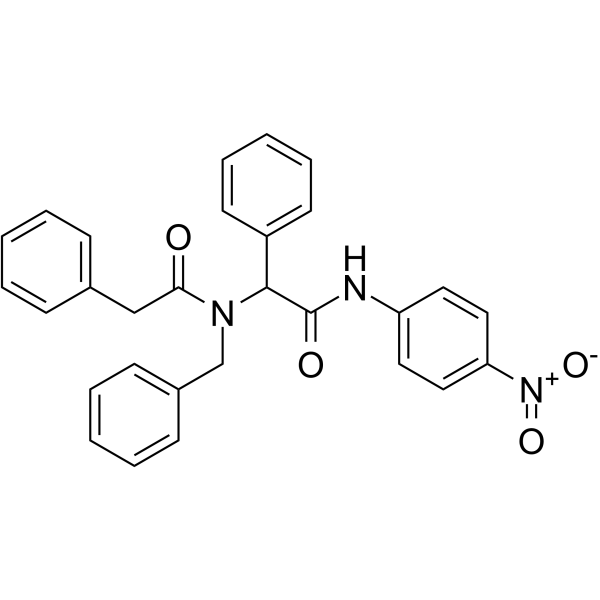
EGFR-IN-214
 0 ImagesCat. No.: HY-184311CAS No.: 3077316-17-4EGFR-IN-214 is an orally active EGFR inhibitor with an EC50 of 3.353 μM. EGFR-IN-214 blocks the downstream PI3K/Akt signaling pathway, induces intracellular ROS accumulation and Caspase-dependent apoptosis. EGFR-IN-214 exhibits antiproliferative activity in cancer cells and inhibits tumor growth in xenograft models. EGFR-IN-214 can be used in studies related to hepatocellular carcinoma.
-
20-5,14-HEDE-d2
 0 ImagesCat. No.: HY-160099SSynonyms: WIT003-d220-5,14-HEDE-d2 (WIT003-d2) is the deuterated-labeled 20-5,14-HEDE (HY-160099). 20-5,14-HEDE (WIT003) is an analog of 20-HETE. 20-5,14-HEDE activates PI3K/Akt signaling pathway, thereby exhibiting anti-apoptotic and cell survival promoting effects. 20-5,14-HEDE is the agonist for 20-HETE that increases intracellular Ca2+ concentrations, thereby enhancing vasoconstriction.
-
AKT1-IN-11
 0 ImagesCat. No.: HY-179516CAS No.: 3087064-94-3AKT1-IN-11, a Podophyllotoxin (HY-15552) derivative, is a AKT1/tubulin dual inhibitor. AKT1-IN-11 down-regulates the phosphorylation level of AKT kinase in tumor cells, disrupting cell proliferation, causeing G2/M phase arrest and inducing apoptosis. AKT1-IN-11 also promotes tubulin depolymerization. AKT1-IN-11 can be used for the research of colorectal cancer.
-
Anticancer agent 189
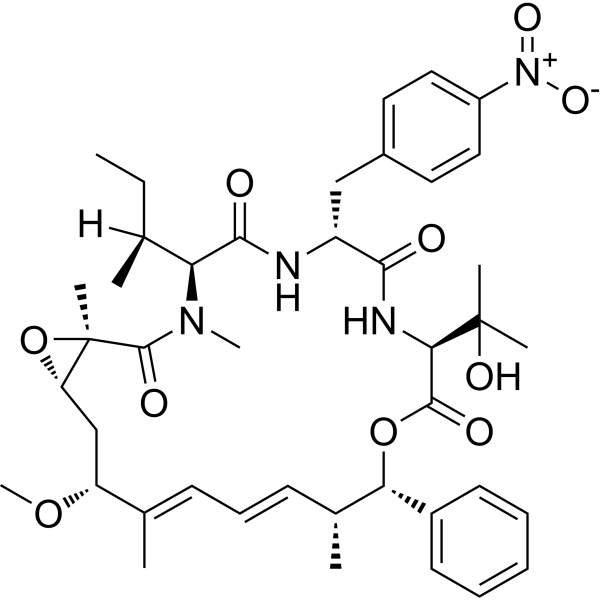 0 ImagesCat. No.: HY-162285Anticancer agent 189 (compound 4) is an anticancer agent that antagonizes CRC effects by targeting AKT1.
-
Toyaburgine
 0 ImagesCat. No.: HY-172259Toyaburgine is a unique isoquinoline compound that exhibits anti-tumor activity. It packs a punch by disrupting the PI3K/AKT/mTOR signaling pathway, causing significant morphological changes and cell death in MIA PaCa-2 cells. On top of that, it puts the brakes on cell migration and colony formation. This compound is showing a lot of promise in the realm of pancreatic cancer research.
-
Leupeptin Ac-LL
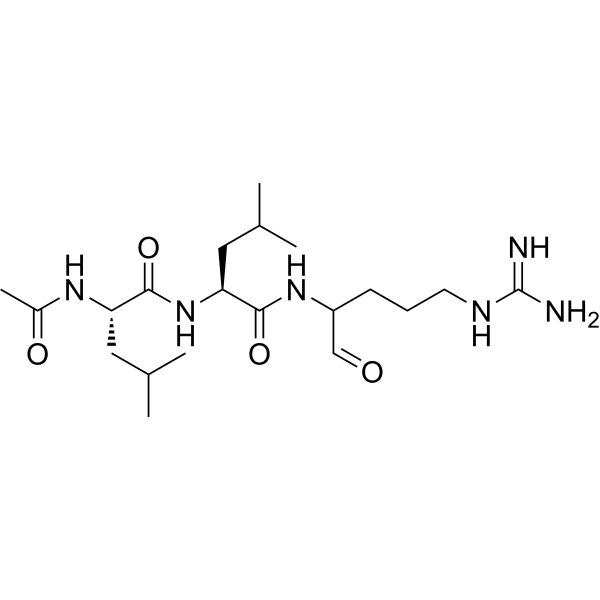 0 ImagesCat. No.: HY-18234BCAS No.: 24365-47-7Leupeptin Ac-LL is a broad-spectrum protease inhibitor. Leupeptin Ac-LL inhibits serine, cysteine and threonine proteases, and regulates autophagy. Leupeptin Ac-LL reduces the expression levels of LC3B, iNOS, Cox-2, Beclin-1 and the level of endopeptidases; increases the levels of p62, Arg 1, Msr 1 and Mrc−1; and blocks the upregulation of p-PTEN, p-NF-κB, p-PI3K, p-Akt, p-p38 and ERK1/2. Leupeptin Ac-LL inhibits NO, ROS, proinflammatory cytokines, the IFN-γ/IL-10 ratio, phagolysosome fusion, mammalian lysosomal hydrolase activity and SARS-CoV-2 replication; and reverses impaired autophagic flux. Leupeptin Ac-LL is applicable to research related to chronic inflammatory diseases, edema, skin tumorigenesis, COVID-19 and respiratory infections.
-
FGFR-IN-24
 0 ImagesCat. No.: HY-181031FGFR-IN-24 (Compound 8r) is a FGFR inhibitor. FGFR-IN-24 potently inhibits FGFR1/2/3 with IC50 values of 10.0, 6.9, and 30.2 nM, respectively. FGFR-IN-24 exhibits superior inhibitory activity toward FGFR1V561M, FGFR2V564F, and FGFR2N549K mutations with IC50 values of 6.8, 0.7, and 0.8 nM, respectively. FGFR-IN-24 induces Apoptosis. FGFR-IN-24 efficiently suppresses the phosphorylation of FGFR2 and its downstream signaling mediators (AKT and MAPK). FGFR-IN-24 demonstrates favorable antitumor efficacy in an RT112/84 bladder cancer xenograft model.
-
PLAGL2-IN-1
 0 ImagesCat. No.: HY-180281CAS No.: 3099026-16-8PLAGL2-IN-1 is a inhibitor of pleiomorphic adenoma-like protein 2 (PLAGL2) with a Kd of 2.23 µM. PLAGL2-IN-1 suppresses PLAGL2 transcriptional activity, induces G0/G1 cell cycle arrest, and apoptosis, thereby inhibiting hepatocellular carcinoma (HCC) cell proliferation. PLAGL2-IN-1 disrupts extracellular matrix organization and suppresses the PI3K-AKT pathway by reducing AKT phosphorylation. PLAGL2-IN-1 inhibits tumor growth in an HCCLM3 xenograft mouse model. PLAGL2-IN-1 can be used for the research of HCC.
-
Desethylamiodarone-d4 hydrochloride
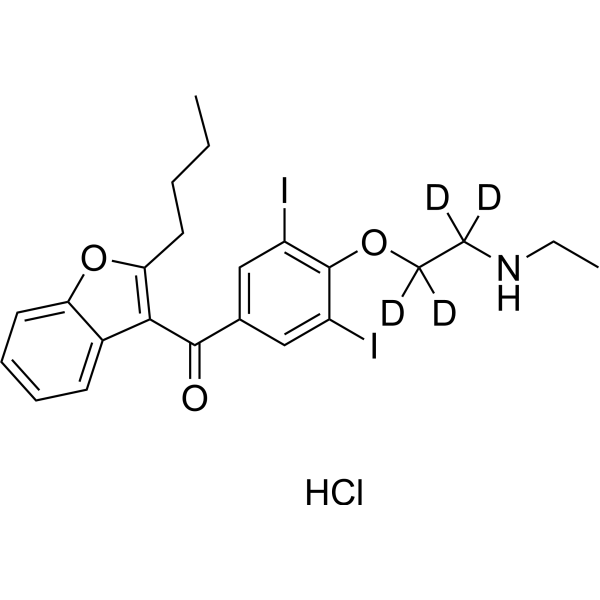 0 ImagesCat. No.: HY-130353SCAS No.: 1189960-80-2Synonyms: N-Desethylamiodarone-d4 hydrochloride; LB 33020-d4 hydrochlorideDesethylamiodarone-d4 hydrochloride (N-Desethylamiodarone-d4 hydrochloride; LB 33020-d4 hydrochloride) is the deuterated-labeled Desethylamiodarone hydrochloride (HY-130353). Desethylamiodarone hydrochloride (N-Desethylamiodarone hydrochloride; LB 33020 hydrochloride) is the major active metabolite of Amiodarone (HY-14187) generated via CYP3A4 metabolism. Desethylamiodarone hydrochloride downregulates p‑Akt, p‑Bad and Bcl‑2, upregulates Bax, promotes mitochondrial release of cytochrome c, activates caspase‑3 and cleaves PARP‑1, thereby inducing cell cycle arrest and apoptosis. Desethylamiodarone hydrochloride can be used in cervical cancer-related research.
-
1-Monopalmitin (Standard)
 0 ImagesSynonyms: Glyceryl palmitate (Standard)1-Monopalmitin (Glyceryl palmitate) (Standard) is the analytical standard of 1-Monopalmitin (HY-W009141). This product is intended for research and analytical applications. 1-Monopalmitin (Glyceryl palmitate) is an activator of the PI3K/Akt pathway and an inhibitor of P-glycoprotein (P-gp). 1-Monopalmitin can induce G2/M arrest and caspase-dependent apoptosis in cancer cells, while inhibiting IAPs protein expression. 1-Monopalmitin can increase drug accumulation by inhibiting P-gp activity in intestinal Caco-2 cells. 1-Monopalmitin has the ability to induce protective autophagy and apoptosis of lung cancer cells (IC50=50-58 μg/mL), with low toxicity to normal cells.
-
AKT-IN-21
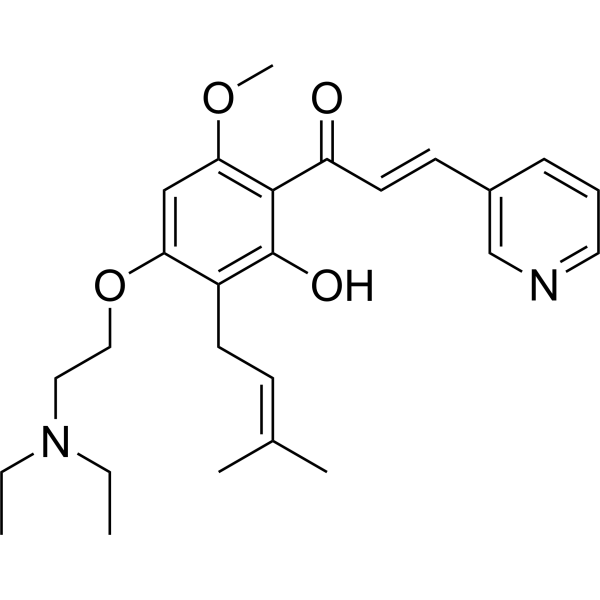 0 ImagesCat. No.: HY-161144AKT-IN-21 (compound C36) is a potent AKT inhibitor with broad-spectrum cytotoxicity and anticancer activity. AKT-IN-21 also blocks the cell cycle and induces apoptosis of cancer cells by down-regulating the PI3K/AKT pathway.
-
Polyphyllin I (Standard)
 0 ImagesCat. No.: HY-N0047RCAS No.: 50773-41-6Polyphyllin I (Standard) is the analytical standard of Polyphyllin I. This product is intended for research and analytical applications. Polyphyllin I is a bioactive constituent extracted from Paris polyphylla, has strong anti-tumor activity. Polyphyllin I is an activator of the JNK signaling pathway and is an inhibitor of PDK1/Akt/mTOR signaling. Polyphyllin I induces autophagy, G2/M phase arrest and apoptosis.
-
1-Monopalmitin-d31
 0 ImagesCat. No.: HY-W009141SSynonyms: Glyceryl palmitate-d311-Monopalmitin-d31 (Glyceryl palmitate-d31) is the deuterium labeled 1-Monopalmitin (HY-W009141). 1-Monopalmitin (Glyceryl palmitate) is an activator of the PI3K/Akt pathway and an inhibitor of P-glycoprotein (P-gp). 1-Monopalmitin can induce G2/M arrest and caspase-dependent apoptosis in cancer cells, while inhibiting IAPs protein expression. 1-Monopalmitin can increase drug accumulation by inhibiting P-gp activity in intestinal Caco-2 cells. 1-Monopalmitin has the ability to induce protective autophagy and apoptosis of lung cancer cells (IC50=50-58 μg/mL), with low toxicity to normal cells.

-
α-D-Manp(3→1)-α-D-Manp(2→1)-α-D-Glu
 0 ImagesCat. No.: HY-181015α-D-Manp(3→1)-α-D-Manp(2→1)-α-D-Glu (Compound C) is an oligosaccharide. α-D-Manp(3→1)-α-D-Manp(2→1)-α-D-Glu activates the PI3K/AKT signaling pathway. α-D-Manp(3→1)-α-D-Manp(2→1)-α-D-Glu significantly inhibits Apoptosis by regulating the Bcl-2/BAX ratio. α-D-Manp(3→1)-α-D-Manp(2→1)-α-D-Glu shows cytoprotective activity by reducing ROS and LDH levels, decreasing MDA activity, and increasing CAT, SOD, and GSH activities. α-D-Manp(3→1)-α-D-Manp(2→1)-α-D-Glu shows neuroprotective effects and antioxidant capacity.
-
6'-BPANeuGc
 0 ImagesCat. No.: HY-185659CAS No.: 1596134-78-96'-BPANeuGc is a CD22-targeting ligand. 6'-BPANeuGc suppresses BCR activation, recruits CD22 to B cell immunological synapses, initiates inhibitory signals, induces B cell apoptosis. 6'-BPANeuGc inhibits calcium flux, and inhibits Akt and Erk activation. 6'-BPANeuGc can be used for research on immune system diseases.
-
Arteanoflavone
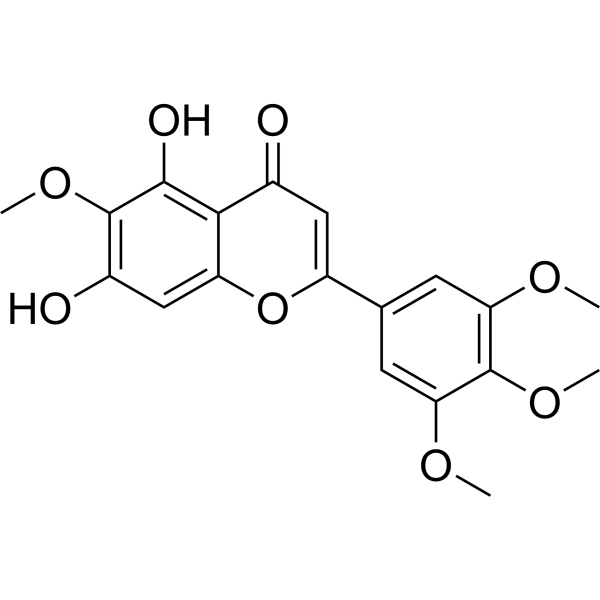 0 ImagesCat. No.: HY-133804CAS No.: 68710-17-8Arteanoflavone, a natural compound that can be isolated from A. iwayomogi, possess inhibitory activities on AGEs formation.
-
PI3Kα-IN-30
 0 ImagesCat. No.: HY-182368PI3Kα-IN-30 is an orally active, selective PI3Kα inhibitor with an IC50 of 2.8 nM. PI3Kα-IN-30 inhibits cancer cell proliferation, as well as the phosphorylation of Akt (S473) and pS6 (S240/244). PI3Kα-IN-30 shows low growth inhibitory activity against normal somatic cell lines at a concentration of 30 μM. PI3Kα-IN-30 induces cancer cell apoptosis and exerts anti-tumor efficacy in xenograft models. PI3Kα-IN-30 can be used for the research of breast cancer.




