



HDAC2
HDAC2 (histone deacetylase 2) is a class I histone deacetylase that removes acetyl groups from histone lysine residues and functions within multiprotein transcriptional repressor complexes to regulate gene expression, cell-cycle progression, and developmental processes[1][2]. Mechanistically, HDAC2 promotes chromatin condensation and transcriptional repression through histone deacetylation, thereby influencing cellular homeostasis and epigenetic regulation of gene activity[3][4]. Because histone acetylation and deacetylation dynamically control chromatin accessibility, HDAC2 participates in biological pathways linked to cell growth, cell death, and signal transduction[2][3]. In disease contexts, altered HDAC2 expression has been associated with multiple pathological conditions, particularly cancer and neurodegenerative disorders, where dysregulated epigenetic control contributes to disease progression[2]. Therefore, HDAC2 has emerged as an important experimental target for investigating epigenetic mechanisms underlying tumor biology and neurological dysfunction[2]. Compared with closely related class I isoforms, especially HDAC1, HDAC2 exhibits both overlapping and unique biological functions, with evidence supporting distinct as well as redundant roles in the regulation of proliferation and tumorigenesis[5]. This distinction has increased interest in isoform-selective approaches that can dissect HDAC2-specific functions while minimizing the limitations associated with broad-spectrum HDAC inhibition[2]. For experimental applications, selective HDAC2 inhibitors are widely investigated as chemical tools for studying transcriptional regulation and disease-associated epigenetic networks, and isoform-selective inhibition is considered advantageous because it may provide improved specificity and reduced adverse effects relative to pan-HDAC inhibitors[2].
References:
- [1]. HDAC2 gene information from NCBI.
- [2]. Marinović M, et al. Further investigation of harmicines as novel antiplasmodial agents: Synthesis, structure-activity relationship and insight into the mechanism of action. Eur J Med Chem. 2021 Nov 15;224:113687. [Content Brief]
- [3]. Park SY, et al. A short guide to histone deacetylases including recent progress on class II enzymes. Exp Mol Med. 2020 Feb;52(2):204-212. [Content Brief]
- [4]. Milazzo G, et al. Histone Deacetylases (HDACs): Evolution, Specificity, Role in Transcriptional Complexes, and Pharmacological Actionability. Genes (Basel). 2020 May 15;11(5):556. [Content Brief]
- [5]. Ogiwara H, et al. Histone acetylation by CBP and p300 at double-strand break sites facilitates SWI/SNF chromatin remodeling and the recruitment of non-homologous end joining factors. Oncogene. 2011 May 5;30(18):2135-46. [Content Brief]
-
HDAC2 Related Products (211)
Related Products (211)

-
Antibodies (2)
-
CM-545
 0 ImagesCat. No.: HY-119316ACAS No.: 1624792-70-6
-
HDAC1-IN-10
 0 ImagesCat. No.: HY-173160CAS No.: 849233-98-3HDAC1-IN-10 (Compound 2b) is a potent, selective and orally active HDAC1/2 inhibitor with IC50 values of 6 and 190 nM. HDAC1-IN-10 shows IC50 > 50 μM for HDAC3-8. HDAC1-IN-10 can inhibit tumor growth in HCT-116 colon xenograft nude mice model. HDAC1-IN-10 can be used for research of colon cancer.
-
ZWZH-21
 0 ImagesCat. No.: HY-175513CAS No.: 3069195-42-9ZWZH-21 is a selective and orally active HDAC1/2 dual inhibitor with IC50 values of 34 nM for HDAC1 and 41 nM for HDAC2. ZWZH-21 can inhibit HCT116 and SW480 cells growth with IC50 values of 0.524 μM and 1.063 μM, respectively. ZWZH-21 can inhibit proliferation and migration and induces apoptosis in multiple colorectal cancer cells. ZWZH-21 can be used for the research of cancer, such as colorectal cancer.
-
SM-06-09
 0 ImagesCat. No.: HY-184203SM-06-09 is a potent, highly selective, orally active tetrazolone-based HDAC6 inhibitor with an IC50 value of 0.49 nM. SM-06-09 promotes tumor-associated macrophage (TAM) polarization toward an antitumor M1-like phenotype and enhances macrophage phagocytosis, antigen presentation, and T-cell activation. SM-06-09 remodels the tumor immune microenvironment, exhibits antitumor activity in melanoma models, and enhances the efficacy of anti-PD-1 immune checkpoint blockade.
-
ST13
 0 ImagesCat. No.: HY-179654CAS No.: 1013620-98-8ST13, an ortho-hydroxyanilide, is a selective, slow- and tight-binding HDAC1 and HDAC2 inhibitor with IC50s of 23 nM and 49 nM, respectively. ST13 shows a weak inhibition of HDAC3 (IC50 = 4.30 μM) and HDAC6 (IC50 > 10 μM). The induced fit mechanism of ST13 proceeds through a two-step process: first, the enzyme and inhibitor rapidly form a collision complex (EI), which then slowly transforms into the stable complex E*I. ST13 induces apoptosis in cancer cells. ST13 can be used for the study of melanoma and triple-negative breast.
-
HDAC-IN-88
 0 ImagesCat. No.: HY-168962HDAC-IN-88 (Compound HJ-9) is the inhibitor for HDAC that inhibits HDAC6, HDAC1, HDAC2, HDAC8 and HDAC3 with IC50s of 0.226, 1.103, 2.308, 3.255 and 3.864 μM, respectively. HDAC-IN-88 inhibits the proliferation of cancer cell HepG2, HCT116 and MV4-11 with IC50 of 5.47, 9.78 and 0.38 μM, inhibits the migration of HCT116, arrests the cell cycle at G0/G1 phase, and induces apoptosis and autophagy in MV4-11. HDAC-IN-88 reduces ROS level and mitochondrial membrane potential. HDAC-IN-88 exhibits antimalarial activity that inhibits P. falciparum 3D7 with EC50 of 165 nM. HDAC-IN-88 also exhibits anti-angiogenic activity.
-
HDAC-IN-99
 0 ImagesCat. No.: HY-181843HDAC-IN-99 is a histone deacetylase (HDAC) inhibitor with an IC50 of 37.73 nM, and it exhibits potent inhibitory activity against HDAC1 (IC50 = 48.09 nM), HDAC2 (IC50 = 300.28 nM) and HDAC6 (IC50 = 9.16 nM). HDAC-IN-99 exerts broad-spectrum antiproliferative activity in various cancer cell lines. HDAC-IN-99 induces S-phase cell cycle arrest and apoptosis in colon cancer cells, increases the acetylation levels of histone H3, histone H4 and α-tubulin, and upregulates the expression of p21 as well as the cleavage of caspase-3. HDAC-IN-99 displays antitumor activity in colon cancer xenograft models. HDAC-IN-99 can be used for the research of colon cancer.
-
HDAC-IN-38
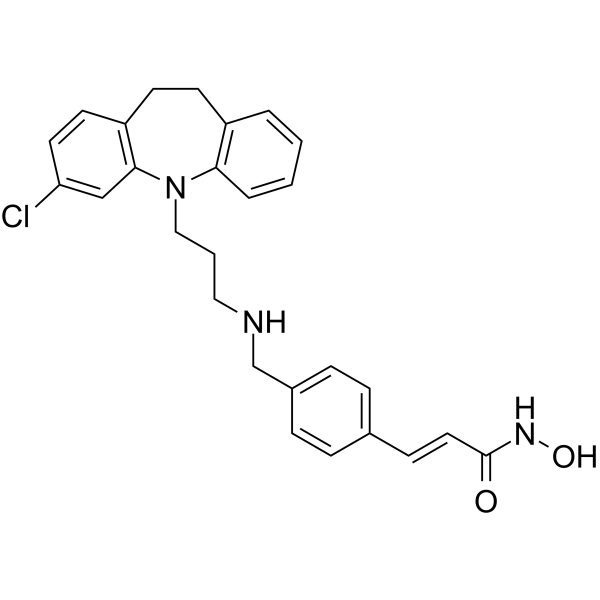 0 ImagesCat. No.: HY-146351CAS No.: 2408123-36-2HDAC-IN-38 (compound 13) is a potent HDAC inhibitor. HDAC-IN-38 shows similar micro-molar inhibitory activity toward HDAC1, 2, 3, 5, 6, and 8. HDAC-IN-38 increases cerebral blood flow (CBF), attenuates cognitive impairment, and improves hippocampal atrophy. HDAC-IN-38 also increases the level of histone acetylation (H3K14 or H4K5).
-
HDAC-IN-100
 0 ImagesCat. No.: HY-P11678CAS No.: 2390474-88-9HDAC-IN-100 is a histone deacetylase inhibitor with an IC50 of 0.038 μM against HDAC1, 0.283 μM against HDAC2, and 0.586 μM against HDAC3. HDAC-IN-100 acts as a chemosensitizer and apoptosis inducer, activates caspase 3/7, and reverses Cisplatin (HY-17394) resistance. HDAC-IN-100 exerts antiproliferative effects in ovarian cancer cells and squamous cancer cells. HDAC-IN-100 is applicable for research related to ovarian cancer, squamous cell carcinoma, and Cisplatin (HY-17394)-resistant squamous cell carcinoma.
-
JPS004
 0 ImagesCat. No.: HY-176904CAS No.: 2559747-12-3JPS004 is a PROTAC degrader targeting HDAC1, HDAC2 and HDAC3. JPS004 induces extensive transcriptomic changes in human colon cancer cell line HCT116, including downregulation of HDAC complex components and cell cycle regulatory machinery, modulation of the AKT/mTOR signaling pathway, and upregulation of FOXO-mediated apoptosis and autophagy related genes. JPS004 can be used in colon cancer-related research.
-
CG-1521
 0 ImagesCat. No.: HY-108919CAS No.: 674767-29-4CG-1521 is a histone deacetylase (HDAC) inhibitor that stabilizes Ac-Lys373 P53, increases P21 levels and HDAC2 degradation. CG-1521 can inhibit proliferation, induce cell cycle arrest and apoptosis. CG-1521 promotes Bax translocation to the mitochondria and cleavage. CG-1521 downregulates KIF4, Aurora B and Nek2 protein expression and DNA synthesis. CG-1521 can be used for the research of prostate cancer and inflammatory breast cancer.
-
HDAC-IN-43
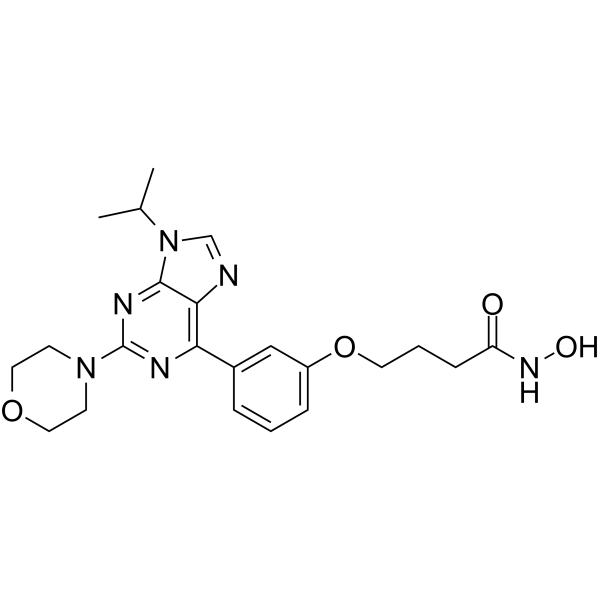 0 ImagesCat. No.: HY-147966CAS No.: 1809163-24-3HDAC-IN-43 is a potent HDAC 1/3/6 inhibitor with IC50 values of 82, 45, and 24 nM, respectively. HDAC-IN-43 is a weak PI3K/mTOR inhibitors with IC50 values of 3.6 and 3.7 μM, respectively. HDAC-IN-43 shows broad anti-proliferative activity .
-
PROTAC HDAC8 Degrader-2
 0 ImagesCat. No.: HY-168175PROTAC HDAC8 Degrader-2 is a HDAC6/8 PROTAC degrader, with IC50 values of 0.042 μM and 0.147 μM against human HDAC8 and HDAC6, respectively, and exhibits selectivity over other class I HDAC isozymes. PROTAC HDAC8 Degrader-2 induces apoptosis (apoptosis) in leukemia cells, shows no obvious cytotoxicity to normal cells, and has favorable chemical stability. PROTAC HDAC8 Degrader-2 can be used in research related to acute myeloid leukemia.
-
HDAC-IN-105
 0 ImagesCat. No.: HY-184705HDAC-IN-105 is a histone deacetylase (HDAC) inhibitor with binding to HDAC2 and HDAC4 isoforms. HDAC-IN-105 suppresses HDAC activity via binding within conserved HDAC catalytic pockets. HDAC-IN-105 induces G2/M phase cell cycle arrest. HDAC-IN-105 triggers mitochondrial dysfunction marked by loss of mitochondrial membrane potential. HDAC-IN-105 exhibits growth inhibition in triple-negative breast cancer cells and low toxicity toward normal cells. HDAC-IN-105 can be used for the research of triple-negative breast cancer.
-
MC2590
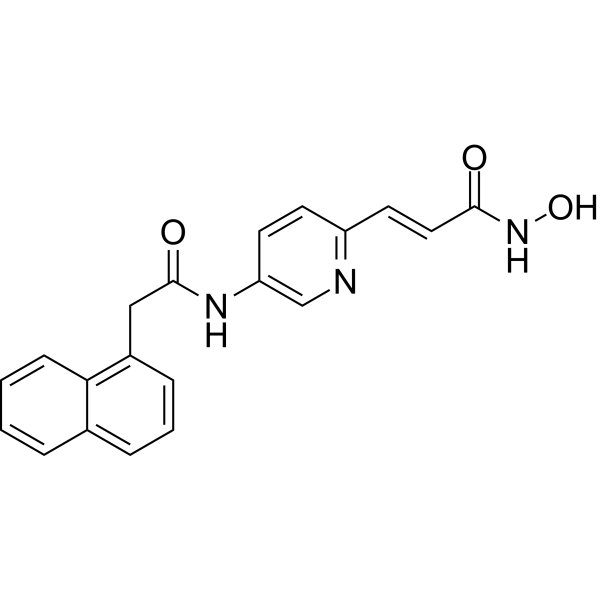 0 ImagesMC2590 is a potent pyridine-containing histone deacetylase (HDAC) inhibitor. MC2590 is a inhibitor of HDAC1-3, -6, -8, and -10 (class I/IIb-selective inhibitor) with IC50s of 0.015 μM-0.156 μM. MC2590 also inhibits HDAC isoforms HDAC4, HDAC5, HDAC7, HDAC9, HDAC11 with IC50s of 1.35 μM-3.98 μM. MC2625 induces G2/M cell cycle arrest and modulates pro- and anti-apoptotic microRNAs towards apoptosis induction.
-
HDAC1 Degrader-1
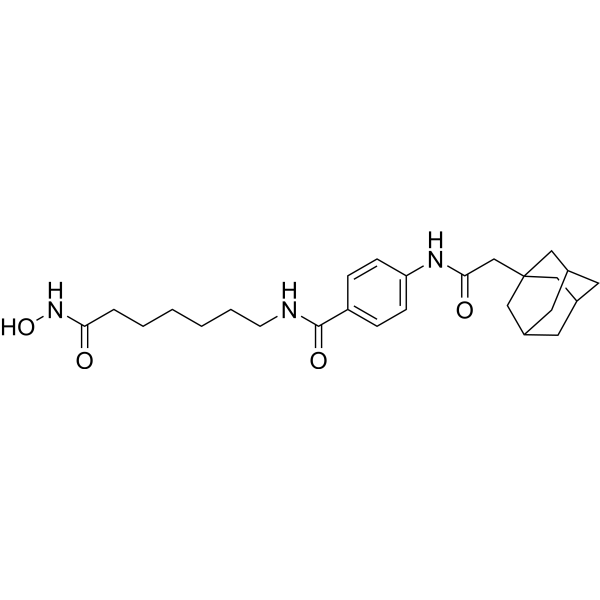 0 ImagesCat. No.: HY-157216HDAC1 Degrader-1 is a HDAC1 degrader with an IC50 of 192.3 nM. HDAC1 Degrader-1 induces degradation of HDAC1 in multiple myeloma cells via the proteasome system and enhances apoptosis of multiple myeloma cells. HDAC1 Degrader-1 can be used for research on multiple myeloma.
-
HDAC-IN-94
 0 ImagesCat. No.: HY-179019HDAC-IN-94 is a potent, selective HDAC6 inhibitor (IC50 = 4.5 nM). HDAC-IN-94 shows >1000-fold selectivity over HDAC8 and shows minimal activity against other isoforms (HDAC1-3/10). HDAC-IN-94 induces α-tubulin hyperacetylation, apoptosis, and G2/M cell cycle arrest, exhibiting potent anti-tumor efficacy with low cytotoxicity. HDAC-IN-94 can be used for neuroblastoma and glioblastoma research.
-
(R)-HDAC-IN-102
 0 ImagesCat. No.: HY-185554BCAS No.: 1177382-00-1(R)-HDAC-IN-102 is a HDAC2 inhibitor and the isomer of HDAC-IN-102 (HY-185554). HDAC-IN-102 inhibits total HDAC with an IC50 of 58 μM and exhibits partial subtype selectivity. Specifically, (R)-HDAC-IN-102 targets HDAC2, while (S)-HDAC-IN-102 (HY-185554A) targets HDAC8. HDAC-IN-102 exerts antioxidant effects via scavenging DPPH free radicals and can be used in cancer-related research.
-
CDK/HDAC-IN-2
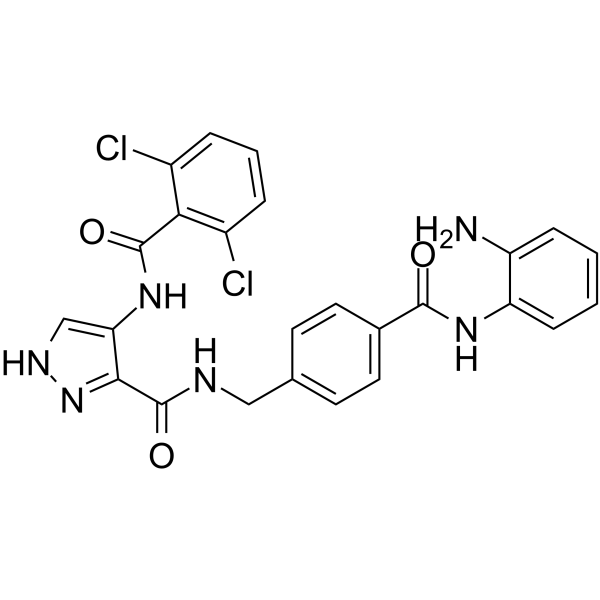 0 ImagesCat. No.: HY-146276CAS No.: 2580938-58-3CDK/HDAC-IN-2 is a potent HDAC/CDK dual inhibitor with IC50 of 6.4, 0.25, 45, >1000, 8.63, 0.30, >1000 nM for HDAC1, HDAC2, HDAC3, HDAC6,8, CDK1, CDK2, CDK4,6,7, respectively. CDK/HDAC-IN-2 shows excellent antiproliferative activities. CDK/HDAC-IN-2 induces apoptosis and cell cycle arrest at G2/M phase. CDK/HDAC-IN-2 shows potent antitumor efficacy.
-
HDAC3/6-IN-2
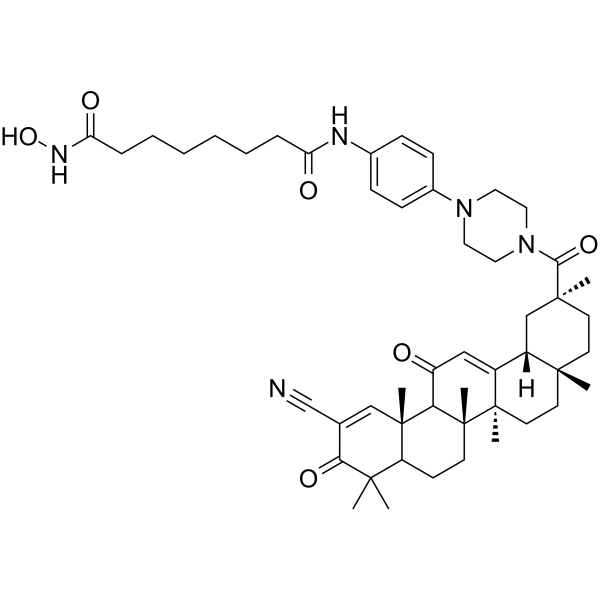 0 ImagesCat. No.: HY-133147CAS No.: 2417510-17-7HDAC3/6-IN-2 (compound 15) is a potent HDAC6 and HDAC3 inhibitor, with IC50 values of 0.368 and 0.635 μM, respectively. HDAC3/6-IN-2 shows antitumor activity, and induces cancer cell apoptosis. HDAC3/6-IN-2 decreases the levels of HDAC6 and HDAC3, associated with upregulation of acetylated H3 and α-tubulin.




