



Bisindolylmaleimide I hydrochloride
Based on 45 publication(s) in Google Scholar
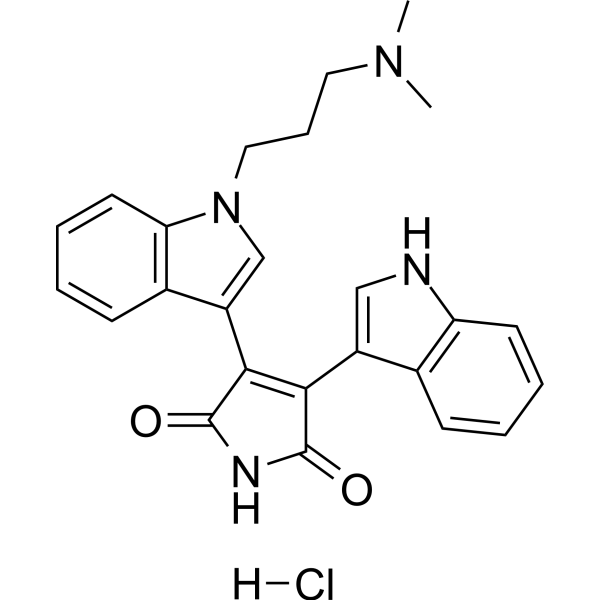
Bisindolylmaleimide I (GF109203X) hydrochloride is a cell-permeable and reversible PKC inhibitor (IC50 of 20 nM, 17 nM, 16 nM, and 20 nM for PKCα, PKCβI, PKCβII, and PKCγ. Bisindolylmaleimide I hydrochloride is also a GSK-3 inhibitor.
For research use only. We do not sell to patients.
- Purity : 98.44%
- CAS No.: 176504-36-2
- Formula: C25H25ClN4O2
- Molecular Weight:448.94
-
Storage:Powder -20°C, 3 years , 4°C, 2 years ; In solvent -80°C, 6 months , -20°C, 1 month

To place orders, for customer services and technical support, please contact: MedChemExpress USA
Tel: 609-228-6898 E-mail: [email protected] [email protected]


-
 Biological Activity
-
Chemical Information
-
Solvent & Solubility
- Protocols
- Purity & Documentation
- References
-
 Help & FAQs


-
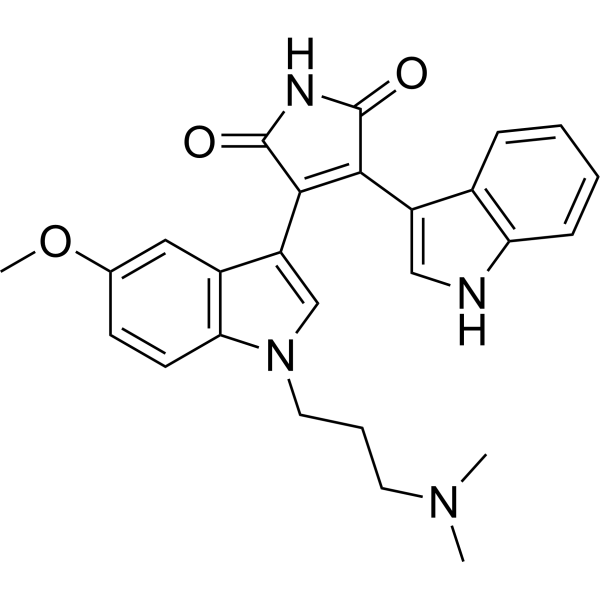
HY-13689
Go 6983PKC Inhibitor -
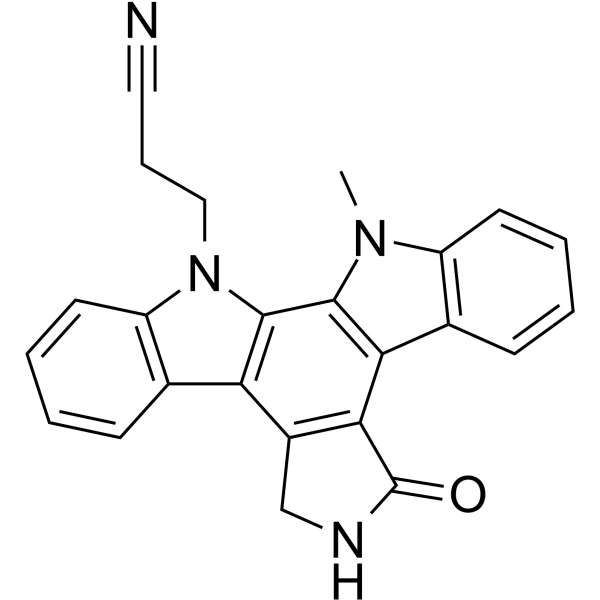
HY-10183
Go6976PKC Inhibitor -

HY-13867AR
Bisindolylmaleimide I hydrochloride (Standard)PKC Inhibitor -
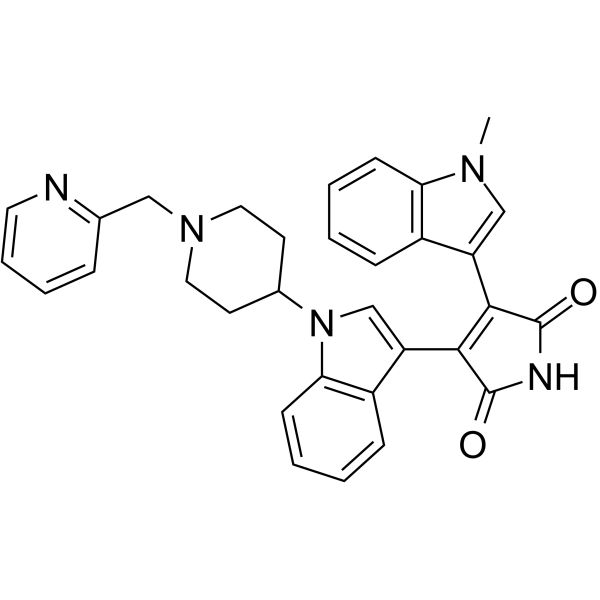
HY-10342
EnzastaurinPKCβ Inhibitor -
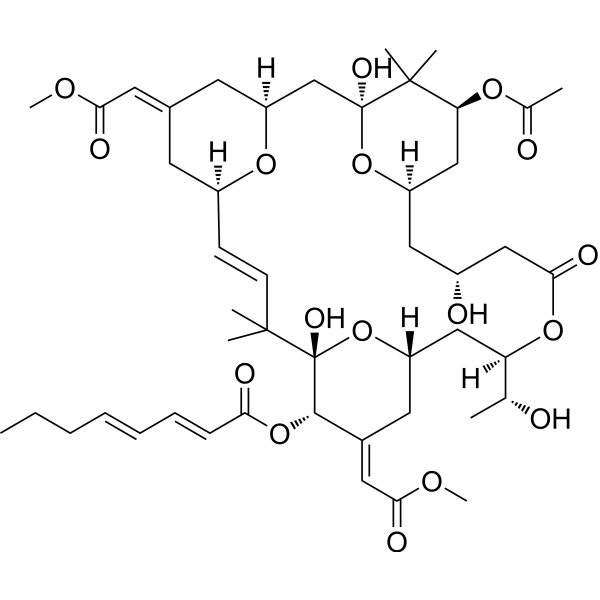
HY-105231
Bryostatin 1PKC Modulator -
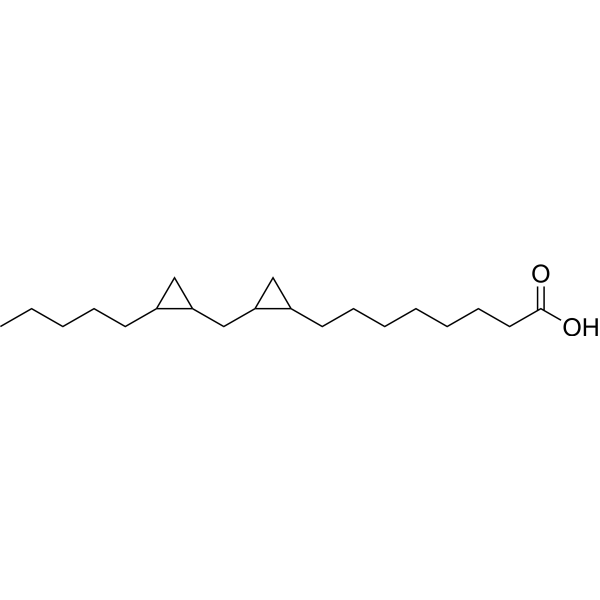
HY-108599
DCP-LAPKC Activator -
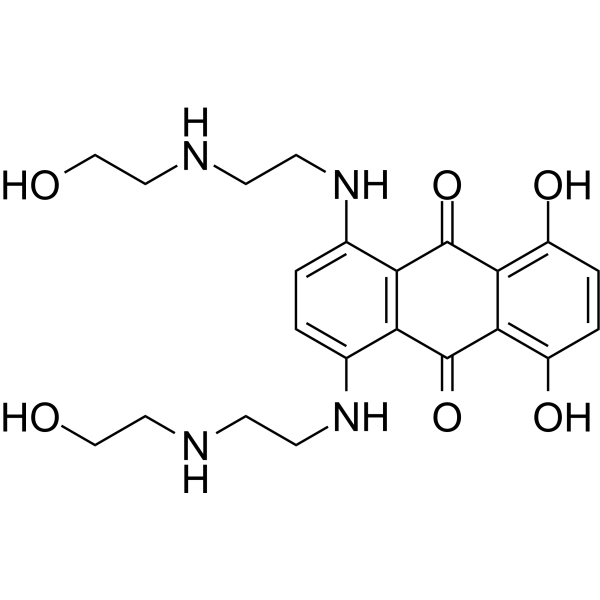
HY-13502
MitoxantroneTop II/PKC Inhibitor -
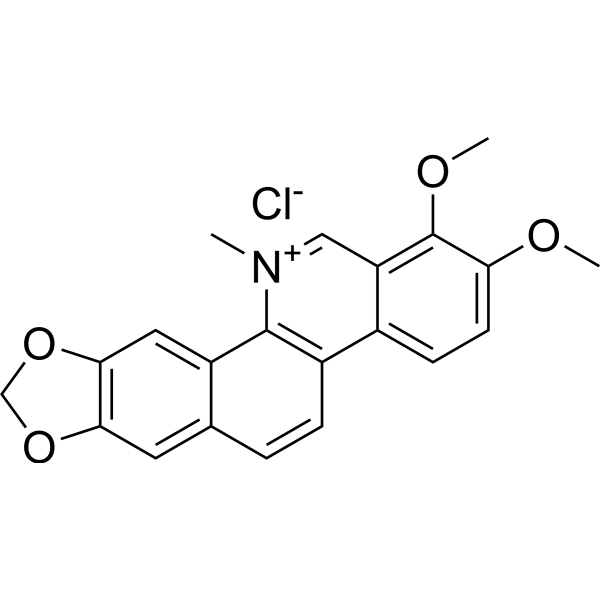
HY-12048
Chelerythrine chlorideBcl-2 Family Inhibitor -
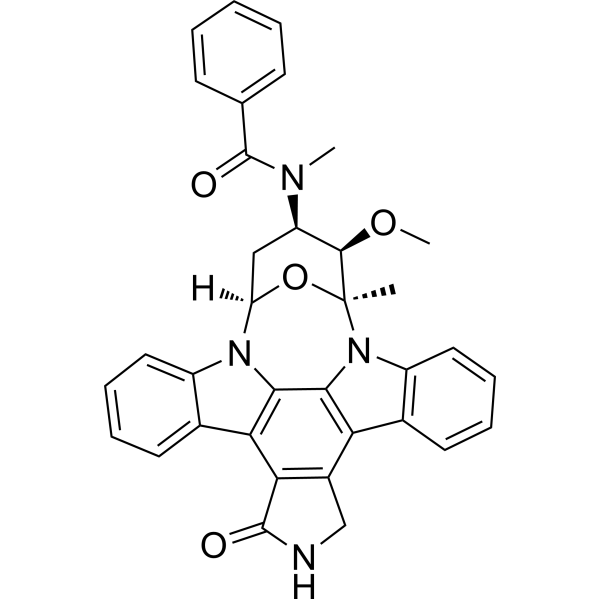
HY-10230
MidostaurinMulti-targeted Protein Kinase Inhibitor -
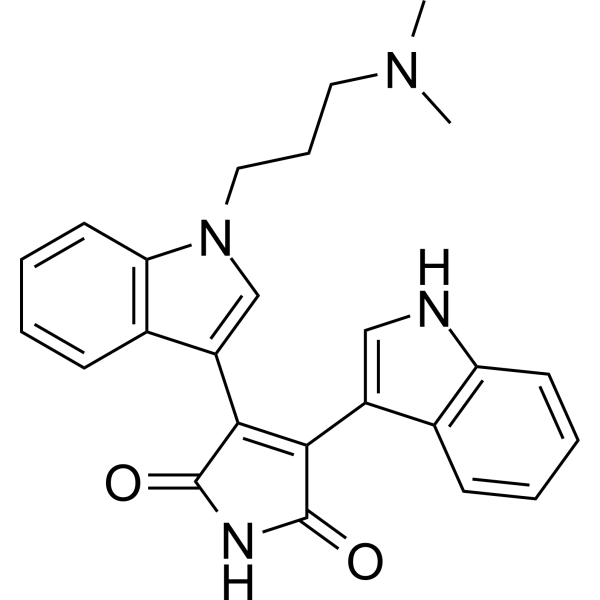
HY-13867
Bisindolylmaleimide IPKC Inhibitor -
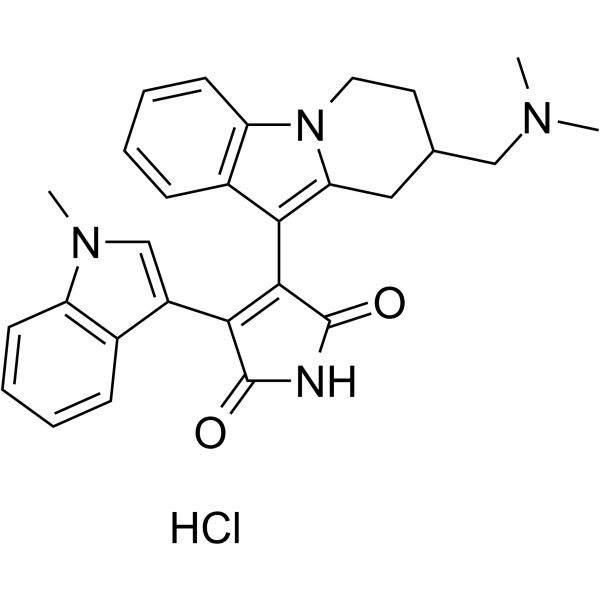
HY-117610A
Bisindolylmaleimide XI hydrochloridePKC Inhibitor -
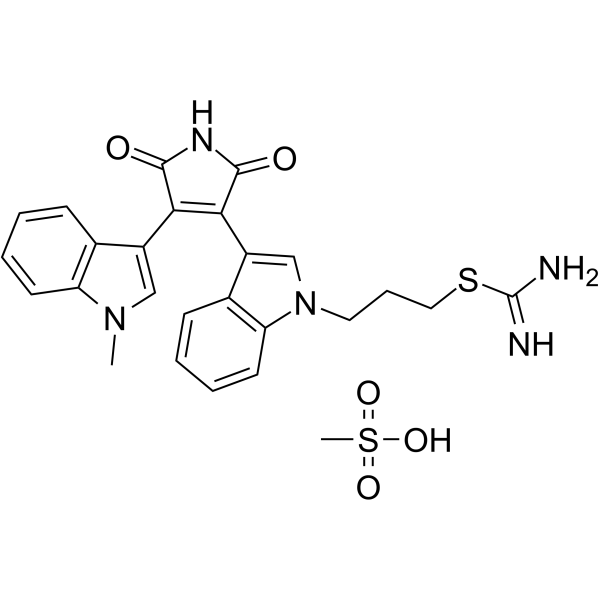
HY-13866
Ro 31-8220 mesylatePCK Inhibitor
Publications Citing Use of MedChemExpress (MCE) Bisindolylmaleimide I hydrochloride
More- Bioact Mater. 2025 Nov 25:57:646-659. [Abstract]
- J Adv Res. 2023 May:47:151-162. [Abstract]
- Redox Biol. 2023 Jun:62:102702. [Abstract]
- Redox Biol. 2021 Oct;46:102098. [Abstract]
- Theranostics. 2021 Mar 11;11(11):5279-5295. [Abstract]
- Neural Regen Res. 2025 Jul 1;20(7):2038-2052. [Abstract]
- Free Radic Biol Med. 2026 Mar 16:246:614-626. [Abstract]
- Chin J Nat Med. 2021 Jan;19(1):46-55. [Abstract]
- Chin J Nat Med. 2020 Oct;18(10):738-748. [Abstract]
- J Ethnopharmacol. 2024 Mar 25:322:117592. [Abstract]
- CNS Neurosci Ther. 2024 Sep;30(9):e70067. [Abstract]
- Ecotoxicol Environ Saf. 2022 May 1;236:113467. [Abstract]
- Cell Mol Life Sci. 2024 May 30;81(1):244. [Abstract]
- Cells. 2020 Jun 15;9(6):1467. [Abstract]
- Cells. 2020 Mar 5;9(3):631. [Abstract]
- Front Endocrinol. 2018 Nov 30:9:721. [Abstract]
- Biomolecules. 2025 Feb 1;15(2):208. [Abstract]
- Mucosal Immunol. 2022 Feb;15(2):314-326. [Abstract]
- J Nutr Biochem. 2021 Feb:88:108555. [Abstract]
- Biosci Rep. 2019 Apr 26;39(4):BSR20182293. [Abstract]
- Front Mol Neurosci. 2023 Jan 6:15:1078309. [Abstract]
- Pain Rep. 2026 Apr 20;11(3):e1446. [Abstract]
- Am J Physiol Endocrinol Metab. 2024 Jul 1;327(1):E27-E41. [Abstract]
- Neurobiol Stress. 2023 Nov 25:28:100593. [Abstract]
- Microbiol Spectr. 2022 Oct 26;10(5):e0105622. [Abstract]
- Viruses. 2022 Jul 7;14(7):1485. [Abstract]
- Pulm Pharmacol Ther. 2021 Oct:70:102072. [Abstract]
- Peptides. 2022 Aug:154:170824. [Abstract]
- Cell Biol Int. 2020 Mar;44(3):838-847. [Abstract]
- J Leukoc Biol. 2023 Sep 1;114(3):266-279. [Abstract]
- Int J Food Sci Tech. 2024 Jul 18.
- Psychopharmacology (Berl). 2023 Jun;240(6):1275-1285. [Abstract]
- Food Chem Toxicol. 2021 Feb:148:111925. [Abstract]
- Food Chem Toxicol. 2019 Mar:125:46-54. [Abstract]
- Immunopharmacol Immunotoxicol. 2026 Jul 8:1-17.
- Mechanobiol Med. 2025 Jul 28;3(3):100145. [Abstract]
- PeerJ. 2026 Apr 30:14:e21194. [Abstract]
- Vet Microbiol. 2021 May:256:109061. [Abstract]
- Med Sci Monit. 2021 Oct 18;27:e933278. [Abstract]
- Harvard University. 2026.
- Res Sq. 2026 May 6.
- bioRxiv. 2026 Feb 10.
- SSRN. 2024 Jan 22.
- Research Square Preprint. 2021 Aug.
- Elife. 2021 Mar 3:10:e60889. [Abstract]
 Customer Validation & Images

-
Cell Proliferation/Viability Assay
-
Cell Imaging/Staining
-
Flow Cytometry
-
ELISA
-
WB


Biological Activity
Description
IC50 & Target
[1]|
Bovine brain PKC 10 nM (IC50) |
PKC-βII 16 nM (IC50) |
PKC-βI 17 nM (IC50) |
PKCα 20 nM (IC50) |
PKCγ 20 nM (IC50) |
FDGFG 65 μM (IC50) |
In Vitro
Bisindolylmaleimide I hydrochloride (5 μM) inhibits α-thrombin-induced P47 phosphorylation[1].
Bisindolylmaleimide I hydrochloride (0-1 μM) inhibits DNA synthesis in quiescent swiss 3T3 cells[1].
Bisindolylmaleimide I hydrochloride (5 μM) reduces GSK-3 activity to 25.1±4.3% in adipocytes lysates[3].
Bisindolylmaleimide I hydrochloride (10 μM, 24 h) inhibits exosome and microvesicle (EMV) release from PC3 cells[4].
Bisindolylmaleimide I hydrochloride (10 μM, 24 h) enhances cytotoxicity of 5-fluorouracil (HY-90006)[4].
MedChemExpress (MCE) has not independently confirmed the accuracy of these methods. They are for reference only. Further protocols information, click here.
In Vivo
Bisindolylmaleimide I hydrochloride (0-20 mg/kg, i.p.) reduces the mean frequency of Quinpirole-induced vomiting in shrews[6].
MedChemExpress (MCE) has not independently confirmed the accuracy of these methods. They are for reference only.
-
Animal Model:Quinpirole-treated shrews[2]
-
Dosage:0-20 mg/kg
-
Administration:i.p.
-
Result:Reduced the mean frequency of Quinpirole-induced vomiting.
Blocked Quinpirole-mediated ERK1/2 phosphorylation in shrew brainstems.


Chemical Information
-
CAS No. 176504-36-2
-
Appearance Solid
-
Molecular Weight 448.94
-
Formula C25H25ClN4O2
-
Color Orange to red
-
SMILES
[H]Cl.O=C(C(C1=CN(CCCN(C)C)C2=C1C=CC=C2)=C3C4=CNC5=C4C=CC=C5)NC3=O
-
Synonyms
GF109203X hydrochloride; Go 6850 hydrochloride
-
Shipping
Room temperature in continental US; may vary elsewhere.
-
Storage
Powder -20°C 3 years 4°C 2 years In solvent -80°C 6 months -20°C 1 month


Publications (45)
-
Journal Impact Factor
-
Most Recent
-
Bioact Mater
Food-derived β-lactoglobulin nanofibrils: An efficacy, safe, and scalable solution to overcome oral insulin delivery challenges. [Abstract]2025 Nov 25:57:646-659. PMID: 41377894 -
J Adv Res
Paeonol protects against doxorubicin-induced cardiotoxicity by promoting Mfn2-mediated mitochondrial fusion through activating the PKCε-Stat3 pathway. [Abstract]2023 May:47:151-162. PMID: 35842187 -
Redox Biol
BNP protects against diabetic cardiomyopathy by promoting Opa1-mediated mitochondrial fusion via activating the PKG-STAT3 pathway. [Abstract]2023 Jun:62:102702. PMID: 37116257 -
Redox Biol
Paeonol promotes Opa1-mediated mitochondrial fusion via activating the CK2α-Stat3 pathway in diabetic cardiomyopathy. [Abstract]2021 Oct;46:102098. PMID: 34418601 -
Theranostics
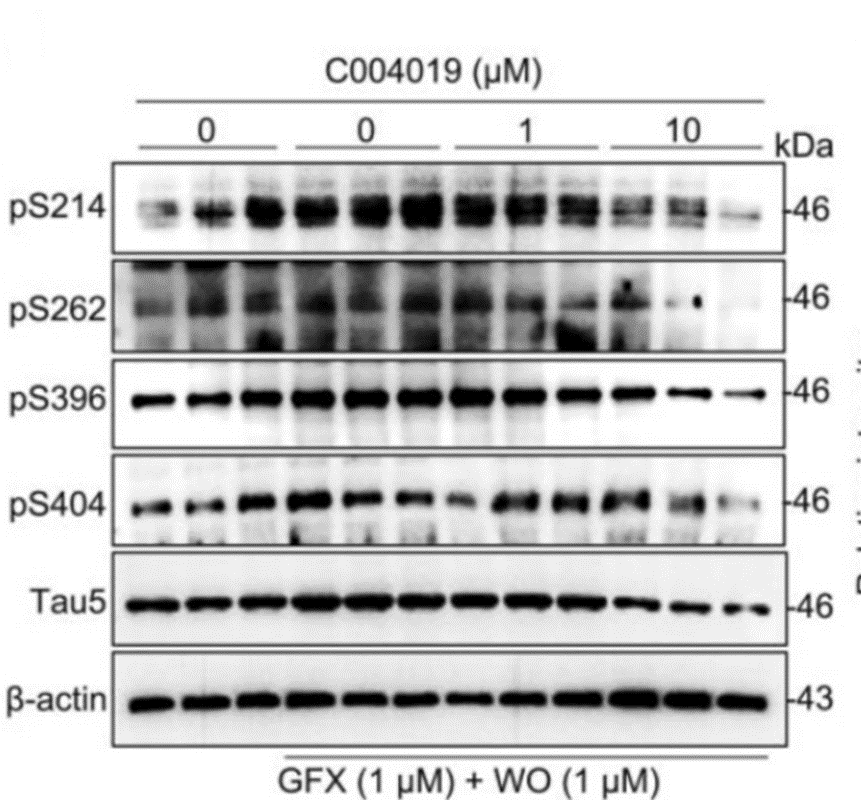
A novel small-molecule PROTAC selectively promotes tau clearance to improve cognitive functions in Alzheimer-like models. [Abstract]2021 Mar 11;11(11):5279-5295. PMID: 33859747
Bisindolylmaleimide I hydrochloride purchased from MedChemExpress. Usage Cited in: Theranostics. 2021 Mar 11;11(11):5279-5295. [Abstract]
SH-SY5Y cells were simultaneously treated with C004019 (1 or 10 µM) and wortmainnin (WO, 1 µM) and Bisindolylmaleimide I (GF-109203X) (GFX, 1 µM) for 24 h to induce tau hyperphosphorylation, and then tau was measured by Western blotting.
-
Neural Regen Res
NOX4 exacerbates Parkinson's disease pathology by promoting neuronal ferroptosis and neuroinflammation. [Abstract]2025 Jul 1;20(7):2038-2052. PMID: 38993139
Bisindolylmaleimide I hydrochloride purchased from MedChemExpress. Usage Cited in: Neural Regen Res. 2025 Jul 1;20(7):2038-2052. [Abstract]
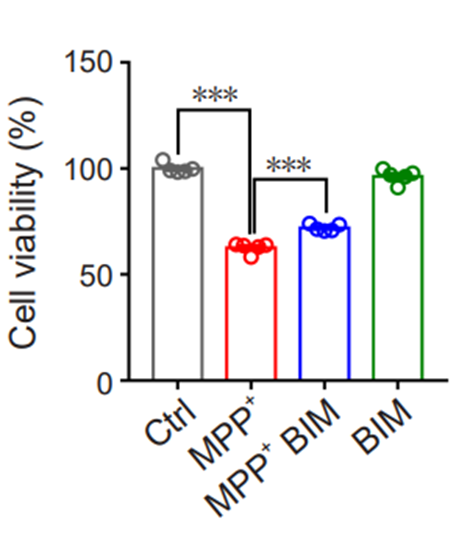
Cell viability was measured by cell counting kit-8 in MN9D cells with/without MPP+ 0.5 mM and Bisindolylmaleimide I (BIM) 5 µM treatment for 24 hours.
Bisindolylmaleimide I hydrochloride purchased from MedChemExpress. Usage Cited in: Neural Regen Res. 2025 Jul 1;20(7):2038-2052. [Abstract]
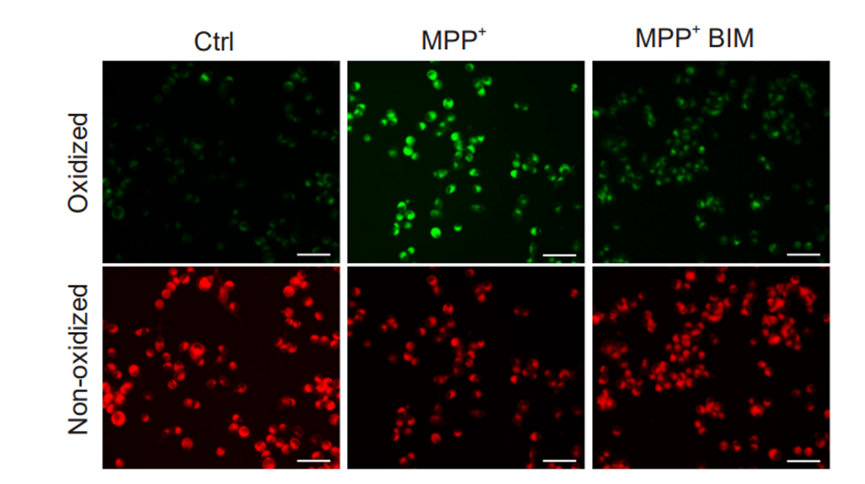
C11-BODIPY fluorescence analysis suggested that MPP+ increased intracellular lipid peroxidation in MN9D cells, and that this effect was reversed by Bisindolylmaleimide I (BIM) (5 μM) treatment.
-
Free Radic Biol Med
HIF-1α translation mediated by PKCδ facilitates RSV-induced production of innate inflammatory cytokines in vitro and in vivo. [Abstract]2026 Mar 16:246:614-626. PMID: 41611036 -
Chin J Nat Med
A 75 kDa glycoprotein isolated from Cudrania tricuspidata Bureau induces colonic epithelial proliferation and ameliorates mouse colitis induced by dextran sulfate sodium. [Abstract]2021 Jan;19(1):46-55. PMID: 33516451 -
Chin J Nat Med
Phytoglycoprotein isolated from Dioscorea batatas Decne promotes intestinal epithelial wound healing. [Abstract]2020 Oct;18(10):738-748. PMID: 33039053 -
J Ethnopharmacol
Dendrobium nobile Lindl. alkaloid decreases Tau hyperphosphorylation via regulating PI3K/Akt/GSK-3β pathway in vitro and in vivo. [Abstract]2024 Mar 25:322:117592. PMID: 38097026 -
CNS Neurosci Ther
Vitamin D3 Attenuates Neuropathic Pain via Suppression of Mitochondria-Associated Ferroptosis by Inhibiting PKCα/NOX4 Signaling Pathway. [Abstract]2024 Sep;30(9):e70067. PMID: 39328008 -
Ecotoxicol Environ Saf
Perfluorooctanoic acid alters the developmental trajectory of female germ cells and embryos in rodents and its potential mechanism. [Abstract]2022 May 1;236:113467. PMID: 35390687 -
Cell Mol Life Sci
Proximal tubular FHL2, a novel downstream target of hypoxia inducible factor 1, is a protector against ischemic acute kidney injury. [Abstract]2024 May 30;81(1):244. PMID: 38814462 -
Cells
Nanospheres Loaded with Curcumin Improve the Bioactivity of Umbilical Cord Blood-Mesenchymal Stem Cells via c-Src Activation During the Skin Wound Healing Process. [Abstract]2020 Jun 15;9(6):1467. PMID: 32549381 -
Cells
Nanosphere Loaded with Curcumin Inhibits the Gastrointestinal Cell Death Signaling Pathway Induced by the Foodborne Pathogen Vibrio vulnificus. [Abstract]2020 Mar 5;9(3):631. PMID: 32151068 -
Front Endocrinol
A Type IIb, but Not Type IIa, GnRH Receptor Mediates GnRH-Induced Release of Growth Hormone in the Ricefield Eel. [Abstract]2018 Nov 30:9:721. PMID: 30555419 -
Biomolecules
PAR2 Participates in the Development of Cough Hypersensitivity in Guinea Pigs by Regulating TRPA1 Through PKC. [Abstract]2025 Feb 1;15(2):208. PMID: 40001511 -
Mucosal Immunol
2022 Feb;15(2):314-326. PMID: 34686839
Bisindolylmaleimide I hydrochloride purchased from MedChemExpress. Usage Cited in: Mucosal Immunol. 2022 Feb;15(2):314-326. [Abstract]
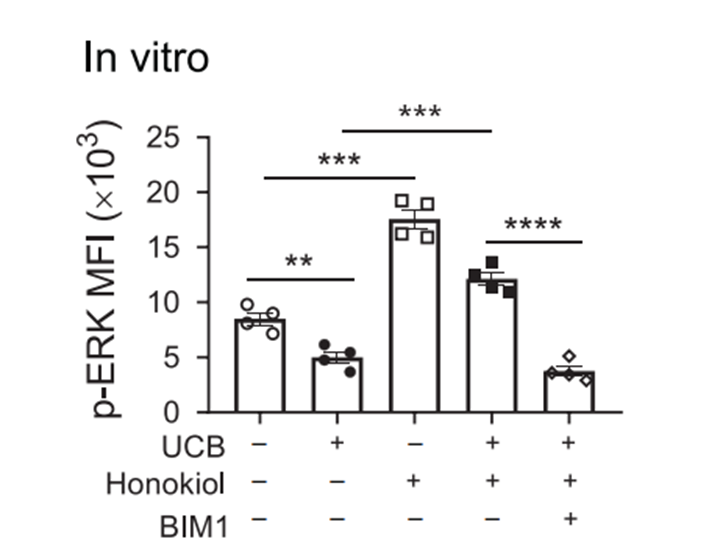
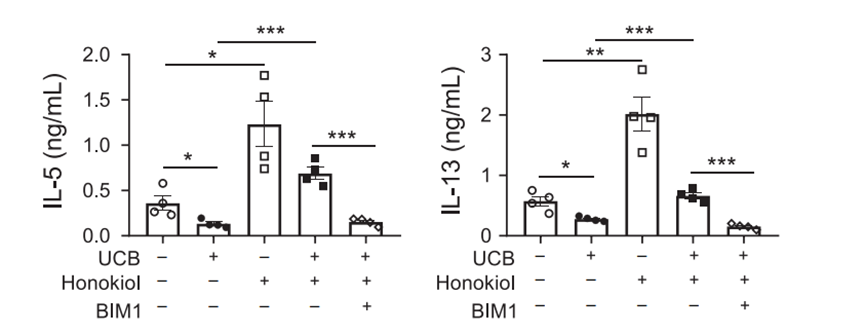
Lung ILC2s were treated with vehicle or UCB (50 μM) and /or Honokiol (5 μM) and /or Bisindolylmaleimide I (BIM1) (5 μM) in the presence of IL-2, IL-7 and IL-33 for 48 h. Flow cytometric analysis of p-ERK1/2 levels was performed.
Bisindolylmaleimide I hydrochloride purchased from MedChemExpress. Usage Cited in: Mucosal Immunol. 2022 Feb;15(2):314-326. [Abstract]
The amounts of IL-5 and IL-13 in the supernatants were measured by ELISA.
-
J Nutr Biochem
Nanospheres loaded with curcumin promote gut epithelial motility through F-actin-related migration signaling events. [Abstract]2021 Feb:88:108555. PMID: 33249186 -
Biosci Rep
Parathyroid hormone-related protein induces fibronectin up-regulation in rat mesangial cells through reactive oxygen species/Src/EGFR signaling. [Abstract]2019 Apr 26;39(4):BSR20182293. PMID: 30926678 -
Front Mol Neurosci
The chronification mechanism of orofacial inflammatory pain: Facilitation by GPER1 and microglia in the rostral ventral medulla. [Abstract]2023 Jan 6:15:1078309. PMID: 36683848 -
Pain Rep
Monoclonal antibody inhibition of PAR2 reduces phenotype severity and pain in murine inflammatory bowel disease. [Abstract]2026 Apr 20;11(3):e1446. PMID: 42021789 -
Am J Physiol Endocrinol Metab
Hyperglycemia impairs EAAT2 glutamate transporter trafficking and glutamate clearance in islets of Langerhans: implications for type 2 diabetes pathogenesis. [Abstract]2024 Jul 1;327(1):E27-E41. PMID: 38690938 -
Neurobiol Stress
Glucocorticoids modulate neural activity via a rapid non-genomic effect on Kv2.2 channels in the central nervous system. [Abstract]2023 Nov 25:28:100593. PMID: 38075025 -
Microbiol Spectr
2022 Oct 26;10(5):e0105622. PMID: 36000889 -
Viruses
Inducible miR-150 Inhibits Porcine Reproductive and Respiratory Syndrome Virus Replication by Targeting Viral Genome and Suppressor of Cytokine Signaling 1. [Abstract]2022 Jul 7;14(7):1485. PMID: 35891465 -
Pulm Pharmacol Ther
The promoting role of Cx43 on the proliferation and migration of arterial smooth muscle cells for angiotensin II-dependent hypertension. [Abstract]2021 Oct:70:102072. PMID: 34428599 -
Peptides
Neuropeptide Y promotes hepatic apolipoprotein A1 synthesis and secretion through neuropeptide Y Y5 receptor. [Abstract]2022 Aug:154:170824. PMID: 35660638 -
Cell Biol Int
2020 Mar;44(3):838-847. PMID: 31814221 -
J Leukoc Biol
Transient receptor potential vanilloid 4 (TRPV4) in neutrophils enhances myocardial ischemia/reperfusion injury. [Abstract]2023 Sep 1;114(3):266-279. PMID: 37232941 -
-
Psychopharmacology (Berl)
The effects of serotonergic psychedelics in synaptic and intrinsic properties of neurons in layer II/III of the orbitofrontal cortex. [Abstract]2023 Jun;240(6):1275-1285. PMID: 37071130 -
Food Chem Toxicol
G-Rh4 improves pancreatic β-cells dysfunction in vivo and in vitro by increased expression of Nrf2 and its target genes. [Abstract]2021 Feb:148:111925. PMID: 33359794 -
Food Chem Toxicol
Intestinal epithelial cell apoptosis due to a hemolytic toxin from Vibrio vulnificus and protection by a 36 kDa glycoprotein from Rhus verniciflua Stokes. [Abstract]2019 Mar:125:46-54. PMID: 30592968 -
-
Mechanobiol Med
Piezo1 activates nitric oxide synthase in red blood cells via protein kinase C with increased activity in diabetes. [Abstract]2025 Jul 28;3(3):100145. PMID: 40809083 -
PeerJ
Androgen promotes oocyte development by upregulating gap junction intercellular communication activity in granulosa cells in mice. [Abstract]2026 Apr 30:14:e21194. PMID: 42083638 -
Vet Microbiol
Highly pathogenic porcine reproductive and respiratory syndrome virus (HP-PRRSV) induces IL-6 production through TAK-1/JNK/AP-1 and TAK-1/NF-κB signaling pathways. [Abstract]2021 May:256:109061. PMID: 33836390 -
Med Sci Monit
Salicylate Induced GABAAR Internalization by Dopamine D1-Like Receptors Involving Protein Kinase C (PKC) in Spiral Ganglion Neurons. [Abstract]2021 Oct 18;27:e933278. PMID: 34657931 -
-
-
-
-
-
Elife
Dynamic Na+/H+ exchanger 1 (NHE1) - calmodulin complexes of varying stoichiometry and structure regulate Ca2+-dependent NHE1 activation. [Abstract]2021 Mar 3:10:e60889. PMID: 33655882


Solvent & Solubility
In Vitro:
DMSO : 62.5 mg/mL (139.22 mM; ultrasonic and warming and heat to 60°C; Hygroscopic DMSO has a significant impact on the solubility of product, please use newly opened DMSO)
Please refer to the solubility information to select the appropriate solvent. Once prepared, please aliquot and store the solution to prevent product inactivation from repeated freeze-thaw cycles.
Storage method and period of stock solution: -80°C, 6 months; -20°C, 1 month. When stored at -80°C, please use it within 6 months. When stored at -20°C, please use it within 1 month.
Please refer to the solubility information to select the appropriate solvent. Once prepared, please aliquot and store the solution to prevent product inactivation from repeated freeze-thaw cycles.
Storage method and period of stock solution: -80°C, 6 months; -20°C, 1 month. When stored at -80°C, please use it within 6 months. When stored at -20°C, please use it within 1 month.
Concentration (start) × Volume (start) = Concentration (final) × Volume (final)
In Vivo:
Select the appropriate dissolution method based on your experimental animal and administration route.
- For the following dissolution methods, please ensure to first prepare a clear stock solution using an In Vitro approach and then sequentially add co-solvents:
- To ensure reliable experimental results, the clarified stock solution can be appropriately stored based on storage conditions. As for the working solution for In Vivo experiments, it is recommended to prepare freshly and use it on the same day.
- The percentages shown for the solvents indicate their volumetric ratio in the final prepared solution. If precipitation or phase separation occurs during preparation, heat and/or sonication can be used to aid dissolution.
Add each solvent one by one: 10% DMSO 90% (20% SBE-β-CD in Saline)
Solubility: 2.08 mg/mL (4.63 mM); Suspended solution; Need ultrasonic
This protocol yields a suspended solution of 2.08 mg/mL. Suspended solution can be used for oral and intraperitoneal injection.
Taking 1 mL working solution as an example, add 100 μL DMSO stock solution (20.8 mg/mL) to 900 μL 20% SBE-β-CD in Saline, and mix evenly.
Preparation of 20% SBE-β-CD in Saline (4°C, storage for one week): 2 g SBE-β-CD powder is dissolved in 10 mL Saline, completely dissolve until clear.
In Vivo Dissolution Calculator
Please enter the basic information of animal experiments:
-
-
-
-
Recommended: Prepare an additional quantity of animals to account for potential losses during experiments.
Please enter your animal formula composition:
-
%DMSO +
Recommended: Keep the proportion of DMSO in working solution below 2% if your animal is weak.
-
%+
-
+%Tween-80 + +
-
%Saline +
The co-solvents required include: DMSO, . All of co-solvents are available by MedChemExpress (MCE). , Tween 80. All of co-solvents are available by MedChemExpress (MCE).
Working solution concentration: 0.22 mg/mL
Method for preparing stock solution: mg drug dissolved in μL DMSO. Stock solution concentration: mg/mL.
1. Take μL DMSO stock solution;
2. Add μL .
μL , mix evenly;
3. Then add μL Tween 80, mix evenly;
4. Then add μL
Please ensure that the stock solution in the first step is dissolved to a clear state, and add co-solvents in sequence. You can use ultrasonic heating (ultrasonic cleaner, recommended frequency 20-40 kHz), vortexing, etc. to assist dissolution.

Protocols
-
Cell Cytotoxicity Assay
Cytotoxicity assays are usually based on the assessment of cell membrane damage, which can also be indirectly detected by measuring cell viability. Detection methods include MTT assay, CKK-8 assay, LDH assay and ATP assay, etc.


Purity & Documentation
-
Data Sheet (284 KB)
-
SDS (392 KB)
- English - EN (392 KB)
- Français - FR (392 KB)
- Deutsch - DE (392 KB)
- Norwegian - NO (392 KB)
- Español - ES (392 KB)
- Swedish - SV (392 KB)
- Italian - IT (392 KB)
- Korean - KR (392 KB)
- Portuguese - PT (392 KB)
-
Handling Instructions (2659 KB)
References
[1]. Toullec D, et al. The bisindolylmaleimide GF 109203X is a potent and selective inhibitor of protein kinase C. J Biol Chem. 1991 Aug 25;266(24):15771-81. [Content Brief]
[2]. Vetri F, et al. Impairment of neurovascular coupling in Type 1 Diabetes Mellitus in rats is prevented by pancreatic islet transplantation and reversed by a semi-selective PKC inhibitor. Brain Res. 2017 Jan 15;1655:48-54. [Content Brief]
[3]. Hers I, et al. The protein kinase C inhibitors bisindolylmaleimide I (GF 109203x) and IX (Ro 31-8220) are potent inhibitors of glycogen synthase kinase-3 activity. FEBS Lett. 1999 Nov 5;460(3):433-6. [Content Brief]
[4]. Kosgodage US, et al. Chloramidine/Bisindolylmaleimide-I-Mediated Inhibition of Exosome and Microvesicle Release and Enhanced Efficacy of Cancer Chemotherapy. Int J Mol Sci. 2017 May 9;18(5):1007. [Content Brief]
[5]. Liu M, et al. Aerobic exercise alleviates ventilator-induced lung injury by inhibiting NLRP3 inflammasome activation. BMC Anesthesiol. 2022 Dec 1;22(1):369. [Content Brief]
[6]. Belkacemi L, et al. Signal transduction pathways involved in dopamine D2 receptor-evoked emesis in the least shrew (Cryptotis parva). Auton Neurosci. 2021 Jul;233:102807. [Content Brief]


Complete Stock Solution Preparation Table
Please refer to the solubility information to select the appropriate solvent. Once prepared, please aliquot and store the solution to prevent product inactivation from repeated freeze-thaw cycles.
Storage method and period of stock solution: -80°C, 6 months; -20°C, 1 month. When stored at -80°C, please use it within 6 months. When stored at -20°C, please use it within 1 month.
| Optional Solvent | Concentration Solvent Mass | 1 mg | 5 mg | 10 mg | 25 mg |
|---|---|---|---|---|---|
| DMSO | 1 mM | 2.2275 mL | 11.1373 mL | 22.2747 mL | 55.6867 mL |
| 5 mM | 0.4455 mL | 2.2275 mL | 4.4549 mL | 11.1373 mL | |
| 10 mM | 0.2227 mL | 1.1137 mL | 2.2275 mL | 5.5687 mL | |
| 15 mM | 0.1485 mL | 0.7425 mL | 1.4850 mL | 3.7124 mL | |
| 20 mM | 0.1114 mL | 0.5569 mL | 1.1137 mL | 2.7843 mL | |
| 25 mM | 0.0891 mL | 0.4455 mL | 0.8910 mL | 2.2275 mL | |
| 30 mM | 0.0742 mL | 0.3712 mL | 0.7425 mL | 1.8562 mL | |
| 40 mM | 0.0557 mL | 0.2784 mL | 0.5569 mL | 1.3922 mL | |
| 50 mM | 0.0445 mL | 0.2227 mL | 0.4455 mL | 1.1137 mL | |
| 60 mM | 0.0371 mL | 0.1856 mL | 0.3712 mL | 0.9281 mL | |
| 80 mM | 0.0278 mL | 0.1392 mL | 0.2784 mL | 0.6961 mL | |
| 100 mM | 0.0223 mL | 0.1114 mL | 0.2227 mL | 0.5569 mL |


Bisindolylmaleimide I hydrochloride Related Classifications
HY-13867A Related Classifications
 Powered by Bioz