



CCT365623 hydrochloride
Based on 1 publication(s) in Google Scholar
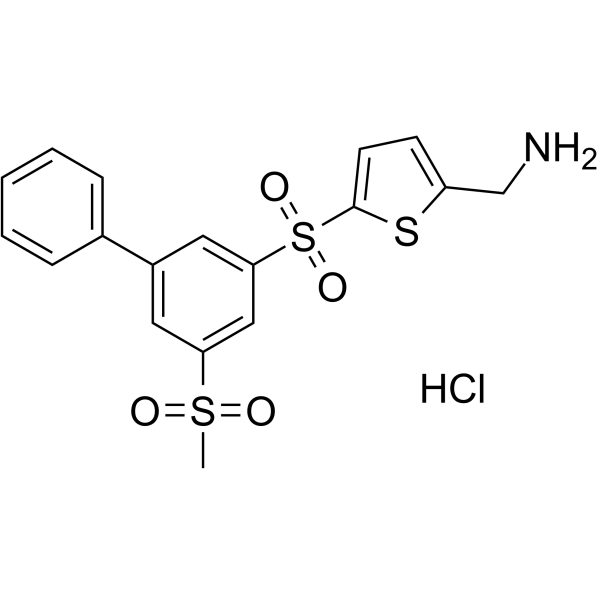
CCT365623 hydrochloride is an orally active lysyl oxidase (LOX) inhibitor, with an IC50 of 0.89 μM. CCT365623 hydrochloride suppresses EGFR (pY1068) and AKT phosphorylation driven by EGF. CCT365623 hydrochloride is extremely well tolerated, and has good pharmacokinetic properties.
For research use only. We do not sell to patients.
- Purity : 98.07%
- CAS No.: 2126136-98-7
- Formula: C18H18ClNO4S3
- Molecular Weight:443.99
-
Storage:
4°C, sealed storage, away from moisture
* In solvent : -80°C, 6 months; -20°C, 1 month (sealed storage, away from moisture)

To place orders, for customer services and technical support, please contact: MedChemExpress USA
Tel: 609-228-6898 E-mail: [email protected] [email protected]


-
 Biological Activity
-
Chemical Information
-
Solvent & Solubility
- Purity & Documentation
- References
-
 Help & FAQs


-
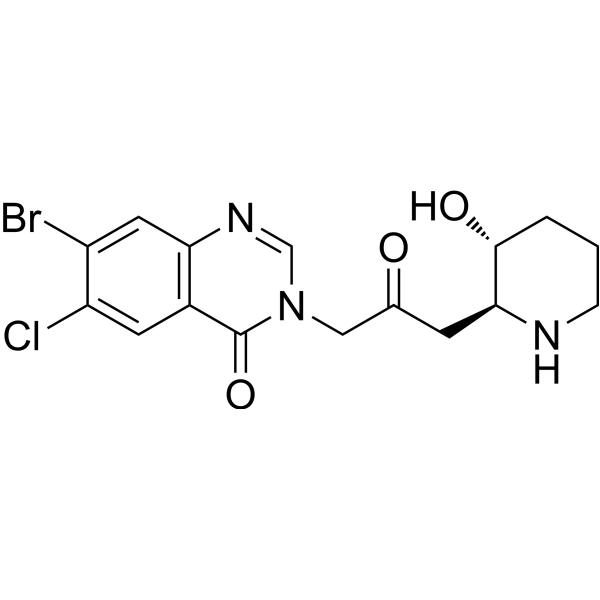
HY-N1584
Halofuginone -
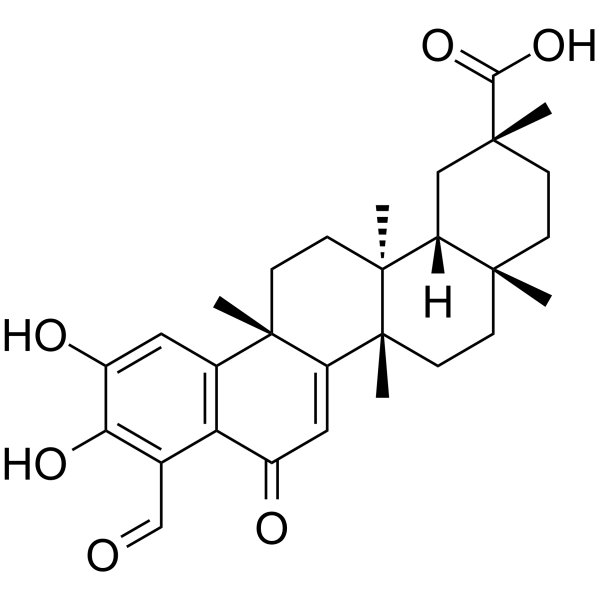
HY-N0587
Demethylzeylasteral -
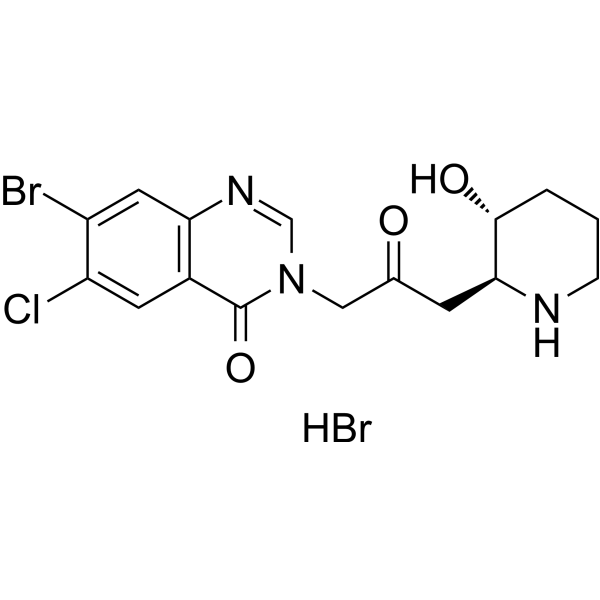
HY-N1584A
Halofuginone hydrobromide -
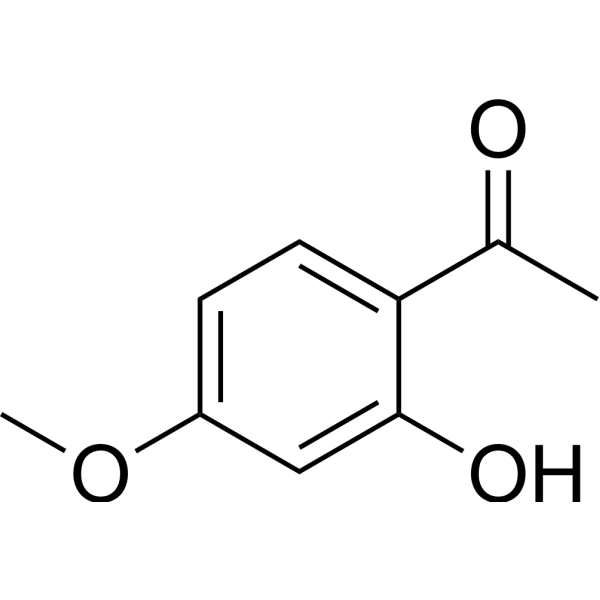
HY-N0159
Paeonol -
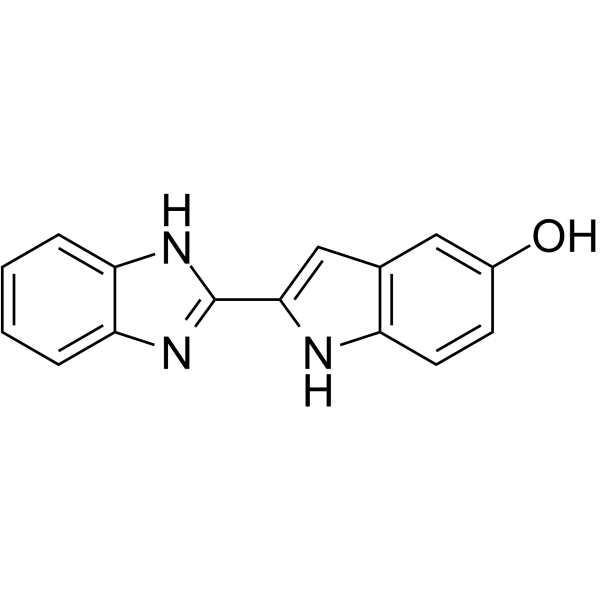
HY-150795
SY-LB-35 -
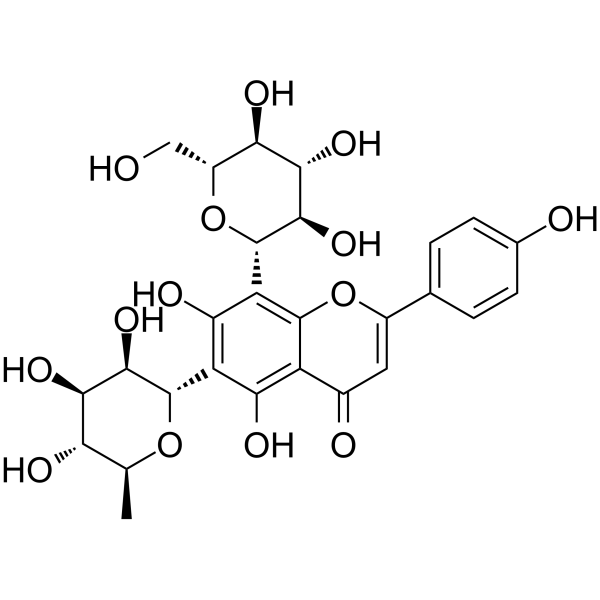
HY-N6896
Isoviolanthin -

HY-N0159R
Paeonol (Standard) -
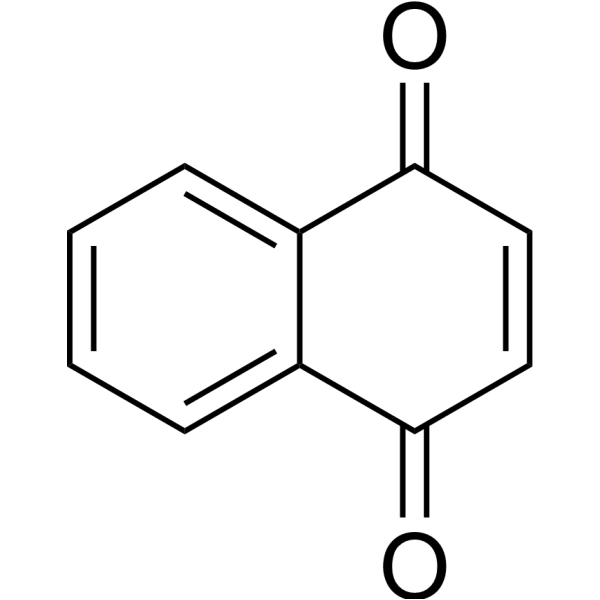
HY-W015490
1,4-Naphthoquinone -
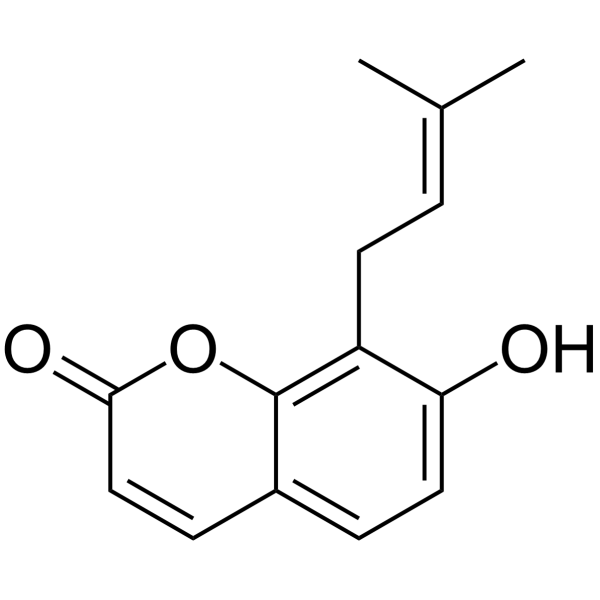
HY-N2554
Osthenol -
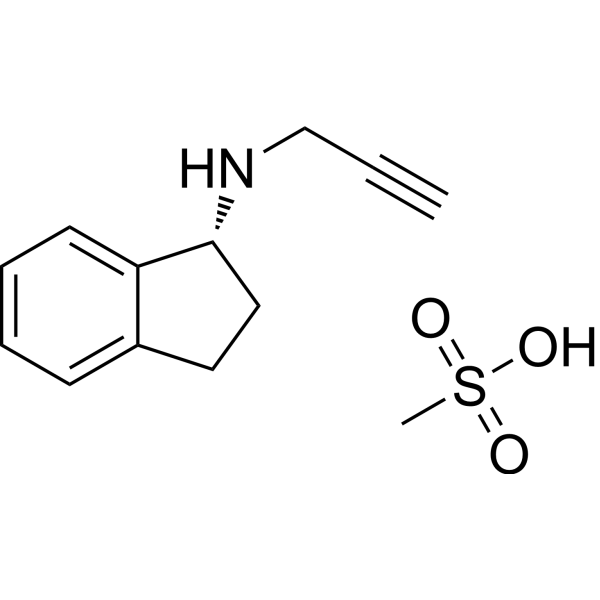
HY-14605
Rasagiline mesylate -

HY-N1584R
Halofuginone (Standard) -

HY-N0587R
Demethylzeylasteral (Standard)
Publications Citing Use of MedChemExpress (MCE) CCT365623 hydrochloride
MoreAll EGFR Isoforms
More

Biological Activity
Description
IC50 & Target
IC50: 0.89 μM (LOX)[1].
In Vitro
CCT365623 inhibits LOX at ~5 μM in the biosensor system[1].
CCT365623 (0-40 μM) concentration-dependently decreases the protein levels of surface EGFR[1].
CCT365623 (5 μM) decreases the protein levels of pY1068 EGFR, pAKT and MATN2, and increases the protein levels of pSMAD2[1].
CCT365623 disrupts HTRA1 multimerization, activates TGFβ1 signalling, suppresses MATN2 expression, suppresses EGFR surface retention, and suppresses EGFR signalling[1].
MedChemExpress (MCE) has not independently confirmed the accuracy of these methods. They are for reference only.
-
Cell Line:MDA-MB-231 cells.
-
Concentration:0-40 μM.
-
Incubation Time:24 hours
-
Result:Significantly decreased the protein levels of surface EGFR, pY1068 EGFR, pAKT and MATN2.
Increased the protein levels of pSMAD2.
In Vivo
CCT365623 (70 mg/kg, oral gavage per day) significantly delays the development of the primary tumors and also suppresses metastatic lung burden in the animals. CCT365623 disrupts EGFR cell surface retention and delays the growth of primary and metastatic tumor cell[1].
CCT365623 exhibits a T1/2PO of 0.6 h and F% (oral bioavailability) of 45%[1].
MedChemExpress (MCE) has not independently confirmed the accuracy of these methods. They are for reference only.
-
Animal Model:Mouse model of spontaneous breast cancer that metastasizes to the lungs (70 days old)[1].
-
Dosage:70 mg/kg.
-
Administration:Oral gavage per day for about 3 weeks.
-
Result:Significantly reduced MATN2 protein levels in both the primary and metastatic lung tumors and this is accompanied by the loss of EGFR from the plasma membranes of the cells in both the primary and metastatic tumors.


Chemical Information
-
CAS No. 2126136-98-7
-
Appearance Solid
-
Molecular Weight 443.99
-
Formula C18H18ClNO4S3
-
Color White to yellow
-
SMILES
NCC1=CC=C(S(=O)(C2=CC(C3=CC=CC=C3)=CC(S(=O)(C)=O)=C2)=O)S1.Cl
-
Shipping
Room temperature in continental US; may vary elsewhere.
-
Storage
4°C, sealed storage, away from moisture
* In solvent : -80°C, 6 months; -20°C, 1 month (sealed storage, away from moisture)


Publications (1)
-
Journal Impact Factor
-
Most Recent
-
Cell Chem Biol
A highly potent bi-thiazole inhibitor of LOX rewires collagen architecture and enhances chemoresponse in triple-negative breast cancer. [Abstract]2024 Nov 21;31(11):1926-1941.e11. PMID: 39043186


Solvent & Solubility
In Vitro:
DMSO : 250 mg/mL (563.08 mM; Need ultrasonic; Hygroscopic DMSO has a significant impact on the solubility of product, please use newly opened DMSO)
Please refer to the solubility information to select the appropriate solvent. Once prepared, please aliquot and store the solution to prevent product inactivation from repeated freeze-thaw cycles.
Storage method and period of stock solution: -80°C, 6 months; -20°C, 1 month (sealed storage, away from moisture). When stored at -80°C, please use it within 6 months. When stored at -20°C, please use it within 1 month.
Please refer to the solubility information to select the appropriate solvent. Once prepared, please aliquot and store the solution to prevent product inactivation from repeated freeze-thaw cycles.
Storage method and period of stock solution: -80°C, 6 months; -20°C, 1 month (sealed storage, away from moisture). When stored at -80°C, please use it within 6 months. When stored at -20°C, please use it within 1 month.
Concentration (start) × Volume (start) = Concentration (final) × Volume (final)
In Vivo:
Select the appropriate dissolution method based on your experimental animal and administration route.
- For the following dissolution methods, please ensure to first prepare a clear stock solution using an In Vitro approach and then sequentially add co-solvents:
- To ensure reliable experimental results, the clarified stock solution can be appropriately stored based on storage conditions. As for the working solution for In Vivo experiments, it is recommended to prepare freshly and use it on the same day.
- The percentages shown for the solvents indicate their volumetric ratio in the final prepared solution. If precipitation or phase separation occurs during preparation, heat and/or sonication can be used to aid dissolution.
Add each solvent one by one: 10% DMSO 40% PEG300 5% Tween-80 45% Saline
Solubility: ≥ 2.08 mg/mL (4.68 mM); Clear solution
This protocol yields a clear solution of ≥ 2.08 mg/mL (saturation unknown).
Taking 1 mL working solution as an example, add 100 μL DMSO stock solution (20.8 mg/mL) to 400 μL PEG300, and mix evenly; then add 50 μL Tween-80 and mix evenly; then add 450 μL Saline to adjust the volume to 1 mL.
Preparation of Saline: Dissolve 0.9 g sodium chloride in ddH₂O and dilute to 100 mL to obtain a clear Saline solution.
Add each solvent one by one: 10% DMSO 90% (20% SBE-β-CD in Saline)
Solubility: ≥ 2.08 mg/mL (4.68 mM); Clear solution
This protocol yields a clear solution of ≥ 2.08 mg/mL (saturation unknown).
Taking 1 mL working solution as an example, add 100 μL DMSO stock solution (20.8 mg/mL) to 900 μL 20% SBE-β-CD in Saline, and mix evenly.
Preparation of 20% SBE-β-CD in Saline (4°C, storage for one week): 2 g SBE-β-CD powder is dissolved in 10 mL Saline, completely dissolve until clear.
In Vivo Dissolution Calculator
Please enter the basic information of animal experiments:
-
-
-
-
Recommended: Prepare an additional quantity of animals to account for potential losses during experiments.
Please enter your animal formula composition:
-
%DMSO +
Recommended: Keep the proportion of DMSO in working solution below 2% if your animal is weak.
-
%+
-
+%Tween-80 + +
-
%Saline +
The co-solvents required include: DMSO, . All of co-solvents are available by MedChemExpress (MCE). , Tween 80. All of co-solvents are available by MedChemExpress (MCE).
Working solution concentration: 0.22 mg/mL
Method for preparing stock solution: mg drug dissolved in μL DMSO. Stock solution concentration: mg/mL. * In solvent : -80°C, 6 months; -20°C, 1 month (sealed storage, away from moisture)
1. Take μL DMSO stock solution;
2. Add μL .
μL , mix evenly;
3. Then add μL Tween 80, mix evenly;
4. Then add μL
Please ensure that the stock solution in the first step is dissolved to a clear state, and add co-solvents in sequence. You can use ultrasonic heating (ultrasonic cleaner, recommended frequency 20-40 kHz), vortexing, etc. to assist dissolution.


Purity & Documentation
-
Data Sheet (277 KB)
-
SDS (252 KB)
- English - EN (252 KB)
- Français - FR (252 KB)
- Deutsch - DE (252 KB)
- Norwegian - NO (252 KB)
- Español - ES (252 KB)
- Swedish - SV (252 KB)
- Italian - IT (252 KB)
- Korean - KR (252 KB)
- Portuguese - PT (252 KB)
-
Handling Instructions (2659 KB)
References


Complete Stock Solution Preparation Table
Please refer to the solubility information to select the appropriate solvent. Once prepared, please aliquot and store the solution to prevent product inactivation from repeated freeze-thaw cycles.
Storage method and period of stock solution: -80°C, 6 months; -20°C, 1 month (sealed storage, away from moisture). When stored at -80°C, please use it within 6 months. When stored at -20°C, please use it within 1 month.
| Optional Solvent | Concentration Solvent Mass | 1 mg | 5 mg | 10 mg | 25 mg |
|---|---|---|---|---|---|
| DMSO | 1 mM | 2.2523 mL | 11.2615 mL | 22.5230 mL | 56.3076 mL |
| 5 mM | 0.4505 mL | 2.2523 mL | 4.5046 mL | 11.2615 mL | |
| 10 mM | 0.2252 mL | 1.1262 mL | 2.2523 mL | 5.6308 mL | |
| 15 mM | 0.1502 mL | 0.7508 mL | 1.5015 mL | 3.7538 mL | |
| 20 mM | 0.1126 mL | 0.5631 mL | 1.1262 mL | 2.8154 mL | |
| 25 mM | 0.0901 mL | 0.4505 mL | 0.9009 mL | 2.2523 mL | |
| 30 mM | 0.0751 mL | 0.3754 mL | 0.7508 mL | 1.8769 mL | |
| 40 mM | 0.0563 mL | 0.2815 mL | 0.5631 mL | 1.4077 mL | |
| 50 mM | 0.0450 mL | 0.2252 mL | 0.4505 mL | 1.1262 mL | |
| 60 mM | 0.0375 mL | 0.1877 mL | 0.3754 mL | 0.9385 mL | |
| 80 mM | 0.0282 mL | 0.1408 mL | 0.2815 mL | 0.7038 mL | |
| 100 mM | 0.0225 mL | 0.1126 mL | 0.2252 mL | 0.5631 mL |


CCT365623 hydrochloride Related Classifications
HY-124674A Related Classifications
 Powered by Bioz