Search Result
Results for "
κ-opioid agonists
" in MedChemExpress (MCE) Product Catalog:
8
Isotope-Labeled Compounds
| Cat. No. |
Product Name |
Target |
Research Areas |
Chemical Structure |
-
- HY-110252
-
|
|
Opioid Receptor
|
Neurological Disease
Inflammation/Immunology
|
|
Salvinorin B is a selective and brain-penetrant kappa opioid receptor (KOPr) agonist with an EC50 of 248 nM and Ki of 2.95 μM. Salvinorin B activates downstream signaling pathways by binding to KOPr, inhibits pain transmission and reduces inflammatory response. Salvinorin B can be used for the researches of inflammation, immunology and neurological disease, such as neuropathic pain, multiple sclerosis and anxiety .
|
-
-
- HY-B0188A
-
|
Org GB 94
|
Histamine Receptor
Opioid Receptor
ERK
p38 MAPK
|
Neurological Disease
Metabolic Disease
|
|
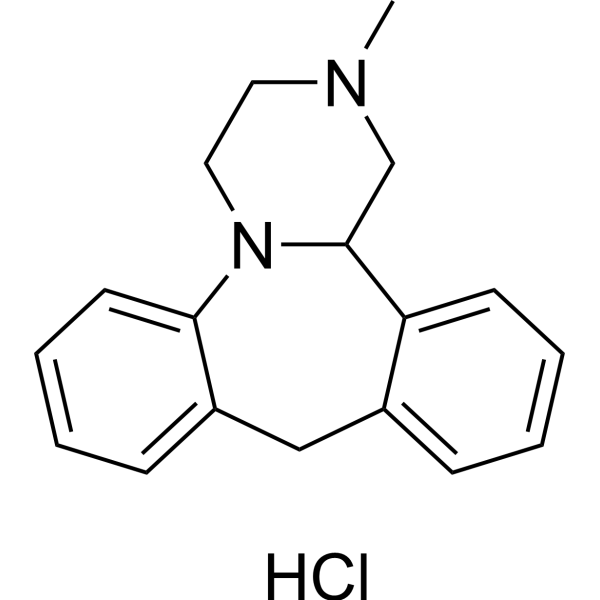
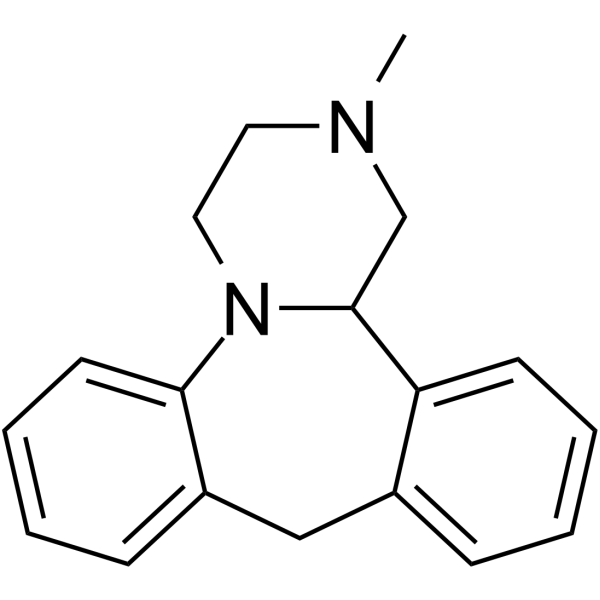
Mianserin hydrochloride (Org GB 94) is an orally active H1 receptor antagonist. Mianserin hydrochloride can activate κ-opioid receptor and octopamine receptor. Mianserin hydrochloride increases ERK1/2 and CREB phosphorylation, and antagonizes full κ-opioid agonist and Dynorphin A (HY-P1333)-induced MAPK phosphorylation. Mianserin hydrochloride modulates social and exploratory behaviour, raises electroconvulsive thresholds. Mianserin hydrochloride can be used for the research of neurological disease, such as depression and epilepsy .
|
-
-
- HY-17609
-
|
CR-845; FE-202845
|
Opioid Receptor
|
Neurological Disease
Inflammation/Immunology
|
|
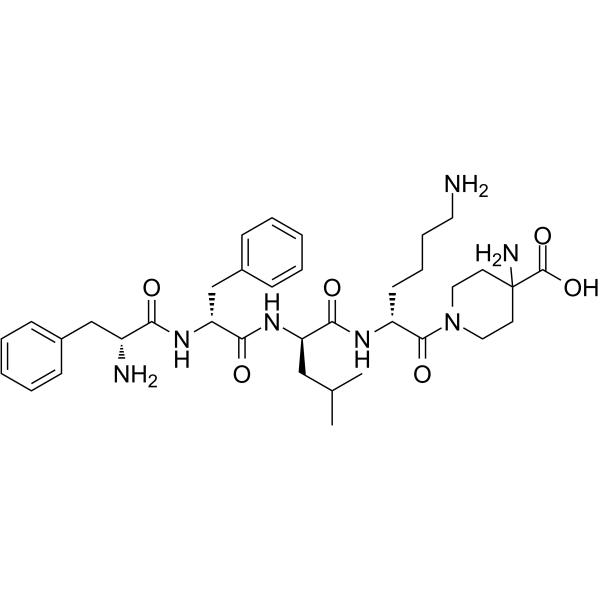
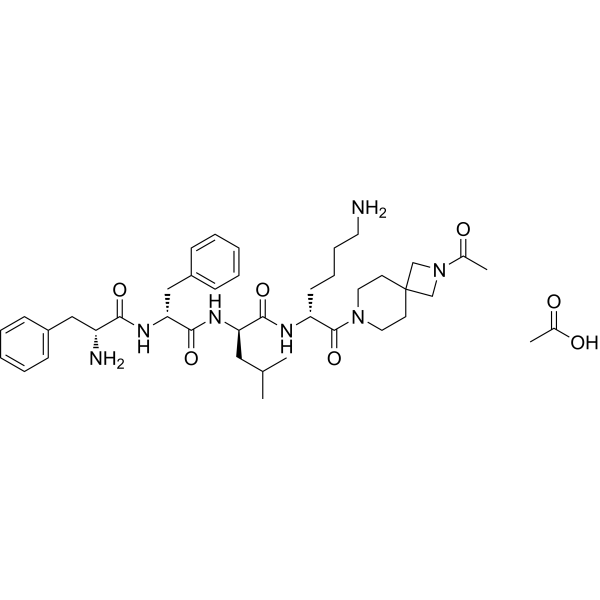
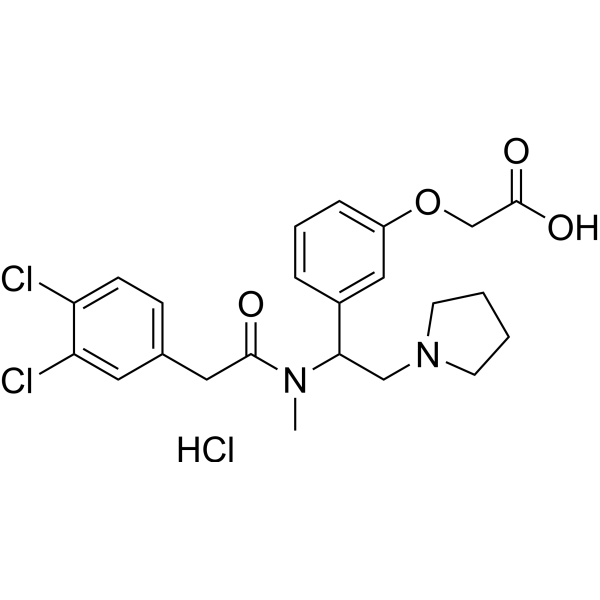
Difelikefalin (CR-845) is a peripherally restricted and selective agonist of kappa opioid receptor (KOR). Difelikefalin produces anti-inflammatory effects and has the potential in modulating pruritus in conditions such as chronic kidney disease .
|
-
-
- HY-10487
-
-
-
- HY-P1333
-
|
|
Opioid Receptor
Apoptosis
Caspase
Endogenous Metabolite
|
Neurological Disease
|
|
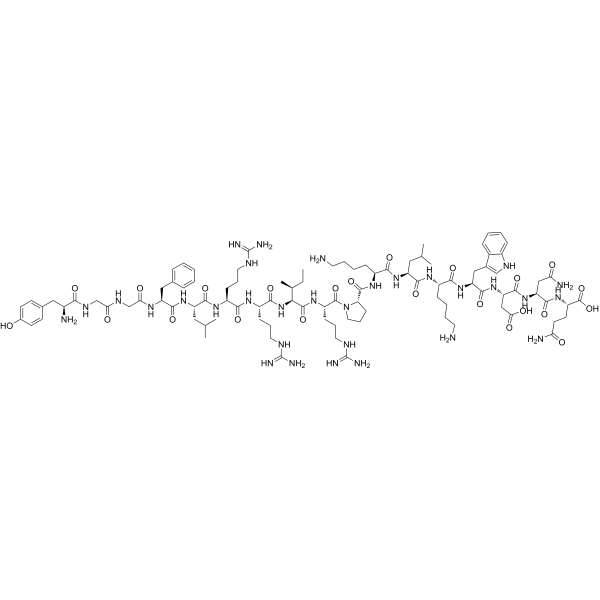
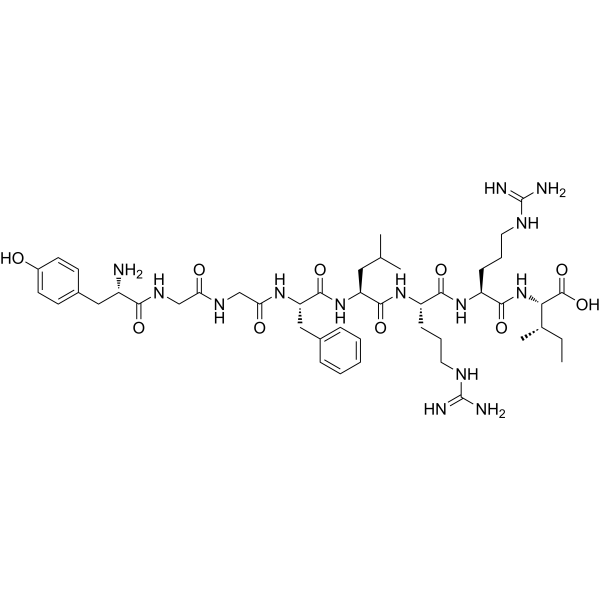
Dynorphin A is an endogenous opioid peptide involved in inhibitory neurotransmission in the central nervous system (CNS). Dynorphin A is a highy potent kappa opioid receptor (KOR) agonist, and is also an agonist for other opioid receptors, such as mu (MOR) and delta (DOR). Dynorphin A can induce neuronal death, and can be used in the research of neurological disease .
|
-
-
- HY-100903
-
|
nor-Binaltorphimine dihydrochloride; nor-BNI dihydrochloride
|
Opioid Receptor
|
Neurological Disease
|
|
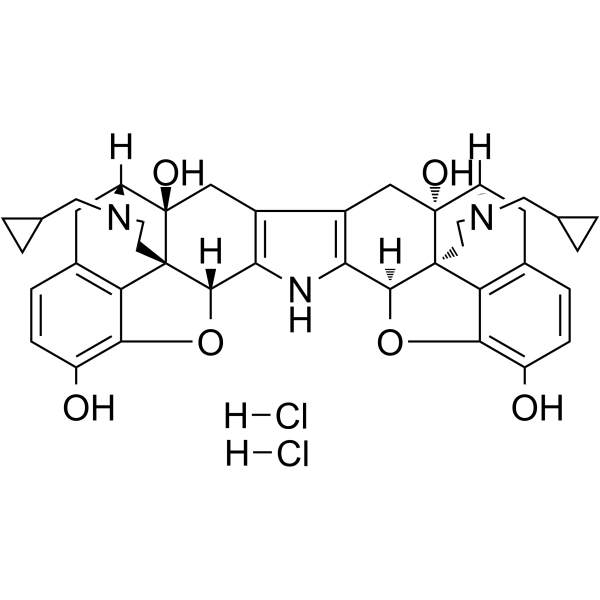
Norbinaltorphimine dihydrochloride (nor-Binaltorphimine dihydrochloride; nor-BNI dihydrochloride) is a selective, long-acting competitive antagonist of the κ-opioid receptor. Norbinaltorphimine dihydrochloride blocks κ-opioid receptor-mediated analgesic effects, and inhibits butorphanol-induced changes in κ-opioid receptor binding kinetics, desensitization and down-regulation. Norbinaltorphimine dihydrochloride suppresses specific opioid withdrawal symptoms, precipitates withdrawal behaviors in butorphanol-dependent rats, and serves as a molecular probe for studying κ-opioid receptor-agonist interactions. Norbinaltorphimine dihydrochloride is applicable to research related to neurological disorders such as pain .
|
-
-
- HY-117040
-
|
Norbinaltorphimine; NorBNI
|
Opioid Receptor
|
Neurological Disease
|
|
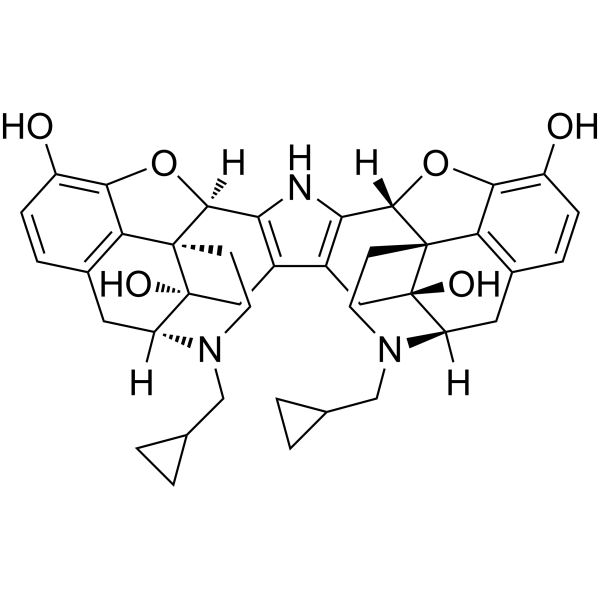
nor-Binaltorphimine (Norbinaltorphimine; NorBNI) is a selective, long-acting competitive antagonist of the κ-opioid receptor. nor-Binaltorphimine blocks κ-opioid receptor-mediated analgesic effects, and inhibits butorphanol-induced changes in κ-opioid receptor binding kinetics, desensitization and down-regulation. nor-Binaltorphimine suppresses specific opioid withdrawal symptoms, precipitates withdrawal behaviors in butorphanol-dependent rats, and serves as a molecular probe for studying κ-opioid receptor-agonist interactions. nor-Binaltorphimine is applicable to research related to neurological disorders such as pain .
|
-
-
- HY-B0188
-
|
Mianserine
|
Histamine Receptor
Opioid Receptor
ERK
p38 MAPK
|
Neurological Disease
|
|
Mianserin (Mianserine) is an orally active H1 receptor antagonist. Mianserin can activate κ-opioid receptor and octopamine receptor. Mianserin increases ERK1/2 and CREB phosphorylation, and antagonizes full κ-opioid agonist and Dynorphin A (HY-P1333)-induced MAPK phosphorylation. Mianserin modulates social and exploratory behaviour, raises electroconvulsive thresholds. Mianserin can be used for the research of neurological disease, such as depression and epilepsy .
|
-
-
- HY-145404
-
|
|
Opioid Receptor
|
Metabolic Disease
|
|
Mitragynine pseudoindoxyl is a potent orally active agonist of the μ-opioid receptor (MOR-1, Ki=0.8 nM) and an antagonist of the δ-opioid receptor (DOR-1, Ki=3.0 nM). Mitragynine pseudoindoxyl has moderate affinity for the κ-opioid receptor (KOR-1, Ki=24 nM) and does not recruit β-arrestin-2, acting through G protein-mediated signaling pathways without β-arrestin-2-related activation. Mitragynine pseudoindoxyl produces potent analgesic activity through a mixed μ-agonist/δ-antagonist mechanism, with low side effects such as physical dependence, respiratory depression, and constipation, and no rewarding or aversive behaviors. Mitragynine pseudoindoxyl reduces hyperactivity, inhibits GI transit, and enhances characteristics, making it a potential analgesic .
|
-
-
- HY-P2159
-
|
|
Opioid Receptor
Endogenous Metabolite
|
Neurological Disease
|
|
Dynorphin A (1-8) is a ligand with preference for the κ-opioid receptor, and its IC50 value against human placental κ-opioid receptor is 330 nM. Dynorphin A (1-8) mediates neuroprotective effects by inhibiting oxidative stress, suppressing apoptosis, and competitively displacing the binding of κ partial agonists. Dynorphin A (1-8) is the dominant opioid peptide in human placental villi and tissue extracts; it undergoes rapid hydrolysis and can enter the central nervous system via intranasal administration. Dynorphin A (1-8) can be used in studies related to ischemic stroke .
|
-
-
- HY-P3445A
-
-
-
- HY-P3609
-
CR 665
2 Publications Verification
JNJ 38488502; FE 200665
|
Opioid Receptor
|
Neurological Disease
|
|
CR 665 (JNJ 38488502) is a peripherally selective κ-opioid agonist. CR 665 can activate the kappa opioid receptor with EC50 value of 10.9 nM. CR 665 can be used for the research of peripheral pain .
|
-
-
- HY-100845
-
|
Divinorin A
|
Opioid Receptor
|
Cardiovascular Disease
|
|
Salvinorin A is a potent, unique and short-acting high efficacy kappa-opioid receptor (KOPr) agonist with Ki value of 4.3 nm. Salvinorin A is a non-nitrogenous neoclerodane isolated from Salvia divinorum.
|
-
-
- HY-176710
-
|
|
Protein Arginine Deiminase
Opioid Receptor
mAChR
|
Neurological Disease
Inflammation/Immunology
Cancer
|
|
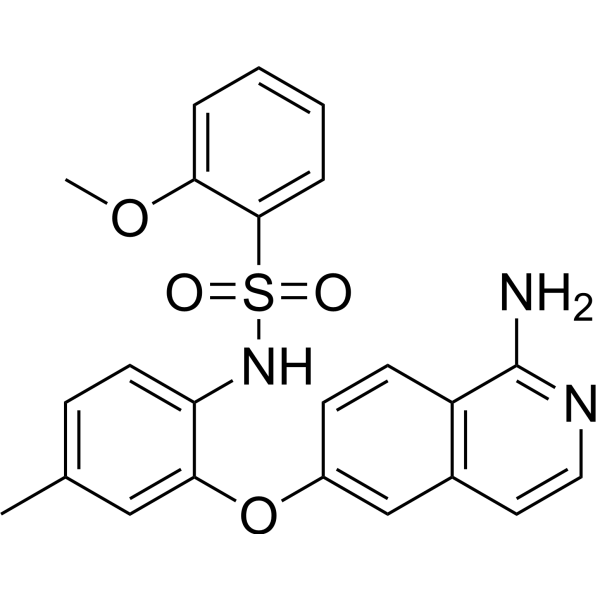
PAD-PF2 is a PAD family inhibitor, as well as a κ-opioid receptor agonist (EC50 = 7.55 μM) and an M1 muscarinic acetylcholine receptor antagonist (IC50 = 12.3 μM). The IC50 values of PAD-PF2 against PAD1, PAD2, PAD3 and PAD4 are 109 nM, 27.9 nM, 106 nM and 20.1 nM, respectively. PAD-PF2 binds to the common allosteric pocket of PAD1-4, and its inhibitory effects on PAD2 and PAD4 are Ca 2+-dependent. PAD-PF2 inhibits protein citrullination in neutrophils. PAD-PF2 is applicable to research related to rheumatoid arthritis, neurodegenerative diseases and cancer .
|
-
-
- HY-130118
-
|
|
Mas-related G-protein-coupled Receptor (MRGPR)
|
Neurological Disease
|
|
MRGPRX1 agonist 1 is a highly potent MRGPRX1 agonist (EC50=50 nM) with greater than 50-fold selectivity for δ, μ, and κ opioid receptors. MRGPRX1 agonist 1 is inactive against MRGPRC11. MRGPRC11 inhibits high voltage-activated (HVA) Ca 2+ currents, reduces neurotransmitter release, and mitigates nociceptive transmission in the spinal cord. MRGPRX1 agonist 1 is useful for the study of chronic pain, especially neuropathic pain .
|
-
-
- HY-101231
-
|
|
Opioid Receptor
|
Neurological Disease
|
|
ICI-204448 is a κ-opioid agonist with limited access to the CNS, ICI-204448 can displace the binding of the kappa-opioid ligand 3H-bremazocine from guinea pig cerebellum membranes .
|
-
-
- HY-107384A
-
|
EMD-61753 hydrochloride
|
Opioid Receptor
|
Neurological Disease
Metabolic Disease
Inflammation/Immunology
|
|
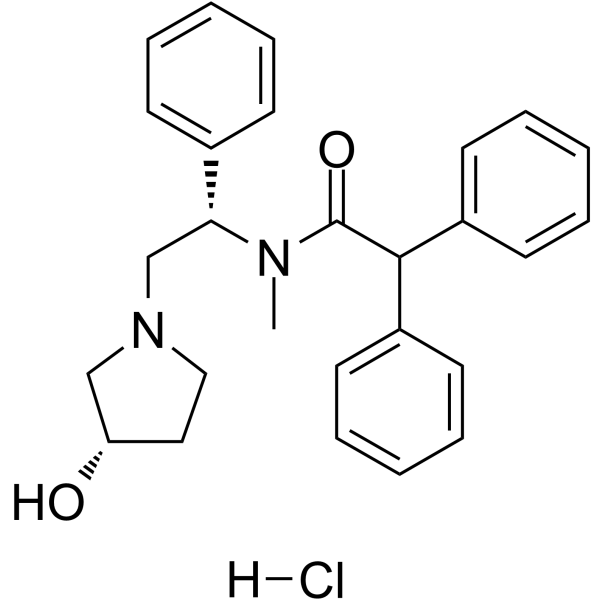
Asimadoline (EMD-61753) hydrochloride is an orally active, selective and peripherally active κ-opioid agonist with IC50s of 5.6 nM (guinea pig) and 1.2 nM (human recombinant). Asimadoline hydrochloride has low permeability across the blood brain barrier and has peripheral anti-inflammatory actions. Asimadoline hydrochloride ameliorates allodynia in diabetic rats and has the potential for irritable bowel syndrome (IBS) .
|
-
-
- HY-P3445
-
-
-
- HY-P0088
-
|
Dynorphin A Porcine Fragment 1-13
|
Opioid Receptor
|
Others
|
|
Porcine dynorphin A (1-13) is a potent, endogenous κ opioid receptor agonist and is antinociceptive at physiological concentrations.
|
-
-
- HY-123689
-
|
ALKS-33; RDC-0313
|
Opioid Receptor
|
Neurological Disease
|
|
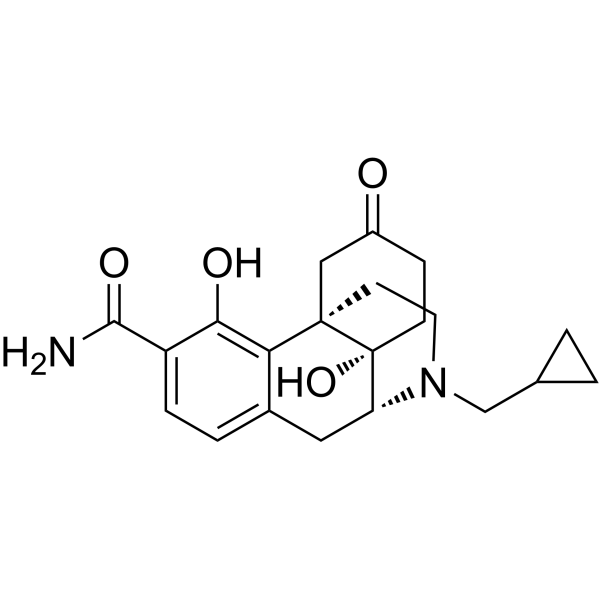
Samidorphan (ALKS-33) is an orally active opioid system modulator that has a high affinity for binding with μ‐opioid, κ‐opioid, and δ‐opioid receptors. Samidorphan acts as an antagonist at μ‐opioid receptors and acts as a partial agonist at k-opioid and δ‐opioid receptors. Samidorphan primarily acts as an opioid receptor antagonist in vivo. Samidorphan can improve the behavior of depressed animals .
|
-
-
- HY-101205
-
-
-
- HY-101079
-
|
|
Opioid Receptor
|
Neurological Disease
|
|
BRL 52537 hydrochloride is a highly selective κ-Opioid receptor (KOR) agonist with Kis of 0.24 nM and 1560 nM for κ and μ subtypes, respectively. BRL 52537 hydrochloride decreases ischemia-evoked NO production as a potential mechanism of neuroprotection. BRL 52537 hydrochloride attenuates early stroke damage .
|
-
-
- HY-15997B
-
|
(±)-Trans-(1R,2R)-U-50488 hydrochloride
|
Opioid Receptor
|
Neurological Disease
|
|
(±)-U-50488 ((±)-Trans-(1R,2R)-U-50488) hydrochloride is a selective κ opioid receptor (KOR) agonist .
|
-
-
- HY-15691
-
|
|
Opioid Receptor
mTOR
|
Neurological Disease
Metabolic Disease
|
|
PF-04455242 is an orally bioavailable, blood-brain barrier-permeable κ-opioid receptor (KOR) inhibitor. PF-04455242 blocks in vivo effects induced by KOR and MOR agonists, and elicits KOR-independent outward currents in ventral tegmental area neurons. PF-04455242 promotes energy expenditure and activates the hypothalamic mTOR pathway. PF-04455242 attenuates stress-induced behavioral effects and produces antidepressant-like effects. PF-04455242 can be used in studies related to pain, depression, addictive disorders, and obesity induced by estrogen withdrawal .
|
-
-
- HY-110302
-
|
|
Opioid Receptor
|
Neurological Disease
|
|
6'-GNTI dihydrochloride, a κ-opioid receptor (KOR) agonist, displays bias toward the activation of G protein-mediated signaling over β-arrestin2 recruitment. 6'-GNTI 6'-GNTI dihydrochloride only activates the Akt pathway in striatal neurons .
|
-
-
- HY-121800
-
-
-
- HY-B0188AR
-
|
Org GB 94 (Standard)
|
Reference Standards
Histamine Receptor
Opioid Receptor
ERK
p38 MAPK
|
Neurological Disease
Metabolic Disease
|
|
Mianserin hydrochloride (Org GB 94) (Standard) is the analytical standard of Mianserin hydrochloride. This product is intended for research and analytical applications. Mianserin hydrochloride is an orally active H1 receptor antagonist. Mianserin hydrochloride can activate κ-opioid receptor and octopamine receptor. Mianserin hydrochloride increases ERK1/2 and CREB phosphorylation, and antagonizes full κ-opioid agonist and Dynorphin A (HY-P1333)-induced MAPK phosphorylation. Mianserin hydrochloride modulates social and exploratory behaviour, raises electroconvulsive thresholds. Mianserin hydrochloride can be used for the research of neurological disease, such as depression and epilepsy .
|
-
-
- HY-B0188S
-
|
Mianserine-d3
|
Histamine Receptor
Isotope-Labeled Compounds
Opioid Receptor
ERK
p38 MAPK
|
Neurological Disease
|
|
Mianserin-d3 is the deuterium labeled Mianserin (HY-B0188). Mianserin (Mianserine) is an orally active H1 receptor antagonist. Mianserin can activate κ-opioid receptor and octopamine receptor. Mianserin increases ERK1/2 and CREB phosphorylation, and antagonizes full κ-opioid agonist and Dynorphin A (HY-P1333)-induced MAPK phosphorylation. Mianserin modulates social and exploratory behaviour, raises electroconvulsive thresholds. Mianserin can be used for the research of neurological disease, such as depression and epilepsy .
|
-
-
- HY-19231
-
|
Org 41793
|
Opioid Receptor
|
Neurological Disease
|
|
DPI-3290 (Org 41793) is a potent and specific opioid receptors agonist with Ki values of 0.18 nM, 0.46 nM, and 0.62 nM for δ-, μ-, and κ-opioid receptors, respectively. DPI-3290 is one of a series of novel centrally acting agents with potent antinociceptive activity .
|
-
-
- HY-107384
-
|
EMD-61753
|
Opioid Receptor
|
Neurological Disease
Metabolic Disease
Inflammation/Immunology
|
|
Asimadoline (EMD-61753) is an orally active, selective and peripherally active κ-opioid agonist with IC50s of 5.6 nM (guinea pig) and 1.2 nM (human recombinant). Asimadoline has low permeability across the blood brain barrier and has peripheral anti-inflammatory actions. Asimadoline ameliorates allodynia in diabetic rats and has the potential for irritable bowel syndrome (IBS) .
|
-
-
- HY-15997C
-
|
(±)-Trans-(1R,2R)-U-50488 hydrate hydrochloride
|
Opioid Receptor
|
Neurological Disease
|
|
(±)-U-50488 ((±)-Trans-(1R,2R)-U-50488) hydrate hydrochloride is a selective κ opioid receptor (KOR) agonist .
|
-
-
- HY-105235
-
|
CI-977
|
Opioid Receptor
|
Neurological Disease
|
|
Enadoline (CI-977) is a highly selective, brain-penetrating, and nonpeptide kappa-opioid receptor (KOR) agonist (Ki=1.25 nM). Antinociceptive effects .
|
-
-
- HY-120949
-
|
|
Opioid Receptor
|
Neurological Disease
|
|
(1R,2R)-U-50488 hydrochloride is the absolute stereochemistry of (±)-U-50488 hydrochloride. (±)-U-50488 hydrochloride is a selective κ opioid receptor (KOR) agonist .
|
-
-
- HY-170973
-
|
|
Opioid Receptor
|
|
|
KOR agonist 4 (compound 39) is an agonist of Kappa Opioid Receptor. KOR agonist 4 is an activator of G-protein signaling. KOR agonist 4 binds with GTPγS with an EC50 of 14 nM and with an Emax of 83 %. KOR agonist 4 demonstrates moderate to high intrinsic clearance in human hepatocytes. KOR agonist 4 exhibits 60- and 810-fold selectivities versus the related mu (MOR) and delta (DOR) opioid receptors. KOR agonist 4 is potential for central nervous system (CNS) disorders research .
|
-
-
- HY-106756
-
|
U-62066
|
Opioid Receptor
|
Neurological Disease
|
|
Spiradoline (U-62066), an arylacetamide, is a selective kappa opioid receptor (KOR) agonist with a Ki of 8.6 nM in guinea pig. The Ki values of Spiradoline for μ and δ receptors are 252 nM and 9400 nM, respectively. Spiradoline has potent diuretic, analgesic, antiarrythmic, antitussive, neuroprotective properties and easily penetrates the blood-brain barrier .
|
-
-
- HY-17609S1
-
|
CR-845-d5 hydrochloride; FE-202845-d5 hydrochloride
|
Isotope-Labeled Compounds
Opioid Receptor
|
Neurological Disease
Inflammation/Immunology
|
|
Difelikefalin-d5 (CR-845-d5) hydrochloride is the deuterium labeled Difelikefalin (HY-17609). Difelikefalin (CR-845) is a peripherally restricted and selective agonist of kappa opioid receptor (KOR). Difelikefalin produces anti-inflammatory effects and has the potential in modulating pruritus in conditions such as chronic kidney disease .
|
-
-
- HY-145128
-
-
-
- HY-B0188AS
-
|
Org GB 94-d3
|
Isotope-Labeled Compounds
Histamine Receptor
Opioid Receptor
ERK
p38 MAPK
|
Neurological Disease
Metabolic Disease
|
|
Mianserin-d3 hydrochloride is the deuterium labeled Mianserin. Mianserin (Mianserine) is an orally active H1 receptor antagonist. Mianserin can activate κ-opioid receptor and octopamine receptor. Mianserin increases ERK1/2 and CREB phosphorylation, and antagonizes full κ-opioid agonist and Dynorphin A (HY-P1333)-induced MAPK phosphorylation. Mianserin modulates social and exploratory behaviour, raises electroconvulsive thresholds. Mianserin can be used for the research of neurological disease, such as depression and epilepsy .
|
-
-
- HY-126063
-
|
|
Opioid Receptor
|
Neurological Disease
|
|
ICI-204448 free acid is a κ-opioid agonist with limited access to the CNS, ICI-204448 free acid can displace the binding of the kappa-opioid ligand 3H-bremazocine from guinea pig cerebellum membranes .
|
-
-
- HY-163017
-
-
-
- HY-106605
-
|
LY 120363
|
Dopamine Receptor
5-HT Receptor
|
Neurological Disease
|
|
Flumezapine (LY 120363) is a potent and balanced antagonist of the dopamine D2 receptor and the 5-hydroxytryptamine receptor (5-HT receptor). Flumezapine does not alter the increase in serum cortisol caused by κ-opioid receptor agonists. Flumezapine inhibits the conditioned avoidance response in rats and has a low risk of extrapyramidal side effects. Flumezapine can be used in antipsychotic research .
|
-
-
- HY-101582
-
-
-
- HY-123689S1
-
|
ALKS-33-d5; RDC-0313-d5
|
Isotope-Labeled Compounds
Opioid Receptor
|
Neurological Disease
|
|
Samidorphan-d5 (ALKS-33-d5) is is a deuterated compound of Samidorphan. Samidorphan is an orally active opioid system modulator that binds with high affinity to μ-opioid, κ-opioid, and δ-opioid receptors. Samidorphan is a μ-opioid receptor antagonist and a partial agonist at k-opioid and δ-opioid receptors. Samidorphan acts primarily as an opioid receptor antagonist in vivo .
|
-
-
- HY-108043
-
|
|
Opioid Receptor
|
Neurological Disease
|
|
AZD-2327 is a potent and selective δ-opioid receptor agonist. AZD-2327 binds to the human opioid receptor (Ki of 0.49 and 0.75 nM and EC50 of 24 and 9.2 nM at the C27 and F27 isoforms, respectively). AZD-2327 shows selectivity of >1000-fold over the human μ- and κ-opioid receptor subtypes as well as >130 other receptors and channels. AZD-2327 exhibits antidepressant and anxiolytic activities and can be used for the research of neurological disease .
|
-
-
- HY-178945
-
|
|
Opioid Receptor
Interleukin Related
TNF Receptor
Sigma Receptor
|
Neurological Disease
Inflammation/Immunology
|
|
KOR agonist 7 (Compound 29) is a highly selective κ-opioid receptor (KOR) agonist with a Ki of 138 nM. KOR agonist 7 shows no activity at μ- and δ-opioid receptors or σ1 receptor, and exhibits extremely low affinity for σ2 receptor (Ki = 2.8 μM). KOR agonist 7 significantly reduces the secretion of pro-inflammatory cytokines such as IL-6, TNF-α, and IFN-γ, while increasing the production of the anti-inflammatory cytokine IL-10. KOR agonist 7 downregulates the expression of the pro-inflammatory M1 macrophage marker CD80 and upregulates the anti-inflammatory M2 macrophage marker CD163. KOR agonist 7 holds potential for applications in analgesia and immune modulation .
|
-
-
- HY-136786
-
-
-
- HY-171236
-
|
|
Opioid Receptor
|
|
|
FEKAP is a brain-penetrant and selective kappa opioid receptor (KOR) agonist (Ki = 0.43 nM) which isotope labeled form exhibits excellent imaging properties. 11C-FEKAP can be utilized as a radiotracer for imaging KOR .
|
-
-
- HY-124959
-
|
U-62066 mesylate
|
Opioid Receptor
|
Neurological Disease
|
|
Spiradoline mesylate (U-62066 mesylate), an arylacetamide, is a selective kappa opioid receptor (KOR) agonist with a Ki of 8.6 nM in guinea pig. The Ki values of Spiradoline mesylate for μ and δ receptors are 252 nM and 9400 nM, respectively. Spiradoline mesylate has potent diuretic, analgesic, antiarrythmic, antitussive, neuroprotective properties and easily penetrates the blood-brain barrier .
|
-
-
- HY-163277
-
|
|
Opioid Receptor
|
Inflammation/Immunology
|
|
PIPE-3297 (compound 25) is a selective kappa opioid receptor (KOR) agonist, which activates the G-protein signaling with EC50 of 1.1 nM and exhibits low β-arrestin-2 recruitment activity (10%). PIPE-3297 induces myelination and reveals an anti-inflammatory activity .
|
-
-
- HY-17609S
-
|
CR-845-d5; FE-202845-d5
|
Isotope-Labeled Compounds
Opioid Receptor
|
Neurological Disease
|
|
Difelikefalin-d5 (CR-845-d5) is deuterium labeled Difelikefalin. Difelikefalin (CR-845; FE-202845) is a peripherally restricted and selective agonist of kappa opioid receptor (KOR). Difelikefalin produces anti-inflammatory effects and has the potential in modulating pruritus in conditions such as chronic kidney disease .
|
-
- HY-171758
-
|
|
Opioid Receptor
|
Neurological Disease
|
|
BU72 is a highly potent and long-acting agonist of μ and κ opioid receptors, and also has a partial agonist effect on δ opioid receptors (EC50 values are 0.054, 0.033, and 0.58 nM, respectively). BU72 has a strong and long-lasting analgesic effect, which is mainly mediated by μ opioid receptors. BU72 has a long-lasting activity and can partially reverse the analgesic effect of morphine. BU72 can be used in the study of opioid dependence .
|
-
- HY-130482
-
-
- HY-122169
-
|
Ketocyclazocine
|
Opioid Receptor
|
Neurological Disease
|
|
Ketazocine (Ketocyclazocine) is a selective κ-opioid receptor (KOR) agonist. Ketazocine is promising for research of analgesics and sedatives .
|
-
- HY-19206
-
-
- HY-100963
-
-
- HY-101205A
-
-
- HY-123389
-
|
(R)-UM-1071
|
Opioid Receptor
|
Endocrinology
|
|
MR2034 ((R)-UM-1071) is a κ-opioid receptor agonist with activity that stimulates the hypothalamic-pituitary-adrenal axis. MR2034 has shown the potential to promote mood and inhibit addictive behaviors in animal models and can be used to study inhibitory approaches related to mood and addictive disorders. MR2034 is selective for κ-opioid receptors and can effectively modulate biological processes related to stress and mood .
|
-
- HY-P3647
-
-
- HY-P3647A
-
|
|
Opioid Receptor
Adenylate Cyclase
|
Neurological Disease
|
|
[DPro10] Dynorphin A (1-11), porcine hydrochloride, a N-Alkylated derivative, is a potent κ-opioid receptor agonist with a Ki value of 0.13 nM. [DPro10] Dynorphin A (1-11), porcine hydrochloride has analgesic property .
|
-
- HY-160761
-
|
|
Opioid Receptor
|
Inflammation/Immunology
|
|
K-Opioid receptor agonist-1 (Compound 5a) is an agonist for κ-Opioid receptor with Ki of 0.25 nM and EC50 of 2 nM. K-Opioid receptor agonist-1 is blood brain barrier (BBB) penetrate (brain/plasma ratios of 0.50 to 0.65). K-Opioid receptor agonist-1 exhibits anti-inflammatory activity in dermatitis models induced by Arachidonic acid (HY-109590) or oxazolidinone .
|
-
- HY-135238
-
|
PD-117302
|
Opioid Receptor
|
Others
|
|
(rel)-RSD 921 (PD-117302) is a κ-opioid receptor agonist. (rel)-RSD 921 did not have a greater food-inducing effect in obese than in lean Zucker rats; in both obese and lean Zucker rats, lean rats were more sensitive to its initial food-inducing effect but ultimately ate less.
|
-
- HY-P3376
-
-
- HY-P10006
-
|
|
Opioid Receptor
|
Neurological Disease
|
|
Leumorphin, human is a potent kappa opioid receptor (κ opioid receptor) agonist. Leumorphin, human inhibits the contraction of the myenteric plexus-longitudinal muscle preparation of the guinea pig ileum .
|
-
- HY-123689A
-
|
ALKS-33 hydrochloride; RDC-0313 hydrochloride
|
Opioid Receptor
|
Neurological Disease
|
|
Samidorphan hydrochloride is an orally active opioid system modulator that has a high affinity for binding with μ‐opioid, κ‐opioid, and δ‐opioid receptors. Samidorphan hydrochloride acts as an antagonist at μ‐opioid receptors and acts as a partial agonist at k-opioid and δ‐opioid receptors. Samidorphan hydrochloride primarily acts as an opioid receptor antagonist in vivo. Samidorphan can improve the behavior of depressed animals .
|
-
- HY-123689S
-
|
ALKS-33-d4; RDC-0313-d4
|
Isotope-Labeled Compounds
Opioid Receptor
|
Neurological Disease
|
|
Samidorphan-d4 is the deuterium labeled Samidorphan(HY-123689).Samidorphan (ALKS-33) is an orally active opioid system modulator that has a high affinity for binding with μ‐opioid, κ‐opioid, and δ‐opioid receptors. Samidorphan acts as an antagonist at μ‐opioid receptors and acts as a partial agonist at k-opioid and δ‐opioid receptors. Samidorphan primarily acts as an opioid receptor antagonist in vivo .
|
-
- HY-106605S
-
|
LY 120363-d8 hydrochloride
|
Isotope-Labeled Compounds
Dopamine Receptor
5-HT Receptor
|
Neurological Disease
|
|
Flumezapine-d8 (LY 120363-d8) hydrochloride is deuterated labeled Flumezapine hydrochloride. Flumezapine hydrochloride is a potent and balanced antagonist of the dopamine D2 receptor and the 5-hydroxytryptamine receptor (5-HT receptor). Flumezapine hydrochloride does not alter the increase in serum cortisol caused by κ-opioid receptor agonists. Flumezapine hydrochloride inhibits the conditioned avoidance response in rats and has a low risk of extrapyramidal side effects. Flumezapine hydrochloride can be used in antipsychotic research.
|
-
- HY-123689R
-
|
ALKS-33 (Standard); RDC-0313 (Standard)
|
Opioid Receptor
Reference Standards
|
Neurological Disease
|
|
Samidorphan (Standard) is the analytical standard of Samidorphan. This product is intended for research and analytical applications. Samidorphan (ALKS-33) is an orally active opioid system modulator that has a high affinity for binding with μ‐opioid, κ‐opioid, and δ‐opioid receptors. Samidorphan acts as an antagonist at μ‐opioid receptors and acts as a partial agonist at k-opioid and δ‐opioid receptors. Samidorphan primarily acts as an opioid receptor antagonist in vivo. Samidorphan can improve the behavior of depressed animals.
|
-
- HY-167842
-
-
- HY-105235A
-
|
CI-977 hydrochloride
|
Opioid Receptor
|
Neurological Disease
|
|
Enadoline (CI-977) hydrochloride is a highly selective, brain-penetrating, and nonpeptide kappa-opioid receptor (KOR) agonist (Ki=1.25 nM). Antinociceptive effects .
|
-
- HY-15691A
-
|
|
Opioid Receptor
mTOR
|
Neurological Disease
Metabolic Disease
|
|
PF-4455242 hydrochloride is an orally bioavailable, blood-brain barrier-permeable κ-opioid receptor (KOR) inhibitor. PF-4455242 hydrochloride blocks in vivo effects induced by KOR and MOR agonists, and elicits KOR-independent outward currents in ventral tegmental area neurons. PF-4455242 hydrochloride promotes energy expenditure and activates the hypothalamic mTOR pathway. PF-4455242 hydrochloride attenuates stress-induced behavioral effects and produces antidepressant-like effects. PF-4455242 hydrochloride can be used in studies related to pain, depression, addictive disorders, and obesity induced by estrogen withdrawal .
|
-
- HY-163917
-
|
|
Opioid Receptor
|
Neurological Disease
|
|
SalA-VS-08 is a full agonist of kappa-opioid receptor (KOR) with selectivity and G-protein bias. SalA-VS-08 can be used in the research of analgesia .
|
-
- HY-161812
-
|
|
Opioid Receptor
|
Others
|
|
MOR agonist-4 (2d) is a G protein signaling-biased Kappa opioid receptor (KOR) agonist with an EC50 value of 11 nM. MOR agonist-4 contains an electron withdrawing CF3 group and a bias factor of 38 based on triazole. MOR agonist-4 is used in the research of pruritis and analgesia .
|
-
- HY-163916
-
|
|
Opioid Receptor
|
Neurological Disease
|
|
SalA-VS-07 is a G protein-biased partial agonist for the Kappa-opioid receptor (KOR). SalA-VS-07 can be used for research of pain and other disorders .
|
-
- HY-136654
-
|
|
Opioid Receptor
|
Neurological Disease
|
|
LPK-26 hydrochloride is a selective kappa-opioid receptor agonist with a Ki of 0.68 nM. LPK-26 exhibits potent antinociceptive effects with low physical dependence potential and can be utilized in relevant research .
|
-
- HY-159088
-
|
|
Opioid Receptor
|
Neurological Disease
|
|
KOR agonist 2 (Compound 23p) is an agonist for κ opioid receptor (KOR) with Ki of 1.9 nM. KOR agonist 2 exhibits analgesic effect in mouse models with ED50 of 1.30 mg/kg. KOR agonist 2 exhibits high clearance rate (2 mg/kg, i.v.) in mice, high metabolism and clearance in liver microsomes .
|
-
- HY-137920
-
|
|
Opioid Receptor
|
Cardiovascular Disease
|
|
Salvinorin A (Divinorin A) propionate is a potent, unique and short-acting high efficacy kappa-opioid receptor (KOPr) agonist with Ki value of 4.3 nm. Salvinorin A propionate is a non-nitrogenous neoclerodane isolated from Salvia divinorum .
|
-
- HY-P10203
-
|
|
Opioid Receptor
|
Inflammation/Immunology
|
|
μ/κ/δ opioid receptor agonist 1 is a μ opioid receptor (MOR), κ opioid receptor (KOR), and δ opioid receptor (DOR) agonist. μ/κ/δ opioid receptor agonist 1 produces a strong and long-lasting analgesic effect through peripheral MOR and KOR in the tail-flick test .
|
-
- HY-17609C
-
|
CR-845 acetate; FE-202845 acetate
|
Opioid Receptor
|
Neurological Disease
|
|
Difelikefalin (CR-845; FE-202845) acetate is a peripherally restricted and selective agonist of kappa opioid receptor (KOR). Difelikefalin acetate produces anti-inflammatory effects and has the potential in modulating pruritus in conditions such as chronic kidney disease .
|
-
- HY-P1333A
-
|
|
Opioid Receptor
Apoptosis
Caspase
Endogenous Metabolite
|
Neurological Disease
|
|
Dynorphin A TFA is an endogenous opioid peptide involved in inhibitory neurotransmission in the central nervous system (CNS). Dynorphin A TFA is a highy potent kappa opioid receptor (KOR) agonist, and is also an agonist for other opioid receptors, such as mu (MOR) and delta (DOR). Dynorphin A TFA can induce neuronal death, and can be used in the research of neurological disease .
|
-
- HY-133173
-
|
RU51599
|
Vasopressin Receptor
Opioid Receptor
|
Neurological Disease
|
|
Niravoline (RU51599) is an arginine vasopressin (AVP) release inhibitor and a selective kappa opioid receptor agonist. Niravoline has a pure water diuresis effect without associated electrolyte excretion. Niravoline can reduce brain oedema following transient forebrain ischaemia in rats .
|
-
- HY-P3634
-
|
|
Opioid Receptor
|
Neurological Disease
|
|
[DAla2] Dynorphin A (1-13), amide (porcine) is a petide. [DAla2] Dynorphin A (1-13), amide (porcine) might have the κ opioid receptor agonist effect. [DAla2] Dynorphin A (1-13), amide (porcine) can be used for the research of nervous system .
|
-
- HY-126910
-
|
|
Opioid Receptor
|
Metabolic Disease
|
|
Mesyl Salvinorin B is a potent and selective kappa opioid receptor (KOP-r) agonist. Mesyl Salvinorin B prevents the ADE (Alcohol deprivation effect) in mice. Mesyl Salvinorin B dose-dependently reduces alcohol intake and preference in CED (chronic escalation drinking) mice .
|
-
- HY-141468
-
|
β-CNA dihydrochloride
|
Opioid Receptor
|
Neurological Disease
|
|
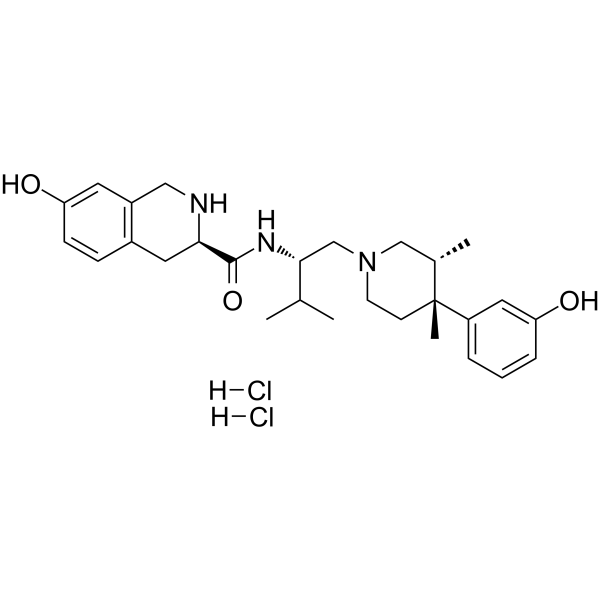
β-Chlornaltrexamine dihydrochloride (β-CNA dihydrochloride) is a potent long-term opioid receptor blocker. β-Chlornaltrexamine dihydrochloride can effectively block the inhibitory effect of κ opioid receptor agonists on dopamine release. β-Chlornaltrexamine dihydrochloride can be used to study the mechanism of pain perception .
|
-
- HY-P4679
-
|
E2078
|
Opioid Receptor
|
Neurological Disease
|
|
(N-Me-Tyr1,N-Me-Arg7,D-Leu-NHEt8)-Dynorphin A (1-8) (E-2078), a stable Dynorphin A (1–8) (HY-P2159) analog, is a kappa opioid receptor (KOR) agonist .
|
-
- HY-130696
-
|
(+)-Trans-(1R,2R)-U-50488
|
Opioid Receptor
|
Neurological Disease
|
|
(+)-U-50488 ((+)-Trans-(1R,2R)-U-50488) is a less active κ opioid receptor (KOR) agonist than the enantiomer of (-)-Trans-(1S,2S)-U-50488 (HY-15997) .
|
-
- HY-15997A
-
|
(+)-Trans-(1R,2R)-U-50488 hydrochloride
|
Opioid Receptor
|
Neurological Disease
|
|
(+)-U-50488 (hydrochloride) (+)-Trans-(1R,2R)-U-50488 hydrochloride) is a less active κ opioid receptor (KOR) agonist than the enantiomer of (-)-Trans-(1S,2S)-U-50488 (HY-15997) .
|
-
- HY-P1625
-
|
Dynorphin A ethylamide (1-9)
|
Opioid Receptor
|
Neurological Disease
|
|
Daeatal (Dynorphin A ethylamide (1-9)) is an ethylamine-modified dynorphin fragment that can be used in the study of analgesia, addiction, depression, etc. Dynorphin A is an endogenous opioid peptide involved in inhibitory neurotransmission in the central nervous system (CNS). Dynorphin A is a highy potent kappa opioid receptor (KOR) agonist, and is also an agonist for other opioid receptors, such as mu (MOR) and delta (DOR). Dynorphin A can induce neuronal death, and can be used in the research of neurological disease .
|
-
- HY-178720
-
|
|
Opioid Receptor
|
Neurological Disease
|
|
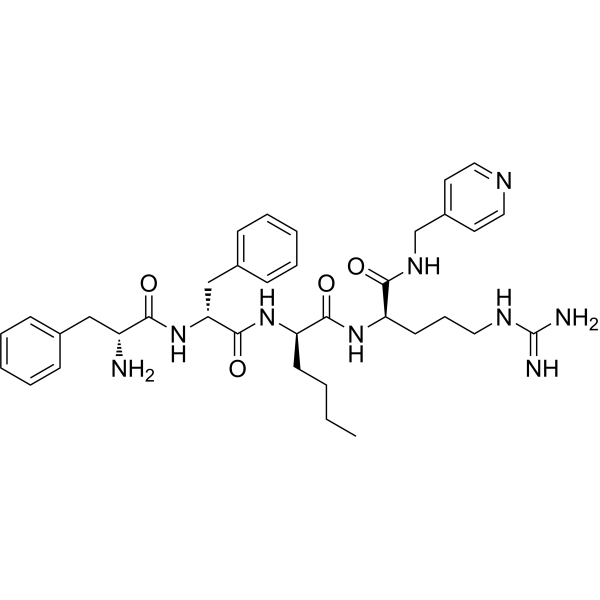
SHR0687 is a selective tetrapeptide kappa opioid receptor (KOR) agonist with an EC50 of 0.53 pM. SHR0687 displays high potency and selectivity over MOR and DOR, with negligible blood-brain barrier penetration. SHR0687 activates KOR specifically, leading to potential modulation of neurological pathways without significant central nervous system effects. SHR0687 can be used for the research of pain .
|
-
- HY-120045A
-
|
|
Opioid Receptor
|
Neurological Disease
|
|
DuP 747 hydrochloride is an analgesic with selective kappa-opioid receptor agonist activity. DuP 747 showed less spiradoline-appropriate selection when administered SC, but showed a partial generalized response to spiradoline when administered IP or PO. The 5-hydroxy-desmethoxy metabolite of DuP 747 induced selection of the saline-appropriate lever only. The effects of DuP 747 suggest that its metabolites may play a major role in the similar responses to spiradoline after IP and PO administration .
|
-
- HY-100903R
-
|
nor-Binaltorphimine dihydrochloride (Standard); nor-BNI dihydrochloride (Standard)
|
Opioid Receptor
Reference Standards
|
Neurological Disease
|
|
Norbinaltorphimine dihydrochloride (Standard) is the analytical standard of Norbinaltorphimine dihydrochloride (HY-100903). This product is intended for research and analytical applications. Norbinaltorphimine dihydrochloride (nor-Binaltorphimine dihydrochloride; nor-BNI dihydrochloride) is a selective, long-acting competitive antagonist of the κ-opioid receptor. Norbinaltorphimine dihydrochloride blocks κ-opioid receptor-mediated analgesic effects, and inhibits butorphanol-induced changes in κ-opioid receptor binding kinetics, desensitization and down-regulation. Norbinaltorphimine dihydrochloride suppresses specific opioid withdrawal symptoms, precipitates withdrawal behaviors in butorphanol-dependent rats, and serves as a molecular probe for studying κ-opioid receptor-agonist interactions. Norbinaltorphimine dihydrochloride is applicable to research related to neurological disorders such as pain .
|
-
- HY-13597
-
|
|
Opioid Receptor
|
Neurological Disease
|
|
CJ-15161 is a κ-opioid receptor agonist. CJ-15161 can be used to study physiological functions such as pain relief and emotional regulation .
|
-
- HY-181515
-
|
|
Opioid Receptor
|
Neurological Disease
|
|
KOR agonist 8 (Compound 8a) is a κ-opioid receptor (KOR) agonist and an analgesic agent, with a Ki value of 5.3 nM for human KOR, and EC50 values of 43.1 nM and 9236 nM for human KOR. It exhibits subtype selectivity for MOR/KOR and DOR/KOR. KOR agonist 8 is applicable for pain-related research .
|
-
- HY-176710A
-
|
|
Drug Isomer
|
Others
|
|
(R)-PAD-PF2 is an isomer of PAD-PF2 (HY-176710). PAD-PF2 is a PAD family inhibitor, as well as a κ-opioid receptor agonist (EC50 = 7.55 μM) and an M1 muscarinic acetylcholine receptor antagonist (IC50 = 12.3 μM).
|
-
- HY-106131
-
|
PD-123497
|
Sodium Channel
Opioid Receptor
|
Cardiovascular Disease
|
|
RSD-921 (PD-123497) is a potent Na + channel blocker with anti-arrhythmic activity. RSD-921 displays a low affinity for κ-opioid receptors and behaves as a weak κ-agonist in vitro. RSD 921 displays state-, time- and voltage-dependent block of the open state of cardiac, skeletal muscle and neuronal Na + channels expressed in Xenopus oocytes. RSD-921 can be used for cardiac arrhythmias research .
|
-
- HY-107384AR
-
|
EMD-61753 hydrochloride (Standard)
|
Reference Standards
Opioid Receptor
|
Neurological Disease
Metabolic Disease
Inflammation/Immunology
|
|
Asimadoline hydrochloride (Standard) (EMD-61753 hydrochloride (Standard)) is the analytical standard of Asimadoline (hydrochloride) (HY-107384A). This product is intended for research and analytical applications. Asimadoline (EMD-61753) hydrochloride is an orally active, selective and peripherally active κ-opioid agonist with IC50s of 5.6 nM (guinea pig) and 1.2 nM (human recombinant). Asimadoline hydrochloride has low permeability across the blood brain barrier and has peripheral anti-inflammatory actions. Asimadoline hydrochloride ameliorates allodynia in diabetic rats and has the potential for irritable bowel syndrome (IBS) .
|
-
- HY-183773
-
|
|
Opioid Receptor
|
Neurological Disease
|
|
KOR agonist-9 is a selective kappa opioid receptor (KOR) agonist with an EC50 of 1.41 nM. KOR agonist-9 exhibits >125-fold selectivity over μ/δ-opioid receptors. KOR agonist-9 antinociceptive and antipruritic effects in mice. KOR agonist-9 can be used for the research of pain, pruritus .
|
-
- HY-10487R
-
|
|
Reference Standards
Opioid Receptor
|
Neurological Disease
|
|
JDTic dihydrochloride (Standard) is the analytical standard of JDTic dihydrochloride (HY-10487). This product is intended for research and analytical applications. JDTic dihydrochloride is a potent antagonist of kappa-opioid receptors (KOR), blocking the κ-agonist U50, 488-induced antinociception.
|
-
- HY-130696A
-
|
(±)-trans-(1R,2R)-U-50488
|
Opioid Receptor
|
Neurological Disease
|
|
(±)-U-50488 ((±)-trans-(1R,2R)-U-50488) is a selective kappa opioid receptor agonist. (±)-U-50488 can improve symptoms related to status epilepticus, but has no significant effect on spontaneous seizure episodes. (±)-U-50488 can be used for research of epilepsy .
|
-
- HY-125790
-
|
|
Opioid Receptor
|
Neurological Disease
|
|
Cyclazocine is a μ, δ, and κ opioid receptor modulator with Ki values of 0.32, 1.1, and 0.18 nM, respectively. Cyclazocine exhibits "mixed" pharmacological activities, acting as a μ-partial antagonist, κ-agonist, and low-affinity δ ligand. Cyclazocine shows antinociceptive activity in mice. Cyclazocine can be used in studies on psychoactive substance addiction .
|
-
- HY-180212
-
|
|
Opioid Receptor
|
Neurological Disease
|
|
SYK-1106 is a potent delta-opioid receptor (DOR) agonist with an EC50 of 89 pM and a Ki of 848 pM. SYK-1106 is selective for μ and κ opioid receptors, with Ki values of 9.54 nM and 2.45 nM, respectively. SYK-1106 induces dose-dependent antidepressant-like effects. SYK-1106 can be used for the research of depression .
|
-
- HY-N0164
-
|
Matridin-15-one; Vegard; α-Matrine
|
PINK1/Parkin
Opioid Receptor
Autophagy
Mitophagy
Ferroptosis
Apoptosis
|
Inflammation/Immunology
Cancer
|
|
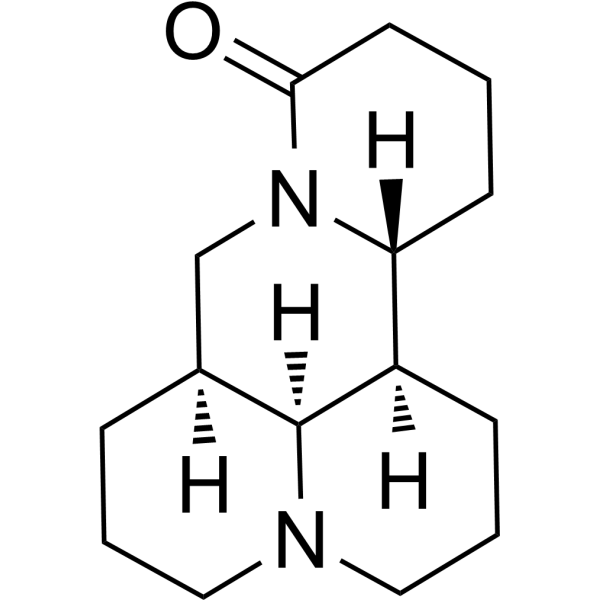
Matrine (Matridin-15-one) is an alkaloid found in plants from the Sophora genus that can act as a kappa opioid receptor and u-receptor agonist. Matrine has a variety of pharmacological effects, including anti-cancer, anti-oxidative stress, anti-inflammation and anti-apoptosis effects. Matrine is potential in the research of disease like human non-small cell lung cancer, hepatoma, papillary thyroid cancer and acute kidney injury (AKI) .
|
-
- HY-111011
-
|
JNJ 38488502 acetate; FE 200665 acetate
|
Opioid Receptor
|
Neurological Disease
|
|
CR 665 (JNJ 38488502) acetate is a kappa-opioid agonist that may effectively treat visceral pain by activating receptors on afferent nerves within the gut. CR 665 acetate exhibits peripheral selectivity, differentiating its pharmacokinetic profile from that of non-selective opioids like oxycodone. CR 665 acetate has demonstrated a beneficial effect on visceral pain tolerance thresholds without the delayed analgesic response characteristic of opioids that penetrate the brain. CR 665 acetate is proposed for use in managing postoperative pain due to its pain-relieving properties.
|
-
- HY-156131
-
|
ADL 2-1294
|
Opioid Receptor
|
Neurological Disease
Inflammation/Immunology
|
|
Loperamide (ADL 2-1294) is selective and orally active μ opioid receptor agonist with Ki valuess of 3, 48 and 1156 nM against μ, δ and κ opioid receptor, respectively. Loperamide produces antinociception and antihyperalgesia. Loperamide exhibits peripheral selectivity, enhancing fluid, electrolyte, and glucose absorption, reversing PGE2 (HY-101952)- and Cholera toxin (HY-P1446)-induced intestinal secretion, and reducing intestinal motility. Loperamide can be used for the researches of inflammatory pain and protracted diarrhoea .
|
-
- HY-135698
-
|
M-CAM
|
Opioid Receptor
|
Neurological Disease
|
|
Methocinnamox (M-CAM) a selective and long-acting μ-opioid receptor (MOR) antagonist with a Ki of 0.6 nM. Methocinnamox binds to the orthosteric site of the MOR in a pseudo-irreversible, non-covalent manner, resulting in prolonged receptor blockade that persists until new receptors are synthesized. Methocinnamox acts as a reversible antagonist at both the kappa-opioid receptor (KOR) (Ki = 4.9 nM) and delta-opioid receptor (DOR) (Ki = 2.2 nM), and it exhibits no intrinsic agonist activity at these receptors. Methocinnamox can be used to reverse and prevent opioid overdose and addiction .
|
-
- HY-N0164R
-
|
Matridin-15-one (Standard); Vegard (Standard); α-Matrine (Standard)
|
PINK1/Parkin
Reference Standards
Opioid Receptor
Autophagy
Mitophagy
Ferroptosis
Apoptosis
|
Inflammation/Immunology
Cancer
|
|
Matrine (Standard) is the analytical standard of Matrine. This product is intended for research and analytical applications. Matrine (Matridin-15-one) is an alkaloid found in plants from the Sophora genus that can act as a kappa opioid receptor and u-receptor agonist. Matrine has a variety of pharmacological effects, including anti-cancer, anti-oxidative stress, anti-inflammation and anti-apoptosis effects. Matrine is potential in the research of disease like human non-small cell lung cancer, hepatoma, papillary thyroid cancer and acute kidney injury (AKI) .
|
-
- HY-W654256
-
|
Matridin-15-one-d3; Vegard-d3; α-Matrine-d3
|
Isotope-Labeled Compounds
PINK1/Parkin
Opioid Receptor
Autophagy
Mitophagy
Ferroptosis
Apoptosis
|
Inflammation/Immunology
Cancer
|
|
Matrine-d3 (Matridin-d3) is a deuterium labeled Matrine (HY-N0164). Matrine (Matridin-15-one) is an alkaloid found in plants from the Sophora genus that can act as a kappa opioid receptor and u-receptor agonist. Matrine has a variety of pharmacological effects, including anti-cancer, anti-oxidative stress, anti-inflammation and anti-apoptosis effects. Matrine is potential in the research of disease like human non-small cell lung cancer, hepatoma, papillary thyroid cancer and acute kidney injury (AKI) .
|
-
- HY-15997
-
|
(-)-Trans-(1S,2S)-U-50488 hydrochloride
|
Opioid Receptor
|
Infection
Cancer
|
|
(-)-U-50488 hydrochloride ((-)-Trans-(1S,2S)-U-50488 hydrochloride) is a selective kappa-opioid receptor (KOR) agonist (b>Kd=2.2 nM) over μ-opioid receptor (MOR) (b>Kd=430 nM). (-)-U-50488 hydrochloride is a more active enantiomer than (+)?trans-(1R,2R) U-50488 (HY-15997A)?or the (±)?trans-racemic mixture U-50488 (HY-15997B). (-)-U-50488 hydrochloride has a potent and sustained anti-HIV effect in fected blood monocyte-derived macrophages (MDM) .
|
-
| Cat. No. |
Product Name |
Target |
Research Area |
-
- HY-17609
-
|
CR-845; FE-202845
|
Opioid Receptor
|
Neurological Disease
Inflammation/Immunology
|
|
Difelikefalin (CR-845) is a peripherally restricted and selective agonist of kappa opioid receptor (KOR). Difelikefalin produces anti-inflammatory effects and has the potential in modulating pruritus in conditions such as chronic kidney disease .
|
-
- HY-P1333
-
|
|
Opioid Receptor
Apoptosis
Caspase
Endogenous Metabolite
|
Neurological Disease
|
|
Dynorphin A is an endogenous opioid peptide involved in inhibitory neurotransmission in the central nervous system (CNS). Dynorphin A is a highy potent kappa opioid receptor (KOR) agonist, and is also an agonist for other opioid receptors, such as mu (MOR) and delta (DOR). Dynorphin A can induce neuronal death, and can be used in the research of neurological disease .
|
-
- HY-P2159
-
|
|
Opioid Receptor
Endogenous Metabolite
|
Neurological Disease
|
|
Dynorphin A (1-8) is a ligand with preference for the κ-opioid receptor, and its IC50 value against human placental κ-opioid receptor is 330 nM. Dynorphin A (1-8) mediates neuroprotective effects by inhibiting oxidative stress, suppressing apoptosis, and competitively displacing the binding of κ partial agonists. Dynorphin A (1-8) is the dominant opioid peptide in human placental villi and tissue extracts; it undergoes rapid hydrolysis and can enter the central nervous system via intranasal administration. Dynorphin A (1-8) can be used in studies related to ischemic stroke .
|
-
- HY-P3445A
-
-
- HY-P3609
-
CR 665
2 Publications Verification
JNJ 38488502; FE 200665
|
Opioid Receptor
|
Neurological Disease
|
|
CR 665 (JNJ 38488502) is a peripherally selective κ-opioid agonist. CR 665 can activate the kappa opioid receptor with EC50 value of 10.9 nM. CR 665 can be used for the research of peripheral pain .
|
-
- HY-P3445
-
-
- HY-P0088
-
|
Dynorphin A Porcine Fragment 1-13
|
Opioid Receptor
|
Others
|
|
Porcine dynorphin A (1-13) is a potent, endogenous κ opioid receptor agonist and is antinociceptive at physiological concentrations.
|
-
- HY-P3647
-
-
- HY-P3647A
-
|
|
Opioid Receptor
Adenylate Cyclase
|
Neurological Disease
|
|
[DPro10] Dynorphin A (1-11), porcine hydrochloride, a N-Alkylated derivative, is a potent κ-opioid receptor agonist with a Ki value of 0.13 nM. [DPro10] Dynorphin A (1-11), porcine hydrochloride has analgesic property .
|
-
- HY-P3376
-
-
- HY-P10006
-
|
|
Opioid Receptor
|
Neurological Disease
|
|
Leumorphin, human is a potent kappa opioid receptor (κ opioid receptor) agonist. Leumorphin, human inhibits the contraction of the myenteric plexus-longitudinal muscle preparation of the guinea pig ileum .
|
-
- HY-P10203
-
|
|
Opioid Receptor
|
Inflammation/Immunology
|
|
μ/κ/δ opioid receptor agonist 1 is a μ opioid receptor (MOR), κ opioid receptor (KOR), and δ opioid receptor (DOR) agonist. μ/κ/δ opioid receptor agonist 1 produces a strong and long-lasting analgesic effect through peripheral MOR and KOR in the tail-flick test .
|
-
- HY-P1333A
-
|
|
Opioid Receptor
Apoptosis
Caspase
Endogenous Metabolite
|
Neurological Disease
|
|
Dynorphin A TFA is an endogenous opioid peptide involved in inhibitory neurotransmission in the central nervous system (CNS). Dynorphin A TFA is a highy potent kappa opioid receptor (KOR) agonist, and is also an agonist for other opioid receptors, such as mu (MOR) and delta (DOR). Dynorphin A TFA can induce neuronal death, and can be used in the research of neurological disease .
|
-
- HY-P3634
-
|
|
Opioid Receptor
|
Neurological Disease
|
|
[DAla2] Dynorphin A (1-13), amide (porcine) is a petide. [DAla2] Dynorphin A (1-13), amide (porcine) might have the κ opioid receptor agonist effect. [DAla2] Dynorphin A (1-13), amide (porcine) can be used for the research of nervous system .
|
-
- HY-P4679
-
|
E2078
|
Opioid Receptor
|
Neurological Disease
|
|
(N-Me-Tyr1,N-Me-Arg7,D-Leu-NHEt8)-Dynorphin A (1-8) (E-2078), a stable Dynorphin A (1–8) (HY-P2159) analog, is a kappa opioid receptor (KOR) agonist .
|
-
- HY-P1625
-
|
Dynorphin A ethylamide (1-9)
|
Opioid Receptor
|
Neurological Disease
|
|
Daeatal (Dynorphin A ethylamide (1-9)) is an ethylamine-modified dynorphin fragment that can be used in the study of analgesia, addiction, depression, etc. Dynorphin A is an endogenous opioid peptide involved in inhibitory neurotransmission in the central nervous system (CNS). Dynorphin A is a highy potent kappa opioid receptor (KOR) agonist, and is also an agonist for other opioid receptors, such as mu (MOR) and delta (DOR). Dynorphin A can induce neuronal death, and can be used in the research of neurological disease .
|
| Cat. No. |
Product Name |
Category |
Target |
Chemical Structure |
| Cat. No. |
Product Name |
Chemical Structure |
-
- HY-B0188S
-
|
|
|
Mianserin-d3 is the deuterium labeled Mianserin (HY-B0188). Mianserin (Mianserine) is an orally active H1 receptor antagonist. Mianserin can activate κ-opioid receptor and octopamine receptor. Mianserin increases ERK1/2 and CREB phosphorylation, and antagonizes full κ-opioid agonist and Dynorphin A (HY-P1333)-induced MAPK phosphorylation. Mianserin modulates social and exploratory behaviour, raises electroconvulsive thresholds. Mianserin can be used for the research of neurological disease, such as depression and epilepsy .
|
-
-
- HY-17609S1
-
|
|
|
Difelikefalin-d5 (CR-845-d5) hydrochloride is the deuterium labeled Difelikefalin (HY-17609). Difelikefalin (CR-845) is a peripherally restricted and selective agonist of kappa opioid receptor (KOR). Difelikefalin produces anti-inflammatory effects and has the potential in modulating pruritus in conditions such as chronic kidney disease .
|
-
-
- HY-B0188AS
-
|
|
|
Mianserin-d3 hydrochloride is the deuterium labeled Mianserin. Mianserin (Mianserine) is an orally active H1 receptor antagonist. Mianserin can activate κ-opioid receptor and octopamine receptor. Mianserin increases ERK1/2 and CREB phosphorylation, and antagonizes full κ-opioid agonist and Dynorphin A (HY-P1333)-induced MAPK phosphorylation. Mianserin modulates social and exploratory behaviour, raises electroconvulsive thresholds. Mianserin can be used for the research of neurological disease, such as depression and epilepsy .
|
-
-
- HY-123689S1
-
|
|
|
Samidorphan-d5 (ALKS-33-d5) is is a deuterated compound of Samidorphan. Samidorphan is an orally active opioid system modulator that binds with high affinity to μ-opioid, κ-opioid, and δ-opioid receptors. Samidorphan is a μ-opioid receptor antagonist and a partial agonist at k-opioid and δ-opioid receptors. Samidorphan acts primarily as an opioid receptor antagonist in vivo .
|
-
-
- HY-17609S
-
|
|
|
Difelikefalin-d5 (CR-845-d5) is deuterium labeled Difelikefalin. Difelikefalin (CR-845; FE-202845) is a peripherally restricted and selective agonist of kappa opioid receptor (KOR). Difelikefalin produces anti-inflammatory effects and has the potential in modulating pruritus in conditions such as chronic kidney disease .
|
-
-
- HY-W654256
-
|
|
|
Matrine-d3 (Matridin-d3) is a deuterium labeled Matrine (HY-N0164). Matrine (Matridin-15-one) is an alkaloid found in plants from the Sophora genus that can act as a kappa opioid receptor and u-receptor agonist. Matrine has a variety of pharmacological effects, including anti-cancer, anti-oxidative stress, anti-inflammation and anti-apoptosis effects. Matrine is potential in the research of disease like human non-small cell lung cancer, hepatoma, papillary thyroid cancer and acute kidney injury (AKI) .
|
-
-
- HY-123689S
-
|
|
|
Samidorphan-d4 is the deuterium labeled Samidorphan(HY-123689).Samidorphan (ALKS-33) is an orally active opioid system modulator that has a high affinity for binding with μ‐opioid, κ‐opioid, and δ‐opioid receptors. Samidorphan acts as an antagonist at μ‐opioid receptors and acts as a partial agonist at k-opioid and δ‐opioid receptors. Samidorphan primarily acts as an opioid receptor antagonist in vivo .
|
-
-
- HY-106605S
-
|
|
|
Flumezapine-d8 (LY 120363-d8) hydrochloride is deuterated labeled Flumezapine hydrochloride. Flumezapine hydrochloride is a potent and balanced antagonist of the dopamine D2 receptor and the 5-hydroxytryptamine receptor (5-HT receptor). Flumezapine hydrochloride does not alter the increase in serum cortisol caused by κ-opioid receptor agonists. Flumezapine hydrochloride inhibits the conditioned avoidance response in rats and has a low risk of extrapyramidal side effects. Flumezapine hydrochloride can be used in antipsychotic research.
|
-
Your information is safe with us. * Required Fields.
Inquiry Information
- Product Name:
- Cat. No.:
- Quantity:
- MCE Japan Authorized Agent:

