



Asimadoline hydrochloride (Standard)
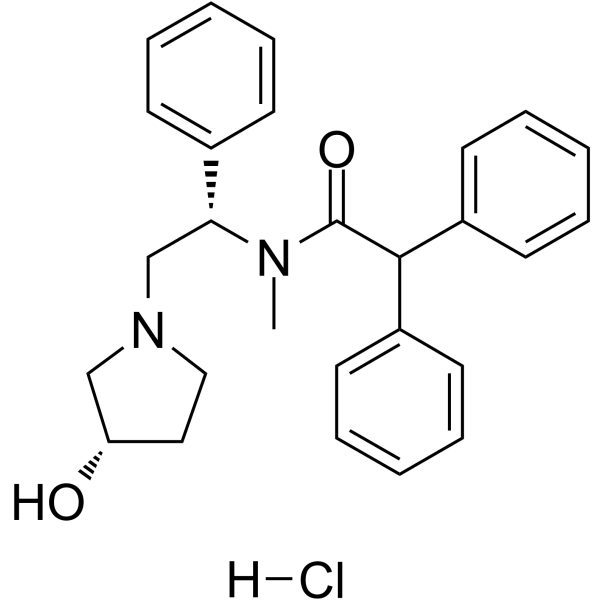
Asimadoline hydrochloride (Standard) (EMD-61753 hydrochloride (Standard)) is the analytical standard of Asimadoline (hydrochloride) (HY-107384A). This product is intended for research and analytical applications. Asimadoline (EMD-61753) hydrochloride is an orally active, selective and peripherally active κ-opioid agonist with IC50s of 5.6 nM (guinea pig) and 1.2 nM (human recombinant). Asimadoline hydrochloride has low permeability across the blood brain barrier and has peripheral anti-inflammatory actions. Asimadoline hydrochloride ameliorates allodynia in diabetic rats and has the potential for irritable bowel syndrome (IBS).
For research use only. We do not sell to patients.
- CAS No.: 185951-07-9
- Formula: C27H31ClN2O2
- Molecular Weight:451.00
-
Storage:
Please store the product under the recommended conditions in the Certificate of Analysis.


To place orders, for customer services and technical support, please contact: MedChemExpress USA
Tel: 609-228-6898 E-mail: [email protected] [email protected]


-
 Biological Activity
-
Chemical Information
- Purity & Documentation
- References
-
 Help & FAQs


-
HY-107384A
Asimadoline hydrochloride -
HY-P1502
β-Endorphin, human -
HY-B0380
Trimebutine -
HY-101205
ICI-199441 hydrochloride -
HY-B0380A
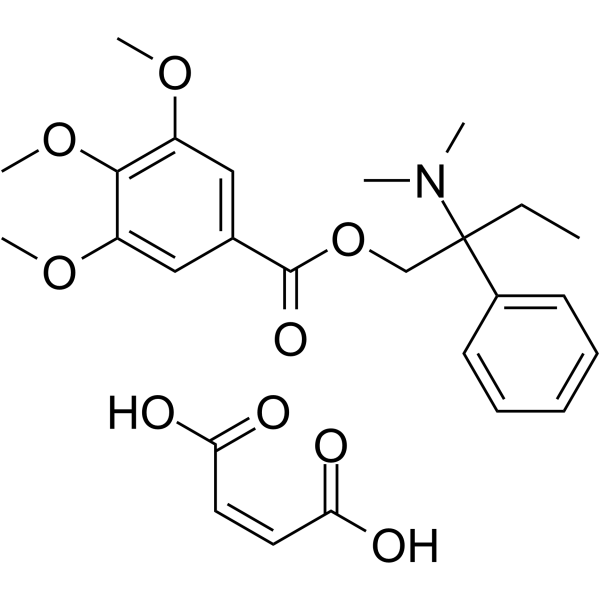
Trimebutine maleate -

HY-101302
Naltriben mesylate -
HY-100903
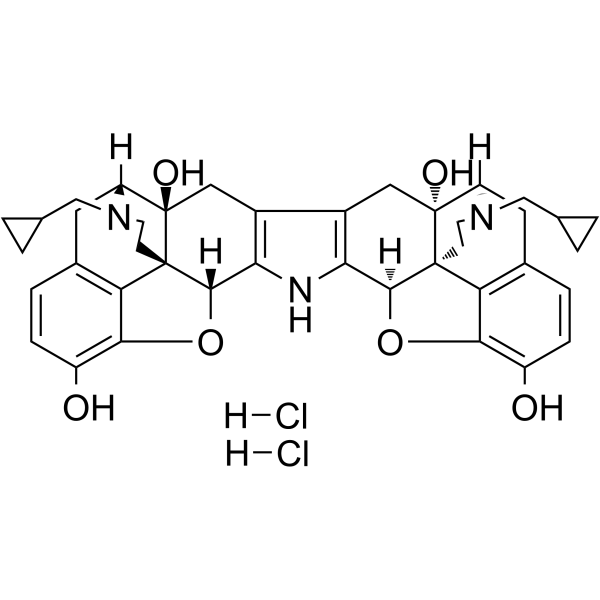
Norbinaltorphimine dihydrochloride -

HY-101318
β-Funaltrexamine hydrochloride -
HY-13044
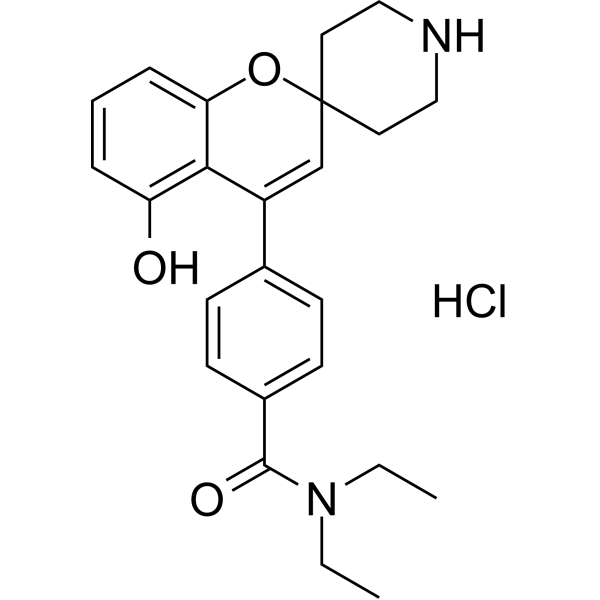
ADL-5859 hydrochloride -

HY-15997B
(±)-U-50488 hydrochloride -
HY-101386
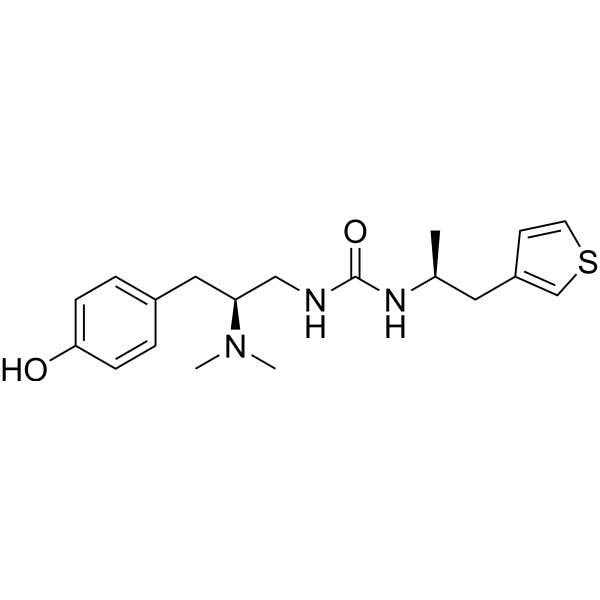
PZM21 -
HY-N0398
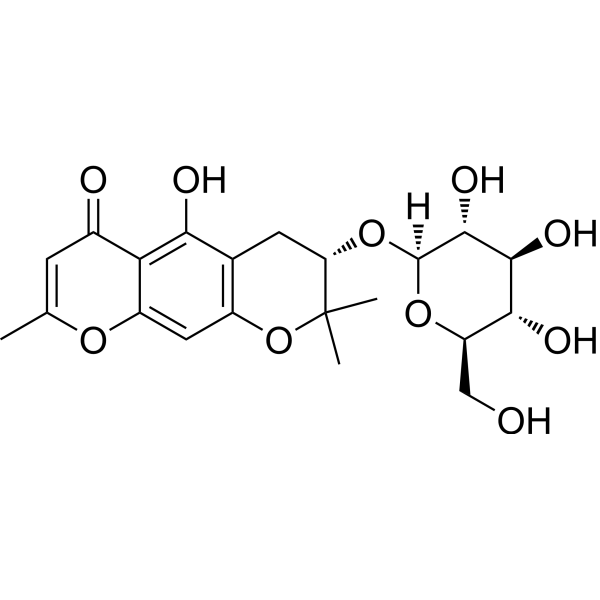
Sec-O-Glucosylhamaudol
All Opioid Receptor Isoforms
More

Biological Activity
Description
IC50 & Target
IC50: 5.6 nM (guinea pig κ opioid), 1.2 nM (human recombinant κ opioid)[1]


Chemical Information
-
CAS No. 185951-07-9
-
Molecular Weight 451.00
-
Formula C27H31ClN2O2
-
SMILES
O[C@H]1CCN(C1)C[C@H](C2=CC=CC=C2)N(C)C(C(C3=CC=CC=C3)C4=CC=CC=C4)=O.[H]Cl
-
Synonyms
EMD-61753 hydrochloride (Standard)
-
Shipping
Room temperature in continental US; may vary elsewhere.
-
Storage
Please store the product under the recommended conditions in the Certificate of Analysis.


Purity & Documentation
References
[1]. Camilleri M, et al. Asimadoline, a κ-Opioid Agonist, and Visceral Sensation. Neurogastroenterol Motil. 2008 Sep; 20(9): 971–979. [Content Brief]
[2]. Binder W, et al. Involvement of substance P in the anti-inflammatory effects of the peripherally selective kappa-opioid asimadoline and the NK1 antagonist GR205171. Eur J Neurosci. 1999 Jun;11(6):2065-72. [Content Brief]
[3]. C G Jolivalt, et al. Dynorphin A, kappa opioid receptors and the antinociceptive efficacy of asimadoline in streptozotocin-induced diabetic rats. Diabetologia. 2006 Nov;49(11):2775-85. [Content Brief]

Calculators
Concentration (start) × Volume (start) = Concentration (final) × Volume (final)


Asimadoline hydrochloride (Standard) Related Classifications
HY-107384AR Related Classifications
 Powered by Bioz