



β-Funaltrexamine hydrochloride
Based on 2 publication(s) in Google Scholar
β-Funaltrexamine (β-FNA) hydrochloride is a blood-brain barrier-permeable, selective and irreversible μ-opioid receptor antagonist with immunomodulatory, anti-inflammatory and neuroprotective activities. β-Funaltrexamine hydrochloride inhibits p38 MAPK and TLR4 signaling by blocking μ-opioid receptors, and reduces the transcriptional activities of NF-κB, AP-1, CREB and Stat. Furthermore, β-Funaltrexamine hydrochloride inhibits iNOS activation and pro-inflammatory microglial polarization, converting microglia to an anti-inflammatory phenotype, thereby downregulating neuroinflammation and ameliorating neuronal degeneration. β-Funaltrexamine hydrochloride is widely applicable to research related to stroke, cerebral ischemia/reperfusion injury and neurodegenerative diseases.
Nos produits utilisent uniquement pour la recherche. Nous ne vendons pas aux patients.
- Pureté : 99.07%
- CAS No.: 72786-10-8
- Formule: C25H31ClN2O6
- Masse moléculaire:490.98
-
Stockage:
4°C, sealed storage, away from moisture
* In solvent : -80°C, 6 months; -20°C, 1 month (sealed storage, away from moisture)


To place orders, for customer services and technical support, please contact: MedChemExpress USA
Tel: 609-228-6898 E-mail: [email protected] [email protected]


-
 Activité biologique
-
Chemical Information
-
Solvant et solubilité
- Protocole
- Pureté et documentation
- Références
-
 Help & FAQs


-
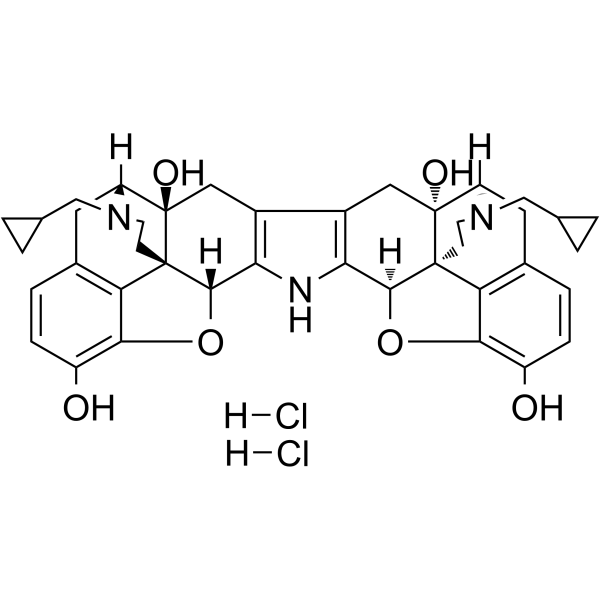
HY-100903
Norbinaltorphimine dihydrochlorideκ-opioid receptor Antagonist -
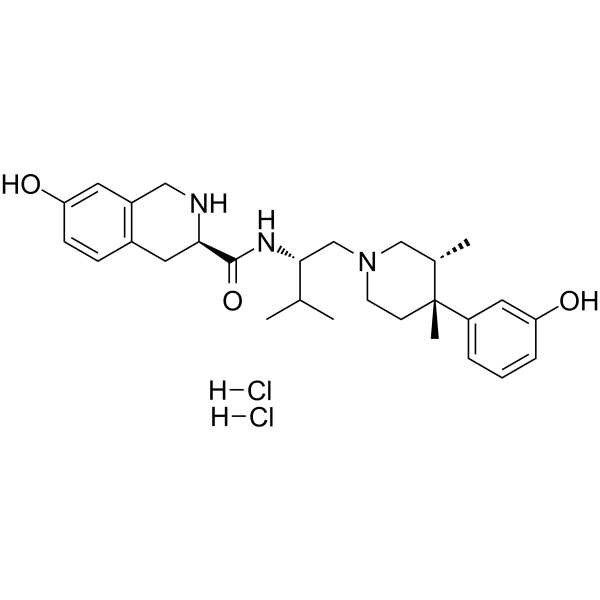
HY-10487
JDTic dihydrochloride -
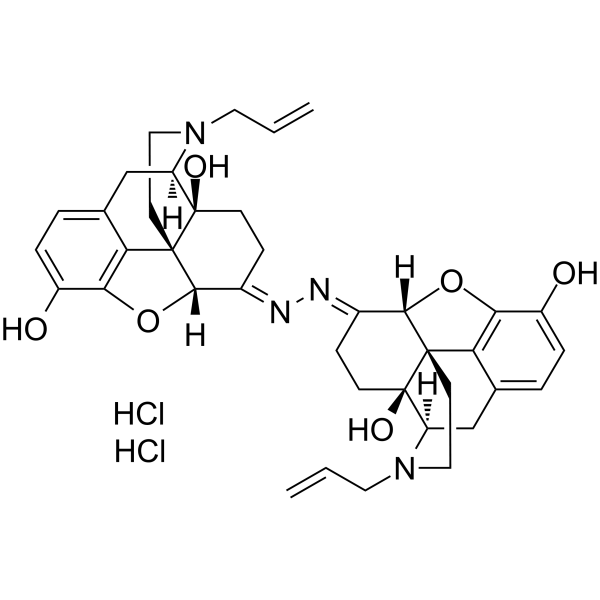
HY-101011
Naloxonazine dihydrochlorideMu-opioid Receptor Antagonist -
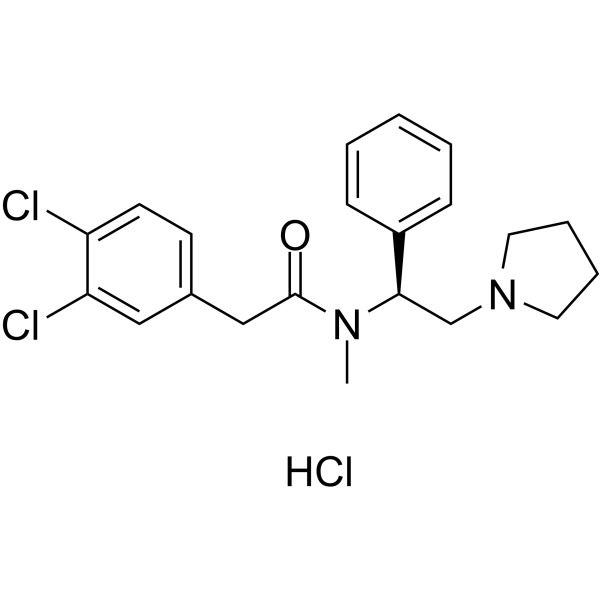
HY-101205
ICI-199441 hydrochlorideκ-Opioid Receptor Agonist -

HY-101302
Naltriben mesylateδ2-opioid Receptor Antagonist/TRPM7 Activator -

HY-76711
NaltrexoneOpioid Receptor Antagonist -
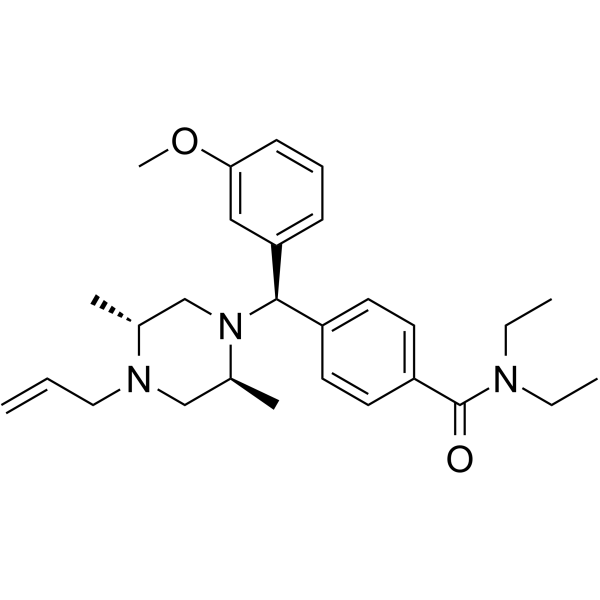
HY-101202
SNC80δ-opioid Receptor Agonist -
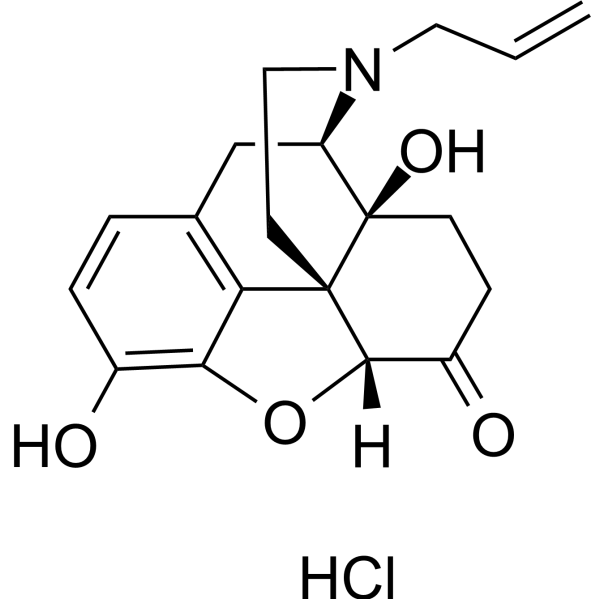
HY-17417
Naloxone hydrochlorideOpioid Receptor Antagonist -

HY-105343
BW-180COpioid Receptor Agonist -
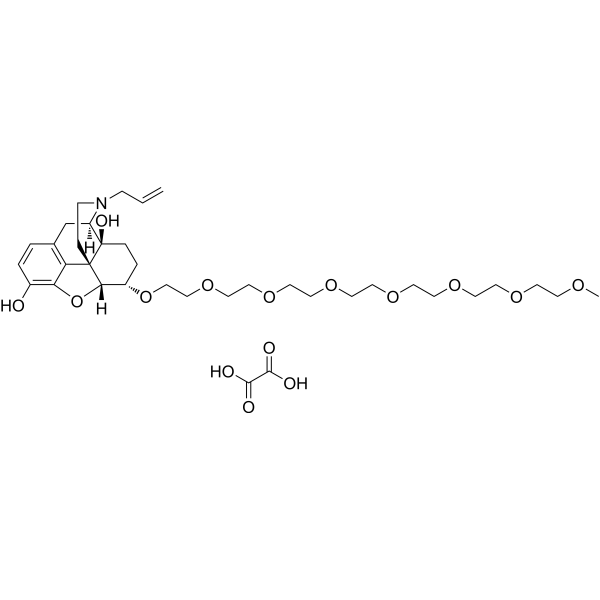
HY-A0118A
Naloxegol oxalateμ-opioid receptor Antagonist -
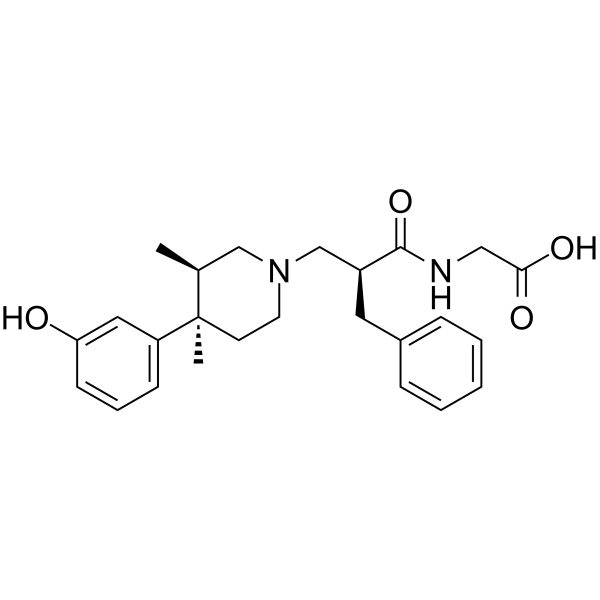
HY-13243
Alvimopanμ-opioid Receptor Antagonist -
HY-13274
JTC-801Opioid Receptor Antagonist
Publications Citing Use of MedChemExpress (MCE) β-Funaltrexamine hydrochloride
MoreVoir tous les produits spécifiques à Isoform Opioid Receptor
More

Activité biologique
Description
IC50 & Target
|
μ Opioid Receptor/MOR |
iNOS |
TLR4 |
NF-κB |
In Vitro
β-Funaltrexamine (hydrochloride) (0.3-100 μM; 24 h) concentration-dependently inhibits IL-1β-induced CXCL10 protein expression in normal human astrocytes with an EC50 of 7.6 μM, with greater inhibitory efficacy when combined with the ubiquitin-activating enzyme E1 inhibitor PYR41[2].
β-Funaltrexamine (hydrochloride) (10 μM; 8 h) significantly inhibits IL-1β-induced CXCL10 mRNA expression in normal human astrocytes after 8 h of co-incubation[2].
β-Funaltrexamine (hydrochloride) (10 μM; 60 min pre-treatment/remainder of 24 h total incubation) produces persistent, washout-resistant inhibition of IL-1β-induced CXCL10 expression in normal human astrocytes, and can inhibit CXCL10 expression when added 6 h after initial IL-1β stimulation[2].
β-Funaltrexamine (hydrochloride) (10 μM; 10, 30 min) significantly inhibits IL-1β-induced p38 MAPK activation in normal human astrocytes at 10 and 30 min of co-incubation[2].
β-Funaltrexamine (hydrochloride) (10 μM; 90, 270 min) significantly inhibits IL-1β-induced A20 protein expression in normal human astrocytes at 90 and 270 min of co-incubation[2].
MedChemExpress (MCE) has not independently confirmed the accuracy of these methods. They are for reference only.
-
Cell Line:Normal human astrocytes (NHA)
-
Concentration:0.3-100 μM; 10 μM; 5 μM
-
Incubation Time:24 h
-
Result:Inhibited IL-1β-induced CXCL10 protein expression (exceeding 50,000 pg/mg total protein) in a concentration-dependent manner, with an EC50 of 7.6 μM.
Significantly inhibited IL-1β-induced CXCL10 expression at 10 μM, whereas equimolar naltrexone had no effect.
Inhibited IL-1β-induced CXCL10 expression by 50% at 5 μM.
Inhibited CXCL10 expression more effectively when combined with 4 nM PYR41 than either agent alone.
-
Cell Line:Normal human astrocytes (NHA)
-
Concentration:10 μM
-
Incubation Time:60 min (pre-treatment, washed out before 24 h IL-1β exposure); remainder of 24 h total incubation (added after 30 min or 360 min IL-1β stimulation and washout)
-
Result:Inhibited IL-1β-induced CXCL10 expression to a similar extent as continuous β-FNA exposure during 24 h IL-1β treatment after 60 min pre-treatment followed by washout.
Had no effect on CXCL10 expression when added after 30 min IL-1β stimulation and washout, but significantly inhibited CXCL10 expression when added after 360 min IL-1β stimulation and washout.
In Vivo
β-Funaltrexamine (hydrochloride) (28 mg/kg; i.p.; single injection) significantly inhibits LPS-induced brain CXCL10 expression in male C57BL/6J mice, demonstrating anti-inflammatory activity in a neuroinflammation model[2].
β-FNA (12.5-50 mg/kg; i.p.; single dose) significantly inhibits LPS-induced CXCL10 and CCL2 expression in the brain of male C57BL/6J mice, and the 50 mg/kg dose prevents LPS-induced reductions in locomotor activity[3].
MedChemExpress (MCE) has not independently confirmed the accuracy of these methods. They are for reference only.
-
Animal Model:Sprague-Dawley (adult male, 300 g)[1]
-
Dosage:82.5 nmol/30 µL
-
Administration:i.c.v.; infused over 4 hours starting 1 hour pre-occlusion
-
Result:Improved neurological deficits.
Increased Rotarod test performance to 70% of baseline compared to saline control.
Reduced brain infarction volume to 20% of the ipsilateral hemisphere compared to saline control's 30%.
Reduced blood-brain barrier disruption, with Evans blue content in ipsilateral cortex reduced to ~4 µg/g from saline control's ~9 µg/g.
Decreased neutrophil infiltration, with myeloperoxidase activity in ipsilateral cortex reduced to ~350% from saline control's ~600%.
Decreased cell apoptosis, with caspase 3 activity in ipsilateral cortex reduced to ~400% from saline control's ~900%.
Reduced nitric oxide levels to ~15 nmol/100 µg protein from saline control's ~35 nmol/100 µg protein.
Reduced tumor necrosis factor-α levels to ~50 pg/100 µg protein from saline control's ~110 pg/100 µg protein.
Reduced interleukin-1β levels to ~20 pg/100 µg protein from saline control's ~55 pg/100 µg protein.
Reduced prostaglandin E2 levels to ~200 pg/100 µg protein from saline control's ~400 pg/100 µg protein.
Increased mRNA expression of anti-inflammatory microglia markers CD163 and arginase 1 in cortical tissue.
-
Animal Model:C57BL/6J (7-week old male)[2]
-
Dosage:28 mg/kg
-
Administration:i.p.; single injection
-
Result:Reduced LPS-induced CXCL10 protein levels in mouse brain tissue from an 8-fold increase over saline to a significantly lower level, P < 0.05 vs.
LPS alone.
Did not alter LPS-induced CXCL10 levels in mouse plasma.
Showed a non-significant trend toward increased locomotor activity compared to LPS-only treated mice, P = 0.14.
-
Animal Model:C57BL/6J (7- to 9-week-old male; challenged with intraperitoneal Escherichia coli O55:B5 lipopolysaccharide)[3]
-
Dosage:12.5 mg/kg; 25 mg/kg; 50 mg/kg
-
Administration:i.p.; single dose
-
Result:Significantly reduced LPS-induced CXCL10 levels at 25 mg/kg in plasma.
Showed no significant effect on LPS-induced IL-6 levels in plasma.
Resulted in higher plasma CCL2 levels at 50 mg/kg compared to 12.5 and 25 mg/kg doses in LPS-treated mice.
Reduced LPS-induced CCL2 levels to baseline at all tested doses in brain.
Significantly inhibited LPS-induced CXCL10 levels to below LPS-alone levels (not to baseline) at all tested doses in brain.
Showed no significant effect on brain IL-6 levels.
Significantly increased distance traveled at 50 mg/kg in LPS-treated mice compared to LPS-alone mice.
Mitigated LPS-induced reductions in center zone duration (statistical significance only observed for LPS-alone vs saline-alone without β-FNA).
Tended to reduce LPS-induced increases in corner duration.
Failed to prevent LPS-induced reduction in rearing activity at all doses, though the difference did not reach statistical significance at 25 mg/kg after multiple comparison correction.


Chemical Information
-
CAS No. 72786-10-8
-
Appearance Solid
-
Masse moléculaire 490.98
-
Formule C25H31ClN2O6
-
Color White to light yellow
-
SMILES
O[C@]1([C@@]2([H])CC3=CC=C4O)[C@@]5(CCN2CC6CC6)C3=C4O[C@@]5([H])[C@H](NC(/C=C/C(OC)=O)=O)CC1.Cl
-
Synonyms
β-FNA hydrochloride
-
Livraison
Room temperature in continental US; may vary elsewhere.
-
Stockage
4°C, sealed storage, away from moisture
* In solvent : -80°C, 6 months; -20°C, 1 month (sealed storage, away from moisture)


Publications (2)
-
Journal Impact Factor
-
Most Recent
-
Sci Adv
2026 Feb 13;12(7):eaea9832. PMID: 41671375 -


Solvant et solubilité
In Vitro:
DMSO : 100 mg/mL (203.67 mM; Need ultrasonic; Hygroscopic DMSO has a significant impact on the solubility of product, please use newly opened DMSO)
Please refer to the solubility information to select the appropriate solvent. Once prepared, please aliquot and store the solution to prevent product inactivation from repeated freeze-thaw cycles.
Storage method and period of stock solution: -80°C, 6 months; -20°C, 1 month (sealed storage, away from moisture). When stored at -80°C, please use it within 6 months. When stored at -20°C, please use it within 1 month.
Please refer to the solubility information to select the appropriate solvent. Once prepared, please aliquot and store the solution to prevent product inactivation from repeated freeze-thaw cycles.
Storage method and period of stock solution: -80°C, 6 months; -20°C, 1 month (sealed storage, away from moisture). When stored at -80°C, please use it within 6 months. When stored at -20°C, please use it within 1 month.
Concentration (start) × Volume (start) = Concentration (final) × Volume (final)
In Vivo:
Select the appropriate dissolution method based on your experimental animal and administration route.
- For the following dissolution methods, please ensure to first prepare a clear stock solution using an In Vitro approach and then sequentially add co-solvents:
- To ensure reliable experimental results, the clarified stock solution can be appropriately stored based on storage conditions. As for the working solution for In Vivo experiments, it is recommended to prepare freshly and use it on the same day.
- The percentages shown for the solvents indicate their volumetric ratio in the final prepared solution. If precipitation or phase separation occurs during preparation, heat and/or sonication can be used to aid dissolution.
Add each solvent one by one: 10% DMSO 40% PEG300 5% Tween-80 45% Saline
Solubility: ≥ 2.5 mg/mL (5.09 mM); Clear solution
This protocol yields a clear solution of ≥ 2.5 mg/mL (saturation unknown).
Taking 1 mL working solution as an example, add 100 μL DMSO stock solution (25.0 mg/mL) to 400 μL PEG300, and mix evenly; then add 50 μL Tween-80 and mix evenly; then add 450 μL Saline to adjust the volume to 1 mL.
Preparation of Saline: Dissolve 0.9 g sodium chloride in ddH₂O and dilute to 100 mL to obtain a clear Saline solution.
Add each solvent one by one: 10% DMSO 90% (20% SBE-β-CD in Saline)
Solubility: ≥ 2.5 mg/mL (5.09 mM); Clear solution
This protocol yields a clear solution of ≥ 2.5 mg/mL (saturation unknown).
Taking 1 mL working solution as an example, add 100 μL DMSO stock solution (25.0 mg/mL) to 900 μL 20% SBE-β-CD in Saline, and mix evenly.
Preparation of 20% SBE-β-CD in Saline (4°C, storage for one week): 2 g SBE-β-CD powder is dissolved in 10 mL Saline, completely dissolve until clear.
In Vivo Dissolution Calculator
Please enter the basic information of animal experiments:
-
-
-
-
Recommended: Prepare an additional quantity of animals to account for potential losses during experiments.
Please enter your animal formula composition:
-
%DMSO +
Recommended: Keep the proportion of DMSO in working solution below 2% if your animal is weak.
-
%+
-
+%Tween-80 + +
-
%Saline +
The co-solvents required include: DMSO, . All of co-solvents are available by MedChemExpress (MCE). , Tween 80. All of co-solvents are available by MedChemExpress (MCE).
Working solution concentration: 0.22 mg/mL
Method for preparing stock solution: mg drug dissolved in μL DMSO. Stock solution concentration: mg/mL. * In solvent : -80°C, 6 months; -20°C, 1 month (sealed storage, away from moisture)
1. Take μL DMSO stock solution;
2. Add μL .
μL , mix evenly;
3. Then add μL Tween 80, mix evenly;
4. Then add μL
Please ensure that the stock solution in the first step is dissolved to a clear state, and add co-solvents in sequence. You can use ultrasonic heating (ultrasonic cleaner, recommended frequency 20-40 kHz), vortexing, etc. to assist dissolution.


Pureté et documentation
-
Fiche technique (290 KB)
-
SDS (393 KB)
- English - EN (393 KB)
- Français - FR (393 KB)
- Deutsch - DE (393 KB)
- Norwegian - NO (393 KB)
- Español - ES (393 KB)
- Swedish - SV (393 KB)
- Italian - IT (393 KB)
- Korean - KR (393 KB)
- Portuguese - PT (393 KB)
-
Instruction de manipulation (2659 KB)
Références
[1]. Wu CC, et al. β-Funaltrexamine Displayed Anti-inflammatory and Neuroprotective Effects in Cells and Rat Model of Stroke. Int J Mol Sci. 2020;21(11):3866. Published 2020 May 29. [Content Brief]
[2]. Davis RL, et al. The opioid antagonist, β-funaltrexamine, inhibits NF-κB signaling and chemokine expression in human astrocytes and in mice. Eur J Pharmacol. 2015;762:193-201. [Content Brief]
[3]. Davis RL, et al. The opioid antagonist, β-funaltrexamine, inhibits lipopolysaccharide-induced neuroinflammation and reduces sickness behavior in mice. Physiol Behav. 2017;173:52-60. [Content Brief]


Complete Stock Solution Preparation Table
Please refer to the solubility information to select the appropriate solvent. Once prepared, please aliquot and store the solution to prevent product inactivation from repeated freeze-thaw cycles.
Storage method and period of stock solution: -80°C, 6 months; -20°C, 1 month (sealed storage, away from moisture). When stored at -80°C, please use it within 6 months. When stored at -20°C, please use it within 1 month.
| Optional Solvent | Concentration Solvent Mass | 1 mg | 5 mg | 10 mg | 25 mg |
|---|---|---|---|---|---|
| DMSO | 1 mM | 2.0367 mL | 10.1837 mL | 20.3674 mL | 50.9186 mL |
| 5 mM | 0.4073 mL | 2.0367 mL | 4.0735 mL | 10.1837 mL | |
| 10 mM | 0.2037 mL | 1.0184 mL | 2.0367 mL | 5.0919 mL | |
| 15 mM | 0.1358 mL | 0.6789 mL | 1.3578 mL | 3.3946 mL | |
| 20 mM | 0.1018 mL | 0.5092 mL | 1.0184 mL | 2.5459 mL | |
| 25 mM | 0.0815 mL | 0.4073 mL | 0.8147 mL | 2.0367 mL | |
| 30 mM | 0.0679 mL | 0.3395 mL | 0.6789 mL | 1.6973 mL | |
| 40 mM | 0.0509 mL | 0.2546 mL | 0.5092 mL | 1.2730 mL | |
| 50 mM | 0.0407 mL | 0.2037 mL | 0.4073 mL | 1.0184 mL | |
| 60 mM | 0.0339 mL | 0.1697 mL | 0.3395 mL | 0.8486 mL | |
| 80 mM | 0.0255 mL | 0.1273 mL | 0.2546 mL | 0.6365 mL | |
| 100 mM | 0.0204 mL | 0.1018 mL | 0.2037 mL | 0.5092 mL |


β-Funaltrexamine hydrochloride Related Classifications
HY-101318 Related Classifications
 Powered by Bioz