Search Result
Results for "
AT1 receptors
" in MedChemExpress (MCE) Product Catalog:
19
Isotope-Labeled Compounds
| Cat. No. |
Product Name |
Target |
Research Areas |
Chemical Structure |
-
- HY-17512
-
-
-
- HY-13955
-
-
-
- HY-17512A
-
-
-
- HY-B0202
-
|
SR-47436; BMS-186295
|
Angiotensin Receptor
Apoptosis
|
Cardiovascular Disease
Endocrinology
|
|
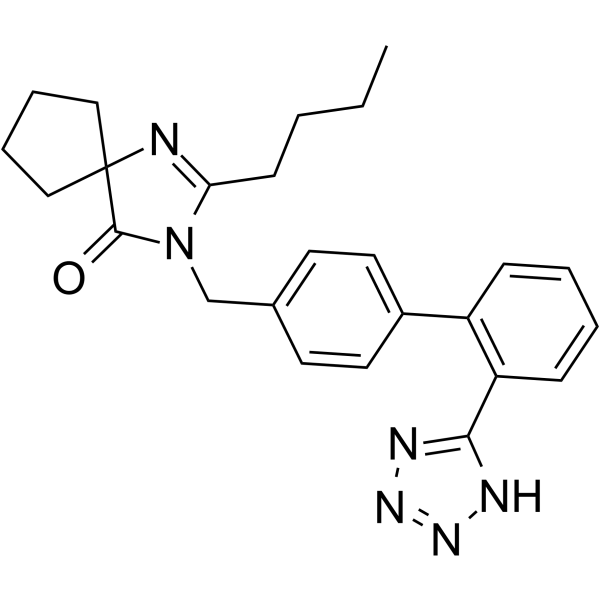
Irbesartan (SR-47436) is an orally active Ang II type 1 (AT1) receptor blocker (ARB). Irbesartan can relax the blood vessels, low blood pressure and increase the supply of blood and oxygen to the heart. Irbesartan can be used for the research of high blood pressure, heart failure, and diabetic kidney disease .
|
-
-
- HY-D0845
-
-
-
- HY-B0205
-
|
CV 11974
|
Angiotensin Receptor
PPAR
|
Cardiovascular Disease
Endocrinology
Cancer
|
|
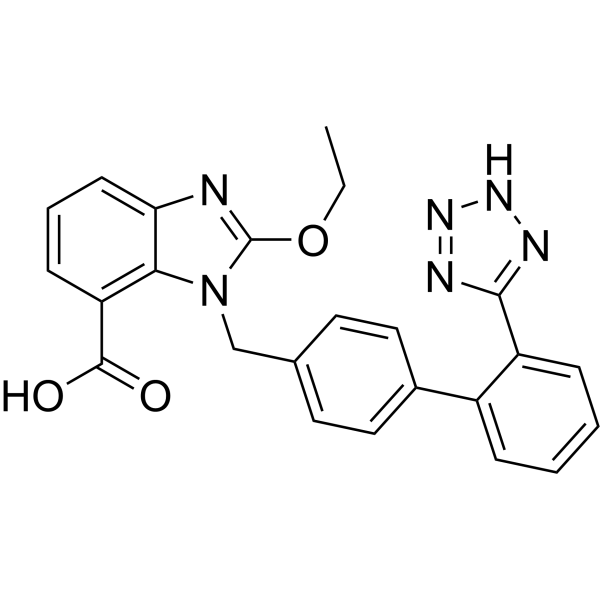
Candesartan (CV 11974) is an orally active angiotensin II AT1-Receptor blocker and PPAR-γ agonist. Candesartan has potent and long-lasting antihypertensive effects. Candesartan can be used for the research of hypertension, chronic heart failure (CHF) and Traumatic brain injury (TBI) .
|
-
-
- HY-100113
-
|
AT2 receptor agonist C21
|
Angiotensin Receptor
p38 MAPK
TGF-beta/Smad
TGF-β Receptor
MMP
|
Cardiovascular Disease
Neurological Disease
Inflammation/Immunology
|
|
Buloxibutid (AT2 receptor agonist C21) is an orally active, selective angiotensin II type 2 receptor (AT2R) agonist, with a Ki value of 0.4 nM for porcine AT2R. Buloxibutid exerts effects such as vasodilation, anti-inflammation, anti-fibrosis (promoting the expression of collagenase MMP-13) and tissue repair mainly by activating the NO/cGMP pathway, inhibiting the pro-proliferative MAPK signaling, and suppressing the pro-fibrotic TGF-β/Smad pathway as well as the inflammatory NF-κB pathway. Buloxibutid can be used in research related to idiopathic pulmonary fibrosis, hypertension, and systemic sclerosis .
|
-
-
- HY-17005
-
-
-
- HY-12765
-
|
E-3174; EXP-3174
|
Drug Metabolite
Angiotensin Receptor
|
Cardiovascular Disease
|
|
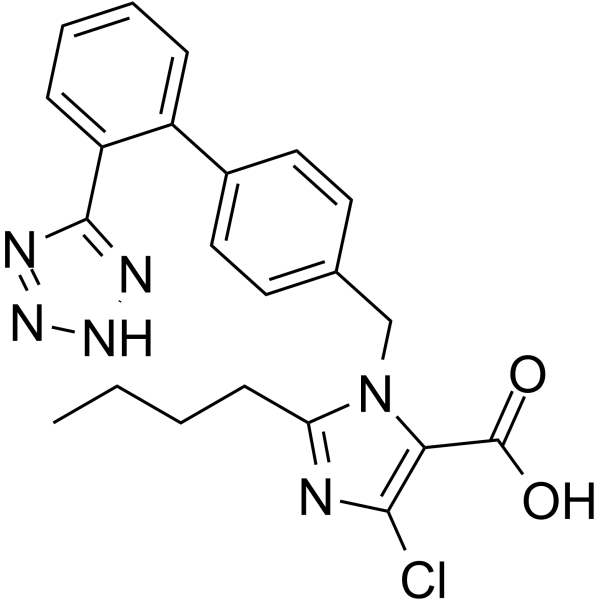
Losartan Carboxylic Acid (E-3174), an active carboxylic acid metabolite of Losartan, is an angiotensin II receptor type 1 (AT1) antagonist. The Ki values are 0.97, 0.57, 0.67 nM for rat AT1B/AT1A and human AT1, respectively. Losartan Carboxylic Acid blocks the angiotensin II-induced responses in vascular smoothmuscle cells (VSMC). Losartan Carboxylic Acid elevates plasma renin activities and reduces mean arterial pressure .
|
-
-
- HY-14914
-
-
-
- HY-125976
-
|
|
Apelin Receptor (APJ)
|
Cardiovascular Disease
|
|
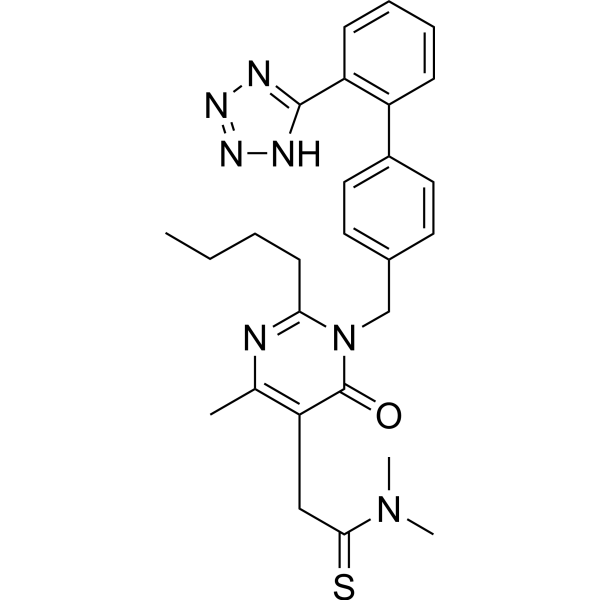
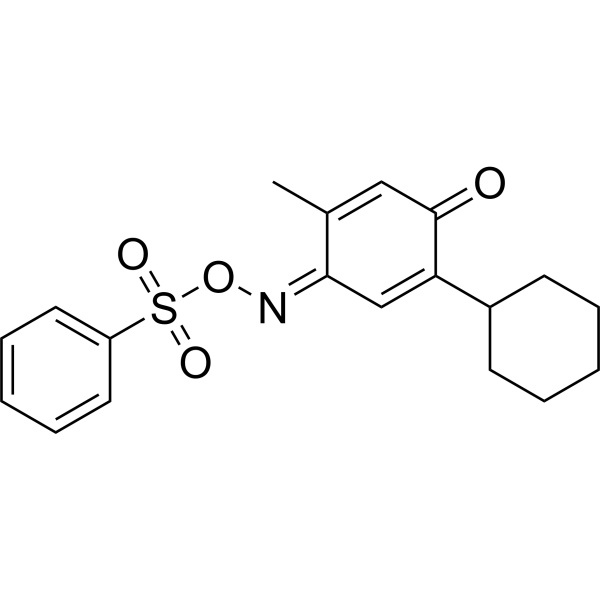
ML233 is a non-peptide based potent apelin receptor (APJ) agonist (EC50=3.7 μM). ML233 displays >21-fold selective over the closely related angiotensin 1 (AT1) receptor (>79 μM) .
|
-
-
- HY-B0780
-
-
-
- HY-102093
-
-
-
- HY-17512AR
-
|
DuP-753 potassium (Standard)
|
Reference Standards
Angiotensin Receptor
|
Cardiovascular Disease
Endocrinology
Cancer
|
|
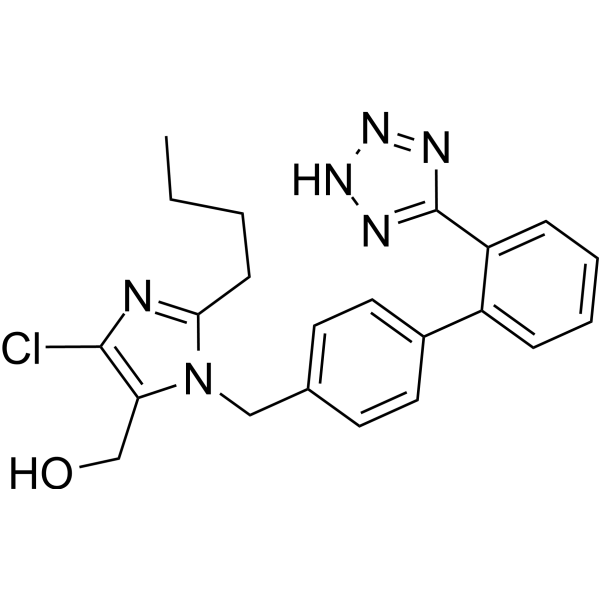
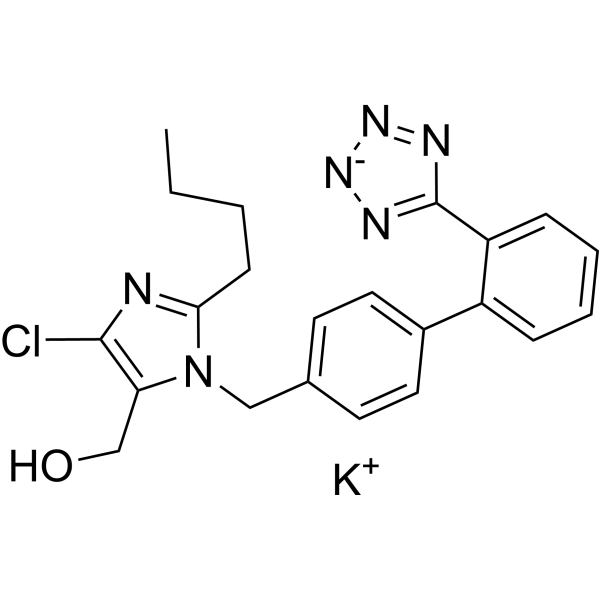
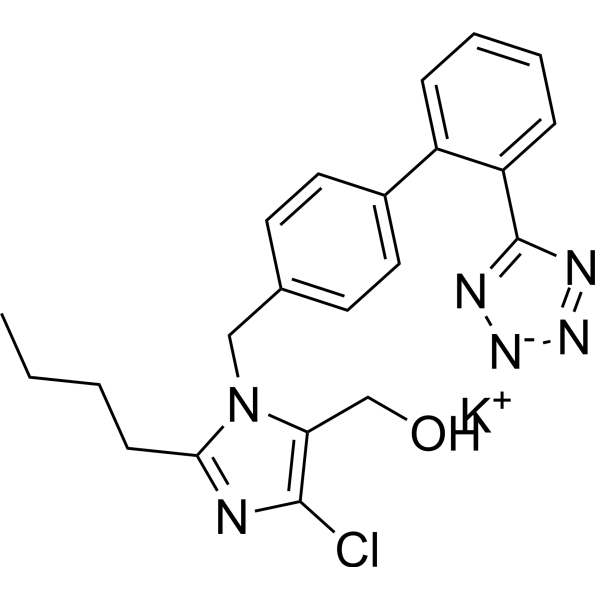
Losartan (potassium) (Standard) is the analytical standard of Losartan (potassium). This product is intended for research and analytical applications. Losartan potassium (DuP-753 potassium) is an angiotensin II receptor type 1 (AT1) antagonist, competing with the binding of angiotensin II to AT1 with an IC50 of 20 nM.
|
-
-
- HY-17512S
-
-
-
- HY-12765S
-
|
E-3174 d4; EXP-3174 d4
|
Angiotensin Receptor
|
Cardiovascular Disease
Endocrinology
Cancer
|
|
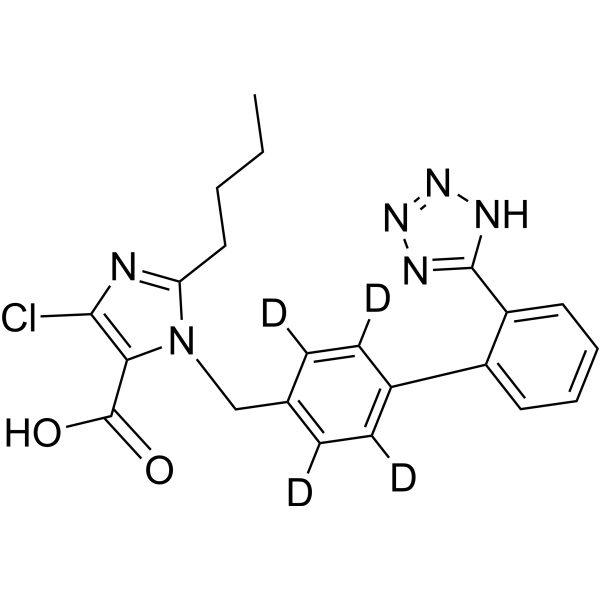
Losartan-d4 carboxylic acid (E-3174-d4) is the deuterium labeled Losartan Carboxylic Acid (HY-12765). Losartan Carboxylic Acid (E-3174), an active carboxylic acid metabolite of Losartan, is an angiotensin II receptor type 1 (AT1) antagonist. The Ki values are 0.97, 0.57, 0.67 nM for rat AT1B/AT1A and human AT1, respectively. Losartan Carboxylic Acid blocks the angiotensin II-induced responses in vascular smoothmuscle cells (VSMC). Losartan Carboxylic Acid elevates plasma renin activities and reduces mean arterial pressure.
|
-
-
- HY-P3138
-
|
|
Angiotensin Receptor
|
Cardiovascular Disease
|
|
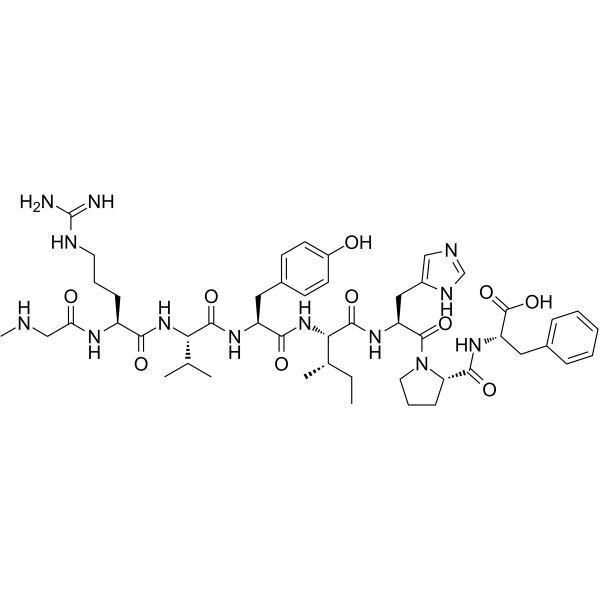
(Sar1)-Angiotensin II, an analogue of Angiotensin II, is a specific agonist of angiotensin AT1 receptor. (Sar1)-Angiotensin II binds to brain membrane-rich particles, with a Kd of 2.7 nM. (Sar1)-Angiotensin II can stimulate protein synthesis and cell growth in embryonic chick myocytes .
|
-
-
- HY-P1769
-
|
|
Angiotensin Receptor
|
Metabolic Disease
Endocrinology
|
|
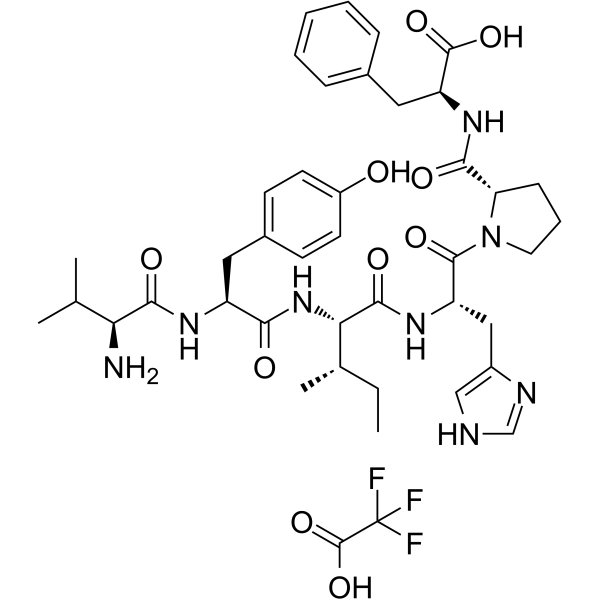
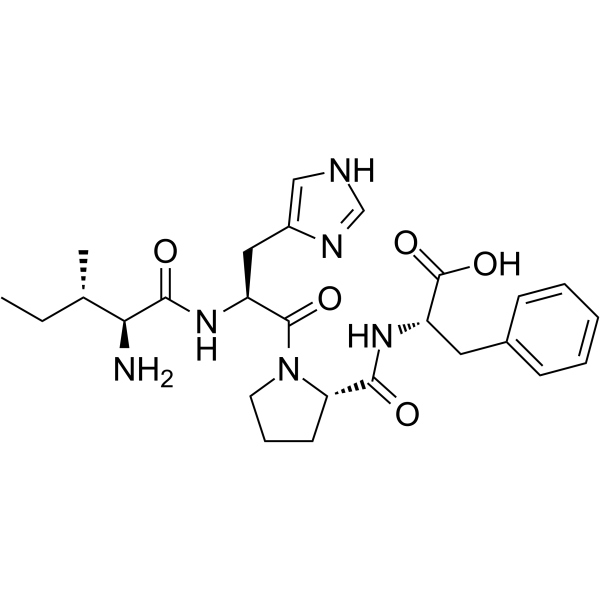
Angiotensin II (5-8), human is an endogenous C-terminal fragment of the peptide vasoconstrictor angiotensin II . Angiotensin II binds the AT II type 1 (AT1) receptor, stimulating GPCRs in vascular smooth muscle cells and increasing intracellular Ca 2+ levels. Angiotensin II also acts at the Na +/H + exchanger in the proximal tubules of the kidney .
|
-
-
- HY-P3136
-
|
TRV120055
|
Angiotensin Receptor
ERK
|
Cardiovascular Disease
|
|
TRV055 (TRV120055) is a G protein-biased agonist of angiotensin II type 1 receptors (AT1Rs). TRV120055 induces fibroblast proliferation, overexpression of collagen I and α-SMA, and stress fibre formation in human cardiac fibroblasts. TRV055 activates AT1 receptor/Gαq-mediated signaling pathways, upregulates TGF-β1 and p-ERK1/2. TRV055 induces collagen secretion in adult rat myofibroblasts at a level comparable to Ang II. TRV055 can be used to study the role of G protein-biased signaling of AT1Rs in regulating fibrotic responses [1]
|
-
-
- HY-P1515A
-
-
-
- HY-W414915
-
|
CGP 48933 methyl ester
|
Drug Derivative
Angiotensin Receptor
|
Cardiovascular Disease
Cancer
|
|
Valsartan (CGP 48933) methyl ester is the methyl ester derivative of Valsartan (HY-18204). Valsartan is a selective and orally active angiotensin II type 1 (AT1) receptor blocker (ARB) with potent antihypertensive and cardioprotective effects. Valsartan competitively binds to AT1 receptors, inhibiting the binding of angiotensin II to AT1 receptors, thereby blocking angiotensin II-mediated vasoconstriction, sodium retention, and myocardial hypertrophy signaling pathways. Valsartan reduces systolic blood pressure in L-NAME-induced hypertensive rats. Valsartan can be used for the study and treatment of arterial hypertension, hypertensive heart disease, and heart failure .
|
-
-
- HY-B0202S1
-
-
-
- HY-131264
-
|
Dehydro Olmesartan medoxomil
|
Drug Intermediate
|
Metabolic Disease
|
|
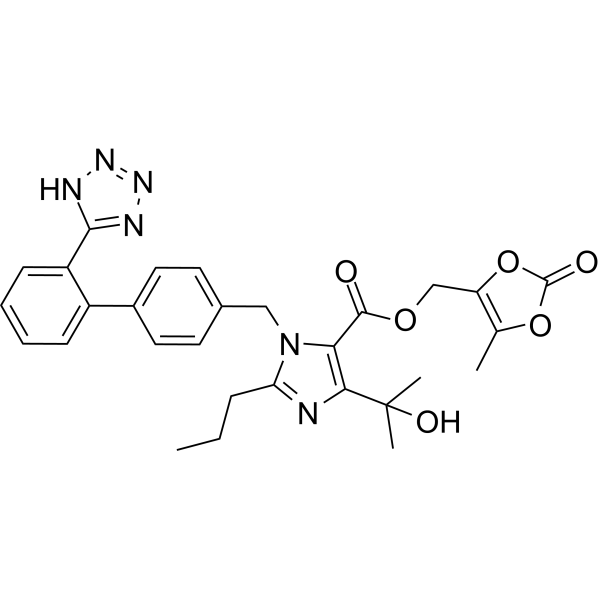
Olmesartan medoxomil impurity C (Dehydro Olmesartan medoxomil) is an uncharacterized impurity of Olmesartan medoxomil (HY-17005). Olmesartan medoxomil is a potent and selective angiotensin (angiotensin AT1) receptor inhibitor with an IC50 of 66.2 μM .
|
-
-
- HY-P3136A
-
|
TRV120055 hydrochloride
|
Angiotensin Receptor
|
Cardiovascular Disease
|
|
TRV055 (TRV120055) hydrochloride is a G protein-biased agonist of angiotensin II type 1 receptors (AT1Rs). TRV055 hydrochloride induces fibroblast proliferation, overexpression of collagen I and α-SMA, and stress fibre formation in human cardiac fibroblasts. RV055 hydrochloride activates AT1 receptor/Gαq-mediated signaling pathways, upregulates TGF-β1 and p-ERK1/2. RV055 hydrochloride induces collagen secretion in adult rat myofibroblasts at a level comparable to Ang II. RV055 hydrochloride can be used to study the role of G protein-biased signaling of AT1Rs in regulating fibrotic responses [1]
|
-
-
- HY-112824
-
|
|
Angiotensin Receptor
|
Cardiovascular Disease
|
|
L-162313 is a non-peptide angiotensin II AT1 and AT2 receptor agonist, with IC50 values of 1.1 and 2.0 nM for AT1 and AT2 receptor, respectively. L-162313 can be used for the research of vasoconstriction, aldosterone release, and cardiovascular growth .
|
-
-
- HY-13955S2
-
-
-
- HY-B0202S
-
|
SR-47436-d4; BMS-186295-d4
|
Angiotensin Receptor
|
Cardiovascular Disease
Endocrinology
|
|
Irbesartan-d4 (SR-47436-d4) is the deuterium labeled Irbesartan Irbesartan (HY-B0202). Irbesartan (SR-47436) is an orally active Ang II type 1 (AT1) receptor blocker (ARB). Irbesartan can relax the blood vessels, low blood pressure and increase the supply of blood and oxygen to the heart. Irbesartan can be used for the research of high blood pressure, heart failure, and diabetic kidney disease.
|
-
-
- HY-19165
-
|
|
Angiotensin Receptor
|
Cardiovascular Disease
|
|
CI-996 is a potent, selective, orally active angiotensin II (Ang II) type 1 (AT1) receptor antagonist. In rat liver membranes CI-996 displaces specifically bind [ 125I]Ang II with an IC50 of 0.8 nM. CI-996 has blood pressure-lowering activity .
|
-
-
- HY-13955S
-
-
-
- HY-13955S3
-
-
-
- HY-17512S3
-
|
DuP-753-d2
|
Angiotensin Receptor
|
Others
|
|
Losartan-d2 is the deuterium labeled Losartan . Losartan is an angiotensin II receptor antagonist, competing with the binding of angiotensin II to AT1 receptors with IC50 of 20 nM.
|
-
-
- HY-17005R
-
-
-
- HY-P1792
-
|
|
Angiotensin Receptor
|
Metabolic Disease
Endocrinology
|
|
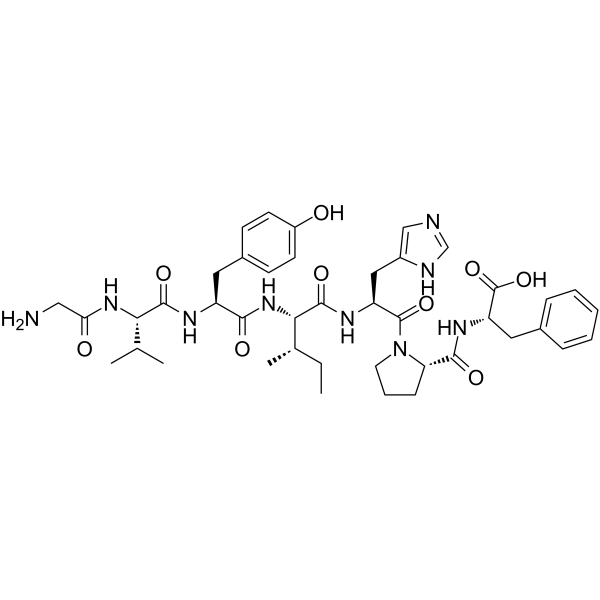
Angiotensin II (1-4), human is an endogenous peptide produced from AT I by angiotensin-converting-enzyme (ACE). Angiotensin II binds the AT II type 1 (AT1) receptor, stimulating GPCRs in vascular smooth muscle cells and increasing intracellular Ca 2+ levels. Angiotensin II also acts at the Na +/H + exchanger in the proximal tubules of the kidney .
|
-
-
- HY-101618
-
-
-
- HY-13955R
-
|
BIBR 277 (Standard)
|
Reference Standards
Angiotensin Receptor
Autophagy
|
Cardiovascular Disease
Endocrinology
|
|
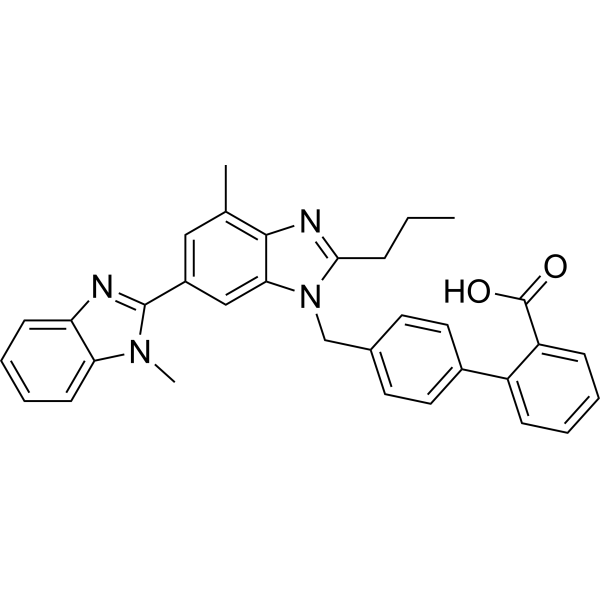
Telmisartan (Standard) is the analytical standard of Telmisartan. This product is intended for research and analytical applications. Telmisartan is a potent, long lasting antagonist of angiotensin II type 1 receptor (AT1), selectively inhibiting the binding of 125I-AngII to AT1 receptors with IC50 of 9.2 nM.
|
-
-
- HY-A0229
-
|
GR 138950
|
Angiotensin Receptor
|
Others
|
|
Saprisartan (GR 138950) is a selective, long-acting AT1 receptor antagonist with low receptor dissociation kinetics.
|
-
-
- HY-P1515
-
-
-
- HY-105506
-
|
|
Angiotensin Receptor
|
Cardiovascular Disease
|
|
EXP-7711 is a non peptide angiotensin II (Ang II) AT1 receptor antagonist. EXP-7711’s affinity for wild-type AT1 receptor (Ki =180 nM) is lower than peptide antagonists, but higher than losartan (Ki = 12 nM). EXP-7711 can be used for research on cardiovascular conditions .
|
-
-
- HY-108120
-
|
|
Angiotensin Receptor
|
Cardiovascular Disease
|
|
L-162537 is a competitive human angiotensin II receptor 1 (AT1) and receptor 2 (AT2) antagonist with an IC50=1.7 nM for AT1. L-162537 inhibits Ang II-mediated vasoconstriction, blood pressure elevation and related pathological signaling pathways. L-162537 is promising for research of angiotensin II-related cardiovascular diseases such as hypertension .
|
-
-
- HY-19253A
-
-
-
- HY-105011A
-
|
|
Angiotensin Receptor
|
Cardiovascular Disease
|
|
YM-358 hydrate potassium is an orally active angiotensin II type 1 (AT1)-receptor antagonist. YM-358 hydrate potassium can decrease cardiac volume overload. YM-358 hydrate potassium can be used for the research of cardiovascular disease, such as hypertension .
|
-
-
- HY-A0224
-
|
SC-52458
|
Angiotensin Receptor
|
Cardiovascular Disease
|
|
Forasartan is an nonpeptide angiotensin AT1 receptor antagonist with an IC50 of 2.9 nM. Forasartan is also an anti-hypertension agent. Forasartan significantly inhibits preganglionic stimulation in a dose-dependent manner in vivo. Forasartan can inhibit the heart rate increase induced by angiotensin II .
|
-
-
- HY-P11389
-
|
|
Angiotensin Receptor
|
Neurological Disease
|
|
(Sar1,Gly8)-Angiotensin II is an AT1 angiotensin II receptor subtype selective antagonist (Ki: 52 nM for AT2 receptor in rat adrenal). (Sar1,Gly8)-Angiotensin II potently antagonizes dipsogenic responses to intracerebroventricularly administered Ang II .
|
-
-
- HY-B0202A
-
|
SR-47436 hydrochloride; BMS-186295 hydrochloride
|
Angiotensin Receptor
Apoptosis
|
Cardiovascular Disease
Neurological Disease
Metabolic Disease
|
|
Irbesartan (SR-47436) hydrochloride is an orally active Ang II type 1 (AT1) receptor blocker (ARB). Irbesartan hydrochloride can relax the blood vessels, low blood pressure and increase the supply of blood and oxygen to the heart. Irbesartan hydrochloride can be used for the research of high blood pressure, heart failure, and diabetic kidney disease .
|
-
-
- HY-B0205R
-
|
CV 11974 (Standard)
|
Reference Standards
Angiotensin Receptor
PPAR
|
Cardiovascular Disease
Endocrinology
Cancer
|
|
Candesartan (Standard) is the analytical standard of Candesartan. This product is intended for research and analytical applications. Candesartan (CV 11974) is an orally active angiotensin II AT1-Receptor blocker and PPAR-γ agonist. Candesartan has potent and long-lasting antihypertensive effects. Candesartan can be used for the research of hypertension, chronic heart failure (CHF) and Traumatic brain injury (TBI) .
|
-
-
- HY-14914S1
-
|
TAK-536-d4
|
Apoptosis
Angiotensin Receptor
Reactive Oxygen Species (ROS)
|
Cancer
|
|
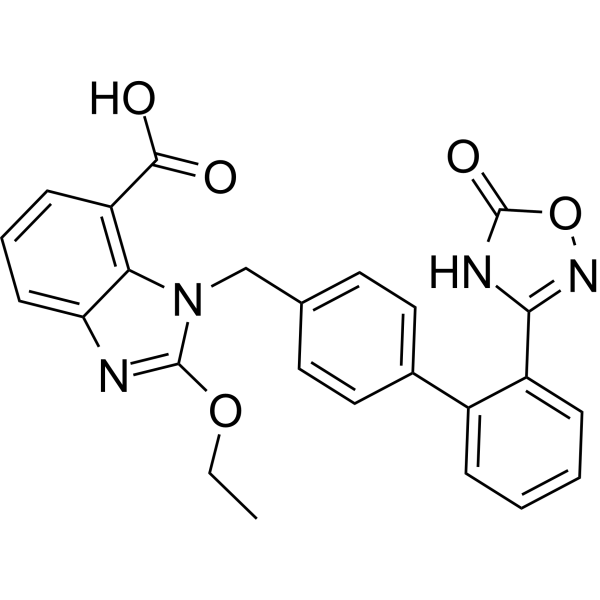
Azilsartan-d4 is the deuterium labeled Azilsartan . Azilsartan is an orally active, potent, selective and specific angiotensin II type 1 receptor (AT1) antagonist. Azilsartan induces ROS formation and apoptosis in HepG2 cells. Azilsartan shows neuroprotective and anticancer activity. Azilsartan can be used for hypertension and stroke research .
|
-
-
- HY-B0205S
-
|
CV-11974-d4
|
Angiotensin Receptor
|
Others
|
|
Candesartan-d4 (CV-11974-d4) is the deuterium labeled Candesartan (HY-B0205). Candesartan (CV 11974) is an orally active angiotensin II AT1-Receptor blocker and PPAR-γ agonist. Candesartan has potent and long-lasting antihypertensive effects. Candesartan can be used for the research of hypertension, chronic heart failure (CHF) and Traumatic brain injury (TBI).
|
-
-
- HY-121313
-
|
BAY 10-6734
|
Angiotensin Receptor
|
Neurological Disease
Endocrinology
|
|
Embusartan (BAY 10-6734) is a brain-penetrant and effective AT1 receptor blocker. Embusartan inhibits Ang II binding to brain AT1 receptors in the nuclei of central nervous system (CNS) inside due to high lipophilic character. Embusartan is promising for research of sympathetic hyperactivity and hypertension .
|
-
-
- HY-114586
-
|
|
Angiotensin Receptor
|
Cancer
|
|
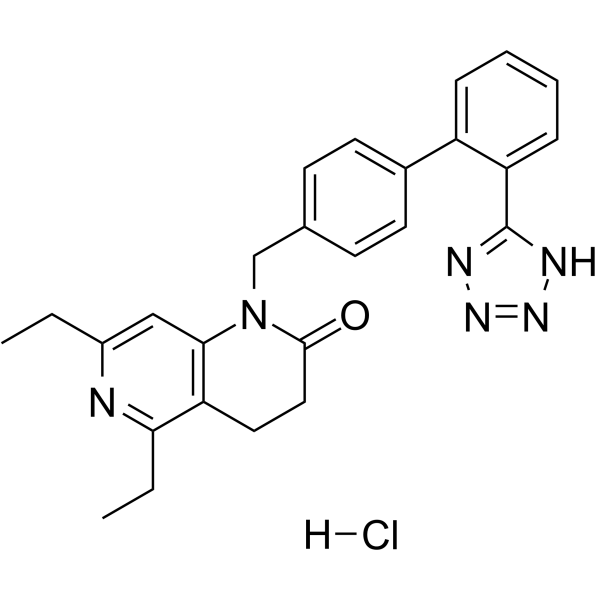
L-158809 is an angiotensin type 1 (AT1) receptor antagonist that prevents or ameliorates fractionated whole-brain irradiation-induced cognitive impairment. L-158809 is promising for research of brain tumor .
|
-
-
- HY-114284
-
|
|
Angiotensin Receptor
|
Cardiovascular Disease
|
|
L-163958 is an efficient, orally active, balanced angiotensin II receptor (AII receptor) antagonist. L-163958 has balanced high affinity for AT1 and AT2, with its IC50 values being 0.16, 0.12, 0.50, and 0.64 nM in rabbit aorta (AT1), rat midbrain (AT2), human adrenal gland (AT1), and human adrenal gland (AT2), respectively. L-163958 has a strong inhibitory effect on the pressor activity in rats. L-163958 can be used for the study of hypertension and related cardiovascular diseases .
|
-
- HY-100292
-
-
- HY-13955S1
-
-
- HY-103247
-
|
|
Angiotensin Receptor
|
Cardiovascular Disease
|
|
EMD 66684 is an antagonist of Angiotensin II Type 1 (AT1) receptor. EMD 66684 shows potent binding affinities for the AT1 subtype Ang II receptor with an IC50 value of 0.7 nM. EMD 66684 also serves as an antiischemic cytoprotectant - .
|
-
- HY-114412A
-
-
- HY-A0229A
-
-
- HY-U00188
-
-
- HY-17512AS
-
-
- HY-114412
-
-
- HY-106123
-
|
|
Angiotensin Receptor
|
Cardiovascular Disease
|
|
Pomisartan is an orally active angiotensin II receptor type AT1 antagonist (IC50=0.26 μM). Pomisartan works by inhibiting the binding of angiotensin II to the AT1 receptor, thereby blocking the vasoconstriction and aldosterone release caused by this interaction. Pomisartan results in a blood pressure-lowering effect .
|
-
- HY-101542
-
-
- HY-117447
-
|
|
Angiotensin Receptor
|
Others
|
|
LY303336 is an antagonist of polysubstituted 4-aminoimidazole AT1 receptor with an IC50 value of 5.2 nM .
|
-
- HY-105010
-
-
- HY-105440
-
-
- HY-17512S1
-
-
- HY-17512S4
-
|
DuP-753-d9
|
Angiotensin Receptor
|
Others
|
|
Losartan-d9 is the deuterium labeled Losartan . Losartan is an angiotensin II receptor antagonist, competing with the binding of angiotensin II to AT1 receptors with IC50 of 20 nM.
|
-
- HY-W414915R
-
|
CGP 48933 methyl ester (Standard)
|
Reference Standards
Drug Derivative
Angiotensin Receptor
|
Cardiovascular Disease
|
|
Valsartan (CGP 48933) methyl ester (Standard) is the analytical standard of Valsartan methyl ester (HY-W414915). This product is intended for research and analytical applications. Valsartan methyl ester is the methyl ester derivative of Valsartan (HY-18204). Valsartan is a selective angiotensin II type 1 (AT1) receptor blocker (ARB) with potent antihypertensive and cardioprotective effects. Valsartan competitively binds to AT1 receptors, inhibiting the binding of angiotensin II to AT1 receptors, thereby blocking angiotensin II-mediated vasoconstriction, sodium retention, and myocardial hypertrophy signaling pathways. Valsartan reduces systolic blood pressure in L-NAME-induced hypertensive rats. Valsartan can be used for the study and treatment of arterial hypertension, hypertensive heart disease, and heart failure .
|
-
- HY-17512R
-
-
- HY-19214
-
-
- HY-102093R
-
-
- HY-131278
-
|
|
Angiotensin Receptor
|
Cardiovascular Disease
|
|
Olmesartan methyl ester is an intermediate in the synthesis of Olmesartan medoxomil. Olmesartan medoxomil is a potent and selective angiotensin AT1 receptor antagonist with IC50 of 66.2 μM .
|
-
- HY-165425
-
|
|
Angiotensin Receptor
|
Cardiovascular Disease
|
|
KR31173 is an AT1 antagonist with an IC50 of 3.27 nM. KR31173 can be used as a positron emission tomography (PET) tracer after being labeled with 11C isotope. KR31173 shows promising biodistribution and pharmacological properties in mice. KR31173 selectively binds to organs known to contain a high density of AT1 angiotensin receptors in CD-1 mice .
|
-
- HY-117805
-
-
- HY-N14205
-
|
|
Angiotensin Receptor
|
Others
|
|
Cytosporin A is a hexahydrobenzopyran derivative and an angiotensin II receptor antagonist. Cytosporin A has IC50 values of 25-30 μM and 1.5-3 μM for AT1 and AT2, respectively .
|
-
- HY-101823A
-
|
Abbott 81282
|
Angiotensin Receptor
|
Cardiovascular Disease
|
|
A-81282 (Abbott 81282) is an antagonist of angiotensin II's AT1 receptor, with a pA2 value of 9.64 at the AT1 receptor in rabbit aorta. A-81282 also demonstrates significant inhibitory action on the binding of [125i]_Sar1_lle8_Angiotensin_ll to rat liver membranes, with a pKI value of 8.505. A-81282 has antihypertensive activity and can effectively lower blood pressure in renal artery-ligated rats .
|
-
- HY-114953
-
|
|
Angiotensin Receptor
Endothelin Receptor
|
Cardiovascular Disease
|
|
BMS-248360 is a potent and orally active dual antagonist of both angiotensin II receptor (AT1) and endothelin A (ETA) receptor, with Kis of 10 nM and 1.9 nM for hAT1 and hETA receptor, respectively. BMS-248360 displays hypertensive effects .
|
-
- HY-17005S
-
-
- HY-12765S1
-
|
|
Isotope-Labeled Compounds
Angiotensin Receptor
|
Cardiovascular Disease
|
|
Losartan carboxylic acid-d4 (hydrochloride) is deuterium labeled Losartan Carboxylic Acid. Losartan Carboxylic Acid (E-3174), an active carboxylic acid metabolite of Losartan, is an angiotensin II receptor type 1 (AT1) antagonist. The Ki values are 0.97, 0.57, 0.67 nM for rat AT1B/AT1A and human AT1, respectively. Losartan Carboxylic Acid blocks the angiotensin II-induced responses in vascular smoothmuscle cells (VSMC). Losartan Carboxylic Acid elevates plasma renin activities and reduces mean arterial pressure .
|
-
- HY-12765R
-
|
E-3174 (Standard); EXP-3174 (Standard)
|
Drug Metabolite
Reference Standards
Angiotensin Receptor
|
Cardiovascular Disease
|
|
Losartan Carboxylic Acid (Standard) is the analytical standard of Losartan Carboxylic Acid. This product is intended for research and analytical applications. Losartan Carboxylic Acid (E-3174), an active carboxylic acid metabolite of Losartan, is an angiotensin II receptor type 1 (AT1) antagonist. The Ki values are 0.97, 0.57, 0.67 nM for rat AT1B/AT1A and human AT1, respectively. Losartan Carboxylic Acid blocks the angiotensin II-induced responses in vascular smoothmuscle cells (VSMC). Losartan Carboxylic Acid elevates plasma renin activities and reduces mean arterial pressure [4].
|
-
- HY-167886
-
|
|
Angiotensin Receptor
|
Cardiovascular Disease
|
|
GA 0113 is a potent and orally active angiotensin II (Ang II) AT1-receptor antagonist. GA 0113 inhibits the Ang II (HY-13948)-induced pressor response with ID50 of 0.032 mg/kg and dose-dependently increases plasma renin activity for 48 h .
|
-
- HY-D0845R
-
|
GSNO (Standard); RVC-588 (Standard); S-Nitroso-L-glutAThione (Standard)
|
Reference Standards
Endogenous Metabolite
Angiotensin Receptor
|
Cardiovascular Disease
Inflammation/Immunology
|
|
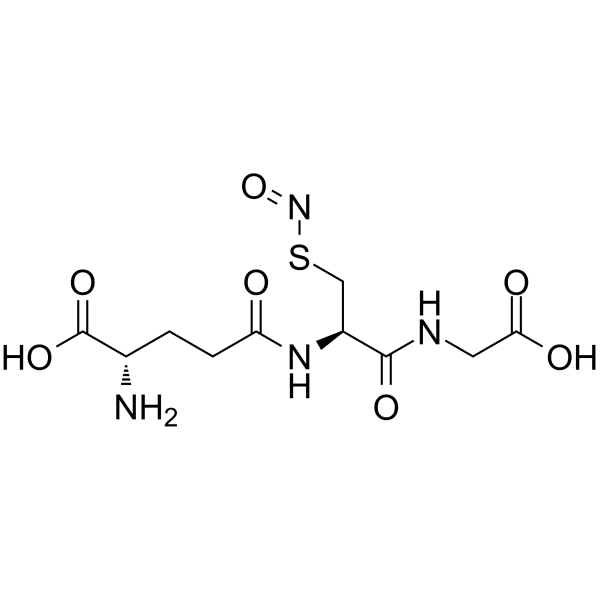
Nitrosoglutathione (Standard) (GSNO (Standard)) is the analytical standard of Nitrosoglutathione (HY-D0845). This product is intended for research and analytical applications. Nitrosoglutathione (GSNO), a exogenous NO donor and a substrate for rat alcohol dehydrogenase class III isoenzyme, inhibits cerebrovascular angiotensin II-dependent and -independent AT1 receptor responses.
x
|
-
- HY-P1792A
-
|
|
Angiotensin Receptor
|
Metabolic Disease
Endocrinology
|
|
Angiotensin II (1-4), human (TFA) is an endogenous peptide produced from AT I by angiotensin-converting-enzyme (ACE). Angiotensin II binds the AT II type 1 (AT1) receptor, stimulating GPCRs in vascular smooth muscle cells and increasing intracellular Ca 2+ levels. Angiotensin II also acts at the Na +/H + exchanger in the proximal tubules of the kidney .
|
-
- HY-B0202R
-
|
SR-47436 (Standard); BMS-186295 (Standard)
|
Reference Standards
Angiotensin Receptor
Apoptosis
|
Cardiovascular Disease
Endocrinology
|
|
Irbesartan (Standard) is the analytical standard of Irbesartan. This product is intended for research and analytical applications. Irbesartan (SR-47436) is an orally active Ang II type 1 (AT1) receptor blocker (ARB). Irbesartan can relax the blood vessels, low blood pressure and increase the supply of blood and oxygen to the heart. Irbesartan can be used for the research of high blood pressure, heart failure, and diabetic kidney disease .
|
-
- HY-B0202S2
-
|
|
Apoptosis
Angiotensin Receptor
|
Cardiovascular Disease
|
|
Irbesartan-d6-1 is the deuterium labeled Irbesartan . Irbesartan (SR-47436) is an orally active Ang II type 1 (AT1) receptor blocker (ARB). Irbesartan can relax the blood vessels, low blood pressure and increase the supply of blood and oxygen to the heart. Irbesartan can be used for the research of high blood pressure, heart failure, and diabetic kidney disease .
|
-
- HY-14914R
-
-
- HY-B0202S3
-
|
SR-47436-d7; BMS-186295-d7
|
Apoptosis
Angiotensin Receptor
Isotope-Labeled Compounds
|
Cardiovascular Disease
Endocrinology
|
|
Irbesartan-d7 is deuterated labeled Irbesartan (HY-B0202). Irbesartan (SR-47436) is an orally active Ang II type 1 (AT1) receptor blocker (ARB). Irbesartan can relax the blood vessels, low blood pressure and increase the supply of blood and oxygen to the heart. Irbesartan can be used for the research of high blood pressure, heart failure, and diabetic kidney disease .
|
-
- HY-B0202AS
-
|
SR-47436-d7 hydrochloride; BMS-186295-d7 hydrochloride
|
Apoptosis
Angiotensin Receptor
Isotope-Labeled Compounds
|
Neurological Disease
Metabolic Disease
|
|
Irbesartan-d7 hydrochloride is deuterated labeled Irbesartan hydrochloride (HY-B0202A). Irbesartan (SR-47436) hydrochloride is an orally active Ang II type 1 (AT1) receptor blocker (ARB). Irbesartan hydrochloride can relax the blood vessels, low blood pressure and increase the supply of blood and oxygen to the heart. Irbesartan hydrochloride can be used for the research of high blood pressure, heart failure, and diabetic kidney disease .
|
-
- HY-121550
-
|
|
Angiotensin-converting Enzyme (ACE)
|
Cardiovascular Disease
|
|
ME3221 is an angiotensin AT1 receptor antagonist that effectively antagonizes the pressor response to angiotensin II in rats and marmosets without affecting the hypotensive response to bradykinin. It demonstrates potent antihypertensive effects in renal hypertensive rats and spontaneously hypertensive rats (SHR). ME3221's repeated administration in SHR results in sustained and stable hypotensive effects without affecting heart rate, indicating its potential for studying both renal and essential hypertension .
|
-
- HY-101343
-
|
|
5-HT Receptor
|
Neurological Disease
|
|
RS 39604 is a potent, selective, and orally active 5-HT4 receptor antagonist with a pKi of 9.1 in guinea pig striatal membranes. RS 39604 displays a low affinity (pKi<6.5) for 5-HT1A, 5-HT2C, 5-HT3, α1c, D1, D2, M1, M2, AT1, B1 and opioid mu receptors and moderate affinity for δ1, (pKi=6.8) and δ2 (pKi=7.8) sites .
|
-
- HY-180401
-
|
|
Angiotensin Receptor
|
Cardiovascular Disease
|
|
DMP 811 is a potent, orally active and selective angiotensin II subtype receptor AT1 antagonist. DMP 811 exhibits selectivity for AT1 (IC50 = 6 nM) over AT2 (IC50 >10 μM). DMP 811 exhibits potent antihypertensive activity in rats and dogs. DMP 811 can be used for the research of hypertension .
|
-
- HY-125094
-
|
|
Angiotensin Receptor
|
Cardiovascular Disease
|
|
L-162782 is a high affinity AT1 receptor ligand for rat and human wild-type AT1 with IC50 values of 28.5 and 24.6 nM, respectively. L-162782 acts as a partial agonist (EC50 ≈ 30 nM) and insurmountable antagonist (IC50 = 6.5 μM) on wild-type rat AT1 receptors in COS-7 cells. L-162782 reduces Angiotensin II (HY-13948)-induced phosphatidylinositol turnover. L-162782 can be used for hypertension research .
|
-
- HY-19224
-
-
- HY-114282
-
-
- HY-180443
-
-
| Cat. No. |
Product Name |
Target |
Research Area |
-
- HY-P3138
-
|
|
Angiotensin Receptor
|
Cardiovascular Disease
|
|
(Sar1)-Angiotensin II, an analogue of Angiotensin II, is a specific agonist of angiotensin AT1 receptor. (Sar1)-Angiotensin II binds to brain membrane-rich particles, with a Kd of 2.7 nM. (Sar1)-Angiotensin II can stimulate protein synthesis and cell growth in embryonic chick myocytes .
|
-
- HY-P1769
-
|
|
Angiotensin Receptor
|
Metabolic Disease
Endocrinology
|
|
Angiotensin II (5-8), human is an endogenous C-terminal fragment of the peptide vasoconstrictor angiotensin II . Angiotensin II binds the AT II type 1 (AT1) receptor, stimulating GPCRs in vascular smooth muscle cells and increasing intracellular Ca 2+ levels. Angiotensin II also acts at the Na +/H + exchanger in the proximal tubules of the kidney .
|
-
- HY-P3136
-
|
TRV120055
|
Angiotensin Receptor
ERK
|
Cardiovascular Disease
|
|
TRV055 (TRV120055) is a G protein-biased agonist of angiotensin II type 1 receptors (AT1Rs). TRV120055 induces fibroblast proliferation, overexpression of collagen I and α-SMA, and stress fibre formation in human cardiac fibroblasts. TRV055 activates AT1 receptor/Gαq-mediated signaling pathways, upregulates TGF-β1 and p-ERK1/2. TRV055 induces collagen secretion in adult rat myofibroblasts at a level comparable to Ang II. TRV055 can be used to study the role of G protein-biased signaling of AT1Rs in regulating fibrotic responses [1]
|
-
- HY-110183
-
|
|
Peptides
|
Cardiovascular Disease
|
|
Angiotensin A is a renin–angiotensin system (RAS) peptide that causes a vasoconstrictive effect dependent on AT1 receptors. Angiotensin A elicits pressor and renal vasoconstrictor responses in normotensive and hypertensive rats .
|
-
- HY-P3136A
-
|
TRV120055 hydrochloride
|
Angiotensin Receptor
|
Cardiovascular Disease
|
|
TRV055 (TRV120055) hydrochloride is a G protein-biased agonist of angiotensin II type 1 receptors (AT1Rs). TRV055 hydrochloride induces fibroblast proliferation, overexpression of collagen I and α-SMA, and stress fibre formation in human cardiac fibroblasts. RV055 hydrochloride activates AT1 receptor/Gαq-mediated signaling pathways, upregulates TGF-β1 and p-ERK1/2. RV055 hydrochloride induces collagen secretion in adult rat myofibroblasts at a level comparable to Ang II. RV055 hydrochloride can be used to study the role of G protein-biased signaling of AT1Rs in regulating fibrotic responses [1]
|
-
- HY-P1792
-
|
|
Angiotensin Receptor
|
Metabolic Disease
Endocrinology
|
|
Angiotensin II (1-4), human is an endogenous peptide produced from AT I by angiotensin-converting-enzyme (ACE). Angiotensin II binds the AT II type 1 (AT1) receptor, stimulating GPCRs in vascular smooth muscle cells and increasing intracellular Ca 2+ levels. Angiotensin II also acts at the Na +/H + exchanger in the proximal tubules of the kidney .
|
-
- HY-P1515
-
-
- HY-P11389
-
|
|
Angiotensin Receptor
|
Neurological Disease
|
|
(Sar1,Gly8)-Angiotensin II is an AT1 angiotensin II receptor subtype selective antagonist (Ki: 52 nM for AT2 receptor in rat adrenal). (Sar1,Gly8)-Angiotensin II potently antagonizes dipsogenic responses to intracerebroventricularly administered Ang II .
|
-
- HY-P1792A
-
|
|
Angiotensin Receptor
|
Metabolic Disease
Endocrinology
|
|
Angiotensin II (1-4), human (TFA) is an endogenous peptide produced from AT I by angiotensin-converting-enzyme (ACE). Angiotensin II binds the AT II type 1 (AT1) receptor, stimulating GPCRs in vascular smooth muscle cells and increasing intracellular Ca 2+ levels. Angiotensin II also acts at the Na +/H + exchanger in the proximal tubules of the kidney .
|
| Cat. No. |
Product Name |
Category |
Target |
Chemical Structure |
| Cat. No. |
Product Name |
Chemical Structure |
-
- HY-17512S
-
|
|
|
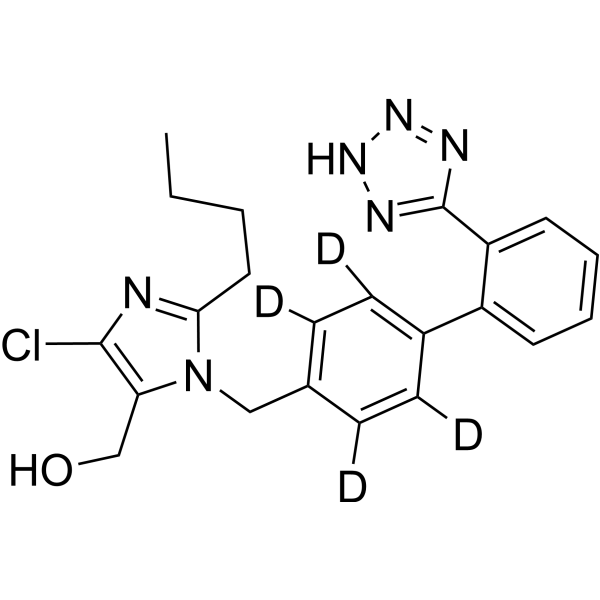
Losartan-d4 is the deuterium labeled Losartan. Losartan is an angiotensin II receptor antagonist, competing with the binding of angiotensin II to AT1 receptors with IC50 of 20 nM.
|
-
-
- HY-12765S
-
|
|
|
Losartan-d4 carboxylic acid (E-3174-d4) is the deuterium labeled Losartan Carboxylic Acid (HY-12765). Losartan Carboxylic Acid (E-3174), an active carboxylic acid metabolite of Losartan, is an angiotensin II receptor type 1 (AT1) antagonist. The Ki values are 0.97, 0.57, 0.67 nM for rat AT1B/AT1A and human AT1, respectively. Losartan Carboxylic Acid blocks the angiotensin II-induced responses in vascular smoothmuscle cells (VSMC). Losartan Carboxylic Acid elevates plasma renin activities and reduces mean arterial pressure.
|
-
-
- HY-B0202S1
-
|
|
|
Irbesartan-d6 is the deuterium labeled Irbesartan. Irbesartan is a highly potent and specific angiotensin II type 1 (AT1) receptor antagonist with IC50 of 1.3 nM.
|
-
-
- HY-13955S2
-
|
|
|
Telmisartan- 13C,d3 is the 13C- and deuterium labeled Telmisartan. Telmisartan is a potent, long lasting antagonist of angiotensin II type 1 receptor (AT1), selectively inhibiting the binding of 125I-AngII to AT1 receptors with IC50 of 9.2 nM.
|
-
-
- HY-B0202S
-
|
|
|
Irbesartan-d4 (SR-47436-d4) is the deuterium labeled Irbesartan Irbesartan (HY-B0202). Irbesartan (SR-47436) is an orally active Ang II type 1 (AT1) receptor blocker (ARB). Irbesartan can relax the blood vessels, low blood pressure and increase the supply of blood and oxygen to the heart. Irbesartan can be used for the research of high blood pressure, heart failure, and diabetic kidney disease.
|
-
-
- HY-13955S
-
|
|
|
Telmisartan-d3 is the deuterium labeled Telmisartan. Telmisartan is a potent, long lasting antagonist of angiotensin II type 1 receptor (AT1), selectively inhibiting the binding of 125I-AngII to AT1 receptors with IC50 of 9.2 nM .
|
-
-
- HY-13955S3
-
|
|
|
Telmisartan-d7 (BIBR 277-d7) is a deuterium labeled Telmisartan (HY-13955). Telmisartan is a potent, long lasting antagonist of angiotensin II type 1 receptor (AT1), selectively inhibiting the binding of 125I-AngII to AT1 receptors with IC50 of 9.2 nM.
|
-
-
- HY-17512S3
-
|
|
|
Losartan-d2 is the deuterium labeled Losartan . Losartan is an angiotensin II receptor antagonist, competing with the binding of angiotensin II to AT1 receptors with IC50 of 20 nM.
|
-
-
- HY-14914S1
-
|
|
|
Azilsartan-d4 is the deuterium labeled Azilsartan . Azilsartan is an orally active, potent, selective and specific angiotensin II type 1 receptor (AT1) antagonist. Azilsartan induces ROS formation and apoptosis in HepG2 cells. Azilsartan shows neuroprotective and anticancer activity. Azilsartan can be used for hypertension and stroke research .
|
-
-
- HY-B0205S
-
|
|
|
Candesartan-d4 (CV-11974-d4) is the deuterium labeled Candesartan (HY-B0205). Candesartan (CV 11974) is an orally active angiotensin II AT1-Receptor blocker and PPAR-γ agonist. Candesartan has potent and long-lasting antihypertensive effects. Candesartan can be used for the research of hypertension, chronic heart failure (CHF) and Traumatic brain injury (TBI).
|
-
-
- HY-13955S1
-
|
|
|
Telmisartan-d4 is the deuterium labeled Telmisartan. Telmisartan is a potent, long lasting antagonist of angiotensin II type 1 receptor (AT1), selectively inhibiting the binding of 125I-AngII to AT1 receptors with IC50 of 9.2 nM .
|
-
-
- HY-17512AS
-
|
|
|
Losartan-d6 hydrochloride is deuterated labeled Losartan potassium (HY-17512A). Losartan potassium (DuP-753 potassium) is an angiotensin II receptor type 1 (AT1) antagonist, competing with the binding of angiotensin II to AT1 with an IC50 of 20 nM.
|
-
-
- HY-17512S1
-
|
|
|
Losartan-d3 Carboxylic Acid is the deuterium labeled Losartan. Losartan is an angiotensin II receptor antagonist, competing with the binding of angiotensin II to AT1 receptors with IC50 of 20 nM.
|
-
-
- HY-17512S4
-
|
|
|
Losartan-d9 is the deuterium labeled Losartan . Losartan is an angiotensin II receptor antagonist, competing with the binding of angiotensin II to AT1 receptors with IC50 of 20 nM.
|
-
-
- HY-17005S
-
|
|
|
Olmesartan medoxomil-d6 (CS 866-d6) is the deuterium labeled Olmesartan medoxomil. Olmesartan medoxomil is a potent and selective angiotensin AT1 receptor inhibitor with IC50 of 66.2 μM .
|
-
-
- HY-12765S1
-
|
|
|
Losartan carboxylic acid-d4 (hydrochloride) is deuterium labeled Losartan Carboxylic Acid. Losartan Carboxylic Acid (E-3174), an active carboxylic acid metabolite of Losartan, is an angiotensin II receptor type 1 (AT1) antagonist. The Ki values are 0.97, 0.57, 0.67 nM for rat AT1B/AT1A and human AT1, respectively. Losartan Carboxylic Acid blocks the angiotensin II-induced responses in vascular smoothmuscle cells (VSMC). Losartan Carboxylic Acid elevates plasma renin activities and reduces mean arterial pressure .
|
-
-
- HY-B0202S2
-
|
|
|
Irbesartan-d6-1 is the deuterium labeled Irbesartan . Irbesartan (SR-47436) is an orally active Ang II type 1 (AT1) receptor blocker (ARB). Irbesartan can relax the blood vessels, low blood pressure and increase the supply of blood and oxygen to the heart. Irbesartan can be used for the research of high blood pressure, heart failure, and diabetic kidney disease .
|
-
-
- HY-B0202S3
-
|
|
|
Irbesartan-d7 is deuterated labeled Irbesartan (HY-B0202). Irbesartan (SR-47436) is an orally active Ang II type 1 (AT1) receptor blocker (ARB). Irbesartan can relax the blood vessels, low blood pressure and increase the supply of blood and oxygen to the heart. Irbesartan can be used for the research of high blood pressure, heart failure, and diabetic kidney disease .
|
-
-
- HY-B0202AS
-
|
|
|
Irbesartan-d7 hydrochloride is deuterated labeled Irbesartan hydrochloride (HY-B0202A). Irbesartan (SR-47436) hydrochloride is an orally active Ang II type 1 (AT1) receptor blocker (ARB). Irbesartan hydrochloride can relax the blood vessels, low blood pressure and increase the supply of blood and oxygen to the heart. Irbesartan hydrochloride can be used for the research of high blood pressure, heart failure, and diabetic kidney disease .
|
-
Your information is safe with us. * Required Fields.
Inquiry Information
- Product Name:
- Cat. No.:
- Quantity:
- MCE Japan Authorized Agent:

