



Fimasartan
Based on 5 publication(s) in Google Scholar
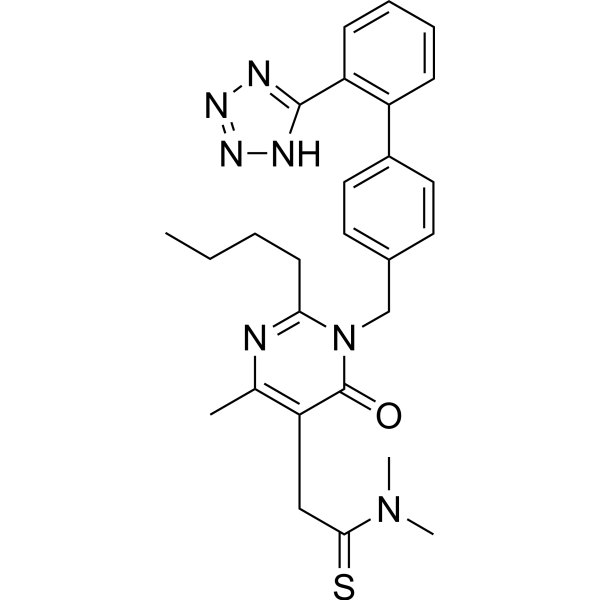
Fimasartan (BRA-657) is an orally effective angiotensin receptor AT1 non-peptide antagonist. Fimasartan has antihypertensive effects. Fimasartan improves neuroinflammation and brain injury mediated by NLRP3 inflammatome after intracerebral hemorrhage, and has neuroprotective effect. Fimasartan inhibits the expression of inducible nitric oxide synthase through the inactivation of NF-κB and activator protein-1.
For research use only. We do not sell to patients.
- Purity : 99.60%
- CAS No.: 247257-48-3
- Formula: C27H31N7OS
- Molecular Weight:501.65
-
Storage:Powder -20°C, 3 years , 4°C, 2 years ; In solvent -80°C, 2 years , -20°C, 1 year

To place orders, for customer services and technical support, please contact: MedChemExpress USA
Tel: 609-228-6898 E-mail: [email protected] [email protected]


-
 Biological Activity
-
Chemical Information
-
Solvent & Solubility
- Protocols
- Purity & Documentation
- References
-
 Help & FAQs


-
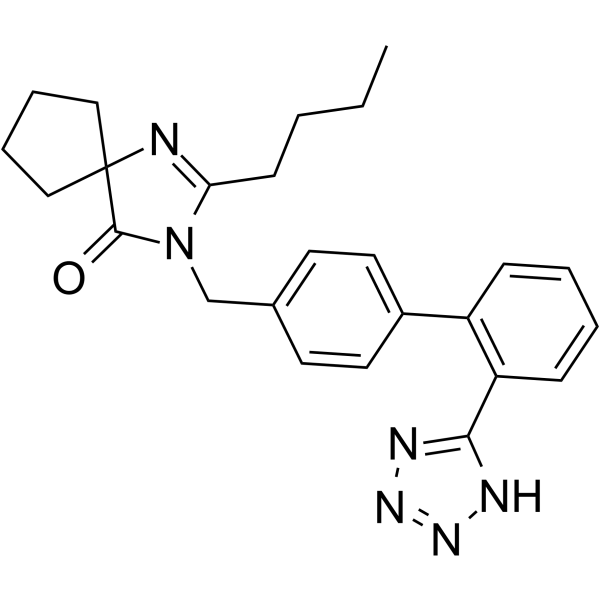
HY-B0202
IrbesartanAT1 Receptor Blocker -
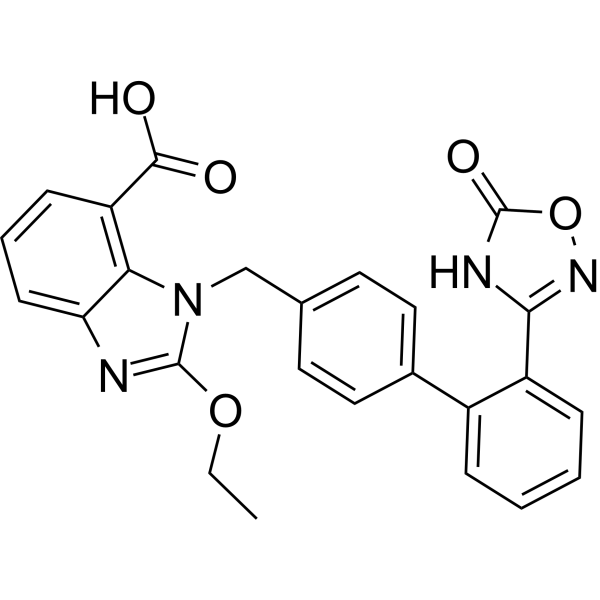
HY-14914
AzilsartanAT1 Antagonist -
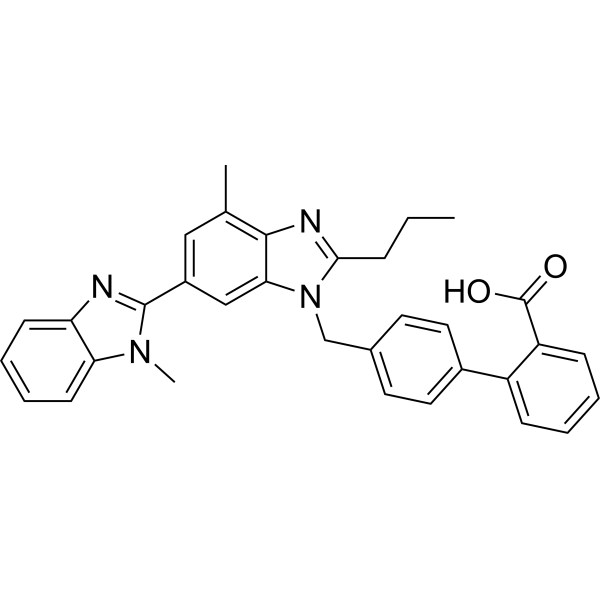
HY-13955
TelmisartanAngiotensin II Type 1 Receptor -
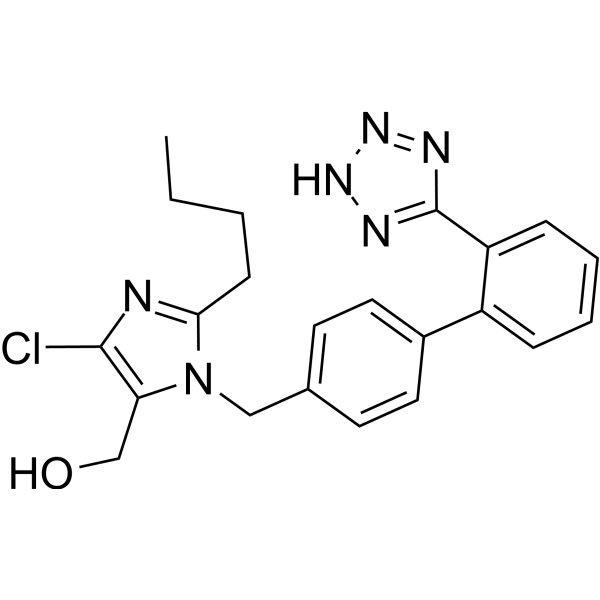
HY-17512
LosartanAngiotensin II Receptor Antagonist -
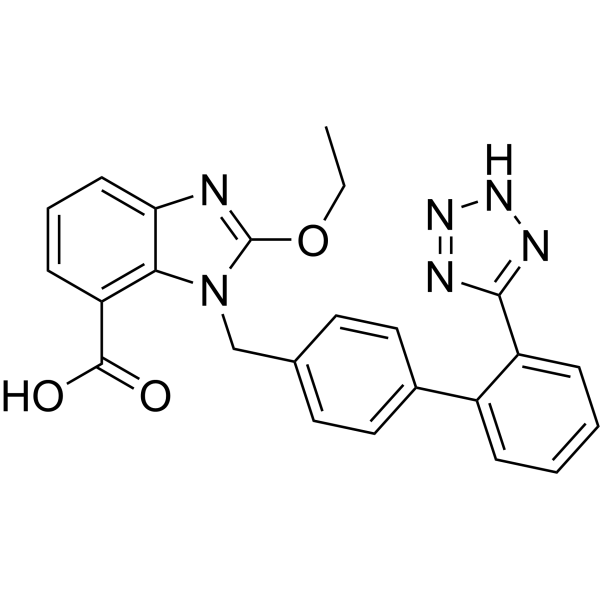
HY-B0205
CandesartanAngiotensin II AT1-Receptor Blocker -
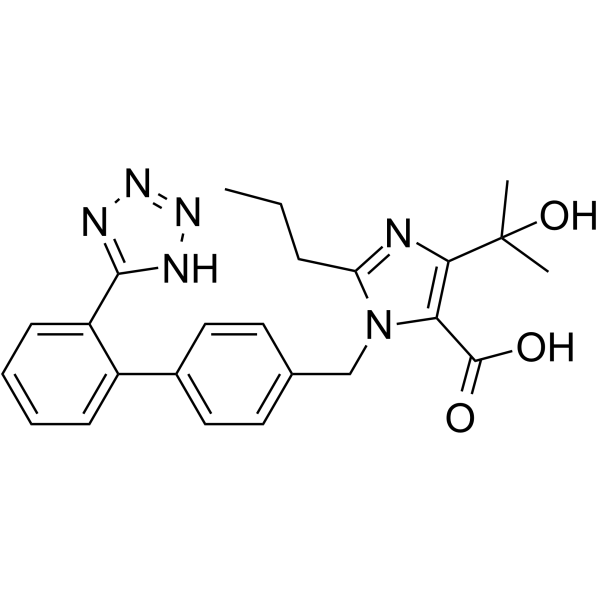
HY-17004
OlmesartanAT1R Antagonist -
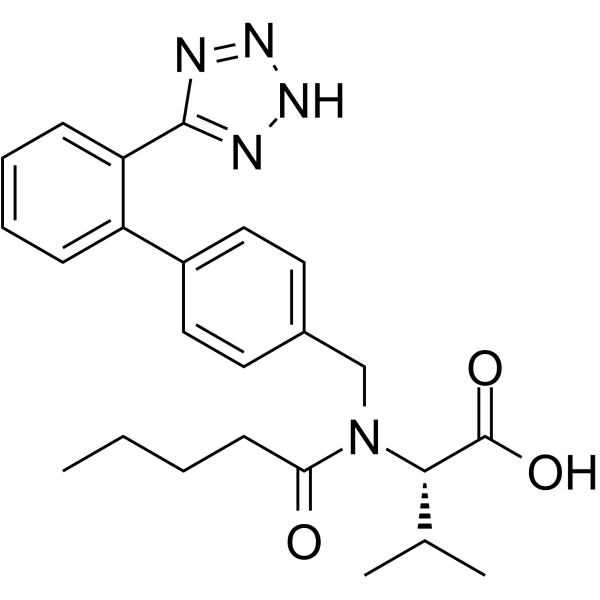
HY-18204
ValsartanAngiotensin II Receptor Antagonist -
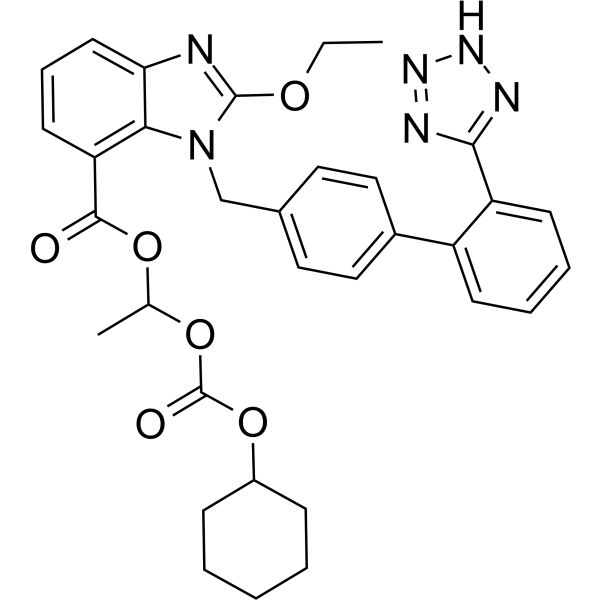
HY-17505
Candesartan CilexetilAngiotensin II receptor Inhibitor -
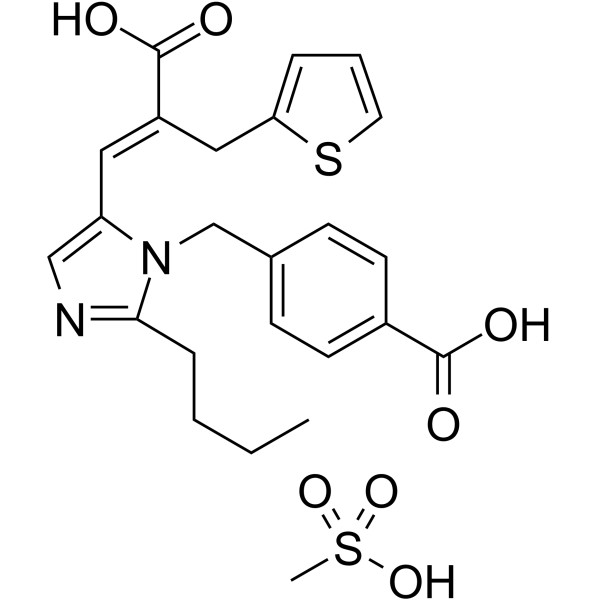
HY-15834A
Eprosartan mesylateAngiotensin II Receptor Antagonist -
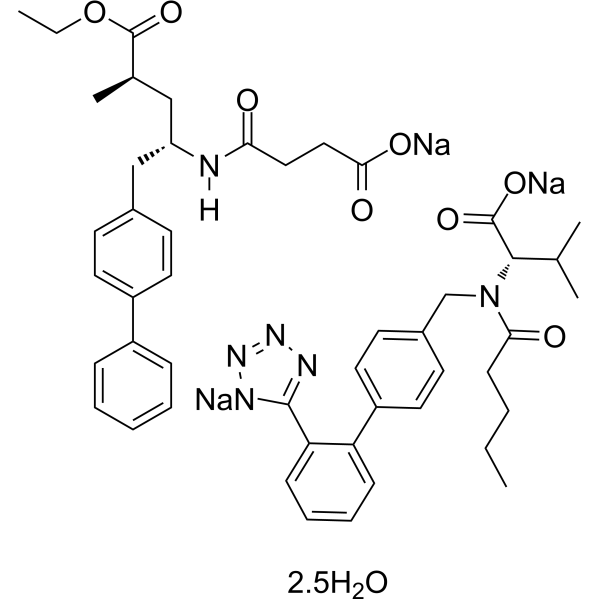
HY-18204A
Sacubitril/ValsartanARN Inhibitor -
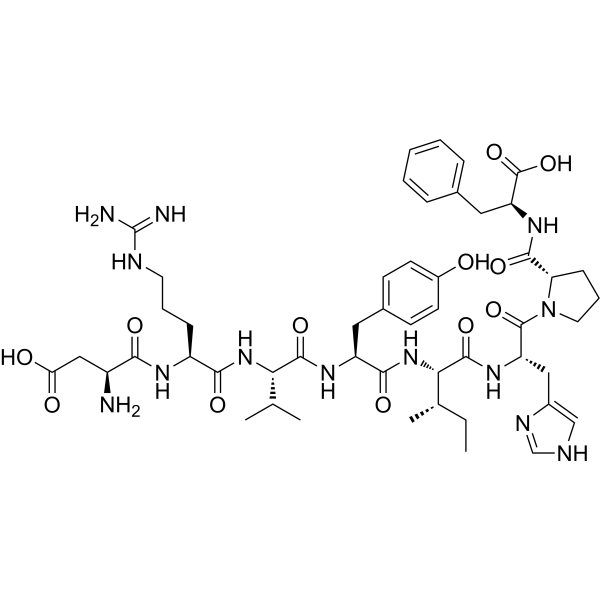
HY-13948
Angiotensin II humanVasoconstrictor
Publications Citing Use of MedChemExpress (MCE) Fimasartan
MoreAll Angiotensin Receptor Isoforms
More

Biological Activity
Description
IC50 & Target
|
AT1 Receptor |
In Vitro
Fimasartan (62.5, 125 and 250 µM; 1 h) inhibits NO production and the expression of inducible nitric oxide synthase in LPS(HY-D1056)-induced RAW264.7 macrophages[1].
Fimasartan (250 µM; 1 h) decreases the activation of NF-κB and activator protein 1 in LPS(HY-D1056)-induced RAW264.7 macrophages[1].
Fimasartan (30 ng/mL; 6 h) inhibits the activation of the NLRP3 inflammatome in a hemolysate -induced microglia model simulating cerebral hemorrhage[2].
MedChemExpress (MCE) has not independently confirmed the accuracy of these methods. They are for reference only.
-
Cell Line:LPS treated RAW264.7 macrophages
-
Concentration:62.5, 125 and 250µM
-
Incubation Time:1 h
-
Result:Reduced the levels of inducible nitric oxide synthase in a concentration‐dependent manner.
-
Cell Line:BV2 microglia cell
-
Concentration:30 ng/mL
-
Incubation Time:6 h
-
Result:Reduced the levels of NLRPS, ASC and cleaved caspase-1.
In Vivo
Fimasartan (0.03-3 mg/kg; Oral administration/Intravenous injection; 3-24 h) has antihypertensive effect in hypertensive rats[3].
MedChemExpress (MCE) has not independently confirmed the accuracy of these methods. They are for reference only.
-
Animal Model:Intracerebral hemorrhage treated male Sprague-Dawley rats aged four weeks old (65-75 g)[2]
-
Dosage:Low-dose (0.5 mg/kg); regular-doses (1.0 and 3.0 mg/kg)
-
Administration:Oral administration (p.o.); 33 days
-
Result:Reduced blood pressure in a dose-dependent manner in the regular-dose groups, the blood pressure in the low-dose groups was not significantly different from that of control groups.
Attenuated intracerebral hemorrhage-induced edema and improved neurological functions in the regular-dose groups.
Significantly decreased the activation of NLRP3/ASC/caspase-1 and NF-κB pathways after intracerebral hemorrhage in the regular-dose groups.
-
Animal Model:Male Sprague-Dawley rats (280-320g)[3]
-
Dosage:0.03, 0.1, 0.3mg/kg;
1, 3 mg/kg -
Administration:Intravenous injection (i.v.); 3 h;
Oral administration (p.o.); 24 h -
Result:Significantly decreased in mean arterial blood pressure with rapid onset a dose-dependent manner by i.v. and p.o.
Clinical Trial
| NCT Number | Sponsor | Condition | Start Date |
Phase

|
|---|---|---|---|---|
| NCT01329991 | 2011-05 | PHASE1 |


Chemical Information
-
CAS No. 247257-48-3
-
Appearance Solid
-
Molecular Weight 501.65
-
Formula C27H31N7OS
-
Color Off-white to light yellow
-
SMILES
O=C1N(C(CCCC)=NC(C)=C1CC(N(C)C)=S)CC2=CC=C(C3=C(C4=NN=NN4)C=CC=C3)C=C2
-
Synonyms
BR-A-657
-
Shipping
Room temperature in continental US; may vary elsewhere.
-
Storage
Powder -20°C 3 years 4°C 2 years In solvent -80°C 2 years -20°C 1 year


Publications (5)
-
Journal Impact Factor
-
Most Recent
-
Cancer Cell Int
2023 Jun 9;23(1):111. PMID: 37291545 -
J Pharm Sci
Prediction of the Time to Reach Equilibrium for Improved Estimation of the Unbound Fraction of Compounds in Equilibrium Dialysis using Kinetic Modeling. [Abstract]2023 Nov;112(11):2901-2909. PMID: 37392902 -
-
-
J Med Life
Fimasartan ameliorates renal ischemia reperfusion injury via modulation of oxidative stress, inflammatory and apoptotic cascades in a rat model. [Abstract]2022 Feb;15(2):241-251. PMID: 35419091


Solvent & Solubility
In Vitro:
DMSO : 100 mg/mL (199.34 mM; Need ultrasonic; Hygroscopic DMSO has a significant impact on the solubility of product, please use newly opened DMSO)
Please refer to the solubility information to select the appropriate solvent. Once prepared, please aliquot and store the solution to prevent product inactivation from repeated freeze-thaw cycles.
Storage method and period of stock solution: -80°C, 2 years; -20°C, 1 year. When stored at -80°C, please use it within 2 years. When stored at -20°C, please use it within 1 year.
Please refer to the solubility information to select the appropriate solvent. Once prepared, please aliquot and store the solution to prevent product inactivation from repeated freeze-thaw cycles.
Storage method and period of stock solution: -80°C, 2 years; -20°C, 1 year. When stored at -80°C, please use it within 2 years. When stored at -20°C, please use it within 1 year.
Concentration (start) × Volume (start) = Concentration (final) × Volume (final)
In Vivo:
Select the appropriate dissolution method based on your experimental animal and administration route.
- For the following dissolution methods, please ensure to first prepare a clear stock solution using an In Vitro approach and then sequentially add co-solvents:
- To ensure reliable experimental results, the clarified stock solution can be appropriately stored based on storage conditions. As for the working solution for In Vivo experiments, it is recommended to prepare freshly and use it on the same day.
- The percentages shown for the solvents indicate their volumetric ratio in the final prepared solution. If precipitation or phase separation occurs during preparation, heat and/or sonication can be used to aid dissolution.
Add each solvent one by one: 10% DMSO 40% PEG300 5% Tween-80 45% Saline
Solubility: ≥ 2.5 mg/mL (4.98 mM); Clear solution
This protocol yields a clear solution of ≥ 2.5 mg/mL (saturation unknown).
Taking 1 mL working solution as an example, add 100 μL DMSO stock solution (25.0 mg/mL) to 400 μL PEG300, and mix evenly; then add 50 μL Tween-80 and mix evenly; then add 450 μL Saline to adjust the volume to 1 mL.
Preparation of Saline: Dissolve 0.9 g sodium chloride in ddH₂O and dilute to 100 mL to obtain a clear Saline solution.
In Vivo Dissolution Calculator
Please enter the basic information of animal experiments:
-
-
-
-
Recommended: Prepare an additional quantity of animals to account for potential losses during experiments.
Please enter your animal formula composition:
-
%DMSO +
Recommended: Keep the proportion of DMSO in working solution below 2% if your animal is weak.
-
%+
-
+%Tween-80 + +
-
%Saline +
The co-solvents required include: DMSO, . All of co-solvents are available by MedChemExpress (MCE). , Tween 80. All of co-solvents are available by MedChemExpress (MCE).
Working solution concentration: 0.22 mg/mL
Method for preparing stock solution: mg drug dissolved in μL DMSO. Stock solution concentration: mg/mL.
1. Take μL DMSO stock solution;
2. Add μL .
μL , mix evenly;
3. Then add μL Tween 80, mix evenly;
4. Then add μL
Please ensure that the stock solution in the first step is dissolved to a clear state, and add co-solvents in sequence. You can use ultrasonic heating (ultrasonic cleaner, recommended frequency 20-40 kHz), vortexing, etc. to assist dissolution.


Purity & Documentation
-
Data Sheet (280 KB)
-
SDS (396 KB)
- English - EN (396 KB)
- Français - FR (396 KB)
- Deutsch - DE (396 KB)
- Norwegian - NO (396 KB)
- Español - ES (396 KB)
- Swedish - SV (396 KB)
- Italian - IT (396 KB)
- Korean - KR (396 KB)
- Portuguese - PT (396 KB)
-
Handling Instructions (2659 KB)
References
[1]. Ryu S, et al. Fimasartan, anti-hypertension drug, suppressed inducible nitric oxide synthase expressions via nuclear factor-kappa B and activator protein-1 inactivation. Biol Pharm Bull. 2013;36(3):467-74. [Content Brief]
[2]. Yang X, Sun J, Kim TJ, Kim YJ, Ko SB, Kim CK, Jia X, Yoon BW. Pretreatment with low-dose fimasartan ameliorates NLRP3 inflammasome-mediated neuroinflammation and brain injury after intracerebral hemorrhage. Exp Neurol. 2018 Dec;310:22-32. [Content Brief]
[3]. Chi YH, et al. Pharmacological characterization of BR-A-657, a highly potent nonpeptide angiotensin II receptor antagonist. Biol Pharm Bull. 2013;36(7):1208-15. [Content Brief]


Complete Stock Solution Preparation Table
Please refer to the solubility information to select the appropriate solvent. Once prepared, please aliquot and store the solution to prevent product inactivation from repeated freeze-thaw cycles.
Storage method and period of stock solution: -80°C, 2 years; -20°C, 1 year. When stored at -80°C, please use it within 2 years. When stored at -20°C, please use it within 1 year.
| Optional Solvent | Concentration Solvent Mass | 1 mg | 5 mg | 10 mg | 25 mg |
|---|---|---|---|---|---|
| DMSO | 1 mM | 1.9934 mL | 9.9671 mL | 19.9342 mL | 49.8355 mL |
| 5 mM | 0.3987 mL | 1.9934 mL | 3.9868 mL | 9.9671 mL | |
| 10 mM | 0.1993 mL | 0.9967 mL | 1.9934 mL | 4.9836 mL | |
| 15 mM | 0.1329 mL | 0.6645 mL | 1.3289 mL | 3.3224 mL | |
| 20 mM | 0.0997 mL | 0.4984 mL | 0.9967 mL | 2.4918 mL | |
| 25 mM | 0.0797 mL | 0.3987 mL | 0.7974 mL | 1.9934 mL | |
| 30 mM | 0.0664 mL | 0.3322 mL | 0.6645 mL | 1.6612 mL | |
| 40 mM | 0.0498 mL | 0.2492 mL | 0.4984 mL | 1.2459 mL | |
| 50 mM | 0.0399 mL | 0.1993 mL | 0.3987 mL | 0.9967 mL | |
| 60 mM | 0.0332 mL | 0.1661 mL | 0.3322 mL | 0.8306 mL | |
| 80 mM | 0.0249 mL | 0.1246 mL | 0.2492 mL | 0.6229 mL | |
| 100 mM | 0.0199 mL | 0.0997 mL | 0.1993 mL | 0.4984 mL |


Fimasartan Related Classifications
HY-B0780 Related Classifications
 Powered by Bioz