
From 11:00 pm to 12:00 pm EST ( 8:00 pm to 9:00 pm PST ) on January 6th, the website will be under maintenance. We are sorry for the inconvenience. Please arrange your schedule properly.
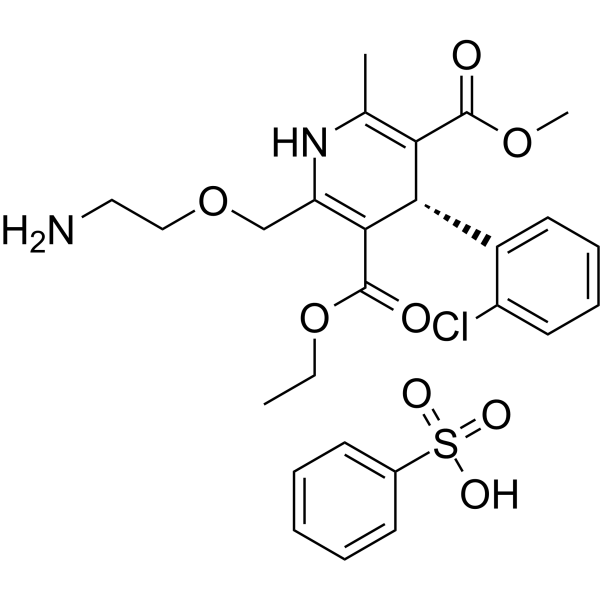
Levamlodipine ((S)-Amlodipine; Levoamlodipin) besylate is an orally active L-type calcium channel blocker and MMP-9 modulator with high permeability and retention properties. Levamlodipine besylate significantly enhances plaque stability and improves lipid profiles by reducing blood pressure, decreasing systolic blood pressure variability, and inhibiting MMP-9 expression in atherosclerotic plaques. Levamlodipine besylate not only alleviates cardiac and aortic hypertrophy and prevents renal atrophy, but also produces synergistic effects in blood pressure reduction and organ protection when combined with bisoprolol (HY-129029). Levamlodipine besylate exerts no significant inhibitory effect on abdominal aortic intimal hyperplasia. When excessively accumulated in the epidermis, Levamlodipine besylate may induce changes in keratin structure, impair the skin barrier and trigger inflammation; long-term use further exacerbates skin irritation caused by local administration. Levamlodipine besylate can be used in research related to hypertension and atherosclerosis .
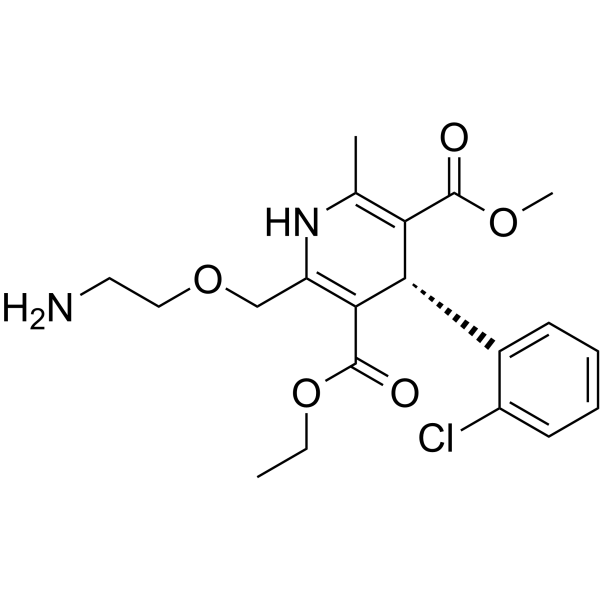
Levamlodipine ((S)-Amlodipine; Levoamlodipin) is an orally active L-type calcium channel blocker and MMP-9 modulator with high permeability and retention properties. Levamlodipine significantly enhances plaque stability and improves lipid profiles by reducing blood pressure, decreasing systolic blood pressure variability, and inhibiting MMP-9 expression in atherosclerotic plaques. Levamlodipine not only alleviates cardiac and aortic hypertrophy and prevents renal atrophy, but also produces synergistic effects in blood pressure reduction and organ protection when combined with bisoprolol (HY-129029). Levamlodipine exerts no significant inhibitory effect on abdominal aortic intimal hyperplasia. When excessively accumulated in the epidermis, Levamlodipine may induce changes in keratin structure, impair the skin barrier and trigger inflammation; long-term use further exacerbates skin irritation caused by local administration. Levamlodipine can be used in research related to hypertension and atherosclerosis .
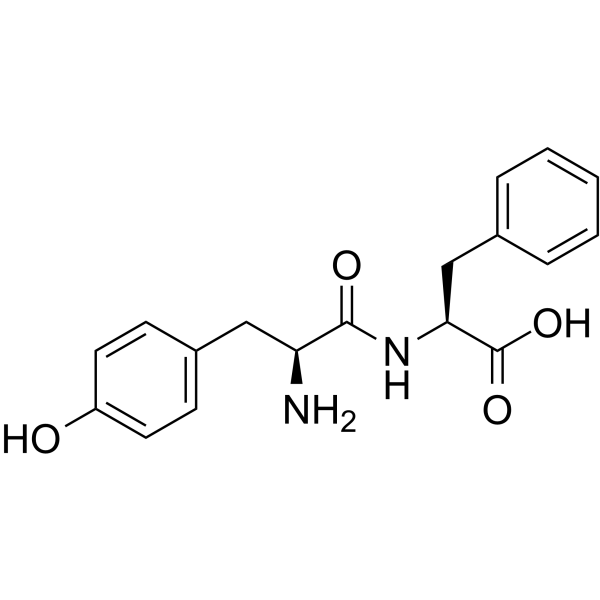
H-Tyr-Phe-OH (L-Tyrosyl-L-phenylalanine) is an orally active inhibitor of Angiotensin converting enzyme (ACE), with an inhibiton rate of 48% at 50 μM. H-Tyr-Phe-OH can be used as an biomarker for differentiating benign thyroid nodules (BTN) from thyroid cancer (TC). H-Tyr-Phe-OH exhibits xanthine oxidase inhibition (uric acid lowering) activity and serves as regulator in IL-8 production in neutrophil-like cells .
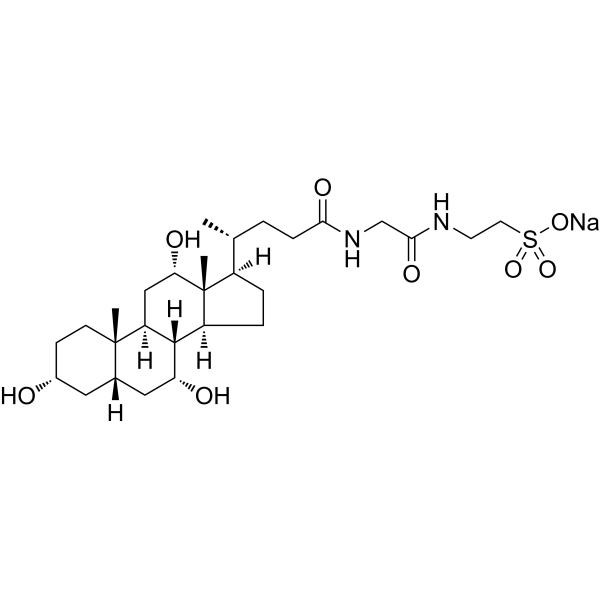
Sodium tauroglycocholate (Tauroglycocholic acid sodium salt) is a multifunctional surfactant and penetration enhancer that can serve as a cholegraphic contrast agent. In organic solvents, Sodium tauroglycocholate embeds and stabilizes invertase by forming reverse micelles, and prolongs its active lifespan. In terms of transdermal absorption, Sodium tauroglycocholate effectively regulates the flux of aminophylline through snake slough by binding to keratin filaments, disrupting keratinocytes and altering lipid components of the stratum corneum. It exhibits rapid penetration characteristics without lag time at a concentration of 100 μg/mL. Sodium tauroglycocholate does not interfere with the hepatic uptake of Gd-EOB-DTPA by the bile acid transport system in rat hepatocytes .
Keratin sulfate is a heparin-related proteoglycan that interacts with the receptor or alters its stability and function. Keratin sulfate does not enhance the mitogenic effect of FGF-2 .
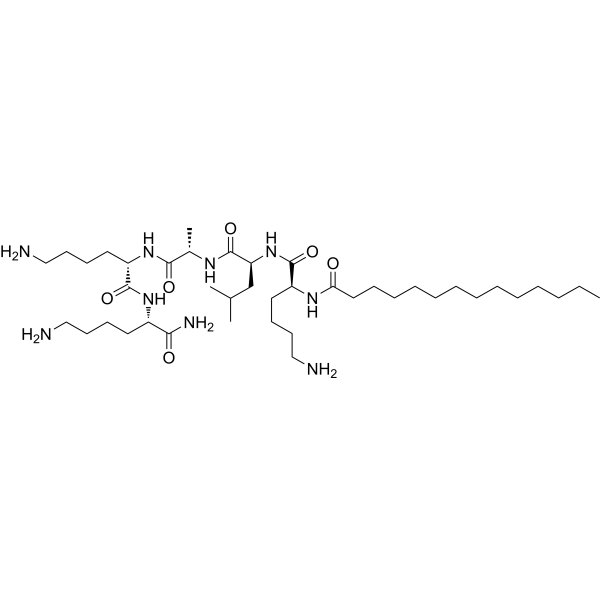
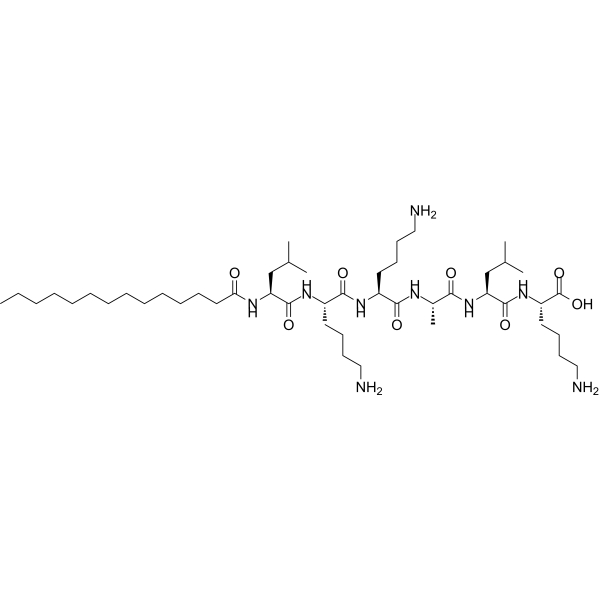
Myristoyl pentapeptide-17 can stimulate eyelash growth by stimulating keratin production. Myristoyl pentapeptide-17 promotes the delivery of key ingredients in the serum, such as the growth factors and lysophosphatidic acid .
Myristoyl pentapeptide-17 acetate can stimulate eyelash growth by stimulating keratin production. Myristoyl pentapeptide-17 acetate promotes the delivery of key ingredients in the serum, such as the growth factors and lysophosphatidic acid .
Keratin azure can be used to monitor the degradation of (β)-keratin. Keratin azure can be used as a substrate in keratin assays to assess keratinase degradation .
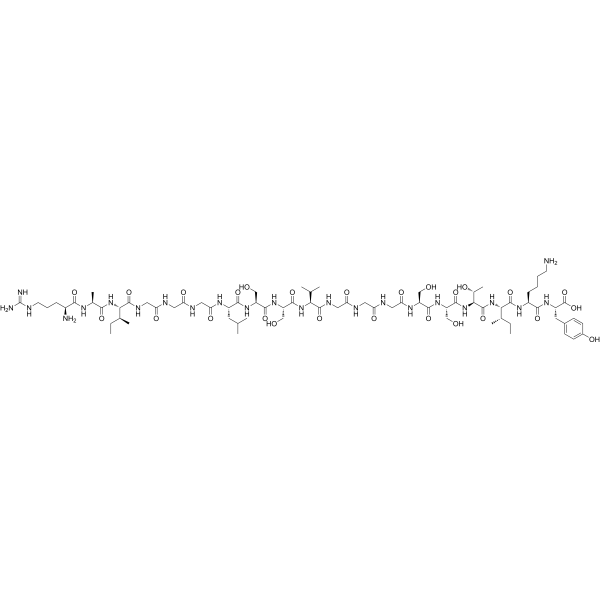
The P160 peptide is a breast cancer-targeting peptide that binds to the keratin 1 (KRT1) receptor on breast cancer cells, with a Kd of approximately 1.1 μM, demonstrating significant potential for targeted drug delivery to breast cancer cells. The P160 peptide enhances the cellular uptake and anticancer activity of the pro-apoptotic antimicrobial peptide MccJ25 (microcin J25). The P160 peptide can be used in cancer research .
Levamlodipine besylate Hemipentahydrate is an orally active L-type calcium channel blocker and MMP-9 modulator with high permeability and retention properties. Levamlodipine besylate Hemipentahydrate significantly enhances plaque stability and improves lipid profiles by reducing blood pressure, decreasing systolic blood pressure variability, and inhibiting MMP-9 expression in atherosclerotic plaques. Levamlodipine besylate Hemipentahydrate not only alleviates cardiac and aortic hypertrophy and prevents renal atrophy, but also produces synergistic effects in blood pressure reduction and organ protection when combined with bisoprolol (HY-129029). Levamlodipine besylate Hemipentahydrate exerts no significant inhibitory effect on abdominal aortic intimal hyperplasia. When excessively accumulated in the epidermis, Levamlodipine besylate Hemipentahydrate may induce changes in keratin structure, impair the skin barrier and trigger inflammation; long-term use further exacerbates skin irritation caused by local administration. Levamlodipine besylate Hemipentahydrate can be used in research related to hypertension and atherosclerosis .
Afegostat hydrochloride (D-Isofagomine hydrochloride) is a potent β-galactosidase inhibitor with activity ameliorating GM1-gangliosidosis and Morquio B disease-associated mutations. Afegostat hydrochloride is able to induce the maturation of mutant β-galactosidase in fibroblasts from patients with GM1-gangliosidosis. Afegostat hydrochloride also promotes the reduction of keratin sulfate and oligosaccharide load in patient cells .
Levamlodipine ((S)-Amlodipine; Levoamlodipin) hydrochloride is an orally active L-type calcium channel blocker and MMP-9 modulator with high permeability and retention properties. Levamlodipine hydrochloride significantly enhances plaque stability and improves lipid profiles by reducing blood pressure, decreasing systolic blood pressure variability, and inhibiting MMP-9 expression in atherosclerotic plaques. Levamlodipine hydrochloride not only alleviates cardiac and aortic hypertrophy and prevents renal atrophy, but also produces synergistic effects in blood pressure reduction and organ protection when combined with bisoprolol (HY-129029). Levamlodipine hydrochloride exerts no significant inhibitory effect on abdominal aortic intimal hyperplasia. When excessively accumulated in the epidermis, Levamlodipine hydrochloride may induce changes in keratin structure, impair the skin barrier and trigger inflammation; long-term use further exacerbates skin irritation caused by local administration. Levamlodipine hydrochloride can be used in research related to hypertension and atherosclerosis .
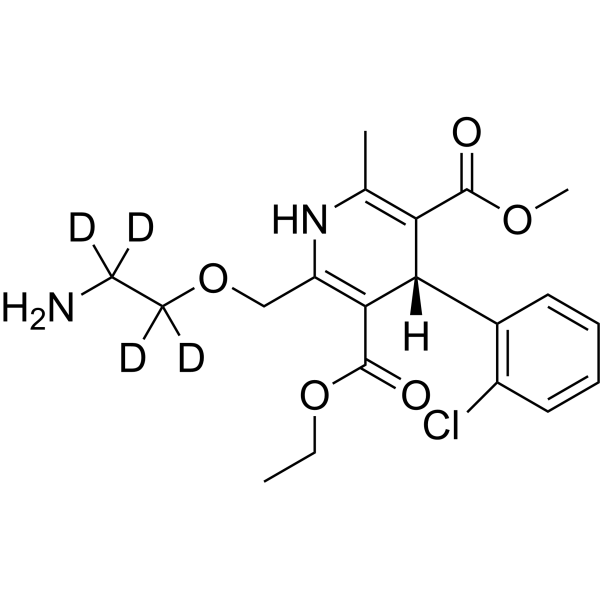
Levamlodipine-d4 is the deuterium labeled Levamlodipine. Levamlodipine ((S)-Amlodipine; Levoamlodipin) is an orally active L-type calcium channel blocker and MMP-9 modulator with high permeability and retention properties. Levamlodipine significantly enhances plaque stability and improves lipid profiles by reducing blood pressure, decreasing systolic blood pressure variability, and inhibiting MMP-9 expression in atherosclerotic plaques. Levamlodipine not only alleviates cardiac and aortic hypertrophy and prevents renal atrophy, but also produces synergistic effects in blood pressure reduction and organ protection when combined with bisoprolol (HY-129029). Levamlodipine exerts no significant inhibitory effect on abdominal aortic intimal hyperplasia. When excessively accumulated in the epidermis, Levamlodipine may induce changes in keratin structure, impair the skin barrier and trigger inflammation; long-term use further exacerbates skin irritation caused by local administration. Levamlodipine can be used in research related to hypertension and atherosclerosis .
Levamlodipine ((S)-Amlodipine; Levoamlodipin) hydrobromide is an orally active L-type calcium channel blocker and MMP-9 modulator with high permeability and retention properties. Levamlodipine hydrobromide significantly enhances plaque stability and improves lipid profiles by reducing blood pressure, decreasing systolic blood pressure variability, and inhibiting MMP-9 expression in atherosclerotic plaques. Levamlodipine hydrobromide not only alleviates cardiac and aortic hypertrophy and prevents renal atrophy, but also produces synergistic effects in blood pressure reduction and organ protection when combined with bisoprolol (HY-129029). Levamlodipine hydrobromide exerts no significant inhibitory effect on abdominal aortic intimal hyperplasia. When excessively accumulated in the epidermis, Levamlodipine hydrobromide may induce changes in keratin structure, impair the skin barrier and trigger inflammation; long-term use further exacerbates skin irritation caused by local administration. Levamlodipine hydrobromide can be used in research related to hypertension and atherosclerosis .
Keratin K18-C is a phosphopeptide corresponding to amino acids 26-38 of human K18, with a cysteine residue added at the end for coupling. Keratin K18-C can be coupled to Keyhole limpet hemocyanin via m-maleimidobenzoyl-N-hydroxysuccinimide ester .
Tylophoridicine F is a cytotoxic agent. Tylophoridicine F can be isolated from T. atrofolliculata. Tylophoridicine F exhibits more cytotoxic activity on cells compared to Adriamycin (assessed using ileocecal adenocarcinoma cells and keratin-forming tumor cells) .
Keratin azure can be used to monitor the degradation of (β)-keratin. Keratin azure can be used as a substrate in keratin assays to assess keratinase degradation .
H-Tyr-Phe-OH (L-Tyrosyl-L-phenylalanine) is an orally active inhibitor of Angiotensin converting enzyme (ACE), with an inhibiton rate of 48% at 50 μM. H-Tyr-Phe-OH can be used as an biomarker for differentiating benign thyroid nodules (BTN) from thyroid cancer (TC). H-Tyr-Phe-OH exhibits xanthine oxidase inhibition (uric acid lowering) activity and serves as regulator in IL-8 production in neutrophil-like cells .
Myristoyl pentapeptide-17 can stimulate eyelash growth by stimulating keratin production. Myristoyl pentapeptide-17 promotes the delivery of key ingredients in the serum, such as the growth factors and lysophosphatidic acid .
Myristoyl pentapeptide-17 acetate can stimulate eyelash growth by stimulating keratin production. Myristoyl pentapeptide-17 acetate promotes the delivery of key ingredients in the serum, such as the growth factors and lysophosphatidic acid .
The P160 peptide is a breast cancer-targeting peptide that binds to the keratin 1 (KRT1) receptor on breast cancer cells, with a Kd of approximately 1.1 μM, demonstrating significant potential for targeted drug delivery to breast cancer cells. The P160 peptide enhances the cellular uptake and anticancer activity of the pro-apoptotic antimicrobial peptide MccJ25 (microcin J25). The P160 peptide can be used in cancer research .
Keratin K18-C is a phosphopeptide corresponding to amino acids 26-38 of human K18, with a cysteine residue added at the end for coupling. Keratin K18-C can be coupled to Keyhole limpet hemocyanin via m-maleimidobenzoyl-N-hydroxysuccinimide ester .
Tylophoridicine F is a cytotoxic agent. Tylophoridicine F can be isolated from T. atrofolliculata. Tylophoridicine F exhibits more cytotoxic activity on cells compared to Adriamycin (assessed using ileocecal adenocarcinoma cells and keratin-forming tumor cells) .
Hair Keratin; Hair Keratin; type I Ha5; HHA5; HKA5; K35; Keratin; Keratin; type I cuticular Ha5; Keratin-35; KRT35; KRTHA5; type I cuticular Ha5; type I Ha5
KRT35 Protein shows early expression in the hair follicle, primarily localized in supramatricial and lowermost cortical cells of the hair bulb. KRT35 Protein, Human (His) is the recombinant human-derived KRT35 protein, expressed by E. coli , with N-6*His labeled tag.
The KRT8 protein, in cooperation with KRT19, critically links the contractile apparatus of the striated rib muscle to dystrophin. This heterotetramer consists of two type I keratins and two type II keratins, forming a heterodimer with KRT18. KRT8 Protein, Human (sf9, His-Myc) is the recombinant human-derived KRT8 protein, expressed by Sf9 insect cells , with N-10*His, C-Myc labeled tag.
The KRT18 protein is a heterotetramer with KRT8 that has multiple roles, including uptake of thrombin-antithrombin complexes and assisting in the delivery of mutated CFTR to the plasma membrane. It cooperates with KRT8 in IL-6-mediated barrier protection and interacts with PLEC isoform 1C. KRT18 Protein, Human (HEK293, His) is the recombinant human-derived KRT18 protein, expressed by HEK293 , with N-10*His labeled tag.
Levamlodipine-d4 is the deuterium labeled Levamlodipine. Levamlodipine ((S)-Amlodipine; Levoamlodipin) is an orally active L-type calcium channel blocker and MMP-9 modulator with high permeability and retention properties. Levamlodipine significantly enhances plaque stability and improves lipid profiles by reducing blood pressure, decreasing systolic blood pressure variability, and inhibiting MMP-9 expression in atherosclerotic plaques. Levamlodipine not only alleviates cardiac and aortic hypertrophy and prevents renal atrophy, but also produces synergistic effects in blood pressure reduction and organ protection when combined with bisoprolol (HY-129029). Levamlodipine exerts no significant inhibitory effect on abdominal aortic intimal hyperplasia. When excessively accumulated in the epidermis, Levamlodipine may induce changes in keratin structure, impair the skin barrier and trigger inflammation; long-term use further exacerbates skin irritation caused by local administration. Levamlodipine can be used in research related to hypertension and atherosclerosis .
KRT2; KRT76; KRT3; KRT5; KRT6A; KRT6B; KRT6C; KRT71; KRT72; KRT73; KRT74; KRT75; KRT79; KRT8; KRT84; Keratin; type II cytoskeletal 2 epidermal; Keratin; type II cytoskeletal 2 oral; Keratin; type II cytoskeletal 3; Keratin; type II cytoskeletal 5; Keratin; type II cytoskeletal 6A; Keratin; type II cytoskeletal 6B; Keratin; type II cytoskeletal 6C; Keratin; type II cytoskeletal 71; Keratin; type II cytoskeletal 72; Keratin; type II cytoskeletal 73; Keratin; type II cytoskeletal 74
WB, IHC-P
Human
Cytokeratin 2e Antibody (YA2671) is a Rabbit-derived and non-conjugated IgG monoclonal antibody, targeting to Cytokeratin 2e.
CK 6A; CK 6B; CK 6C; CK 6D; CK 6E; CK-6B; CK-6C; CK-6E; CytoKeratin 6a; CytoKeratin 6B; CytoKeratin 6C; CytoKeratin 6D; CytoKeratin 6E; CytoKeratin-6B; CytoKeratin-6C; CytoKeratin-6E; K2C6C_HUMAN; K6a Keratin; K6b Keratin; K6C; K6c Keratin; K6d Keratin; K6e Keratin; Keratin; Keratin K6h; Keratin type II cytoskeletal 6A; Keratin type II cytoskeletal 6B; Keratin type II cytoskeletal 6C; Keratin type II cytoskeletal 6D; Keratin type II cytoskeletal 6E; Keratin-6C; KRT6A; KRT6B; KRT6C; KRT6D; KRT6E; type II cytoskeletal 6C; Type-II Keratin Kb12
IHC-P, WB, ICC/IF, ELISA
Human
Cytokeratin 6 Antibody (YA5518) is a Mouse-derived and non-conjugated IgG2a monoclonal antibody, targeting to Cytokeratin 6.
CK 6A; CK 6B; CK 6C; CK 6D; CK 6E; CK-6B; CK-6C; CK-6E; CytoKeratin 6a; CytoKeratin 6B; CytoKeratin 6C; CytoKeratin 6D; CytoKeratin 6E; CytoKeratin-6B; CytoKeratin-6C; CytoKeratin-6E; K2C6C_HUMAN; K6a Keratin; K6b Keratin; K6C; K6c Keratin; K6d Keratin; K6e Keratin; Keratin; Keratin K6h; Keratin type II cytoskeletal 6A; Keratin type II cytoskeletal 6B; Keratin type II cytoskeletal 6C; Keratin type II cytoskeletal 6D; Keratin type II cytoskeletal 6E; Keratin-6C; KRT6A; KRT6B; KRT6C; KRT6D; KRT6E; type II cytoskeletal 6C; Type-II Keratin Kb12
IHC-P, ELISA
Human
Cytokeratin 6 Antibody (YA5682) is a Mouse-derived and non-conjugated IgG2a monoclonal antibody, targeting to Cytokeratin 6.
40 kDa Keratin intermediate filament; CK 19; ck19; CK19; CK-19; KRT19; CytoKeratin19; CytoKeratin-19; k19; k1cs; Keratin 19; Keratin-19; Keratin type I 40 kD; Keratin type i 40kD; Keratin type I cytoskeletal 19; krt19; mgc15366; K1C19_HUMAN; Keratin, type I cytoskeletal 19; Keratin, type I, 40 kd.
WB, ELISA, IHC-P, IHC-F, FC, ICC/IF
Human
Cytokeratin 19 Antibody is a Rabbit-derived and non-conjugated IgG polyclonal antibody, targeting to Cytokeratin 19.
40 kDa Keratin intermediate filament; CK 19; CK-19; CK19; CytoKeratin 19; CytoKeratin-19; K19; K1C19_HUMAN; K1CS; Keratin 19; Keratin type I 40 kD; Keratin type I 40kD; Keratin type I cytoskeletal 19; Keratin, type I cytoskeletal 19; Keratin, type I, 40 kd; Keratin-19; KRT19; MGC15366
IHC-P, WB, ICC/IF, ELISA
Human
Cytokeratin 19/10 Antibody (YA5635) is a Mouse-derived and non-conjugated IgG1 monoclonal antibody, targeting to Cytokeratin 19/10.
CK 7; CK-7; CK7; CytoKeratin 7; CytoKeratin-7; D15Wsu77e; K2C7; K2C7_HUMAN; K7; Keratin 7; Keratin 7, type II; Keratin type II cytoskeletal 7; Keratin, 55K type II cytoskeletal; Keratin, simple epithelial; Keratin, simple epithelial type I, K7; Keratin, type II cytoskeletal 7; Keratin-7; Krt2-7; KRT7; MGC11625; MGC129731; MGC3625; Sarcolectin; SCL; Type II mesothelial Keratin K7; Type-II Keratin Kb7
WB, IHC-P, ICC/IF, ELISA
Human, Mouse, Rat
Cytokeratin 7 Antibody (YA6177) is a Rabbit-derived and non-conjugated IgG monoclonal antibody, targeting to Cytokeratin 7.
40 kDa Keratin intermediate filament; CK 19; ck19; CK19; CK-19; KRT19; CytoKeratin19; CytoKeratin-19; k19; k1cs; Keratin 19; Keratin-19; Keratin type I 40 kD; Keratin type i 40kD; Keratin type I cytoskeletal 19; krt19; mgc15366; K1C19_HUMAN; Keratin, type I cytoskeletal 19; Keratin, type I, 40 kd.
WB, IHC-P, IHC-F, ICC/IF, FC, ELISA
Human, Mouse
Cytokeratin 19 Antibody(PBS only) is a Rabbit-derived and non-conjugated IgG polyclonal antibody, targeting to Cytokeratin 19.
40 kDa Keratin intermediate filament; CK 19; ck19; CK19; CK-19; KRT19; CytoKeratin19; CytoKeratin-19; k19; k1cs; Keratin 19; Keratin-19; Keratin type I 40 kD; Keratin type i 40kD; Keratin type I cytoskeletal 19; krt19; mgc15366; K1C19_HUMAN; Keratin, type I cytoskeletal 19; Keratin, type I, 40 kd
WB, IHC-P, IHC-F, ICC/IF
Human
Cytokeratin 19 Antibody (YA924) is a Mouse-derived and non-conjugated IgG monoclonal antibody, targeting to Cytokeratin 19.
KRT8; CYK8; Keratin; type II cytoskeletal 8; CytoKeratin-8; CK-8; Keratin-8; K8; Type-II Keratin Kb8
WB, IHC-F, IHC-P, ICC/IF, IP
Human
Phospho-Cytokeratin 8 (Ser23) Antibody (YA2635) is a Rabbit-derived and non-conjugated IgG monoclonal antibody, targeting to Phospho-Cytokeratin 8 (Ser23).
KRT8; CYK8; Keratin; type II cytoskeletal 8; CytoKeratin-8; CK-8; Keratin-8; K8; Type-II Keratin Kb8
WB, IHC-F, IHC-P, ICC/IF, IP
Human
Phospho-Cytokeratin 8 (Ser23) Antibody (YA2635) is a Rabbit-derived and non-conjugated IgG monoclonal antibody, targeting to Phospho-Cytokeratin 8 (Ser23).
CK 7; CK-7; ck7; CytoKeratin 7; CytoKeratin-7; CytoKeratin7; D15Wsu77e; K2C7; K2C7_HUMAN; K7; Keratin 55k type ii cytoskeletal; Keratin 7; Keratin simple epithelial type 1 k7; Keratin type II cytoskeletal 7
WB, ICC/IF
Human
Cytokeratin 7 Antibody (YA950) is a Mouse-derived and non-conjugated IgG2b monoclonal antibody, targeting to Cytokeratin 7.
CK 7; CK-7; ck7; CytoKeratin 7; CytoKeratin-7; CytoKeratin7; D15Wsu77e; K2C7; K2C7_HUMAN; K7; Keratin 55k type ii cytoskeletal; Keratin 7; Keratin simple epithelial type 1 k7; Keratin type II cytoskeletal 7
WB, IHC-F, IHC-P, ICC/IF, IP
Human, Mouse, Rat
Cytokeratin 7 Antibody (YA951) is a Mouse-derived and non-conjugated IgG1 monoclonal antibody, targeting to Cytokeratin 7.
CK 7; CK-7; ck7; CytoKeratin 7; CytoKeratin-7; CytoKeratin7; D15Wsu77e; K2C7; K2C7_HUMAN; K7; Keratin 55k type ii cytoskeletal; Keratin 7; Keratin simple epithelial type 1 k7; Keratin type II cytoskeletal 7
WB, ICC/IF, IP
Human
Cytokeratin 7 Antibody (YA952) is a Rabbit-derived and non-conjugated IgG monoclonal antibody, targeting to Cytokeratin 7.
Western blot analysis of extracts from THP-1(lane 2(20μg), Jurkat (lane 3(20μg) and NIH3T3(lane 4(20μg) using FOXO1A (HY-P80132) Rabbit mAb. Proteins were transferred
to a PVDF membrane and blocked with 5% non-fat milk in TBST for 2 hour at room temperature. The primary antibody (1/1000) and Loading control antibody (Beta Actin, HY-P80438, 1/10000) was
used in 5% non-fat milk in TBST at 4°C overnight. Goat Anti-Mouse/Rabbit IgG-HRP Secondary Antibody (1/10000) was used for 1 hour at room temperature.
Western blot analysis of extracts from THP-1(lane 2(20μg), Jurkat (lane 3(20μg) and NIH3T3(lane 4(20μg) using FOXO1A (HY-P80132) Rabbit mAb. Proteins were transferred
to a PVDF membrane and blocked with 5% non-fat milk in TBST for 2 hour at room temperature. The primary antibody (1/1000) and Loading control antibody (Beta Actin, HY-P80438, 1/10000) was
used in 5% non-fat milk in TBST at 4°C overnight. Goat Anti-Mouse/Rabbit IgG-HRP Secondary Antibody (1/10000) was used for 1 hour at room temperature.
Western blot analysis of extracts from THP-1(lane 2(20μg), Jurkat (lane 3(20μg) and NIH3T3(lane 4(20μg) using FOXO1A (HY-P80132) Rabbit mAb. Proteins were transferred
to a PVDF membrane and blocked with 5% non-fat milk in TBST for 2 hour at room temperature. The primary antibody (1/1000) and Loading control antibody (Beta Actin, HY-P80438, 1/10000) was
used in 5% non-fat milk in TBST at 4°C overnight. Goat Anti-Mouse/Rabbit IgG-HRP Secondary Antibody (1/10000) was used for 1 hour at room temperature.
Western blot analysis of extracts from THP-1(lane 2(20μg), Jurkat (lane 3(20μg) and NIH3T3(lane 4(20μg) using FOXO1A (HY-P80132) Rabbit mAb. Proteins were transferred
to a PVDF membrane and blocked with 5% non-fat milk in TBST for 2 hour at room temperature. The primary antibody (1/1000) and Loading control antibody (Beta Actin, HY-P80438, 1/10000) was
MedchemExpress Validation 03
Western blot analysis of extracts from THP-1(lane 2(20μg), Jurkat (lane 3(20μg) and NIH3T3(lane 4(20μg) using FOXO1A (HY-P80132) Rabbit mAb. Proteins were transferred
MedchemExpress Validation 04
Western blot analysis of extracts from THP-1(lane 2(20μg), Jurkat (lane 3(20μg) and NIH3T3(lane 4(20μg) using FOXO1A (HY-P80132) Rabbit mAb. Proteins were transferred
to a PVDF membrane and blocked with 5% non-fat milk in TBST for 2 hour at room temperature. The primary antibody (1/1000) and Loading control antibody (Beta Actin, HY-P80438, 1/10000) was
used in 5% non-fat milk in TBST at 4°C overnight. Goat Anti-Mouse/Rabbit IgG-HRP Secondary Antibody (1/10000) was used for 1 hour at room temperature.
MedchemExpress Validation
Western blot analysis of extracts from THP-1(lane 2(20μg), Jurkat (lane 3(20μg) and NIH3T3(lane 4(20μg) using FOXO1A (HY-P80132) Rabbit mAb. Proteins were transferred
to a PVDF membrane and blocked with 5% non-fat milk in TBST for 2 hour at room temperature. The primary antibody (1/1000) and Loading control antibody (Beta Actin, HY-P80438, 1/10000) was
used in 5% non-fat milk in TBST at 4°C overnight. Goat Anti-Mouse/Rabbit IgG-HRP Secondary Antibody (1/10000) was used for 1 hour at room temperature.
Western blot analysis of extracts from THP-1(lane 2(20μg), Jurkat (lane 3(20μg) and NIH3T3(lane 4(20μg) using FOXO1A (HY-P80132) Rabbit mAb. Proteins were transferred
to a PVDF membrane and blocked with 5% non-fat milk in TBST for 2 hour at room temperature. The primary antibody (1/1000) and Loading control antibody (Beta Actin, HY-P80438, 1/10000) was
used in 5% non-fat milk in TBST at 4°C overnight. Goat Anti-Mouse/Rabbit IgG-HRP Secondary Antibody (1/10000) was used for 1 hour at room temperature.
MedchemExpress Validation
Western blot analysis of extracts from THP-1(lane 2(20μg), Jurkat (lane 3(20μg) and NIH3T3(lane 4(20μg) using FOXO1A (HY-P80132) Rabbit mAb. Proteins were transferred
to a PVDF membrane and blocked with 5% non-fat milk in TBST for 2 hour at room temperature. The primary antibody (1/1000) and Loading control antibody (Beta Actin, HY-P80438, 1/10000) was
used in 5% non-fat milk in TBST at 4°C overnight. Goat Anti-Mouse/Rabbit IgG-HRP Secondary Antibody (1/10000) was used for 1 hour at room temperature.
MedchemExpress Validation
Western blot analysis of extracts from THP-1(lane 2(20μg), Jurkat (lane 3(20μg) and NIH3T3(lane 4(20μg) using FOXO1A (HY-P80132) Rabbit mAb. Proteins were transferred
to a PVDF membrane and blocked with 5% non-fat milk in TBST for 2 hour at room temperature. The primary antibody (1/1000) and Loading control antibody (Beta Actin, HY-P80438, 1/10000) was
used in 5% non-fat milk in TBST at 4°C overnight. Goat Anti-Mouse/Rabbit IgG-HRP Secondary Antibody (1/10000) was used for 1 hour at room temperature.
MedchemExpress Validation
Western blot analysis of extracts from THP-1(lane 2(20μg), Jurkat (lane 3(20μg) and NIH3T3(lane 4(20μg) using FOXO1A (HY-P80132) Rabbit mAb. Proteins were transferred
to a PVDF membrane and blocked with 5% non-fat milk in TBST for 2 hour at room temperature. The primary antibody (1/1000) and Loading control antibody (Beta Actin, HY-P80438, 1/10000) was
used in 5% non-fat milk in TBST at 4°C overnight. Goat Anti-Mouse/Rabbit IgG-HRP Secondary Antibody (1/10000) was used for 1 hour at room temperature.
MedchemExpress Validation
Western blot analysis of extracts from THP-1(lane 2(20μg), Jurkat (lane 3(20μg) and NIH3T3(lane 4(20μg) using FOXO1A (HY-P80132) Rabbit mAb. Proteins were transferred
to a PVDF membrane and blocked with 5% non-fat milk in TBST for 2 hour at room temperature. The primary antibody (1/1000) and Loading control antibody (Beta Actin, HY-P80438, 1/10000) was
used in 5% non-fat milk in TBST at 4°C overnight. Goat Anti-Mouse/Rabbit IgG-HRP Secondary Antibody (1/10000) was used for 1 hour at room temperature.
MedchemExpress Validation
Western blot analysis of extracts from THP-1(lane 2(20μg), Jurkat (lane 3(20μg) and NIH3T3(lane 4(20μg) using FOXO1A (HY-P80132) Rabbit mAb. Proteins were transferred
to a PVDF membrane and blocked with 5% non-fat milk in TBST for 2 hour at room temperature. The primary antibody (1/1000) and Loading control antibody (Beta Actin, HY-P80438, 1/10000) was
used in 5% non-fat milk in TBST at 4°C overnight. Goat Anti-Mouse/Rabbit IgG-HRP Secondary Antibody (1/10000) was used for 1 hour at room temperature.
MedchemExpress Validation
Western blot analysis of extracts from THP-1(lane 2(20μg), Jurkat (lane 3(20μg) and NIH3T3(lane 4(20μg) using FOXO1A (HY-P80132) Rabbit mAb. Proteins were transferred
to a PVDF membrane and blocked with 5% non-fat milk in TBST for 2 hour at room temperature. The primary antibody (1/1000) and Loading control antibody (Beta Actin, HY-P80438, 1/10000) was
used in 5% non-fat milk in TBST at 4°C overnight. Goat Anti-Mouse/Rabbit IgG-HRP Secondary Antibody (1/10000) was used for 1 hour at room temperature.
MedChemExpress values your privacy and your trust is important to us. We use cookies to enhance your website experience. Some cookies are necessary to run the website.
Privacy and Cookie Policy

