Search Result
Results for "
RAF-IN-1
" in MedChemExpress (MCE) Product Catalog:
7
Isotope-Labeled Compounds
| Cat. No. |
Product Name |
Target |
Research Areas |
Chemical Structure |
-
- HY-10331
-
Regorafenib
Maximum Cited Publications
87 Publications Verification
BAY 73-4506
|
VEGFR
Autophagy
PDGFR
Raf
RET
c-Kit
FGFR
Tie
|
Cancer
|
|
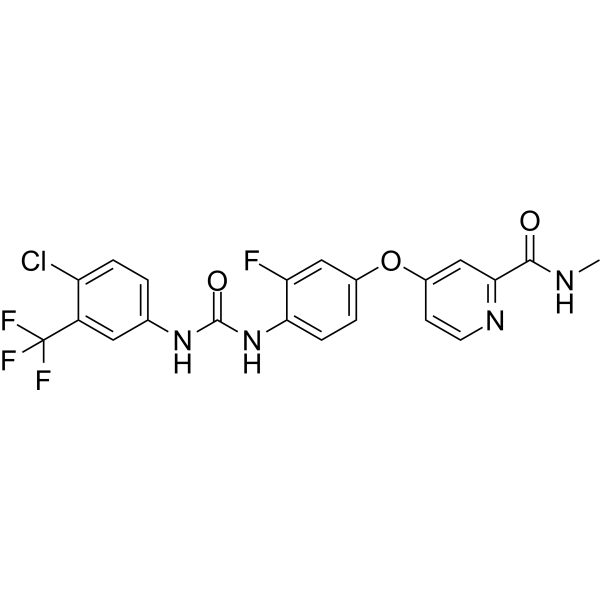
Regorafenib (BAY 73-4506) is an orally active and potent multi-targeted receptor tyrosine kinase inhibitor, with IC50 values of 13/4.2/46, 22, 7, 1.5 and 2.5 nM for VEGFR1/2/3, PDGFRβ, Kit, RET and Raf-1, respectively. Regorafenib shows very robust antitumor and antiangiogenic activity [1].
|
-
-
- HY-N6796
-
|
|
Antibiotic
Exosomes
Farnesyl Transferase
Ras
Apoptosis
Phospholipase
TNF Receptor
Atg8/LC3
|
Infection
Inflammation/Immunology
Cancer
|
|
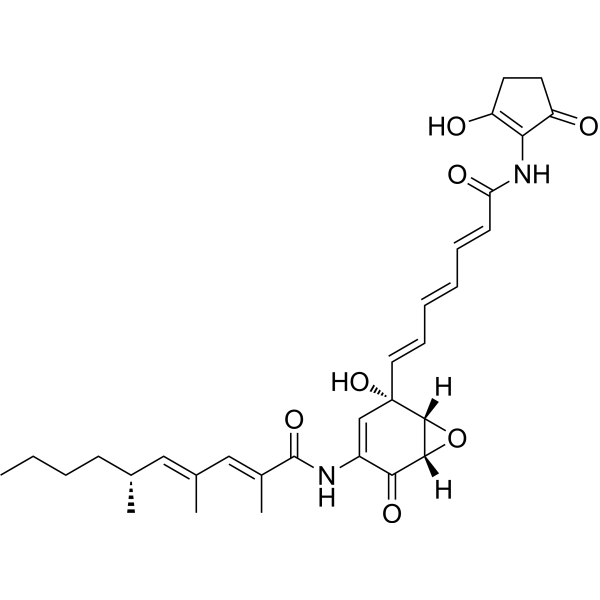
Manumycin A is a polyketide antibiotic and an inhibitor of thioredoxin reductase 1 (TrxR-1). Manumycin A can inhibit the growth of breast cancer cells and exert its anti-tumor activity through LC3. Manumycin A can downregulate the release of pro-inflammatory cytokines in human monocytes stimulated by TNF α, and has potential anti-inflammatory activity. Manumycin A can inhibit the Ras/Raf/ERK1/2 signaling and hnRNP H1 in castration resistant prostate cancer cells to suppress exosome biogenesis and secretion [1] .
|
-
-
- HY-128574
-
|
DS11252927
|
GLUT
PI3K
Akt
|
Metabolic Disease
|
|
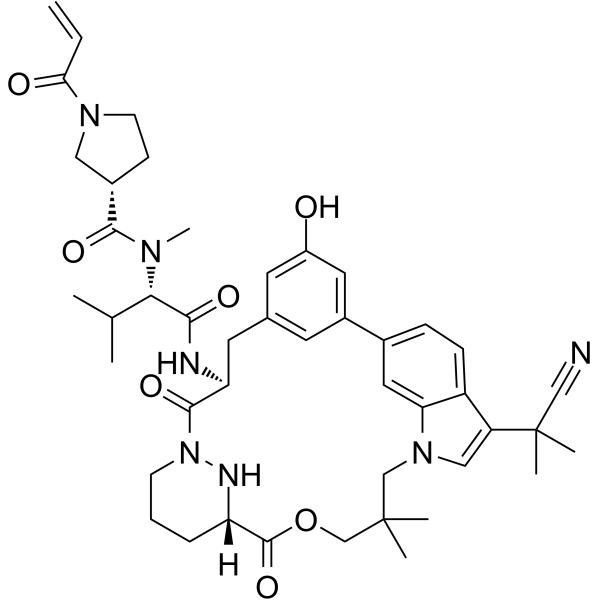
D927 (DS11252927) is an orally active glucose transporter type 4 (GLUT4) translocation activator with an EC50 of 0.14 μM. D927 enhances the binding affinity of PI3Kα catalytic subunit p110α to canonical RAS proteins (KRAS4A, KRAS4B) and RRAS, RRAS2, MRAS. D927 activates the PI3Kα-AKT pathway (increasing phosphorylation of AKT, p70S6 kinase) without affecting the RAF-ERK1/2 pathway. D927 improves hyperglycemia in type 1 and type 2 diabetes mice model. D927 can be used for the study of glucose homeostasis disorders and diabetes [1] .
|
-
-
- HY-109080
-
|
HM95573; GDC-5573; RG6185
|
Raf
|
Cancer
|
|
Belvarafenib (HM95573) is a potent and pan RAF (Rapidly Accelerated Fibrosarcoma) inhibitor, with IC50s of 56 nM, 7 nM and 5 nM for B-RAF, B-RAF v600E and C-RAF respectively .
|
-
-
- HY-N0226A
-
|
|
Cholinesterase (ChE)
Beta-secretase
Reactive Oxygen Species (ROS)
|
Neurological Disease
Metabolic Disease
|
|
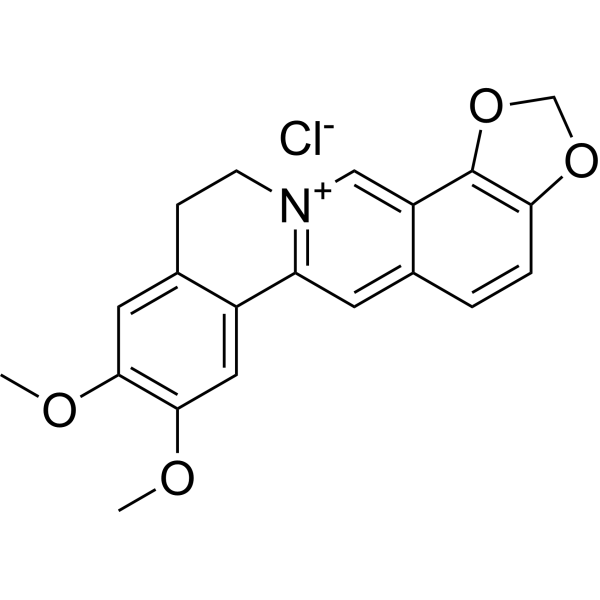
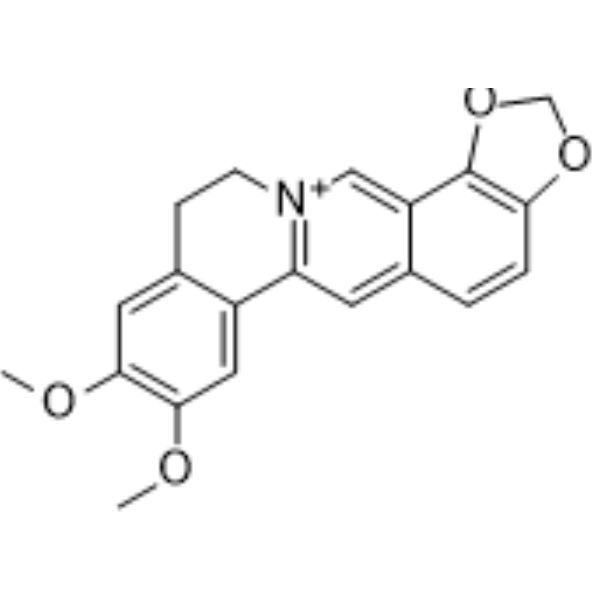
Epiberberine chloride is an alkaloid isolated from Coptis chinensis, acts as a potent AChE and BChE inhibitor, and a non-competitive BACE1 inhibitor, with IC50s of 1.07, 6.03 and 8.55 μM, respectively. Epiberberine chloride has antioxidant activity, with peroxynitrite ONOO - scavenging effect (IC50, 16.83 μM), and may protect against Alzheimer disease [1]. Epiberberine chloride inhibits the early stage of differentiation of 3T3-L1 preadipocytes, downregulates the Raf/MEK1/2/ERK1/2 and AMPKα/Akt pathways . Epiberberine has the potential effect in the research of diabetic disease .
|
-
-
- HY-10331A
-
|
BAY 73-4506 monohydrate
|
VEGFR
Autophagy
PDGFR
Raf
RET
FGFR
c-Kit
Tie
|
Cancer
|
|
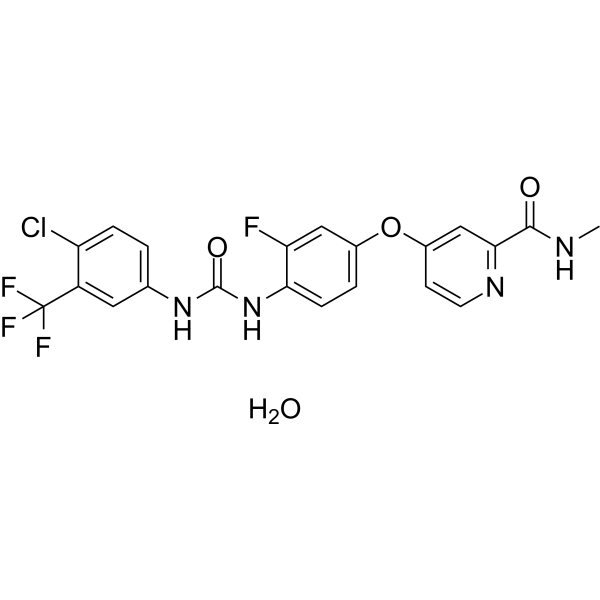
Regorafenib (BAY 73-4506) monohydrate is an orally active and potent multi-targeted receptor tyrosine kinase inhibitor, with IC50 values of 13/4.2/46, 22, 7, 1.5 and 2.5 nM for VEGFR1/2/3, PDGFRβ, Kit, RET and Raf-1, respectively. Regorafenib monohydrate shows very robust antitumor and antiangiogenic activity [1].
|
-
-
- HY-N0226
-
|
|
Cholinesterase (ChE)
Beta-secretase
|
Neurological Disease
Metabolic Disease
|
|
Epiberberine is an alkaloid isolated from Coptis chinensis, acts as a potent AChE and BChE inhibitor, and a non-competitive BACE1 inhibitor, with IC50s of 1.07, 6.03 and 8.55 μM, respectively. Epiberberine has antioxidant activity, with peroxynitrite ONOO - scavenging effect (IC50, 16.83 μM), and can be used for the research of Alzheimer disease [1]. Epiberberine inhibits the early stage of differentiation of 3T3-L1 preadipocytes, downregulates the Raf/MEK1/2/ERK1/2 and AMPKα/Akt pathways . Epiberberinecan be used for the research of diabetic disease .
|
-
-
- HY-10201S
-
|
Donafenib; Bay 43-9006-d3
|
Raf
VEGFR
FLT3
Ferroptosis
Autophagy
Apoptosis
|
Cancer
|
|
Sorafenib-d3 (Donafenib), a deuterated compound of Sorafenib, is the first deuterium-generation tumor suppressor small molecule. Sorafenib is a multikinase inhibitor IC50s of 6 nM, 20 nM, and 22 nM for Raf-1, B-Raf, and VEGFR-3, respectively [1].
|
-
-
- HY-115501
-
|
|
Ser/Thr Protease
|
Cancer
|
(E)-FOBISIN101 is a 14-3-3 protein-protein interaction (14-3-3 protein-protein interaction) inhibitor, with IC50 values of 9.3 and 16.4 μM for disrupting the binding of 14-3-3ζ or 14-3-3γ to PRAS40, respectively. (E)-FOBISIN101 inhibits the binding of 14-3-3 to Raf-1 and proline-rich AKT substrate, and neutralizes the ability of 14-3-3 to activate exotoxin S ADP-ribosyltransferase. (E)-FOBISIN101 is applicable to 14-3-3-mediated cancer research [1].
|
-
-
- HY-14177
-
|
|
Raf
|
Cancer
|
|
Raf inhibitor 1 is a potent Raf kinase inhibitor with Kis of 1 nM, 1 nM, and 0.3 nM for B-Raf WT, B-Raf V600E, and C-Raf, respectively.
|
-
-
- HY-13308
-
|
BAY 73-4506 hydrochloride
|
VEGFR
Autophagy
PDGFR
Raf
RET
|
Cancer
|
|
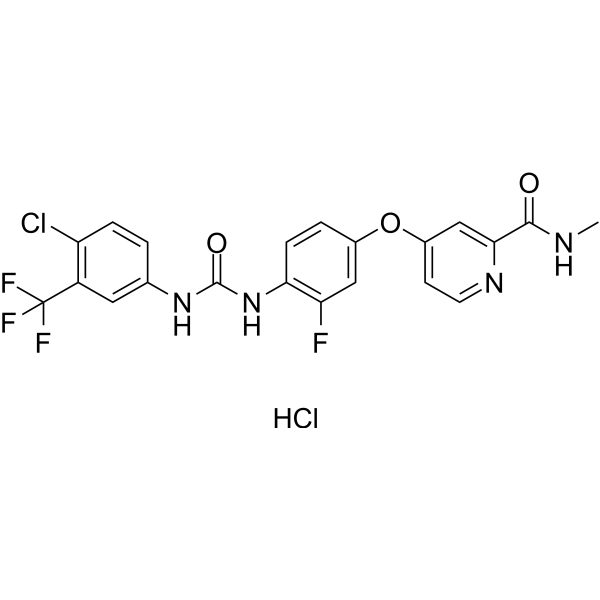
Regorafenib Hydrochloride (BAY 73-4506 hydrochloride) is a multi-target inhibitor for VEGFR1/2/3, PDGFRβ, Kit, RET and Raf-1 with IC50s of 13/4.2/46, 22, 7, 1.5 and 2.5 nM, respectively [1].
|
-
-
- HY-138294
-
|
|
Ras
Raf
|
Cancer
|
|
RAS/RAS-RAF-IN-1 is a potent RAS and RAS-RAF inhibitor. RAS/RAS-RAF-IN-1 has a KD of 5.0 μΜ-15 μΜ for cyclophilin A (CYPA) binding affinity. RAS/RAS-RAF-IN-1 has antitumor activity [1].
|
-
-
- HY-120548
-
|
|
TGF-β Receptor
Integrin
Raf
RIP kinase
ERK
|
Cancer
|
|
KBU2046 is an orally active transforming growth factor-β (TGF-β1) inhibitor. KBU2046 reduces integrin family protein expression, decreases Raf, RIPK1 and ERK phosphorylation to deactivate the ERK signaling pathway, and down-regulates genes linked to TGF-β1 maturation. KBU2046 suppresses tumor cell motility, impedes cancer invasion and metastasis, and inhibits human ESCC growth and metastasis in a murine model. KBU2046 can be used for the researches of triple-negative breast cancer and esophageal squamous cell carcinoma [1] .
|
-
-
- HY-144271
-
|
|
Raf
|
Cancer
|
|
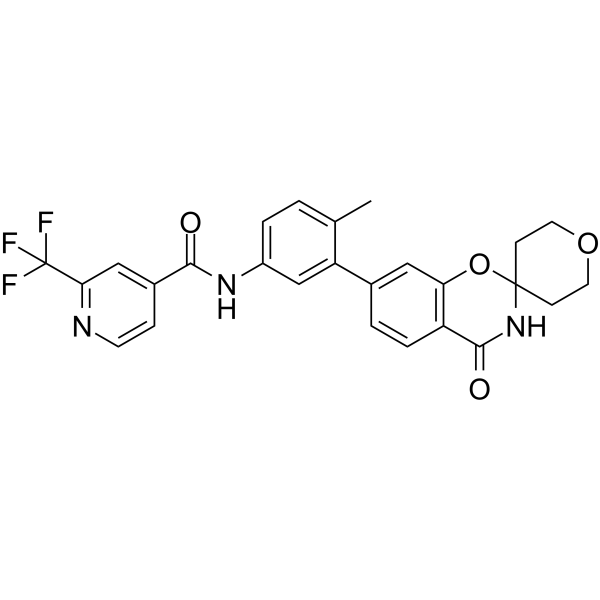
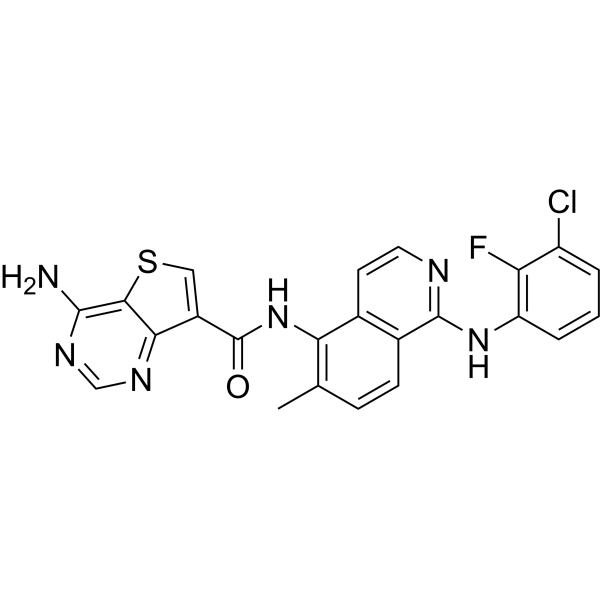
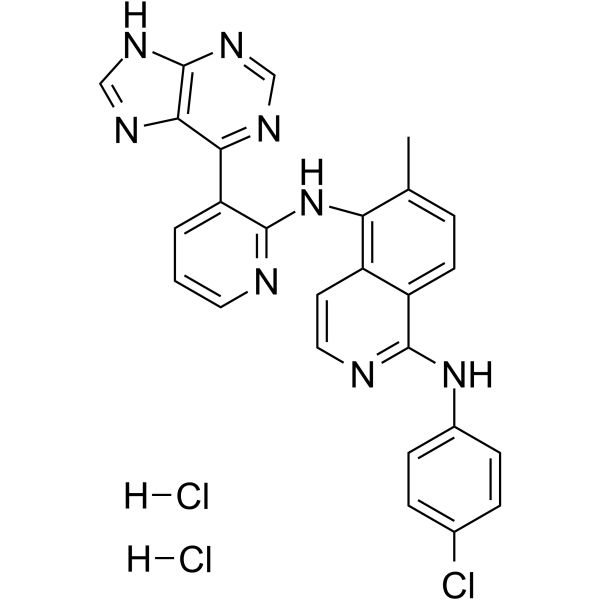
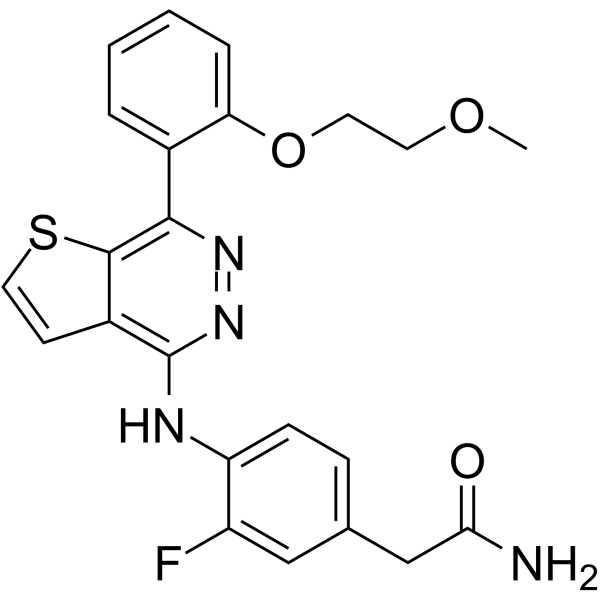
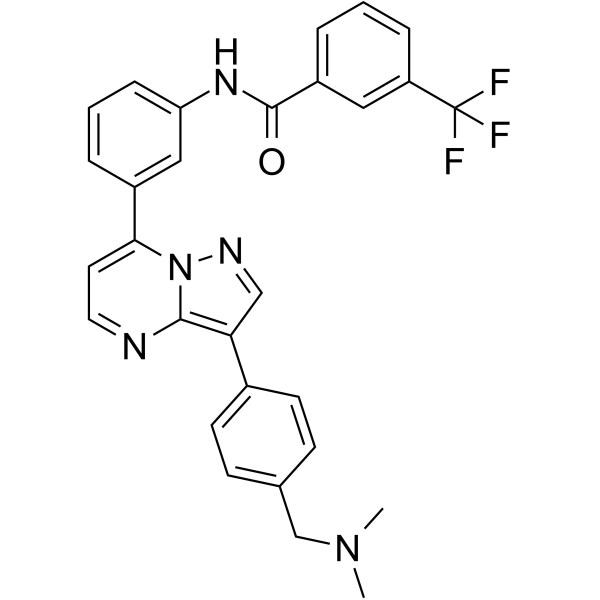
RAF-IN-1 is a potent b/cRAF inhibitor with an IC50s of 3.8 nM, 36 nM, 29.4 nM for cRAF, bRAF wt, and bRAF V600E. RAF-IN-1 shows cell growth inhibition with GI50s of 3.4 and 2.9 nM for H358 and A375 cell line bearing bRAF V600E mutation, respectively [1].
|
-
-
- HY-P1039A
-
|
PHCVPRDLSWLDLEANMCLP TFA
|
Raf
|
Cancer
|
|
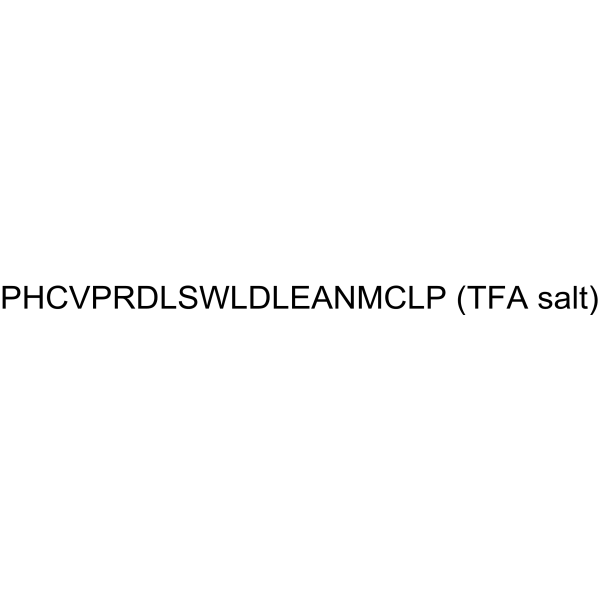
R18 TFA is a peptide antagonists of 14-3-3, with a KD of 70-90 nM. R18 efficiently blocks the binding of 14-3-3 to the kinase Raf-1, a physiological ligand of 14-3-3, and effectively abolished the protective role of 14-3-3 against phosphatase-induced inactivation of Raf-1 .
|
-
-
- HY-111758
-
|
|
PROTACs
Raf
|
Cancer
|
|
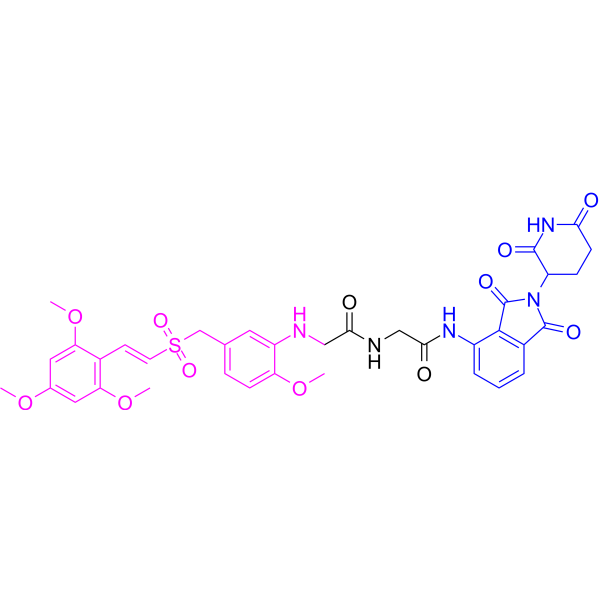
PROTAC B-Raf degrader 1 (compound 2) is a proteolysis targeting chimera (PROTAC) for the degradation of B-Raf based on Cereblon ligand with anti-cancer activity [1].
|
-
-
- HY-I0678
-
|
|
Drug Metabolite
PDGFR
|
Cancer
|
|
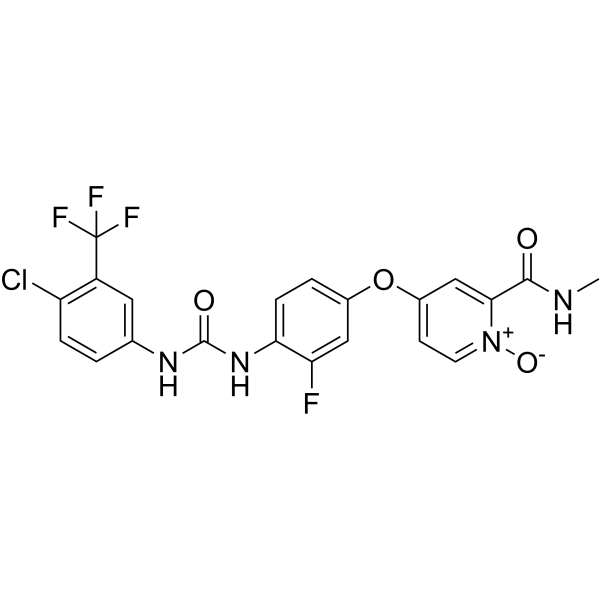
Regorafénib N-oxyde M2 is an active metabolite of Regorafenib. Regorafenib is a multi-target inhibitor for VEGFR1/2/3, PDGFRβ, Kit, RET and Raf-1 with IC50s of 13/4.2/46, 22, 7, 1.5 and 2.5 nM, respectively.
|
-
-
- HY-10201S2
-
|
Bay 43-9006-13C,d3
|
Raf
VEGFR
FLT3
Autophagy
Apoptosis
Ferroptosis
|
Cancer
|
|
Sorafenib- 13C,d3 is the 13C- and deuterium labeled Sorafenib. Sorafenib (Bay 43-9006) is a potent and orally active Raf inhibitor with IC50s of 6 nM and 20 nM for Raf-1 and B-Raf, respectively. Sorafenib is a multikinase inhibitor with IC50s of 90 nM, 15 nM, 20 nM, 57 nM and 58 nM for VEGFR2, VEGFR3, PDGFRβ, FLT3 and c-Kit, respectively. Sorafenib induces autophagy and apoptosis. Sorafenib has anti-tumor activity. Sorafenib is a ferroptosis activator [1].
|
-
-
- HY-10201R
-
|
Bay 43-9006 (Standard)
|
Reference Standards
Raf
VEGFR
FLT3
Autophagy
Apoptosis
Ferroptosis
|
Cancer
|
|
Sorafenib (Standard) is the analytical standard of Sorafenib. This product is intended for research and analytical applications. Sorafenib (Bay 43-9006) is a potent and orally active Raf inhibitor with IC50s of 6 nM and 20 nM for Raf-1 and B-Raf, respectively. Sorafenib is a multikinase inhibitor with IC50s of 90 nM, 15 nM, 20 nM, 57 nM and 58 nM for VEGFR2, VEGFR3, PDGFRβ, FLT3 and c-Kit, respectively. Sorafenib induces autophagy and apoptosis. Sorafenib has anti-tumor activity. Sorafenib is a ferroptosis activator [1].
|
-
-
- HY-18227
-
|
|
Raf
|
Cancer
|
|
B-Raf IN 1 is a potent and selective B-Raf kinase inhibitor with an IC50 of 24 nM.
|
-
-
- HY-W013411A
-
|
UIC-1005
|
Raf
G Protein-coupled Receptor Kinase (GRK)
|
Cancer
|
|
Locostatin (UIC-1005) is a potent RKIP inhibitor. Locostatin binds Raf kinase inhibitor RKIP protein and disrupts the interaction of RKIP with Raf-1 kinase and G protein-coupled receptor kinase 2. Locostatin inhibits cell proliferation and migration. Locostatin can be used to synthesize chemical probes toward PEBP-proteins. Locostatin aggravates thioacetamide (HY-Y0698)-induced acute liver failure in mice [1] .
|
-
-
- HY-N13009
-
|
|
Raf
HIF/HIF Prolyl-Hydroxylase
ERK
MEK
Reactive Oxygen Species (ROS)
Apoptosis
Caspase
|
Cancer
|
|
MO-2097 is a RAF-1/HIF-1α inhibitor. MO-2097 induces RAF-1 destabilization, leading to a reduction in
EMT-associated transcription factors and mesenchymal markers. MO-2097 inhibits HIF-1a protein expression mediated by hnRNPA2B1 under hypoxic and mimetic hypoxia. MO-2097 induces mitochondrial ROS, which leads to apoptosis in cells. MO-2097 effectively suppresses colorectal cancer metastasis by inhibiting the RAF/MEK/ERK signaling pathway. MO-2097 attenuates tumor growth in a xenograft HCT116 cell mouse model. MO-2097 can be used for the study of colorectal cancer [1] .
|
-
-
- HY-10201S1
-
|
Bay 43-9006-d4
|
Raf
VEGFR
FLT3
Ferroptosis
Autophagy
Apoptosis
|
Cancer
|
|
Sorafenib-d4 (Bay 43-9006-d4) is the deuterium labeled Sorafenib. Sorafenib is a multikinase inhibitor IC50s of 6 nM, 20 nM, and 22 nM for Raf-1, B-Raf, and VEGFR-3, respectively.
|
-
-
- HY-P1039
-
|
PHCVPRDLSWLDLEANMCLP
|
Raf
|
Cancer
|
|
R18 is a peptide antagonists of 14-3-3, with a KD of 70-90 nM. R18 efficiently blocks the binding of 14-3-3 to the kinase Raf-1, a physiological ligand of 14-3-3, and effectively abolished the protective role of 14-3-3 against phosphatase-induced inactivation of Raf-1 .
|
-
-
- HY-130617
-
|
|
E3 Ligase Ligand-Linker Conjugates
|
Cancer
|
|
Pomalidomide-amido-C1-Br is a synthesized E3 ligase ligand-linker conjugate that incorporates the Pomalidomide based cereblon ligand and a linker. Pomalidomide-amido-C1-Br can be used to design a B-Raf PROTAC degrader PROTAC B-Raf degrader 1 (HY-111758). PROTAC B-Raf degrader 1 has anti-cancer activity [1].
|
-
-
- HY-113632
-
|
10Z-DebromohymenialdisINe
|
Raf
MEK
|
Cancer
|
|
Debromohymenialdisine (10Z-Debromohymenialdisine) is a pyrrole alkaloid. Debromohymenialdisine has moderate inhibitory activity with an IC50 value of 881 nM in the initial Raf/MEK-1/MAPK signaling cascade assay. Debromohymenialdisine can be used for the research of proliferation and differentiation [1].
|
-
-
- HY-126298
-
|
|
Raf
|
Cancer
|
|
RAF mutant-IN-1 is a RAF kinase inhibitor, extracted from patent WO2019107987A1, with IC50 values of 21 nM, 30 nM and 392 nM for C-RAF 340D/Y341D, B-RAF V600E and B-RAF WT, respectively [1].
|
-
-
- HY-I0678S
-
|
|
PDGFR
Drug Metabolite
|
Cancer
|
|
Regorafénib N-oxyde-d3(M2) is the deuterium labeled Regorafénib N-oxyde M2 [1]. Regorafénib N-oxyde M2 is an active metabolite of Regorafenib. Regorafenib is a multi-target inhibitor for VEGFR1/2/3, PDGFRβ, Kit, RET and Raf-1 with IC50s of 13/4.2/46, 22, 7, 1.5 and 2.5 nM, respectively .
|
-
-
- HY-14177A
-
|
|
Raf
|
Cancer
|
|
B-Raf inhibitor 1 dihydrochloride is a potent Raf kinase inhibitor with Kis of 1 nM, 1 nM, and 0.3 nM for B-Raf WT, B-Raf V600E, and C-Raf, respectively.
|
-
-
- HY-13308R
-
|
BAY 73-4506 hydrochloride (Standard)
|
VEGFR
Autophagy
PDGFR
Raf
RET
Reference Standards
|
Cancer
|
|
Regorafenib (Hydrochloride) (Standard) is the analytical standard of Regorafenib (Hydrochloride). This product is intended for research and analytical applications. Regorafenib Hydrochloride (BAY 73-4506 hydrochloride) is a multi-target inhibitor for VEGFR1/2/3, PDGFRβ, Kit, RET and Raf-1 with IC50s of 13/4.2/46, 22, 7, 1.5 and 2.5 nM, respectively [1].
|
-
-
- HY-10331B
-
|
BAY 73-4506 mesylate
|
VEGFR
PDGFR
RET
Raf
c-Kit
FGFR
Autophagy
Tie
|
Cancer
|
|
Regorafenib (BAY 73-4506) mesylate is an orally active and potent multi-targeted receptor tyrosine kinase inhibitor, with IC50 values of 13/4.2/46, 22, 7, 1.5 and 2.5 nM for VEGFR1/2/3, PDGFRβ, Kit, RET and Raf-1, respectively. Regorafenib mesylate shows very robust antitumor and antiangiogenic activity [1].
|
-
-
- HY-E70746
-
|
|
MEK
|
Cancer
|
|
MEK1 is the MAP/ERK kinase. The MEK1 kinase directly phosphorylates ERK2, after the activation loop of MEK1 is itself phosphorylated by Raf. MEK1 SESE is a mutant of MEK1. MEK1 SESE Recombinant Human Active Protein Kinase is a recombinant MEK1 SESE protein that can be used to study MEK1 SESE-related functions [1].
|
-
-
- HY-10331S1
-
|
BAY 73-4506-13C,d3
|
VEGFR
Autophagy
PDGFR
Raf
RET
|
Cancer
|
|
Regorafenib- 13C,d3 is the 13C- and deuterium labeled Regorafenib. Regorafenib (BAY 73-4506) is a multi-targeted receptor tyrosine kinase inhibitor with IC50s of 13/4.2/46, 22, 7, 1.5 and 2.5 nM for VEGFR1/2/3, PDGFRβ, Kit, RET and Raf-1, respectively.
|
-
-
- HY-W013411
-
|
(E/Z)-UIC-1005
|
Raf
|
Cancer
|
|
(E/Z)-Locostatin ((E/Z)-UIC-1005) is a racemic of Locostatin. Locostatin (UIC-1005) is a potent RKIP inhibitor. Locostatin binds Raf kinase inhibitor RKIP protein and disrupts the interaction of RKIP with Raf-1 kinase and G protein-coupled receptor kinase 2. Locostatin inhibits cell proliferation and migration. Locostatin aggravates thioacetamide (HY-Y0698)-induced acute liver failure in mice [1] .
|
-
-
- HY-10331R
-
|
BAY 73-4506 (Standard)
|
Reference Standards
VEGFR
Autophagy
PDGFR
Raf
RET
c-Kit
FGFR
Tie
|
Cancer
|
|
Regorafenib (Standard) is the analytical standard of Regorafenib. This product is intended for research and analytical applications. Regorafenib (BAY 73-4506) is an orally active and potent multi-targeted receptor tyrosine kinase inhibitor, with IC50 values of 13/4.2/46, 22, 7, 1.5 and 2.5 nM for VEGFR1/2/3, PDGFRβ, Kit, RET and Raf-1, respectively. Regorafenib shows very robust antitumor and antiangiogenic activity [1].
|
-
-
- HY-10331AR
-
|
BAY 73-4506 monohydrate (Standard)
|
Reference Standards
VEGFR
Autophagy
PDGFR
Raf
RET
FGFR
c-Kit
Tie
|
Cancer
|
|
Regorafenib (monohydrate) (Standard) is the analytical standard of Regorafenib (monohydrate). This product is intended for research and analytical applications. Regorafenib (BAY 73-4506) monohydrate is an orally active and potent multi-targeted receptor tyrosine kinase inhibitor, with IC50 values of 13/4.2/46, 22, 7, 1.5 and 2.5 nM for VEGFR1/2/3, PDGFRβ, Kit, RET and Raf-1, respectively. Regorafenib monohydrate shows very robust antitumor and antiangiogenic activity [1].
|
-
-
- HY-I0678S1
-
|
|
Drug Metabolite
|
Cancer
|
|
Regorafénib N-oxyde (M2)- 13C,d3 is the 13C- and deuterium labeled Regorafénib N-oxyde (M2). Regorafénib N-oxyde M2 is an active metabolite of Regorafenib. Regorafenib is a multi-target inhibitor for VEGFR1/2/3, PDGFRβ, Kit, RET and Raf-1 with IC50s of 13/4.2/46, 22, 7, 1.5 and 2.5 nM, respectively.
|
-
-
- HY-157750
-
|
|
MEK
Raf
|
Cancer
|
|
MEK1/C-Raf-IN-1 (Compound 14d) is a MEK1/C-Raf inhibitor with IC50 values of 97 and 23 nM, respectively. MEK1/C-Raf-IN-1 has antitumor activity [1].
|
-
-
- HY-162873
-
|
|
MEK
Raf
|
Cancer
|
|
MEK/RAF-IN-1 (Compound 16b) is an inhibitor of both MEK and RAF. It shows potent inhibition with IC50 values of 28 nM for MEK1, and 3 nM each for BRAF and BRAFV600E. MEK/RAF-IN-1 demonstrates significant antitumor activity, effectively inhibiting cell proliferation in vitro against MIA PaCa-2 (G12C KRAS), HCT116 (G13D KRAS), and C26 (G12D KRAS) cells. Additionally, it inhibits tumor growth in xenograft mouse models of colorectal cancer [1].
|
-
-
- HY-146303
-
|
|
Raf
|
Cancer
|
|
C-RAF kinase-IN-1 (compound 1l) is a potent inhibitor of C-RAF kinase with an IC50 of 0.193 μM. C-RAF kinase-IN-1 is a quinoline derivative. C-RAF kinase-IN-1 has the potential for the research of cancer diseases [1].
|
-
-
- HY-N15264
-
|
(-)-Azaspirene
|
VEGFR
Raf
|
Cancer
|
|
Azaspirene ((-)-Azaspirene) is an angiogenesis and Raf-1 activation inhibitor isolated from the fungus Neosartorya sp. Azaspirene inhibits vascular endothelial growth factor (VEGF)-induced human umbilical vein endothelial cell (HUVEC) migration and Raf-1 activation, but has no effect on the activation of kinase insert domain-containing receptor/fetal liver kinase 1 (VEGF receptor 2) [1].
|
-
-
- HY-109080A
-
|
HM95573 TFA; GDC-5573 TFA; RG6185 TFA
|
Raf
|
Cancer
|
|
Belvarafenib TFA (HM95573 TFA) is a potent and pan RAF (Rapidly Accelerated Fibrosarcoma) inhibitor, with IC50s of 56 nM, 7 nM and 5 nM for B-RAF, B-RAFv 600E and C-RAF respectively .
|
-
-
- HY-18817
-
|
|
Bcr-Abl
FGFR
Raf
RET
VEGFR
|
Cancer
|
|
AFG210 is a potent multi-target kinase inhibitor that primarily inhibits Abl kinase (IC50=330 nM), and also has inhibitory effects on other kinases such as B-Raf, C-Raf, FGFR-1, RET and VEGF receptors. AFG210 can be used to study chronic myeloid leukemia and other diseases with abnormal activation of Abl kinase [1].
|
-
-
- HY-E70744
-
|
|
MEK
|
Cancer
|
|
MEK1 is the MAP/ERK kinase. The MEK1 kinase directly phosphorylates ERK2, after the activation loop of MEK1 is itself phosphorylated by Raf. MEK1 F53L is a mutant of MEK1. MEK1 F53L Recombinant Human Active Protein Kinase is a recombinant MEK1 F53L protein that can be used to study MEK1 F53L-related functions [1].
|
-
-
- HY-E70747
-
|
|
MEK
|
Cancer
|
|
MEK5 Recombinant Human Active Protein Kinase is a MAP/ERK kinase. MEK5 is thought to lie in an uncharacterized MAP kinase pathway, because MEK5 does not phosphorylate the ERK/MAP kinase family members ERK1, ERK2, ERK3, JNK/SAPK, or p38/HOG1, nor will Raf-1, c-Mos, or MEKK1 highly phosphorylate it [1].
|
-
-
- HY-E70745
-
|
|
MEK
|
Cancer
|
|
MEK1 is the MAP/ERK kinase. The MEK1 kinase directly phosphorylates ERK2, after the activation loop of MEK1 is itself phosphorylated by Raf. MEK1 P124L is a mutant of MEK1. MEK1 P124L Recombinant Human Active Protein Kinase is a recombinant MEK1 P124L protein that can be used to study MEK1 P124L-related functions [1].
|
-
-
- HY-10201AR
-
|
Bay 43-9006 tosylate (Standard)
|
Reference Standards
Raf
VEGFR
FLT3
Autophagy
Ferroptosis
Apoptosis
|
Cancer
|
|
Sorafenib tosylate (Standard) is the analytical standard of Sorafenib tosylate. This product is intended for research and analytical applications. Sorafenib tosylate (Bay 43-9006 tosylate) is a potent and orally active Raf inhibitor with IC50s of 6 nM and 20 nM for Raf-1 and B-Raf, respectively. Sorafenib tosylate is a multikinase inhibitor with IC50s of 90 nM, 15 nM, 20 nM, 57 nM and 58 nM for VEGFR2, VEGFR3, PDGFRβ, FLT3 and c-Kit, respectively. Sorafenib tosylate induces autophagy and apoptosis. Sorafenib Tosylate has anti-tumor activity. Sorafenib tosylate is a ferroptosis activator [1].
|
-
-
- HY-10201S4
-
|
Donafenib tosylate; Bay 43-9006-d3 tosylate
|
Isotope-Labeled Compounds
Raf
VEGFR
FLT3
Autophagy
Apoptosis
Ferroptosis
|
Cancer
|
|
Sorafenib-d3 (Donafenib-d3) tosylate is the deuterium labeled Sorafenib (HY-10201). Sorafenib is a potent and orally active Raf inhibitor with IC50s of 6 nM and 20 nM for Raf-1 and B-Raf, respectively. Sorafenib-d3tosylate is a multikinase inhibitor with IC50s of 90 nM, 15 nM, 20 nM, 57 nM and 58 nM for VEGFR2, VEGFR3, PDGFRβ, FLT3 and c-Kit, respectively. Sorafenib-d3tosylate induces autophagy and apoptosis. Sorafenib-d3tosylate has anti-tumor activity. Sorafenib is a ferroptosis activator [1].
|
-
-
- HY-E70765
-
|
|
Raf
|
Cancer
|
|
Ras-associated factor -1 (RAF1) belongs to the RAF protein kinases family, also known as C-Raf. RAF1 participates in Ras-RAF-MEK-ERk signaling pathway (MAPK signaling pathway), and transmits extracellular signals into the nucleus through cell membrane receptors, thereby mediating the expression of intracellular specific proteins and participating in the regulation of cell proliferation, differentiation, apoptosis, autophagy and other functions. RAF1 YDYD is a mutant of RAF1. RAF1 YDYD Recombinant Human Active Protein Kinase is a recombinant RAF1 YDYD protein that can be used to study RAF1 YDYD-related functions [1].
|
-
| Cat. No. |
Product Name |
Target |
Research Area |
-
- HY-P1039A
-
|
PHCVPRDLSWLDLEANMCLP TFA
|
Raf
|
Cancer
|
|
R18 TFA is a peptide antagonists of 14-3-3, with a KD of 70-90 nM. R18 efficiently blocks the binding of 14-3-3 to the kinase Raf-1, a physiological ligand of 14-3-3, and effectively abolished the protective role of 14-3-3 against phosphatase-induced inactivation of Raf-1 .
|
-
- HY-P1039
-
|
PHCVPRDLSWLDLEANMCLP
|
Raf
|
Cancer
|
|
R18 is a peptide antagonists of 14-3-3, with a KD of 70-90 nM. R18 efficiently blocks the binding of 14-3-3 to the kinase Raf-1, a physiological ligand of 14-3-3, and effectively abolished the protective role of 14-3-3 against phosphatase-induced inactivation of Raf-1 .
|
| Cat. No. |
Product Name |
Category |
Target |
Chemical Structure |
| Cat. No. |
Product Name |
Chemical Structure |
-
- HY-10201S
-
1 Publications Verification
|
|
Sorafenib-d3 (Donafenib), a deuterated compound of Sorafenib, is the first deuterium-generation tumor suppressor small molecule. Sorafenib is a multikinase inhibitor IC50s of 6 nM, 20 nM, and 22 nM for Raf-1, B-Raf, and VEGFR-3, respectively [1].
|
-
-
- HY-10201S2
-
1 Publications Verification
|
|
Sorafenib- 13C,d3 is the 13C- and deuterium labeled Sorafenib. Sorafenib (Bay 43-9006) is a potent and orally active Raf inhibitor with IC50s of 6 nM and 20 nM for Raf-1 and B-Raf, respectively. Sorafenib is a multikinase inhibitor with IC50s of 90 nM, 15 nM, 20 nM, 57 nM and 58 nM for VEGFR2, VEGFR3, PDGFRβ, FLT3 and c-Kit, respectively. Sorafenib induces autophagy and apoptosis. Sorafenib has anti-tumor activity. Sorafenib is a ferroptosis activator [1].
|
-
-
- HY-10201S1
-
|
|
|
Sorafenib-d4 (Bay 43-9006-d4) is the deuterium labeled Sorafenib. Sorafenib is a multikinase inhibitor IC50s of 6 nM, 20 nM, and 22 nM for Raf-1, B-Raf, and VEGFR-3, respectively.
|
-
-
- HY-I0678S
-
|
|
|
Regorafénib N-oxyde-d3(M2) is the deuterium labeled Regorafénib N-oxyde M2 [1]. Regorafénib N-oxyde M2 is an active metabolite of Regorafenib. Regorafenib is a multi-target inhibitor for VEGFR1/2/3, PDGFRβ, Kit, RET and Raf-1 with IC50s of 13/4.2/46, 22, 7, 1.5 and 2.5 nM, respectively .
|
-
-
- HY-10331S1
-
|
|
|
Regorafenib- 13C,d3 is the 13C- and deuterium labeled Regorafenib. Regorafenib (BAY 73-4506) is a multi-targeted receptor tyrosine kinase inhibitor with IC50s of 13/4.2/46, 22, 7, 1.5 and 2.5 nM for VEGFR1/2/3, PDGFRβ, Kit, RET and Raf-1, respectively.
|
-
-
- HY-I0678S1
-
|
|
|
Regorafénib N-oxyde (M2)- 13C,d3 is the 13C- and deuterium labeled Regorafénib N-oxyde (M2). Regorafénib N-oxyde M2 is an active metabolite of Regorafenib. Regorafenib is a multi-target inhibitor for VEGFR1/2/3, PDGFRβ, Kit, RET and Raf-1 with IC50s of 13/4.2/46, 22, 7, 1.5 and 2.5 nM, respectively.
|
-
-
- HY-10201S4
-
|
|
|
Sorafenib-d3 (Donafenib-d3) tosylate is the deuterium labeled Sorafenib (HY-10201). Sorafenib is a potent and orally active Raf inhibitor with IC50s of 6 nM and 20 nM for Raf-1 and B-Raf, respectively. Sorafenib-d3tosylate is a multikinase inhibitor with IC50s of 90 nM, 15 nM, 20 nM, 57 nM and 58 nM for VEGFR2, VEGFR3, PDGFRβ, FLT3 and c-Kit, respectively. Sorafenib-d3tosylate induces autophagy and apoptosis. Sorafenib-d3tosylate has anti-tumor activity. Sorafenib is a ferroptosis activator [1].
|
-
Your information is safe with us. * Required Fields.
Inquiry Information
- Product Name:
- Cat. No.:
- Quantity:
- MCE Japan Authorized Agent:

