



PROTAC B-Raf degrader 1
Based on 1 publication(s) in Google Scholar
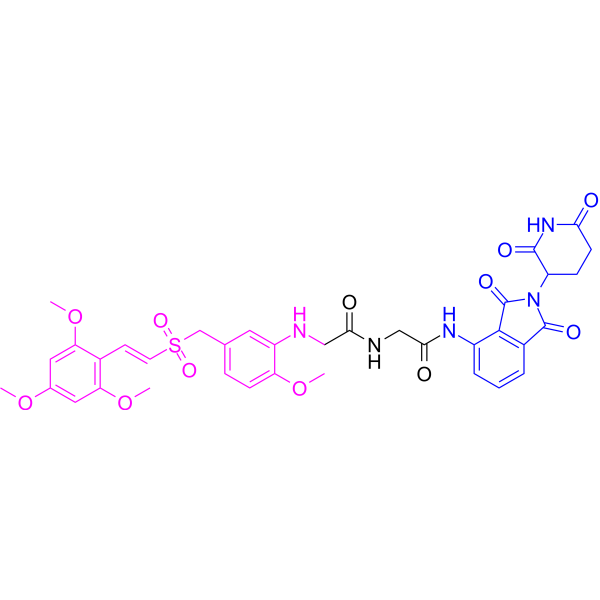
PROTAC B-Raf degrader 1 is a PROTAC degrader targeting B-Raf, which recruits the ubiquitin-proteasome system to accelerate B-Raf degradation and reduce the expression of downstream Mcl-1. PROTAC B-Raf degrader 1 inhibits cancer cell proliferation, arrests cell cycle and induces apoptosis. PROTAC B-Raf degrader 1 can be used in breast cancer-related research.
(Pink: Raf ligand (HY-12037A); Blue: Cereblon ligand (HY-10984); Black: linker (HY-Y0966)).
Nur für Forschungszwecke. Wir verkaufen nicht an Patienten.
- Reinheit : 99.78%
- CAS. Nr.: 2364367-27-9
- Formel: C36H37N5O12S
- Molecular Weight:763.77
-
Speicherung:
-20°C, stored under nitrogen
* In solvent : -80°C, 6 months; -20°C, 1 month (stored under nitrogen)

To place orders, for customer services and technical support, please contact: MedChemExpress USA
Tel: 609-228-6898 E-mail: [email protected] [email protected]


-
 Biologische Aktivität
-
Chemical Information
-
Lösungsmittel & Löslichkeit
- Protokoll
- Reinheit & Dokumentation
- Verweise
-
 Help & FAQs


-
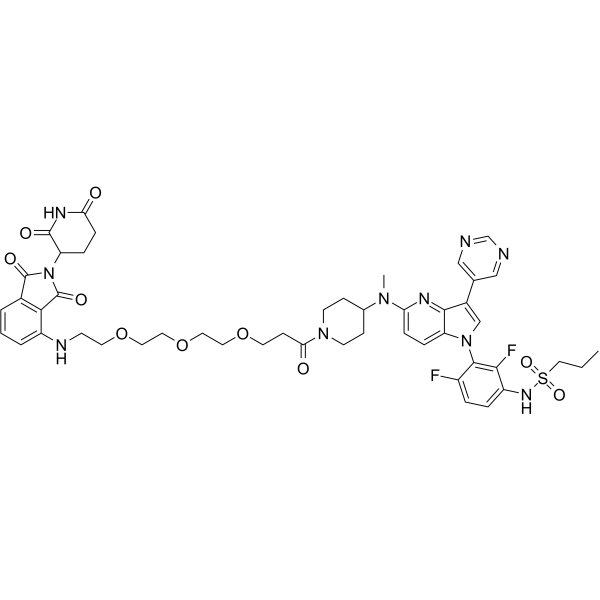
HY-137487
PROTAC BRAF-V600E degrader-1BRAF-V600E PROTAC -
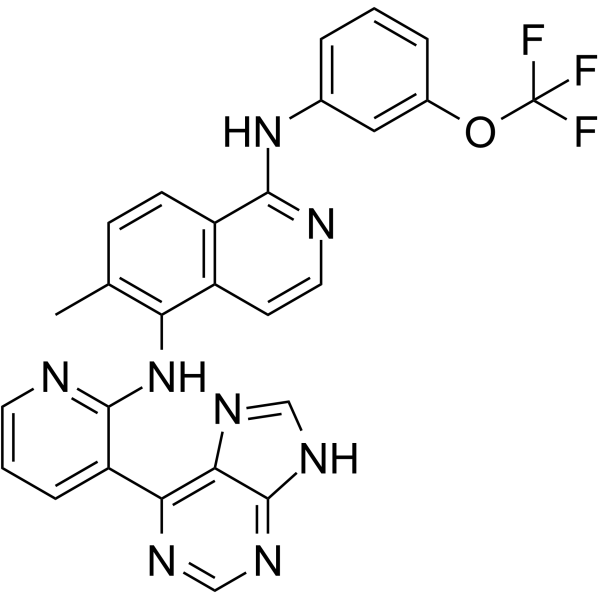
HY-111940
OmzirafenibBRAF Inhibitor -
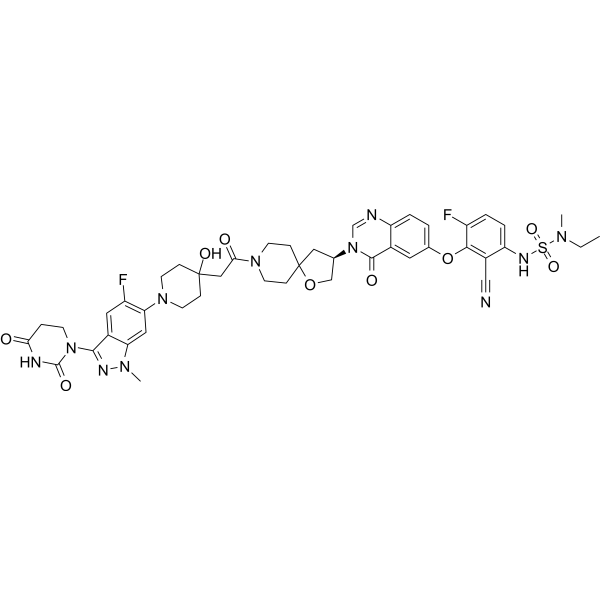
HY-153341
TagarafdegPROTAC BRAF Degrader -
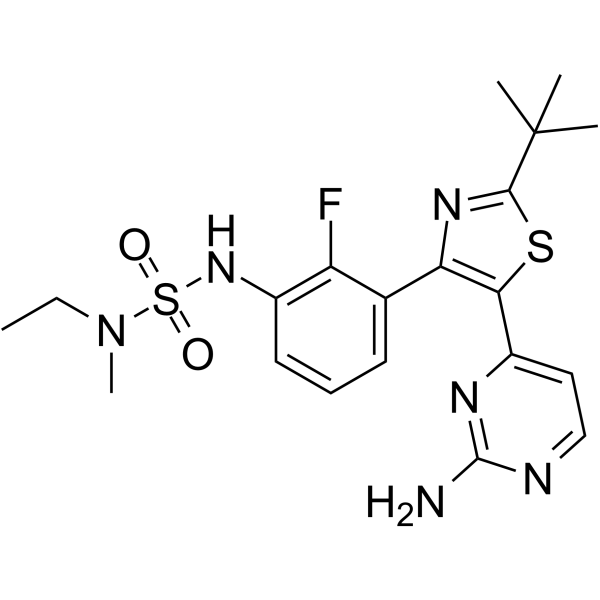
HY-107415
PLX7922RAF Inhibitor -
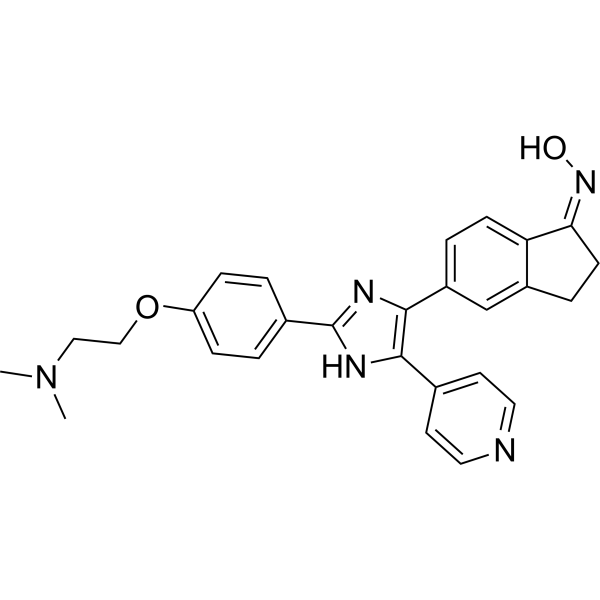
HY-10966
SB-590885BRAF/c-Raf Inhibitor -
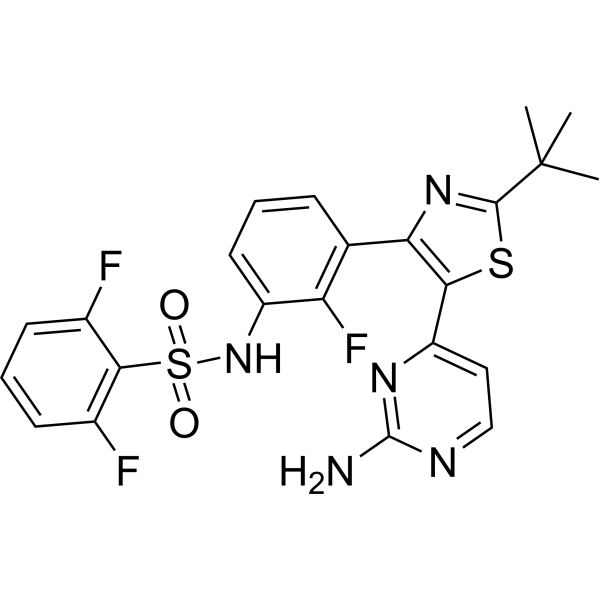
HY-14660
DabrafenibBRAF Inhibitor -
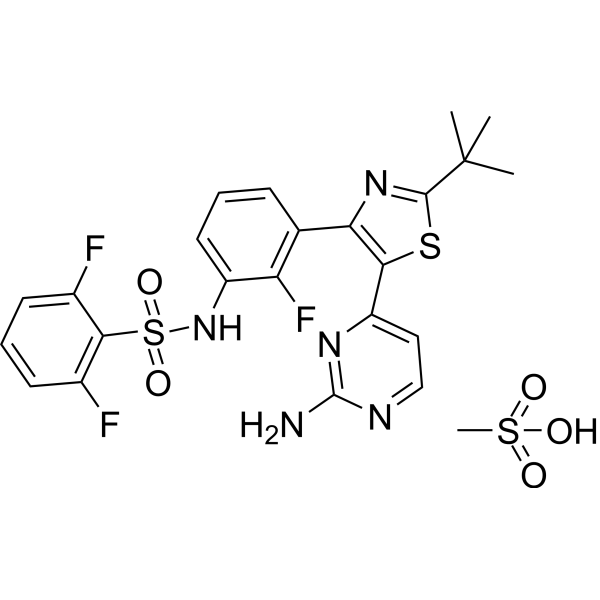
HY-14660A
Dabrafenib MesylateRaf Inhibitor -
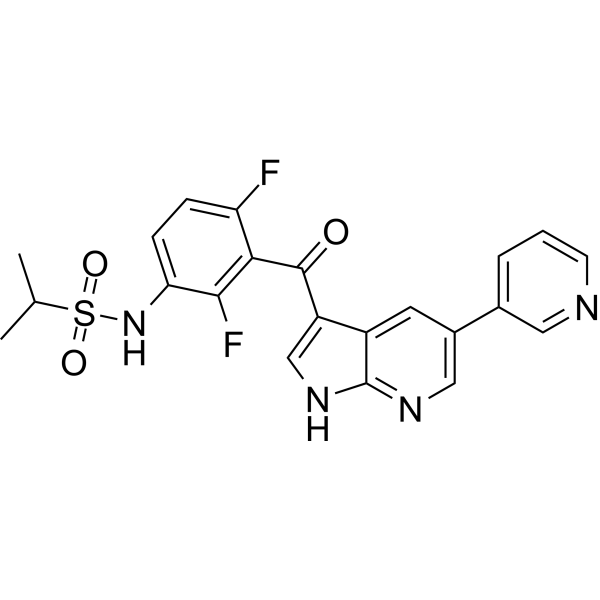
HY-10247
BRAF inhibitorB-Raf Inhibitor -
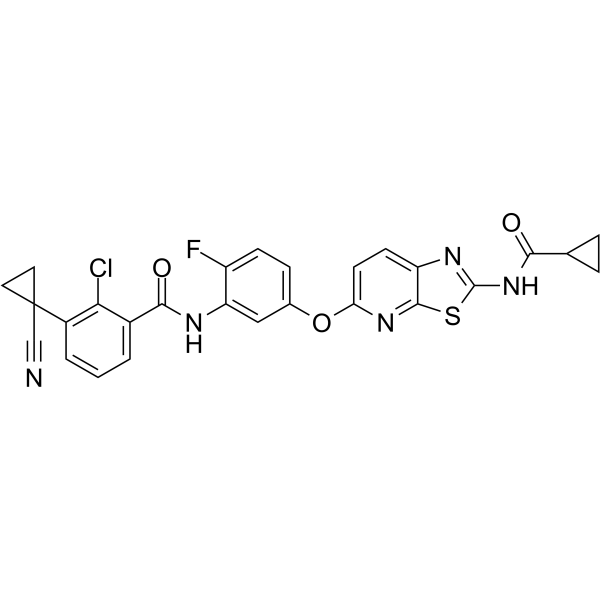
HY-18318
Takeda-6DBRAF/VEGFR2 Inhibitor -
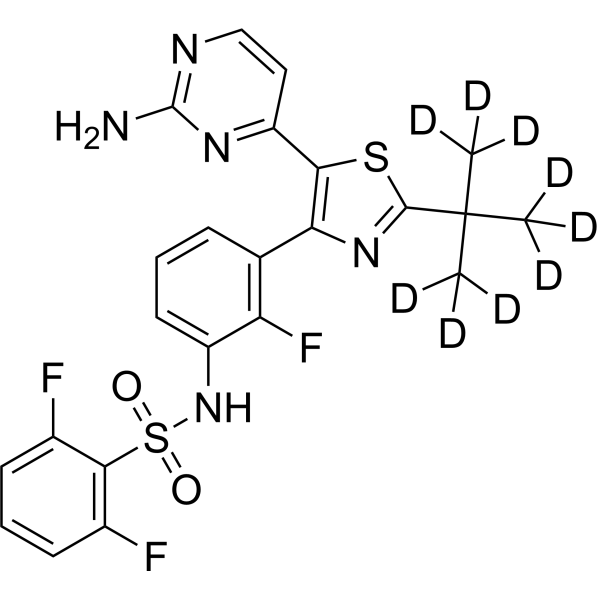
HY-14660S
Dabrafenib-d9Stable Isotope -
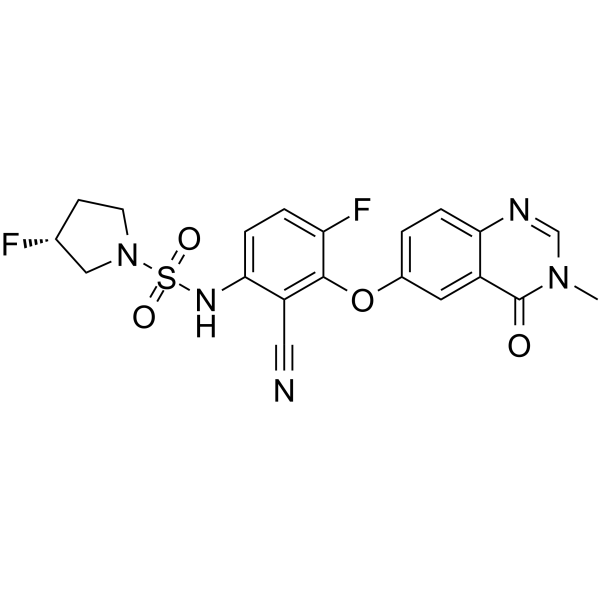
HY-145120
MosperafenibBRAF Inhibitor -
HY-18652
AvutometinibMEK/RAF Inhibitor
Publications Citing Use of MedChemExpress (MCE) PROTAC B-Raf degrader 1
MoreAlle PROTACs Isoform-spezifische Produkte anzeigen
More

Biologische Aktivität
Beschreibung
IC50 & Target
[1]|
B-Raf |
MCL1 |
Cellular Effect
|
Cell Line

|
Type | Value | Description | References |
|---|---|---|---|---|
| MCF7 | IC50 |
2.70 μM
|
Cytotoxicity against human MCF-7 breast cancer cells assessed as reduction in cell viability incubated for 72 hrs by MTT assay.
Cytotoxicity against human MCF-7 breast cancer cells assessed as reduction in cell viability incubated for 72 hrs by MTT assay.
|
30901674 |
| MDA-MB-231 | IC50 |
21.21 μM
|
Cytotoxicity against human MDA-MB-231 breast cancer cells assessed as reduction in cell viability incubated for 72 hrs by MTT assay.
Cytotoxicity against human MDA-MB-231 breast cancer cells assessed as reduction in cell viability incubated for 72 hrs by MTT assay.
|
30901674 |
| HepG2 | IC50 |
18.70 μM
|
Cytotoxicity against human HepG2 hepatoma cells assessed as reduction in cell viability incubated for 72 hrs by MTT assay.
Cytotoxicity against human HepG2 hepatoma cells assessed as reduction in cell viability incubated for 72 hrs by MTT assay.
|
30901674 |
| L02 | IC50 |
41.11 μM
|
Cytotoxicity against human normal LO2 liver cells assessed as reduction in cell viability incubated for 72 hrs by MTT assay.
Cytotoxicity against human normal LO2 liver cells assessed as reduction in cell viability incubated for 72 hrs by MTT assay.
|
30901674 |
| B16 | IC50 |
22.68 μM
|
Cytotoxicity against murine B16 melanoma cells assessed as reduction in cell viability incubated for 72 hrs by MTT assay.
Cytotoxicity against murine B16 melanoma cells assessed as reduction in cell viability incubated for 72 hrs by MTT assay.
|
30901674 |
In Vitro
PROTAC B-Raf degrader 1 (5-10 μM; 24 h) effectively degrades B-Raf protein and downregulates Mcl-1 protein levels in MCF-7 human breast cancer cells[1].
PROTAC B-Raf degrader 1 (5 μM; 24 h) degrades B-Raf protein in MCF-7 human breast cancer cells via the ubiquitin-proteasome pathway, as pretreatment with the proteasome inhibitor Bortezomib (HY-10227) reverses this degradation effect[1].
MedChemExpress (MCE) has not independently confirmed the accuracy of these methods. They are for reference only.
-
Cell Line:human MCF-7 breast cancer cells
-
Concentration:5 and 10 μM
-
Incubation Time:24 h
-
Result:Reduced B-Raf protein levels to 28.3% of control at 5 μM and 19.0% of control at 10 μM.
Correspondingly, dramatically downregulated Mcl-1 (a downstream protein of B-Raf) levels at both 5 μM and 10 μM, with a more substantial reduction than observed with the reference compound 9.
-
Cell Line:human MCF-7 breast cancer cells
-
Concentration:5 μM (this compound); 0-5 μM (Bortezomib (HY-10227) pre-treatment)
-
Incubation Time:24 h (PROTAC B-Raf degrader 1); 1 h (bortezomib pre-treatment)
-
Result:Degradation of B-Raf by 5 μM PROTAC B-Raf degrader 1 (compound 2) was dose-dependently suppressed by pre-treatment with bortezomib, a proteasome inhibitor.
bortezomib alone had no effect on B-Raf protein levels.
-
Cell Line:human MCF-7 breast cancer cells
-
Concentration:2.70 μM (72 h incubation); 20 μM (24 h incubation)
-
Incubation Time:24 h; 72 h
-
Result:Induced apoptosis in MCF-7 cells to a similar extent as the reference compound 9 at its IC50 of 2.70 μM for 72 h.
Induced a total apoptosis rate of 76.70%, including 64.00% early apoptosis and 12.70% late apoptosis, at 20 μM for 24 h, which was far higher than the 25.80% total apoptosis rate induced by compound 9 at the same concentration and time.
-
Cell Line:human MCF-7 breast cancer cells
-
Concentration:20 μM
-
Incubation Time:24 h
-
Result:Arrested MCF-7 cells in the G2/M phase, with 89.86% of cells in G2/M phase, 8.20% in S phase, and 1.94% in G1 phase, compared to the control with 19.42% in G2/M phase, 22.31% in S phase, and 58.27% in G1 phase.
- RNA extraction experimental
- Annexin V plus membrane-impermeant dye apoptosis staining
- BrdU Incorporation Assay
- Somatic Cell Culture
- CFSE Dye Dilution Proliferation Assay
- Dye-dilution cell tracking and proliferation staining
- CCK-8/WST-8 Cell Proliferation Assay
- Protocol for Cell Cycle
- Cell Counting-Based Growth Curve Assay
- Colony Formation (Clonogenic) Assay
- Breast Cancer Modeling
- Cell Viability Determination by MTT Colorimetric Assay
- EdU Incorporation Assay (Click Chemistry-Based DNA Synthesis Measurement)
- Ki-67 Immunostaining Proliferation Assay
- Detection of Apoptosis
- TUNEL staining for apoptotic DNA fragmentation
- PCNA Immunodetection Proliferation Assay
- Flow cytometric DNA-content cell-cycle staining
- Protocol for Cell Counting and Cell Density Analysis
- Apoptosis Solutions
- MTT Cell Proliferation Assay


Chemical Information
-
CAS. Nr. 2364367-27-9
-
Appearance Solid
-
Molecular Weight 763.77
-
Formel C36H37N5O12S
-
Color Light yellow to yellow
-
SMILES
O=C(NC1=CC=CC(C(N2C(CC3)C(NC3=O)=O)=O)=C1C2=O)CNC(CNC4=CC(CS(=O)(/C=C/C5=C(OC)C=C(OC)C=C5OC)=O)=CC=C4OC)=O
-
Versand
Room temperature in continental US; may vary elsewhere.
-
Speicherung
-20°C, stored under nitrogen
* In solvent : -80°C, 6 months; -20°C, 1 month (stored under nitrogen)


Publications (1)
-
Journal Impact Factor
-
Most Recent
-
Structure
PROTAC-mediated activation, rather than degradation, of a nuclear receptor reveals complex ligand-receptor interaction network. [Abstract]2024 Dec 5;32(12):2352-2363.e8. PMID: 39389062


Lösungsmittel & Löslichkeit
In Vitro:
DMSO : 25 mg/mL (32.73 mM; Need ultrasonic; Hygroscopic DMSO has a significant impact on the solubility of product, please use newly opened DMSO)
Please refer to the solubility information to select the appropriate solvent. Once prepared, please aliquot and store the solution to prevent product inactivation from repeated freeze-thaw cycles.
Storage method and period of stock solution: -80°C, 6 months; -20°C, 1 month (stored under nitrogen). When stored at -80°C, please use it within 6 months. When stored at -20°C, please use it within 1 month.
Please refer to the solubility information to select the appropriate solvent. Once prepared, please aliquot and store the solution to prevent product inactivation from repeated freeze-thaw cycles.
Storage method and period of stock solution: -80°C, 6 months; -20°C, 1 month (stored under nitrogen). When stored at -80°C, please use it within 6 months. When stored at -20°C, please use it within 1 month.
Konzentration (Stammlösung) × Volumen (Stammlösung) = Konzentration (Ziellösung) × Volumen (Ziellösung)
In Vivo:
Select the appropriate dissolution method based on your experimental animal and administration route.
- For the following dissolution methods, please ensure to first prepare a clear stock solution using an In Vitro approach and then sequentially add co-solvents:
- To ensure reliable experimental results, the clarified stock solution can be appropriately stored based on storage conditions. As for the working solution for In Vivo experiments, it is recommended to prepare freshly and use it on the same day.
- The percentages shown for the solvents indicate their volumetric ratio in the final prepared solution. If precipitation or phase separation occurs during preparation, heat and/or sonication can be used to aid dissolution.
Add each solvent one by one: 10% DMSO 40% PEG300 5% Tween-80 45% Saline
Solubility: ≥ 2.5 mg/mL (3.27 mM); Clear solution
This protocol yields a clear solution of ≥ 2.5 mg/mL (saturation unknown).
Taking 1 mL working solution as an example, add 100 μL DMSO stock solution (25.0 mg/mL) to 400 μL PEG300, and mix evenly; then add 50 μL Tween-80 and mix evenly; then add 450 μL Saline to adjust the volume to 1 mL.
Preparation of Saline: Dissolve 0.9 g sodium chloride in ddH₂O and dilute to 100 mL to obtain a clear Saline solution.
In Vivo Dissolution Calculator
Please enter the basic information of animal experiments:
-
-
-
-
Recommended: Prepare an additional quantity of animals to account for potential losses during experiments.
Please enter your animal formula composition:
-
%DMSO +
Recommended: Keep the proportion of DMSO in working solution below 2% if your animal is weak.
-
%+
-
+%Tween-80 + +
-
%Saline +
The co-solvents required include: DMSO, . All of co-solvents are available by MedChemExpress (MCE). , Tween 80. All of co-solvents are available by MedChemExpress (MCE).
Working solution concentration: 0.22 mg/mL
Method for preparing stock solution: mg drug dissolved in μL DMSO. Stock solution concentration: mg/mL. * In solvent : -80°C, 6 months; -20°C, 1 month (stored under nitrogen)
1. Take μL DMSO stock solution;
2. Add μL .
μL , mix evenly;
3. Then add μL Tween 80, mix evenly;
4. Then add μL
Please ensure that the stock solution in the first step is dissolved to a clear state, and add co-solvents in sequence. You can use ultrasonic heating (ultrasonic cleaner, recommended frequency 20-40 kHz), vortexing, etc. to assist dissolution.


Reinheit & Dokumentation
-
Data Sheet (283 KB)
-
SDS (252 KB)
- English - EN (252 KB)
- Français - FR (252 KB)
- Deutsch - DE (252 KB)
- Norwegian - NO (252 KB)
- Español - ES (252 KB)
- Swedish - SV (252 KB)
- Italian - IT (252 KB)
- Korean - KR (252 KB)
- Portuguese - PT (252 KB)
-
Handling Instructions (2659 KB)
Verweise


Complete Stock Solution Preparation Table
Please refer to the solubility information to select the appropriate solvent. Once prepared, please aliquot and store the solution to prevent product inactivation from repeated freeze-thaw cycles.
Storage method and period of stock solution: -80°C, 6 months; -20°C, 1 month (stored under nitrogen). When stored at -80°C, please use it within 6 months. When stored at -20°C, please use it within 1 month.
| Optional Solvent | Concentration Solvent Mass | 1 mg | 5 mg | 10 mg | 25 mg |
|---|---|---|---|---|---|
| DMSO | 1 mM | 1.3093 mL | 6.5465 mL | 13.0929 mL | 32.7324 mL |
| 5 mM | 0.2619 mL | 1.3093 mL | 2.6186 mL | 6.5465 mL | |
| 10 mM | 0.1309 mL | 0.6546 mL | 1.3093 mL | 3.2732 mL | |
| 15 mM | 0.0873 mL | 0.4364 mL | 0.8729 mL | 2.1822 mL | |
| 20 mM | 0.0655 mL | 0.3273 mL | 0.6546 mL | 1.6366 mL | |
| 25 mM | 0.0524 mL | 0.2619 mL | 0.5237 mL | 1.3093 mL | |
| 30 mM | 0.0436 mL | 0.2182 mL | 0.4364 mL | 1.0911 mL |


PROTAC B-Raf degrader 1 Related Classifications
HY-111758 Related Classifications
 Powered by Bioz