Search Result
Results for "
immunostimulatory activity
" in MedChemExpress (MCE) Product Catalog:
2
Isotope-Labeled Compounds
| Cat. No. |
Product Name |
Target |
Research Areas |
Chemical Structure |
-
- HY-101291
-
-
-
- HY-113262
-
-
-
- HY-N10634
-
|
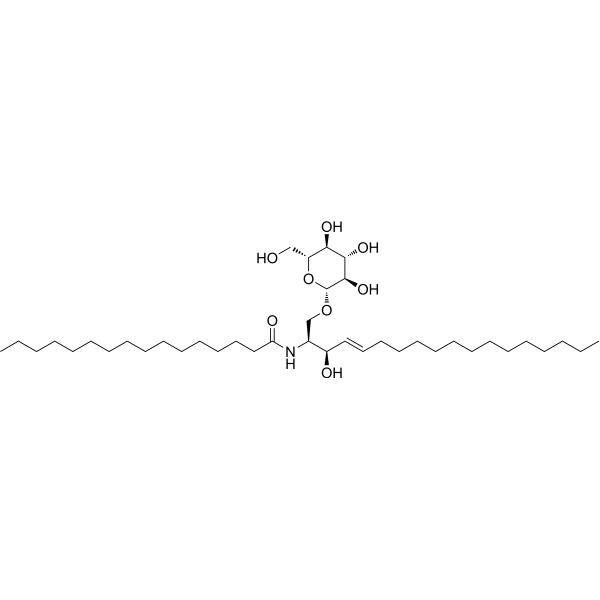
C16 Glucosyl(β) Ceramide (d18:1/16:0)
|
Endogenous Metabolite
|
Inflammation/Immunology
|
|
D-Glucosyl-β-1,1′-N-palmitoylsphingosine (C16 Glucosyl (β) Ceramide (d18:1/16:0)) is an endogenous Mincle ligand with immunostimulatory activity. D-Glucosyl-β-1,1′-N-palmitoylsphingosine binds to and activates macrophage-inducible C-type lectin (Mincle). D-Glucosyl-β-1,1′-N-palmitoylsphingosine is applicable to the research of immune system diseases .
|
-
-
- HY-N0699
-
|
Dephnoretin; Thymelol
|
PKC
Influenza Virus
NOD-like Receptor (NLR)
Apoptosis
HBV
JNK
PI3K
Akt
CDK
Caspase
Bcl-2 Family
|
Infection
Inflammation/Immunology
Cancer
|
|
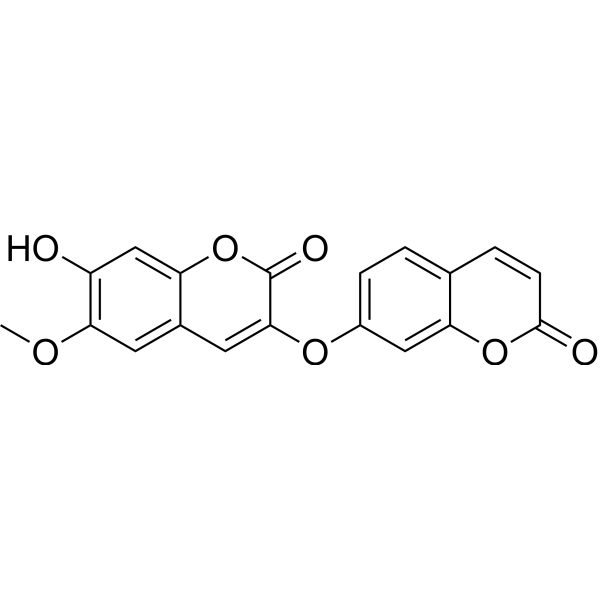
Daphnoretin (Dephnoretin; Thymelol) is a protein kinase C (PKC) activator that inhibits the expression of hepatitis B virus (HBV) surface antigen (HBsAg) and exhibits antiviral activity. Daphnoretin exerts its antitumor effects by inhibiting the activation of the PI3K/AKT signaling pathway and triggers the mitochondrial apoptosis pathway. Daphnoretin alleviates chondrocyte apoptosis and inflammatory responses by inhibiting endoplasmic reticulum stress and activation of the NLRP3 inflammasome. Daphnoretin regulates the differentiation and maturation of dendritic cells, inhibits their immunostimulatory function by downregulating the phosphorylation level of JNK, and thus exerts a protective effect in skin graft rejection .
|
-
-
- HY-168034
-
|
|
STING
Integrin
NF-κB
SARS-CoV
|
Infection
Inflammation/Immunology
|
|
diABZI-4 is a STING activator and broad-spectrum antiviral agent with immunostimulatory activity. diABZI-4 triggers the TBK1-IRF3 and NF-κB signaling cascades by inducing STING oligomerization, thereby promoting the production of type I/III interferons and various proinflammatory cytokines. diABZI-4 exhibits broad-spectrum antiviral activity and effectively inhibits the replication of influenza A virus, SARS-CoV-2, herpes simplex virus, and other viruses. diABZI-4 also activates lymphocytes and macrophages to provide significant pre- and post-exposure protection in viral disease models. diABZI-4 can be used to study COVID-19, respiratory viral infections, and related immunopathological mechanisms .
|
-

-
- HY-P990980
-
|
CND-106; EMB-06
|
CD3
|
Inflammation/Immunology
Cancer
|
|
Cizutamig (CND-106) is a bispecific T-cell engager targeting BCMA and CD3. Cizutamig exhibits immunostimulatory and anti-tumor activities. Cizutamig can be used in research related to relapsed or refractory multiple myeloma and systemic lupus erythematosus .
|
-

-
- HY-P99159
-
|
|
Interleukin Related
|
Cancer
|
|
Ivuxolimab is a fully human IgG2 agonist targeting OX40 (CD134), which selectively binds to the OX40 receptor on the surface of activated CD4 + and CD8 + T cells without inducing antibody-dependent cytotoxicity. Ivuxolimab can promote T cell proliferation, survival and cytokine (such as IFN-γ, IL-2) secretion, inhibit regulatory T cell function, and enhance anti-tumor immune response. Ivuxolimab can be used in the study of melanoma, hepatocellular carcinoma, head and neck squamous cell carcinoma, etc .
|
-

-
- HY-N6051
-
|
|
Fungal
NOD-like Receptor (NLR)
NF-κB
|
Infection
Inflammation/Immunology
|
|
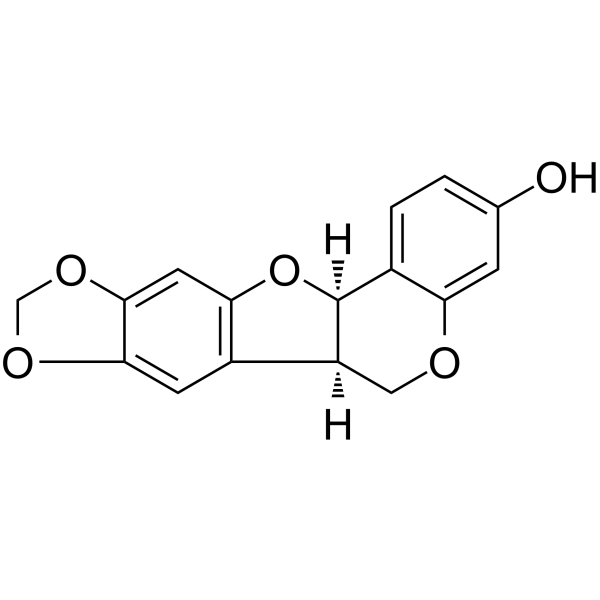
(-)-Maackiain is a pterocarpan phytoalexin produced from Sophora flavescens. (-)-Maackiain is toxic to several genera of fungal pathogens of legume and non legume hosts. (-)-Maackiain enhances the activation of NLRP3 inflammasome, inhibits the activation of NF-κB pathway, exhibiting thereby immunostimulatory and anti-inflammatory activities. (-)-Maackiain is orally active .
|
-
-
- HY-48814
-
|
|
Bacterial
FXR
|
Infection
Inflammation/Immunology
|
|
3-Epideoxycholic acid is a secondary bile acid and a microbial metabolite of Deoxycholic acid (HY-N0593). 3-Epideoxycholic acid targets FXR in dendritic cells, reduces their immunostimulatory properties, promotes the generation of Treg cells, and exerts anti-inflammatory activity. 3-Epideoxycholic acid can promote the growth of the bacterium Bacteroides. 3-Epideoxycholic acid can be used in research related to inflammatory and immune diseases as well as bacterial infections .
|
-

-
- HY-N0600
-
|
|
Interleukin Related
IFNAR
NF-κB
|
Inflammation/Immunology
|
|
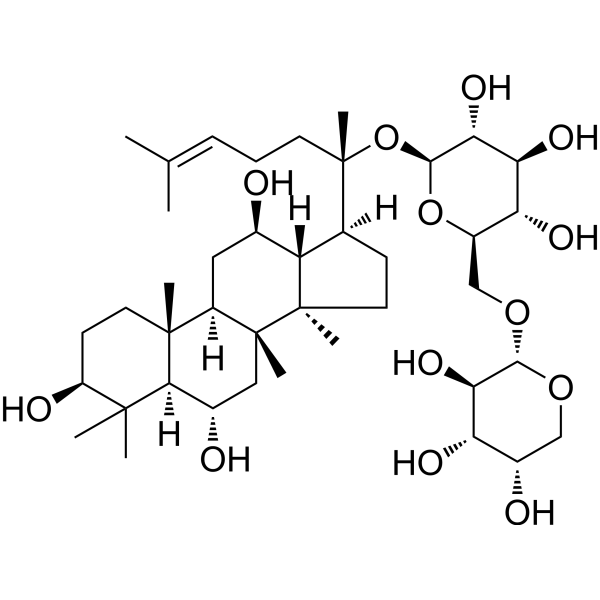
Ginsenoside F3 is a saponin extracted from the leaves of Panax ginseng with immunoenhancing and antitumor immunostimulatory activities. Ginsenoside F3 upregulates RIPOR2 with a Kd value of 3.77 μM. Ginsenoside F3 enhances NF‑κB activation, upregulates T‑bet and downregulates GATA‑3, increases the production of IL‑2 and IFN‑γ, decreases the production of IL‑4 and IL‑10, reverses CD8⁺ T‑cell exhaustion, restores cytokine secretion, and enhances antitumor immunity in a mouse non‑small cell lung cancer model. Ginsenoside F3 can be used for the research of non-small cell lung cancer .
|
-
-
- HY-134315
-
|
|
Nucleoside Antimetabolite/Analog
|
Others
|
|
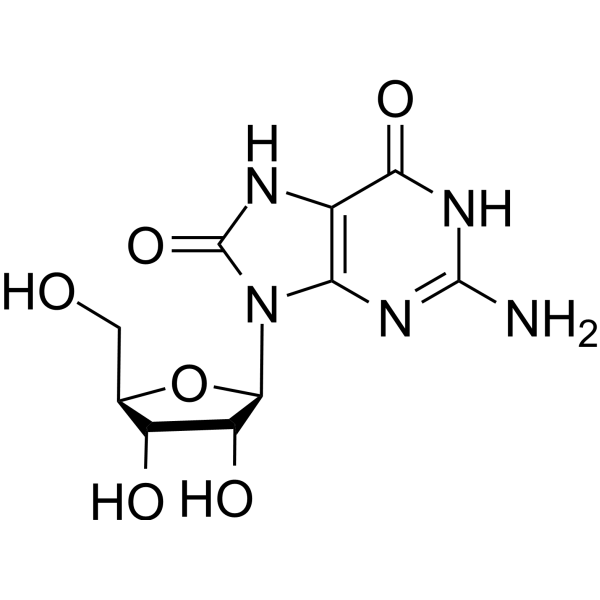
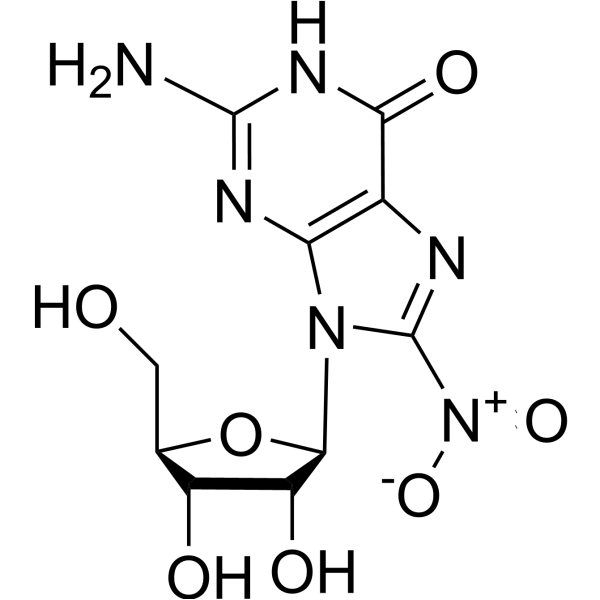
8-Nitroguanosine is a guanosine analogue. Some guanosine analogs have immunostimulatory activity. In some animal models, they also induce type I interferons, producing antiviral effects. Studies have shown that the functional activity of guanosine analogs is dependent on the activation of Toll-like receptor 7 (TLR7) .
|
-
-
- HY-154484
-
|
|
Nucleoside Antimetabolite/Analog
Phosphoramidites
|
Cancer
|
|
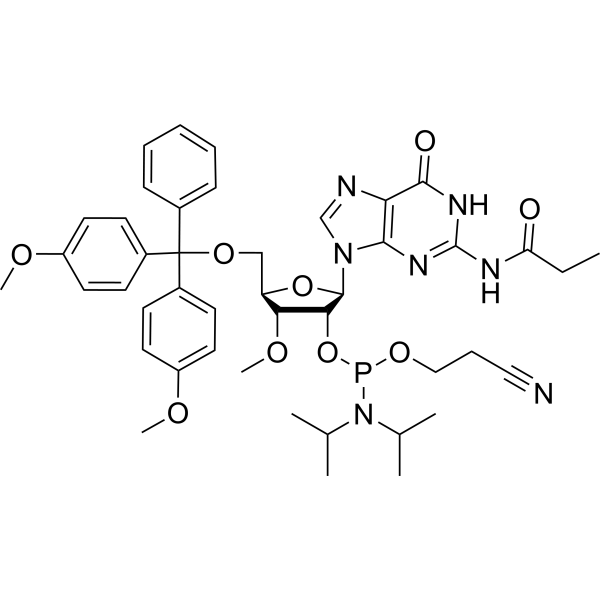
3’-O-Me-G(iBu)-2’-phosphoramidite is a guanosine analog. Some guanosine analogs have immunostimulatory activity. In some animal models, they also induce type I interferons, producing antiviral effects. Studies have shown that the functional activity of guanosine analogs is dependent on the activation of Toll-like receptor 7 (TLR7) .
|
-
-
- HY-150748A
-
|
|
Toll-like Receptor (TLR)
|
Cancer
|
|
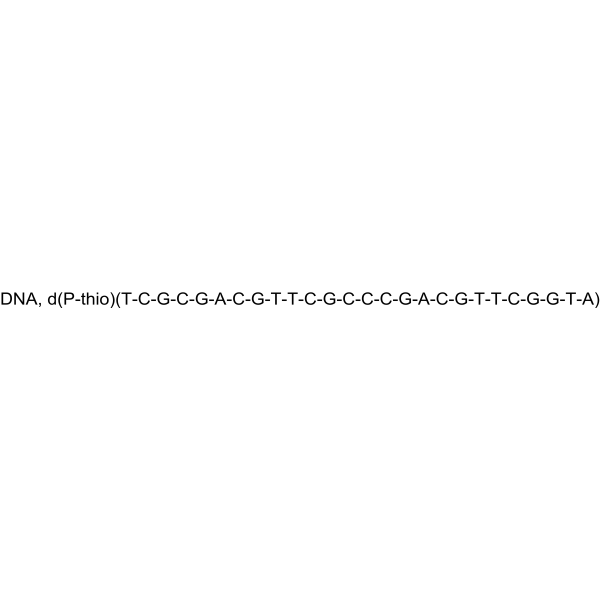
ODN D-SL01 sodium, a class B CpG ODN (oligodeoxynucleotide), is a TLR9 agonist. ODN D-SL01 sodium has strong immunostimulatory activity in a variety of vertebrate species and has anticancer activity. ODN D-SL01 sequence: 5'- T-C-G-C-G-A-C-G-T-T-C-G-C-C-C-G-A-C-G-T-T-C-G-G-T-A-3' .
|
-
-
- HY-152684
-
|
|
Nucleoside Antimetabolite/Analog
|
Others
|
|
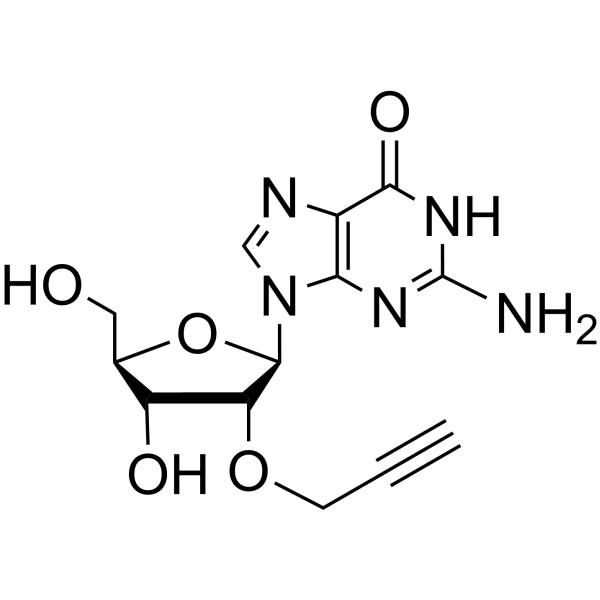
2′-O-2-Propyn-1-ylguanosine is a guanosine analogue. Some guanosine analogs have immunostimulatory activity. In some animal models, they also induce type I interferons, producing antiviral effects. Studies have shown that the functional activity of guanosine analogs is dependent on the activation of Toll-like receptor 7 (TLR7) . 2′-O-2-Propyn-1-ylguanosine is a click chemistry reagent, it contains an Alkyne group and can undergo copper-catalyzed azide-alkyne cycloaddition (CuAAc) with molecules containing Azide groups.
|
-
-
- HY-P991209
-
-

-
- HY-N9369
-
|
|
Others
|
Inflammation/Immunology
|
|
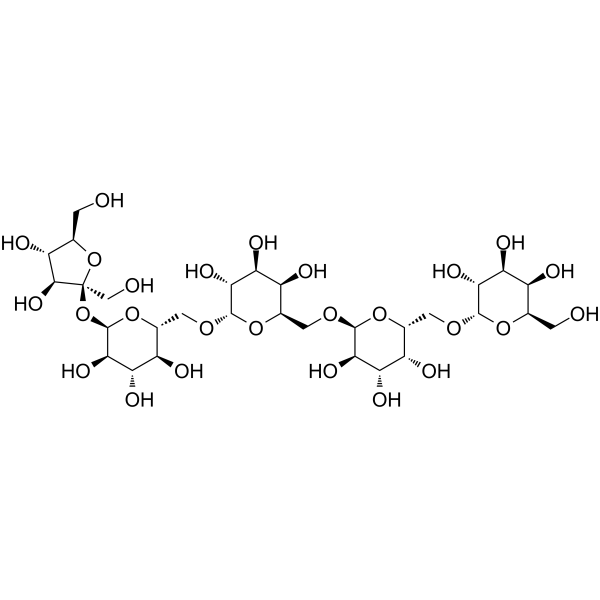
Verbascose, an alacto-oligosac-charides (GOS), has potent immunostimulatory activity. Verbascose acts as a potential natural immunomodulatory agent .
|
-
-
- HY-137406
-
|
|
Nucleoside Antimetabolite/Analog
|
Others
|
|
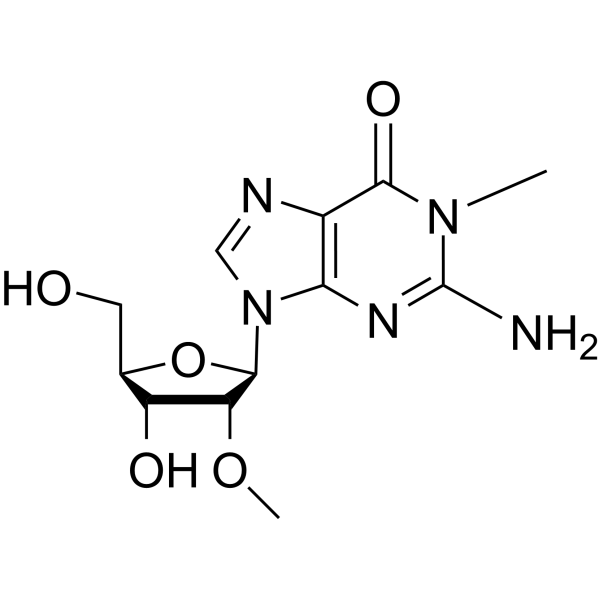
1,2'-O-Dimethylguanosine is a guanosine analogue. Some guanosine analogs have immunostimulatory activity. In some animal models, they also induce type I interferons, producing antiviral effects. Studies have shown that the functional activity of guanosine analogs is dependent on the activation of Toll-like receptor 7 (TLR7) .
|
-
-
- HY-152493
-
|
|
Nucleoside Antimetabolite/Analog
|
Others
|
|
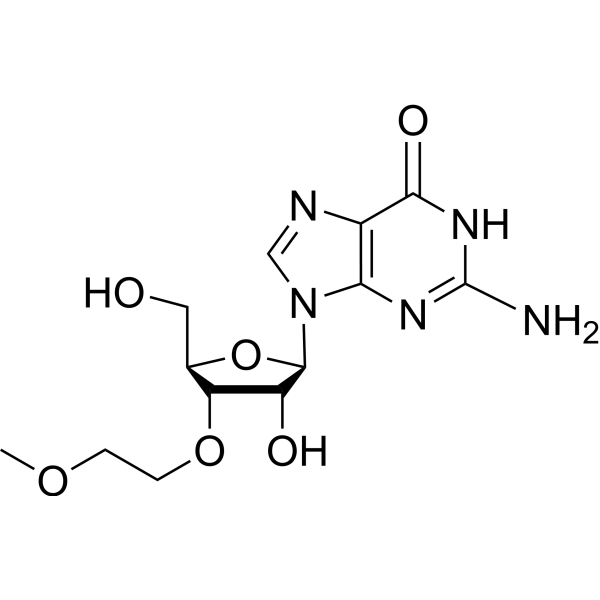
3’-O-(2-Methoxyethyl)guanosine is a guanosine analogue. Some guanosine analogs have immunostimulatory activity. In some animal models, they also induce type I interferons, producing antiviral effects. Studies have shown that the functional activity of guanosine analogs is dependent on the activation of Toll-like receptor 7 (TLR7) .
|
-
-
- HY-101291R
-
|
CC-220 (Standard)
|
Reference Standards
Ligands for E3 Ligase
Apoptosis
Molecular Glues
|
Inflammation/Immunology
Cancer
|
|
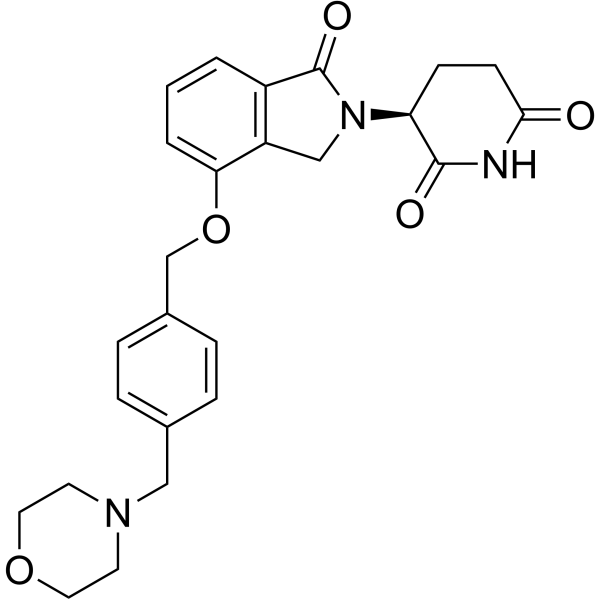
Iberdomide (Standard) is the analytical standard of Iberdomide. This product is intended for research and analytical applications. Iberdomide (CC-220) is an orally active and potent cereblon (CRBN) E3 ligase modulator (CELMoD) with an IC50 of ~150 nM for cereblon-binding affinity. Iberdomide, a derivative of Thalidomide (HY-14658), has antitumor and immunostimulatory activities .
|
-

-
- HY-154332
-
|
|
Nucleoside Antimetabolite/Analog
|
Cancer
|
|
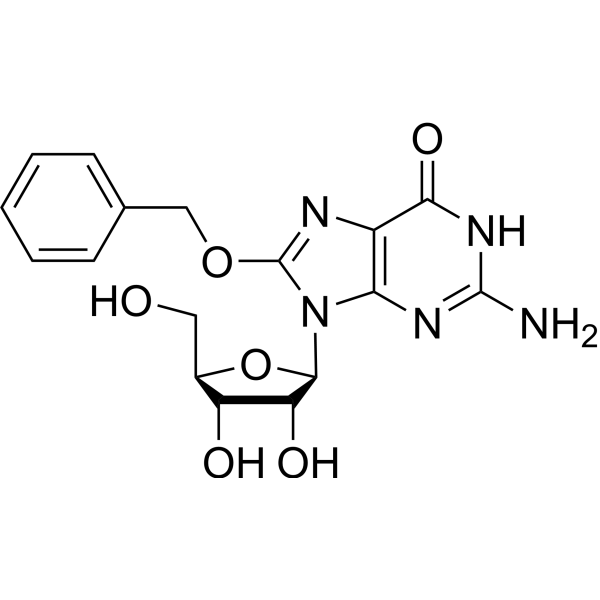
8-(Phenylmethoxy)guanosine is a guanosine analog. Some guanosine analogs have immunostimulatory activity. In some animal models, they also induce type I interferons, producing antiviral effects. Studies have shown that the functional activity of guanosine analogs is dependent on the activation of Toll-like receptor 7 (TLR7) .
|
-
-
- HY-152430
-
|
|
Nucleoside Antimetabolite/Analog
|
Cancer
|
|
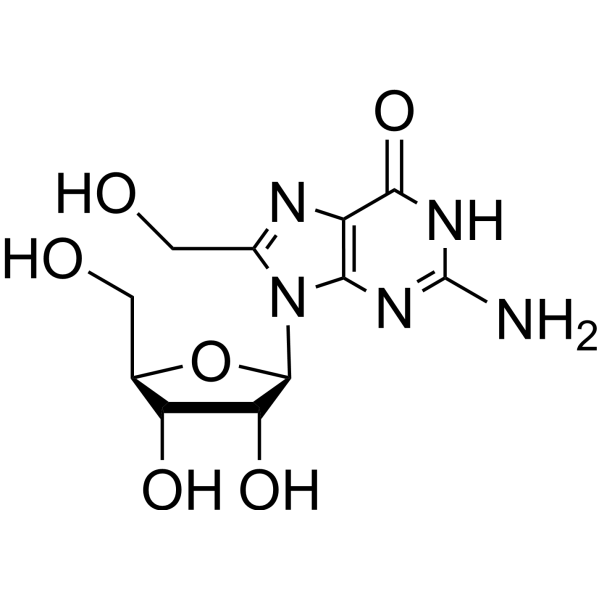
8-Hydroxymethyl guanosine is a guanosine analog. Some guanosine analogs have immunostimulatory activity. In some animal models, they also induce type I interferons, producing antiviral effects. Studies have shown that the functional activity of guanosine analogs is dependent on the activation of Toll-like receptor 7 (TLR7) .
|
-
-
- HY-106374
-
|
|
VEGFR
|
Cancer
|
|
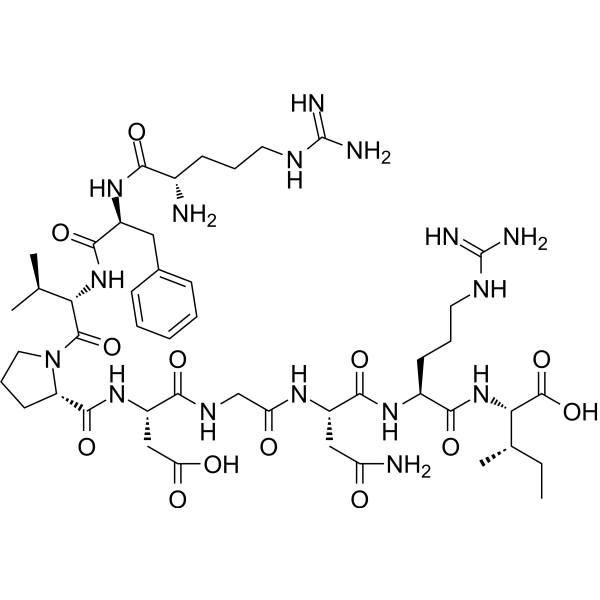
Elpamotide is an epitope peptide derived from VEGFR2. Elpamotide induces cytotoxic T lymphocytes (CTLs) to kill VEGFR2-expressing endothelial cells. Elpamotide has potential immunostimulatory and antineoplastic activities. Elpamotide can be used in the research of cancer, such as pancreatic cancer .
|
-
-
- HY-176837
-
-

-
- HY-152547
-
|
|
Nucleoside Antimetabolite/Analog
|
Cancer
|
|
N2-[(N,N-Dimethyl amino]methylene-N1-methyl-2’-O-methylguanosine is a guanosine analog. Some guanosine analogs have immunostimulatory activity. In some animal models, they also induce type I interferons, producing antiviral effects. Studies have shown that the functional activity of guanosine analogs is dependent on the activation of Toll-like receptor 7 (TLR7) .
|
-
![N2-[(N,N-Dimethyl amino]methylene-N1-methyl-2’-O-methylguanosine](//file.medchemexpress.com/product_pic/hy-152547.gif)
-
- HY-154464
-
|
|
Nucleoside Antimetabolite/Analog
Phosphoramidites
|
Cancer
|
|
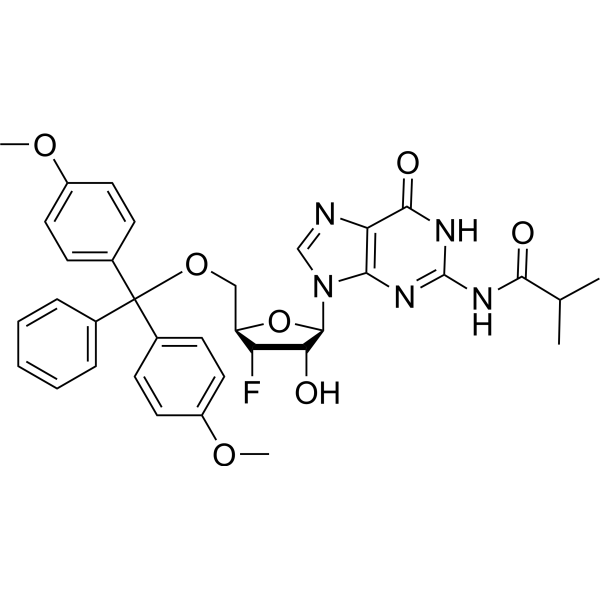
N2-iso-Butyroyl-5'-O-DMT-3'-deoxy-3'-fluoroguanosine is a guanosine analog. Some guanosine analogs have immunostimulatory activity. In some animal models, they also induce type I interferons, producing antiviral effects. Studies have shown that the functional activity of guanosine analogs is dependent on the activation of Toll-like receptor 7 (TLR7) .
|
-
-
- HY-N6051R
-
|
|
Reference Standards
Fungal
NOD-like Receptor (NLR)
NF-κB
|
Infection
Inflammation/Immunology
|
|
(-)-Maackiain (Standard) is the analytical standard of (-)-Maackiain. This product is intended for research and analytical applications. (-)-Maackiain is a pterocarpan phytoalexin produced from Sophora flavescens. (-)-Maackiain is toxic to several genera of fungal pathogens of legume and non legume hosts. (-)-Maackiain enhances the activation of NLRP3 inflammasome, inhibits the activation of NF-κB pathway, exhibiting thereby immunostimulatory and anti-inflammatory activities. (-)-Maackiain is orally active .
|
-

-
- HY-152478
-
|
|
Nucleoside Antimetabolite/Analog
|
Cancer
|
|
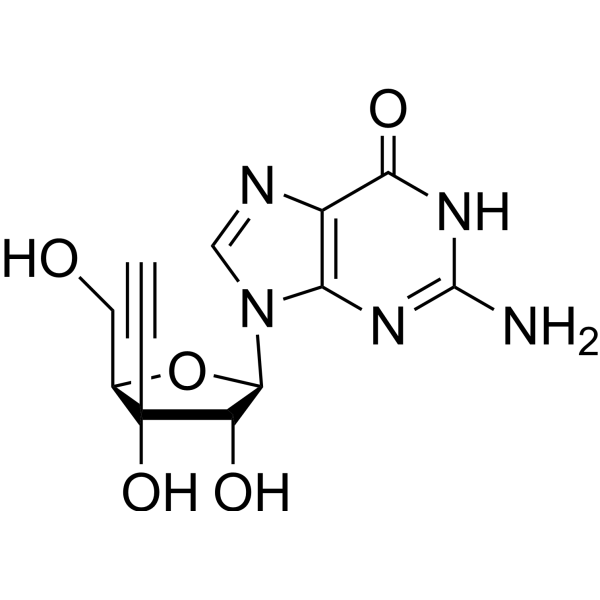
3’-β-C-Ethynylguanosine is a guanosine analog. Some guanosine analogs have immunostimulatory activity. In some animal models, they also induce type I interferons, producing antiviral effects. Studies have shown that the functional activity of guanosine analogs is dependent on the activation of Toll-like receptor 7 (TLR7) . 3’-β-C-Ethynylguanosine is a click chemistry reagent, it contains an Alkyne group and can undergo copper-catalyzed azide-alkyne cycloaddition (CuAAc) with molecules containing Azide groups.
|
-
-
- HY-174465
-
-

-
- HY-W089233
-
|
N-Boc-D-glutaMic acid 1-tert-butyl ester
|
Amino Acid Derivatives
|
Others
|
|
Boc-D-Glu-OtBu (N-Boc-D-glutaMic acid 1-tert-butyl ester) is an amino acid derivative with a Boc protecting group, which can be used to synthesize Adamant-1-yl tripeptide with immunostimulatory activity .
|
-

-
- HY-154549
-
|
|
Nucleoside Antimetabolite/Analog
Phosphoramidites
|
Cancer
|
|
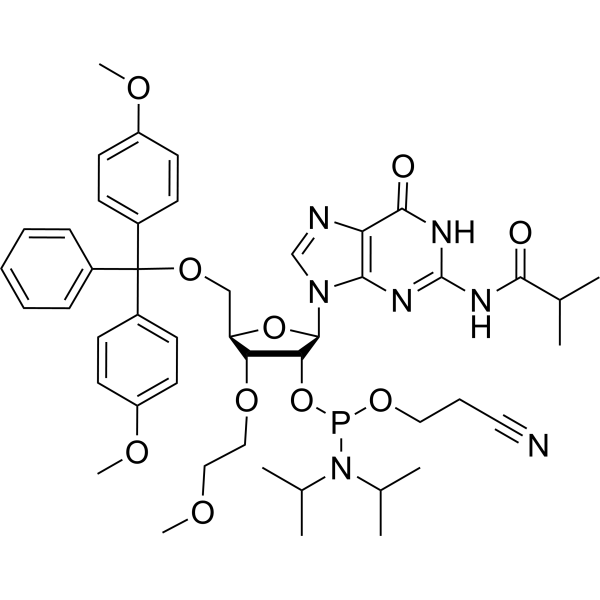
3’-O-MOE-G(iBu)-2’-phosphoramidite is a guanosine analog. Some guanosine analogs have immunostimulatory activity. In some animal models, they also induce type I interferons, producing antiviral effects. Studies have shown that the functional activity of guanosine analogs is dependent on the activation of Toll-like receptor 7 (TLR7) .
|
-
-
- HY-152993
-
|
|
Nucleoside Antimetabolite/Analog
|
Others
|
|
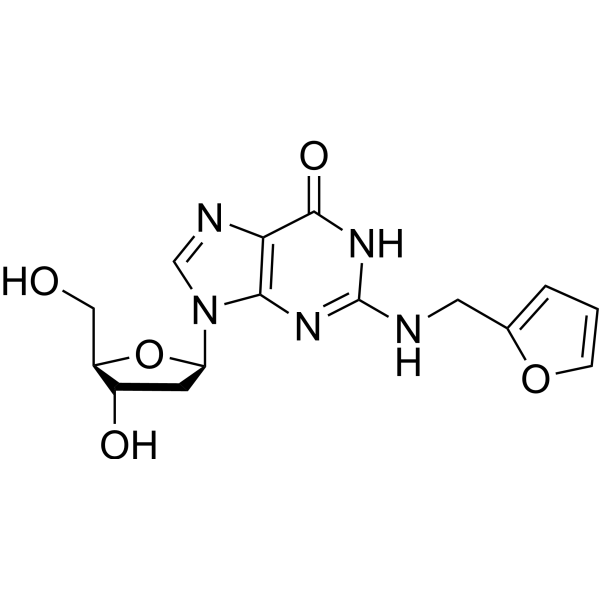
2′-Deoxy-N-(2-furanylmethyl)guanosine is a guanosine analog. Some guanosine analogs have immunostimulatory activity. In some animal models, they also induce type I interferons, producing antiviral effects. Studies have shown that the functional activity of guanosine analogs is dependent on the activation of Toll-like receptor 7 (TLR7) .
|
-
-
- HY-P991397
-
|
|
Tim3
|
Cancer
|
|
Sym023 is a human monoclonal antibody (mAb) targeting TIM-3/HAVCR2/CD366. Sym023 enhances immunostimulatory and anti-tumor activities. Sym023 can be used in Non-small cell lung cancer, Solid tumors and Lymphoma research .
|
-

-
- HY-154351
-
|
|
Nucleoside Antimetabolite/Analog
Phosphoramidites
|
Cancer
|
|
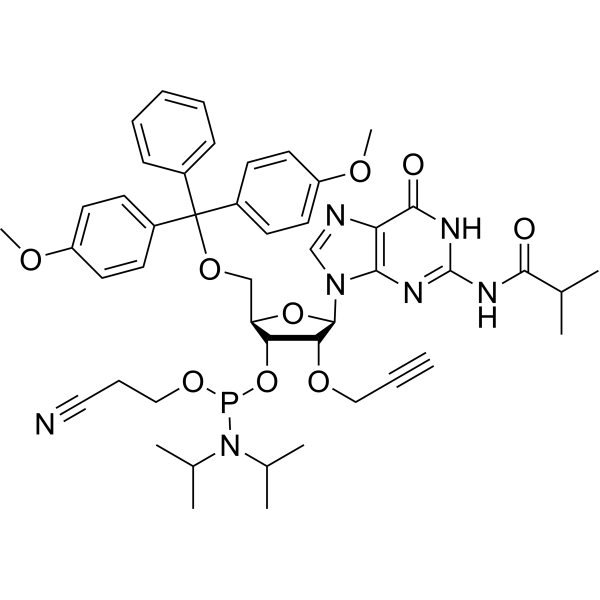
N2-iBu-5’-O-DMTr-2’-O-propargylguanosine-3’-CED-phosphoramidite is a guanosine analog. Some guanosine analogs have immunostimulatory activity. In some animal models, they also induce type I interferons, producing antiviral effects. Studies have shown that the functional activity of guanosine analogs is dependent on the activation of Toll-like receptor 7 (TLR7) .
|
-
-
- HY-150748
-
|
|
Toll-like Receptor (TLR)
|
Inflammation/Immunology
Cancer
|
|
ODN D-SL01, a class B CpG ODN (oligodeoxynucleotide), is a TLR9 agonist. ODN D-SL01 has strong immunostimulatory activity in a variety of vertebrate species and has anticancer activity. ODN D-SL01 sequence: 5'- T-C-G-C-G-A-C-G-T-T-C-G-C-C-C-G-A-C-G-T-T-C-G-G-T-A-3' .
|
-
-
- HY-176256
-
|
|
STING
|
Cancer
|
|
endo-S-cGAFMP (Compound 3) is a STING agonist. endo-S-cGAFMP induces the production of interferon regulatory factors and proinflammatory cytokines by activating the cGAS-STING pathway, thereby enhancing innate and adaptive immune responses. endo-S-cGAFMP has potent immunostimulatory capacity in THP1 monocytes and RAW macrophages (EC50 values of 2.45 μM and 5.54 μM, respectively). endo-S-cGAFMP has significant antitumor activity. endo-S-cGAFMP can be used as a potential cancer immunotherapeutic agent, especially for studies of systemic administration .
|
-

-
- HY-P991125
-
|
YH-002
|
TNF Receptor
|
Inflammation/Immunology
Cancer
|
|
Cenzestotug is a monoclonal antibody targeting human tumor necrosis factor receptor superfamily member 4 (TNFRSF4). Cenzestotug activates relevant immune cells by binding to TNFRSF4, exerting immunostimulatory and antitumor activities. Cenzestotug is promising for research of cancer immunotherapy .
|
-

-
- HY-177635A
-
|
|
Toll-like Receptor (TLR)
|
Cancer
|
|
GNKG168 sodium is a synthetic, 21-mer, unmethylated CpG oligodeoxynucleotide. It acts as a TLR9 agonist with immunostimulatory activity.
|
-

-
- HY-177635
-
|
|
Toll-like Receptor (TLR)
|
Cancer
|
|
GNKG168 is a synthetic, 21-mer, unmethylated CpG oligodeoxynucleotide. It acts as a TLR9 agonist with immunostimulatory activity.
|
-

-
- HY-P991126
-
|
YH003
|
TNF Receptor
|
Inflammation/Immunology
Cancer
|
|
Ciltistotug is a monoclonal antibody targeting human CD40 (TNFRSF5). Ciltistotug activates immune cells after binding to CD40, exerting immunostimulatory and antitumor activities. Ciltistotug is promising for research of cancer immunotherapy .
|
-

-
- HY-177371
-
|
|
Nucleoside Antimetabolite/Analog
|
Cancer
|
|
CEBPA-51 saRNA, a double-stranded RNA oligo duplex to specifically upregulate the transcription of the CEBPA gene. CEBPA-51 saRNA contains multiple 2′-O-methyl modified bases to prevent nonspecific immunostimulatory activity .
|
-

-
- HY-152610
-
|
|
Nucleoside Antimetabolite/Analog
|
Others
|
|
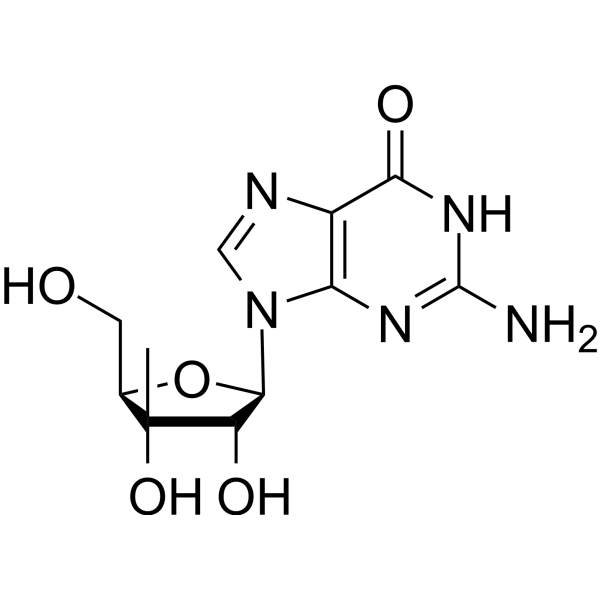
3′-C-Methylguanosine is a guanosine analogue. Some guanosine analogs have immunostimulatory activity. In some animal models, they also induce type I interferons, producing antiviral effects. Studies have shown that the functional activity of guanosine analogs is dependent on the activation of Toll-like receptor 7 (TLR7) .
|
-
-
- HY-152517
-
|
|
Nucleoside Antimetabolite/Analog
|
Others
|
|
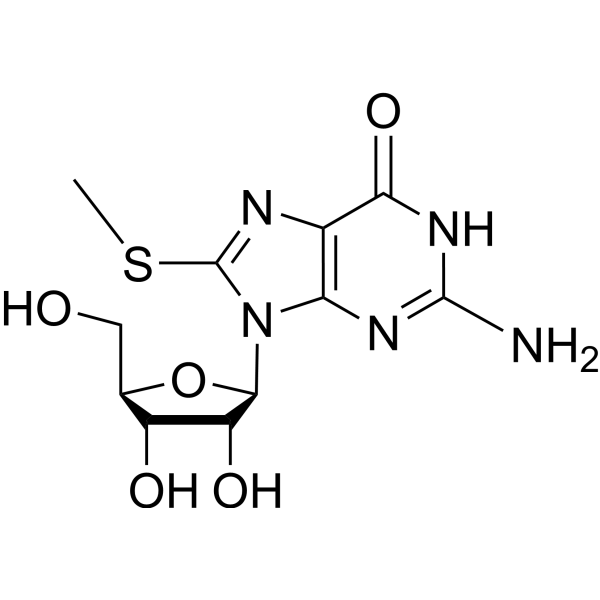
8-(Methylthio)guanosine is a guanosine analogue. Some guanosine analogs have immunostimulatory activity. In some animal models, they also induce type I interferons, producing antiviral effects. Studies have shown that the functional activity of guanosine analogs is dependent on the activation of Toll-like receptor 7 (TLR7) .
|
-
-
- HY-154111
-
|
|
Nucleoside Antimetabolite/Analog
|
Cancer
|
|
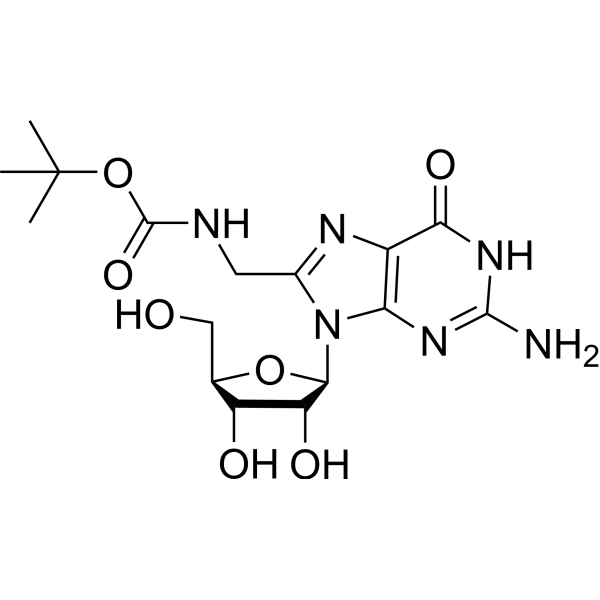
8-(N-Boc-aminomethyl)guanosine is a guanosine analog. Some guanosine analogs have immunostimulatory activity. In some animal models, they also induce type I interferons, producing antiviral effects. Studies have shown that the functional activity of guanosine analogs is dependent on the activation of Toll-like receptor 7 (TLR7) .
|
-
-
- HY-152673
-
|
|
Nucleoside Antimetabolite/Analog
|
Cancer
|
|
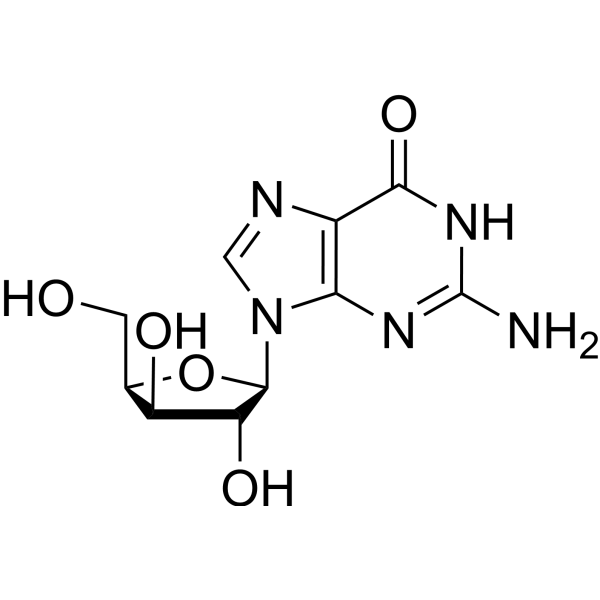
9-(β-D-Xylofuranosyl)guanine is a guanosine analog. Some guanosine analogs have immunostimulatory activity. In some animal models, they also induce type I interferons, producing antiviral effects. Studies have shown that the functional activity of guanosine analogs is dependent on the activation of Toll-like receptor 7 (TLR7) .
|
-
-
- HY-152742
-
|
|
Nucleoside Antimetabolite/Analog
|
Others
|
|
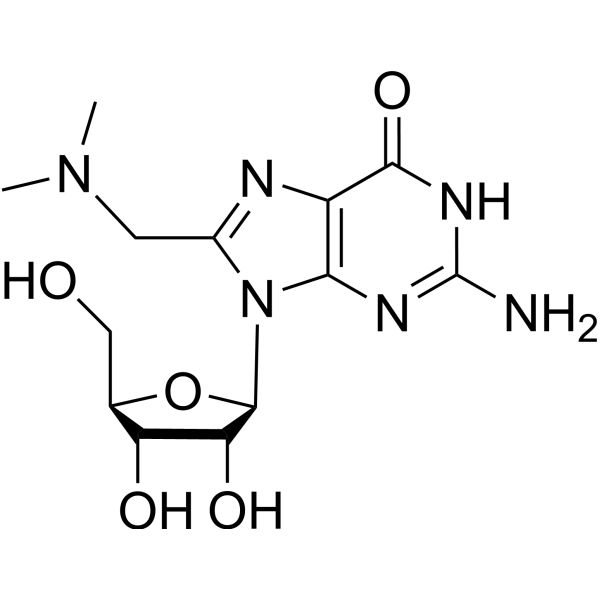
8-(N,N-Dimethylaminomethyl)guanosine is a guanosine analogue. Some guanosine analogs have immunostimulatory activity. In some animal models, they also induce type I interferons, producing antiviral effects. Studies have shown that the functional activity of guanosine analogs is dependent on the activation of Toll-like receptor 7 (TLR7) .
|
-
-
- HY-152652
-
|
|
Nucleoside Antimetabolite/Analog
|
Cancer
|
|
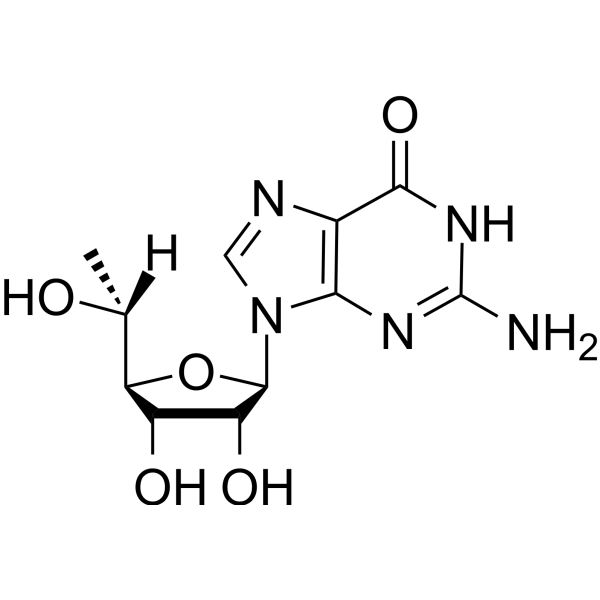
5’(R)-C-Methylguanosine is a guanosine analog. Some guanosine analogs have immunostimulatory activity. In some animal models, they also induce type I interferons, producing antiviral effects. Studies have shown that the functional activity of guanosine analogs is dependent on the activation of Toll-like receptor 7 (TLR7) .
|
-
-
- HY-154506
-
|
|
Nucleoside Antimetabolite/Analog
|
Cancer
|
|
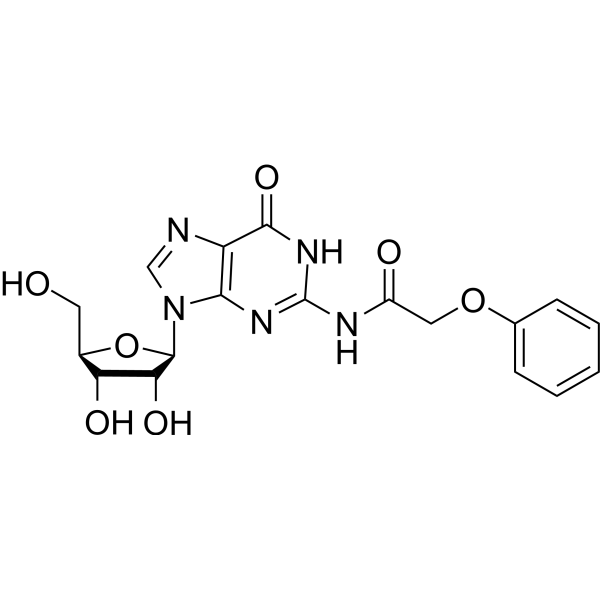
N2-Phenoxyacetylguanosine is a guanosine analog. Some guanosine analogs have immunostimulatory activity. In some animal models, they also induce type I interferons, producing antiviral effects. Studies have shown that the functional activity of guanosine analogs is dependent on the activation of Toll-like receptor 7 (TLR7) .
|
-
-
- HY-131992
-
|
C2 Galactosylceramide (d18:1/2:0)
|
Apoptosis
|
Inflammation/Immunology
|
|
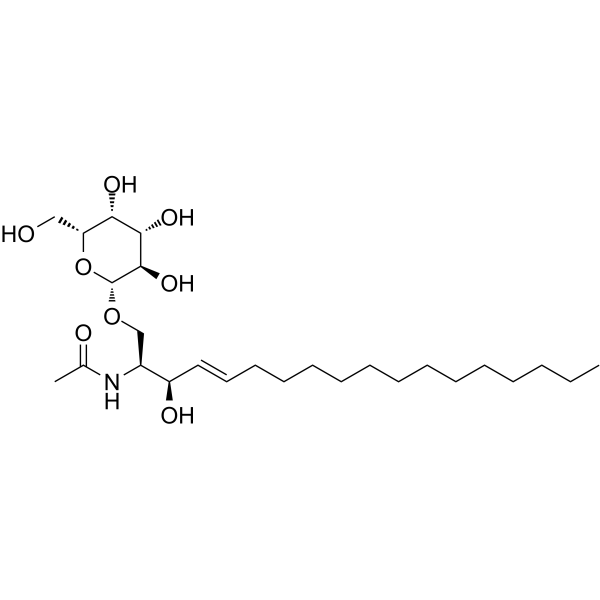
N-Acetylpsychosine (C2 Galactosylceramide (d18:1/2:0)), α-galactosylated C2-ceramide, has immunostimulatory activity. N-Acetylpsychosine can be a useful tool to investigate the mechanism of apoptosis and the immune reponses induced by dendritic cells (DCs) .
|
-
-
- HY-128139
-
|
2'-C-beta-Methylguanosine
|
Nucleoside Antimetabolite/Analog
|
Others
|
|
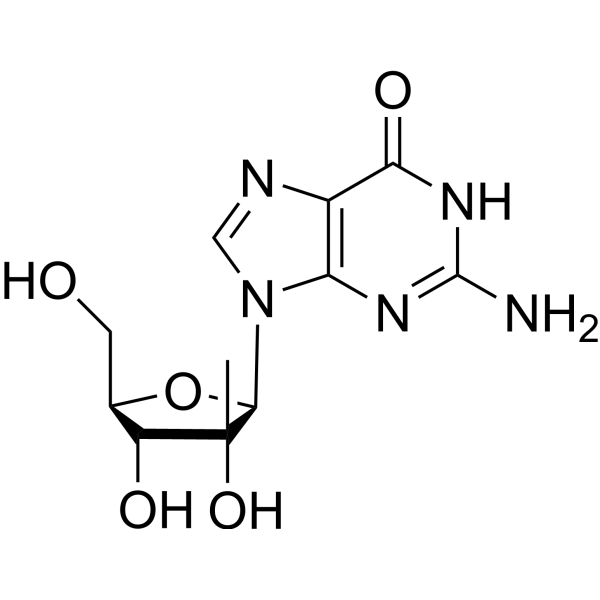
2'-C-Methylguanosine (2'-C-beta-Methylguanosine) is a guanosine analogue. Some guanosine analogs have immunostimulatory activity. In some animal models, they also induce type I interferons, producing antiviral effects. Studies have shown that the functional activity of guanosine analogs is dependent on the activation of Toll-like receptor 7 (TLR7) .
|
-
-
- HY-154336
-
|
|
Nucleoside Antimetabolite/Analog
|
Cancer
|
|
N-[2-[4-(1-Methylethyl)phenoxy]acetyl]guanosine is a guanosine analog. Some guanosine analogs have immunostimulatory activity. In some animal models, they also induce type I interferons, producing antiviral effects. Studies have shown that the functional activity of guanosine analogs is dependent on the activation of Toll-like receptor 7 (TLR7) .
|
-
![N-[2-[4-(1-Methylethyl)phenoxy]acetyl]guanosine](//file.medchemexpress.com/product_pic/hy-154336.gif)
- HY-152991
-
|
|
Nucleoside Antimetabolite/Analog
|
Others
|
|
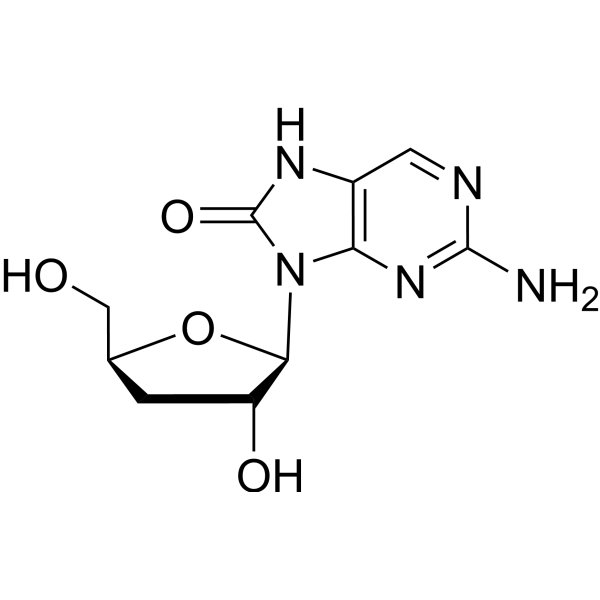
2′-Deoxy-N-(2-furanylmethyl)guanosine is a guanosine analog. Some guanosine analogs have immunostimulatory activity. In some animal models, they also induce type I interferons, producing antiviral effects. Studies have shown that the functional activity of guanosine analogs is dependent on the activation of Toll-like receptor 7 (TLR7) .
|
-
- HY-154482
-
|
|
Nucleoside Antimetabolite/Analog
|
Cancer
|
|
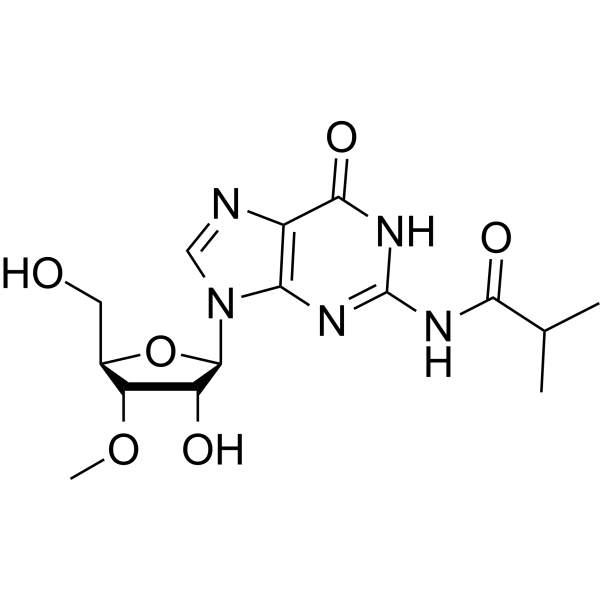
N2-iso-Butyroyl-3’-O-methylguanosine is a guanosine analog. Some guanosine analogs have immunostimulatory activity. In some animal models, they also induce type I interferons, producing antiviral effects. Studies have shown that the functional activity of guanosine analogs is dependent on the activation of Toll-like receptor 7 (TLR7) .
|
-
- HY-152988
-
|
|
Nucleoside Antimetabolite/Analog
Phosphoramidites
|
Others
|
|
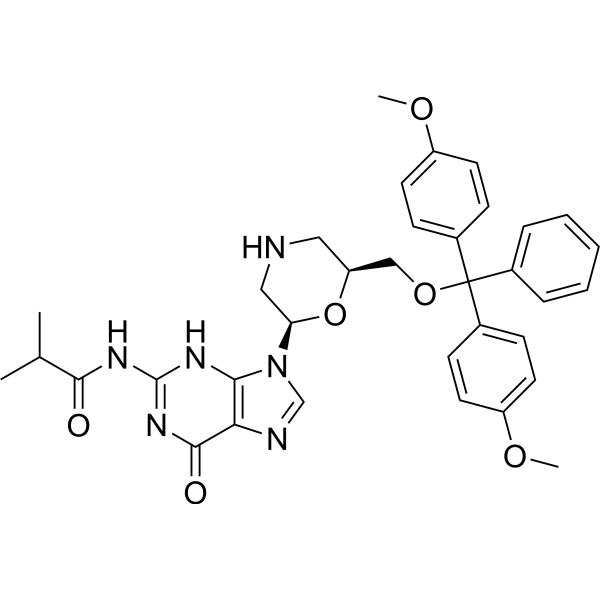
N2-iso-Butyroyl-7'-O-DMT-morpholinoguanine is a guanosine analog. Some guanosine analogs have immunostimulatory activity. In some animal models, they also induce type I interferons, producing antiviral effects. Studies have shown that the functional activity of guanosine analogs is dependent on the activation of Toll-like receptor 7 (TLR7) .
|
-
- HY-152992
-
|
|
Nucleoside Antimetabolite/Analog
|
Others
|
|
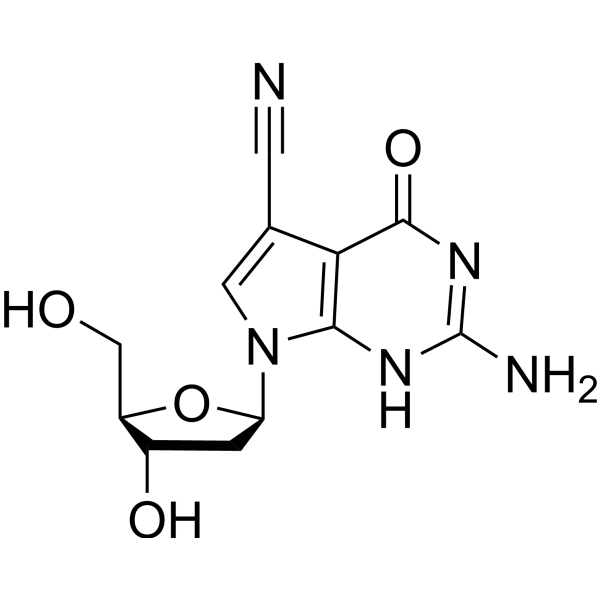
7-Cyano-7-deaza-2'-deoxy guanosine is a guanosine analog. Some guanosine analogs have immunostimulatory activity. In some animal models, they also induce type I interferons, producing antiviral effects. Studies have shown that the functional activity of guanosine analogs is dependent on the activation of Toll-like receptor 7 (TLR7) .
|
-
- HY-152797
-
|
|
Nucleoside Antimetabolite/Analog
|
Others
|
|
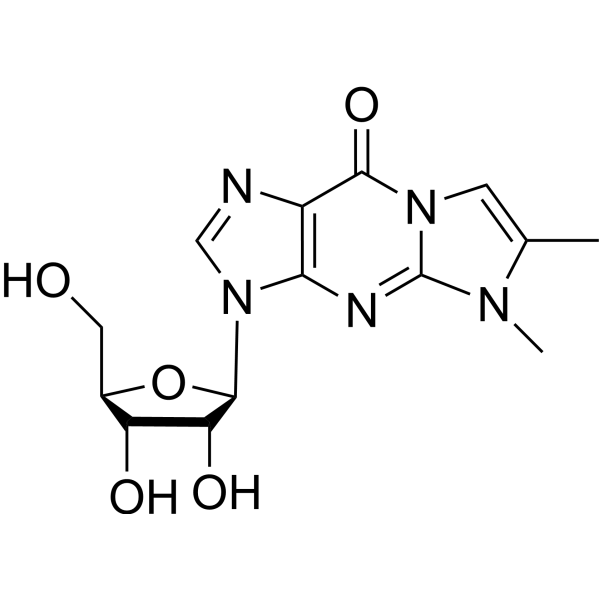
N4-Desmethyl-N5-Methyl wyosine is a guanosine analogue. Some guanosine analogs have immunostimulatory activity. In some animal models, they also induce type I interferons, producing antiviral effects. Studies have shown that the functional activity of guanosine analogs is dependent on the activation of Toll-like receptor 7 (TLR7) .
|
-
- HY-154547
-
|
|
Nucleoside Antimetabolite/Analog
|
Cancer
|
|
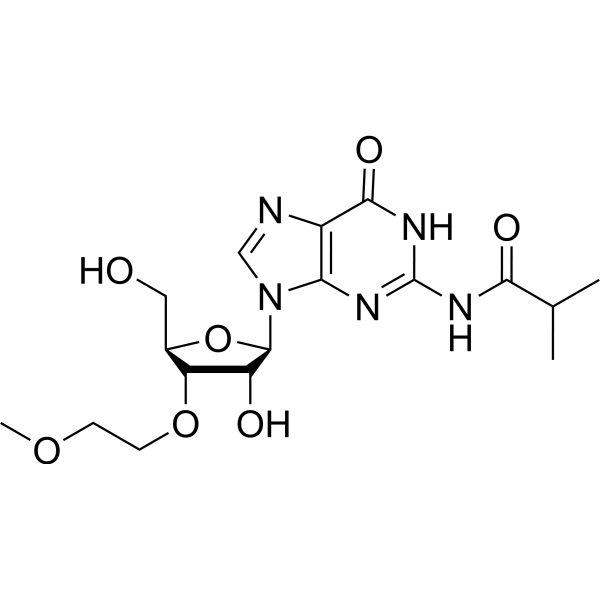
N2-iso-Butyroyl-3’-O-(methoxyethyl)guanosine is a guanosine analog. Some guanosine analogs have immunostimulatory activity. In some animal models, they also induce type I interferons, producing antiviral effects. Studies have shown that the functional activity of guanosine analogs is dependent on the activation of Toll-like receptor 7 (TLR7) .
|
-
- HY-154448
-
|
|
Nucleoside Antimetabolite/Analog
|
Cancer
|
|
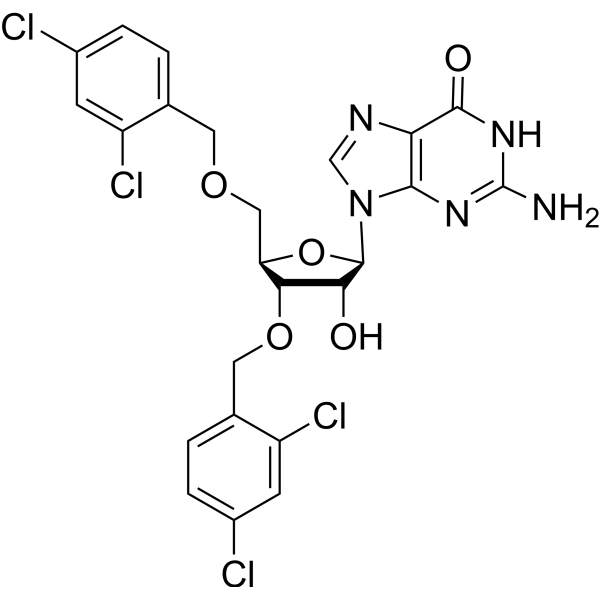
3,5-Bis-O-(2,4-dichlorobenzyl)guanosine is a guanosine analog. Some guanosine analogs have immunostimulatory activity. In some animal models, they also induce type I interferons, producing antiviral effects. Studies have shown that the functional activity of guanosine analogs is dependent on the activation of Toll-like receptor 7 (TLR7) .
|
-
- HY-152545
-
|
|
Nucleoside Antimetabolite/Analog
|
Cancer
|
|
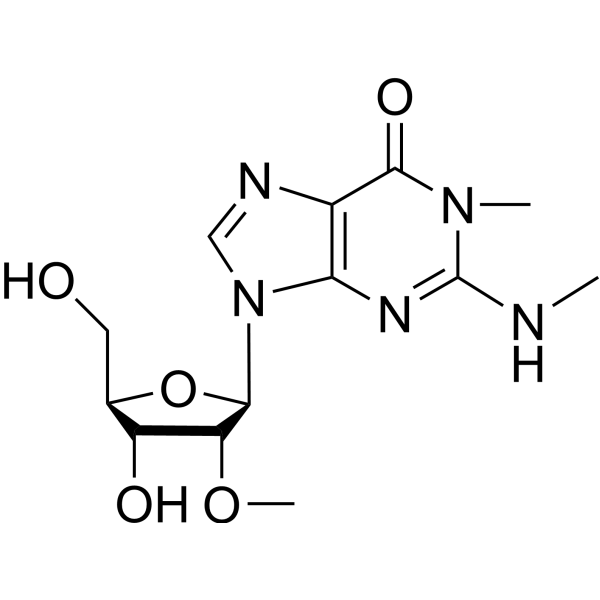
N1,N2-Dimethyl-2’-O-methylguanosine is a guanosine analog. Some guanosine analogs have immunostimulatory activity. In some animal models, they also induce type I interferons, producing antiviral effects. Studies have shown that the functional activity of guanosine analogs is dependent on the activation of Toll-like receptor 7 (TLR7) .
|
-
- HY-154350
-
|
|
Nucleoside Antimetabolite/Analog
Phosphoramidites
|
Cancer
|
|
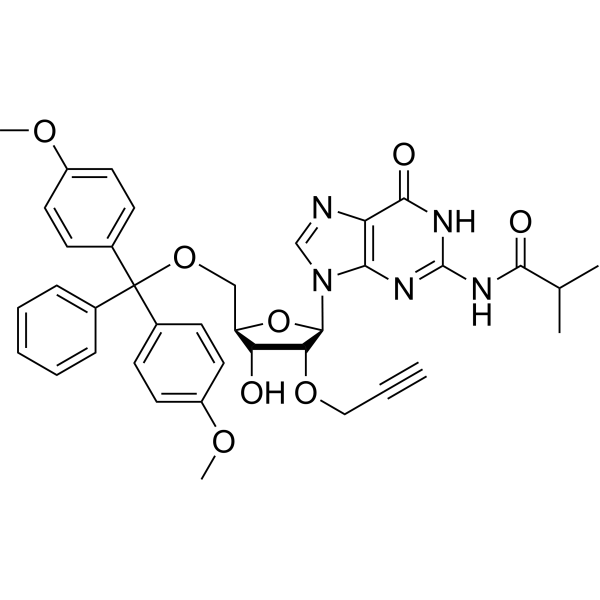
5'-O-DMT-N2-isobutyryl-2'-O-propargylguanosine is a guanosine analog. Some guanosine analogs have immunostimulatory activity. In some animal models, they also induce type I interferons, producing antiviral effects. Studies have shown that the functional activity of guanosine analogs is dependent on the activation of Toll-like receptor 7 (TLR7) .
|
-
- HY-154606
-
|
|
Nucleoside Antimetabolite/Analog
Phosphoramidites
|
Cancer
|
|
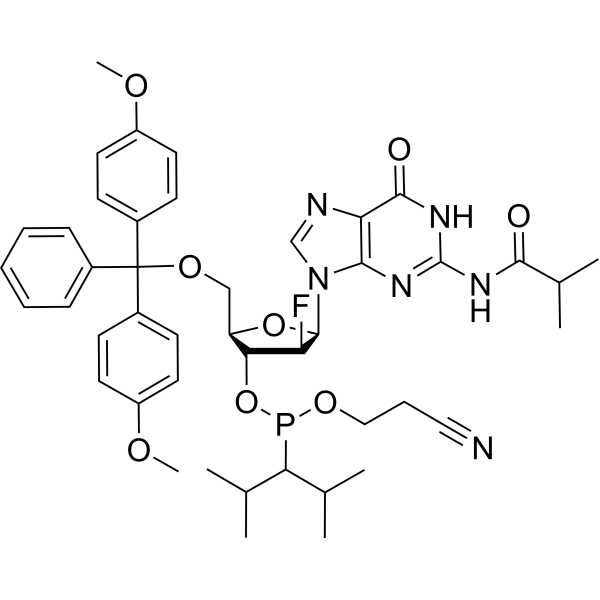
2'-F-2'-ara-N2-ibu-dG Phosphoramidite is a guanosine analog. Some guanosine analogs have immunostimulatory activity. In some animal models, they also induce type I interferons, producing antiviral effects. Studies have shown that the functional activity of guanosine analogs is dependent on the activation of Toll-like receptor 7 (TLR7) .
|
-
- HY-154548
-
|
|
Nucleoside Antimetabolite/Analog
Phosphoramidites
|
Others
|
|
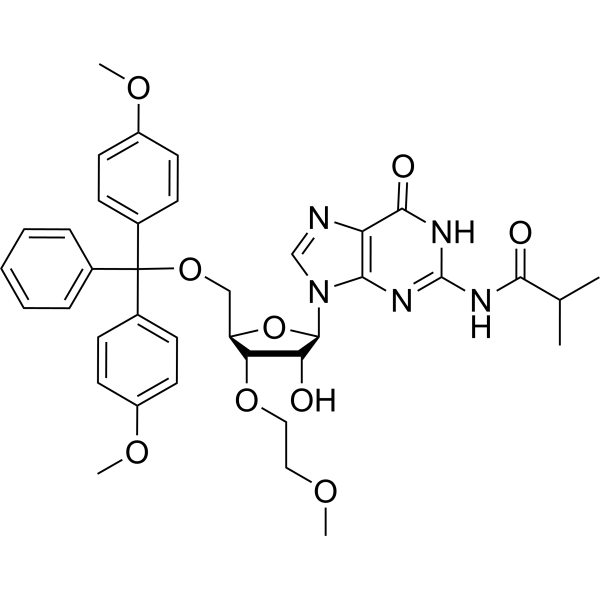
N2-iso-Butyroyl-5’-O-DMT-3’-O-(methoxyethyl)guanosine is a guanosine analog. Some guanosine analogs have immunostimulatory activity. In some animal models, they also induce type I interferons, producing antiviral effects. Studies have shown that the functional activity of guanosine analogs is dependent on the activation of Toll-like receptor 7 (TLR7) .
|
-
- HY-154507
-
|
|
Nucleoside Antimetabolite/Analog
|
Cancer
|
|
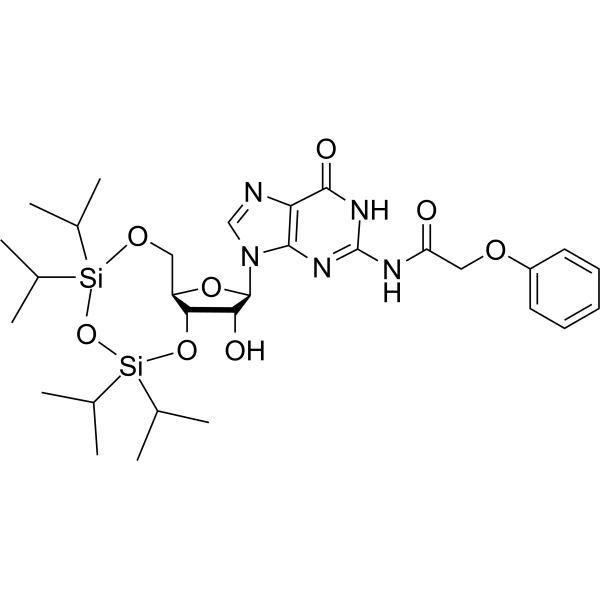
N2-Phenoxyacetyl-3′,5′-O-(tetraisopropyldisiloxane-1,3-diyl)guanosine is a guanosine analog. Some guanosine analogs have immunostimulatory activity. In some animal models, they also induce type I interferons, producing antiviral effects. Studies have shown that the functional activity of guanosine analogs is dependent on the activation of Toll-like receptor 7 (TLR7) .
|
-
- HY-154483
-
|
|
Nucleoside Antimetabolite/Analog
|
Cancer
|
|
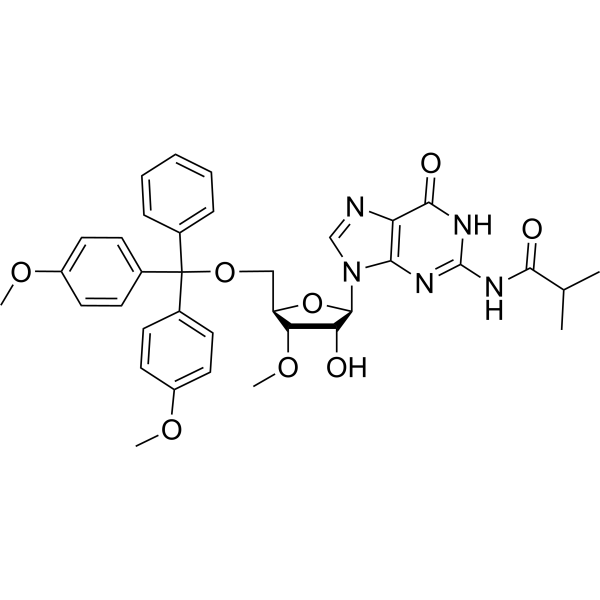
N2-iso-Butyroyl-5’-O-(4,4’-dimethoxytrityl)-3’-O-methylguanosine is a guanosine analog. Some guanosine analogs have immunostimulatory activity. In some animal models, they also induce type I interferons, producing antiviral effects. Studies have shown that the functional activity of guanosine analogs is dependent on the activation of Toll-like receptor 7 (TLR7) .
|
-
- HY-161901
-
|
|
E1/E2/E3 Enzyme
|
Inflammation/Immunology
|
|
BC-1293 is an inhibitor for E3 ligase subunit FBXO24. BC-1293 disrupts the interaction between FBXO24 and aspartyl-tRNA synthetase (DARS2) and increases the level of DARS2. BC-1293 increases levels of IL-1β, IL-9, MIP-2, and TNF α, and exhibits immunostimulatory activity in mice .
|
-

- HY-113262R
-
-

- HY-154361
-
|
|
Nucleoside Antimetabolite/Analog
|
Cancer
|
|
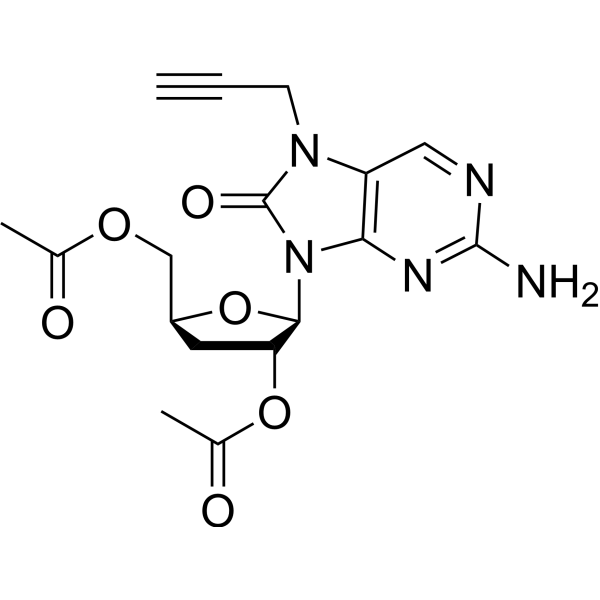
TLR7 agonist 13 is a guanosine analog. Some guanosine analogs have immunostimulatory activity. In some animal models, they also induce type I interferons, producing antiviral effects. Studies have shown that the functional activity of guanosine analogs is dependent on the activation of Toll-like receptor 7 (TLR7) . TLR7 agonist 13 is a click chemistry reagent, it contains an Alkyne group and can undergo copper-catalyzed azide-alkyne cycloaddition (CuAAc) with molecules containing Azide groups.
|
-
- HY-P990986
-
|
|
Interleukin Related
|
Inflammation/Immunology
Cancer
|
|
Efdelikofusp alfa is a bispecific Fc fusion protein. Efdelikofusp alfa is formed by fusing the N-terminal extracellular domain of human CD80 (B7.1) with the Fc fragment of human immunoglobulin G4 (IgG4), and is linked to an interleukin-2 variant (IL-2v) as the C-terminal part. Efdelikofusp alfa exhibits potential immunostimulatory, immune checkpoint inhibitory, and antitumor activities.
|
-

- HY-W713010
-
|
|
Isotope-Labeled Compounds
FXR
Endogenous Metabolite
|
Inflammation/Immunology
|
|
3-Epideoxycholic acid-d5 is the deuterium labeled 3-Epideoxycholic acid (HY-48814). 3-Epideoxycholic acid is the microbial metabolite of Deoxycholic acid (HY-N0593). 3-Epideoxycholic acid targets FXR of dendritic cells, reduces their immunostimulatory properties, promotes the generation of Treg cells, and exhibits anti-inflammatory activity. 3-Epideoxycholic acid promotes the growth of bacteria Bacteroides .
|
-

- HY-P990992
-
|
GI-102
|
Interleukin Related
|
Inflammation/Immunology
Cancer
|
|
Efzilonkofusp alfa is a bispecific Fc fusion protein. Efzilonkofusp alfa is formed by fusing the N-terminal extracellular domain of human CD80 (B7.1) with the Fc fragment of human immunoglobulin G4 (IgG4), and is linked to an interleukin-2 variant (IL-2v) as the C-terminal part. Efzilonkofusp alfa exhibits potential immunostimulatory, immune checkpoint inhibitory, and antitumor activities.
|
-

- HY-154349
-
|
|
Nucleoside Antimetabolite/Analog
|
Cancer
|
|
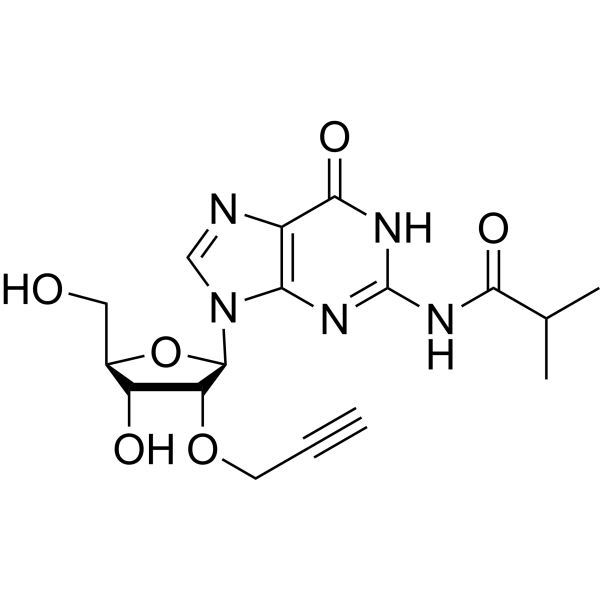
N2-iso-Butyroyl-2’-O-propargylguanosine is a guanosine analog. Some guanosine analogs have immunostimulatory activity. In some animal models, they also induce type I interferons, producing antiviral effects. Studies have shown that the functional activity of guanosine analogs is dependent on the activation of Toll-like receptor 7 (TLR7) . N2-iso-Butyroyl-2’-O-propargylguanosine is a click chemistry reagent, it contains an Alkyne group and can undergo copper-catalyzed azide-alkyne cycloaddition (CuAAc) with molecules containing Azide groups.
|
-
- HY-P11298
-
|
|
Caspase
Apoptosis
JNK
p38 MAPK
Interleukin Related
IFNAR
|
Inflammation/Immunology
Cancer
|
|
d-T101 peptide, a human hormone-peptide, is a T1/ST2 receptor ligand. d-T101 peptide binds to the T1/ST2 receptor and activates caspases 8, 9 and 3 mediated apoptosis, together with activation of JNKinase and p38 MAPKinase. d-T101 peptide also changes Golgi structural with function loss and downregulation of the endoplasmic reticulum (ER) stress repair mechanism. d-T101 peptide has immunostimulatory and anticancer activity, selectively induces apoptosis in proliferating cancer cells and increases IL-2 and IFN-γ expression as well as the recruitment of NK cells and M1 macrophages to the tumor site .
|
-

- HY-P992044
-
-

- HY-182080
-
|
|
Microtubule/Tubulin
|
Inflammation/Immunology
|
|
EVs inducer-1 is a release inducer of immunostimulatory extracellular vesicles (EVs). EVs inducer-1 inhibits tubulin polymerization. EVs inducer-1 enhances the release of immunostimulatory EVs by antigen-presenting cells, increases the release of EV particles from dendritic cells, and elevates CD63 reporter gene activity. EVs inducer-1 inhibits the viability of proliferating cells. EVs inducer-1 is applicable for research related to immune regulation .
|
-

- HY-186149
-
|
|
NOD-like Receptor (NLR)
|
Cancer
|
|
Phosphate muramyl dipeptide is a class of lipophilic derivatives synthesized based on the structural characteristics of mycobacterial cell walls. Phosphate muramyl dipeptide represents the minimal essential structural unit with immunostimulatory activity, and exhibits significant activity in tumor regression assays. Phosphate muramyl dipeptide possesses anti-tumor potential .
|
-

- HY-N10634S
-
|
N-ω-CD3-Hexadecaoyl-glucopsychosie; GluCe(d18:1/16:0-d3); Glucosylceamide-d3 (d18:1/16:0-d3)
|
Isotope-Labeled Compounds
Others
|
Inflammation/Immunology
|
|
D-Glucosyl-β-N-palmitoylsphingosine-d3 (N-ω-CD3-Hexadecaoyl-glucopsychosie) is deuterium labeled D-Glucosyl-β-1,1′-N-palmitoylsphingosine (HY-N10634). D-Glucosyl-β-1,1′-N-palmitoylsphingosine (C16 Glucosyl(β) Ceramide (d18:1/16:0)) is an endogenous Mincle ligand possessing immunostimulatory activity .
|
-

- HY-179556
-
|
|
SARS-CoV
|
Infection
|
|
SARS-CoV-2 nsp14-IN-10 is a highly potent and selective NSP14 (IC50 = 0.34 µM) S-adenosylmethionine (SAM) binding pocket inhibitor. SARS-CoV-2 nsp14-IN-10 demonstrates robust antiviral activity against SARS-CoV-2. SARS-CoV-2 nsp14-IN-10 exhibits broad-spectrum activity against other betacoronaviruses and inhibits SARS-CoV-2 at the replication stage. SARS-CoV-2 nsp14-IN-10 suppresses viral translation and exhibits immunostimulatory effects. SARS-CoV-2 nsp14-IN-10 specifically reverses NSP14-mediated alterations inhost transcriptome. SARS-CoV-2 nsp14-IN-10 can be used for the study of SARS-CoV-2 .
|
-

| Cat. No. |
Product Name |
Target |
Research Area |
-
- HY-106374
-
|
|
VEGFR
|
Cancer
|
|
Elpamotide is an epitope peptide derived from VEGFR2. Elpamotide induces cytotoxic T lymphocytes (CTLs) to kill VEGFR2-expressing endothelial cells. Elpamotide has potential immunostimulatory and antineoplastic activities. Elpamotide can be used in the research of cancer, such as pancreatic cancer .
|
-
- HY-W089233
-
|
N-Boc-D-glutaMic acid 1-tert-butyl ester
|
Amino Acid Derivatives
|
Others
|
|
Boc-D-Glu-OtBu (N-Boc-D-glutaMic acid 1-tert-butyl ester) is an amino acid derivative with a Boc protecting group, which can be used to synthesize Adamant-1-yl tripeptide with immunostimulatory activity .
|
-
- HY-P11298
-
|
|
Caspase
Apoptosis
JNK
p38 MAPK
Interleukin Related
IFNAR
|
Inflammation/Immunology
Cancer
|
|
d-T101 peptide, a human hormone-peptide, is a T1/ST2 receptor ligand. d-T101 peptide binds to the T1/ST2 receptor and activates caspases 8, 9 and 3 mediated apoptosis, together with activation of JNKinase and p38 MAPKinase. d-T101 peptide also changes Golgi structural with function loss and downregulation of the endoplasmic reticulum (ER) stress repair mechanism. d-T101 peptide has immunostimulatory and anticancer activity, selectively induces apoptosis in proliferating cancer cells and increases IL-2 and IFN-γ expression as well as the recruitment of NK cells and M1 macrophages to the tumor site .
|
| Cat. No. |
Product Name |
Target |
Research Area |
Image |
-
- HY-P990980
-
|
CND-106; EMB-06
|
CD3
|
Inflammation/Immunology
Cancer
|
|
Cizutamig (CND-106) is a bispecific T-cell engager targeting BCMA and CD3. Cizutamig exhibits immunostimulatory and anti-tumor activities. Cizutamig can be used in research related to relapsed or refractory multiple myeloma and systemic lupus erythematosus .
|
-

(5)
-
- HY-P99159
-
|
|
Interleukin Related
|
Cancer
|
|
Ivuxolimab is a fully human IgG2 agonist targeting OX40 (CD134), which selectively binds to the OX40 receptor on the surface of activated CD4 + and CD8 + T cells without inducing antibody-dependent cytotoxicity. Ivuxolimab can promote T cell proliferation, survival and cytokine (such as IFN-γ, IL-2) secretion, inhibit regulatory T cell function, and enhance anti-tumor immune response. Ivuxolimab can be used in the study of melanoma, hepatocellular carcinoma, head and neck squamous cell carcinoma, etc .
|
-
(5)
-
- HY-P991209
-
-
(5)
-
- HY-P991397
-
|
|
Tim3
|
Cancer
|
|
Sym023 is a human monoclonal antibody (mAb) targeting TIM-3/HAVCR2/CD366. Sym023 enhances immunostimulatory and anti-tumor activities. Sym023 can be used in Non-small cell lung cancer, Solid tumors and Lymphoma research .
|
-
(5)
-
- HY-P991160
-
|
IMM-47
|
Inhibitory Antibodies
|
Inflammation/Immunology
Cancer
|
|
Suvonstobart is a monoclonal antibody targeting human CD24 (signal transducer CD24). Suvonstobart specifically binds to CD24, activating relevant immune cell signaling pathways and exerting immunostimulatory and antitumor activities .
|
-

(5)
-
- HY-P991125
-
|
YH-002
|
TNF Receptor
|
Inflammation/Immunology
Cancer
|
|
Cenzestotug is a monoclonal antibody targeting human tumor necrosis factor receptor superfamily member 4 (TNFRSF4). Cenzestotug activates relevant immune cells by binding to TNFRSF4, exerting immunostimulatory and antitumor activities. Cenzestotug is promising for research of cancer immunotherapy .
|
-
(5)
-
- HY-P991126
-
|
YH003
|
TNF Receptor
|
Inflammation/Immunology
Cancer
|
|
Ciltistotug is a monoclonal antibody targeting human CD40 (TNFRSF5). Ciltistotug activates immune cells after binding to CD40, exerting immunostimulatory and antitumor activities. Ciltistotug is promising for research of cancer immunotherapy .
|
-
(5)
-
- HY-P990986
-
|
|
Interleukin Related
|
Inflammation/Immunology
Cancer
|
|
Efdelikofusp alfa is a bispecific Fc fusion protein. Efdelikofusp alfa is formed by fusing the N-terminal extracellular domain of human CD80 (B7.1) with the Fc fragment of human immunoglobulin G4 (IgG4), and is linked to an interleukin-2 variant (IL-2v) as the C-terminal part. Efdelikofusp alfa exhibits potential immunostimulatory, immune checkpoint inhibitory, and antitumor activities.
|
-
(5)
-
- HY-P990992
-
|
GI-102
|
Interleukin Related
|
Inflammation/Immunology
Cancer
|
|
Efzilonkofusp alfa is a bispecific Fc fusion protein. Efzilonkofusp alfa is formed by fusing the N-terminal extracellular domain of human CD80 (B7.1) with the Fc fragment of human immunoglobulin G4 (IgG4), and is linked to an interleukin-2 variant (IL-2v) as the C-terminal part. Efzilonkofusp alfa exhibits potential immunostimulatory, immune checkpoint inhibitory, and antitumor activities.
|
-
(5)
-
- HY-P992044
-
-
(5)
| Cat. No. |
Product Name |
Category |
Target |
Chemical Structure |
| Cat. No. |
Product Name |
Chemical Structure |
-
- HY-W713010
-
|
|
|
3-Epideoxycholic acid-d5 is the deuterium labeled 3-Epideoxycholic acid (HY-48814). 3-Epideoxycholic acid is the microbial metabolite of Deoxycholic acid (HY-N0593). 3-Epideoxycholic acid targets FXR of dendritic cells, reduces their immunostimulatory properties, promotes the generation of Treg cells, and exhibits anti-inflammatory activity. 3-Epideoxycholic acid promotes the growth of bacteria Bacteroides .
|
-
-
- HY-N10634S
-
|
|
|
D-Glucosyl-β-N-palmitoylsphingosine-d3 (N-ω-CD3-Hexadecaoyl-glucopsychosie) is deuterium labeled D-Glucosyl-β-1,1′-N-palmitoylsphingosine (HY-N10634). D-Glucosyl-β-1,1′-N-palmitoylsphingosine (C16 Glucosyl(β) Ceramide (d18:1/16:0)) is an endogenous Mincle ligand possessing immunostimulatory activity .
|
-
| Cat. No. |
Product Name |
|
Classification |
-
- HY-152684
-
|
|
|
Alkynes
|
|
2′-O-2-Propyn-1-ylguanosine is a guanosine analogue. Some guanosine analogs have immunostimulatory activity. In some animal models, they also induce type I interferons, producing antiviral effects. Studies have shown that the functional activity of guanosine analogs is dependent on the activation of Toll-like receptor 7 (TLR7) . 2′-O-2-Propyn-1-ylguanosine is a click chemistry reagent, it contains an Alkyne group and can undergo copper-catalyzed azide-alkyne cycloaddition (CuAAc) with molecules containing Azide groups.
|
-
- HY-152478
-
|
|
|
Alkynes
|
|
3’-β-C-Ethynylguanosine is a guanosine analog. Some guanosine analogs have immunostimulatory activity. In some animal models, they also induce type I interferons, producing antiviral effects. Studies have shown that the functional activity of guanosine analogs is dependent on the activation of Toll-like receptor 7 (TLR7) . 3’-β-C-Ethynylguanosine is a click chemistry reagent, it contains an Alkyne group and can undergo copper-catalyzed azide-alkyne cycloaddition (CuAAc) with molecules containing Azide groups.
|
-
- HY-154361
-
|
|
|
Alkynes
|
|
TLR7 agonist 13 is a guanosine analog. Some guanosine analogs have immunostimulatory activity. In some animal models, they also induce type I interferons, producing antiviral effects. Studies have shown that the functional activity of guanosine analogs is dependent on the activation of Toll-like receptor 7 (TLR7) . TLR7 agonist 13 is a click chemistry reagent, it contains an Alkyne group and can undergo copper-catalyzed azide-alkyne cycloaddition (CuAAc) with molecules containing Azide groups.
|
-
- HY-154349
-
|
|
|
Alkynes
|
|
N2-iso-Butyroyl-2’-O-propargylguanosine is a guanosine analog. Some guanosine analogs have immunostimulatory activity. In some animal models, they also induce type I interferons, producing antiviral effects. Studies have shown that the functional activity of guanosine analogs is dependent on the activation of Toll-like receptor 7 (TLR7) . N2-iso-Butyroyl-2’-O-propargylguanosine is a click chemistry reagent, it contains an Alkyne group and can undergo copper-catalyzed azide-alkyne cycloaddition (CuAAc) with molecules containing Azide groups.
|
| Cat. No. |
Product Name |
|
Classification |
-
- HY-154484
-
|
|
|
Phosphoramidites
Guanine
|
|
3’-O-Me-G(iBu)-2’-phosphoramidite is a guanosine analog. Some guanosine analogs have immunostimulatory activity. In some animal models, they also induce type I interferons, producing antiviral effects. Studies have shown that the functional activity of guanosine analogs is dependent on the activation of Toll-like receptor 7 (TLR7) .
|
-
- HY-150748A
-
|
|
|
CpG ODNs
|
|
ODN D-SL01 sodium, a class B CpG ODN (oligodeoxynucleotide), is a TLR9 agonist. ODN D-SL01 sodium has strong immunostimulatory activity in a variety of vertebrate species and has anticancer activity. ODN D-SL01 sequence: 5'- T-C-G-C-G-A-C-G-T-T-C-G-C-C-C-G-A-C-G-T-T-C-G-G-T-A-3' .
|
-
- HY-152684
-
|
|
|
Nucleoside Analogs
Guanosine
|
|
2′-O-2-Propyn-1-ylguanosine is a guanosine analogue. Some guanosine analogs have immunostimulatory activity. In some animal models, they also induce type I interferons, producing antiviral effects. Studies have shown that the functional activity of guanosine analogs is dependent on the activation of Toll-like receptor 7 (TLR7) . 2′-O-2-Propyn-1-ylguanosine is a click chemistry reagent, it contains an Alkyne group and can undergo copper-catalyzed azide-alkyne cycloaddition (CuAAc) with molecules containing Azide groups.
|
-
- HY-152493
-
|
|
|
Nucleoside Analogs
Guanosine
|
|
3’-O-(2-Methoxyethyl)guanosine is a guanosine analogue. Some guanosine analogs have immunostimulatory activity. In some animal models, they also induce type I interferons, producing antiviral effects. Studies have shown that the functional activity of guanosine analogs is dependent on the activation of Toll-like receptor 7 (TLR7) .
|
-
- HY-154332
-
|
|
|
Nucleoside Analogs
Guanosine
|
|
8-(Phenylmethoxy)guanosine is a guanosine analog. Some guanosine analogs have immunostimulatory activity. In some animal models, they also induce type I interferons, producing antiviral effects. Studies have shown that the functional activity of guanosine analogs is dependent on the activation of Toll-like receptor 7 (TLR7) .
|
-
- HY-152430
-
|
|
|
Nucleoside Analogs
Guanosine
|
|
8-Hydroxymethyl guanosine is a guanosine analog. Some guanosine analogs have immunostimulatory activity. In some animal models, they also induce type I interferons, producing antiviral effects. Studies have shown that the functional activity of guanosine analogs is dependent on the activation of Toll-like receptor 7 (TLR7) .
|
-
- HY-152547
-
|
|
|
Nucleoside Analogs
Guanosine
|
|
N2-[(N,N-Dimethyl amino]methylene-N1-methyl-2’-O-methylguanosine is a guanosine analog. Some guanosine analogs have immunostimulatory activity. In some animal models, they also induce type I interferons, producing antiviral effects. Studies have shown that the functional activity of guanosine analogs is dependent on the activation of Toll-like receptor 7 (TLR7) .
|
-
- HY-154464
-
|
|
|
Phosphoramidites
Guanine
|
|
N2-iso-Butyroyl-5'-O-DMT-3'-deoxy-3'-fluoroguanosine is a guanosine analog. Some guanosine analogs have immunostimulatory activity. In some animal models, they also induce type I interferons, producing antiviral effects. Studies have shown that the functional activity of guanosine analogs is dependent on the activation of Toll-like receptor 7 (TLR7) .
|
-
- HY-152478
-
|
|
|
Nucleoside Analogs
Guanosine
|
|
3’-β-C-Ethynylguanosine is a guanosine analog. Some guanosine analogs have immunostimulatory activity. In some animal models, they also induce type I interferons, producing antiviral effects. Studies have shown that the functional activity of guanosine analogs is dependent on the activation of Toll-like receptor 7 (TLR7) . 3’-β-C-Ethynylguanosine is a click chemistry reagent, it contains an Alkyne group and can undergo copper-catalyzed azide-alkyne cycloaddition (CuAAc) with molecules containing Azide groups.
|
-
- HY-154549
-
|
|
|
Phosphoramidites
Guanine
|
|
3’-O-MOE-G(iBu)-2’-phosphoramidite is a guanosine analog. Some guanosine analogs have immunostimulatory activity. In some animal models, they also induce type I interferons, producing antiviral effects. Studies have shown that the functional activity of guanosine analogs is dependent on the activation of Toll-like receptor 7 (TLR7) .
|
-
- HY-152993
-
|
|
|
Nucleoside Analogs
Guanosine
|
|
2′-Deoxy-N-(2-furanylmethyl)guanosine is a guanosine analog. Some guanosine analogs have immunostimulatory activity. In some animal models, they also induce type I interferons, producing antiviral effects. Studies have shown that the functional activity of guanosine analogs is dependent on the activation of Toll-like receptor 7 (TLR7) .
|
-
- HY-154351
-
|
|
|
Phosphoramidites
Guanine
|
|
N2-iBu-5’-O-DMTr-2’-O-propargylguanosine-3’-CED-phosphoramidite is a guanosine analog. Some guanosine analogs have immunostimulatory activity. In some animal models, they also induce type I interferons, producing antiviral effects. Studies have shown that the functional activity of guanosine analogs is dependent on the activation of Toll-like receptor 7 (TLR7) .
|
-
- HY-150748
-
|
|
|
CpG ODNs
|
|
ODN D-SL01, a class B CpG ODN (oligodeoxynucleotide), is a TLR9 agonist. ODN D-SL01 has strong immunostimulatory activity in a variety of vertebrate species and has anticancer activity. ODN D-SL01 sequence: 5'- T-C-G-C-G-A-C-G-T-T-C-G-C-C-C-G-A-C-G-T-T-C-G-G-T-A-3' .
|
-
- HY-177635A
-
|
|
|
Antisense Oligonucleotides
|
|
GNKG168 sodium is a synthetic, 21-mer, unmethylated CpG oligodeoxynucleotide. It acts as a TLR9 agonist with immunostimulatory activity.
|
-
- HY-177635
-
|
|
|
Antisense Oligonucleotides
|
|
GNKG168 is a synthetic, 21-mer, unmethylated CpG oligodeoxynucleotide. It acts as a TLR9 agonist with immunostimulatory activity.
|
-
- HY-177371
-
|
|
|
saRNAs
|
|
CEBPA-51 saRNA, a double-stranded RNA oligo duplex to specifically upregulate the transcription of the CEBPA gene. CEBPA-51 saRNA contains multiple 2′-O-methyl modified bases to prevent nonspecific immunostimulatory activity .
|
-
- HY-152610
-
|
|
|
Nucleoside Analogs
Guanosine
|
|
3′-C-Methylguanosine is a guanosine analogue. Some guanosine analogs have immunostimulatory activity. In some animal models, they also induce type I interferons, producing antiviral effects. Studies have shown that the functional activity of guanosine analogs is dependent on the activation of Toll-like receptor 7 (TLR7) .
|
-
- HY-152517
-
|
|
|
Nucleoside Analogs
Guanosine
|
|
8-(Methylthio)guanosine is a guanosine analogue. Some guanosine analogs have immunostimulatory activity. In some animal models, they also induce type I interferons, producing antiviral effects. Studies have shown that the functional activity of guanosine analogs is dependent on the activation of Toll-like receptor 7 (TLR7) .
|
-
- HY-154111
-
|
|
|
Nucleoside Analogs
Guanosine
|
|
8-(N-Boc-aminomethyl)guanosine is a guanosine analog. Some guanosine analogs have immunostimulatory activity. In some animal models, they also induce type I interferons, producing antiviral effects. Studies have shown that the functional activity of guanosine analogs is dependent on the activation of Toll-like receptor 7 (TLR7) .
|
-
- HY-152673
-
|
|
|
Nucleoside Analogs
Guanosine
|
|
9-(β-D-Xylofuranosyl)guanine is a guanosine analog. Some guanosine analogs have immunostimulatory activity. In some animal models, they also induce type I interferons, producing antiviral effects. Studies have shown that the functional activity of guanosine analogs is dependent on the activation of Toll-like receptor 7 (TLR7) .
|
-
- HY-152742
-
|
|
|
Nucleoside Analogs
Guanosine
|
|
8-(N,N-Dimethylaminomethyl)guanosine is a guanosine analogue. Some guanosine analogs have immunostimulatory activity. In some animal models, they also induce type I interferons, producing antiviral effects. Studies have shown that the functional activity of guanosine analogs is dependent on the activation of Toll-like receptor 7 (TLR7) .
|
-
- HY-152652
-
|
|
|
Nucleoside Analogs
Guanosine
|
|
5’(R)-C-Methylguanosine is a guanosine analog. Some guanosine analogs have immunostimulatory activity. In some animal models, they also induce type I interferons, producing antiviral effects. Studies have shown that the functional activity of guanosine analogs is dependent on the activation of Toll-like receptor 7 (TLR7) .
|
-
- HY-154506
-
|
|
|
Nucleoside Analogs
Guanosine
|
|
N2-Phenoxyacetylguanosine is a guanosine analog. Some guanosine analogs have immunostimulatory activity. In some animal models, they also induce type I interferons, producing antiviral effects. Studies have shown that the functional activity of guanosine analogs is dependent on the activation of Toll-like receptor 7 (TLR7) .
|
-
- HY-154336
-
|
|
|
Nucleoside Analogs
Guanosine
|
|
N-[2-[4-(1-Methylethyl)phenoxy]acetyl]guanosine is a guanosine analog. Some guanosine analogs have immunostimulatory activity. In some animal models, they also induce type I interferons, producing antiviral effects. Studies have shown that the functional activity of guanosine analogs is dependent on the activation of Toll-like receptor 7 (TLR7) .
|
-
- HY-152991
-
|
|
|
Nucleoside Analogs
Guanosine
|
|
2′-Deoxy-N-(2-furanylmethyl)guanosine is a guanosine analog. Some guanosine analogs have immunostimulatory activity. In some animal models, they also induce type I interferons, producing antiviral effects. Studies have shown that the functional activity of guanosine analogs is dependent on the activation of Toll-like receptor 7 (TLR7) .
|
-
- HY-154482
-
|
|
|
Nucleoside Analogs
Guanosine
|
|
N2-iso-Butyroyl-3’-O-methylguanosine is a guanosine analog. Some guanosine analogs have immunostimulatory activity. In some animal models, they also induce type I interferons, producing antiviral effects. Studies have shown that the functional activity of guanosine analogs is dependent on the activation of Toll-like receptor 7 (TLR7) .
|
-
- HY-152988
-
|
|
|
Phosphoramidites
Guanine
|
|
N2-iso-Butyroyl-7'-O-DMT-morpholinoguanine is a guanosine analog. Some guanosine analogs have immunostimulatory activity. In some animal models, they also induce type I interferons, producing antiviral effects. Studies have shown that the functional activity of guanosine analogs is dependent on the activation of Toll-like receptor 7 (TLR7) .
|
-
- HY-152992
-
|
|
|
Nucleoside Analogs
Guanosine
|
|
7-Cyano-7-deaza-2'-deoxy guanosine is a guanosine analog. Some guanosine analogs have immunostimulatory activity. In some animal models, they also induce type I interferons, producing antiviral effects. Studies have shown that the functional activity of guanosine analogs is dependent on the activation of Toll-like receptor 7 (TLR7) .
|
-
- HY-152797
-
|
|
|
Nucleoside Analogs
|
|
N4-Desmethyl-N5-Methyl wyosine is a guanosine analogue. Some guanosine analogs have immunostimulatory activity. In some animal models, they also induce type I interferons, producing antiviral effects. Studies have shown that the functional activity of guanosine analogs is dependent on the activation of Toll-like receptor 7 (TLR7) .
|
-
- HY-154547
-
|
|
|
Nucleoside Analogs
Guanosine
|
|
N2-iso-Butyroyl-3’-O-(methoxyethyl)guanosine is a guanosine analog. Some guanosine analogs have immunostimulatory activity. In some animal models, they also induce type I interferons, producing antiviral effects. Studies have shown that the functional activity of guanosine analogs is dependent on the activation of Toll-like receptor 7 (TLR7) .
|
-
- HY-154448
-
|
|
|
Nucleoside Analogs
Guanosine
|
|
3,5-Bis-O-(2,4-dichlorobenzyl)guanosine is a guanosine analog. Some guanosine analogs have immunostimulatory activity. In some animal models, they also induce type I interferons, producing antiviral effects. Studies have shown that the functional activity of guanosine analogs is dependent on the activation of Toll-like receptor 7 (TLR7) .
|
-
- HY-152545
-
|
|
|
Nucleoside Analogs
Guanosine
|
|
N1,N2-Dimethyl-2’-O-methylguanosine is a guanosine analog. Some guanosine analogs have immunostimulatory activity. In some animal models, they also induce type I interferons, producing antiviral effects. Studies have shown that the functional activity of guanosine analogs is dependent on the activation of Toll-like receptor 7 (TLR7) .
|
-
- HY-154350
-
|
|
|
Phosphoramidites
Guanine
|
|
5'-O-DMT-N2-isobutyryl-2'-O-propargylguanosine is a guanosine analog. Some guanosine analogs have immunostimulatory activity. In some animal models, they also induce type I interferons, producing antiviral effects. Studies have shown that the functional activity of guanosine analogs is dependent on the activation of Toll-like receptor 7 (TLR7) .
|
-
- HY-154606
-
|
|
|
Phosphoramidites
Guanine
|
|
2'-F-2'-ara-N2-ibu-dG Phosphoramidite is a guanosine analog. Some guanosine analogs have immunostimulatory activity. In some animal models, they also induce type I interferons, producing antiviral effects. Studies have shown that the functional activity of guanosine analogs is dependent on the activation of Toll-like receptor 7 (TLR7) .
|
-
- HY-154548
-
|
|
|
Phosphoramidites
Guanine
|
|
N2-iso-Butyroyl-5’-O-DMT-3’-O-(methoxyethyl)guanosine is a guanosine analog. Some guanosine analogs have immunostimulatory activity. In some animal models, they also induce type I interferons, producing antiviral effects. Studies have shown that the functional activity of guanosine analogs is dependent on the activation of Toll-like receptor 7 (TLR7) .
|
-
- HY-154507
-
|
|
|
Nucleoside Analogs
Guanosine
|
|
N2-Phenoxyacetyl-3′,5′-O-(tetraisopropyldisiloxane-1,3-diyl)guanosine is a guanosine analog. Some guanosine analogs have immunostimulatory activity. In some animal models, they also induce type I interferons, producing antiviral effects. Studies have shown that the functional activity of guanosine analogs is dependent on the activation of Toll-like receptor 7 (TLR7) .
|
-
- HY-154483
-
|
|
|
Nucleoside Analogs
Guanosine
|
|
N2-iso-Butyroyl-5’-O-(4,4’-dimethoxytrityl)-3’-O-methylguanosine is a guanosine analog. Some guanosine analogs have immunostimulatory activity. In some animal models, they also induce type I interferons, producing antiviral effects. Studies have shown that the functional activity of guanosine analogs is dependent on the activation of Toll-like receptor 7 (TLR7) .
|
-
- HY-154349
-
|
|
|
Nucleoside Analogs
Guanosine
|
|
N2-iso-Butyroyl-2’-O-propargylguanosine is a guanosine analog. Some guanosine analogs have immunostimulatory activity. In some animal models, they also induce type I interferons, producing antiviral effects. Studies have shown that the functional activity of guanosine analogs is dependent on the activation of Toll-like receptor 7 (TLR7) . N2-iso-Butyroyl-2’-O-propargylguanosine is a click chemistry reagent, it contains an Alkyne group and can undergo copper-catalyzed azide-alkyne cycloaddition (CuAAc) with molecules containing Azide groups.
|
Your information is safe with us. * Required Fields.
Inquiry Information
- Product Name:
- Cat. No.:
- Quantity:
- MCE Japan Authorized Agent:





![N2-[(N,N-Dimethyl amino]methylene-N1-methyl-2’-O-methylguanosine](http://file.medchemexpress.com/product_pic/hy-152547.gif)


![N-[2-[4-(1-Methylethyl)phenoxy]acetyl]guanosine](http://file.medchemexpress.com/product_pic/hy-154336.gif)





