



Daphnoretin
Based on 4 publication(s) in Google Scholar
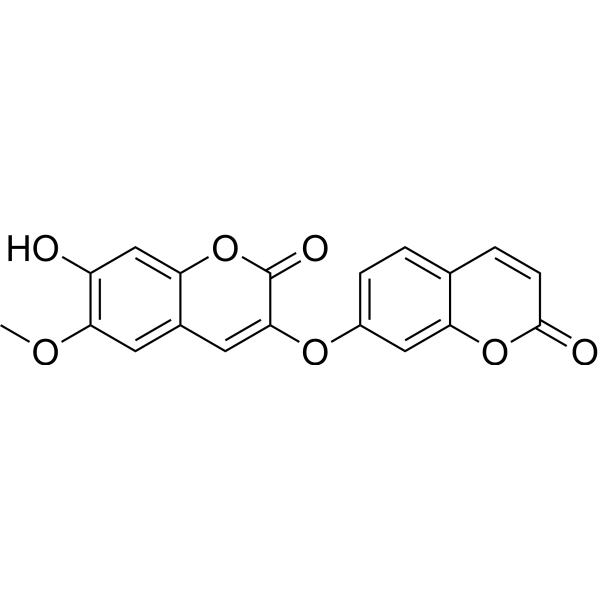
Daphnoretin (Dephnoretin; Thymelol) is a protein kinase C (PKC) activator that inhibits the expression of hepatitis B virus (HBV) surface antigen (HBsAg) and exhibits antiviral activity. Daphnoretin exerts its antitumor effects by inhibiting the activation of the PI3K/AKT signaling pathway and triggers the mitochondrial apoptosis pathway. Daphnoretin alleviates chondrocyte apoptosis and inflammatory responses by inhibiting endoplasmic reticulum stress and activation of the NLRP3 inflammasome. Daphnoretin regulates the differentiation and maturation of dendritic cells, inhibits their immunostimulatory function by downregulating the phosphorylation level of JNK, and thus exerts a protective effect in skin graft rejection.
商品は「研究用試薬」です。人や動物の医療用・臨床診断用・食品用の製品ではありません。
研究用途以外に使用した場合、当社は一切の責任を負いかねます。
- 純度 : 99.83%
- CAS 番号: 2034-69-7
- 分子式: C19H12O7
- 分子量:352.29
-
保管条件:
4°C, protect from light
* In solvent : -80°C, 6 months; -20°C, 1 month (protect from light)

To place orders, for customer services and technical support, please contact: MedChemExpress USA
Tel: 609-228-6898 E-mail: [email protected] [email protected]


-
 生物活性
生物活性
-
化学情報
-
溶剤 & 溶解度
- プロトコル
- 純度とドキュメンテーション
- 参考文献
-
 Help & FAQs


-
HY-13434
IonomycinCalcium Ionophore -
HY-N4322
Decursinol angelate"PKC Activator, GDH Inhibitor" -
HY-12307
(-)-Indolactam VPKC Activator -
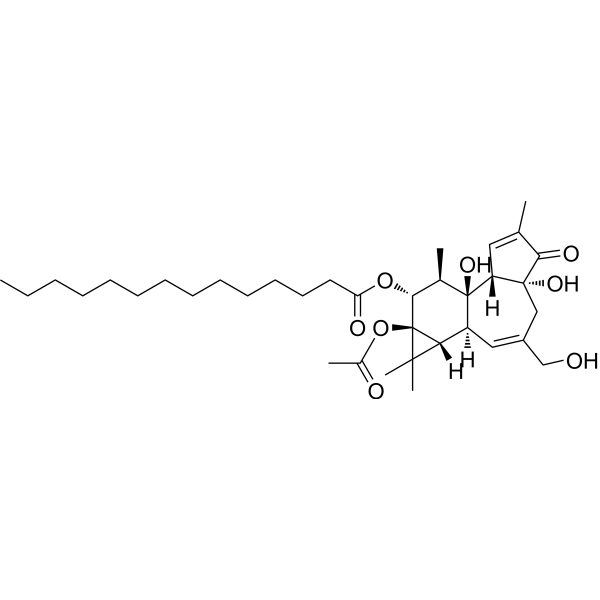
HY-18739
Phorbol 12-myristate 13-acetatePKC Activator -
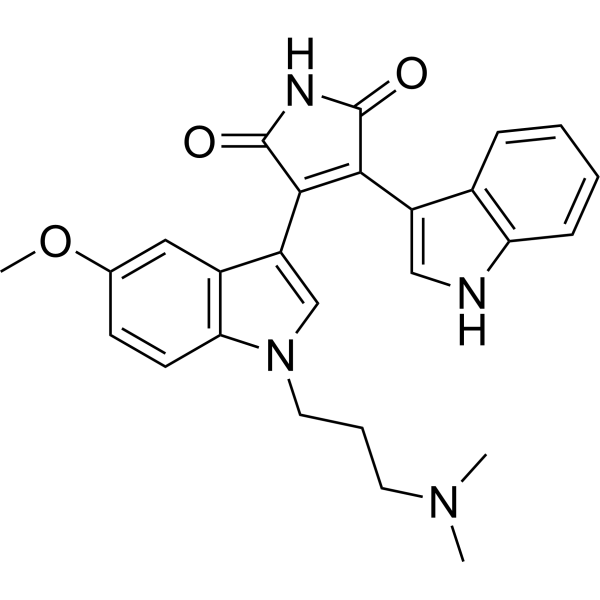
HY-13689
Go 6983PKC Inhibitor -

HY-N0699R
Daphnoretin (Standard)Standard of Daphnoretin -
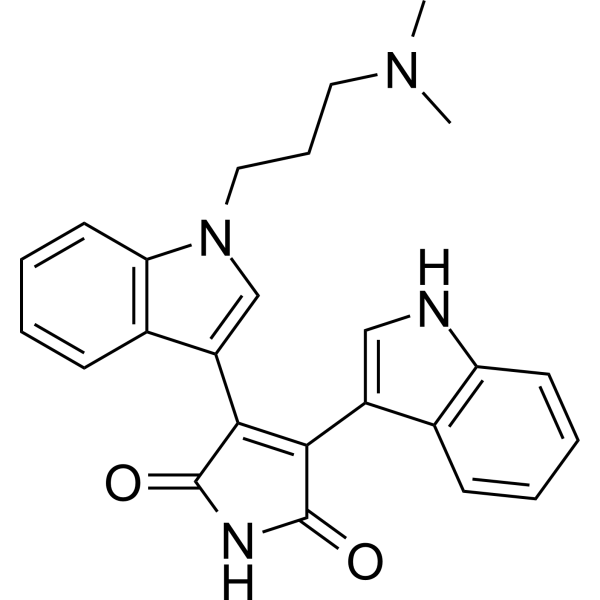
HY-13867
Bisindolylmaleimide IPKC Inhibitor -

HY-18739R
Phorbol 12-myristate 13-acetate (Standard)PKC Activator -
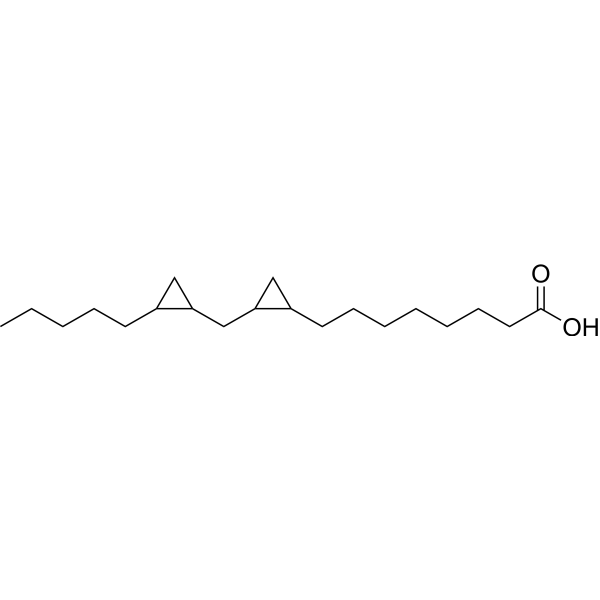
HY-108599
DCP-LAPKC Activator -
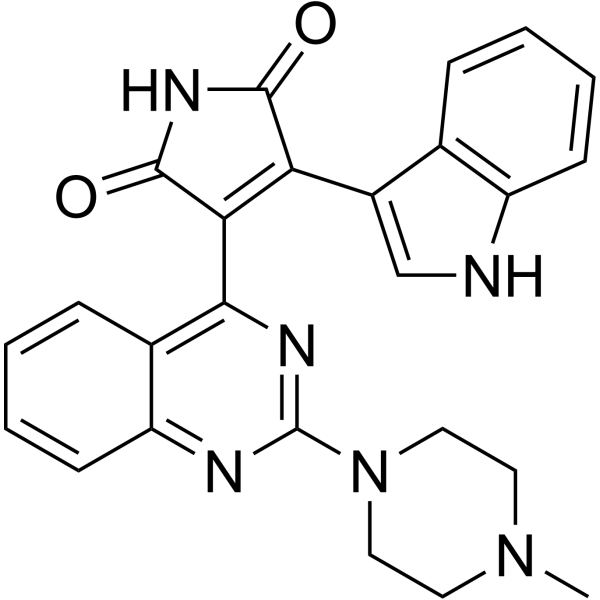
HY-10343
SotrastaurinPan-PKC Inhibitor -
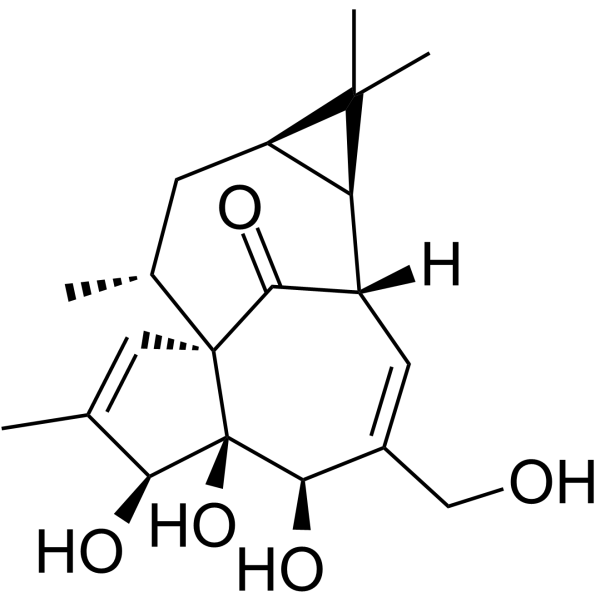
HY-N0865
IngenolPKC Activator -
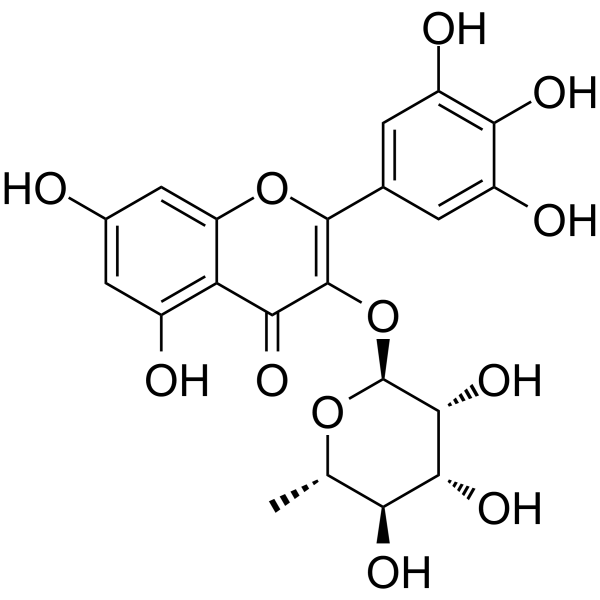
HY-N0152
MyricitrinPKC Inhibitor
MedChemExpress(MCE)の使用を引用している文献 Daphnoretin
More Customer Validation & Images

-
WB
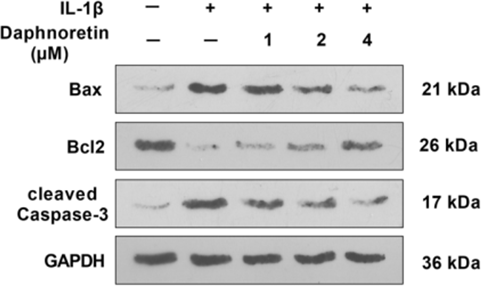
-
WB
Caspase アイソフォーム固有の製品をすべて表示
More

生物活性
製品説明
|
PI3K |
Akt |
NLRP3 inflammasome |
Bax |
Bcl-2 |
Caspase-3 |
Caspase-9 |
CDK2/cyclinE |
JNK |
Cellular Effect
|
Cell Line

|
Type | Value | Description | References |
|---|---|---|---|---|
| MCF7 | IC50 |
2 μM
Compound: Daphnoretin
|
Antiproliferative activity human MCF7 cells assessed as inhibition of cell proliferation incubated for 24 hrs by MTT assay
Antiproliferative activity human MCF7 cells assessed as inhibition of cell proliferation incubated for 24 hrs by MTT assay
|
[PMID: 36154031] |
| MDA-MB-231 | IC50 |
1 μM
Compound: Daphnoretin
|
Antiproliferative activity human MDA-MB-231 cells assessed as inhibition of cell proliferation incubated for 24 hrs by MTT assay
Antiproliferative activity human MDA-MB-231 cells assessed as inhibition of cell proliferation incubated for 24 hrs by MTT assay
|
[PMID: 36154031] |
| P388 | ED50 |
2.2 μg/mL
Compound: Daphnoretin, NSC-291852
|
Cytotoxicity against mouse P388 cells
Cytotoxicity against mouse P388 cells
|
[PMID: 6875580] |
| P388 | ED50 |
3.4 μg/mL
Compound: daphnoretin
|
Cytotoxicity against mouse P388 cells
Cytotoxicity against mouse P388 cells
|
[PMID: 3783168] |
体外実験
Daphnoretin (0.1-1.0 μM; 48 h) inhibits the expression of hepatitis B surface antigen gene at the mRNA level in human hepatocellular carcinoma Hep3B cells, with an IC50 of 0.1 μM after 48 h of treatment[1].
Daphnoretin (1 μM; 4 h) induces the translocation of protein kinase C (PKC) from the cytosol to the cell membrane, and treatment of human hepatocellular carcinoma Hep3B cells with 800 nM daphnoretin for 24 h downregulates the total intracellular PKC level[1].
Daphnoretin (0.1-8.0 μM; 24-48 h) inhibits the proliferation of human breast cancer MCF-7 and MDA-MB-231 cells in a concentration- and time-dependent manner, with IC50 values of 2.0 μM and 1.0 μM, respectively[2].
Daphnoretin (0.5-4 μM; 24 h) induces S-phase cell cycle arrest in human breast cancer MCF-7 and MDA-MB-231 cells by downregulating the protein levels of cyclin E and CDK2[2].
Daphnoretin (0.5-4 μM; 24 h) induces apoptosis in human breast cancer MCF-7 and MDA-MB-231 cells via a mitochondria-dependent pathway, and reduces BCL-2 levels while increasing the levels of BAX, activated caspase-9 and activated caspase-3[2].
Daphnoretin (0.5-4 μM; 24 h) inhibits the PI3K/AKT pathway in human breast cancer MCF-7 and MDA-MB-231 cells at 24 h post-treatment by reducing the protein levels of p-PI3K and p-AKT[2].
Daphnoretin (0.5-512 μM; 48 h) reduces the viability of ATDC5 chondrocytes, with an IC50 of 72.97 μM after 48 h of treatment[3].
Daphnoretin (1-4 μM; 48 h) increases the viability of IL-1β-induced ATDC5 chondrocytes and reduces their apoptosis rate in a dose-dependent manner[3].
Daphnoretin (1-4 μM) dose-dependently inhibits IL-1β-induced ERS in ATDC5 chondrocytes[3].
Daphnoretin (1-4 μM; 48 h) dose-dependently inhibits IL-1β-induced production of inflammatory mediators and activation of the NLRP3 inflammasome in ATDC5 chondrocytes[3].
Daphnoretin (1.1-30 μM; 6 days) reduces the viability of human CD14+ monocyte-derived dendritic cells in a dose-dependent manner, with an IC50 of approximately 30 μM; at a concentration of 10 μM, it inhibits dendrite formation without significant cytotoxicity[4].
Daphnoretin (1.1-30 μM; 6 days) dose-dependently downregulates the expression of differentiation and maturation markers, including CD1a, CD40, CD83, DC-SIGN and HLA-DR, on mature dendritic cells derived from human CD14+ monocytes, without inducing their dedifferentiation into macrophages[4].
Daphnoretin (1.1-30 μM; 6 days) dose-dependently impairs the allostimulatory function of mature dendritic cells derived from human CD14+ monocytes and reduces the proliferative capacity of allogeneic naive CD4+CD45RA+ T cells[4].
Daphnoretin (10 μM) specifically downregulates the LPS-induced upregulated expression of phosphorylated JNK in human CD14+ monocyte-derived dendritic cells[4].
MedChemExpress (MCE) has not independently confirmed the accuracy of these methods. They are for reference only.
-
Cell Line:human hepatoma Hep3B cells
-
Concentration:1 μM (PKC translocation); 800 nM (PKC down-regulation)
-
Incubation Time:4 h (PKC translocation); 24 h (PKC down-regulation)
-
Result:Increased membrane-bound PKC by ~20-fold with a concomitant decrease in cytosolic PKC after 4 h of 1 μM treatment. Diminished total extractable cellular PKC to a barely detectable level after 24 h of 800 nM treatment.
-
Cell Line:human breast cancer MCF-7, human breast cancer MDA-MB-231
-
Concentration:1, 2, and 4 μM (MCF-7); 0.5, 1 and 2 μM (MDA-MB-231)
-
Incubation Time:24 h (cell cycle assay; Western blot)
-
Result:Significantly increased the proportion of MCF-7 and MDA-MB-231 cells arrested in the S phase.
Significantly downregulated the protein levels of cyclin E and CDK2 in both cell lines compared to controls.
-
Cell Line:human breast cancer MCF-7, human breast cancer MDA-MB-231
-
Concentration:1, 2, and 4 μM (MCF-7); 0.5, 1 and 2 μM (MDA-MB-231)
-
Incubation Time:24 h (apoptosis assays; Western blot)
-
Result:Revealed typical apoptotic features (chromatin/nuclear condensation, apoptotic bodies) in both daphnoretin-treated cell lines via Hoechst 33258 staining.
Showed significantly increased apoptotic rates in treated MCF-7 and MDA-MB-231 cells compared to controls.
Significantly downregulated BCL-2 protein levels and upregulated BAX, cleaved caspase-9, and cleaved caspase-3 protein levels in both cell lines.
-
Cell Line:human breast cancer MCF-7, human breast cancer MDA-MB-231
-
Concentration:1, 2 and 4 μM (MCF-7, 24 h); 0.5-2 μM (MDA-MB-231, 24 h); 0.5, 1 and 2 μM (0.5, 1, 2 h, both cell lines)
-
Incubation Time:24 h (24 h treatment group); 0.5 h, 1 h, 2 h (short-term treatment group)
-
Result:Significantly downregulated the protein levels of p-PI3K and p-AKT in both MCF-7 and MDA-MB-231 cells after 24 h of treatment.
Showed no significant changes in p-PI3K or p-AKT levels after 0.5, 1, or 2 h of treatment in either cell line.
Caused no significant alterations in total PI3K and AKT levels.
体内実験
Daphnoretin (0.5-1.0 mg/kg; i.p.; once daily for 7 days) inhibits acute skin allograft rejection in mice without altering body weight or white blood cell counts, and exhibits no obvious dose-dependent effect[4].
MedChemExpress (MCE) has not independently confirmed the accuracy of these methods. They are for reference only.
-
Animal Model:C57BL/6 (8-10-week-old male, DMM-induced OA)[3]
-
Dosage:10 mg/kg
-
Administration:i.p.; daily (first week post-surgery), once every 3 days (subsequent 7 weeks); 8 weeks total
-
Result:Repaired the articular cartilage surface relative to the OA-only group.
Increased the thickness of cartilage and subchondral cortical bone plate relative to the OA-only group.
Reduced the number of TRAP-positive cells relative to the OA-only group.
Significantly improved the thickness of the subchondral cortical bone plate relative to the OA-only group.
Reduced the OARSI score relative to the OA-only group.Downregulated the expression of pro-apoptotic proteins Bax and cleaved-caspase3 in cartilage tissue relative to the OA-only group.
Upregulated the anti-apoptotic protein Bcl2 in cartilage tissue relative to the OA-only group.
Reduced the expression of endoplasmic reticulum stress markers GRP78, CHOP, ATF6, and Caspase-12 relative to the OA-only group.
Reduced the expression of NLRP3, ASC, and Caspase-1 components of the NLRP3 inflammasome relative to the OA-only group.
Abated the mRNA levels of Cox-2, inos, Tnf-α, and Il-6 in cartilage tissues relative to the OA-only group.
-
Animal Model:C57BL/6 (H-2b) (male, 6-8-week-old); BALB/c (H-2d) (male, 6-8-week-old, skin allograft recipient)[4]
-
Dosage:0.5 mg/kg; 1.0 mg/kg
-
Administration:i.p.; once daily for 7 days
-
Result:Increased the survival fraction of skin allografts relative to untreated controls.
Caused no significant changes in recipient body weight or white blood cell count during the observation period.
Showed no evident dose-dependent response between the two tested doses.
- Kinase activity and phosphorylation assays
- RNA extraction experimental
- Research Protocol for Infectious Diseases
- Western Blot
- Detection of Apoptosis
- TUNEL staining for apoptotic DNA fragmentation
- Annexin V plus membrane-impermeant dye apoptosis staining
- Apoptosis Solutions
- Protocol for Kinase activity and phosphorylation assays
- Monocyte-derived dendritic cell differentiation
- Pyroptosis Solutions


化学情報
-
CAS 番号 2034-69-7
-
性状 Solid
-
分子量 352.29
-
分子式 C19H12O7
-
Color Off-white to light yellow
-
SMILES
O=C1C(OC2=CC=C(C(O3)=C2)C=CC3=O)=CC4=CC(OC)=C(O)C=C4O1
-
別名
Dephnoretin; Thymelol; ダフノレチン
-
Structure Classification
-
Initial Source
-
輸送条件
Room temperature in continental US; may vary elsewhere.
-
保管条件
4°C, protect from light
* In solvent : -80°C, 6 months; -20°C, 1 month (protect from light)


Publications (4)
-
Journal Impact Factor
-
Most Recent
-
Phytomedicine
Daphnoretin targeted binding to HSP90AA1 to promote P53 UFMylation and stability thereby inducing apoptosis in colorectal cancer. [Abstract]2026 Jul:156:158180. PMID: 42034025 -
J Orthop Surg Res
Daphnoretin relieves IL-1β-mediated chondrocytes apoptosis via repressing endoplasmic reticulum stress and NLRP3 inflammasome. [Abstract]2022 Nov 16;17(1):487. PMID: 36384642
Daphnoretin purchased from MedChemExpress. Usage Cited in: J Orthop Surg Res. 2022 Nov 16;17(1):487. [Abstract]
Daphnoretin (1, 2, 4 µM) reduces the concentrations of TNF-α, IL-6, and PGE2 in mouse chondrocyte culture supernatant in a dose-dependent manner.
Daphnoretin purchased from MedChemExpress. Usage Cited in: J Orthop Surg Res. 2022 Nov 16;17(1):487. [Abstract]
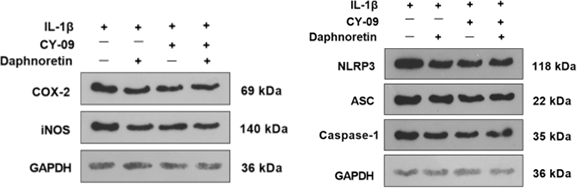
Daphnoretin or CY-09 markedly attenuates the expression of COX-2, iNOS, TNF-α, IL-6, PGE2 and the NLRP3-ASC-Caspase1 infammasome in ATDC5 cells.
-
-
Vet Microbiol
The Chinese medicine monomer Schisandrin C inhibits PRRSV infection by regulating the OGT-PI3K/AKT/mTOR signaling pathway. [Abstract]2026 May:316:110992. PMID: 41865607


溶剤 & 溶解度
体外:
DMSO : 25 mg/mL (70.96 mM; Need ultrasonic; Hygroscopic DMSO has a significant impact on the solubility of product, please use newly opened DMSO)
Please refer to the solubility information to select the appropriate solvent. Once prepared, please aliquot and store the solution to prevent product inactivation from repeated freeze-thaw cycles.
Storage method and period of stock solution: -80°C, 6 months; -20°C, 1 month (protect from light). When stored at -80°C, please use it within 6 months. When stored at -20°C, please use it within 1 month.
Please refer to the solubility information to select the appropriate solvent. Once prepared, please aliquot and store the solution to prevent product inactivation from repeated freeze-thaw cycles.
Storage method and period of stock solution: -80°C, 6 months; -20°C, 1 month (protect from light). When stored at -80°C, please use it within 6 months. When stored at -20°C, please use it within 1 month.
濃度 (開始) × 体積 (開始) = 濃度 (終了) × 体積 (終了)
体内:
Select the appropriate dissolution method based on your experimental animal and administration route.
- For the following dissolution methods, please ensure to first prepare a clear stock solution using an In Vitro approach and then sequentially add co-solvents:
- To ensure reliable experimental results, the clarified stock solution can be appropriately stored based on storage conditions. As for the working solution for In Vivo experiments, it is recommended to prepare freshly and use it on the same day.
- The percentages shown for the solvents indicate their volumetric ratio in the final prepared solution. If precipitation or phase separation occurs during preparation, heat and/or sonication can be used to aid dissolution.
Add each solvent one by one: 10% DMSO 40% PEG300 5% Tween-80 45% Saline
Solubility: 2.08 mg/mL (5.90 mM); Suspended solution; Need ultrasonic
This protocol yields a suspended solution of 2.08 mg/mL. Suspended solution can be used for oral and intraperitoneal injection.
Taking 1 mL working solution as an example, add 100 μL DMSO stock solution (20.8 mg/mL) to 400 μL PEG300, and mix evenly; then add 50 μL Tween-80 and mix evenly; then add 450 μL Saline to adjust the volume to 1 mL.
Preparation of Saline: Dissolve 0.9 g sodium chloride in ddH₂O and dilute to 100 mL to obtain a clear Saline solution.
Add each solvent one by one: 10% DMSO 90% (20% SBE-β-CD in Saline)
Solubility: 2.08 mg/mL (5.90 mM); Suspended solution; Need ultrasonic
This protocol yields a suspended solution of 2.08 mg/mL. Suspended solution can be used for oral and intraperitoneal injection.
Taking 1 mL working solution as an example, add 100 μL DMSO stock solution (20.8 mg/mL) to 900 μL 20% SBE-β-CD in Saline, and mix evenly.
Preparation of 20% SBE-β-CD in Saline (4°C, storage for one week): 2 g SBE-β-CD powder is dissolved in 10 mL Saline, completely dissolve until clear.
In Vivo Dissolution Calculator
Please enter the basic information of animal experiments:
-
-
-
-
Recommended: Prepare an additional quantity of animals to account for potential losses during experiments.
Please enter your animal formula composition:
-
%DMSO +
Recommended: Keep the proportion of DMSO in working solution below 2% if your animal is weak.
-
%+
-
+%Tween-80 + +
-
%Saline +
The co-solvents required include: DMSO, . All of co-solvents are available by MedChemExpress (MCE). , Tween 80. All of co-solvents are available by MedChemExpress (MCE).
Working solution concentration: 0.22 mg/mL
Method for preparing stock solution: mg drug dissolved in μL DMSO. Stock solution concentration: mg/mL. * In solvent : -80°C, 6 months; -20°C, 1 month (protect from light)
1. Take μL DMSO stock solution;
2. Add μL .
μL , mix evenly;
3. Then add μL Tween 80, mix evenly;
4. Then add μL
Please ensure that the stock solution in the first step is dissolved to a clear state, and add co-solvents in sequence. You can use ultrasonic heating (ultrasonic cleaner, recommended frequency 20-40 kHz), vortexing, etc. to assist dissolution.


純度とドキュメンテーション
-
データシート (289 KB)
-
SDS (393 KB)
- English - EN (393 KB)
- Français - FR (393 KB)
- Deutsch - DE (393 KB)
- Norwegian - NO (393 KB)
- Español - ES (393 KB)
- Swedish - SV (393 KB)
- Italian - IT (393 KB)
- Korean - KR (393 KB)
- Portuguese - PT (393 KB)
-
取扱説明書 (2659 KB)
参考文献
[1]. Chen HC, et al. Identification of a protein kinase C (PKC) activator, daphnoretin, that suppresses hepatitis B virus gene expression in human hepatoma cells. Biochem Pharmacol. 1996;52(7):1025-1032. [Content Brief]
[2]. Xie Q, et al. Daphnoretin Arrests the Cell Cycle and Induces Apoptosis in Human Breast Cancer Cells. J Nat Prod. 2022;85(10):2332-2339. [Content Brief]
[3]. Zhou J, et al. Daphnoretin relieves IL-1β-mediated chondrocytes apoptosis via repressing endoplasmic reticulum stress and NLRP3 inflammasome. J Orthop Surg Res. 2022;17(1):487. Published 2022 Nov 16. [Content Brief]
[4]. Chen CA, et al. Daphnoretin modulates differentiation and maturation of human dendritic cells through down-regulation of c-Jun N-terminal kinase. Int Immunopharmacol. 2017;51:25-30. [Content Brief]


Complete Stock Solution Preparation Table
Please refer to the solubility information to select the appropriate solvent. Once prepared, please aliquot and store the solution to prevent product inactivation from repeated freeze-thaw cycles.
Storage method and period of stock solution: -80°C, 6 months; -20°C, 1 month (protect from light). When stored at -80°C, please use it within 6 months. When stored at -20°C, please use it within 1 month.
| Optional Solvent | Concentration Solvent Mass | 1 mg | 5 mg | 10 mg | 25 mg |
|---|---|---|---|---|---|
| DMSO | 1 mM | 2.8386 mL | 14.1929 mL | 28.3857 mL | 70.9643 mL |
| 5 mM | 0.5677 mL | 2.8386 mL | 5.6771 mL | 14.1929 mL | |
| 10 mM | 0.2839 mL | 1.4193 mL | 2.8386 mL | 7.0964 mL | |
| 15 mM | 0.1892 mL | 0.9462 mL | 1.8924 mL | 4.7310 mL | |
| 20 mM | 0.1419 mL | 0.7096 mL | 1.4193 mL | 3.5482 mL | |
| 25 mM | 0.1135 mL | 0.5677 mL | 1.1354 mL | 2.8386 mL | |
| 30 mM | 0.0946 mL | 0.4731 mL | 0.9462 mL | 2.3655 mL | |
| 40 mM | 0.0710 mL | 0.3548 mL | 0.7096 mL | 1.7741 mL | |
| 50 mM | 0.0568 mL | 0.2839 mL | 0.5677 mL | 1.4193 mL | |
| 60 mM | 0.0473 mL | 0.2365 mL | 0.4731 mL | 1.1827 mL |


Daphnoretin 関連分類
HY-N0699 関連分類
 Powered by Bioz
Keywords
- Daphnoretin
- 2034-69-7
- Dephnoretin
- Thymelol
- PKC
- Influenza Virus
- NOD-like Receptor (NLR)
- Apoptosis
- HBV
- JNK
- PI3K
- Akt
- CDK
- Caspase
- Bcl-2 Family
- CD14? monocyte-derived dendritic cells
- PI3K/AKT pathway
- MCF-7 cells
- ATDC5 chondrocytes
- hepatitis B surface antigen
- NLRP3 inflammasome
- Protein Kinase C
- c-Jun N-terminal kinase
- Hep3B cells
- MDA-MB-231 cells
- Inhibitor
- inhibitor
- inhibit