


From 11:00 pm to 12:00 pm EST ( 8:00 pm to 9:00 pm PST ) on January 6th, the website will be under maintenance. We are sorry for the inconvenience. Please arrange your schedule properly.
Streptavidin is a ~60 kDa homotetramer. Streptavidin binds four molecules of biotin with the highest affinity. The binding affinity of biotin to streptavidin is one of the highest reported for a non-covalent interaction to date, with a KD ~0.01 pM . Streptavidin has an immunosuppressive role . This product is a Streptavidin protein recombinantly expressed in an E. coli expression system.
Sulfonylurea Receptor HRP-Streptavidin is a biotin-binding signal amplifier designed to bind tightly with biotinylated anti-TSH monoclonal antibodies, thereby constituting a key component of the signal amplification system in immunoassays. HRP-Streptavidin is formed by the covalent coupling of Horseradish Peroxidase (HRP) with Streptavidin; it combines the highly efficient catalytic activity of the enzyme with the high affinity of Streptavidin for biotin, making it a potent and sensitive tool for signal amplification. HRP-Streptavidin is suitable for use in Western Blotting, ELISA, and other detection techniques .
Vari Fluor 488-Streptavidin is a dye marker of Vari Fluor-streptavidin consisting of labeling streptavidin with a Vari Fluor series of fluorescent probes. Streptavidin is a high-affinity tetramer protein, each tetramer consisting of four identical streptavidin subunits. Streptavidin binds to biotin specifically via a reversible non-covalent effect. Streptavidin can achieve rapid and efficient detection of biotin markers, and is often used in immunofluorescence (IF), enzyme-linked immunosorbent assay (ELISA), immunohistochemical staining (IFH), in situ hybridization (ISH) and other experiments. Ex/Em=490 nm/515 nm. Product Concentration: 0.8 mg/mL
Vari Fluor 647-Streptavidin is a dye marker of Vari Fluor-streptavidin consisting of labeling streptavidin with a Vari Fluor series of fluorescent probes. Streptavidin is a high-affinity tetramer protein, each tetramer consisting of four identical streptavidin subunits. Streptavidin binds to biotin specifically via a reversible non-covalent effect. Streptavidin can achieve rapid and efficient detection of biotin markers, and is often used in immunofluorescence (IF), enzyme-linked immunosorbent assay (ELISA), immunohistochemical staining (IFH), in situ hybridization (ISH) and other experiments. Ex/Em=650 nm/665 nm.
Product Concentration: 0.8 mg/mL
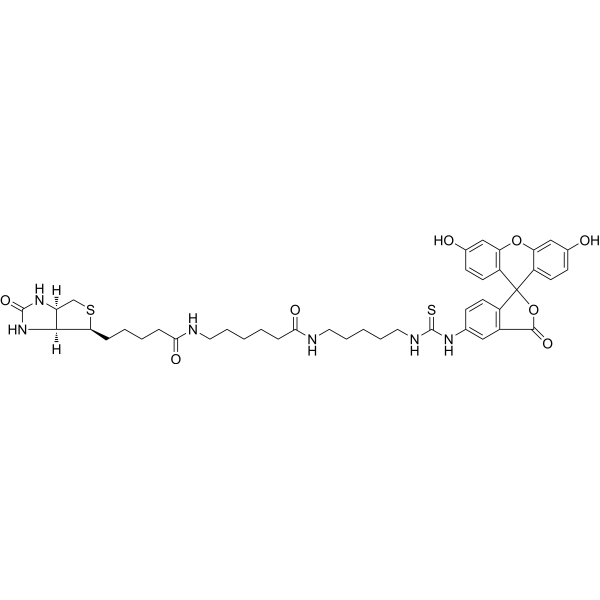
Fluorescein Biotin is a fluorescent modulator with avidin and streptavidin binding activity. Fluorescein Biotin binds to the biotin-binding sites of avidin and streptavidin, and this binding induces significant fluorescence quenching .
Oregon green 488 azide (Difluorocarboxyfluorescein azide, 6-isomer) is a bright green fluorescent azide-activated probe that reacts with terminal alkynes via copper-catalyzed azide-alkyne cycloaddition (CuAAC). Oregon green 488 azide can label goat anti-mouse IgG and exhibits excellent luminescence efficiency. Oregon green 488 azide, as a streptavidin conjugate, is used for flow cytometry staining of macrophages .
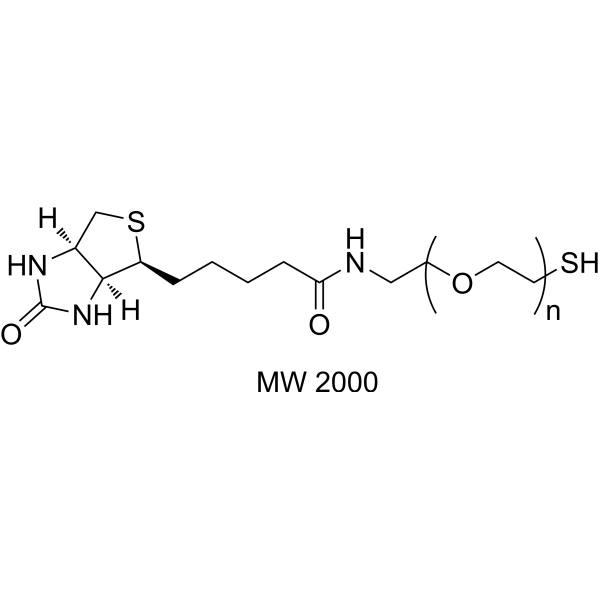
Biotin-PEG2000-Thiol is an active compound. Biotin-PEG2000-Thiol is pegylated by binding to streptavidin or antibiotin with high affinity and specificity. Biotin-PEG2000-Thiol can modify biomolecules, proteins, peptides and other small molecule materials. Biotin-PEG2000-Thiol is widely used in the research of agent release and nano new materials .
Lactic acid, Biotin labeled (DL-Lactic acid, Biotin labeled) is the biotin labeled Lactic acid (HY-B2227). Lactic acid-Biotin can be conjugated to streptavidin for purification .
Vari Fluor 555-Streptavidin is a dye marker of Vari Fluor-streptavidin consisting of labeling streptavidin with a Vari Fluor series of fluorescent probes. Streptavidin is a high-affinity tetramer protein, each tetramer consisting of four identical streptavidin subunits. Streptavidin binds to biotin specifically via a reversible non-covalent effect. Streptavidin can achieve rapid and efficient detection of biotin markers, and is often used in immunofluorescence (IF), enzyme-linked immunosorbent assay (ELISA), immunohistochemical staining (IFH), in situ hybridization (ISH) and other experiments. Ex/Em=555 nm/565 nm. Product Concentration: 0.8 mg/mL
mPEG550-amine (mPEG550-NH2) is a class of functionalized polymers composed of a methoxy-terminated polyethylene glycol backbone and a terminal primary amine group. mPEG550-amine serves as an important intermediate for constructing functionalized nanocarriers, modifying proteins or polypeptides, and developing novel drug delivery systems.
Vari Fluor 594-Streptavidin is a dye marker of Vari Fluor-streptavidin consisting of labeling streptavidin with a Vari Fluor series of fluorescent probes. Streptavidin is a high-affinity tetramer protein, each tetramer consisting of four identical streptavidin subunits. Streptavidin binds to biotin specifically via a reversible non-covalent effect. Streptavidin can achieve rapid and efficient detection of biotin markers, and is often used in immunofluorescence (IF), enzyme-linked immunosorbent assay (ELISA), immunohistochemical staining (IFH), in situ hybridization (ISH) and other experiments. Ex/Em=590 nm/617 nm. Product Concentration: 0.8 mg/mL
ATTO 488 streptavidin is a fluorescent reagent that specifically targets and binds to biotin (biotin), formed by the conjugation of ATTO 488 with streptavidin (HY-P3152). ATTO 488 streptavidin enables visualization of the activity of streptavidin immobilized on the surface of polymeric nanoparticles, or acts as a fluorescent probe to detect the selective binding and internalization process of anti-HB-EGF/NA with cells expressing HB-EGF (with no such effect on cells that do not express this receptor). ATTO 488 streptavidin effectively verifies the function of streptavidin conjugated to the surface of nanoparticles and is suitable for research related to atherosclerotic cardiovascular diseases .
AF488 streptavidin is a fluorescently labeled streptavidin. AF488 streptavidin is a streptavidin conjugated to Alexa Fluor 488, with 4 fluorophores per protein molecule, enabling stoichiometric fluorescent labeling of cell surface targets. AF488 streptavidin can form a complex with biotinylated E07 aptamer to stain cells expressing EGFR, and the staining is reversible after treatment with mA9 detoxifying oligonucleotides (Ex/Em = 470/520 nm) .
Vari Fluor 405-Streptavidin is a dye marker of Vari Fluor-streptavidin consisting of labeling streptavidin with a Vari Fluor series of fluorescent probes. Streptavidin is a high-affinity tetramer protein, each tetramer consisting of four identical streptavidin subunits. Streptavidin binds to biotin specifically via a reversible non-covalent effect. Streptavidin can achieve rapid and efficient detection of biotin markers, and is often used in immunofluorescence (IF), enzyme-linked immunosorbent assay (ELISA), immunohistochemical staining (IFH), in situ hybridization (ISH) and other experiments. Ex/Em=405 nm/431 nm. Product Concentration: 0.8 mg/mL
Vari Fluor 680-Streptavidin is a dye marker of Vari Fluor-streptavidin consisting of labeling streptavidin with a Vari Fluor series of fluorescent probes. Streptavidin is a high-affinity tetramer protein, each tetramer consisting of four identical streptavidin subunits. Streptavidin binds to biotin specifically via a reversible non-covalent effect. Streptavidin can achieve rapid and efficient detection of biotin markers, and is often used in immunofluorescence (IF), enzyme-linked immunosorbent assay (ELISA), immunohistochemical staining (IFH), in situ hybridization (ISH) and other experiments. Ex/Em=680 nm/701 nm. Product Concentration: 0.8 mg/mL
mPEG2000-Biotin is a biotin-conjugated PEG derivative used for biotinylation of biomolecules or other surfaces. Biotin can be detected by biotin/streptavidin binding assays and is widely used for molecular target detection .
N-Biotinyl p-aminophenyl arsenic acid is a bifunctional reagent that can bind to both streptavidin and dithiols. N-Biotinyl p-aminophenyl arsenic acid decreases the Rbungarotoxin-binding sites in reduced Torpedo nicotinic receptors (IC50 is 10-300 nM), and protects the receptor from irreversible alkylation by bromoacetylcholine .
ATTO 565 Streptavidin is a streptavidin derivative of ATTO 565, it can label protein or antibody, the maximum excitation/emission wavelength: 564/590 nm.
TMR Biocytin is a polar tracer used in the research of cell-cell and cell-liposome fusions, as well as membrane permeability and cellular uptake during pinocytosis. TMR Biocytin can be detected using streptavidin, and is an effective neuronal tracer in live tissue (Ex=544 nm, Em=571 nm) .
Biotin-PEG40000-Biotin can be used for crosslinking PEGylation by binding to two streptavidin and avidin. Biotin is conjugated to a linear PEG through a stable amide linker .
Biotin-PEG3-Iodoacetamide is a PEG derivative composed of Biotin, 3 PEG units, and Iodoacetamide. Biotin can form a stable non-covalent bond with streptavidin.
3-Indoleacetic acid, biotin labeled the biotin labeled 3-Indoleacetic acid (HY-18569). 3-Indoleacetic acid, biotin labeled can be conjugated to streptavidin for purification.
Biotin-PEG10000-DMG is a compound composed of biotin, PEG, and myristoyl-sn-glycerol, used for drug delivery. Biotin forms a stable non-covalent bond with streptavidin.
Biotin-PEG1000-SH (Biotin-PEG1000-Thiol) is a biotin PEG polymer containing a thiol (-SH). Biotin-labeled compounds can then be linked to avidin or streptavidin for further purification or detection .
TFAX 488,TFP is a green fluorescent dye and exhibits pH-insensitivity over a very broad range (pH in the 4-10). TFAX 488,TFP yields exceptionally bright, photostable conjugates with proteins or antibodies (such as goat anti-mouse IgG, streptavidin) .
TFAX 488,SE dilithium is a green fluorescent dye and exhibits pH-insensitivity over a very broad range (pH in the 4-10). TFAX 488,SE dilithium yields exceptionally bright, photostable conjugates with proteins or antibodies (such as goat anti-mouse IgG, streptavidin) .
ATTO 550 streptavidin is a streptavidin derivative of ATTO 550, it can label protein or antibody, the maximum excitation/emission wavelength: 554/576 nm.
ATTO 700 Streptavidin is a streptavidin derivative of ATTO 700, it can label protein or antibody, the maximum excitation/emission wavelength: 700/716 nm.
ATTO 725 Streptavidin is a streptavidin derivative of ATTO 725, it can label protein or antibody, the maximum excitation/emission wavelength: 728/751 nm.
ATTO 680 streptavidin is a streptavidin derivative of ATTO 680, it can label protein or antibody, the maximum excitation/emission wavelength: 681/698 nm.
ATTO 590 Streptavidin is a streptavidin derivative of ATTO 590, it can label protein or antibody, the maximum excitation/emission wavelength: 594/622 nm.
ATTO 620 Streptavidin is a streptavidin derivative of ATTO 620, it can label protein or antibody, the maximum excitation/emission wavelength: 620/642 nm.
ATTO 633 Streptavidin is a streptavidin derivative of ATTO 633, it can label protein or antibody, the maximum excitation/emission wavelength: 630/651 nm.
ATTO 665 streptavidin is a streptavidin derivative of ATTO 665, it can label protein or antibody, the maximum excitation/emission wavelength: 663/680 nm.
ATTO 514 streptavidin is a streptavidin derivative of ATTO 514, it can label protein or antibody, the maximum excitation/emission wavelength: 511/531 nm.
ATTO 532 streptavidin is a streptavidin derivative of ATTO 532, it can label protein or antibody, the maximum excitation/emission wavelength: 532/552 nm.
ATTO 594 Streptavidin is a streptavidin derivative of ATTO 594, it can label protein or antibody, the maximum excitation/emission wavelength: 603/626 nm.
ATTO 740 streptavidin is a streptavidin derivative of ATTO 740, it can label protein or antibody, the maximum excitation/emission wavelength: 743/763 nm.
ATTO 610 Streptavidin is a streptavidin derivative of ATTO 610, it can label protein or antibody, the maximum excitation/emission wavelength: 616/633 nm.
AF 594 streptavidin is a bioconjugating agent. It consists of AF 594 and streptomycin, a streptomycin derivative of the red fluorescent dye AF 594. AF 594 has high fluorescence quantum yield and high photostability (Ex=594 nm, Em=615 nm). AF 594 streptavidin can be selectively conjugated to streptavidin-modified molecules via a streptomycin-modifying group for fluorescent labeling and spectroscopic analysis .
Desthiobiotin-PEG3-NHS ester is a single-ring, sulfur-free analog of biotin that binds to streptavidin with nearly equal specificity but less affinity than biotin (Kd = 1011 vs. 1015 M, respectively). Consequently, desthiobiotinylated proteins can be eluted readily and specifically from streptavidin affinity resin using mild conditions based on competitive displacement with free biotin.
Biotin-PEG Acrylamide is a PEG derivative composed of Biotin, 4 PEG units and Acrylamide. Biotin can form a stable non-covalent bond with streptavidin.
ε-Biotinamidocaproyl-β-alanyl-β-alanyl-lisinopril is an angiotensin-converting enzyme (ACE) inhibitor. Structurally, ε-Biotinamidocaproyl-β-alanyl-β-alanyl-lisinopril is a biotinylated derivative of lisinopril (HY-18206), with a chemical structure linking the biotin molecule and the lisinopril molecule composed of 19 atoms. ε-Biotinamidocaproyl-β-alanyl-β-alanyl-lisinopril can bind to both ACE and streptavidin (HY-P3152) simultaneously, making it possible to separate and purify ACE using streptavidin-agarose beads .
mPEG5000-Biotin is a biotin-conjugated PEG derivative used for biotinylation of biomolecules or other surfaces. Biotin can be detected by biotin/streptavidin binding assays and is widely used for molecular target detection .
mPEG1000-Biotin is a biotin-conjugated PEG derivative used for biotinylation of biomolecules or other surfaces. Biotin can be detected by biotin/streptavidin binding assays and is widely used for molecular target detection .
Biotin-PEG5000-SH (Biotin-PEG5000-Thiol) is a biotin PEG polymer containing a thiol (-SH). Biotin-labeled compounds can then be linked to avidin or streptavidin for further purification or detection .
Biotin-PEG2000-SH (Biotin-PEG2000-Thiol) is a biotin PEG polymer containing a thiol (-SH). Biotin-labeled compounds can then be linked to avidin or streptavidin for further purification or detection .
Biotin-PEG20000-SH (Biotin-PEG20000-Thiol) is a biotin PEG polymer containing a thiol (-SH). Biotin-labeled compounds can then be linked to avidin or streptavidin for further purification or detection .
Phospholipid-PEG3400-Biotin is a phospholipid PEG derivative that has a biotin and a phospholipid bridged by a linear PEG linker. Phospholipid-PEG3400-Biotin can interact with avidinylated antibodies. Phospholipid-PEG3400-Biotin can be used to modify liposome and cells surface, and pancreatic islets for cell transplantation .
Phospholipid-PEG20000-Biotin is a phospholipid PEG derivative that has a biotin and a phospholipid bridged by a linear PEG linker. Phospholipid-PEG20000-Biotin can interact with avidinylated antibodies. Phospholipid-PEG20000-Biotin can be used to modify liposome and cells surface, and pancreatic islets for cell transplantation .
Phospholipid-PEG1000-Biotin is a phospholipid PEG derivative that has a biotin and a phospholipid bridged by a linear PEG linker. Phospholipid-PEG1000-Biotin can interact with avidinylated antibodies. Phospholipid-PEG1000-Biotin can be used to modify liposome and cells surface, and pancreatic islets for cell transplantation .
Biotin-PEG20-NHS ester is a PEG derivative composed of Biotin, 20 PEG units, and NHS ester. Biotin can form a stable non-covalent bond with streptavidin. NHS ester can bind to amino acids or other molecules containing amino groups .
Streptavidin, R-Phycoerythrin conjugate (SAPE) is a streptavidin-labeled phycoerythrin. Streptavidin, R-Phycoerythrin conjugate (SAPE) can be used in conjunction with biotinylated reagents in anti-Biotin/biotin-labeled systems, suitable for flow cytometry detection, microarray analysis, and microplate detection (Ex/Em = 450-500 nm/575 nm).
High concentration Streptavidin, R-Phycoerythrin conjugate (SAPE) is a streptavidin-labeled phycoerythrin. High concentration Streptavidin, R-Phycoerythrin conjugate (SAPE) can be used in conjunction with biotinylated reagents in anti-Biotin/biotin-labeled systems, suitable for flow cytometry detection, microarray analysis, and microplate detection (Ex/Em = 450-500 nm/575 nm).
WY165 is a bifunctional molecule comprising TR79, an activator of the mitochondrial protease complex caseinolytic protease P (ClpP), linked to desthiobiotin. WY165 mediates selective degradation of monomeric streptavidin (mSA) and its fusion proteins localized to the mitochondrial matrix with a DC50 of 197 nM. WY165 restores mitochondrial morphology by reducing the level of mSA fused to short transmembrane protein 1 (mSA-STMP1) in cells overexpressing mSA-STMP1. WY165 can be used for research in cancer, neurodegenerative diseases, cardiovascular diseases, and metabolic diseases .
Biotin-PEG5000-DMG is a compound composed of biotin, PEG, and myristoyl-sn-glycerol, used for drug delivery. Biotin forms a stable non-covalent bond with streptavidin.
Dde Biotin-PEG4 is a PEG derivative composed of Biotin, 5 PEG units, and Dde protecting group. Biotin can form a stable non-covalent bond with streptavidin.
Biotin-PEG3400-DMG is a compound composed of biotin, PEG, and myristoyl-sn-glycerol, used for drug delivery. Biotin forms a stable non-covalent bond with streptavidin.
Biotin-PEG2000-DMG is a compound composed of biotin, PEG, and myristoyl-sn-glycerol, used for drug delivery. Biotin forms a stable non-covalent bond with streptavidin.
Biotin-PEG1000-DMG is a compound composed of biotin, PEG, and myristoyl-sn-glycerol, used for drug delivery. Biotin forms a stable non-covalent bond with streptavidin.
Biotin-PEG7-OH is a PEG derivative composed of Biotin, 7 PEG units and a hydroxyl (-OH) group. Biotin can form a stable non-covalent bond with streptavidin.
Acrylate-PEG1000-Biotin is a PEG derivative that contains an acrylate functional group, a PEG chain, and a biotin group. The biotin group can be used for specific binding to streptavidin, etc .
Acrylate-PEG3400-Biotin is a PEG derivative that contains an acrylate functional group, a PEG chain, and a biotin group. The biotin group can be used for specific binding to streptavidin, etc .
Acrylate-PEG5000-Biotin is a PEG derivative that contains an acrylate functional group, a PEG chain, and a biotin group. The biotin group can be used for specific binding to streptavidin, etc .
Acrylate-PEG2000-Biotin is a PEG derivative that contains an acrylate functional group, a PEG chain, and a biotin group. The biotin group can be used for specific binding to streptavidin, etc .
Biotin-PEG10000-SH (Biotin-PEG10000-Thiol) is a biotin PEG polymer containing a thiol (-SH). Biotin-labeled compounds can then be linked to avidin or streptavidin for further purification or detection .
Biotin-PEG3400-SH (Biotin-PEG3400-Thiol) is a biotin PEG polymer containing a thiol (-SH). Biotin-labeled compounds can then be linked to avidin or streptavidin for further purification or detection .
Biotin-PEG40000-SH (Biotin-PEG40000-Thiol) is a biotin PEG polymer containing a thiol (-SH). Biotin-labeled compounds can then be linked to avidin or streptavidin for further purification or detection .
Phospholipid-PEG10000-Biotin is a phospholipid PEG derivative that has a biotin and a phospholipid bridged by a linear PEG linker. Phospholipid-PEG10000-Biotin can interact with avidinylated antibodies. Phospholipid-PEG10000-Biotin can be used to modify liposome and cells surface, and pancreatic islets for cell transplantation .
Biotin-PEG2000-CHO is a biotin-conjugated PEG derivative that can be used to biotinylate biomolecules or other surfaces. Biotin can be easily detected by biotin/streptavidin binding assay and is widely used in molecular targeted detection .
Biotin-PEG3400-CHO is a biotin-conjugated PEG derivative that can be used to biotinylate biomolecules or other surfaces. Biotin can be easily detected by biotin/streptavidin binding assay and is widely used in molecular targeted detection .
Biotin-PEG1000-CHO is a biotin-conjugated PEG derivative that can be used to biotinylate biomolecules or other surfaces. Biotin can be easily detected by biotin/streptavidin binding assay and is widely used in molecular targeted detection .
8-Arm-PEG600-Biotin is a multiarmed PEG derivative with biotin at each terminal of the eight arms. 8-Arm-PEG600-Biotin is for PEGylation by binding to streptavidin and avidin with high affinity and specificity .
8-Arm-PEG400-Biotin is a multiarmed PEG derivative with biotin at each terminal of the eight arms. 8-Arm-PEG400-Biotin is for PEGylation by binding to streptavidin and avidin with high affinity and specificity .
8-Arm-PEG1000-Biotin is a multiarmed PEG derivative with biotin at each terminal of the eight arms. 8-Arm-PEG1000-Biotin is for PEGylation by binding to streptavidin and avidin with high affinity and specificity .
Dextran-Biotin (MW 100 kDa) is a functional material formed by covalently linking biotin to dextran molecules. Dextran-Biotin combines the biocompatibility of dextran with the high affinity of biotin for streptavidin, and is widely used in research fields such as biolabeling, detection, drug delivery, and neural tracking.
Dextran-Biotin (MW 500 kDa) is a functional material formed by covalently linking biotin to dextran molecules. Dextran-Biotin combines the biocompatibility of dextran with the high affinity of biotin for streptavidin, and is widely used in research fields such as biolabeling, detection, drug delivery, and neural tracking.
Dextran-Biotin (MW 250 kDa) is a functional material formed by covalently linking biotin to dextran molecules. Dextran-Biotin combines the biocompatibility of dextran with the high affinity of biotin for streptavidin, and is widely used in research fields such as biolabeling, detection, drug delivery, and neural tracking.
Dextran-Biotin (MW 10 kDa) is a functional material formed by covalently linking biotin to dextran molecules. Dextran-Biotin combines the biocompatibility of dextran with the high affinity of biotin for streptavidin, and is widely used in research fields such as biolabeling, detection, drug delivery, and neural tracking.
8-Arm-PEG10000-Biotin is a multiarmed PEG derivative with biotin at each terminal of the eight arms. 8-Arm-PEG10000-Biotin is for PEGylation by binding to streptavidin and avidin with high affinity and specificity .
Dextran-Biotin (MW 70 kDa) is a functional material formed by covalently linking biotin to dextran molecules. Dextran-Biotin combines the biocompatibility of dextran with the high affinity of biotin for streptavidin, and is widely used in research fields such as biolabeling, detection, drug delivery, and neural tracking.
8-Arm-PEG5000-Biotin is a multiarmed PEG derivative with biotin at each terminal of the eight arms. 8-Arm-PEG5000-Biotin is for PEGylation by binding to streptavidin and avidin with high affinity and specificity .
Dextran-Biotin (MW 40 kDa) is a functional material formed by covalently linking biotin to dextran molecules. Dextran-Biotin combines the biocompatibility of dextran with the high affinity of biotin for streptavidin, and is widely used in research fields such as biolabeling, detection, drug delivery, and neural tracking.
8-Arm-PEG3400-Biotin is a multiarmed PEG derivative with biotin at each terminal of the eight arms. 8-Arm-PEG3400-Biotin is for PEGylation by binding to streptavidin and avidin with high affinity and specificity .
8-Arm-PEG2000-Biotin is a multiarmed PEG derivative with biotin at each terminal of the eight arms. 8-Arm-PEG2000-Biotin is for PEGylation by binding to streptavidin and avidin with high affinity and specificity .
Biotin-PEG-CHO (with a molecular weight of 5000) is a biotin-attached PEG derivative that can be used for biotinylation of biological molecules or other material surfaces. Biotin can be easily detected through the biotin/streptavidin binding test, and is widely used in molecular targeted detection.
Biotin-PEG32-NHS ester is a PEG derivative composed of Biotin, 32 PEG units, and NHS ester. Biotin can form a stable non-covalent bond with streptavidin. NHS ester can bind to amino acids or other molecules containing amino groups .
DSG-PEG2000-Biotin is a conjugate composed of DSG, PEG chains, and biotin. DSG-PEG2000-Biotin combines the membrane compatibility of phospholipids with the high affinity of biotin for avidin/streptavidin, enabling applications such as targeted drug delivery systems and nanoparticle modification.
DSG-PEG5000-Biotin is a conjugate composed of DSG, PEG chains, and biotin. DSG-PEG5000-Biotin combines the membrane compatibility of phospholipids with the high affinity of biotin for avidin/streptavidin, enabling applications such as targeted drug delivery systems and nanoparticle modification.
DSG-PEG1000-Biotin is a conjugate composed of DSG, PEG chains, and biotin. DSG-PEG1000-Biotin combines the membrane compatibility of phospholipids with the high affinity of biotin for avidin/streptavidin, enabling applications such as targeted drug delivery systems and nanoparticle modification.
DSG-PEG3400-Biotin is a conjugate composed of DSG, PEG chains, and biotin. DSG-PEG3400-Biotin combines the membrane compatibility of phospholipids with the high affinity of biotin for avidin/streptavidin, enabling applications such as targeted drug delivery systems and nanoparticle modification.
Glucose-PEG1000-Biotin is a conjugate composed of glucose, PEG chains, and biotin. Glucose-PEG1000-Biotin combines the targeted recognition capabilities of glucose with the high-affinity binding ability of biotin to avidin/streptavidin, enabling applications such as targeted drug delivery systems and nanoparticle modification.
Glucose-PEG3400-Biotin is a conjugate composed of glucose, PEG chains, and biotin. Glucose-PEG3400-Biotin combines the targeted recognition capabilities of glucose with the high-affinity binding ability of biotin to avidin/streptavidin, enabling applications such as targeted drug delivery systems and nanoparticle modification.
Glucose-PEG2000-Biotin is a conjugate composed of glucose, PEG chains, and biotin. Glucose-PEG2000-Biotin combines the targeted recognition capabilities of glucose with the high-affinity binding ability of biotin to avidin/streptavidin, enabling applications such as targeted drug delivery systems and nanoparticle modification.
Glucose-PEG10000-Biotin is a conjugate composed of glucose, PEG chains, and biotin. Glucose-PEG10000-Biotin combines the targeted recognition capabilities of glucose with the high-affinity binding ability of biotin to avidin/streptavidin, enabling applications such as targeted drug delivery systems and nanoparticle modification.
Glucose-PEG5000-Biotin is a conjugate composed of glucose, PEG chains, and biotin. Glucose-PEG5000-Biotin combines the targeted recognition capabilities of glucose with the high-affinity binding ability of biotin to avidin/streptavidin, enabling applications such as targeted drug delivery systems and nanoparticle modification.
Tris-NTA Biotin is a biotin-labeled version of tris-NTA. Tris-NTA Biotin, as a bridge connecting His-tagged proteins with streptavidin, can reversibly label proteins and cell surfaces. Tris-NTA Biotin can be used in experiments such as protein immobilization, kinetic determination, live cell labeling, and Western blot detection .
Amine-PEG1-Desthiobiotin is a PEG derivative consisting of desthiobiotin, 1 PEG unit, and an amino group (Amine). Desthiobiotin is a biotin analog that has a weak but reversible binding ability to streptavidin or avidin. The amino group is able to react with other chemical groups (such as carboxyl, aldehyde, etc.) to form stable chemical bonds.
Dde Biotin-PEG4-COOH is a PEG derivative composed of Biotin, 5 PEG units, and a carboxyl group (-COOH). Biotin can form a stable non-covalent bond with streptavidin. The carboxyl group can easily form a stable amide bond with the amino group, and can also form an ester bond with the hydroxyl group.
Biotinyl-8-amino-3,6-dioxaoctanoic acid is a biotinylating reagent linked with a PEG chain for improved water solubility. Biotin is an affinity ligand and it is used in biochemical applications such as pull-down assays or for ligating with streptavidin proteins. The carboxylic group can react with amine-containing molecules in the presence of activators such as HATU.
Biotin-PEG10000-Amine (Biotin-PEG10000-NH2) is a biotin PEG polymer containing a free amine group (-NH2). The amine group is reactive with an activated NHS ester via formation of an amide bond. Biotin-labeled compounds can then be linked to avidin or streptavidin for further purification or detection .
Biotin-PEG20000-COOH is a linear heterobifunctional PEG compound with biotin and carboxylic acid functional groups. Biotin can bind to avidin and streptavidin with high specificity and affinity. Biotin-PEG20000-COOH can be used to biotin-label antibodies, proteins and other macromolecules containing primary amines in the presence of a condensing agent .
Biotin-PEG20000-Amine (Biotin-PEG20000-NH2) is a biotin PEG polymer containing a free amine group (-NH2). The amine group is reactive with an activated NHS ester via formation of an amide bond. Biotin-labeled compounds can then be linked to avidin or streptavidin for further purification or detection .
Biotin-PEG10000-COOH is a linear heterobifunctional PEG compound with biotin and carboxylic acid functional groups. Biotin can bind to avidin and streptavidin with high specificity and affinity. Biotin-PEG10000-COOH can be used to biotin-label antibodies, proteins and other macromolecules containing primary amines in the presence of a condensing agent .
Biotin-PEG40000-COOH is a linear heterobifunctional PEG compound with biotin and carboxylic acid functional groups. Biotin can bind to avidin and streptavidin with high specificity and affinity. Biotin-PEG40000-COOH can be used to biotin-label antibodies, proteins and other macromolecules containing primary amines in the presence of a condensing agent .
Biotin-PEG40000-Amine (Biotin-PEG40000-NH2) is a biotin PEG polymer containing a free amine group (-NH2). The amine group is reactive with an activated NHS ester via formation of an amide bond. Biotin-labeled compounds can then be linked to avidin or streptavidin for further purification or detection .
Biotin-PEG1000-COOH is a linear heterobifunctional PEG compound with biotin and carboxylic acid functional groups. Biotin can bind to avidin and streptavidin with high specificity and affinity. Biotin-PEG1000-COOH can be used to biotin-label antibodies, proteins and other macromolecules containing primary amines in the presence of a condensing agent .
Biotin-PEG2000-COOH is a linear heterobifunctional PEG compound with biotin and carboxylic acid functional groups. Biotin can bind to avidin and streptavidin with high specificity and affinity. Biotin-PEG2000-COOH can be used to biotin-label antibodies, proteins and other macromolecules containing primary amines in the presence of a condensing agent .
Biotin-PEG3400-COOH is a linear heterobifunctional PEG compound with biotin and carboxylic acid functional groups. Biotin can bind to avidin and streptavidin with high specificity and affinity. Biotin-PEG3400-COOH can be used to biotin-label antibodies, proteins and other macromolecules containing primary amines in the presence of a condensing agent .
Biotin-PEG5000-Amine (Biotin-PEG5000-NH2) is a biotin PEG polymer containing a free amine group (-NH2). The amine group is reactive with an activated NHS ester via formation of an amide bond. Biotin-labeled compounds can then be linked to avidin or streptavidin for further purification or detection .
Biotin-PEG5000-COOH is a linear heterobifunctional PEG compound with biotin and carboxylic acid functional groups. Biotin can bind to avidin and streptavidin with high specificity and affinity. Biotin-PEG5000-COOH can be used to biotin-label antibodies, proteins and other macromolecules containing primary amines in the presence of a condensing agent .
Biotin-PEG3-Bromide is a short PEG linker featuring a biotin group and a bromide. The bromide is a halogen which is easily displaced by nucleophiles such as alcohols or amines. Alternatively, bromide can be applied in a number of cross-coupling reactions such as in a Suzuki reaction. Biotin is useful for affinity-based applications such as pull-down assays or for ligating with streptavidin proteins.
ICG PEG5000 biotin is a fluorescent dye composed of Indocyanine green (ICG) (HY-D0711), PEG and biotin. Indocyanine green provides it with fluorescent labeling function, PEG enhances its biocompatibility and stability, and biotin can bind to target molecules containing streptavidin to achieve targeted imaging or targeted delivery (Ex/Em=785/813 nm).
ICG PEG2000 biotin is a fluorescent dye composed of Indocyanine green (ICG) (HY-D0711), PEG and biotin. Indocyanine green provides it with fluorescent labeling function, PEG enhances its biocompatibility and stability, and biotin can bind to target molecules containing streptavidin to achieve targeted imaging or targeted delivery (Ex/Em=785/813 nm).
(Z)-Non-2-enyl 6-bromohexanoate is an analogue of Biotin and a protein cross-linking agent.(Z)-Non-2-enyl 6-bromohexanoate binds less tightly to biotin-binding proteins such as Avidin and is easily displaced by Biotin. It is used in the preparation of agarose matrices for affinity-based isolation of streptavidin-fluorophore conjugates.
PLLA1000-PEG1000-BIO is a polylactic acid derivative that can form micelles in water. In addition, PLLA1000-PEG1000-BIO can bind tightly to avidin or streptavidin for protein labeling. PLLA1000-PEG1000-BIO can be used in drug delivery research .
PLLA3000-PEG5000-BIO is a polylactic acid derivative that can form micelles in water. In addition, PLLA3000-PEG5000-BIO can bind tightly to avidin or streptavidin for protein labeling. PLLA3000-PEG5000-BIO can be used in drug delivery research .
PLLA4000-PEG5000-BIO is a polylactic acid derivative that can form micelles in water. In addition, PLLA4000-PEG5000-BIO can bind tightly to avidin or streptavidin for protein labeling. PLLA4000-PEG5000-BIO can be used in drug delivery research .
PLLA2000-PEG5000-BIO is a polylactic acid derivative that can form micelles in water. In addition, PLLA2000-PEG5000-BIO can bind tightly to avidin or streptavidin for protein labeling. PLLA2000-PEG5000-BIO can be used in drug delivery research .
PLLA2000-PEG1000-BIO is a polylactic acid derivative that can form micelles in water. In addition, PLLA2000-PEG1000-BIO can bind tightly to avidin or streptavidin for protein labeling. PLLA2000-PEG1000-BIO can be used in drug delivery research .
PLLA5000-PEG1000-BIO is a polylactic acid derivative that can form micelles in water. In addition, PLLA5000-PEG1000-BIO can bind tightly to avidin or streptavidin for protein labeling. PLLA5000-PEG1000-BIO can be used in drug delivery research .
PLLA3000-PEG2000-BIO is a polylactic acid derivative that can form micelles in water. In addition, PLLA3000-PEG2000-BIO can bind tightly to avidin or streptavidin for protein labeling. PLLA3000-PEG2000-BIO can be used in drug delivery research .
PLLA2000-PEG2000-BIO is a polylactic acid derivative that can form micelles in water. In addition, PLLA2000-PEG2000-BIO can bind tightly to avidin or streptavidin for protein labeling. PLLA2000-PEG2000-BIO can be used in drug delivery research .
PLLA3000-PEG1000-BIO is a polylactic acid derivative that can form micelles in water. In addition, PLLA3000-PEG1000-BIO can bind tightly to avidin or streptavidin for protein labeling. PLLA3000-PEG1000-BIO can be used in drug delivery research .
PLLA1000-PEG2000-BIO is a polylactic acid derivative that can form micelles in water. In addition, PLLA1000-PEG2000-BIO can bind tightly to avidin or streptavidin for protein labeling. PLLA1000-PEG2000-BIO can be used in drug delivery research .
PLLA10000-PEG5000-BIO is a polylactic acid derivative that can form micelles in water. In addition, PLLA10000-PEG5000-BIO can bind tightly to avidin or streptavidin for protein labeling. PLLA10000-PEG5000-BIO can be used in drug delivery research .
PLLA5000-PEG5000-BIO is a polylactic acid derivative that can form micelles in water. In addition, PLLA5000-PEG5000-BIO can bind tightly to avidin or streptavidin for protein labeling. PLLA5000-PEG5000-BIO can be used in drug delivery research .
PLLA4000-PEG2000-BIO is a polylactic acid derivative that can form micelles in water. In addition, PLLA4000-PEG2000-BIO can bind tightly to avidin or streptavidin for protein labeling. PLLA4000-PEG2000-BIO can be used in drug delivery research .
PLLA10000-PEG1000-BIO is a polylactic acid derivative that can form micelles in water. In addition, PLLA10000-PEG1000-BIO can bind tightly to avidin or streptavidin for protein labeling. PLLA10000-PEG1000-BIO can be used in drug delivery research .
PLLA10000-PEG2000-BIO is a polylactic acid derivative that can form micelles in water. In addition, PLLA10000-PEG2000-BIO can bind tightly to avidin or streptavidin for protein labeling. PLLA10000-PEG2000-BIO can be used in drug delivery research .
PLLA4000-PEG1000-BIO is a polylactic acid derivative that can form micelles in water. In addition, PLLA4000-PEG1000-BIO can bind tightly to avidin or streptavidin for protein labeling. PLLA4000-PEG1000-BIO can be used in drug delivery research .
PLLA5000-PEG2000-BIO is a polylactic acid derivative that can form micelles in water. In addition, PLLA5000-PEG2000-BIO can bind tightly to avidin or streptavidin for protein labeling. PLLA5000-PEG2000-BIO can be used in drug delivery research .
Cy5-PEG2000-biotin is a polyethylene glycol derivative containing Cy5 (HY-D0821) fluorescent dye and polyethylene glycol (PEG) and a Biotin. Biotin can bind with high affinity to streptavidin or avidin. Cy5-PEG2000-biotin plays an important role in the specific capture and detection of biomolecules.
Cy5-PEG5000-biotin is a polyethylene glycol derivative containing Cy5 (HY-D0821) fluorescent dye and polyethylene glycol (PEG) and a Biotin. Biotin can bind with high affinity to streptavidin or avidin. Cy5-PEG5000-biotin plays an important role in the specific capture and detection of biomolecules.
Cy3-PEG2000-biotin is a polyethylene glycol derivative containing Cy3 (HY-D0822) fluorescent dye and polyethylene glycol (PEG) and a Biotin. Biotin can bind with high affinity to streptavidin or avidin. Cy3-PEG2000-biotin plays an important role in the specific capture and detection of biomolecules .
Cy3-PEG5000-biotin is a polyethylene glycol derivative containing Cy3 (HY-D0822) fluorescent dye and polyethylene glycol (PEG) and a Biotin. Biotin can bind with high affinity to streptavidin or avidin. Cy3-PEG5000-biotin plays an important role in the specific capture and detection of biomolecules .
RB-PEG10000-Biotin (Rhodamine B-PEG10000-Biotin) is a fluorescent dye composed of Rhodamine B (HY-Y0016), PEG and a Biotin. Biotin can bind with high affinity to streptavidin or avidin. RB-PEG10000-Biotin plays an important role in the specific capture and detection of biomolecules (Ex/Em=546/610 nm) .
RB-PEG3400-Biotin (Rhodamine B-PEG3400-Biotin) is a fluorescent dye composed of Rhodamine B (HY-Y0016), PEG and a Biotin. Biotin can bind with high affinity to streptavidin or avidin. RB-PEG3400-Biotin plays an important role in the specific capture and detection of biomolecules (Ex/Em=546/610 nm) .
RB-PEG1000-Biotin (Rhodamine B-PEG1000-Biotin) is a fluorescent dye composed of Rhodamine B (HY-Y0016), PEG and a Biotin. Biotin can bind with high affinity to streptavidin or avidin. RB-PEG1000-Biotin plays an important role in the specific capture and detection of biomolecules (Ex/Em=546/610 nm) .
RB-PEG600-Biotin (Rhodamine B-PEG600-Biotin) is a fluorescent dye composed of Rhodamine B (HY-Y0016), PEG and a Biotin. Biotin can bind with high affinity to streptavidin or avidin. RB-PEG600-Biotin plays an important role in the specific capture and detection of biomolecules (Ex/Em=546/610 nm) .
RB-PEG2000-Biotin (Rhodamine B-PEG2000-Biotin) is a fluorescent dye composed of Rhodamine B (HY-Y0016), PEG and a Biotin. Biotin can bind with high affinity to streptavidin or avidin. RB-PEG2000-Biotin plays an important role in the specific capture and detection of biomolecules (Ex/Em=546/610 nm) .
RB-PEG5000-Biotin (Rhodamine B-PEG5000-Biotin) is a fluorescent dye composed of Rhodamine B (HY-Y0016), PEG and a Biotin. Biotin can bind with high affinity to streptavidin or avidin. RB-PEG5000-Biotin plays an important role in the specific capture and detection of biomolecules (Ex/Em=546/610 nm) .
RB-PEG400-Biotin (Rhodamine B-PEG400-Biotin) is a fluorescent dye composed of Rhodamine B (HY-Y0016), PEG and a Biotin. Biotin can bind with high affinity to streptavidin or avidin. RB-PEG400-Biotin plays an important role in the specific capture and detection of biomolecules (Ex/Em=546/610 nm) .
(3aS,4S,6aR)-Biotin-PEG4-Alkyne is an alkyne-activated biotinylation reagent. (3aS,4S,6aR)-Biotin-PEG4-Alkyne can be reacted with azides via a copper-catalyzed click reaction. Biotin-labeled biomolecules can be bound to avidin or streptavidin for further purification and detection .
Cy5.5-PEG5000-Biotin is a polyethylene glycol derivative containing Cy5.5 (HY-D0924) fluorescent dye and polyethylene glycol (PEG) and a Biotin. Biotin can bind with high affinity to streptavidin or avidin. Cy5.5-PEG5000-Biotin plays an important role in the specific capture and detection of biomolecules.
Cy5.5-PEG2000-Biotin is a polyethylene glycol derivative containing Cy5.5 (HY-D0924) fluorescent dye and polyethylene glycol (PEG) and a Biotin. Biotin can bind with high affinity to streptavidin or avidin. Cy5.5-PEG2000-Biotin plays an important role in the specific capture and detection of biomolecules.
Azide-PEG2-Desthiobiotin is a PEG derivative consisting of desthiobiotin, 2 PEG units, and an azide group. Biotin can form a stable non-covalent bond with streptavidin. It contains an azide group and can undergo copper-catalyzed azide-alkyne cycloaddition (CuAAc) with molecules containing alkyne groups. It can also undergo ring strain-driven alkyne-azide cycloaddition (SPAAC) with molecules containing DBCO or BCN groups .
Azide-PEG4-Desthiobiotin is a PEG derivative consisting of desthiobiotin, 4 PEG unit, and an azide group. Biotin can form a stable non-covalent bond with streptavidin. It contains an azide group and can undergo copper-catalyzed azide-alkyne cycloaddition (CuAAc) with molecules containing alkyne groups. It can also undergo ring strain-driven alkyne-azide cycloaddition (SPAAC) with molecules containing DBCO or BCN groups .
Azide-PEG1-Desthiobiotin is a PEG derivative consisting of desthiobiotin, 1 PEG unit, and an azide group. Biotin can form a stable non-covalent bond with streptavidin. It contains an azide group and can undergo copper-catalyzed azide-alkyne cycloaddition (CuAAc) with molecules containing alkyne groups. It can also undergo ring strain-driven alkyne-azide cycloaddition (SPAAC) with molecules containing DBCO or BCN groups .
DPPE-PEG550 is a PEG lipid functional end group used in the synthesis of liposomes (LPs) for the design of conjugated polymer nanoparticles. Through biotin modification and carboxyl terminus, lipid nanoparticles (LNPs) further coupling with other biomolecules can be achieved. Functionalized nanoparticles can be used for targeted labeling of specific cellular proteins. With streptavidin as a linker, biotinylated PEG lipid-conjugated polymer nanoparticles are able to bind to biotinylated antibodies on cell surface receptors, yielding the utility of fluorescence-based imaging and sensing.
18:0 mPEG550 PE (ammonium) is a PEG lipid functional end group used in the synthesis of liposomes (LPs) for the design of conjugated polymeric nanoparticles. Through biotin modification and carboxyl terminus, lipid nanoparticles (LNPs) further coupling with other biomolecules can be achieved. Functionalized nanoparticles can be used for targeted labeling of specific cellular proteins. With streptavidin as a linker, biotinylated PEG lipid-conjugated polymer nanoparticles are able to bind to biotinylated antibodies on cell surface receptors, yielding the utility of fluorescence-based imaging and sensing.
DPPE-PEG750 is a PEG lipid functional end group used in the synthesis of liposomes (LPs) for the design of conjugated polymer nanoparticles. Through biotin modification and carboxyl terminus, lipid nanoparticles (LNPs) further coupling with other biomolecules can be achieved. Functionalized nanoparticles can be used for targeted labeling of specific cellular proteins. With streptavidin as a linker, biotinylated PEG lipid-conjugated polymer nanoparticles are able to bind to biotinylated antibodies on cell surface receptors, yielding the utility of fluorescence-based imaging and sensing.
Biotin-PEG10-azide (Biotin-PEG10-N3) is a PEG derivative composed of biotin, 10 PEG units, and an azide group. Biotin can form a stable non-covalent bond with streptavidin. It contains an azide group and can undergo copper-catalyzed azide-alkyne cycloaddition (CuAAc) with molecules containing alkyne groups. It can also undergo ring strain-driven alkyne-azide cycloaddition (SPAAC) with molecules containing DBCO or BCN groups.
DPPE-PEG3000 is a PEG lipid functional end group used in the synthesis of liposomes (LPs) for the design of conjugated polymer nanoparticles. Through biotin modification and carboxyl terminus, lipid nanoparticles (LNPs) further coupling with other biomolecules can be achieved. Functionalized nanoparticles can be used for targeted labeling of specific cellular proteins. With streptavidin as a linker, biotinylated PEG lipid-conjugated polymer nanoparticles are able to bind to biotinylated antibodies on cell surface receptors, yielding the utility of fluorescence-based imaging and sensing.
18:0 mPEG350 PE (ammonium) is a PEG lipid functional end group used in the synthesis of liposomes (LPs) for the design of conjugated polymer nanoparticles. Through biotin modification and carboxyl terminus, lipid nanoparticles (LNPs) further coupling with other biomolecules can be achieved. Functionalized nanoparticles can be used for targeted labeling of specific cellular proteins. With streptavidin as a linker, biotinylated PEG lipid-conjugated polymer nanoparticles are able to bind to biotinylated antibodies on cell surface receptors, yielding the utility of fluorescence-based imaging and sensing.
18:0 mPEG1000 PE (ammonium) is a PEG lipid functional end group used in the synthesis of liposomes (LPs) for the design of conjugated polymeric nanoparticles. Through biotin modification and carboxyl terminus, lipid nanoparticles (LNPs) further coupling with other biomolecules can be achieved. Functionalized nanoparticles can be used for targeted labeling of specific cellular proteins. With streptavidin as a linker, biotinylated PEG lipid-conjugated polymer nanoparticles are able to bind to biotinylated antibodies on cell surface receptors, yielding the utility of fluorescence-based imaging and sensing.
DPPE-PEG1000 is a PEG lipid functional end group used in the synthesis of liposomes (LPs) for the design of conjugated polymer nanoparticles. Through biotin modification and carboxyl terminus, lipid nanoparticles (LNPs) further coupling with other biomolecules can be achieved. Functionalized nanoparticles can be used for targeted labeling of specific cellular proteins. With streptavidin as a linker, biotinylated PEG lipid-conjugated polymer nanoparticles are able to bind to biotinylated antibodies on cell surface receptors, yielding the utility of fluorescence-based imaging and sensing.
18:0 mPEG3000 PE (ammonium) is a PEG lipid functional end group used in the synthesis of liposomes (LPs) for the design of conjugated polymeric nanoparticles. Through biotin modification and carboxyl terminus, lipid nanoparticles (LNPs) further coupling with other biomolecules can be achieved. Functionalized nanoparticles can be used for targeted labeling of specific cellular proteins. With streptavidin as a linker, biotinylated PEG lipid-conjugated polymer nanoparticles are able to bind to biotinylated antibodies on cell surface receptors, yielding the utility of fluorescence-based imaging and sensing.
18:0 mPEG750 PE (ammonium) is a PEG lipid functional end group used in the synthesis of liposomes (LPs) for the design of conjugated polymeric nanoparticles. Through biotin modification and carboxyl terminus, lipid nanoparticles (LNPs) further coupling with other biomolecules can be achieved. Functionalized nanoparticles can be used for targeted labeling of specific cellular proteins. With streptavidin as a linker, biotinylated PEG lipid-conjugated polymer nanoparticles are able to bind to biotinylated antibodies on cell surface receptors, yielding the utility of fluorescence-based imaging and sensing.
Biotin Azide Plus is an oxazolidine reagent that integrates azide-biotin click chemistry and a photocleavable linker arm. Biotin Azide Plus not only reacts with biotin thioether to form stable sulfinimide products, but also enables bioconjugation of proteins and DNA through biotin redox-activated chemical labeling technology. Taking advantage of the streptavidin capture and photo-release properties, Biotin Azide Plus effectively facilitates the isolation of lipid-derived electrophile-protein adducts, thus finding wide application in scientific research related to fields such as SKBR3 cancer .
PE-VF594 is a high-brightness fluorescent dye used in flow cytometry, primarily for labeling antibodies or streptavidin to help identify specific cell subpopulations. PE-VF594 is a tandem dye composed of two covalently linked fluorescent groups: one is phycoerythrin (PE), responsible for absorbing laser energy; the other is the receptor molecule VF594. Energy is transferred from PE to VF594 via fluorescence resonance energy transfer (FRET) mechanism (Ex/Em = 450-500 nm/614 nm) .
Biotinoyl tripeptide-1 (Biotinyl-GHK) is a biotinylating reagent linked to a GHK (glycyl-L-histidyl-L-lysine) tripeptide. Biotin tripeptide-1 is a bioactive peptide with hair care (improves the appearance and feel of hair) and hair growth effects. Biotinoyl tripeptide-1 has a certain affinity for streptavidin. Biotinoyl tripeptide-1 inhibits the production of ROS and has antioxidant effects. Biotinoyl tripeptide-1 reduces the production of carbonylated amyloid-β (Aβ) and inhibits Aβ aggregation. Biotinoyl tripeptide-1 can be used in the study of neurodegenerative diseases .
DMPE-PEG750 ammonium (14:0 PEG750 PE ammonium) is a PEG lipid functional end group used in the synthesis of liposomes (LPs) for the design of conjugated polymeric nanoparticles. Through biotin modification and carboxyl terminus, lipid nanoparticles (LNPs) further coupling with other biomolecules can be achieved. Functionalized nanoparticles can be used for targeted labeling of specific cellular proteins. With streptavidin as a linker, biotinylated PEG lipid-conjugated polymer nanoparticles are able to bind to biotinylated antibodies on cell surface receptors, yielding the utility of fluorescence-based imaging and sensing.
18:1 PEG550 PE ammonium (DOPE-PEG550 ammonium) is a PEG lipid functional end group used in the synthesis of liposomes (LPs) for the design of conjugated polymer nanoparticles. Through biotin modification and carboxyl terminus, lipid nanoparticles (LNPs) further coupling with other biomolecules can be achieved. Functionalized nanoparticles can be used for targeted labeling of specific cellular proteins. With streptavidin as a linker, biotinylated PEG lipid-conjugated polymer nanoparticles are able to bind to biotinylated antibodies on cell surface receptors, yielding the utility of fluorescence-based imaging and sensing.
DMPE-PEG350 ammonium (14:0 PEG350 PE ammonium) is a PEG lipid functional end group used in the synthesis of liposomes (LPs) for the design of conjugated polymer nanoparticles. Through biotin modification and carboxyl terminus, lipid nanoparticles (LNPs) further coupling with other biomolecules can be achieved. Functionalized nanoparticles can be used for targeted labeling of specific cellular proteins. With streptavidin as a linker, biotinylated PEG lipid-conjugated polymer nanoparticles are able to bind to biotinylated antibodies on cell surface receptors, yielding the utility of fluorescence-based imaging and sensing.
DMPE-PEG1000 ammonium (14:0 PEG1000 PE ammonium) is a PEG lipid functional end group used in the synthesis of liposomes (LPs) for the design of conjugated polymer nanoparticles. Through biotin modification and carboxyl terminus, lipid nanoparticles (LNPs) further coupling with other biomolecules can be achieved. Functionalized nanoparticles can be used for targeted labeling of specific cellular proteins. With streptavidin as a linker, biotinylated PEG lipid-conjugated polymer nanoparticles are able to bind to biotinylated antibodies on cell surface receptors, yielding the utility of fluorescence-based imaging and sensing.
18:1 PEG5000 PE ammonium (DOPE-PEG5000 ammonium) is a PEG lipid functional end group used in the synthesis of liposomes (LPs) for the design of conjugated polymer nanoparticles. Through biotin modification and carboxyl terminus, lipid nanoparticles (LNPs) further coupling with other biomolecules can be achieved. Functionalized nanoparticles can be used for targeted labeling of specific cellular proteins. With streptavidin as a linker, biotinylated PEG lipid-conjugated polymer nanoparticles are able to bind to biotinylated antibodies on cell surface receptors, yielding the utility of fluorescence-based imaging and sensing.
18:1 PEG3000 PE ammonium (DOPE-PEG3000 ammonium) is a PEG lipid functional end group used in the synthesis of liposomes (LPs) for the design of conjugated polymer nanoparticles. Through biotin modification and carboxyl terminus, lipid nanoparticles (LNPs) further coupling with other biomolecules can be achieved. Functionalized nanoparticles can be used for targeted labeling of specific cellular proteins. With streptavidin as a linker, biotinylated PEG lipid-conjugated polymer nanoparticles are able to bind to biotinylated antibodies on cell surface receptors, yielding the utility of fluorescence-based imaging and sensing.
18:1 PEG1000 PE ammonium (DOPE-PEG1000 ammonium) is a PEG lipid functional end group used in the synthesis of liposomes (LPs) for the design of conjugated polymer nanoparticles. Through biotin modification and carboxyl terminus, lipid nanoparticles (LNPs) further coupling with other biomolecules can be achieved. Functionalized nanoparticles can be used for targeted labeling of specific cellular proteins. With streptavidin as a linker, biotinylated PEG lipid-conjugated polymer nanoparticles are able to bind to biotinylated antibodies on cell surface receptors, yielding the utility of fluorescence-based imaging and sensing.
DMPE-PEG550 ammonium (14:0 PEG550 PE ammonium) is a PEG lipid functional end group used in the synthesis of liposomes (LPs) for the design of conjugated polymeric nanoparticles. Through biotin modification and carboxyl terminus, lipid nanoparticles (LNPs) further coupling with other biomolecules can be achieved. Functionalized nanoparticles can be used for targeted labeling of specific cellular proteins. With streptavidin as a linker, biotinylated PEG lipid-conjugated polymer nanoparticles are able to bind to biotinylated antibodies on cell surface receptors, yielding the utility of fluorescence-based imaging and sensing.
18:1 PEG350 PE ammonium (DOPE-PEG350 ammonium) is a PEG lipid functional end group used in the synthesis of liposomes (LPs) for the design of conjugated polymer nanoparticles. Through biotin modification and carboxyl terminus, lipid nanoparticles (LNPs) further coupling with other biomolecules can be achieved. Functionalized nanoparticles can be used for targeted labeling of specific cellular proteins. With streptavidin as a linker, biotinylated PEG lipid-conjugated polymer nanoparticles are able to bind to biotinylated antibodies on cell surface receptors, yielding the utility of fluorescence-based imaging and sensing.
DMPE-PEG5000 ammonium (14:0 PEG5000 PE ammonium) is a PEG lipid functional end group used in the synthesis of liposomes (LPs) for the design of conjugated polymer nanoparticles. Through biotin modification and carboxyl terminus, lipid nanoparticles (LNPs) further coupling with other biomolecules can be achieved. Functionalized nanoparticles can be used for targeted labeling of specific cellular proteins. With streptavidin as a linker, biotinylated PEG lipid-conjugated polymer nanoparticles are able to bind to biotinylated antibodies on cell surface receptors, yielding the utility of fluorescence-based imaging and sensing.
DMPE-PEG3000 ammonium (14:0 PEG3000 PE ammonium) is a PEG lipid functional end group used in the synthesis of liposomes (LPs) for the design of conjugated polymer nanoparticles. Through biotin modification and carboxyl terminus, lipid nanoparticles (LNPs) further coupling with other biomolecules can be achieved. Functionalized nanoparticles can be used for targeted labeling of specific cellular proteins. With streptavidin as a linker, biotinylated PEG lipid-conjugated polymer nanoparticles are able to bind to biotinylated antibodies on cell surface receptors, yielding the utility of fluorescence-based imaging and sensing.
4-(1,2,2-Triphenylvinyl)aniline (1-(4-Aminophenyl)-1,2,2-triphenylethene) is a tetraphenylethene-based aggregation-induced luminescent molecule. 4-(1,2,2-Triphenylvinyl)aniline exhibits weak or no fluorescence in dilute solution/dispersed state, and strong fluorescence with increased quantum yield when aggregated into nanoparticles .
Biotin-DADOO (Biotinyl-3,6-dioxaoctanediamine; EZ-Link Amine-PEO2-Biotin) is a biotin-containing amine compound and a biotinylation reagent. As an amino component, Biotin-DADOO participates in the nucleophilic ring-opening reaction of epoxidized ω-double bonds during the synthesis of biotinylated inhibitor derivatives. Biotin-DADOO can be conjugated with carboxymethyl cellulose derivatives. Biotin-DADOO is involved in the synthesis of biotin-estradiol conjugates for enzyme immunoassays. Biotin-DADOO can be used in the research of influenza A .
Maackia amurensis Lectin (MAA/MAL II)-Biotinylated is a plant lectin modified by biotin. Maackia amurensis Lectin (MAA/MAL II)-Biotinylated has the activity to recognize specific sugar structures, specifically the alpha-2, 3-linked sialic acid (HY-I0400). Maackia amurensis Lectin (MAA/MAL II)-Biotinylated has a very high affinity with avidin or streptavidin and this interaction can be used to fix it to solid surfaces or bind it to other molecules. Maackia amurensis Lectin (MAA/MAL II)-Biotinylated can be used to isolate and purify proteins or other molecules with specific sugar chain structures in affinity chromatography as well as for disease marker discovery and cancer research .
EPEA tag peptide (C-Tag peptide) is an epitope tag peptide. EPEA tag peptide enables elution of the SpaP EPEA complex. EPEA tag peptide is applicable to research related to bacterial type III secretion systems .
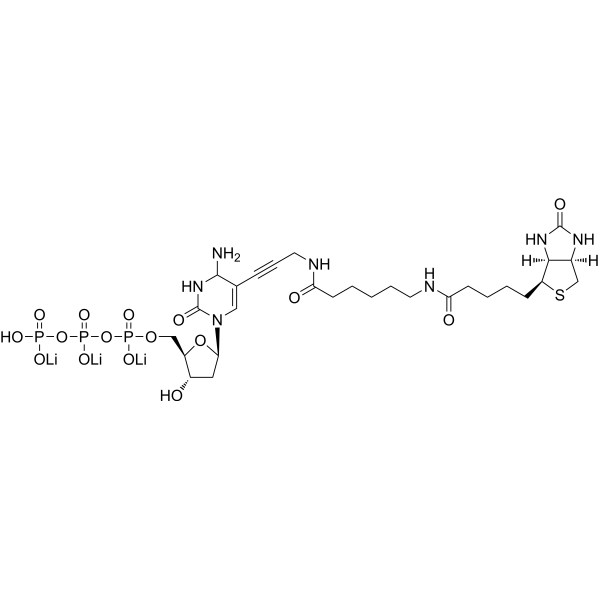
Biotin-11-dCTP is a biotinylated deoxynucleoside triphosphate and an important DNA labeling reagent. In random primer DNA labeling reactions, Biotin-11-dCTP incorporates into newly synthesized DNA strands to generate labeled DNA probes suitable for hybridization applications. In addition, Biotin-11-dCTP can serve as a substrate for terminal deoxynucleotidyl transferase to end-label oligonucleotides for telomere sequence detection, or to label the cut ends of linearized DNA molecules, thereby supporting streptavidin-based electron microscopy analysis. For example, Biotin-11-dCTP can label the cut ends of linearized DNA molecules under the action of dGTP and avian myeloblastosis virus reverse transcriptase .
Biotin-Lipopolysaccharide, from E.coli O111:B4 (Biotin-LPS, from Escherichia coli (O111:B4)) is a biotin-conjugated Lipopolysaccharide (LPS) (HY-D1056A1) that can be coupled with streptavidin protein. Biotin-Lipopolysaccharide, from E.coli O111:B4 can be used to identify Lipopolysaccharide ligands. Lipopolysaccharides, from E. coli O111:B4 (LPS, from Escherichia coli (O111:B4)) are endotoxins and TLR4 activators extracted from Escherichia coli (E. coli O111:B4) and are classified as S (smooth) type LPS. Lipopolysaccharides, from E. coli O111:B4 possess the typical three-part structure: O-antigen, R3-type core oligosaccharide, and lipid A. Lipopolysaccharides, from E. coli O111:B4 activate TLR-4 in immune cells and can cause significant gastric diseases. Lipopolysaccharides, from E. coli O111:B4 can also induce M1-type polarization in mouse macrophages .
It is recommended to prepare a solution with concentration ≥2 mg/mL. Vortex thoroughly for more than 10 minutes. Due to the adsorption characteristics of LPS, silanized container or low adsorption centrifuge tubes should be used for aliquoting and storage, and mix thoroughly before use.
Sulfonylurea Receptor HRP-Streptavidin is a biotin-binding signal amplifier designed to bind tightly with biotinylated anti-TSH monoclonal antibodies, thereby constituting a key component of the signal amplification system in immunoassays. HRP-Streptavidin is formed by the covalent coupling of Horseradish Peroxidase (HRP) with Streptavidin; it combines the highly efficient catalytic activity of the enzyme with the high affinity of Streptavidin for biotin, making it a potent and sensitive tool for signal amplification. HRP-Streptavidin is suitable for use in Western Blotting, ELISA, and other detection techniques .
Vari Fluor 488-Streptavidin is a dye marker of Vari Fluor-streptavidin consisting of labeling streptavidin with a Vari Fluor series of fluorescent probes. Streptavidin is a high-affinity tetramer protein, each tetramer consisting of four identical streptavidin subunits. Streptavidin binds to biotin specifically via a reversible non-covalent effect. Streptavidin can achieve rapid and efficient detection of biotin markers, and is often used in immunofluorescence (IF), enzyme-linked immunosorbent assay (ELISA), immunohistochemical staining (IFH), in situ hybridization (ISH) and other experiments. Ex/Em=490 nm/515 nm. Product Concentration: 0.8 mg/mL
Vari Fluor 647-Streptavidin is a dye marker of Vari Fluor-streptavidin consisting of labeling streptavidin with a Vari Fluor series of fluorescent probes. Streptavidin is a high-affinity tetramer protein, each tetramer consisting of four identical streptavidin subunits. Streptavidin binds to biotin specifically via a reversible non-covalent effect. Streptavidin can achieve rapid and efficient detection of biotin markers, and is often used in immunofluorescence (IF), enzyme-linked immunosorbent assay (ELISA), immunohistochemical staining (IFH), in situ hybridization (ISH) and other experiments. Ex/Em=650 nm/665 nm.
Product Concentration: 0.8 mg/mL
Fluorescein Biotin is a fluorescent modulator with avidin and streptavidin binding activity. Fluorescein Biotin binds to the biotin-binding sites of avidin and streptavidin, and this binding induces significant fluorescence quenching .
Oregon green 488 azide (Difluorocarboxyfluorescein azide, 6-isomer) is a bright green fluorescent azide-activated probe that reacts with terminal alkynes via copper-catalyzed azide-alkyne cycloaddition (CuAAC). Oregon green 488 azide can label goat anti-mouse IgG and exhibits excellent luminescence efficiency. Oregon green 488 azide, as a streptavidin conjugate, is used for flow cytometry staining of macrophages .
Tris-NTA Biotin is a biotin-labeled version of tris-NTA. Tris-NTA Biotin, as a bridge connecting His-tagged proteins with streptavidin, can reversibly label proteins and cell surfaces. Tris-NTA Biotin can be used in experiments such as protein immobilization, kinetic determination, live cell labeling, and Western blot detection .
Biotin-11-dCTP is a biotinylated deoxynucleoside triphosphate and an important DNA labeling reagent. In random primer DNA labeling reactions, Biotin-11-dCTP incorporates into newly synthesized DNA strands to generate labeled DNA probes suitable for hybridization applications. In addition, Biotin-11-dCTP can serve as a substrate for terminal deoxynucleotidyl transferase to end-label oligonucleotides for telomere sequence detection, or to label the cut ends of linearized DNA molecules, thereby supporting streptavidin-based electron microscopy analysis. For example, Biotin-11-dCTP can label the cut ends of linearized DNA molecules under the action of dGTP and avian myeloblastosis virus reverse transcriptase .
Lactic acid, Biotin labeled (DL-Lactic acid, Biotin labeled) is the biotin labeled Lactic acid (HY-B2227). Lactic acid-Biotin can be conjugated to streptavidin for purification .
Vari Fluor 555-Streptavidin is a dye marker of Vari Fluor-streptavidin consisting of labeling streptavidin with a Vari Fluor series of fluorescent probes. Streptavidin is a high-affinity tetramer protein, each tetramer consisting of four identical streptavidin subunits. Streptavidin binds to biotin specifically via a reversible non-covalent effect. Streptavidin can achieve rapid and efficient detection of biotin markers, and is often used in immunofluorescence (IF), enzyme-linked immunosorbent assay (ELISA), immunohistochemical staining (IFH), in situ hybridization (ISH) and other experiments. Ex/Em=555 nm/565 nm. Product Concentration: 0.8 mg/mL
Maackia amurensis Lectin (MAA/MAL II)-Biotinylated is a plant lectin modified by biotin. Maackia amurensis Lectin (MAA/MAL II)-Biotinylated has the activity to recognize specific sugar structures, specifically the alpha-2, 3-linked sialic acid (HY-I0400). Maackia amurensis Lectin (MAA/MAL II)-Biotinylated has a very high affinity with avidin or streptavidin and this interaction can be used to fix it to solid surfaces or bind it to other molecules. Maackia amurensis Lectin (MAA/MAL II)-Biotinylated can be used to isolate and purify proteins or other molecules with specific sugar chain structures in affinity chromatography as well as for disease marker discovery and cancer research .
Vari Fluor 594-Streptavidin is a dye marker of Vari Fluor-streptavidin consisting of labeling streptavidin with a Vari Fluor series of fluorescent probes. Streptavidin is a high-affinity tetramer protein, each tetramer consisting of four identical streptavidin subunits. Streptavidin binds to biotin specifically via a reversible non-covalent effect. Streptavidin can achieve rapid and efficient detection of biotin markers, and is often used in immunofluorescence (IF), enzyme-linked immunosorbent assay (ELISA), immunohistochemical staining (IFH), in situ hybridization (ISH) and other experiments. Ex/Em=590 nm/617 nm. Product Concentration: 0.8 mg/mL
ATTO 488 streptavidin is a fluorescent reagent that specifically targets and binds to biotin (biotin), formed by the conjugation of ATTO 488 with streptavidin (HY-P3152). ATTO 488 streptavidin enables visualization of the activity of streptavidin immobilized on the surface of polymeric nanoparticles, or acts as a fluorescent probe to detect the selective binding and internalization process of anti-HB-EGF/NA with cells expressing HB-EGF (with no such effect on cells that do not express this receptor). ATTO 488 streptavidin effectively verifies the function of streptavidin conjugated to the surface of nanoparticles and is suitable for research related to atherosclerotic cardiovascular diseases .
AF488 streptavidin is a fluorescently labeled streptavidin. AF488 streptavidin is a streptavidin conjugated to Alexa Fluor 488, with 4 fluorophores per protein molecule, enabling stoichiometric fluorescent labeling of cell surface targets. AF488 streptavidin can form a complex with biotinylated E07 aptamer to stain cells expressing EGFR, and the staining is reversible after treatment with mA9 detoxifying oligonucleotides (Ex/Em = 470/520 nm) .
Vari Fluor 405-Streptavidin is a dye marker of Vari Fluor-streptavidin consisting of labeling streptavidin with a Vari Fluor series of fluorescent probes. Streptavidin is a high-affinity tetramer protein, each tetramer consisting of four identical streptavidin subunits. Streptavidin binds to biotin specifically via a reversible non-covalent effect. Streptavidin can achieve rapid and efficient detection of biotin markers, and is often used in immunofluorescence (IF), enzyme-linked immunosorbent assay (ELISA), immunohistochemical staining (IFH), in situ hybridization (ISH) and other experiments. Ex/Em=405 nm/431 nm. Product Concentration: 0.8 mg/mL
Vari Fluor 680-Streptavidin is a dye marker of Vari Fluor-streptavidin consisting of labeling streptavidin with a Vari Fluor series of fluorescent probes. Streptavidin is a high-affinity tetramer protein, each tetramer consisting of four identical streptavidin subunits. Streptavidin binds to biotin specifically via a reversible non-covalent effect. Streptavidin can achieve rapid and efficient detection of biotin markers, and is often used in immunofluorescence (IF), enzyme-linked immunosorbent assay (ELISA), immunohistochemical staining (IFH), in situ hybridization (ISH) and other experiments. Ex/Em=680 nm/701 nm. Product Concentration: 0.8 mg/mL
ATTO 565 Streptavidin is a streptavidin derivative of ATTO 565, it can label protein or antibody, the maximum excitation/emission wavelength: 564/590 nm.
TMR Biocytin is a polar tracer used in the research of cell-cell and cell-liposome fusions, as well as membrane permeability and cellular uptake during pinocytosis. TMR Biocytin can be detected using streptavidin, and is an effective neuronal tracer in live tissue (Ex=544 nm, Em=571 nm) .
Biotin-PEG3-Bromide is a short PEG linker featuring a biotin group and a bromide. The bromide is a halogen which is easily displaced by nucleophiles such as alcohols or amines. Alternatively, bromide can be applied in a number of cross-coupling reactions such as in a Suzuki reaction. Biotin is useful for affinity-based applications such as pull-down assays or for ligating with streptavidin proteins.
Cy3-PEG2000-biotin is a polyethylene glycol derivative containing Cy3 (HY-D0822) fluorescent dye and polyethylene glycol (PEG) and a Biotin. Biotin can bind with high affinity to streptavidin or avidin. Cy3-PEG2000-biotin plays an important role in the specific capture and detection of biomolecules .
Biotin Azide Plus is an oxazolidine reagent that integrates azide-biotin click chemistry and a photocleavable linker arm. Biotin Azide Plus not only reacts with biotin thioether to form stable sulfinimide products, but also enables bioconjugation of proteins and DNA through biotin redox-activated chemical labeling technology. Taking advantage of the streptavidin capture and photo-release properties, Biotin Azide Plus effectively facilitates the isolation of lipid-derived electrophile-protein adducts, thus finding wide application in scientific research related to fields such as SKBR3 cancer .
Cy5.5-PEG2000-Biotin is a polyethylene glycol derivative containing Cy5.5 (HY-D0924) fluorescent dye and polyethylene glycol (PEG) and a Biotin. Biotin can bind with high affinity to streptavidin or avidin. Cy5.5-PEG2000-Biotin plays an important role in the specific capture and detection of biomolecules.
3-Indoleacetic acid, biotin labeled the biotin labeled 3-Indoleacetic acid (HY-18569). 3-Indoleacetic acid, biotin labeled can be conjugated to streptavidin for purification.
TFAX 488,TFP is a green fluorescent dye and exhibits pH-insensitivity over a very broad range (pH in the 4-10). TFAX 488,TFP yields exceptionally bright, photostable conjugates with proteins or antibodies (such as goat anti-mouse IgG, streptavidin) .
TFAX 488,SE dilithium is a green fluorescent dye and exhibits pH-insensitivity over a very broad range (pH in the 4-10). TFAX 488,SE dilithium yields exceptionally bright, photostable conjugates with proteins or antibodies (such as goat anti-mouse IgG, streptavidin) .
ATTO 550 streptavidin is a streptavidin derivative of ATTO 550, it can label protein or antibody, the maximum excitation/emission wavelength: 554/576 nm.
ATTO 700 Streptavidin is a streptavidin derivative of ATTO 700, it can label protein or antibody, the maximum excitation/emission wavelength: 700/716 nm.
ATTO 725 Streptavidin is a streptavidin derivative of ATTO 725, it can label protein or antibody, the maximum excitation/emission wavelength: 728/751 nm.
ATTO 680 streptavidin is a streptavidin derivative of ATTO 680, it can label protein or antibody, the maximum excitation/emission wavelength: 681/698 nm.
ATTO 590 Streptavidin is a streptavidin derivative of ATTO 590, it can label protein or antibody, the maximum excitation/emission wavelength: 594/622 nm.
ATTO 620 Streptavidin is a streptavidin derivative of ATTO 620, it can label protein or antibody, the maximum excitation/emission wavelength: 620/642 nm.
ATTO 633 Streptavidin is a streptavidin derivative of ATTO 633, it can label protein or antibody, the maximum excitation/emission wavelength: 630/651 nm.
ATTO 665 streptavidin is a streptavidin derivative of ATTO 665, it can label protein or antibody, the maximum excitation/emission wavelength: 663/680 nm.
ATTO 514 streptavidin is a streptavidin derivative of ATTO 514, it can label protein or antibody, the maximum excitation/emission wavelength: 511/531 nm.
ATTO 532 streptavidin is a streptavidin derivative of ATTO 532, it can label protein or antibody, the maximum excitation/emission wavelength: 532/552 nm.
ATTO 594 Streptavidin is a streptavidin derivative of ATTO 594, it can label protein or antibody, the maximum excitation/emission wavelength: 603/626 nm.
ATTO 740 streptavidin is a streptavidin derivative of ATTO 740, it can label protein or antibody, the maximum excitation/emission wavelength: 743/763 nm.
ATTO 610 Streptavidin is a streptavidin derivative of ATTO 610, it can label protein or antibody, the maximum excitation/emission wavelength: 616/633 nm.
AF 594 streptavidin is a bioconjugating agent. It consists of AF 594 and streptomycin, a streptomycin derivative of the red fluorescent dye AF 594. AF 594 has high fluorescence quantum yield and high photostability (Ex=594 nm, Em=615 nm). AF 594 streptavidin can be selectively conjugated to streptavidin-modified molecules via a streptomycin-modifying group for fluorescent labeling and spectroscopic analysis .
ICG PEG5000 biotin is a fluorescent dye composed of Indocyanine green (ICG) (HY-D0711), PEG and biotin. Indocyanine green provides it with fluorescent labeling function, PEG enhances its biocompatibility and stability, and biotin can bind to target molecules containing streptavidin to achieve targeted imaging or targeted delivery (Ex/Em=785/813 nm).
ICG PEG2000 biotin is a fluorescent dye composed of Indocyanine green (ICG) (HY-D0711), PEG and biotin. Indocyanine green provides it with fluorescent labeling function, PEG enhances its biocompatibility and stability, and biotin can bind to target molecules containing streptavidin to achieve targeted imaging or targeted delivery (Ex/Em=785/813 nm).
Cy5-PEG2000-biotin is a polyethylene glycol derivative containing Cy5 (HY-D0821) fluorescent dye and polyethylene glycol (PEG) and a Biotin. Biotin can bind with high affinity to streptavidin or avidin. Cy5-PEG2000-biotin plays an important role in the specific capture and detection of biomolecules.
Cy5-PEG5000-biotin is a polyethylene glycol derivative containing Cy5 (HY-D0821) fluorescent dye and polyethylene glycol (PEG) and a Biotin. Biotin can bind with high affinity to streptavidin or avidin. Cy5-PEG5000-biotin plays an important role in the specific capture and detection of biomolecules.
Cy3-PEG5000-biotin is a polyethylene glycol derivative containing Cy3 (HY-D0822) fluorescent dye and polyethylene glycol (PEG) and a Biotin. Biotin can bind with high affinity to streptavidin or avidin. Cy3-PEG5000-biotin plays an important role in the specific capture and detection of biomolecules .
RB-PEG5000-Biotin (Rhodamine B-PEG5000-Biotin) is a fluorescent dye composed of Rhodamine B (HY-Y0016), PEG and a Biotin. Biotin can bind with high affinity to streptavidin or avidin. RB-PEG5000-Biotin plays an important role in the specific capture and detection of biomolecules (Ex/Em=546/610 nm) .
Streptavidin, R-Phycoerythrin conjugate (SAPE) is a streptavidin-labeled phycoerythrin. Streptavidin, R-Phycoerythrin conjugate (SAPE) can be used in conjunction with biotinylated reagents in anti-Biotin/biotin-labeled systems, suitable for flow cytometry detection, microarray analysis, and microplate detection (Ex/Em = 450-500 nm/575 nm).
RB-PEG10000-Biotin (Rhodamine B-PEG10000-Biotin) is a fluorescent dye composed of Rhodamine B (HY-Y0016), PEG and a Biotin. Biotin can bind with high affinity to streptavidin or avidin. RB-PEG10000-Biotin plays an important role in the specific capture and detection of biomolecules (Ex/Em=546/610 nm) .
RB-PEG3400-Biotin (Rhodamine B-PEG3400-Biotin) is a fluorescent dye composed of Rhodamine B (HY-Y0016), PEG and a Biotin. Biotin can bind with high affinity to streptavidin or avidin. RB-PEG3400-Biotin plays an important role in the specific capture and detection of biomolecules (Ex/Em=546/610 nm) .
RB-PEG1000-Biotin (Rhodamine B-PEG1000-Biotin) is a fluorescent dye composed of Rhodamine B (HY-Y0016), PEG and a Biotin. Biotin can bind with high affinity to streptavidin or avidin. RB-PEG1000-Biotin plays an important role in the specific capture and detection of biomolecules (Ex/Em=546/610 nm) .
RB-PEG600-Biotin (Rhodamine B-PEG600-Biotin) is a fluorescent dye composed of Rhodamine B (HY-Y0016), PEG and a Biotin. Biotin can bind with high affinity to streptavidin or avidin. RB-PEG600-Biotin plays an important role in the specific capture and detection of biomolecules (Ex/Em=546/610 nm) .
RB-PEG2000-Biotin (Rhodamine B-PEG2000-Biotin) is a fluorescent dye composed of Rhodamine B (HY-Y0016), PEG and a Biotin. Biotin can bind with high affinity to streptavidin or avidin. RB-PEG2000-Biotin plays an important role in the specific capture and detection of biomolecules (Ex/Em=546/610 nm) .
RB-PEG400-Biotin (Rhodamine B-PEG400-Biotin) is a fluorescent dye composed of Rhodamine B (HY-Y0016), PEG and a Biotin. Biotin can bind with high affinity to streptavidin or avidin. RB-PEG400-Biotin plays an important role in the specific capture and detection of biomolecules (Ex/Em=546/610 nm) .
Cy5.5-PEG5000-Biotin is a polyethylene glycol derivative containing Cy5.5 (HY-D0924) fluorescent dye and polyethylene glycol (PEG) and a Biotin. Biotin can bind with high affinity to streptavidin or avidin. Cy5.5-PEG5000-Biotin plays an important role in the specific capture and detection of biomolecules.
PE-VF594 is a high-brightness fluorescent dye used in flow cytometry, primarily for labeling antibodies or streptavidin to help identify specific cell subpopulations. PE-VF594 is a tandem dye composed of two covalently linked fluorescent groups: one is phycoerythrin (PE), responsible for absorbing laser energy; the other is the receptor molecule VF594. Energy is transferred from PE to VF594 via fluorescence resonance energy transfer (FRET) mechanism (Ex/Em = 450-500 nm/614 nm) .
Streptavidin is a ~60 kDa homotetramer. Streptavidin binds four molecules of biotin with the highest affinity. The binding affinity of biotin to streptavidin is one of the highest reported for a non-covalent interaction to date, with a KD ~0.01 pM . Streptavidin has an immunosuppressive role . This product is a Streptavidin protein recombinantly expressed in an E. coli expression system.
mPEG550-amine (mPEG550-NH2) is a class of functionalized polymers composed of a methoxy-terminated polyethylene glycol backbone and a terminal primary amine group. mPEG550-amine serves as an important intermediate for constructing functionalized nanocarriers, modifying proteins or polypeptides, and developing novel drug delivery systems.
mPEG2000-Biotin is a biotin-conjugated PEG derivative used for biotinylation of biomolecules or other surfaces. Biotin can be detected by biotin/streptavidin binding assays and is widely used for molecular target detection .
Biotin-PEG40000-Biotin can be used for crosslinking PEGylation by binding to two streptavidin and avidin. Biotin is conjugated to a linear PEG through a stable amide linker .
Biotin-PEG10-azide (Biotin-PEG10-N3) is a PEG derivative composed of biotin, 10 PEG units, and an azide group. Biotin can form a stable non-covalent bond with streptavidin. It contains an azide group and can undergo copper-catalyzed azide-alkyne cycloaddition (CuAAc) with molecules containing alkyne groups. It can also undergo ring strain-driven alkyne-azide cycloaddition (SPAAC) with molecules containing DBCO or BCN groups.
Biotin-PEG3-Iodoacetamide is a PEG derivative composed of Biotin, 3 PEG units, and Iodoacetamide. Biotin can form a stable non-covalent bond with streptavidin.
Biotin-PEG40000-COOH is a linear heterobifunctional PEG compound with biotin and carboxylic acid functional groups. Biotin can bind to avidin and streptavidin with high specificity and affinity. Biotin-PEG40000-COOH can be used to biotin-label antibodies, proteins and other macromolecules containing primary amines in the presence of a condensing agent .
18:0 mPEG550 PE (ammonium) is a PEG lipid functional end group used in the synthesis of liposomes (LPs) for the design of conjugated polymeric nanoparticles. Through biotin modification and carboxyl terminus, lipid nanoparticles (LNPs) further coupling with other biomolecules can be achieved. Functionalized nanoparticles can be used for targeted labeling of specific cellular proteins. With streptavidin as a linker, biotinylated PEG lipid-conjugated polymer nanoparticles are able to bind to biotinylated antibodies on cell surface receptors, yielding the utility of fluorescence-based imaging and sensing.
18:0 mPEG350 PE (ammonium) is a PEG lipid functional end group used in the synthesis of liposomes (LPs) for the design of conjugated polymer nanoparticles. Through biotin modification and carboxyl terminus, lipid nanoparticles (LNPs) further coupling with other biomolecules can be achieved. Functionalized nanoparticles can be used for targeted labeling of specific cellular proteins. With streptavidin as a linker, biotinylated PEG lipid-conjugated polymer nanoparticles are able to bind to biotinylated antibodies on cell surface receptors, yielding the utility of fluorescence-based imaging and sensing.
Biotin-PEG10000-DMG is a compound composed of biotin, PEG, and myristoyl-sn-glycerol, used for drug delivery. Biotin forms a stable non-covalent bond with streptavidin.
Biotin-PEG1000-SH (Biotin-PEG1000-Thiol) is a biotin PEG polymer containing a thiol (-SH). Biotin-labeled compounds can then be linked to avidin or streptavidin for further purification or detection .
Azide-PEG1-Desthiobiotin is a PEG derivative consisting of desthiobiotin, 1 PEG unit, and an azide group. Biotin can form a stable non-covalent bond with streptavidin. It contains an azide group and can undergo copper-catalyzed azide-alkyne cycloaddition (CuAAc) with molecules containing alkyne groups. It can also undergo ring strain-driven alkyne-azide cycloaddition (SPAAC) with molecules containing DBCO or BCN groups .
DPPE-PEG550 is a PEG lipid functional end group used in the synthesis of liposomes (LPs) for the design of conjugated polymer nanoparticles. Through biotin modification and carboxyl terminus, lipid nanoparticles (LNPs) further coupling with other biomolecules can be achieved. Functionalized nanoparticles can be used for targeted labeling of specific cellular proteins. With streptavidin as a linker, biotinylated PEG lipid-conjugated polymer nanoparticles are able to bind to biotinylated antibodies on cell surface receptors, yielding the utility of fluorescence-based imaging and sensing.
DPPE-PEG750 is a PEG lipid functional end group used in the synthesis of liposomes (LPs) for the design of conjugated polymer nanoparticles. Through biotin modification and carboxyl terminus, lipid nanoparticles (LNPs) further coupling with other biomolecules can be achieved. Functionalized nanoparticles can be used for targeted labeling of specific cellular proteins. With streptavidin as a linker, biotinylated PEG lipid-conjugated polymer nanoparticles are able to bind to biotinylated antibodies on cell surface receptors, yielding the utility of fluorescence-based imaging and sensing.
DPPE-PEG3000 is a PEG lipid functional end group used in the synthesis of liposomes (LPs) for the design of conjugated polymer nanoparticles. Through biotin modification and carboxyl terminus, lipid nanoparticles (LNPs) further coupling with other biomolecules can be achieved. Functionalized nanoparticles can be used for targeted labeling of specific cellular proteins. With streptavidin as a linker, biotinylated PEG lipid-conjugated polymer nanoparticles are able to bind to biotinylated antibodies on cell surface receptors, yielding the utility of fluorescence-based imaging and sensing.
Biotin-PEG Acrylamide is a PEG derivative composed of Biotin, 4 PEG units and Acrylamide. Biotin can form a stable non-covalent bond with streptavidin.
mPEG5000-Biotin is a biotin-conjugated PEG derivative used for biotinylation of biomolecules or other surfaces. Biotin can be detected by biotin/streptavidin binding assays and is widely used for molecular target detection .
mPEG1000-Biotin is a biotin-conjugated PEG derivative used for biotinylation of biomolecules or other surfaces. Biotin can be detected by biotin/streptavidin binding assays and is widely used for molecular target detection .
Biotin-PEG5000-SH (Biotin-PEG5000-Thiol) is a biotin PEG polymer containing a thiol (-SH). Biotin-labeled compounds can then be linked to avidin or streptavidin for further purification or detection .
Biotin-PEG2000-SH (Biotin-PEG2000-Thiol) is a biotin PEG polymer containing a thiol (-SH). Biotin-labeled compounds can then be linked to avidin or streptavidin for further purification or detection .
Biotin-PEG20000-SH (Biotin-PEG20000-Thiol) is a biotin PEG polymer containing a thiol (-SH). Biotin-labeled compounds can then be linked to avidin or streptavidin for further purification or detection .
Phospholipid-PEG3400-Biotin is a phospholipid PEG derivative that has a biotin and a phospholipid bridged by a linear PEG linker. Phospholipid-PEG3400-Biotin can interact with avidinylated antibodies. Phospholipid-PEG3400-Biotin can be used to modify liposome and cells surface, and pancreatic islets for cell transplantation .
Phospholipid-PEG20000-Biotin is a phospholipid PEG derivative that has a biotin and a phospholipid bridged by a linear PEG linker. Phospholipid-PEG20000-Biotin can interact with avidinylated antibodies. Phospholipid-PEG20000-Biotin can be used to modify liposome and cells surface, and pancreatic islets for cell transplantation .
Phospholipid-PEG1000-Biotin is a phospholipid PEG derivative that has a biotin and a phospholipid bridged by a linear PEG linker. Phospholipid-PEG1000-Biotin can interact with avidinylated antibodies. Phospholipid-PEG1000-Biotin can be used to modify liposome and cells surface, and pancreatic islets for cell transplantation .
Biotin-PEG20-NHS ester is a PEG derivative composed of Biotin, 20 PEG units, and NHS ester. Biotin can form a stable non-covalent bond with streptavidin. NHS ester can bind to amino acids or other molecules containing amino groups .
Amine-PEG1-Desthiobiotin is a PEG derivative consisting of desthiobiotin, 1 PEG unit, and an amino group (Amine). Desthiobiotin is a biotin analog that has a weak but reversible binding ability to streptavidin or avidin. The amino group is able to react with other chemical groups (such as carboxyl, aldehyde, etc.) to form stable chemical bonds.
Biotin-PEG10000-Amine (Biotin-PEG10000-NH2) is a biotin PEG polymer containing a free amine group (-NH2). The amine group is reactive with an activated NHS ester via formation of an amide bond. Biotin-labeled compounds can then be linked to avidin or streptavidin for further purification or detection .
Biotin-PEG20000-Amine (Biotin-PEG20000-NH2) is a biotin PEG polymer containing a free amine group (-NH2). The amine group is reactive with an activated NHS ester via formation of an amide bond. Biotin-labeled compounds can then be linked to avidin or streptavidin for further purification or detection .
Biotin-PEG10000-COOH is a linear heterobifunctional PEG compound with biotin and carboxylic acid functional groups. Biotin can bind to avidin and streptavidin with high specificity and affinity. Biotin-PEG10000-COOH can be used to biotin-label antibodies, proteins and other macromolecules containing primary amines in the presence of a condensing agent .
Biotin-PEG40000-Amine (Biotin-PEG40000-NH2) is a biotin PEG polymer containing a free amine group (-NH2). The amine group is reactive with an activated NHS ester via formation of an amide bond. Biotin-labeled compounds can then be linked to avidin or streptavidin for further purification or detection .
Biotin-PEG2000-COOH is a linear heterobifunctional PEG compound with biotin and carboxylic acid functional groups. Biotin can bind to avidin and streptavidin with high specificity and affinity. Biotin-PEG2000-COOH can be used to biotin-label antibodies, proteins and other macromolecules containing primary amines in the presence of a condensing agent .
PLLA1000-PEG1000-BIO is a polylactic acid derivative that can form micelles in water. In addition, PLLA1000-PEG1000-BIO can bind tightly to avidin or streptavidin for protein labeling. PLLA1000-PEG1000-BIO can be used in drug delivery research .
Azide-PEG2-Desthiobiotin is a PEG derivative consisting of desthiobiotin, 2 PEG units, and an azide group. Biotin can form a stable non-covalent bond with streptavidin. It contains an azide group and can undergo copper-catalyzed azide-alkyne cycloaddition (CuAAc) with molecules containing alkyne groups. It can also undergo ring strain-driven alkyne-azide cycloaddition (SPAAC) with molecules containing DBCO or BCN groups .
Biotin-PEG5000-DMG is a compound composed of biotin, PEG, and myristoyl-sn-glycerol, used for drug delivery. Biotin forms a stable non-covalent bond with streptavidin.
Dde Biotin-PEG4 is a PEG derivative composed of Biotin, 5 PEG units, and Dde protecting group. Biotin can form a stable non-covalent bond with streptavidin.
Biotin-PEG3400-DMG is a compound composed of biotin, PEG, and myristoyl-sn-glycerol, used for drug delivery. Biotin forms a stable non-covalent bond with streptavidin.
Biotin-PEG2000-DMG is a compound composed of biotin, PEG, and myristoyl-sn-glycerol, used for drug delivery. Biotin forms a stable non-covalent bond with streptavidin.
Biotin-PEG1000-DMG is a compound composed of biotin, PEG, and myristoyl-sn-glycerol, used for drug delivery. Biotin forms a stable non-covalent bond with streptavidin.
Biotin-PEG7-OH is a PEG derivative composed of Biotin, 7 PEG units and a hydroxyl (-OH) group. Biotin can form a stable non-covalent bond with streptavidin.
Acrylate-PEG1000-Biotin is a PEG derivative that contains an acrylate functional group, a PEG chain, and a biotin group. The biotin group can be used for specific binding to streptavidin, etc .
Acrylate-PEG3400-Biotin is a PEG derivative that contains an acrylate functional group, a PEG chain, and a biotin group. The biotin group can be used for specific binding to streptavidin, etc .
Acrylate-PEG5000-Biotin is a PEG derivative that contains an acrylate functional group, a PEG chain, and a biotin group. The biotin group can be used for specific binding to streptavidin, etc .
Acrylate-PEG2000-Biotin is a PEG derivative that contains an acrylate functional group, a PEG chain, and a biotin group. The biotin group can be used for specific binding to streptavidin, etc .
Biotin-PEG10000-SH (Biotin-PEG10000-Thiol) is a biotin PEG polymer containing a thiol (-SH). Biotin-labeled compounds can then be linked to avidin or streptavidin for further purification or detection .
Biotin-PEG3400-SH (Biotin-PEG3400-Thiol) is a biotin PEG polymer containing a thiol (-SH). Biotin-labeled compounds can then be linked to avidin or streptavidin for further purification or detection .
Biotin-PEG40000-SH (Biotin-PEG40000-Thiol) is a biotin PEG polymer containing a thiol (-SH). Biotin-labeled compounds can then be linked to avidin or streptavidin for further purification or detection .
Phospholipid-PEG10000-Biotin is a phospholipid PEG derivative that has a biotin and a phospholipid bridged by a linear PEG linker. Phospholipid-PEG10000-Biotin can interact with avidinylated antibodies. Phospholipid-PEG10000-Biotin can be used to modify liposome and cells surface, and pancreatic islets for cell transplantation .
Biotin-PEG2000-CHO is a biotin-conjugated PEG derivative that can be used to biotinylate biomolecules or other surfaces. Biotin can be easily detected by biotin/streptavidin binding assay and is widely used in molecular targeted detection .
Biotin-PEG3400-CHO is a biotin-conjugated PEG derivative that can be used to biotinylate biomolecules or other surfaces. Biotin can be easily detected by biotin/streptavidin binding assay and is widely used in molecular targeted detection .
Biotin-PEG1000-CHO is a biotin-conjugated PEG derivative that can be used to biotinylate biomolecules or other surfaces. Biotin can be easily detected by biotin/streptavidin binding assay and is widely used in molecular targeted detection .
8-Arm-PEG600-Biotin is a multiarmed PEG derivative with biotin at each terminal of the eight arms. 8-Arm-PEG600-Biotin is for PEGylation by binding to streptavidin and avidin with high affinity and specificity .
8-Arm-PEG400-Biotin is a multiarmed PEG derivative with biotin at each terminal of the eight arms. 8-Arm-PEG400-Biotin is for PEGylation by binding to streptavidin and avidin with high affinity and specificity .
8-Arm-PEG1000-Biotin is a multiarmed PEG derivative with biotin at each terminal of the eight arms. 8-Arm-PEG1000-Biotin is for PEGylation by binding to streptavidin and avidin with high affinity and specificity .
Dextran-Biotin (MW 100 kDa) is a functional material formed by covalently linking biotin to dextran molecules. Dextran-Biotin combines the biocompatibility of dextran with the high affinity of biotin for streptavidin, and is widely used in research fields such as biolabeling, detection, drug delivery, and neural tracking.
Dextran-Biotin (MW 500 kDa) is a functional material formed by covalently linking biotin to dextran molecules. Dextran-Biotin combines the biocompatibility of dextran with the high affinity of biotin for streptavidin, and is widely used in research fields such as biolabeling, detection, drug delivery, and neural tracking.
Dextran-Biotin (MW 250 kDa) is a functional material formed by covalently linking biotin to dextran molecules. Dextran-Biotin combines the biocompatibility of dextran with the high affinity of biotin for streptavidin, and is widely used in research fields such as biolabeling, detection, drug delivery, and neural tracking.
Dextran-Biotin (MW 10 kDa) is a functional material formed by covalently linking biotin to dextran molecules. Dextran-Biotin combines the biocompatibility of dextran with the high affinity of biotin for streptavidin, and is widely used in research fields such as biolabeling, detection, drug delivery, and neural tracking.
8-Arm-PEG10000-Biotin is a multiarmed PEG derivative with biotin at each terminal of the eight arms. 8-Arm-PEG10000-Biotin is for PEGylation by binding to streptavidin and avidin with high affinity and specificity .
Dextran-Biotin (MW 70 kDa) is a functional material formed by covalently linking biotin to dextran molecules. Dextran-Biotin combines the biocompatibility of dextran with the high affinity of biotin for streptavidin, and is widely used in research fields such as biolabeling, detection, drug delivery, and neural tracking.
8-Arm-PEG5000-Biotin is a multiarmed PEG derivative with biotin at each terminal of the eight arms. 8-Arm-PEG5000-Biotin is for PEGylation by binding to streptavidin and avidin with high affinity and specificity .
Dextran-Biotin (MW 40 kDa) is a functional material formed by covalently linking biotin to dextran molecules. Dextran-Biotin combines the biocompatibility of dextran with the high affinity of biotin for streptavidin, and is widely used in research fields such as biolabeling, detection, drug delivery, and neural tracking.
8-Arm-PEG3400-Biotin is a multiarmed PEG derivative with biotin at each terminal of the eight arms. 8-Arm-PEG3400-Biotin is for PEGylation by binding to streptavidin and avidin with high affinity and specificity .
8-Arm-PEG2000-Biotin is a multiarmed PEG derivative with biotin at each terminal of the eight arms. 8-Arm-PEG2000-Biotin is for PEGylation by binding to streptavidin and avidin with high affinity and specificity .
Biotin-PEG-CHO (with a molecular weight of 5000) is a biotin-attached PEG derivative that can be used for biotinylation of biological molecules or other material surfaces. Biotin can be easily detected through the biotin/streptavidin binding test, and is widely used in molecular targeted detection.
Biotin-PEG32-NHS ester is a PEG derivative composed of Biotin, 32 PEG units, and NHS ester. Biotin can form a stable non-covalent bond with streptavidin. NHS ester can bind to amino acids or other molecules containing amino groups .
DSG-PEG2000-Biotin is a conjugate composed of DSG, PEG chains, and biotin. DSG-PEG2000-Biotin combines the membrane compatibility of phospholipids with the high affinity of biotin for avidin/streptavidin, enabling applications such as targeted drug delivery systems and nanoparticle modification.
DSG-PEG5000-Biotin is a conjugate composed of DSG, PEG chains, and biotin. DSG-PEG5000-Biotin combines the membrane compatibility of phospholipids with the high affinity of biotin for avidin/streptavidin, enabling applications such as targeted drug delivery systems and nanoparticle modification.
DSG-PEG1000-Biotin is a conjugate composed of DSG, PEG chains, and biotin. DSG-PEG1000-Biotin combines the membrane compatibility of phospholipids with the high affinity of biotin for avidin/streptavidin, enabling applications such as targeted drug delivery systems and nanoparticle modification.
DSG-PEG3400-Biotin is a conjugate composed of DSG, PEG chains, and biotin. DSG-PEG3400-Biotin combines the membrane compatibility of phospholipids with the high affinity of biotin for avidin/streptavidin, enabling applications such as targeted drug delivery systems and nanoparticle modification.
Glucose-PEG1000-Biotin is a conjugate composed of glucose, PEG chains, and biotin. Glucose-PEG1000-Biotin combines the targeted recognition capabilities of glucose with the high-affinity binding ability of biotin to avidin/streptavidin, enabling applications such as targeted drug delivery systems and nanoparticle modification.
Glucose-PEG3400-Biotin is a conjugate composed of glucose, PEG chains, and biotin. Glucose-PEG3400-Biotin combines the targeted recognition capabilities of glucose with the high-affinity binding ability of biotin to avidin/streptavidin, enabling applications such as targeted drug delivery systems and nanoparticle modification.
Glucose-PEG2000-Biotin is a conjugate composed of glucose, PEG chains, and biotin. Glucose-PEG2000-Biotin combines the targeted recognition capabilities of glucose with the high-affinity binding ability of biotin to avidin/streptavidin, enabling applications such as targeted drug delivery systems and nanoparticle modification.
Glucose-PEG10000-Biotin is a conjugate composed of glucose, PEG chains, and biotin. Glucose-PEG10000-Biotin combines the targeted recognition capabilities of glucose with the high-affinity binding ability of biotin to avidin/streptavidin, enabling applications such as targeted drug delivery systems and nanoparticle modification.
Glucose-PEG5000-Biotin is a conjugate composed of glucose, PEG chains, and biotin. Glucose-PEG5000-Biotin combines the targeted recognition capabilities of glucose with the high-affinity binding ability of biotin to avidin/streptavidin, enabling applications such as targeted drug delivery systems and nanoparticle modification.
Dde Biotin-PEG4-COOH is a PEG derivative composed of Biotin, 5 PEG units, and a carboxyl group (-COOH). Biotin can form a stable non-covalent bond with streptavidin. The carboxyl group can easily form a stable amide bond with the amino group, and can also form an ester bond with the hydroxyl group.
Biotin-PEG20000-COOH is a linear heterobifunctional PEG compound with biotin and carboxylic acid functional groups. Biotin can bind to avidin and streptavidin with high specificity and affinity. Biotin-PEG20000-COOH can be used to biotin-label antibodies, proteins and other macromolecules containing primary amines in the presence of a condensing agent .
Biotin-PEG1000-COOH is a linear heterobifunctional PEG compound with biotin and carboxylic acid functional groups. Biotin can bind to avidin and streptavidin with high specificity and affinity. Biotin-PEG1000-COOH can be used to biotin-label antibodies, proteins and other macromolecules containing primary amines in the presence of a condensing agent .
Biotin-PEG3400-COOH is a linear heterobifunctional PEG compound with biotin and carboxylic acid functional groups. Biotin can bind to avidin and streptavidin with high specificity and affinity. Biotin-PEG3400-COOH can be used to biotin-label antibodies, proteins and other macromolecules containing primary amines in the presence of a condensing agent .
Biotin-PEG5000-Amine (Biotin-PEG5000-NH2) is a biotin PEG polymer containing a free amine group (-NH2). The amine group is reactive with an activated NHS ester via formation of an amide bond. Biotin-labeled compounds can then be linked to avidin or streptavidin for further purification or detection .
Biotin-PEG5000-COOH is a linear heterobifunctional PEG compound with biotin and carboxylic acid functional groups. Biotin can bind to avidin and streptavidin with high specificity and affinity. Biotin-PEG5000-COOH can be used to biotin-label antibodies, proteins and other macromolecules containing primary amines in the presence of a condensing agent .
PLLA3000-PEG5000-BIO is a polylactic acid derivative that can form micelles in water. In addition, PLLA3000-PEG5000-BIO can bind tightly to avidin or streptavidin for protein labeling. PLLA3000-PEG5000-BIO can be used in drug delivery research .
PLLA4000-PEG5000-BIO is a polylactic acid derivative that can form micelles in water. In addition, PLLA4000-PEG5000-BIO can bind tightly to avidin or streptavidin for protein labeling. PLLA4000-PEG5000-BIO can be used in drug delivery research .
PLLA2000-PEG5000-BIO is a polylactic acid derivative that can form micelles in water. In addition, PLLA2000-PEG5000-BIO can bind tightly to avidin or streptavidin for protein labeling. PLLA2000-PEG5000-BIO can be used in drug delivery research .
PLLA2000-PEG1000-BIO is a polylactic acid derivative that can form micelles in water. In addition, PLLA2000-PEG1000-BIO can bind tightly to avidin or streptavidin for protein labeling. PLLA2000-PEG1000-BIO can be used in drug delivery research .
PLLA5000-PEG1000-BIO is a polylactic acid derivative that can form micelles in water. In addition, PLLA5000-PEG1000-BIO can bind tightly to avidin or streptavidin for protein labeling. PLLA5000-PEG1000-BIO can be used in drug delivery research .
PLLA3000-PEG2000-BIO is a polylactic acid derivative that can form micelles in water. In addition, PLLA3000-PEG2000-BIO can bind tightly to avidin or streptavidin for protein labeling. PLLA3000-PEG2000-BIO can be used in drug delivery research .
PLLA2000-PEG2000-BIO is a polylactic acid derivative that can form micelles in water. In addition, PLLA2000-PEG2000-BIO can bind tightly to avidin or streptavidin for protein labeling. PLLA2000-PEG2000-BIO can be used in drug delivery research .
PLLA3000-PEG1000-BIO is a polylactic acid derivative that can form micelles in water. In addition, PLLA3000-PEG1000-BIO can bind tightly to avidin or streptavidin for protein labeling. PLLA3000-PEG1000-BIO can be used in drug delivery research .
PLLA1000-PEG2000-BIO is a polylactic acid derivative that can form micelles in water. In addition, PLLA1000-PEG2000-BIO can bind tightly to avidin or streptavidin for protein labeling. PLLA1000-PEG2000-BIO can be used in drug delivery research .
PLLA10000-PEG5000-BIO is a polylactic acid derivative that can form micelles in water. In addition, PLLA10000-PEG5000-BIO can bind tightly to avidin or streptavidin for protein labeling. PLLA10000-PEG5000-BIO can be used in drug delivery research .
PLLA5000-PEG5000-BIO is a polylactic acid derivative that can form micelles in water. In addition, PLLA5000-PEG5000-BIO can bind tightly to avidin or streptavidin for protein labeling. PLLA5000-PEG5000-BIO can be used in drug delivery research .
PLLA4000-PEG2000-BIO is a polylactic acid derivative that can form micelles in water. In addition, PLLA4000-PEG2000-BIO can bind tightly to avidin or streptavidin for protein labeling. PLLA4000-PEG2000-BIO can be used in drug delivery research .
PLLA10000-PEG1000-BIO is a polylactic acid derivative that can form micelles in water. In addition, PLLA10000-PEG1000-BIO can bind tightly to avidin or streptavidin for protein labeling. PLLA10000-PEG1000-BIO can be used in drug delivery research .
PLLA10000-PEG2000-BIO is a polylactic acid derivative that can form micelles in water. In addition, PLLA10000-PEG2000-BIO can bind tightly to avidin or streptavidin for protein labeling. PLLA10000-PEG2000-BIO can be used in drug delivery research .
PLLA4000-PEG1000-BIO is a polylactic acid derivative that can form micelles in water. In addition, PLLA4000-PEG1000-BIO can bind tightly to avidin or streptavidin for protein labeling. PLLA4000-PEG1000-BIO can be used in drug delivery research .
PLLA5000-PEG2000-BIO is a polylactic acid derivative that can form micelles in water. In addition, PLLA5000-PEG2000-BIO can bind tightly to avidin or streptavidin for protein labeling. PLLA5000-PEG2000-BIO can be used in drug delivery research .
Azide-PEG4-Desthiobiotin is a PEG derivative consisting of desthiobiotin, 4 PEG unit, and an azide group. Biotin can form a stable non-covalent bond with streptavidin. It contains an azide group and can undergo copper-catalyzed azide-alkyne cycloaddition (CuAAc) with molecules containing alkyne groups. It can also undergo ring strain-driven alkyne-azide cycloaddition (SPAAC) with molecules containing DBCO or BCN groups .
18:0 mPEG1000 PE (ammonium) is a PEG lipid functional end group used in the synthesis of liposomes (LPs) for the design of conjugated polymeric nanoparticles. Through biotin modification and carboxyl terminus, lipid nanoparticles (LNPs) further coupling with other biomolecules can be achieved. Functionalized nanoparticles can be used for targeted labeling of specific cellular proteins. With streptavidin as a linker, biotinylated PEG lipid-conjugated polymer nanoparticles are able to bind to biotinylated antibodies on cell surface receptors, yielding the utility of fluorescence-based imaging and sensing.
DPPE-PEG1000 is a PEG lipid functional end group used in the synthesis of liposomes (LPs) for the design of conjugated polymer nanoparticles. Through biotin modification and carboxyl terminus, lipid nanoparticles (LNPs) further coupling with other biomolecules can be achieved. Functionalized nanoparticles can be used for targeted labeling of specific cellular proteins. With streptavidin as a linker, biotinylated PEG lipid-conjugated polymer nanoparticles are able to bind to biotinylated antibodies on cell surface receptors, yielding the utility of fluorescence-based imaging and sensing.
18:0 mPEG3000 PE (ammonium) is a PEG lipid functional end group used in the synthesis of liposomes (LPs) for the design of conjugated polymeric nanoparticles. Through biotin modification and carboxyl terminus, lipid nanoparticles (LNPs) further coupling with other biomolecules can be achieved. Functionalized nanoparticles can be used for targeted labeling of specific cellular proteins. With streptavidin as a linker, biotinylated PEG lipid-conjugated polymer nanoparticles are able to bind to biotinylated antibodies on cell surface receptors, yielding the utility of fluorescence-based imaging and sensing.
18:0 mPEG750 PE (ammonium) is a PEG lipid functional end group used in the synthesis of liposomes (LPs) for the design of conjugated polymeric nanoparticles. Through biotin modification and carboxyl terminus, lipid nanoparticles (LNPs) further coupling with other biomolecules can be achieved. Functionalized nanoparticles can be used for targeted labeling of specific cellular proteins. With streptavidin as a linker, biotinylated PEG lipid-conjugated polymer nanoparticles are able to bind to biotinylated antibodies on cell surface receptors, yielding the utility of fluorescence-based imaging and sensing.
DMPE-PEG750 ammonium (14:0 PEG750 PE ammonium) is a PEG lipid functional end group used in the synthesis of liposomes (LPs) for the design of conjugated polymeric nanoparticles. Through biotin modification and carboxyl terminus, lipid nanoparticles (LNPs) further coupling with other biomolecules can be achieved. Functionalized nanoparticles can be used for targeted labeling of specific cellular proteins. With streptavidin as a linker, biotinylated PEG lipid-conjugated polymer nanoparticles are able to bind to biotinylated antibodies on cell surface receptors, yielding the utility of fluorescence-based imaging and sensing.
18:1 PEG550 PE ammonium (DOPE-PEG550 ammonium) is a PEG lipid functional end group used in the synthesis of liposomes (LPs) for the design of conjugated polymer nanoparticles. Through biotin modification and carboxyl terminus, lipid nanoparticles (LNPs) further coupling with other biomolecules can be achieved. Functionalized nanoparticles can be used for targeted labeling of specific cellular proteins. With streptavidin as a linker, biotinylated PEG lipid-conjugated polymer nanoparticles are able to bind to biotinylated antibodies on cell surface receptors, yielding the utility of fluorescence-based imaging and sensing.
DMPE-PEG350 ammonium (14:0 PEG350 PE ammonium) is a PEG lipid functional end group used in the synthesis of liposomes (LPs) for the design of conjugated polymer nanoparticles. Through biotin modification and carboxyl terminus, lipid nanoparticles (LNPs) further coupling with other biomolecules can be achieved. Functionalized nanoparticles can be used for targeted labeling of specific cellular proteins. With streptavidin as a linker, biotinylated PEG lipid-conjugated polymer nanoparticles are able to bind to biotinylated antibodies on cell surface receptors, yielding the utility of fluorescence-based imaging and sensing.
DMPE-PEG1000 ammonium (14:0 PEG1000 PE ammonium) is a PEG lipid functional end group used in the synthesis of liposomes (LPs) for the design of conjugated polymer nanoparticles. Through biotin modification and carboxyl terminus, lipid nanoparticles (LNPs) further coupling with other biomolecules can be achieved. Functionalized nanoparticles can be used for targeted labeling of specific cellular proteins. With streptavidin as a linker, biotinylated PEG lipid-conjugated polymer nanoparticles are able to bind to biotinylated antibodies on cell surface receptors, yielding the utility of fluorescence-based imaging and sensing.
18:1 PEG5000 PE ammonium (DOPE-PEG5000 ammonium) is a PEG lipid functional end group used in the synthesis of liposomes (LPs) for the design of conjugated polymer nanoparticles. Through biotin modification and carboxyl terminus, lipid nanoparticles (LNPs) further coupling with other biomolecules can be achieved. Functionalized nanoparticles can be used for targeted labeling of specific cellular proteins. With streptavidin as a linker, biotinylated PEG lipid-conjugated polymer nanoparticles are able to bind to biotinylated antibodies on cell surface receptors, yielding the utility of fluorescence-based imaging and sensing.
18:1 PEG3000 PE ammonium (DOPE-PEG3000 ammonium) is a PEG lipid functional end group used in the synthesis of liposomes (LPs) for the design of conjugated polymer nanoparticles. Through biotin modification and carboxyl terminus, lipid nanoparticles (LNPs) further coupling with other biomolecules can be achieved. Functionalized nanoparticles can be used for targeted labeling of specific cellular proteins. With streptavidin as a linker, biotinylated PEG lipid-conjugated polymer nanoparticles are able to bind to biotinylated antibodies on cell surface receptors, yielding the utility of fluorescence-based imaging and sensing.
18:1 PEG1000 PE ammonium (DOPE-PEG1000 ammonium) is a PEG lipid functional end group used in the synthesis of liposomes (LPs) for the design of conjugated polymer nanoparticles. Through biotin modification and carboxyl terminus, lipid nanoparticles (LNPs) further coupling with other biomolecules can be achieved. Functionalized nanoparticles can be used for targeted labeling of specific cellular proteins. With streptavidin as a linker, biotinylated PEG lipid-conjugated polymer nanoparticles are able to bind to biotinylated antibodies on cell surface receptors, yielding the utility of fluorescence-based imaging and sensing.
DMPE-PEG550 ammonium (14:0 PEG550 PE ammonium) is a PEG lipid functional end group used in the synthesis of liposomes (LPs) for the design of conjugated polymeric nanoparticles. Through biotin modification and carboxyl terminus, lipid nanoparticles (LNPs) further coupling with other biomolecules can be achieved. Functionalized nanoparticles can be used for targeted labeling of specific cellular proteins. With streptavidin as a linker, biotinylated PEG lipid-conjugated polymer nanoparticles are able to bind to biotinylated antibodies on cell surface receptors, yielding the utility of fluorescence-based imaging and sensing.
18:1 PEG350 PE ammonium (DOPE-PEG350 ammonium) is a PEG lipid functional end group used in the synthesis of liposomes (LPs) for the design of conjugated polymer nanoparticles. Through biotin modification and carboxyl terminus, lipid nanoparticles (LNPs) further coupling with other biomolecules can be achieved. Functionalized nanoparticles can be used for targeted labeling of specific cellular proteins. With streptavidin as a linker, biotinylated PEG lipid-conjugated polymer nanoparticles are able to bind to biotinylated antibodies on cell surface receptors, yielding the utility of fluorescence-based imaging and sensing.
DMPE-PEG5000 ammonium (14:0 PEG5000 PE ammonium) is a PEG lipid functional end group used in the synthesis of liposomes (LPs) for the design of conjugated polymer nanoparticles. Through biotin modification and carboxyl terminus, lipid nanoparticles (LNPs) further coupling with other biomolecules can be achieved. Functionalized nanoparticles can be used for targeted labeling of specific cellular proteins. With streptavidin as a linker, biotinylated PEG lipid-conjugated polymer nanoparticles are able to bind to biotinylated antibodies on cell surface receptors, yielding the utility of fluorescence-based imaging and sensing.
DMPE-PEG3000 ammonium (14:0 PEG3000 PE ammonium) is a PEG lipid functional end group used in the synthesis of liposomes (LPs) for the design of conjugated polymer nanoparticles. Through biotin modification and carboxyl terminus, lipid nanoparticles (LNPs) further coupling with other biomolecules can be achieved. Functionalized nanoparticles can be used for targeted labeling of specific cellular proteins. With streptavidin as a linker, biotinylated PEG lipid-conjugated polymer nanoparticles are able to bind to biotinylated antibodies on cell surface receptors, yielding the utility of fluorescence-based imaging and sensing.
Biotin-DADOO (Biotinyl-3,6-dioxaoctanediamine; EZ-Link Amine-PEO2-Biotin) is a biotin-containing amine compound and a biotinylation reagent. As an amino component, Biotin-DADOO participates in the nucleophilic ring-opening reaction of epoxidized ω-double bonds during the synthesis of biotinylated inhibitor derivatives. Biotin-DADOO can be conjugated with carboxymethyl cellulose derivatives. Biotin-DADOO is involved in the synthesis of biotin-estradiol conjugates for enzyme immunoassays. Biotin-DADOO can be used in the research of influenza A .
Biotin-Lipopolysaccharide, from E.coli O111:B4 (Biotin-LPS, from Escherichia coli (O111:B4)) is a biotin-conjugated Lipopolysaccharide (LPS) (HY-D1056A1) that can be coupled with streptavidin protein. Biotin-Lipopolysaccharide, from E.coli O111:B4 can be used to identify Lipopolysaccharide ligands. Lipopolysaccharides, from E. coli O111:B4 (LPS, from Escherichia coli (O111:B4)) are endotoxins and TLR4 activators extracted from Escherichia coli (E. coli O111:B4) and are classified as S (smooth) type LPS. Lipopolysaccharides, from E. coli O111:B4 possess the typical three-part structure: O-antigen, R3-type core oligosaccharide, and lipid A. Lipopolysaccharides, from E. coli O111:B4 activate TLR-4 in immune cells and can cause significant gastric diseases. Lipopolysaccharides, from E. coli O111:B4 can also induce M1-type polarization in mouse macrophages .
It is recommended to prepare a solution with concentration ≥2 mg/mL. Vortex thoroughly for more than 10 minutes. Due to the adsorption characteristics of LPS, silanized container or low adsorption centrifuge tubes should be used for aliquoting and storage, and mix thoroughly before use.
Biotinoyl tripeptide-1 (Biotinyl-GHK) is a biotinylating reagent linked to a GHK (glycyl-L-histidyl-L-lysine) tripeptide. Biotin tripeptide-1 is a bioactive peptide with hair care (improves the appearance and feel of hair) and hair growth effects. Biotinoyl tripeptide-1 has a certain affinity for streptavidin. Biotinoyl tripeptide-1 inhibits the production of ROS and has antioxidant effects. Biotinoyl tripeptide-1 reduces the production of carbonylated amyloid-β (Aβ) and inhibits Aβ aggregation. Biotinoyl tripeptide-1 can be used in the study of neurodegenerative diseases .
ST-tag peptide is a short peptide light label with intrinsic binding affinity to streptavidin and is used as an affinity tag for recombinant proteins .
EPEA tag peptide (C-Tag peptide) is an epitope tag peptide. EPEA tag peptide enables elution of the SpaP EPEA complex. EPEA tag peptide is applicable to research related to bacterial type III secretion systems .
MCE Streptavidin Agarose 6FF, a 6% highly cross-linked agarose reagent coupled with recombinant streptavidin, is an affinity chromatography medium for separation and purification of biotinylated peptides, antibodies, lectins, etc. The total binding capacity of Streptavidin Agarose 6FF is more than 200 nmol of D-Biotin/mL settled resin.
MCE Streptavidin Magnetic Beads provide a fast and convenient method for numerous applications, including purification of proteins and nucleic acids, protein interaction studies, immunoprecipitation, immunoassays, pull-down and cell isolation. The 1 mL is defined as the base specification. All larger sizes correspond to incremental volumes of this base.
Streptavidin forms a strong, non-covalent, specific homotetramer with biotin, with each subunit capable of binding one biotin molecule.
Streptavidin Protein (A24C, His) is the recombinant others-derived Streptavidin protein, expressed by E. coli, with C-His labeled tag.
Oregon green 488 azide (Difluorocarboxyfluorescein azide, 6-isomer) is a bright green fluorescent azide-activated probe that reacts with terminal alkynes via copper-catalyzed azide-alkyne cycloaddition (CuAAC). Oregon green 488 azide can label goat anti-mouse IgG and exhibits excellent luminescence efficiency. Oregon green 488 azide, as a streptavidin conjugate, is used for flow cytometry staining of macrophages .
Biotin-11-dCTP is a biotinylated deoxynucleoside triphosphate and an important DNA labeling reagent. In random primer DNA labeling reactions, Biotin-11-dCTP incorporates into newly synthesized DNA strands to generate labeled DNA probes suitable for hybridization applications. In addition, Biotin-11-dCTP can serve as a substrate for terminal deoxynucleotidyl transferase to end-label oligonucleotides for telomere sequence detection, or to label the cut ends of linearized DNA molecules, thereby supporting streptavidin-based electron microscopy analysis. For example, Biotin-11-dCTP can label the cut ends of linearized DNA molecules under the action of dGTP and avian myeloblastosis virus reverse transcriptase .
(3aS,4S,6aR)-Biotin-PEG4-Alkyne is an alkyne-activated biotinylation reagent. (3aS,4S,6aR)-Biotin-PEG4-Alkyne can be reacted with azides via a copper-catalyzed click reaction. Biotin-labeled biomolecules can be bound to avidin or streptavidin for further purification and detection .
mPEG550-amine (mPEG550-NH2) is a class of functionalized polymers composed of a methoxy-terminated polyethylene glycol backbone and a terminal primary amine group. mPEG550-amine serves as an important intermediate for constructing functionalized nanocarriers, modifying proteins or polypeptides, and developing novel drug delivery systems.
18:0 mPEG550 PE (ammonium) is a PEG lipid functional end group used in the synthesis of liposomes (LPs) for the design of conjugated polymeric nanoparticles. Through biotin modification and carboxyl terminus, lipid nanoparticles (LNPs) further coupling with other biomolecules can be achieved. Functionalized nanoparticles can be used for targeted labeling of specific cellular proteins. With streptavidin as a linker, biotinylated PEG lipid-conjugated polymer nanoparticles are able to bind to biotinylated antibodies on cell surface receptors, yielding the utility of fluorescence-based imaging and sensing.
18:0 mPEG350 PE (ammonium) is a PEG lipid functional end group used in the synthesis of liposomes (LPs) for the design of conjugated polymer nanoparticles. Through biotin modification and carboxyl terminus, lipid nanoparticles (LNPs) further coupling with other biomolecules can be achieved. Functionalized nanoparticles can be used for targeted labeling of specific cellular proteins. With streptavidin as a linker, biotinylated PEG lipid-conjugated polymer nanoparticles are able to bind to biotinylated antibodies on cell surface receptors, yielding the utility of fluorescence-based imaging and sensing.
18:0 mPEG1000 PE (ammonium) is a PEG lipid functional end group used in the synthesis of liposomes (LPs) for the design of conjugated polymeric nanoparticles. Through biotin modification and carboxyl terminus, lipid nanoparticles (LNPs) further coupling with other biomolecules can be achieved. Functionalized nanoparticles can be used for targeted labeling of specific cellular proteins. With streptavidin as a linker, biotinylated PEG lipid-conjugated polymer nanoparticles are able to bind to biotinylated antibodies on cell surface receptors, yielding the utility of fluorescence-based imaging and sensing.
18:0 mPEG3000 PE (ammonium) is a PEG lipid functional end group used in the synthesis of liposomes (LPs) for the design of conjugated polymeric nanoparticles. Through biotin modification and carboxyl terminus, lipid nanoparticles (LNPs) further coupling with other biomolecules can be achieved. Functionalized nanoparticles can be used for targeted labeling of specific cellular proteins. With streptavidin as a linker, biotinylated PEG lipid-conjugated polymer nanoparticles are able to bind to biotinylated antibodies on cell surface receptors, yielding the utility of fluorescence-based imaging and sensing.
18:0 mPEG750 PE (ammonium) is a PEG lipid functional end group used in the synthesis of liposomes (LPs) for the design of conjugated polymeric nanoparticles. Through biotin modification and carboxyl terminus, lipid nanoparticles (LNPs) further coupling with other biomolecules can be achieved. Functionalized nanoparticles can be used for targeted labeling of specific cellular proteins. With streptavidin as a linker, biotinylated PEG lipid-conjugated polymer nanoparticles are able to bind to biotinylated antibodies on cell surface receptors, yielding the utility of fluorescence-based imaging and sensing.
18:1 PEG5000 PE ammonium (DOPE-PEG5000 ammonium) is a PEG lipid functional end group used in the synthesis of liposomes (LPs) for the design of conjugated polymer nanoparticles. Through biotin modification and carboxyl terminus, lipid nanoparticles (LNPs) further coupling with other biomolecules can be achieved. Functionalized nanoparticles can be used for targeted labeling of specific cellular proteins. With streptavidin as a linker, biotinylated PEG lipid-conjugated polymer nanoparticles are able to bind to biotinylated antibodies on cell surface receptors, yielding the utility of fluorescence-based imaging and sensing.
DMPE-PEG750 ammonium (14:0 PEG750 PE ammonium) is a PEG lipid functional end group used in the synthesis of liposomes (LPs) for the design of conjugated polymeric nanoparticles. Through biotin modification and carboxyl terminus, lipid nanoparticles (LNPs) further coupling with other biomolecules can be achieved. Functionalized nanoparticles can be used for targeted labeling of specific cellular proteins. With streptavidin as a linker, biotinylated PEG lipid-conjugated polymer nanoparticles are able to bind to biotinylated antibodies on cell surface receptors, yielding the utility of fluorescence-based imaging and sensing.
DMPE-PEG350 ammonium (14:0 PEG350 PE ammonium) is a PEG lipid functional end group used in the synthesis of liposomes (LPs) for the design of conjugated polymer nanoparticles. Through biotin modification and carboxyl terminus, lipid nanoparticles (LNPs) further coupling with other biomolecules can be achieved. Functionalized nanoparticles can be used for targeted labeling of specific cellular proteins. With streptavidin as a linker, biotinylated PEG lipid-conjugated polymer nanoparticles are able to bind to biotinylated antibodies on cell surface receptors, yielding the utility of fluorescence-based imaging and sensing.
DMPE-PEG1000 ammonium (14:0 PEG1000 PE ammonium) is a PEG lipid functional end group used in the synthesis of liposomes (LPs) for the design of conjugated polymer nanoparticles. Through biotin modification and carboxyl terminus, lipid nanoparticles (LNPs) further coupling with other biomolecules can be achieved. Functionalized nanoparticles can be used for targeted labeling of specific cellular proteins. With streptavidin as a linker, biotinylated PEG lipid-conjugated polymer nanoparticles are able to bind to biotinylated antibodies on cell surface receptors, yielding the utility of fluorescence-based imaging and sensing.
DMPE-PEG550 ammonium (14:0 PEG550 PE ammonium) is a PEG lipid functional end group used in the synthesis of liposomes (LPs) for the design of conjugated polymeric nanoparticles. Through biotin modification and carboxyl terminus, lipid nanoparticles (LNPs) further coupling with other biomolecules can be achieved. Functionalized nanoparticles can be used for targeted labeling of specific cellular proteins. With streptavidin as a linker, biotinylated PEG lipid-conjugated polymer nanoparticles are able to bind to biotinylated antibodies on cell surface receptors, yielding the utility of fluorescence-based imaging and sensing.
DMPE-PEG5000 ammonium (14:0 PEG5000 PE ammonium) is a PEG lipid functional end group used in the synthesis of liposomes (LPs) for the design of conjugated polymer nanoparticles. Through biotin modification and carboxyl terminus, lipid nanoparticles (LNPs) further coupling with other biomolecules can be achieved. Functionalized nanoparticles can be used for targeted labeling of specific cellular proteins. With streptavidin as a linker, biotinylated PEG lipid-conjugated polymer nanoparticles are able to bind to biotinylated antibodies on cell surface receptors, yielding the utility of fluorescence-based imaging and sensing.
DMPE-PEG3000 ammonium (14:0 PEG3000 PE ammonium) is a PEG lipid functional end group used in the synthesis of liposomes (LPs) for the design of conjugated polymer nanoparticles. Through biotin modification and carboxyl terminus, lipid nanoparticles (LNPs) further coupling with other biomolecules can be achieved. Functionalized nanoparticles can be used for targeted labeling of specific cellular proteins. With streptavidin as a linker, biotinylated PEG lipid-conjugated polymer nanoparticles are able to bind to biotinylated antibodies on cell surface receptors, yielding the utility of fluorescence-based imaging and sensing.
Biotin-PEG10000-DMG is a compound composed of biotin, PEG, and myristoyl-sn-glycerol, used for drug delivery. Biotin forms a stable non-covalent bond with streptavidin.
DPPE-PEG550 is a PEG lipid functional end group used in the synthesis of liposomes (LPs) for the design of conjugated polymer nanoparticles. Through biotin modification and carboxyl terminus, lipid nanoparticles (LNPs) further coupling with other biomolecules can be achieved. Functionalized nanoparticles can be used for targeted labeling of specific cellular proteins. With streptavidin as a linker, biotinylated PEG lipid-conjugated polymer nanoparticles are able to bind to biotinylated antibodies on cell surface receptors, yielding the utility of fluorescence-based imaging and sensing.
DPPE-PEG750 is a PEG lipid functional end group used in the synthesis of liposomes (LPs) for the design of conjugated polymer nanoparticles. Through biotin modification and carboxyl terminus, lipid nanoparticles (LNPs) further coupling with other biomolecules can be achieved. Functionalized nanoparticles can be used for targeted labeling of specific cellular proteins. With streptavidin as a linker, biotinylated PEG lipid-conjugated polymer nanoparticles are able to bind to biotinylated antibodies on cell surface receptors, yielding the utility of fluorescence-based imaging and sensing.
DPPE-PEG3000 is a PEG lipid functional end group used in the synthesis of liposomes (LPs) for the design of conjugated polymer nanoparticles. Through biotin modification and carboxyl terminus, lipid nanoparticles (LNPs) further coupling with other biomolecules can be achieved. Functionalized nanoparticles can be used for targeted labeling of specific cellular proteins. With streptavidin as a linker, biotinylated PEG lipid-conjugated polymer nanoparticles are able to bind to biotinylated antibodies on cell surface receptors, yielding the utility of fluorescence-based imaging and sensing.
DPPE-PEG1000 is a PEG lipid functional end group used in the synthesis of liposomes (LPs) for the design of conjugated polymer nanoparticles. Through biotin modification and carboxyl terminus, lipid nanoparticles (LNPs) further coupling with other biomolecules can be achieved. Functionalized nanoparticles can be used for targeted labeling of specific cellular proteins. With streptavidin as a linker, biotinylated PEG lipid-conjugated polymer nanoparticles are able to bind to biotinylated antibodies on cell surface receptors, yielding the utility of fluorescence-based imaging and sensing.
18:1 PEG550 PE ammonium (DOPE-PEG550 ammonium) is a PEG lipid functional end group used in the synthesis of liposomes (LPs) for the design of conjugated polymer nanoparticles. Through biotin modification and carboxyl terminus, lipid nanoparticles (LNPs) further coupling with other biomolecules can be achieved. Functionalized nanoparticles can be used for targeted labeling of specific cellular proteins. With streptavidin as a linker, biotinylated PEG lipid-conjugated polymer nanoparticles are able to bind to biotinylated antibodies on cell surface receptors, yielding the utility of fluorescence-based imaging and sensing.
18:1 PEG3000 PE ammonium (DOPE-PEG3000 ammonium) is a PEG lipid functional end group used in the synthesis of liposomes (LPs) for the design of conjugated polymer nanoparticles. Through biotin modification and carboxyl terminus, lipid nanoparticles (LNPs) further coupling with other biomolecules can be achieved. Functionalized nanoparticles can be used for targeted labeling of specific cellular proteins. With streptavidin as a linker, biotinylated PEG lipid-conjugated polymer nanoparticles are able to bind to biotinylated antibodies on cell surface receptors, yielding the utility of fluorescence-based imaging and sensing.
18:1 PEG1000 PE ammonium (DOPE-PEG1000 ammonium) is a PEG lipid functional end group used in the synthesis of liposomes (LPs) for the design of conjugated polymer nanoparticles. Through biotin modification and carboxyl terminus, lipid nanoparticles (LNPs) further coupling with other biomolecules can be achieved. Functionalized nanoparticles can be used for targeted labeling of specific cellular proteins. With streptavidin as a linker, biotinylated PEG lipid-conjugated polymer nanoparticles are able to bind to biotinylated antibodies on cell surface receptors, yielding the utility of fluorescence-based imaging and sensing.
18:1 PEG350 PE ammonium (DOPE-PEG350 ammonium) is a PEG lipid functional end group used in the synthesis of liposomes (LPs) for the design of conjugated polymer nanoparticles. Through biotin modification and carboxyl terminus, lipid nanoparticles (LNPs) further coupling with other biomolecules can be achieved. Functionalized nanoparticles can be used for targeted labeling of specific cellular proteins. With streptavidin as a linker, biotinylated PEG lipid-conjugated polymer nanoparticles are able to bind to biotinylated antibodies on cell surface receptors, yielding the utility of fluorescence-based imaging and sensing.
Phospholipid-PEG3400-Biotin is a phospholipid PEG derivative that has a biotin and a phospholipid bridged by a linear PEG linker. Phospholipid-PEG3400-Biotin can interact with avidinylated antibodies. Phospholipid-PEG3400-Biotin can be used to modify liposome and cells surface, and pancreatic islets for cell transplantation .
Phospholipid-PEG20000-Biotin is a phospholipid PEG derivative that has a biotin and a phospholipid bridged by a linear PEG linker. Phospholipid-PEG20000-Biotin can interact with avidinylated antibodies. Phospholipid-PEG20000-Biotin can be used to modify liposome and cells surface, and pancreatic islets for cell transplantation .
Phospholipid-PEG1000-Biotin is a phospholipid PEG derivative that has a biotin and a phospholipid bridged by a linear PEG linker. Phospholipid-PEG1000-Biotin can interact with avidinylated antibodies. Phospholipid-PEG1000-Biotin can be used to modify liposome and cells surface, and pancreatic islets for cell transplantation .
Biotin-PEG5000-DMG is a compound composed of biotin, PEG, and myristoyl-sn-glycerol, used for drug delivery. Biotin forms a stable non-covalent bond with streptavidin.
Biotin-PEG3400-DMG is a compound composed of biotin, PEG, and myristoyl-sn-glycerol, used for drug delivery. Biotin forms a stable non-covalent bond with streptavidin.
Biotin-PEG2000-DMG is a compound composed of biotin, PEG, and myristoyl-sn-glycerol, used for drug delivery. Biotin forms a stable non-covalent bond with streptavidin.
Biotin-PEG1000-DMG is a compound composed of biotin, PEG, and myristoyl-sn-glycerol, used for drug delivery. Biotin forms a stable non-covalent bond with streptavidin.
Phospholipid-PEG10000-Biotin is a phospholipid PEG derivative that has a biotin and a phospholipid bridged by a linear PEG linker. Phospholipid-PEG10000-Biotin can interact with avidinylated antibodies. Phospholipid-PEG10000-Biotin can be used to modify liposome and cells surface, and pancreatic islets for cell transplantation .
Inquiry Online
Your information is safe with us. * Required Fields.
Western blot analysis of extracts from THP-1(lane 2(20μg), Jurkat (lane 3(20μg) and NIH3T3(lane 4(20μg) using FOXO1A (HY-P80132) Rabbit mAb. Proteins were transferred
to a PVDF membrane and blocked with 5% non-fat milk in TBST for 2 hour at room temperature. The primary antibody (1/1000) and Loading control antibody (Beta Actin, HY-P80438, 1/10000) was
used in 5% non-fat milk in TBST at 4°C overnight. Goat Anti-Mouse/Rabbit IgG-HRP Secondary Antibody (1/10000) was used for 1 hour at room temperature.
Western blot analysis of extracts from THP-1(lane 2(20μg), Jurkat (lane 3(20μg) and NIH3T3(lane 4(20μg) using FOXO1A (HY-P80132) Rabbit mAb. Proteins were transferred
to a PVDF membrane and blocked with 5% non-fat milk in TBST for 2 hour at room temperature. The primary antibody (1/1000) and Loading control antibody (Beta Actin, HY-P80438, 1/10000) was
used in 5% non-fat milk in TBST at 4°C overnight. Goat Anti-Mouse/Rabbit IgG-HRP Secondary Antibody (1/10000) was used for 1 hour at room temperature.
Western blot analysis of extracts from THP-1(lane 2(20μg), Jurkat (lane 3(20μg) and NIH3T3(lane 4(20μg) using FOXO1A (HY-P80132) Rabbit mAb. Proteins were transferred
to a PVDF membrane and blocked with 5% non-fat milk in TBST for 2 hour at room temperature. The primary antibody (1/1000) and Loading control antibody (Beta Actin, HY-P80438, 1/10000) was
used in 5% non-fat milk in TBST at 4°C overnight. Goat Anti-Mouse/Rabbit IgG-HRP Secondary Antibody (1/10000) was used for 1 hour at room temperature.
Western blot analysis of extracts from THP-1(lane 2(20μg), Jurkat (lane 3(20μg) and NIH3T3(lane 4(20μg) using FOXO1A (HY-P80132) Rabbit mAb. Proteins were transferred
to a PVDF membrane and blocked with 5% non-fat milk in TBST for 2 hour at room temperature. The primary antibody (1/1000) and Loading control antibody (Beta Actin, HY-P80438, 1/10000) was
MedchemExpress Validation 03
Western blot analysis of extracts from THP-1(lane 2(20μg), Jurkat (lane 3(20μg) and NIH3T3(lane 4(20μg) using FOXO1A (HY-P80132) Rabbit mAb. Proteins were transferred
MedchemExpress Validation 04
Western blot analysis of extracts from THP-1(lane 2(20μg), Jurkat (lane 3(20μg) and NIH3T3(lane 4(20μg) using FOXO1A (HY-P80132) Rabbit mAb. Proteins were transferred
to a PVDF membrane and blocked with 5% non-fat milk in TBST for 2 hour at room temperature. The primary antibody (1/1000) and Loading control antibody (Beta Actin, HY-P80438, 1/10000) was
used in 5% non-fat milk in TBST at 4°C overnight. Goat Anti-Mouse/Rabbit IgG-HRP Secondary Antibody (1/10000) was used for 1 hour at room temperature.
MedchemExpress Validation
Western blot analysis of extracts from THP-1(lane 2(20μg), Jurkat (lane 3(20μg) and NIH3T3(lane 4(20μg) using FOXO1A (HY-P80132) Rabbit mAb. Proteins were transferred
to a PVDF membrane and blocked with 5% non-fat milk in TBST for 2 hour at room temperature. The primary antibody (1/1000) and Loading control antibody (Beta Actin, HY-P80438, 1/10000) was
used in 5% non-fat milk in TBST at 4°C overnight. Goat Anti-Mouse/Rabbit IgG-HRP Secondary Antibody (1/10000) was used for 1 hour at room temperature.
Western blot analysis of extracts from THP-1(lane 2(20μg), Jurkat (lane 3(20μg) and NIH3T3(lane 4(20μg) using FOXO1A (HY-P80132) Rabbit mAb. Proteins were transferred
to a PVDF membrane and blocked with 5% non-fat milk in TBST for 2 hour at room temperature. The primary antibody (1/1000) and Loading control antibody (Beta Actin, HY-P80438, 1/10000) was
used in 5% non-fat milk in TBST at 4°C overnight. Goat Anti-Mouse/Rabbit IgG-HRP Secondary Antibody (1/10000) was used for 1 hour at room temperature.
MedchemExpress Validation
Western blot analysis of extracts from THP-1(lane 2(20μg), Jurkat (lane 3(20μg) and NIH3T3(lane 4(20μg) using FOXO1A (HY-P80132) Rabbit mAb. Proteins were transferred
to a PVDF membrane and blocked with 5% non-fat milk in TBST for 2 hour at room temperature. The primary antibody (1/1000) and Loading control antibody (Beta Actin, HY-P80438, 1/10000) was
used in 5% non-fat milk in TBST at 4°C overnight. Goat Anti-Mouse/Rabbit IgG-HRP Secondary Antibody (1/10000) was used for 1 hour at room temperature.
MedchemExpress Validation
Western blot analysis of extracts from THP-1(lane 2(20μg), Jurkat (lane 3(20μg) and NIH3T3(lane 4(20μg) using FOXO1A (HY-P80132) Rabbit mAb. Proteins were transferred
to a PVDF membrane and blocked with 5% non-fat milk in TBST for 2 hour at room temperature. The primary antibody (1/1000) and Loading control antibody (Beta Actin, HY-P80438, 1/10000) was
used in 5% non-fat milk in TBST at 4°C overnight. Goat Anti-Mouse/Rabbit IgG-HRP Secondary Antibody (1/10000) was used for 1 hour at room temperature.
MedchemExpress Validation
Western blot analysis of extracts from THP-1(lane 2(20μg), Jurkat (lane 3(20μg) and NIH3T3(lane 4(20μg) using FOXO1A (HY-P80132) Rabbit mAb. Proteins were transferred
to a PVDF membrane and blocked with 5% non-fat milk in TBST for 2 hour at room temperature. The primary antibody (1/1000) and Loading control antibody (Beta Actin, HY-P80438, 1/10000) was
used in 5% non-fat milk in TBST at 4°C overnight. Goat Anti-Mouse/Rabbit IgG-HRP Secondary Antibody (1/10000) was used for 1 hour at room temperature.
MedchemExpress Validation
Western blot analysis of extracts from THP-1(lane 2(20μg), Jurkat (lane 3(20μg) and NIH3T3(lane 4(20μg) using FOXO1A (HY-P80132) Rabbit mAb. Proteins were transferred
to a PVDF membrane and blocked with 5% non-fat milk in TBST for 2 hour at room temperature. The primary antibody (1/1000) and Loading control antibody (Beta Actin, HY-P80438, 1/10000) was
used in 5% non-fat milk in TBST at 4°C overnight. Goat Anti-Mouse/Rabbit IgG-HRP Secondary Antibody (1/10000) was used for 1 hour at room temperature.
MedchemExpress Validation
Western blot analysis of extracts from THP-1(lane 2(20μg), Jurkat (lane 3(20μg) and NIH3T3(lane 4(20μg) using FOXO1A (HY-P80132) Rabbit mAb. Proteins were transferred
to a PVDF membrane and blocked with 5% non-fat milk in TBST for 2 hour at room temperature. The primary antibody (1/1000) and Loading control antibody (Beta Actin, HY-P80438, 1/10000) was
used in 5% non-fat milk in TBST at 4°C overnight. Goat Anti-Mouse/Rabbit IgG-HRP Secondary Antibody (1/10000) was used for 1 hour at room temperature.
MedchemExpress Validation
Western blot analysis of extracts from THP-1(lane 2(20μg), Jurkat (lane 3(20μg) and NIH3T3(lane 4(20μg) using FOXO1A (HY-P80132) Rabbit mAb. Proteins were transferred
to a PVDF membrane and blocked with 5% non-fat milk in TBST for 2 hour at room temperature. The primary antibody (1/1000) and Loading control antibody (Beta Actin, HY-P80438, 1/10000) was
used in 5% non-fat milk in TBST at 4°C overnight. Goat Anti-Mouse/Rabbit IgG-HRP Secondary Antibody (1/10000) was used for 1 hour at room temperature.
MedChemExpress values your privacy and your trust is important to us. We use cookies to enhance your website experience. Some cookies are necessary to run the website.
Privacy and Cookie Policy

