



Biotin-DADOO

Based on 1 Customer Validation
Biotin-DADOO (Biotinyl-3,6-dioxaoctanediamine; EZ-Link Amine-PEO2-Biotin) is a biotin-containing amine compound and a biotinylation reagent. As an amino component, Biotin-DADOO participates in the nucleophilic ring-opening reaction of epoxidized ω-double bonds during the synthesis of biotinylated inhibitor derivatives. Biotin-DADOO can be conjugated with carboxymethyl cellulose derivatives. Biotin-DADOO is involved in the synthesis of biotin-estradiol conjugates for enzyme immunoassays. Biotin-DADOO can be used in the research of influenza A.
Nur für Forschungszwecke. Wir verkaufen nicht an Patienten.
- Reinheit : 98.0%
- CAS. Nr.: 138529-46-1
- Formel: C16H30N4O4S
- Molecular Weight:374.51
-
Speicherung:Powder -20°C, 3 years , 4°C, 2 years ; In solvent -80°C, 2 years , -20°C, 1 year

To place orders, for customer services and technical support, please contact: MedChemExpress USA
Tel: 609-228-6898 E-mail: [email protected] [email protected]


-
 Biologische Aktivität
-
Chemical Information
-
Lösungsmittel & Löslichkeit
- Reinheit & Dokumentation
- Verweise
-
 Help & FAQs


-
HY-140895
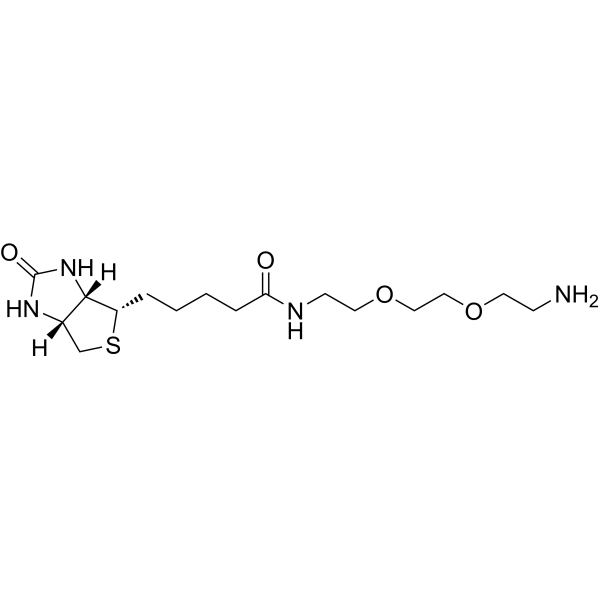
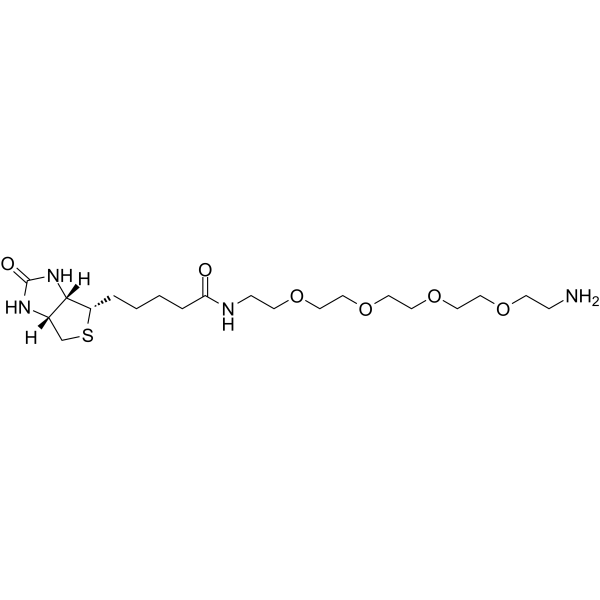
Biotin-PEG4-aminePROTAC Linkers -
HY-W096135
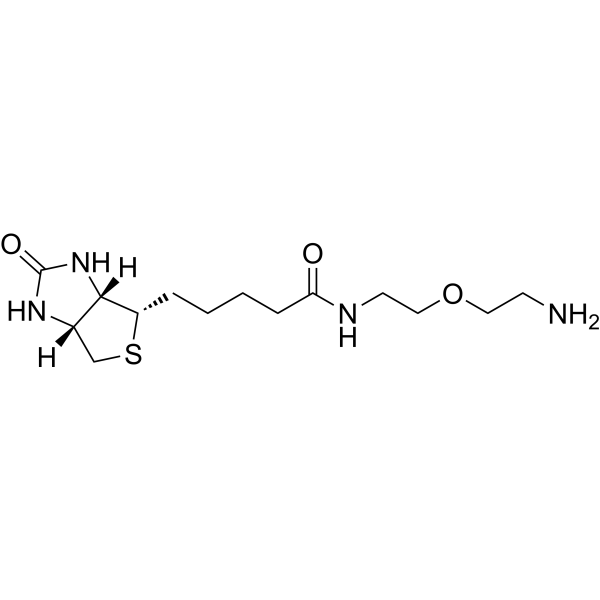
Biotin-PEG1-NH2 -
HY-111377
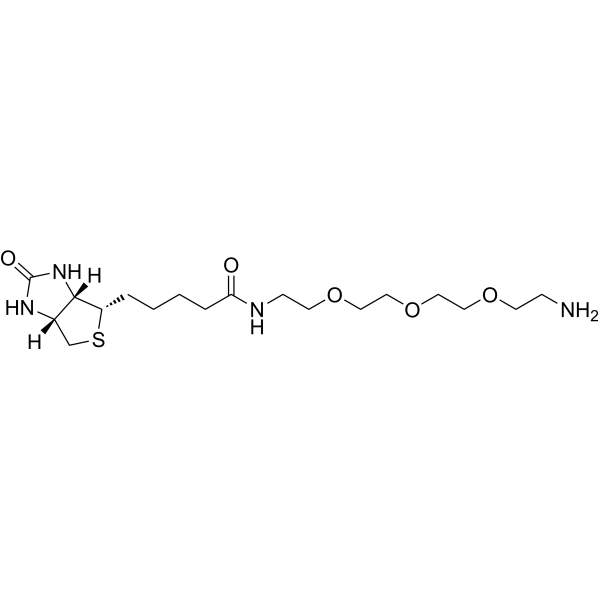
Amine-PEG3-BiotinSignal Amplification Label -
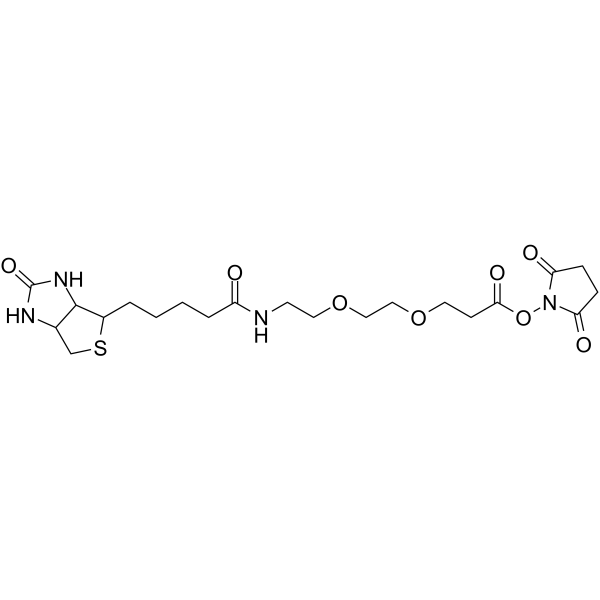
HY-140888
Biotin-PEG2-NHS esterPROTAC Linkers -
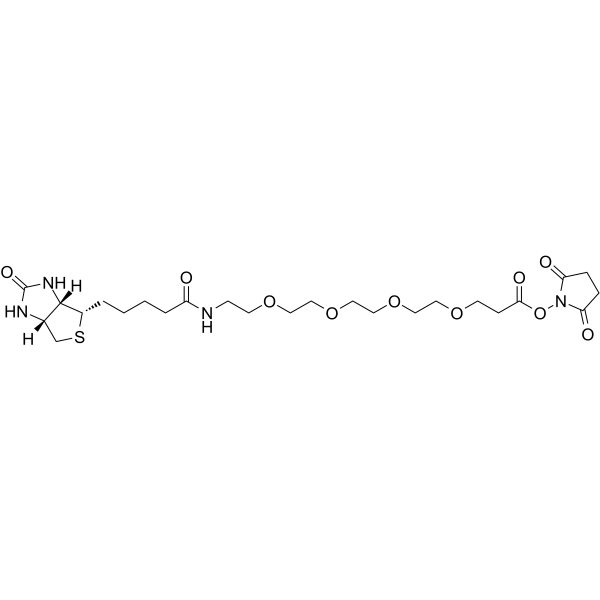
HY-140889
Biotin-PEG4-NHS esterPROTAC Linkers -
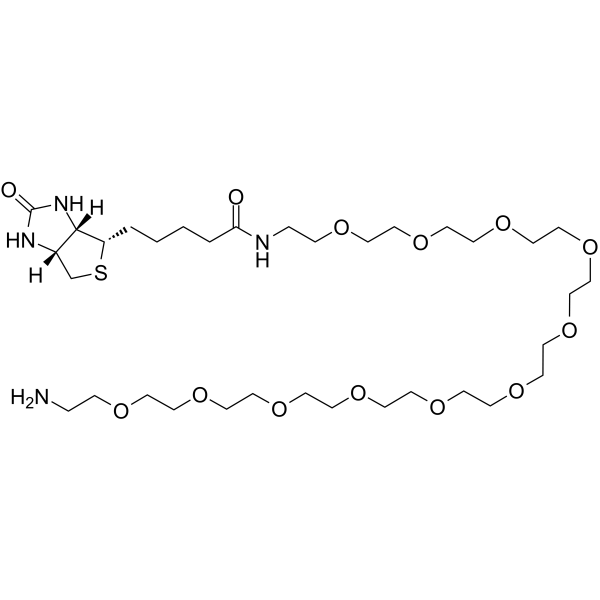
HY-140900
Biotin-PEG11-amine -
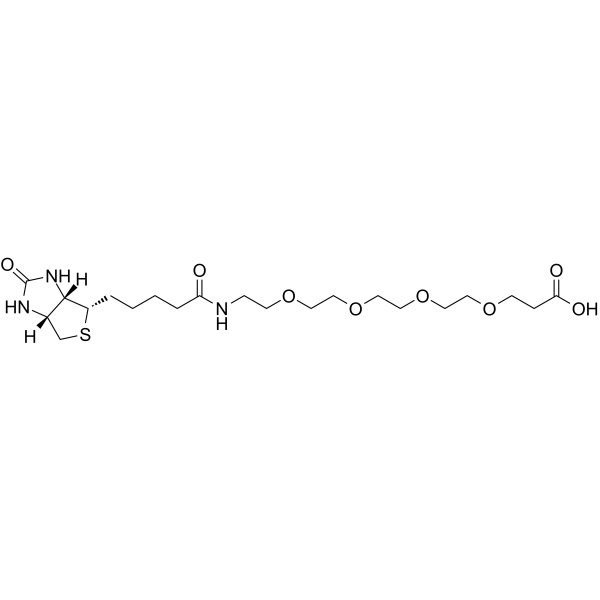
HY-126959
Biotin-PEG4-acidPROTAC linker -
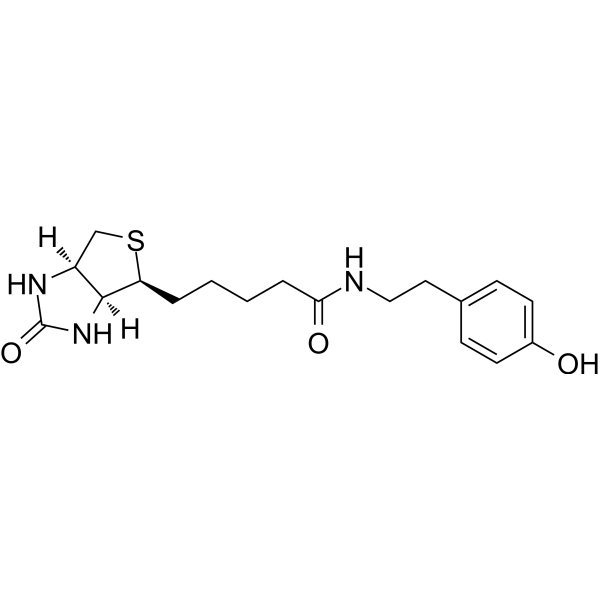
HY-125658
Biotinyl tyramideBiotin Derivative/Reagent -
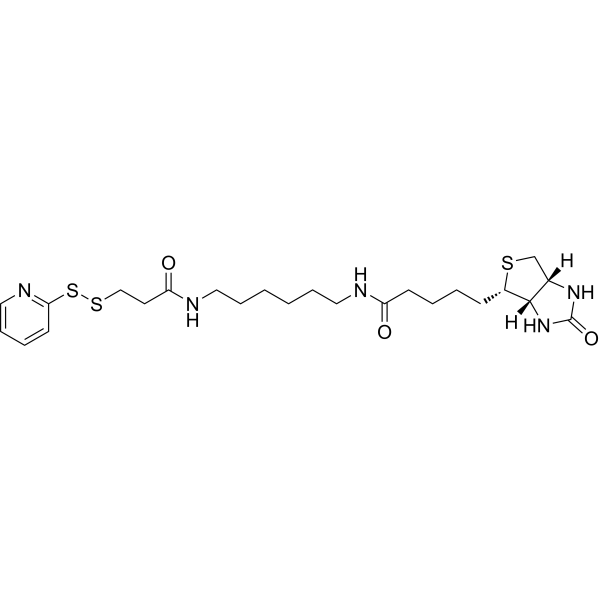
HY-136769
Biotin-HPDPBiochemical Reagent -
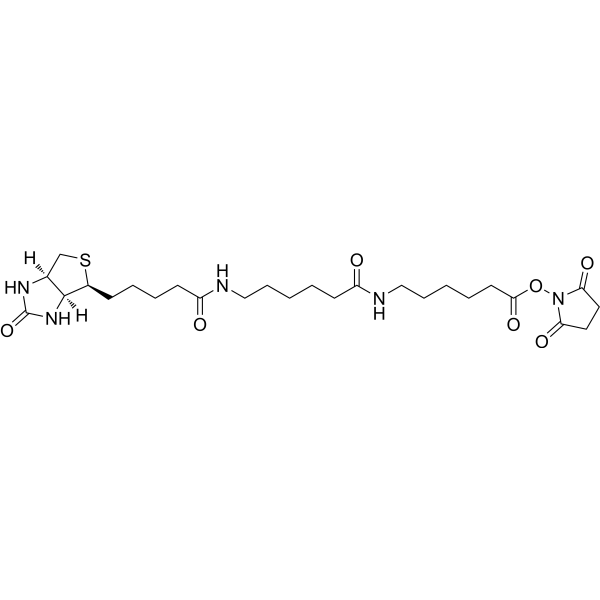
HY-W040254
Biotin-LC-LC-NHSBiotinylation Reagent -
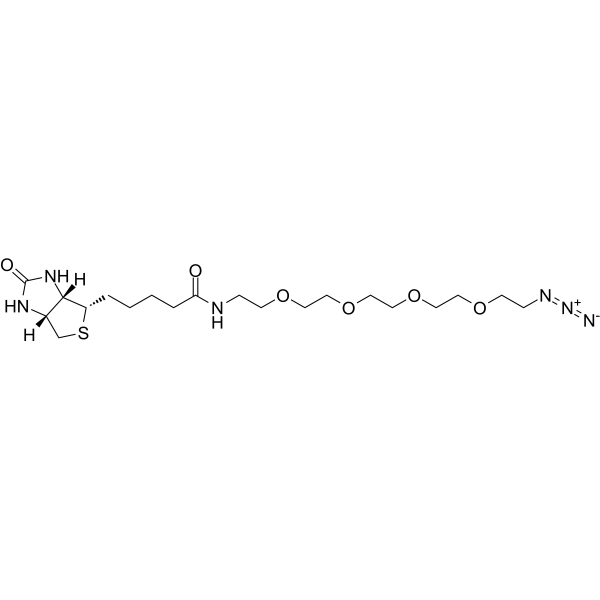
HY-140910
Biotin-PEG4-azidePROTAC Linker -
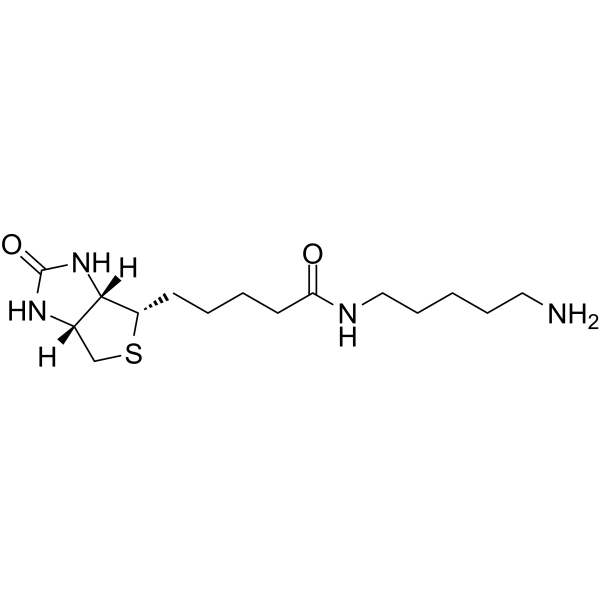
HY-W076543
5-(Biotinamido)pentylamineTransglutaminase Substrate


Biologische Aktivität
Beschreibung
In Vitro
Biotin-DADOO in the form of immobilized biotinylated GS4071 inhibitor Sp. 3.1.6 (0.5 μg/mL; 1 hour incubated at room temperature per binding step) captures free influenza neuraminidase on streptavidin-coated polystyrene plates, with a detection limit of 3 ng/mL neuraminidase[1].
Biotin-DADOO-functionalized CMC derivatives 2 and 4 (0.5 mg/mL (derivative 2), 0.1 mg/mL (derivative 4); 2 min) form stable SAMs on planar gold surfaces, with derivative 2 forming a 0.8 nm thick layer and derivative 4 forming a 2.5 nm thick layer as measured via SPR[2].
Biotin-DADOO (2.67 μmol; 2 h at 4 °C) forms a stable biotin-estradiol conjugate, which purifies to a single active fraction via HPLC eluting at 5.43 min containing 2.43 μg estradiol-equivalent and 2.82 μg biotin[3].
MedChemExpress (MCE) has not independently confirmed the accuracy of these methods. They are for reference only.


Chemical Information
-
CAS. Nr. 138529-46-1
-
Appearance Solid
-
Molecular Weight 374.51
-
Formel C16H30N4O4S
-
Color White to yellow
-
SMILES
O=C(NCCOCCOCCN)CCCC[C@@H]1SC[C@]([C@]1([H])N2)([H])NC2=O
-
Synonyms
Biotinyl-3,6-dioxaoctanediamine; EZ-Link Amine-PEO2-Biotin
-
Versand
Room temperature in continental US; may vary elsewhere.
-
Speicherung
Powder -20°C 3 years 4°C 2 years In solvent -80°C 2 years -20°C 1 year


Lösungsmittel & Löslichkeit
In Vitro:
DMSO : 100 mg/mL (267.02 mM; Need ultrasonic; Hygroscopic DMSO has a significant impact on the solubility of product, please use newly opened DMSO)
H2O : ≥ 100 mg/mL (267.02 mM)
* "≥" means soluble, but saturation unknown.
Please refer to the solubility information to select the appropriate solvent. Once prepared, please aliquot and store the solution to prevent product inactivation from repeated freeze-thaw cycles.
Storage method and period of stock solution: -80°C, 2 years; -20°C, 1 year. When stored at -80°C, please use it within 2 years. When stored at -20°C, please use it within 1 year.
* Note: If you choose water as the stock solution, please dilute it to the working solution, then filter and sterilize it with a 0.22 μm filter before use.
Please refer to the solubility information to select the appropriate solvent. Once prepared, please aliquot and store the solution to prevent product inactivation from repeated freeze-thaw cycles.
Storage method and period of stock solution: -80°C, 2 years; -20°C, 1 year. When stored at -80°C, please use it within 2 years. When stored at -20°C, please use it within 1 year.
* Note: If you choose water as the stock solution, please dilute it to the working solution, then filter and sterilize it with a 0.22 μm filter before use.
Konzentration (Stammlösung) × Volumen (Stammlösung) = Konzentration (Ziellösung) × Volumen (Ziellösung)
In Vivo:
Select the appropriate dissolution method based on your experimental animal and administration route.
- For the following dissolution methods, please ensure to first prepare a clear stock solution using an In Vitro approach and then sequentially add co-solvents:
- To ensure reliable experimental results, the clarified stock solution can be appropriately stored based on storage conditions. As for the working solution for In Vivo experiments, it is recommended to prepare freshly and use it on the same day.
- The percentages shown for the solvents indicate their volumetric ratio in the final prepared solution. If precipitation or phase separation occurs during preparation, heat and/or sonication can be used to aid dissolution.
Add each solvent one by one: 10% DMSO 40% PEG300 5% Tween-80 45% Saline
Solubility: ≥ 2.5 mg/mL (6.68 mM); Clear solution
This protocol yields a clear solution of ≥ 2.5 mg/mL (saturation unknown).
Taking 1 mL working solution as an example, add 100 μL DMSO stock solution (25.0 mg/mL) to 400 μL PEG300, and mix evenly; then add 50 μL Tween-80 and mix evenly; then add 450 μL Saline to adjust the volume to 1 mL.
Preparation of Saline: Dissolve 0.9 g sodium chloride in ddH₂O and dilute to 100 mL to obtain a clear Saline solution.
Add each solvent one by one: 10% DMSO 90% (20% SBE-β-CD in Saline)
Solubility: ≥ 2.5 mg/mL (6.68 mM); Clear solution
This protocol yields a clear solution of ≥ 2.5 mg/mL (saturation unknown).
Taking 1 mL working solution as an example, add 100 μL DMSO stock solution (25.0 mg/mL) to 900 μL 20% SBE-β-CD in Saline, and mix evenly.
Preparation of 20% SBE-β-CD in Saline (4°C, storage for one week): 2 g SBE-β-CD powder is dissolved in 10 mL Saline, completely dissolve until clear.
For the following dissolution methods, please prepare the working solution directly:
It is recommended to prepare fresh solutions and use them promptly within a short period of time.
The percentages shown for the solvents indicate their volumetric ratio in the final prepared solution. If precipitation or phase separation occurs during preparation, heat and/or sonication can be used to aid dissolution.
Add each solvent one by one: PBS
Solubility: 100 mg/mL (267.02 mM); Clear solution; Need ultrasonic
In Vivo Dissolution Calculator
Please enter the basic information of animal experiments:
-
-
-
-
Recommended: Prepare an additional quantity of animals to account for potential losses during experiments.
Working solution concentration: 0.22 mg/mL
This product has good water solubility, please refer to the measured solubility data in water/PBS/Saline for details.


Reinheit & Dokumentation
-
Data Sheet (270 KB)
-
SDS (393 KB)
- English - EN (393 KB)
- Français - FR (393 KB)
- Deutsch - DE (393 KB)
- Norwegian - NO (393 KB)
- Español - ES (393 KB)
- Swedish - SV (393 KB)
- Italian - IT (393 KB)
- Korean - KR (393 KB)
- Portuguese - PT (393 KB)
-
Handling Instructions (2659 KB)
Verweise


Complete Stock Solution Preparation Table
Please refer to the solubility information to select the appropriate solvent. Once prepared, please aliquot and store the solution to prevent product inactivation from repeated freeze-thaw cycles.
Storage method and period of stock solution: -80°C, 2 years; -20°C, 1 year. When stored at -80°C, please use it within 2 years. When stored at -20°C, please use it within 1 year.
| Optional Solvent | Concentration Solvent Mass | 1 mg | 5 mg | 10 mg | 25 mg |
|---|---|---|---|---|---|
| DMSO / H2O | 1 mM | 2.6702 mL | 13.3508 mL | 26.7016 mL | 66.7539 mL |
| 5 mM | 0.5340 mL | 2.6702 mL | 5.3403 mL | 13.3508 mL | |
| 10 mM | 0.2670 mL | 1.3351 mL | 2.6702 mL | 6.6754 mL | |
| 15 mM | 0.1780 mL | 0.8901 mL | 1.7801 mL | 4.4503 mL | |
| 20 mM | 0.1335 mL | 0.6675 mL | 1.3351 mL | 3.3377 mL | |
| 25 mM | 0.1068 mL | 0.5340 mL | 1.0681 mL | 2.6702 mL | |
| 30 mM | 0.0890 mL | 0.4450 mL | 0.8901 mL | 2.2251 mL | |
| 40 mM | 0.0668 mL | 0.3338 mL | 0.6675 mL | 1.6688 mL | |
| 50 mM | 0.0534 mL | 0.2670 mL | 0.5340 mL | 1.3351 mL | |
| 60 mM | 0.0445 mL | 0.2225 mL | 0.4450 mL | 1.1126 mL | |
| 80 mM | 0.0334 mL | 0.1669 mL | 0.3338 mL | 0.8344 mL | |
| 100 mM | 0.0267 mL | 0.1335 mL | 0.2670 mL | 0.6675 mL |
* Note: If you choose water as the stock solution, please dilute it to the working solution, then filter and sterilize it with a 0.22 μm filter before use.


Biotin-DADOO Related Classifications
HY-D0980 Related Classifications
 Powered by Bioz
Keywords
- Biotin-DADOO
- 138529-46-1
- Biotinyl-3,6-dioxaoctanediamine
- EZ-Link Amine-PEO2-Biotin
- Biochemical Assay Reagents
- gold surfaces
- human plasma
- enzyme immunoassays
- influenza neuraminidase
- polyacrylamide gel electrophoresis
- influenza a
- streptavidin
- polystyrene plates
- carboxymethylcellulose derivatives
- estradiol
- Inhibitor
- inhibitor
- inhibit