1. Cell Cycle/DNA Damage PI3K/Akt/mTOR Apoptosis Immunology/Inflammation
  2. ATM/ATR Apoptosis STING Caspase
  3. Berzosertib

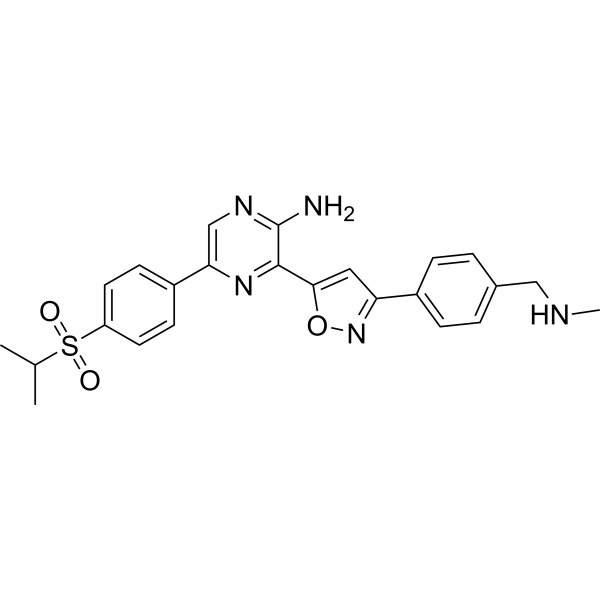
Berzosertib  (Synonyms: VE-822; VX-970; M6620)

製品番号: HY-13902 純度: 99.44%
COA 取扱説明書 Technical Support

Berzosertib (VE-822) is an orally active, CNS-penetrant, and selective ATR kinase inhibitor. Berzosertib blocks ATR kinase activity, abrogates G2/M cell cycle checkpoint, impairs DNA damage repair. Berzosertib induces apoptosis, inhibnits conlony migration, inhibits cell proliferation, and activates cGAS-STING axes in cancer cells. Berzosertib can be used for the research of cancers, such as head and neck squamous cell carcinoma, and colorectal cancer.

商品は「研究用試薬」です。人や動物の医療用・臨床診断用・食品用の製品ではありません。
研究用途以外に使用した場合、当社は一切の責任を負いかねます。

CAS 番号 : 1232416-25-9

容量 価格(税別) 在庫状況 数量
>無料サンプル (0.1 - 0.2 mg)   今すぐ申し込む  
Solid + Solvent (Highly Recommended)
10 mM * 1 mL in DMSO
ready for reconstitution
USD 86 在庫あり
Solution
10 mM * 1 mL in DMSO USD 86 在庫あり
Solid
5 mg $84 在庫あり
10 mg $114 在庫あり
25 mg $190 在庫あり
50 mg $288 在庫あり
100 mg $460 在庫あり
200 mg $670 在庫あり
500 mg $1340 在庫あり
1 g   お問い合わせ  
5 g   お問い合わせ  

* アイテムを追加する前、数量をご選択ください

This product is a controlled substance and not for sale in your territory.

カスタマーレビュー

Based on 24 publication(s) in Google Scholar

Other Forms of Berzosertib:

Top Publications Citing Use of Products

    Berzosertib purchased from MedChemExpress. Usage Cited in: Cancer Commun (Lond). 2023 Apr;43(4):435-454.  [Abstract]

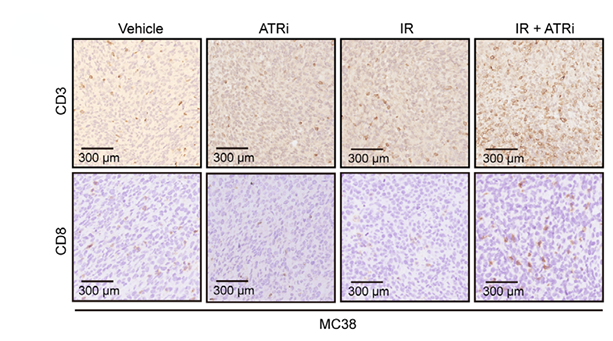
    Berzosertib (60 mg/kg) was administered by gavage 2 h before IR and consecutively for the next three days. Representative IHC images of CD3 staining of MC38 tumors were shown.

    Berzosertib purchased from MedChemExpress. Usage Cited in: Cancer Commun (Lond). 2023 Apr;43(4):435-454.  [Abstract]

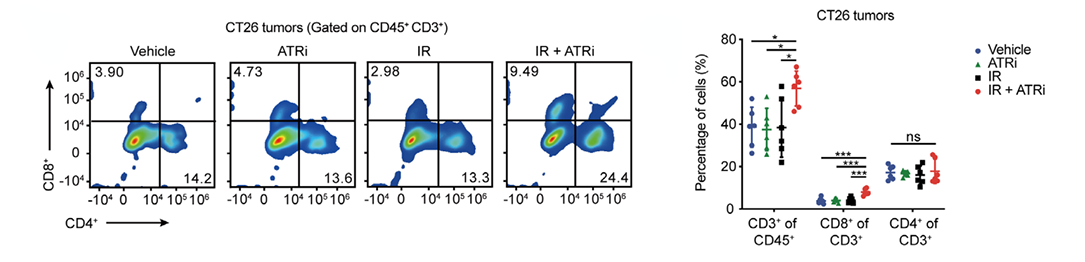
    Berzosertib (60 mg/kg) was administered by gavage 2 h before IR and consecutively for the next three days. Representative flow cytometry images and quantitative analysis of TILs in CT26 tumors were obtained.

    Berzosertib purchased from MedChemExpress. Usage Cited in: Cancer Commun (Lond). 2023 Apr;43(4):435-454.  [Abstract]

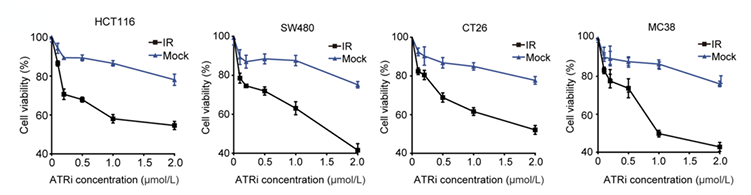
    Berzosertib (0–2 μM; 24 h). Cell viability assay of multiple CRC cell lines treated with ATRi and IR + ATRi was performed.

    Berzosertib purchased from MedChemExpress. Usage Cited in: Cancer Commun (Lond). 2023 Apr;43(4):435-454.  [Abstract]

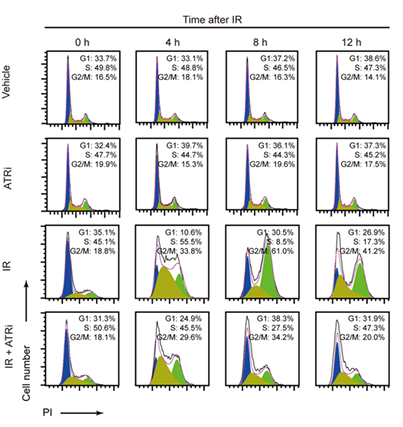
    Berzosertib (1 μM). Cell cycle distribution analysis of HCT116 and CT26 cells treated with IR and IR + ATRi. Representative flow cytometry images of phospho-histone H3+ cells in HCT116 and CT26 cells were shown.

    Berzosertib purchased from MedChemExpress. Usage Cited in: Cancer Commun (Lond). 2023 Apr;43(4):435-454.  [Abstract]

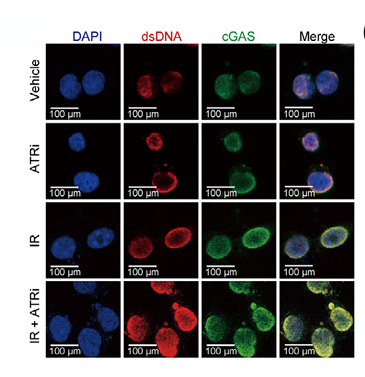
    Berzosertib (1 μM; 14 h). IF images of dsDNA and cGAS staining in HCT116 cells were shown.

    Berzosertib purchased from MedChemExpress. Usage Cited in: Cancer Commun (Lond). 2023 Apr;43(4):435-454.  [Abstract]

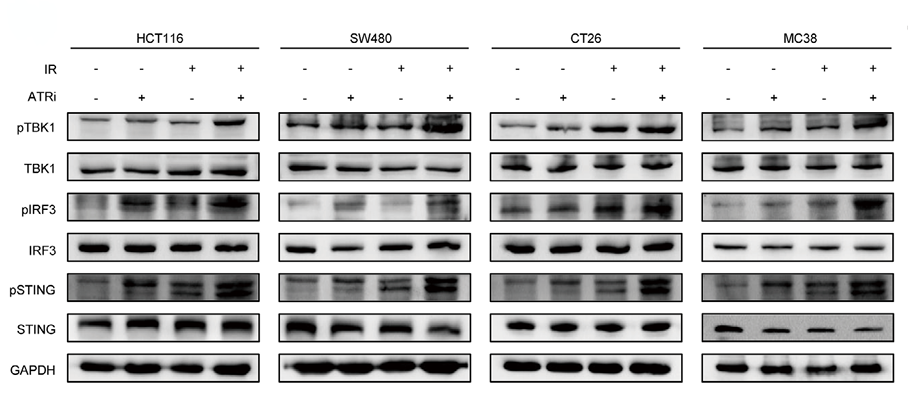
    Berzosertib (1 μM; 14 h) was used. Immunoblotting of the key proteins from the canonical cGAS-STING axis in multiple CRC cell lines was performed.

    Berzosertib purchased from MedChemExpress. Usage Cited in: Eur J Med Chem. 2017 Feb 15:127:691-702.  [Abstract]

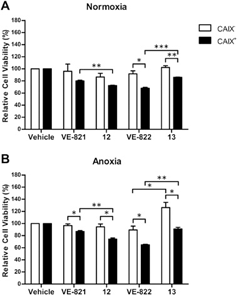
    Relative cell viability (%) in MDCK CAIX- and CAIX+ cells exposed to ATR inhibitors (VE-821 and VE-822) or the CAIXi conjugated derivatives in combination with radiation during normoxia (21% O2) and anoxia (≤0.02% O2). Normoxic cells are irradiated with 2 Gy and anoxic cells with 4 Gy to induce similar effects on cell viability.
    • 生物活性

    • 純度とドキュメンテーション

    • 参考文献

    • カスタマーレビュー

    製品説明

    Berzosertib (VE-822) is an orally active, CNS-penetrant, and selective ATR kinase inhibitor. Berzosertib blocks ATR kinase activity, abrogates G2/M cell cycle checkpoint, impairs DNA damage repair. Berzosertib induces apoptosis, inhibnits conlony migration, inhibits cell proliferation, and activates cGAS-STING axes in cancer cells. Berzosertib can be used for the research of cancers, such as head and neck squamous cell carcinoma, and colorectal cancer[1][2][3][4][5][6].

    IC50 & Target[1]

    ATR

    0.2 nM (Ki)

    ATM

    34 nM (Ki)

    Caspase-3


    Cellular Effect
    Cell Line Type Value Description References
    HT-29 IC50
    19 nM
    Compound: 103
    Antiproliferative activity against human HT-29 cells assessed as reduction in cell viability incubated for 72 hrs by MTT assay
    Antiproliferative activity against human HT-29 cells assessed as reduction in cell viability incubated for 72 hrs by MTT assay
    [PMID: 37300915]
    体外実験

    Berzosertib (0.031-1 µM; 72 h) reduces cell viability in Cal-27 and FaDu HNSCC cell lines with IC50 values of 0.285 µM and 0.252 µM, respectively[1].
    Berzosertib (0.125-0.5 µM; 24-48 h) inhibits migration in Cal-27 and in FaDu HNSCC cells[1].
    Berzosertib (0.25-0.5 µM; 48 h) induces apoptosis in Cal-27 and FaDu cells[1].
    Berzosertib (48-72 h) inhibits proliferation of A549, NCI-H226, and NCI-H520 cells with IC50 values in the 1-4 μM range[2].
    Berzosertib (40-80 nM; 1 h) enhances radiosensitivity of A549, NCI-H226, and NCI-H520 NSCLC cell lines[2].
    Berzosertib (40 nM; 1 h) inhibits radiation-induced ATR (Thr1989) phosphorylation in A549, NCI-H226, and NCI-H520 NSCLC cell lines without affecting ATM (Ser1981) activation[2].
    Berzosertib (40 nM; 1 h) abrogates the radiation-induced G2/M cell cycle checkpoint in A549 NSCLC cells, shifting cells into G1 phase[2].
    Berzosertib (40-80 nM; 1 h) enhances radiation-induced apoptosis in A549 NSCLC cells when combined with 10 Gy, but not 2 Gy, irradiation[2].
    Berzosertib (40 nM; 1 h) inhibits DNA double-strand break repair in A549 cells[2].
    Berzosertib (1 µM; 2 h) impairs irradiation-induced G2/M checkpoint initiation and maintenance in HCT116 and CT26 cells, promoting mitotic entry after DNA damage[4].
    Berzosertib (1 µM; 2 h) combined with 5 Gy irradiation increases micronuclei formation and cytosolic dsDNA levels in HCT116 and CT26 colorectal cancer cell lines[4].
    Berzosertib (1 µM; 2 h) combined with 5 Gy irradiation robustly activates the canonical cGAS-STING-pTBK1/pIRF3 pathway, and upregulates expression of interferon-stimulated genes CXCL10, CCL5, and IFNB in HCT116, SW480, CT26, and MC38 cells[4].
    Berzosertib (1 µM; 2 h) combined with 5 Gy irradiation inhibits the recruitment of SHP1 to the TRAF6/STING complex in HCT116 cells, enhancing TRAF6-STING interaction[4].

    MedChemExpress (MCE) has not independently confirmed the accuracy of these methods. They are for reference only.

    Cell Proliferation Assay[1]

    Cell Line: Cal-27, FaDu cells
    Concentration: 0.125; 0.25; 0.5 µM
    Incubation Time: 24 h (Cal-27); 48 h (FaDu)
    Result: Reduced Cal-27 cell gap closure to 82% at 0.25 µM and 50% at 0.5 µM at 24 h, compared to 98% in untreated cells.
    Reduced FaDu cell gap closure to 24% at 0.25 µM and 0.5 µM at 24 h, compared to 41% in untreated cells.
    Significantly inhibited FaDu cell gap closure at 0.5 µM at 48 h.

    Cell Viability Assay[1]

    Cell Line: Cal-27, FaDu cells
    Concentration: 0.031; 0.063; 0.125; 0.25; 0.5; 1 µM
    Incubation Time: 72 h
    Result: Caused a dose-dependent decrease in cell viability in both cell lines.
    Exhibited an IC50 value of 0.285 µM for Cal-27 cells.
    Exhibited an IC50 value of 0.252 µM for FaDu cells.

    Apoptosis Analysis[1]

    Cell Line: Cal-27, FaDu cells
    Concentration: 0.25 µM (Cal-27); 0.5 µM (FaDu)
    Incubation Time: 48 h
    Result: Increased apoptosis levels to 279% of control in Cal-27 cells.
    Increased apoptosis levels to 244% of control in FaDu cells.

    Western Blot Analysis[2]

    Cell Line: A549, NCI-H226, and NCI-H520 cells
    Concentration: 40 nM
    Incubation Time: 1 h
    Result: Did not affect radiation-induced ATM (Ser1981) phosphorylation.
    Diminished radiation-induced activation of p-ATR (Thr1989) in all three cell lines even at 24 h post-radiation.

    Apoptosis Analysis[2]

    Cell Line: A549 cells
    Concentration: 40; 80 nM
    Incubation Time: 1 h
    Result: Showed no increase in apoptosis when combined with 2 Gy radiation.
    Caused a significant increase in apoptosis when combined with 10 Gy radiation, compared to radiation alone.

    Immunofluorescence[2]

    Cell Line: A549 cells
    Concentration: 40 nM
    Incubation Time: 1 h
    Result: Combined with irradiation resulted in a statistically significant increase in the number of γH2AX foci at 8 h and 24 h compared with cells treated with irradiation alone.

    Real Time qPCR[4]

    Cell Line: HCT116, SW480, CT26, MC38
    Concentration: 1 µM
    Incubation Time: 2 h
    Result: Caused a sharp, time-dependent increase in mRNA levels of CXCL10, CCL5, and IFNB in HCT116 and CT26 cells, with peak expression at 8-12 hours post-irradiation.
    Induced significant increases in CXCL10, CCL5, and IFNB gene expressions in SW480 and MC38 cells compared to irradiation alone.
    体内実験

    Berzosertib (60 mg/kg; p.o.; daily; 10 days; 1 h before 2 Gy local tumor irradiation) acts synergistically with daily 2 Gy local radiation to delay subcutaneous NSCLC brain metastasis PDX tumor growth in mice[2].
    Berzosertib (60 mg/kg; p.o.; daily; 5 days; 1 h before 2.5 Gy whole brain irradiation) combined with daily 2.5 Gy whole brain irradiation significantly improves median overall survival and reduces intracranial tumor growth in mouse NSCLC brain metastasis xenograft model[2].
    Berzosertib (60 mg/kg; i.g.; 2 h before Gy IR, then daily for 3 days) produces antitumor efficacy in mouse MC38 and CT26 models, when combined with 5 Gy irradiation and anti-PD-L1[4].

    MedChemExpress (MCE) has not independently confirmed the accuracy of these methods. They are for reference only.

    Animal Model: Female Hsd:athymic Nude-Foxn1 mice (6-8-week-old) subcutaneously implantated with UW-lung-16 and UW-lung-18[2]
    Dosage: 60 mg/kg
    Administration: p.o.; daily; 10 days; 1 h before 2 Gy local tumor irradiation
    Result: Delayed growth of UW-lung-16 and UW-lung-18 tumors.
    Reduced estimated tumor growth curve slope for UW-lung-16 tumors significantly lower than alone, with a synergistic effect and dose enhancement factor (DEF) of 1.8.
    Reduced estimated tumor growth curve slope for UW-lung-18 tumors significantly lower than alone, with a synergistic effect and DEF of 1.4.
    Inhibited phospho-Chk1 (Ser345) alone and combined with irradiation.
    Increased cleaved caspase-3 in the combination group.
    Induced significantly more γH2AX foci in the combination group compared to other groups.
    Animal Model: Athymic nude mice intracranial implantation of luciferase-transfected UW-Lung-16 cells[2]
    Dosage: 60 mg/kg
    Administration: p.o.; daily; 5 days; 1 h before 2.5 Gy whole brain irradiation
    Result: Reduced bioluminescence total flux significantly by days 32 and 40 post-implant compared to radiation alone.
    Improved median overall survival to 95 days, compared to 67 days in the radiation alone group.
    Showed no significant difference in body weight between groups during or 40 days post-treatment.
    Animal Model: Balb/C mice (female, 5-6 weeks old) subcutaneously injected with CT26 cells[4]
    Dosage: 60 mg/kg
    Administration: i.g.; 2 h before Gy IR, then daily for 3 days
    Result: Delayed tumor growth more effectively than dual or monotherapy regimens.
    Extended mouse survival compared to other treatment groups.
    Increased CD3+ and CD8+ tumor-infiltrating lymphocyte counts.
    Elevated levels of CD11c+ MHC-II+ dendritic cells and CD11c+ CD8+ tumor-infiltrating dendritic cells.
    Increased CD86 maturation marker mean fluorescence intensity.
    Activated the canonical cGAS-STING-pTBK1/pIRF3 axis.
    Activated the non-canonical STING-p65 axis.
    Upregulated mRNA expression of innate immune-related genes Cxcl10, Ccl5, and Ifnb.
    Decreased SHP1 mRNA levels and SHP1 interaction with TRAF6/STING via promoting SHP1 SUMOylation at lysine 127.
    Animal Model: C57/B6J mice (female, 5-6 weeks old) subcutaneously injected with MC38 cells[4]
    Dosage: 60 mg/kg
    Administration: i.g.; 2 h before Gy IR, then daily for 3 days
    Result: complete tumor regression in some mice.
    Extended mouse survival compared to other treatment groups.
    Reduced tumor burden (as measured by bioluminescence total flux).
    Decreased Ki67-positive proliferating cells.
    Increased TUNEL-positive apoptotic cells.
    Increased CD3+ and CD8+ tumor-infiltrating lymphocyte counts.
    Elevated levels of CD11c+ MHC-II+ dendritic cells and CD11c+ CD8+ tumor-infiltrating dendritic cells.
    Increased CD86 maturation marker mean fluorescence intensity.
    Activated the canonical cGAS-STING-pTBK1/pIRF3 axis.
    Activated the non-canonical STING-p65 axis.
    Upregulated mRNA expression of innate immune-related genes Cxcl10, Ccl5, and Ifnb.
    臨床実験
    分子量

    463.55

    分子式

    C24H25N5O3S

    CAS 番号
    Appearance

    Solid

    Color

    Light yellow to yellow

    SMILES

    NC1=NC=C(C2=CC=C(S(=O)(C(C)C)=O)C=C2)N=C1C3=CC(C4=CC=C(CNC)C=C4)=NO3

    輸送条件

    Room temperature in continental US; may vary elsewhere.

    保管条件
    Powder -20°C 3 years
      4°C 2 years
    In solvent -80°C 6 months
      -20°C 1 month
    溶剤 & 溶解度
    体外: 

    DMSO : 16.67 mg/mL (35.96 mM; ultrasonic and warming and heat to 60°C; Hygroscopic DMSO has a significant impact on the solubility of product, please use newly opened DMSO)

    Preparing
    Stock Solutions
    Concentration Solvent Mass 1 mg 5 mg 10 mg
    1 mM 2.1573 mL 10.7863 mL 21.5726 mL
    5 mM 0.4315 mL 2.1573 mL 4.3145 mL
    10 mM 0.2157 mL 1.0786 mL 2.1573 mL
    View the Complete Stock Solution Preparation Table

    * Please refer to the solubility information to select the appropriate solvent. Once prepared, please aliquot and store the solution to prevent product inactivation from repeated freeze-thaw cycles.
    Storage method and period of stock solution: -80°C, 6 months; -20°C, 1 month. When stored at -80°C, please use it within 6 months. When stored at -20°C, please use it within 1 month.

    • Molarity Calculator

    • Dilution Calculator

    Mass (g) = Concentration (mol/L) × Volume (L) × Molecular Weight (g/mol)

    Mass
    =
    Concentration
    ×
    Volume
    ×
    Molecular Weight *

    Concentration (start) × Volume (start) = Concentration (final) × Volume (final)

    一般には略語で表示されます:C1V1 = C2V2

    濃度 (開始)

    C1

    ×
    体積 (開始)

    V1

    =
    濃度 (終了)

    C2

    ×
    体積 (終了)

    V2

    体内:

    Select the appropriate dissolution method based on your experimental animal and administration route.

    For the following dissolution methods, please ensure to first prepare a clear stock solution using an In Vitro approach and then sequentially add co-solvents:
    To ensure reliable experimental results, the clarified stock solution can be appropriately stored based on storage conditions. As for the working solution for in vivo experiments, it is recommended to prepare freshly and use it on the same day.
    The percentages shown for the solvents indicate their volumetric ratio in the final prepared solution. If precipitation or phase separation occurs during preparation, heat and/or sonication can be used to aid dissolution.

    • Protocol 1

      Add each solvent one by one:  10% DMSO    40% PEG300    5% Tween-80    45% Saline

      Solubility: ≥ 1.67 mg/mL (3.60 mM); Clear solution

      This protocol yields a clear solution of ≥ 1.67 mg/mL (saturation unknown).

      Taking 1 mL working solution as an example, add 100 μL DMSO stock solution (16.7 mg/mL) to 400 μL PEG300, and mix evenly; then add 50 μL Tween-80 and mix evenly; then add 450 μL Saline to adjust the volume to 1 mL.

      Preparation of Saline: Dissolve 0.9 g sodium chloride in ddH₂O and dilute to 100 mL to obtain a clear Saline solution.
    In Vivo Dissolution Calculator
    Please enter the basic information of animal experiments:

    Dosage

    mg/kg

    Animal weight
    (per animal)

    g

    Dosing volume
    (per animal)

    μL

    Number of animals

    Recommended: Prepare an additional quantity of animals to account for potential losses during experiments.
    Please enter your animal formula composition:
    %
    DMSO +
    +
    %
    Tween-80 +
    %
    Saline
    Recommended: Keep the proportion of DMSO in working solution below 2% if your animal is weak.
    The co-solvents required include: DMSO, . All of co-solvents are available by MedChemExpress (MCE). , Tween 80. All of co-solvents are available by MedChemExpress (MCE).
    Calculation results:
    Working solution concentration: mg/mL
    Method for preparing stock solution: mg drug dissolved in μL  DMSO (Stock solution concentration: mg/mL).
    The concentration of the stock solution you require exceeds the measured solubility. The following solution is for reference only. If necessary, please contact MedChemExpress (MCE).
    Method for preparing in vivo working solution for animal experiments: Take μL DMSO stock solution, add μL . μL , mix evenly, next add μL Tween 80, mix evenly, then add μL Saline.
     If the continuous dosing period exceeds half a month, please choose this protocol carefully.
    Please ensure that the stock solution in the first step is dissolved to a clear state, and add co-solvents in sequence. You can use ultrasonic heating (ultrasonic cleaner, recommended frequency 20-40 kHz), vortexing, etc. to assist dissolution.
    純度とドキュメンテーション

    純度: 99.67%

    参考文献

    Complete Stock Solution Preparation Table

    * Please refer to the solubility information to select the appropriate solvent. Once prepared, please aliquot and store the solution to prevent product inactivation from repeated freeze-thaw cycles.
    Storage method and period of stock solution: -80°C, 6 months; -20°C, 1 month. When stored at -80°C, please use it within 6 months. When stored at -20°C, please use it within 1 month.

    Optional Solvent Concentration Solvent Mass 1 mg 5 mg 10 mg 25 mg
    DMSO 1 mM 2.1573 mL 10.7863 mL 21.5726 mL 53.9316 mL
    5 mM 0.4315 mL 2.1573 mL 4.3145 mL 10.7863 mL
    10 mM 0.2157 mL 1.0786 mL 2.1573 mL 5.3932 mL
    15 mM 0.1438 mL 0.7191 mL 1.4382 mL 3.5954 mL
    20 mM 0.1079 mL 0.5393 mL 1.0786 mL 2.6966 mL
    25 mM 0.0863 mL 0.4315 mL 0.8629 mL 2.1573 mL
    30 mM 0.0719 mL 0.3595 mL 0.7191 mL 1.7977 mL
    • No file chosen (Maximum size is: 1024 Kb)
    • If you have published this work, please enter the PubMed ID.
    • Your name will appear on the site.
    • Molarity Calculator

    • Dilution Calculator

    The molarity calculator equation

    Mass (g) = Concentration (mol/L) × Volume (L) × Molecular Weight (g/mol)

    質量   濃度   体積   分子量 *
    = × ×

    The dilution calculator equation

    Concentration (start) × Volume (start) = Concentration (final) × Volume (final)

    一般には略語で表示されます:C1V1 = C2V2

    濃度 (開始) × 体積 (開始) = 濃度 (終了) × 体積 (終了)
    × = ×
    C1   V1   C2   V2
    Help & FAQs
    • Do most proteins show cross-species activity?

      Species cross-reactivity must be investigated individually for each product. Many human cytokines will produce a nice response in mouse cell lines, and many mouse proteins will show activity on human cells. Other proteins may have a lower specific activity when used in the opposite species.

    最近チェックした製品:

    オンラインお問い合わせ

    Your information is safe with us. * Required Fields.

    製品名


    カスタマ需要量 *

    お名前 *


    タイトル

    メールアドレス *


    電話番号 *

    デパートメント


    組纖名 *

    市区町村

    都道府県

    国或いは地域 *


    必ず会社名を記載ください。個人への返信は行いません。

    備考

    バルクお問い合わせ

    Inquiry Information

    製品名:
    Berzosertib
    製品番号:
    HY-13902
    数量:
    MCE 日本正規代理店: