Search Result
Results for "
α-L-arabinofuranosyl-(1→6)-β-D-glucopyranosyl
" in MedChemExpress (MCE) Product Catalog:
33
Biochemical Assay Reagents
3
Isotope-Labeled Compounds
| Cat. No. |
Product Name |
Target |
Research Areas |
Chemical Structure |
-
- HY-130320
-
|
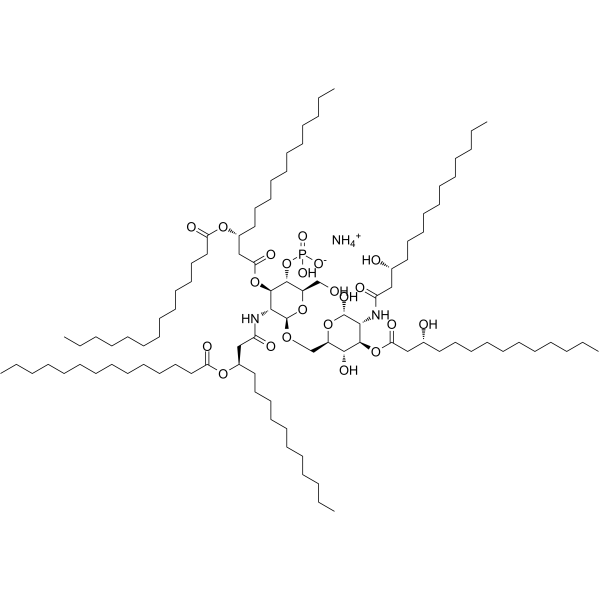
glucopyranosyl lipid A
|
Toll-like Receptor (TLR)
|
Inflammation/Immunology
Cancer
|
|
Monophosphoryl lipid A (Glucopyranosyl lipid A) is a toll-like receptor 4 agonist. Monophosphoryl lipid A is derived from the cell wall of nonpathogenic Salmonella. Monophosphoryl lipid A can be used for the research of immunization and vaccine .
|
-
-
- HY-N6821
-
|
|
Drug Derivative
|
Inflammation/Immunology
Cancer
|
|
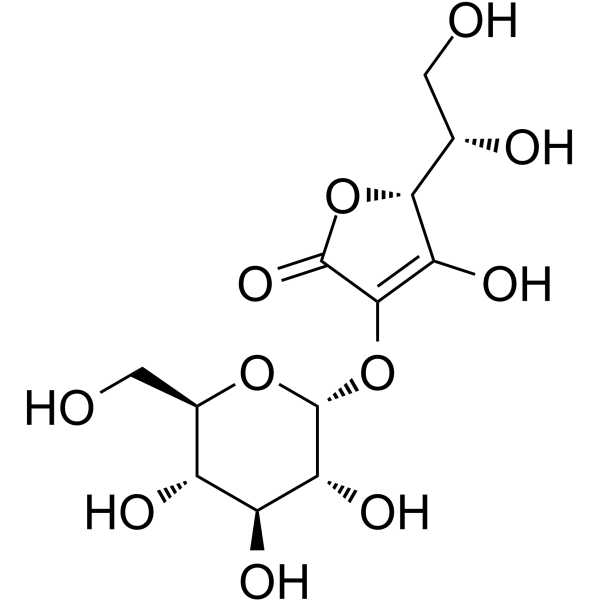
2-O-α-D-Glucopyranosyl-L-ascorbic Acid is an orally active glucoside derivative of ascorbic acid. 2-O-α-D-Glucopyranosyl-L-ascorbic Acid can be hydrolyzed by α-glucosidase to release ascorbic acid. 2-O-α-D-Glucopyranosyl-L-ascorbic Acid inhibits melanin synthesis, prevents UV-induced cell damage, and promotes collagen synthesis in skin fibroblasts. 2-O-α-D-Glucopyranosyl-L-ascorbic Acid also induces oxidative stress to inhibit tumor growth. 2-O-α-D-Glucopyranosyl-L-ascorbic Acid can be used in research related to tumors, inflammation, and other conditions .
|
-
-
- HY-N3018
-
|
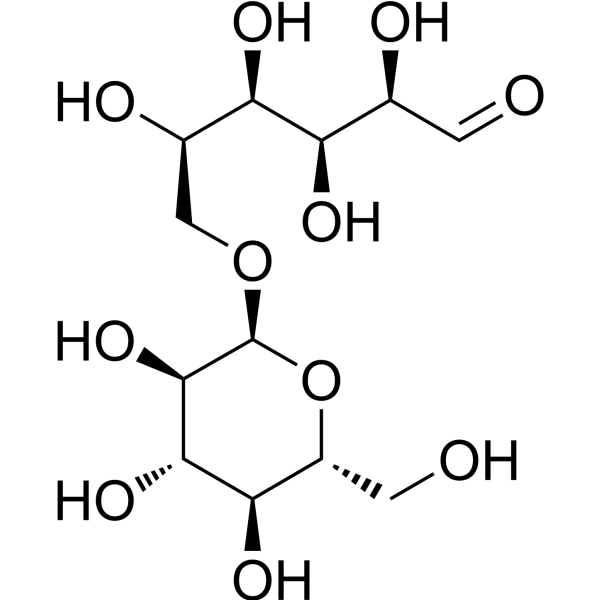
6-O-α-D-glucopyranosyl-D-glucose; D-Isomaltose
|
Endogenous Metabolite
Parasite
|
Infection
Metabolic Disease
|
|
Isomaltose (6-O-α-D-Glucopyranosyl-D-glucose) is a glucose disaccharide. Isomaltose induces G-CSF secretion via heat-induced oxidative polymerization of glucose groups into high-molecular-weight compounds. Isomaltose modulates cecal bacterial cluster structure in mice. Isomaltose exhibits low glycemic index, slow hydrolysis, and prebiotic properties. Isomaltose reduces in vivo Cryptosporidium parvum colonization in neonatal mice. Isomaltose can be used for the research of Cryptosporidium parvum infection .
|
-
-
- HY-111974
-
|
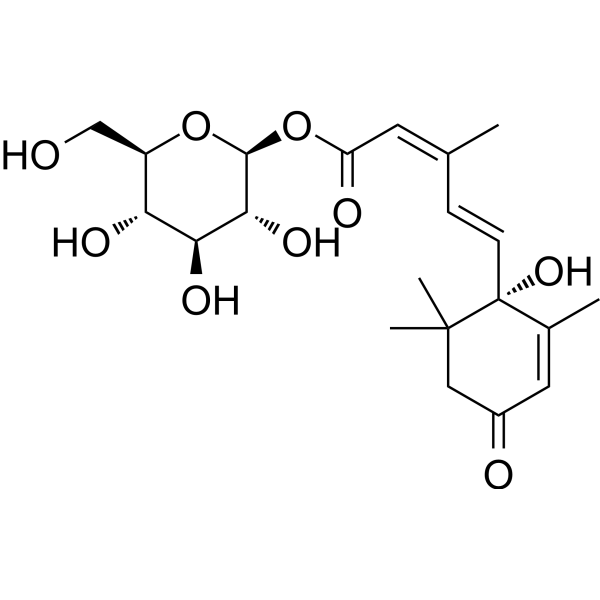
ABA-GE; (S)-cis,trans-Abscisic acid glucosyl ester
|
Proton Pump
|
Endocrinology
|
|
β-D-Glucopyranosyl abscisate (ABA-GE) is a hydrolyzable abscisic acid (ABA) conjugate that accumulates in the vacuole and presumably also in the endoplasmic reticulum. The deconjugation of β-D-Glucopyranosyl abscisate allows the rapid formation of free ABA in response to abiotic stress conditions such as dehydration and salt stress. β-D-Glucopyranosyl abscisate contributes to the maintenance of ABA homeostasis .
|
-
-
- HY-N8163
-
|
|
Others
|
Others
|
|
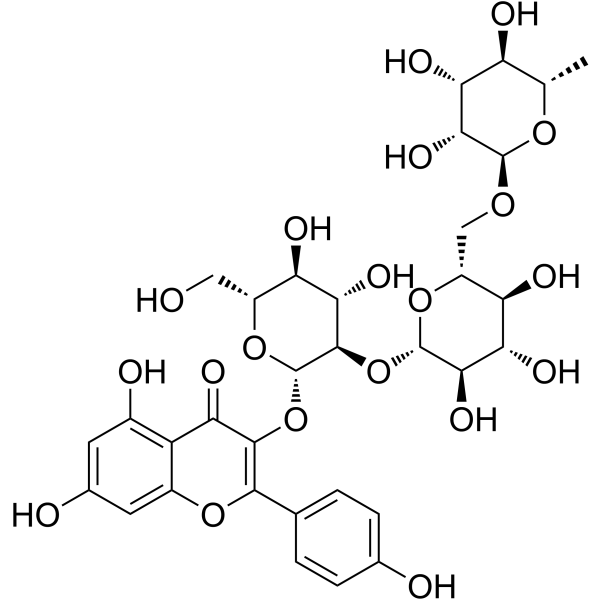
Kaempferol-3-O-α-L-rhamnopyranosyl-(1→6)-β-D-glucopyranosyl-(1→2)-β-D-glucopyranoside is an antioxidant with an IC50 of 26.6 μM (DPPH assay) .
|
-
-
- HY-119445A
-
|
2-O-beta-D-glucopyranosyl-D-glucopyranose monohydrate
|
Biochemical Assay Reagents
|
Infection
Others
Cancer
|
|
Sophorose (2-O-beta-D-Glucopyranosyl-D-glucopyranose) monohydrate is the disaccharide component of microbial glycolipids, which are often used as biosurfactants due to their hydrophobicity. Sophorolipids also exhibit antibacterial, antifungal, spermicidal, virucidal, and anticancer activities. In studies of Trichoderma reesei fermentation, sophorose monohydrate has been identified as a potent inducer of cellulase gene expression .
|
-

-
- HY-W423191
-
|
4-O-α-D-glucopyranosyl-D-gluconic acid
|
Nuclear Factor of activated T Cells (NFAT)
Bacterial
|
Infection
Metabolic Disease
|
|
Maltobionic acid (4-O-α-D-Glucopyranosyl-D-gluconic acid) is an orally active oligosaccharide and iron chelator with antibacterial activity. Maltobionic acid inhibits the expression of NFATc1, suppresses osteoclast differentiation, inhibits bone resorption, and increases serum calcitonin levels. Maltobionic acid protects mammalian cells from hydrogen peroxide (H2O2)-induced oxidative damage; resists fermentation by the gut microbiota; and exhibits anti-digestive and anti-fermentative properties. Maltobionic acid can be used in research related to osteoporosis, bacterial infections, and constipation .
|
-

-
- HY-N6964
-
|
Quercetin-3-O-[2-O-(6-O-p-hydroxyl-E-coumaroyl)-D-glucosyl]-(1→2)-L-rhamnoside
|
Drug Derivative
|
Inflammation/Immunology
|
|
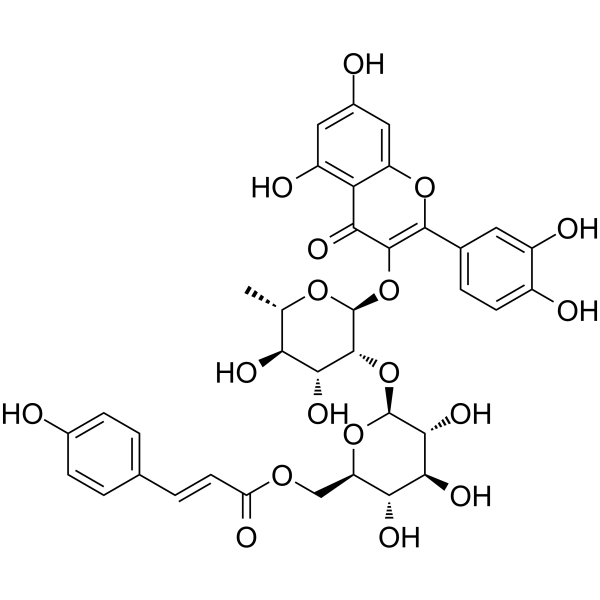
Quercetin 3-O-β-D-(6''-p-coumaroyl) glucopyranosyl (1→2)-α-L-rhamnopyranoside (Quercetin-3-O-[2-O-(6-O-p-hydroxyl-E-coumaroyl)-D-glucosyl]-(1→2)-L-rhamnoside) is a flavonoid glycoside present in Ginkgo biloba leaves, with antioxidant activity. Quercetin 3-O-β-D-(6''-p-coumaroyl) glucopyranosyl (1→2)-α-L-rhamnopyranoside serves as the major antioxidant component in Shuxuening Injection .
|
-
-
- HY-N6958
-
|
AA-2βG
|
Apoptosis
HSP
Reactive Oxygen Species (ROS)
Keap1-Nrf2
Heme Oxygenase (HO)
|
Inflammation/Immunology
Cancer
|
|
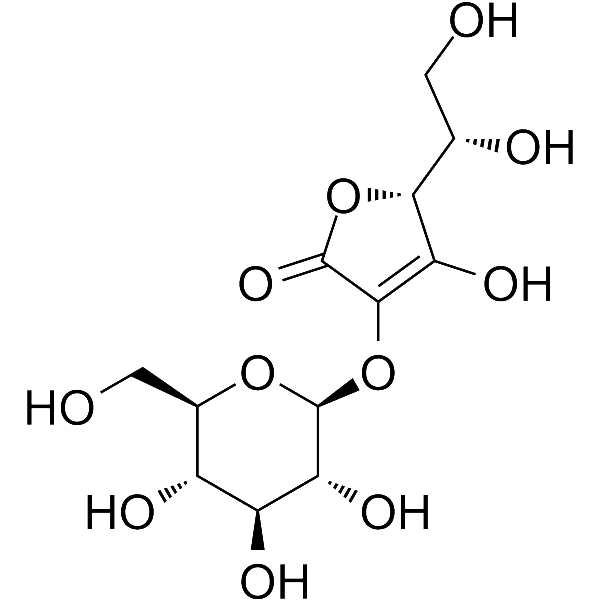
2-O-β-D-Glucopyranosyl-L-ascorbic acid (AA-2βG) is an orally active vitamin C derivative. 2-O-β-D-Glucopyranosyl-L-ascorbic acid exhibits multiple activities including antioxidant, anti-tumor and immunomodulatory effects. 2-O-β-D-Glucopyranosyl-L-ascorbic acid mediates tumor cell apoptosis, induces cell cycle arrest, scavenges free radicals and eliminates oxidative stress. 2-O-β-D-Glucopyranosyl-L-ascorbic acid can be used in studies related to cancer, inflammation and immunity .
|
-
-
- HY-W353469
-
|
Glucosylglycerol
|
Biochemical Assay Reagents
|
Others
|
|
2-O-(α-D-Glucopyranosyl) glycerol (55% in water) (Glucosylglycerol) is a glycerol glycoside and compatible solute. 2-O-(α-D-Glucopyranosyl) glycerol is isolable from the marine cyanobacterium Oscillatoria sp. 2-O-(α-D-Glucopyranosyl) glycerol (55% in water) acts as a salt stress protectant in Synechocystis sp. PCC 6803 ΔggpS cells. It enhances salt tolerance of Synechocystis sp. PCC 6803 ΔggpS cells and maintains cell division under salt stress .
|
-

-
- HY-W017749
-
-
-
- HY-N7635
-
|
β-D-glucopyranosyl oleanolate
|
NO Synthase
COX
Interleukin Related
Claudin
p38 MAPK
Akt
PI3K
|
Inflammation/Immunology
|
|
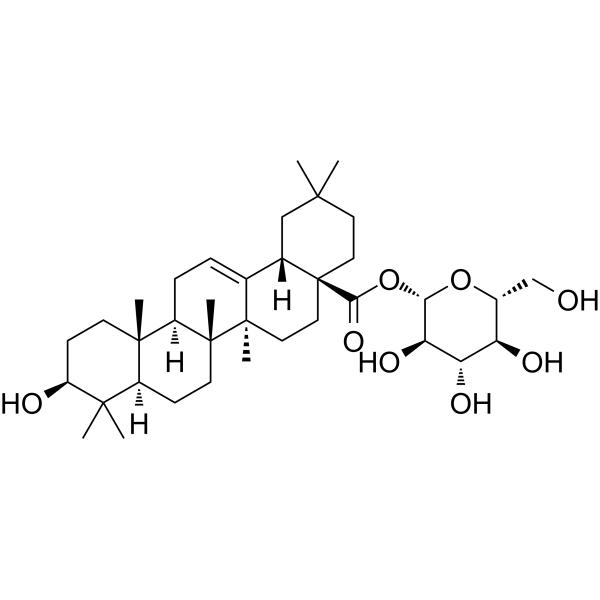
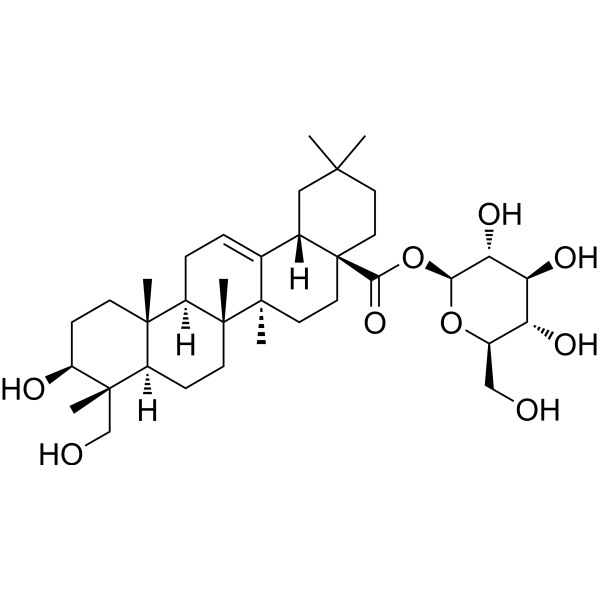
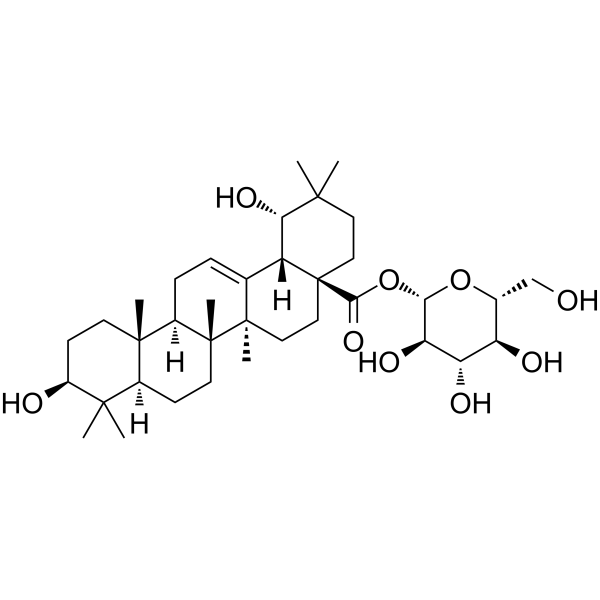
Oleanolic acid 28-O-β-D-glucopyranoside (β-D-Glucopyranosyl oleanolate) is an orally active pentacyclic triterpenoid compound. Oleanolic acid 28-O-β-D-glucopyranoside has anti-inflammatory effects. In ulcerative colitis models, Oleanolic acid 28-O-β-D-glucopyranoside can inhibit the inflammatory response, enhance the intestinal epithelial barrier function, and modulate the gut microbiota. Its mechanism of action is related to the PI3K-AKT and MAPK signaling pathways. Oleanolic acid 28-O-β-D-glucopyranoside can be used in the research of diseases such as colitis .
|
-
-
- HY-N6986
-
|
Liquiritigenin-7-apiosylglucoside
|
Others
|
Cancer
|
|
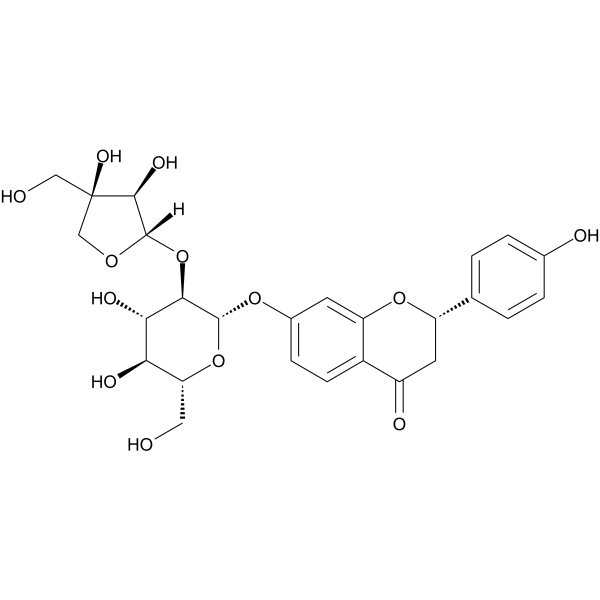
Liquiritigenin-7-O-β-D-glucopyranosyl-(1→2)-β-D-apiofuranoside (Liquiritigenin-7-apiosylglucoside) is a flavonoid isolated from the roots of Glycyrrhiza, has weaker cytotoxicity against several tumor cells and normal cells .
|
-
-
- HY-P10230
-
|
|
Bacterial
|
Infection
|
|
Sublancin is an antimicrobial peptide, which inhibits DNA replication, transcription and translation, without affecting membrane integrity. Sublancin suppresses glucose uptake for the competition of phosphotransferase system (PTS). Sublancin inhibits B. subtilis strain 168 ΔSPβ with MIC of 0.312 μM .
|
-

-
- HY-141490
-
|
|
Drug Derivative
|
Others
|
|
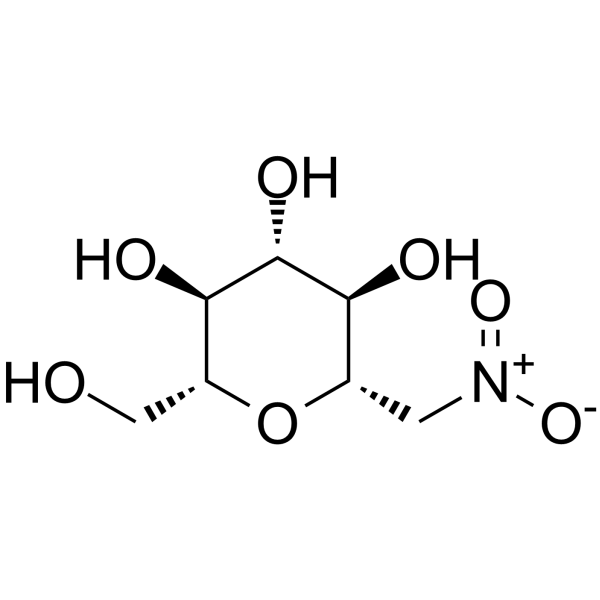
Beta-D-Glucopyranosyl nitromethane, as a salt of a strongly basic anion exchanger in the OH cycle, is a glycosyl derivative of nitromethane .
|
-
-
- HY-N6260
-
|
|
Others
|
Others
|
|
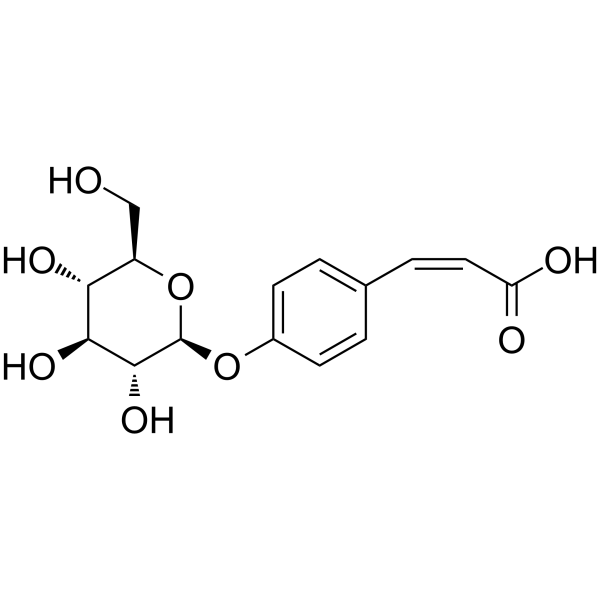
4-O-beta-Glucopyranosyl-cis-coumaric acid is a natural compound isolated formn Nelumbo nucifera Gaertn.
|
-
-
- HY-152780
-
|
|
Nucleoside Antimetabolite/Analog
|
Others
|
|
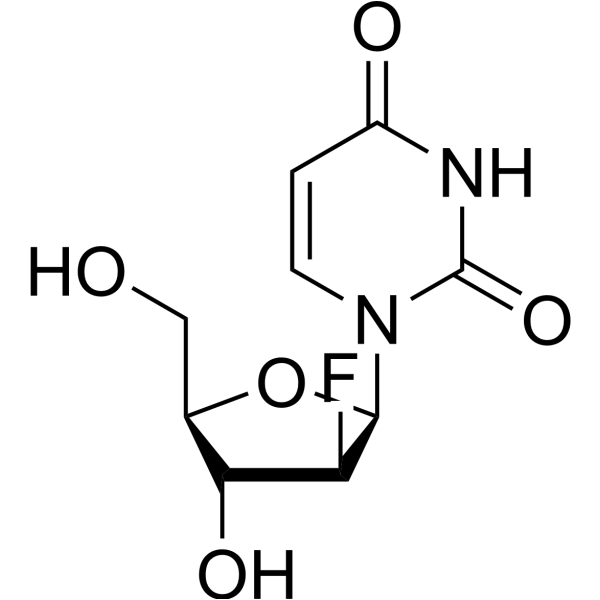
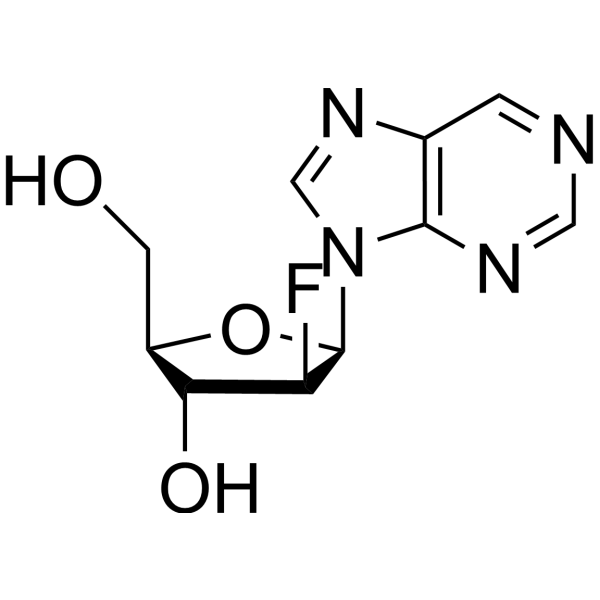
9-(2’-Deoxy-2’-fluoro-β-D-arabinofuranosyl)-9H-purine is a purine nucleoside analogue. Purine nucleoside analogs have broad antitumor activity targeting indolent lymphoid malignancies. Anticancer mechanisms in this process rely on inhibition of DNA synthesis, induction of apoptosis, etc .
|
-
-
- HY-W415909
-
|
4-O-α-D-glucopyranosyl-D-fructose monohydrate
|
Biochemical Assay Reagents
|
Others
|
|
Maltulose monohydrate (4-O-α-D-Glucopyranosyl-D-fructose monohydrate) can be used as an energy source for bacteria. Maltulose monohydrate is a biomaterial or organic compound that can be used in life science research .
|
-

-
- HY-W145623
-
|
2,3,4,6-Tetra-O-benzyl-beta-D-glucopyranosyl fluoride
|
Biochemical Assay Reagents
|
Others
|
|
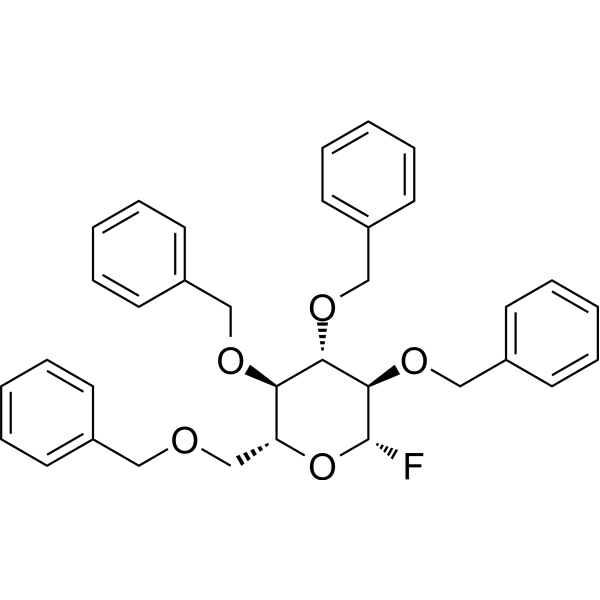
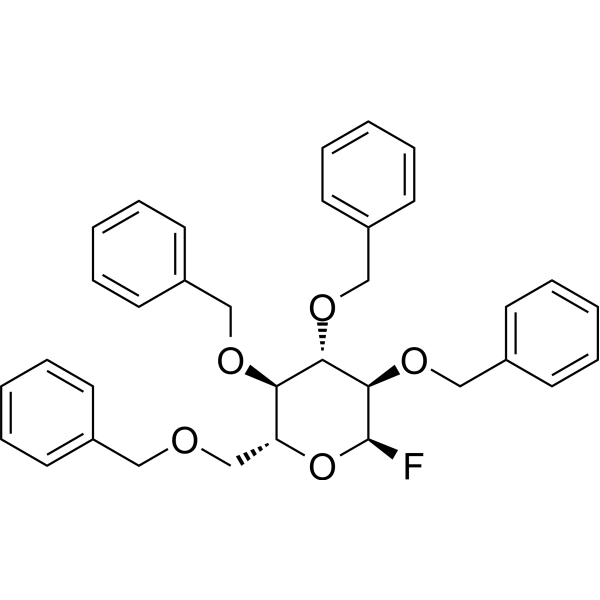
2,3,4,6-Tetra-O-benzyl-β-D-glucopyranosyl Fluoride is a biochemical reagent that can be used as a biological material or organic compound for life science related research.
|
-
-
- HY-157922
-
|
α-D-glucopyranosyl-α-D-glucopyranoside monododecanoate
|
Biochemical Assay Reagents
|
Others
|
|
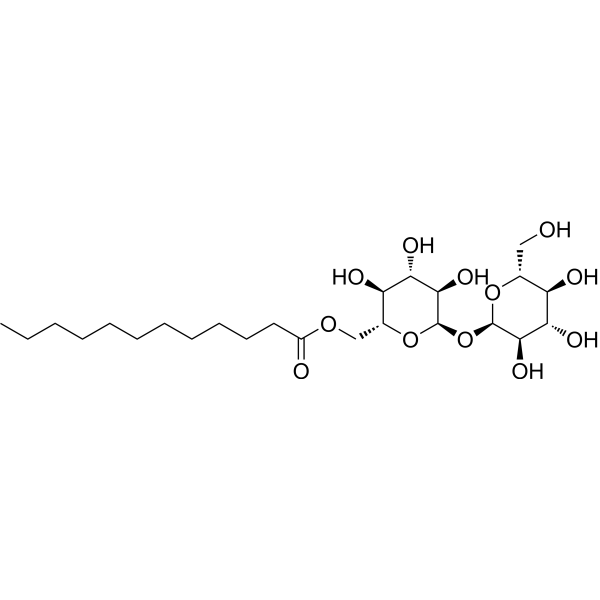
Trehalose C12 (α-D-Glucopyranosyl-α-D-glucopyranoside monododecanoate) is a nonreducing disaccharide with amphiphilic property, which is used as emulsifier, surfactant, encapsulating materials, and in the biochemical researches of cellular processes and membrane interactions .
|
-
-
- HY-W550484
-
|
|
Nucleoside Antimetabolite/Analog
|
Cancer
|
|
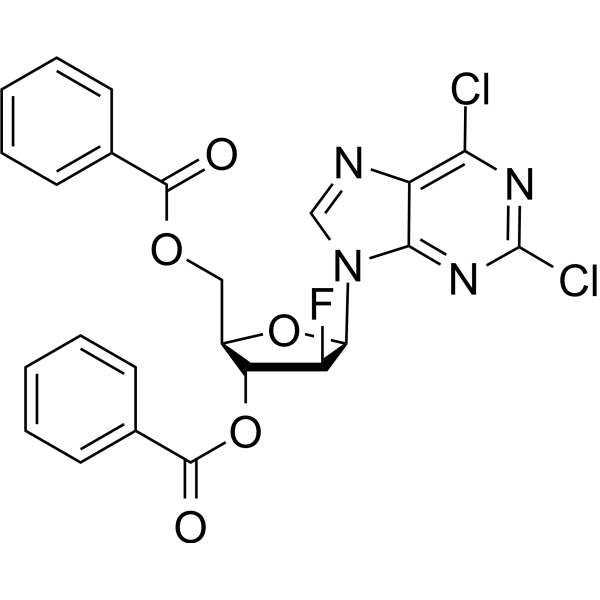
2,6-Dichloro-9-(3,5-di-O-benzoyl-2-deoxy-2-fluoro-D-arabinofuranosyl)-9H-purine arabinoriboside is a purine nucleoside analog. Purine nucleoside analogs have broad antitumor activity targeting indolent lymphoid malignancies. Anticancer mechanisms in this process rely on inhibition of DNA synthesis, induction of apoptosis, etc .
|
-
-
- HY-123115
-
|
5-O-α-D-glucopyranosyl-D-fructose
|
JAK
STAT
TNF Receptor
Interleukin Related
|
Metabolic Disease
Inflammation/Immunology
|
|
Leucrose (5-O-α-D-Glucopyranosyl-D-fructose) is an orally active Sucrose (HY-B1779) isomer naturally found in pollen and honey. Leucrose promotes phosphorylation of JAK1 and STAT6, reduces pro-inflammatory mediators and cytokinesas (TNFα, and IL-1β), increases M2 macrophage polarization and suppresses DSS (HY-116282C)-induced colitis. Leucrose suppresses hepatic triglyceride accumulation, improves fasting blood glucose levels, and regulates hepatic lipogenesis and fatty acid β-oxidation in high-fat diet-induced obese mice. Leucrose is slowly hydrolyzed into glucose and fructose by α-glucosidase and acts as as a sugar substitute in diet .
|
-

-
- HY-N9522
-
|
|
Endogenous Metabolite
|
Others
|
|
β-D-glucopyranosyl-[α-L-rhamnopyranosyl-(1→3)-βD-glucuronopyranosyl-(1→3)]-3β-hydroxyolean-12-ene28-oate, as a saponin, has a glucuronic acid attached to carbon C-3 and is isolated from S. simplex .
|
-
![β-D-glucopyranosyl-[α-L-rhamnopyranosyl-(1→3)-βD-glucuronopyranosyl-(1→3)]-3β-hydroxyolean-12-ene28-oate](//file.medchemexpress.com/product_pic/hy-n9522.gif)
-
- HY-146992S
-
-
-
- HY-N9521
-
|
|
Others
|
Cancer
|
|
3-O-β-D-Glucopyranosyl(1→2)-[a-Lrhamnopyranosyl(1→3)]-β-D-glucopyranosyl 28-O-β-D-glucuronopyranoside, a saponin, is isolated from Polaskia chichipe Backbg. 3-O-β-D-Glucopyranosyl(1→2)-[a-Lrhamnopyranosyl(1→3)]-β-D-glucopyranosyl 28-O-β-D-glucuronopyranoside shows ability to inhibit melanin biosynthesis by B16 melanoma cell with inhibitory activity 84.2% at 100μM[1].
|
-
![3-O-β-D-Glucopyranosyl(1→2)-[a-Lrhamnopyranosyl(1→3)]-β-D-glucopyranosyl 28-O-β-D-glucuronopyranoside](//file.medchemexpress.com/product_pic/hy-n9521.gif)
-
- HY-N2190
-
-
-
- HY-W699750
-
|
|
Biochemical Assay Reagents
|
Others
|
|
6-α-D-Glucopyranosyl maltotriose is a class of biochemical reagents used in glycobiology research. Glycobiology studies the structure, synthesis, biology, and evolution of sugars. It involves carbohydrate chemistry, enzymology of glycan formation and degradation, protein-glycan recognition, and the role of glycans in biological systems. This field is closely related to basic research, biomedicine, and biotechnology .
|
-

-
- HY-W145636
-
|
2,3,4,6-Tetra-O-benzyl-alpha-D-glucopyranosyl fluoride
|
Biochemical Assay Reagents
|
Others
|
|
2,3,4,6-Tetra-O-benzyl-α-D-glucopyranosyl Fluoride is a biochemical reagent that can be used as a biological material or organic compound for life science related research.
|
-
-
- HY-N8132
-
|
|
Reactive Oxygen Species (ROS)
|
Inflammation/Immunology
|
|
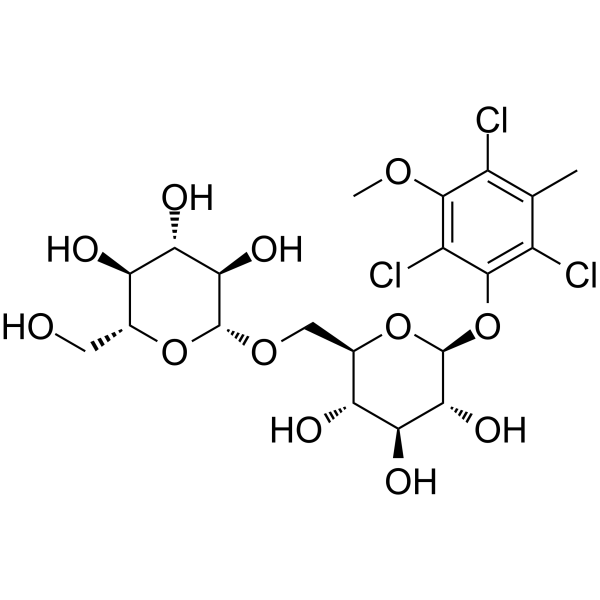
2,4,6-Trichlorol-3-methyl-5-methoxy-phenol 1-O-β-d-glucopyranosyl-(1 → 6)-β-d-glucopyranoside is a chlorophenyl glycoside found in the bulbs of Lilium brownie var. viridulum. 2,4,6-Trichlorol-3-methyl-5-methoxy-phenol 1-O-β-d-glucopyranosyl-(1 → 6)-β-d-glucopyranoside exhibits weak inhibition of NO production in LPS-stimulated RAW 264.7 cells .
|
-
-
- HY-W006443
-
|
2,3,4,6-Tetra-O-acetyl-&beta
|
Biochemical Assay Reagents
|
Others
|
|
2,3,4,6-Tetra-O-acetyl-β-D-glucopyranosyl trichloroacetimidate, 98%(N) (2,3,4,6-Tetra-O-acetyl-&beta) can be used in glycobiology research.
|
-

-
- HY-N12017
-
|
|
Others
|
Infection
Cancer
|
|
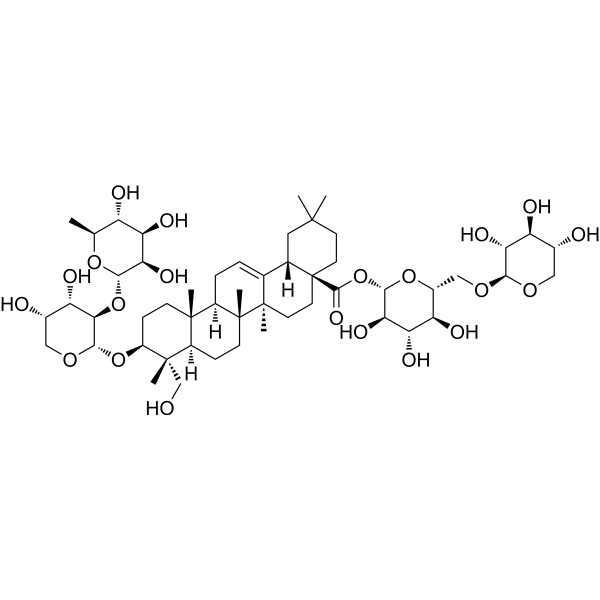
3-O-α-L-Rhamnopyranosyl-(1→2)-α-L-arabinopyranosyl hederagenin28-O-β-D-xylopyranosyl-(1→6)-β-D-glucopyranosyl ester is a hederagenin-type saponin with antitumor and anti-inflammatory properties .
|
-
-
- HY-W788728
-
-

-
- HY-N15532
-
|
|
Trk Receptor
|
Neurological Disease
|
|
Phenylmethyl 6-O-α-L-arabinofuranosyl-β-D-glucopyranoside (Compound 12) is a nerve growth factor (NGF) secretion promoter, which is found in plants of the genus Piper. Phenylmethyl 6-O-α-L-arabinofuranosyl-β-D-glucopyranoside is promising for research of neurodegenerative diseases (such as Parkinson's disease and Alzheimer's disease) and diabetic polyneuropathy .
|
-

-
- HY-W377454
-
|
|
Nucleoside Antimetabolite/Analog
|
Cancer
|
|
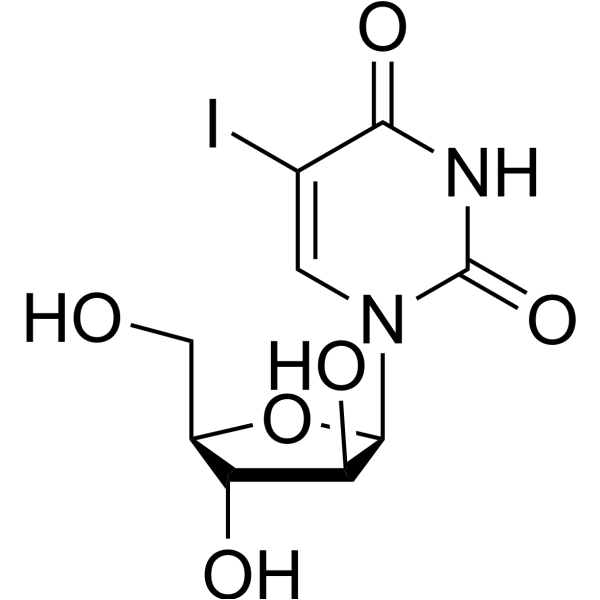
1-Beta-D-arabinofuranosyl-5-iodouracil is a purine nucleoside analog. Purine nucleoside analogs have broad antitumor activity targeting indolent lymphoid malignancies. Anticancer mechanisms in this process rely on inhibition of DNA synthesis, induction of apoptosis, etc .
|
-
-
- HY-N6821R
-
|
|
Drug Derivative
Reference Standards
|
Cancer
|
|
2-O-α-D-Glucopyranosyl-L-ascorbic Acid (Standard) is the analytical standard of 2-O-α-D-Glucopyranosyl-L-ascorbic Acid. This product is intended for research and analytical applications. 2-O-α-D-Glucopyranosyl-L-ascorbic Acid is a glucoside derivative of ascorbic acid, shows anti-cancer activity after enzymatic hydrolysis to ascorbic acid .
|
-

-
- HY-N12070
-
|
|
Others
|
Cardiovascular Disease
|
|
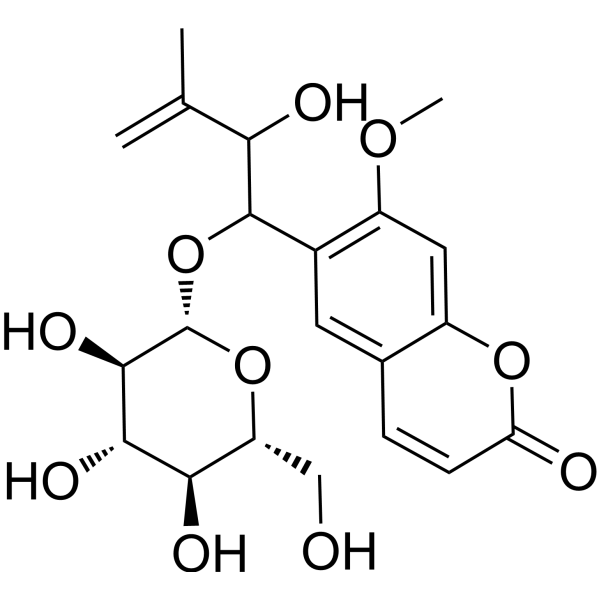
11-O-β-D-glucopyranosyl thamnosmonin, a coumarin glucosides, can be isolated from the roots of Angelica apaensis. 11-O-β-D-glucopyranosyl thamnosmonin has weak inhibitory activity on the aggregation of rabbit platelets induced by PAF, AA, and ADP .
|
-
-
- HY-N8204
-
-
-
- HY-N1533
-
-
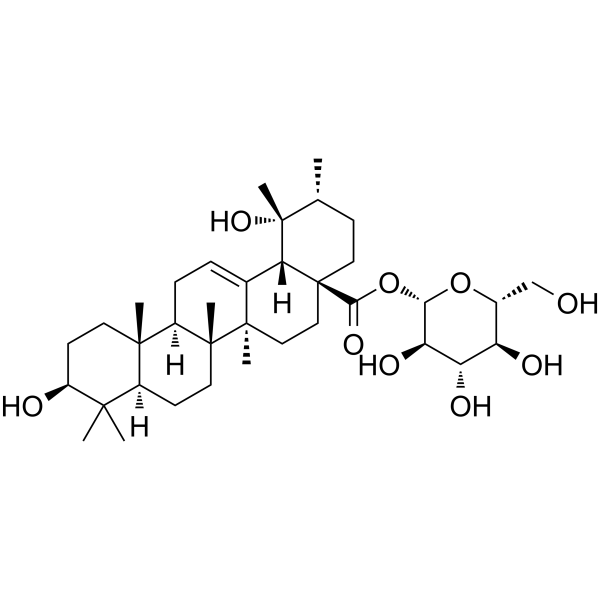
-
- HY-N15722
-
|
|
Reactive Oxygen Species (ROS)
|
Inflammation/Immunology
|
|
9-O-β-D-Glucopyranosyl-3,4-dimethoxy-cinnamic acid is an orally active phenylpropanoid glycoside found in Microlepia pilosissima, acting as an antioxidant. 9-O-β-D-Glucopyranosyl-3,4-dimethoxy-cinnamic acid shows a DPPH radical scavenging activity with an ED50 value of 38.1 μM. 9-O-β-D-Glucopyranosyl-3,4-dimethoxy-cinnamic acid is promising for research of oxidative stress-related diseases such as inflammation and liver injury .
|
-

-
- HY-W039934
-
|
|
Biochemical Assay Reagents
|
Others
|
|
2,3,5-Tri-O-benzoyl-α-D-arabinofuranosyl bromide is a class of biochemical reagents used in glycobiology research. Glycobiology studies the structure, synthesis, biology, and evolution of sugars. It involves carbohydrate chemistry, enzymology of glycan formation and degradation, protein-glycan recognition, and the role of glycans in biological systems. This field is closely related to basic research, biomedicine, and biotechnology .
|
-

-
- HY-W416255
-
-

-
- HY-N4051
-
|
|
Others
|
Others
|
|
3"-O-β-D-Glucopyranosyl-(2"R)-heraclenol (compound 4) is a natural product from the roots of Heracleum rapula Franch .
|
-
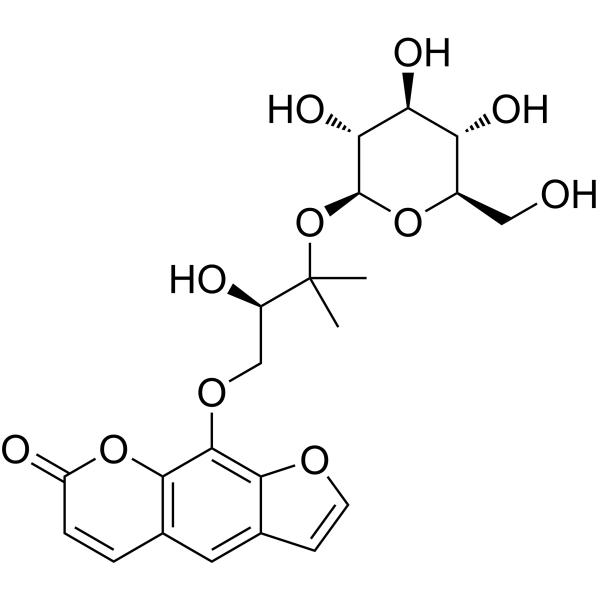
-
- HY-N5053
-
|
|
Others
|
Others
|
|
Periplogenin 3-[O-β-glucopyranosyl-(1→4)-β-sarmentopyranoside] is a cardenolide isolated from the root barks of Periploca sepium .
|
-
![Periplogenin 3-[O-β-glucopyranosyl-(1→4)-β-sarmentopyranoside]](//file.medchemexpress.com/product_pic/hy-n5053.gif)
-
- HY-152603
-
|
|
Nucleoside Antimetabolite/Analog
|
Others
|
|
2-Amino-1-β-D-arabinofuranosyl-5-methyl-4(1H)-pyrimidinone is a purine nucleoside analogue. Purine nucleoside analogs have broad antitumor activity targeting indolent lymphoid malignancies. Anticancer mechanisms in this process rely on inhibition of DNA synthesis, induction of apoptosis, etc .
|
-
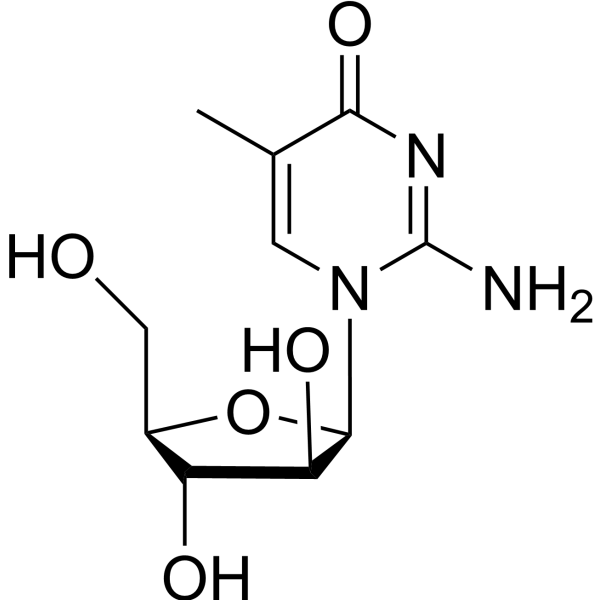
-
- HY-152776
-
|
|
Nucleoside Antimetabolite/Analog
|
Others
|
|
2-Amino-9-(2-deoxy-2-fluoro-β-D-arabinofuranosyl)-9H-purine is a purine nucleoside analogue. Purine nucleoside analogs have broad antitumor activity targeting indolent lymphoid malignancies. Anticancer mechanisms in this process rely on inhibition of DNA synthesis, induction of apoptosis, etc .
|
-
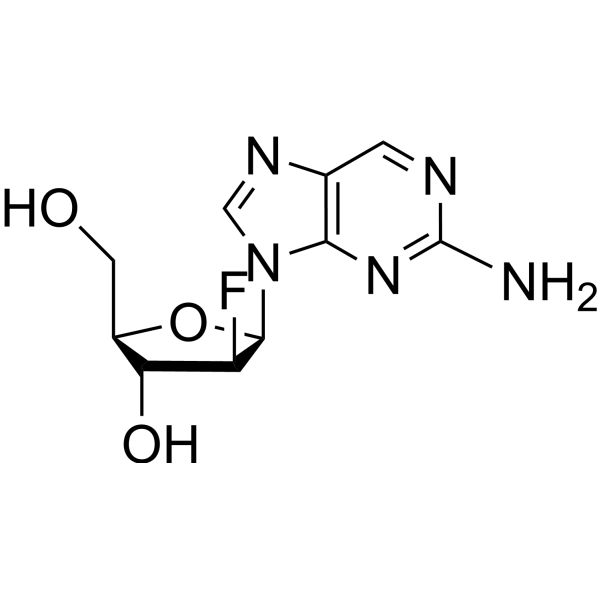
-
- HY-154663
-
|
|
Nucleoside Antimetabolite/Analog
|
Cancer
|
|
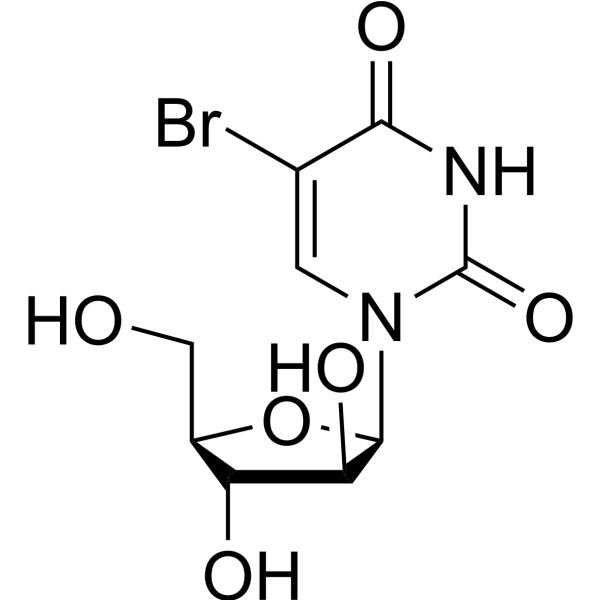
1-β-D-Arabinofuranosyl-5-bromo-2,4(1H,3H)-pyrimidinedione is a purine nucleoside analog. Purine nucleoside analogs have broad antitumor activity targeting indolent lymphoid malignancies. Anticancer mechanisms in this process rely on inhibition of DNA synthesis, induction of apoptosis, etc .
|
-
-
- HY-166986
-
-
![2-O-[2-(Acetylamino)-2-deoxy-β-D-glucopyranosyl]-D-mannose](//file.medchemexpress.com/product_pic/hy-166986.gif)
-
- HY-154604
-
|
|
Nucleoside Antimetabolite/Analog
Phosphoramidites
|
Cancer
|
|
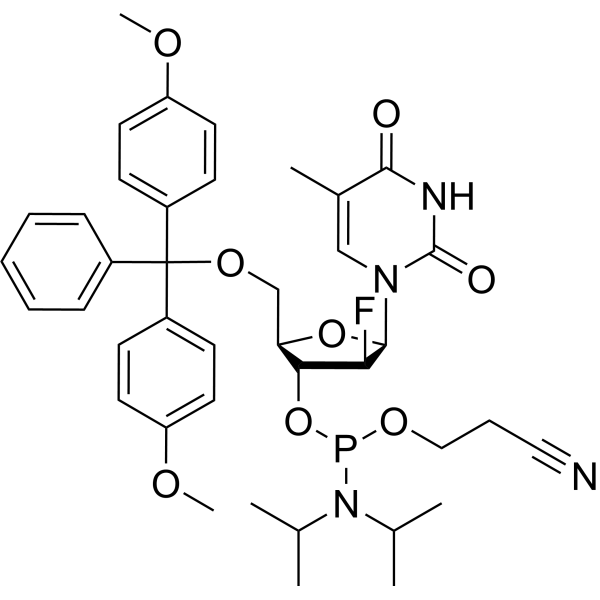
1-(2'-Deoxy-5'-O-DMT-2'-fluoro-b-D-arabinofuranosyl)thymine 3'-CE phosphoramidite is a thymidine analog. Analogs of this series have insertional activity towards replicated DNA. They can be used to label cells and track DNA synthesis .
|
-
-
- HY-W145533
-
|
|
Biochemical Assay Reagents
|
Others
|
|
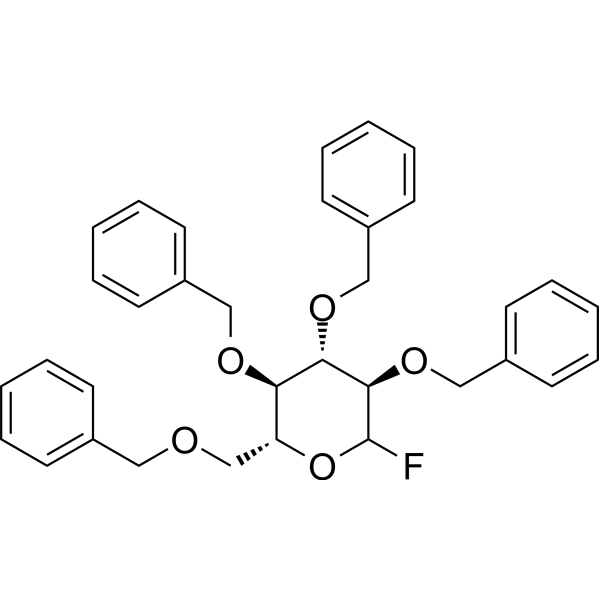
2,3,4,6-Tetra-O-benzyl-D-glucopyranosyl Fluoride is a biochemical reagent that can be used as a biological material or organic compound for life science related research.
|
-
-
- HY-N12035
-
|
|
Others
|
Cancer
|
|
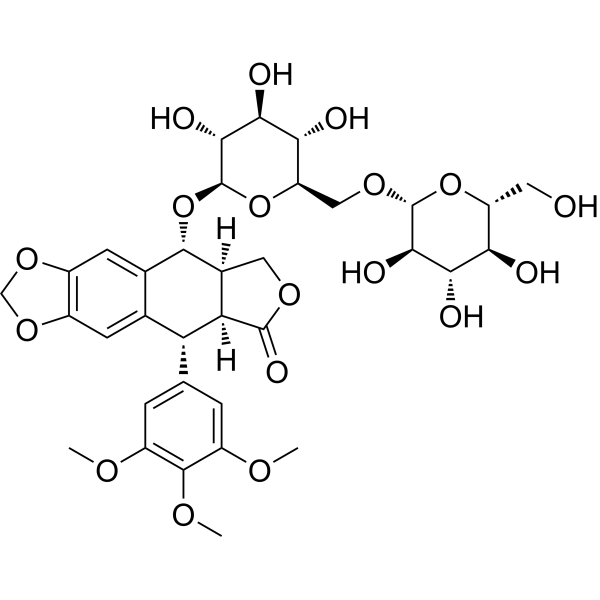
Picropodophyllin-4-O-β-D-glucopyranosyl-(1→6)-β-D-glucopyranoside (compound 17) is a lignan isolated from the roots and rhizomes of Podophyllum sinensis .
|
-
- HY-152686
-
|
|
Nucleoside Antimetabolite/Analog
|
Others
|
|
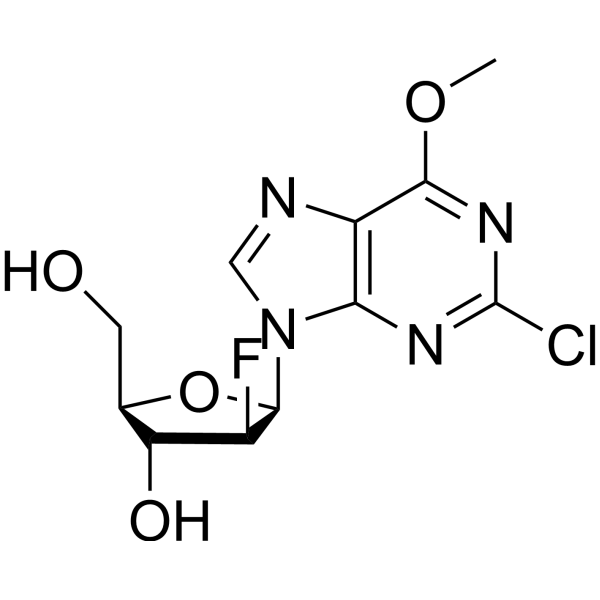
2-Chloro-9-(2-deoxy-2-fluoro-β-D-arabinofuranosyl)-6-methoxy-9H-purine is a purine nucleoside analogue. Purine nucleoside analogs have broad antitumor activity targeting indolent lymphoid malignancies. Anticancer mechanisms in this process rely on inhibition of DNA synthesis, induction of apoptosis, etc .
|
-
- HY-W698422
-
|
|
Biochemical Assay Reagents
|
Others
|
|
2-O-α-D-Glucopyranosyl-D-galactose is a class of biochemical reagents used in glycobiology research. Glycobiology studies the structure, synthesis, biology, and evolution of sugars. It involves carbohydrate chemistry, enzymology of glycan formation and degradation, protein-glycan recognition, and the role of glycans in biological systems. This field is closely related to basic research, biomedicine, and biotechnology .
|
-

- HY-152676
-
|
|
Nucleoside Antimetabolite/Analog
|
Others
|
|
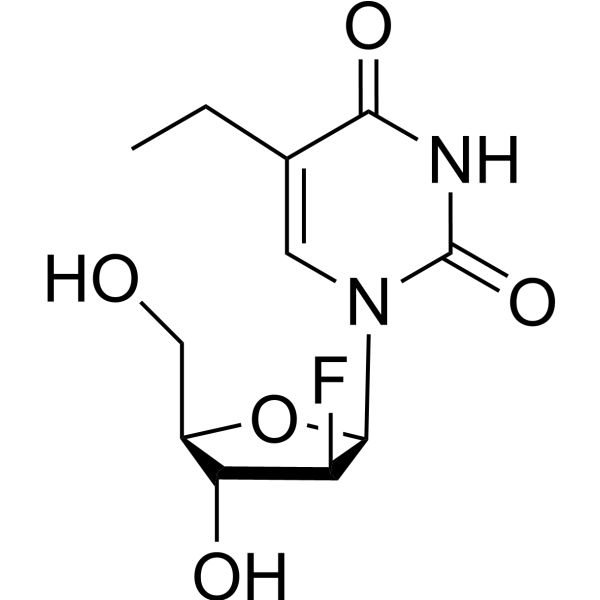
1-(2-Deoxy-2-fluoro-β-D-arabinofuranosyl)-5-ethyl-2,4(1H,3H)-pyrimidinedione is a thymidine analogue. Analogs of this series have insertional activity towards replicated DNA. They can be used to label cells and track DNA synthesis .
|
-
- HY-W334680
-
|
|
Nucleoside Antimetabolite/Analog
|
Others
|
|
2-Amino-9-((2R,3S,4R,5R)-3-fluoro-4-hydroxy-5-(hydroxymethyl)tetrahydrofuran-2-yl)-3,9-dihydro-6H-purin-6-one (9-β-D-[2'-Fluoro-2'-deoxy-arabinofuranosyl]-guanin) is a purine nucleoside analogue. Purine nucleoside analogs have broad antitumor activity targeting indolent lymphoid malignancies. Anticancer mechanisms in this process rely on inhibition of DNA synthesis, induction of apoptosis, etc .
|
-
![9-β-D-[2'-Fluoro-2'-deoxy-arabinofuranosyl]-guanin](//file.medchemexpress.com/product_pic/hy-w334680.gif)
- HY-N12708
-
|
|
Others
|
Others
|
|
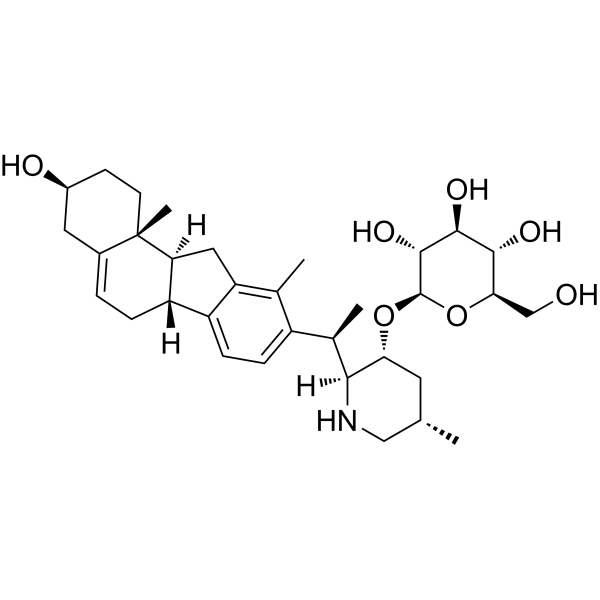
23-O-β-D-Glucopyranosyl-20-isoveratramine is a potential anti-allergic agent extracted from nettles. A variety of COX-1, COX-2, 5-lipoxygenase and trypsin-like inhibitors and H1 antagonists are found in nettle extract, which can inhibit seasonal allergies, allergic rhinitis and other inflammatory diseases. and preventive effects .
|
-
- HY-152773
-
|
|
Nucleoside Antimetabolite/Analog
|
Others
|
|
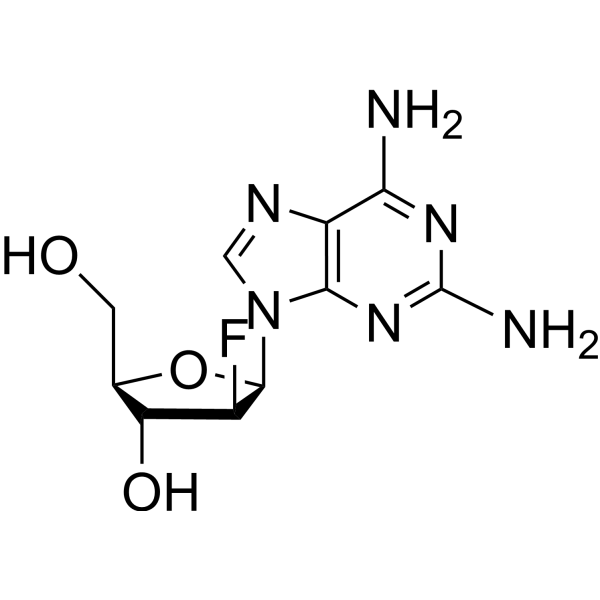
2,6-Diamino-9-(2-deoxy-2-fluoro-β-D-arabinofuranosyl)-9H-purine is an adenosine analogue. Adenosine analogs mostly act as smooth muscle vasodilators and have also been shown to inhibit cancer progression. The popular products in this series are adenosine phosphate, Acadesine (HY-13417), Clofarabine (HY-A0005), Fludarabine phosphate (HY-B0028) and Vidarabine (HY-B0277) .
|
-
- HY-N12079
-
|
|
Biochemical Assay Reagents
|
Cancer
|
|
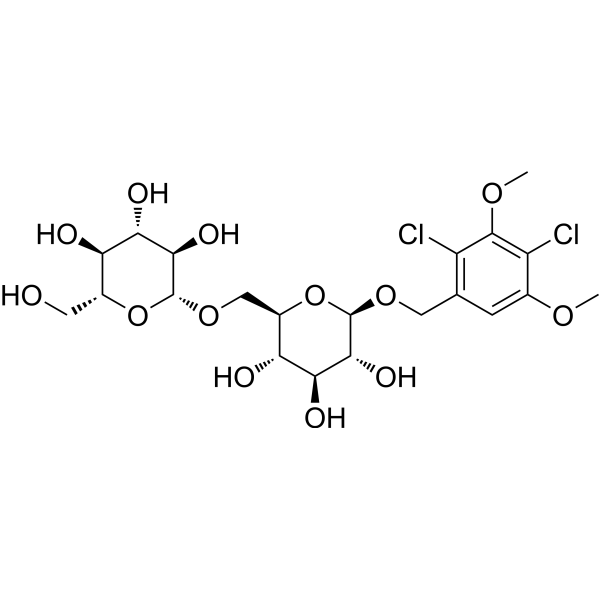
(2,4-Dichloro-3,5-dimethoxyphenyl) methyl 6-O-β-D-glucopyranosyl-β-D-glucopyranoside is an anticancer agent that inhibits the proliferation of lung cancer A549 cells (IC50=29 μΜ). (2,4-Dichloro-3,5-dimethoxyphenyl) methyl 6-O-β-D-glucopyranosyl-β-D-glucopyranoside can be obtained from Lilium regale and can be used in cancer research .
|
-
- HY-W155446
-
|
Decyl 4-O-α-D-glucopyranosyl-1-thio-β-D-glucopyranoside
|
Biochemical Assay Reagents
|
Others
|
|
Decyl beta-d-thiomaltopyranoside (Decyl 4-O-α-D-glucopyranosyl-1-thio-β-D-glucopyranoside) is a biochemical assay reagent.
|
-

- HY-N11910
-
|
|
Biochemical Assay Reagents
|
Others
|
|
Kaempferol-3-O-[(6-caffeoyl)-β-glucopyranosyl (1→3) α-rhamnopyranoside]-7-O-α-rhamnopyranoside (Compound 3) is a wound healing agent with dose-dependent wound healing ability. Kaempferol-3-O-[(6-caffeoyl)-β-glucopyranosyl (1→3) α-rhamnopyranoside]-7-O-α-rhamnopyranoside can be used for wound repair research .
|
-
![Kaempferol-3-O-[(6-caffeoyl)-β-glucopyranosyl (1→3) α-rhamnopyranoside]-7-O-α-rhamnopyranoside](//file.medchemexpress.com/product_pic/hy-n11910.gif)
- HY-W603112
-
|
|
Biochemical Assay Reagents
|
Others
|
|
β-D-Glucopyranosyl 1-thio-β-D-glucopyranoside is a class of biochemical reagents used in glycobiology research. Glycobiology studies the structure, synthesis, biology, and evolution of sugars. It involves carbohydrate chemistry, enzymology of glycan formation and degradation, protein-glycan recognition, and the role of glycans in biological systems. This field is closely related to basic research, biomedicine, and biotechnology .
|
-

- HY-W020420
-
|
|
Nucleoside Antimetabolite/Analog
|
Cancer
|
|
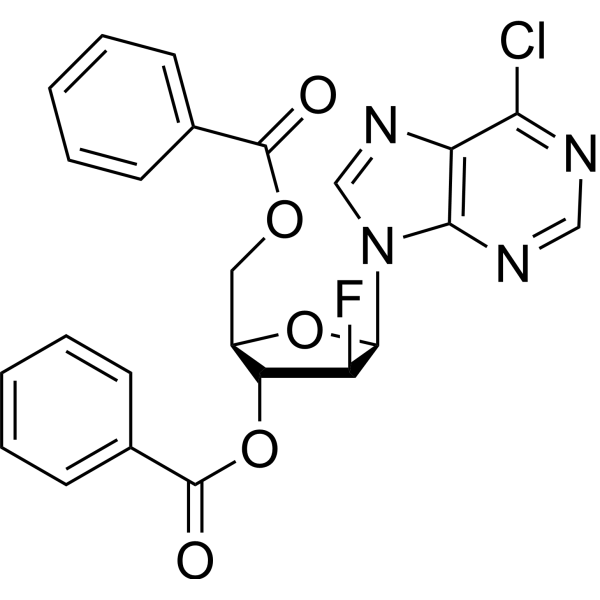
6-Chloro-9-(3,5-di-O-benzoyl-2-deoxy-2-fluoro-beta-D-arabinofuranosyl)-9H-purine is a purine nucleoside analog. Purine nucleoside analogs have broad antitumor activity targeting indolent lymphoid malignancies. Anticancer mechanisms in this process rely on inhibition of DNA synthesis, induction of apoptosis, etc .
|
-
- HY-W671745
-
|
|
Others
|
Others
|
|
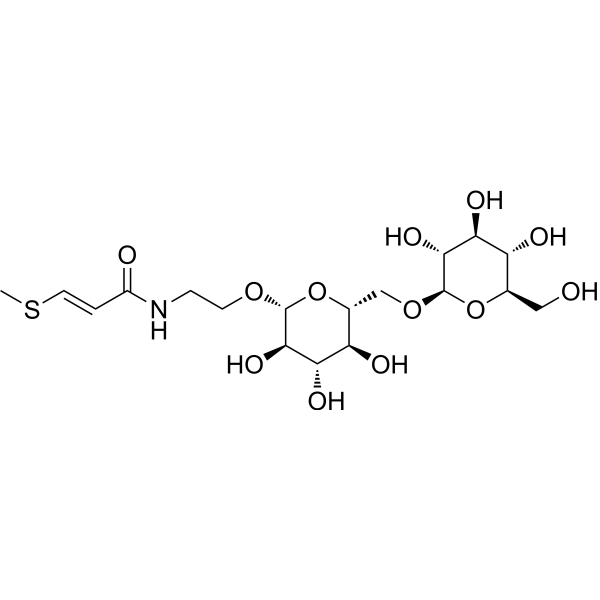
Entadamide A 2'-O-(6''-O-β-D-glucopyranosyl)-β-D-glucopyranoside (MFLNH I) (compound 5) can be isolated from the seed kernel of Entada rheedei. Entada rheedei is a medicinal plant from Thailand that is used to suppress stomach pain .
|
-
- HY-N9025
-
|
|
Others
|
Others
|
|
ent-6,9-Dihydroxy-15-oxo-16-kauren-19-oic acid beta-D-glucopyranosyl ester is a Diterpenoids product that can be isolated from the herbs of Pteris semipinnata .
|
-

- HY-N12547
-
|
|
Others
|
Others
|
|
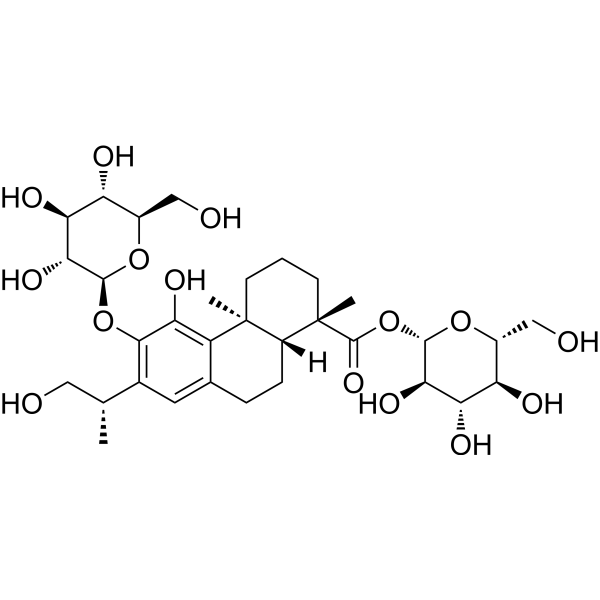
19-OD-Carboxyglucopyranosyl-12-O--D-glucopyranosyl-11,16-dihydroxyabieta-8,11,13-triene was isolated from the acetone-soluble extract of Clerodendrum bungei roots .
|
-
- HY-W777046
-
|
|
Biochemical Assay Reagents
|
Others
|
|
4-Nitrophenyl 3-O-α-D-glucopyranosyl-α-D-glucopyranoside is a class of biochemical reagents used in glycobiology research. Glycobiology studies the structure, synthesis, biology, and evolution of sugars. It involves carbohydrate chemistry, enzymology of glycan formation and degradation, protein-glycan recognition, and the role of glycans in biological systems. This field is closely related to basic research, biomedicine, and biotechnology .
|
-

- HY-W416254
-
|
|
Biochemical Assay Reagents
|
Others
|
|
4-Nitrophenyl 2-O-β-D-glucopyranosyl-β-D-glucopyranoside is a class of biochemical reagents used in glycobiology research. Glycobiology studies the structure, synthesis, biology, and evolution of sugars. It involves carbohydrate chemistry, enzymology of glycan formation and degradation, protein-glycan recognition, and the role of glycans in biological systems. This field is closely related to basic research, biomedicine, and biotechnology .
|
-

- HY-W777041
-
|
|
Biochemical Assay Reagents
|
Others
|
|
4-Nitrophenyl 6-O-α-D-glucopyranosyl-α-D-glucopyranoside is a class of biochemical reagents used in glycobiology research. Glycobiology studies the structure, synthesis, biology, and evolution of sugars. It involves carbohydrate chemistry, enzymology of glycan formation and degradation, protein-glycan recognition, and the role of glycans in biological systems. This field is closely related to basic research, biomedicine, and biotechnology .
|
-

- HY-W700094
-
|
|
Biochemical Assay Reagents
|
Others
|
|
2,3,4,6-Tetra-O-acetyl-β-D-glucopyranosyl Ethylxanthate is a class of biochemical reagents used in glycobiology research. Glycobiology studies the structure, synthesis, biology, and evolution of sugars. It involves carbohydrate chemistry, enzymology of glycan formation and degradation, protein-glycan recognition, and the role of glycans in biological systems. This field is closely related to basic research, biomedicine, and biotechnology .
|
-

- HY-W347825
-
|
|
Biochemical Assay Reagents
|
Others
|
|
4-O-[4,6-O-(Phenylmethylene)-α-D-glucopyranosyl]-D-glucoseis a class of biochemical reagents used in glycobiology research. Glycobiology studies the structure, synthesis, biology, and evolution of sugars. It involves carbohydrate chemistry, enzymology of glycan formation and degradation, protein-glycan recognition, and the role of glycans in biological systems. This field is closely related to basic research, biomedicine, and biotechnology .
|
-
![4-O-[4,6-O-(Phenylmethylene)-α-D-glucopyranosyl]-D-glucose](//file.medchemexpress.com/product_pic/hy-w347825.gif)
- HY-N8812
-
|
|
NO Synthase
|
Inflammation/Immunology
|
|
19-[(β-D-Glucopyranosyl)oxy]-19-oxo-ent-labda-8(17),13-dien-16,15-olide, the metabolite of Neoandrographolide, inhibits nitric oxide (NO) production in lipopolysaccharide-activated macrophages .
|
-
![19-[(β-D-Glucopyranosyl)oxy]-19-oxo-ent-labda-8(17),13-dien-16,15-olide](//file.medchemexpress.com/product_pic/hy-n8812.gif)
- HY-W145565
-
|
|
Biochemical Assay Reagents
|
Others
|
|
2-Acetamido-4,6-O-benzylidene-2-deoxy-β-D-glucopyranosyl is a class of biochemical reagents used in glycobiology research. Glycobiology studies the structure, synthesis, biology, and evolution of sugars. It involves carbohydrate chemistry, enzymology of glycan formation and degradation, protein-glycan recognition, and the role of glycans in biological systems. This field is closely related to basic research, biomedicine, and biotechnology .
|
-

- HY-N11901
-
|
|
Others
|
Others
|
|
Quercetin-3-O-[(6-caffeoyl)-β-glucopyranosyl (1→3) α-rhamnopyranoside]-7-O-α-rhamnopyranoside can be isolated from the aerial parts of the fern Ophioglossum vulgatum L and has wound healing activity .
|
-
![Quercetin-3-O-[(6-caffeoyl)-β-glucopyranosyl (1→3) α-rhamnopyranoside]-7-O-α-rhamnopyranoside](//file.medchemexpress.com/product_pic/hy-n11901.gif)
- HY-W039945
-
|
|
Biochemical Assay Reagents
|
Others
|
|
3,4,6-Tri-O-acetyl-2-deoxy-2-phthalimido-α-D-glucopyranosyl azide is a class of biochemical reagents used in glycobiology research. Glycobiology studies the structure, synthesis, biology and evolution of sugars. It involves carbohydrate chemistry, enzymology of glycan formation and degradation, protein-Glycan recognition and the role of glycans in biological systems. This field is closely related to basic research, biomedicine and biotechnology.
|
-

- HY-W700460
-
|
|
Biochemical Assay Reagents
|
|
|
9-β-D-Arabinofuranosyl-2-fluorohypoxanthine is a nucleoside analog with activity as an inhibitor of certain enzymes. 9-β-D-Arabinofuranosyl-2-fluorohypoxanthine is useful in synthesis and, due to its structural changes, is able to cause base mispairing, thereby stopping chain polymerization reactions.
|
-

- HY-E71288
-
|
|
Biochemical Assay Reagents
|
Others
|
|
β-D-Glucopyranosyl abscisate β-glucosidase (EC 3.2.1.175) hydrolzes the biologically inactive β-D-Glucopyranosyl ester of abscisic acid to produce active abscisate. Abscisate is a phytohormone critical for plant growth, development and adaption to various stress conditions. The enzyme does not hydrolyse β-D-Glucopyranosyl zeatin.
|
-

- HY-N16930
-
-

- HY-N13639
-
|
|
Others
|
Others
|
|
β-D-Glucopyranosyl taraxinic ester is a natural product that can be isolated from Taraxacum portentosum .
|
-

- HY-N17771
-
|
|
Endogenous Metabolite
|
Metabolic Disease
|
|
(6-O-p-Coumaroyl)-β-D-glucopyranosyl-2-O-(4-hydroxybenzoyl)-4-O-β-D-glucopyranosyl-6-hydroxyphenylacetate is a selective α-glucosidase inhibitor (IC50=10.53 μg/mL) with anti-hepatic fibrosis and anti-diabetic properties. It also inhibits the growth of mouse hepatic stellate cells (t-HSC/Cl-6) with an IC50 of 109.2 μg/mL. (6-O-p-Coumaroyl)-β-D-glucopyranosyl-2-O-(4-hydroxybenzoyl)-4-O-β-D-glucopyranosyl-6-hydroxyphenylacetate can be isolated from the ester derivatives of Impatiens balsamina L. flowers. (6-O-p-Coumaroyl)-β-D-glucopyranosyl-2-O-(4-hydroxybenzoyl)-4-O-β-D-glucopyranosyl-6-hydroxyphenylacetate can be used in research related to hepatic fibrosis and type 2 diabetes.
|
-

- HY-N13537
-
|
|
Others
|
Others
|
|
11β,13-Dihydrotaraxinic acid β-D-glucopyranosyl ester is a natural product that can be isolated from Punica granatum .
|
-

- HY-W414390
-
|
2-Cyclohexylethyl-4-O-(alpha-D-glucopyranosyl)-beta-D-glucopyranoside, 98%
|
Biochemical Assay Reagents
|
Others
|
|
2-Cyclohexylethyl-4-O-(α-D-glucopyranosyl)-β-D-glucopyranoside, 98% (2-Cyclohexylethyl-4-O-(alpha-D-glucopyranosyl)-beta-D-glucopyranoside, 98%) is a detergent that can be used for the purification and crystallization of membrane-bound proteins in their native structure. It can self-assemble into micelles and vesicles in aqueous solution and can be used for the study of biomembrane models.
|
-

- HY-W754831
-
|
ABA-GE-d6; (S)-cis,trans-Abscisic acid glucosyl ester-d6
|
Isotope-Labeled Compounds
Proton Pump
|
Metabolic Disease
|
|
β-D-Glucopyranosyl abscisate-d6 (ABA-GE-d6) is the deuterium labeled β-D-Glucopyranosyl abscisate (HY-111974). β-D-Glucopyranosyl abscisate (ABA-GE) is a hydrolyzable?abscisic acid?(ABA) conjugate that accumulates in the vacuole and presumably also in the endoplasmic reticulum. The deconjugation of β-D-Glucopyranosyl abscisate allows the rapid formation of free ABA in response to abiotic stress conditions such as dehydration and salt stress. β-D-Glucopyranosyl abscisate contributes to the maintenance of ABA homeostasis.
|
-

- HY-N17854
-
|
|
Drug Derivative
|
Others
|
|
3β-O-α-L-Arabinopyranosylsiaresinolic acid 28-O-β-D-glucopyranosyl ester is a triterpene glycoside found in the roots of Sanguisorba officinalis. 3β-O-α-L-Arabinopyranosylsiaresinolic acid 28-O-β-D-glucopyranosyl ester is non-cytotoxic and does not exhibit cytotoxic activity against human oral squamous cell carcinoma cells or normal human gingival fibroblasts .
|
-

- HY-N17536
-
|
|
Others
|
Others
|
|
4-Hydroxy-3-methoxyphenyl 6-O-β-D-glucopyranosyl-β-D-glucopyranoside (Compound 9) is a natural product. 4-Hydroxy-3-methoxyphenyl 6-O-β-D-glucopyranosyl-β-D-glucopyranoside can be isolated from Lycopodiella cernua (L.) Pic. Serm. .
|
-

- HY-W706305
-
-
![3-O-[2-Acetamido-2-deoxy-β-D-glucopyranosyl]-D-mannopyranose](//file.medchemexpress.com/product_pic/hy-w706305.gif)
- HY-N19757
-
|
|
Fungal
|
Infection
|
|
3-O-(2-Acetamido-2-deoxy-β-D-glucopyranosyl) echinocystic acid is an oleanane-type triterpenoid saponin. 3-O-(2-Acetamido-2-deoxy-β-D-glucopyranosyl) echinocystic acid acts as a dermatophyte growth inhibitor with a MIC range of 6.25-25 μg/mL. 3-O-(2-Acetamido-2-deoxy-β-D-glucopyranosyl) echinocystic acid can be used in the research of dermatophyte infections, bacterial infections and yeast infections .
|
-

- HY-N19769
-
|
|
Others
|
Others
|
|
Phenylmethyl O-β-D-glucopyranosyl-(1→3)-O-β-D-glucopyranoside (Compound 10) is a triglycoside compound. Phenylmethyl O-β-D-glucopyranosyl-(1→3)-O-β-D-glucopyranoside is isolated from the whole plant of sesame (Sesamum indicum) .
|
-
![Phenylmethyl O-β-D-glucopyranosyl-(1→3)-O-[β-D-xylopyranosyl-(1→2)]-β-D-glucopyranoside](//file.medchemexpress.com/product_pic/hy-n19769.gif)
- HY-N17162
-
|
4'-O-(4,6-O-Hexahydroxydiphenoyl-β-D-glucopyranosyl)phloretin
|
Drug Derivative
|
Others
|
|
4-Hydroxythonningianin B (4'-O-(4,6-O-Hexahydroxydiphenoyl-β-D-glucopyranosyl)phloretin) is a natural chalcone.
|
-

- HY-N15705
-
|
|
Others
|
Others
|
|
Demethylflavasperone-10-O-β-d-glucopyranosyl-6-O-β-d-apiofuranoside (compound 2) is a naphthopyrone glycoside found in Senna tora sprouts .
|
-

- HY-N9157
-
|
|
Drug Derivative
|
Others
|
|
ent-9-Hydroxy-15-oxokaur-16-en-19-oic acid β-D-glucopyranosyl ester is a natural diterpene.
|
-

- HY-N15694
-
|
|
Others
|
Others
|
|
1-Hydroxy-8-methoxy-3-methyl-6-O-β-D-glucopyranosyl-anthraquinone is an anthraquinone glucoside found in Polygonum macrophyllum D. Don .
|
-

- HY-N1525
-
|
|
Others
|
Others
|
|
Quinovic acid 3-O-(6-deoxy-β-D-glucopyranoside) 28-O-β-D-glucopyranosyl ester is a Triterpenoids product that can be isolated from the vines of Uncaria tomentosa .
|
-

- HY-W687143
-
|
|
Biochemical Assay Reagents
|
Others
|
|
2-Acetamido-2-deoxy-β-D-glucopyranosyl azide is a class of biochemical reagents used in glycobiology research. Glycobiology studies the structure, synthesis, biology, and evolution of sugars. It involves carbohydrate chemistry, enzymology of glycan formation and degradation, protein-glycan recognition, and the role of glycans in biological systems. This field is closely related to basic research, biomedicine, and biotechnology .
|
-

- HY-W009078
-
|
|
Biochemical Assay Reagents
|
Others
|
|
4-S-β-D-Glucopyranosyl-4-thio-D-glucose is a class of biochemical reagents used in glycobiology research. Glycobiology studies the structure, synthesis, biology, and evolution of sugars. It involves carbohydrate chemistry, enzymology of glycan formation and degradation, protein-glycan recognition, and the role of glycans in biological systems. This field is closely related to basic research, biomedicine, and biotechnology .
|
-

- HY-W699344
-
|
|
Biochemical Assay Reagents
|
Others
|
|
4-Nitrophenyl 2-O-α-D-glucopyranosyl-α-D-glucopyranoside is a class of biochemical reagents used in glycobiology research. Glycobiology studies the structure, synthesis, biology, and evolution of sugars. It involves carbohydrate chemistry, enzymology of glycan formation and degradation, protein-glycan recognition, and the role of glycans in biological systems. This field is closely related to basic research, biomedicine, and biotechnology .
|
-

- HY-167801
-
|
|
Biochemical Assay Reagents
|
|
|
2,3,4, 6-TeTRA-O-Pivaloyl-β-D-Glucopyranosyl isothiocyanate is the biochemical reagent used in glycobiology research. Glycobiology studies the structure, synthesis, biology, and evolution of sugars. It deals with carbohydrate chemistry, glycan formation and degradation enzymology, protein-glycan recognition, and the role of glycans in biological systems. The field is closely related to basic research, biomedicine and biotechnology .
|
-

- HY-W698782
-
|
|
Biochemical Assay Reagents
|
Others
|
|
4′-O-(β-D-2″,3″,4″,6″-Tetraacetyl-glucopyranosyl)-4-nitrophloretin is a class of biochemical reagents used in glycobiology research. Glycobiology studies the structure, synthesis, biology, and evolution of sugars. It involves carbohydrate chemistry, enzymology of glycan formation and degradation, protein-glycan recognition, and the role of glycans in biological systems. This field is closely related to basic research, biomedicine, and biotechnology .
|
-

- HY-W145625
-
|
|
Biochemical Assay Reagents
|
Others
|
|
2-Acetamido-3-O-benzyl-4,6-O-benzylidene-2-deoxy-β-D-glucopyranosyl azide is a class of biochemical reagents used in glycobiology research. Glycobiology studies the structure, synthesis, biology, and evolution of sugars. It involves carbohydrate chemistry, enzymology of glycan formation and degradation, protein-glycan recognition, and the role of glycans in biological systems. This field is closely related to basic research, biomedicine, and biotechnology .
|
-

- HY-N16957
-
|
|
Drug Derivative
|
Others
|
|
3α,30-Diacetoxy-12α-hydroxy-23-oxoeupha-7,24-dien-21,16β-olid-28-oic acid 28-O-β-D-glucopyranosyl ester is a natural triterpene.
|
-

- HY-N18393
-
|
|
Others
|
Others
|
|
Caudatin 3-O-β-D-glucopyranosyl-(1→4)-β-D-oleandropyranosyl-(1→4)-β-D-cymaropyranosyl-(1→4)-β-D-cymaropyranoside (compound 6) is a C-21 steroidal glycoside that can be isolated from the roots of Cynanchum otophyllum and Cynanchum caudatum .
|
-

- HY-181633S
-
|
|
Isotope-Labeled Compounds
|
Others
|
|
1,1-Dimethylbutyl N-[2-[[2-[7-[[2-(acetylamino)-2-deoxy-α-D-glucopyranosyl]oxy]-2-oxo-2H-1-benzopyran-4-yl]acetyl]amino]ethyl]carbamate-d4 is the deuterium labeled 1,1-Dimethylbutyl N-[2-[[2-[7-[[2-(acetylamino)-2-deoxy-α-D-glucopyranosyl]oxy]-2-oxo-2H-1-benzopyran-4-yl]acetyl]amino]ethyl]carbamate.
|
-
![1,1-Dimethylbutyl N-[2-[[2-[7-[[2-(acetylamino)-2-deoxy-α-D-glucopyranosyl]oxy]-2-oxo-2H-1-benzopyran-4-yl]acetyl]amino]ethyl]carbamate-d4](//file.medchemexpress.com/product_pic/hy-181633s.gif)
| Cat. No. |
Product Name |
Type |
-
- HY-119445A
-
|
2-O-beta-D-glucopyranosyl-D-glucopyranose monohydrate
|
Biochemical Assay Reagents
|
|
Sophorose (2-O-beta-D-Glucopyranosyl-D-glucopyranose) monohydrate is the disaccharide component of microbial glycolipids, which are often used as biosurfactants due to their hydrophobicity. Sophorolipids also exhibit antibacterial, antifungal, spermicidal, virucidal, and anticancer activities. In studies of Trichoderma reesei fermentation, sophorose monohydrate has been identified as a potent inducer of cellulase gene expression .
|
-
- HY-W423191
-
|
4-O-α-D-glucopyranosyl-D-gluconic acid
|
Biochemical Assay Reagents
|
|
Maltobionic acid (4-O-α-D-Glucopyranosyl-D-gluconic acid) is an orally active oligosaccharide and iron chelator with antibacterial activity. Maltobionic acid inhibits the expression of NFATc1, suppresses osteoclast differentiation, inhibits bone resorption, and increases serum calcitonin levels. Maltobionic acid protects mammalian cells from hydrogen peroxide (H2O2)-induced oxidative damage; resists fermentation by the gut microbiota; and exhibits anti-digestive and anti-fermentative properties. Maltobionic acid can be used in research related to osteoporosis, bacterial infections, and constipation .
|
-
- HY-W415909
-
|
4-O-α-D-glucopyranosyl-D-fructose monohydrate
|
Biochemical Assay Reagents
|
|
Maltulose monohydrate (4-O-α-D-Glucopyranosyl-D-fructose monohydrate) can be used as an energy source for bacteria. Maltulose monohydrate is a biomaterial or organic compound that can be used in life science research .
|
-
- HY-W145623
-
|
2,3,4,6-Tetra-O-benzyl-beta-D-glucopyranosyl fluoride
|
Biochemical Assay Reagents
|
|
2,3,4,6-Tetra-O-benzyl-β-D-glucopyranosyl Fluoride is a biochemical reagent that can be used as a biological material or organic compound for life science related research.
|
-
- HY-157922
-
|
α-D-glucopyranosyl-α-D-glucopyranoside monododecanoate
|
Biochemical Assay Reagents
|
|
Trehalose C12 (α-D-Glucopyranosyl-α-D-glucopyranoside monododecanoate) is a nonreducing disaccharide with amphiphilic property, which is used as emulsifier, surfactant, encapsulating materials, and in the biochemical researches of cellular processes and membrane interactions .
|
-
- HY-123115
-
|
5-O-α-D-glucopyranosyl-D-fructose
|
Biochemical Assay Reagents
|
|
Leucrose (5-O-α-D-Glucopyranosyl-D-fructose) is an orally active Sucrose (HY-B1779) isomer naturally found in pollen and honey. Leucrose promotes phosphorylation of JAK1 and STAT6, reduces pro-inflammatory mediators and cytokinesas (TNFα, and IL-1β), increases M2 macrophage polarization and suppresses DSS (HY-116282C)-induced colitis. Leucrose suppresses hepatic triglyceride accumulation, improves fasting blood glucose levels, and regulates hepatic lipogenesis and fatty acid β-oxidation in high-fat diet-induced obese mice. Leucrose is slowly hydrolyzed into glucose and fructose by α-glucosidase and acts as as a sugar substitute in diet .
|
-
- HY-W699750
-
|
|
Biochemical Assay Reagents
|
|
6-α-D-Glucopyranosyl maltotriose is a class of biochemical reagents used in glycobiology research. Glycobiology studies the structure, synthesis, biology, and evolution of sugars. It involves carbohydrate chemistry, enzymology of glycan formation and degradation, protein-glycan recognition, and the role of glycans in biological systems. This field is closely related to basic research, biomedicine, and biotechnology .
|
-
- HY-W145636
-
|
2,3,4,6-Tetra-O-benzyl-alpha-D-glucopyranosyl fluoride
|
Biochemical Assay Reagents
|
|
2,3,4,6-Tetra-O-benzyl-α-D-glucopyranosyl Fluoride is a biochemical reagent that can be used as a biological material or organic compound for life science related research.
|
-
- HY-W006443
-
|
2,3,4,6-Tetra-O-acetyl-&beta
|
Biochemical Assay Reagents
|
|
2,3,4,6-Tetra-O-acetyl-β-D-glucopyranosyl trichloroacetimidate, 98%(N) (2,3,4,6-Tetra-O-acetyl-&beta) can be used in glycobiology research.
|
-
- HY-W788728
-
-
- HY-W039934
-
|
|
Biochemical Assay Reagents
|
|
2,3,5-Tri-O-benzoyl-α-D-arabinofuranosyl bromide is a class of biochemical reagents used in glycobiology research. Glycobiology studies the structure, synthesis, biology, and evolution of sugars. It involves carbohydrate chemistry, enzymology of glycan formation and degradation, protein-glycan recognition, and the role of glycans in biological systems. This field is closely related to basic research, biomedicine, and biotechnology .
|
-
- HY-W416255
-
-
- HY-166986
-
-
- HY-W145533
-
|
|
Biochemical Assay Reagents
|
|
2,3,4,6-Tetra-O-benzyl-D-glucopyranosyl Fluoride is a biochemical reagent that can be used as a biological material or organic compound for life science related research.
|
-
- HY-W698422
-
|
|
Biochemical Assay Reagents
|
|
2-O-α-D-Glucopyranosyl-D-galactose is a class of biochemical reagents used in glycobiology research. Glycobiology studies the structure, synthesis, biology, and evolution of sugars. It involves carbohydrate chemistry, enzymology of glycan formation and degradation, protein-glycan recognition, and the role of glycans in biological systems. This field is closely related to basic research, biomedicine, and biotechnology .
|
-
- HY-W155446
-
|
Decyl 4-O-α-D-glucopyranosyl-1-thio-β-D-glucopyranoside
|
Biochemical Assay Reagents
|
|
Decyl beta-d-thiomaltopyranoside (Decyl 4-O-α-D-glucopyranosyl-1-thio-β-D-glucopyranoside) is a biochemical assay reagent.
|
-
- HY-W603112
-
|
|
Biochemical Assay Reagents
|
|
β-D-Glucopyranosyl 1-thio-β-D-glucopyranoside is a class of biochemical reagents used in glycobiology research. Glycobiology studies the structure, synthesis, biology, and evolution of sugars. It involves carbohydrate chemistry, enzymology of glycan formation and degradation, protein-glycan recognition, and the role of glycans in biological systems. This field is closely related to basic research, biomedicine, and biotechnology .
|
-
- HY-W777046
-
|
|
Biochemical Assay Reagents
|
|
4-Nitrophenyl 3-O-α-D-glucopyranosyl-α-D-glucopyranoside is a class of biochemical reagents used in glycobiology research. Glycobiology studies the structure, synthesis, biology, and evolution of sugars. It involves carbohydrate chemistry, enzymology of glycan formation and degradation, protein-glycan recognition, and the role of glycans in biological systems. This field is closely related to basic research, biomedicine, and biotechnology .
|
-
- HY-W416254
-
|
|
Biochemical Assay Reagents
|
|
4-Nitrophenyl 2-O-β-D-glucopyranosyl-β-D-glucopyranoside is a class of biochemical reagents used in glycobiology research. Glycobiology studies the structure, synthesis, biology, and evolution of sugars. It involves carbohydrate chemistry, enzymology of glycan formation and degradation, protein-glycan recognition, and the role of glycans in biological systems. This field is closely related to basic research, biomedicine, and biotechnology .
|
-
- HY-W777041
-
|
|
Biochemical Assay Reagents
|
|
4-Nitrophenyl 6-O-α-D-glucopyranosyl-α-D-glucopyranoside is a class of biochemical reagents used in glycobiology research. Glycobiology studies the structure, synthesis, biology, and evolution of sugars. It involves carbohydrate chemistry, enzymology of glycan formation and degradation, protein-glycan recognition, and the role of glycans in biological systems. This field is closely related to basic research, biomedicine, and biotechnology .
|
-
- HY-W700094
-
|
|
Biochemical Assay Reagents
|
|
2,3,4,6-Tetra-O-acetyl-β-D-glucopyranosyl Ethylxanthate is a class of biochemical reagents used in glycobiology research. Glycobiology studies the structure, synthesis, biology, and evolution of sugars. It involves carbohydrate chemistry, enzymology of glycan formation and degradation, protein-glycan recognition, and the role of glycans in biological systems. This field is closely related to basic research, biomedicine, and biotechnology .
|
-
- HY-W347825
-
|
|
Biochemical Assay Reagents
|
|
4-O-[4,6-O-(Phenylmethylene)-α-D-glucopyranosyl]-D-glucoseis a class of biochemical reagents used in glycobiology research. Glycobiology studies the structure, synthesis, biology, and evolution of sugars. It involves carbohydrate chemistry, enzymology of glycan formation and degradation, protein-glycan recognition, and the role of glycans in biological systems. This field is closely related to basic research, biomedicine, and biotechnology .
|
-
- HY-W145565
-
|
|
Biochemical Assay Reagents
|
|
2-Acetamido-4,6-O-benzylidene-2-deoxy-β-D-glucopyranosyl is a class of biochemical reagents used in glycobiology research. Glycobiology studies the structure, synthesis, biology, and evolution of sugars. It involves carbohydrate chemistry, enzymology of glycan formation and degradation, protein-glycan recognition, and the role of glycans in biological systems. This field is closely related to basic research, biomedicine, and biotechnology .
|
-
- HY-W039945
-
|
|
Biochemical Assay Reagents
|
|
3,4,6-Tri-O-acetyl-2-deoxy-2-phthalimido-α-D-glucopyranosyl azide is a class of biochemical reagents used in glycobiology research. Glycobiology studies the structure, synthesis, biology and evolution of sugars. It involves carbohydrate chemistry, enzymology of glycan formation and degradation, protein-Glycan recognition and the role of glycans in biological systems. This field is closely related to basic research, biomedicine and biotechnology.
|
-
- HY-W700460
-
|
|
Biochemical Assay Reagents
|
|
9-β-D-Arabinofuranosyl-2-fluorohypoxanthine is a nucleoside analog with activity as an inhibitor of certain enzymes. 9-β-D-Arabinofuranosyl-2-fluorohypoxanthine is useful in synthesis and, due to its structural changes, is able to cause base mispairing, thereby stopping chain polymerization reactions.
|
-
- HY-W414390
-
|
2-Cyclohexylethyl-4-O-(alpha-D-glucopyranosyl)-beta-D-glucopyranoside, 98%
|
Biochemical Assay Reagents
|
|
2-Cyclohexylethyl-4-O-(α-D-glucopyranosyl)-β-D-glucopyranoside, 98% (2-Cyclohexylethyl-4-O-(alpha-D-glucopyranosyl)-beta-D-glucopyranoside, 98%) is a detergent that can be used for the purification and crystallization of membrane-bound proteins in their native structure. It can self-assemble into micelles and vesicles in aqueous solution and can be used for the study of biomembrane models.
|
-
- HY-W706305
-
-
- HY-W687143
-
|
|
Biochemical Assay Reagents
|
|
2-Acetamido-2-deoxy-β-D-glucopyranosyl azide is a class of biochemical reagents used in glycobiology research. Glycobiology studies the structure, synthesis, biology, and evolution of sugars. It involves carbohydrate chemistry, enzymology of glycan formation and degradation, protein-glycan recognition, and the role of glycans in biological systems. This field is closely related to basic research, biomedicine, and biotechnology .
|
-
- HY-W009078
-
|
|
Biochemical Assay Reagents
|
|
4-S-β-D-Glucopyranosyl-4-thio-D-glucose is a class of biochemical reagents used in glycobiology research. Glycobiology studies the structure, synthesis, biology, and evolution of sugars. It involves carbohydrate chemistry, enzymology of glycan formation and degradation, protein-glycan recognition, and the role of glycans in biological systems. This field is closely related to basic research, biomedicine, and biotechnology .
|
-
- HY-W699344
-
|
|
Biochemical Assay Reagents
|
|
4-Nitrophenyl 2-O-α-D-glucopyranosyl-α-D-glucopyranoside is a class of biochemical reagents used in glycobiology research. Glycobiology studies the structure, synthesis, biology, and evolution of sugars. It involves carbohydrate chemistry, enzymology of glycan formation and degradation, protein-glycan recognition, and the role of glycans in biological systems. This field is closely related to basic research, biomedicine, and biotechnology .
|
-
- HY-167801
-
|
|
Biochemical Assay Reagents
|
|
2,3,4, 6-TeTRA-O-Pivaloyl-β-D-Glucopyranosyl isothiocyanate is the biochemical reagent used in glycobiology research. Glycobiology studies the structure, synthesis, biology, and evolution of sugars. It deals with carbohydrate chemistry, glycan formation and degradation enzymology, protein-glycan recognition, and the role of glycans in biological systems. The field is closely related to basic research, biomedicine and biotechnology .
|
-
- HY-W698782
-
|
|
Biochemical Assay Reagents
|
|
4′-O-(β-D-2″,3″,4″,6″-Tetraacetyl-glucopyranosyl)-4-nitrophloretin is a class of biochemical reagents used in glycobiology research. Glycobiology studies the structure, synthesis, biology, and evolution of sugars. It involves carbohydrate chemistry, enzymology of glycan formation and degradation, protein-glycan recognition, and the role of glycans in biological systems. This field is closely related to basic research, biomedicine, and biotechnology .
|
-
- HY-W145625
-
|
|
Biochemical Assay Reagents
|
|
2-Acetamido-3-O-benzyl-4,6-O-benzylidene-2-deoxy-β-D-glucopyranosyl azide is a class of biochemical reagents used in glycobiology research. Glycobiology studies the structure, synthesis, biology, and evolution of sugars. It involves carbohydrate chemistry, enzymology of glycan formation and degradation, protein-glycan recognition, and the role of glycans in biological systems. This field is closely related to basic research, biomedicine, and biotechnology .
|
| Cat. No. |
Product Name |
Target |
Research Area |
-
- HY-P10230
-
|
|
Bacterial
|
Infection
|
|
Sublancin is an antimicrobial peptide, which inhibits DNA replication, transcription and translation, without affecting membrane integrity. Sublancin suppresses glucose uptake for the competition of phosphotransferase system (PTS). Sublancin inhibits B. subtilis strain 168 ΔSPβ with MIC of 0.312 μM .
|
| Cat. No. |
Product Name |
Category |
Target |
Chemical Structure |
| Cat. No. |
Product Name |
Chemical Structure |
-
- HY-146992S
-
|
|
|
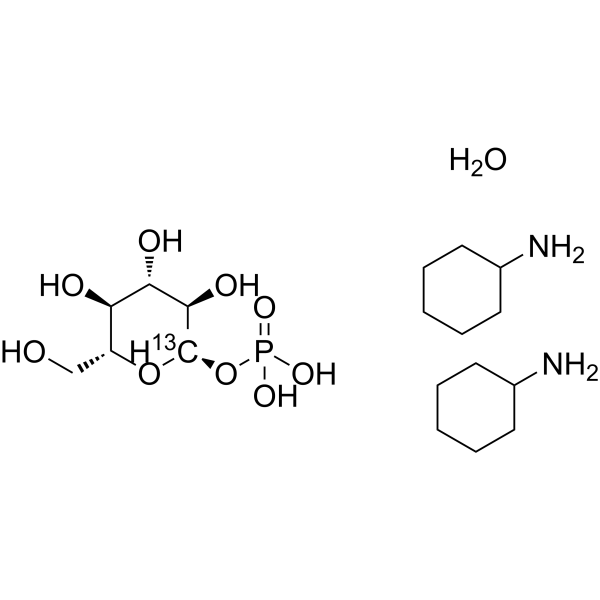
α-D-Glucopyranosyl 1-phosphate- 13C (dicyclohexylamine, monohydrate) is the 13C labeled α-D-Glucopyranosyl 1-phosphate .
|
-
-
- HY-W754831
-
|
|
|
β-D-Glucopyranosyl abscisate-d6 (ABA-GE-d6) is the deuterium labeled β-D-Glucopyranosyl abscisate (HY-111974). β-D-Glucopyranosyl abscisate (ABA-GE) is a hydrolyzable?abscisic acid?(ABA) conjugate that accumulates in the vacuole and presumably also in the endoplasmic reticulum. The deconjugation of β-D-Glucopyranosyl abscisate allows the rapid formation of free ABA in response to abiotic stress conditions such as dehydration and salt stress. β-D-Glucopyranosyl abscisate contributes to the maintenance of ABA homeostasis.
|
-
-
- HY-181633S
-
|
|
|
1,1-Dimethylbutyl N-[2-[[2-[7-[[2-(acetylamino)-2-deoxy-α-D-glucopyranosyl]oxy]-2-oxo-2H-1-benzopyran-4-yl]acetyl]amino]ethyl]carbamate-d4 is the deuterium labeled 1,1-Dimethylbutyl N-[2-[[2-[7-[[2-(acetylamino)-2-deoxy-α-D-glucopyranosyl]oxy]-2-oxo-2H-1-benzopyran-4-yl]acetyl]amino]ethyl]carbamate.
|
-
| Cat. No. |
Product Name |
|
Classification |
-
- HY-W039945
-
|
|
|
Azide
|
|
3,4,6-Tri-O-acetyl-2-deoxy-2-phthalimido-α-D-glucopyranosyl azide is a class of biochemical reagents used in glycobiology research. Glycobiology studies the structure, synthesis, biology and evolution of sugars. It involves carbohydrate chemistry, enzymology of glycan formation and degradation, protein-Glycan recognition and the role of glycans in biological systems. This field is closely related to basic research, biomedicine and biotechnology.
|
-
- HY-W687143
-
|
|
|
Azide
|
|
2-Acetamido-2-deoxy-β-D-glucopyranosyl azide is a class of biochemical reagents used in glycobiology research. Glycobiology studies the structure, synthesis, biology, and evolution of sugars. It involves carbohydrate chemistry, enzymology of glycan formation and degradation, protein-glycan recognition, and the role of glycans in biological systems. This field is closely related to basic research, biomedicine, and biotechnology .
|
-
- HY-W145625
-
|
|
|
Azide
|
|
2-Acetamido-3-O-benzyl-4,6-O-benzylidene-2-deoxy-β-D-glucopyranosyl azide is a class of biochemical reagents used in glycobiology research. Glycobiology studies the structure, synthesis, biology, and evolution of sugars. It involves carbohydrate chemistry, enzymology of glycan formation and degradation, protein-glycan recognition, and the role of glycans in biological systems. This field is closely related to basic research, biomedicine, and biotechnology .
|
| Cat. No. |
Product Name |
|
Classification |
-
- HY-152780
-
|
|
|
Nucleoside Analogs
|
|
9-(2’-Deoxy-2’-fluoro-β-D-arabinofuranosyl)-9H-purine is a purine nucleoside analogue. Purine nucleoside analogs have broad antitumor activity targeting indolent lymphoid malignancies. Anticancer mechanisms in this process rely on inhibition of DNA synthesis, induction of apoptosis, etc .
|
-
- HY-W550484
-
|
|
|
Nucleoside Analogs
|
|
2,6-Dichloro-9-(3,5-di-O-benzoyl-2-deoxy-2-fluoro-D-arabinofuranosyl)-9H-purine arabinoriboside is a purine nucleoside analog. Purine nucleoside analogs have broad antitumor activity targeting indolent lymphoid malignancies. Anticancer mechanisms in this process rely on inhibition of DNA synthesis, induction of apoptosis, etc .
|
-
- HY-W788728
-
-
- HY-W377454
-
|
|
|
Nucleoside Analogs
Uridine
|
|
1-Beta-D-arabinofuranosyl-5-iodouracil is a purine nucleoside analog. Purine nucleoside analogs have broad antitumor activity targeting indolent lymphoid malignancies. Anticancer mechanisms in this process rely on inhibition of DNA synthesis, induction of apoptosis, etc .
|
-
- HY-152603
-
|
|
|
Nucleoside Analogs
|
|
2-Amino-1-β-D-arabinofuranosyl-5-methyl-4(1H)-pyrimidinone is a purine nucleoside analogue. Purine nucleoside analogs have broad antitumor activity targeting indolent lymphoid malignancies. Anticancer mechanisms in this process rely on inhibition of DNA synthesis, induction of apoptosis, etc .
|
-
- HY-152776
-
|
|
|
Nucleoside Analogs
|
|
2-Amino-9-(2-deoxy-2-fluoro-β-D-arabinofuranosyl)-9H-purine is a purine nucleoside analogue. Purine nucleoside analogs have broad antitumor activity targeting indolent lymphoid malignancies. Anticancer mechanisms in this process rely on inhibition of DNA synthesis, induction of apoptosis, etc .
|
-
- HY-154663
-
|
|
|
Nucleoside Analogs
|
|
1-β-D-Arabinofuranosyl-5-bromo-2,4(1H,3H)-pyrimidinedione is a purine nucleoside analog. Purine nucleoside analogs have broad antitumor activity targeting indolent lymphoid malignancies. Anticancer mechanisms in this process rely on inhibition of DNA synthesis, induction of apoptosis, etc .
|
-
- HY-154604
-
|
|
|
Phosphoramidites
Thymine
|
|
1-(2'-Deoxy-5'-O-DMT-2'-fluoro-b-D-arabinofuranosyl)thymine 3'-CE phosphoramidite is a thymidine analog. Analogs of this series have insertional activity towards replicated DNA. They can be used to label cells and track DNA synthesis .
|
-
- HY-152686
-
|
|
|
Nucleoside Analogs
|
|
2-Chloro-9-(2-deoxy-2-fluoro-β-D-arabinofuranosyl)-6-methoxy-9H-purine is a purine nucleoside analogue. Purine nucleoside analogs have broad antitumor activity targeting indolent lymphoid malignancies. Anticancer mechanisms in this process rely on inhibition of DNA synthesis, induction of apoptosis, etc .
|
-
- HY-152676
-
|
|
|
Nucleoside Analogs
|
|
1-(2-Deoxy-2-fluoro-β-D-arabinofuranosyl)-5-ethyl-2,4(1H,3H)-pyrimidinedione is a thymidine analogue. Analogs of this series have insertional activity towards replicated DNA. They can be used to label cells and track DNA synthesis .
|
-
- HY-W334680
-
|
|
|
Nucleoside Analogs
|
|
2-Amino-9-((2R,3S,4R,5R)-3-fluoro-4-hydroxy-5-(hydroxymethyl)tetrahydrofuran-2-yl)-3,9-dihydro-6H-purin-6-one (9-β-D-[2'-Fluoro-2'-deoxy-arabinofuranosyl]-guanin) is a purine nucleoside analogue. Purine nucleoside analogs have broad antitumor activity targeting indolent lymphoid malignancies. Anticancer mechanisms in this process rely on inhibition of DNA synthesis, induction of apoptosis, etc .
|
-
- HY-152773
-
|
|
|
Nucleoside Analogs
|
|
2,6-Diamino-9-(2-deoxy-2-fluoro-β-D-arabinofuranosyl)-9H-purine is an adenosine analogue. Adenosine analogs mostly act as smooth muscle vasodilators and have also been shown to inhibit cancer progression. The popular products in this series are adenosine phosphate, Acadesine (HY-13417), Clofarabine (HY-A0005), Fludarabine phosphate (HY-B0028) and Vidarabine (HY-B0277) .
|
-
- HY-W020420
-
|
|
|
Nucleoside Analogs
|
|
6-Chloro-9-(3,5-di-O-benzoyl-2-deoxy-2-fluoro-beta-D-arabinofuranosyl)-9H-purine is a purine nucleoside analog. Purine nucleoside analogs have broad antitumor activity targeting indolent lymphoid malignancies. Anticancer mechanisms in this process rely on inhibition of DNA synthesis, induction of apoptosis, etc .
|
Your information is safe with us. * Required Fields.
Inquiry Information
- Product Name:
- Cat. No.:
- Quantity:
- MCE Japan Authorized Agent:





![β-D-glucopyranosyl-[α-L-rhamnopyranosyl-(1→3)-βD-glucuronopyranosyl-(1→3)]-3β-hydroxyolean-12-ene28-oate](http://file.medchemexpress.com/product_pic/hy-n9522.gif)
![3-O-β-D-Glucopyranosyl(1→2)-[a-Lrhamnopyranosyl(1→3)]-β-D-glucopyranosyl 28-O-β-D-glucuronopyranoside](http://file.medchemexpress.com/product_pic/hy-n9521.gif)


![Periplogenin 3-[O-β-glucopyranosyl-(1→4)-β-sarmentopyranoside]](http://file.medchemexpress.com/product_pic/hy-n5053.gif)
![2-O-[2-(Acetylamino)-2-deoxy-β-D-glucopyranosyl]-D-mannose](http://file.medchemexpress.com/product_pic/hy-166986.gif)

![9-β-D-[2'-Fluoro-2'-deoxy-arabinofuranosyl]-guanin](http://file.medchemexpress.com/product_pic/hy-w334680.gif)

![Kaempferol-3-O-[(6-caffeoyl)-β-glucopyranosyl (1→3) α-rhamnopyranoside]-7-O-α-rhamnopyranoside](http://file.medchemexpress.com/product_pic/hy-n11910.gif)


![4-O-[4,6-O-(Phenylmethylene)-α-D-glucopyranosyl]-D-glucose](http://file.medchemexpress.com/product_pic/hy-w347825.gif)
![19-[(β-D-Glucopyranosyl)oxy]-19-oxo-ent-labda-8(17),13-dien-16,15-olide](http://file.medchemexpress.com/product_pic/hy-n8812.gif)

![Quercetin-3-O-[(6-caffeoyl)-β-glucopyranosyl (1→3) α-rhamnopyranoside]-7-O-α-rhamnopyranoside](http://file.medchemexpress.com/product_pic/hy-n11901.gif)


![3-O-[2-Acetamido-2-deoxy-β-D-glucopyranosyl]-D-mannopyranose](http://file.medchemexpress.com/product_pic/hy-w706305.gif)

![Phenylmethyl O-β-D-glucopyranosyl-(1→3)-O-[β-D-xylopyranosyl-(1→2)]-β-D-glucopyranoside](http://file.medchemexpress.com/product_pic/hy-n19769.gif)


![1,1-Dimethylbutyl N-[2-[[2-[7-[[2-(acetylamino)-2-deoxy-α-D-glucopyranosyl]oxy]-2-oxo-2H-1-benzopyran-4-yl]acetyl]amino]ethyl]carbamate-d4](http://file.medchemexpress.com/product_pic/hy-181633s.gif)





