Search Result
Results for "
BRD4 BD-2
" in MedChemExpress (MCE) Product Catalog:
| Cat. No. |
Product Name |
Target |
Research Areas |
Chemical Structure |
-
- HY-16954
-
ARV-825
Maximum Cited Publications
35 Publications Verification
|
PROTACs
Epigenetic Reader Domain
|
Cancer
|
|
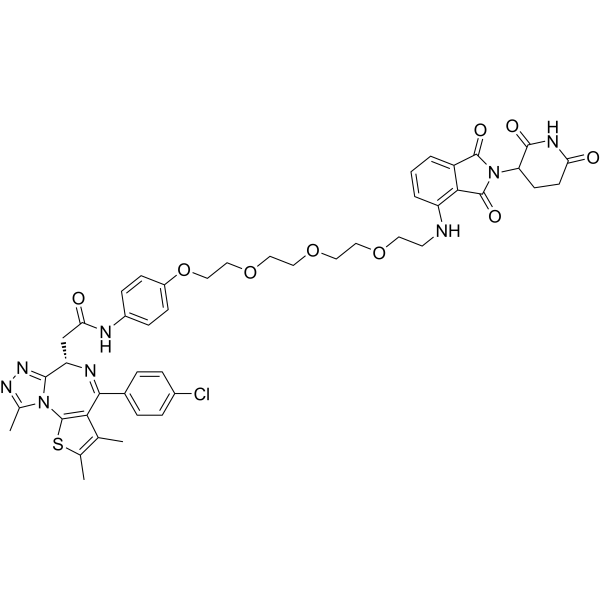
ARV-825 is a PROTAC connected by ligands for Cereblon and BRD4. ARV-825 binds to BD1 and BD2 of BRD4 with Kds of 90 and 28 nM, respectively.
|
-
-
- HY-111139
-
-
-
- HY-111433
-
|
|
PROTACs
Epigenetic Reader Domain
|
Cancer
|
|
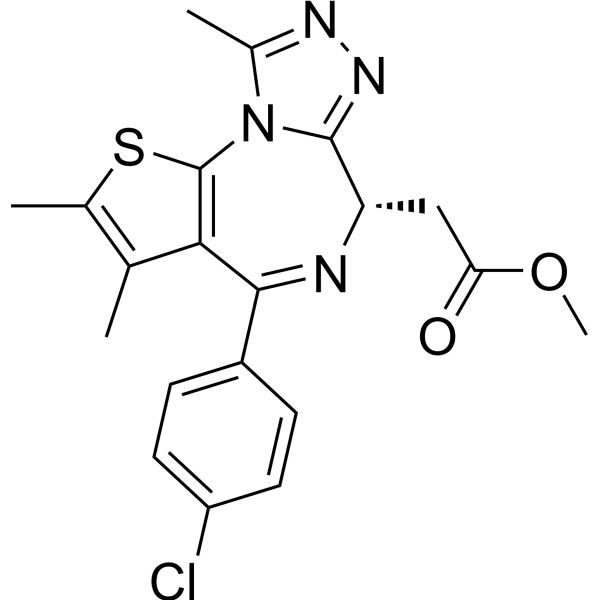
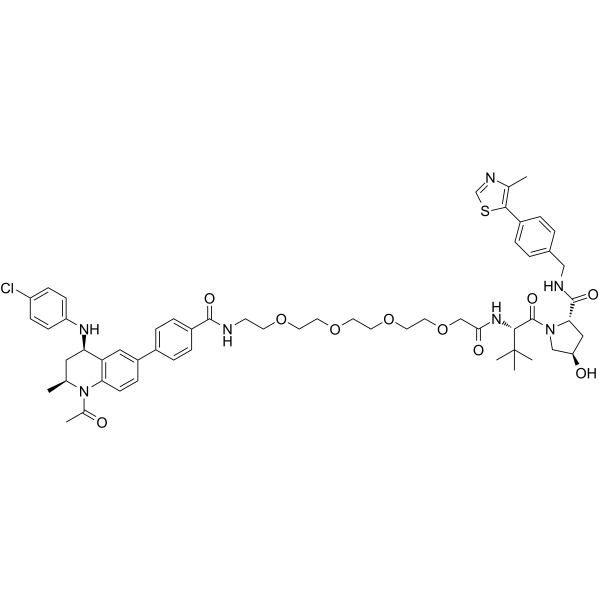
BRD4 degrader AT1 is a PROTAC connected by ligands for von Hippel-Lindau and BRD4 as a highly selective Brd4 degrader, with a Kd of 44 nM for Brd4 BD2 in cells.
|
-
-
- HY-129937A
-
GNE-987
1 Publications Verification
|
PROTACs
Epigenetic Reader Domain
|
Cancer
|
|
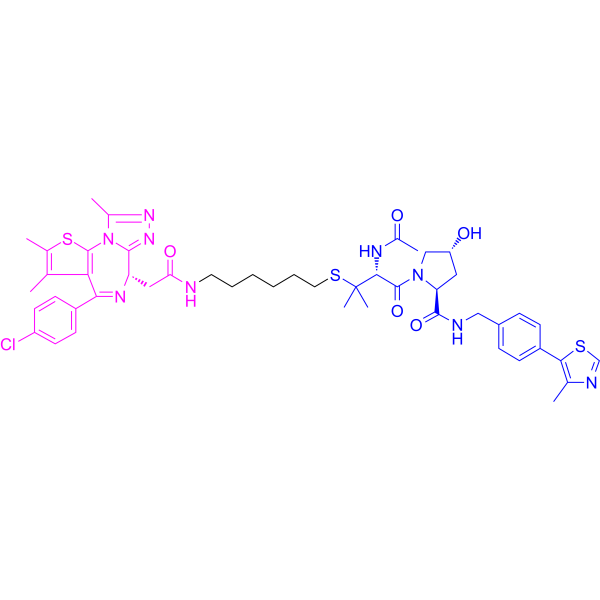
GNE-987 is a VHL-dependent BRD4 PROTAC degrader. GNE-987 exhibits picomolar cell BRD4 degradation activity (DC50=0.03 nM for EOL-1 AML cell line). GNE-987 binds equipotently to the BD1 and BD2 bromodomains of BRD4 with low nanomolar affinities (IC50=4.7 and 4.4 nM, respectively). GNE-987 can be used for the research of cancer .
|
-
-
- HY-111422
-
|
|
Epigenetic Reader Domain
|
Cancer
|
|
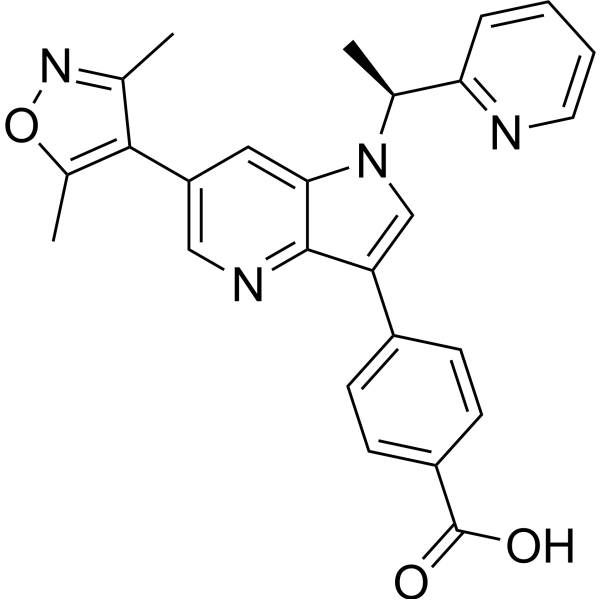
PLX51107 is a potent and selective BET inhibitor, with Kds of 1.6, 2.1, 1.7, and 5 nM for BD1 and 5.9, 6.2, 6.1, and 120 nM for BD2 of BRD2, BRD3, BRD4, and BRDT, respectively; PLX51107 also interacts with the bromodomains of CBP and EP300 (Kd, in the 100 nM range).
|
-
-
- HY-136857
-
|
|
Epigenetic Reader Domain
|
Cancer
|
|
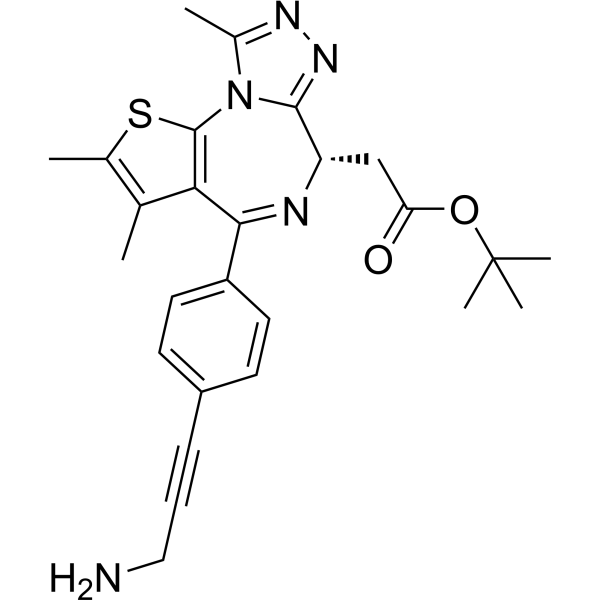
BRD4 degrader-3 is a potent bromodomain BRD4 degrader extracted from patent WO2020055976A1, example 1a, has IC50s of 15.5 and 12.3 nM for BRD4-BD1 and BRD4-BD2, respectively . PROTAC BRD4 Degrader-7 is a click chemistry reagent, it contains an Alkyne group and can undergo copper-catalyzed azide-alkyne cycloaddition (CuAAc) with molecules containing Azide groups.
|
-
-
- HY-145550
-
|
BI894999
|
Epigenetic Reader Domain
|
Cancer
|
|
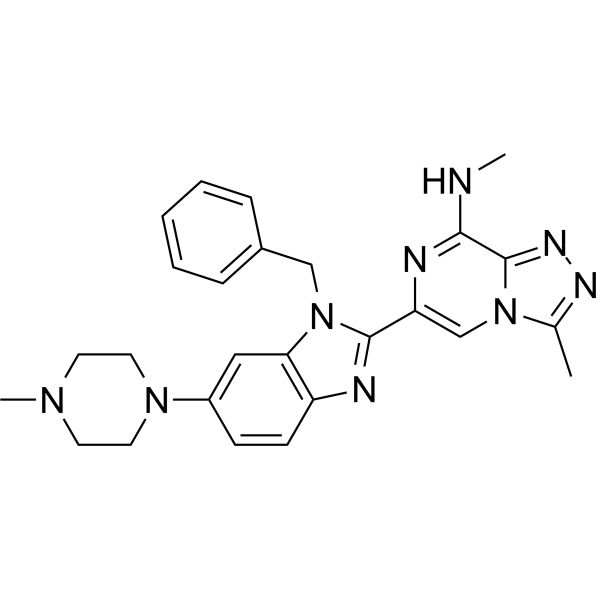
Amredobresib (BI894999) is an orally active BET inhibitor. Amredobresib inhibits the binding of BRD4-BD1 and BRD4-BD2 bromodomains to acetylated histones with IC50 values of 5 nM and 41 nM, respectively. Amredobresib exhibits anticancer activity against acute myeloid leukemia (AML) and NUT cancer [2] [4] .
|
-
-
- HY-136571
-
GSK046
3 Publications Verification
iBET-BD2
|
Epigenetic Reader Domain
|
Inflammation/Immunology
|
|
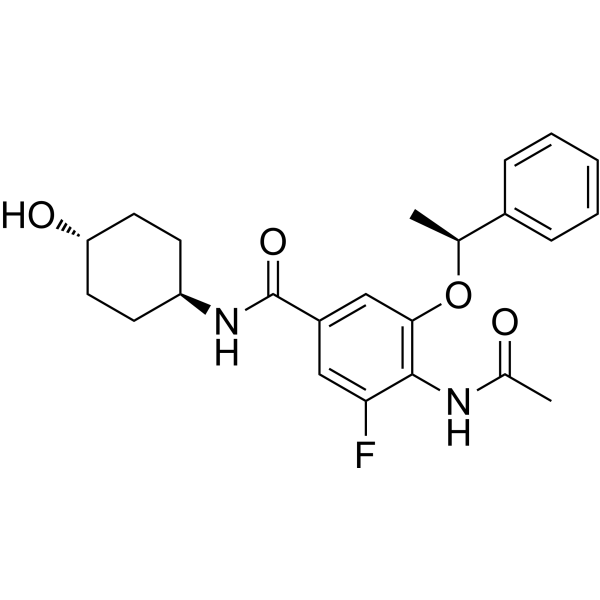
GSK046 (iBET-BD2), a chemical probe, is a potent, selective and orally active BD2 bromodomain inhibitor of the BET proteins, with IC50s of 264 nM (BRD2 BD2), 98 nM (BRD3 BD2), 49 nM (BRD4 BD2) and 214 nM (BRDT BD2), respectively. GSK046 has immunomodulatory activity .
|
-
-
- HY-162514
-
|
|
Epigenetic Reader Domain
|
Inflammation/Immunology
|
|
BBC0403 is a selective BRD2 inhibitor with Kds of 7.64 μM and 41.37 μM for BRD2 (BD2) and BRD2 (BD1), respectively. BBC0403 exhibitS higher binding specificity for BRD2 compared to BRD3 and BRD4. BBC0403 has the potential for osteoarthritis (OA) research .
|
-

-
- HY-120000
-
MS402
2 Publications Verification
|
Epigenetic Reader Domain
|
Inflammation/Immunology
Cancer
|
|
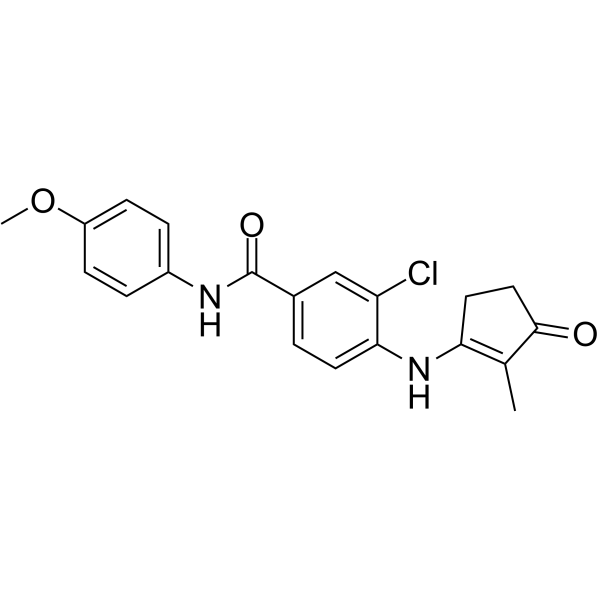
MS402 is a BD1-selective BET BrD inhibitor with Kis of 77 nM, 718 nM, 110 nM, 200 nM, 83 nM, and 240 nM for BRD4(BD1), BRD4(BD2), BRD3(BD1), BRD3(BD2), BRD2(BD1) and BRD2(BD2), respectively. MS402 blocks Th17 cell differentiation and ameliorates colitis in mice .
|
-
-
- HY-112376
-
-
-
- HY-112429
-
HJB97
2 Publications Verification
|
Ligands for Target Protein for PROTAC
Epigenetic Reader Domain
|
Cancer
|
|
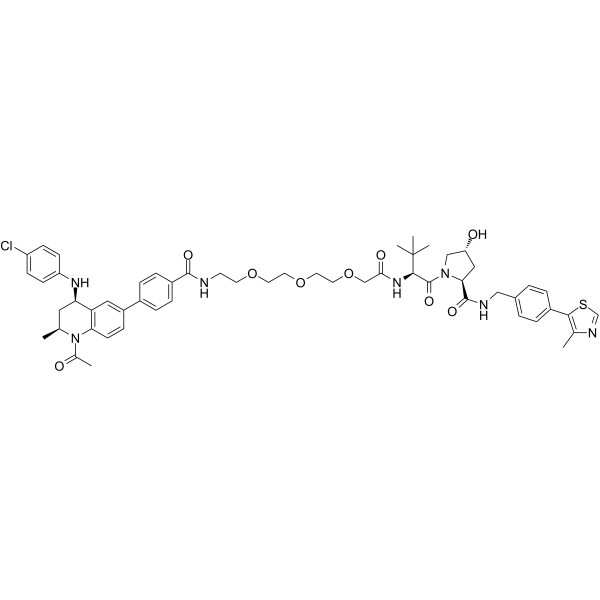
HJB97 is a high-affinity BET inhibitor with Ki values of 0.9 nM (BRD2 BD1), 0.27 nM (BRD2 BD2), 0.18 nM (BRD3 BD1), 0.21 nM (BRD3 BD2), 0.5 nM (BRD4 BD1), and 1.0 nM (BRD4 BD2) . HJB97 can serve as a ligand for target protein (Ligands for Target Protein for PROTAC) for the development of PROTAC BET degraders with antitumor activity . HJB97 can be used for the synthesis of BETd-260 (HY-101519).
|
-
-
- HY-156828
-
-
-
- HY-125232
-
MS645
1 Publications Verification
|
Epigenetic Reader Domain
|
Cancer
|
|
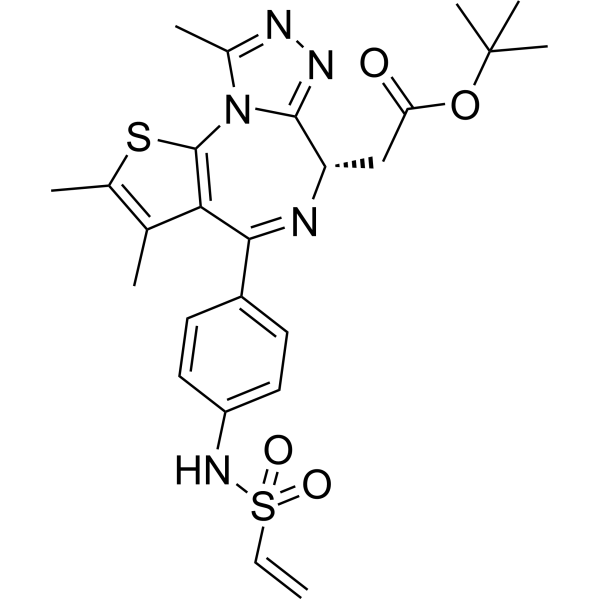
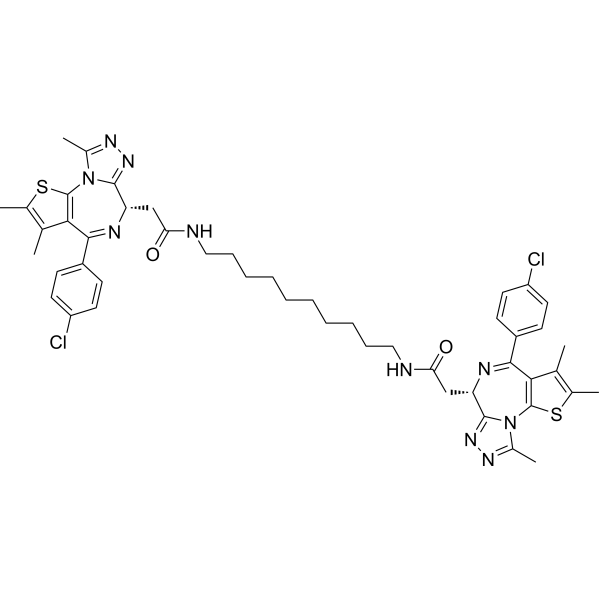
MS645 is a bivalent BET bromodomains (BrD) inhibitor with a Ki of 18.4 nM for BRD4-BD1/BD2. MS645 spatially constrains bivalent inhibition of BRD4 BrDs resulting in a sustained repression of BRD4 transcriptional activity in solid-tumor cells .
|
-
-
- HY-138555
-
|
|
PROTACs
Epigenetic Reader Domain
|
Cancer
|
|
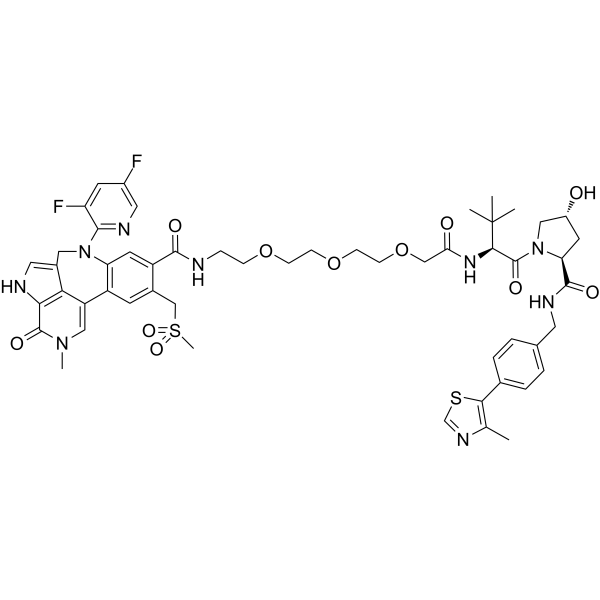
PROTAC BRD4 Degrader-8 is a PROTAC connected by ligands for von Hippel-Lindau and BRD4, with IC50s of 1.1 nM and 1.4 nM for BRD4 BD1 and BD2, respectively. PROTAC BRD4 Degrader-8 is capable of potently degrading the BRD4 protein in PC3 prostate cancer cells .
|
-
-
- HY-112610
-
|
|
Epigenetic Reader Domain
Histone Acetyltransferase
|
Cancer
|
|
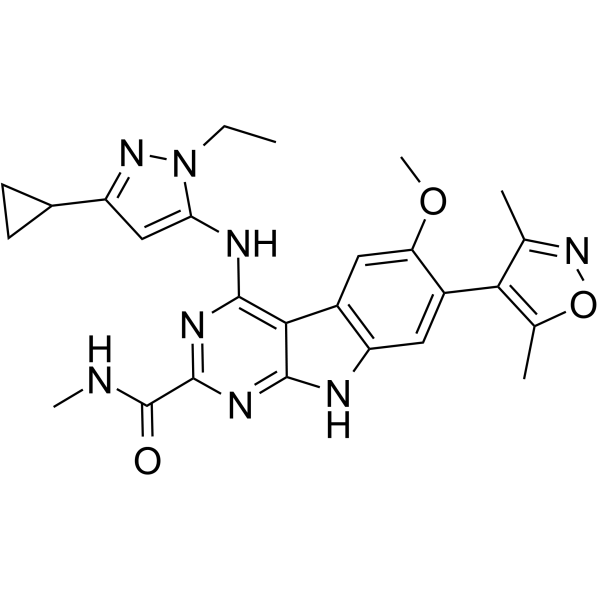
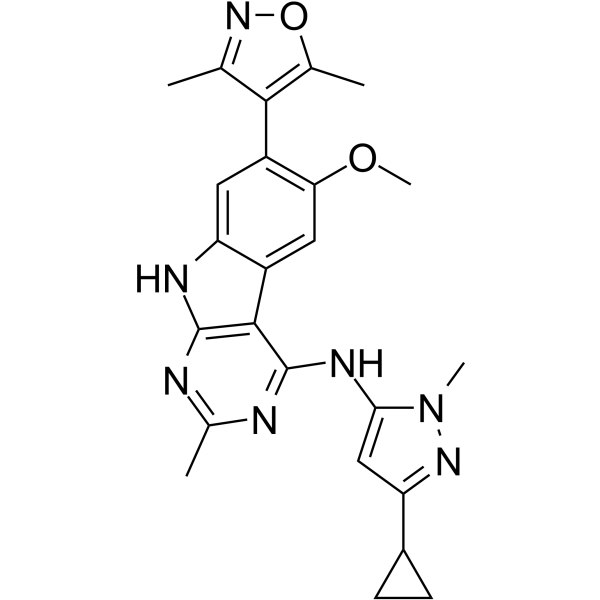
CF53 is a highly potent, selective and orally active inhibitor of BET protein, with a Ki of <1 nM, Kd of 2.2 nM and an IC50 of 2 nM for BRD4 BD1. CF53 binds to both the BD1 and BD2 domains of BRD2, BRD3, BRD4, and BRDT BET proteins with high affinities, very selective over non-BET bromodomain-containing proteins. CF53 shows potent anti-tumor activity both in vitro and in vivo .
|
-
-
- HY-156827
-
-
-
- HY-153385
-
|
|
Molecular Glues
Epigenetic Reader Domain
|
Cancer
|
|
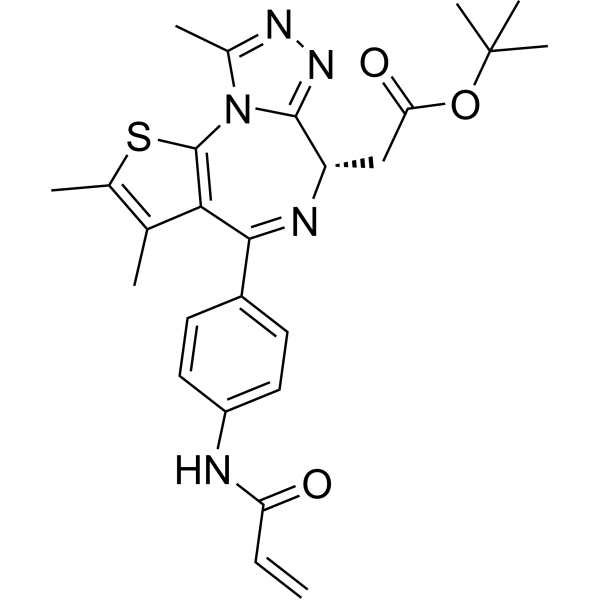
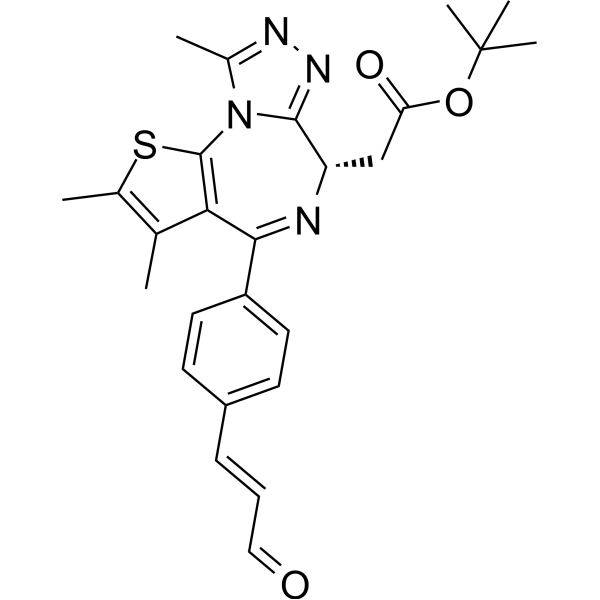
TMX1 is a covalent, selective BRD4 molecular glue degrader. TMX1 binds to the JQ1-binding site of BRD4BD2, forms covalent bonds with Cys58 of DCAF16 and Cys87 of GAK in a BRD4BD2-dependent template-assisted manner, stabilizes the BRD4-TMX1-DCAF16 ternary complex, and promotes the ubiquitination of BRD4 via the CRL4DCAF16 ubiquitin ligase complex. TMX1 induces selective degradation of BRD4, mild degradation of BRD2 and BRD3, as well as DCAF16-dependent cytotoxicity [2].
|
-
-
- HY-19760
-
|
|
Epigenetic Reader Domain
|
Inflammation/Immunology
|
|
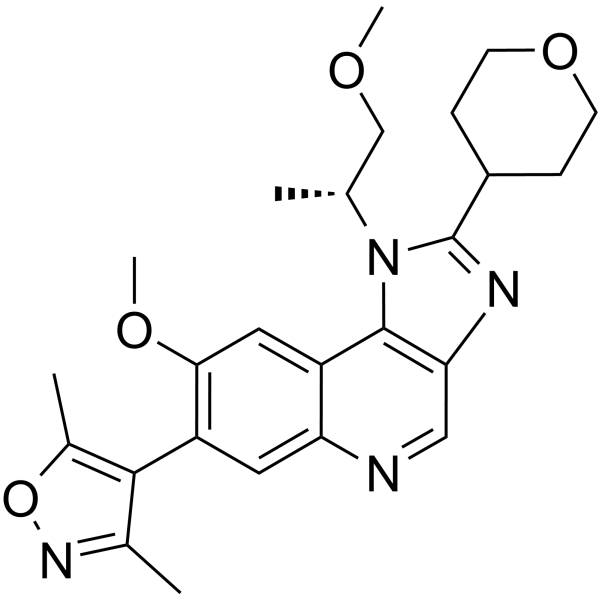
I-BET282 is a pan-inhibitor of all eight BET bromodomains, and selectivity over other representative bromodomain-containing proteins. I-BET282 shows pIC50s ranging 6.4-7.7 for BRD2 (BD1/BD2), BRD2 (BD1/BD), BRD3 (BD1/BD), and BRD4 (BD1/BD) .
|
-
-
- HY-138563
-
|
|
Epigenetic Reader Domain
|
Cancer
|
|
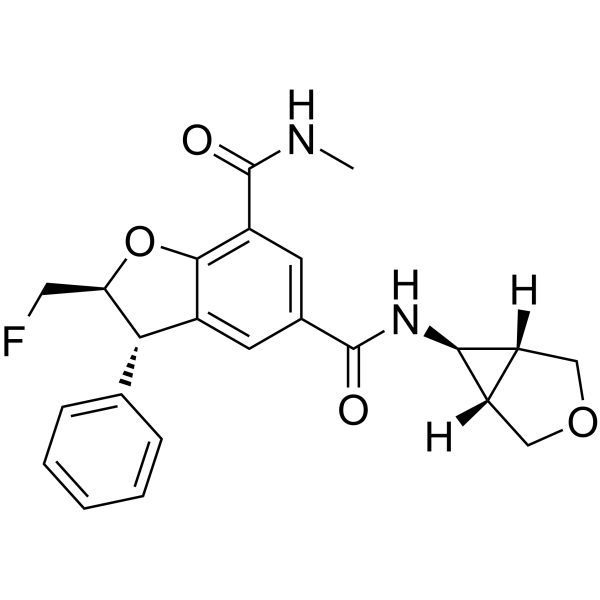
GSK973, a chemical probe, is a highly selective, orally bioavailable inhibitor of the BD2s (second bromodomains) of the BET family, with a pIC50 of 7.8 and a pKd of 8.7 for BRD4 BD2. GSK973 displays a 1600-fold selectivity for BRD4 BD2 over BRD4 BD1. GSK973 shows good potency against BRD2 BD2, BRD3 BD2, and BRDT BD2 (pIC50=7.4~7.8; pKd=8.3~8.5) .
|
-
-
- HY-146208
-
|
|
Epigenetic Reader Domain
|
Cancer
|
|
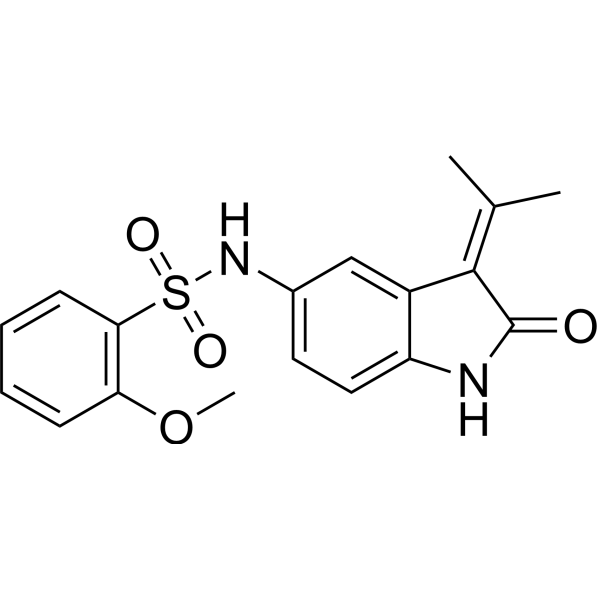
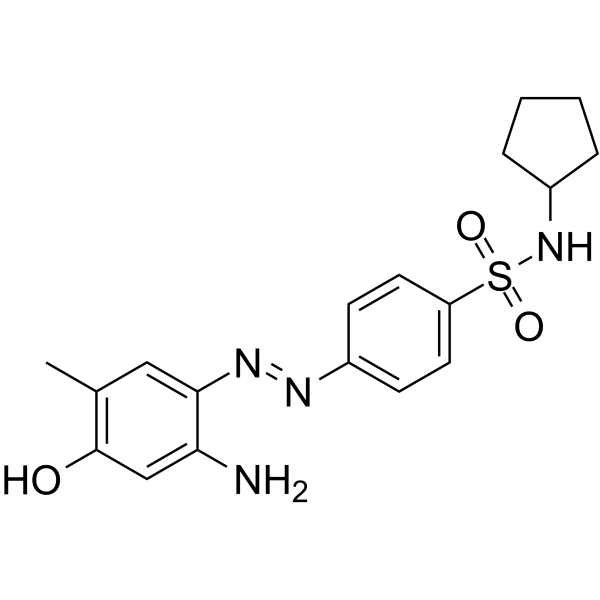
BRD4 Inhibitor-20 is a potent orally active bromodomain protein 4 (BRD4) inhibitor. BRD4 Inhibitor-20 has inhibitory activity for BRD4 (BD1) and BRD4 (BD2) with IC50 values of 19 nM and 28 nM, respectively. BRD4 Inhibitor-20 also has anti-proliferation activities in cancer cell lines. BRD4 Inhibitor-20 can be used for the research of kinds of cancer, such as colon cancer .
|
-
-
- HY-112150
-
-
-
- HY-112377
-
-
-
- HY-124596
-
|
|
Epigenetic Reader Domain
|
Cancer
|
|
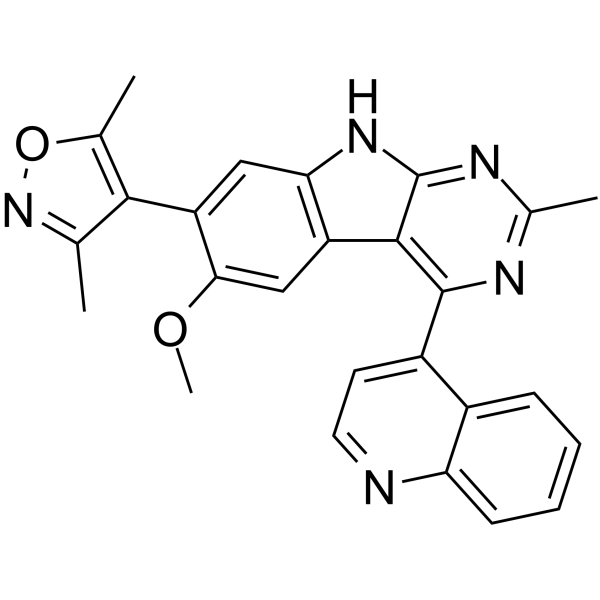
CD161 is a potent, selective and orally bioavailable bromodomain and extra-terminal (BET) bromodomain inhibitor with an IC50s of 28.2 nM and 7.2 nM for BRD4 BD1 and BRD4 BD2, respectively. CD161 has good anticancer activity .
|
-
-
- HY-163729
-
-

-
- HY-114504
-
|
|
Epigenetic Reader Domain
|
Inflammation/Immunology
|
|
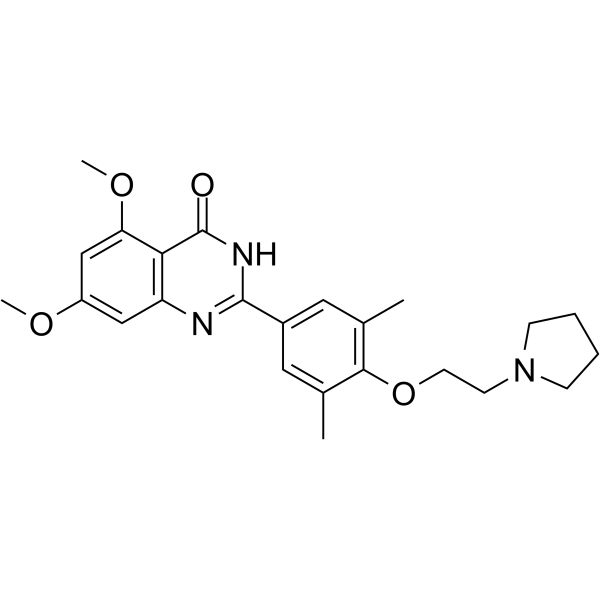
RVX-297 is a potent, orally active BET bromodomain inhibitor with selectivity for BD2. RVX-297 shows IC50s of 0.08, 0.05, and 0.02 μM for BRD2(BD2), BRD3(BD2), and BRD4(BD2), respectively. RVX-297 suppresses inflammatory gene expression in multiple immune cell types. RVX-297 is effective in acute inflammation and autoimmunity models [2].
|
-
-
- HY-130622
-
LT052
1 Publications Verification
|
Epigenetic Reader Domain
|
Inflammation/Immunology
|
|
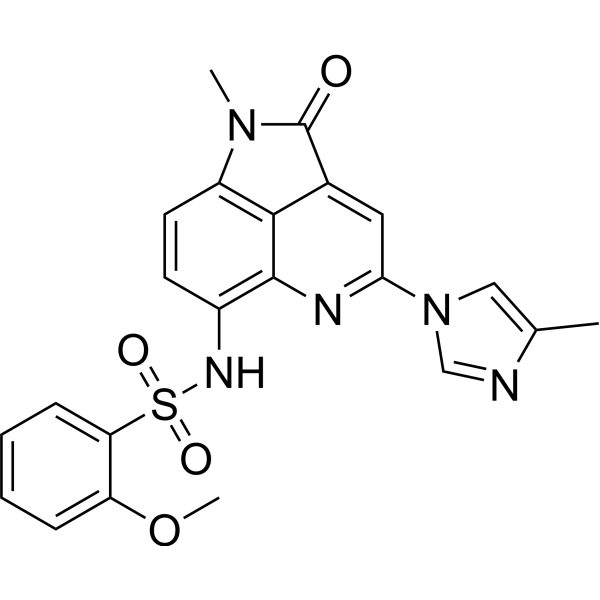
LT052 is a highly selective BET BD1 inhibitor with an IC50 of 87.7 nM. LT052 exhibits nanomolar BRD4 BD1 potency and 138-fold selectivity over BRD4 BD2 (IC50=12.130 μM). LT052 has anti-inflammatory?activity and can be used for acute gout arthritis research .
|
-
-
- HY-142520
-
|
|
Epigenetic Reader Domain
|
Inflammation/Immunology
Cancer
|
|
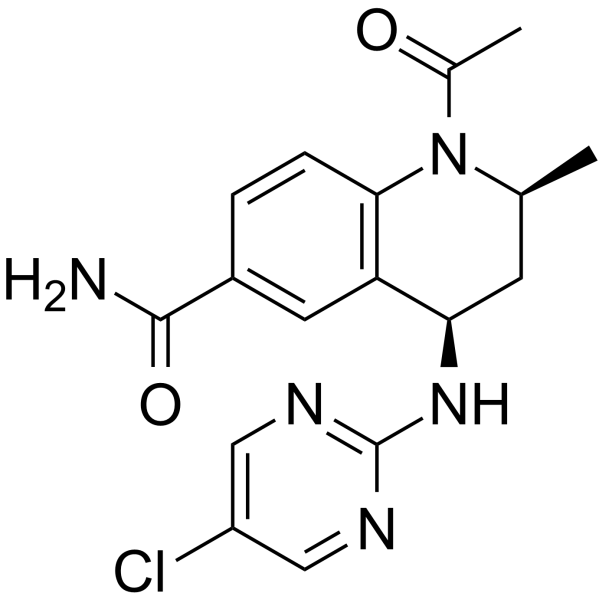
I-BET567 is a potent and orally active inhibitor of pan-BET candidate with pIC50s of 6.9 and 7.2 for BRD4 BD1 and BD2, respectively. I-BET567 has been demonstrated efficacy in mouse models of oncology and inflammation .
|
-
-
- HY-153894
-
|
|
CDK
Epigenetic Reader Domain
PI3K
NF-κB
SARS-CoV
|
Infection
Neurological Disease
Metabolic Disease
Inflammation/Immunology
Cancer
|
|
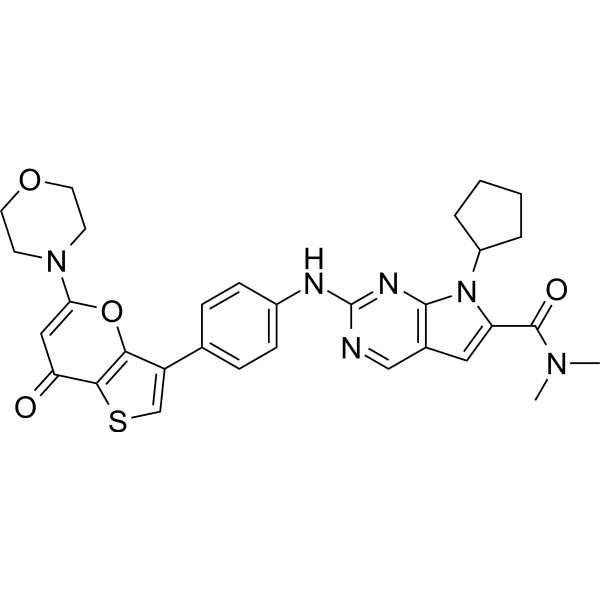
SRX3177 is a triple inhibitor of CDK4/6, PI3K, and BRD4, with IC50s of <2.5 nM (CDK4), 3.3 nM (CDK6), 33 nM (BRD4 BD1), 89 nM (BRD4 BD2), 79 nM (PI3Kα), 83 nM (PI3Kδ), 3.18 μM (PI3Kγ) , respectively. SRX3177 blocks the interaction between the SARS-CoV-2 E protein and the BRD2/4 BD1 domain, restores E protein-attenuated NF-κB activity. SRX3177 exerts broad cytotoxic activity against cancer cells. SRX3177 can be used for the study of anti-SARS-CoV-2 and cancer [2].
|
-
-
- HY-112149
-
-
-
- HY-178041
-
|
|
Epigenetic Reader Domain
Interleukin Related
c-Fms
NF-κB
TNF Receptor
|
Inflammation/Immunology
|
|
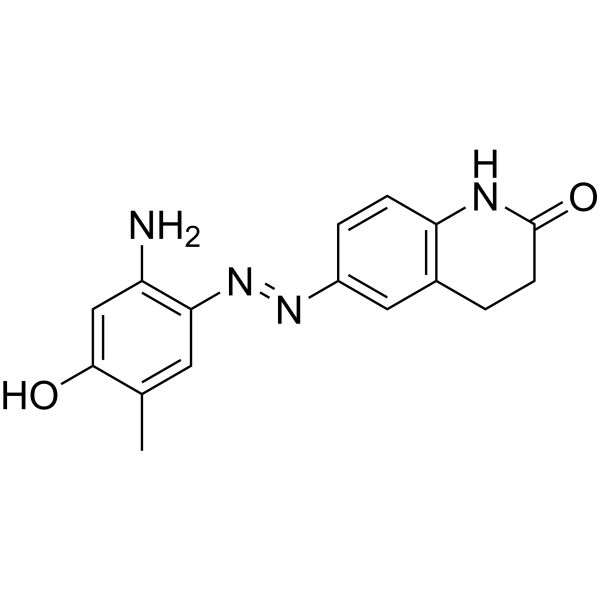
BRD4-BD1/2-IN-3 (Compound B6) is a selective BRD4 BD2 inhibitor with an IC50 of 0.41 nM for BRD4 BD2 over BRD4 BD1. BRD4-BD1/2-IN-3 significantly inhibits the LPS (HY-D1056)-induced expression of IL-6. BRD4-BD1/2-IN-3 shows anti-inflammatory activities by modulating the TNF and NF-κB signaling pathway. BRD4-BD1/2-IN-3 can be used for inflammatory diseases research .
|
-

-
- HY-143328
-
|
|
PROTACs
Epigenetic Reader Domain
Apoptosis
|
Cancer
|
|
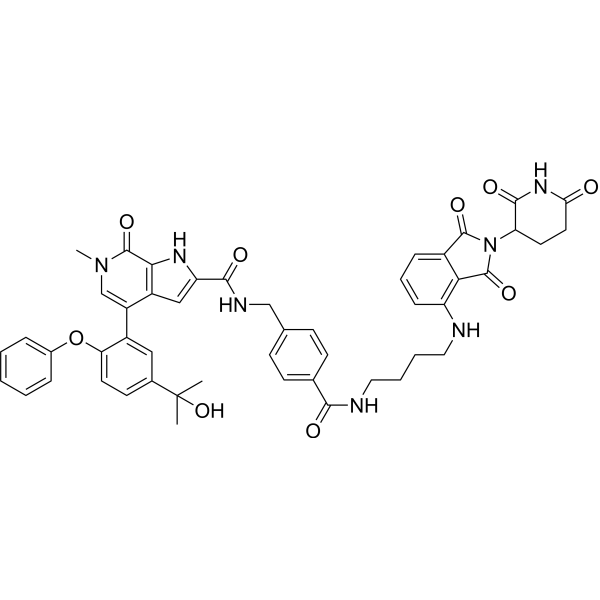
PROTAC BRD4 Degrader-17 (compound 13i) is a potent PROTAC BRD4 Degrader, with IC50 values of 29.54 nM (BRD4 (BD1)) and 3.82 nM (BRD4 (BD2)). PROTAC BRD4 Degrader-17 significantly attenuates G2/M progression associated Cyclin B1 expression. PROTAC BRD4 Degrader-17 significantly induces apoptosis in MV-4-11 cells .
|
-
-
- HY-112149A
-
|
|
Epigenetic Reader Domain
|
Inflammation/Immunology
Cancer
|
|
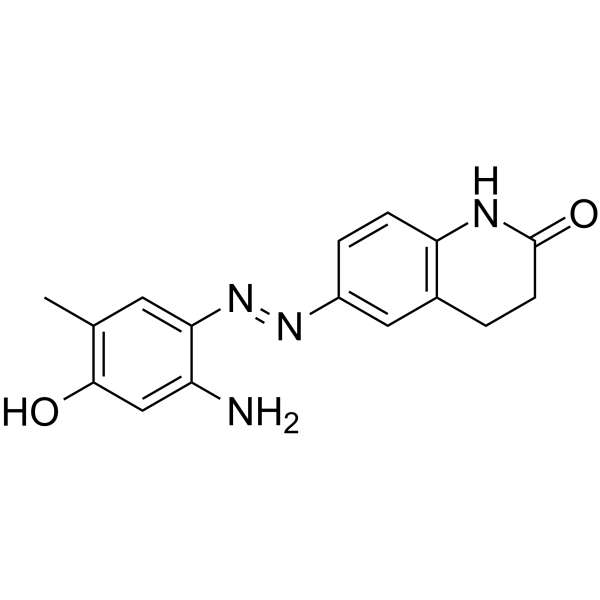
(E/Z)-ZL0420 is a racemic compound of (Z)-ZL0420 and (E)-ZL0420 isomers. (E)-ZL0420 is a potent and selective bromodomain-containing protein 4 (BRD4) inhibitor with IC50 values of 27 nM against BRD4 BD1 and 32 nM against BRD4 BD2 .
|
-
-
- HY-111977
-
|
|
Epigenetic Reader Domain
|
Cancer
|
|
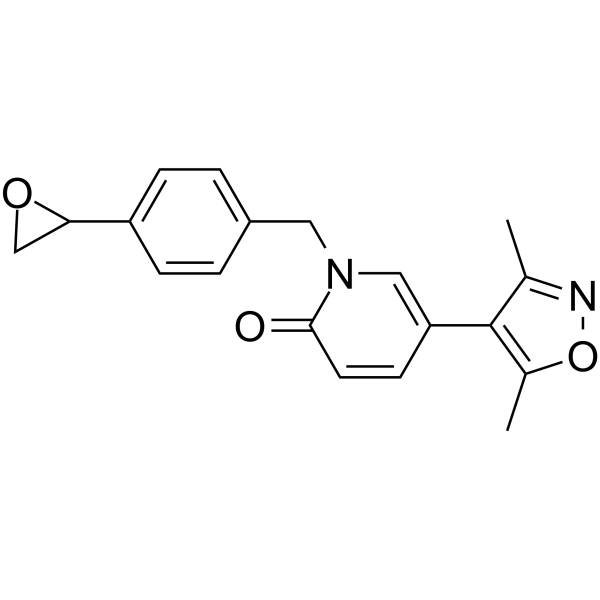
ZEN-3219 is a BET inhibitor with IC50s of 0.48, 0.16 and 0.47 μM for BRD4(BD1), BRD4(BD2) and BRD4(BD1BD2), respectively. ZEN-3219 can be used to form PROTACs to induce degradation of BRD4 .
|
-
-
- HY-111979
-
|
|
Epigenetic Reader Domain
|
Cancer
|
|
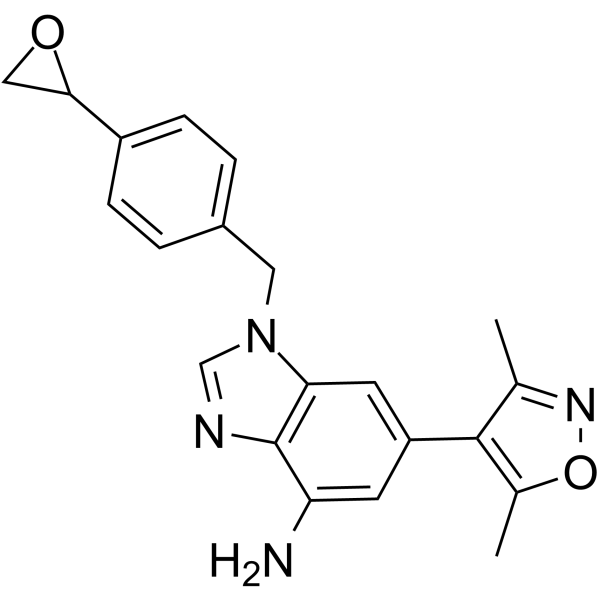
ZEN-3411 is a BET inhibitor with IC50s of 0.05, 0.05 and 0.06 μM for BRD4(BD1), BRD4(BD2) and BRD4(BD1BD2), respectively. ZEN-3411 can be used to form PROTACs to induce degradation of BRD4 .
|
-
-
- HY-111978
-
|
|
Epigenetic Reader Domain
|
Cancer
|
|
ZEN-3862 is a BET inhibitor with IC50s of 0.16 and 0.13 μM for BRD4(BD1) and BRD4(BD2) , respectively. ZEN-3862 can be used to form PROTACs to induce degradation of BRD4 .
|
-
-
- HY-147573
-
|
|
Epigenetic Reader Domain
|
Cancer
|
|
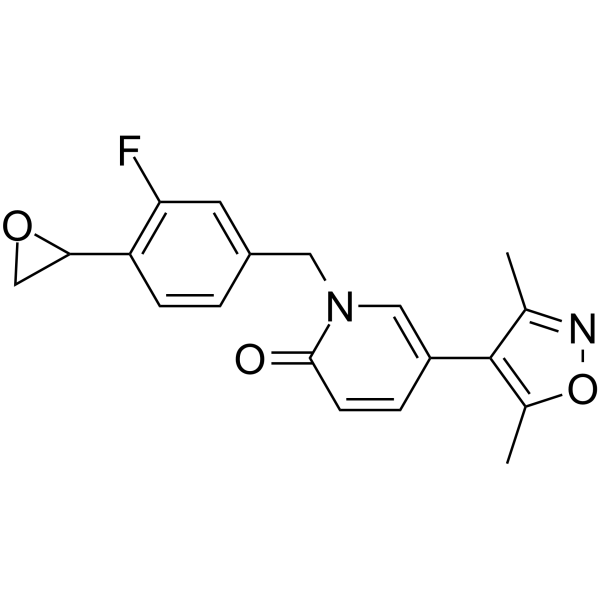
BRD4 Inhibitor-23 is a potent and orally active BRD4 inhibitor with IC50s of 6.21 nM and 1.44 nM for BRD4 BD-1 and BRD4 BD-2, respectively (WO2022033542A1; Example 1) .
|
-
-
- HY-153241
-
|
|
Epigenetic Reader Domain
|
Cancer
|
|
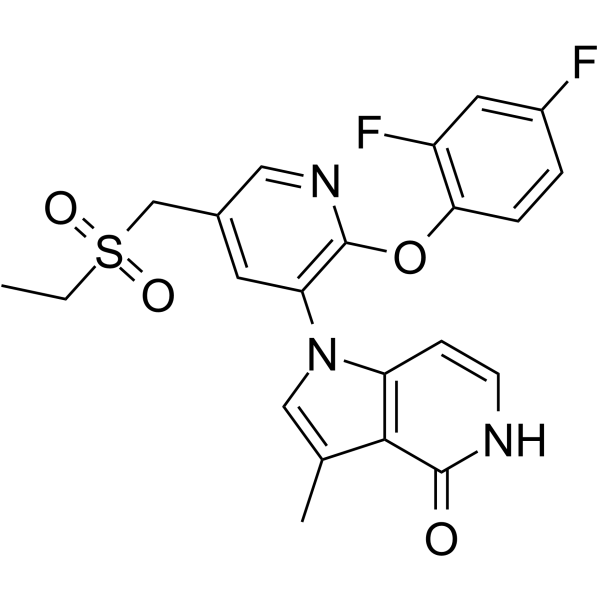
GSK737 is a BRD4 BD1 and BD2 inhibitor, with pIC50 values of 5.3 and 7.3 respectively. GSK737 has low clearance and good solubility and permeability in rat .
|
-
-
- HY-142675
-
|
|
Epigenetic Reader Domain
|
Cancer
|
|
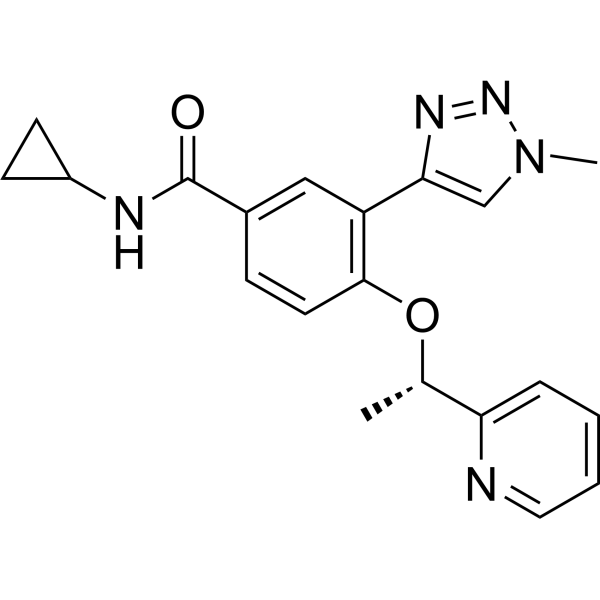
BRD4-BD1/2-IN-2 is a potent BRD4 BD2 inhibitor with IC50s of <0.5 nM and <300 nM for BRD4 BD2 and BRD4 BD1, respectively (WO2021233371A1, compound 2) .
|
-
-
- HY-129201
-
|
|
Epigenetic Reader Domain
|
Cancer
|
|
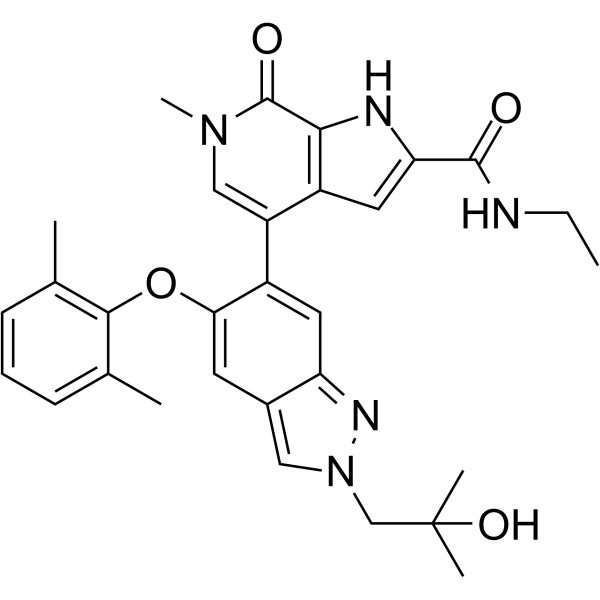
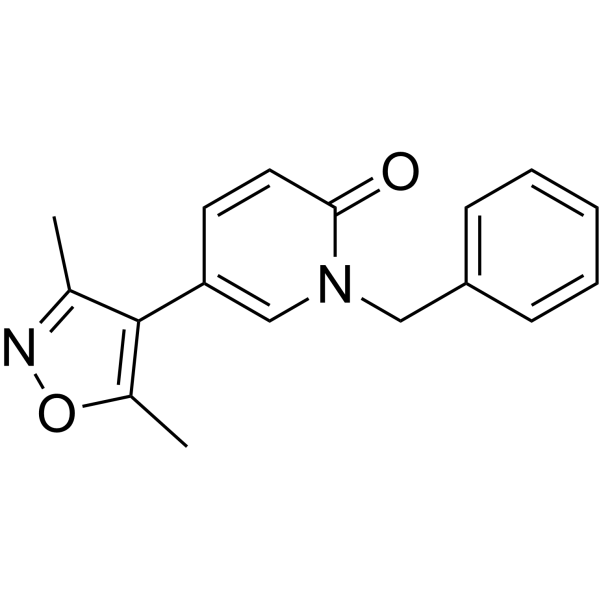
ZEN-2759 is a potent BET (Bromodomain and Extra-Terminal Domain) inhibitor, with IC50 values of 0.23, 0.08 and 0.28 μM for BRD4(BD1), BRD4(BD2), and BRD4(BD1BD2), respectively .
|
-
-
- HY-174920
-
|
|
PROTACs
Epigenetic Reader Domain
|
Cancer
|
|
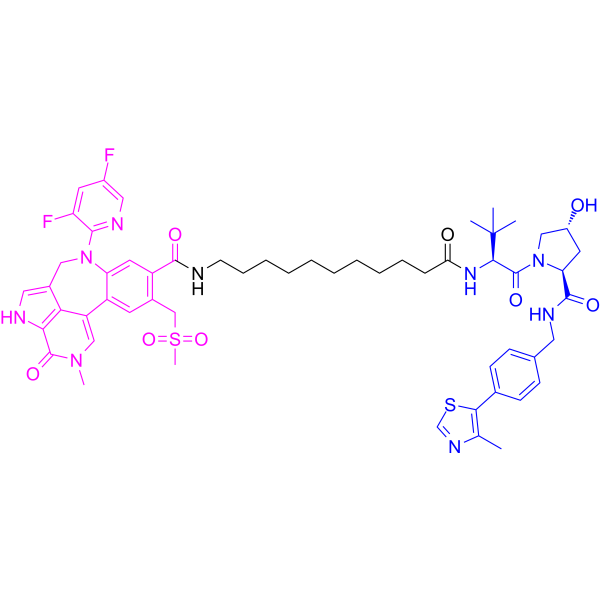
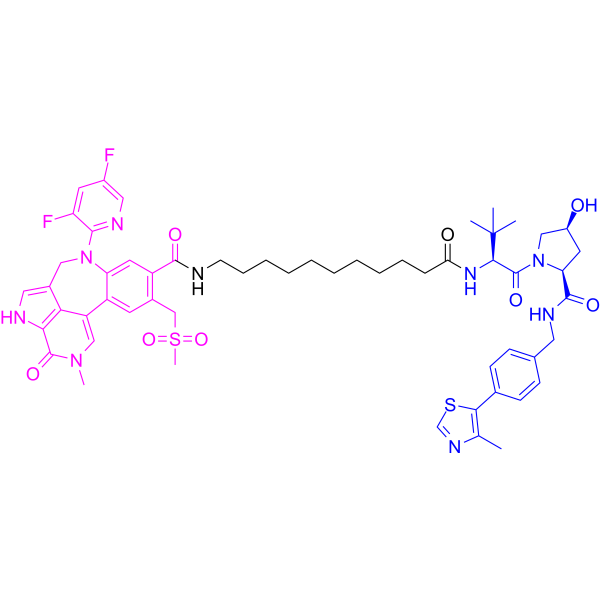
PROTAC BRD4 Degrader-34 (Compound MZ2) is a selective BRD4 PROTAC degrader (pDC50 = 8.4). PROTAC BRD4 Degrader-34 can induce BD2 degradation mediated by VHL. PROTAC BRD4 Degrader-34 can be used for research on cancer. (Pink: BRD4-BD2 Ligand (HY-78695); Blue: VHL Ligand (HY-125845); Black: Linker (HY-130524)) .
|
-

-
- HY-170380
-
|
|
Epigenetic Reader Domain
Apoptosis
AMPK
c-Myc
PAK
Bcl-2 Family
|
Cancer
|
|
XY221 (Compound 16o) selectively inhibits BRD4 BD2, with an IC50 of 5.8 nM. XY221 demonstrates high pan-BD2 selectivity (667-fold over BRD4 BD1) and BRD4 BD2 domain selectivity (9−32-fold over BRD2/3/T BD2). XY221 induce Apoptosis in MV4-11 cells and shows anticancer activity .
|
-

-
- HY-176035
-
|
|
PROTACs
Epigenetic Reader Domain
|
Cancer
|
|
MS479 is a BRD4 PROTAC degrader. MS479 binds BRD4-BD2 and GLP with high affinities (BRD4-BD2: Kd = 200 nM; GLP: Kd = 306 nM). MS479 can reduce the protein level of BRD4 short isoform. MS479 recruits the E3 ligase SPOP by directly binding its substrate GLP as a bridge protein. MS479 can be used to inhibit the proliferation of colorectal cancer cells. (Pink: BRD4 ligand (HY-78695); Blue: GLP ligand (HY-176036); Black: linker (HY-176037); GLP ligand+linker: HY-176038) .
|
-

-
- HY-138637
-
|
|
PROTACs
Epigenetic Reader Domain
|
Cancer
|
|
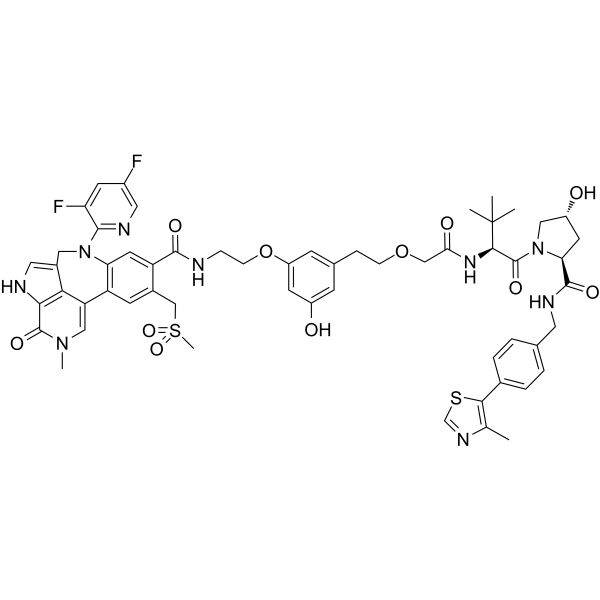
PROTAC BRD4 Degrader-14 is a PROTAC connected by ligands for von Hippel-Lindau and BRD4, with IC50s of 1.8 nM and 1.7 nM for BRD4 BD1 and BD2, respectively. PROTAC BRD4 Degrader-14 is capable of potently degrading the BRD4 protein in PC3 prostate cancer cells .
|
-
-
- HY-139294
-
|
|
PROTACs
Epigenetic Reader Domain
|
Cancer
|
|
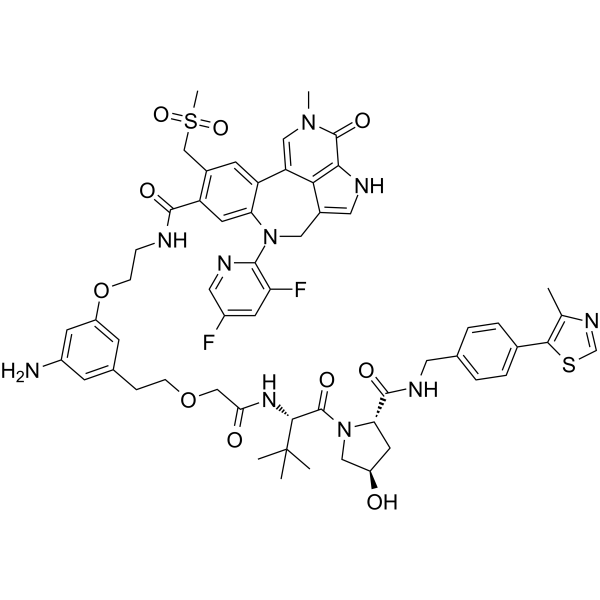
PROTAC BRD4 Degrader-15 is a PROTAC connected by ligands for von Hippel-Lindau and BRD4, with IC50s of 7.2 nM and 8.1 nM for BRD4 BD1 and BD2, respectively. PROTAC BRD4 Degrader-15 is capable of potently degrading the BRD4 protein in PC3 prostate cancer cells .
|
-
-
- HY-143300
-
-
-
- HY-143327
-
|
|
PROTACs
Epigenetic Reader Domain
Apoptosis
|
Cancer
|
|
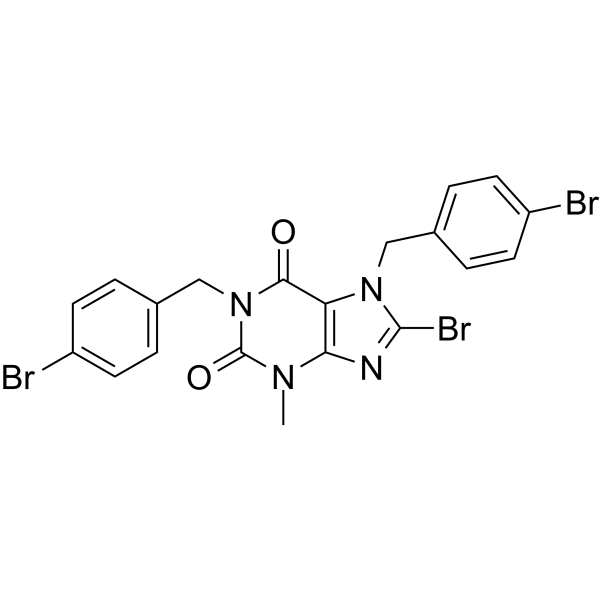
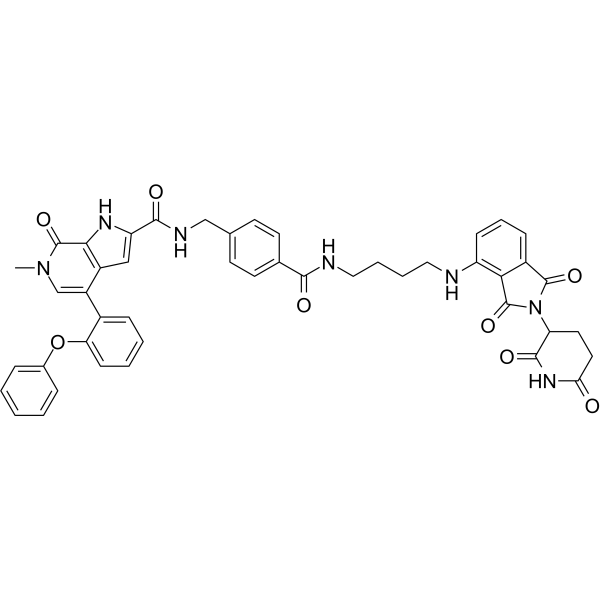
PROTAC BRD4 Degrader-16 is a potent PROTAC BRD4 Degrader, with IC50 values of 34.58 nM (BRD4 (BD1)) and 40.23 nM (BRD4 (BD2)). PROTAC BRD4 Degrader-16 ignificantly attenuates G2/M progression associated Cyclin B1 expression. PROTAC BRD4 Degrader-16 significantly induces apoptosis in MV-4-11 cells .
|
-
-
- HY-178510
-
|
|
PROTACs
Epigenetic Reader Domain
|
Cancer
|
|
JQ1-S(GlcNAc)Cq is a sugar-coated BRD4 PROTAC degrader. JQ1-S(GlcNAc)Cq can inhibit the formation of the ternary complex between CRBN and BRD4(BD1/BD2). JQ1-S(GlcNAc)Cq can be used for the research of cancer . (Structure Note: Pink: BRD4 ligand (HY-78695); Blue: CRBN ligand (HY-178514); Black: linker (HY-W105727); BRD4 ligand-Linker: (HY-178519))
|
-

-
- HY-175033
-
|
|
Epigenetic Reader Domain
Phosphatase
c-Myc
Apoptosis
|
Inflammation/Immunology
|
|
BRD4-IN-11 is an orally active and selective BRD4 inhibitor (IC50 = 26.35 nM (BD1), IC50 = 72.81 nM (BD2)). BRD4-IN-11 is approximately 3- to 18-fold more potent against BRD4 than againstBRD2, BRD3, and BRDT. BRD4-IN-11 enhances H2S release and inhibits the upregulation of fibrotic markers (α-SMA and fibronectin), c-Myc, and CDC25B. BRD4-IN-11 reduces apoptosis in LO2 hepatocytes. BRD4-IN-11 significantly improves liver and lung function in a hepatopulmonary fibrosis model and can be used to study hepatopulmonary fibrosis .
|
-

-
- HY-169355
-
|
|
PROTACs
Epigenetic Reader Domain
|
Cancer
|
|
TrimTAC1 is a TRIM21-based PROTAC targeting BRD4. TrimTAC1 selectively degrads NUP98 FG-mEGFP-BRD4 BD2 nuclear condensates. TrimTAC1 does not degrade soluble mEGFP-BRD4 BD2 in A549 cells. (Pink: target protein ligand (+)-JQ-1 (HY-13030); Blue:E3 ligase ligand Acepromazine-OTs (HY-169356); Black: PROTAC linker (HY-W088456); E3 ligase ligand + linker: HY-169357) .
|
-

- HY-174088
-
|
|
CDK
Discoidin Domain Receptor
Apoptosis
Reactive Oxygen Species (ROS)
DNA/RNA Synthesis
|
Cancer
|
|
CDK4/6/BRD4-IN-2 (Compound PJ2) is a dual inhibitor of CDK4/6 and BRD4 with IC50 values for CDK4, CDK6, BRD4 (BD1), and BRD4 (BD2) of 168.75, 292.45, 23.17, and 3.12 nM respectively. CDK4/6/BRD4-IN-2 has a strong inhibitory effect on non-small cell lung cancer (NSCLC) cell lines. CDK4/6/BRD4-IN-2 induces cell cycle arrest, senescence and apoptosis through ROS-mediated DNA damage. CDK4/6/BRD4-IN-2 can also effectively inhibit the migration and invasion of NCI-H358 cells. CDK4/6-IN-2 can be used for the study of KRAS-mutated NSCLC .
|
-

- HY-151894
-
|
|
Epigenetic Reader Domain
|
Cancer
|
|
I-BET432 is a BET inhibitor. I-BET432 inhibits BRD4 N-terminal bromodomain (BD1) and the C-terminal bromodomain (BD2) with pIC50 values of 7.5 and 7.2, respectively. I-BET432 can be used as an oral candidate quality molecule for the research of multiple oncology and inflammatory diseases .
|
-
- HY-142674
-
|
|
Epigenetic Reader Domain
|
Cancer
|
|
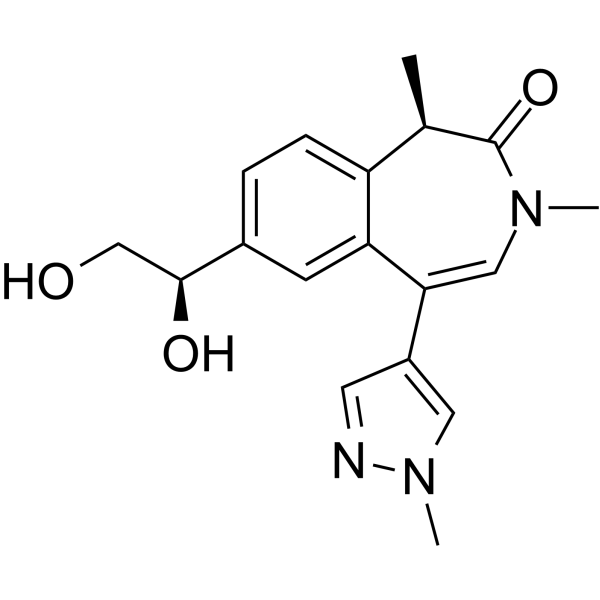
BRD4-BD1/2-IN-1 is a potent BRD4 inhibitor with IC50s of <100 nM for BRD4 BD-1 and BRD4 BD-2, respectively (US20150148375A1, compound 5) .
|
-
- HY-177139
-
|
|
Epigenetic Reader Domain
|
Endocrinology
|
|
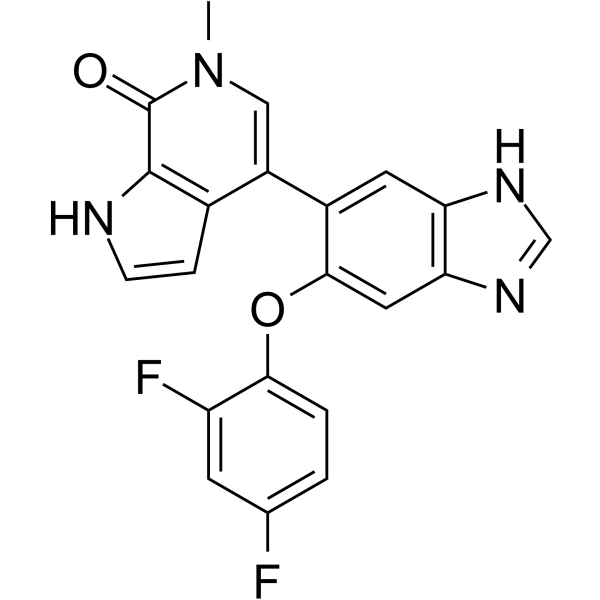
CDD-1349 (Compound 15) is a BRDT-BD2/BRD4-BD2 selective inhibitor. CDD-1349is an analog with sixfold selectivity for BRDT-BD2 versus BRD4-BD2. CDD-1349 has an IC50 of 22 nM against BRDT. CDD-1349 can be studied in research on nonhormonal contraceptive agent .
|
-

- HY-168634
-
|
|
PROTACs
Epigenetic Reader Domain
|
Cancer
|
|
SJ46421 is a (+)-JQ-1 (HY-13030) based KLHDC2-BRD3 PROTAC protein degrader. SJ46421 induces cooperative ternary complexes with KLHDC2 and BRD3BD2, with an IC50 of 7.8 nM. SJ46421 selectively inhibits KLHDC2 substrate ubiquitylation. SJ46421 promotes polyubiquitylation of the BD2 domain from BRD2, BRD3, or BRD4. SJ46421 possesses poor cell permeability. (Pink: ligand for target protein (HY-13030); Black: linker (HY-20797); Blue: E3 ligase ligand (HY-168536)) .
|
-

- HY-155078
-
|
|
Epigenetic Reader Domain
|
Cancer
|
|
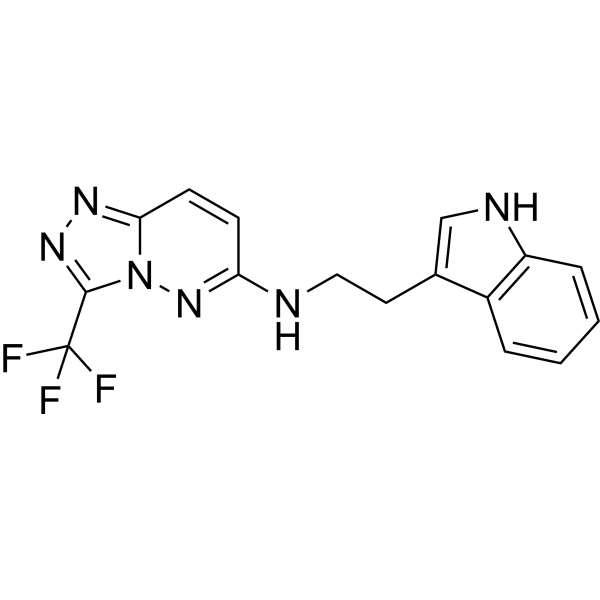
BRD4 Inhibitor-27 (compound 6) is a BRD4 inhibitor with IC50 of 9.6 and 11.3 μM for BRD4 BD1 and BRD4 BD2, respectively. BRD4 Inhibitor-27 has the potential to study cancer .
|
-
- HY-160634
-
-
- HY-143317
-
|
|
Epigenetic Reader Domain
|
Cancer
|
|
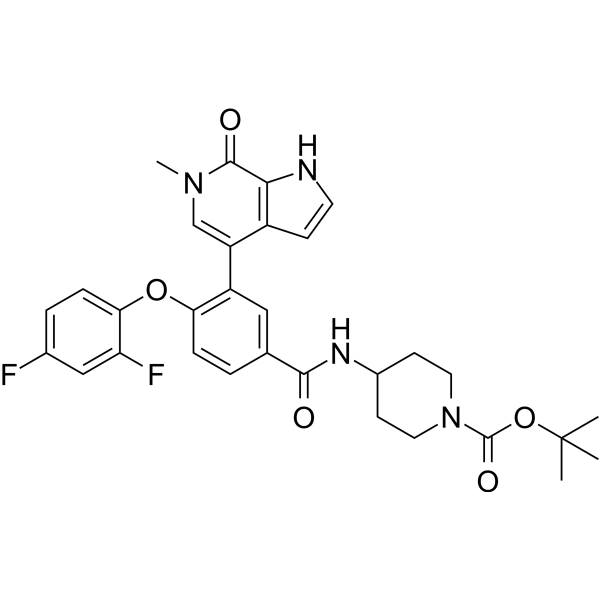
XY153 (compound 8l) is a BD2-selective BET inhibitor and selectively binds to BRD4 BD2. XY153 binds to BRD4 BD2, BRD3 BD2 and BRD2 BD2 with IC50s of 0.79, 5.31 and 5.09 nM, respectively. XY153 shows potent antiproliferative activity against multiple tumor cell lines. XY153 can be used for the research of acute myeloid leukemia (AML) and cancer .
|
-
- HY-149098
-
|
|
Epigenetic Reader Domain
|
Cancer
|
|
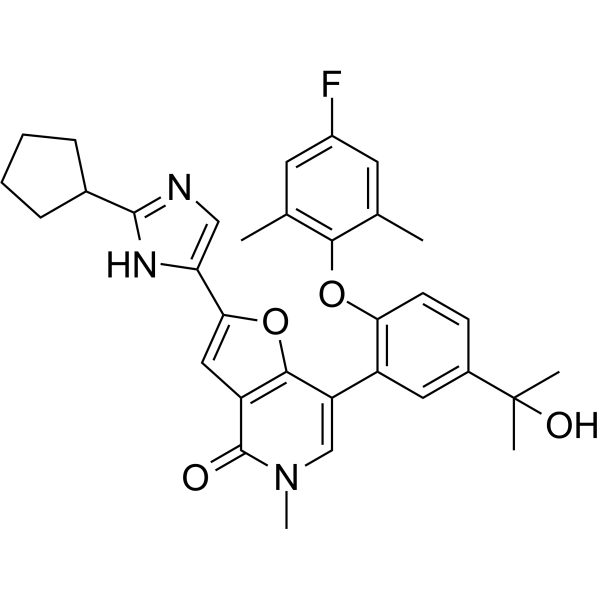
SJ1461 is a potent and orally active BET inhibitor. SJ1461 inhibits BRD2 (BD1), and BRD2 (BD2), BRD4 (BD1), and BRD4 (BD2) with IC50 values of 1.6 nM, 0.1 nM, 6.5 nM, and 0.2 nM, respectively .
|
-
- HY-173062
-
|
|
Epigenetic Reader Domain
c-Myc
|
Others
|
|
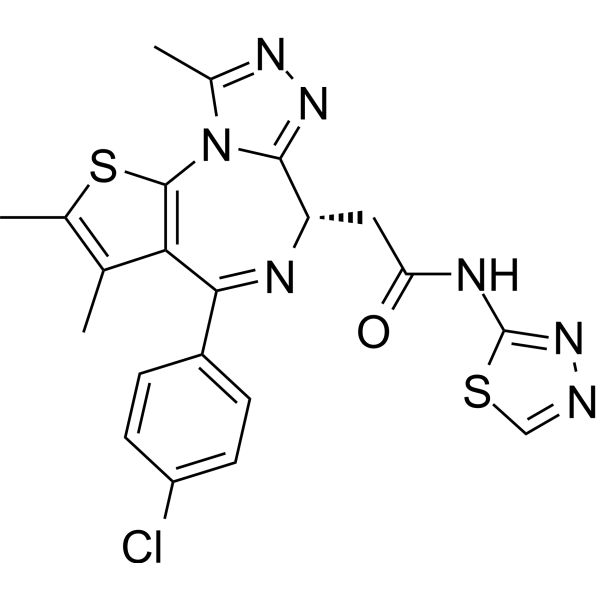
BRD4 Inhibitor-40 (Compound 23) is the inhibitor for BRD that inhibits BRD4-BD1, BRD4-BD2, BRD2-BD1 and BRD2-BD2 with IC50s of 16.1, 142.18, 29.35 and 302.35 nM, respectively. BRD4 Inhibitor-40 modulates the expression of c-Myc and p21, arrests cell cycle at G1 phase, inhibits Pkd1-null (PN) renal cystic epithelial cells, and blocks the renal cysts formation in Madin-Darby canine kidney and embryonic kidney vesicle models. BRD4 Inhibitor-40 exhibits renal cysts inhibitory activity in mouse models .
|
-

- HY-153945
-
|
|
Epigenetic Reader Domain
|
Cancer
|
|
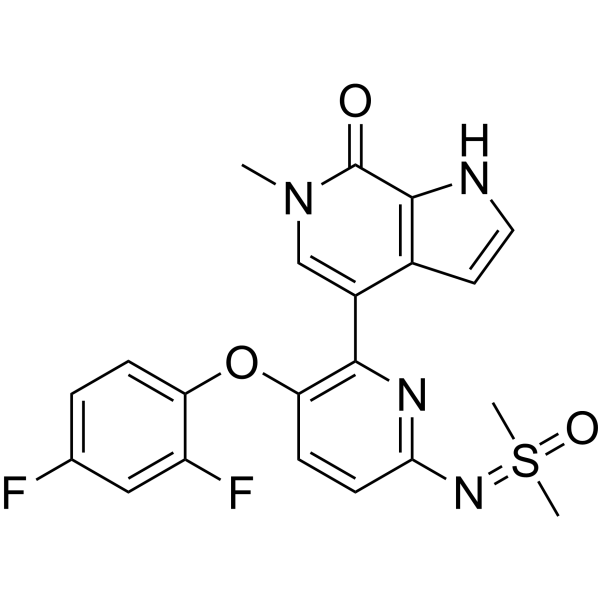
BET-IN-15 (compound 1) is a potent and orally active BET inhibitor with IC50 values of 0.64,0.25 nM for BRD4-BD1,BRD4-BD2,respectively. BET-IN-15 shows antiproliferative activity .
|
-
- HY-173237
-
|
|
CDK
Epigenetic Reader Domain
|
Cancer
|
CDK4/6/BRD4-IN-1 (B15) is an inhibitor of CDK4, CDK6 and BRD4, with IC50 values of 220 nM, 146 nM, 106 nM and 85 nM for BRD4-BD2, BRD4-BD1, CDK6 and CDK4, respectively. CDK4/6/BRD4-IN-1 (B15) can be used in the study of NSCLC (Non-Small Cell Lung Cancer). CDK4/6/BRD4-IN-1 (B15) induces cell cycle arrest and apoptosis .
|
-

- HY-170686
-
-

- HY-151972
-
|
|
Epigenetic Reader Domain
|
Cardiovascular Disease
Inflammation/Immunology
Cancer
|
|
BRD4 Inhibitor-25 is a BRD4 inhibitor with IC50s of 0.82 μM, 1.94 μM for BD1 and BD2 domains of BRD4. BRD4 Inhibitor-25 induces apoptotic and autophagy cell death in ovarian cancer cells. BRD4 Inhibitor-25 can be used in the research of cancers, cardiovascular, neuromuscular and inflammatory disorders.
|
-
- HY-126325
-
|
|
Epigenetic Reader Domain
|
Cancer
|
|
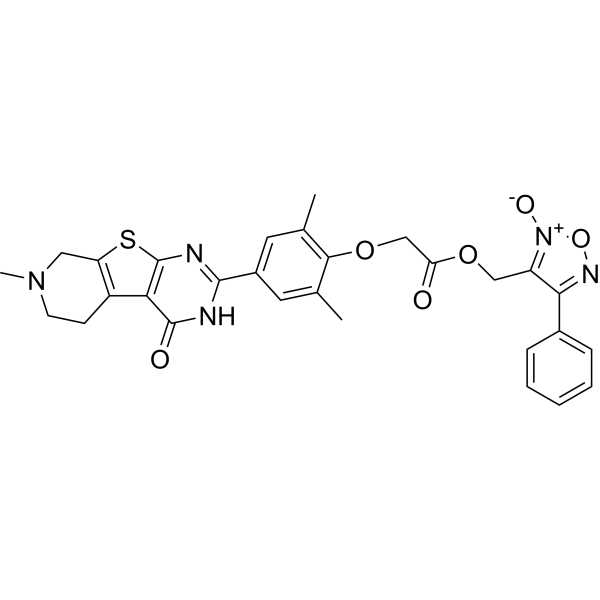
BY27 is a potent and selective BET BD2 inhibitor, shows 38, 5, 7, and 21-fold BD1/BD2 selectivity for BRD2, BRD3, BRD4, and BRDT. Anti-cancer activity .
|
-
- HY-149519
-
|
|
Epigenetic Reader Domain
|
Cancer
|
|
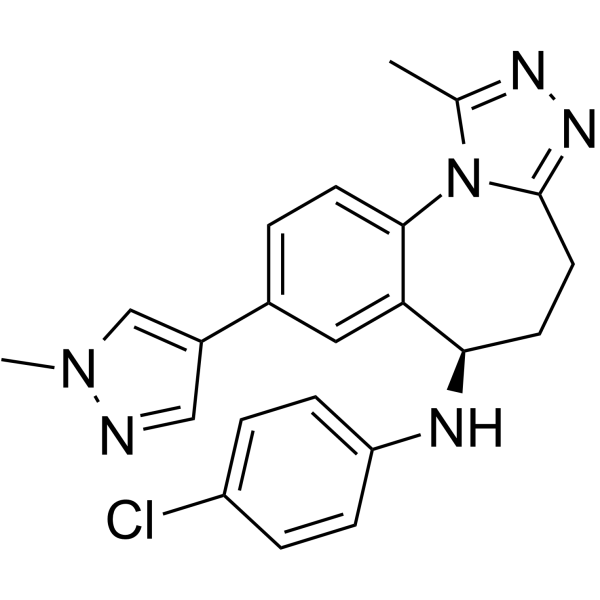
BRD4 Inhibitor-28 (Compound 18) is an orally active BRD4 Inhibitor. BRD4 Inhibitor-28 inhibits BRD40-BD1, BRD40-BD2 with IC50s of 15, 55 nM. BRD4 Inhibitor-28 also inhibits BRD2-BD1, BRD3-BD1, BRDT-BD1 with IC50s of 19, 25, 68 nM. BRD4 Inhibitor-28 has anti-melanoma activity .
|
-
- HY-132232
-
|
|
Epigenetic Reader Domain
|
Cancer
|
|
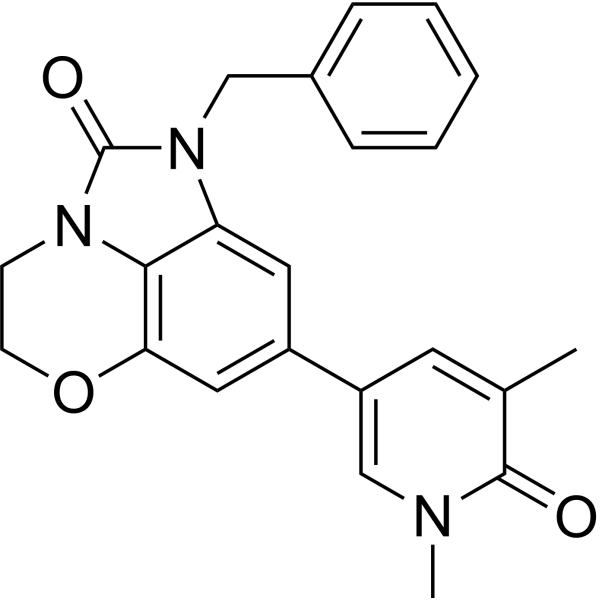
GSK097 is a potent and selective Inhibitor of the second bromodomain (BD2) of the bromodomain and extra-terminal domain (BET) proteins. GSK097 displays 2000-fold selective for BD2 over BD1 (BRD4 data) with >1 mg/mL solubility in FaSSIF media .
|
-
- HY-168628
-
|
|
Epigenetic Reader Domain
|
Cancer
|
|
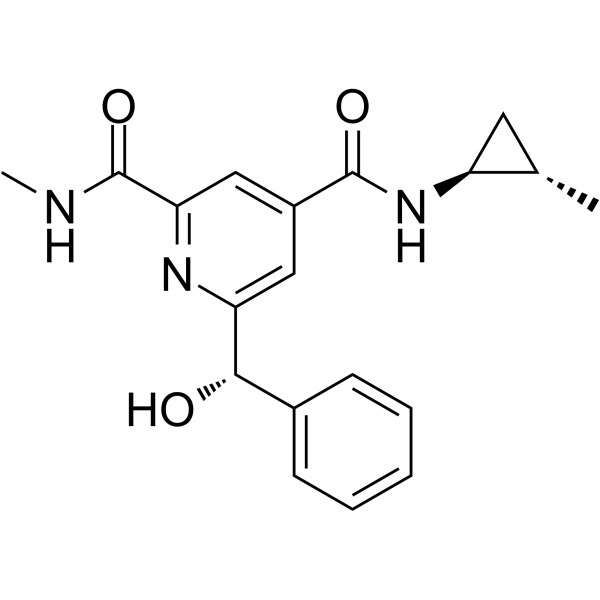
BET-IN-27 (compound 6C) is an oral BET inhibitor with the IC50 values of 3.3 nM (BRD4-BD2)、3.4 nM (BRD4-BD1)、4.1 nM (BRD2-BD1)、20.4 nM (BRD3-BD1) and 42.0 nM (BRDT-BD1), respectively. BET-IN-27 shows anti-proliferative activity .
|
-

- HY-129937
-
|
|
PROTACs
Epigenetic Reader Domain
|
Cancer
|
|
(S)-GNE-987 (compound 4), the GNE-987 (a chimeric BET degrader) hydroxy-proline epimer, abrogates binding to von Hippel-Lindau and does not degrade BRD4 protein. (S)-GNE-987 binds to the BRD4 BD1(IC50=4 nM) and BD2 (3.9 nM) bromodomains and can be used to design PROTAC-Antibody Conjugate (PAC) .
|
-
- HY-153414
-
|
|
Epigenetic Reader Domain
PROTACs
|
Cancer
|
|
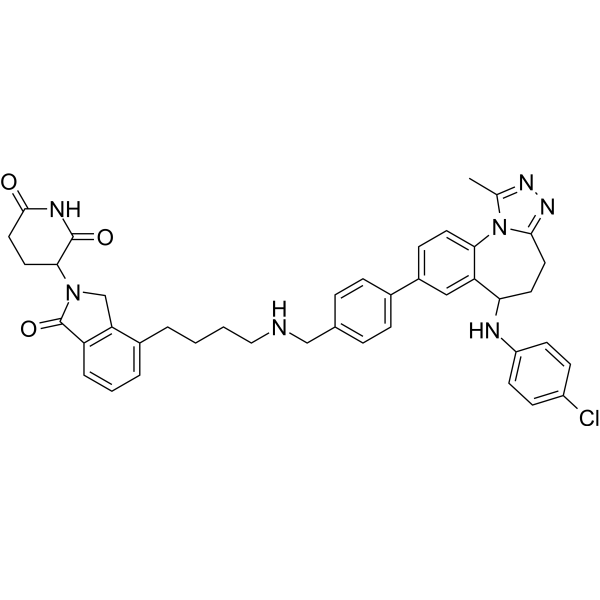
GXF-111, a PROTAC molecule, can promote selective degradation of cellular BRD3 and BRD4-L. GXF-111 has binding affinities for BRD3 BD1 and BRD3 BD2 with Ki values of 11.97 nM and 2.35 nM, respectively. GXF-111 can be used for the research of cancer .
|
-
- HY-120245
-
|
|
Epigenetic Reader Domain
|
Inflammation/Immunology
|
|
GSK-340 is a BET inhibitor with high affinity and significant selectivity for BD2 from BRD4 with a pIC50 of 7.2. GSK-340 inhibits MCP-1 release in Lipopolysaccharide (HY-D1056) treated PBMCs and whole blood with the pIC50 of 7.4 and 6.0, respectively. GSK-340 has immunomodulatory activity .
|
-

- HY-19760B
-
|
|
Epigenetic Reader Domain
|
Inflammation/Immunology
|
|
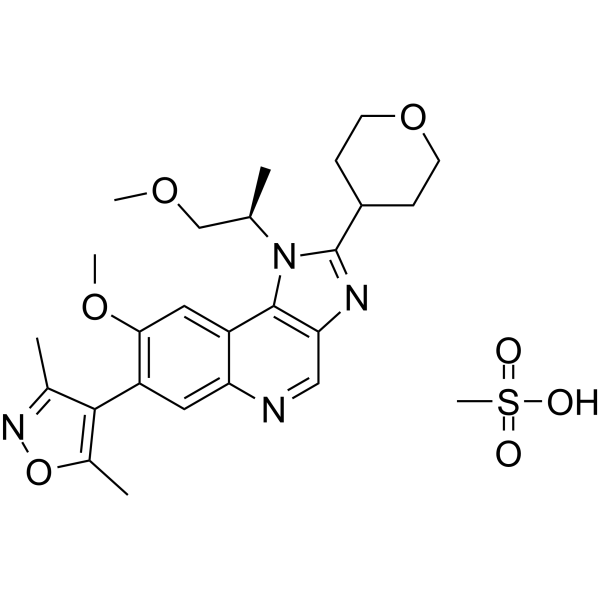
I-BET282E is a pan-inhibitor of all eight BET bromodomains, and selectivity over other representative bromodomain-containing proteins. I-BET282E shows pIC50s ranging 6.4-7.7 for BRD2 (BD1/BD2), BRD2 (BD1/BD), BRD3 (BD1/BD), and BRD4 (BD1/BD) .
|
-
- HY-D3393
-
|
|
Fluorescent Dye
Epigenetic Reader Domain
|
Cancer
|
|
JQ1-FITC TFA is a BRD4-binding fluorescent tracer. JQ1-FITC TFA binds to BRD4 BD1, BD2, recombinant bromodomains, and endogenous BRD4 in cell lysates. JQ1-FITC TFA can be used for the research of breast cancer and cancer (Ex/Em = 495/525 nm) [2].
|
-

- HY-173315
-
|
|
Epigenetic Reader Domain
|
Cancer
|
|
pan-BET/BD2-IN-1 (compound 6b) is a selective extra-terminal (BET) protein inhibitor (BRDT-1 Ki = 1.05 μM and BRD4-1 Ki = 0.68 μM). pan-BET/BD2-IN-1 inhibits MM.1S cancer cell growth with an IC50 of 2.6 μM .
|
-

- HY-183770
-
|
|
Akt
PI3K
Epigenetic Reader Domain
c-Myc
|
Cancer
|
|
LCI40 is an orally active dual PI3K/BRD4 inhibitor (PI3Kα IC50 = 0.071 μM, PI3Kβ IC50 = 0.17 μM, PI3Kγ IC50 = 0.66 μM, PI3Kδ IC50 = 0.072 μM, BRD4 BD1 IC50 = 0.19 μM, and BRD4 BD2 IC50 = 1.88 μM. LCI40 inhibits phosphorylation of pAKT (S473) and suppresses c-MYC levels in mantle cell lymphoma cells. LCI40 displays immunomodulatory capacity with minimal toxicity to normal mouse immune cells. LCI40 can be used for the research of mantle cell lymphoma .
|
-

- HY-183922
-
|
|
PI3K
Epigenetic Reader Domain
|
Cancer
|
|
SRX3212 is a potent PI3Kα/BRD4 inhibitor with human IC50 values of 22 nM, 3.7 nM, and 32 nM for PI3Kα, BRD4BD1, and BRD4BD2, respectively. SRX3212 inhibits PI3K kinase activity and blocks acetyllysine binding function of BRD4BD1 and BRD4BD2. SRX3212 can be used for the research of mantle cell lymphoma, colon carcinoma, neuroblastoma, prostate cancer[1].
|
-

| Cat. No. |
Product Name |
Type |
-
- HY-D3393
-
|
|
Fluorescent Dyes
|
|
JQ1-FITC TFA is a BRD4-binding fluorescent tracer. JQ1-FITC TFA binds to BRD4 BD1, BD2, recombinant bromodomains, and endogenous BRD4 in cell lysates. JQ1-FITC TFA can be used for the research of breast cancer and cancer (Ex/Em = 495/525 nm) [2].
|
| Cat. No. |
Product Name |
Category |
Target |
Chemical Structure |
| Cat. No. |
Product Name |
|
Classification |
-
- HY-136857
-
|
|
|
PROTAC Synthesis
|
|
BRD4 degrader-3 is a potent bromodomain BRD4 degrader extracted from patent WO2020055976A1, example 1a, has IC50s of 15.5 and 12.3 nM for BRD4-BD1 and BRD4-BD2, respectively . PROTAC BRD4 Degrader-7 is a click chemistry reagent, it contains an Alkyne group and can undergo copper-catalyzed azide-alkyne cycloaddition (CuAAc) with molecules containing Azide groups.
|
Your information is safe with us. * Required Fields.
Inquiry Information
- Product Name:
- Cat. No.:
- Quantity:
- MCE Japan Authorized Agent:








