Search Result
Results for "
IRAK4 inhibitor
" in MedChemExpress (MCE) Product Catalog:
| Cat. No. |
Product Name |
Target |
Research Areas |
Chemical Structure |
-
- HY-145483
-
KT-474
1 Publications Verification
KYM-001; PROTAC IRAK4 degrader-7
|
PROTACs
IRAK
Apoptosis
|
Cancer
|
|
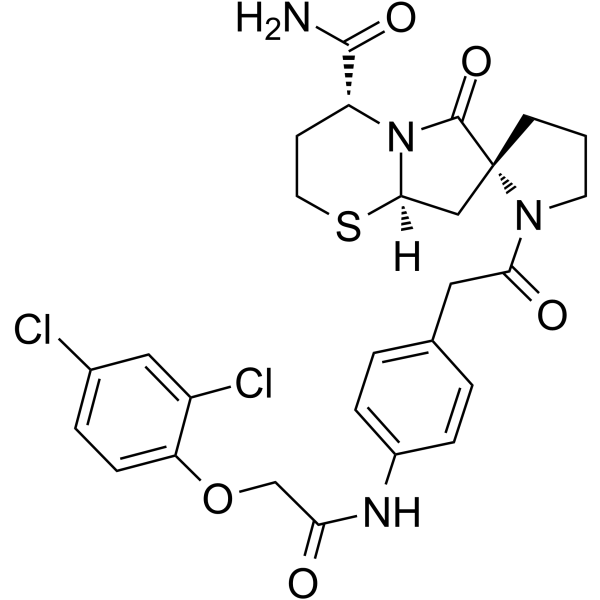
KT-474 (KYM-001; PROTAC IRAK4 degrader-7) is an orally active PROTAC IRAK4 degrader with anti-tumor effects. KT-474 inhibits the cell cycle and induces apoptosis. KT-474 induces tumor regression in a xenograft model of MYD88-mutated ABC DLBCL. KT-474 is a click chemistry reagent, containing an alkyne group, which can undergo copper-catalyzed azide-alkyne cycloaddition (CuAAc) with molecules containing azide groups .
|
-
-
- HY-103490
-
|
EDHS-206
|
MAP3K
Apoptosis
|
Infection
Inflammation/Immunology
Cancer
|
|
Takinib (EDHS-206) is an orally active and selective TAK1 inhibitor (IC50=9.5 nM), more than 1.5 log more potent than the second and third ranked targets, IRAK4 (120 nM) and IRAK1 (390 nM), respectively. Takinib is an inhibitor of autophosphorylated TAK1 that non-competitively binds within the ATP binding pocket. Takinib induces apoptosis following TNFα stimulation in cell models of rheumatoid arthritis and metastatic breast cancer. Takinib is also a P. falciparum protein kinase 9 (PfPK9) inhibitor (KD(app) of 0.46 μM) .
|
-
-
- HY-19836
-
|
PF-06650833
|
IRAK
|
Inflammation/Immunology
|
|
Zimlovisertib (PF-06650833) is a potent, selective and orally active inhibitor of interleukin-1 receptor associated kinase 4 (IRAK4) with IC50s of 0.2 and 2.4 nM in the cell and PBMC assay, respectively. Zimlovisertib is used to treat diseases such as rheumatoid arthritis, lupus, and lymphomas .
|
-
-
- HY-14721
-
|
EMD-1214063
|
c-Met/HGFR
Autophagy
|
Cancer
|
|
Tepotinib (EMD-1214063) is an orally active and highly selective, reversible, ATP-competitive c-Met inhibitor with an IC50 of 3 nM, >200-fold selective for c-Met than IRAK4, TrkA, Axl, IRAK1, and Mer. Tepotinib inhibits c-Met phosphorylation and induces autophagy. Tepotinib has antitumor effects .
|
-
-
- HY-18992
-
|
|
IRAK
|
Inflammation/Immunology
|
|
AS2444697 is an orally active IRAK-4 inhibitor with an IC50 of 21 nM . AS2444697 potently inhibits human and rat IRAK-4 activity. AS2444697 exhibits renoprotective effects through anti-inflammatory action .
|
-
-
- HY-50937
-
ST 2825
Maximum Cited Publications
70 Publications Verification
|
MyD88
|
Inflammation/Immunology
|
|
ST 2825 is a specific MyD88 dimerization inhibitor. ST2825 interferes with recruitment of IRAK1 and IRAK4 by MyD88, causing inhibition of IL-1β-mediated activation of NF-κB transcriptional activity .
|
-
-
- HY-153368
-
|
KT-413
|
PROTACs
IRAK
NF-κB
IFNAR
|
Cancer
|
|
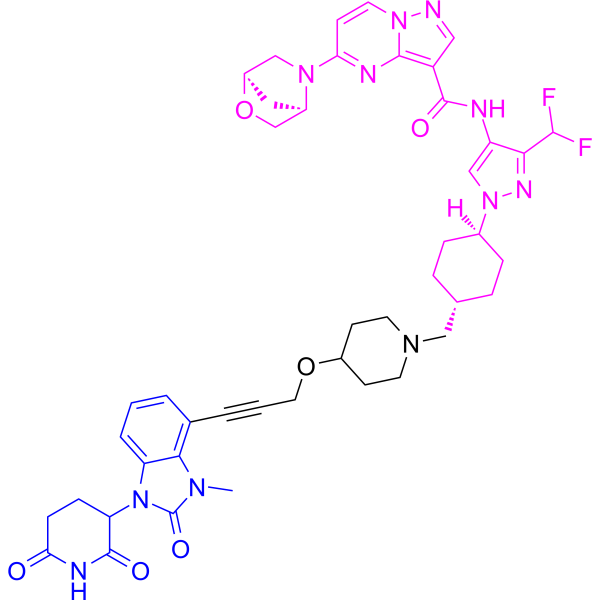
Zomiradomide is an orally active PROTAC degrader for IRAK4 (DC50=6 nM), thereby inhibiting the NF-κB signaling pathway. Zomiradomide acts also as a molecular glue, recruiting Ikaros and Aiolos, and mediating their degradation (DC50 for Ikaros is 1 nM), thereby activating the type I IFN signaling pathway . (Pink: target protein ligand PROTAC IRAK4 ligand-5 (HY-168311), Blue: E3 ligase ligand Thalidomide-4-Br (HY-W039116), Black: linker (HY-168313))
|
-
-
- HY-139374
-
|
BAY 1834845
|
IRAK
|
Inflammation/Immunology
|
|
Zabedosertib (BAY 1834845) is a selective, orally active IRAK4 inhibitor with immunomodulatory potential, IC50 is 3.55 nM. IRAK4 is a protein kinase involved in signaling innate immune responses from Toll-like receptors . Zabedosertib exhibits anti-inflammatory property against IL-β, LPS (HY-D1056) and Imiquimod (HY-B1080) induced inflammation .
|
-
-
- HY-103017A
-
|
|
IRAK
|
Infection
Inflammation/Immunology
Cancer
|
|
JH-X-119-01 is a potent and selective interleukin-1 receptor-associated kinases 1 (IRAK1) inhibitor. JH-X-119-01 ameliorates LPS-induced sepsis in mice . JH-X-119-01 inhibits IRAK1 biochemically with an apparent IC50 of 9 nM while exhibiting no inhibition of IRAK4 at concentrations up to 10 μM .
|
-
-
- HY-111101
-
|
|
IRAK
|
Cancer
|
|
AZ1495, a weak base, is a potent orally active interleukin-1 receptor associated kinase 4 (IRAK4) inhibitor. AZ1495 has a favorable physicochemical and kinase selectivity for IRAK4 and IRAK1 with IC50 values of 0.005 μM and 0.023 μM, respectively. AZ1495 has IRAK4 inhibition with a Kd value of 0.0007 μM. AZ1495 can be used for the research of diffuse large B-cell lymphoma (DLBCL) .
|
-
-
- HY-160487
-
|
|
IRAK
Apoptosis
|
Cancer
|
|
KME-2780 is the orally active inhibitor for IRAK1 and IRAK4 with IC50s of 19 nM and 0.5 nM. KME-2780 can be used for research of dysregulation of innate immune signaling and hematologic malignancies .
|
-
-
- HY-114181
-
|
|
IRAK
Cyclic GMP-AMP Synthase
|
Inflammation/Immunology
|
|
IRAK4-IN-4 (Compound 15) is an interleukin-1 receptor-associated kinase 4 (IRAK4) inhibitor, with an IC50 of 2.8 nM. IRAK4-IN-4 also inhibits cyclic GMP-AMP synthase (cGAS) with an IC50 of 2.1 nM. IRAK4-IN-4 can be used for research of autoimmune diseases .
|
-
-
- HY-101922
-
-
-
- HY-135317
-
|
CA-4948
|
IRAK
Apoptosis
FLT3
NF-κB
MyD88
|
Inflammation/Immunology
Cancer
|
|
Emavusertib is an orally active inhibitor for IRAK4 (IC50=57 nM) and FLT3. Emavusertib inhibits NF-κB and MyD88 signaling pathways, reduces the generation of pro-inflammatory cytokines like IL-6 and IL-10, thereby exhibiting anti-inflammatory and anti-proliferative activities against cancer cells, leading to cell apoptosis. Emavusertib exhibits antitumor activity in mouse model
|
-
-
- HY-138742
-
|
|
MAP4K
|
Cancer
|
|
HPK1-IN-7 is a potent, orally active HPK1 (hematopoietic progenitor kinase 1, MAP4K1) inhibitor (IC50=2.6 nM) with excellent family and kinome selectivity. HPK1-IN-7 shows selectivity against IRAK4 (59 nM) and GLK (140 nM). HPK1-IN-7 shows robust efficacy against MC38 syngeneic tumor model in combination with anti-PD1 .
|
-
-
- HY-109585
-
|
|
IRAK
|
Inflammation/Immunology
Cancer
|
|
IRAK4-IN-7 is a selective, potent and orally active interleukin-1 receptor-associated kinase 4 (IRAK4) inhibitor, extracted from patent WO2015104688 (example 1). IRAK4-IN-7 has the potential for cancer and inflammatory diseases treatment .
|
-
-
- HY-13275
-
|
|
IRAK
|
Inflammation/Immunology
|
|
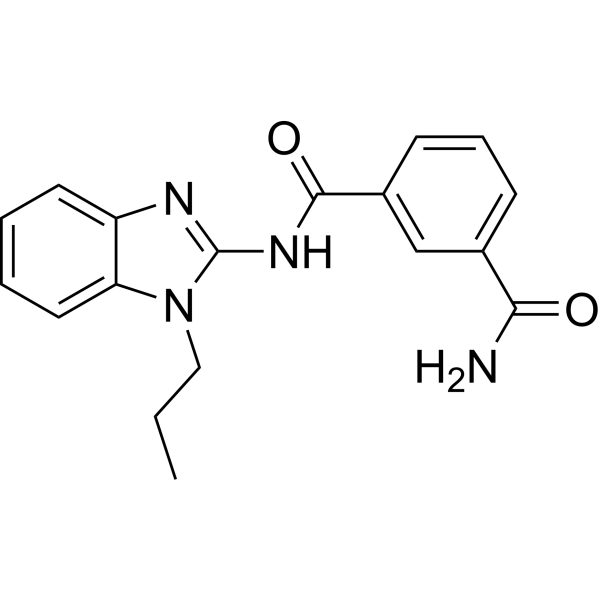
IRAK inhibitor 1 is a potent IRAK-4 inhibitor with IC50 of 216 nM, is poorly active against JNK-1 and JNK-2 with IC50 of 3.801 μM, and >10 μM, respectively.
|
-
-
- HY-77048
-
|
|
IRAK
|
Inflammation/Immunology
|
|
IRAK-4 protein kinase inhibitor 2 (compound 1) is a potent inhibitor of interleukin-1 (IL-1) receptor-associated kinase-4 (IRAK-4), with an IC50 of 4 μM. IRAK-4 protein kinase inhibitor 2 can be used for the research of inflammatory and immune-related conditions or disorders .
|
-
-
- HY-147264
-
|
GS-5718
|
IRAK
|
Inflammation/Immunology
|
|
Edecesertib (GS-5718) is a selective, potent, orally active IRAK-4 inhibitor. Edecesertib has anti-inflammatory activity. Edecesertib can be used for rheumatoid arthritis (RA) and lupus erythematosus (LE) research .
|
-
-
- HY-153224
-
|
|
IRAK
|
Inflammation/Immunology
|
|
GLPG2534 is an orally active and selective IRAK4 inhibitor, with IC50 values of 6.4 nM and 3.5 nM for human and mouse IRAK4. GLPG2534 can be used for the research of inflammatory skin diseases .
|
-
-
- HY-148238
-
|
|
IRAK
|
Inflammation/Immunology
|
|
GNE-2256 (molecule 19), a chemical probe, is an orally active IRAK4 (Interleukin 1 receptor associated kinase 4) inhibitor (IRAK4 Ki=1.4 nM; IL-6 IC50=190 nM) .
|
-
-
- HY-123854
-
|
|
IRAK
|
Inflammation/Immunology
|
|
PF-06426779 is a potent and selective inhibitor of interleukin 1 receptor associated kinase 4 (IRAK4), with an IC50 of 0.3 nM .
|
-
-
- HY-174455
-
|
|
PROTACs
IRAK
Interleukin Related
|
Inflammation/Immunology
|
|
APH02174 is a highly selective and orally active IRAK4 PROTAC degrader with the DC50 of 4.01 nM in THP-1 cells. APH02174 blocks inflammatory signals by inhibiting IL-6 release. APH02174 can be used for research on inflammatory conditions such as psoriasis vulgaris and rheumatoid arthritis .
|
-
-
- HY-14721R
-
|
EMD-1214063 (Standard)
|
Reference Standards
c-Met/HGFR
Autophagy
|
Cancer
|
|
Tepotinib (Standard) is the analytical standard of Tepotinib. This product is intended for research and analytical applications. Tepotinib (EMD-1214063) is an orally active and highly selective, reversible, ATP-competitive c-Met inhibitor with an IC50 of 3 nM, >200-fold selective for c-Met than IRAK4, TrkA, Axl, IRAK1, and Mer. Tepotinib inhibits c-Met phosphorylation. Tepotinib has antitumor effects .
|
-
-
- HY-W014223
-
-
-
- HY-150735
-
|
|
IRAK
|
Inflammation/Immunology
|
|
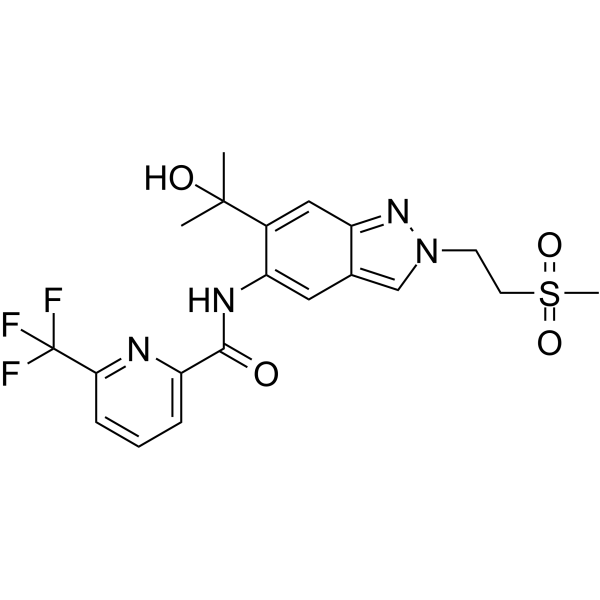
IRAK4-IN-20 (Compound BAY-1834845) is an orally active IRAK4 inhibitor with an IC50 of 3.55 nM. IRAK4-IN-20 can be used for acute respiratory distress syndrome (ARDS) research .
|
-
-
- HY-151363
-
|
|
IRAK
|
Inflammation/Immunology
|
|
IRAK4-IN-21 (compound 17) is an orally active, potent and selective IRAK4 inhibitor with IC50 values of 5 and 56 nM for IRAK4 and TAK1, respectively. IRAK4-IN-21 effectively inhibits IL-23 production (IC50=0.17 μM) and can be used in studies of autoimmune diseases such as plaque psoriasis and psoriatic arthritis .
|
-
-
- HY-151365
-
|
|
IRAK
|
Inflammation/Immunology
|
|
IRAK4-IN-22 (compound 18) is an orally active, potent and selective IRAK4 inhibitor with IC50 values of 3 and 17 nM for IRAK4 and TAK1, respectively. IRAK4-IN-21 effectively inhibits IL-23 production (IC50=0.10 µM) and can be used in studies of autoimmune diseases such as plaque psoriasis and psoriatic arthritis .
|
-
-
- HY-146112
-
|
|
IRAK
|
Cancer
|
|
IRAK4-IN-14 (compound 28) is a potent, selective and orally active IRAK4 inhibitor with an IC50 of 0.003 µM. IRAK4-IN-14 shows good PK parameters in rats and mouse. IRAK4-IN-14 shows synergistic in vitro activity against MyD88/CD79 double mutant ABC-DLBCL in combination with Acalabrutinib .
|
-
-
- HY-179094
-
|
|
PROTACs
IRAK
NF-κB
Enolase
|
Inflammation/Immunology
Cancer
|
|
PSP-0119 is a highly efficient and effective PROTAC degrader targeting IRAK4 (IC50 = 2.83 nM). PSP-0119 can inhibit IRAK4 kinase activity, NF-κβ activity, and IL-1β-induced IRAK4 phosphorylation. PSP-0119 degrades IRAK4 in FLT3-mutant AML cell lines, sparing FLT3-wild-type AML cells, FLT3-wild-type samples, and normal bone marrow. PSP-0119 downregulates alpha-enolase (eNOS) of MOLM-13 cells. PSP-0119 can be used for the study of Acute Myeloid Leukemia (AML) .
|
-
-
- HY-159953
-
|
|
IRAK
FLT3
|
Inflammation/Immunology
Cancer
|
|
IRAK1/4/pan-FLT3 Kinase-IN-1 is an orally active, potent and selective IRAK/pan-FLT3 kinase inhibitor with IC50s of 5 nM, 0.6 nM and <0.5 nM against IRAK1, IRAK4 and FLT3, respectively. IRAK1/4/pan-FLT3 Kinase-IN-1 can be used for research on AML .
|
-
-
- HY-134911
-
|
|
IRAK
CDK
|
Inflammation/Immunology
Cancer
|
|
HS-243 is a potent and selective IRAK-4 and IRAK-1 inhibitor, with IC50 values of 20 and 24 nM. HS-243 shows minimal TAK1 (transforming growth factor β-activated kinase 1) inhibition activity, with a IC50 of 0.5 μM. HS-243 shows anti-inflammatory and anticancer activity .
|
-
-
- HY-162359
-
|
|
IRAK
|
Neurological Disease
Inflammation/Immunology
|
|
BIO-7488 is an orally active, selective and blood-brain barrier permeable IRAK4 inhibitor, with an IC50 value of 0.5 nM. BIO-7488 inhibits the production of pro-inflammatory cytokines (IL-1β, TNFα, IL-6) and demonstrates anti-inflammatory effects in both LPS (HY-D1056) and distal hypoxic-middle cerebral artery occlusion (DH-MCAO) ischemic stroke model. BIO-7488 can be used for the study of neuroinflammatory-related diseases, particularly ischemic stroke .
|
-
-
- HY-153673
-
|
|
IRAK
PROTACs
|
Cancer
|
|
PROTAC IRAK4 degrader-8 (Compound 2) is a PROTAC IRAK4 degrader (IC50: 15.5 nM). PROTAC IRAK4 degrader-8 degrades IRAK4 in THP-1 cells (DC50: 1.8 nM)。PROTAC IRAK4 degrader-8 also inhibits L-6 production in human whole blood and LPS-induced human PBMC cells, with IC50s of 246 nM and 2.2 nM respectively .
|
-
-
- HY-130253
-
|
|
IRAK
|
Cancer
|
|
IRAK4-IN-6 is an orally efficacious and selective IRAK4 inhibitor with an IC50 of 4 nM, and targetes MyD88 L265P mutant diffuse large B cell lymphoma .
|
-
-
- HY-175022
-
|
|
PROTACs
IRAK
Toll-like Receptor (TLR)
Interleukin Related
|
Inflammation/Immunology
|
|
PROTAC IRAK4 degrader-13 (Degrader 1) is a selective IRAK4 PROTAC degrader with DC50s of 0.86 and 1.1 nM for monocytes and lymphocytes in PBMCs, respectively. PROTAC IRAK4 degrader-13 significantly induces TIR signal activation, and inhibits the expression of circulating proinflammatory cytokines in Imiquimod (HY-B0180) induced psoriasis mice model. PROTAC IRAK4 degrader-13 can be used for TLR- and IL-1R-driven driven neutrophilic inflammation diseases like hidradenitis suppurativa (HS) and atopic dermatitis (AD) research . Pink: IRAK4 ligand; Blue: E3 ligase ligand; Black: linker
|
-
-
- HY-148276
-
|
|
PROTACs
IRAK
|
Cancer
|
|
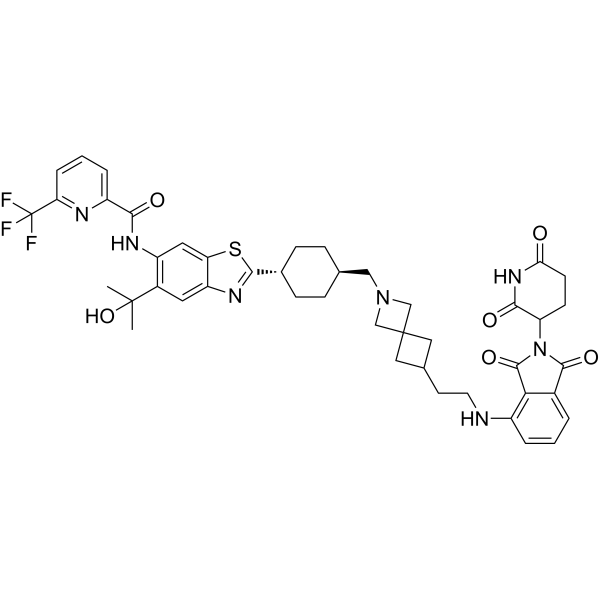
KTX-497 is an IRAK4 PROTAC degrader with a DC50 value of 3 nM. KTX-497 can be used for the research of oncology [1].(Pink:IRAK4 inhibitor (HY-150735); Black: linker; Blue: CRBN Ligand (HY-10984))
|
-
-
- HY-131903
-
|
|
IRAK
|
Inflammation/Immunology
|
|
HS271 is a highly potent, orally active and selective IRAK4 inhibitor, with an IC50 of 7.2 μM. HS271 exhibits superior enzymatic and cellular activities, as well as excellent pharmacokinetic properties .
|
-
-
- HY-14721A
-
|
EMD-1214063 hydrochloride
|
c-Met/HGFR
Autophagy
|
Cancer
|
|
Tepotinib (EMD-1214063) hydrochloride is an orally active and highly selective, reversible, ATP-competitive c-Met inhibitor with an IC50 of 3 nM, >200-fold selective for c-Met than IRAK4, TrkA, Axl, IRAK1, and Mer. Tepotinib hydrochloride inhibits c-Met phosphorylation and induces autophagy. Tepotinib hydrochloride has antitumor effects .
|
-
-
- HY-178012
-
|
|
IRAK
TNF Receptor
|
Inflammation/Immunology
|
|
GLPG4471 is a selective and orally active IRAK4 inhibitor with an IC50 of 1.7 nM. GLPG4471 exhibits potent inhibition of cytokine (TNFα and IFNα) secretion in cellular and whole blood phenotypic assays. GLPG4471 displays significant activity in a mouse model of collagen-induced arthritis. GLPG4471 can be used for the study of arthritis .
|
-
-
- HY-13278
-
-
-
- HY-13280
-
|
|
IRAK
|
Inflammation/Immunology
|
|
IRAK inhibitor 6 is an inhibitor of interleukin-1 receptor associated kinase 4 (IRAK-4) with IC50 of 160 nM.
|
-
-
- HY-177515
-
|
|
IRAK
STAT
JAK
NF-κB
|
Inflammation/Immunology
|
|
IRAK4 modulator-2 (Compound 5) is a selective dual Interleukin-1 Receptor Associated Kinase 4 (IRAK4) and IRAK1 inhibitor with IC50 values of 0.005 μM and 0.97 μM, erespectively. IRAK4 modulator-2 blocks IRAK-mediated signaling pathways (e.g., JAK-STAT, NF-κB pathways), reduces the production of pro-inflammatory cytokines (e.g., IL-1, TNF), and exerts anti-inflammatory activity. IRAK4 modulator-2 is promising for research of autoimmune diseases and inflammatory diseases, such as rheumatoid arthritis, psoriasis, inflammatory bowel disease .
|
-
-
- HY-179095
-
|
|
Ligands for Target Protein for PROTAC
IRAK
NF-κB
p38 MAPK
|
Cancer
|
|
UR241-2 is an IRAK4 inhibitor. UR241-2 suppresses IL-1–induced IRAK1/4 signaling, NF-κβ activation, and phosphorylation of p65 and p38. UR241-2 selectively inhibits leukemia stem cell clonogenicity. UR241-2 can serve as a ligand for target proteins for PROTAC, facilitating the development and design of PROTAC degraders for IRAK4. UR241-2 can be used in the research of acute myeloid leukemia .
|
-
-
- HY-W900240
-
-
-
- HY-124995
-
|
|
IRAK
Toll-like Receptor (TLR)
ERK
NF-κB
Interleukin Related
|
Inflammation/Immunology
|
|
BMS-986126 is a potent, selective, and orally active IRAK4 inhibitor (IC50 = 5.3 nM). BMS-986126 broadly inhibits MyD88-dependent signaling pathways. BMS-986126 demonstrates robust activity in the MRL/lpr and NZB/NZW murine models of lupus, inhibiting multiple pathogenic responses. BMS-986126 can be used for autoimmune diseases research, such as lupus erythematosus (SLE) .
|
-
-
- HY-155132
-
|
|
IRAK
|
Inflammation/Immunology
|
|
IRAK4-IN-28 (compound 42) is an orally active IRAK4 inhibitor (IC50=8.9 nM). IRAK4-IN-28 has binding affinity for IRAK4 with a Kd of 0.58 nM. IRAK4-IN-28 can be used in the research of inflammation and autoimmune diseases .
|
-
-
- HY-155519
-
|
|
IRAK
|
Inflammation/Immunology
|
|
IRAK4-IN-26 (Compound 21) is a IRAK4 inhibitor (IC50: 6.2 nM). IRAK4-IN-26 displays an oral bioavailability of 21%. IRAK4-IN-26 can be used for research of inflammatory and autoimmune disorders .
|
-
-
- HY-143485
-
|
|
IRAK
|
Inflammation/Immunology
Cancer
|
|
IRAK4-IN-9 (compound 73) is a potent IRAK4 inhibitor with an IC50 of 1.5 nM. IRAK4-IN-9 blocks MyD88 dependent signaling. IRAK4-IN-9 has the potential for the research of inflammatory diseases, autoimmune diseases, and cancer .
|
-
-
- HY-143231
-
-
- HY-150594
-
|
|
IRAK
NF-κB
|
Cancer
|
|
IRAK4-IN-17 (Compound 5) is a potent IRAK4 inhibitor with the IC50 of 1.3 nM . IRAK4-IN-17 can be used in large B-cell lymphoma (DLBCL) research .
|
-
- HY-155574
-
|
|
IRAK
Apoptosis
|
Cancer
|
|
IRAK4-IN-27 (Compound 22) is a potent, selective inhibitor of IRAK4, with IC50 of 8.7 nM. IRAK4-IN-27 inhibits cell growth, and promotes apoptosis in MYD88 L265P diffuse large B-cell lymphoma (DLBCL) cell line. IRAK4-IN-27 can be used for DLBCL study .
|
-
- HY-150733
-
|
|
IRAK
|
Inflammation/Immunology
|
|
IRAK4-IN-19 is a potent interleukin-1 receptor-associated kinase 4 (IRAK4) inhibitor with an IC50 value of 4.3 nM. IRAK4-IN-19 can inhibit LPS-induced IL23 production in THP and DC cells, and stop arthritis development in arthritis rats. IRAK4-IN-19 can be used for researching arthritis disease .
|
-
- HY-174843
-
|
|
IRAK
|
Inflammation/Immunology
|
|
IRAK4-IN-32 (Compound 10) is a potent interleukin-1 receptor-associated kinase 4 (IRAK4) inhibitor with an enzymatic IC50 value of 18.86 nM and a cellular IC50 value of 6.19 nM. IRAK4-IN-32 is promising for research of inflammatory and autoimmune diseases .
|
-
- HY-123956
-
|
|
IRAK
|
Inflammation/Immunology
|
|
HG-12-6 is a type II inhibitor of IRAK4. HG-12-6 shows preferential binding to unphosphorylated inactive IRAK4 with an IC50 of 165 nM. HG-12-6 can modulate IRAK4 activity in autoimmunity and inflammation .
|
-
- HY-176735
-
|
|
IRAK
FLT3
Apoptosis
|
Cancer
|
FLT3/IRAK4-IN-1 is a selective FLT3/IRAK4 inhibitor with the remarkable activity towards FLT3-WT (IC50 = 1.95 nM), FLT3-D835Y (IC50 = 3.22 nM) and IRAK4 (IC50 = 53.72 nM). LT3/IRAK4-IN-1 has relatively low toxicity to normal bone marrow cells, can effectively promote cell apoptosis, and has the potential to overcome drug resistance. FLT3/IRAK4-IN-1 can be used for research on acute myeloid leukemia (AML) .
|
-
- HY-150593
-
|
|
IRAK
|
Cancer
|
|
IRAK4-IN-16 (compound 4) is a potent IRAK4 (interleukin-1 receptor associated kinase 4) inhibitor, with an IC50 of 2.5 nM. IRAK4-IN-16 shows cytotoxicity activity against OCI-LY10, TMD8, Ramos and HT cells, with IC50 values of 0.2, 0.2, 0.6, and 2.7 μM, respectively .
|
-
- HY-168982
-
|
|
FLT3
IRAK
|
Cancer
|
|
Lomonitinib is a highly potent and selective pan-FLT3/IRAK4 inhibitor with antitumor activity. Lomonitinib is promising for research of myeloid leukemia .
|
-
- HY-148277
-
|
|
PROTACs
IRAK
|
Cancer
|
|
KTX-612 is an orally active IRAK4 PROTAC degrader with a DC50 value of 7 nM. KTX-612 can be used for the research of oncology [1].(Pink:IRAK4 inhibitor (HY-150735); Black: linker; Blue: CRBN Ligand (HY-10984))
|
-
- HY-13278A
-
|
|
IRAK
|
Inflammation/Immunology
|
|
IRAK inhibitor 4 (trans) is the trans form of IRAK inhibitor 4. IRAK inhibitor 4 is an interleukin-1 receptor associated kinase 4 (IRAK4) inhibitor.
|
-
- HY-117622
-
|
|
IRAK
|
Inflammation/Immunology
Cancer
|
|
ND-2110 is a selective IRAK4 inhibitor (Ki: 7.5 nM). ND-2110 binds to the ATP pocket of IRAK4. ND-2110 targets
the subset of activated B cell-like (ABC) subtype of diffuse large B cell lymphoma (DLBCL) cell lines with MYD88 L265P mutations,. ND-2110 inhibits LPS-induced TNF production, alleviates collagen-induced arthritis, and blocks gout formation in mouse models .
|
-
- HY-161620
-
|
|
IRAK
|
Inflammation/Immunology
|
|
DW18134 is an inhibitor for interleukin receptor-associated kinase 4 (IRAK 4) with an IC50 of 11.2 nM. DW18134 inhibits phosphorylation of IRAK4 and IKK, downregulates the secretion of TNF-α and IL-6. DW18134 attenuates the Lipopolysaccharides (HY-D1056)-induced peritonitis and DSS-induced colitis in mouse models, and protects the intestinal barrier function .
|
-
- HY-160787
-
|
|
FLT3
IRAK
|
Cancer
|
|
NCGC1481 is an inhibitor of FLT3, IRAK1, and IRAK4, with IC50 values of <0.5 nM, 22.6 nM, and 0.8 nM, respectively. NCGC1481 can effectively overcome the adaptive resistance of leukemia cells to FLT3 inhibitors and has antileukemic activity .
|
-
- HY-120041
-
|
|
IRAK
|
Cancer
|
|
ND-2158 is a competitive IRAK4 inhibitor, with the Ki of 1.3 nM. ND-2158 suppresses LPS-induced TNF production in human white blood cells, alleviated collagen-induced arthritis, and blocked gout formation in mouse models. ND-2158 has antitumor activity in vivo .
|
-
- HY-169057
-
|
|
IRAK
Toll-like Receptor (TLR)
|
Inflammation/Immunology
|
BI1543673 is an interleukin-1 receptor-associated kinase 4 (IRAK4) inhibitor. BI1543673 can reduce the inflammatory response stimulated by TLR4 and TLR7/8 in human lung tissue. BI1543673 can decrease inflammatory signaling in a mouse model of lung inflammation induced by LPS .
|
-
- HY-176197
-
|
|
IRAK
|
Cancer
|
|
IRAK4-IN-31 (Compound II) is a crystalline IRAK4 inhibitor. IRAK4-IN-31 can be used in myelodysplastic syndrome (MDS) research .
|
-
- HY-143486
-
|
|
IRAK
|
Inflammation/Immunology
Cancer
|
|
IRAK4-IN-10 (compound 75) is a potent IRAK4 inhibitor with an IC50 of 1.5 nM. IRAK4-IN-10 blocks MyD88 dependent signaling. IRAK4-IN-9 has the potential for the research of inflammatory diseases, autoimmune diseases, and cancer .
|
-
- HY-149345
-
|
|
IRAK
|
Inflammation/Immunology
|
|
IRAK4-IN-24 (compound 16) is a potent IRAK4 inhibitor, with high clearance (Cl) and poor oral bioavailability. IRAK4-IN-24 can be used for research in inflammatory and autoimmune disorders.
|
-
- HY-172372
-
-
- HY-146073
-
|
|
IRAK
|
Cancer
|
|
IRAK4-IN-12 (compound 37) is a potent IRAK4 inhibitor with an IC50 of 0.015 µM. IRAK4-IN-12 shows cell pIRAK4 potencies with an IC50 of 0.5 µM .
|
-
- HY-146072
-
|
|
IRAK
|
Cancer
|
|
IRAK4-IN-11 (compound 6) is a potent IRAK4 inhibitor with an IC50 of 0.008 µM. IRAK4-IN-11 shows cell pIRAK4 potencies with an IC50 of 0.19 µM .
|
-
- HY-150732
-
|
|
IRAK
|
Inflammation/Immunology
|
|
IRAK4-IN-18 is a potent interleukin-1 receptor-associated kinase 4 (IRAK4) inhibitor with an IC50 value of 15 nM. IRAK4-IN-18 can inhibit LPS-induced IL23 production in THP and DC cells, and stop arthritis development in arthritis rats. IRAK4-IN-18 can be used for researching arthritis disease .
|
-
- HY-155518
-
|
|
IRAK
|
Inflammation/Immunology
|
|
IRAK4-IN-25 (compound 38) is an orally acitve and potent IRAK4 inhibitor (IC50=7.3 nM), with low clearance (Cl=12 mL/min/kg). IRAK4-IN-25 inhibits production of pro-inflammatory cytokines, and shows in vitro safety and ADME profiles. IRAK4-IN-25 can be used for research in inflammatory and autoimmune disorders .
|
-
- HY-146111
-
|
|
IRAK
|
Cancer
|
|
IRAK4-IN-13 (compound 21) is a potent and selective IRAK4 inhibitor with an IC50 of 0.6 nM. IRAK4-IN-13 shows high metabolic clearance with human liver microsomes (HLM) intrinsic clearance is 96 µL/min/mg .
|
-
- HY-146113
-
|
|
IRAK
|
Cancer
|
|
IRAK4-IN-15 (compound 35) is a potent and selective IRAK4 inhibitor with an IC50 of 0.002 µM. IRAK4-IN-15 shows good human PK predictions with low intrinsic clearance. IRAK4-IN-15 shows great synergistic in vitro activity against MyD88/CD79 double mutant ABC-DLBCL in combination with Acalabrutinib. .
|
-
- HY-158760
-
|
|
PROTACs
IRAK
|
Cancer
|
|
PROTAC IRAK4 degrader-11 (compound 15) is PROTAC based on Cereblon ligand, and induces the degradation of IRAK4 with maximum degradation of 96.25% and the DC50 of 2.29 nM in HEK293 cells(Sturcture Note:(Blue: Cereblon ligand (HY-14658), Black: linker;Pink: IRAK4 inhibitor) .
|
-
- HY-168586
-
|
|
PROTACs
IRAK
|
Cancer
|
|
PROTAC IRAK4 degrader-12 is a PROTAC based on Cereblon ligand, inducing a maximum degradation rate of IRAK4 of 108.46% in K562 cells with an IC50 value of 4.87 nM ( Structure Note: Pink, IRAK4 inhibitor (HY-168611); Blue, E3 (HY-W733885); Black, linker (HY-168613)) .
|
-
- HY-18992R
-
|
|
Reference Standards
IRAK
|
Inflammation/Immunology
|
|
AS2444697 (Standard) is the analytical standard of AS2444697 (HY-18992). This product is intended for research and analytical applications. AS2444697 is an orally active IRAK-4 inhibitor with an IC50 of 21 nM. AS2444697 potently inhibits human and rat IRAK-4 activity. AS2444697 exhibits renoprotective effects through anti-inflammatory action.
|
-
- HY-145483A
-
|
KYM-001 hydrochloride; PROTAC IRAK4 degrader-7 hydrochloride
|
PROTACs
IRAK
Apoptosis
|
Cancer
|
|
KT-474 (KYM-001; PROTAC IRAK4 degrader-7) hydrochloride is an orally active PROTAC IRAK4 degrader with anti-tumor effects. KT-474 inhibits the cell cycle and induces apoptosis. KT-474 induces tumor regression in a xenograft model of MYD88-mutated ABC DLBCL. KT-474 is a click chemistry reagent, containing an alkyne group, which can undergo copper-catalyzed azide-alkyne cycloaddition (CuAAc) with molecules containing azide groups .
|
-
- HY-172406
-
|
|
p38 MAPK
Interleukin Related
IRAK
|
Inflammation/Immunology
|
|
MAPK-IN-4 (Compound c1) is an orally active anti-inflammatory agent. MAPK-IN-4 can inhibit the expression and release of pro-inflammatory cytokines IL-6 and TNF-α induced by LPS (HY-D1056). MAPK-IN-4 can bind to IRAK4 and exert its anti-inflammatory effect by inhibiting the MAPK pathway .
|
-
- HY-120561
-
|
|
Trk Receptor
IRAK
Pim
Apoptosis
|
Cancer
|
|
PC-046 is a multi-target inhibitor for tyrosine receptor kinase B (TrkB), IRAK-4 and Pim-1, with IC50 of 13.4 μM, 15.4 μM and 19.1 μM, respectively. PC-046 exhibits cytotoxicity against pancreatic cancer cell BxPC3 with IC50 of 7.5-130 nM. PC-046 induces apoptosis and arrests cell cycle at G2/M phase in BxPC3. PC-046 exhibits antitumor efficacy and exhibits good pharmacokinetic characteristics in mice .
|
-
- HY-162538
-
|
|
NF-κB
IRAK
PROTACs
|
Inflammation/Immunology
|
|
LC-MI-3 is an orally active and potent interleukin-1 receptor-associated kinase 4 (IRAK4) PROTAC degrader, with a DC50 of 47.3 nM. LC-MI-3 effectively inhibits the activation of downstream NF-κB signaling. LC-MI-3 can be used for the research of acute and chronic inflammatory skin. (Blue: VHL ligand, Black: linker, Pink: CRBN ligand (HY-14658)) .
|
-
- HY-135317F
-
|
CA-4948 phosphate
|
IRAK
FLT3
NF-κB
MyD88
Apoptosis
|
Inflammation/Immunology
Cancer
|
|
Emavusertib phosphate (CA-4948 phosphate) is the phosphate salt form of Emavusertib (HY-135317). Emavusertib phosphate is an orally active inhibitor for IRAK4 (IC50=57 nM) and FLT3. Emavusertib phosphate inhibits NF-κB and MyD88 signaling pathways, reduces the generation of pro-inflammatory cytokines like IL-6 and IL-10, thereby exhibiting anti-inflammatory and anti-proliferative activities against cancer cells, leading to cell apoptosis. Emavusertib phosphate exhibits antitumor activity in mouse model .
|
-
- HY-135317E
-
|
CA-4948 maleate
|
IRAK
FLT3
NF-κB
MyD88
Apoptosis
|
Inflammation/Immunology
Cancer
|
|
Emavusertib maleate (CA-4948 maleate) is the maleate salt form of Emavusertib (HY-135317). Emavusertib maleate is an orally active inhibitor for IRAK4 (IC50=57 nM) and FLT3. Emavusertib maleate inhibits NF-κB and MyD88 signaling pathways, reduces the generation of pro-inflammatory cytokines like IL-6 and IL-10, thereby exhibiting anti-inflammatory and anti-proliferative activities against cancer cells, leading to cell apoptosis. Emavusertib maleate exhibits antitumor activity in mouse model .
|
-
- HY-135317C
-
|
CA-4948 tosylate
|
IRAK
FLT3
NF-κB
MyD88
Apoptosis
|
Inflammation/Immunology
Cancer
|
|
Emavusertib tosylate (CA-4948 tosylate) is the tosylate salt form of Emavusertib (HY-135317). Emavusertib tosylate is an orally active inhibitor for IRAK4 (IC50=57 nM) and FLT3. Emavusertib tosylate inhibits NF-κB and MyD88 signaling pathways, reduces the generation of pro-inflammatory cytokines like IL-6 and IL-10, thereby exhibiting anti-inflammatory and anti-proliferative activities against cancer cells, leading to cell apoptosis. Emavusertib tosylate exhibits antitumor activity in mouse model .
|
-
- HY-135317B
-
|
CA-4948 hydrochloride
|
IRAK
FLT3
Apoptosis
NF-κB
MyD88
|
Inflammation/Immunology
Cancer
|
|
Emavusertib hydrochloride (CA-4948 tosylate) is the hydrochloride salt form of Emavusertib (HY-135317). Emavusertib hydrochloride is an orally active inhibitor for IRAK4 (IC50=57 nM) and FLT3. Emavusertib hydrochloride inhibits NF-κB and MyD88 signaling pathways, reduces the generation of pro-inflammatory cytokines like IL-6 and IL-10, thereby exhibiting anti-inflammatory and anti-proliferative activities against cancer cells, leading to cell apoptosis. Emavusertib hydrochloride exhibits antitumor activity in mouse model .
|
-
- HY-135317D
-
|
CA-4948 mesylate
|
IRAK
FLT3
NF-κB
MyD88
Apoptosis
|
Inflammation/Immunology
Cancer
|
|
Emavusertib mesylate (CA-4948 mesylate) is the mesylate salt form of Emavusertib (HY-135317). Emavusertib mesylate is an orally active inhibitor for IRAK4 (IC50=57 nM) and FLT3. Emavusertib mesylate inhibits NF-κB and MyD88 signaling pathways, reduces the generation of pro-inflammatory cytokines like IL-6 and IL-10, thereby exhibiting anti-inflammatory and anti-proliferative activities against cancer cells, leading to cell apoptosis. Emavusertib mesylate exhibits antitumor activity in mouse model .
|
-
- HY-W014223R
-
|
Ultraviolet absorber UV-0 (Standard)
|
Reference Standards
Toll-like Receptor (TLR)
Reactive Oxygen Species (ROS)
MyD88
IRAK
NF-κB
|
Inflammation/Immunology
|
|
2,4′-Dihydroxybenzophenone (Standard) is the analytical standard of 2,4′-Dihydroxybenzophenone. This product is intended for research and analytical applications. 2,4′-Dihydroxybenzophenone (Ultraviolet absorber UV-0) occupies the hydrophobic pocket of MD2 and blocks the dimerization of TLR4. 2,4′-Dihydroxybenzophenone inhibits the LPS induced mtROS production, and LPS induced inflammatory response by downregulating pro-inflammatory mediators and decreasing the expression of MyD88, p-IRAK4, and NF-κB. 2,4′-Dihydroxybenzophenone is also a UV absorber .
|
-
- HY-101922R
-
|
|
Reference Standards
IRAK
|
Inflammation/Immunology
|
|
IRAK4-IN-1 (Standard) is the analytical standard of IRAK4-IN-1 (HY-101922). This product is intended for research and analytical applications. IRAK4-IN-1 is an interleukin-1 receptor associated kinase 4 (IRAK4) inhibitor with an IC50 of 7 nM.
|
-
- HY-123882
-
|
|
Endogenous Metabolite
|
Others
|
|
IRAK4-IN-29 is an IRAK4 inhibitor with good selectivity and low nanomolar activity. IRAK4-IN-29 can effectively block the TLR-mediated signal transduction pathway. IRAK4-IN-29 showed significant inhibitory effects in LPS- and R848-induced cytokine experiments. IRAK4-IN-29 can inhibit LPS-induced TNFα in an in vivo model, showing a similar phenotype to IRAK4 gene-deficient mice. IRAK4-IN-29 has good medicinal chemical properties, such as microsomal stability and solubility, showing potential clinical application value .
|
-
- HY-180579
-
|
|
IRAK
TNF Receptor
IFNAR
|
Inflammation/Immunology
|
|
IRAK4-IN-33 (Compound 22) is a selective, potent and orally active interleukin-1 receptor-associated kinase 4 (IRAK4) inhibitor with an IC50 0.36 nM. IRAK4-IN-33 can block the pro-inflammatory signaling pathway mediated by IRAK4 and inhibit the release of TNFα and IFNα. IRAK4-IN-33 shows weak inhibition for hERG channel (IC50 > 30 μM). IRAK4-IN-33 can be used for the research of inflammation and immunology, such as rheumatoid arthritis .
|
-
- HY-180908
-
|
|
IRAK
|
Inflammation/Immunology
|
|
IRAK4-IN-34 (compound 19) is a potent, selective, and orally active Interleukin-1 receptor-associated kinase 4 (IRAK4) inhibitor with an IC50 of 0.73 nM. IRAK4-IN-34 exhibits good selectivity vs both hERG and other kinases. IRAK4-IN-34 shows favorable in vivo PK properties. IRAK4-IN-34 can be used for inflammatory diseases research .
|
-
- HY-181708
-
-
- HY-183799
-
|
|
PROTACs
IRAK
NF-κB
p38 MAPK
|
Inflammation/Immunology
|
|
GSI526 is a IRAK4 PROTAC degrader (DC50=40.17 nM, Dmax=97%; THP-1) based on the VHL ubiquitin-proteasome system. GSI526 inhibits IRAK4-mediated NF-κB and MAPK inflammatory signaling pathways, and induces IRAK4 degradation in myeloid cells. GSI526 is applicable to inflammation-related research .
|
-
- HY-183800
-
-
- HY-159953A
-
|
|
IRAK
FLT3
|
Cancer
|
|
IRAK1/4/pan-FLT3 Kinase-IN-1 hydrochloride is an orally active, potent and selective IRAK/pan-FLT3 kinase inhibitor with IC50s of 5 nM, 0.6 nM and <0.5 nM against IRAK1, IRAK4 and FLT3, respectively. IRAK1/4/pan-FLT3 Kinase-IN-1 hydrochloride can be used for research on AML .
|
-
- HY-174455A
-
|
|
PROTACs
IRAK
Interleukin Related
|
Inflammation/Immunology
|
|
APH02174 hemiformic is a highly selective and orally active IRAK4 PROTAC degrader with the DC50 of 4.01 nM in THP-1 cells. APH02174 hemiformic blocks inflammatory signals by inhibiting IL-6 release. APH02174 hemiformic can be used for research on inflammatory conditions such as psoriasis vulgaris and rheumatoid arthritis .
|
-
- HY-116184
-
|
|
Endogenous Metabolite
|
Inflammation/Immunology
|
|
PF-05387252 is a potent and selective IRAK4 inhibitor with the activity of inhibiting endogenous TLR signaling pathways. PF-05387252 has shown anti-inflammatory activity in experimental models and may have potential clinical application value in inhibiting psoriasis. Although PF-05387252 and its related compounds have shown anti-inflammatory effects in animal models, their efficacy in inhibiting psoriasis has not yet been verified .
|
-
- HY-103017AR
-
|
|
Reference Standards
IRAK
|
Infection
Inflammation/Immunology
Cancer
|
|
JH-X-119-01 (Standard) is the analytical standard of JH-X-119-01 (HY-103017A). This product is intended for research and analytical applications. JH-X-119-01 is a potent and selective interleukin-1 receptor-associated kinases 1 (IRAK1) inhibitor. JH-X-119-01 ameliorates LPS-induced sepsis in mice . JH-X-119-01 inhibits IRAK1 biochemically with an apparent IC50 of 9 nM while exhibiting no inhibition of IRAK4 at concentrations up to 10 μM .
|
-
- HY-181712
-
|
|
IRAK
|
Cancer
|
|
IRAK1-IN-2 is an orally active IRAK1 inhibitor and antitumor agent with high selectivity for IRAK4 and other kinases in the same group. IRAK1-IN-2 functionally inhibits IRAK1 and interferes with the TLR/IL-1R signaling pathway. IRAK1-IN-2 suppresses hepatocellular carcinoma-related cellular processes in vitro and in animal models. IRAK1-IN-2 serves as a chemical probe for IRAK1 research and is applicable to studies on hepatocellular carcinoma .
|
-
- HY-150741C
-
|
|
Toll-like Receptor (TLR)
|
Cancer
|
|
ODN 2216 sodium is a type A CpG oligodeoxynucleotide vaccine adjuvant and a TLR9 agonist. ODN 2216 sodium interacts with TLR9 in the lysosomes of CD4 + T cells and activates feedback-dependent signaling pathways. ODN 2216 sodium induces the production of type I interferons, IL-6 and TGF-β via the IRAK4/IRF7 axis, while increasing intracellular ATP levels. ODN 2216 sodium not only induces the differentiation of CD4 + T cells into anti-inflammatory Th3-like regulatory phenotypes to inhibit autologous proliferation, but also enhances the specific CD8 + T cell-mediated cytotoxicity against Mammaglobin-A in breast cancer cells. ODN 2216 sodium is widely used in studies related to breast cancer and systemic lupus erythematosus .
|
-
- HY-150741
-
|
|
Toll-like Receptor (TLR)
IFNAR
Interleukin Related
|
Infection
Inflammation/Immunology
Cancer
|
|
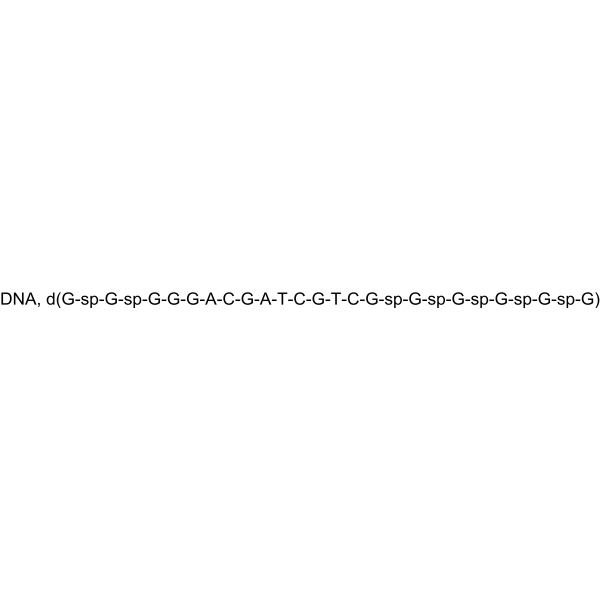
ODN 2216 is a type A CpG oligodeoxynucleotide vaccine adjuvant and a TLR9 agonist. ODN 2216 interacts with TLR9 in the lysosomes of CD4 + T cells and activates feedback-dependent signaling pathways. ODN 2216 induces the production of type I interferons, IL-6 and TGF-β via the IRAK4/IRF7 axis, while increasing intracellular ATP levels. ODN 2216 not only induces the differentiation of CD4 + T cells into anti-inflammatory Th3-like regulatory phenotypes to inhibit autologous proliferation, but also enhances the specific CD8 + T cell-mediated cytotoxicity against Mammaglobin-A in breast cancer cells. ODN 2216 is widely used in studies related to breast cancer and systemic lupus erythematosus .
|
-
- HY-162641
-
|
|
IRAK
NF-κB
p38 MAPK
TNF Receptor
|
Inflammation/Immunology
|
|
AF-45 inhibits IRAK4 and IRAK1, with IC50s of 128 nM and 1765 nM. AF-45 inhibits the release of IL-6 and TNF-α in macrophages, with IC50s of 0.53-1.54 μM and 0.6-2.75 μM. AF-45 is also an inhibitor for NF-κB/MAPK signaling pathway. AF-45 exhibits anti-inflammatory activities against DSS-induced ulcerative colitis and Lipopolysaccharide (HY-D1056)-induced acute lung injury in mouse model. AF-45 exhibits good pharmacokinetic characteristics in rat models .
|
-
- HY-B1829
-
|
Dexamethasone 21-phosphate
|
Glucocorticoid Receptor
TGF-β Receptor
Interleukin Related
|
Neurological Disease
Inflammation/Immunology
|
|
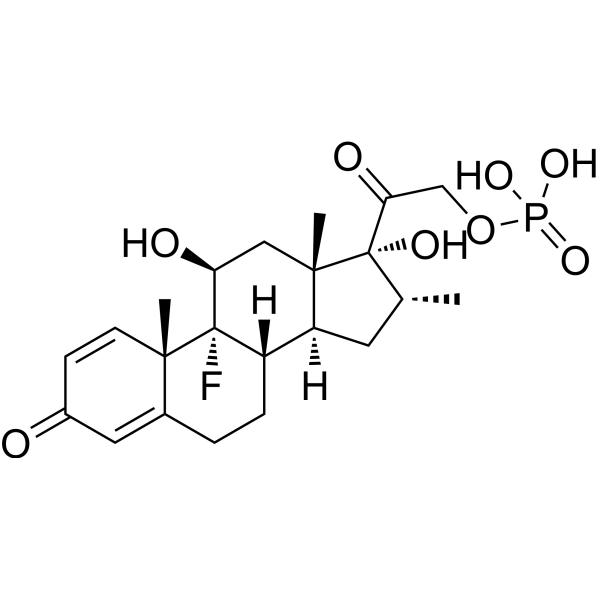
Dexamethasone phosphate (Dexamethasone 21-phosphate) is a prodrug form of the glucocorticoid Dexamethasone (HY-14648). Dexamethasone phosphate is prepared by introducing a phosphate ester group to the hydroxyl group at position 21 of the Dexamethasone molecule. Dexamethasone phosphate inhibits LPS (HY-D1056)-induced degradation of IRAK-1 and IRAK-4, and blocks LPS-induced activation of TRAF6, p-TAK1 and p-JNK. Dexamethasone phosphate inhibits the secretion of RANTES, TGF-β1 and NO, promotes the production of MIP-1α and IL-10, and blocks microglial migration. Dexamethasone phosphate is almost completely converted to Dexamethasone in rat blood, and supports transdermal delivery via iontophoresis. Dexamethasone phosphate can be used in research related to steroid-dependent ulcerative colitis, chemotherapy-induced vomiting, allergic asthma and acute colitis (inflammatory bowel disease) .
|
-
- HY-150750A
-
|
|
Toll-like Receptor (TLR)
Apoptosis
Interleukin Related
TNF Receptor
IFNAR
|
Inflammation/Immunology
Cancer
|
|
ODN M362 sodium is a TLR9 agonist that acts as a vaccine adjuvant. ODN M362 sodium activates mouse splenocytes, induces apoptosis in human hepatocellular carcinoma cells, upregulates proinflammatory cytokines in human hepatocellular carcinoma cells, and inhibits the proliferation of human hepatocellular carcinoma cells. ODN M362 sodium upregulates the expression of TLR9/TLR6, activates downstream signaling pathways via IRAK4 and IRF7, and strongly amplifies antigen-specific cellular immune responses to participate in innate immune activation. ODN M362 sodium can be used in research related to hepatocellular carcinoma and breast cancer .
|
-
- HY-103490R
-
|
EDHS-206 (Standard)
|
Reference Standards
MAP3K
Apoptosis
|
Infection
Inflammation/Immunology
Cancer
|
|
Takinib (Standard) is the analytical standard of Takinib. This product is intended for research and analytical applications. Takinib (EDHS-206) is an orally active and selective TAK1 inhibitor (IC50=9.5 nM), more than 1.5 log more potent than the second and third ranked targets, IRAK4 (120 nM) and IRAK1 (390 nM), respectively. Takinib is an inhibitor of autophosphorylated TAK1 that non-competitively binds within the ATP binding pocket. Takinib induces apoptosis following TNFα stimulation in cell models of rheumatoid arthritis and metastatic breast cancer. Takinib is also a P. falciparum protein kinase 9 (PfPK9) inhibitor (KD(app) of 0.46 μM) .
|
-
- HY-B1829A
-
|
Dexamethasone 21-phosphate disodium
|
Glucocorticoid Receptor
TGF-β Receptor
Interleukin Related
|
Neurological Disease
Inflammation/Immunology
|
|
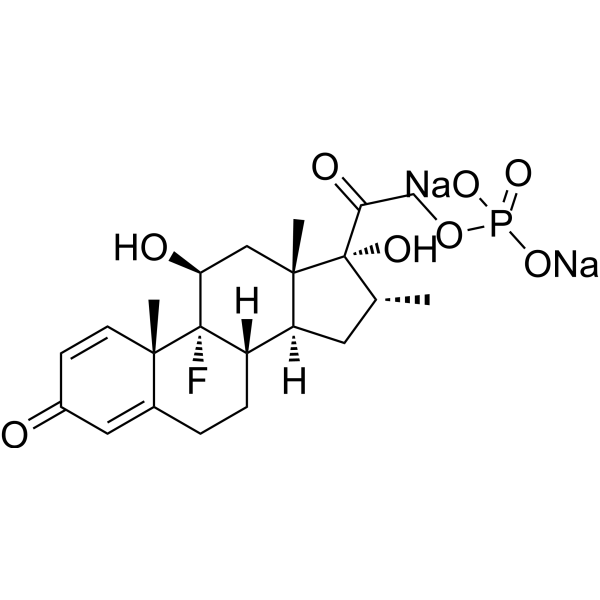
Dexamethasone phosphate (Dexamethasone 21-phosphate) disodium is a prodrug form of the glucocorticoid Dexamethasone (HY-14648). Dexamethasone phosphate disodium is produced by introducing a phosphate ester group at the 21-position of the Dexamethasone molecule, forming a salt with sodium ions, thereby significantly improving water solubility. Dexamethasone phosphate disodium inhibits LPS (HY-D1056)-induced degradation of IRAK-1 and IRAK-4, and blocks LPS-induced activation of TRAF6, p-TAK1 and p-JNK. Dexamethasone phosphate disodium inhibits the secretion of RANTES, TGF-β1 and NO, promotes the production of MIP-1α and IL-10, and blocks microglial migration. Dexamethasone phosphate disodium is almost completely converted to Dexamethasone in rat blood, and supports transdermal delivery via iontophoresis. Dexamethasone phosphate disodium can be used in research related to steroid-dependent ulcerative colitis, chemotherapy-induced vomiting, allergic asthma and acute colitis (inflammatory bowel disease) .
|
-
- HY-B1829R
-
|
Dexamethasone 21-phosphate (Standard)
|
Glucocorticoid Receptor
Reference Standards
TGF-β Receptor
Interleukin Related
|
Neurological Disease
Inflammation/Immunology
|
|
Dexamethasone phosphate (Standard) (Dexamethasone 21-phosphate (Standard)) is the analytical standard of Dexamethasone phosphate (HY-B1829). This product is intended for research and analytical applications. Dexamethasone phosphate (Dexamethasone 21-phosphate) is a prodrug form of the glucocorticoid Dexamethasone (HY-14648). Dexamethasone phosphate is prepared by introducing a phosphate ester group to the hydroxyl group at position 21 of the Dexamethasone molecule. Dexamethasone phosphate inhibits LPS (HY-D1056)-induced degradation of IRAK-1 and IRAK-4, and blocks LPS-induced activation of TRAF6, p-TAK1 and p-JNK. Dexamethasone phosphate inhibits the secretion of RANTES, TGF-β1 and NO, promotes the production of MIP-1α and IL-10, and blocks microglial migration. Dexamethasone phosphate is almost completely converted to Dexamethasone in rat blood, and supports transdermal delivery via iontophoresis. Dexamethasone phosphate can be used in research related to steroid-dependent ulcerative colitis, chemotherapy-induced vomiting, allergic asthma and acute colitis (inflammatory bowel disease).
|
-
- HY-B1829AR
-
|
Dexamethasone 21-phosphate disodium (Standard)
|
Glucocorticoid Receptor
Reference Standards
Interleukin Related
TGF-β Receptor
|
Neurological Disease
Metabolic Disease
Inflammation/Immunology
|
|
Dexamethasone phosphate (Dexamethasone 21-phosphate) disodium (Standard) is the analytical standard of Dexamethasone phosphate disodium (HY-B1829A). This product is intended for research and analytical applications. Dexamethasone phosphate (Dexamethasone 21-phosphate) disodium is a prodrug form of the glucocorticoid Dexamethasone (HY-14648). Dexamethasone phosphate disodium is produced by introducing a phosphate ester group at the 21-position of the Dexamethasone molecule, forming a salt with sodium ions, thereby significantly improving water solubility. Dexamethasone phosphate disodium inhibits LPS (HY-D1056)-induced degradation of IRAK-1 and IRAK-4, and blocks LPS-induced activation of TRAF6, p-TAK1 and p-JNK. Dexamethasone phosphate disodium inhibits the secretion of RANTES, TGF-β1 and NO, promotes the production of MIP-1α and IL-10, and blocks microglial migration. Dexamethasone phosphate disodium is almost completely converted to Dexamethasone in rat blood, and supports transdermal delivery via iontophoresis. Dexamethasone phosphate disodium can be used in research related to steroid-dependent ulcerative colitis, chemotherapy-induced vomiting, allergic asthma and acute colitis (inflammatory bowel disease).
|
-
- HY-158374
-
|
|
IRAK
|
Inflammation/Immunology
|
|
BIO-8169 is a selective inhibitor for interleukin receptor-associated kinase 4 (IRAK 4), with an IC50 of 0.23 nM. BIO-8169 exhibits good pharmacokinetic character, reduces the production of pro-inflammatory cytokines, and attenuates the autoimmune encephalomyelitis in EAE mice model. BIO-8169 exhibits good blood brain penetrant with a rat Kpu,u of 0.7 .
|
-
| Cat. No. |
Product Name |
|
Classification |
-
- HY-145483
-
KT-474
1 Publications Verification
KYM-001; PROTAC IRAK4 degrader-7
|
|
PROTAC Synthesis
|
|
KT-474 (KYM-001; PROTAC IRAK4 degrader-7) is an orally active PROTAC IRAK4 degrader with anti-tumor effects. KT-474 inhibits the cell cycle and induces apoptosis. KT-474 induces tumor regression in a xenograft model of MYD88-mutated ABC DLBCL. KT-474 is a click chemistry reagent, containing an alkyne group, which can undergo copper-catalyzed azide-alkyne cycloaddition (CuAAc) with molecules containing azide groups .
|
| Cat. No. |
Product Name |
|
Classification |
-
- HY-150741
-
|
|
|
CpG ODNs
|
|
ODN 2216 is a type A CpG oligodeoxynucleotide vaccine adjuvant and a TLR9 agonist. ODN 2216 interacts with TLR9 in the lysosomes of CD4 + T cells and activates feedback-dependent signaling pathways. ODN 2216 induces the production of type I interferons, IL-6 and TGF-β via the IRAK4/IRF7 axis, while increasing intracellular ATP levels. ODN 2216 not only induces the differentiation of CD4 + T cells into anti-inflammatory Th3-like regulatory phenotypes to inhibit autologous proliferation, but also enhances the specific CD8 + T cell-mediated cytotoxicity against Mammaglobin-A in breast cancer cells. ODN 2216 is widely used in studies related to breast cancer and systemic lupus erythematosus .
|
-
- HY-150741C
-
|
|
|
CpG ODNs
|
|
ODN 2216 sodium is a type A CpG oligodeoxynucleotide vaccine adjuvant and a TLR9 agonist. ODN 2216 sodium interacts with TLR9 in the lysosomes of CD4 + T cells and activates feedback-dependent signaling pathways. ODN 2216 sodium induces the production of type I interferons, IL-6 and TGF-β via the IRAK4/IRF7 axis, while increasing intracellular ATP levels. ODN 2216 sodium not only induces the differentiation of CD4 + T cells into anti-inflammatory Th3-like regulatory phenotypes to inhibit autologous proliferation, but also enhances the specific CD8 + T cell-mediated cytotoxicity against Mammaglobin-A in breast cancer cells. ODN 2216 sodium is widely used in studies related to breast cancer and systemic lupus erythematosus .
|
-
- HY-150750A
-
|
|
|
CpG ODNs
|
|
ODN M362 sodium is a TLR9 agonist that acts as a vaccine adjuvant. ODN M362 sodium activates mouse splenocytes, induces apoptosis in human hepatocellular carcinoma cells, upregulates proinflammatory cytokines in human hepatocellular carcinoma cells, and inhibits the proliferation of human hepatocellular carcinoma cells. ODN M362 sodium upregulates the expression of TLR9/TLR6, activates downstream signaling pathways via IRAK4 and IRF7, and strongly amplifies antigen-specific cellular immune responses to participate in innate immune activation. ODN M362 sodium can be used in research related to hepatocellular carcinoma and breast cancer .
|
Your information is safe with us. * Required Fields.
Inquiry Information
- Product Name:
- Cat. No.:
- Quantity:
- MCE Japan Authorized Agent:

