Search Result
Results for "
Muscarinic M1 receptor antagonist
" in MedChemExpress (MCE) Product Catalog:
22
Isotope-Labeled Compounds
| Cat. No. |
Product Name |
Target |
Research Areas |
Chemical Structure |
-
- HY-14539
-
|
HF 1854; ZINC000019796155
|
Dopamine Receptor
mAChR
Adrenergic Receptor
5-HT Receptor
Ligands for E3 Ligase
|
Neurological Disease
Cancer
|
|
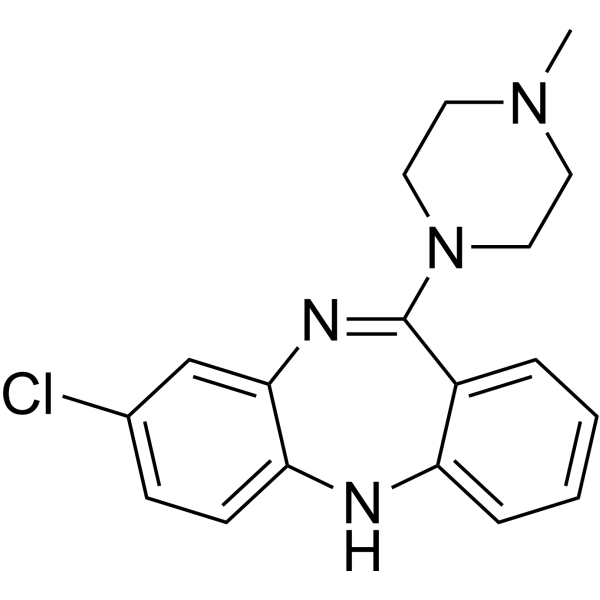
Clozapine (HF 1854) is an antipsychotic used for the research of schizophrenia. Clozapine has high affinity for a number of neuroreceptors. Clozapine is a potent antagonist of dopamine D2 with a Ki of 75 nM. Clozapine inhibits the muscarinic M1 receptor and serotonin 5HT2A receptor with Kis of 9.5 nM and 4 nM, respectively . Clozapine is also a potent and selective agonist at the muscarinic M4 receptor (EC50=11 nM) .
|
-
-
- HY-14541
-
Olanzapine
Maximum Cited Publications
14 Publications Verification
LY170053
|
5-HT Receptor
Dopamine Receptor
mAChR
Adrenergic Receptor
Autophagy
Mitophagy
Apoptosis
|
Neurological Disease
Cancer
|
|
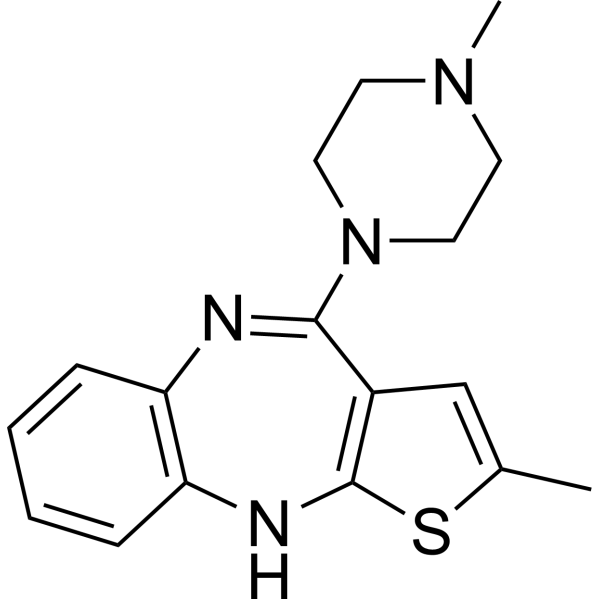
Olanzapine (LY170053) is a selective, orally active monoaminergic antagonist with high affinity binding to serotonin H1, 5HT2A/2C, 5HT3, 5HT6 (Ki=7, 4, 11, 57, and 5 nM, respectively), dopamine D1-4 (Ki=11 to 31 nM), muscarinic M1-5 (Ki=1.9-25 nM), and adrenergic α1 receptor (Ki=19 nM). Olanzapine is an atypical antipsychotic .
|
-
-
- HY-B0298A
-
|
HS-592 fumarate; Meclastine fumarate
|
Histamine Receptor
Apoptosis
mAChR
Pyroptosis
Keap1-Nrf2
p62
Autophagy
mTOR
IKK
|
Neurological Disease
Metabolic Disease
|
|
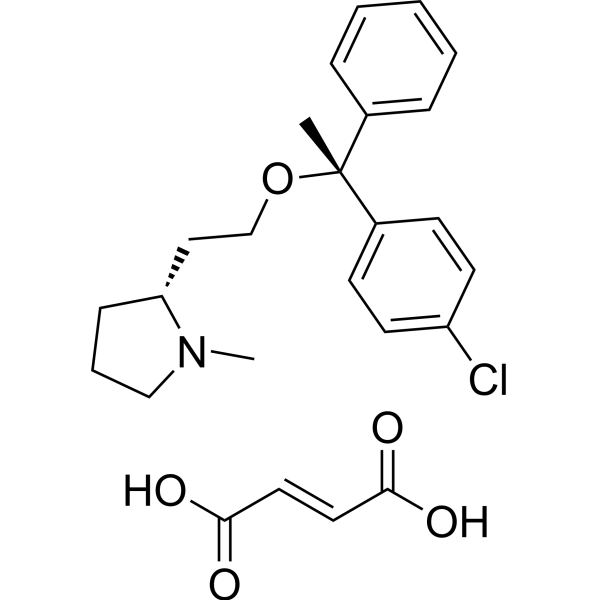
Clemastine (HS-592; Meclastine) fumarate is an orally active, blood-brain barrier-permeable H1 histamine receptor (H1 histamine receptor) antagonist with potent antiallergic effects. Clemastine fumarate also antagonizes muscarinic acetylcholine receptors (mAChR), particularly the M1 and M4 subtypes. In addition to antihistamine effects, Clemastine fumarate exhibits multiple pharmacological activities, especially in promoting central nervous system remyelination, activating autophagy and pyroptosis, exerting anti-apoptotic and neuroprotective effects, and suppressing inflammation .
|
-
-
- HY-13204A
-
|
KL 373
|
mAChR
|
Neurological Disease
|
|
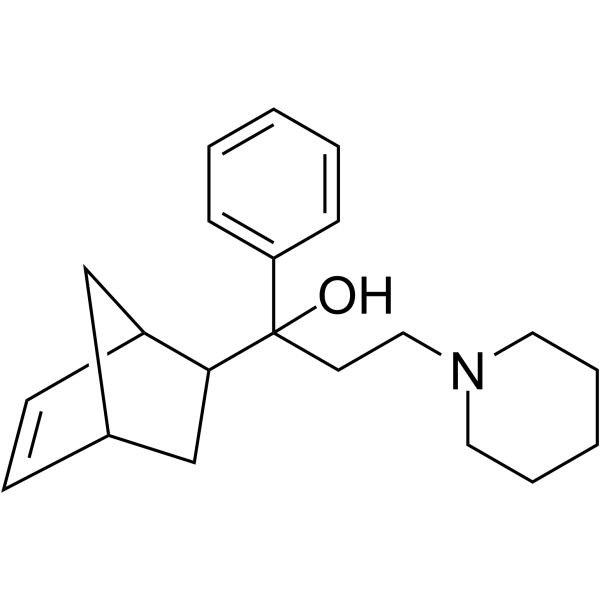
Biperiden (KL 373) is a non-selective muscarinic receptor antagonist that competitively binds to M1 muscarinic receptors, thereby inhibiting acetylcholine and enhancing dopamine signaling in the central nervous system. Biperiden has the potential for the research of Parkinson's disease and other related psychiatric disorders .
|
-
-
- HY-B0461
-
|
|
mAChR
|
Neurological Disease
|
|
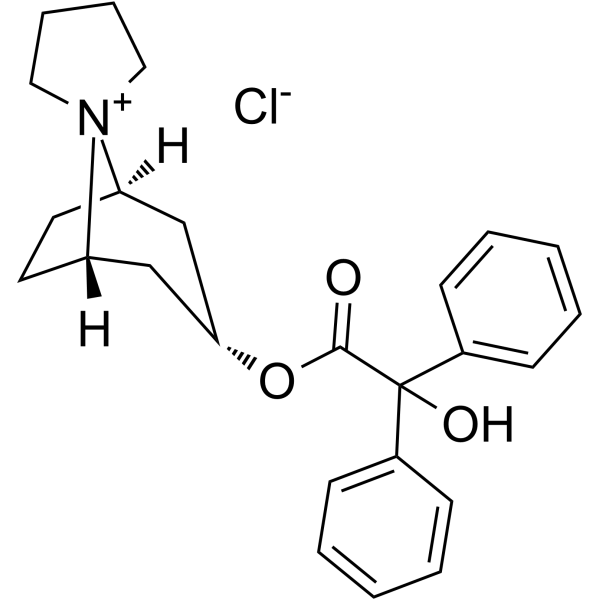
Trospium chloride is an orally active, specific and competitive antagonist of muscarinic cholinergic receptors (mAChRs), with antimuscarinic activity. Trospium chloride binds to muscarinic receptors M1, M2 and M3 with high affinity, but not nicotinic, cholinergic receptors .
|
-
-
- HY-A0034
-
|
YM905 free base
|
mAChR
|
Neurological Disease
Cancer
|
|
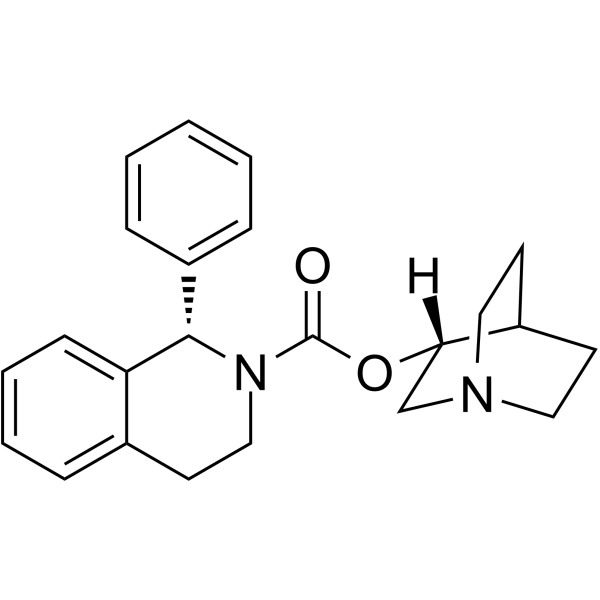
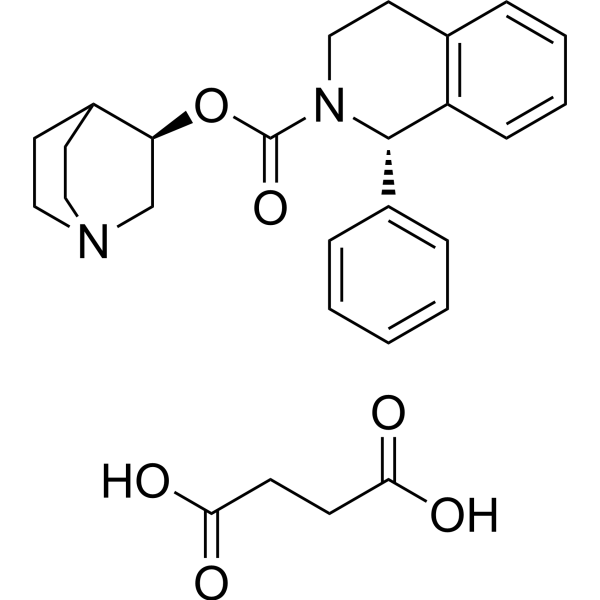
Solifenacin (YM905 free base) is a novel muscarinic receptor antagonist with pKis of 7.6, 6.9 and 8.0 for M1, M2 and M3 receptors, respectively.
|
-
-
- HY-B1277
-
|
|
mAChR
Cholinesterase (ChE)
|
Neurological Disease
|
|
Trihexyphenidyl hydrochloride is a selective and orally active M1 muscarinic receptor antagonist with an IC50 of 3.7 nM for rat cerebral cortex M1 muscarinic receptors. Trihexyphenidyl hydrochloride modulates cholinergic activity, countering acetylcholine supersensitivity in neural pathways. Trihexyphenidyl hydrochloride improves movement disorder, inhibits McN-A-343 (HY-107648)-induced pressor responses, vagally-induced bradycardia and vasodilatation. Trihexyphenidyl hydrochloride can be used for the research of Parkinson's disease. .
|
-

-
- HY-A0030
-
|
|
mAChR
|
Neurological Disease
Metabolic Disease
Cancer
|
|
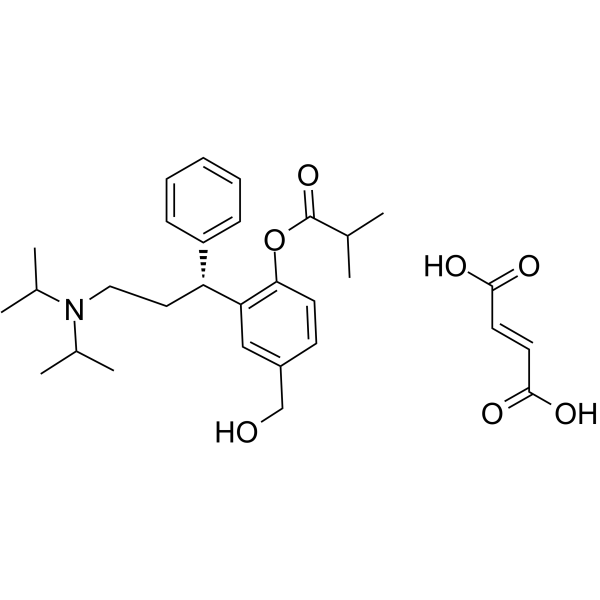
Fesoterodine Fumarate is an orally active, nonsubtype selective, competitive muscarinic receptor (mAChR) antagonist with pKi values of 8.0, 7.7, 7.4, 7.3, 7.5 for M1, M2, M3, M4, M5 receptors, respectively. Fesoterodine Fumarate is used for the overactive bladder (OAB) .
|
-
-
- HY-A0002
-
|
YM905
|
mAChR
|
Neurological Disease
Cancer
|
|
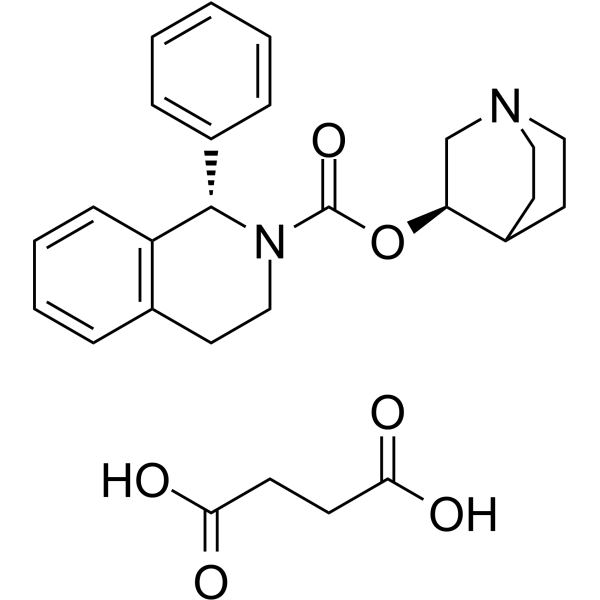
Solifenacin Succinate (YM905) is a novel muscarinic receptor antagonist with pKis of 7.6, 6.9 and 8.0 for M1, M2 and M3 receptors, respectively.
|
-
-
- HY-13204
-
|
KL 373 hydrochloride
|
mAChR
|
Neurological Disease
|
|
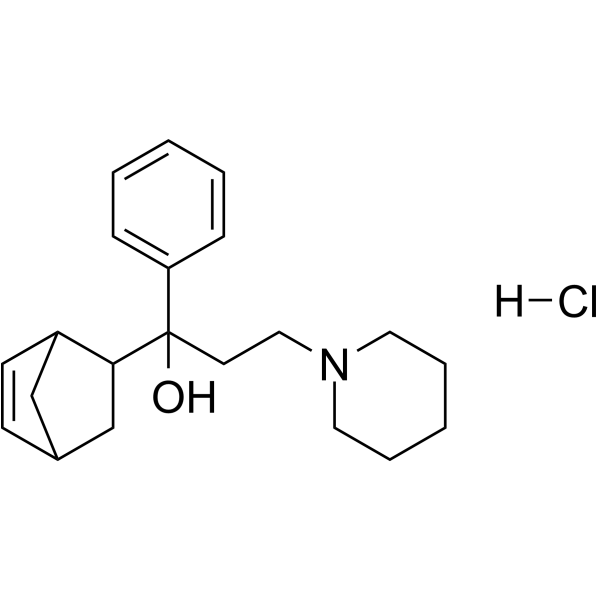
Biperiden (KL 373) hydrochloride is a non-selective muscarinic receptor antagonist that competitively binds to M1 muscarinic receptors, thereby inhibiting acetylcholine and enhancing dopamine signaling in the central nervous system. Biperiden hydrochloride has the potential for the research of Parkinson's disease and other related psychiatric disorders .
|
-
-
- HY-B1339
-
|
Dicycloverine hydrochloride
|
mAChR
|
Neurological Disease
|
|
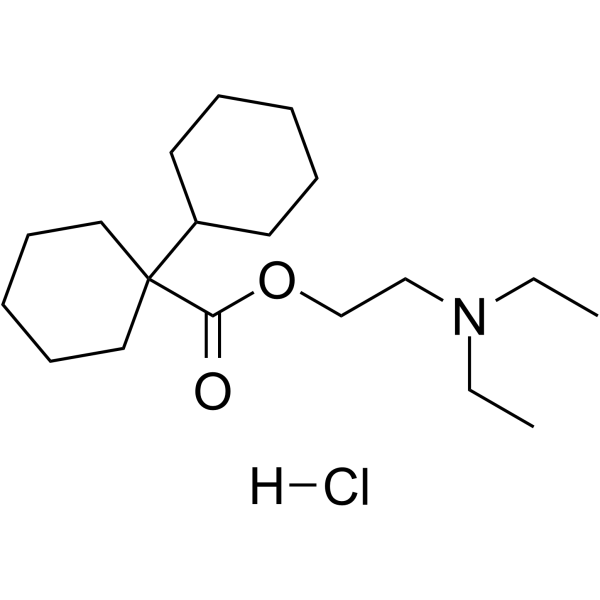
Dicyclomine hydrochloride is a potent and orally active muscarinic cholinergic receptors antagonist. Dicyclomine hydrochloride shows high affinity for muscarinic M1 receptor subtype (Ki=5.1 nM) and M2 receptor subtype (Ki=54.6 nM) in brush-border membrane and basal plasma membranes, respectively . Dicyclomine is an antispasmodic agent and relieves smooth muscle spasm of the gastrointestinal tract in vivo .
|
-
-
- HY-17037
-
|
LS 519; Pirenzepin dihydrochloride; Gastrozepin dihydrochloride
|
mAChR
|
Metabolic Disease
Cancer
|
|
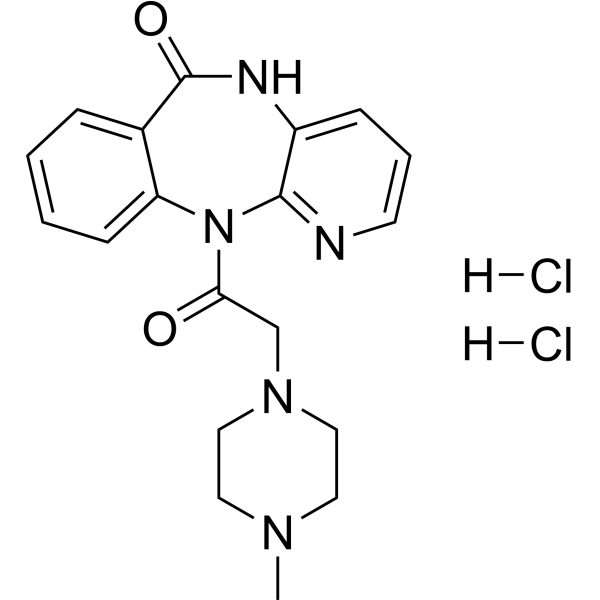
Pirenzepine (LS 519) dihydrochloride is a selective M1 mAChR (muscarinic acetylcholine receptor) antagonist, with poor penetration of the blood-brain barrier. Pirenzepine dihydrochloride reduces gastric acid secretion and reduces muscle spasm, can be used in peptic ulcers research. Pirenzepine dihydrochloride shows anti-proliferative activity to cancer cells .
|
-
-
- HY-B0298
-
|
HS-592; Meclastine
|
Histamine Receptor
mAChR
Autophagy
Apoptosis
Keap1-Nrf2
p62
mTOR
Pyroptosis
IKK
|
Cardiovascular Disease
Neurological Disease
Inflammation/Immunology
|
|
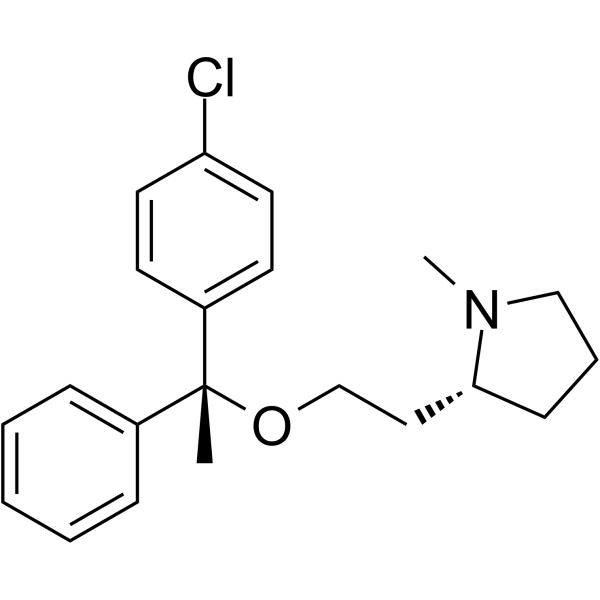
Clemastine (HS-592; Meclastine) is an orally active, blood-brain barrier-permeable H1 histamine receptor (H1 histamine receptor) antagonist with potent antiallergic effects. Clemastine also antagonizes muscarinic acetylcholine receptors (mAChR), particularly the M1 and M4 subtypes. In addition to antihistamine effects, Clemastine exhibits multiple pharmacological activities, especially in promoting central nervous system remyelination, activating autophagy and pyroptosis, exerting anti-apoptotic and neuroprotective effects, and suppressing inflammation .
|
-
-
- HY-107646
-
|
|
mAChR
|
Neurological Disease
|
|
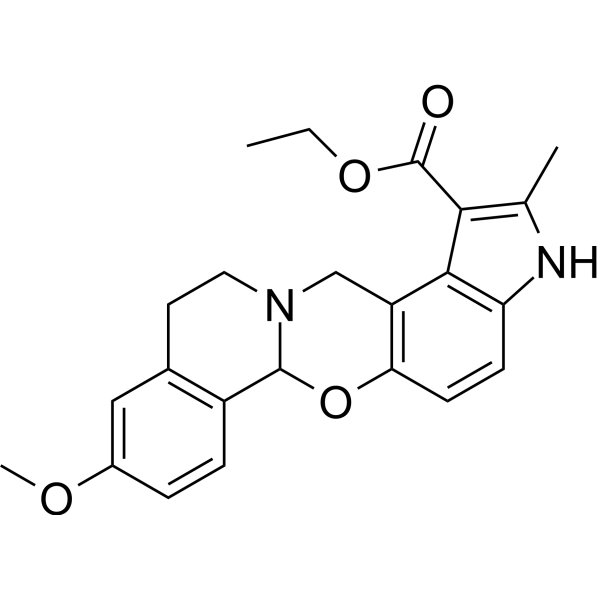
PD 102807 is a M4 muscarinic receptor antagonist with an IC50 of 90.7 nM. PD 102807 inhibits M1, M2, M3, M5 muscarinic receptor with IC50s of 6558.7, 3440.7, 950.0, and 7411.7 nM, respectively . Antidyskinetic effect.
|
-
-
- HY-A0082
-
|
Difenidol hydrochloride
|
mAChR
Sodium Channel
|
Neurological Disease
|
|
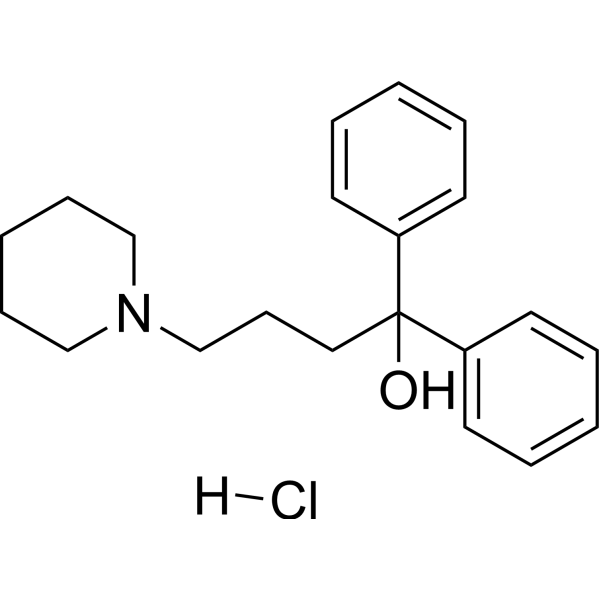
Diphenidol hydrochloride (Difenidol hydrochloride) is a non-selective muscarinic M1-M4 receptor antagonist, has anti-arrhythmic activity. Diphenidol hydrochloride is also a potent non-specific blocker of voltage-gated ion channels (Na +, K +, and Ca 2+) in neuronal cells. Diphenidol hydrochloride can be used in the study of antivertigo and antinausea .
|
-
-
- HY-17037A
-
|
LS 519 free base; Pirenzepin; Gastrozepin
|
mAChR
|
Metabolic Disease
Cancer
|
|
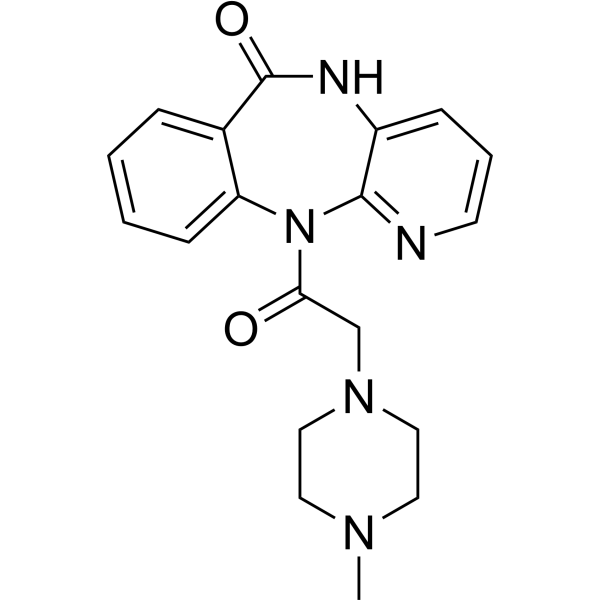
Pirenzepine (LS 519 free base) is a selective M1 mAChR (muscarinic acetylcholine receptor) antagonist, with poor penetration of the blood-brain barrier. Pirenzepine reduces gastric acid secretion and reduces muscle spasm, can be used in peptic ulcers research. Pirenzepine shows anti-proliferative activity to cancer cells .
|
-
-
- HY-107647
-
|
|
mAChR
Histamine Receptor
|
Inflammation/Immunology
|
|
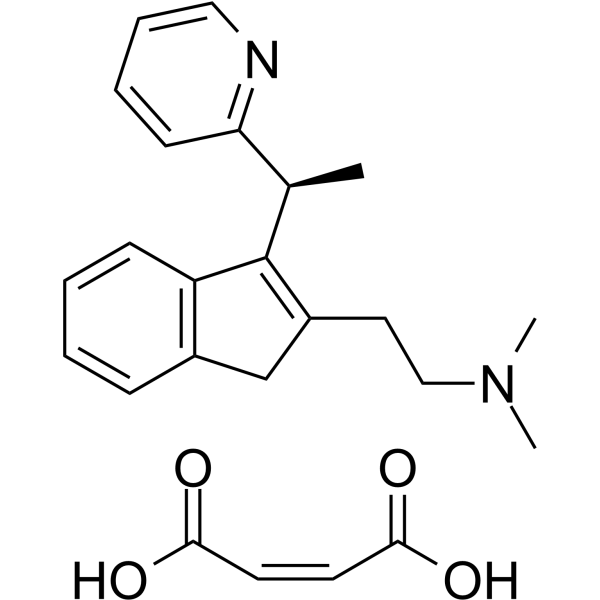
(S)-(+)-Dimethindene maleate, an enantiomer, is a potent M2-selective muscarinic receptor antagonist (pA2 = 7.86/7.74; pKi = 7.78). (S)-(+)-Dimethindene maleate shows lower affinities for the muscarinic M1 (pA2 = 6.83/6.36; pKi = 7.08), the M3 (pA2 = 6.92/6.96; pKi = 6.70) and the M4 receptors (pKi = 7.00), respectively. (S)-(+)-Dimethindene maleate also is a histamine H1 receptor antagonist (pA2 = 7.48) .
|
-
-
- HY-70053
-
|
|
mAChR
|
Neurological Disease
Metabolic Disease
|
|
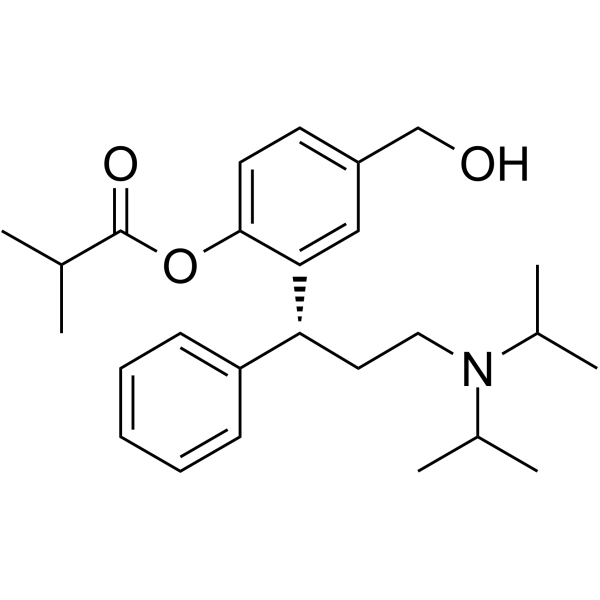
Fesoterodine is an orally active, nonsubtype selective, competitive muscarinic receptor (mAChR) antagonist with pKi values of 8.0, 7.7, 7.4, 7.3, 7.5 for M1, M2, M3, M4, M5 receptors, respectively. Fesoterodine is used for the overactive bladder (OAB) .
|
-
-
- HY-B0241
-
|
Sch 1000
|
mAChR
|
Neurological Disease
Inflammation/Immunology
|
|
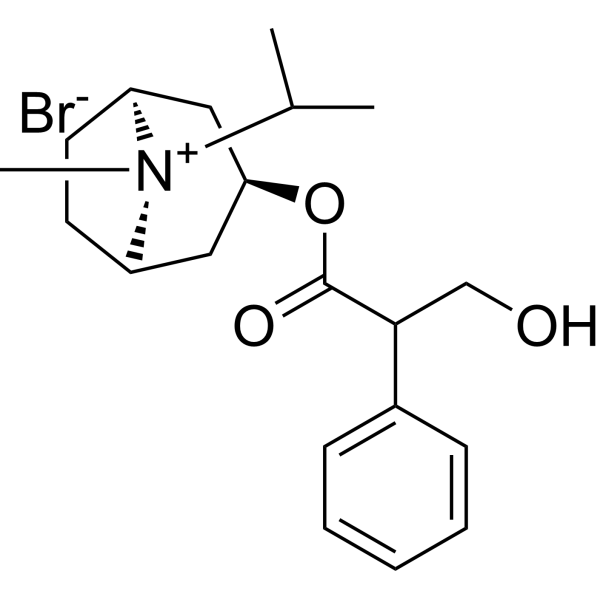
Ipratropium bromide (Sch 1000) is a muscarinic receptor antagonist, with IC50s of 2.9 nM, 2 nM, and 1.7 nM for M1, M2, and M3 receptors, respectively. Ipratropium bromide relaxes smooth muscle, can be used in the research for COPD (chronic obstructive pulmonary disease) and asthma .
|
-
-
- HY-176710
-
|
|
Protein Arginine Deiminase
Opioid Receptor
mAChR
|
Neurological Disease
Inflammation/Immunology
Cancer
|
|
PAD-PF2 is a PAD family inhibitor, as well as a κ-opioid receptor agonist (EC50 = 7.55 μM) and an M1 muscarinic acetylcholine receptor antagonist (IC50 = 12.3 μM). The IC50 values of PAD-PF2 against PAD1, PAD2, PAD3 and PAD4 are 109 nM, 27.9 nM, 106 nM and 20.1 nM, respectively. PAD-PF2 binds to the common allosteric pocket of PAD1-4, and its inhibitory effects on PAD2 and PAD4 are Ca 2+-dependent. PAD-PF2 inhibits protein citrullination in neutrophils. PAD-PF2 is applicable to research related to rheumatoid arthritis, neurodegenerative diseases and cancer .
|
-

-
- HY-136587
-
|
|
Histamine Receptor
mGluR
|
Inflammation/Immunology
|
|
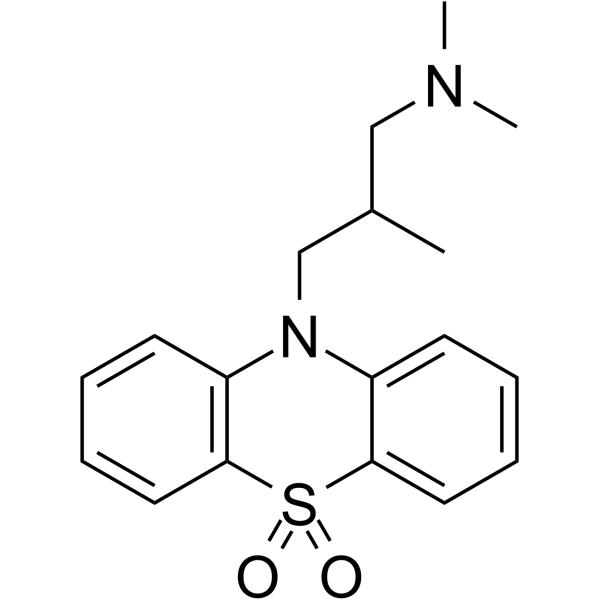
Oxomemazine is a phenothiazine-based histamine H1-receptor blocker. Oxomemazine is a selective antagonist for muscarinic M1 receptor, displays about 20-fold difference in the affinity for high (Ki = 84 nM, M1 receptor) and low (Ki = 1.65 μM, M2 receptor) affinity sites. Oxomemazine is an antihistamine and anticholinergic agent used for the study of cough treatment. Oxomemazine is protective against anaphylactic microshock in guinea pigs .
|
-
-
- HY-B1332
-
|
Sch 1000 bromide hydrate
|
mAChR
|
Neurological Disease
Inflammation/Immunology
|
|
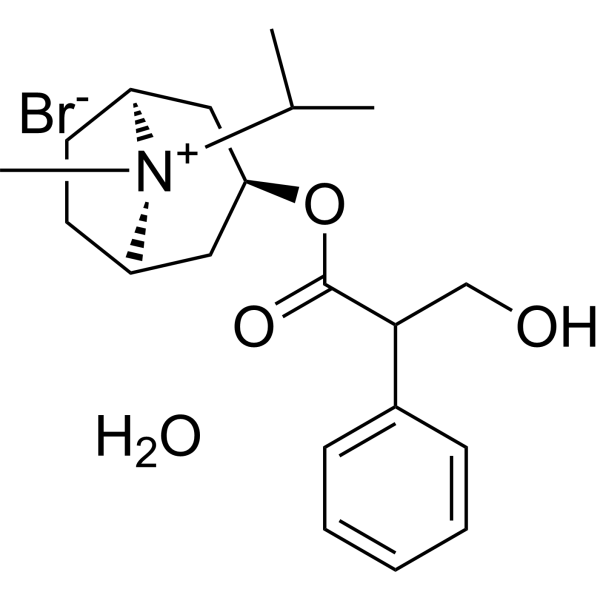
Ipratropium bromide (Sch 1000) hydrate is a muscarinic receptor antagonist, with IC50s of 2.9 nM, 2 nM, and 1.7 nM for M1, M2, and M3 receptors, respectively. Ipratropium bromide hydrate relaxes smooth muscle, can be used in the research for COPD (chronic obstructive pulmonary disease) and asthma .
|
-
-
- HY-B1101A
-
|
Pimetixene maleate
|
5-HT Receptor
Histamine Receptor
|
Neurological Disease
Endocrinology
|
|
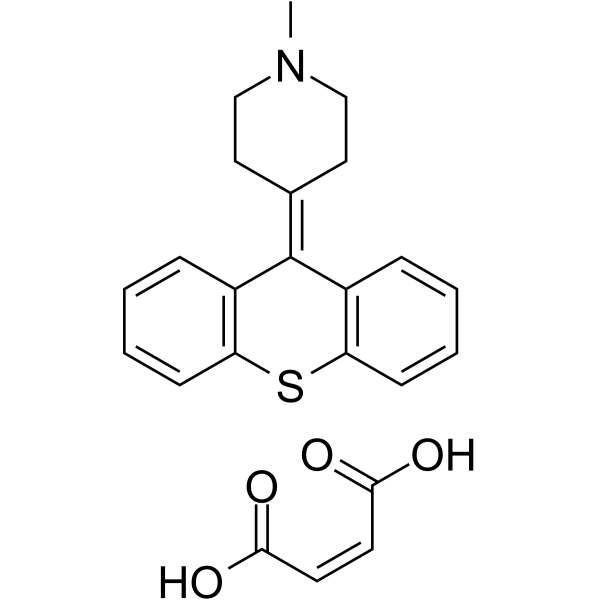
Pimethixene maleate is antihistamine and antiserotonergic compound, acts as an antimigraine agent.
Pimethixene maleate is a highly potent antagonist of 5-HT1A, 5-HT2A, 5-HT2B, 5-HT2C, histamine H1, dopamine D2 and D4.4 as well as muscarinic M1 and M2 receptors, with pKis of 7.63, 10.22, 10.44, 8.42, 10.14, 8.19, 7.54, 8.61 and 9.38, respectively .
|
-
-
- HY-I0230
-
|
YM905 hydrochloride
|
mAChR
|
Neurological Disease
Cancer
|
|
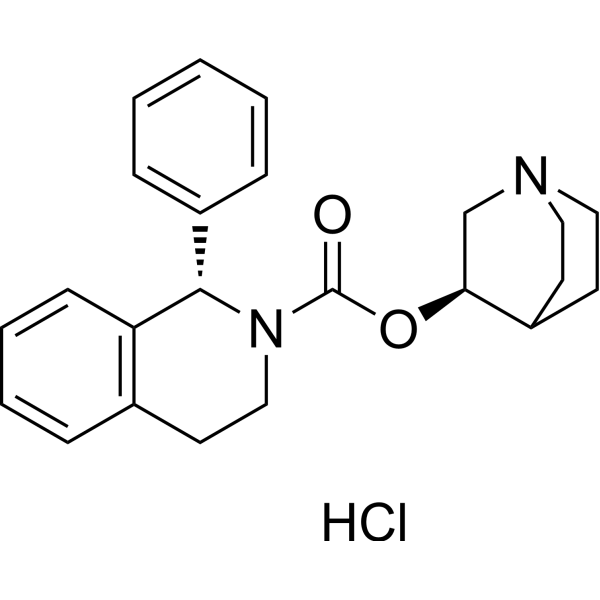
Solifenacin hydrochloride (YM905 hydrochloride) is a muscarinic receptor antagonist, with pKis of 7.6, 6.9 and 8.0 for M1, M2 and M3 receptors, respectively.
|
-
-
- HY-122203
-
|
|
mAChR
Cholinesterase (ChE)
|
Neurological Disease
|
|
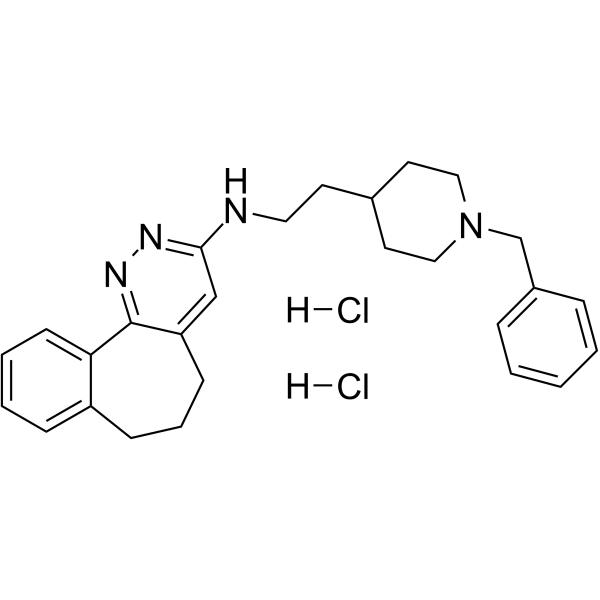
PCS1055 dihydrochloride is a potent, selective and competitive muscarinic M4 receptor antagonist with an IC50 of 18.1 nM and a Kd of 5.72 nM. PCS1055 dihydrochloride inhibits radioligand [ 3H]-NMS binding to the M4 receptor with a Ki of 6.5 nM. PCS1055 dihydrochloride exhibits >100-fold selectivity over M1-, M3-, and M5-receptors and 30-fold selectivity at the M2 receptor. PCS1055 dihydrochloride is also a potent AChE inhibitor with IC50 s of 22 nM and 120 nM for electric eel and human AChE, respectively .
|
-
-
- HY-14541R
-
|
LY170053 (Standard)
|
Reference Standards
5-HT Receptor
Dopamine Receptor
mAChR
Adrenergic Receptor
Autophagy
Mitophagy
Apoptosis
|
Neurological Disease
Cancer
|
|
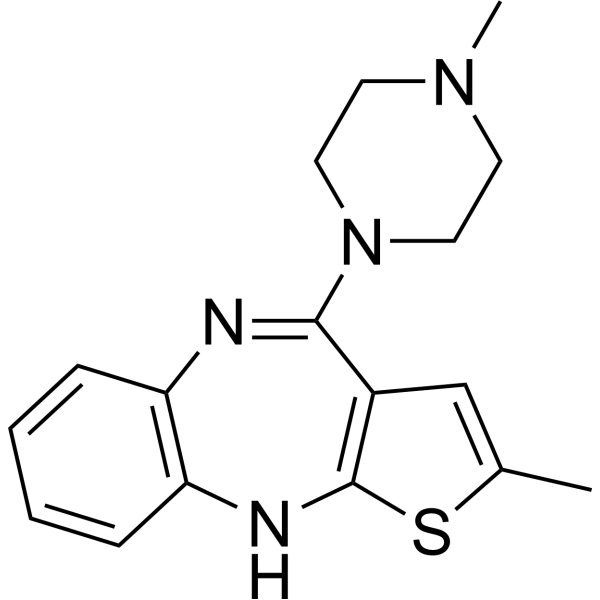
Olanzapine (Standard) is the analytical standard of Olanzapine. This product is intended for research and analytical applications. Olanzapine (LY170053) is a selective, orally active monoaminergic antagonist with high affinity binding to serotonin H1, 5HT2A/2C, 5HT3, 5HT6 (Ki=7, 4, 11, 57, and 5 nM, respectively), dopamine D1-4 (Ki=11 to 31 nM), muscarinic M1-5 (Ki=1.9-25 nM), and adrenergic α1 receptor (Ki=19 nM). Olanzapine is an atypical antipsychotic .
|
-
-
- HY-B1789A
-
|
|
mAChR
|
Neurological Disease
|
|
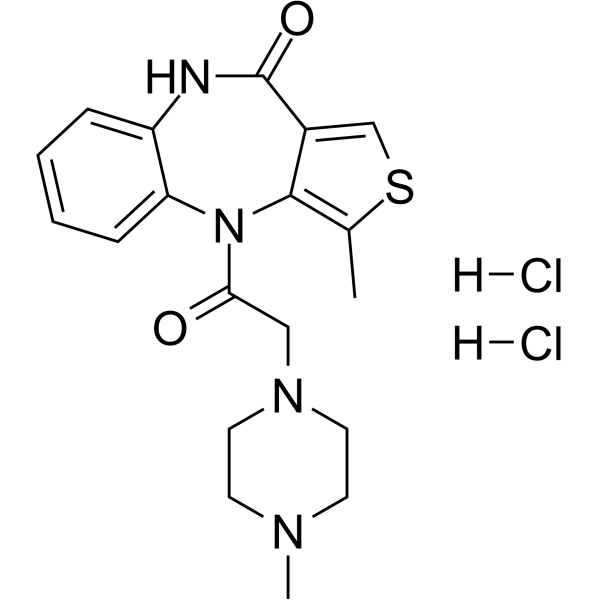
Telenzepine dihydrochloride is a selective and orally active muscarinic M1 receptor antagonist with a Ki of 0.94 nM. Telenzepine dihydrochloride inhibits gastric acid secretion and has antiulcer effects .
|
-
-
- HY-B0461R
-
|
|
mAChR
Reference Standards
|
Neurological Disease
|
|
Trospium (chloride) (Standard) is the analytical standard of Trospium (chloride). This product is intended for research and analytical applications. Trospium chloride is an orally active, specific and competitive antagonist of muscarinic cholinergic receptors (mAChRs), with antimuscarinic activity. Trospium chloride binds to muscarinic receptors M1, M2 and M3 with high affinity, but not nicotinic, cholinergic receptors .
|
-

-
- HY-14539A
-
|
HF 1854 hydrochloride
|
Dopamine Receptor
mAChR
Adrenergic Receptor
5-HT Receptor
|
Neurological Disease
|
|
Clozapine hydrochloride (HF 1854 hydrochloride) is an antipsychotic used for the research of schizophrenia. Clozapine hydrochloride has high affinity for a number of neuroreceptors. Clozapine hydrochloride is a potent antagonist of dopamine D2 with a Ki of 75 nM. Clozapine hydrochloride inhibits the muscarinic M1 receptor and serotonin 5HT2A receptor with Kis of 9.5 nM and 4 nM, respectively . Clozapine hydrochloride is also a potent and selective agonist at the muscarinic M4 receptor (EC50=11 nM) .
|
-

-
- HY-14539R
-
|
HF 1854 (Standard)
|
Reference Standards
Dopamine Receptor
mAChR
Adrenergic Receptor
5-HT Receptor
|
Neurological Disease
|
|
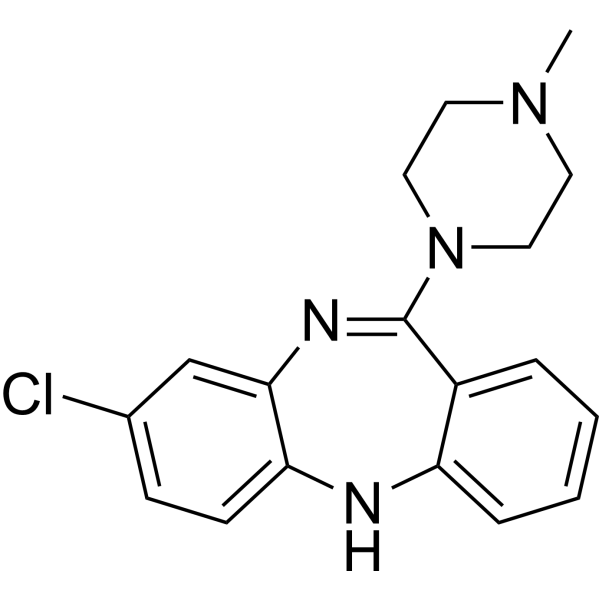
Clozapine (Standard) is the analytical standard of Clozapine. This product is intended for research and analytical applications. Clozapine (HF 1854) is an antipsychotic used for the research of schizophrenia. Clozapine has high affinity for a number of neuroreceptors. Clozapine is a potent antagonist of dopamine D2 with a Ki of 75 nM. Clozapine inhibits the muscarinic M1 receptor and serotonin 5HT2A receptor with Kis of 9.5 nM and 4 nM, respectively . Clozapine is also a potent and selective agonist at the muscarinic M4 receptor (EC50=11 nM) .
|
-
-
- HY-B0461S
-
|
|
Isotope-Labeled Compounds
mAChR
|
Neurological Disease
|
|
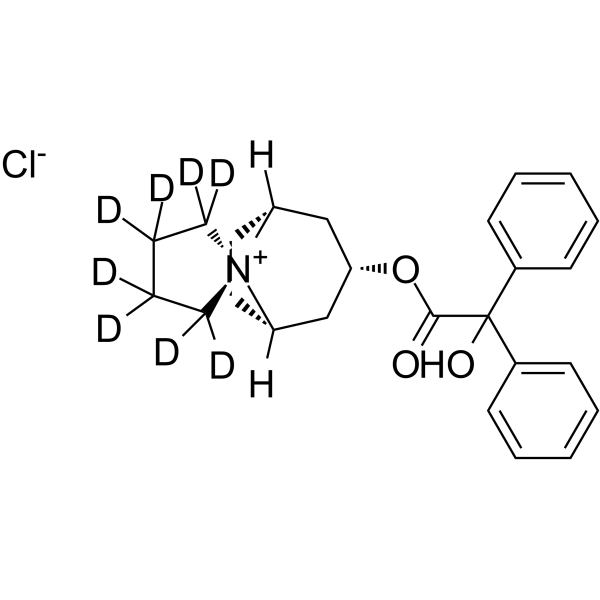
Trospium-d8 (chloride) is the deuterium labeled Trospium chloride. Trospium chloride is an orally active, specific and competitive antagonist of muscarinic cholinergic receptors (mAChRs), with antimuscarinic activity. Trospium chloride binds to muscarinic receptors M1, M2 and M3 with high affinity, but not nicotinic, cholinergic receptors .
|
-
-
- HY-70053A
-
|
|
mAChR
|
Neurological Disease
Metabolic Disease
Cancer
|
|
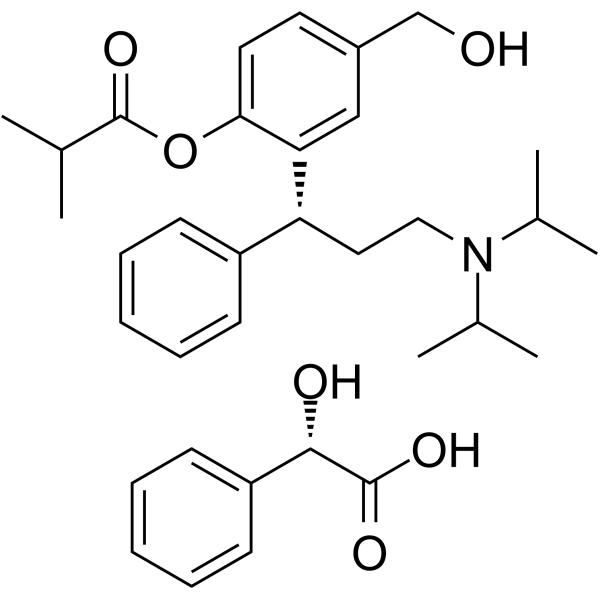
Fesoterodine L-mandelate is an orally active, nonsubtype selective, competitive muscarinic receptor (mAChR) antagonist with pKi values of 8.0, 7.7, 7.4, 7.3, 7.5 for M1, M2, M3, M4, M5 receptors, respectively. Fesoterodine L-mandelate is used for the overactive bladder (OAB) .
|
-
-
- HY-14541S
-
|
LY170053-d3
|
Isotope-Labeled Compounds
5-HT Receptor
Dopamine Receptor
mAChR
Adrenergic Receptor
Autophagy
Mitophagy
Apoptosis
|
Neurological Disease
Cancer
|
|
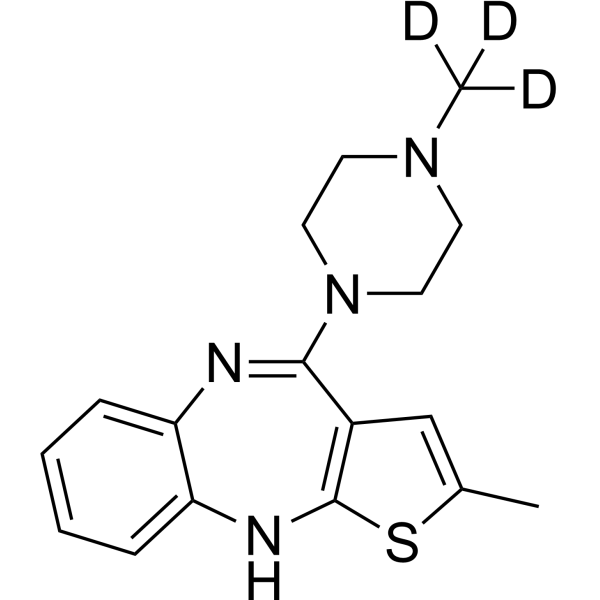
Olanzapine-d3 (LY170053-d3) is the deuterium labeled Olanzapine. Olanzapine is a selective, orally active monoaminergic antagonist with high affinity binding to serotonin H1, 5HT2A/2C, 5HT3, 5HT6 (Ki=7, 4, 11, 57, and 5 nM, respectively), dopamine D1-4 (Ki=11 to 31 nM), muscarinic M1-5 (Ki=1.9-25 nM), and adrenergic α1 receptors (Ki=19 nM). Olanzapine is an atypical antipsychotic .
|
-
-
- HY-B1277A
-
|
|
mAChR
Cholinesterase (ChE)
|
Cardiovascular Disease
Neurological Disease
|
|
Trihexyphenidyl is a selective and orally active M1 muscarinic receptor antagonist with an IC50 of 3.7 nM for rat cerebral cortex M1 muscarinic receptors. Trihexyphenidyl modulates cholinergic activity, countering acetylcholine supersensitivity in neural pathways. Trihexyphenidyl improves movement disorder, inhibits McN-A-343 (HY-107648)-induced pressor responses, vagally-induced bradycardia and vasodilatation. Trihexyphenidyl can be used for the research of Parkinson's disease. .
|
-

-
- HY-119918
-
|
|
mAChR
|
Neurological Disease
|
|
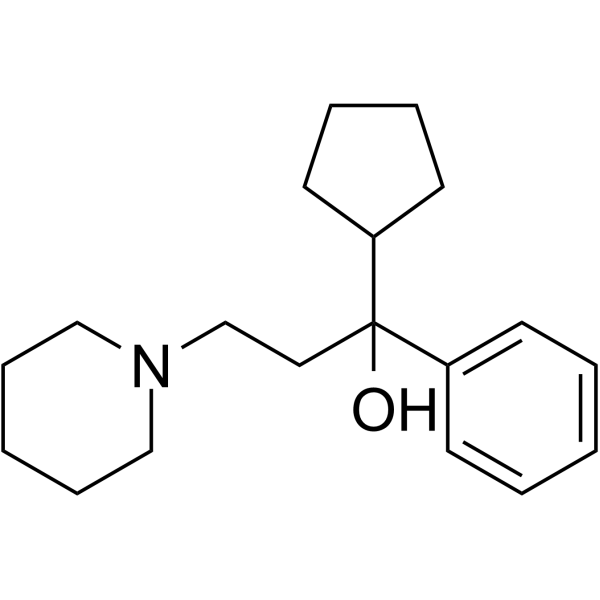
Cycrimine is an orally active muscarinic cholinergic receptor (mAChR) M1 antagonist, reduces the acetylcholine levels in parkinson model. Cycrimine shows antispasmodic activity, can be used in studies of behavioral and mental disorder .
|
-
-
- HY-107656
-
|
|
mAChR
|
Neurological Disease
|
|
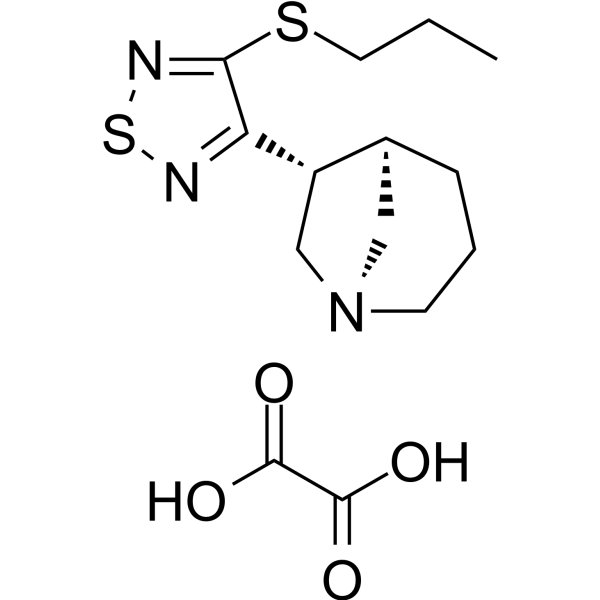
PTAC oxalate is a selective muscarinic receptor ligand. PTAC oxalate is an partial agonist of M2 and M4 but antagonist of M1, M3, and M5 (Ki values of 0.2-2.8 nM for hM1-5 in CHO cells). PTAC oxalate alleviates the mechanical allodynia on the neuropathic pain and has antidepression effects .
|
-
-
- HY-A0030S
-
|
|
mAChR
|
Metabolic Disease
|
|
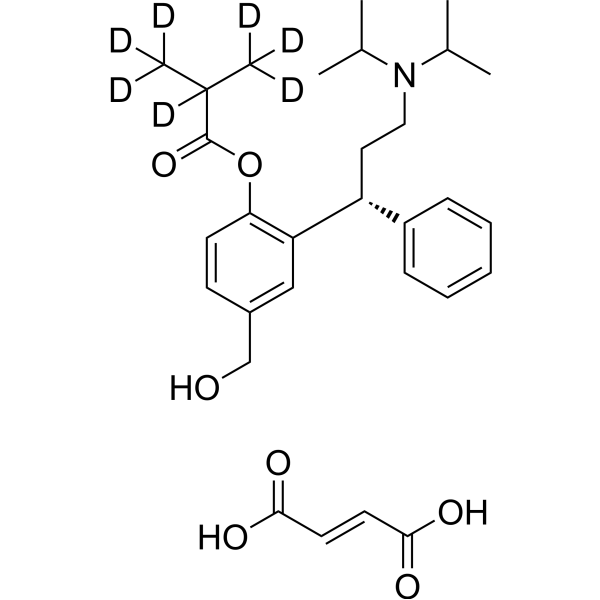
Fesoterodine-d7 (fumarate) is the deuterium labeled Fesoterodine fumarate . Fesoterodine Fumarate is an orally active, nonsubtype selective, competitive muscarinic receptor (mAChR) antagonist with pKi values of 8.0, 7.7, 7.4, 7.3, 7.5 for M1, M2, M3, M4, M5 receptors, respectively. Fesoterodine Fumarate is used for the overactive bladder (OAB) .
|
-
-
- HY-B1101
-
|
Pimetixene
|
5-HT Receptor
Histamine Receptor
|
Neurological Disease
Endocrinology
|
|
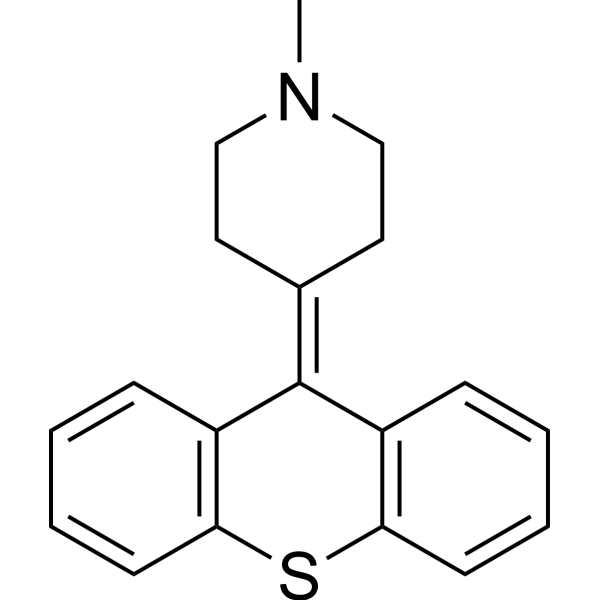
Pimethixene is antihistamine and antiserotonergic compound, acts as an antimigraine agent.
Pimethixene is a highly potent antagonist of 5-HT1A, 5-HT2A, 5-HT2B, 5-HT2C, histamine H1, dopamine D2 and D4.4 as well as muscarinic M1 and M2 receptors, with pKis of 7.63, 10.22, 10.44, 8.42, 10.14, 8.19, 7.54, 8.61 and 9.38, respectively .
|
-
-
- HY-U00302
-
|
|
mAChR
|
Inflammation/Immunology
|
|
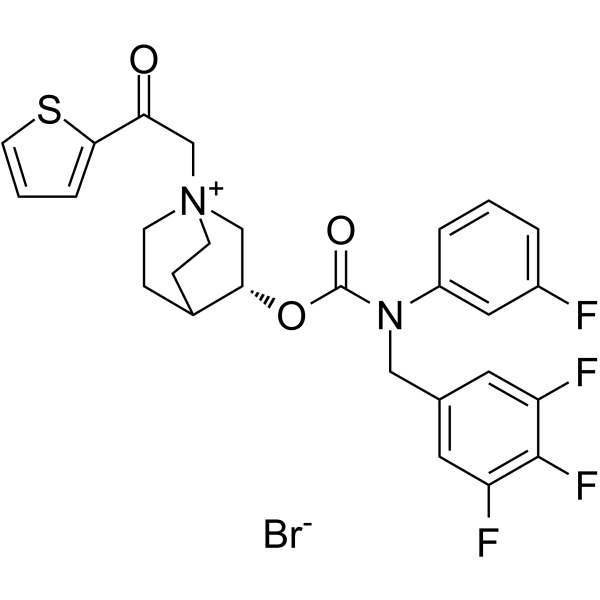
CHF5407 is a selective, long-acting and competitive muscarinic M3 receptor antagonist. CHF5407 shows subnanomolar affinities for human muscarinic M1 (hM1), M2 (hM2) and M3 (hM3) receptors. CHF5407 shows a prolonged antibronchospastic activity .
|
-
-
- HY-13204B
-
|
KL 373 lactate
|
mAChR
|
Neurological Disease
|
|
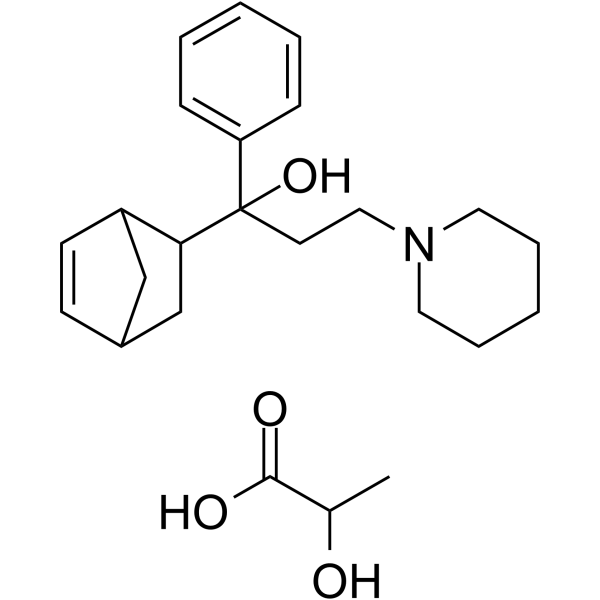
Biperiden (KL 373) lactate is an orally active non-selective muscarinic receptor antagonist that competitively binds to M1 muscarinic receptors. Biperiden (KL 373) lactate inhibits acetylcholine and enhances dopamine signaling in the central nervous system. Biperiden (KL 373) lactate has the potential for the research of Parkinson's disease and other related psychiatric disorders .
|
-
-
- HY-13204R
-
|
KL 373 hydrochloride (Standard)
|
Reference Standards
mAChR
|
Neurological Disease
|
|
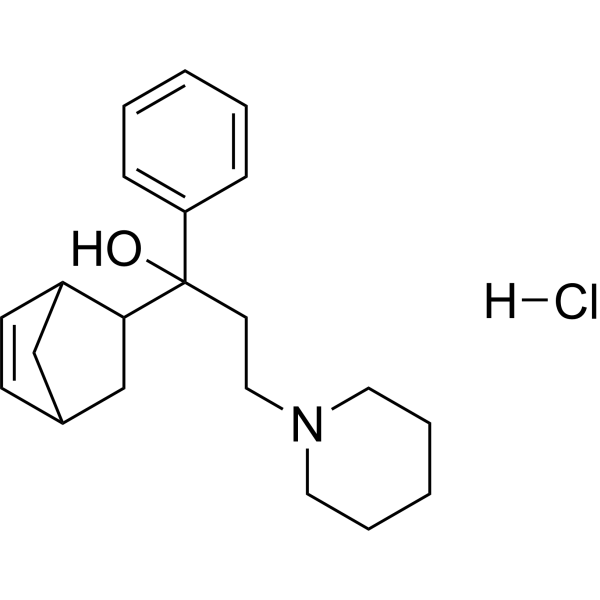
Biperiden (hydrochloride) (Standard) is the analytical standard of Biperiden (hydrochloride). This product is intended for research and analytical applications. Biperiden (KL 373) hydrochloride is a non-selective muscarinic receptor antagonist that competitively binds to M1 muscarinic receptors, thereby inhibiting acetylcholine and enhancing dopamine signaling in the central nervous system. Biperiden hydrochloride has the potential for the research of Parkinson's disease and other related psychiatric disorders .
|
-
-
- HY-B1339A
-
|
Dicycloverine
|
mAChR
|
Neurological Disease
|
|
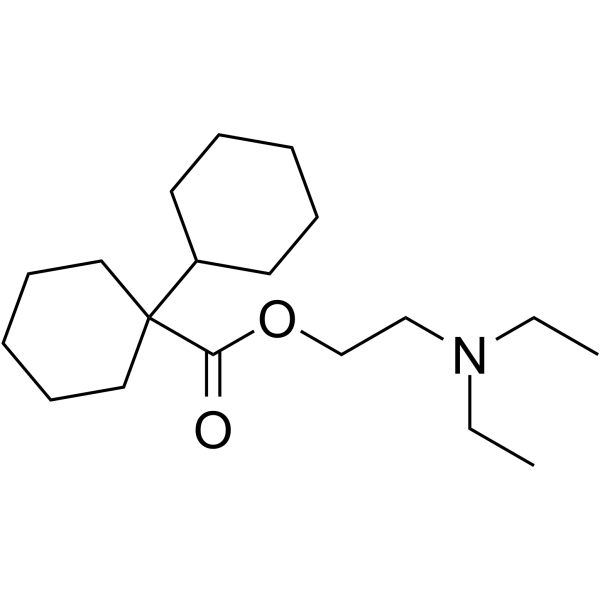
Dicyclomine (Dicycloverine) is a potent and orally active muscarinic cholinergic receptors antagonist. Dicyclomine (Dicycloverine) shows high affinity for muscarinic M1 receptor subtype (Ki=5.1 nM) and M2 receptor subtype (Ki=54.6 nM) in brush-border membrane and basal plasma membranes, respectively . Dicyclomine is an antispasmodic agent and relieves smooth muscle spasm of the gastrointestinal tract in vivo .
|
-
-
- HY-A0270
-
|
|
mAChR
Sodium Channel
|
Neurological Disease
|
|
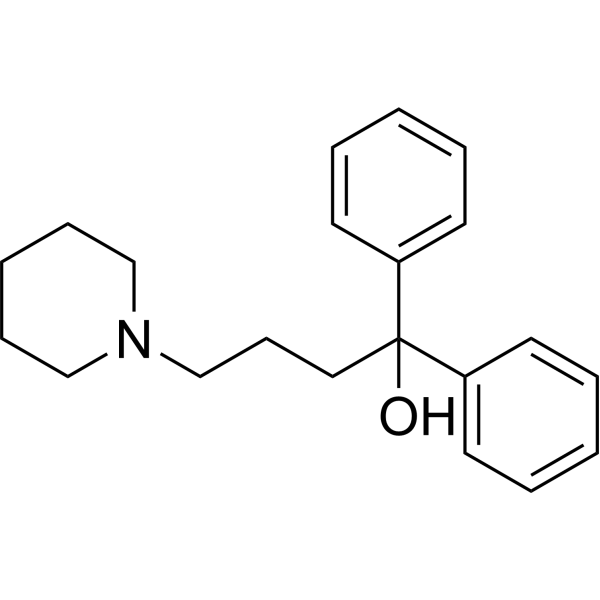
Diphenidol is a non-selective muscarinic M1-M4 receptor antagonist, has anti-arrhythmic activity. Diphenidol is also a potent non-specific blocker of voltage-gated ion channels (Na +, K +, and Ca 2+) in neuronal cells. Diphenidol can be used in the study of antivertigo and antinausea .
|
-
-
- HY-B0241S
-
|
Sch 1000-d3
|
mAChR
|
Neurological Disease
Inflammation/Immunology
|
|
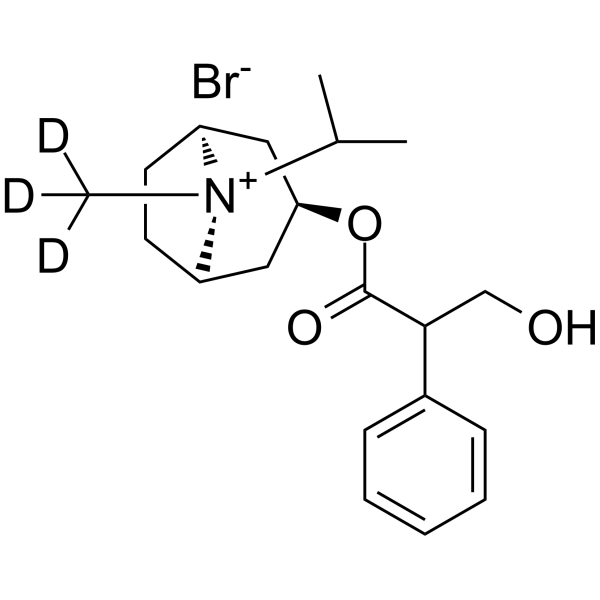
Ipratropium-d3 (bromide) is the deuterium labeled Ipratropium bromide. Ipratropium bromide (Sch 1000) is a muscarinic receptor antagonist, with binding IC50 values of 2.9 nM, 2 nM, and 1.7 nM for M1, M2, and M3 receptors, respectively. Ipratropium bromide can be used in the research for COPD (chronic obstructive pulmonary disease) and asthma .
|
-
-
- HY-14541A
-
|
LY170053 hydrochloride
|
5-HT Receptor
Dopamine Receptor
mAChR
Adrenergic Receptor
Autophagy
Mitophagy
Apoptosis
|
Neurological Disease
Cancer
|
|
Olanzapine hydrochloride is a selective, orally active monoaminergic antagonist with high affinity binding to serotonin H1, 5HT2A/2C, 5HT3, 5HT6 (Ki=7, 4, 11, 57, and 5 nM, respectively), dopamine D1-4 (Ki=11 to 31 nM), muscarinic M1-5 (Ki=1.9-25 nM), and adrenergic α1 receptor (Ki=19 nM). Olanzapine hydrochloride is an atypical antipsychotic .
|
-

-
- HY-P5175
-
|
|
mAChR
|
Neurological Disease
|
|
Muscarinic toxin 7 is a peptide toxin with selective and noncompetitive antagonism at the muscarinic M1 receptor .
|
-

-
- HY-120418
-
|
|
mAChR
|
Others
|
|
L-687306 is a high affinity muscarinic M1 receptor partial agonist with activity as a partial agonist of M1 receptors in rat ganglia and as a high affinity competitive antagonist at guinea pig cardiac M2 and ileal M3 muscarinic receptors, useful for studying the receptor reserve of muscarinic receptors.
|
-

-
- HY-17037S
-
-
-
- HY-120792
-
|
|
mAChR
|
Others
|
|
DAU 5884 is a muscarinic receptor antagonist with activity that discriminates between different muscarinic receptor subtypes. DAU 5884 discriminates between M4 and M2 receptor sites and is a highly potent M1-selective antagonist with specific activity at different muscarinic receptors characterized by radioligand binding studies and functional assays.
|
-

-
- HY-16489A
-
|
|
mAChR
Calcium Channel
|
Neurological Disease
|
|
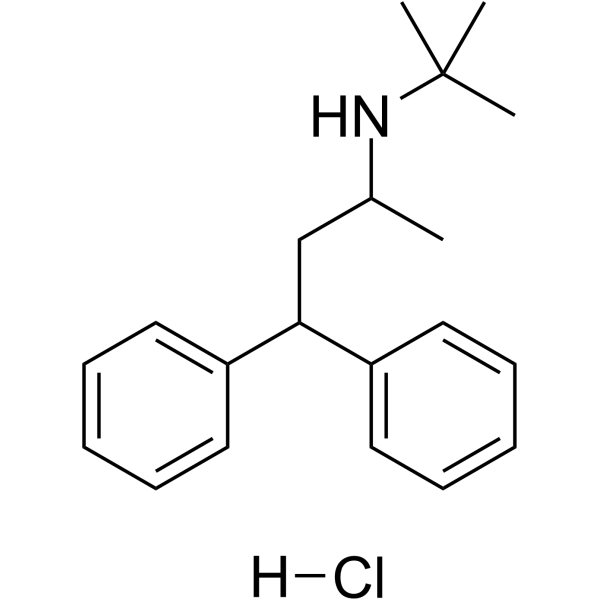
Terodiline hydrochloride is an M1-selective muscarinic receptor (mAChR) antagonist with Kbs of 15, 160, 280, and 198 nM in rabbit vas deferens (M1), atria (M2), bladder (M3) and ileal muscle (M3), respectively. Terodiline hydrochloride also is a Ca 2+ blocker. Terodiline hydrochloride acts as a treatment for urinary frequency and urge incontinence .
|
-
- HY-135329
-
|
|
mAChR
|
Neurological Disease
|
|
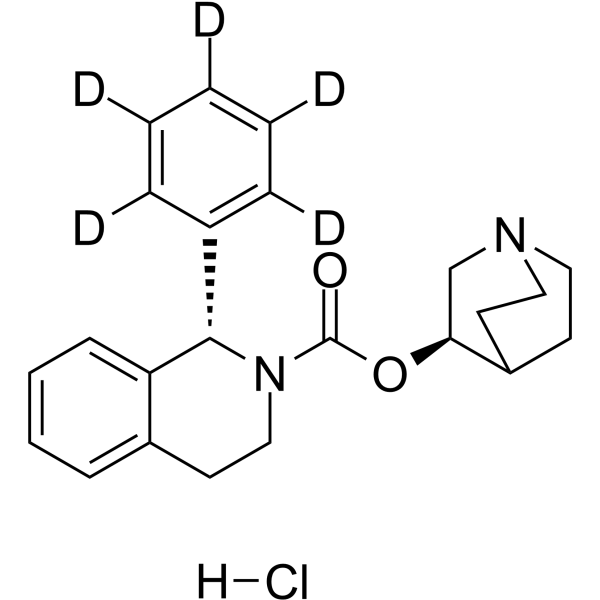
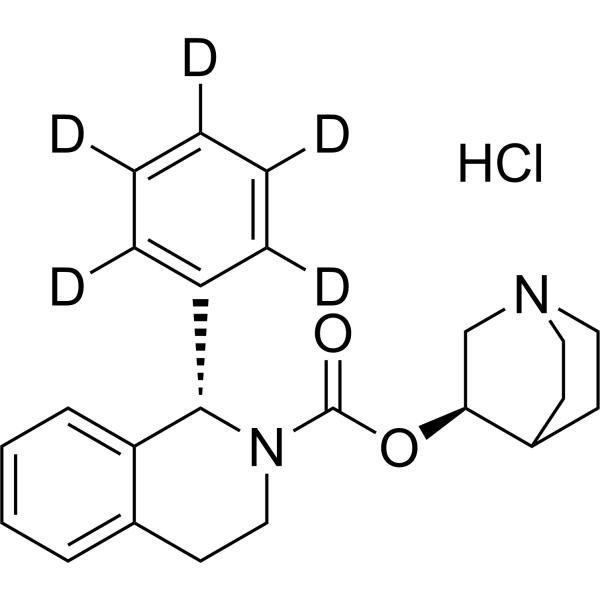
Solifenacin D5 hydrochloride is a deuterium labeled Solifenacin hydrochloride. Solifenacin hydrochloride is a muscarinic receptor antagonist with pKis of 7.6, 6.9 and 8.0 for M1, M2 and M3 receptors, respectively .
|
-
- HY-167633
-
|
|
mGluR
Histamine Receptor
|
Neurological Disease
|
|
Oxomemazine hydrochloride is a phenothiazine-based histamine H1-receptor blocker with pronounced antimuscarinic properties. Oxomemazine hydrochloride is a selective antagonist for muscarinic M1 receptor, displays about 20-fold difference in the affinity for high (Ki= 84 nM, M1 receptor) and low (Ki= 1.65 μM, M2 receptor) affinity sites [1]. Oxomemazine hydrochloride an antihistamine and anticholinergic agent used for the study of cough treatment .
|
-

- HY-I0230S
-
|
|
Isotope-Labeled Compounds
mAChR
|
Neurological Disease
|
|
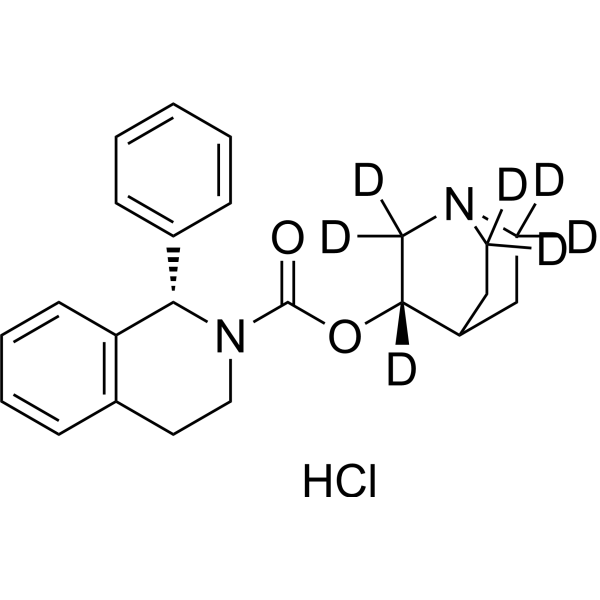
Solifenacin-d7 (hydrochloride) is the deuterium labeled Solifenacin hydrochloride. Solifenacin hydrochloride (YM905 hydrochloride) is a muscarinic receptor antagonist, with pKis of 7.6, 6.9 and 8.0 for M1, M2 and M3 receptors, respectively.
|
-
- HY-120329
-
|
|
mAChR
|
Others
|
|
Lu 26-046 is the agonist for muscarinic M1 receptor and M2 receptor and a weak antagonist for M3 receptor, with Ki of 0.51, 26 and 5 nM, respectively. Lu 26-046 exhibits specific stimulus property, that can be recognized by rats .
|
-

- HY-B1277AS
-
|
|
Isotope-Labeled Compounds
mAChR
Cholinesterase (ChE)
|
Neurological Disease
|
|
Trihexyphenidyl-d5 is deuterium labeled Trihexyphenidyl (HY-B1277A). Trihexyphenidyl is a selective and orally active M1 muscarinic receptor antagonist with an IC50 of 3.7 nM for rat cerebral cortex M1 muscarinic receptors. Trihexyphenidyl modulates cholinergic activity, countering acetylcholine supersensitivity in neural pathways. Trihexyphenidyl improves movement disorder, inhibits McN-A-343 (HY-107648)-induced pressor responses, vagally-induced bradycardia and vasodilatation. Trihexyphenidyl can be used for the research of Parkinson's disease. .
|
-

- HY-B1277S
-
|
|
Isotope-Labeled Compounds
mAChR
Cholinesterase (ChE)
|
Neurological Disease
|
|
Trihexyphenidyl-d5 hydrochloride is deuterium labeled Trihexyphenidyl hydrochloride (HY-B1277). Trihexyphenidyl hydrochloride is a selective and orally active M1 muscarinic receptor antagonist with an IC50 of 3.7 nM for rat cerebral cortex M1 muscarinic receptors. Trihexyphenidyl hydrochloride modulates cholinergic activity, countering acetylcholine supersensitivity in neural pathways. Trihexyphenidyl hydrochloride improves movement disorder, inhibits McN-A-343 (HY-107648)-induced pressor responses, vagally-induced bradycardia and vasodilatation. Trihexyphenidyl hydrochloride can be used for the research of Parkinson's disease. .
|
-

- HY-122510
-
|
Atropine oxidation
|
Parasite
|
Neurological Disease
|
|
Atropine Oxide (Atropine oxidation), a derivative of Atropine, acts as a competitive antagonist to the muscarinic acetylcholine receptors M1, M2, M3, M4, and M5, and is utilized in the treatment of specific nerve agent and pesticide poisonings.
|
-

- HY-A0002S
-
|
YM905-d5
|
Isotope-Labeled Compounds
mAChR
|
Neurological Disease
|
|
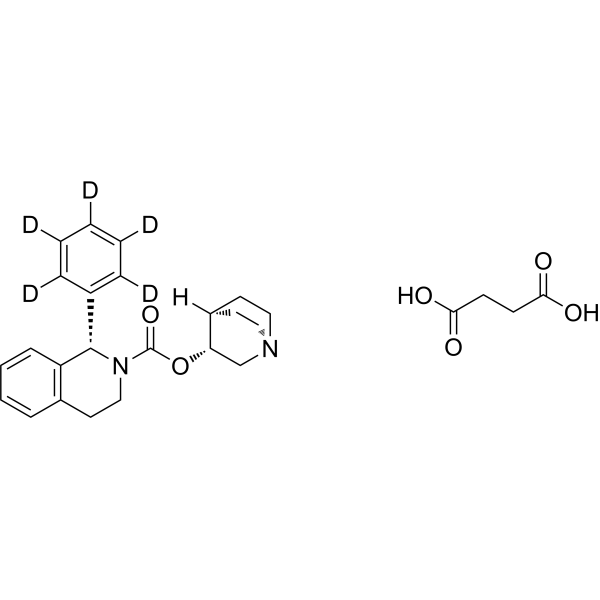
Solifenacin-d5 (succinate) is deuterium labeled Solifenacin (Succinate). Solifenacin Succinate (YM905) is a novel muscarinic receptor antagonist with pKis of 7.6, 6.9 and 8.0 for M1, M2 and M3 receptors, respectively.
|
-
- HY-122510A
-
|
Atropine oxidation hydrochloride
|
mAChR
|
|
|
Atropine Oxide (Atropine oxidation) hydrochloride, a derivative of Atropine, acts as a competitive antagonist to the muscarinic acetylcholine receptors M1, M2, M3, M4, and M5, and is utilized in the treatment of specific nerve agent and pesticide poisonings .
|
-

- HY-B1277R
-
|
|
Reference Standards
mAChR
Cholinesterase (ChE)
|
Neurological Disease
|
|
Trihexyphenidyl hydrochloride (Standard) is the analytical standard of Trihexyphenidyl hydrochloride (HY-B1277). This product is intended for research and analytical applications. Trihexyphenidyl is a selective and orally active M1 muscarinic receptor antagonist with an IC50 of 3.7 nM for rat cerebral cortex M1 muscarinic receptors. Trihexyphenidyl modulates cholinergic activity, countering acetylcholine supersensitivity in neural pathways. Trihexyphenidyl improves movement disorder, inhibits McN-A-343 (HY-107648)-induced pressor responses, vagally-induced bradycardia and vasodilatation. Trihexyphenidyl can be used for the research of Parkinson's disease. .
|
-

- HY-A0034R
-
|
YM905 free base (Standard)
|
Reference Standards
mAChR
|
Neurological Disease
Cancer
|
|
Solifenacin (Standard) is the analytical standard of Solifenacin. This product is intended for research and analytical applications. Solifenacin (YM905 free base) is a novel muscarinic receptor antagonist with pKis of 7.6, 6.9 and 8.0 for M1, M2 and M3 receptors, respectively.
|
-

- HY-A0002R
-
|
YM905 (Standard)
|
Reference Standards
mAChR
|
Neurological Disease
Cancer
|
|
Solifenacin (Succinate) (Standard) is the analytical standard of Solifenacin (Succinate). This product is intended for research and analytical applications. Solifenacin Succinate (YM905) is a novel muscarinic receptor antagonist with pKis of 7.6, 6.9 and 8.0 for M1, M2 and M3 receptors, respectively.
|
-
- HY-13204AR
-
|
KL 373 (Standard)
|
Reference Standards
mAChR
|
Neurological Disease
|
|
Biperiden (Standard) is the analytical standard of Biperiden. This product is intended for research and analytical applications. Biperiden (KL 373) is a non-selective muscarinic receptor antagonist that competitively binds to M1 muscarinic receptors, thereby inhibiting acetylcholine and enhancing dopamine signaling in the central nervous system. Biperiden has the potential for the research of Parkinson's disease and other related psychiatric disorders .
|
-

- HY-136587R
-
|
|
Reference Standards
Histamine Receptor
mGluR
|
Inflammation/Immunology
|
|
Oxomemazine (Standard) is the analytical standard of Oxomemazine (HY-136587). This product is intended for research and analytical applications. Oxomemazine is a phenothiazine-based histamine H1-receptor blocker. Oxomemazine is a selective antagonist for muscarinic M1 receptor, displays about 20-fold difference in the affinity for high (Ki = 84 nM, M1 receptor) and low (Ki = 1.65 μM, M2 receptor) affinity sites. Oxomemazine is an antihistamine and anticholinergic agent used for the study of cough treatment. Oxomemazine is protective against anaphylactic microshock in guinea pigs .
|
-

- HY-13204AS
-
|
KL 373-d5
|
Isotope-Labeled Compounds
mAChR
|
Neurological Disease
|
|
Biperiden-d5 (KL 373-d5) is deuterium labeled Biperiden. Biperiden (KL 373) is a non-selective muscarinic receptor antagonist that competitively binds to M1 muscarinic receptors, thereby inhibiting acetylcholine and enhancing dopamine signaling in the central nervous system. Biperiden has the potential for the research of Parkinson's disease and other related psychiatric disorders .
|
-

- HY-135329S
-
|
|
Isotope-Labeled Compounds
mAChR
|
Neurological Disease
|
|
(1R,3S-)Solifenacin-d5 hydrochloride is the deuterium labeled Solifenacin hydrochloride. Solifenacin D5 hydrochloride is a deuterium labeled Solifenacin hydrochloride. Solifenacin hydrochloride is a muscarinic receptor antagonist with pKis of 7.6, 6.9 and 8.0 for M1, M2 and M3 receptors, respectively .
|
-
- HY-149504
-
|
|
Drug Metabolite
mAChR
|
Neurological Disease
|
|
3-Hydroxy darifenacin is a metabolite of Darifenacin (HY-A0033). 3-Hydroxy darifenacin is an antagonist of M1-5 muscarinic receptors with Kis values of 17.78, 79.43, 2.24, 36.31 and 6.17 nM, respectively in CHO cells .
|
-

- HY-14539B
-
|
HF 1854 dihydrochloride
|
Dopamine Receptor
mAChR
Adrenergic Receptor
5-HT Receptor
|
Neurological Disease
Cancer
|
|
Clozapine (HF 1854) dihydrochloride is an antipsychotic used for the research of schizophrenia. Clozapine has high affinity for a number of neuroreceptors. Clozapine is a potent antagonist of dopamine D2 with a Ki of 75 nM. Clozapine inhibits the muscarinic M1 receptor and serotonin 5HT2A receptor with Kis of 9.5 nM and 4 nM, respectively . Clozapine is also a potent and selective agonist at the muscarinic M4 receptor (EC50=11 nM) .
|
-

- HY-B1339AS
-
|
Dicycloverine-d4
|
mAChR
|
Neurological Disease
|
|
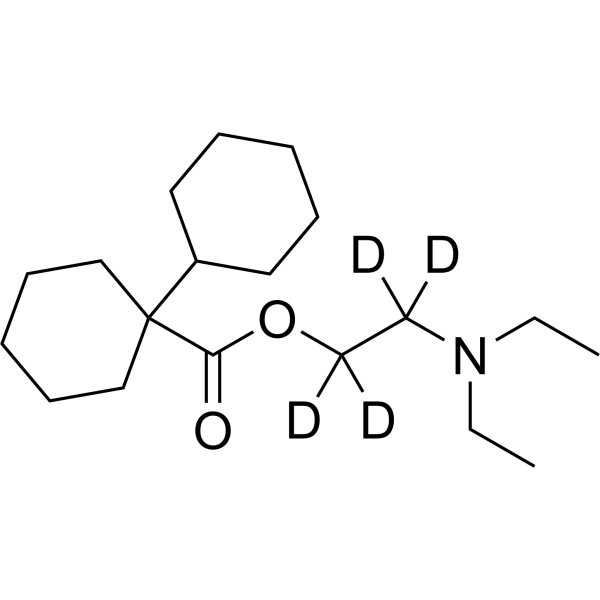
Dicyclomine-d4 is the deuterium labeled Dicyclomine . Dicyclomine (Dicycloverine) is a potent and orally active muscarinic cholinergic receptors antagonist. Dicyclomine (Dicycloverine) shows high affinity for muscarinic M1 receptor subtype (Ki=5.1 nM) and M2 receptor subtype (Ki=54.6 nM) in brush-border membrane and basal plasma membranes, respectively . Dicyclomine is an antispasmodic agent and relieves smooth muscle spasm of the gastrointestinal tract in vivo .
|
-
- HY-B1339R
-
|
Dicycloverine hydrochloride (Standard)
|
Reference Standards
mAChR
|
Neurological Disease
|
|
Dicyclomine (hydrochloride) (Standard) is the analytical standard of Dicyclomine (hydrochloride). This product is intended for research and analytical applications. Dicyclomine hydrochloride is a potent and orally active muscarinic cholinergic receptors antagonist. Dicyclomine hydrochloride shows high affinity for muscarinic M1 receptor subtype (Ki=5.1 nM) and M2 receptor subtype (Ki=54.6 nM) in brush-border membrane and basal plasma membranes, respectively . Dicyclomine is an antispasmodic agent and relieves smooth muscle spasm of the gastrointestinal tract in vivo .
|
-

- HY-17037R
-
|
LS 519 (Standard); Pirenzepin dihydrochloride (Standard); Gastrozepin dihydrochloride (Standard)
|
Reference Standards
mAChR
|
Metabolic Disease
Cancer
|
|
Pirenzepine (dihydrochloride) (Standard) is the analytical standard of Pirenzepine (dihydrochloride). This product is intended for research and analytical applications. Pirenzepine (LS 519) dihydrochloride is a selective M1 mAChR (muscarinic acetylcholine receptor) antagonist. Pirenzepine dihydrochloride reduces gastric acid secretion and reduces muscle spasm, can be used in peptic ulcers research. Pirenzepine dihydrochloride shows anti-proliferative activity to cancer cells .
|
-

- HY-B0241S1
-
|
Sch 1000-d7 bromide
|
Isotope-Labeled Compounds
mAChR
|
Neurological Disease
Inflammation/Immunology
|
|
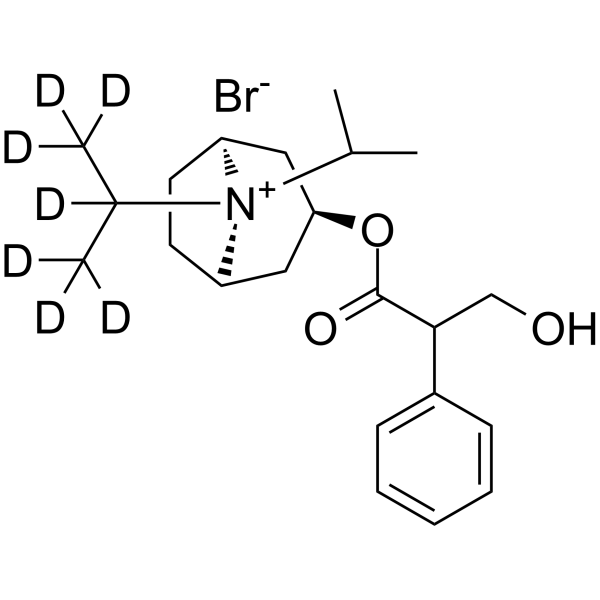
Ipratropium-d7 (bromide)eis the deuterium labeled Ipratropium bromide. Ipratropium bromide (Sch 1000) is a muscarinic receptor antagonist, with binding IC50 values of 2.9 nM, 2 nM, and 1.7 nM for M1, M2, and M3 receptors, respectively. Ipratropium bromide can be used in the research for COPD (chronic obstructive pulmonary disease) and asthma .
|
-
- HY-B1339S
-
|
Dicycloverine-d4 hydrochloride
|
Isotope-Labeled Compounds
mAChR
|
Neurological Disease
|
|
Dicyclomine-d4 hydrochloride (Dicycloverine-d4 hydrochloride) is the deuterium labeled Dicyclomine hydrochloride (HY-B1339). Dicyclomine hydrochloride is a potent and orally active muscarinic cholinergic receptors antagonist. Dicyclomine hydrochloride shows high affinity for muscarinic M1 receptor subtype (Ki=5.1 nM) and M2 receptor subtype (Ki=54.6 nM) in brush-border membrane and basal plasma membranes, respectively . Dicyclomine is an antispasmodic agent and relieves smooth muscle spasm of the gastrointestinal tract in vivo .
|
-

- HY-17037AR
-
|
LS 519 free base (Standard); Pirenzepin (Standard); Gastrozepin (Standard)
|
mAChR
Reference Standards
|
Metabolic Disease
Cancer
|
|
Pirenzepine (Standard) is the analytical standard of Pirenzepine. This product is intended for research and analytical applications. Pirenzepine (LS 519 free base) is a selective M1 mAChR (muscarinic acetylcholine receptor) antagonist. Pirenzepine reduces gastric acid secretion and reduces muscle spasm, can be used in peptic ulcers research. Pirenzepine shows anti-proliferative activity to cancer cells .
|
-

- HY-70053S
-
|
|
Isotope-Labeled Compounds
mAChR
|
Neurological Disease
Metabolic Disease
|
|
(Rac)-Fesoterodine-d14 fumarate is a labelled racemic Fesoterodine. Fesoterodine is an orally active, nonsubtype selective, competitive muscarinic receptor (mAChR) antagonist with pKivalues of 8.0, 7.7, 7.4, 7.3, 7.5 for M1, M2, M3, M4, M5 receptors, respectively. Fesoterodine is used for the overactive bladder (OAB) .
|
-

- HY-W720879
-
|
|
Isotope-Labeled Compounds
mAChR
|
Metabolic Disease
|
|
Fesoterodine-d3 is the deuterium labeled Fesoterodine (HY-70053). Fesoterodine is an orally active, nonsubtype selective, competitive muscarinic receptor (mAChR) antagonist with pKi values of 8.0, 7.7, 7.4, 7.3, 7.5 for M1, M2, M3, M4, M5 receptors, respectively. Fesoterodine is used for the overactive bladder (OAB) .
|
-

- HY-A0030R
-
|
|
Reference Standards
mAChR
|
Neurological Disease
Metabolic Disease
Cancer
|
|
Fesoterodine (fumarate) (Standard) is the analytical standard of Fesoterodine (fumarate). This product is intended for research and analytical applications. Fesoterodine Fumarate is an orally active, nonsubtype selective, competitive muscarinic receptor (mAChR) antagonist with pKi values of 8.0, 7.7, 7.4, 7.3, 7.5 for M1, M2, M3, M4, M5 receptors, respectively. Fesoterodine Fumarate is used for the overactive bladder (OAB) .
|
-

- HY-A0082R
-
|
Difenidol hydrochloride (Standard)
|
Reference Standards
mAChR
Sodium Channel
|
Neurological Disease
|
|
Diphenidol (hydrochloride) (Standard) is the analytical standard of Diphenidol (hydrochloride). This product is intended for research and analytical applications. Diphenidol hydrochloride (Difenidol hydrochloride) is a non-selective muscarinic M1-M4 receptor antagonist, has anti-arrhythmic activity. Diphenidol hydrochloride is also a potent non-specific blocker of voltage-gated ion channels (Na+, K+, and Ca2+) in neuronal cells. Diphenidol hydrochloride can be used in the study of antivertigo and antinausea [4] .
|
-

- HY-A0082S
-
|
Difenidol hydrochloride-d10
|
Isotope-Labeled Compounds
Sodium Channel
mAChR
|
Neurological Disease
|
|
Diphenidol-d10 (hydrochloride) (Difenidol hydrochloride-d10) is deuterium labeled Diphenidol (hydrochloride). Diphenidol hydrochloride (Difenidol hydrochloride) is a non-selective muscarinic M1-M4 receptor antagonist, has anti-arrhythmic activity. Diphenidol hydrochloride is also a potent non-specific blocker of voltage-gated ion channels (Na +, K +, and Ca 2+) in neuronal cells. Diphenidol hydrochloride can be used in the study of antivertigo and antinausea .
|
-

- HY-B1332R
-
|
Sch 1000 bromide hydrate (Standard)
|
Reference Standards
mAChR
|
Neurological Disease
Inflammation/Immunology
|
|
Ipratropium (bromide hydrate) (Standard) is the analytical standard of Ipratropium (bromide hydrate). This product is intended for research and analytical applications. Ipratropium bromide (Sch 1000) hydrate is a muscarinic receptor antagonist, with IC50s of 2.9 nM, 2 nM, and 1.7 nM for M1, M2, and M3 receptors, respectively. Ipratropium bromide hydrate relaxes smooth muscle, can be used in the research for COPD (chronic obstructive pulmonary disease) and asthma .
|
-

- HY-14539S3
-
|
HF 1854-d3
|
Isotope-Labeled Compounds
5-HT Receptor
Adrenergic Receptor
Dopamine Receptor
mAChR
|
Neurological Disease
Cancer
|
|
Clozapine-d3 (HF 1854-d3) is deuterium labeled Clozapine. Clozapine (HF 1854) is an antipsychotic used for the research of schizophrenia. Clozapine has high affinity for a number of neuroreceptors. Clozapine is a potent antagonist of dopamine D2 with a Ki of 75 nM. Clozapine inhibits the muscarinic M1 receptor and serotonin 5HT2A receptor with Kis of 9.5 nM and 4 nM, respectively . Clozapine is also a potent and selective agonist at the muscarinic M4 receptor (EC50=11 nM) .
|
-

- HY-17037S1
-
|
LS 519-d8 dihydrochloride; Pirenzepin-d8 dihydrochloride; Gastrozepin-d8 dihydrochloride
|
Isotope-Labeled Compounds
mAChR
|
Cancer
|
|
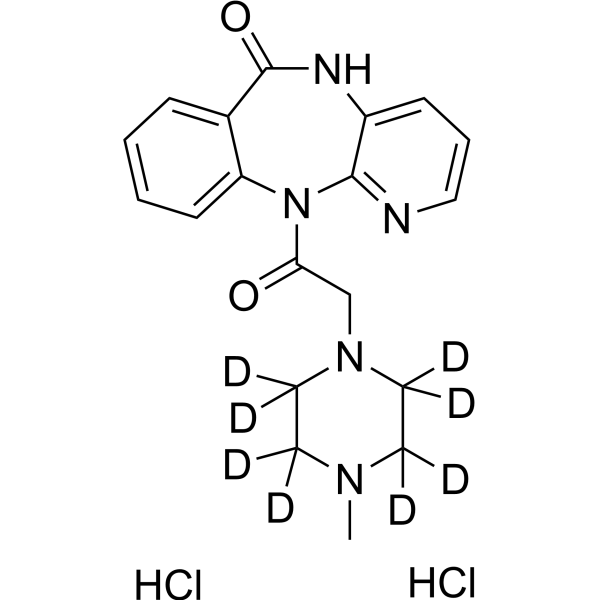
Pirenzepine-d8 (LS 519-d8; Pirenzepin-d8) dihydrochloride is a deuterium labeled Pirenzepine (dihydrochloride) (HY-17037). Pirenzepine (LS 519) dihydrochloride is a selective M1 mAChR (muscarinic acetylcholine receptor) antagonist. Pirenzepine dihydrochloride reduces gastric acid secretion and reduces muscle spasm, can be used in peptic ulcers research. Pirenzepine dihydrochloride shows anti-proliferative activity to cancer cells .
|
-
- HY-17037AS
-
|
LS 519 free base-d11; Pirenzepin-d11; Gastrozepin-d11
|
Isotope-Labeled Compounds
mAChR
|
Cancer
|
|
Pirenzepine-d11 (LS 519 (free base)-d11; Pirenzepin-d11; Gastrozepin-d11) is the deuterium labeled Pirenzepine (HY-17037A). Pirenzepine (LS 519 free base) is a selective M1 mAChR (muscarinic acetylcholine receptor) antagonist. Pirenzepine reduces gastric acid secretion and reduces muscle spasm, can be used in peptic ulcers research. Pirenzepine shows anti-proliferative activity to cancer cells .
|
-

- HY-P5846
-
|
MT3
|
mAChR
Adrenergic Receptor
|
Neurological Disease
|
|
Muscarinic toxin 3 (MT3) is a potent and non-competitive mAChR and adrenoceptors antagonist with pIC50s of 6.71, 8.79, 8.86, 7.57, 8.13, 8.49, <6.5, 7.29 against M1, M4, α1A, α1B, α1D,α2A,α2B and α2C receptors, respectively. Muscarinic toxin 3 displays prominent adrenoceptor activity .
|
-

- HY-B0298AS
-
|
HS-592-d5 fumarate; Meclastine-d5 fumarate
|
Isotope-Labeled Compounds
Histamine Receptor
Apoptosis
mAChR
Pyroptosis
Keap1-Nrf2
p62
Autophagy
mTOR
IKK
|
Neurological Disease
Metabolic Disease
|
|
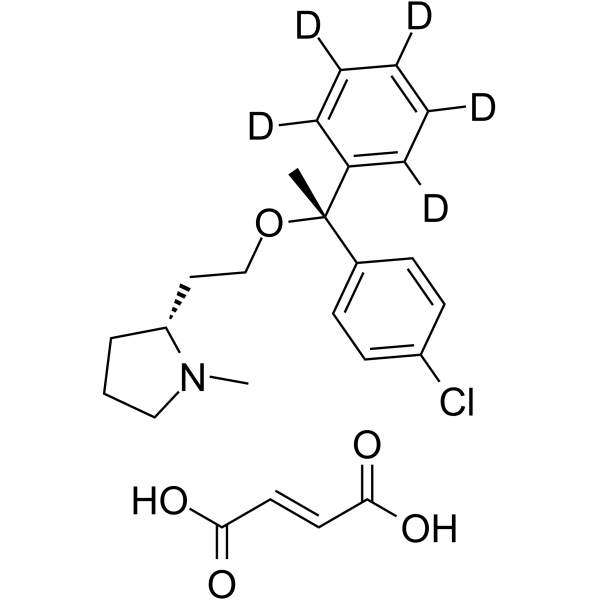
Clemastine (HS-592; Meclastine)-d5 fumarate is the deuterium labeled Clemastine fumarate. Clemastine fumarate is an orally active, blood-brain barrier-permeable H1 histamine receptor (H1 histamine receptor) antagonist with potent antiallergic effects. Clemastine fumarate also antagonizes muscarinic acetylcholine receptors (mAChR), particularly the M1 and M4 subtypes. In addition to antihistamine effects, Clemastine fumarate exhibits multiple pharmacological activities, especially in promoting central nervous system remyelination, activating autophagy and pyroptosis, exerting anti-apoptotic and neuroprotective effects, and suppressing inflammation .
|
-
- HY-B0298AR
-
|
HS-592 fumarate (Standard); Meclastine fumarate (Standard)
|
Reference Standards
Histamine Receptor
Apoptosis
mAChR
Pyroptosis
Keap1-Nrf2
p62
Autophagy
mTOR
IKK
|
Neurological Disease
Metabolic Disease
|
|
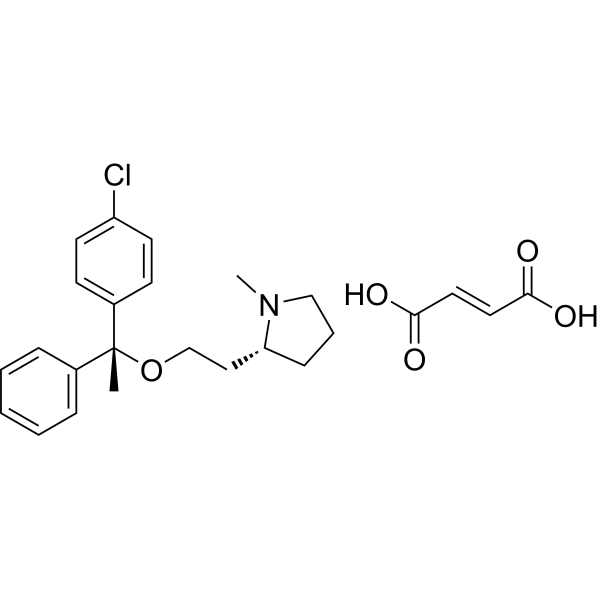
Clemastine (HS-592; Meclastine) fumarate (Standard) is the analytical standard of Clemastine fumarate. This product is intended for research and analytical applications. Clemastine fumarate is an orally active, blood-brain barrier-permeable H1 histamine receptor (H1 histamine receptor) antagonist with potent antiallergic effects. Clemastine fumarate also antagonizes muscarinic acetylcholine receptors (mAChR), particularly the M1 and M4 subtypes. In addition to antihistamine effects, Clemastine fumarate exhibits multiple pharmacological activities, especially in promoting central nervous system remyelination, activating autophagy and pyroptosis, exerting anti-apoptotic and neuroprotective effects, and suppressing inflammation .
|
-
- HY-14541S2
-
|
LY170053-d8
|
Isotope-Labeled Compounds
Apoptosis
Dopamine Receptor
Autophagy
mAChR
Mitophagy
5-HT Receptor
Adrenergic Receptor
|
Neurological Disease
|
|
Olanzapine-d8 is a deuterated labeled Olanzapine . Olanzapine (LY170053) is a selective, orally active monoaminergic antagonist with high affinity binding to serotonin H1, 5HT2A/2C, 5HT3, 5HT6 (Ki=7, 4, 11, 57, and 5 nM, respectively), dopamine D1-4 (Ki=11 to 31 nM), muscarinic M1-5 (Ki=1.9-25 nM), and adrenergic α1 receptor (Ki=19 nM). Olanzapine is an atypical antipsychotic .
|
-

- HY-B1101AR
-
|
Pimetixene maleate (Standard)
|
Reference Standards
5-HT Receptor
Histamine Receptor
|
Neurological Disease
Endocrinology
|
|
Pimethixene maleate (Standard) is the analytical standard of Pimethixene maleate. This product is intended for research and analytical applications. Pimethixene maleate is antihistamine and antiserotonergic compound, acts as an antimigraine agent.
Pimethixene maleate is a highly potent antagonist of 5-HT1A, 5-HT2A, 5-HT2B, 5-HT2C, histamine H1, dopamine D2 and D4.4 as well as muscarinic M1 and M2 receptors, with pKis of 7.63, 10.22, 10.44, 8.42, 10.14, 8.19, 7.54, 8.61 and 9.38, respectively .
|
-

- HY-183932
-
|
|
mAChR
|
Neurological Disease
Inflammation/Immunology
|
|
NPC-14695 is a competitive and selective M3 muscarinic receptor antagonist, with a Kd value of 15 nM for guinea pig M3, 60 nM for guinea pig M2, and 25 nM for rabbit M1. NPC-14695 exhibits higher activity towards M3 receptors in bronchial smooth muscle than towards those regulating salivary secretion. NPC-14695 inhibits Carbachol (HY-B1208)-induced contraction of isolated rabbit iris smooth muscle .
|
-

- HY-113057R
-
|
|
Reference Standards
Endogenous Metabolite
|
Cancer
|
|
Trihexyphenidyl (hydrochloride) (Standard) is the analytical standard of Trihexyphenidyl (hydrochloride). This product is intended for research and analytical applications. Trihexyphenidyl hydrochloride is a potent and selective M1 muscarinic receptor antagonist. Trihexyphenidyl hydrochloride shows anticholinergic activity, and can be used for Parkinson syndrome or dystonia research .
|
-

- HY-126862
-
|
|
mAChR
|
Others
|
|
AQ-RA 721 is a muscarinic receptor antagonist with differential affinity for the m4 and M2 sites, which can be used to characterize muscarinic receptor subtypes. Other muscarinic receptor antagonists have differential affinity for the M1 (rat cerebral cortex), M2 (rat heart), M3 (rat submandibular gland), m4 (receptor expressed in Chinese hamster ovary cells transfected with CHO), and guinea pig uterine smooth muscle at the muscarinic binding site .
|
-

- HY-176710A
-
|
|
Drug Isomer
|
Others
|
|
(R)-PAD-PF2 is an isomer of PAD-PF2 (HY-176710). PAD-PF2 is a PAD family inhibitor, as well as a κ-opioid receptor agonist (EC50 = 7.55 μM) and an M1 muscarinic acetylcholine receptor antagonist (IC50 = 12.3 μM).
|
-

- HY-107647R
-
|
|
Reference Standards
mAChR
Histamine Receptor
|
Inflammation/Immunology
|
|
(S)-(+)-Dimethindene maleate (Standard) is the analytical standard of (S)-(+)-Dimethindene (maleate) (HY-107647). This product is intended for research and analytical applications. (S)-(+)-Dimethindene maleate, an enantiomer, is a potent M2-selective muscarinic receptor antagonist (pA2 = 7.86/7.74; pKi = 7.78). (S)-(+)-Dimethindene maleate shows lower affinities for the muscarinic M1 (pA2 = 6.83/6.36; pKi = 7.08), the M3 (pA2 = 6.92/6.96; pKi = 6.70) and the M4 receptors (pKi = 7.00), respectively. (S)-(+)-Dimethindene maleate also is a histamine H1 receptor antagonist (pA2 = 7.48) .
|
-

| Cat. No. |
Product Name |
Target |
Research Area |
-
- HY-P5175
-
|
|
mAChR
|
Neurological Disease
|
|
Muscarinic toxin 7 is a peptide toxin with selective and noncompetitive antagonism at the muscarinic M1 receptor .
|
-
- HY-P5846
-
|
MT3
|
mAChR
Adrenergic Receptor
|
Neurological Disease
|
|
Muscarinic toxin 3 (MT3) is a potent and non-competitive mAChR and adrenoceptors antagonist with pIC50s of 6.71, 8.79, 8.86, 7.57, 8.13, 8.49, <6.5, 7.29 against M1, M4, α1A, α1B, α1D,α2A,α2B and α2C receptors, respectively. Muscarinic toxin 3 displays prominent adrenoceptor activity .
|
| Cat. No. |
Product Name |
Category |
Target |
Chemical Structure |
| Cat. No. |
Product Name |
Chemical Structure |
-
- HY-B0461S
-
|
|
|
Trospium-d8 (chloride) is the deuterium labeled Trospium chloride. Trospium chloride is an orally active, specific and competitive antagonist of muscarinic cholinergic receptors (mAChRs), with antimuscarinic activity. Trospium chloride binds to muscarinic receptors M1, M2 and M3 with high affinity, but not nicotinic, cholinergic receptors .
|
-
-
- HY-14541S
-
|
|
|
Olanzapine-d3 (LY170053-d3) is the deuterium labeled Olanzapine. Olanzapine is a selective, orally active monoaminergic antagonist with high affinity binding to serotonin H1, 5HT2A/2C, 5HT3, 5HT6 (Ki=7, 4, 11, 57, and 5 nM, respectively), dopamine D1-4 (Ki=11 to 31 nM), muscarinic M1-5 (Ki=1.9-25 nM), and adrenergic α1 receptors (Ki=19 nM). Olanzapine is an atypical antipsychotic .
|
-
-
- HY-A0030S
-
|
|
|
Fesoterodine-d7 (fumarate) is the deuterium labeled Fesoterodine fumarate . Fesoterodine Fumarate is an orally active, nonsubtype selective, competitive muscarinic receptor (mAChR) antagonist with pKi values of 8.0, 7.7, 7.4, 7.3, 7.5 for M1, M2, M3, M4, M5 receptors, respectively. Fesoterodine Fumarate is used for the overactive bladder (OAB) .
|
-
-
- HY-B0241S
-
|
|
|
Ipratropium-d3 (bromide) is the deuterium labeled Ipratropium bromide. Ipratropium bromide (Sch 1000) is a muscarinic receptor antagonist, with binding IC50 values of 2.9 nM, 2 nM, and 1.7 nM for M1, M2, and M3 receptors, respectively. Ipratropium bromide can be used in the research for COPD (chronic obstructive pulmonary disease) and asthma .
|
-
-
- HY-17037S
-
|
|
|
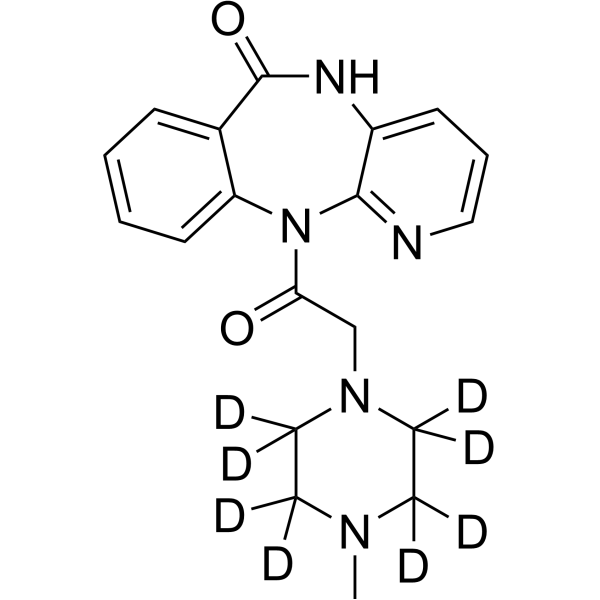
Pirenzepine-d8 is the deuterium labeled Pirenzepine dihydrochloride. Pirenzepine dihydrochloride (LS519) is a selective M1 muscarinic receptor antagonist.
|
-
-
- HY-I0230S
-
|
|
|
Solifenacin-d7 (hydrochloride) is the deuterium labeled Solifenacin hydrochloride. Solifenacin hydrochloride (YM905 hydrochloride) is a muscarinic receptor antagonist, with pKis of 7.6, 6.9 and 8.0 for M1, M2 and M3 receptors, respectively.
|
-
-
- HY-B1277AS
-
|
|
|
Trihexyphenidyl-d5 is deuterium labeled Trihexyphenidyl (HY-B1277A). Trihexyphenidyl is a selective and orally active M1 muscarinic receptor antagonist with an IC50 of 3.7 nM for rat cerebral cortex M1 muscarinic receptors. Trihexyphenidyl modulates cholinergic activity, countering acetylcholine supersensitivity in neural pathways. Trihexyphenidyl improves movement disorder, inhibits McN-A-343 (HY-107648)-induced pressor responses, vagally-induced bradycardia and vasodilatation. Trihexyphenidyl can be used for the research of Parkinson's disease. .
|
-
-
- HY-B1277S
-
|
|
|
Trihexyphenidyl-d5 hydrochloride is deuterium labeled Trihexyphenidyl hydrochloride (HY-B1277). Trihexyphenidyl hydrochloride is a selective and orally active M1 muscarinic receptor antagonist with an IC50 of 3.7 nM for rat cerebral cortex M1 muscarinic receptors. Trihexyphenidyl hydrochloride modulates cholinergic activity, countering acetylcholine supersensitivity in neural pathways. Trihexyphenidyl hydrochloride improves movement disorder, inhibits McN-A-343 (HY-107648)-induced pressor responses, vagally-induced bradycardia and vasodilatation. Trihexyphenidyl hydrochloride can be used for the research of Parkinson's disease. .
|
-
-
- HY-A0002S
-
|
|
|
Solifenacin-d5 (succinate) is deuterium labeled Solifenacin (Succinate). Solifenacin Succinate (YM905) is a novel muscarinic receptor antagonist with pKis of 7.6, 6.9 and 8.0 for M1, M2 and M3 receptors, respectively.
|
-
-
- HY-13204AS
-
|
|
|
Biperiden-d5 (KL 373-d5) is deuterium labeled Biperiden. Biperiden (KL 373) is a non-selective muscarinic receptor antagonist that competitively binds to M1 muscarinic receptors, thereby inhibiting acetylcholine and enhancing dopamine signaling in the central nervous system. Biperiden has the potential for the research of Parkinson's disease and other related psychiatric disorders .
|
-
-
- HY-135329S
-
|
|
|
(1R,3S-)Solifenacin-d5 hydrochloride is the deuterium labeled Solifenacin hydrochloride. Solifenacin D5 hydrochloride is a deuterium labeled Solifenacin hydrochloride. Solifenacin hydrochloride is a muscarinic receptor antagonist with pKis of 7.6, 6.9 and 8.0 for M1, M2 and M3 receptors, respectively .
|
-
-
- HY-B1339AS
-
|
|
|
Dicyclomine-d4 is the deuterium labeled Dicyclomine . Dicyclomine (Dicycloverine) is a potent and orally active muscarinic cholinergic receptors antagonist. Dicyclomine (Dicycloverine) shows high affinity for muscarinic M1 receptor subtype (Ki=5.1 nM) and M2 receptor subtype (Ki=54.6 nM) in brush-border membrane and basal plasma membranes, respectively . Dicyclomine is an antispasmodic agent and relieves smooth muscle spasm of the gastrointestinal tract in vivo .
|
-
-
- HY-B0241S1
-
|
|
|
Ipratropium-d7 (bromide)eis the deuterium labeled Ipratropium bromide. Ipratropium bromide (Sch 1000) is a muscarinic receptor antagonist, with binding IC50 values of 2.9 nM, 2 nM, and 1.7 nM for M1, M2, and M3 receptors, respectively. Ipratropium bromide can be used in the research for COPD (chronic obstructive pulmonary disease) and asthma .
|
-
-
- HY-B1339S
-
|
|
|
Dicyclomine-d4 hydrochloride (Dicycloverine-d4 hydrochloride) is the deuterium labeled Dicyclomine hydrochloride (HY-B1339). Dicyclomine hydrochloride is a potent and orally active muscarinic cholinergic receptors antagonist. Dicyclomine hydrochloride shows high affinity for muscarinic M1 receptor subtype (Ki=5.1 nM) and M2 receptor subtype (Ki=54.6 nM) in brush-border membrane and basal plasma membranes, respectively . Dicyclomine is an antispasmodic agent and relieves smooth muscle spasm of the gastrointestinal tract in vivo .
|
-
-
- HY-70053S
-
|
|
|
(Rac)-Fesoterodine-d14 fumarate is a labelled racemic Fesoterodine. Fesoterodine is an orally active, nonsubtype selective, competitive muscarinic receptor (mAChR) antagonist with pKivalues of 8.0, 7.7, 7.4, 7.3, 7.5 for M1, M2, M3, M4, M5 receptors, respectively. Fesoterodine is used for the overactive bladder (OAB) .
|
-
-
- HY-W720879
-
|
|
|
Fesoterodine-d3 is the deuterium labeled Fesoterodine (HY-70053). Fesoterodine is an orally active, nonsubtype selective, competitive muscarinic receptor (mAChR) antagonist with pKi values of 8.0, 7.7, 7.4, 7.3, 7.5 for M1, M2, M3, M4, M5 receptors, respectively. Fesoterodine is used for the overactive bladder (OAB) .
|
-
-
- HY-A0082S
-
|
|
|
Diphenidol-d10 (hydrochloride) (Difenidol hydrochloride-d10) is deuterium labeled Diphenidol (hydrochloride). Diphenidol hydrochloride (Difenidol hydrochloride) is a non-selective muscarinic M1-M4 receptor antagonist, has anti-arrhythmic activity. Diphenidol hydrochloride is also a potent non-specific blocker of voltage-gated ion channels (Na +, K +, and Ca 2+) in neuronal cells. Diphenidol hydrochloride can be used in the study of antivertigo and antinausea .
|
-
-
- HY-14539S3
-
|
|
|
Clozapine-d3 (HF 1854-d3) is deuterium labeled Clozapine. Clozapine (HF 1854) is an antipsychotic used for the research of schizophrenia. Clozapine has high affinity for a number of neuroreceptors. Clozapine is a potent antagonist of dopamine D2 with a Ki of 75 nM. Clozapine inhibits the muscarinic M1 receptor and serotonin 5HT2A receptor with Kis of 9.5 nM and 4 nM, respectively . Clozapine is also a potent and selective agonist at the muscarinic M4 receptor (EC50=11 nM) .
|
-
-
- HY-17037S1
-
|
|
|
Pirenzepine-d8 (LS 519-d8; Pirenzepin-d8) dihydrochloride is a deuterium labeled Pirenzepine (dihydrochloride) (HY-17037). Pirenzepine (LS 519) dihydrochloride is a selective M1 mAChR (muscarinic acetylcholine receptor) antagonist. Pirenzepine dihydrochloride reduces gastric acid secretion and reduces muscle spasm, can be used in peptic ulcers research. Pirenzepine dihydrochloride shows anti-proliferative activity to cancer cells .
|
-
-
- HY-17037AS
-
|
|
|
Pirenzepine-d11 (LS 519 (free base)-d11; Pirenzepin-d11; Gastrozepin-d11) is the deuterium labeled Pirenzepine (HY-17037A). Pirenzepine (LS 519 free base) is a selective M1 mAChR (muscarinic acetylcholine receptor) antagonist. Pirenzepine reduces gastric acid secretion and reduces muscle spasm, can be used in peptic ulcers research. Pirenzepine shows anti-proliferative activity to cancer cells .
|
-
-
- HY-B0298AS
-
1 Publications Verification
|
|
Clemastine (HS-592; Meclastine)-d5 fumarate is the deuterium labeled Clemastine fumarate. Clemastine fumarate is an orally active, blood-brain barrier-permeable H1 histamine receptor (H1 histamine receptor) antagonist with potent antiallergic effects. Clemastine fumarate also antagonizes muscarinic acetylcholine receptors (mAChR), particularly the M1 and M4 subtypes. In addition to antihistamine effects, Clemastine fumarate exhibits multiple pharmacological activities, especially in promoting central nervous system remyelination, activating autophagy and pyroptosis, exerting anti-apoptotic and neuroprotective effects, and suppressing inflammation .
|
-
-
- HY-14541S2
-
|
|
|
Olanzapine-d8 is a deuterated labeled Olanzapine . Olanzapine (LY170053) is a selective, orally active monoaminergic antagonist with high affinity binding to serotonin H1, 5HT2A/2C, 5HT3, 5HT6 (Ki=7, 4, 11, 57, and 5 nM, respectively), dopamine D1-4 (Ki=11 to 31 nM), muscarinic M1-5 (Ki=1.9-25 nM), and adrenergic α1 receptor (Ki=19 nM). Olanzapine is an atypical antipsychotic .
|
-
| Cat. No. |
Product Name |
|
Classification |
-
- HY-120329
-
|
|
|
Alkynes
|
|
Lu 26-046 is the agonist for muscarinic M1 receptor and M2 receptor and a weak antagonist for M3 receptor, with Ki of 0.51, 26 and 5 nM, respectively. Lu 26-046 exhibits specific stimulus property, that can be recognized by rats .
|
Your information is safe with us. * Required Fields.
Inquiry Information
- Product Name:
- Cat. No.:
- Quantity:
- MCE Japan Authorized Agent:








