







Search Result
Results for "
RNA oligonucleotide
" in MedChemExpress (MCE) Product Catalog:
3
Biochemical Assay Reagents
| Cat. No. |
Product Name |
Target |
Research Areas |
Chemical Structure |
-
- HY-112980
-
|
|
DNA/RNA Synthesis
|
Neurological Disease
|
|
Nusinersen is an antisense oligonucleotide active molecule. Nusinersen modifies the pre-messenger RNA splicing of the SMN2 gene, thereby promoting the production of full-length SMN protein. Nusinersen improves spinal muscular atrophy .
|
-
-
- HY-B0956
-
|
Aminosidine sulfate
|
Antibiotic
Parasite
Bacterial
|
Infection
|
|
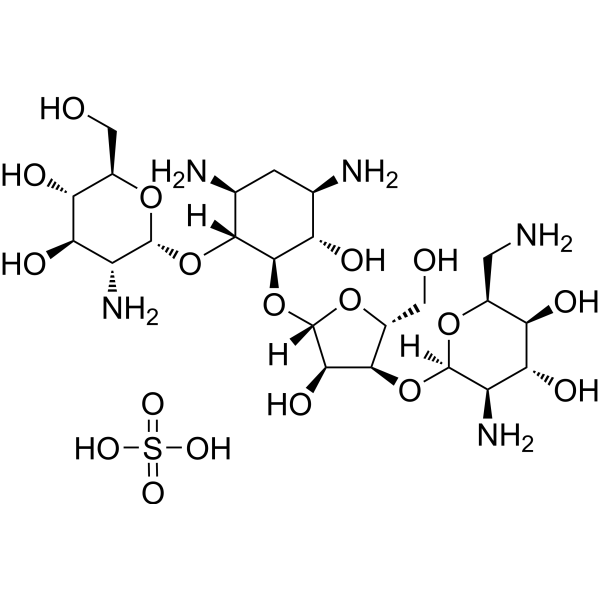
Paromomycin (Aminosidine) sulfate, a neomycin (HY-B0470) derivative, is a broad spectrum aminoglycoside antibiotic with amebicidal and bactericidal effects. Paromomycin sulfate prematures termination of translation of mRNA and inhibits protein synthesis by specifically binds to the RNA oligonucleotide at the A site of bacterial 30S ribosomes. Paromomycin sulfate can be used for the research of bacterial and parasitic infections .
|
-
-
- HY-D0150
-
|
|
Fluorescent Dye
|
Others
|
|
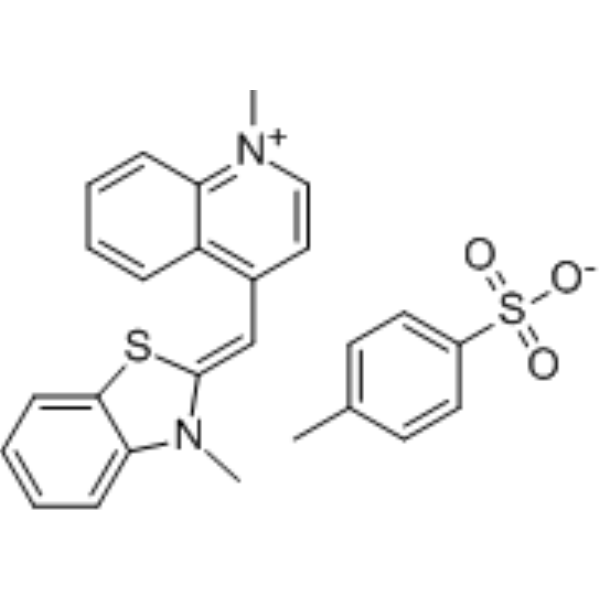
Thiazole Orange is an asymmetric anthocyanin dye that can be coupled with oligonucleotides (ONs) to prepare fluorescent hybridization probes. Thiazole Orange has been widely used in biomolecular detection and staining of DNA/ RNA in gels and can be used for reticulocyte analysis. Thiazole orange generates a significant fluorescence enhancement and high quantum yield when it binds with nucleic acids, especially RNA. Thiazole orange can permeate living cell membranes. Thiazole orange can use UV light for detection, but can also be detected with blue light. The excitation and emission of Thiazole orange are λex = 510 nm (488 nm and 470 nm also show strong excitation) and λem = 527 nm, respectively .
|
-
-
- HY-112980A
-
|
|
DNA/RNA Synthesis
|
Neurological Disease
|
|
Nusinersen sodium is an antisense oligonucleotide active molecule. Nusinersen sodium modifies the pre-messenger RNA splicing of the SMN2 gene, thereby promoting the production of full-length SMN protein. Nusinersen sodium improves spinal muscular atrophy .
|
-
-
- HY-148505
-
|
|
Phosphoramidites
Nucleoside Antimetabolite/Analog
|
Cardiovascular Disease
Infection
Metabolic Disease
Cancer
|
|
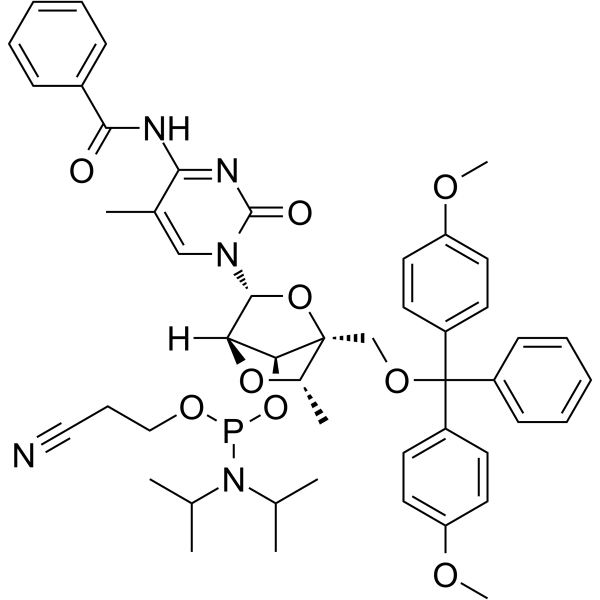
5'-ODMT cEt N-Bzm5 C Phosphoramidite Amidite is a potent nucleic acid analog. 5'-ODMT cEt N-Bzm5 C Phosphoramidite Amidite blongs to modified antisense oligonucleotide. 5'-ODMT cEt N-Bzm5 C Phosphoramidite Amidite allows the formation of a specific conformation of the furanose ring of the oligonucleotide through the introduction of a cEt modification, enhancing the ability to hybridize to complementary RNA. 5'-ODMT cEt N-Bzm5 C Phosphoramidite Amidite is mainly used in the research of regulation of gene expression related to metabolic diseases, cardiovascular diseases, cancers and the development of antisense compounds .
|
-
-
- HY-D0093
-
|
EthD-1
|
DNA Stain
|
Others
|
|
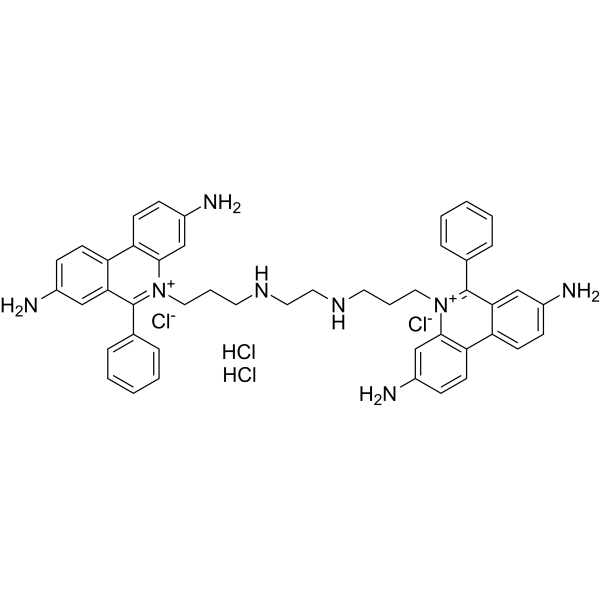
Ethidium homodimer (EthD-1) is a high-affinity fluorescent nucleic acid dye commonly used to stain mammals, bacteria, yeast, and fungi. Ethidium homodimer binds to DNA or RNA, enhancing fluorescence more than 30 times. The Ethidium homodimer has a strong positive charge, so it cannot cross cell membranes and stain living cells; But the Ethidium homodimer can cross the disordered region of the dead cell membrane to reach the nucleus and embed the DNA double strand to produce red fluorescence. Therefore, Ethidium homodimer is a relatively sensitive nucleic acid stain that can accurately detect nucleic acids in solution or in decomposing cells. Ethidium homodimer binds DNA, Ex/Em=528/617 nm .
|
-
-
- HY-148503
-
|
|
Phosphoramidites
Nucleoside Antimetabolite/Analog
|
Others
|
|
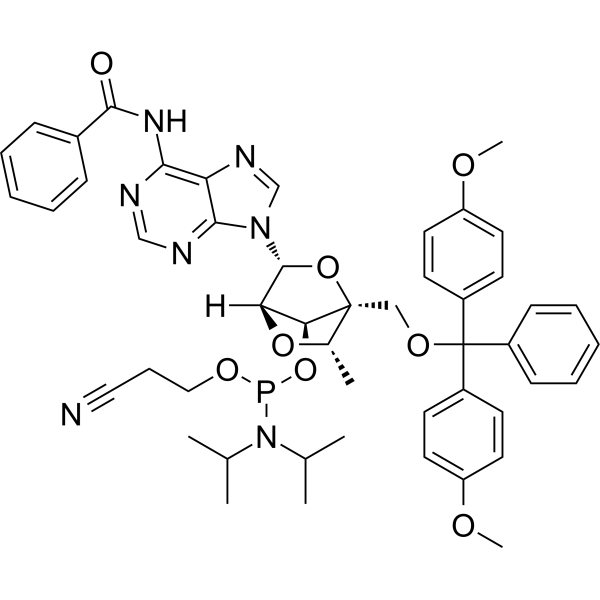
5'-ODMT cEt N-Bz A Phosphoramidite (Amidite) is a nucleoside phosphoramidite monomer used to synthesize locked nucleic acid (LNA) analog oligonucleotides. It can be used as a building block of antisense oligonucleotides (ASOs) to target complementary RNA sequences. 5'-ODMT cEt N-Bz A Phosphoramidite (Amidite) locks the furanose ring into an N-type conformation through 2',4'-constrained ethyl (cEt) modification, enhancing hybridization affinity and mismatch discrimination with RNA, while significantly improving the resistance of oligonucleotides to exonuclease digestion. 5'-ODMT cEt N-Bz A Phosphoramidite (Amidite) mediates RNase H-dependent mRNA degradation or inhibits translation by forming a stable hybrid with RNA, thereby achieving gene expression regulation. 5'-ODMT cEt N-Bz A Phosphoramidite (Amidite) is mainly used in the development of antisense drugs, gene function research and oligonucleotide synthesis related to disease treatment .
|
-
-
- HY-21997
-
-
-
- HY-147217
-
|
ISIS 505358
|
HBV
|
Infection
|
|
Bepirovirsen is an antisense oligonucleotide targeting all HBV messenger RNAs. Bepirovirsen leads to reductions in HBV-derived RNAs, HBV DNA and viral proteins. Bepirovirsen can be used for the research of chronic HBV infection. Bepirovirsen binding site sequence (GCACTTCGCTTCACCTCTGC) .
|
-
-
- HY-132608
-
|
ISIS-420915 sodium
|
Transthyretin (TTR)
|
Neurological Disease
|
|
Inotersen (ISIS-420915) sodium is a 2′-O-methoxyethyl-modified antisense oligonucleotide. Inotersen sodium inhibits the production of transthyretin (TTR) protein by targeting the TTR RNA transcript and reduces the levels of the TTR transcript. Inotersen sodium can be used for the research of hereditary TTR amyloidosis polyneuropathy .
|
-
-
- HY-147217A
-
|
ISIS 505358 sodium
|
HBV
|
Infection
|
|
Bepirovirsen (ISIS 505358) sodium is an antisense oligonucleotide targeting all HBV messenger RNAs. Bepirovirsen sodium leads to reductions in HBV-derived RNAs, HBV DNA and viral proteins. Bepirovirsen sodium can be used for the research of chronic HBV infection. Bepirovirsen sodium binding site sequence (GCACTTCGCTTCACCTCTGC) .
|
-
-
- HY-D2171A
-
|
|
Fluorescent Dye
|
Others
|
|
AF488 DBCO ditriethylamineis a fluorescent dye and also a click chemistry reagent that can label azide-containing biomolecules. AF488 DBCO ditriethylaminemediates the coupling reaction with azide-modified 2'-OMe RNA oligonucleotides. DBCO is a bioorthogonal partner of azides and enables covalent coupling without copper (Ex/Em = 470/520 nm) .
|
-
-
- HY-138577
-
|
|
Phosphoramidites
DNA/RNA Synthesis
Nucleoside Antimetabolite/Analog
|
Cancer
|
|
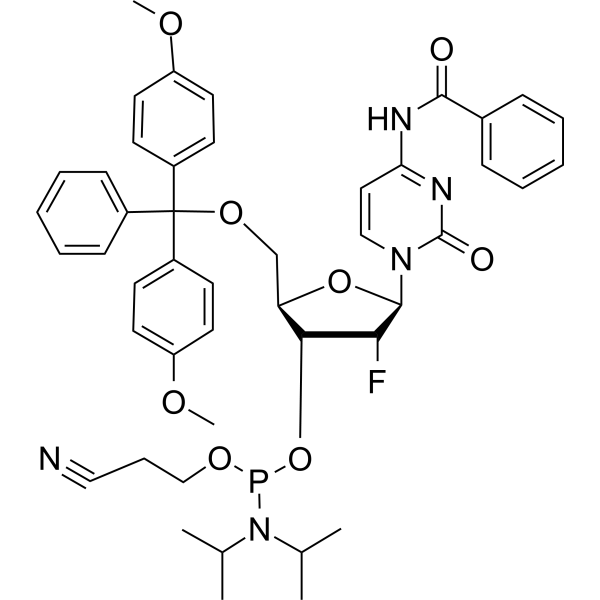
2'-F-Bz-dC Phosphoramidite can be used in the synthesis of oligoribonucleotide (such as DNA and RNA). 2'-F-Bz-dC Phosphoramidite also used for synthesis antiviral agent to inhibit the replication of virus. 2'-F-Bz-dC Phosphoramidite contains a phosphorothioate backbone, to synthesise antisense oligonucleotide analogs to induce apoptosis in cancer cells .
|
-
-
- HY-W039442
-
|
|
Nucleoside Antimetabolite/Analog
|
Infection
Cancer
|
|
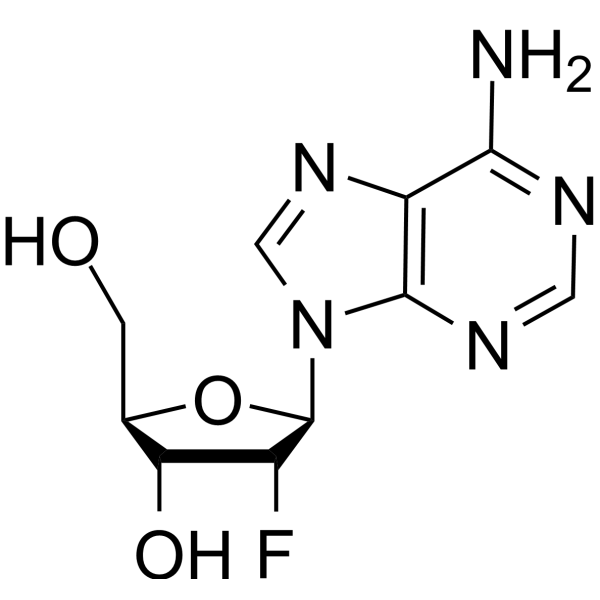
2′-Deoxy-2′-fluoroadenosine is a fluorinated deoxyadenosine with antitumor and antiviral activity, able to interfere with viral or cancer cell replication by being incorporated into DNA. 2′-Deoxy-2′-fluoroadenosine can be used for the synthesis of 2′-Deoxy-2′-fluoro-modified oligonucleotides hybridized with RNA. 2′-Deoxy-2′-fluoroadenosine can be cleaved efficiently by E. coli purine nucleoside phosphorylase (PNP) to the toxic agent 2-fluoroadenine (FAde). 2′-Deoxy-2′-fluoroadenosine shows excellent in vivo activity against tumors expressing E. coli PNP .
|
-
-
- HY-113138
-
|
N3-Methyluridine
|
Endogenous Metabolite
|
Metabolic Disease
|
|
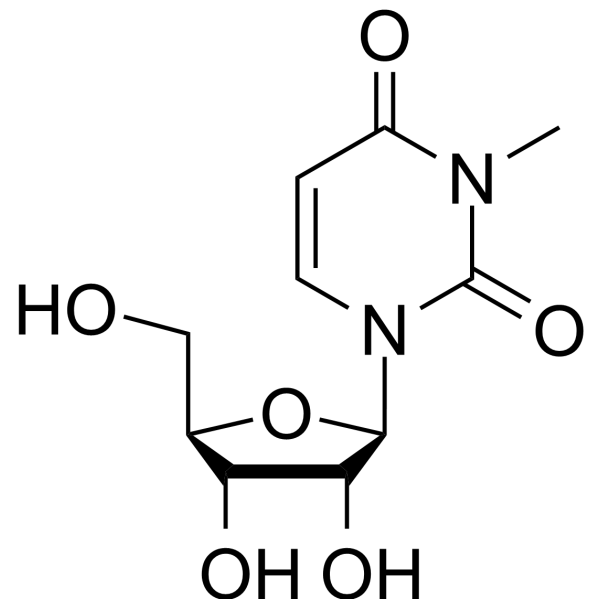
3-Methyluridine (m 3U; N3-Methyluridine) is a methylated nucleotide present in ribosomal RNA (rRNA), mainly targeting specific base sites of RNA molecules such as 23S rRNA. 3-Methyluridine can introduce a methyl group at the N3 position of uracil, affecting the secondary structure stability and base pairing ability of RNA, and regulating ribosome function. For example, it affects ribosomal subunit binding and tRNA interaction. 3-Methyluridine is often used as a key raw material for the synthesis of modified nucleotides, and is used to construct RNA oligonucleotides containing methylation modifications to study the effects of RNA methylation on gene expression and drug resistance .
|
-
-
- HY-145724
-
|
Kyndrisa; GSK2402968A; PRO051
|
DNA/RNA Synthesis
Dystrophin
|
Neurological Disease
|
|
Drisapersen (Kyndrisa) is a 2 '-O-methyl phosphorothioate RNA antisense oligonucleotide that induces exon 51 skipping. Drisapersen induces skipping of exon 51 during Dystrophin pre-mRNA splicing, allowing the synthesis of partially functional Dystrophin. Drisapersen can be used in research related to Duchenne muscular dystrophy .
|
-
-
- HY-148100
-
|
NOX-E36
|
CCR
|
Inflammation/Immunology
Cancer
|
|
Emapticap pegol (NOX-E36) is a inhibitor of pro-inflammatory chemokine C-C motif-ligand 2 (CCL2). Emapticap pegol is a 40-nucleotide oligonucleotide aptamer, displays different Spiegelmers (L-RNA aptamer) isform in human (NOX-E36) and mouse (mNOX-E36). mNOX-E36 is a murine-specific analogue of NOX-E36, an anti-MCP-1 L-RNA aptamer that was previously shown to attenuate liver fibrosis in mice .
|
-
-
- HY-12854
-
|
GRN163L
|
Telomerase
Apoptosis
|
Cardiovascular Disease
Cancer
|
|
Imetelstat (GRN163L) is a 13-mer oligonucleotide and competitive Telomerase inhibitor. Imetelstat binds with high affinity to the template region of the RNA component of human telomerase. Imetelstat induces Apoptosis. Imetelstat is capable of selectively eliminating myelofibrosis hematopoietic stem cells. Imetelstat leads to the loss of a cancer cell's ability to maintain telomere length, resulting in the inhibition of cell proliferation .
|
-
-
- HY-W048488
-
|
|
DNA/RNA Synthesis
Drug Intermediate
|
Others
|
|
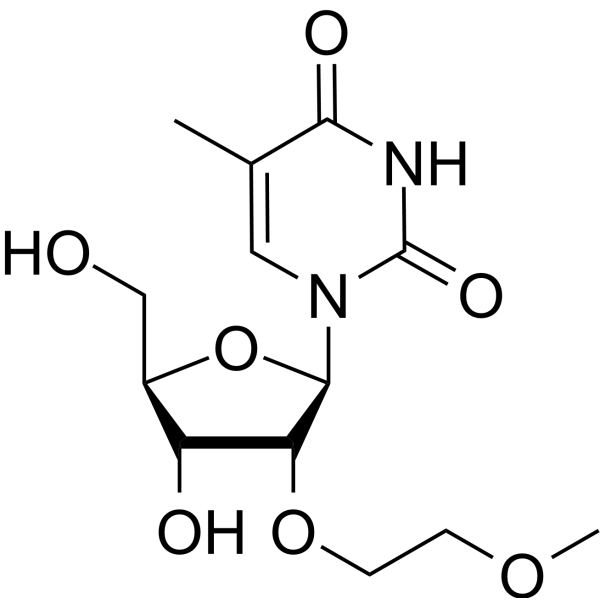
2'-O-MOE-5-Me-rU is a dual chemically modified ribonucleoside, which is a key modifying unit in the development of RNA drug preparations (such as antisense oligonucleotides ASO, siRNA). Its core function is to significantly enhance the stability, target affinity and drugability of nucleic acid drugs.
|
-
-
- HY-160230
-
|
|
Toll-like Receptor (TLR)
|
Infection
|
|
ssRNA41 sodium is a 20-mer phosphothioate protected single-stranded RNA oligonucleotide. It derives from ssRNA40 by replacement of all U nucleotides with adenosine. ssRNA41 sodium is unable to induce the production of type IFNs, and therefore can be used as a negative control for ssRNA40 .
|
-
-
- HY-D2171
-
|
|
Fluorescent Dye
|
Others
|
|
AF488 DBCO is a fluorescent dye and also a click chemistry reagent that can label azide-containing biomolecules. AF488 DBCO mediates the coupling reaction with azide-modified 2'-OMe RNA oligonucleotides. DBCO is a bioorthogonal partner of azides and enables covalent coupling without copper (Ex/Em = 470/520 nm) .
|
-
-
- HY-150145
-
|
|
Nucleoside Antimetabolite/Analog
Fluorescent Dye
|
Others
|
|
Cy5-UTP is a fluorescently labeled ribonucleotide triphosphate that can be used as a substrate for terminal deoxynucleotidyl transferase (TdT). Cy5-UTP can be employed to label RNA probes generated in vitro (Ex/Em: 650/665 nm). Cy5-UTP can be applied in FISH, multi-color fluorescence analysis, especially in dual-color expression arrays that combine with Cy5-UTP .
|
-
-
- HY-W570888
-
|
LNA-C(Bz)
|
Nucleoside Antimetabolite/Analog
|
Cancer
|
|
2'-O,4'-C-Methylenecytidine (LNA-C(Bz)) is a bicyclic nucleoside analogue with fixed N-type conformation. 2'-O,4'-C-Methylenecytidine can be used to synthesize oligonucleotides. 2'-O,4'-C-Methylenecytidine forms duplexes with complementary DNA and RNA strands .
|
-
-
- HY-P0229
-
|
RNAse T1
|
DNA/RNA Synthesis
|
Others
|
|
Ribonulease T1, Aspergillus oryzae (Rnase T1), is commonly used in biochemical research. Ribonuclease T1 is an endonuclease that can specifically degrade single stranded RNA. Ribonuclease T1 can form nucleoside 2 ', 3 '-cyclic phosphoric acid intermediates to cut the phosphodiester bond between 3' -guanosine residues and adjacent nucleoside 5 '-OH groups to produce 3' -GMP terminal oligonucleotides .
|
-
-
- HY-145726
-
|
|
TNF Receptor
|
Cardiovascular Disease
Inflammation/Immunology
|
|
ISIS 104838 is an antisense oligonucleotide targeting TNF-α. ISIS 104838 specifically binds to human TNF-α mRNA via Watson-Crick base pairing to form a DNA:RNA hybrid duplex, thereby recruiting the ubiquitously expressed intracellular enzyme RNase H to degrade the target mRNA and inhibit TNF-α protein synthesis at the transcriptional level. ISIS 104838 induces moderate, self-limiting thrombocytopenia in cynomolgus monkeys. ISIS 104838 can be used for the study of inflammatory diseases .
|
-
-
- HY-160231
-
|
|
Toll-like Receptor (TLR)
|
Inflammation/Immunology
|
|
ssRNA42 (sodium) is a 20-mer phosphothioate protected single-stranded RNA oligonucleotide. ssRNA42 (sodium) derives from ssRNA40 by replacement of all G nucleotides with adenosine. ssRNA42 activated human PBMCs to secrete IFN-α, TNF-a, IL- 12p40, and IL-6, but ssRNA42 failed to stimulated murine pDCs and PBMCs.
|
-
-
- HY-148100A
-
|
NOX-E36 sodium
|
CCR
|
Cancer
|
|
Emapticap pegol sodium is a inhibitor of pro-inflammatory chemokine C-C motif-ligand 2 (CCL2). Emapticap pegol sodium is a 40-nucleotide oligonucleotide aptamer, displays different Spiegelmers (L-RNA aptamer) isform in human (NOX-E36) and mouse (mNOX-E36) .
|
-
-
- HY-78574
-
|
|
Nucleoside Antimetabolite/Analog
|
Others
|
|
N-Benzoylcytidine is a modified cytidine analogue that can be phosphorylated by uracil-cytidine kinase (UCK1 and UCK2). N-Benzoylcytidine can be used to synthesize 2-OH protective groups for solid-phase RNA synthesis, as well as synthetic oligonucleotides for UV induction and targeted gene silencing in zebrafish embryos .
|
-
-
- HY-164582
-
|
|
Phosphoramidites
DNA/RNA Synthesis
|
Others
|
|
DMTr-2'-O-C22-rC (Ac)-3'-CE-Phosphoramidite is an RNA phosphoramidite monomer. DMTr-2'-O-C22-rC (Ac)-3'-CE-Phosphoramidite enables site-specific introduction of 2'-O-C22 lipophilic modification at cytidine positions during oligonucleotide synthesis, which is used to construct double-stranded RNA (dsRNA) molecules with extrahepatic delivery capability. DMTr-2'-O-C22-rC (Ac)-3'-CE-Phosphoramidite supports target gene silencing in skeletal muscle, cardiac muscle and adipose tissue by enhancing the lipophilicity and tissue uptake efficiency of dsRNA. Construction and mechanism study of DMTr-2'-O-C22-rC (Ac)-3'-CE-Phosphoramidite nucleic acid silencing molecules .
|
-
-
- HY-W042357
-
|
|
Phosphoramidites
DNA/RNA Synthesis
|
Others
|
|
Ac-rC Phosphoramidite is a cytosine phosphoramidite used in the chemical synthesis of RNA oligonucleotides. Ac-rC Phosphoramidite enables the incorporation of cytidine nucleotides into synthetic RNA strands, and its unique protecting groups ensure the structural integrity of the molecule throughout complex synthetic processes .
|
-
-
- HY-177454
-
|
|
ADC Linker
|
Others
|
|
Basivarsen linker is a linker used in HY-177452 Zeleciment basivarsen for coupling a TfR1-binding Fab (HY-P990780 Zeleciment) and an antisense oligonucleotide. Zeleciment basivarsen is an antibody-oligonucleotide conjugate (AOC) designed to target mutant nuclear myotonic dystrophy protein kinase (DMPK) RNA for RHase H-mediated degradation to correct splicing. It is used for the study of myotonic dystrophy type 1 (DM1).
|
-
-
- HY-21286
-
|
|
Drug Intermediate
|
Others
|
|
N2-Isobutyryl-2'-O-methylguanosine is a nucleic acid synthesis intermediate (e.g., used in antisense oligonucleotides, mRNA modification), for example, it is a key monomer for the synthesis of 2'-O-methyl oligoribonucleotides. N2-Isobutyryl-2'-O-methylguanosine enables the final product to form stable double strands with complementary RNA and is not easily degraded by nucleases. N2-Isobutyryl-2'-O-methylguanosine is mainly used in molecular biology research, and can be used to prepare RNA hybridization probes or participate in related biochemical research such as pre-mRNA splicing mechanisms .
|
-
-
- HY-145726A
-
|
|
TNF Receptor
|
Cardiovascular Disease
Inflammation/Immunology
|
|
ISIS 104838 sodium is an antisense oligonucleotide targeting TNF-α. ISIS 104838 sodium specifically binds to human TNF-α mRNA via Watson-Crick base pairing to form a DNA:RNA hybrid duplex, thereby recruiting the ubiquitously expressed intracellular enzyme RNase H to degrade the target mRNA and inhibit TNF-α protein synthesis at the transcriptional level. ISIS 104838 sodium induces moderate, self-limiting thrombocytopenia in cynomolgus monkeys. ISIS 104838 sodium can be used for the study of inflammatory diseases .
|
-
-
- HY-164581
-
|
|
Phosphoramidites
DNA/RNA Synthesis
|
Others
|
|
DMTr-2'-O-C22-rG (ibu)-3'-CE-Phosphoramidite is an RNA phosphoramidite monomer for oligonucleotide synthesis. DMTr-2'-O-C22-rG (ibu)-3'-CE-Phosphoramidite enables site-specific introduction of 2'-O-C22 lipophilic modification at guanosine positions to construct double-stranded RNA (dsRNA) molecules with extrahepatic delivery capability. DMTr-2'-O-C22-rG (ibu)-3'-CE-Phosphoramidite supports target gene silencing in skeletal muscle, cardiac muscle and adipose tissue by enhancing the lipid solubility and tissue uptake efficiency of dsRNA. DMTr-2'-O-C22-rG (ibu)-3'-CE-Phosphoramidite can be used for the construction and mechanism research of nucleic acid silencing molecules .
|
-
-
- HY-139099
-
|
Gp3G
|
Nucleoside Antimetabolite/Analog
DNA/RNA Synthesis
|
Cancer
|
|
Diguanosine 5′-triphosphate (Gp3G) is a dinucleoside triphosphates. Diguanosine 5′-triphosphate also is a virus-specific oligonucleotide. Diguanosine 5′-triphosphate is needed for the synthesis of RNA during the transcription process .
|
-
-
- HY-W892781
-
|
|
Biochemical Assay Reagents
|
Others
|
|
DMTr-TNA A(Bz)-amidite is a nucleoside building block that has been used in the synthesis of oligonucleotides for the study of prebiotic RNA evolution .
|
-
-
- HY-145980
-
|
|
Nucleoside Antimetabolite/Analog
|
Others
|
|
m7GpppUpG, an oligonucleotide, is an M 7GpppNpG trinucleotide cap analogue. m7GpppUpG can be used as a chemical tool enabling manufacturing of RNA featuring either cap 0 or cap 1 structures .
|
-
-
- HY-145982
-
|
|
Nucleoside Antimetabolite/Analog
|
Others
|
|
m7GpppCmpG, an oligonucleotide, is an M 7GpppNpG trinucleotide cap analogue. m7GpppCmpG can be used as a chemical tool enabling manufacturing of RNA featuring either cap 0 or cap 1 structures .
|
-
-
- HY-145979
-
|
|
Nucleoside Antimetabolite/Analog
|
Others
|
|
m7GpppUmpG, an oligonucleotide, is an M 7GpppNpG trinucleotide cap analogue. m7GpppUmpG can be used as a chemical tool enabling manufacturing of RNA featuring either cap 0 or cap 1 structures .
|
-
-
- HY-145981
-
|
|
Nucleoside Antimetabolite/Analog
|
Others
|
|
m7GpppCpG, an oligonucleotide, is an M 7GpppNpG trinucleotide cap analogue. m7GpppCpG can be used as a chemical tool enabling manufacturing of RNA featuring either cap 0 or cap 1 structures .
|
-
-
- HY-W073825
-
|
|
Nucleoside Antimetabolite/Analog
|
Cancer
|
|
N2-iso-Butyryl-2'-O-(2-methoxyethyl)guanosine is a 2’-0-(2-methoxyethyl) guanosine derivative. 2’-0-methoxyethyl nucleoside derivatives can enhance the affinity with RNA and increase the resistance of oligonucleotides to nucleases.
|
-
-
- HY-D1409
-
|
DMTr-4'-F-uridine-CED-TBDMS phosphoramidite
|
DNA Stain
Phosphoramidites
|
Cardiovascular Disease
|
|
DMTr-4'-F-U-CED-TBDMS phosphoramidite (DMTr-4'-F-uridine-CED-TBDMS phosphoramidite), a dye reagent for oligonucleotide labeling, can be used for the research of applications in RNA therapeutics, RNA aptamers, and ribozymes for elucidating RNA structure. DMTr-4'-F-U-CED-TBDMS phosphoramidite represents a probe with wide utility for elucidation of RNA structure .
|
-
-
- HY-W115309
-
|
5'-DMT-2'-F-ibu-dG
|
Phosphoramidites
Nucleoside Antimetabolite/Analog
|
Others
|
|
DMT-2'-F-iBu-G (5'-DMT-2'-F-ibu-dG) is a modified oligonucleotide. 2'-deoxy-2'-fluoro-modified oligonucleotides shows high nuclease resistant and retained exceptional binding affinity to the RNA targets .
|
-
-
- HY-139099B
-
|
Gp3G triammonium
|
Nucleoside Antimetabolite/Analog
DNA/RNA Synthesis
|
Cancer
|
|
Diguanosine 5′-triphosphate (Gp3G) triammonium is a dinucleoside triphosphates. Diguanosine 5′-triphosphate triammonium also is a virus-specific oligonucleotide. Diguanosine 5′-triphosphate triammonium is needed for the synthesis of RNA during the transcription process .
|
-
-
- HY-157091
-
-
-
- HY-D1408
-
|
DMTr-4'-Methyluridine-CED-TBDMS phosphoramidite
|
DNA Stain
Phosphoramidites
|
Cardiovascular Disease
|
|
DMTr-4'-Me-U-CED-TBDMS phosphoramidite (DMTr-4'-Methyluridine-CED-TBDMS phosphoramidite), a dye reagent for oligonucleotide labeling, can be used for the research of applications in RNA therapeutics, RNA aptamers, and ribozymes for elucidating RNA structure. DMTr-4'-Me-U-CED-TBDMS phosphoramidite represents a probe with wide utility for elucidation of RNA structure .
|
-
-
- HY-171618
-
|
|
Nucleoside Antimetabolite/Analog
|
Others
|
|
Morpholino U subunit is one of the basic units that make up morpholino oligonucleotides. Morpholino U subunit can pair with adenine in the target RNA .
|
-
-
- HY-139099A
-
|
Gp3G lithium
|
DNA/RNA Synthesis
Nucleoside Antimetabolite/Analog
|
Cancer
|
|
Diguanosine 5′-triphosphate (Gp3G) lithium is a dinucleoside triphosphates. Diguanosine 5′-triphosphate lithium also is a virus-specific oligonucleotide. Diguanosine 5′-triphosphate lithium is needed for the synthesis of RNA during the transcription process .
|
-
-
- HY-D1411
-
|
DMTr-4'-CF3-5-Methyluridine-CED phosphoramidite
|
DNA Stain
Phosphoramidites
|
Others
|
|
DMTr-4'-CF3-5-Me-U-CED phosphoramidite (DMTr-4'-CF3-5-Methyluridine-CED phosphoramidite), the modified oligodeoxynucleotide (ODN), is a dye reagent for oligonucleotide labeling, can be used for the research of applications in RNA research .
|
-
-
- HY-153836
-
|
|
Factor Xa
|
Others
|
|
Anivamersen is an RNA aptamer to reverse the anticoagulant effect of the parenteral factor IXa inhibitor pegnivacogin. REG1 is a novel anticoagulation system consisting of pegnivacogin, an RNA aptamer inhibitor of coagulation factor IXa, and anivamersen, a complementary sequence reversal oligonucleotide.
|
-
- HY-153836A
-
|
|
Factor Xa
|
Others
|
|
Anivamersen sodium is an RNA aptamer to reverse the anticoagulant effect of the parenteral factor IXa inhibitor pegnivacogin. REG1 is a novel anticoagulation system consisting of pegnivacogin, an RNA aptamer inhibitor of coagulation factor IXa, and anivamersen, a complementary sequence reversal oligonucleotide.
|
-
- HY-148828
-
|
|
iGluR
|
Neurological Disease
|
|
LSP-GR3 is a novel chemically-modified RNA oligonucleotides, called splice modulating oligomers (SMOs), which potently and specifically modulate GluR alternative splicing to GluR3-flip expression throughout the CNS.
|
-
- HY-148828A
-
|
|
iGluR
|
Neurological Disease
|
|
LSP-GR3 sodium is a novel chemically-modified RNA oligonucleotides, called splice modulating oligomers (SMOs), which potently and specifically modulate GluR alternative splicing to GluR3-flip expression throughout the CNS.
|
-
- HY-W784562
-
|
|
Nucleoside Antimetabolite/Analog
|
Others
|
|
5'-O-DMTr-2'-O-TBDMS-5-Me-U-3'-CE Phosphoramidite is a nucleoside phosphoramidite monomer modified with protecting groups and can be used in RNA oligonucleotide synthesis.
|
-
- HY-174521
-
|
|
mRNA
|
Inflammation/Immunology
|
|
Human TLR7 mRNA encodes the human toll like receptor 7 (TLR7) protein, a member of the Toll-like receptor (TLR) family which plays a fundamental role in pathogen recognition and activation of innate immunity. TLR7 senses single-stranded RNA oligonucleotides containing guanosine- and uridine-rich sequences from RNA viruses, a recognition occuring in the endosomes of plasmacytoid dendritic cells and B cells.
|
-
- HY-W1119943
-
|
|
Nucleoside Antimetabolite/Analog
|
Others
|
|
2'-OMe-8-Me-DMF-G Phosphoramidite is a phosphoramidite compound containing modified guanine (G) and a dimethoxytrityl (DMT) group. 2'-OMe-8-Me-DMF-G Phosphoramidite can be used in RNA oligonucleotide synthesis.
|
-
- HY-P0229A
-
|
RNAse T1 (animal free)
|
DNA/RNA Synthesis
|
Others
|
|
Ribonuclease T1 (animal free) (Rnase T1 (animal free)) (EC 4.6.1.24) is an endonuclease that specifically degrades single-stranded RNA. Ribonuclease T1 forms a nucleoside 2′, 3′-cyclic phosphate intermediate to cleave the phosphodiester bond between the 3′-guanosine residue and the 5′-OH group of the adjacent nucleoside to produce a 3′-GMP-terminated oligonucleotide. This product does not contain ingredients of animal origin .
|
-
- HY-N0677AR
-
|
Potassium dehydroandrographolide succinate (Standard)
|
Antibiotic
Reference Standards
|
Infection
Inflammation/Immunology
Cancer
|
|
Paromomycin (sulfate) (Standard) is the analytical standard of Paromomycin (sulfate). This product is intended for research and analytical applications. Paromomycin (Aminosidine) sulfate, a neomycin (HY-B0470) derivative, is a broad spectrum aminoglycoside antibiotic with amebicidal and bactericidal effects. Paromomycin sulfate prematures termination of translation of mRNA and inhibits protein synthesis?by specifically binds to the RNA oligonucleotide at the A site of bacterial 30S ribosomes. Paromomycin sulfate can be used for the research of bacterial and parasitic infections .
|
-
- HY-B0956R
-
|
Aminosidine sulfate (Standard)
|
Reference Standards
Antibiotic
Parasite
Bacterial
|
Infection
|
|
Paromomycin (sulfate) (Standard) is the analytical standard of Paromomycin (sulfate). This product is intended for research and analytical applications. Paromomycin (Aminosidine) sulfate, a neomycin (HY-B0470) derivative, is a broad spectrum aminoglycoside antibiotic with amebicidal and bactericidal effects. Paromomycin sulfate prematures termination of translation of mRNA and inhibits protein synthesis?by specifically binds to the RNA oligonucleotide at the A site of bacterial 30S ribosomes. Paromomycin sulfate can be used for the research of bacterial and parasitic infections .
|
-
- HY-185317A
-
-
- HY-185317
-
-
- HY-W784612
-
|
|
Nucleoside Antimetabolite/Analog
|
Others
|
|
3'-NH-Tr-2',3'-ddG(iBu)-5'-CE-Phosphoramidite is a nucleoside phosphoramidite monomer modified with a protecting group for use in RNA oligonucleotide synthesis.
|
-
- HY-113138R
-
|
N3-Methyluridine (Standard)
|
Endogenous Metabolite
Reference Standards
|
Metabolic Disease
|
|
3-Methyluridine (Standard) is the analytical standard of 3-Methyluridine. This product is intended for research and analytical applications. 3-Methyluridine (m3U; N3-Methyluridine) is a methylated nucleotide present in ribosomal RNA (rRNA), mainly targeting specific base sites of RNA molecules such as 23S rRNA. 3-Methyluridine can introduce a methyl group at the N3 position of uracil, affecting the secondary structure stability and base pairing ability of RNA, and regulating ribosome function. For example, it affects ribosomal subunit binding and tRNA interaction. 3-Methyluridine is often used as a key raw material for the synthesis of modified nucleotides, and is used to construct RNA oligonucleotides containing methylation modifications to study the effects of RNA methylation on gene expression and drug resistance .
|
-
- HY-DY1097
-
|
|
Fluorescent Dye
|
Others
|
Thiazole Orange (solution) is an asymmetric anthocyanin dye that can be coupled with oligonucleotides (ONs) to prepare fluorescent hybridization probes. Thiazole Orange has been widely used in biomolecular detection and staining of DNA/ RNA in gels and can be used for reticulocyte analysis. Thiazole orange generates a significant fluorescence enhancement and high quantum yield when it binds with nucleic acids, especially RNA. Thiazole orange can permeate living cell membranes. Thiazole orange can use UV light for detection, but can also be detected with blue light. The excitation and emission of Thiazole orange are λex = 510 nm (488 nm and 470 nm also show strong excitation) and λem = 527 nm, respectively . Solvent and concentration: DMSO: 10 mM The 1 mL volume is defined as the base specification. All larger sizes correspond to incremental volumes of this base.
|
-
- HY-P11698
-
|
|
DNA Alkylator/Crosslinker
Transthyretin (TTR)
|
Cancer
|
Guanidino-G-Clamp-PNA is a highly efficient sequence-specific RNA binder and gene silencer. Guanidino-G-Clamp-PNA precisely targets such targets as miR-155 or transthyretin (TTR) mRNA through base pairing: the former regulates tumor-related signaling pathways by reducing microRNA activity, while the latter inhibits the translation of harmful proteins via steric hindrance. Guanidino-G-Clamp-PNA effectively stabilizes DNA/RNA duplexes, induces cancer cell apoptosis, and suppresses tumor growth. In addition, Guanidino-G-Clamp-PNA can be conjugated with targeting ligands to improve tissue-specific delivery and reduce in vivo adverse reactions, and it can also enhance the splicing regulation efficacy of other oligonucleotide platforms (such as PMO) when integrated into them. Guanidino-G-Clamp-PNA is applicable to the research of various diseases including diffuse large B-cell lymphoma and hereditary transthyretin-related amyloidosis .
|
-
| Cat. No. |
Product Name |
Type |
-
- HY-D0150
-
|
|
Fluorescent Dyes
|
|
Thiazole Orange is an asymmetric anthocyanin dye that can be coupled with oligonucleotides (ONs) to prepare fluorescent hybridization probes. Thiazole Orange has been widely used in biomolecular detection and staining of DNA/ RNA in gels and can be used for reticulocyte analysis. Thiazole orange generates a significant fluorescence enhancement and high quantum yield when it binds with nucleic acids, especially RNA. Thiazole orange can permeate living cell membranes. Thiazole orange can use UV light for detection, but can also be detected with blue light. The excitation and emission of Thiazole orange are λex = 510 nm (488 nm and 470 nm also show strong excitation) and λem = 527 nm, respectively .
|
-
- HY-D0093
-
|
EthD-1
|
Fluorescent Dyes
|
|
Ethidium homodimer (EthD-1) is a high-affinity fluorescent nucleic acid dye commonly used to stain mammals, bacteria, yeast, and fungi. Ethidium homodimer binds to DNA or RNA, enhancing fluorescence more than 30 times. The Ethidium homodimer has a strong positive charge, so it cannot cross cell membranes and stain living cells; But the Ethidium homodimer can cross the disordered region of the dead cell membrane to reach the nucleus and embed the DNA double strand to produce red fluorescence. Therefore, Ethidium homodimer is a relatively sensitive nucleic acid stain that can accurately detect nucleic acids in solution or in decomposing cells. Ethidium homodimer binds DNA, Ex/Em=528/617 nm .
|
-
- HY-D2171A
-
|
|
Fluorescent Dyes
|
|
AF488 DBCO ditriethylamineis a fluorescent dye and also a click chemistry reagent that can label azide-containing biomolecules. AF488 DBCO ditriethylaminemediates the coupling reaction with azide-modified 2'-OMe RNA oligonucleotides. DBCO is a bioorthogonal partner of azides and enables covalent coupling without copper (Ex/Em = 470/520 nm) .
|
-
- HY-D2171
-
|
|
Fluorescent Dyes
|
|
AF488 DBCO is a fluorescent dye and also a click chemistry reagent that can label azide-containing biomolecules. AF488 DBCO mediates the coupling reaction with azide-modified 2'-OMe RNA oligonucleotides. DBCO is a bioorthogonal partner of azides and enables covalent coupling without copper (Ex/Em = 470/520 nm) .
|
-
- HY-D1409
-
|
DMTr-4'-F-uridine-CED-TBDMS phosphoramidite
|
Fluorescent Dyes
|
|
DMTr-4'-F-U-CED-TBDMS phosphoramidite (DMTr-4'-F-uridine-CED-TBDMS phosphoramidite), a dye reagent for oligonucleotide labeling, can be used for the research of applications in RNA therapeutics, RNA aptamers, and ribozymes for elucidating RNA structure. DMTr-4'-F-U-CED-TBDMS phosphoramidite represents a probe with wide utility for elucidation of RNA structure .
|
-
- HY-D1408
-
|
DMTr-4'-Methyluridine-CED-TBDMS phosphoramidite
|
Fluorescent Dyes
|
|
DMTr-4'-Me-U-CED-TBDMS phosphoramidite (DMTr-4'-Methyluridine-CED-TBDMS phosphoramidite), a dye reagent for oligonucleotide labeling, can be used for the research of applications in RNA therapeutics, RNA aptamers, and ribozymes for elucidating RNA structure. DMTr-4'-Me-U-CED-TBDMS phosphoramidite represents a probe with wide utility for elucidation of RNA structure .
|
-
- HY-DY1097
-
|
|
Fluorescent Dyes
|
Thiazole Orange (solution) is an asymmetric anthocyanin dye that can be coupled with oligonucleotides (ONs) to prepare fluorescent hybridization probes. Thiazole Orange has been widely used in biomolecular detection and staining of DNA/ RNA in gels and can be used for reticulocyte analysis. Thiazole orange generates a significant fluorescence enhancement and high quantum yield when it binds with nucleic acids, especially RNA. Thiazole orange can permeate living cell membranes. Thiazole orange can use UV light for detection, but can also be detected with blue light. The excitation and emission of Thiazole orange are λex = 510 nm (488 nm and 470 nm also show strong excitation) and λem = 527 nm, respectively . Solvent and concentration: DMSO: 10 mM The 1 mL volume is defined as the base specification. All larger sizes correspond to incremental volumes of this base.
|
| Cat. No. |
Product Name |
Type |
-
- HY-21997
-
|
|
Biochemical Assay Reagents
|
|
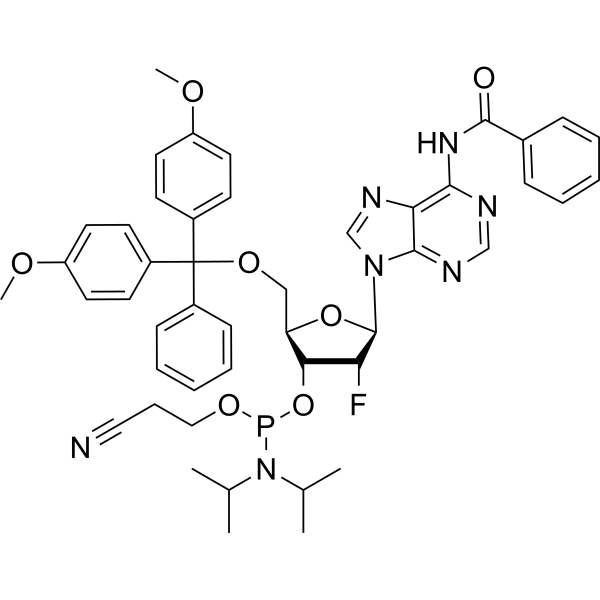
DMT-2'fluoro-da(bz) amidite is a key intermediate for synthesizing antisense oligonucleotides with high nuclease resistance, high RNA binding affinity, and maintained base-pair specificity .
|
-
- HY-150145
-
|
|
Biochemical Assay Reagents
|
|
Cy5-UTP is a fluorescently labeled ribonucleotide triphosphate that can be used as a substrate for terminal deoxynucleotidyl transferase (TdT). Cy5-UTP can be employed to label RNA probes generated in vitro (Ex/Em: 650/665 nm). Cy5-UTP can be applied in FISH, multi-color fluorescence analysis, especially in dual-color expression arrays that combine with Cy5-UTP .
|
-
- HY-139099A
-
|
Gp3G lithium
|
Biochemical Assay Reagents
|
|
Diguanosine 5′-triphosphate (Gp3G) lithium is a dinucleoside triphosphates. Diguanosine 5′-triphosphate lithium also is a virus-specific oligonucleotide. Diguanosine 5′-triphosphate lithium is needed for the synthesis of RNA during the transcription process .
|
| Cat. No. |
Product Name |
Target |
Research Area |
-
- HY-P11698
-
|
|
DNA Alkylator/Crosslinker
Transthyretin (TTR)
|
Cancer
|
Guanidino-G-Clamp-PNA is a highly efficient sequence-specific RNA binder and gene silencer. Guanidino-G-Clamp-PNA precisely targets such targets as miR-155 or transthyretin (TTR) mRNA through base pairing: the former regulates tumor-related signaling pathways by reducing microRNA activity, while the latter inhibits the translation of harmful proteins via steric hindrance. Guanidino-G-Clamp-PNA effectively stabilizes DNA/RNA duplexes, induces cancer cell apoptosis, and suppresses tumor growth. In addition, Guanidino-G-Clamp-PNA can be conjugated with targeting ligands to improve tissue-specific delivery and reduce in vivo adverse reactions, and it can also enhance the splicing regulation efficacy of other oligonucleotide platforms (such as PMO) when integrated into them. Guanidino-G-Clamp-PNA is applicable to the research of various diseases including diffuse large B-cell lymphoma and hereditary transthyretin-related amyloidosis .
|
| Cat. No. |
Product Name |
Category |
Target |
Chemical Structure |
-
- HY-B0956
-
-
-
- HY-113138
-
|
N3-Methyluridine
|
Natural Products
Classification of Application Fields
Other Diseases
Endogenous metabolite
Disease Research Fields
Source Classification
|
Endogenous Metabolite
|
|
3-Methyluridine (m 3U; N3-Methyluridine) is a methylated nucleotide present in ribosomal RNA (rRNA), mainly targeting specific base sites of RNA molecules such as 23S rRNA. 3-Methyluridine can introduce a methyl group at the N3 position of uracil, affecting the secondary structure stability and base pairing ability of RNA, and regulating ribosome function. For example, it affects ribosomal subunit binding and tRNA interaction. 3-Methyluridine is often used as a key raw material for the synthesis of modified nucleotides, and is used to construct RNA oligonucleotides containing methylation modifications to study the effects of RNA methylation on gene expression and drug resistance .
|
-
-
- HY-N0677AR
-
|
Potassium dehydroandrographolide succinate (Standard)
|
Structural Classification
Acanthaceae
Simsia foetida (Cav.) S.F.Blake
Terpenoids
Diterpenoids
Plants
Source Classification
|
Antibiotic
Reference Standards
|
|
Paromomycin (sulfate) (Standard) is the analytical standard of Paromomycin (sulfate). This product is intended for research and analytical applications. Paromomycin (Aminosidine) sulfate, a neomycin (HY-B0470) derivative, is a broad spectrum aminoglycoside antibiotic with amebicidal and bactericidal effects. Paromomycin sulfate prematures termination of translation of mRNA and inhibits protein synthesis?by specifically binds to the RNA oligonucleotide at the A site of bacterial 30S ribosomes. Paromomycin sulfate can be used for the research of bacterial and parasitic infections .
|
-
-
- HY-B0956R
-
-
-
- HY-113138R
-
|
N3-Methyluridine (Standard)
|
Structural Classification
Natural Products
Endogenous metabolite
Source Classification
|
Endogenous Metabolite
Reference Standards
|
|
3-Methyluridine (Standard) is the analytical standard of 3-Methyluridine. This product is intended for research and analytical applications. 3-Methyluridine (m3U; N3-Methyluridine) is a methylated nucleotide present in ribosomal RNA (rRNA), mainly targeting specific base sites of RNA molecules such as 23S rRNA. 3-Methyluridine can introduce a methyl group at the N3 position of uracil, affecting the secondary structure stability and base pairing ability of RNA, and regulating ribosome function. For example, it affects ribosomal subunit binding and tRNA interaction. 3-Methyluridine is often used as a key raw material for the synthesis of modified nucleotides, and is used to construct RNA oligonucleotides containing methylation modifications to study the effects of RNA methylation on gene expression and drug resistance .
|
-
| Cat. No. |
Product Name |
|
Classification |
-
- HY-D2171A
-
|
|
|
DBCO
|
|
AF488 DBCO ditriethylamineis a fluorescent dye and also a click chemistry reagent that can label azide-containing biomolecules. AF488 DBCO ditriethylaminemediates the coupling reaction with azide-modified 2'-OMe RNA oligonucleotides. DBCO is a bioorthogonal partner of azides and enables covalent coupling without copper (Ex/Em = 470/520 nm) .
|
-
- HY-D2171
-
|
|
|
DBCO
|
|
AF488 DBCO is a fluorescent dye and also a click chemistry reagent that can label azide-containing biomolecules. AF488 DBCO mediates the coupling reaction with azide-modified 2'-OMe RNA oligonucleotides. DBCO is a bioorthogonal partner of azides and enables covalent coupling without copper (Ex/Em = 470/520 nm) .
|
| Cat. No. |
Product Name |
|
Classification |
-
- HY-112980
-
|
|
|
Antisense Oligonucleotides
|
|
Nusinersen is an antisense oligonucleotide active molecule. Nusinersen modifies the pre-messenger RNA splicing of the SMN2 gene, thereby promoting the production of full-length SMN protein. Nusinersen improves spinal muscular atrophy .
|
-
- HY-112980A
-
|
|
|
Antisense Oligonucleotides
|
|
Nusinersen sodium is an antisense oligonucleotide active molecule. Nusinersen sodium modifies the pre-messenger RNA splicing of the SMN2 gene, thereby promoting the production of full-length SMN protein. Nusinersen sodium improves spinal muscular atrophy .
|
-
- HY-148505
-
|
|
|
Phosphoramidites
Cytosine
|
|
5'-ODMT cEt N-Bzm5 C Phosphoramidite Amidite is a potent nucleic acid analog. 5'-ODMT cEt N-Bzm5 C Phosphoramidite Amidite blongs to modified antisense oligonucleotide. 5'-ODMT cEt N-Bzm5 C Phosphoramidite Amidite allows the formation of a specific conformation of the furanose ring of the oligonucleotide through the introduction of a cEt modification, enhancing the ability to hybridize to complementary RNA. 5'-ODMT cEt N-Bzm5 C Phosphoramidite Amidite is mainly used in the research of regulation of gene expression related to metabolic diseases, cardiovascular diseases, cancers and the development of antisense compounds .
|
-
- HY-148503
-
|
|
|
Phosphoramidites
Adenine
|
|
5'-ODMT cEt N-Bz A Phosphoramidite (Amidite) is a nucleoside phosphoramidite monomer used to synthesize locked nucleic acid (LNA) analog oligonucleotides. It can be used as a building block of antisense oligonucleotides (ASOs) to target complementary RNA sequences. 5'-ODMT cEt N-Bz A Phosphoramidite (Amidite) locks the furanose ring into an N-type conformation through 2',4'-constrained ethyl (cEt) modification, enhancing hybridization affinity and mismatch discrimination with RNA, while significantly improving the resistance of oligonucleotides to exonuclease digestion. 5'-ODMT cEt N-Bz A Phosphoramidite (Amidite) mediates RNase H-dependent mRNA degradation or inhibits translation by forming a stable hybrid with RNA, thereby achieving gene expression regulation. 5'-ODMT cEt N-Bz A Phosphoramidite (Amidite) is mainly used in the development of antisense drugs, gene function research and oligonucleotide synthesis related to disease treatment .
|
-
- HY-21997
-
|
|
|
Phosphoramidites
Adenine
|
|
DMT-2'fluoro-da(bz) amidite is a key intermediate for synthesizing antisense oligonucleotides with high nuclease resistance, high RNA binding affinity, and maintained base-pair specificity .
|
-
- HY-147217
-
|
ISIS 505358
|
|
Antisense Oligonucleotides
|
|
Bepirovirsen is an antisense oligonucleotide targeting all HBV messenger RNAs. Bepirovirsen leads to reductions in HBV-derived RNAs, HBV DNA and viral proteins. Bepirovirsen can be used for the research of chronic HBV infection. Bepirovirsen binding site sequence (GCACTTCGCTTCACCTCTGC) .
|
-
- HY-132608
-
|
ISIS-420915 sodium
|
|
Antisense Oligonucleotides
|
|
Inotersen (ISIS-420915) sodium is a 2′-O-methoxyethyl-modified antisense oligonucleotide. Inotersen sodium inhibits the production of transthyretin (TTR) protein by targeting the TTR RNA transcript and reduces the levels of the TTR transcript. Inotersen sodium can be used for the research of hereditary TTR amyloidosis polyneuropathy .
|
-
- HY-147217A
-
|
ISIS 505358 sodium
|
|
Antisense Oligonucleotides
|
|
Bepirovirsen (ISIS 505358) sodium is an antisense oligonucleotide targeting all HBV messenger RNAs. Bepirovirsen sodium leads to reductions in HBV-derived RNAs, HBV DNA and viral proteins. Bepirovirsen sodium can be used for the research of chronic HBV infection. Bepirovirsen sodium binding site sequence (GCACTTCGCTTCACCTCTGC) .
|
-
- HY-138577
-
|
|
|
Phosphoramidites
Cytosine
|
|
2'-F-Bz-dC Phosphoramidite can be used in the synthesis of oligoribonucleotide (such as DNA and RNA). 2'-F-Bz-dC Phosphoramidite also used for synthesis antiviral agent to inhibit the replication of virus. 2'-F-Bz-dC Phosphoramidite contains a phosphorothioate backbone, to synthesise antisense oligonucleotide analogs to induce apoptosis in cancer cells .
|
-
- HY-W039442
-
|
|
|
Nucleoside Analogs
Adenosine
|
|
2′-Deoxy-2′-fluoroadenosine is a fluorinated deoxyadenosine with antitumor and antiviral activity, able to interfere with viral or cancer cell replication by being incorporated into DNA. 2′-Deoxy-2′-fluoroadenosine can be used for the synthesis of 2′-Deoxy-2′-fluoro-modified oligonucleotides hybridized with RNA. 2′-Deoxy-2′-fluoroadenosine can be cleaved efficiently by E. coli purine nucleoside phosphorylase (PNP) to the toxic agent 2-fluoroadenine (FAde). 2′-Deoxy-2′-fluoroadenosine shows excellent in vivo activity against tumors expressing E. coli PNP .
|
-
- HY-145724
-
|
Kyndrisa; GSK2402968A; PRO051
|
|
Antisense Oligonucleotides
|
|
Drisapersen (Kyndrisa) is a 2 '-O-methyl phosphorothioate RNA antisense oligonucleotide that induces exon 51 skipping. Drisapersen induces skipping of exon 51 during Dystrophin pre-mRNA splicing, allowing the synthesis of partially functional Dystrophin. Drisapersen can be used in research related to Duchenne muscular dystrophy .
|
-
- HY-148100
-
|
NOX-E36
|
|
Aptamers
|
|
Emapticap pegol (NOX-E36) is a inhibitor of pro-inflammatory chemokine C-C motif-ligand 2 (CCL2). Emapticap pegol is a 40-nucleotide oligonucleotide aptamer, displays different Spiegelmers (L-RNA aptamer) isform in human (NOX-E36) and mouse (mNOX-E36). mNOX-E36 is a murine-specific analogue of NOX-E36, an anti-MCP-1 L-RNA aptamer that was previously shown to attenuate liver fibrosis in mice .
|
-
- HY-12854
-
|
GRN163L
|
|
Antisense Oligonucleotides
|
|
Imetelstat (GRN163L) is a 13-mer oligonucleotide and competitive Telomerase inhibitor. Imetelstat binds with high affinity to the template region of the RNA component of human telomerase. Imetelstat induces Apoptosis. Imetelstat is capable of selectively eliminating myelofibrosis hematopoietic stem cells. Imetelstat leads to the loss of a cancer cell's ability to maintain telomere length, resulting in the inhibition of cell proliferation .
|
-
- HY-W048488
-
|
|
|
Nucleoside Analogs
Uridine
|
|
2'-O-MOE-5-Me-rU is a dual chemically modified ribonucleoside, which is a key modifying unit in the development of RNA drug preparations (such as antisense oligonucleotides ASO, siRNA). Its core function is to significantly enhance the stability, target affinity and drugability of nucleic acid drugs.
|
-
- HY-145998
-
|
m8Gm
|
|
Nucleoside Analogs
Guanosine
|
|
2′-O-Methyl-8-methyl guanosine (m8Gm) is a Z-form RNA stabilizer. 2′-O-Methyl-8-methyl guanosine can markedly stabilize the Z-RNA at low salt conditions . m8Gm-contained oligonucleotides stabilize
the Z-DNA under low salt conditions .
|
-
- HY-W570888
-
|
LNA-C(Bz)
|
|
Nucleoside Analogs
Cytidine
|
|
2'-O,4'-C-Methylenecytidine (LNA-C(Bz)) is a bicyclic nucleoside analogue with fixed N-type conformation. 2'-O,4'-C-Methylenecytidine can be used to synthesize oligonucleotides. 2'-O,4'-C-Methylenecytidine forms duplexes with complementary DNA and RNA strands .
|
-
- HY-145726
-
|
|
|
Antisense Oligonucleotides
|
|
ISIS 104838 is an antisense oligonucleotide targeting TNF-α. ISIS 104838 specifically binds to human TNF-α mRNA via Watson-Crick base pairing to form a DNA:RNA hybrid duplex, thereby recruiting the ubiquitously expressed intracellular enzyme RNase H to degrade the target mRNA and inhibit TNF-α protein synthesis at the transcriptional level. ISIS 104838 induces moderate, self-limiting thrombocytopenia in cynomolgus monkeys. ISIS 104838 can be used for the study of inflammatory diseases .
|
-
- HY-160231
-
|
|
|
CpG ODNs
|
|
ssRNA42 (sodium) is a 20-mer phosphothioate protected single-stranded RNA oligonucleotide. ssRNA42 (sodium) derives from ssRNA40 by replacement of all G nucleotides with adenosine. ssRNA42 activated human PBMCs to secrete IFN-α, TNF-a, IL- 12p40, and IL-6, but ssRNA42 failed to stimulated murine pDCs and PBMCs.
|
-
- HY-148100A
-
|
NOX-E36 sodium
|
|
Aptamers
|
|
Emapticap pegol sodium is a inhibitor of pro-inflammatory chemokine C-C motif-ligand 2 (CCL2). Emapticap pegol sodium is a 40-nucleotide oligonucleotide aptamer, displays different Spiegelmers (L-RNA aptamer) isform in human (NOX-E36) and mouse (mNOX-E36) .
|
-
- HY-164582
-
|
|
|
Phosphoramidites
Cytosine
|
|
DMTr-2'-O-C22-rC (Ac)-3'-CE-Phosphoramidite is an RNA phosphoramidite monomer. DMTr-2'-O-C22-rC (Ac)-3'-CE-Phosphoramidite enables site-specific introduction of 2'-O-C22 lipophilic modification at cytidine positions during oligonucleotide synthesis, which is used to construct double-stranded RNA (dsRNA) molecules with extrahepatic delivery capability. DMTr-2'-O-C22-rC (Ac)-3'-CE-Phosphoramidite supports target gene silencing in skeletal muscle, cardiac muscle and adipose tissue by enhancing the lipophilicity and tissue uptake efficiency of dsRNA. Construction and mechanism study of DMTr-2'-O-C22-rC (Ac)-3'-CE-Phosphoramidite nucleic acid silencing molecules .
|
-
- HY-W042357
-
|
|
|
Phosphoramidites
Cytosine
|
|
Ac-rC Phosphoramidite is a cytosine phosphoramidite used in the chemical synthesis of RNA oligonucleotides. Ac-rC Phosphoramidite enables the incorporation of cytidine nucleotides into synthetic RNA strands, and its unique protecting groups ensure the structural integrity of the molecule throughout complex synthetic processes .
|
-
- HY-21286
-
|
|
|
Nucleoside Analogs
Guanosine
|
|
N2-Isobutyryl-2'-O-methylguanosine is a nucleic acid synthesis intermediate (e.g., used in antisense oligonucleotides, mRNA modification), for example, it is a key monomer for the synthesis of 2'-O-methyl oligoribonucleotides. N2-Isobutyryl-2'-O-methylguanosine enables the final product to form stable double strands with complementary RNA and is not easily degraded by nucleases. N2-Isobutyryl-2'-O-methylguanosine is mainly used in molecular biology research, and can be used to prepare RNA hybridization probes or participate in related biochemical research such as pre-mRNA splicing mechanisms .
|
-
- HY-145726A
-
|
|
|
Antisense Oligonucleotides
|
|
ISIS 104838 sodium is an antisense oligonucleotide targeting TNF-α. ISIS 104838 sodium specifically binds to human TNF-α mRNA via Watson-Crick base pairing to form a DNA:RNA hybrid duplex, thereby recruiting the ubiquitously expressed intracellular enzyme RNase H to degrade the target mRNA and inhibit TNF-α protein synthesis at the transcriptional level. ISIS 104838 sodium induces moderate, self-limiting thrombocytopenia in cynomolgus monkeys. ISIS 104838 sodium can be used for the study of inflammatory diseases .
|
-
- HY-164581
-
|
|
|
Phosphoramidites
Guanine
|
|
DMTr-2'-O-C22-rG (ibu)-3'-CE-Phosphoramidite is an RNA phosphoramidite monomer for oligonucleotide synthesis. DMTr-2'-O-C22-rG (ibu)-3'-CE-Phosphoramidite enables site-specific introduction of 2'-O-C22 lipophilic modification at guanosine positions to construct double-stranded RNA (dsRNA) molecules with extrahepatic delivery capability. DMTr-2'-O-C22-rG (ibu)-3'-CE-Phosphoramidite supports target gene silencing in skeletal muscle, cardiac muscle and adipose tissue by enhancing the lipid solubility and tissue uptake efficiency of dsRNA. DMTr-2'-O-C22-rG (ibu)-3'-CE-Phosphoramidite can be used for the construction and mechanism research of nucleic acid silencing molecules .
|
-
- HY-139099
-
|
Gp3G
|
|
Nucleotide Analogs
|
|
Diguanosine 5′-triphosphate (Gp3G) is a dinucleoside triphosphates. Diguanosine 5′-triphosphate also is a virus-specific oligonucleotide. Diguanosine 5′-triphosphate is needed for the synthesis of RNA during the transcription process .
|
-
- HY-153496
-
|
QR 110
|
|
Antisense Oligonucleotides
|
|
Sepofarsen (QR-110) is an RNA antisense oligonucleotide targeting to the p.Cys998X mutation (also known as the c.2991+1655A>G mutation) in the CEP290 gene.
|
-
- HY-145980
-
|
|
|
Cap Analogs
|
|
m7GpppUpG, an oligonucleotide, is an M 7GpppNpG trinucleotide cap analogue. m7GpppUpG can be used as a chemical tool enabling manufacturing of RNA featuring either cap 0 or cap 1 structures .
|
-
- HY-145982
-
|
|
|
Cap Analogs
|
|
m7GpppCmpG, an oligonucleotide, is an M 7GpppNpG trinucleotide cap analogue. m7GpppCmpG can be used as a chemical tool enabling manufacturing of RNA featuring either cap 0 or cap 1 structures .
|
-
- HY-145979
-
|
|
|
Cap Analogs
|
|
m7GpppUmpG, an oligonucleotide, is an M 7GpppNpG trinucleotide cap analogue. m7GpppUmpG can be used as a chemical tool enabling manufacturing of RNA featuring either cap 0 or cap 1 structures .
|
-
- HY-145981
-
|
|
|
Cap Analogs
|
|
m7GpppCpG, an oligonucleotide, is an M 7GpppNpG trinucleotide cap analogue. m7GpppCpG can be used as a chemical tool enabling manufacturing of RNA featuring either cap 0 or cap 1 structures .
|
-
- HY-W073825
-
|
|
|
Nucleoside Analogs
Guanosine
|
|
N2-iso-Butyryl-2'-O-(2-methoxyethyl)guanosine is a 2’-0-(2-methoxyethyl) guanosine derivative. 2’-0-methoxyethyl nucleoside derivatives can enhance the affinity with RNA and increase the resistance of oligonucleotides to nucleases.
|
-
- HY-D1409
-
|
DMTr-4'-F-uridine-CED-TBDMS phosphoramidite
|
|
Phosphoramidites
Uracil
|
|
DMTr-4'-F-U-CED-TBDMS phosphoramidite (DMTr-4'-F-uridine-CED-TBDMS phosphoramidite), a dye reagent for oligonucleotide labeling, can be used for the research of applications in RNA therapeutics, RNA aptamers, and ribozymes for elucidating RNA structure. DMTr-4'-F-U-CED-TBDMS phosphoramidite represents a probe with wide utility for elucidation of RNA structure .
|
-
- HY-W115309
-
|
5'-DMT-2'-F-ibu-dG
|
|
Phosphoramidites
Guanine
|
|
DMT-2'-F-iBu-G (5'-DMT-2'-F-ibu-dG) is a modified oligonucleotide. 2'-deoxy-2'-fluoro-modified oligonucleotides shows high nuclease resistant and retained exceptional binding affinity to the RNA targets .
|
-
- HY-139099B
-
|
Gp3G triammonium
|
|
Nucleotide Analogs
|
|
Diguanosine 5′-triphosphate (Gp3G) triammonium is a dinucleoside triphosphates. Diguanosine 5′-triphosphate triammonium also is a virus-specific oligonucleotide. Diguanosine 5′-triphosphate triammonium is needed for the synthesis of RNA during the transcription process .
|
-
- HY-157091
-
-
- HY-D1408
-
|
DMTr-4'-Methyluridine-CED-TBDMS phosphoramidite
|
|
Phosphoramidites
Uracil
|
|
DMTr-4'-Me-U-CED-TBDMS phosphoramidite (DMTr-4'-Methyluridine-CED-TBDMS phosphoramidite), a dye reagent for oligonucleotide labeling, can be used for the research of applications in RNA therapeutics, RNA aptamers, and ribozymes for elucidating RNA structure. DMTr-4'-Me-U-CED-TBDMS phosphoramidite represents a probe with wide utility for elucidation of RNA structure .
|
-
- HY-D1411
-
|
DMTr-4'-CF3-5-Methyluridine-CED phosphoramidite
|
|
Phosphoramidites
Uracil
|
|
DMTr-4'-CF3-5-Me-U-CED phosphoramidite (DMTr-4'-CF3-5-Methyluridine-CED phosphoramidite), the modified oligodeoxynucleotide (ODN), is a dye reagent for oligonucleotide labeling, can be used for the research of applications in RNA research .
|
-
- HY-153324
-
|
|
|
Antisense Oligonucleotides
|
|
PS220 sodium is an antisense RNA oligonucleotides. PS220 sodium can be used for research ofstudying muscular dystrophy .
|
-
- HY-153836
-
|
|
|
Aptamers
|
|
Anivamersen is an RNA aptamer to reverse the anticoagulant effect of the parenteral factor IXa inhibitor pegnivacogin. REG1 is a novel anticoagulation system consisting of pegnivacogin, an RNA aptamer inhibitor of coagulation factor IXa, and anivamersen, a complementary sequence reversal oligonucleotide.
|
-
- HY-153836A
-
|
|
|
Aptamers
|
|
Anivamersen sodium is an RNA aptamer to reverse the anticoagulant effect of the parenteral factor IXa inhibitor pegnivacogin. REG1 is a novel anticoagulation system consisting of pegnivacogin, an RNA aptamer inhibitor of coagulation factor IXa, and anivamersen, a complementary sequence reversal oligonucleotide.
|
-
- HY-153496A
-
|
QR 110 sodium
|
|
Antisense Oligonucleotides
|
|
Sepofarsen (QR-110) sodium is an RNA antisense oligonucleotide targeting to the p.Cys998X mutation (also known as the c.2991+1655A>G mutation) in the CEP290 gene.
|
-
- HY-148828
-
|
|
|
Antisense Oligonucleotides
|
|
LSP-GR3 is a novel chemically-modified RNA oligonucleotides, called splice modulating oligomers (SMOs), which potently and specifically modulate GluR alternative splicing to GluR3-flip expression throughout the CNS.
|
-
- HY-148828A
-
|
|
|
Antisense Oligonucleotides
|
|
LSP-GR3 sodium is a novel chemically-modified RNA oligonucleotides, called splice modulating oligomers (SMOs), which potently and specifically modulate GluR alternative splicing to GluR3-flip expression throughout the CNS.
|
-
- HY-174521
-
|
|
|
mRNA
|
|
Human TLR7 mRNA encodes the human toll like receptor 7 (TLR7) protein, a member of the Toll-like receptor (TLR) family which plays a fundamental role in pathogen recognition and activation of innate immunity. TLR7 senses single-stranded RNA oligonucleotides containing guanosine- and uridine-rich sequences from RNA viruses, a recognition occuring in the endosomes of plasmacytoid dendritic cells and B cells.
|
-
- HY-185317A
-
|
|
|
Antisense Oligonucleotides
|
|
Dimovarsen sodium, an oligonucleotide, is a micro RNA-132 inhibitsor, and can be use for the study of heart failure.
|
-
- HY-185317
-
|
|
|
Antisense Oligonucleotides
|
|
Dimovarsen, an oligonucleotide, is a micro RNA-132 inhibitsor, and can be use for the study of heart failure.
|
Your information is safe with us. * Required Fields.
Inquiry Information
- Product Name:
- Cat. No.:
- Quantity:
- MCE Japan Authorized Agent:

