



Ethidium homodimer
Based on 5 publication(s) in Google Scholar
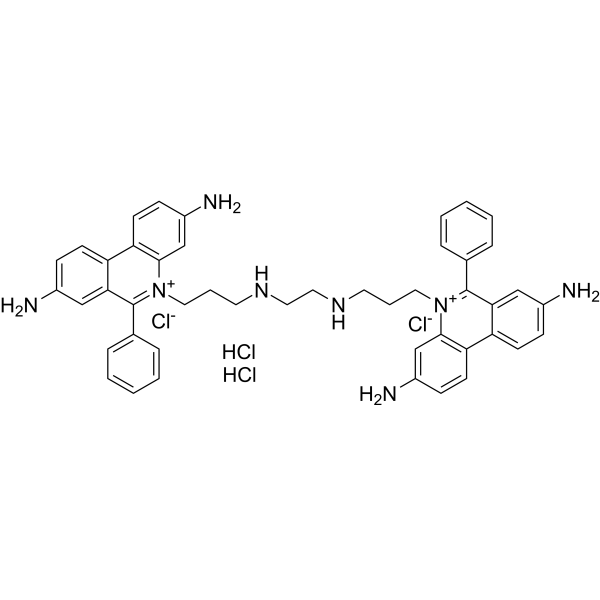
Ethidium homodimer (EthD-1) is a high-affinity fluorescent nucleic acid dye commonly used to stain mammals, bacteria, yeast, and fungi. Ethidium homodimer binds to DNA or RNA, enhancing fluorescence more than 30 times. The Ethidium homodimer has a strong positive charge, so it cannot cross cell membranes and stain living cells; But the Ethidium homodimer can cross the disordered region of the dead cell membrane to reach the nucleus and embed the DNA double strand to produce red fluorescence. Therefore, Ethidium homodimer is a relatively sensitive nucleic acid stain that can accurately detect nucleic acids in solution or in decomposing cells. Ethidium homodimer binds DNA, Ex/Em=528/617 nm.
For research use only. We do not sell to patients.
- Purity : 99.4%
- CAS No.: 61926-22-5
- Formula: C46H50Cl4N8
- Molecular Weight:856.75
-
Storage:
-20°C, sealed storage, away from moisture and light
* In solvent : -80°C, 6 months; -20°C, 1 month (sealed storage, away from moisture and light)

To place orders, for customer services and technical support, please contact: MedChemExpress USA
Tel: 609-228-6898 E-mail: [email protected] [email protected]


-
 Biological Activity
-
Chemical Information
- Purity & Documentation
- References
-
 Help & FAQs


-
HY-D0041
Calcein-AMFluorochrome -
HY-D0815
Propidium IodideFluorochrome -

HY-DY1006
Propidium Iodide (solution)Fluorochrome -
HY-15559
Hoechst 33342DNA Fluorescent Stain -
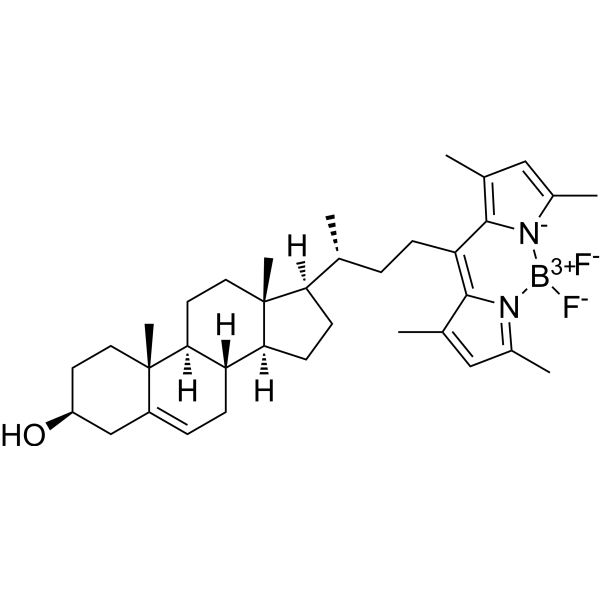
HY-125746
BODIPY-CholesterolFluorescent Dye -
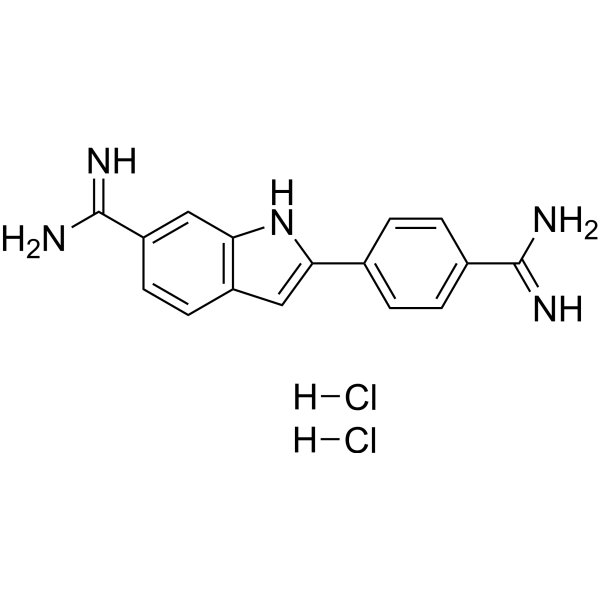
HY-D0814
DAPI dihydrochlorideFluorescent DNA Stain -
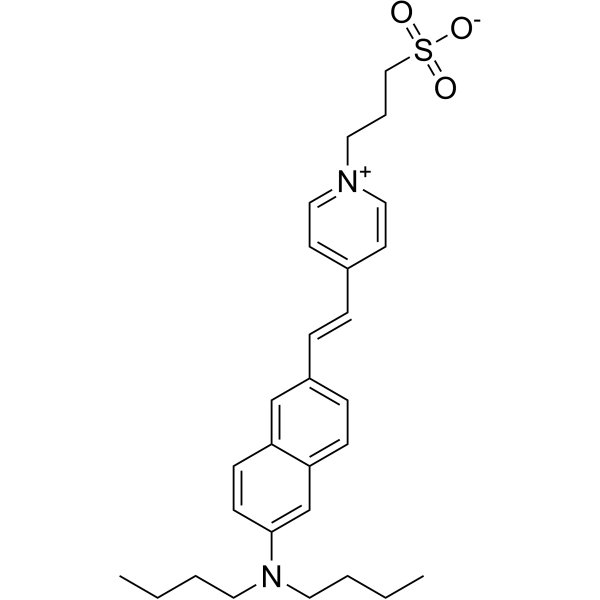
HY-129763
Di-4-ANEPPSVoltage-Sensitive Dye -
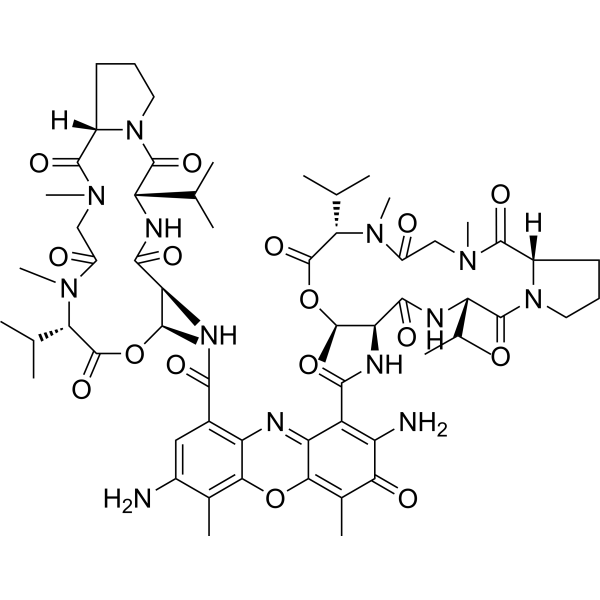
HY-D1020
7-Aminoactinomycin DDNA Stain -
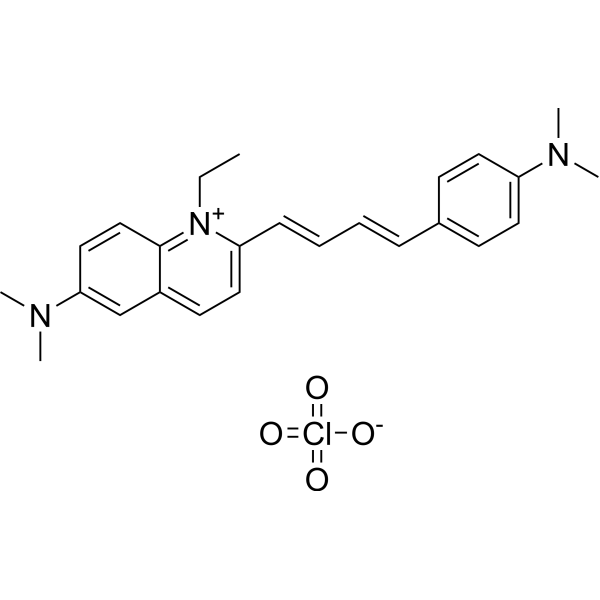
HY-D0996
LDS-751Nucleic Acid Stain -
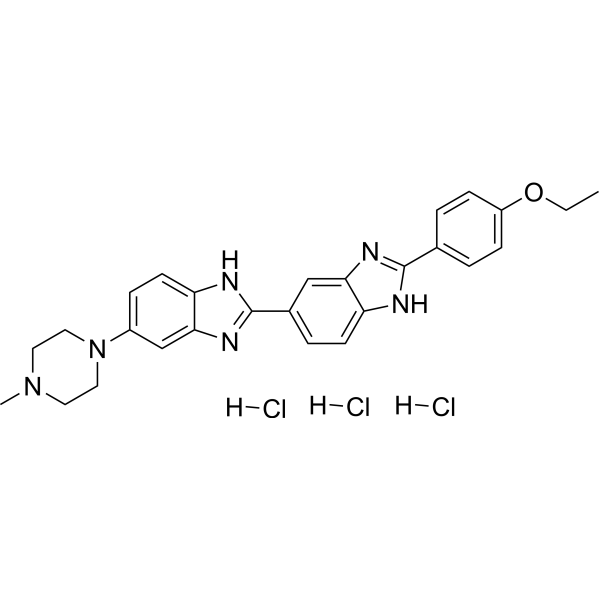
HY-15559A
Hoechst 33342 trihydrochlorideDNA Fluorescent Stain -
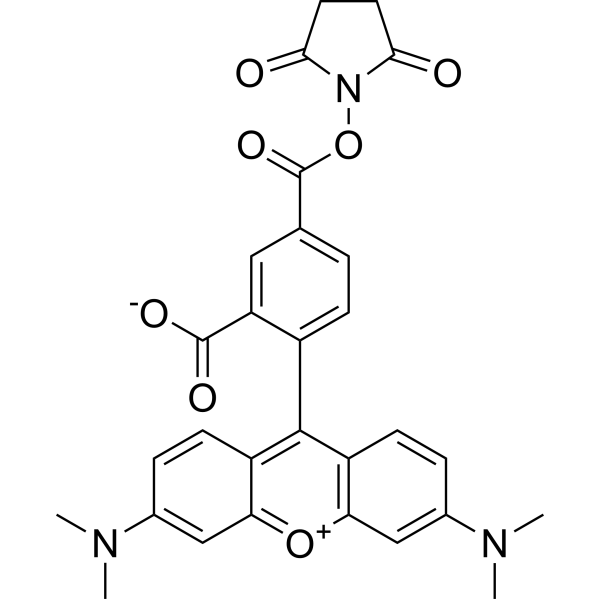
HY-D0048
5-TAMRA-SEAmine-Reactive Fluorescent Agent -

HY-DY1099
7-Aminoactinomycin D (solution)DNA Stain
Publications Citing Use of MedChemExpress (MCE) Ethidium homodimer
More

Biological Activity
Description
In Vitro
Guide (The following is the experimental plan we recommend. This plan serves only as a reference guide. The specific operations should be adjusted according to your actual needs.)
1. Preparation of EthD-1 Working Solution
1.1 Preparation of Storage Solution
Prepare 2 mM of EthD-1 using DMSO.
1.2 Preparation of Working Solution
Dilute the stored solution with pre-warmed serum-free cell culture medium or PBS to prepare an EthD-1 working solution with a concentration of 0.1 - 10 μM.
Note: Please adjust the concentration of the EthD-1 working solution according to the actual situation, and prepare it as needed.
2. Cytological staining
2.1 Cell Preparation
Suspended cells: Centrifuge the cells and then wash them twice with PBS, each time for 5 minutes.
Monolayer cells: Remove the culture medium and add trypsin to digest the cells. After centrifugation and discarding the supernatant, add PBS for two washes, each for 5 minutes.
Note: If no flow cytometry experiments are conducted, adherent cells can be subjected to slide staining.
2.2 Add 1 mL of EthD-1 working solution and incubate at room temperature for 15 to 60 minutes.
2.3 400 g, centrifuge at 4℃ for 3-4 minutes, then discard the supernatant.
2.4 Add PBS to wash the cells twice, for 5 minutes each time.
2.5 Resuspend the cells in 1 mL of serum-free medium or PBS, and then examine them under a fluorescence microscope or a flow cytometer.
Notes for Attention
The EthD-1 storage solution is recommended to be aliquoted and stored under dark conditions at -20℃ or -80℃ to avoid repeated freezing and thawing. It can be stored for 1 month at -20℃ and for 6 months at -80℃.
2. Please adjust the concentration of EthD-1 working solution according to the actual situation.
3. This product is exclusively for professional scientific research purposes only. It shall not be used for clinical diagnosis or treatment, nor for food or medicine purposes.
4. For your safety and health, please wear a laboratory coat and put on disposable gloves when operating.
MedChemExpress (MCE) has not independently confirmed the accuracy of these methods. They are for reference only. .


Chemical Information
-
CAS No. 61926-22-5
-
Appearance Solid
-
Molecular Weight 856.75
-
Formula C46H50Cl4N8
-
Color Red to reddish brown
-
SMILES
NC1=CC=C2C(C(C3=CC=CC=C3)=[N+](CCCNCCNCCC[N+]4=C(C5=CC=CC=C5)C6=CC(N)=CC=C6C7=C4C=C(N)C=C7)C8=C2C=CC(N)=C8)=C1.Cl.Cl.[Cl-].[Cl-]
-
Synonyms
EthD-1
-
Shipping
Room temperature in continental US; may vary elsewhere.
-
Storage
-20°C, sealed storage, away from moisture and light
* In solvent : -80°C, 6 months; -20°C, 1 month (sealed storage, away from moisture and light)


Publications (5)
-
Journal Impact Factor
-
Most Recent
-
J Exp Clin Cancer Res
Single-cell transcriptome analysis reveals the malignant characteristics of tumour cells and the immunosuppressive landscape in HER2-positive inflammatory breast cancer. [Abstract]2025 Jul 8;44(1):196. PMID: 40624675 -
Biochem Pharmacol
Targeting the CXCR7 pathway with TC14012 to inhibit endothelial necroptosis and lung cancer metastasis. [Abstract]2025 Jun:236:116852. PMID: 40049294 -
Int J Pharm
CD44-targeted nanoparticles for remodeling the tumor microenvironment in a 3D macrophage-embedded ovarian cancer model with stem cell-like features. [Abstract]2025 Apr 15:674:125483. PMID: 40101874 -
Cell Biol Toxicol
Enhancing cardiac repair post-myocardial infarction: a study on GATM/Gel hydrogel therapeutics. [Abstract]2025 Feb 12;41(1):44. PMID: 39937362 -
Sci Rep
Ethanol precipitation with cooling enables rapid purification of gelatin methacryloyl (GelMA) with increased yield and preserved solution-state organisation. [Abstract]2026 May 8. PMID: 42103979


Purity & Documentation
-
Data Sheet (271 KB)
-
SDS (791 KB)
- English - EN (791 KB)
- Français - FR (791 KB)
- Deutsch - DE (791 KB)
- Norwegian - NO (791 KB)
- Español - ES (791 KB)
- Swedish - SV (791 KB)
- Italian - IT (791 KB)
- Korean - KR (791 KB)
- Portuguese - PT (791 KB)
-
Handling Instructions (2659 KB)
References

Calculators
Concentration (start) × Volume (start) = Concentration (final) × Volume (final)


Ethidium homodimer Related Classifications
HY-D0093 Related Classifications
 Powered by Bioz