
1. Search Result
Search Result
Results for "

primary metabolite

" in MedChemExpress (MCE) Product Catalog:

93

Inhibitors & Agonists

4

Screening Libraries

1

Biochemical Assay Reagents

20

Natural
Products

19

Isotope-Labeled Compounds

2

Oligonucleotides

Cat. No. Product Name Target Research Areas Chemical Structure
  • HY-100973A
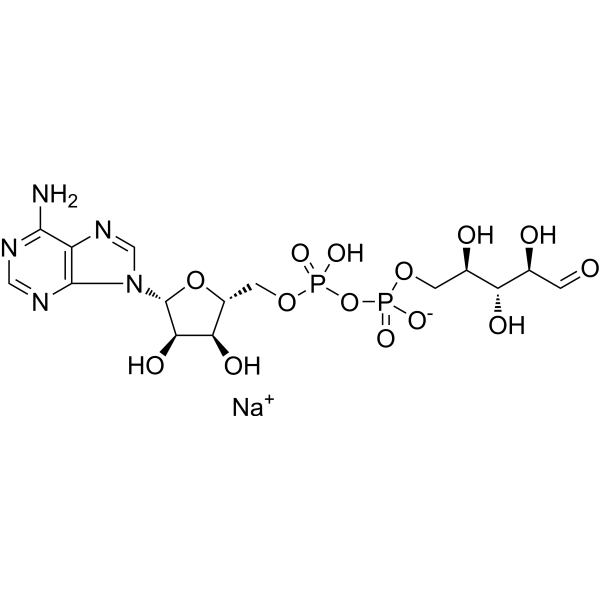
    Adenosine 5′-diphosphoribose sodium
    Maximum Cited Publications
    8 Publications Verification

    ADP ribose sodium

    TRP Channel Autophagy Metabolic Disease Endocrinology Cancer
    Adenosine 5′-diphosphoribose sodium (ADP ribose sodium) is a nicotinamide adenine nucleotide (NAD +) metabolite. Adenosine 5′-diphosphoribose sodium is the most potent and primary intracellular Ca 2+-permeable cation TRPM2 channel activator. Adenosine 5′-diphosphoribose sodium also can enhance autophagy .
    Adenosine 5′-diphosphoribose sodium
  • HY-116374
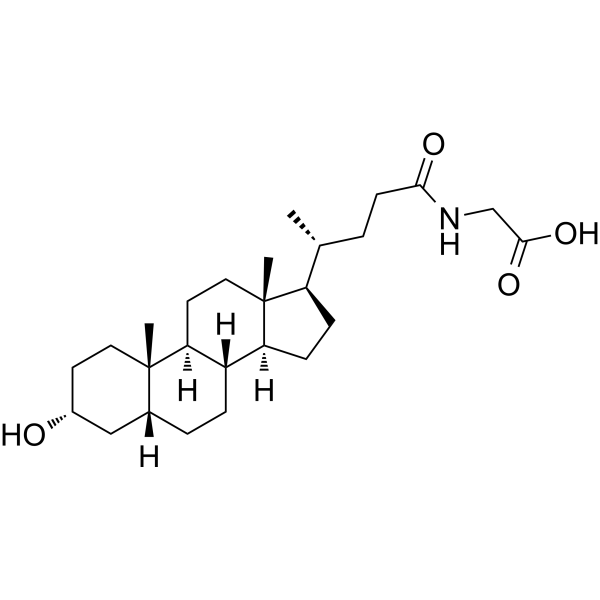
    Glycolithocholic acid
    2 Publications Verification

    Lithocholylglycine

    Endogenous Metabolite Inflammation/Immunology
    Glycolithocholic acid (Lithocholylglycine), an endogenous metabolite, is a glycine-conjugated secondary bile acid. Glycolithocholic acid can be used to diagnose ulcerative colitis (UC), non-alcoholic steatohepatitis (NASH) and primary sclerosing cholangitis (PSC) .
    Glycolithocholic acid
  • HY-121636
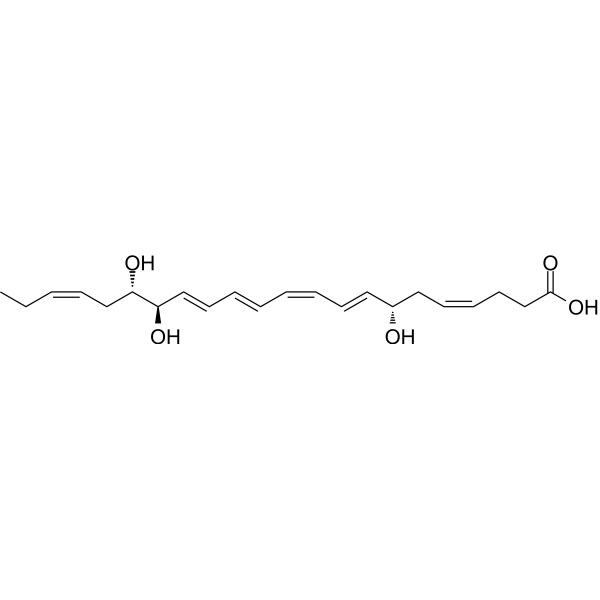
    Resolvin D2
    5 Publications Verification

    RvD2

    TRP Channel Infection Neurological Disease Inflammation/Immunology
    Resolvin D2 is a metabolite of docosahexaenoic acid (DHA), with anti-inflammatory, anti-infective activities. Resolvin D2 is a potent regulator of leukocytes and controls microbial sepsis. Resolvin D2 is a remarkably potent inhibitor of TRPV1 (IC50 = 0.1 nM) and TRPA1 (IC50 = 2 nM) in primary sensory neurons .
    Resolvin D2
  • HY-125348

    Drug Metabolite Cancer
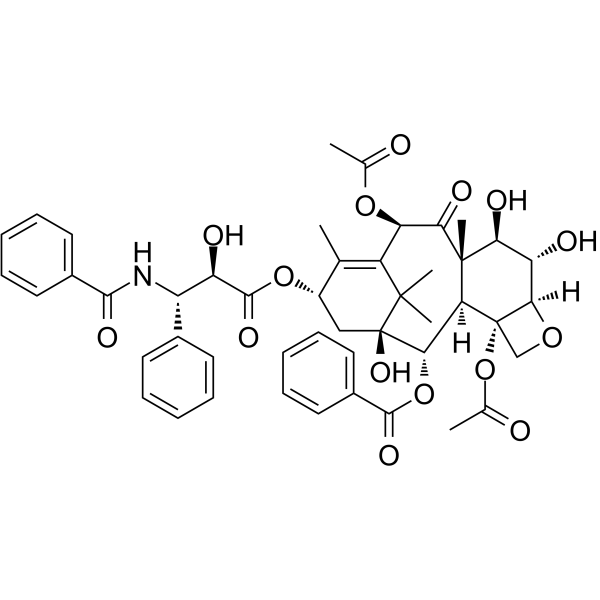
    6α-Hydroxy paclitaxel is one of the main metabolites of Paclitaxel (PTX) (HY-B0015), and it is generated by the liver cytochrome P450 enzyme CYP2C8. 6α-Hydroxy paclitaxel has bone marrow toxicity, but it can enhance the cytotoxicity of PTX against leukemia cells without causing cell toxicity. 6α-Hydroxy paclitaxel can be used in leukemia research .
    6α-Hydroxy paclitaxel
  • HY-129630

    Microtubule/Tubulin Neurological Disease Cancer
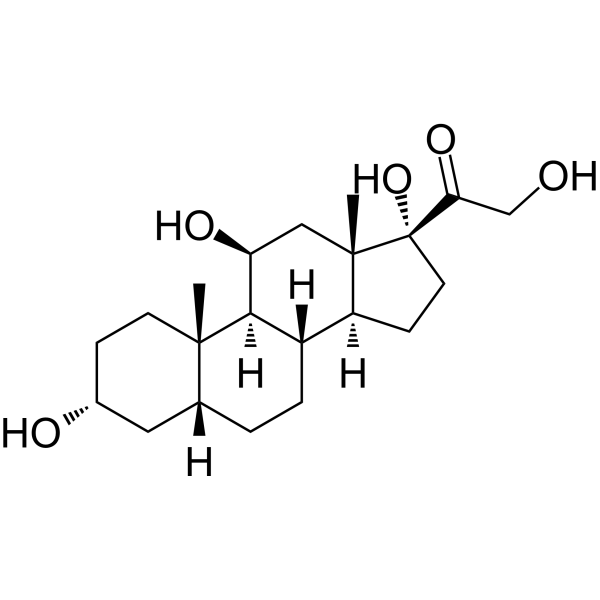
    Tetrahydrocortisol is a cortisol metabolite that inhibits dexamethasone-induced formation of cross-linked actin networks. Tetrahydrocortisol can be used in the research of primary open-angle glaucoma, glucocorticoid-induced ocular hypertension, Lewis lung carcinoma, and EMT-6 mouse breast cancer .
    Tetrahydrocortisol
  • HY-132588

    ALN-G01

    Small Interfering RNA (siRNA) Glycolate Oxidase Metabolic Disease
    Lumasiran (ALN-G01), a siRNA product, reduces hepatic oxalate production by targeting glycolate oxidase. By silencing the gene encoding glycolate oxidase, Lumasiran depletes glycolate oxidase and thereby inhibits the synthesis of oxalate, which is the toxic metabolite that is directly associated with the clinical manifestations of Primary hyperoxaluria type 1 (PH1) .
    Lumasiran
  • HY-B1178
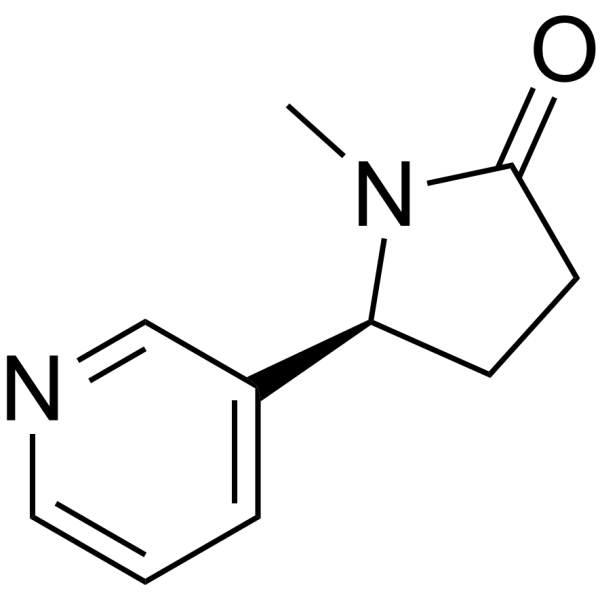
    Cotinine
    3 Publications Verification

    (-)-Cotinine; (S)-Cotinine; NIH-10498

    Endogenous Metabolite nAChR Cardiovascular Disease Inflammation/Immunology
    Cotinine ((-)-Cotinine) is an orally active alkaloid found in tobacco and is the primary metabolite of nicotine. Cotinine is metabolized by CYP2A13 into trans-3'-hydroxycotinine. Cotinine is used as a biomarker to measure exposure to tobacco smoke components. Cotinine has vasodepressor activity. The mixture of cotinine and nicotine (Nicotine) has antiproliferative activity against pterygium. (S)-(-)-Cotinine activates nicotinic acetylcholine receptors (nAChR) in a calcium-dependent manner, leading to the release of dopamine (Dopamine, HY-B0451). Cotinine ((-)-Cotinine) is used in research related to cardiovascular and inflammatory diseases .
    Cotinine
  • HY-100973
    Adenosine 5′-diphosphoribose
    5+ Cited Publications

    ADP ribose

    TRP Channel Autophagy Neurological Disease Metabolic Disease Cancer
    Adenosine 5′-diphosphoribose (ADP ribose) is a nicotinamide adenine nucleotide (NAD +) metabolite. Adenosine 5′-diphosphoribose is the most potent and primary intracellular Ca 2+-permeable cation TRPM2 channel activator. Adenosine 5′-diphosphoribose also can enhance autophagy .
    Adenosine 5′-diphosphoribose
  • HY-N6662

    Environmental Pollutants Endogenous Metabolite Others
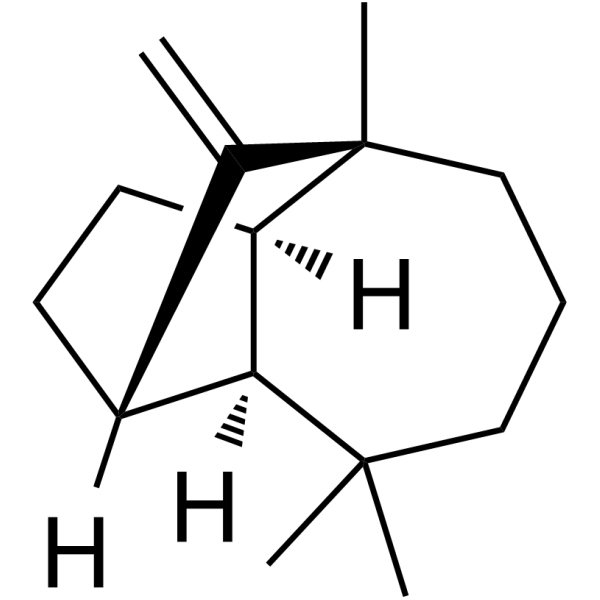
    (+)-Longifolene is a sesquiterpenoid and a metabolite in rabbits. (+)-Longifolen is converted to primary, secondary or tertiary alcohols in rabbits, among which the primary alcohol is predominant .
    (+)-Longifolene
  • HY-70002A
    N-Desmethyl enzalutamide
    1 Publications Verification

    N-Desmethyl MDV 3100

    Androgen Receptor Cancer
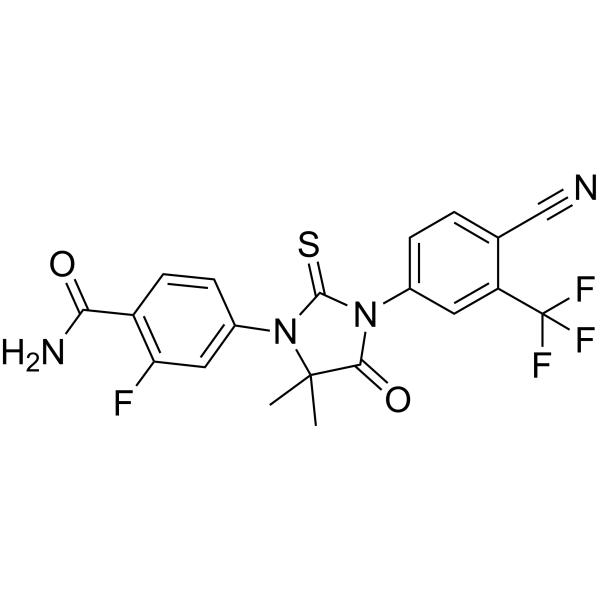
    N-desmethyl Enzalutamide is the active metabolite of Enzalutamide.N-desmethyl Enzalutamide is the active metabolite of Enzalutamide. N-desmethyl Enzalutamide demonstrates primary and secondary pharmacodynamics of similar potency to Enzalutamide and circulates at approximately the same plasma concentrations as enzalutamide .
    N-Desmethyl enzalutamide
  • HY-133675

    MECPP

    Drug Metabolite Others
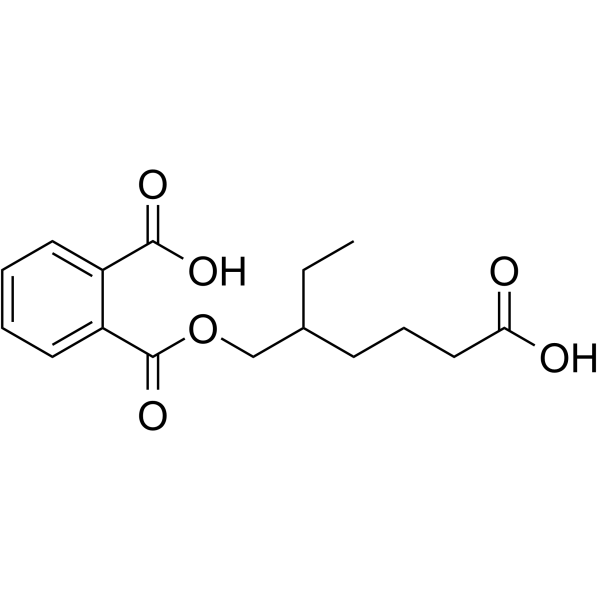
    Mono (5-carboxy-2-ethylpentyl) phthalate (MECPP) is a metabolite of di-(2-ethylhexyl) phthalate (DEHP). Di (2-ethylhexyl) phthalate is the primary plasticizer added to rigid polyvinyl chloride (PVC), and it imparts flexibility, temperature resistance, optical transparency, strength, and kink resistance .
    Mono(5-carboxy-2-ethylpentyl) phthalate
  • HY-W019724

    Drug Intermediate Reactive Oxygen Species (ROS) Neurological Disease Metabolic Disease Cancer
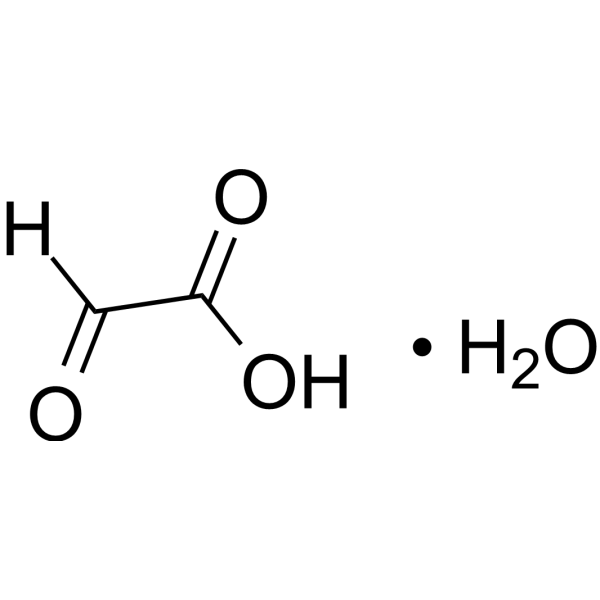
    2,2-Dihydroxyacetic acid is an endogenous metabolite, which is the monohydrate of Glyoxylic Acid. 2,2-Dihydroxyacetic acid may participate in the microbial glyoxylate cycle, induce an increase in reactive oxygen species, promote cell differentiation, and modify proteins to form advanced glycation end products (AGEs) (HY-NP165). 2,2-Dihydroxyacetic acid is associated with metabolic diseases such as primary hyperoxaluria .
    2,2-Dihydroxyacetic acid
  • HY-66008

    N-Acetyl-5-aminosalicylic acid; N-Acetyl-ASA

    Drug Metabolite Inflammation/Immunology Cancer
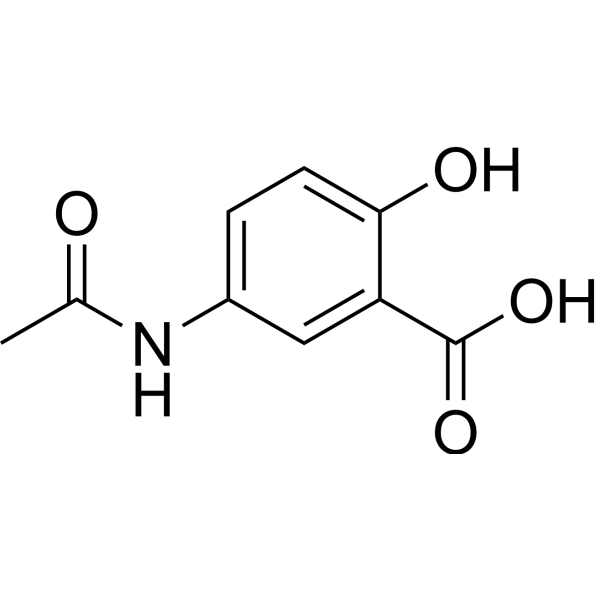
    N-Acetyl mesalazine (N-Acetyl-5-aminosalicylic acid) is the primary intestinal metabolite of 5-Aminosalicylic Acid (HY-15027) and serves as a biomarker for evaluating the efficacy of 5-Aminosalicylic Acid (HY-15027). N-Acetyl mesalazine can scavenge free radicals, reduce DNA base hydroxylation, and ameliorate mucosal inflammation. N-Acetyl mesalazine can be used in the study of diseases such as colitis and colon cancer .
    N-Acetyl mesalazine
  • HY-124370

    9Z,11E-CLA; Methyl 9(Z),11(E)-octadecadienoate; (9Z,11E)-SFE 19:2

    Endogenous Metabolite Cardiovascular Disease Cancer
    9 (Z),11 (E)-Conjugated linoleic acid methyl ester (9Z,11E-CLA; Methyl 9 (Z),11 (E)-octadecadienoate; (9Z,11E)-SFE 19:2) is an isomer of Linoleic acid (HY-N0729), and is a conjugated linoleic acid mainly found in meat and dairy products. Conjugated linoleic acid is a bioactive fatty acid that improves body composition, enhances immune system function, and exhibits anti-cancer and anti-atherosclerotic effects .
    9(Z),11(E)-Conjugated linoleic acid methyl ester
  • HY-N1867

    PPAR Metabolic Disease
    trans-Cinnamyl alcohol is a trans-isomer of Cinnamyl alcohol. Cinnamyl Alcohol is an active component from chestnut flower, inhibits increased PPARγ expression, with anti-obesity activity. trans-Cinnamyl alcohol, belongs to the class of organic compounds known as cinnamyl alcohols, is a primary metabolite .
    trans-Cinnamyl alcohol
  • HY-135582

    Estrogen Receptor/ERR Endocrinology
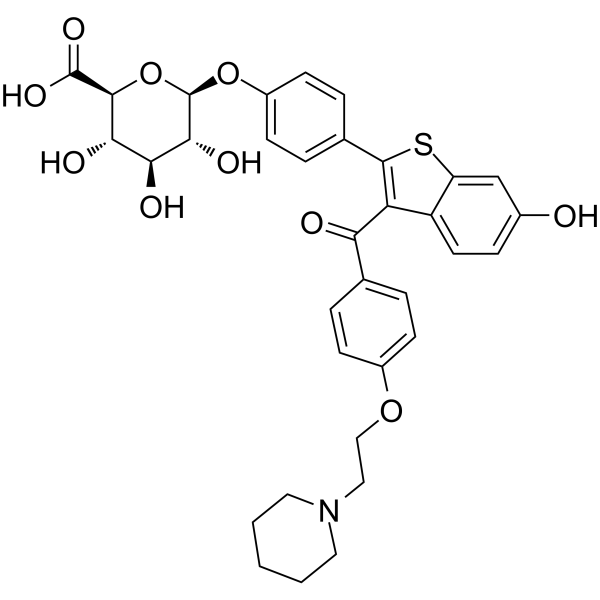
    Raloxifene 4'-glucuronide is a primary metabolite of Raloxifene. Raloxifene 4'-glucuronide formation is mediated mostly by UGT1A10 and UGT1A8. Raloxifene 4'-glucuronide binds to estrogen receptor with an IC50 of 370 μM. . Raloxifene is a selective estrogen receptor modulator. Raloxifene activates TGFβ3 promoter as a full agonist at nanomolar concentrations, and inhibits the estrogen response element-containing vitellogenin promoter expression .
    Raloxifene 4'-glucuronide
  • HY-137967

    Genistein 7-O-glucuronide

    Drug Metabolite Metabolic Disease
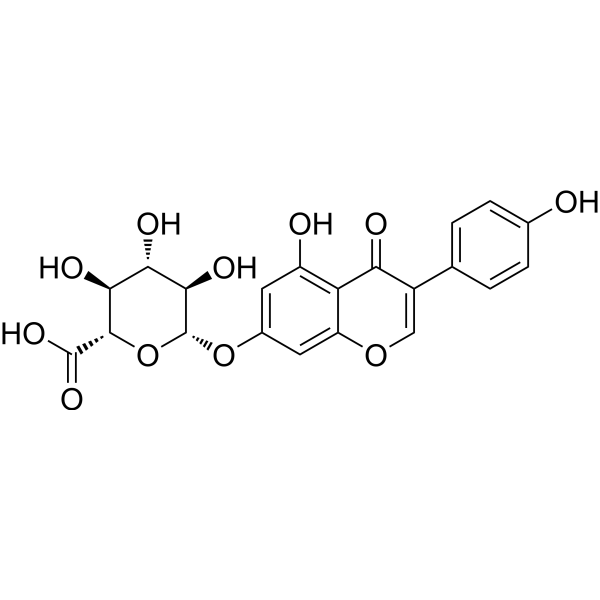
    Genistein 7-β-D-Glucuronide (Genistein 7-O-glucuronide) is the primary phase II metabolite of Genistein (HY-14596) in human and rat hepatocytes. Genistein 7-β-D-Glucuronide undergoes distinct deconjugation in different functional assays. Genistein 7-β-D-Glucuronide is produced via hepatic microsomal glucuronidation and shows a mild age-related increase in intrinsic clearance in male F344 rats. Genistein 7-β-D-Glucuronide can be used for research on metabolism .
    Genistein 7-β-D-Glucuronide
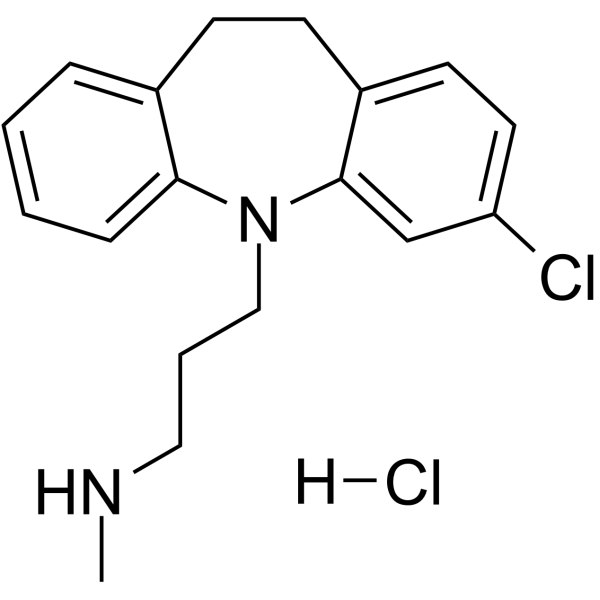
  • HY-12388A

    Desmethylclomipramine hydrochloride; Norclomipramine hydrochloride

    Drug Metabolite Neurological Disease
    N-Desmethyl Clomipramine hydrochloride (Desmethylclomipramine hydrochloride) is a primary plasma N-desmethyl metabolite of Clomipramine. Clomipramine is a tricyclic antidepressant .
    N-Desmethyl clomipramine hydrochloride
  • HY-W588187

    5β-Cholestan-3-one

    Drug Metabolite Apoptosis Cancer
    Coprostanone (5β-cholestan-3-one) is an oxysterol and active metabolite of Cholesterol (HY-N0322). Coprostanone induces apoptosis in primary dog gallbladder epithelial cells. Coprostanone is promising for research of colon cancers or adenomatous polyps .
    Coprostanone
  • HY-137397

    8-OH-EFV

    Apoptosis JNK Cancer
    8-Hydroxyefavirenz (8-OH-EFV) is a primary metabolite of (HY-10572). 8-Hydroxyefavirenz induces apoptosis via a JNK- and BimEL-dependent mechanism in primary human hepatocytes. 8-Hydroxyefavirenz can be used in research of cancer . 8-Hydroxyefavirenz is a click chemistry reagent, it contains an Alkyne group and can undergo copper-catalyzed azide-alkyne cycloaddition (CuAAc) with molecules containing Azide groups.
    8-Hydroxyefavirenz
  • HY-100048

    AcINH

    Drug Metabolite Infection
    Acetylisoniazid is a primary Isoniazid (HY-B0329) metabolite mediated by N-acetyltransferase (NAT). Isoniazid is bactericidal to rapidly dividing mycobacteria and has anti-tuberculostatic activity .
    Acetylisoniazid
  • HY-176510

    PPAR Drug Metabolite Metabolic Disease Inflammation/Immunology
    Elafibranor (GFT505) sulfoxide is a sulfoxide metabolite of Elafibranor (HY-16737). Elafibranor is a PPARα/δ agonist with EC50s of 45 and 175 nM, respectively. Elafibranor can be used for the study of primary biliary cholangitis .
    Elafibranor sulfoxide
  • HY-108229

    6β-Hydroxynaltrexone

    Drug Metabolite Opioid Receptor Neurological Disease
    6β-Naltrexol (6β-Hydroxynaltrexone), the primary metabolite of Naltrexone, is a peripherally selective opioid antagonist. 6β-Naltrexol selectively inhibits gastrointestinal opioid effects in human subjects and inhibits Morphine-induced slowing of gastrointestinal transit .
    6β-Naltrexol
  • HY-118010A

    d-Norfenfluramine hydrochloride

    5-HT Receptor Cardiovascular Disease
    (+)-Norfenfluramine hydrochloride, a major hepatic metabolite of (+)-fenfluramine, is a selective 5-HT2B receptor agonist (Ki: 11.2 nM). (+)-Norfenfluramine hydrochloride potently stimulates the hydrolysis of inositol phosphates and increases intracellular Ca 2+. (+)-Norfenfluramine hydrochloride can be used for the research of primary pulmonary hypertension and valvular heart disease .
    (+)-Norfenfluramine hydrochloride
  • HY-W131725

    d-Norfenfluramine

    5-HT Receptor Cardiovascular Disease
    (+)-Norfenfluramine a major hepatic metabolite of (+)-fenfluramine, is a selective 5-HT2B receptor agonist (Ki: 11.2 nM). (+)-Norfenfluramine potently stimulates the hydrolysis of inositol phosphates and increases intracellular Ca 2+. (+)-Norfenfluramine can be used for the research of primary pulmonary hypertension and valvular heart disease .
    (+)-Norfenfluramine
  • HY-108229S

    6β-Hydroxynaltrexone-d3

    Isotope-Labeled Compounds Opioid Receptor Drug Metabolite Neurological Disease
    6β-Naltrexol-d3 (6β-Hydroxynaltrexone-d3) is deuterium labeled 6β-Naltrexol. 6β-Naltrexol (6β-Hydroxynaltrexone), the primary metabolite of Naltrexone, is a peripherally selective opioid antagonist. 6β-Naltrexol selectively inhibits gastrointestinal opioid effects in human subjects and inhibits Morphine-induced slowing of gastrointestinal transit .
    6β-Naltrexol-d3
  • HY-131479

    Drug Metabolite Neurological Disease
    Threo-dihydrobupropion hydrochloride is a primary metabolite of Bupropion. Threo-dihydrobupropion hydrochloride can be used for the research of the depression, behavioral, and biochemistry .
    Threo-dihydrobupropion hydrochloride
  • HY-W060470

    Histamine Receptor Neurological Disease
    1-Methyl-4-imidazoleacetic acid hydrochloride is a stable metabolite of Histamine (HY-B1204) that is produced by the oxidation of the primary metabolite, N-methylhistamine .
    1-Methyl-4-imidazoleacetic acid hydrochloride
  • HY-W1002768

    Drug Metabolite Others
    Cholic acid 3-sulfate sodium is a metabolite of the primary bile acid Cholic acid (HY-N0324) .
    Cholic acid 3-sulfate sodium
  • HY-126855A

    Drug Metabolite Others
    Cholic acid 7-sulfate sodium is a metabolite of the primary bile acid Cholic acid (HY-N0324) .
    Cholic acid 7-sulfate sodium
  • HY-17528

    Cyhalofop acid

    Drug Metabolite Others
    Cyhalofop (Cyhalofop acid), the primary metabolite of Cyhalofop-butyl (HY-B0861) in susceptible grasses, is the herbicidally active metabolite. Cyhalofop-butyl is an aryloxyphenoxypropionate post-emergence herbicide widely used around the world in agriculture .
    Cyhalofop
  • HY-70002AS

    N-Desmethyl MDV 3100-d6

    Androgen Receptor Cancer
    N-desmethyl Enzalutamide-d6 is a deuterium labeled N-desmethyl Enzalutamide. N-desmethyl Enzalutamide is an active metabolite of Enzalutamide. N-desmethyl Enzalutamide is the active metabolite of Enzalutamide. N-desmethyl Enzalutamide demonstrates primary and secondary pharmacodynamics of similar potency to Enzalutamide and circulates at approximately the same plasma concentrations as enzalutamide .
    N-Desmethyl enzalutamide-d6
  • HY-139070A

    Endogenous Metabolite Metabolic Disease
    D-Glyceric acid sodium is the sodium form of D-Glyceric acid (HY-139070A). D-Glyceric acid is an endogenous metabolite present in urine that can be used for the research of primary hyperoxaluria type I and glutaric acidemia type 2 .
    D-Glyceric acid sodium
  • HY-116374S

    Isotope-Labeled Compounds Endogenous Metabolite Metabolic Disease Inflammation/Immunology
    Glycolithocholic acid-d4 is the deuterium labeled Glycolithocholic acid. Glycolithocholic acid, an endogenous metabolite, is a glycine-conjugated secondary bile acid and can be used to diagnose ulcerative colitis (UC), non-alcoholic steatohepatitis (NASH) and primary sclerosing cholangitis (PSC) .
    Glycolithocholic acid-d4
  • HY-113377

    Endogenous Metabolite Metabolic Disease
    L-Glyceric acid is a mainly urinary metabolite accumulating in rare inherited metabolic disease L-glyceric aciduria. L-Glyceric acid can be used to diagnose primary hyperoxaluria type 2 (PH2). L-Glyceric acid excretion to distinguish PH1 from PH2 .
    L-Glyceric acid
  • HY-129630S

    Isotope-Labeled Compounds Endogenous Metabolite Metabolic Disease
    Tetrahydrocortisol-d5 is the deuterium labeled Tetrahydrocortisol. Tetrahydrocortisol is a cortisol metabolite that inhibits dexamethasone-induced formation of cross-linked actin networks. Tetrahydrocortisol can be used in the research of primary open-angle glaucoma, glucocorticoid-induced ocular hypertension, Lewis lung carcinoma, and EMT-6 mouse breast cancer .
    Tetrahydrocortisol-d5
  • HY-100973AR

    ADP ribose sodium (Standard)

    Reference Standards TRP Channel Autophagy Metabolic Disease Endocrinology Cancer
    Adenosine 5′-diphosphoribose (sodium) (Standard) is the analytical standard of Adenosine 5′-diphosphoribose (sodium). This product is intended for research and analytical applications. Adenosine 5′-diphosphoribose sodium (ADP ribose sodium) is a nicotinamide adenine nucleotide (NAD+) metabolite. Adenosine 5′-diphosphoribose sodium is the most potent and primary intracellular Ca2+-permeable cation TRPM2 channel activator. Adenosine 5′-diphosphoribose sodium also can enhance autophagy .
    Adenosine 5′-diphosphoribose sodium (Standard)
  • HY-121636S

    RvD2-d5

    TRP Channel Infection Neurological Disease Inflammation/Immunology
    Resolvin D2-d5 is the deuterium labeled Resolvin D2. Resolvin D2 is a metabolite of docosahexaenoic acid (DHA), with anti-inflammatory, anti-infective activities. Resolvin D2 is a potent regulator of leukocytes and controls microbial sepsis. Resolvin D2 is a remarkably potent inhibitor of TRPV1 (IC50 = 0.1 nM) and TRPA1 (IC50 = 2 nM) in primary sensory neurons .
    Resolvin D2-d5
  • HY-A0178

    AY 56012

    Histamine Receptor Endogenous Metabolite Inflammation/Immunology
    Isothipendyl (AY 56012), an azaphenothiazine derivative, is a potent histamine 1 (H1) receptor antagonist. Isothipendyl is a primary metabolite .
    Isothipendyl
  • HY-B1348

    Drug Metabolite Neurological Disease
    Dimethadione is the primary metabolite of trimethadione. Dimethadione causes depression of neuromuscular transmission. Dimethadione primarily decreases transmitter release from the nerve terminal .
    Dimethadione
  • HY-139070

    Endogenous Metabolite Metabolic Disease
    D-Glyceric acid is an endogenous metabolite present in urine that can be used for the research of primary hyperoxaluria type I and glutaric acidemia type 2 .
    D-Glyceric acid
  • HY-W144308

    TCHQ; Tetrachloroquinol

    Drug Metabolite Necroptosis Reactive Oxygen Species (ROS) Apoptosis Metabolic Disease Cancer
    Tetrachlorohydroquinone (TCHQ) is a metabolite of Pentachlorophenol. Tetrachlorohydroquinone induces reactive oxidant stress (ROS), inhibits apoptosis and induces necrosis in primary mouse splenocytes. Tetrachlorohydroquinone increases DNA lesions and induces oxidative stress in rodents .
    Tetrachlorohydroquinone
  • HY-116374R

    Lithocholylglycine (Standard)

    Endogenous Metabolite Reference Standards Inflammation/Immunology
    Glycolithocholic acid (Standard) is the analytical standard of Glycolithocholic acid. This product is intended for research and analytical applications. Glycolithocholic acid (Lithocholylglycine), an endogenous metabolite, is a glycine-conjugated secondary bile acid. Glycolithocholic acid can be used to diagnose ulcerative colitis (UC), non-alcoholic steatohepatitis (NASH) and primary sclerosing cholangitis (PSC) .
    Glycolithocholic acid (Standard)
  • HY-131629

    Drug Metabolite Neurological Disease
    N-Desmethyl-U-47700 is the primary metabolite of U-47700 (an opioid agonist) .
    N-Desmethyl-U-47700
  • HY-100645

    Trimethoprim 3-N-oxide

    Drug Metabolite Others
    Trimethoprim 3-oxide (Trimethoprim 3-N-oxide) is the primary metabolite of trimethoprim .
    Trimethoprim 3-oxide
  • HY-12388AS

    Desmethylclomipramine-d3 hydrochloride; Norclomipramine-d3 hydrochloride

    Drug Metabolite Neurological Disease
    N-Desmethyl Clomipramine-d3 (hydrochloride) is the deuterium labeled N-Desmethyl Clomipramine. N-Desmethyl Clomipramine hydrochloride (Desmethylclomipramine hydrochloride) is a primary plasma N-desmethyl metabolite of Clomipramine
    N-Desmethyl clomipramine-d3 hydrochloride
  • HY-132428S

    Isotope-Labeled Compounds Opioid Receptor Neurological Disease
    O-Desmethyl Tramadol-d6 is the deuterium labeled O-Desmethyl Tramadol. O-Desmethyl Tramadol is a primary active metabolite of Tramadol. O-Desmethyl Tramadol is mainly responsible for its μ-opioid receptor-related analgesic effect. Tramadol is metabolized to O-Demethyltramadol mainly by the cytochrome P450 (CYP) 2D6 enzyme .
    O-Desmethyl Tramadol-d6
  • HY-W008567

    Drug Metabolite Others
    N-Deschlorobenzoyl indomethacin (Compound 18), the primary metabolite of indomethacin (HY-14397), lacks the N-p-chlorobenzoyl group in its structure. Consequently, N-Deschlorobenzoyl indomethacin loses inhibitory activity against AKR1C2 and AKR1C3 (AKR1C2 IC50 =100 μM, AKR1C3 IC50 >100 μM), exhibiting no selectivity .
    N-Deschlorobenzoyl indomethacin
  • HY-173391

    4-HNE-GSH TFA

    Drug Metabolite Metabolic Disease
    4-Hydroxy nonenal glutathione (4-HNE-GSH) TFA is the primary metabolite of 4-Hydroxy-2-nonenal. 4-Hydroxy nonenal glutathionea TFA is a marker of oxidative stress in rat liver and hepatocytes. 4-Hydroxy nonenal glutathione TFA efficiently prevents formation of DNA adducts with 4-Hydroxy-2-nonenal in human cells .
    4-Hydroxy nonenal glutathione TFA
  • HY-33914

    Drug Metabolite Metabolic Disease
    4-Hydroxymethylpyrazole is the primary metabolite of Fomepizole (HY-B0876) produced through hepatic oxidative metabolism. 4-Hydroxymethylpyrazole exhibits a plasma concentration that is positively correlated with the administered dosage of Fomepizole, and it demonstrates a relatively short half-life. 4-Hydroxymethylpyrazole demonstrates inhibitory effects on alcohol dehydrogenase (ADH) in both humans and monkeys, but its inhibition constant is significantly higher than that of Fomepizole, rendering its in vivo impact negligible .
    4-Hydroxymethylpyrazole

Inquiry Online

Your information is safe with us. * Required Fields.

Salutation


Country or Region *

Applicant Name *


Organization Name *

Department *


Email Address *


Product Name *

Cat. No.


Requested quantity *

Phone Number *


Remarks

Inquiry Online

Inquiry Information

Product Name:
Cat. No.:
Quantity:
MCE Japan Authorized Agent:

