



2,2-Dihydroxyacetic acid

Based on 1 Customer Validation
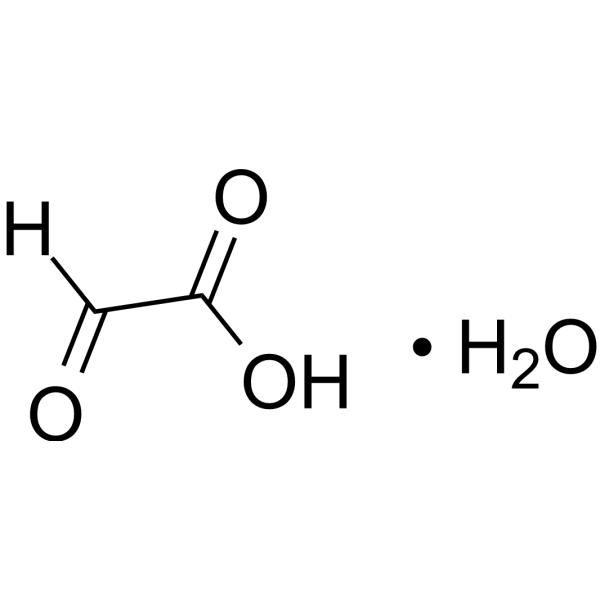
2,2-Dihydroxyacetic acid is an endogenous metabolite, which is the monohydrate of Glyoxylic Acid. 2,2-Dihydroxyacetic acid may participate in the microbial glyoxylate cycle, induce an increase in reactive oxygen species, promote cell differentiation, and modify proteins to form advanced glycation end products (AGEs) (HY-NP165). 2,2-Dihydroxyacetic acid is associated with metabolic diseases such as primary hyperoxaluria.
For research use only. We do not sell to patients.
- Purity : 98.0%
- CAS No.: 563-96-2
- Formula: C2H4O4
- Molecular Weight:92.05
-
Storage:
RT, protect from light, stored under nitrogen.
In solvent -80°C, 1 year , -20°C, 6 months

To place orders, for customer services and technical support, please contact: MedChemExpress USA
Tel: 609-228-6898 E-mail: [email protected] [email protected]


-
 Biological Activity
-
Chemical Information
-
Solvent & Solubility
- Protocols
- Purity & Documentation
- References
-
 Help & FAQs


-
HY-Y0262
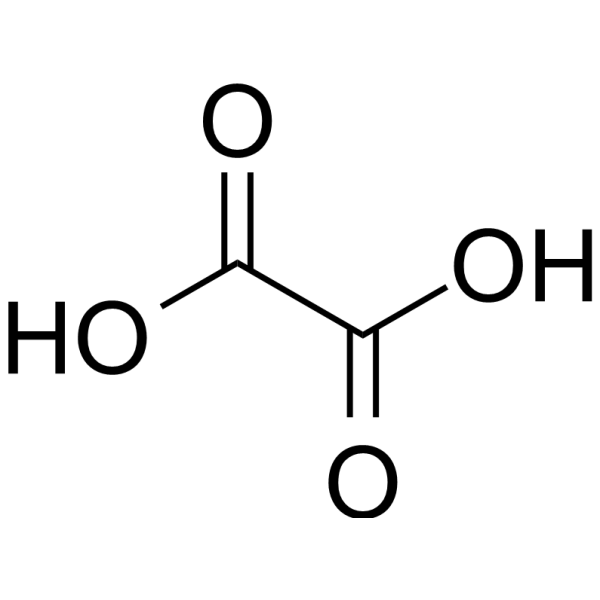
Oxalic acid, 99%Antioxidant Agent -

HY-W019724R
2,2-Dihydroxyacetic acid (Standard)Drug Intermediate -
HY-W017446
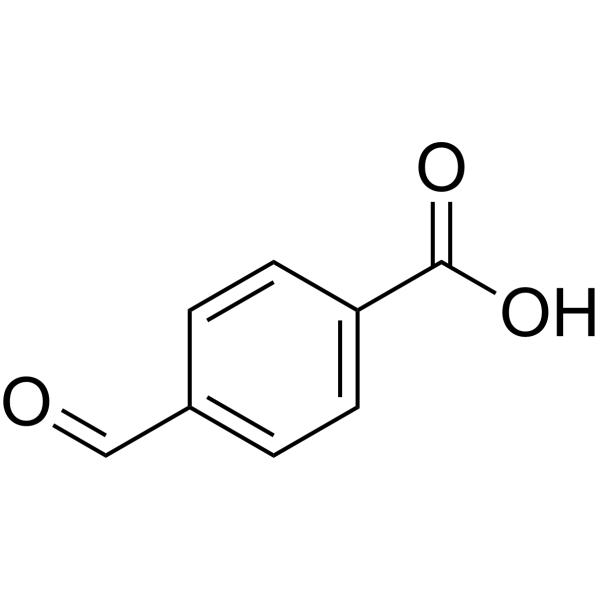
4-Formylbenzoic acidBiochemical Reagent -
HY-W001138
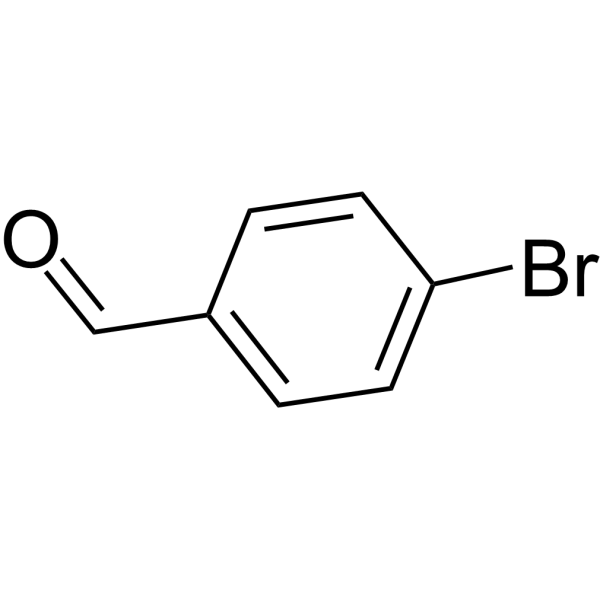
4-BromobenzaldehydeBiochemical Reagent -
HY-W007539
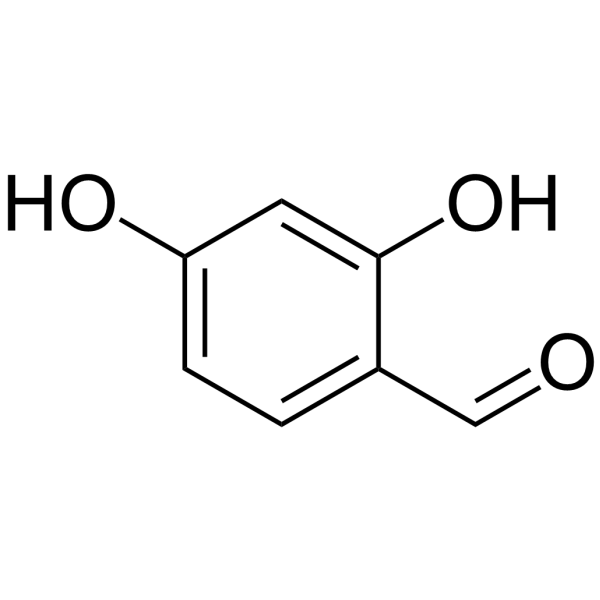
2,4-DihydroxybenzaldehydeDrug Intermediate -
HY-Y0442
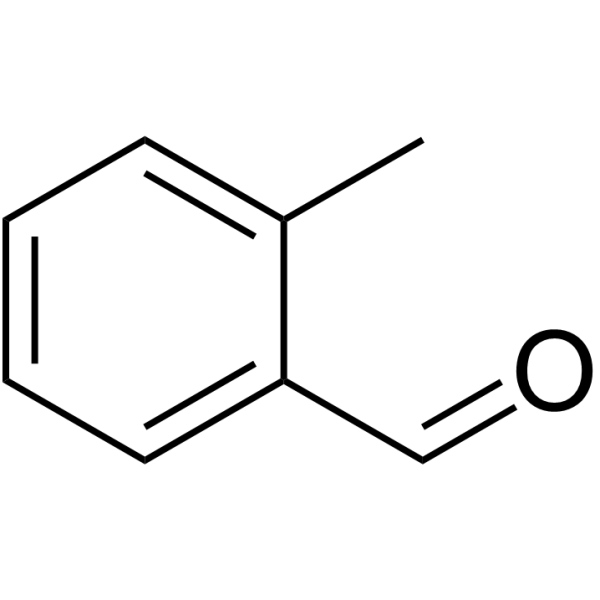
2-MethylbenzaldehydeAcaricide -

HY-W007539R
2,4-Dihydroxybenzaldehyde (Standard)Drug Intermediate


Biological Activity
Description
In Vitro
2,2-Dihydroxyacetic acid (0-0.8 mM Glyoxylic Acid, 6 d) shows no cytotoxicity, promotes cell differentiation, upregulates indicators related to mitochondrial biogenesis, and increases the intracellular contents of amino acids such as glycine and serine, as well as metabolites such as citric acid and succinic acid in myogenic differentiation assays of mouse myoblast C2C12 cells[2].
In the experiment of preparing advanced glycation end products (AGEs), 2,2-Dihydroxyacetic acid (3 mM Glyoxylic Acid; incubated with BSA for 24 h) modifies BSA through Glyoxylic Acid (GA) to yield BSA-GAred. GAred induces reactive oxygen species (ROS) production in human colon cancer cells CaCo-2, mouse microglial cells N11, human astrocytoma cells U373 MG, and human embryonic microglial cells CHME-5. Notably, it induces significantly higher levels of ROS production in brain-derived cell lines, while exerting no inhibitory effect on the growth of all four cell lines[3].\n
MedChemExpress (MCE) has not independently confirmed the accuracy of these methods. They are for reference only. Further protocols information, click here.
-
Cell Line:C2C12 cells
-
Concentration:As term as Glyoxylic Acid form: 0 mM, 0.2 mM, 0.4 mM, 0.8 mM
-
Incubation Time:6 days
-
Result:Did not cause significant cytotoxicity and had no obvious effect on cell viability.
Increased the protein expression level of MyHC II in a dose-dependent manner.
Significantly increased the protein expression level of citrate synthase (CS) in a dose-dependent manner.
In Vivo
2,2-Dihydroxyacetic acid (1%, 5%, 10% glyoxylate aqueous solution; ad libitum drinking; 3-56 days) does not induce renal stone formation in mice via the oral route[4].
2,2-Dihydroxyacetic acid (50 mg/kg Glyoxylate; i.p.; once daily; days 3-56) fails to induce renal calculi formation in mice[4].
MedChemExpress (MCE) has not independently confirmed the accuracy of these methods. They are for reference only.
-
Animal Model:C57BL/6 male mice (8 weeks old), normal model[4]
-
Dosage:As term as Glyoxylate form: 60 mg/kg (0.81 mmol/kg), intraabdominal injection; 80 mg/kg (1.08 mmol/kg), intraabdominal injection; 100 mg/kg (1.35 mmol/kg), intraabdominal injection; 150 mg/kg (2.03 mmol/kg), intraabdominal injection
-
Administration:Intraperitoneal injection, once daily; for 3-15 days.
-
Result:At doses above 60 mg/kg induced calcium oxalate monohydrate crystal deposition in the mouse kidneys, which peaked at 6 days and gradually decreased thereafter, with almost no crystals detected at 15 days;
the crystals were mainly distributed in the renal tubules at the border between the renal cortex and medulla; the expression of osteopontin (OPN) mRNA and protein was dramatically increased, with OPN localized in renal tubules and stones;
urinary pH significantly decreased on day 6, and urinary calcium and oxalate levels increased on day 12 or 15.


Chemical Information
-
CAS No. 563-96-2
-
Appearance Solid
-
Molecular Weight 92.05
-
Formula C2H4O4
-
Color White to light yellow
-
SMILES
O=C(C(O)O)O
-
Structure Classification
-
Initial Source
-
Shipping
Room temperature in continental US; may vary elsewhere.
-
Storage
RT, protect from light, stored under nitrogen
In solvent -80°C 1 year -20°C 6 months


Solvent & Solubility
In Vitro:
DMSO : 100 mg/mL (1086.37 mM; Need ultrasonic; Hygroscopic DMSO has a significant impact on the solubility of product, please use newly opened DMSO)
Please refer to the solubility information to select the appropriate solvent. Once prepared, please aliquot and store the solution to prevent product inactivation from repeated freeze-thaw cycles.
Storage method and period of stock solution: -80°C, 1 year; -20°C, 6 months. When stored at -80°C, please use it within 1 year. When stored at -20°C, please use it within 6 months.
Please refer to the solubility information to select the appropriate solvent. Once prepared, please aliquot and store the solution to prevent product inactivation from repeated freeze-thaw cycles.
Storage method and period of stock solution: -80°C, 1 year; -20°C, 6 months. When stored at -80°C, please use it within 1 year. When stored at -20°C, please use it within 6 months.
Concentration (start) × Volume (start) = Concentration (final) × Volume (final)
In Vivo:
Select the appropriate dissolution method based on your experimental animal and administration route.
- For the following dissolution methods, please ensure to first prepare a clear stock solution using an In Vitro approach and then sequentially add co-solvents:
- To ensure reliable experimental results, the clarified stock solution can be appropriately stored based on storage conditions. As for the working solution for In Vivo experiments, it is recommended to prepare freshly and use it on the same day.
- The percentages shown for the solvents indicate their volumetric ratio in the final prepared solution. If precipitation or phase separation occurs during preparation, heat and/or sonication can be used to aid dissolution.
Add each solvent one by one: 10% DMSO 40% PEG300 5% Tween-80 45% Saline
Solubility: ≥ 2.5 mg/mL (27.16 mM); Clear solution
This protocol yields a clear solution of ≥ 2.5 mg/mL (saturation unknown).
Taking 1 mL working solution as an example, add 100 μL DMSO stock solution (25.0 mg/mL) to 400 μL PEG300, and mix evenly; then add 50 μL Tween-80 and mix evenly; then add 450 μL Saline to adjust the volume to 1 mL.
Preparation of Saline: Dissolve 0.9 g sodium chloride in ddH₂O and dilute to 100 mL to obtain a clear Saline solution.
Add each solvent one by one: 10% DMSO 90% (20% SBE-β-CD in Saline)
Solubility: ≥ 2.5 mg/mL (27.16 mM); Clear solution
This protocol yields a clear solution of ≥ 2.5 mg/mL (saturation unknown).
Taking 1 mL working solution as an example, add 100 μL DMSO stock solution (25.0 mg/mL) to 900 μL 20% SBE-β-CD in Saline, and mix evenly.
Preparation of 20% SBE-β-CD in Saline (4°C, storage for one week): 2 g SBE-β-CD powder is dissolved in 10 mL Saline, completely dissolve until clear.
In Vivo Dissolution Calculator
Please enter the basic information of animal experiments:
-
-
-
-
Recommended: Prepare an additional quantity of animals to account for potential losses during experiments.
Please enter your animal formula composition:
-
%DMSO +
Recommended: Keep the proportion of DMSO in working solution below 2% if your animal is weak.
-
%+
-
+%Tween-80 + +
-
%Saline +
The co-solvents required include: DMSO, . All of co-solvents are available by MedChemExpress (MCE). , Tween 80. All of co-solvents are available by MedChemExpress (MCE).
Working solution concentration: 0.22 mg/mL
Method for preparing stock solution: mg drug dissolved in μL DMSO. Stock solution concentration: mg/mL.
1. Take μL DMSO stock solution;
2. Add μL .
μL , mix evenly;
3. Then add μL Tween 80, mix evenly;
4. Then add μL
Please ensure that the stock solution in the first step is dissolved to a clear state, and add co-solvents in sequence. You can use ultrasonic heating (ultrasonic cleaner, recommended frequency 20-40 kHz), vortexing, etc. to assist dissolution.

Protocols
-
ROS/oxidative-stress fluorescent staining
ROS/oxidative-stress fluorescent staining uses cell-permeant fluorogenic probes that become fluorescent after oxidation inside cells or tissues; commonly used examples include DCFH-DA/DCFDA for broad cellular oxidant detection, DHE for superoxide-related signal detection, MitoSOX for mitochondrial superoxide-related signal detection, and CellROX probes for oxidative-stress-associated fluorescence readouts. The assay detects probe oxidation rather than a single ROS species unless the probe and analysis method have been chemically validated for that species. DCFH-DA enters cells, is deacetylated by intracellular esterases to DCFH, and produces fluorescent DCF after oxidation, so the readout is used as an operational measure of total cellular oxidative stress rather than a species-specific ROS measurement. DHE and MitoSOX can report superoxide-related oxidation, but red fluorescence alone can include non-specific ethidium-like oxidation products; HPLC or optimized spectral approaches are
-
iPSC cell differentiation
Induced pluripotent stem cells (iPSCs) are a type of cell that has similar properties to embryonic stem cells through somatic cell reprogramming.


Purity & Documentation
-
Data Sheet (287 KB)
-
SDS (615 KB)
- English - EN (615 KB)
- Français - FR (615 KB)
- Deutsch - DE (615 KB)
- Norwegian - NO (615 KB)
- Español - ES (615 KB)
- Swedish - SV (615 KB)
- Italian - IT (615 KB)
- Korean - KR (615 KB)
- Portuguese - PT (615 KB)
-
Handling Instructions (2659 KB)
References


Complete Stock Solution Preparation Table
Please refer to the solubility information to select the appropriate solvent. Once prepared, please aliquot and store the solution to prevent product inactivation from repeated freeze-thaw cycles.
Storage method and period of stock solution: -80°C, 1 year; -20°C, 6 months. When stored at -80°C, please use it within 1 year. When stored at -20°C, please use it within 6 months.
| Optional Solvent | Concentration Solvent Mass | 1 mg | 5 mg | 10 mg | 25 mg |
|---|---|---|---|---|---|
| DMSO | 1 mM | 10.8637 mL | 54.3183 mL | 108.6366 mL | 271.5915 mL |
| 5 mM | 2.1727 mL | 10.8637 mL | 21.7273 mL | 54.3183 mL | |
| 10 mM | 1.0864 mL | 5.4318 mL | 10.8637 mL | 27.1592 mL | |
| 15 mM | 0.7242 mL | 3.6212 mL | 7.2424 mL | 18.1061 mL | |
| 20 mM | 0.5432 mL | 2.7159 mL | 5.4318 mL | 13.5796 mL | |
| 25 mM | 0.4345 mL | 2.1727 mL | 4.3455 mL | 10.8637 mL | |
| 30 mM | 0.3621 mL | 1.8106 mL | 3.6212 mL | 9.0531 mL | |
| 40 mM | 0.2716 mL | 1.3580 mL | 2.7159 mL | 6.7898 mL | |
| 50 mM | 0.2173 mL | 1.0864 mL | 2.1727 mL | 5.4318 mL | |
| 60 mM | 0.1811 mL | 0.9053 mL | 1.8106 mL | 4.5265 mL | |
| 80 mM | 0.1358 mL | 0.6790 mL | 1.3580 mL | 3.3949 mL | |
| 100 mM | 0.1086 mL | 0.5432 mL | 1.0864 mL | 2.7159 mL |


2,2-Dihydroxyacetic acid Related Classifications
HY-W019724 Related Classifications
 Powered by Bioz