



Tetrahydrocortisol

Based on 1 Customer Validation
Tetrahydrocortisol is a metabolite of Hydrocortisone (HY-N0583) that fails to activate glucocorticoid receptor. Tetrahydrocortisol inhibits Dexamethasone (HY-14648)-induced formation of cross-linked actin networks. Tetrahydrocortisol acts as a synergist to enhance the activity of anticancer agents. Tetrahydrocortisol can be used in the research of primary open-angle glaucoma, ocular hypertension, lung cancer and breast cancer.
For research use only. We do not sell to patients.
- Purity : 99.91%
- CAS No.: 53-02-1
- Formula: C21H34O5
- Molecular Weight:366.49
-
Storage:Powder -20°C, 3 years ; In solvent -80°C, 6 months , -20°C, 1 month

To place orders, for customer services and technical support, please contact: MedChemExpress USA
Tel: 609-228-6898 E-mail: [email protected] [email protected]


-
 Biological Activity
-
Chemical Information
-
Solvent & Solubility
- Protocols
- Purity & Documentation
- References
-
 Help & FAQs


-
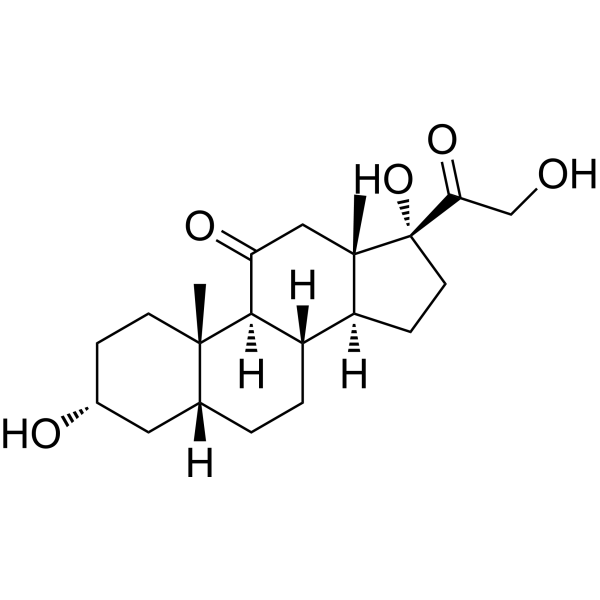
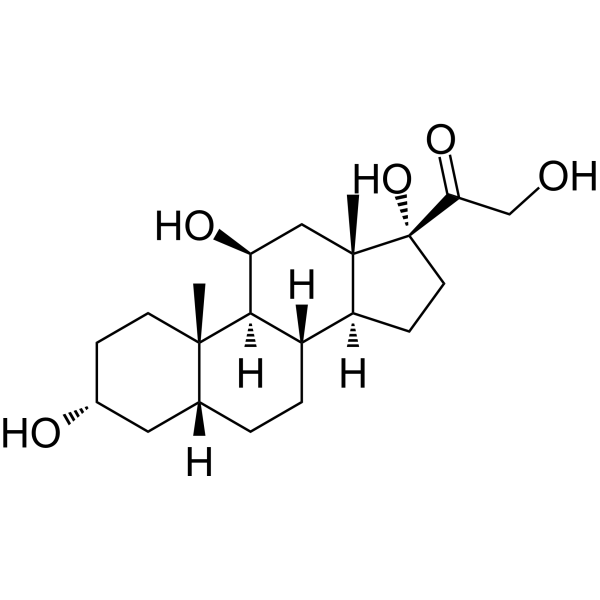
HY-113114
TetrahydrocortisoneGlucocorticoid Metabolism Marker -
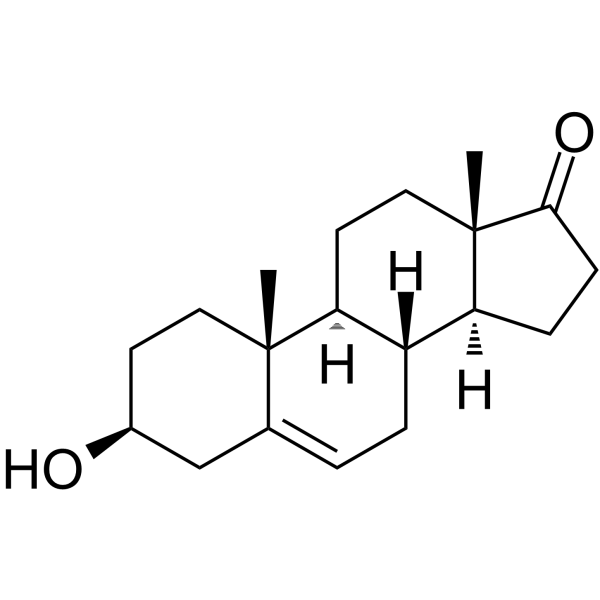
HY-14650
DHEASteroid Hormone -
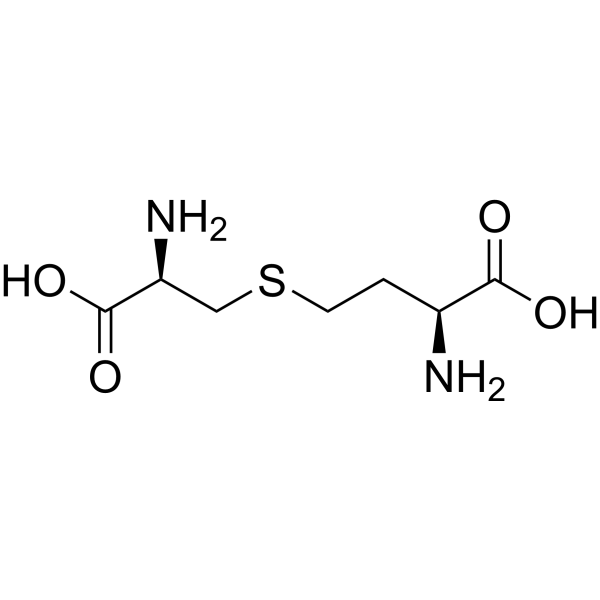
HY-W009749
L-Cystathionine -
HY-17462
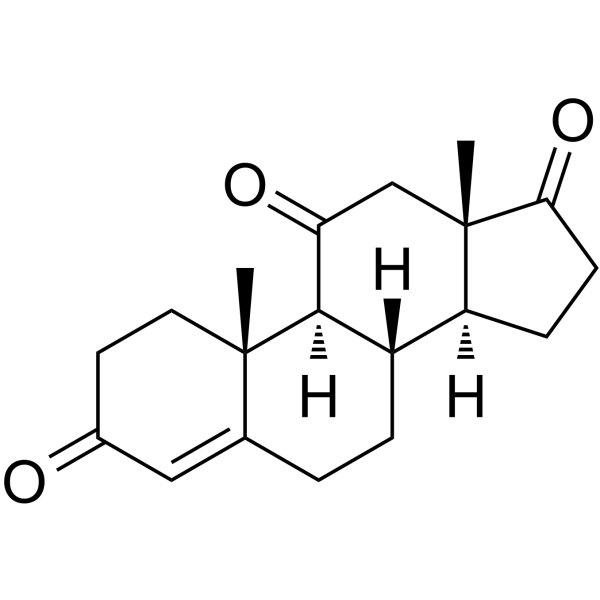
AdrenosteroneHSD11β1 Inhibitor -
HY-N0835
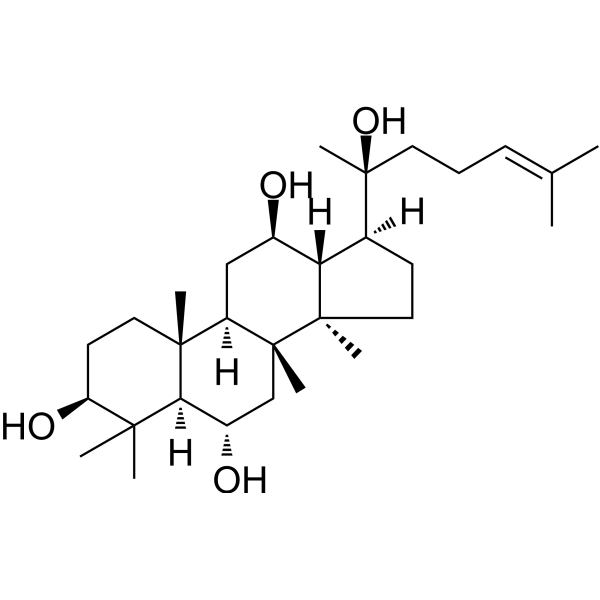
(20S)-ProtopanaxatriolLXRα Inhibitor -
HY-N2302
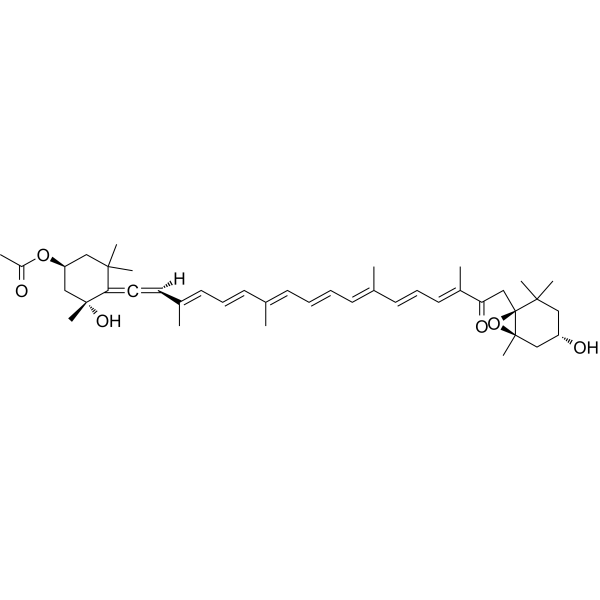
FucoxanthinMarine Carotenoid -

HY-113422
TetrahydrocorticosteroneGlucocorticoid -
HY-N8518
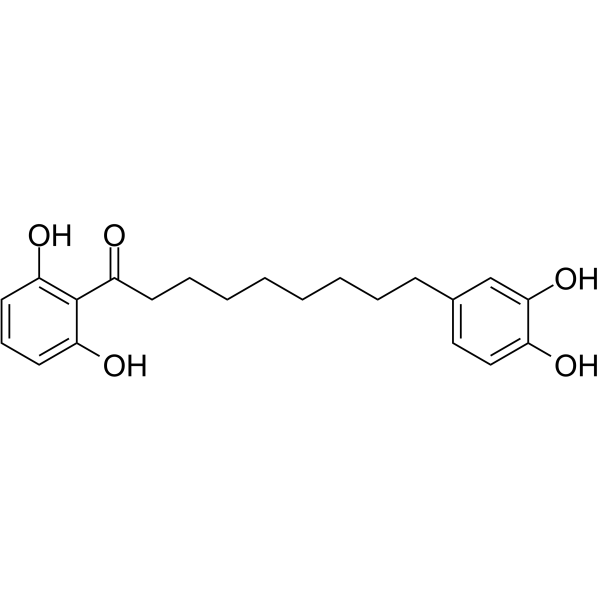
Malabaricone CSphingomyelin Synthase Inhibitor -

HY-N2302R
Fucoxanthin (Standard)Marine Carotenoid -
HY-13600S1
Clobetasol propionate-d5Stable Isotope -

HY-W744187
Clobetasol 17-Propionate-d5Stable Isotope -

HY-W738465
N,N-Dimethylamidino UreaEndogenous metabolite


Biological Activity
Description
IC50 & Target
|
Human Endogenous Metabolite |
In Vitro
Tetrahydrocortisol (0.01-1 μM; 2-14 days) inhibits dexamethasone-induced formation of actin cross-linked networks in human primary trabecular meshwork cells, with an IC50 of 0.57 μM after 14 days of treatment. When used alone, it increases microfilament bundling and partially reverses dexamethasone-induced microtubule disorganization[1].
Tetrahydrocortisol (5-500 μM; 24 h) exhibits extremely weak cytotoxicity against EMT-6 mouse breast tumor cells, yet at 100 μM for 24 h, it protects normoxic EMT-6 cells from the cytotoxic effects of various anticancer agents and X-rays. Its protective effect is attenuated under acidic pH or hypoxic conditions[2].
Tetrahydrocortisol (0.1 mM; 48 h) slightly increases the packed cell volume of quiescent SM-C1 fibroblasts isolated from rat carrageenan granulomas, and simultaneously induces minor changes in the content and distribution ratio of intracellular free amino acids[3].
MedChemExpress (MCE) has not independently confirmed the accuracy of these methods. They are for reference only.
In Vivo
Tetrahydrocortisol (125 mg/kg; s.c.; continuous infusion; 14 days) in combination with β-Cyclodextrin tetradecasulfate (HY-107201) and minocycline (HY-17412A) produces a 1.2-day tumor growth delay alone, greatly enhances cytotoxic therapy-induced tumor growth delay, reduces the percentage of large lung metastases when administered alone, and further reduces lung metastasis number and size when combined with most cytotoxic therapies[2].
MedChemExpress (MCE) has not independently confirmed the accuracy of these methods. They are for reference only.
-
Animal Model:C57BL (8-10-week-old male; s.c. implantation of 2 × 10⁶ Lewis lung carcinoma cells)[2]
-
Dosage:125 mg/kg (1:1 molar ratio with β-cyclodextrin tetradecasulfate)
-
Administration:s.c.; continuous infusion; 14 days (days 4 to 18 post-tumor implantation)
-
Result:Produced a tumor growth delay of 0.6 days.
Reduced the CDDP-induced tumor growth delay from 4.5 days to 2.2 days.
Reduced the melphalan-induced tumor growth delay from 2.7 days to 1.1 days.
Increased the single-dose cyclophosphamide-induced tumor growth delay from 7.2 days to 16.2 days.
Increased the three-dose cyclophosphamide-induced tumor growth delay from 21.5 days to 36.8 days.
Increased the single-dose radiation-induced tumor growth delay from 6.2 days to 8.3 days.
Increased the fractionated radiation-induced tumor growth delay from 4.4 days to 7.1 days.
Did not alter the total number of lung metastases (mean 14.5) or the percentage of large (vascularized) metastases (69%) compared to untreated controls.
Did not alter the number of lung metastases produced by CDDP, melphalan, cyclophosphamide, or radiation.


Chemical Information
-
CAS No. 53-02-1
-
Appearance Solid
-
Molecular Weight 366.49
-
Formula C21H34O5
-
Color White to off-white
-
SMILES
C[C@@]12[C@](C(CO)=O)(O)CC[C@@]1([H])[C@]3([H])CC[C@]4([H])C[C@H](O)CC[C@]4(C)[C@@]3([H])[C@@H](O)C2
-
Structure Classification
-
Initial Source
-
Shipping
Room temperature in continental US; may vary elsewhere.
-
Storage
Powder -20°C 3 years In solvent -80°C 6 months -20°C 1 month


Solvent & Solubility
In Vitro:
DMSO : 50 mg/mL (136.43 mM; Need ultrasonic; Hygroscopic DMSO has a significant impact on the solubility of product, please use newly opened DMSO)
Please refer to the solubility information to select the appropriate solvent. Once prepared, please aliquot and store the solution to prevent product inactivation from repeated freeze-thaw cycles.
Storage method and period of stock solution: -80°C, 6 months; -20°C, 1 month. When stored at -80°C, please use it within 6 months. When stored at -20°C, please use it within 1 month.
Please refer to the solubility information to select the appropriate solvent. Once prepared, please aliquot and store the solution to prevent product inactivation from repeated freeze-thaw cycles.
Storage method and period of stock solution: -80°C, 6 months; -20°C, 1 month. When stored at -80°C, please use it within 6 months. When stored at -20°C, please use it within 1 month.
Concentration (start) × Volume (start) = Concentration (final) × Volume (final)
In Vivo:
Select the appropriate dissolution method based on your experimental animal and administration route.
- For the following dissolution methods, please ensure to first prepare a clear stock solution using an In Vitro approach and then sequentially add co-solvents:
- To ensure reliable experimental results, the clarified stock solution can be appropriately stored based on storage conditions. As for the working solution for In Vivo experiments, it is recommended to prepare freshly and use it on the same day.
- The percentages shown for the solvents indicate their volumetric ratio in the final prepared solution. If precipitation or phase separation occurs during preparation, heat and/or sonication can be used to aid dissolution.
Add each solvent one by one: 10% DMSO 40% PEG300 5% Tween-80 45% Saline
Solubility: ≥ 1.25 mg/mL (3.41 mM); Clear solution
This protocol yields a clear solution of ≥ 1.25 mg/mL (saturation unknown).
Taking 1 mL working solution as an example, add 100 μL DMSO stock solution (12.5 mg/mL) to 400 μL PEG300, and mix evenly; then add 50 μL Tween-80 and mix evenly; then add 450 μL Saline to adjust the volume to 1 mL.
Preparation of Saline: Dissolve 0.9 g sodium chloride in ddH₂O and dilute to 100 mL to obtain a clear Saline solution.
Add each solvent one by one: 10% DMSO 90% (20% SBE-β-CD in Saline)
Solubility: ≥ 1.25 mg/mL (3.41 mM); Clear solution
This protocol yields a clear solution of ≥ 1.25 mg/mL (saturation unknown).
Taking 1 mL working solution as an example, add 100 μL DMSO stock solution (12.5 mg/mL) to 900 μL 20% SBE-β-CD in Saline, and mix evenly.
Preparation of 20% SBE-β-CD in Saline (4°C, storage for one week): 2 g SBE-β-CD powder is dissolved in 10 mL Saline, completely dissolve until clear.
In Vivo Dissolution Calculator
Please enter the basic information of animal experiments:
-
-
-
-
Recommended: Prepare an additional quantity of animals to account for potential losses during experiments.
Please enter your animal formula composition:
-
%DMSO +
Recommended: Keep the proportion of DMSO in working solution below 2% if your animal is weak.
-
%+
-
+%Tween-80 + +
-
%Saline +
The co-solvents required include: DMSO, . All of co-solvents are available by MedChemExpress (MCE). , Tween 80. All of co-solvents are available by MedChemExpress (MCE).
Working solution concentration: 0.22 mg/mL
Method for preparing stock solution: mg drug dissolved in μL DMSO. Stock solution concentration: mg/mL.
1. Take μL DMSO stock solution;
2. Add μL .
μL , mix evenly;
3. Then add μL Tween 80, mix evenly;
4. Then add μL
Please ensure that the stock solution in the first step is dissolved to a clear state, and add co-solvents in sequence. You can use ultrasonic heating (ultrasonic cleaner, recommended frequency 20-40 kHz), vortexing, etc. to assist dissolution.


Purity & Documentation
-
Data Sheet (280 KB)
-
SDS (739 KB)
- English - EN (739 KB)
- Français - FR (739 KB)
- Deutsch - DE (739 KB)
- Norwegian - NO (739 KB)
- Español - ES (739 KB)
- Swedish - SV (739 KB)
- Italian - IT (739 KB)
- Korean - KR (739 KB)
- Portuguese - PT (739 KB)
-
Handling Instructions (2659 KB)
References
[1]. Clark AF, et al. Inhibition of dexamethasone-induced cytoskeletal changes in cultured human trabecular meshwork cells by tetrahydrocortisol. Invest Ophthalmol Vis Sci. 1996;37(5):805-813. [Content Brief]
[2]. Teicher BA, et al. beta-cyclodextrin tetradecasulfate/tetrahydrocortisol +/- minocycline as modulators of cancer therapies in vitro and in vivo against primary and metastatic Lewis lung carcinoma. Cancer Chemother Pharmacol. 1993;33(3):229-238. [Content Brief]
[4]. Feng L, et al. Discovery of Natural Resorcylic Acid Lactones as Novel Potent Copper Ionophores Covalently Targeting PRDX1 to Induce Cuproptosis for Triple-Negative Breast Cancer Therapy. ACS Cent Sci. 2025 Feb 10;11(2):357-370. [Content Brief]


Complete Stock Solution Preparation Table
Please refer to the solubility information to select the appropriate solvent. Once prepared, please aliquot and store the solution to prevent product inactivation from repeated freeze-thaw cycles.
Storage method and period of stock solution: -80°C, 6 months; -20°C, 1 month. When stored at -80°C, please use it within 6 months. When stored at -20°C, please use it within 1 month.
| Optional Solvent | Concentration Solvent Mass | 1 mg | 5 mg | 10 mg | 25 mg |
|---|---|---|---|---|---|
| DMSO | 1 mM | 2.7286 mL | 13.6429 mL | 27.2859 mL | 68.2147 mL |
| 5 mM | 0.5457 mL | 2.7286 mL | 5.4572 mL | 13.6429 mL | |
| 10 mM | 0.2729 mL | 1.3643 mL | 2.7286 mL | 6.8215 mL | |
| 15 mM | 0.1819 mL | 0.9095 mL | 1.8191 mL | 4.5476 mL | |
| 20 mM | 0.1364 mL | 0.6821 mL | 1.3643 mL | 3.4107 mL | |
| 25 mM | 0.1091 mL | 0.5457 mL | 1.0914 mL | 2.7286 mL | |
| 30 mM | 0.0910 mL | 0.4548 mL | 0.9095 mL | 2.2738 mL | |
| 40 mM | 0.0682 mL | 0.3411 mL | 0.6821 mL | 1.7054 mL | |
| 50 mM | 0.0546 mL | 0.2729 mL | 0.5457 mL | 1.3643 mL | |
| 60 mM | 0.0455 mL | 0.2274 mL | 0.4548 mL | 1.1369 mL | |
| 80 mM | 0.0341 mL | 0.1705 mL | 0.3411 mL | 0.8527 mL | |
| 100 mM | 0.0273 mL | 0.1364 mL | 0.2729 mL | 0.6821 mL |


Tetrahydrocortisol Related Classifications
HY-129630 Related Classifications
 Powered by Bioz
Keywords
- Tetrahydrocortisol
- 53-02-1
- Drug Metabolite
- Glucocorticoid Receptor
- primary open angle glaucoma
- dexamethasone
- glucocorticoid-induced ocular hypertension
- Lewis lung carcinoma
- human trabecular meshwork cells
- EMT-6 mouse mammary tumor cells
- rat carrageenin granuloma
- SM-C1 fibroblasts
- human glucocorticoid receptors
- Sprague-Dawley rats
- Inhibitor
- inhibitor
- inhibit