











Search Result
Results for "
EGFR antibody
" in MedChemExpress (MCE) Product Catalog:
| Cat. No. |
Product Name |
Target |
Research Areas |
Chemical Structure |
-
- HY-P9905
-
Cetuximab
Maximum Cited Publications
53 Publications Verification
C225; IMC-C225
|
Radionuclide-Drug Conjugates (RDCs)
EGFR
|
Cancer
|
|
Cetuximab (C225) is a human IgG1 monoclonal antibody that inhibits epidermal growth factor receptor (EGFR), with a Kd of 0.201 nM for EGFR by SPR. Cetuximab has potent antitumor activity .
|
-
-
- HY-P9977
-
|
JNJ-61186372
|
EGFR
|
Inflammation/Immunology
Cancer
|
|
Amivantamab (JNJ-61186372) is a human EGFR-MET bispecific antibody with immune anticancer activity. Amivantamab inhibits ligand binding, promotes endocytosis and degradation of receptor-antibody complexes, and induces Fc-dependent cytokinesis in macrophages and antibody-dependent cytotoxicity in natural killer cells .
|
-
-
- HY-P99041
-
|
ABX-EGF
|
EGFR
|
Cancer
|
|
Panitumumab (ABX-EGF) is a fully human IgG2 anti-EGFR monoclonal antibody with anti-tumor activity. Panitumumab inhibits tumor cell proliferation, survival and angiogenesis. Panitumumab can be used in the research of cancers, such as colon cancer .
|
-
-
- HY-P99675
-
|
AK112
|
PD-1/PD-L1
VEGFR
|
Cancer
|
|
Ivonescimab (AK112) is a PD-1/VEGF bispecific antibody. Ivonescimab competitively inhibiting PD-1/PD-L1 interaction, reversing the immunosuppression mediated by it, and blocks the binding of VEGF-A to VEGFR2, inhibiting tumour angiogenesis in the tumour microenvironment. Ivonescimab also has significantly anticancer activity against EGFR-mutated locally advanced or metastatic non-squamous non-small cell lung cancer (NSCL) .
|
-
-
- HY-P99275
-
|
AMG-888; U3-1287
|
EGFR
Akt
ERK
PARP
Survivin
|
Cancer
|
|
Patritumab (Human Anti-ERBB3 Recombinant Antibody) is a neutralizing monoclonal antibody to ERBB3. Patritumab shows a synergy with Cetuximab (HY-P9905), potently inhibits the phosphorylation of EGFR, HER2, HER3, ERK, and AKT. Patritumab also induces cell apoptosis and suppresses the growth of pancreatic, non-small cell lung cancer, and colorectal cancer xenograft tumors .
|
-
-
- HY-P9968
-
|
h-R3
|
EGFR
|
Cancer
|
|
Nimotuzumab is a humanized IgG1 monoclonal antibody targeting EGFR with a KD of 0.21 nM. Nimotuzumab is directed against the extracellular domain of the EGFR blocking the binding to its ligands. Nimotuzumab, a strong antitumor agent, is cytolytic on target tumors by its capacity to cause antibody dependent cell mediated cytotoxicity (ADCC) and complement dependent cytotoxicity (CDC) .
|
-
-
- HY-147164
-
|
|
ADC Linker
|
Cancer
|
|
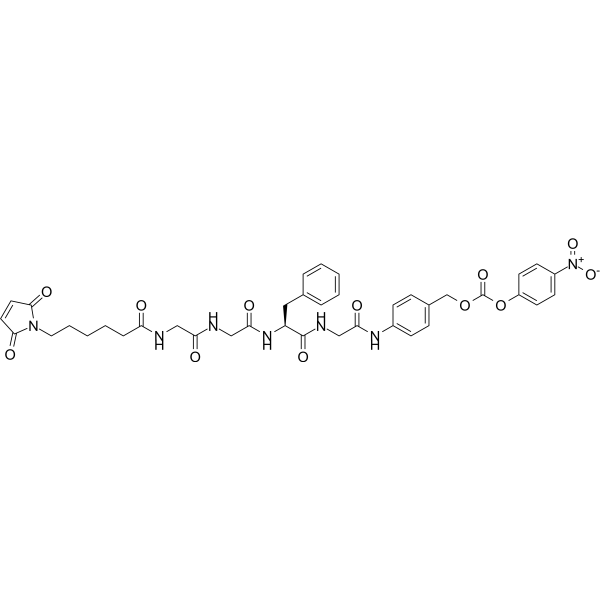
MC-Gly-Gly-Phe-Gly-PAB-PNP is a linker for synthesis anti-human EGFR antibody agent conjugate .
|
-
-
- HY-P99406
-
|
MCLA 158
|
EGFR
|
Cancer
|
|
Petosemtamab (MCLA 158) is an anti- EGFR (Kd: 0.22 nM) and anti-LGR5 (Kd: 0.86 nM) monoclonal antibody (mAb). Petosemtamab leads to EGFR signaling blockade and receptor degradation in LGR5+ cancer cells. Petosemtamab can be used in the research of solid tumors, such as head and neck squamous cell carcinoma (HNSCC), metastatic colorectal cancer (CRC) .
|
-
-
- HY-164702
-
|
Izalontamab Brengitecan
|
Antibody-Drug Conjugates (ADCs)
EGFR
|
Cancer
|
|
BL-B01D1 is a bispecific ADC, which targets EGFR and HER3 through bispecific antibody Izalontamab (HY-P99676), and exhibits cytotoxicity against various cancer cells via inhibition of DNA replication and DNA synthesis by its ADC toxin ED04 (HY-153891). BL-B01D1 can be used in the study of cancer .
|
-
-
- HY-P99676
-
|
SI-B001; BL-B01D1 antibody
|
EGFR
|
Cancer
|
|
Izalontamab (SI-B001) is a bispecific anti-EGFR/HER3 monoclonal antibody with high selectivity for EGFR/HER3 heterodimer. Izalontamab can be used for the research of cancer .
|
-
-
- HY-171135
-
-
-
- HY-171265
-
|
MRG003
|
Antibody-Drug Conjugates (ADCs)
EGFR
|
Cancer
|
|
Becotatug vedotin (MRG003) is an Antibody-Drug Conjugate (ADC) that consists of an anti-EGFR humanized IgG1 monoclonal antibody Becotatug (HY-P990049) and MMAE (HY-15162). These two parts are connected through a valine-citrulline (valine-citrulline) linker, where the linker and MMAE constitute the ADC's Drug-Linker conjugate VcMMAE (HY-15575) .
|
-
-
- HY-P99455
-
|
EMB-01
|
EGFR
c-Met/HGFR
|
Cancer
|
|
Bafisontamab (EMB-01) is a bispecific antibody targeting EGFR and cMET with antitumor activity .
|
-
-
- HY-P99849
-
|
ABT-806
|
EGFR
|
Cancer
|
|
Depatuxizumab is a brain-penetrant and humanized tumor-specific anti EGFR monoclonal antibody. Depatuxizumab inhibits the growth of xenograft models of mutant EGFRvIII and wild-type EGFR. Depatuxizumab can be used for research on cancer .
|
-
-
- HY-P9S0008
-
|
|
Radionuclide-Drug Conjugates (RDCs)
EGFR
|
Cancer
|
|
Cetuximab (PBS) is a human IgG1 monoclonal antibody that can inhibit EGFR. The SPR method measured the Kd value of Cetuximab for EGFR to be 0.201 nM; Cetuximab has a highly effective anti-tumor effect .
|
-
-
- HY-P9964
-
|
11F8; IMC-11F8; LY3012211
|
EGFR
|
Cancer
|
|
Necitumumab (11F8; IMC-11F8; LY3012211) is a human IgG monoclonal antibody directed against EGFR. Necitumumab binds to the EGF binding site of EGFR, blocks ligand binding, neutralizes ligand-induced EGFR phosphorylation and downstream signaling, induces EGFR internalization and degradation, and mediates antibody-dependent cellular cytotoxicity (ADCC) in EGFR-expressing cells. Necitumumab enhances antitumour activity in combination with Gemcitabine (HY-17026) and Cisplatin (HY-17394) in murine non-small-cell lung cancer xenograft models. Necitumumab can be used in research on cancers such as non-small cell lung cancer and colorectal cancer .
|
-
-
- HY-171124
-
|
AZD9592
|
Antibody-Drug Conjugates (ADCs)
EGFR
c-Met/HGFR
Topoisomerase
DNA/RNA Synthesis
|
Cancer
|
|
Tilatamig samrotecan (AZD9592) is an anti-EGFR/c-MET antibody-drug conjugate (ADC). Tilatamig samrotecan consists of an anti-EGFR/c-MET antibody with the drug-linker conjugate being AZ14170133 (HY-145399) (a topoisomerase I (TOP1i) inhibitor payload). Tilatamig samrotecan induces multiple DNA damage response pathway markers (like ATM, ATR, γH2AX). Tilatamig samrotecan selectively binds to EGFR and c-MET, delivering the cytotoxic payload. Tilatamig samrotecan exerts anti-tumor activity in vivo. Tilatamig samrotecan can be used for non-small cell lung cancer (NSCLC) and head and neck squamous cell carcinoma (HNSCC) research .
|
-
-
- HY-P990957
-
|
BCA-101; FMAB2
|
EGFR
TGF-beta/Smad
|
Inflammation/Immunology
Cancer
|
|
Ficerafusp alfa (BCA-101) is a bispecific antibody targeting EGFR and TGFβ, with a Kd of 2.58 nM against EGFR and a Kd of 61.3 nM against TGFβ1. Ficerafusp alfa binds to EGFR, inhibits EGFR phosphorylation, blocks EGF-dependent cell proliferation, and mediates antibody-dependent cellular cytotoxicity against EGFR-positive tumor cells. Ficerafusp alfa sequesters TGFβ via its TGFβRII ECD domain, neutralizes the activity of TGFβ and TGFβ1, and blocks TGFβ-dependent processes, including epithelial-mesenchymal transition, cell invasion, and differentiation of inducible regulatory T cells. Ficerafusp alfa is applicable to research related to head and neck squamous cell carcinoma, advanced solid tumors, squamous non-small cell lung cancer, anal squamous cell carcinoma, colorectal cancer, and pancreatic cancer .
|
-
-
- HY-P99866
-
|
MEHD-7945A; RG 7597
|
EGFR
Akt
p38 MAPK
Apoptosis
|
Cancer
|
|
Duligotuzumab (MEHD-7945A; RG 7597) is a humanized IgG-κ monoclonal antibody targeting EGFR. Duligotuzumab blocks the binding of ligands to these two receptors, inhibits downstream HER/ErbB, AKT and MAPK signaling pathways, induces antibody-dependent cellular cytotoxicity, reduces the proliferation and migration abilities of cancer cells, promotes apoptosis, exerts radiosensitizing effects, and reverses EGFR resistance in cancer cells. Duligotuzumab can be used in tumor-related research .
|
-
-
- HY-132259
-
|
ABT-414
|
Antibody-Drug Conjugates (ADCs)
EGFR
|
Cancer
|
|
Depatuxizumab mafodotin (ABT-414) is an antibody-drug conjugate (ADC). Depatuxizumab mafodotin specifically targets the epidermal growth factor receptor (EGFR). Depatuxizumab mafodotin can be used in the study of glioma, head and neck squamous cell carcinoma, non-small cell lung cancer, epidermoid carcinoma of the skin, and squamous cell carcinoma of the tongue .
|
-
-
- HY-P991558
-
|
RG-7356
|
Transmembrane Glycoprotein
|
Cancer
|
|
RO-5429083 (RG-7356) is a humanized monoclonal antibody targeting CD44. RO-5429083 binds to the extracellular domain of CD44 and inhibits constitutive EGFR phosphorylation. RO-5429083 suppresses tumor growth in xenograft models and can be used in research related to head and neck squamous cell carcinoma and acute myeloid leukemia .
|
-
-
- HY-P99041A
-
|
|
EGFR
|
Cancer
|
|
Panitumumab (anti-EGFR) is a fully human IgG2 anti-EGFR monoclonal antibody with anti-tumor activity. Panitumumab (anti-EGFR) inhibits tumor cell proliferation, survival and angiogenesis. Panitumumab (anti-EGFR) can be used in the research of cancers, such as colon cancer .
|
-
-
- HY-P9969
-
|
EMD 72000
|
EGFR
|
Cancer
|
|
Matuzumab (EMD 72000) is a humanized anti-EGFR monoclonal antibody that blocks EGFR activation and downstream signaling, inhibits tumor growth. Deglycosylation and the possible elimination of ADCC activity can reduce the in vivo anti-tumor activity of Mattuzumab .
|
-
-
- HY-P99155
-
|
2F8; HUMAX-EGFR
|
EGFR
|
Cancer
|
|
Zalutumumab is a high affinity, completely human IgG1 monoclonal antibody targeting EGFR. Zalutumumab binds to domain III of the EGF receptor and acts by blocking the binding of EGF and by sterically interfering with the active conformation of the receptor. Zalutumumab binds with IgG and its Fab fragment with EC50s of 7 and 19 nM, respectively. Zalutumumab can be used for the research of cancer .
|
-
-
- HY-P99295
-
|
RG 7160; RO 5083945; Anti-EGFR Recombinant antibody
|
EGFR
|
Cancer
|
|
Imgatuzumab (RG 7160) is a humanized monoclonal antibody against the EGFR. Imgatuzumab acts as an immunomodulator. Imgatuzumab can be used in research of cancer .
|
-
-
- HY-178836
-
|
|
Drug-Linker Conjugates for ADC
Ras
|
Cancer
|
|
Z56-L23 is a conjugate of RAS-targeting ADC cytotoxic payload-linker with anti-tumor activity. Z56-L23 can be conjugated with HER3 antibody, EGFR antibody or EGFRxHER3 bispecific antibody to form intact antibody-drug conjugates (ADCs). ADC molecules related to Z56-L23 effectively inhibit the proliferation of tumor cells and also significantly suppress tumor growth in xenograft mouse models. Z56-L23 can be used in the research of pancreatic cancer .
|
-
-
- HY-P990049
-
|
JMT-101; MRG003 antibody
|
EGFR
|
Cancer
|
|
Becotatug (JMT-101) is a humanized IgG1 antibody targeting EGFR. Becotatug can also be conjugated to Afatinib (HY-10261) and Osimertinib (HY-15772) as a synthetic ADC. Becotatug can be used for the study of EGFR-mutated advanced non-small cell lung cancer (NSCLC) .
|
-
-
- HY-P9977A
-
|
|
EGFR
|
Cancer
|
|
Amivantamab (FUT8-KO) is an anti-EGFR-MET monoclonal antibody expressed by CHO cells with the fucosyltransferase 8 gene (FUT8) knocked out. Fucose deficiency enhances the ADCC effect of the antibody. Amivantamab (FUT8-KO) inhibits ligand binding, promotes endocytosis and degradation of receptor-antibody complexes, and induces Fc-dependent cytokinesis in macrophages and antibody-dependent cytotoxicity in natural killer cells .
|
-
-
- HY-P99406A
-
|
|
EGFR
|
Cancer
|
|
Petosemtamab (FUT8-KO) is an anti-EGFR and anti-LGR5 monoclonal antibody expressed in CHO cells with the fucosyltransferase 8 gene (FUT8) knocked out. Fucosyl loss enhances the ADCC effect of the antibody. Petosemtamab (FUT8-KO) leads to EGFR signaling blockade and receptor degradation in LGR5+ cancer cells. Petosemtamab (FUT8-KO) can be used for research on solid tumors such as head and neck squamous cell carcinoma (HNSCC) and metastatic colorectal cancer (CRC) .
|
-
-
- HY-156712
-
|
|
Antibody-Drug Conjugates (ADCs)
EGFR
|
Cancer
|
|
Depatuxizumab MMAE is an antibody-drug conjugate (ADC) comprising an anti EGFR monoclonal antibody (Depatuxizumab) (HY-P99849) and the cytotoxic agent Monomethyl auristatin E (MMAE) (HY-15162). Depatuxizumab MMAE can be used for the study of EGFR-expressing advanced solid tumors.
|
-
-
- HY-P990314
-
|
|
EGFR
|
Inflammation/Immunology
|
|
AFM24 is a bispecific antibody with a TandAb structure expressed in CHO, targeting EGFR&Fc-gamma-RIIIA. AFM24 contains a huIgG1-SCFV heavy chain and a λ light chain, with a predicted molecular weight (MW) of 196.34 kDa. The isotype control for AFM24 can refer to Human IgG1 kappa, Isotype Control (HY-P99001).
|
-
-
- HY-P99628
-
|
|
EGFR
|
Cancer
|
|
Futuximab is a chimeric monoclonal antibody targeting non-overlapping epitopes on EGFR. Futuximab has antineoplastic activity .
|
-
-
- HY-P990947
-
|
AZD9592 antibody
|
ADC Antibody
EGFR
|
Cancer
|
|
Tilatamig (AZD9592 Antibody) is a human antibody of the Ig (G1-κ_G1-λ2) subtype that targets EGFR/MET. Tilatamig conjugates with the Top1 inhibitor AZ14170133 (HY-145399) to form the antibody-drug conjugate (ADC) Tilatamig samrotecan (HY-171124) (AZD9592). Tilatamig accurately targets NSCLC models including EGFR-mutant, EGFR-wildtype, and EGFR tyrosine kinase inhibitor-treated ones, and its activity correlates with high expression of EGFR, c-MET and SLFN11. Tilatamig is available for in vivo anti-tumor studies in patient-derived xenograft models of non-small cell lung cancer (NSCLC) and head and neck squamous cell carcinoma (HNSCC) .
|
-
-
- HY-P99684
-
|
J2898A
|
EGFR
|
Cancer
|
|
Laprituximab (J2898A) is a humanized IgG1 anti-EGFR antibody that can be used for the synthesis of ADC IMGN289 .
|
-
-
- HY-P99685
-
|
IMGN-289; J2898A-SMCC-DM1
|
EGFR
Antibody-Drug Conjugates (ADCs)
|
Cancer
|
|
Laprituximab emtansine (IMGN-289) is an immunotoxin targeting HER1. Laprituximab emtansine is an EGFR antibody-drug conjugate (ADC) consisting of the J2898A antibody, DM1 (anti-microtubule agent) and the SMCC thioether linker. Laprituximab emtansine can be used for cancer research .
|
-
-
- HY-P99888
-
|
|
EGFR
|
Others
|
|
Pimurutamab is a humanized IgG1-κ antibody targeting EGFR. Mainly expressed by CHO-K1 cells .
|
-
-
- HY-P990755
-
|
|
EGFR
|
Inflammation/Immunology
|
|
Pamvatamig is an anti-EGFR/MET human IgG1 κ monoclonal antibody . Recommend Isotype Controls: Human IgG1 kappa, Isotype Control (HY-P99001).
|
-
-
- HY-P99921
-
|
HuMax-AXL-ADC
|
Antibody-Drug Conjugates (ADCs)
TAM Receptor
|
Cancer
|
|
Enapotamab vedotin is an AXL-targeted antibody-drug conjugate (ADC) with inhibitory potential against high AXL expressing non-small cell lung cancer (NSCLC). Enapotamab vedotin also exhibits resistant to EGFR inhibitor such as Osimertinib (HY-15772) .
|
-
-
- HY-P991571
-
|
GC-1118A
|
EGFR
PERK
Akt
|
Cancer
|
|
GC1118 (GC-1118A) is a fully human anti-EGFR monoclonal antibody with binding affinity of 0.16 nM (KD) to EGFR. GC1118 displays potent inhibitory effects on high- and low-affinity EGFR ligand-induced signaling. GC1118 shows potent anti proliferative activity in KRAS wild-type and KRAS mutant cells. GC1118 can reach the tumor by crossing both BBB (blood-brain barrier) and BTB (brain-tumor barrier) and shows superior anti-tumor effects in various mice xenograft models. GC1118 can be used for the researches of cancer, such as colorectal cancer .
|
-
-
- HY-P990913
-
|
bsAb7075; REGN-7075; Marlotamig
|
EGFR
|
Inflammation/Immunology
|
|
HY-P990913 is an EGFR/CD28-targeting IgG4κ type human antibody, the recommed isotype control is Human IgG4 (S228P) kappa, Isotype Control (HY-P99003) .
|
-
-
- HY-P9968A
-
|
|
EGFR
|
Cancer
|
|
Nimotuzumab (powder) is a humanized IgG1 monoclonal antibody targeting EGFR with a KD value of 0.21 nM. Nimotuzumab (powder) is directed against the extracellular domain of the EGFR blocking the binding to its ligands. Nimotuzumab (powder), a strong antitumor agent, is cytolytic on target tumors by its capacity to cause antibody dependent cell mediated cytotoxicity (ADCC) and complement dependent cytotoxicity (CDC) .
|
-
-
- HY-P99295A
-
|
RG 7160 (FUT8-KO); RO 5083945 (FUT8-KO); Anti-EGFR Recombinant antibody (FUT8-KO)
|
EGFR
|
Cancer
|
|
Imgatuzumab (FUT8-KO) is a humanized monoclonal antibody against EGFR expressed in CHO cells with the fucosyltransferase 8 gene (FUT8) knocked out. Imgatuzumab is an immunomodulator. Imgatuzumab may be used in cancer research.
|
-
-
- HY-P99715
-
|
|
EGFR
|
Cancer
|
|
Losatuxizumab is an anti-EGFR monoclonal antibody. Losatuxizumab binds to EGFR with EC50s of 0.96 nM for EGFR wild-type, 0.09 nM for EGFR C271A,C283A, 0.12 nM for EGFRvIII, 0.66 nM for EGFR1-501. Losatuxizumab can be used for research of EGFR-expressing cancers .
|
-
-
- HY-P99324
-
|
Anti-Human EGFR Recombinant antibody; CetuxiMab-GEX, GEXMab52201
|
EGFR
Apoptosis
|
Cancer
|
|
Tomuzotuximab (Anti-Human EGFR Recombinant Antibody) is a fully human glycoengineered IgG1 monoclonal antibody against EGFR. Tomuzotuximab has anticancer effects .
|
-
-
- HY-P99892
-
|
PR-1594407; DC-1630423
|
EGFR
|
Others
|
|
Serclutamab is a humanized chimeric antibody targeting EGFR IgG1-κ. Mainly expressed by CHO (Chinese Hamster Ovary) cells .
|
-
-
- HY-P99041B
-
|
ABX-EGF (powder)
|
EGFR
|
Cancer
|
|
Panitumumab (ABX-EGF) (powder) is a fully human IgG2 anti-EGFR monoclonal antibody with anti-tumor activity. Panitumumab (powder) inhibits tumor cell proliferation, survival and angiogenesis. Panitumumab (powder) can be used in the research of cancers, such as colon cancer .
|
-
-
- HY-112806
-
|
|
Drug-Linker Conjugates for ADC
HDAC
EGFR
Microtubule/Tubulin
|
Cancer
|
|
ST8155AA1 is a part of antibody agent conjugates (ADCs) charged with HDAC inhibitor. ST8155AA1 induces α-tubulin, histone H3/H4 acetylation via direct enzymatic inhibition. ST8155AA1 recognizes and binds EGFR, undergoes internalization into EGFR-expressing tumor cells. ST8155AA1 inhibits cancer cell proliferation and exerts activity in mouse tumor models. ST8155AA1 can be used for the research of non-small cell lung cancer .
|
-
-
- HY-P99155A
-
|
|
EGFR
|
Cancer
|
|
Zalutumumab (powder) is a high affinity, completely human IgG1 monoclonal antibody targeting EGFR. Zalutumumab (powder) binds to domain III of the EGF receptor and acts by blocking the binding of EGF and by sterically interfering with the active conformation of the receptor. Zalutumumab (powder) binds with IgG and its Fab fragment with EC50s of 7 and 19 nM, respectively. Zalutumumab (powder) can be used for the research of cancer .
|
-
-
- HY-P991573
-
|
|
EGFR
|
Cancer
|
|
Anti-EGFR Antibody (D2C7) is a monoclonal antibody against EGFR. The recombinant immunotoxin D2C7-(scdsFv)-PE38KDEL constructed based on Anti-EGFR Antibody (D2C7) has antineoplastic activity in glioblastoma models .
|
-
-
- HY-P991572
-
|
|
EGFR
|
Cancer
|
|
MM-151 is a humanized IgG1 monoclonal antibody targeting EGFR. MM-151 binds multiple regions of the EGFR extracellular domain (ECD) and reduces its mutations in circulating cell-free tumor DNA with EGFR resistance. MM-151 significantly inhibits EGFR signaling and cell growth. MM-151 can be used for drug-resistant cancers research, such as colorectal, non-small cell lung and triple negative breast cancer .
|
-
- HY-P991092
-
|
|
EGFR
CD276/B7-H3
|
Cancer
|
|
IBI-334 is a bispecific B7-H3 and EGFR antibody. IBI-334 has an EGFR arm for signal blockage and is coupled with a fine-tuned B7-H3 arm with optimal affinity and binding domain. IBI-334 shows antibody-mediated cell cytotoxicity (ADCC) effects. IBI-334 has a wide range of applications in many EGFR-driven solid tumors .
|
-
- HY-P99306
-
|
DS 1024; Zatuximab
|
EGFR
|
Cancer
|
|
Modotuximab (DS 1024) is an IgG1κ-type chimeric antibody targeting human EGFR protein. Modotuximab binds non-overlapping epitopes on domain III of EGFR, a domain that is intact in EGFRvIII. Modotuximab has antitumor activity in vivo .
|
-
- HY-P990698
-
-
- HY-P99500
-
|
RM-1929; Cetuximab-IRDye-700DX
|
EGFR
|
Cancer
|
|
Cetuximab sarotalocan (RM-1929) is an IRdye700DX (near-infrared photosensitizing dye) conjugate of Cetuximab (anti-EGFR monoclonal antibody). Cetuximab sarotalocan can be used for head and neck cancers research .
|
-
- HY-P991234
-
|
|
EGFR
p38 MAPK
PI3K
Akt
|
Cancer
|
|
COVA208 is a bispecific FynomAb (a fusion protein of an antibody and a Fyn SH3-derived binding protein) that targets HER2. COVA208 induces the degradation of HER2, reduces the levels of HER2, HER3, and EGFR, thereby effectively blocking the downstream signaling pathways of HER2, including the HER3-PI3K-AKT and MAPK pathways, and simultaneously inducing apoptosis of tumor cells. COVA208 is promising for research of cancers, such as HER2-positive breast cancer, gastric cancer, and colorectal cancer .
|
-
- HY-151704
-
|
|
Fluorescent Dye
|
Cancer
|
|
ICG-alkyne is a short-wave infrared (SWIR)-emitting cyanine fluorescent probe based on alkyne-derivatized indocyanine green. ICG-alkyne can undergo click chemistry reaction to conjugate with antibody molecules via binding to the azide groups introduced into antibodies. ICG-alkyne enables SWIR fluorescent molecular imaging of breast tumors in living mice. ICG-alkyne can be used in breast cancer-related research .
|
-
- HY-P990408
-
|
|
EGFR
|
Inflammation/Immunology
|
|
The Anti-ERBB1/EGFR/HER1 Antibody is a CHO-expressed human antibody that targets ERBB1/EGFR/HER1. The Anti-ERBB1/EGFR/HER1 Antibody consists of a huIgG1 heavy chain and a huκ light chain, with a predicted molecular weight (MW) of 145 kDa. The isotype control for the Anti-ERBB1/EGFR/HER1 Antibody can refer to Human IgG1 kappa, Isotype Control (HY-P99001).
|
-
- HY-P99831
-
|
GB-221
|
EGFR
|
Others
Cancer
|
|
Coprelotamab (GB-221) is an IgG-κ monoclonal antibody targeting EGFR2. The commonly used expression system for Coprelotamab is CHO DG44 (Chinese Hamster Ovary) cells .
|
-
- HY-P991507
-
|
Demupitamab
|
EGFR
|
Cancer
|
|
SCT200 is a fully humanized IgG1 anti-EGFR monoclonal antibody with a Kd of 0.08 nM. SCT200 can kill tumor cells by complement-dependent cytotoxicity (CDC) and antibody-dependent cellular cytotoxicity (ADCC) through the Fc. SCT200 can be used for the study of refractory RAS and BRAF wild-type metastatic colorectal cancer .
|
-
- HY-P990962
-
|
|
EGFR
|
Inflammation/Immunology
|
|
HY-P990962 is an EGFR/CD47-targeting IgG1κ type humanized antibody, the recommed isotype control is Human IgG1 kappa, Isotype Control (HY-P99001) .
|
-
- HY-P991966
-
|
|
EGFR
|
Cancer
|
|
Anti-Human/Mouse EGFR Antibody (7A7) ia an anti-mouse EGFR monoclonal antibody proposed to be the mouse equivalent of cetuximab. Anti-Human/Mouse EGFR Antibody (7A7) fails to induce tumor regression in the HPV38 tumor model where EGFR is not expressed in mice. Anti-Human/Mouse EGFR Antibody (7A7) can be used in EGFR-expressing HPV38 tumor-related studies .
|
-
- HY-P991968
-
|
Halozyme patent anti-EGFR
|
EGFR
|
Cancer
|
|
HTI-1511 Antibody (Halozyme patent anti-EGFR) is a monoclonal antibody inhibitor targeting EGFR. HTI-1511 Antibody can be used to synthesize a novel anti-EGFR-ADC, HTI-1511. HTI-1511 Antibody can be used in the research of head and neck squamous cell carcinoma, non-small cell lung cancer, pancreatic cancer, colorectal cancer, renal cell carcinoma, and epidermoid carcinoma .
|
-
- HY-P991783
-
|
|
EGFR
|
Cancer
|
|
Anti-Mouse EGFR (domain I) Antibody (EMab-300) reacts with domain I of the mouse EGFR. Anti-Mouse EGFR (domain I) Antibody (EMab-300) applies to the detection of mouse EGFR using flow cytometry. Recommend Isotype Controls: Rat IgG1 kappa, Isotype Control (HY-P99979) .
|
-
- HY-P991784
-
|
|
EGFR
|
Cancer
|
|
Anti-Mouse/Human EGFR (domain III) Antibody (EMab-88) reacts with domain III of the mouse and human EGFR. Recommend Isotype Controls: Mouse IgG1 kappa, Isotype Control (HY-P99977).
|
-
- HY-P992140
-
|
|
CD3
EGFR
|
Others
|
|
Varzutamig is a bispecific antibody targeting CD3E/ALB/EGFR .
|
-
- HY-P991967
-
|
MAB100 antibody
|
EGFR
|
Cancer
|
|
AVID100 (MAB100) Antibody is a monoclonal antibody inhibitor targeting EGFR, which can be used to synthesize a novel antibody-drug conjugate (ADC) molecule AVID100. AVID100 Antibody is applicable to relevant research on breast cancer, head and neck cancer, and lung cancer .
|
-
- HY-P990755A
-
|
|
EGFR
|
Cancer
|
|
Pamvatamig (FUT8-KO) is an anti-EGFR/MET monoclonal antibody expressed by CHO cells with the fucosyltransferase 8 gene (FUT8) knocked out. Fucose deficiency enhances the ADCC effect of the antibody.
|
-
- HY-P991969
-
|
|
EGFR
|
Cancer
|
|
LR004 is an EGFR monoclonal antibody, with a Kd of 2.80×10 -9 M against human EGFR. LR004 shows extremely weak inhibitory effect on the viability of EGFR-positive tumor cells in vitro, but inhibits the growth of EGFR-positive tumor xenografts as a single agent. LR004 is applicable to research related to advanced colorectal cancer, solid tumors, esophageal squamous cell carcinoma, epidermoid carcinoma, colon cancer and breast cancer .
|
-
- HY-P992138
-
-
- HY-P991748
-
|
|
EGFR
|
Cancer
|
|
Anti-Human/Mouse Amphiregulin Antibody (AR37) reacts with human and mouse amphiregulin (AREG) that can block AREG-induced activation of EGFR. Anti-Human/Mouse Amphiregulin Antibody (AR37) can prolong the survival and inhibit the growth of ovarian, breast, and prostate cancer models expressing AREG .
|
-
- HY-P991092A
-
|
|
EGFR
CD276/B7-H3
|
Cancer
|
|
IBI-334 (FUT8-KO) is a bispecific B7-H3 and EGFR antibody that has knocked out the fucosyltransferase 8 gene (FUT8). IBI-334 (FUT8-KO) has an EGFR arm for signal blocking and is coupled with a fine-tuned B7-H3 arm with the best affinity and binding domain. IBI-334 (FUT8-KO), compared to IBI-334 (HY-P991092), has enhanced antibody-mediated cytotoxicity (ADCC) effect. IBI-334 (FUT8-KO) has wide applications in many EGFR-driven solid tumors .
|
-
- HY-P991780
-
|
|
EGFR
|
Cancer
|
|
Anti-Mouse HER2 (domain I) Antibody (H2Mab-304) reacts with domain I of mouse HER2. HER2 is a 185 kDa transmembrane receptor tyrosine kinase that is part of the EGFR family. Recommend Isotype Controls: Rat IgG1 kappa, Isotype Control (HY-P99979).
|
-
- HY-P991977
-
|
5G9
|
EGFR
Apoptosis
PARP
Akt
ERK
|
Cancer
|
|
BSI-001 (5G9) is a HER2-targeting antibody. BSI-001 inhibits cell proliferation and migration, induces apoptosis and PARP cleavage, and suppresses HER2-mediated downstream signaling pathways (including the phosphorylation of EGFR, HER3, AKT and ERK) when combined with Trastuzumab (HY-P9907) in HER2-positive cancer cells. BSI-001 exhibits synergistic anti-tumor efficacy in animal models of gastric cancer and breast cancer when combined with Trastuzumab. BSI-001 can be used for the research of HER2-positive breast cancer and HER2-overexpressing gastric cancer .
|
-
-
-
HY-L177
-
|
|
1,777 compounds
|
|
Antibody inhibitors are compounds with the same activity as the original therapeutic antibodies, which can be used as positive controls for drug efficacy evaluation and other studies. Antibody inhibitors can also assist in verifying the functional activity of the target protein. These antibody inhibitors are active in vivo and can achieve certain physiological functions by blocking or neutralizing target proteins, such as CD20, HER2, EGFR, VEGFR, TNF-α, etc. In drug screening, antibody inhibitor-based screening can be carried out to identify active compounds targeting target proteins and target diseases.
MCE can provide 1,777 antibody inhibitors that can be used for drug development in cancer, immunity, infection and other hot research areas.
|
| Cat. No. |
Product Name |
Type |
-
- HY-164702
-
|
Izalontamab Brengitecan
|
Fluorescent Dyes
|
|
BL-B01D1 is a bispecific ADC, which targets EGFR and HER3 through bispecific antibody Izalontamab (HY-P99676), and exhibits cytotoxicity against various cancer cells via inhibition of DNA replication and DNA synthesis by its ADC toxin ED04 (HY-153891). BL-B01D1 can be used in the study of cancer .
|
-
- HY-171135
-
|
|
Fluorescent Dyes
|
|
Cetuximab MMAE is an antibody-drug conjugate (ADC) consisting of the EGFR-targeting humanized monoclonal antibody Cetuximab (HY-P9905) conjugated to VcMMAE (HY-15575). Cetuximab MMAE exhibits antitumor activity .
|
-
- HY-171265
-
|
MRG003
|
Fluorescent Dyes
|
|
Becotatug vedotin (MRG003) is an Antibody-Drug Conjugate (ADC) that consists of an anti-EGFR humanized IgG1 monoclonal antibody Becotatug (HY-P990049) and MMAE (HY-15162). These two parts are connected through a valine-citrulline (valine-citrulline) linker, where the linker and MMAE constitute the ADC's Drug-Linker conjugate VcMMAE (HY-15575) .
|
-
- HY-156712
-
|
|
Fluorescent Dyes
|
|
Depatuxizumab MMAE is an antibody-drug conjugate (ADC) comprising an anti EGFR monoclonal antibody (Depatuxizumab) (HY-P99849) and the cytotoxic agent Monomethyl auristatin E (MMAE) (HY-15162). Depatuxizumab MMAE can be used for the study of EGFR-expressing advanced solid tumors.
|
-
- HY-151704
-
|
|
Fluorescent Dyes
|
|
ICG-alkyne is a short-wave infrared (SWIR)-emitting cyanine fluorescent probe based on alkyne-derivatized indocyanine green. ICG-alkyne can undergo click chemistry reaction to conjugate with antibody molecules via binding to the azide groups introduced into antibodies. ICG-alkyne enables SWIR fluorescent molecular imaging of breast tumors in living mice. ICG-alkyne can be used in breast cancer-related research .
|
| Cat. No. |
Product Name |
Target |
Research Area |
Image |
-
- HY-P9905
-
Cetuximab
Maximum Cited Publications
53 Publications Verification
C225; IMC-C225
|
Radionuclide-Drug Conjugates (RDCs)
EGFR
|
Cancer
|
|
Cetuximab (C225) is a human IgG1 monoclonal antibody that inhibits epidermal growth factor receptor (EGFR), with a Kd of 0.201 nM for EGFR by SPR. Cetuximab has potent antitumor activity .
|
-
(5)
-
- HY-P9977
-
|
JNJ-61186372
|
EGFR
|
Inflammation/Immunology
Cancer
|
|
Amivantamab (JNJ-61186372) is a human EGFR-MET bispecific antibody with immune anticancer activity. Amivantamab inhibits ligand binding, promotes endocytosis and degradation of receptor-antibody complexes, and induces Fc-dependent cytokinesis in macrophages and antibody-dependent cytotoxicity in natural killer cells .
|
-
(5)
-
- HY-P99041
-
|
ABX-EGF
|
EGFR
|
Cancer
|
|
Panitumumab (ABX-EGF) is a fully human IgG2 anti-EGFR monoclonal antibody with anti-tumor activity. Panitumumab inhibits tumor cell proliferation, survival and angiogenesis. Panitumumab can be used in the research of cancers, such as colon cancer .
|
-
(5)
-
- HY-P99675
-
|
AK112
|
PD-1/PD-L1
VEGFR
|
Cancer
|
|
Ivonescimab (AK112) is a PD-1/VEGF bispecific antibody. Ivonescimab competitively inhibiting PD-1/PD-L1 interaction, reversing the immunosuppression mediated by it, and blocks the binding of VEGF-A to VEGFR2, inhibiting tumour angiogenesis in the tumour microenvironment. Ivonescimab also has significantly anticancer activity against EGFR-mutated locally advanced or metastatic non-squamous non-small cell lung cancer (NSCL) .
|
-
(5)
-
- HY-P99275
-
|
AMG-888; U3-1287
|
EGFR
Akt
ERK
PARP
Survivin
|
Cancer
|
|
Patritumab (Human Anti-ERBB3 Recombinant Antibody) is a neutralizing monoclonal antibody to ERBB3. Patritumab shows a synergy with Cetuximab (HY-P9905), potently inhibits the phosphorylation of EGFR, HER2, HER3, ERK, and AKT. Patritumab also induces cell apoptosis and suppresses the growth of pancreatic, non-small cell lung cancer, and colorectal cancer xenograft tumors .
|
-
(5)
-
- HY-P9968
-
|
h-R3
|
EGFR
|
Cancer
|
|
Nimotuzumab is a humanized IgG1 monoclonal antibody targeting EGFR with a KD of 0.21 nM. Nimotuzumab is directed against the extracellular domain of the EGFR blocking the binding to its ligands. Nimotuzumab, a strong antitumor agent, is cytolytic on target tumors by its capacity to cause antibody dependent cell mediated cytotoxicity (ADCC) and complement dependent cytotoxicity (CDC) .
|
-
(5)
-
- HY-P99406
-
|
MCLA 158
|
EGFR
|
Cancer
|
|
Petosemtamab (MCLA 158) is an anti- EGFR (Kd: 0.22 nM) and anti-LGR5 (Kd: 0.86 nM) monoclonal antibody (mAb). Petosemtamab leads to EGFR signaling blockade and receptor degradation in LGR5+ cancer cells. Petosemtamab can be used in the research of solid tumors, such as head and neck squamous cell carcinoma (HNSCC), metastatic colorectal cancer (CRC) .
|
-
(5)
-
- HY-P99676
-
|
SI-B001; BL-B01D1 antibody
|
EGFR
|
Cancer
|
|
Izalontamab (SI-B001) is a bispecific anti-EGFR/HER3 monoclonal antibody with high selectivity for EGFR/HER3 heterodimer. Izalontamab can be used for the research of cancer .
|
-
(5)
-
- HY-P99455
-
|
EMB-01
|
EGFR
c-Met/HGFR
|
Cancer
|
|
Bafisontamab (EMB-01) is a bispecific antibody targeting EGFR and cMET with antitumor activity .
|
-
(5)
-
- HY-P99849
-
|
ABT-806
|
EGFR
|
Cancer
|
|
Depatuxizumab is a brain-penetrant and humanized tumor-specific anti EGFR monoclonal antibody. Depatuxizumab inhibits the growth of xenograft models of mutant EGFRvIII and wild-type EGFR. Depatuxizumab can be used for research on cancer .
|
-
(5)
-
- HY-P9S0008
-
|
|
Radionuclide-Drug Conjugates (RDCs)
EGFR
|
Cancer
|
|
Cetuximab (PBS) is a human IgG1 monoclonal antibody that can inhibit EGFR. The SPR method measured the Kd value of Cetuximab for EGFR to be 0.201 nM; Cetuximab has a highly effective anti-tumor effect .
|
-
(5)
-
- HY-P9964
-
|
11F8; IMC-11F8; LY3012211
|
EGFR
|
Cancer
|
|
Necitumumab (11F8; IMC-11F8; LY3012211) is a human IgG monoclonal antibody directed against EGFR. Necitumumab binds to the EGF binding site of EGFR, blocks ligand binding, neutralizes ligand-induced EGFR phosphorylation and downstream signaling, induces EGFR internalization and degradation, and mediates antibody-dependent cellular cytotoxicity (ADCC) in EGFR-expressing cells. Necitumumab enhances antitumour activity in combination with Gemcitabine (HY-17026) and Cisplatin (HY-17394) in murine non-small-cell lung cancer xenograft models. Necitumumab can be used in research on cancers such as non-small cell lung cancer and colorectal cancer .
|
-
(5)
-
- HY-P990957
-
|
BCA-101; FMAB2
|
EGFR
TGF-beta/Smad
|
Inflammation/Immunology
Cancer
|
|
Ficerafusp alfa (BCA-101) is a bispecific antibody targeting EGFR and TGFβ, with a Kd of 2.58 nM against EGFR and a Kd of 61.3 nM against TGFβ1. Ficerafusp alfa binds to EGFR, inhibits EGFR phosphorylation, blocks EGF-dependent cell proliferation, and mediates antibody-dependent cellular cytotoxicity against EGFR-positive tumor cells. Ficerafusp alfa sequesters TGFβ via its TGFβRII ECD domain, neutralizes the activity of TGFβ and TGFβ1, and blocks TGFβ-dependent processes, including epithelial-mesenchymal transition, cell invasion, and differentiation of inducible regulatory T cells. Ficerafusp alfa is applicable to research related to head and neck squamous cell carcinoma, advanced solid tumors, squamous non-small cell lung cancer, anal squamous cell carcinoma, colorectal cancer, and pancreatic cancer .
|
-
(5)
-
- HY-P99866
-
|
MEHD-7945A; RG 7597
|
EGFR
Akt
p38 MAPK
Apoptosis
|
Cancer
|
|
Duligotuzumab (MEHD-7945A; RG 7597) is a humanized IgG-κ monoclonal antibody targeting EGFR. Duligotuzumab blocks the binding of ligands to these two receptors, inhibits downstream HER/ErbB, AKT and MAPK signaling pathways, induces antibody-dependent cellular cytotoxicity, reduces the proliferation and migration abilities of cancer cells, promotes apoptosis, exerts radiosensitizing effects, and reverses EGFR resistance in cancer cells. Duligotuzumab can be used in tumor-related research .
|
-
(5)
-
- HY-P991558
-
|
RG-7356
|
Transmembrane Glycoprotein
|
Cancer
|
|
RO-5429083 (RG-7356) is a humanized monoclonal antibody targeting CD44. RO-5429083 binds to the extracellular domain of CD44 and inhibits constitutive EGFR phosphorylation. RO-5429083 suppresses tumor growth in xenograft models and can be used in research related to head and neck squamous cell carcinoma and acute myeloid leukemia .
|
-
(5)
-
- HY-P99041A
-
|
|
EGFR
|
Cancer
|
|
Panitumumab (anti-EGFR) is a fully human IgG2 anti-EGFR monoclonal antibody with anti-tumor activity. Panitumumab (anti-EGFR) inhibits tumor cell proliferation, survival and angiogenesis. Panitumumab (anti-EGFR) can be used in the research of cancers, such as colon cancer .
|
-
(5)
-
- HY-P9969
-
|
EMD 72000
|
EGFR
|
Cancer
|
|
Matuzumab (EMD 72000) is a humanized anti-EGFR monoclonal antibody that blocks EGFR activation and downstream signaling, inhibits tumor growth. Deglycosylation and the possible elimination of ADCC activity can reduce the in vivo anti-tumor activity of Mattuzumab .
|
-
(5)
-
- HY-P99155
-
|
2F8; HUMAX-EGFR
|
EGFR
|
Cancer
|
|
Zalutumumab is a high affinity, completely human IgG1 monoclonal antibody targeting EGFR. Zalutumumab binds to domain III of the EGF receptor and acts by blocking the binding of EGF and by sterically interfering with the active conformation of the receptor. Zalutumumab binds with IgG and its Fab fragment with EC50s of 7 and 19 nM, respectively. Zalutumumab can be used for the research of cancer .
|
-
(5)
-
- HY-P99295
-
|
RG 7160; RO 5083945; Anti-EGFR Recombinant antibody
|
EGFR
|
Cancer
|
|
Imgatuzumab (RG 7160) is a humanized monoclonal antibody against the EGFR. Imgatuzumab acts as an immunomodulator. Imgatuzumab can be used in research of cancer .
|
-
(5)
-
- HY-P990049
-
|
JMT-101; MRG003 antibody
|
EGFR
|
Cancer
|
|
Becotatug (JMT-101) is a humanized IgG1 antibody targeting EGFR. Becotatug can also be conjugated to Afatinib (HY-10261) and Osimertinib (HY-15772) as a synthetic ADC. Becotatug can be used for the study of EGFR-mutated advanced non-small cell lung cancer (NSCLC) .
|
-
(5)
-
- HY-P9977A
-
|
|
EGFR
|
Cancer
|
|
Amivantamab (FUT8-KO) is an anti-EGFR-MET monoclonal antibody expressed by CHO cells with the fucosyltransferase 8 gene (FUT8) knocked out. Fucose deficiency enhances the ADCC effect of the antibody. Amivantamab (FUT8-KO) inhibits ligand binding, promotes endocytosis and degradation of receptor-antibody complexes, and induces Fc-dependent cytokinesis in macrophages and antibody-dependent cytotoxicity in natural killer cells .
|
-
(5)
-
- HY-P99406A
-
|
|
EGFR
|
Cancer
|
|
Petosemtamab (FUT8-KO) is an anti-EGFR and anti-LGR5 monoclonal antibody expressed in CHO cells with the fucosyltransferase 8 gene (FUT8) knocked out. Fucosyl loss enhances the ADCC effect of the antibody. Petosemtamab (FUT8-KO) leads to EGFR signaling blockade and receptor degradation in LGR5+ cancer cells. Petosemtamab (FUT8-KO) can be used for research on solid tumors such as head and neck squamous cell carcinoma (HNSCC) and metastatic colorectal cancer (CRC) .
|
-
(5)
-
- HY-P990314
-
|
|
EGFR
|
Inflammation/Immunology
|
|
AFM24 is a bispecific antibody with a TandAb structure expressed in CHO, targeting EGFR&Fc-gamma-RIIIA. AFM24 contains a huIgG1-SCFV heavy chain and a λ light chain, with a predicted molecular weight (MW) of 196.34 kDa. The isotype control for AFM24 can refer to Human IgG1 kappa, Isotype Control (HY-P99001).
|
-
(5)
-
- HY-P99628
-
|
|
EGFR
|
Cancer
|
|
Futuximab is a chimeric monoclonal antibody targeting non-overlapping epitopes on EGFR. Futuximab has antineoplastic activity .
|
-
(5)
-
- HY-P990947
-
|
AZD9592 antibody
|
ADC Antibody
EGFR
|
Cancer
|
|
Tilatamig (AZD9592 Antibody) is a human antibody of the Ig (G1-κ_G1-λ2) subtype that targets EGFR/MET. Tilatamig conjugates with the Top1 inhibitor AZ14170133 (HY-145399) to form the antibody-drug conjugate (ADC) Tilatamig samrotecan (HY-171124) (AZD9592). Tilatamig accurately targets NSCLC models including EGFR-mutant, EGFR-wildtype, and EGFR tyrosine kinase inhibitor-treated ones, and its activity correlates with high expression of EGFR, c-MET and SLFN11. Tilatamig is available for in vivo anti-tumor studies in patient-derived xenograft models of non-small cell lung cancer (NSCLC) and head and neck squamous cell carcinoma (HNSCC) .
|
-
(5)
-
- HY-P99684
-
|
J2898A
|
EGFR
|
Cancer
|
|
Laprituximab (J2898A) is a humanized IgG1 anti-EGFR antibody that can be used for the synthesis of ADC IMGN289 .
|
-
(5)
-
- HY-P99685
-
|
IMGN-289; J2898A-SMCC-DM1
|
EGFR
Antibody-Drug Conjugates (ADCs)
|
Cancer
|
|
Laprituximab emtansine (IMGN-289) is an immunotoxin targeting HER1. Laprituximab emtansine is an EGFR antibody-drug conjugate (ADC) consisting of the J2898A antibody, DM1 (anti-microtubule agent) and the SMCC thioether linker. Laprituximab emtansine can be used for cancer research .
|
-
(5)
-
- HY-P99888
-
|
|
EGFR
|
Others
|
|
Pimurutamab is a humanized IgG1-κ antibody targeting EGFR. Mainly expressed by CHO-K1 cells .
|
-
(5)
-
- HY-P990755
-
|
|
EGFR
|
Inflammation/Immunology
|
|
Pamvatamig is an anti-EGFR/MET human IgG1 κ monoclonal antibody . Recommend Isotype Controls: Human IgG1 kappa, Isotype Control (HY-P99001).
|
-
(5)
-
- HY-P99921
-
|
HuMax-AXL-ADC
|
Antibody-Drug Conjugates (ADCs)
TAM Receptor
|
Cancer
|
|
Enapotamab vedotin is an AXL-targeted antibody-drug conjugate (ADC) with inhibitory potential against high AXL expressing non-small cell lung cancer (NSCLC). Enapotamab vedotin also exhibits resistant to EGFR inhibitor such as Osimertinib (HY-15772) .
|
-
(5)
-
- HY-P991571
-
|
GC-1118A
|
EGFR
PERK
Akt
|
Cancer
|
|
GC1118 (GC-1118A) is a fully human anti-EGFR monoclonal antibody with binding affinity of 0.16 nM (KD) to EGFR. GC1118 displays potent inhibitory effects on high- and low-affinity EGFR ligand-induced signaling. GC1118 shows potent anti proliferative activity in KRAS wild-type and KRAS mutant cells. GC1118 can reach the tumor by crossing both BBB (blood-brain barrier) and BTB (brain-tumor barrier) and shows superior anti-tumor effects in various mice xenograft models. GC1118 can be used for the researches of cancer, such as colorectal cancer .
|
-
(5)
-
- HY-P990913
-
|
bsAb7075; REGN-7075; Marlotamig
|
EGFR
|
Inflammation/Immunology
|
|
HY-P990913 is an EGFR/CD28-targeting IgG4κ type human antibody, the recommed isotype control is Human IgG4 (S228P) kappa, Isotype Control (HY-P99003) .
|
-
(5)
-
- HY-P9968A
-
|
|
EGFR
|
Cancer
|
|
Nimotuzumab (powder) is a humanized IgG1 monoclonal antibody targeting EGFR with a KD value of 0.21 nM. Nimotuzumab (powder) is directed against the extracellular domain of the EGFR blocking the binding to its ligands. Nimotuzumab (powder), a strong antitumor agent, is cytolytic on target tumors by its capacity to cause antibody dependent cell mediated cytotoxicity (ADCC) and complement dependent cytotoxicity (CDC) .
|
-
(5)
-
- HY-P99295A
-
|
RG 7160 (FUT8-KO); RO 5083945 (FUT8-KO); Anti-EGFR Recombinant antibody (FUT8-KO)
|
EGFR
|
Cancer
|
|
Imgatuzumab (FUT8-KO) is a humanized monoclonal antibody against EGFR expressed in CHO cells with the fucosyltransferase 8 gene (FUT8) knocked out. Imgatuzumab is an immunomodulator. Imgatuzumab may be used in cancer research.
|
-
(5)
-
- HY-P99715
-
|
|
EGFR
|
Cancer
|
|
Losatuxizumab is an anti-EGFR monoclonal antibody. Losatuxizumab binds to EGFR with EC50s of 0.96 nM for EGFR wild-type, 0.09 nM for EGFR C271A,C283A, 0.12 nM for EGFRvIII, 0.66 nM for EGFR1-501. Losatuxizumab can be used for research of EGFR-expressing cancers .
|
-
(5)
-
- HY-P99324
-
|
Anti-Human EGFR Recombinant antibody; CetuxiMab-GEX, GEXMab52201
|
EGFR
Apoptosis
|
Cancer
|
|
Tomuzotuximab (Anti-Human EGFR Recombinant Antibody) is a fully human glycoengineered IgG1 monoclonal antibody against EGFR. Tomuzotuximab has anticancer effects .
|
-
(5)
-
- HY-P99892
-
|
PR-1594407; DC-1630423
|
EGFR
|
Others
|
|
Serclutamab is a humanized chimeric antibody targeting EGFR IgG1-κ. Mainly expressed by CHO (Chinese Hamster Ovary) cells .
|
-
(5)
-
- HY-P99041B
-
|
ABX-EGF (powder)
|
EGFR
|
Cancer
|
|
Panitumumab (ABX-EGF) (powder) is a fully human IgG2 anti-EGFR monoclonal antibody with anti-tumor activity. Panitumumab (powder) inhibits tumor cell proliferation, survival and angiogenesis. Panitumumab (powder) can be used in the research of cancers, such as colon cancer .
|
-
(5)
-
- HY-P99155A
-
|
|
EGFR
|
Cancer
|
|
Zalutumumab (powder) is a high affinity, completely human IgG1 monoclonal antibody targeting EGFR. Zalutumumab (powder) binds to domain III of the EGF receptor and acts by blocking the binding of EGF and by sterically interfering with the active conformation of the receptor. Zalutumumab (powder) binds with IgG and its Fab fragment with EC50s of 7 and 19 nM, respectively. Zalutumumab (powder) can be used for the research of cancer .
|
-
(5)
-
- HY-P991573
-
|
|
EGFR
|
Cancer
|
|
Anti-EGFR Antibody (D2C7) is a monoclonal antibody against EGFR. The recombinant immunotoxin D2C7-(scdsFv)-PE38KDEL constructed based on Anti-EGFR Antibody (D2C7) has antineoplastic activity in glioblastoma models .
|
-
(5)
-
- HY-P991572
-
|
|
EGFR
|
Cancer
|
|
MM-151 is a humanized IgG1 monoclonal antibody targeting EGFR. MM-151 binds multiple regions of the EGFR extracellular domain (ECD) and reduces its mutations in circulating cell-free tumor DNA with EGFR resistance. MM-151 significantly inhibits EGFR signaling and cell growth. MM-151 can be used for drug-resistant cancers research, such as colorectal, non-small cell lung and triple negative breast cancer .
|
-
(5)
-
- HY-P991092
-
|
|
EGFR
CD276/B7-H3
|
Cancer
|
|
IBI-334 is a bispecific B7-H3 and EGFR antibody. IBI-334 has an EGFR arm for signal blockage and is coupled with a fine-tuned B7-H3 arm with optimal affinity and binding domain. IBI-334 shows antibody-mediated cell cytotoxicity (ADCC) effects. IBI-334 has a wide range of applications in many EGFR-driven solid tumors .
|
-
(5)
-
- HY-P99306
-
|
DS 1024; Zatuximab
|
EGFR
|
Cancer
|
|
Modotuximab (DS 1024) is an IgG1κ-type chimeric antibody targeting human EGFR protein. Modotuximab binds non-overlapping epitopes on domain III of EGFR, a domain that is intact in EGFRvIII. Modotuximab has antitumor activity in vivo .
|
-
(5)
-
- HY-P990698
-
-
(5)
-
- HY-P99500
-
|
RM-1929; Cetuximab-IRDye-700DX
|
EGFR
|
Cancer
|
|
Cetuximab sarotalocan (RM-1929) is an IRdye700DX (near-infrared photosensitizing dye) conjugate of Cetuximab (anti-EGFR monoclonal antibody). Cetuximab sarotalocan can be used for head and neck cancers research .
|
-
(5)
-
- HY-P991234
-
|
|
EGFR
p38 MAPK
PI3K
Akt
|
Cancer
|
|
COVA208 is a bispecific FynomAb (a fusion protein of an antibody and a Fyn SH3-derived binding protein) that targets HER2. COVA208 induces the degradation of HER2, reduces the levels of HER2, HER3, and EGFR, thereby effectively blocking the downstream signaling pathways of HER2, including the HER3-PI3K-AKT and MAPK pathways, and simultaneously inducing apoptosis of tumor cells. COVA208 is promising for research of cancers, such as HER2-positive breast cancer, gastric cancer, and colorectal cancer .
|
-
(5)
-
- HY-P990408
-
|
|
EGFR
|
Inflammation/Immunology
|
|
The Anti-ERBB1/EGFR/HER1 Antibody is a CHO-expressed human antibody that targets ERBB1/EGFR/HER1. The Anti-ERBB1/EGFR/HER1 Antibody consists of a huIgG1 heavy chain and a huκ light chain, with a predicted molecular weight (MW) of 145 kDa. The isotype control for the Anti-ERBB1/EGFR/HER1 Antibody can refer to Human IgG1 kappa, Isotype Control (HY-P99001).
|
-
(5)
-
- HY-P990409
-
|
|
Inhibitory Antibodies
|
Inflammation/Immunology
|
|
Anti-ERBB1/EGFR/HER1 Antibody (7A7) is a human-derived antibody expressed in CHO cells, targeting ERBB1/EGFR/HER1. Anti-ERBB1/EGFR/HER1 Antibody (7A7) has a muIgG1 heavy chain and an mκ light chain, with a predicted molecular weight (MW) of 150 kDa. The isotype control for Anti-ERBB1/EGFR/HER1 Antibody (7A7) can be referenced as Human IgG1 kappa, Isotype Control (HY-P99001).
|
-
(5)
-
- HY-P99831
-
|
GB-221
|
EGFR
|
Others
Cancer
|
|
Coprelotamab (GB-221) is an IgG-κ monoclonal antibody targeting EGFR2. The commonly used expression system for Coprelotamab is CHO DG44 (Chinese Hamster Ovary) cells .
|
-
(5)
-
- HY-P991507
-
|
Demupitamab
|
EGFR
|
Cancer
|
|
SCT200 is a fully humanized IgG1 anti-EGFR monoclonal antibody with a Kd of 0.08 nM. SCT200 can kill tumor cells by complement-dependent cytotoxicity (CDC) and antibody-dependent cellular cytotoxicity (ADCC) through the Fc. SCT200 can be used for the study of refractory RAS and BRAF wild-type metastatic colorectal cancer .
|
-
(5)
- HY-P990962
-
|
|
EGFR
|
Inflammation/Immunology
|
|
HY-P990962 is an EGFR/CD47-targeting IgG1κ type humanized antibody, the recommed isotype control is Human IgG1 kappa, Isotype Control (HY-P99001) .
|
-
(5)
- HY-P991966
-
|
|
EGFR
|
Cancer
|
|
Anti-Human/Mouse EGFR Antibody (7A7) ia an anti-mouse EGFR monoclonal antibody proposed to be the mouse equivalent of cetuximab. Anti-Human/Mouse EGFR Antibody (7A7) fails to induce tumor regression in the HPV38 tumor model where EGFR is not expressed in mice. Anti-Human/Mouse EGFR Antibody (7A7) can be used in EGFR-expressing HPV38 tumor-related studies .
|
-
(5)
- HY-P991968
-
|
Halozyme patent anti-EGFR
|
EGFR
|
Cancer
|
|
HTI-1511 Antibody (Halozyme patent anti-EGFR) is a monoclonal antibody inhibitor targeting EGFR. HTI-1511 Antibody can be used to synthesize a novel anti-EGFR-ADC, HTI-1511. HTI-1511 Antibody can be used in the research of head and neck squamous cell carcinoma, non-small cell lung cancer, pancreatic cancer, colorectal cancer, renal cell carcinoma, and epidermoid carcinoma .
|
-
(5)
- HY-P991783
-
|
|
EGFR
|
Cancer
|
|
Anti-Mouse EGFR (domain I) Antibody (EMab-300) reacts with domain I of the mouse EGFR. Anti-Mouse EGFR (domain I) Antibody (EMab-300) applies to the detection of mouse EGFR using flow cytometry. Recommend Isotype Controls: Rat IgG1 kappa, Isotype Control (HY-P99979) .
|
-
(5)
- HY-P991784
-
|
|
EGFR
|
Cancer
|
|
Anti-Mouse/Human EGFR (domain III) Antibody (EMab-88) reacts with domain III of the mouse and human EGFR. Recommend Isotype Controls: Mouse IgG1 kappa, Isotype Control (HY-P99977).
|
-
(5)
- HY-P992140
-
|
|
CD3
EGFR
|
Others
|
|
Varzutamig is a bispecific antibody targeting CD3E/ALB/EGFR .
|
-
(5)
- HY-P991967
-
|
MAB100 antibody
|
EGFR
|
Cancer
|
|
AVID100 (MAB100) Antibody is a monoclonal antibody inhibitor targeting EGFR, which can be used to synthesize a novel antibody-drug conjugate (ADC) molecule AVID100. AVID100 Antibody is applicable to relevant research on breast cancer, head and neck cancer, and lung cancer .
|
-
(5)
- HY-P990755A
-
|
|
EGFR
|
Cancer
|
|
Pamvatamig (FUT8-KO) is an anti-EGFR/MET monoclonal antibody expressed by CHO cells with the fucosyltransferase 8 gene (FUT8) knocked out. Fucose deficiency enhances the ADCC effect of the antibody.
|
-
(5)
- HY-P991969
-
|
|
EGFR
|
Cancer
|
|
LR004 is an EGFR monoclonal antibody, with a Kd of 2.80×10 -9 M against human EGFR. LR004 shows extremely weak inhibitory effect on the viability of EGFR-positive tumor cells in vitro, but inhibits the growth of EGFR-positive tumor xenografts as a single agent. LR004 is applicable to research related to advanced colorectal cancer, solid tumors, esophageal squamous cell carcinoma, epidermoid carcinoma, colon cancer and breast cancer .
|
-
(5)
- HY-P992138
-
-
(5)
- HY-P991748
-
|
|
EGFR
|
Cancer
|
|
Anti-Human/Mouse Amphiregulin Antibody (AR37) reacts with human and mouse amphiregulin (AREG) that can block AREG-induced activation of EGFR. Anti-Human/Mouse Amphiregulin Antibody (AR37) can prolong the survival and inhibit the growth of ovarian, breast, and prostate cancer models expressing AREG .
|
-
(5)
- HY-P991092A
-
|
|
EGFR
CD276/B7-H3
|
Cancer
|
|
IBI-334 (FUT8-KO) is a bispecific B7-H3 and EGFR antibody that has knocked out the fucosyltransferase 8 gene (FUT8). IBI-334 (FUT8-KO) has an EGFR arm for signal blocking and is coupled with a fine-tuned B7-H3 arm with the best affinity and binding domain. IBI-334 (FUT8-KO), compared to IBI-334 (HY-P991092), has enhanced antibody-mediated cytotoxicity (ADCC) effect. IBI-334 (FUT8-KO) has wide applications in many EGFR-driven solid tumors .
|
-
(5)
- HY-P991780
-
|
|
EGFR
|
Cancer
|
|
Anti-Mouse HER2 (domain I) Antibody (H2Mab-304) reacts with domain I of mouse HER2. HER2 is a 185 kDa transmembrane receptor tyrosine kinase that is part of the EGFR family. Recommend Isotype Controls: Rat IgG1 kappa, Isotype Control (HY-P99979).
|
-
(5)
- HY-P991977
-
|
5G9
|
EGFR
Apoptosis
PARP
Akt
ERK
|
Cancer
|
|
BSI-001 (5G9) is a HER2-targeting antibody. BSI-001 inhibits cell proliferation and migration, induces apoptosis and PARP cleavage, and suppresses HER2-mediated downstream signaling pathways (including the phosphorylation of EGFR, HER3, AKT and ERK) when combined with Trastuzumab (HY-P9907) in HER2-positive cancer cells. BSI-001 exhibits synergistic anti-tumor efficacy in animal models of gastric cancer and breast cancer when combined with Trastuzumab. BSI-001 can be used for the research of HER2-positive breast cancer and HER2-overexpressing gastric cancer .
|
-
(5)
| Cat. No. |
Product Name |
|
Classification |
-
- HY-151704
-
|
|
|
Alkynes
|
|
ICG-alkyne is a short-wave infrared (SWIR)-emitting cyanine fluorescent probe based on alkyne-derivatized indocyanine green. ICG-alkyne can undergo click chemistry reaction to conjugate with antibody molecules via binding to the azide groups introduced into antibodies. ICG-alkyne enables SWIR fluorescent molecular imaging of breast tumors in living mice. ICG-alkyne can be used in breast cancer-related research .
|
Your information is safe with us. * Required Fields.
Inquiry Information
- Product Name:
- Cat. No.:
- Quantity:
- MCE Japan Authorized Agent:

