



Cetuximab MMAE

Based on 1 Customer Validation
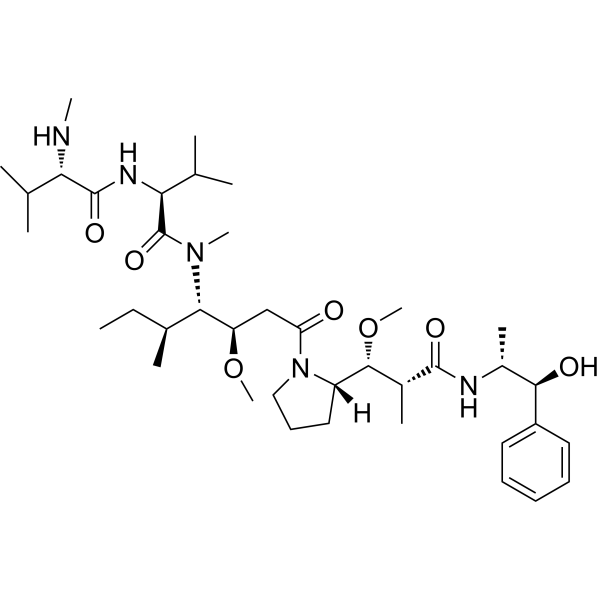
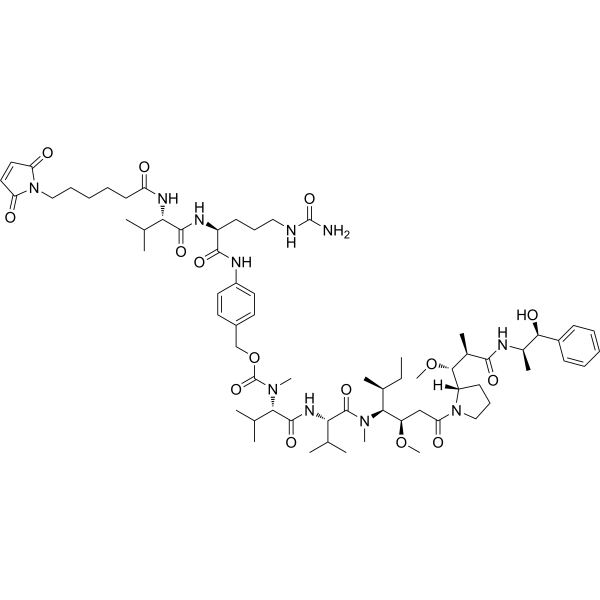
Cetuximab MMAE is an antibody-drug conjugate (ADC) targeting EGFR, formed by the random conjugation of the Cetuximab (HY-P9905) antibody and VcMMAE (HY-15575) via reduced interchain cysteines. Cetuximab MMAE binds to EGFR, blocks ligand interactions, inhibits downstream signal transduction, mediates receptor internalization, and delivers MMAE to induce G2/M phase cell cycle arrest, inhibit microtubule polymerization, interfere with mitosis, and exert radiosensitizing effects. Cetuximab MMAE limits the toxicity of free MMAE to EGFR-expressing cells and circumvents EGFR resistance mechanisms. Cetuximab MMAE is applicable to research related to EGFR+ tumors.
For research use only. We do not sell to patients.
- Purity : 99.64%
- Molecular Weight:150804 (average)
-
Storage:
-80°C, protect from light


To place orders, for customer services and technical support, please contact: MedChemExpress USA
Tel: 609-228-6898 E-mail: [email protected] [email protected]


-
 Biological Activity
-
Chemical Information
- Protocols
- Purity & Documentation
- References
-
 Help & FAQs


-

HY-P9905
CetuximabEGFR Inhibitor -

HY-P9921
Trastuzumab emtansineAntibody-drug Conjugate -

HY-138298A
Trastuzumab deruxtecanHER2 ADC -

HY-141601
Telisotuzumab vedotinAnti-c-MET ADC -

HY-P99813
Patritumab deruxtecanHER3-Directed ADC -

HY-P99045
SacituzumabAnti-TROP-2 Antibody -

HY-132254
Sacituzumab govitecanTrop-2 ADC -
HY-15162
Monomethyl auristatin EAntimitotic Agent -
HY-15575
VcMMAEDrug-Linker Conjugate for ADC -

HY-141598
Datopotamab deruxtecan (solution)TROP2-Targeted ADC -

HY-132254A
Sacituzumab govitecan (solution)Trop-2 ADC -

HY-P99843
DatopotamabAnti-TROP2 Antibody
All EGFR Isoforms
More

Biological Activity
Description
Cellular Effect
|
Cell Line

|
Type | Value | Description | References |
|---|---|---|---|---|
| MIA PaCa-2 | IC50 |
1377 pM
|
Antiproliferative activity against human MIA PaCa-2 pancreatic cancer cells assessed as reduction in cell viability incubated for 96 hrs by MTT assay.
Antiproliferative activity against human MIA PaCa-2 pancreatic cancer cells assessed as reduction in cell viability incubated for 96 hrs by MTT assay.
|
32913288 |
| PANC-1 | IC50 |
39 pM
|
Antiproliferative activity against human PANC-1 pancreatic cancer cells assessed as reduction in cell viability incubated for 96 hrs by MTT assay.
Antiproliferative activity against human PANC-1 pancreatic cancer cells assessed as reduction in cell viability incubated for 96 hrs by MTT assay.
|
32913288 |
In Vitro
Cetuximab MMAE (0.5-5 nM) specifically binds to EGFR+ tumor cell lines (CAL-27, SCC-61, A-549), induces G2/M arrest across the 0.5-5 nM range, and restricts MMAE-mediated toxicity and radiosensitization to these EGFR+ cells[1].
Cetuximab MMAE (2 nM; overnight) induces morphological changes consistent with G2/M cell cycle arrest in CAL-27 cells[8].
Cetuximab MMAE (2-5 nM; overnight) induces G2/M cell cycle arrest in CAL-27 cells, but does not alter the cell cycle profile of OE19 cells[8].
Cetuximab MMAE (0.000256-500 nM; 96 h) potently reduces viability of KRAS mutant MIA PaCa-2 and PANC-1 human pancreatic cancer cells in an EGFR-dependent manner, with IC50 values of 1377 pM and 39 pM, respectively[5].
Cetuximab MMAE (0.00005-50 nM; 8-14 days) suppresses colony formation of KRAS mutant MIA PaCa-2 and PANC-1 human pancreatic cancer cells in an EGFR-dependent manner[5].
Cetuximab MMAE (0.5 nM; 72 h)-mediated cytotoxicity in PANC-1 human pancreatic cancer cells is dependent on EGFR expression, as EGFR knockdown significantly reduces cell death induced by 0.5 nM Cetuximab MMAE[5].
Cetuximab MMAE (0.1-2 nM; 15 min on ice) binds to CAL-27 cells in a dose-dependent manner, but does not bind to OE19 cells[8].
Cetuximab MMAE (0.01-10 nM; 72 h) potently kills CAL-27 cells across tested concentrations over 72 h, but has minimal cytotoxic effect on OE19 cells[8].
Cetuximab MMAE (0.5 nM for CAL-27, 20 nM for LN229; overnight before 6 Gy irradiation) enhances ionizing radiation-induced DNA double-strand breaks in CAL-27 cells, but does not do so in low EGFR-expressing LN229 cells[8].
Cetuximab MMAE (2 nM; overnight before 6 Gy irradiation) enhances ionizing radiation-induced DNA double-strand breaks in CALU3 cells, but does not do so in HER2-positive OE19 cells[8].
MedChemExpress (MCE) has not independently confirmed the accuracy of these methods. They are for reference only. Further protocols information, click here.
-
Cell Line:MIA PaCa-2 and PANC-1 human pancreatic cancer cell lines (KRAS mutant)
-
Concentration:0.000256-500 nM (MTT assay); 5 nM (with competing cetuximab)
-
Incubation Time:96 h
-
Result:Induced concentration-dependent reduction in cell viability in both cell lines, with half-maximal inhibitory concentrations (IC50) of 1377 pM for MIA PaCa-2 and 39 pM for PANC-1.
Inhibited CTX-MMAE cytotoxicity in a concentration-dependent manner when co-treated with increasing concentrations of competing cetuximab, confirming EGFR-dependent activity.
-
Cell Line:PANC-1 human pancreatic cancer cell line (KRAS mutant)
-
Concentration:0.5 nM
-
Incubation Time:72 h
-
Result:Induced potent cell death in mock-transfected or control siRNA-transfected PANC-1 cells.
Significantly alleviated cytotoxic effect in cells with EGFR knockdown.
-
Cell Line:CAL-27 (EGFR-positive) and OE19 (HER2-positive) cells
-
Concentration:2-5 nM
-
Incubation Time:overnight
-
Result:Caused accumulation of CAL-27 cells in the G2/M phase of the cell cycle.
Had no effect on the cell cycle profile of OE19 cells.
-
Cell Line:CAL-27 (EGFR-positive) and OE19 (HER2-positive) cells
-
Concentration:0.01-10 nM
-
Incubation Time:72 h
-
Result:Was highly cytotoxic to CAL-27 cells, with potency comparable to free MMAE and much more potent than cetuximab alone.
Showed minimal cytotoxicity to OE19 cells.
In Vivo
Cetuximab MMAE (0.1-5 mg/kg; i.v.; days 0 and 8) elicits dose-dependent, EGFR-targeted antitumor activity in MIA PaCa-2 pancreatic cancer xenografts, with the 5 mg/kg dose achieving 99% tumor volume reduction and durable complete regressions in 4/5 mice[5].
Cetuximab MMAE (0.1-5 mg/kg; i.v.; days 0 and 8) elicits dose-dependent, EGFR-targeted antitumor activity in PANC-1 pancreatic cancer xenografts, with the 5 mg/kg dose increasing median survival to TVL from 23 to 61 days[5].
Cetuximab MMAE (4 mg/kg; i.v.; single dose) does not accumulate or exert significant anti-tubulin activity in HER2-expressing OE19 tumour xenografts, demonstrating receptor-dependent targeting[8].
Cetuximab MMAE (4 mg/kg; i.v.; single dose) persists in EGFR-expressing CAL-27 tumour xenografts for at least 72 hours following intravenous administration[8].
Cetuximab MMAE (4 mg/kg; i.v.; single dose) accumulates in EGFR-expressing SCC-61 tumour xenografts and delivers active MMAE to induce G2/M arrest, with no change in accumulation following focal irradiation[8].
MedChemExpress (MCE) has not independently confirmed the accuracy of these methods. They are for reference only.
-
Animal Model:Nude mice[1]
-
Dosage:0.25 nmoles
-
Administration:i.v.; single dose
-
Result:Localized specifically to EGFR+ CAL27 and SCC-61 tumor xenografts.
Produced a significant tumor growth delay compared to radiation or antibody alone.
-
Animal Model:C.B Igh-1ᵇ lcrTac-PrkdcSCID (male, severe combined immunodeficient, subcutaneous implantation of human MIA PaCa-2 pancreatic cancer tumor fragments)[5]
-
Dosage:0.1 mg/kg; 1 mg/kg; 5 mg/kg
-
Administration:i.v.; days 0 and 8
-
Result:Reduced mean tumor volume by 99% relative to saline controls by day 10, with 4/5 mice experiencing complete, durable tumor regressions with no recurrence through the 111-day endpoint.
Increased median survival to TVL to 24 days (vs. 14.5 days for saline controls).
Reduced mean tumor volume by 47% relative to controls by day 10.
Reduced mean tumor volume by 13% relative to controls by day 10, with a median survival to TVL of 14 days.
Caused no adverse effects on body weight or condition across all doses.
-
Animal Model:C.B Igh-1ᵇ lcrTac-PrkdcSCID (male, severe combined immunodeficient, subcutaneous implantation of human PANC-1 pancreatic cancer tumor fragments)[5]
-
Dosage:0.1 mg/kg; 1 mg/kg; 5 mg/kg
-
Administration:i.v.; days 0 and 8
-
Result:Achieved statistically significant tumor volume reduction relative to saline controls by day 12, nearly tripled median survival to TVL to 61 days (vs. 23 days for saline controls), and caused no adverse effects on body weight.
Increased median survival to TVL to 30 days (statistically significant vs. controls) and caused no adverse effects on body weight.
Had a median survival to TVL of 23 days, matching saline controls.
-
Animal Model:athymic nu/nu (female, 6-8 weeks old, subcutaneous flank/upper thigh xenografts with CAL-27 cells)[8]
-
Dosage:4 mg/kg
-
Administration:i.v.; single dose
-
Result:Slowed tumour growth more effectively than free monomethyl auristatin E or cetuximab alone in non-irradiated tumours.
Significantly increased tumour growth delay (P<0.0001 compared to all other groups by day 35 post-treatment) when combined with irradiation.
Produced significantly smaller tumours than those receiving co-administered cetuximab and free monomethyl auristatin E (P<0.05 by day 28) in irradiated mice.
Caused no significant weight loss.
Increased accumulation of cells in the G2/M phase compared to cetuximab alone.
Resulted in ~5 nM monomethyl auristatin E in tumours 24 hours post-injection, and ~25 nM monomethyl auristatin E in tumours 48 hours post-injection.
-
Animal Model:athymic nu/nu (female, 6-8 weeks old, subcutaneous flank/upper thigh xenografts with OE19 cells)[8]
-
Dosage:4 mg/kg
-
Administration:i.v.; single dose
-
Result:Showed minimal accumulation in HER2-expressing OE19 tumour xenografts compared to Cy5-labelled T-MMAE.
Caused no significant increase in pS10 Histone H3 staining in OE19 tumours.
-
Animal Model:athymic nu/nu (female, 6-8 weeks old, subcutaneous upper thigh xenografts with SCC-61 cells)[8]
-
Dosage:4 mg/kg
-
Administration:i.v.; single dose
-
Result:Accumulated in EGFR-expressing SCC-61 tumour xenografts for up to 48 hours post-injection, with no appreciable change following focal irradiation.
Showed increased pS10 Histone H3 staining compared to cetuximab alone.
-
Animal Model:athymic nu/nu (female, 6-8 weeks old, subcutaneous flank xenografts with CAL-27 cells)[8]
-
Dosage:4 mg/kg
-
Administration:i.v.; single dose
-
Result:Accumulated in EGFR-expressing CAL-27 tumour xenografts for up to 72 hours post-injection.


Chemical Information
-
Appearance Liquid
-
Molecular Weight 150804 (average)
-
Color Colorless to light yellow
-
SMILES
[Cetuximab MMAE]
-
Shipping
Shipping with dry ice.
-
Storage
-80°C, protect from light

Protocols
-
Flow cytometric DNA-content cell-cycle staining
Flow cytometric DNA-content cell-cycle staining measures the fluorescence intensity of DNA-bound fluorochromes in single cells or nuclei to estimate DNA content distributions, allowing assignment of populations to G0/G1, S, and G2/M phases by DNA histogram deconvolution. Propidium iodide (PI) intercalates into DNA, and PI fluorescence is proportional to cellular DNA content when staining is performed under conditions that make DNA accessible and minimize non-DNA signal. Cells with G2/M DNA content are expected to show approximately twice the fluorescence intensity of G0/G1 cells, while S-phase cells occupy intermediate fluorescence values. PI-based DNA-content analysis can also detect cells with fractional DNA content, often reported as sub-G1, when DNA fragmentation and extraction during staining reduce retained DNA signal in apoptotic cells. DAPI is an alternative DNA fluorochrome for univariate DNA-content analysis, while bivariate approaches combining DNA content with proliferation
-
BrdU Incorporation Assay
Bromodeoxyuridine (BrdU) incorporation assay is based on the principle that BrdU, a thymidine analog, is incorporated into newly synthesized DNA during the S phase of the cell cycle, thereby serving as a marker of DNA replication and cellular proliferation. Incorporated BrdU can be detected using anti-BrdU antibodies following DNA denaturation, enabling visualization or quantification of proliferating cells through immunochemical detection methods such as immunofluorescence or immunohistochemistry.
-
Protocol for Cell Cycle
Cell-cycle analysis by flow cytometry measures DNA content in single cells to estimate the fraction of cells in G0/G1, S, and G2/M phases. Propidium iodide intercalates into DNA, and after RNA removal with RNase, fluorescence intensity reflects cellular DNA content: 2N cells are assigned to G0/G1, cells between 2N and 4N to S phase, and 4N cells to G2/M. DNA-content analysis alone cannot reliably separate G0 from G1 or G2 from M. Ki-67 can distinguish quiescent G0 cells from cycling cells, EdU or BrdU incorporation marks active DNA synthesis in S phase, and phospho-histone H3 staining identifies mitotic cells within the 4N population.


Purity & Documentation
-
Data Sheet (289 KB)
-
SDS (251 KB)
- English - EN (251 KB)
- Français - FR (251 KB)
- Deutsch - DE (251 KB)
- Norwegian - NO (251 KB)
- Español - ES (251 KB)
- Swedish - SV (251 KB)
- Italian - IT (251 KB)
- Korean - KR (251 KB)
- Portuguese - PT (251 KB)
-
Handling Instructions (2659 KB)
References
[2]. Kang X, et al. Effectiveness of Antibody-Drug Conjugate (ADC): Results of In Vitro and In Vivo Studies. Med Sci Monit. 2018 Mar 8;24:1408-1416. [Content Brief]
[4]. Wang Q, et al. Cetuximab produced from a goat mammary gland expression system is equally efficacious as innovator cetuximab in animal cancer models. Biotechnol Rep (Amst). 2020 Sep 22;28:e00533. [Content Brief]
[5]. Greene MK, et al. Controlled coupling of an ultrapotent auristatin warhead to cetuximab yields a next-generation antibody-drug conjugate for EGFR-targeted therapy of KRAS mutant pancreatic cancer. British journal of cancer. 2020 Nov;123(10):1502-1512. [Content Brief]
[6]. Tsuchikama K, et al. Exploring the next generation of antibody-drug conjugates. Nature reviews. Clinical oncology. 2024 Mar;21(3):203-223. [Content Brief]
[7]. Hingorani DV, et al. Monomethyl auristatin antibody and peptide drug conjugates for trimodal cancer chemo-radio-immunotherapy. Nature communications. 2022 Jul 05;13(1):3869. [Content Brief]

Calculators
Concentration (start) × Volume (start) = Concentration (final) × Volume (final)


Cetuximab MMAE Related Classifications
HY-171135 Related Classifications
 Powered by Bioz