Search Result
Results for "
P-388 leukemia cells
" in MedChemExpress (MCE) Product Catalog:
| Cat. No. |
Product Name |
Target |
Research Areas |
Chemical Structure |
-
- HY-N2306
-
|
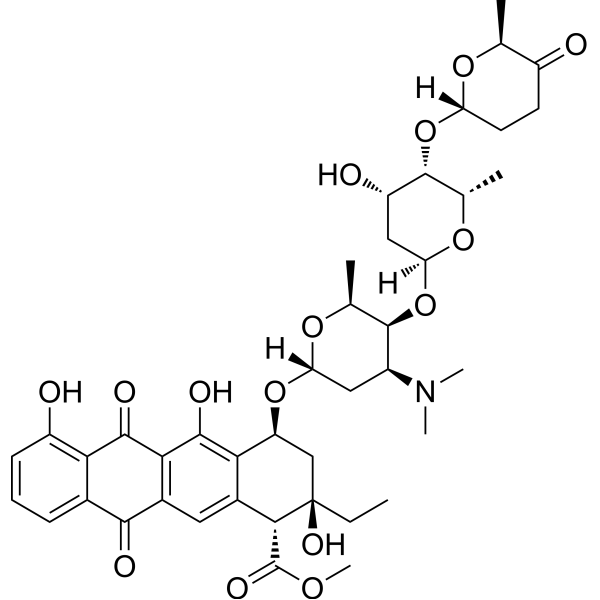
Aclarubicin
|
Topoisomerase
DNA/RNA Synthesis
Proteasome
Antibiotic
|
Cancer
|
|
Aclacinomycin A (Aclarubicin) is an orally active and potent anthracycline antitumor antibiotic. Aclacinomycin A is an inhibitor of topoisomerase I and II. Aclacinomycin A inhibits synthesis of nucleic acid, especially RNA. Aclacinomycin A might inhibit the 26S protease complex as well as the ubiquitin-ATP-dependent proteolysis .
|
-
-
- HY-N3308
-
|
|
Apoptosis
|
Cancer
|
|
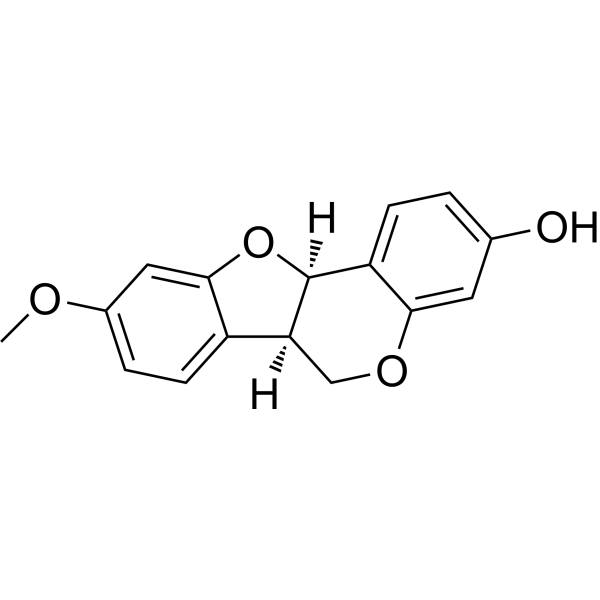
Medicarpin is a flavonoid isolated from Medicago sativa. Medicarpin induces apoptosis and overcome multidrug resistance in leukemia P388 cells by modulating P-gp-mediated efflux of agents .
|
-
-
- HY-N0128
-
|
|
Environmental Pollutants
Apoptosis
|
Cancer
|
|
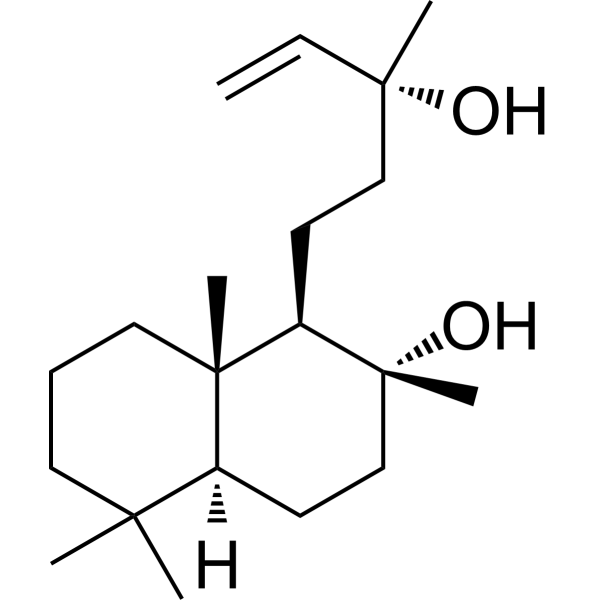
Sclareol is isolated from Salvia sclarea with anticarcinogenic activity. Sclareol shows strong cytotoxic activity against mouse leukemia (P-388), human epidermal carcinoma (KB) cells and human leukemia cell lines. Sclareol induces cell apoptosis .
|
-
-
- HY-120504
-
|
|
Bacterial
|
Infection
Cancer
|
|
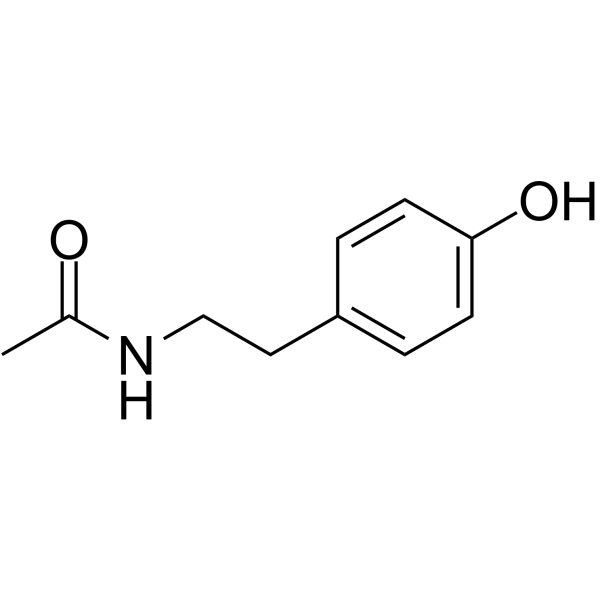
N-Acetyltyramine is a quorum-sensing inhibitor (QSI) compound produced by V. alginolyticus M3-10. N-Acetyltyramine is capable of inhibiting the QS of C. violaceum ATCC 12472. N-acetyltyramine reverses resistance in Doxorubicin-resistant leukemia P388 cells .
|
-
-
- HY-N2306A
-
|
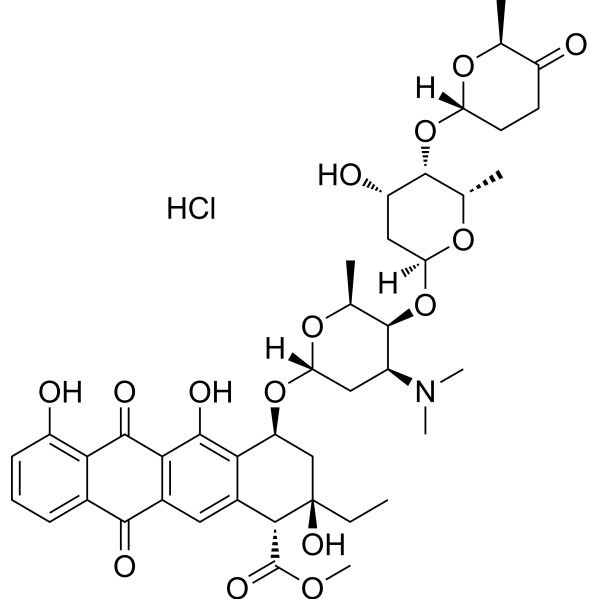
Aclarubicin hydrochloride
|
Topoisomerase
DNA/RNA Synthesis
Proteasome
Antibiotic
|
Cancer
|
|
Aclacinomycin A (Aclarubicin) hydrochloride is an orally active and potent anthracycline antitumor antibiotic. Aclacinomycin A hydrochloride is an inhibitor of topoisomerase I and II. Aclacinomycin A hydrochloride inhibits synthesis of nucleic acid, especially RNA. Aclacinomycin A hydrochloride might inhibit the 26S protease complex as well as the ubiquitin-ATP-dependent proteolysis .
|
-
-
- HY-N6065
-
|
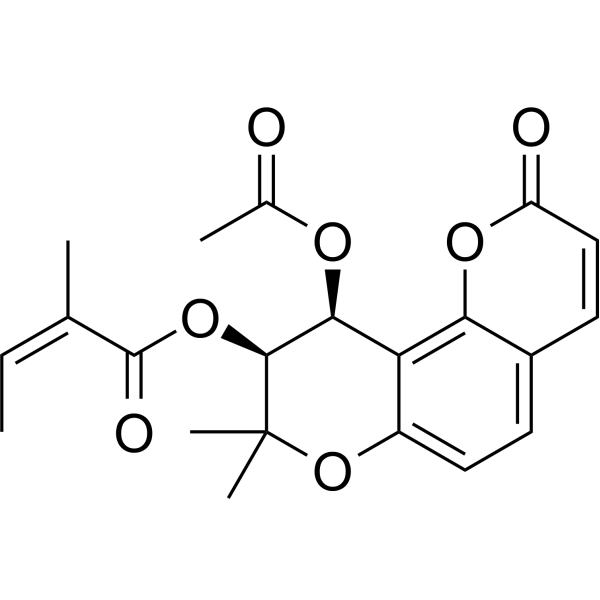
(+)-Praeruptorin A
|
Calcium Channel
Drug Isomer
Cytochrome P450
iGluR
Apoptosis
|
Cardiovascular Disease
Neurological Disease
|
|
Praeruptorin A ((+)-Praeruptorin A) is an orally active isomer of (±)-Praeruptorin A (HY-N0081). Praeruptorin A also acts as a Calcium channel blocker. Praeruptorin A can be isolated from Peucedanum. Praeruptorin A serves as a substrate for CYP3A4. Praeruptorin A downregulates NMDA receptors containing GluN2B and inhibits neuronal Apoptosis. Praeruptorin A mediates vasodilation, inhibits vascular hypertrophy and reduces blood pressure. Praeruptorin A can be used in research related to neurological diseases, myocardial ischemia, heart failure, exertional angina, renovascular hypertension and spontaneous hypertension .
|
-
-
- HY-103653
-
|
|
MetAP
|
Cardiovascular Disease
Cancer
|
|
CKD-731 is a Fumagillin (HY-B0751) analogue. CKD-731 inhibits the proliferation of calf pulmonary artery endothelial cells (CPAE), lymphoma EL-4 cells and murine leukemia P388D1 cells. CKD-731 exerts the effect of inhibiting MetAP-2 activity and blocking angiogenesis. CKD-731 can be used for the research of anti-angiogenesis-related cancer .
|
-

-
- HY-N2306R
-
|
Aclarubicin (Standard)
|
Reference Standards
Topoisomerase
DNA/RNA Synthesis
Proteasome
Antibiotic
|
Cancer
|
|
Aclacinomycin A (Standard) is the analytical standard of Aclacinomycin A. This product is intended for research and analytical applications. Aclacinomycin A (Aclarubicin) is an orally active and potent anthracycline antitumor antibiotic. Aclacinomycin A is an inhibitor of topoisomerase I and II. Aclacinomycin A inhibits synthesis of nucleic acid, especially RNA. Aclacinomycin A might inhibit the 26S protease complex as well as the ubiquitin-ATP-dependent proteolysis .
|
-

-
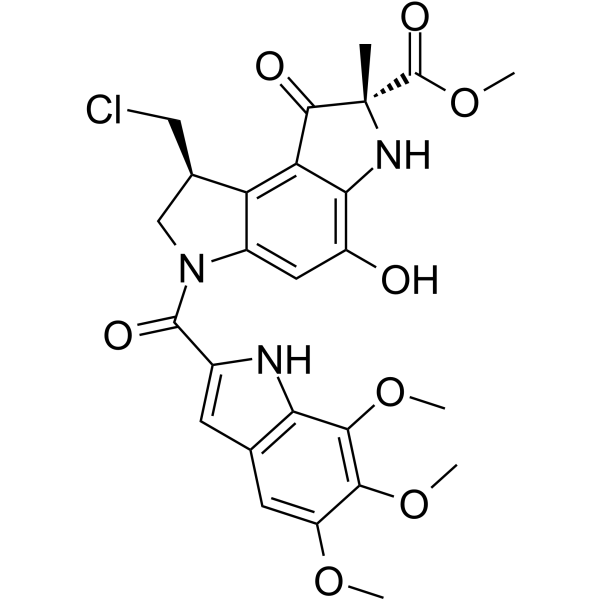
- HY-12458
-
|
|
DNA/RNA Synthesis
|
Infection
Cancer
|
|
Pyrindamycin A is an antibiotic that inhibits DNA synthesis. Pyrindamycin A shows antitumor activities against murine leukemia, exhibits stronger cytotoxic activities towards murine and human tumor cell lines and especially towards doxorubicin-resistant cells, inhibits P388 and P388/ADR cells with the same IC50 of 3.9 μg/ml .
|
-
-
- HY-125037
-
|
|
Estrogen Receptor/ERR
HSP
|
Cancer
|
|
Diptoindonesin G is a 2-arylbenzofuran derivative and a modulator of estrogen receptor and HSP90 middle domain. Diptoindonesin G exhibits strong cytotoxicity against mouse leukemia P-388 cells with an IC50 of 13.2 μM. Diptoindonesin G has antitumor activity and can be used in the research of tumors such as breast cancer .
|
-

-
- HY-121123
-
|
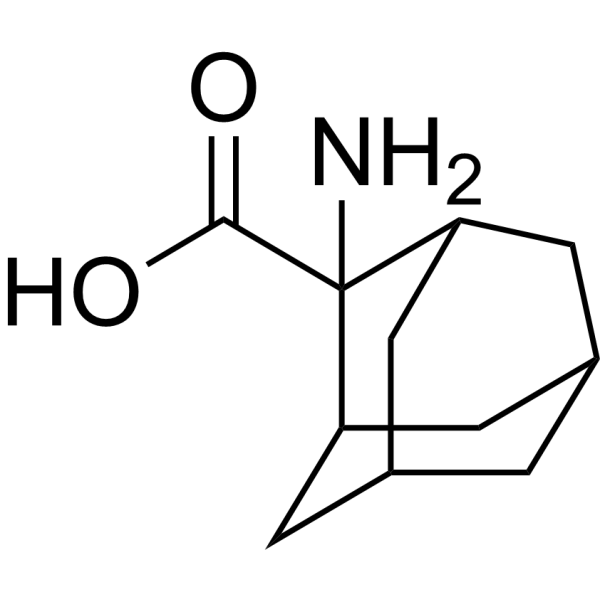
2-Aminoadamantane-2-carboxylic acid
|
Aminopeptidase
|
Cancer
|
|
Adamantanine (2-Aminoadamantane-2-carboxylic acid) inhibits the transport of methionine (Ki is 0.76 mM) and leucine into Ehrlich ascites carcinoma cells. Adamantanine inhibits proliferation of P388 lymphocytic leukemia cells with an IC50 of >1 mM. Adamantanine inhibits the leucine aminopeptidase with an I/S0.5 of 10.5 .
|
-
-
- HY-114648
-
|
|
Bacterial
|
Infection
Cancer
|
|
AJI-9561 is a benzoxazole derivative produced by Streptomyces sp. AJI-9561 exhibits cytotoxicity and antibacterial activity. AJI-9561 inhibits the proliferation of Jurkat T cells and mouse P388 leukemia cells, with its IC50 being 0.88 and 1.63 μM respectively. AJI-9561 can be used for research on anti-cancer and antibacterial properties .
|
-

-
- HY-N0128R
-
|
|
Reference Standards
Apoptosis
|
Cancer
|
|
Sclareol (Standard) is the analytical standard of Sclareol. This product is intended for research and analytical applications. Sclareol is isolated from Salvia sclarea with anticarcinogenic activity. Sclareol shows strong cytotoxic activity against mouse leukemia (P-388), human epidermal carcinoma (KB) cells and human leukemia cell lines. Sclareol induces cell apoptosis .
|
-

-
- HY-113771
-
|
|
Bacterial
|
Infection
Cancer
|
|
Saquayamycin C has antimicrobial effect, but it has weaker effect against Gram-negative bacteria. Saquayamycin C has inhibitory effect on leukemia P388 cells and Adriamycin-resistant P388 cells .
|
-

-
- HY-N13941
-
|
|
Bacterial
|
Infection
Cancer
|
|
Baciphelacin is mainly resistant to gram-positive bacteria and has the activity of inhibiting Newcastle disease virus and leukemia P-388 cells .
|
-

-
- HY-N13870
-
|
|
Bacterial
|
Infection
Cancer
|
|
Saquayamycin A1 has antimicrobial effect, but it has weaker effect against Gram-negative bacteria. Saquayamycin A1 has inhibitory effect on leukemia P388 cells and Adriamycin-resistant P388 cells .
|
-

-
- HY-N13868
-
|
|
Bacterial
|
Infection
Cancer
|
|
Saquayamycin C1 has antimicrobial effect, but it has weaker effect against Gram-negative bacteria. Saquayamycin C1 has inhibitory effect on leukemia P388 cells and Adriamycin-resistant P388 cells .
|
-

-
- HY-N14621
-
|
|
Others
|
Cancer
|
|
Harzialacton A has weak cytotoxicity to P388 leukemia cells with ED50 of > 100 μg/mL .
|
-

-
- HY-N13878
-
-

-
- HY-118726
-
|
|
Topoisomerase
|
Cancer
|
|
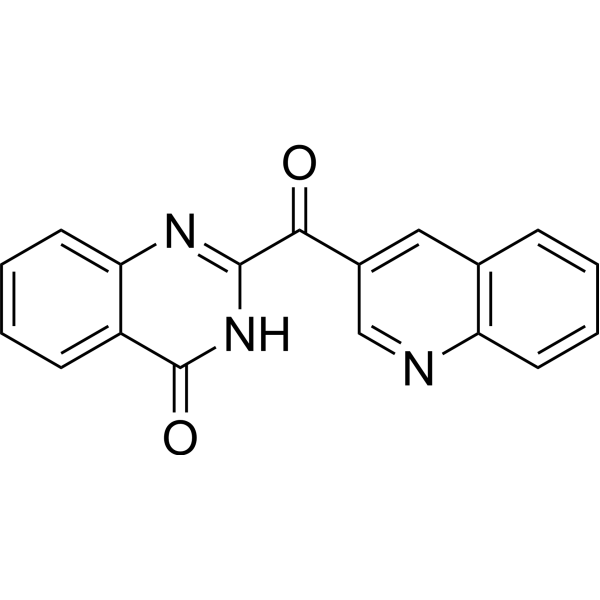
Luotonin F is an alkaloid found in the aerial parts of the P. nigellastrum Bunge. Luotonin F shows cytotoxic activity against mouse leukemia P-388 cells by inhibiting human topoisomerase II .
|
-
-
- HY-N14522
-
|
|
Bacterial
|
Infection
Cancer
|
|
Gilvocarcin E has anti-Gram-positive bacterial activity and can inhibit sarcoma 180 and P388 leukemia cells .
|
-

-
- HY-129752
-
|
|
Antibiotic
|
Cancer
|
|
Piperafizine B exhibits slightly cytotoxicity in moser cells, P388 cells and Vincristine (VCR) (HY-N0488)-resistant P388 cells (IC50s is 23.8, 22.6 and 23.7 μg/mL, respectively). Piperafizine B exhibits synergistic effects with Vincristine, enhances the VCR-induced cytotoxicity and ameliorates the leukemia in mouse model .
|
-

-
- HY-N14303
-
|
|
Antibiotic
Bacterial
|
Infection
Cancer
|
|
16-Methyloxazolomycin is an antibiotic. 16-Methyloxazolomycin has the effect of resisting bacteria and algae. 16-Methyloxazolomycin against leukemia P388 and human lung adenocarcinoma cells .
|
-

-
- HY-12459
-
|
|
Bacterial
|
Infection
|
|
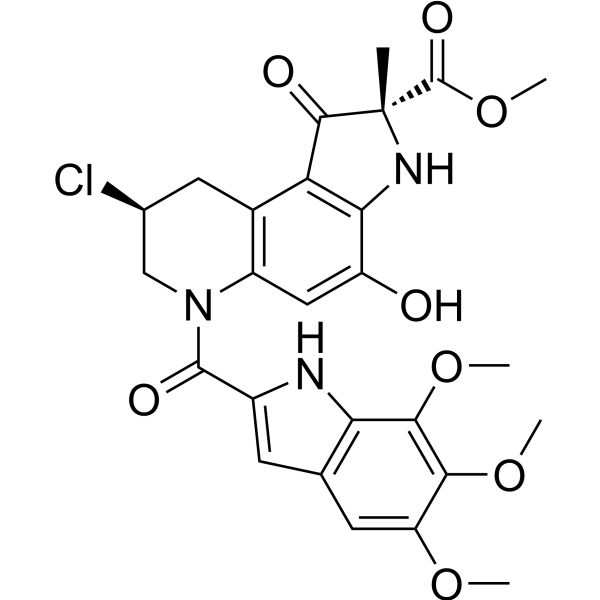
Pyrindamycin B is an antibiotic, actives against gram-positive and gram-negative bacterias, and exhibits strong therapeutic effects against both agent-sensitive and resistant cells of P388 leukemia in mice .
|
-
-
- HY-N14019
-
|
|
Antibiotic
Bacterial
|
Infection
Cancer
|
|
Glidobactin B is an anti-tumor antibiotic. Glidobactin B has the activity against pathogenic fungi and yeast. Glidobactin B also extends the survival of mice inoculated with leukemia P388 cells .
|
-

-
- HY-N14023
-
|
|
Antibiotic
Fungal
|
Infection
Cancer
|
|
Glidobactin G is an anti-tumor antibiotic. Glidobactin G has the activity against pathogenic fungi and yeast. Glidobactin G also extends the survival of mice inoculated with leukemia P388 cells .
|
-

-
- HY-N14022
-
|
|
Antibiotic
Fungal
|
Infection
Cancer
|
|
Glidobactin F is an anti-tumor antibiotic. Glidobactin F has the activity against pathogenic fungi and yeast. Glidobactin F also extends the survival of mice inoculated with leukemia P388 cells .
|
-

-
- HY-N10206
-
|
|
Endogenous Metabolite
|
Cancer
|
|
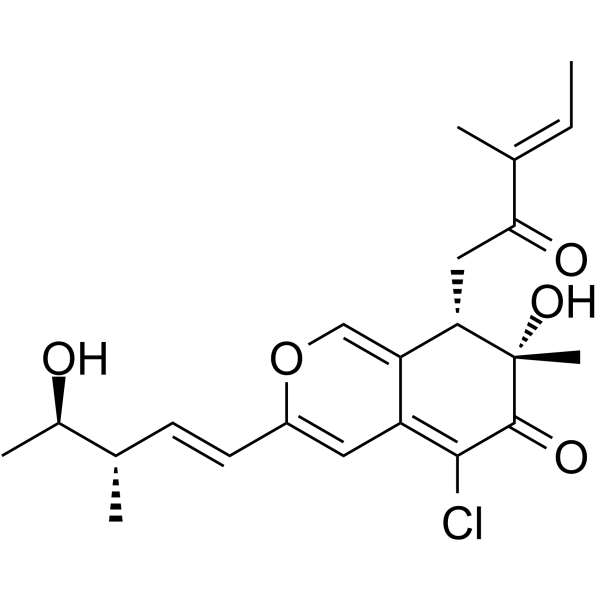
11-epi-Chaetomugilin I is a metabolite found in Chaetomium globosum. 11-epi-Chaetomugilin I exhibits significant cytotoxic activity against the murine P388 leukemia cell line, the human HL-60 leukemia cell line, the murine L1210 leukemia cell line, and the human KB epidermoid carcinoma cell line .
|
-
-
- HY-N14095
-
|
|
Bacterial
HIV
|
Infection
Cancer
|
|
Curromycin A has antibacterial activity against Gram-positive bacteria such as Bacillus subtilis. Curromycin A can inhibit the replication of human immunodeficiency virus (HIV), inhibit mouse melanoma B16 and leukemia P388 cells .
|
-

-
- HY-N14496
-
|
|
Bacterial
|
Infection
Cancer
|
|
Nisamycin has stronger anti-Gram-positive bacteria and weaker anti-fungal and individual Gram-negative bacteria activities. Nisamycin has weak cytotoxic effect. The IC50 of mouse leukemia P388 cells is 4.8 μg/mL .
|
-

-
- HY-N14110
-
|
|
Bacterial
HIV
|
Infection
|
|
Curromycin B has antibacterial activity against Gram-positive bacteria such as Bacillus subtilis. Curromycin B can inhibit the replication of human immunodeficiency virus (HIV), inhibit mouse melanoma B16 and leukemia P388 cells .
|
-

-
- HY-167671
-
|
|
Topoisomerase
|
Cancer
|
|
BE-10988 is a DNA topoisomerase inhibitor. BE-10988 inhibits the growth of Doxorubicin (HY-15142A)-resistant and vincristine-resistant P388 mouse leukemia cell lines by increasing the formation of DNA topoisomerase complexes .
|
-

-
- HY-N18086
-
|
|
Others
|
Cancer
|
|
Bruceanic acid D is a quassinoid compound and cytotoxic agent that can be isolated from the xylem powder of Brucea antidysenterica. Bruceanic acid D specifically inhibits P-388 lymphocytic leukemia cells but shows no activity against human lung cancer cells and human colon cancer cells. Bruceanic acid D can be used in studies related to P-388 lymphocytic leukemia .
|
-

-
- HY-N5186
-
|
|
Antibiotic
Bacterial
|
Infection
Cancer
|
|
Cypemycin is a linaridin antibiotic that can inhibit cancer cell activity, inhibits P388 leukemia cells with IC50 of 1.3 μg/mL. Cypemycin can inhibit human tumor cells such as HeLa S3, HHCC-1, HCCS-M and Slex with IC50 of >25 μg/mL .
|
-

-
- HY-123325
-
|
|
Antibiotic
Bacterial
|
Infection
Cancer
|
|
Kapurimycin A1 is an anbitiotic that can be isolated from Streptomyces. Kapurimycin A1 has a significant inhibitory effect on Gram-positive bacteria, exhibits cytotoxicity to cultured mammalian cells, and shows strong antitumor activity against the mouse leukemia P388 cell line .
|
-

-
- HY-N1649
-
|
|
Others
|
Cancer
|
|
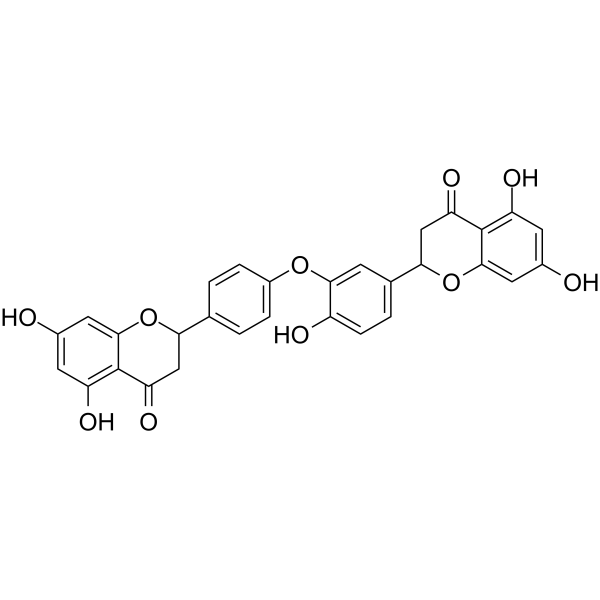
2,3,2'',3''-Tetrahydroochnaflavone is a biflavonoid, which can be isolated from the leaves of Quintinia acutifolia. 2,3,2'',3''-Tetrahydroochnaflavone shows some cytotoxicity against P388 murine lymphocytic leukemia cells, with an IC50 of 8.2 µg/mL .
|
-
-
- HY-113578
-
|
|
Antibiotic
Bacterial
|
Infection
Cancer
|
|
PD 116152 is a phenazine Antibiotic with antimicrobial and antitumor activity. PD 116152 possesses cytotoxic activity against L1210 lymphocytic leukemia and human colon adenocarcinoma (HCT-8) cells with IC50 values of 5.2 x 10 -7 M and 7.1 x 10 -7 M, respectively. PD 116152 is promising for research of P388 lymphocytic leukemia .
|
-

-
- HY-N14020
-
|
GlbC
|
Antibiotic
Fungal
|
Infection
Cancer
|
|
Glidobactin C (GlbC) is an anti-tumor antibiotic. Glidobactin C (GlbC) has the activity against pathogenic fungi and yeast. Glidobactin C has anti-Candida albicans and Aspergillus fumigatus activity with a MIC of 0.8 μg/mL. Glidobactin C also extends the survival of mice inoculated with leukemia P388 cells .
|
-

-
- HY-N9210
-
|
|
Others
|
Cancer
|
|
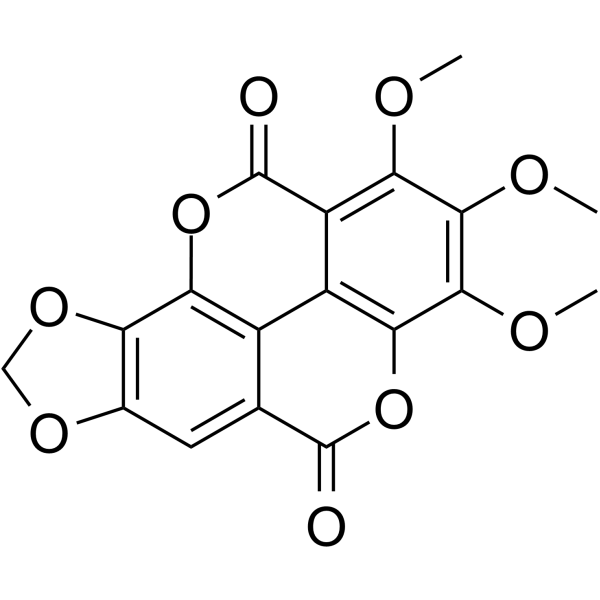
1,2,3-Tri-O-methyl-7,8-methyleneflavellagic acid, a ellagic acid derivative of Agrostistachys hookeri, exhibits activity against cultured P-388 lymphocytic leukemia cells .
|
-
-
- HY-137936
-
|
|
Antibiotic
|
Infection
|
|
Terrecyclic acid is a sesquiterpene originally isolated from A. terreus with antibiotic and anticancer activity. It is active against S. aureus, B. subtilis, and M. roseus (MICs=25, 50, and 25 μg/mL, respectively). Terrecyclic acid induces a heat shock response, increases levels of reactive oxygen species (ROS), and inhibits NF-κB activity and cell growth in 3T3-Y9-B12 cells.2 In vivo, terrecyclic acid (0.1, 1, and 10 mg/ml) reduces the number of ascitic fluid tumor cells in a mouse model of P388 murine leukemia.
|
-

-
- HY-139090
-
|
28-O-Acetyl-3-Oxobetulin; 3-oxo-28-O-Acetylbetulin
|
Bacterial
HIV
Drug Derivative
|
Cancer
|
|
3-Oxobetulin acetate (28-O-Acetyl-3-Oxobetulin; 3-oxo-28-O-Acetylbetulin) is a derivative of betulin (HY-N0083), a cholesterol biosynthesis inhibitor. 3-Oxobetulin acetate inhibits the growth of P388 murine lymphocytic leukemia cells (EC50=0.12 μg/mL) and human MCF-7 breast cancer, SF-268 CNS cancer, H460 lung cancer, and KM20L2 colon cancer cells (GI50s=8, 10.6, 5.2, and 12.7 μg/mL), but not BxPC-3 pancreatic cancer cells or DU145 prostate cancer cells (GI50s=>10 μg/mL for both). 3-Oxobetulin acetate inhibits the replication of X4-tropic recombinant HIV (NL4.3-Ren) in MT-2 lymphoblastoid cells (IC50=13.4 μM). 3-Oxobetulin acetate is also effective against Listeria donovani amastigotes.
|
-

-
- HY-117285
-
|
Lactoquinomycin A; LQM-A
|
Antibiotic
Bacterial
|
Infection
Cancer
|
|
Lactoquinomycin A is a quinone antibiotic. Lactoquinomycin A has the activity of anti-Gram-positive bacteria and some Gram-negative bacteria, but the effect of anti-Gram-negative bacteria is weak and has no effect on fungi. Lactoquinomycin A inhibits a variety of cell lines including lymphoma L5178Y progenitor, Adriamycin resistant, Bleomycin-resistant, human leukemia K562, mouse leukemia L-1210 and mouse leukemia P 388 with ID50 (μg/mL) of 0.02, 0.006, 0.008, 0.033, 0.013 and 0.03, respectively .
|
-

-
- HY-N14774
-
|
|
Antibiotic
Bacterial
|
Infection
|
|
Lactoquinomycin B is a quinone antibiotic. Lactoquinomycin B has the activity of anti-Gram-positive bacteria and some Gram-negative bacteria, but the effect of anti-Gram-negative bacteria is weak and has no effect on fungi. Lactoquinomycin B inhibits a variety of cell lines including lymphoma L5178Y progenitor, Adriamycin resistant, Bleomycin-resistant, human leukemia K562, mouse leukemia L-1210 and mouse leukemia P 388 with ID50 (μg/mL) of 0.43, 0.21, 0.19, 0.16, 0.2 and 0.12, respectively .
|
-

-
- HY-126802
-
|
|
Bacterial
|
Infection
Cancer
|
|
Saquayamycin B1 has antimicrobial effect, but it has weaker effect against Gram-negative bacteria. Saquayamycin B1 has inhibitory effect on leukemia P388 cells and Adriamycin-resistant P388 cells .
|
-

-
- HY-125321
-
|
|
Others
|
Cancer
|
|
Lychnostatin 2 exhibits cytotoxicity in cell P-388 with an ED50 of 0.19 µg/ml. Lychnostatin 2 can be used in research abour leukemia .
|
-

-
- HY-N15047
-
|
|
Others
|
Cancer
|
|
Barminomycin II shows a strong inhibition of P388 leukemia cells with IC50 of about 0.00002 g/mL .
|
-

-
- HY-N15046
-
|
|
Others
|
Cancer
|
|
Barminomycin I shows a strong inhibition of P388 leukemia cells with IC50 of about 0.00001 g/mL .
|
-

-
- HY-N17875
-
|
(+)-Demethylsalvicanol
|
Drug Derivative
|
Cancer
|
|
Demethylsalvicanol ((+)-Demethylsalvicanol), a diterpene, is a anticancer agent with an IC50 of 0.71 μg/mL against P388 murine leukemia cells. Demethylsalvicanol induces cytotoxic activity against leukemia cells and insect Sf9 cells. Demethylsalvicanol acts as an antifeedant against Leptinotarsa decemlineata. Demethylsalvicanol can be used for the research of leukemia .
|
-

-
- HY-W436478
-
|
|
Drug Derivative
|
Others
|
|
(+)-2,5-epi-Goniothalesdiol is an analogue of Goniothalesdiol, which exhibits significant cytotoxicity against P388 mouse leukemia cells and has insecticidal activity. (+)-2,5-epi-Goniothalesdiol can be synthesized starting from D-mannitol (HY-N0378) .
|
-

-
- HY-P11338
-
|
|
Endogenous Metabolite
|
Cancer
|
|
Microcyclamide (Compound 1), a cytotoxic cyclic hexapeptide, is a microbial secondary metabolite. Microcyclamide can be isolated from the cyanobacterium Microcystis aeruginosa. Microcyclamide has moderate cytotoxicity against P388 murine leukemia cells with an IC50 of 1.2 μg/mL. Microcyclamide can be used for cancers research .
|
-

- HY-182734
-
|
|
CDK
|
Cancer
|
|
BMS-357075 is a pan-CDK inhibitor with CDK1 IC50 18 nM, CDK2 IC50 3 nM, CDK4 IC50 26 nM. BMS-357075 induces cytotoxicity in human ovarian cancer A2780 cells. BMS-357075 exhibits anticancer activity in mice against P388 murine leukemia. BMS-357075 can be used for the research of leukemia .
|
-

- HY-159803
-
|
6-O-(3-Ethoxypropionyl)-3',4'-O-exo-benzylidenechartreusin
|
Endogenous Metabolite
|
Cancer
|
|
IST-622 (6-O-(3-Ethoxypropionyl)-3',4'-O-exo-benzylidenechartreusin) is an anti-tumor agent with significant growth inhibitory activity. IST-622 exhibits significant anti-tumor effects against a variety of mouse tumors such as P388 and L1210 leukemias, B16 melanoma, Lewis lung carcinoma, Colon 26 and Colon 38 adenocarcinomas, and M5076 reticulum cell sarcoma. IST-622 was orally administered and the results showed efficacy in different tumor types. In addition, IST-622 provided significant inhibitory effects against two human tumor xenograft models: large cell lung carcinoma (Lu-116) and gastric adenocarcinoma (St-4). IST-622 also exhibited significant growth inhibitory activity against P388 leukemia in vitro, with a half inhibitory concentration (IC50) more than 20 times lower than CT .
|
-

- HY-N9784
-
|
|
Others
|
Cancer
|
|
2′′,3′′-Dihydroochnaflavone is a flavonoid/flavanone-type ether-linked biflavonoid anti-leukemic compound. 2′′,3′′-Dihydroochnaflavone exhibits significant cytotoxicity against P388 murine lymphocytic leukemia cells (IC50 = 3.1 μg/mL). It can be naturally extracted from the dried leaves of Quintinia acutifolia and has also been previously isolated and identified from Ochna interrima and Luxemburgia nobilis (both Ochnaceae plants). 2′′,3′′-Dihydroochnaflavone can be used in research related to anti-tumor (especially leukemia) applications .
|
-

- HY-N18109
-
|
|
Others
|
Cancer
|
|
Amarouciaxanthin A is a carotenoid. Amarouciaxanthin A can be isolated from Amaroucium pliciferum. Amarouciaxanthin A has anti-cancer activity against leukemia .
|
-

- HY-N19942
-
|
|
Drug Intermediate
|
Cancer
|
|
Scrophuloside A is a phenylpropanoid glycoside identified from the rhizome of Neopicrorhiza scrophulariiflora. Scrophuloside A induces cytotoxicity in leukemia cells with a IC50 of 0.58 μg/mL. Scrophuloside A is applicable to leukemia-related research .
|
-

| Cat. No. |
Product Name |
Type |
-
- HY-N2306R
-
|
Aclarubicin (Standard)
|
Fluorescent Dyes
|
|
Aclacinomycin A (Standard) is the analytical standard of Aclacinomycin A. This product is intended for research and analytical applications. Aclacinomycin A (Aclarubicin) is an orally active and potent anthracycline antitumor antibiotic. Aclacinomycin A is an inhibitor of topoisomerase I and II. Aclacinomycin A inhibits synthesis of nucleic acid, especially RNA. Aclacinomycin A might inhibit the 26S protease complex as well as the ubiquitin-ATP-dependent proteolysis .
|
| Cat. No. |
Product Name |
Target |
Research Area |
-
- HY-P11338
-
|
|
Endogenous Metabolite
|
Cancer
|
|
Microcyclamide (Compound 1), a cytotoxic cyclic hexapeptide, is a microbial secondary metabolite. Microcyclamide can be isolated from the cyanobacterium Microcystis aeruginosa. Microcyclamide has moderate cytotoxicity against P388 murine leukemia cells with an IC50 of 1.2 μg/mL. Microcyclamide can be used for cancers research .
|
| Cat. No. |
Product Name |
Category |
Target |
Chemical Structure |
-
- HY-N2306
-
-
-
- HY-N3308
-
-
-
- HY-N0128
-
-
-
- HY-N2306A
-
-
-
- HY-N6065
-
-
-
- HY-N2306R
-
-
-
- HY-125037
-
-
-
- HY-N0128R
-
-
-
- HY-113771
-
-
-
- HY-N13941
-
-
-
- HY-N13870
-
-
-
- HY-N13868
-
-
-
- HY-N14621
-
-
-
- HY-N13878
-
-
-
- HY-118726
-
-
-
- HY-N14522
-
-
-
- HY-129752
-
|
|
Microorganisms
Antibiotics
Other Antibiotics
Source Classification
|
Antibiotic
|
|
Piperafizine B exhibits slightly cytotoxicity in moser cells, P388 cells and Vincristine (VCR) (HY-N0488)-resistant P388 cells (IC50s is 23.8, 22.6 and 23.7 μg/mL, respectively). Piperafizine B exhibits synergistic effects with Vincristine, enhances the VCR-induced cytotoxicity and ameliorates the leukemia in mouse model .
|
-
-
- HY-N14303
-
-
-
- HY-N14019
-
-
-
- HY-N14023
-
-
-
- HY-N14022
-
-
-
- HY-N10206
-
-
-
- HY-N14095
-
-
-
- HY-N14496
-
-
-
- HY-N14110
-
-
-
- HY-167671
-
-
-
- HY-N18086
-
|
|
Structural Classification
Microorganisms
Terpenoids
Diterpenoids
Source Classification
|
Others
|
|
Bruceanic acid D is a quassinoid compound and cytotoxic agent that can be isolated from the xylem powder of Brucea antidysenterica. Bruceanic acid D specifically inhibits P-388 lymphocytic leukemia cells but shows no activity against human lung cancer cells and human colon cancer cells. Bruceanic acid D can be used in studies related to P-388 lymphocytic leukemia .
|
-
-
- HY-N5186
-
-
-
- HY-123325
-
-
-
- HY-N1649
-
-
-
- HY-N14020
-
|
GlbC
|
Microorganisms
Antibiotics
Other Antibiotics
Source Classification
|
Antibiotic
Fungal
|
|
Glidobactin C (GlbC) is an anti-tumor antibiotic. Glidobactin C (GlbC) has the activity against pathogenic fungi and yeast. Glidobactin C has anti-Candida albicans and Aspergillus fumigatus activity with a MIC of 0.8 μg/mL. Glidobactin C also extends the survival of mice inoculated with leukemia P388 cells .
|
-
-
- HY-N9210
-
-
-
- HY-117285
-
|
Lactoquinomycin A; LQM-A
|
Microorganisms
Antibiotics
Other Antibiotics
Source Classification
|
Antibiotic
Bacterial
|
|
Lactoquinomycin A is a quinone antibiotic. Lactoquinomycin A has the activity of anti-Gram-positive bacteria and some Gram-negative bacteria, but the effect of anti-Gram-negative bacteria is weak and has no effect on fungi. Lactoquinomycin A inhibits a variety of cell lines including lymphoma L5178Y progenitor, Adriamycin resistant, Bleomycin-resistant, human leukemia K562, mouse leukemia L-1210 and mouse leukemia P 388 with ID50 (μg/mL) of 0.02, 0.006, 0.008, 0.033, 0.013 and 0.03, respectively .
|
-
-
- HY-N14774
-
|
|
Microorganisms
Antibiotics
Other Antibiotics
Source Classification
|
Antibiotic
Bacterial
|
|
Lactoquinomycin B is a quinone antibiotic. Lactoquinomycin B has the activity of anti-Gram-positive bacteria and some Gram-negative bacteria, but the effect of anti-Gram-negative bacteria is weak and has no effect on fungi. Lactoquinomycin B inhibits a variety of cell lines including lymphoma L5178Y progenitor, Adriamycin resistant, Bleomycin-resistant, human leukemia K562, mouse leukemia L-1210 and mouse leukemia P 388 with ID50 (μg/mL) of 0.43, 0.21, 0.19, 0.16, 0.2 and 0.12, respectively .
|
-
-
- HY-126802
-
-
-
- HY-125321
-
-
-
- HY-N15047
-
-
-
- HY-N15046
-
-
-
- HY-N17875
-
-
-
- HY-N9784
-
-
-
- HY-N18109
-
-
-
- HY-N19942
-
-
Your information is safe with us. * Required Fields.
Inquiry Information
- Product Name:
- Cat. No.:
- Quantity:
- MCE Japan Authorized Agent:








