
Search Result
Results for "
Site 1
" in MedChemExpress (MCE) Product Catalog:
1
Biochemical Assay Reagents
| Cat. No. |
Product Name |
Target |
Research Areas |
Chemical Structure |
-
- HY-13447A
-
-
-
- HY-135136
-
|
|
Biochemical Assay Reagents
Fluorescent Dye
|
Others
|
|
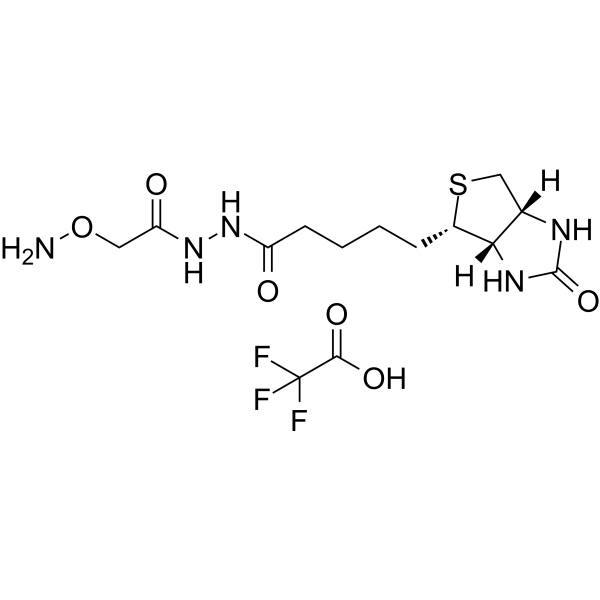
Aldehyde reactive probe TFA is an aldehyde reactive probe. Aldehyde reactive probe TFA specifically labels the AP site in DNA with biotin residues. Aldehyde reactive probe TFA can detect RNA oxidation-induced debasement sites. Aldehyde reactive probe TFA can be used to quantify AP sites or detect other aldehyde-containing DNA damage and RNA oxidation-induced debasement sites .
|
-
-
- HY-15419
-
|
|
5-HT Receptor
|
Neurological Disease
|
|
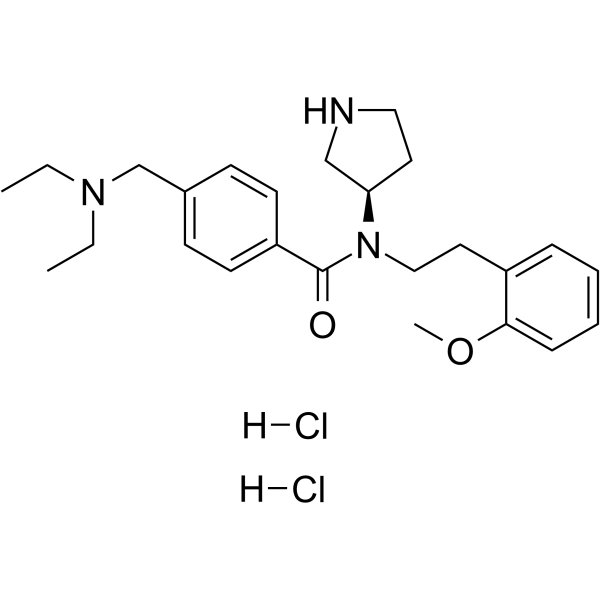
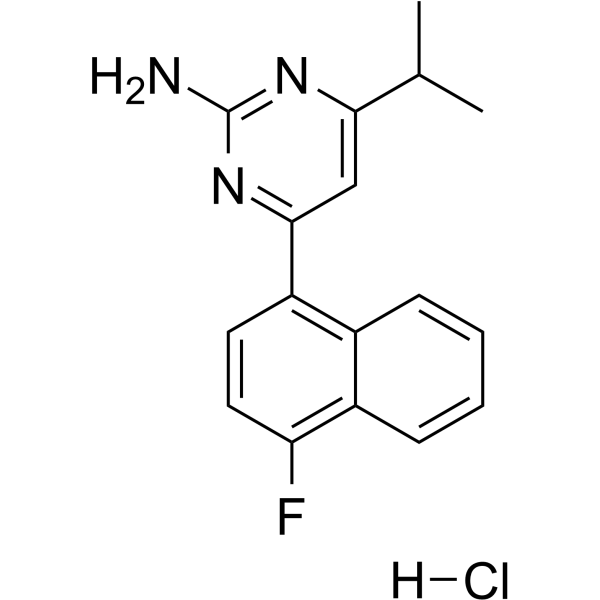
RS-127445 hydrochloride is a selective, high affinity, orally bioavailable 5-HT2B receptor antagonist with a pKi of 9.5. RS-127445 hydrochloride shows 1000 fold selectivity for this receptor as compared to numerous other receptor and ion channel binding sites .
|
-
-
- HY-15688
-
|
8-Hydroxy-DPAT hydrobromide
|
5-HT Receptor
|
Neurological Disease
Metabolic Disease
|
|
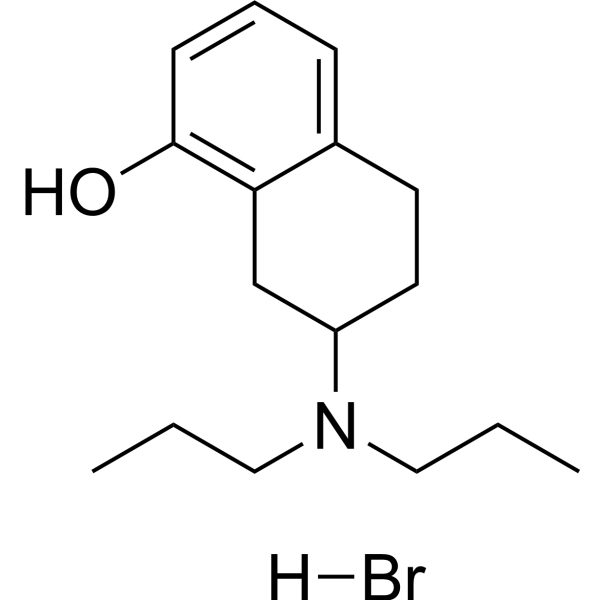
8-OH-DPAT (8-Hydroxy-DPAT) hydrobromide is a potent, brain-penetrant and selective 5-HT1A agonist with a pIC50 of 8.19. 8-OH-DPAT hydrobromide has selectivity of almost 1000 fold for a subtype of the 5-HT1 binding site .
|
-
-
- HY-112041
-
|
PTC596
|
BMI1
Apoptosis
|
Cancer
|
|
Unesbulin (PTC596) is an orally active and selective B-cell-specific Moloney murine leukemia virus integration site 1 (BMI-1) inhibitor. Unesbulin downregulates MCL-1 and induces p53-independent mitochondrial apoptosis in acute myeloid leukemia (AML) cells. Unesbulin has anti-leukemic activity .
|
-
-
- HY-13509
-
|
|
RGS Protein
|
Inflammation/Immunology
|
|
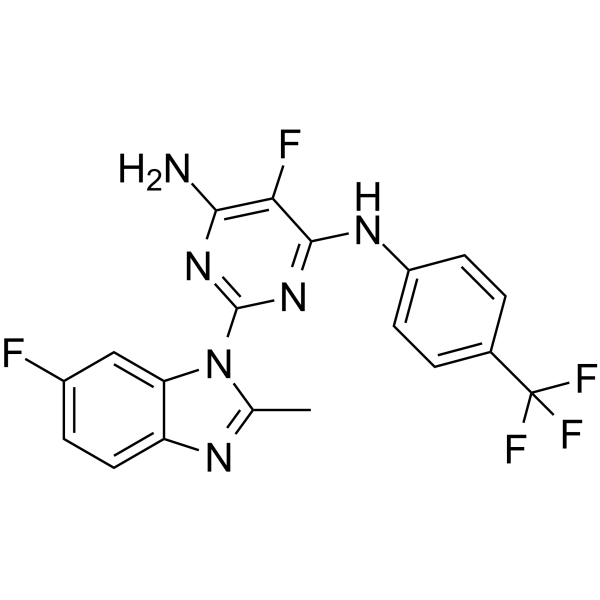
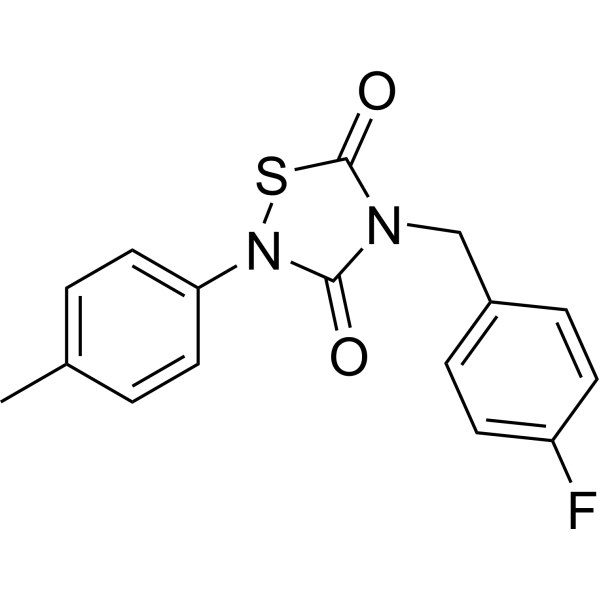
CCG-50014 is the most potent against the regulator of G-protein signaling protein type 4 (RGS4) (IC50 =30 nM) and is >20-fold selective for RGS4 over other RGS proteins. CCG-50014 binds covalently to the RGS, forming an adduct on two cysteine residues located in an allosteric regulatory site . CCG50014, reduces nociceptive responses and enhances opioid-mediated analgesic effects in the mouse formalin test .
|
-
-
- HY-13447
-
-
-
- HY-P3208B
-
|
|
Biochemical Assay Reagents
|
Others
|
|
Endoproteinase Lys-C (MS grade) is a hydrolase that cleaves peptide bonds at the carboxyl side of lysine residues. Endoproteinase Lys-C (MS grade) causes non-specific hydrolysis of peptide bonds linked to the carboxyl groups of non-lysine residues, resulting in partial cleavage at these sites .
|
-
-
- HY-P3005
-
|
|
DNA/RNA Synthesis
|
Others
|
|
T4 DNA ligase is the product of gene 30 of phage T4. T4 DNA ligase catalyzes the repair of single-stranded nicks in duplex DNA and joins duplex DNA restriction fragments having either blunt or cohesive ends. T4 DNA ligase catalyze the sealing of adjacent 5′-phosphate and 3′-hydroxyl termini at single-stranded breaks in double-stranded DNA.T4 DNA ligase is an ATP-dependent ligase enzyme. T4 DNA ligase can be used in various biotechnological applications. T4 DNA ligase can join the ends of single-stranded DNA in the absence of any duplex DNA structure at the ligation site .
|
-
-
- HY-134636
-
|
|
Endogenous Metabolite
|
Endocrinology
|
|
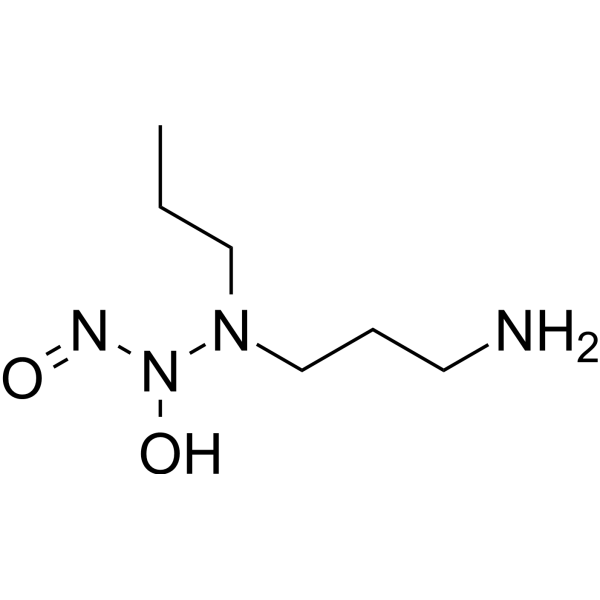
PAPA NONOate is a NO donor with a NO release half-life of 77 min (22-25°C). PAPA NONOate may represent a potential research for impaired wound healing in diabetes by increasing the rate of collagen synthesis at the wound site .
|
-
-
- HY-12429
-
|
BMS-791325
|
DNA/RNA Synthesis
HCV
|
Infection
|
|
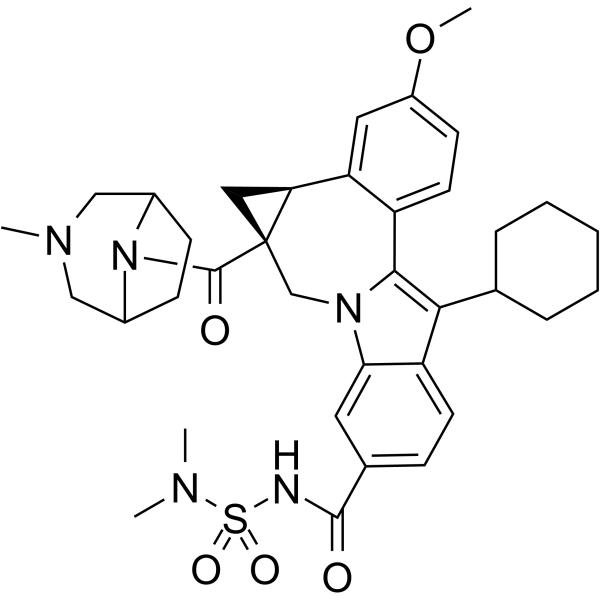
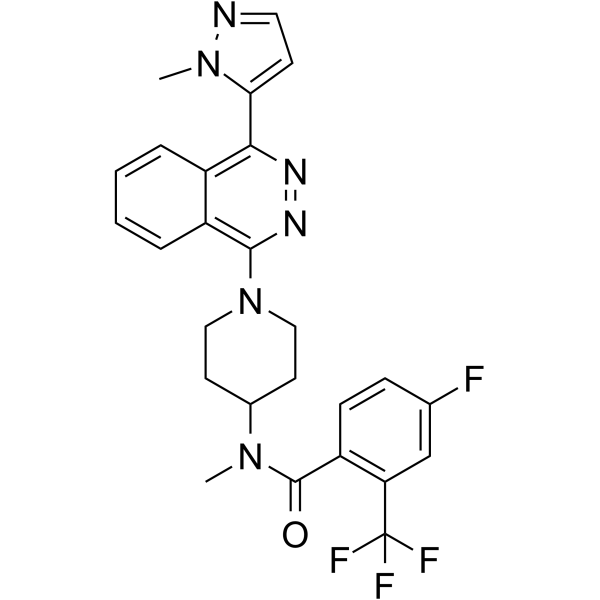
Beclabuvir is an allosteric inhibitor that binds to thumb site 1 of the hepatitis C virus (HCV) NS5B RNA-dependent RNA polymerase, and inhibits recombinant NS5B proteins from HCV genotypes 1, 3, 4, and 5 with IC50 of < 28 nM .
|
-
-
- HY-101382
-
|
|
Dopamine Receptor
|
Neurological Disease
|
|
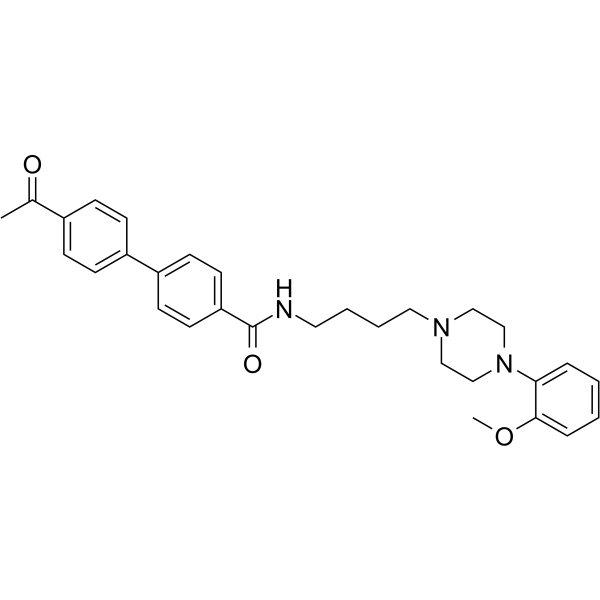
GR 103691 is a potent, selective dopamine D3 receptor antagonist with a Ki value of 0.4 nM. GR 103691 shows more than 100-fold selectivity for human dopamine human (h)D3 over hD4 and hD1 sites .
|
-
-
- HY-15419A
-
|
|
5-HT Receptor
|
Neurological Disease
|
|
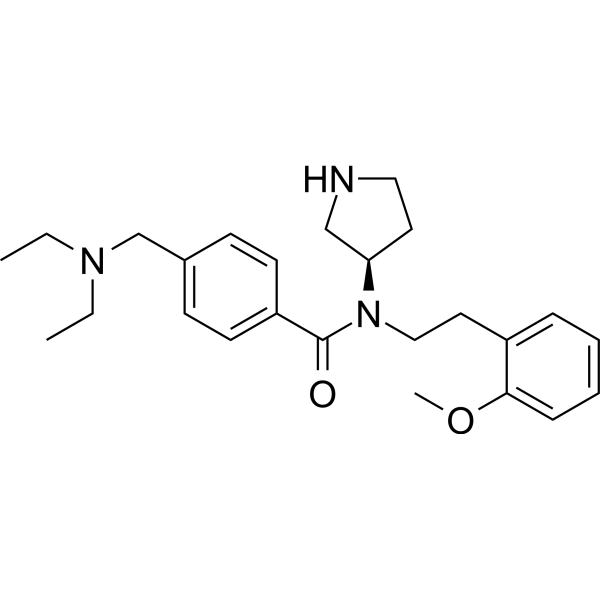
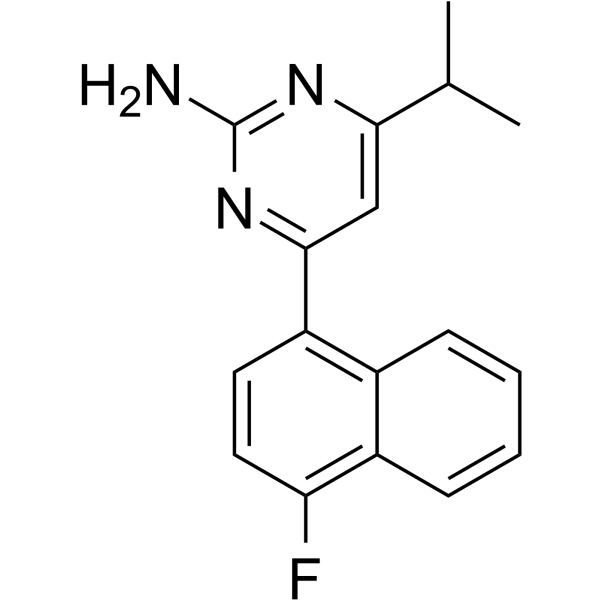
RS-127445 is a selective, high affinity, orally bioavailable 5-HT2B receptor antagonist with a pKi of 9.5. RS-127445 shows 1000 fold selectivity for this receptor as compared to numerous other receptor and ion channel binding sites .
|
-
-
- HY-19151
-
|
IS-741
|
Integrin
Phospholipase
|
Inflammation/Immunology
|
|
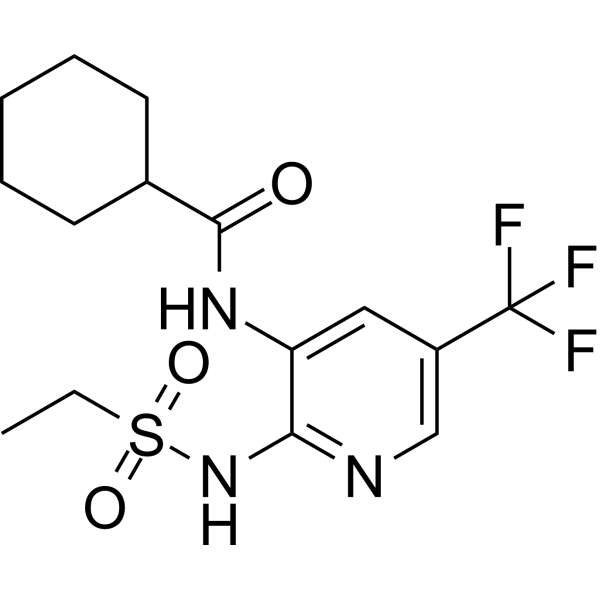
Fuzapladib (IS-741), an orally active leukocyte-function-associated antigen type 1 (LFA-1) activation inhibitor, is a leukocyte adhesion molecule. Fuzapladib is also a phospholipase A2 (PLA2) inhibitor. Fuzapladib exerts anti-inflammatory effects by inhibiting leukocyte migration into the inflammatory site .
|
-
-
- HY-D0871
-
|
N-Cyclohexyltaurine
|
Biochemical Assay Reagents
Influenza Virus
|
Infection
|
|
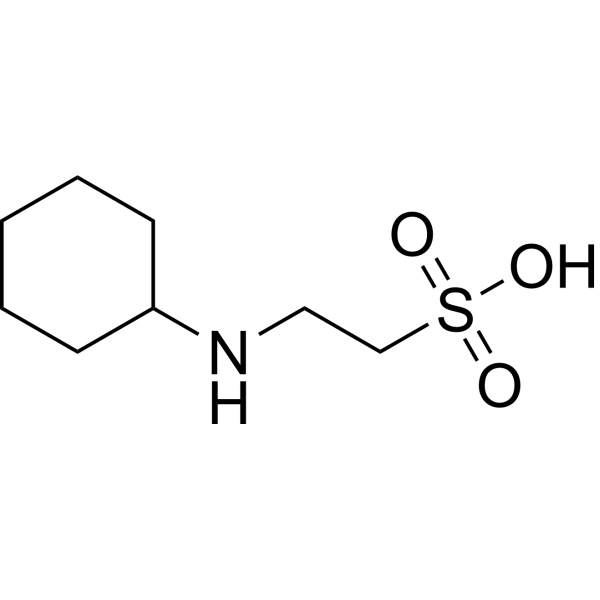
CHES (N-Cyclohexyltaurine) is a biological buffer reagent that binds to influenza virus hemagglutinin (HA). CHES mimics the binding mode of sialic acid to the HA receptor-binding site .
|
-
-
- HY-P1826
-
|
|
CD74
|
Inflammation/Immunology
Cancer
|
|
CLIP (86-100) is amino acids 86 to 100 fragment of class II-associated invariant chain peptide (CLIP). CLIP is a small self-peptide and cleavage product of the invariant chain that resides in the HLA-II antigen binding groove and is believed to play a critical role in the assembly and transport of MHC class II alphabetaIi complexes through its interaction with the class II peptide-binding site .
|
-
-
- HY-110160
-
|
ABT-089 dihydrochloride
|
nAChR
|
Neurological Disease
|
|
Pozanicline dihydrochloride (ABT-089 dihydrochloride) is an orally bioavailable nicotinic acetylcholine receptor (nAChR) agonist with a Ki of 16.7 nM for binding to [ 3H]cytisine sites . Pozanicline is an α4β2-selective nAChR agonist, which binds to rat brain α4β2 nAChR with a Ki of 17 nM while binding to α7 nAChR is insignificant .
|
-
-
- HY-132870
-
|
|
HOXA
|
Others
|
|
MEIS-IN-2 is a myeloid ecotropic viral integration site 1 (MEIS1) inhibitor.
|
-
-
- HY-163097
-
|
|
iGluR
|
Neurological Disease
|
|
ZCAN262 (compound 6 ) is an AMPA modulator. ZCAN262 prevents AMPA-mediated excitotoxicity by targeting an allosteric binding site .
|
-
-
- HY-19151A
-
|
IS-741 sodium
|
Integrin
Phospholipase
|
Inflammation/Immunology
|
|
Fuzapladib (IS-741) sodium, an orally active leukocyte-function-associated antigen type 1 (LFA-1) activation inhibitor, is a leukocyte adhesion molecule. Fuzapladib sodium is also a phospholipase A2 (PLA2) inhibitor. Fuzapladib sodium exerts anti-inflammatory effects by inhibiting leukocyte migration into the inflammatory site .
|
-
-
- HY-110087
-
|
|
nAChR
|
Neurological Disease
|
|
4BP-TQS is a potent allosteric agonist of α7 nAChR. 4BP-TQS activates nAChRs via an allosteric transmembrane site .
|
-
-
- HY-19168
-
|
EAA-090
|
iGluR
|
Neurological Disease
|
|
Perzinfotel (EAA-090) is a potent, selective, and competitive NMDA receptor antagonist with neuroprotective effects. Perzinfotel (EAA-090) shows high affinity (IC50=30 nM) for the glutamate site .
|
-
-
- HY-115749
-
|
6′-Methoxyluciferin
|
Fluorescent Dye
|
Others
|
|
D-Luciferin 6′-methyl ether (6′-Methoxyluciferin; compound 19a) is a potent luciferase from the North American firefly Photinus pyralis (PpyLuc) inhibitor with an IC50 of 0.1 µM. D-Luciferin 6′-methyl ether, a D-luciferin analog, shows non-specific interactions at ATP- and luciferin-binding sites of the PpyLuc active site .
|
-
-
- HY-15419R
-
|
|
5-HT Receptor
|
Neurological Disease
|
|
RS-127445 (hydrochloride) (Standard) is the analytical standard of RS-127445 (hydrochloride). This product is intended for research and analytical applications. RS-127445 hydrochloride is a selective, high affinity, orally bioavailable 5-HT2B receptor antagonist with a pKi of 9.5. RS-127445 hydrochloride shows 1000 fold selectivity for this receptor as compared to numerous other receptor and ion channel binding sites .
|
-
-
- HY-P3605
-
|
GAP (25-53), human
|
GnRH Receptor
|
Endocrinology
|
|
GnRH Associated Peptide (GAP) (25-53), human is the human gonadotropin-releasing hormone-associated peptide (GAP) 25-53 fragment (hGAP-25-53), can be used as immunogen to generate antiseras including MC-1, MC-2, and MC-3. GAP is joined to the luteinizing hormone-releasing hormone (LH-RH) sequence by a 3 amino acid processing site .
|
-
-
- HY-P11406
-
|
|
Fluorescent Dye
|
Others
|
|
Ac-RSLK-AMC is a fluorogenic substrate, can be used to measure the enzymatic activities of site-1 protease (S1P) .
|
-
-
- HY-172545
-
|
|
Tau Protein
|
Neurological Disease
|
|
AMG28 is an ATP-competitive inhibitor targeting TTBK1 and TTBK2, with IC50 values of 805 nM and 988 nM, respectively. AMG28 inhibits the phosphorylation of tau protein at the Ser422 site .
|
-
-
- HY-115527
-
|
|
SHP2
|
Cancer
|
|
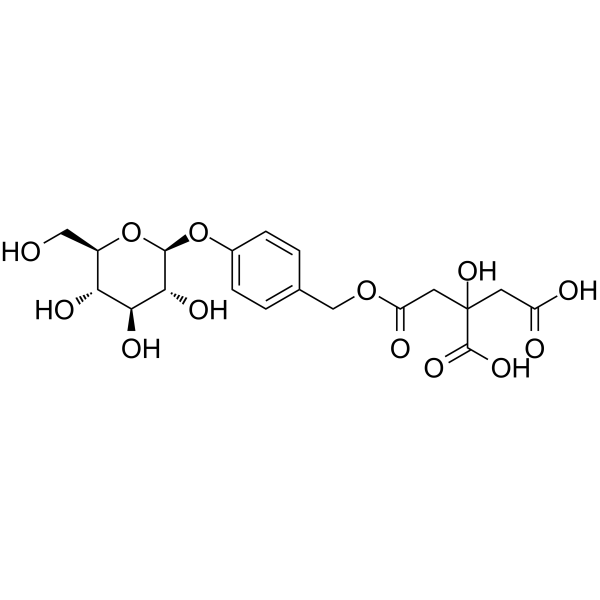
SHP244 is a conformational inhibitor targeting the "latch allosteric site" (site 2) of the SHP2 protein with an IC50 value for SHP2 WT of 60 μM. SHP244 has no significant effect on the level of p-ERK alone. SHP244 combined with RMC-4550 (HY-116009) ("tunnel site" site 1 inhibitor) can reduce p-ERK and inhibit the rebound of p-ERK, thereby reducing drug resistance. SHP244 can be used to study drug resistance in FGFR-driven cancers .
|
-
-
- HY-133021
-
|
N-Acetyl-S-farnesyl-L-cysteine
|
DNA Methyltransferase
|
Inflammation/Immunology
|
|
Arazine (N-Acetyl-S-farnesyl-L-cysteine) is a cell-permeable modulator of G protein and G-protein coupled receptor signaling. Arazine can be a a substrate for isoprenylcysteine methyltransferase by competing with prenylated G protein or its receptors site .
|
-
-
- HY-125969
-
|
|
Histone Acetyltransferase
Fungal
|
Infection
|
|
Rtt109 inhibitor 1 (Compound 1) is an inhibitor for histone acetyltransferase Rtt109 through a tight binding, uncompetitive system. Rtt109 inhibitor 1 exhibits antifungal activity through acetylation at H3K56 site .
|
-
-
- HY-128379
-
|
|
Drug Metabolite
|
Others
|
|
Labetalone hydrochloride is an impurity of Labetalol. Labetalol is an orally active adrenoceptor blocking agent which is a competitive antagonist at both alpha- and beta-adrenoceptor sites .
|
-
-
- HY-P11421
-
|
|
Biochemical Assay Reagents
|
Others
|
|
Cys-His Tag is a dual-purpose protein tag combining a cysteine residue and a Histidine tag. Cys-His Tag can be used to improve marker specificity or introduce covalent binding sites .
|
-
-
- HY-177373
-
|
|
CDK
|
Cancer
|
|
P21 saRNA is a small activating RNA (saRNA) targeting the p21 genes. P21 saRNA induce expression of the p21 genes, and targets the p21 promoters at ?322 relative to gene's transcription start site .
|
-
-
- HY-126932
-
|
|
Estrogen Receptor/ERR
|
Cancer
|
|
TTC-352 is an orally bioavailable selective human estrogen receptor (ER) α partial agonist (ShERPA). TTC-352 inhibits the growth of three ER+ breast cancer cells. TTC-352 induces tumor regression accompanied by exit of ERα from the nucleus to extranuclear sites .
|
-
-
- HY-100143
-
-
-
- HY-118168
-
|
Galosfen
|
Topoisomerase
|
Others
|
|
A9387 is an inhibitor of the Tn3 Resolvase, which promotes site-specific recombination reactions between two directly repeated recombination sites. Several inhibitors have been isolated that inhibit this event. A9387 inhibits the binding of resolvase to the res site .
|
-
-
- HY-123602
-
|
|
iGluR
|
Neurological Disease
|
|
CGP 55802A is a novel photoaffinity ligand for in situ labeling of NMDA receptors with high selectivity for the glutamate recognition site .
|
-
-
- HY-16372
-
-
-
- HY-N15270
-
|
Secantioquine
|
Dopamine Receptor
|
Others
|
|
S-Secoantioquine (Secantioquine) is a bisbenzylisoquinoline alkaloid secoderivative. In the rat striate membrane experiment, S-Secoantioquine shows weak displacement activity on 3H-SCH 23390 binding site, and certain displacement activity on 3H-raclopride binding site .
|
-
-
- HY-165026
-
|
γ-Linolenic acid triglyceride; γ-Linolenin
|
Endogenous Metabolite
|
Others
|
|
1,2,3-tri-γ-Linolenoyl glycerol is a triacylglycerol with γ-linolenic acid attached to the three esterification sites (1, 2 and 3) of glycerol .
|
-
-
- HY-N11896A
-
-
-
- HY-119105
-
|
|
GABA Receptor
|
Neurological Disease
|
|
LY81067, a diaryltriazine, effectively protects against Pentylenetetrazole- and Picrotoxin-induced convulsions in mice. LY81067 exerts its anticonvulsant effects by binding to or near Picrotoxin (HY-101391) binding sites .
|
-
-
- HY-177374
-
|
|
Cadherin
|
Cancer
|
|
Ecad saRNA is a small activating RNA (saRNA) targeting the E-cadherin genes. Ecad saRNA induce expression of the E-cadherin genes, and targets the E-cadherin promoters at ?215 relative to gene's transcription start site .
|
-
-
- HY-B1657
-
|
|
Drug Intermediate
|
Neurological Disease
|
|
Fosphenytoin is a phosphate ester proagent developed as an alternative to intravenous phenytoin for acute intervention of seizures. Fosphenytoin has advantages including more convenient and rapid intravenous administration, availability for intramuscular injection, and low potential for adverse local reactions at injection sites .
|
-
-
- HY-128379R
-
|
|
Drug Metabolite
Reference Standards
|
Others
|
|
Labetalone (hydrochloride) (Standard) is the analytical standard of Labetalone (hydrochloride). This product is intended for research and analytical applications. Labetalone hydrochloride is an impurity of Labetalol. Labetalol is an orally active adrenoceptor blocking agent which is a competitive antagonist at both alpha- and beta-adrenoceptor sites .
|
-
-
- HY-115749A
-
|
(Rac)-6′-Methoxyluciferin sodium
|
Drug Derivative
|
Others
|
|
D-Luciferin 6′-methyl ether (6′-Methoxyluciferin; compound 19a) sodium is a potent luciferase from the North American firefly Photinus pyralis (PpyLuc) inhibitor with an IC50 of 0.1 μM. D-Luciferin 6′-methyl ether, a D-luciferin analog, shows non-specific interactions at ATP- and luciferin-binding sites of the PpyLuc active site .
|
-
-
- HY-W063263
-
|
N-Acetylpyrrolidine
|
Endogenous Metabolite
|
Cardiovascular Disease
Inflammation/Immunology
Cancer
|
|
1-Acetylpyrrolidine (N-acetylpyrrolidine) is a smoking-related metabolite. 1-Acetylpyrrolidine can induce low methylation at DNA CpG site. 1-Acetylpyrrolidine can be used for the research on the mechanisms of smoking-related diseases and the development of biomarkers .
|
-
-
- HY-P3234
-
|
|
Casein Kinase
|
Others
|
|
Ac-ESMD-CHO is an inhibitor of caspase-3 and caspase-7. Ac-ESMD-CHO inhibits proteolytic cleavage of the caspase-3 precursor peptide (CPP32) at the Glu-Ser-Met-Asp (ESMD) site .
|
-
-
- HY-P10101
-
|
APTscr
|
STAT
|
Others
|
|
APT STAT3, scrambled (APTscr), a control peptide of STAT3-specific aptide (APTSTAT3), does not bind STAT3. APT STAT3, scrambled contains the same trpzip scaffold but with a scrambled sequence in the target-binding site .
|
-
-
- HY-P3606
-
|
GAP (1-24), human
|
GnRH Receptor
|
Endocrinology
|
|
GnRH Associated Peptide (GAP) (1-24), human is the human gonadotropin-releasing hormone-associated peptide (GAP) 1-24 fragment (hGAP-1-24). GAP is joined to the luteinizing hormone-releasing hormone (LH-RH) sequence by a 3 amino acid processing site .
|
-
- HY-137028
-
|
PD157432
|
EGFR
|
Cancer
|
|
2'-Thioadenosine (PD157432) is a selective and irreversible inhibitor of ErbB-1 and ErbB-2, with an IC50 of 45 µM for ErbB-2. 2'-Thioadenosine covalently inactivates ErbB-1 via modification of a cysteine residue at the active site .
|
-
- HY-12429A
-
|
BMS-791325 hydrochloride
|
DNA/RNA Synthesis
HCV
|
Infection
|
|
Beclabuvir (BMS-791325) hydrochloride is an allosteric inhibitor that binds to thumb site 1 of the hepatitis C virus (HCV) NS5B RNA-dependent RNA polymerase, and inhibits recombinant NS5B proteins from HCV genotypes 1, 3, 4, and 5 with IC50 of < 28 nM .
|
-
- HY-147888
-
|
|
Microtubule/Tubulin
|
Cancer
|
|
Tubulin inhibitor 29 (compound 3c) is a potent tubulin inhibitor with an IC50 value of 1.2 µM. Tubulin inhibitor 29 shows antiproliferative effects with an IC50 value of 7.5 µM for MCF-7 cells. Tubulin inhibitor 29 inhibits tubulin assembly and bounds in the colchicine site .
|
-
- HY-134311
-
|
|
Fluorescent Dye
|
Others
|
|
8-NBD-cGMP is a fluorescent analog of cyclic guanosine monophosphate and a potent, membrane-permeable, fluorescent activator of cGMP-dependent protein kinase isozymes I α and I β. 8-NBD-cGMP is barely fluorescent in aqueous solution but fluoresces strongly in hydrophobic environments such as hydrophobic protein binding sites
|
-
- HY-19151B
-
|
IS-741 potassium
|
Integrin
Phospholipase
|
Inflammation/Immunology
|
|
Fuzapladib (IS-741) potassium, an orally active leukocyte-function-associated antigen type 1 (LFA-1) activation inhibitor, is a leukocyte adhesion molecule. Fuzapladib potassium is also a phospholipase A2 (PLA2) inhibitor. Fuzapladib potassium exerts anti-inflammatory effects by inhibiting leukocyte migration into the inflammatory site .
|
-
- HY-19151C
-
|
IS-741 calcium
|
Integrin
Phospholipase
|
Inflammation/Immunology
|
|
Fuzapladib calcium, an orally active leukocyte-function-associated antigen type 1 (LFA-1) activation inhibitor, is a leukocyte adhesion molecule. Fuzapladib calcium is also a phospholipase A2 (PLA2) inhibitor. Fuzapladib calcium exerts anti-inflammatory effects by inhibiting leukocyte migration into the inflammatory site .
|
-
- HY-167633
-
|
|
mGluR
Histamine Receptor
|
Neurological Disease
|
|
Oxomemazine hydrochloride is a phenothiazine-based histamine H1-receptor blocker with pronounced antimuscarinic properties. Oxomemazine hydrochloride is a selective antagonist for muscarinic M1 receptor, displays about 20-fold difference in the affinity for high (Ki= 84 nM, M1 receptor) and low (Ki= 1.65 μM, M2 receptor) affinity sites [1]. Oxomemazine hydrochloride an antihistamine and anticholinergic agent used for the study of cough treatment .
|
-
- HY-118061
-
|
|
Bacterial
|
Infection
|
|
VCC234718 is a molecule with mycobacterial growth inhibitory activity, specifically targeting Mycobacterium tuberculosis (Mtb). The primary molecular target of VCC234718 is inosine monophosphate dehydrogenase (GuaB2), and it inhibits the growth of Mtb by affecting the function of this enzyme. VCC234718 inhibits GuaB2 with a K value of 100 nM and exhibits non-competitive inhibition with IMP and NAD+. VCC234718 exerts its inhibitory effect by directly interacting with IMP and binding at the NAD+ site .
|
-
- HY-E70583
-
|
|
TET Protein
|
Others
|
|
Recombinant Ten-Eleven Translocase is a recombinant Fe(II)- and α-ketoglutarate-dependent dioxygenase. Recombinant Ten-Eleven Translocase converts 5-methylcytosine (5mC) to 5-hydroxymethylcytosine (5hmC), and then to 5-formylcytosine (5fC) and 5-carboxycytosine (5caC) through a series of oxidation reactions. Then, 5caC is further converted into uracil (U) through the action of a conversion agent or enzyme, and uracil (U) is converted into thymine (T) through PCR, thereby achieving single-base resolution and high-accuracy identification of DNA methylation sites .
|
-
- HY-13509R
-
|
|
RGS Protein
|
Inflammation/Immunology
|
|
CCG-50014 (Standard) is the analytical standard of CCG-50014. This product is intended for research and analytical applications. CCG-50014 is the most potent against the regulator of G-protein signaling protein type 4 (RGS4) (IC50 =30 nM) and is >20-fold selective for RGS4 over other RGS proteins. CCG-50014 binds covalently to the RGS, forming an adduct on two cysteine residues located in an allosteric regulatory site . CCG50014, reduces nociceptive responses and enhances opioid-mediated analgesic effects in the mouse formalin test .
|
-
- HY-101343
-
|
|
5-HT Receptor
|
Neurological Disease
|
|
RS 39604 is a potent, selective, and orally active 5-HT4 receptor antagonist with a pKi of 9.1 in guinea pig striatal membranes. RS 39604 displays a low affinity (pKi<6.5) for 5-HT1A, 5-HT2C, 5-HT3, α1c, D1, D2, M1, M2, AT1, B1 and opioid mu receptors and moderate affinity for δ1, (pKi=6.8) and δ2 (pKi=7.8) sites .
|
-
- HY-P11298
-
|
|
Caspase
Apoptosis
JNK
p38 MAPK
Interleukin Related
IFNAR
|
Inflammation/Immunology
Cancer
|
|
d-T101 peptide, a human hormone-peptide, is a T1/ST2 receptor ligand. d-T101 peptide binds to the T1/ST2 receptor and activates caspases 8, 9 and 3 mediated apoptosis, together with activation of JNKinase and p38 MAPKinase. d-T101 peptide also changes Golgi structural with function loss and downregulation of the endoplasmic reticulum (ER) stress repair mechanism. d-T101 peptide has immunostimulatory and anticancer activity, selectively induces apoptosis in proliferating cancer cells and increases IL-2 and IFN-γ expression as well as the recruitment of NK cells and M1 macrophages to the tumor site .
|
-
- HY-W736861
-
|
|
iGluR
|
Neurological Disease
|
|
N-Phthaloylglutamic acid is a partial agonist NMDA receptor with a Ki of 13 μM targeting Glu binding-site .
|
-
- HY-120681
-
|
|
iGluR
|
Neurological Disease
|
|
CGP39653 is a competitive NMDA receptor antagonist that inhibits receptor function by competing with glutamate for the binding site .
|
-
- HY-116666
-
|
|
Drug Derivative
|
Metabolic Disease
|
|
Etomidate acid (Compound 35) is an etomidate analog. Etomidate acid inhibits the binding of metyrapone (Metyrapol) and 4-iodometomidate to rat adrenal membrane sites .
|
-
- HY-126229
-
|
|
Phosphodiesterase (PDE)
|
Cancer
|
|
PAT-078 is a type II autotaxin (ATX) inhibitor. PAT-078 mainly occupies the hydrophobic pocket of ATX, blocks the bottleneck region between the hydrophobic channel and the catalytic site, and does not interact with the zinc ion at the catalytic site .
|
-
- HY-P11799
-
|
|
Transmembrane Glycoprotein
|
Inflammation/Immunology
|
|
cLABL is a cyclic peptide that specifically binds to ICAM‑1. cLABL mediates targeted enrichment and rapid endocytosis of nanoparticles. cLABL is applicable to researches such as precise drug delivery at inflammatory sites .
|
-
- HY-100143R
-
|
CGS 10746 (Standard)
|
Dopamine Receptor
Reference Standards
|
Neurological Disease
|
|
Pentiapine (Standard) is the analytical standard of Pentiapine (HY-100143). This product is intended for research and analytical applications. Pentiapine (CGS 10746) is a dopamine release inhibitor without binding to synaptic dopamine receptor sites .
|
-
- HY-126862
-
|
|
mAChR
|
Others
|
|
AQ-RA 721 is a muscarinic receptor antagonist with differential affinity for the m4 and M2 sites, which can be used to characterize muscarinic receptor subtypes. Other muscarinic receptor antagonists have differential affinity for the M1 (rat cerebral cortex), M2 (rat heart), M3 (rat submandibular gland), m4 (receptor expressed in Chinese hamster ovary cells transfected with CHO), and guinea pig uterine smooth muscle at the muscarinic binding site .
|
-
- HY-117925
-
|
|
HBV
|
Others
|
|
Personalised postprandial-targeting is a way to modulate water-heme interactions with activity against low-spin P450 complexes. Personalised postprandial-targeting is able to maintain the axial water ligands of CYP2C9 even in the presence of inhibitors. Personalised postprandial-targeting also allows the hydrogen atoms of the axial water ligands to be observed by EPR spectroscopy, providing insights into the enzyme active site .
|
-
- HY-101382R
-
|
|
Dopamine Receptor
Reference Standards
|
Neurological Disease
|
|
GR 103691 (Standard) is the analytical standard of GR 103691 (HY-101382). This product is intended for research and analytical applications. GR 103691 is a potent, selective dopamine D3 receptor antagonist with a Ki value of 0.4 nM. GR 103691 shows more than 100-fold selectivity for human dopamine human (h)D3 over hD4 and hD1 sites .
|
-
| Cat. No. |
Product Name |
Type |
-
- HY-D0871
-
|
N-Cyclohexyltaurine
|
Fluorescent Dyes
|
|
CHES (N-Cyclohexyltaurine) is a biological buffer reagent that binds to influenza virus hemagglutinin (HA). CHES mimics the binding mode of sialic acid to the HA receptor-binding site .
|
-
- HY-D2910
-
|
|
Fluorescent Dyes
|
|
Ox4 is a selective covalent modifier targeting Methionine residues. Ox4 is promising for research of protein functionalization, antibody-drug conjugate (ADC) synthesis, and proteome-wide identification of reactive methionine sites .
|
-
- HY-115749A
-
|
(Rac)-6′-Methoxyluciferin sodium
|
Fluorescent Dyes
|
|
D-Luciferin 6′-methyl ether (6′-Methoxyluciferin; compound 19a) sodium is a potent luciferase from the North American firefly Photinus pyralis (PpyLuc) inhibitor with an IC50 of 0.1 μM. D-Luciferin 6′-methyl ether, a D-luciferin analog, shows non-specific interactions at ATP- and luciferin-binding sites of the PpyLuc active site .
|
| Cat. No. |
Product Name |
Type |
-
- HY-D0871
-
|
N-Cyclohexyltaurine
|
Biochemical Assay Reagents
|
|
CHES (N-Cyclohexyltaurine) is a biological buffer reagent that binds to influenza virus hemagglutinin (HA). CHES mimics the binding mode of sialic acid to the HA receptor-binding site .
|
| Cat. No. |
Product Name |
Target |
Research Area |
-
- HY-P1826
-
|
|
CD74
|
Inflammation/Immunology
Cancer
|
|
CLIP (86-100) is amino acids 86 to 100 fragment of class II-associated invariant chain peptide (CLIP). CLIP is a small self-peptide and cleavage product of the invariant chain that resides in the HLA-II antigen binding groove and is believed to play a critical role in the assembly and transport of MHC class II alphabetaIi complexes through its interaction with the class II peptide-binding site .
|
-
- HY-P3605
-
|
GAP (25-53), human
|
GnRH Receptor
|
Endocrinology
|
|
GnRH Associated Peptide (GAP) (25-53), human is the human gonadotropin-releasing hormone-associated peptide (GAP) 25-53 fragment (hGAP-25-53), can be used as immunogen to generate antiseras including MC-1, MC-2, and MC-3. GAP is joined to the luteinizing hormone-releasing hormone (LH-RH) sequence by a 3 amino acid processing site .
|
-
- HY-P11406
-
|
|
Fluorescent Dye
|
Others
|
|
Ac-RSLK-AMC is a fluorogenic substrate, can be used to measure the enzymatic activities of site-1 protease (S1P) .
|
-
- HY-P3857
-
|
|
Peptides
|
Neurological Disease
|
|
Carassin is a 21 amino acid tachykinin-related peptide, it can be isolated from the goldfish brain. Carassin has moderate affinity for rat tachykinin binding sites .
|
-
- HY-P11421
-
|
|
Biochemical Assay Reagents
|
Others
|
|
Cys-His Tag is a dual-purpose protein tag combining a cysteine residue and a Histidine tag. Cys-His Tag can be used to improve marker specificity or introduce covalent binding sites .
|
-
- HY-P3234
-
|
|
Casein Kinase
|
Others
|
|
Ac-ESMD-CHO is an inhibitor of caspase-3 and caspase-7. Ac-ESMD-CHO inhibits proteolytic cleavage of the caspase-3 precursor peptide (CPP32) at the Glu-Ser-Met-Asp (ESMD) site .
|
-
- HY-P10101
-
|
APTscr
|
STAT
|
Others
|
|
APT STAT3, scrambled (APTscr), a control peptide of STAT3-specific aptide (APTSTAT3), does not bind STAT3. APT STAT3, scrambled contains the same trpzip scaffold but with a scrambled sequence in the target-binding site .
|
-
- HY-P3606
-
|
GAP (1-24), human
|
GnRH Receptor
|
Endocrinology
|
|
GnRH Associated Peptide (GAP) (1-24), human is the human gonadotropin-releasing hormone-associated peptide (GAP) 1-24 fragment (hGAP-1-24). GAP is joined to the luteinizing hormone-releasing hormone (LH-RH) sequence by a 3 amino acid processing site .
|
-
- HY-P1826A
-
|
|
Peptides
|
Inflammation/Immunology
Cancer
|
|
CLIP (86-100) TFA is amino acids 86 to 100 fragment of class II-associated invariant chain peptide (CLIP). CLIP is a small self-peptide and cleavage product of the invariant chain that resides in the HLA-II antigen binding groove and is believed to play a critical role in the assembly and transport of MHC class II alphabetaIi complexes through its interaction with the class II peptide-binding site .
|
-
- HY-P11298
-
|
|
Caspase
Apoptosis
JNK
p38 MAPK
Interleukin Related
IFNAR
|
Inflammation/Immunology
Cancer
|
|
d-T101 peptide, a human hormone-peptide, is a T1/ST2 receptor ligand. d-T101 peptide binds to the T1/ST2 receptor and activates caspases 8, 9 and 3 mediated apoptosis, together with activation of JNKinase and p38 MAPKinase. d-T101 peptide also changes Golgi structural with function loss and downregulation of the endoplasmic reticulum (ER) stress repair mechanism. d-T101 peptide has immunostimulatory and anticancer activity, selectively induces apoptosis in proliferating cancer cells and increases IL-2 and IFN-γ expression as well as the recruitment of NK cells and M1 macrophages to the tumor site .
|
-
- HY-P11799
-
|
|
Transmembrane Glycoprotein
|
Inflammation/Immunology
|
|
cLABL is a cyclic peptide that specifically binds to ICAM‑1. cLABL mediates targeted enrichment and rapid endocytosis of nanoparticles. cLABL is applicable to researches such as precise drug delivery at inflammatory sites .
|
| Cat. No. |
Product Name |
Category |
Target |
Chemical Structure |
| Cat. No. |
Product Name |
|
Classification |
-
- HY-D2910
-
|
|
|
Alkynes
|
|
Ox4 is a selective covalent modifier targeting Methionine residues. Ox4 is promising for research of protein functionalization, antibody-drug conjugate (ADC) synthesis, and proteome-wide identification of reactive methionine sites .
|
| Cat. No. |
Product Name |
|
Classification |
-
- HY-177373
-
|
|
|
saRNAs
|
|
P21 saRNA is a small activating RNA (saRNA) targeting the p21 genes. P21 saRNA induce expression of the p21 genes, and targets the p21 promoters at ?322 relative to gene's transcription start site .
|
-
- HY-177374
-
|
|
|
saRNAs
|
|
Ecad saRNA is a small activating RNA (saRNA) targeting the E-cadherin genes. Ecad saRNA induce expression of the E-cadherin genes, and targets the E-cadherin promoters at ?215 relative to gene's transcription start site .
|
Your information is safe with us. * Required Fields.
Inquiry Information
- Product Name:
- Cat. No.:
- Quantity:
- MCE Japan Authorized Agent:

