



Unesbulin
Based on 3 publication(s) in Google Scholar
Unesbulin (PTC596) is an orally active and selective B-cell-specific Moloney murine leukemia virus integration site 1 (BMI-1) inhibitor. Unesbulin downregulates MCL-1 and induces p53-independent mitochondrial apoptosis in acute myeloid leukemia (AML) cells. Unesbulin has anti-leukemic activity.
For research use only. We do not sell to patients.
- Purity : 99.17%
- CAS No.: 1610964-64-1
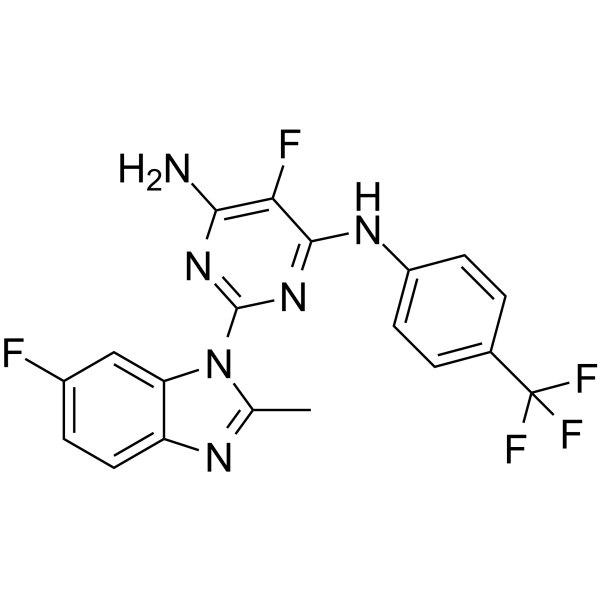
- Formula: C19H13F5N6
- Molecular Weight:420.34
-
Storage:Powder -20°C, 3 years , 4°C, 2 years ; In solvent -80°C, 2 years , -20°C, 1 year

To place orders, for customer services and technical support, please contact: MedChemExpress USA
Tel: 609-228-6898 E-mail: [email protected] [email protected]


-
 Biological Activity
-
Chemical Information
-
Solvent & Solubility
- Protocols
- Purity & Documentation
- References
-
 Help & FAQs


-
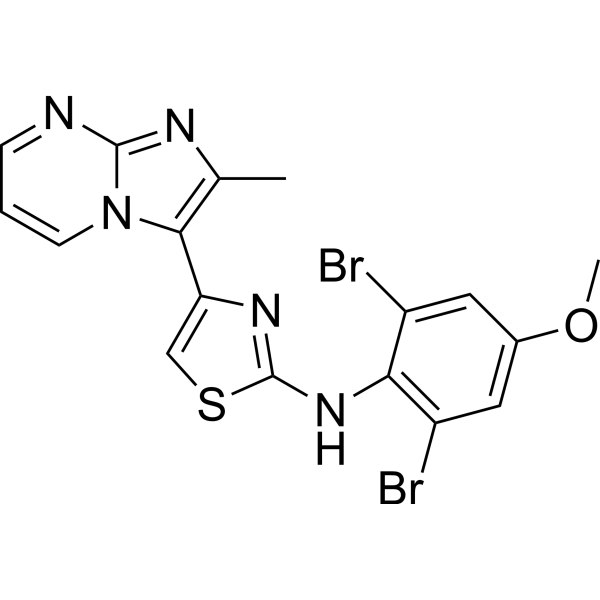
HY-15888
PTC-209BMI-1 Inhibitor -
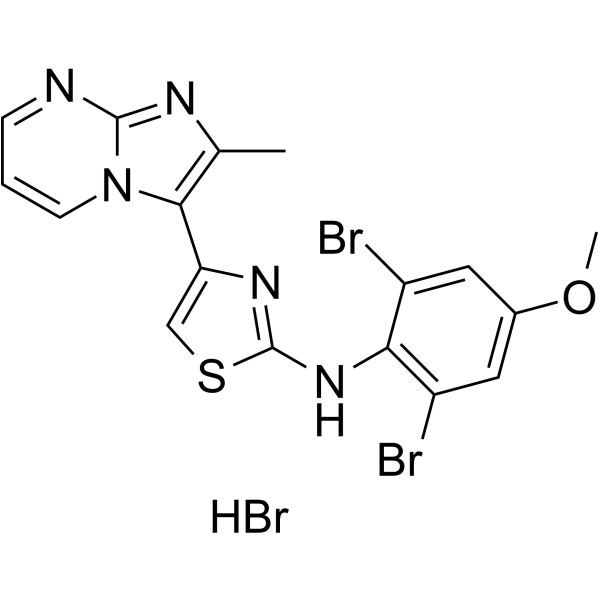
HY-15888A
PTC-209 hydrobromideBMI1 Inhibitor -
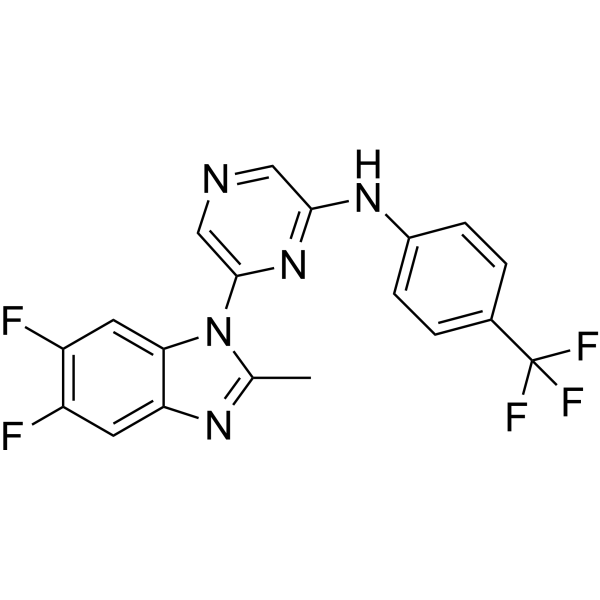
HY-103696
PTC-028BMI-1 Inhibitor -
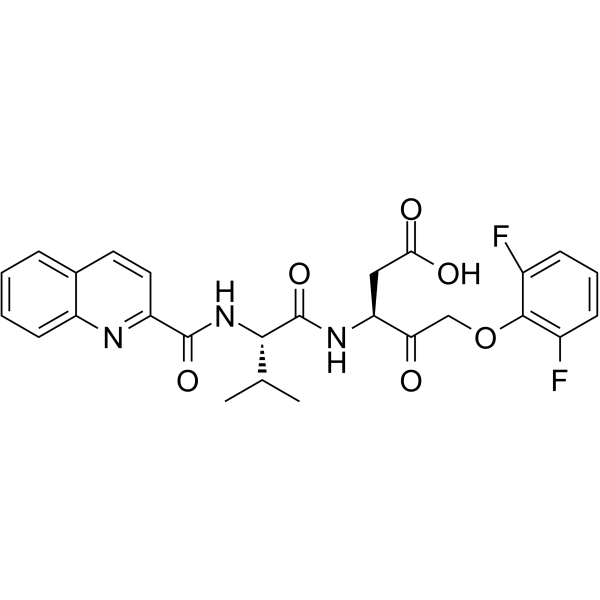
HY-12305
Q-VD-OPhPan-caspase Inhibitor -
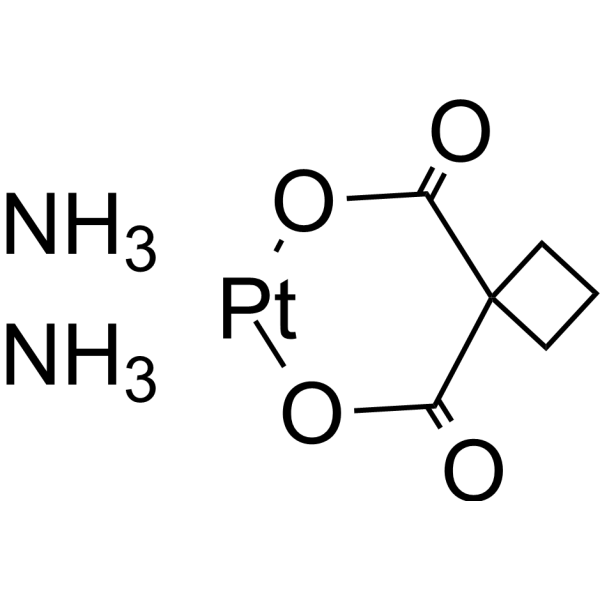
HY-17393
CarboplatinDNA Synthesis Inhibitor -
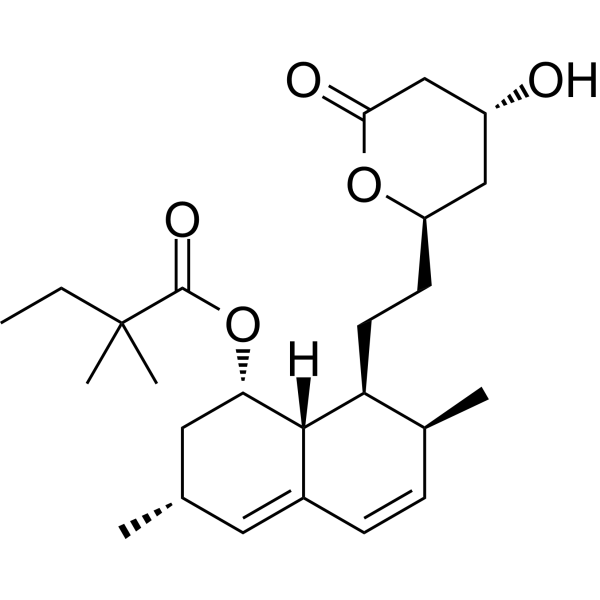
HY-17502
SimvastatinHMGCR Inhibitor -
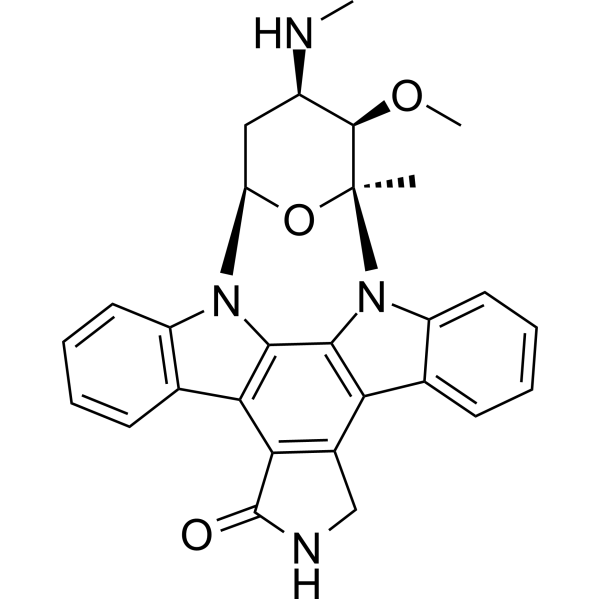
HY-15141
StaurosporinePKC/PKA Inhibitor -
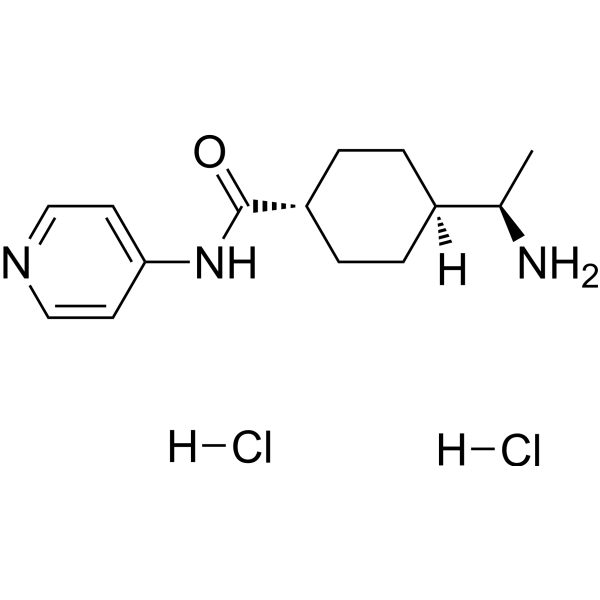
HY-10583
Y-27632 dihydrochlorideROCK Inhibitor -
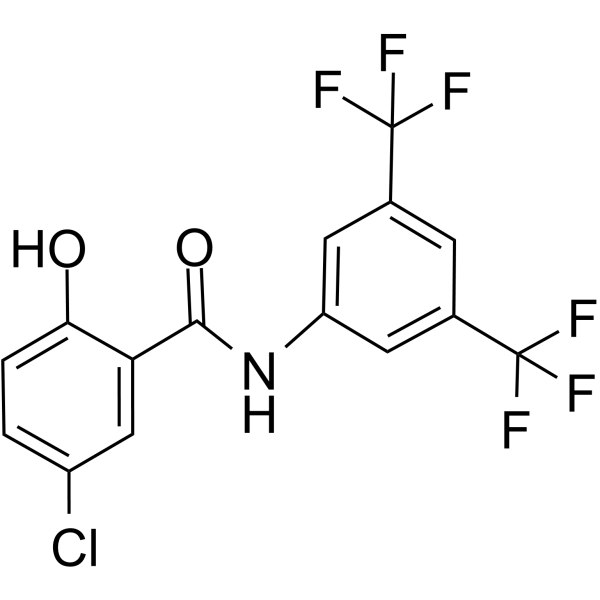
HY-10172
IMD-0354IKKβ Inhibitor -
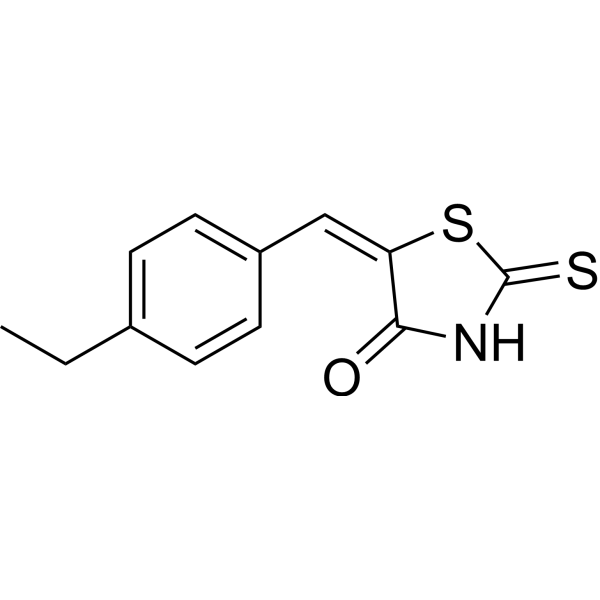
HY-12702
10058-F4c-Myc Inhibitor -
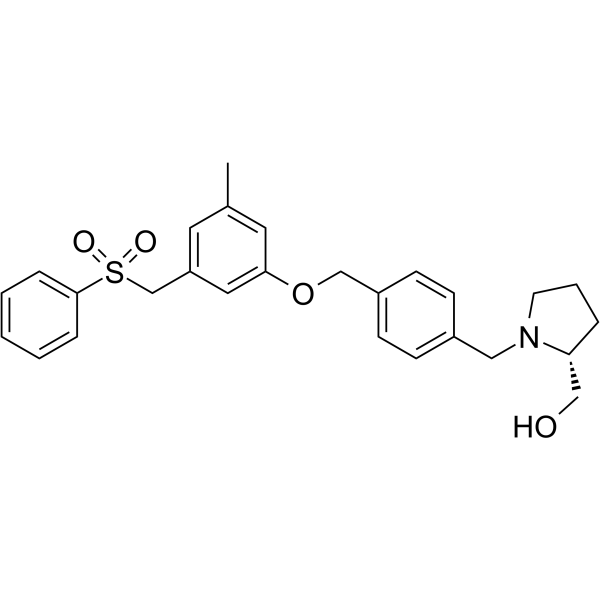
HY-15425
PF-543SPHK1 Inhibitor -
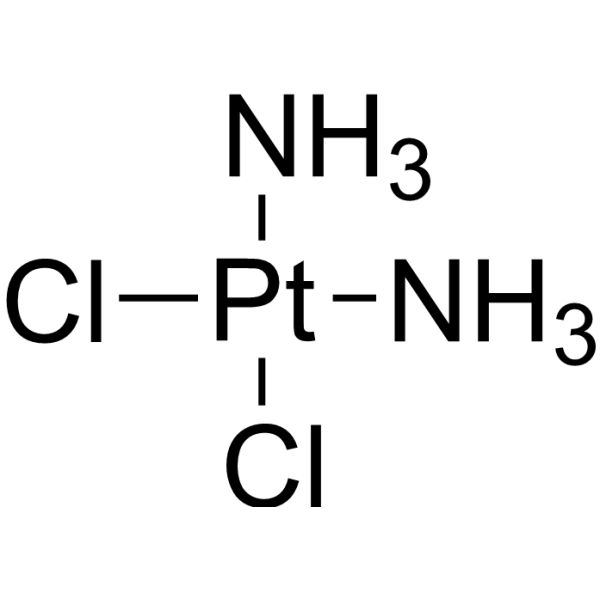
HY-17394
CisplatinDNA Alkylator
Publications Citing Use of MedChemExpress (MCE) Unesbulin
More

Biological Activity
Description
IC50 & Target
BMI-1[1]
In Vitro
Unesbulin (PTC596; 20-200 nM; for 48 hours) induces apoptosis in AML cells in a p53-independent manner. BMI-1 overexpression desensitizes AML cells to PTC596-induced apoptosis[1].
Unesbulin (200 nM; for 10 hours) leads to an accumulation of cells in G2/M phase[1].
Unesbulin (0.012-1 μM; for 20 hours) significantly reduces protein levels of BMI-1[1].
Unesbulin inhibits APC/CCDC20 activity resulting in the persistent activation of CDK1 and CDK2 which mediate the hyperphosphorylation of BMI1[2].
MedChemExpress (MCE) has not independently confirmed the accuracy of these methods. They are for reference only.
-
Cell Line:AML cell lines (MOLM-13, OCI-AML3, MOLM-14, MV4-11, U-937, HL-60)
-
Concentration:20, 50, 100, 200 nM
-
Incubation Time:For 48 hours
-
Result:Induced apoptosis in a dose- and time-dependent manner with the average IC50 and ED50 values among six cell lines were 30.7 nM and 60.3 nM, respectively.
-
Cell Line:MOLM-13 and U-937 cells
-
Concentration:200 nM
-
Incubation Time:For 10 hours
-
Result:Led to an accumulation of cells in G2/M phase, whereas the percentage of cells in G1 phase decreased.
-
Cell Line:MOLM-13 cell
-
Concentration:0.012, 0.037, 0.11, 0.33, 1 μM
-
Incubation Time:For 20 hours
-
Result:Significantly reduced protein levels of BMI-1 and its downstream target ubiquitinated histone H2A.
Increased cyclin B1 and securin levels.
In Vivo
Unesbulin (20 mg/kg; oral gavage; once a week for 15 days) causes tumor volume significantly smaller than that of control SCID mice with K562 cells[1].
Unesbulin (10 or 12.5 mg/kg; oral gavage; twice a week until death) causes the survival significantly longer than the vehicle-treated group in NOD-SCID mice with HL-60 cells[1].
MedChemExpress (MCE) has not independently confirmed the accuracy of these methods. They are for reference only.
-
Animal Model:NOD-SCID/IL2Rγ-KO (NSG) mice with MOLM-13 cells[1]
-
Dosage:5 mg/kg
-
Administration:Oral gavage; every 3 days for 13 days
-
Result:Significantly prolonged mouse survival compared with the vehicle-treated mice in a dose-dependent manner.
Clinical Trial
| NCT Number | Sponsor | Condition | Start Date |
Phase

|
|---|---|---|---|---|
| NCT01329991 | 2011-05 | PHASE1 |


Chemical Information
-
CAS No. 1610964-64-1
-
Appearance Solid
-
Molecular Weight 420.34
-
Formula C19H13F5N6
-
Color White to off-white
-
SMILES
NC1=C(F)C(NC2=CC=C(C(F)(F)F)C=C2)=NC(N3C4=CC(F)=CC=C4N=C3C)=N1
-
Synonyms
PTC596
-
Shipping
Room temperature in continental US; may vary elsewhere.
-
Storage
Powder -20°C 3 years 4°C 2 years In solvent -80°C 2 years -20°C 1 year


Publications (3)
-
Journal Impact Factor
-
Most Recent
-
Clin Cancer Res
2022 Nov 1;28(21):4757-4770. PMID: 36048559 -
Int J Mol Sci
Rationale for Combining the BCL2 Inhibitor Venetoclax with the PI3K Inhibitor Bimiralisib in the Treatment of IDH2- and FLT3-Mutated Acute Myeloid Leukemia. [Abstract]2022 Oct 20;23(20):12587. PMID: 36293442 -
Cancers (Basel)
BMI1-Inhibitor PTC596 in Combination with MCL1 Inhibitor S63845 or MEK Inhibitor Trametinib in the Treatment of Acute Leukemia. [Abstract]2021 Feb 2;13(3):581. PMID: 33540760


Solvent & Solubility
In Vitro:
DMSO : 16.67 mg/mL (39.66 mM; Need ultrasonic; Hygroscopic DMSO has a significant impact on the solubility of product, please use newly opened DMSO)
Please refer to the solubility information to select the appropriate solvent. Once prepared, please aliquot and store the solution to prevent product inactivation from repeated freeze-thaw cycles.
Storage method and period of stock solution: -80°C, 2 years; -20°C, 1 year. When stored at -80°C, please use it within 2 years. When stored at -20°C, please use it within 1 year.
Please refer to the solubility information to select the appropriate solvent. Once prepared, please aliquot and store the solution to prevent product inactivation from repeated freeze-thaw cycles.
Storage method and period of stock solution: -80°C, 2 years; -20°C, 1 year. When stored at -80°C, please use it within 2 years. When stored at -20°C, please use it within 1 year.
Concentration (start) × Volume (start) = Concentration (final) × Volume (final)
In Vivo:
Select the appropriate dissolution method based on your experimental animal and administration route.
- For the following dissolution methods, please ensure to first prepare a clear stock solution using an In Vitro approach and then sequentially add co-solvents:
- To ensure reliable experimental results, the clarified stock solution can be appropriately stored based on storage conditions. As for the working solution for In Vivo experiments, it is recommended to prepare freshly and use it on the same day.
- The percentages shown for the solvents indicate their volumetric ratio in the final prepared solution. If precipitation or phase separation occurs during preparation, heat and/or sonication can be used to aid dissolution.
Add each solvent one by one: 10% DMSO 40% PEG300 5% Tween-80 45% Saline
Solubility: ≥ 1.67 mg/mL (3.97 mM); Clear solution
This protocol yields a clear solution of ≥ 1.67 mg/mL (saturation unknown).
Taking 1 mL working solution as an example, add 100 μL DMSO stock solution (16.7 mg/mL) to 400 μL PEG300, and mix evenly; then add 50 μL Tween-80 and mix evenly; then add 450 μL Saline to adjust the volume to 1 mL.
Preparation of Saline: Dissolve 0.9 g sodium chloride in ddH₂O and dilute to 100 mL to obtain a clear Saline solution.
In Vivo Dissolution Calculator
Please enter the basic information of animal experiments:
-
-
-
-
Recommended: Prepare an additional quantity of animals to account for potential losses during experiments.
Please enter your animal formula composition:
-
%DMSO +
Recommended: Keep the proportion of DMSO in working solution below 2% if your animal is weak.
-
%+
-
+%Tween-80 + +
-
%Saline +
The co-solvents required include: DMSO, . All of co-solvents are available by MedChemExpress (MCE). , Tween 80. All of co-solvents are available by MedChemExpress (MCE).
Working solution concentration: 0.22 mg/mL
Method for preparing stock solution: mg drug dissolved in μL DMSO. Stock solution concentration: mg/mL.
1. Take μL DMSO stock solution;
2. Add μL .
μL , mix evenly;
3. Then add μL Tween 80, mix evenly;
4. Then add μL
Please ensure that the stock solution in the first step is dissolved to a clear state, and add co-solvents in sequence. You can use ultrasonic heating (ultrasonic cleaner, recommended frequency 20-40 kHz), vortexing, etc. to assist dissolution.


Purity & Documentation
-
Data Sheet (280 KB)
-
SDS (393 KB)
- English - EN (393 KB)
- Français - FR (393 KB)
- Deutsch - DE (393 KB)
- Norwegian - NO (393 KB)
- Español - ES (393 KB)
- Swedish - SV (393 KB)
- Italian - IT (393 KB)
- Korean - KR (393 KB)
- Portuguese - PT (393 KB)
-
Handling Instructions (2659 KB)
References


Complete Stock Solution Preparation Table
Please refer to the solubility information to select the appropriate solvent. Once prepared, please aliquot and store the solution to prevent product inactivation from repeated freeze-thaw cycles.
Storage method and period of stock solution: -80°C, 2 years; -20°C, 1 year. When stored at -80°C, please use it within 2 years. When stored at -20°C, please use it within 1 year.
| Optional Solvent | Concentration Solvent Mass | 1 mg | 5 mg | 10 mg | 25 mg |
|---|---|---|---|---|---|
| DMSO | 1 mM | 2.3790 mL | 11.8951 mL | 23.7903 mL | 59.4757 mL |
| 5 mM | 0.4758 mL | 2.3790 mL | 4.7581 mL | 11.8951 mL | |
| 10 mM | 0.2379 mL | 1.1895 mL | 2.3790 mL | 5.9476 mL | |
| 15 mM | 0.1586 mL | 0.7930 mL | 1.5860 mL | 3.9650 mL | |
| 20 mM | 0.1190 mL | 0.5948 mL | 1.1895 mL | 2.9738 mL | |
| 25 mM | 0.0952 mL | 0.4758 mL | 0.9516 mL | 2.3790 mL | |
| 30 mM | 0.0793 mL | 0.3965 mL | 0.7930 mL | 1.9825 mL |


Unesbulin Related Classifications
HY-112041 Related Classifications
 Powered by Bioz