Search Result
Results for "
forskolin
" in MedChemExpress (MCE) Product Catalog:
1
Biochemical Assay Reagents
1
Isotope-Labeled Compounds
| Cat. No. |
Nom du produit |
Target |
Áreas de investigación |
Chemical Structure |
-
- HY-15371
-
|
Coleonol; Colforsin; HL 362
|
Organoid
Adenylate Cyclase
FXR
Autophagy
PKC
|
Metabolic Disease
Inflammation/Immunology
Endocrinology
Cancer
|
|
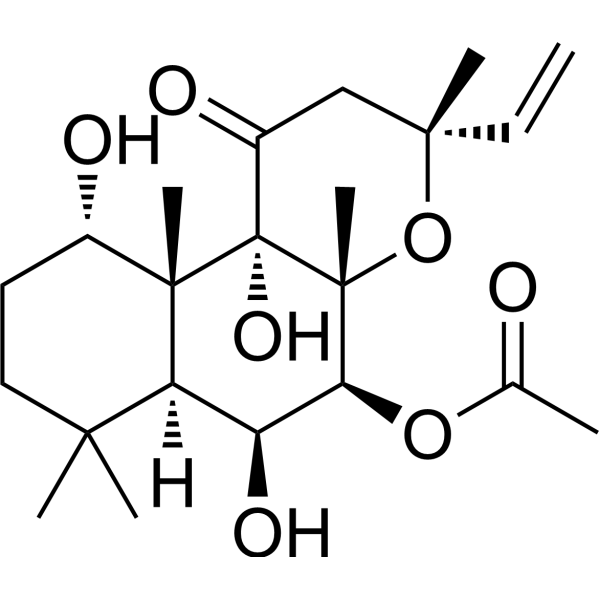
Forskolin (Coleonol) is a potent adenylate cyclase activator with an IC50 of 41 nM and an EC50 of 0.5 μM for type I adenylyl cyclase . Forskolin is also an inducer of intracellular cAMP formation . Forskolin induces differentiation of various cell types and activates pregnane X receptor (PXR) and FXR . Forskolin exerts a inotropic effect on the heart, and has platelet antiaggregatory and antihypertensive actions. Forskolin also induces autophagy .
|
-
-
- HY-103193
-
|
Colforsin dapropate hydrochloride
|
Adenylate Cyclase
|
Cardiovascular Disease
|
|
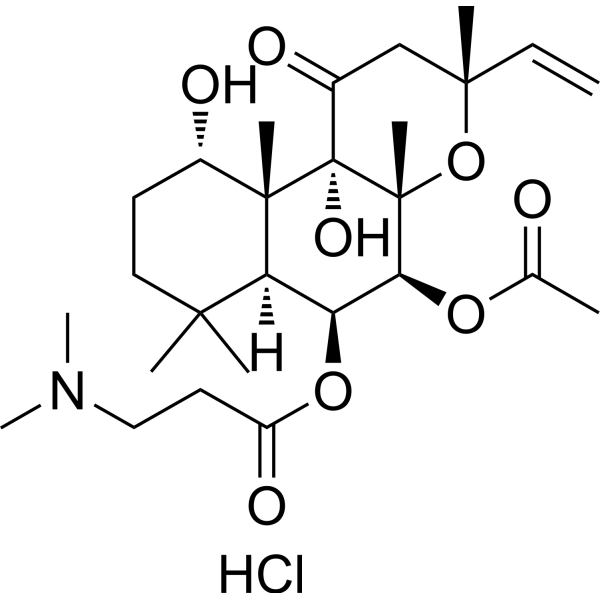
NKH477 (Colforsin dapropate hydrochloride) directly activates the catalytic unit of adenylate cyclase and increases intracellular cAMP. NKH477 is a forskolin derivative that improves cardiac failure mainly through its beneficial effects on diastolic cardiac function. NKH477 exerts an antiproliferative effect in vivo with an altered cytokine profile to inhibit the acute rejection of rat orthotopic lung allografts .
|
-
-
- HY-P1237
-
|
|
Histamine Receptor
|
Cardiovascular Disease
Neurological Disease
Metabolic Disease
|
|
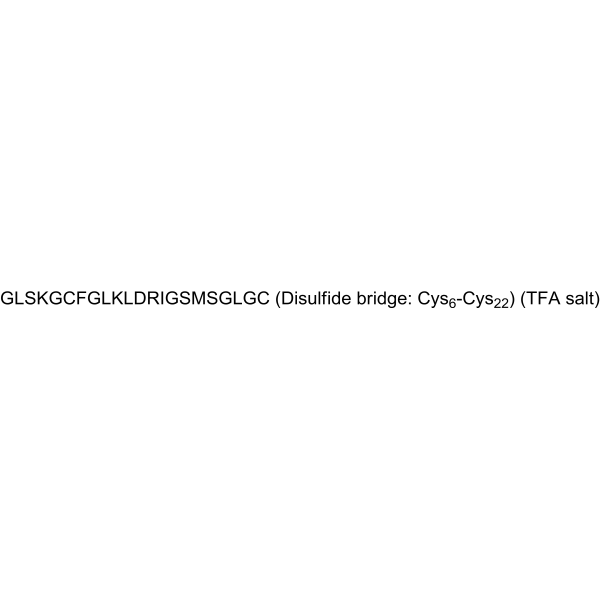
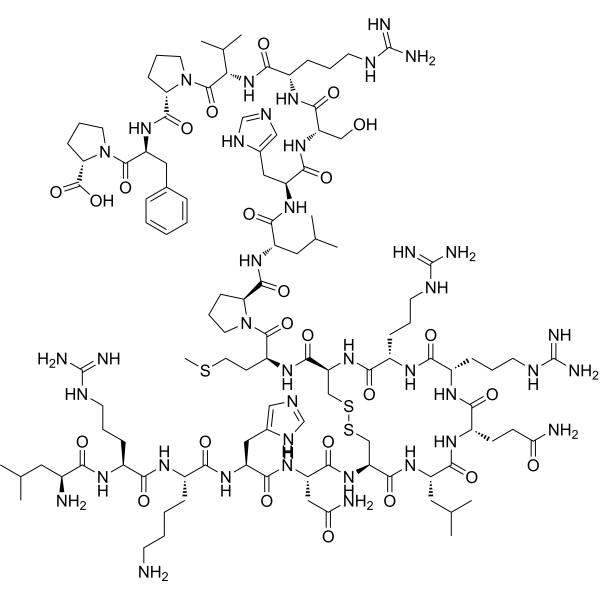
C-Type Natriuretic Peptide (CNP) (1-22), human, a 1-22 fragment of CNP, is a natriuretic peptide receptor B (NPR-B) agonist. C-Type Natriuretic Peptide (CNP) (1-22), human inhibits cAMP synthesis stimulated by the physiological agonists histamine and 5-HT or directly by Forskolin. CNP is a potent, endothelial-derived relaxant and growthinhibitory factor .
|
-

-
- HY-100656
-
|
|
Dopamine Receptor
5-HT Receptor
|
Neurological Disease
|
|
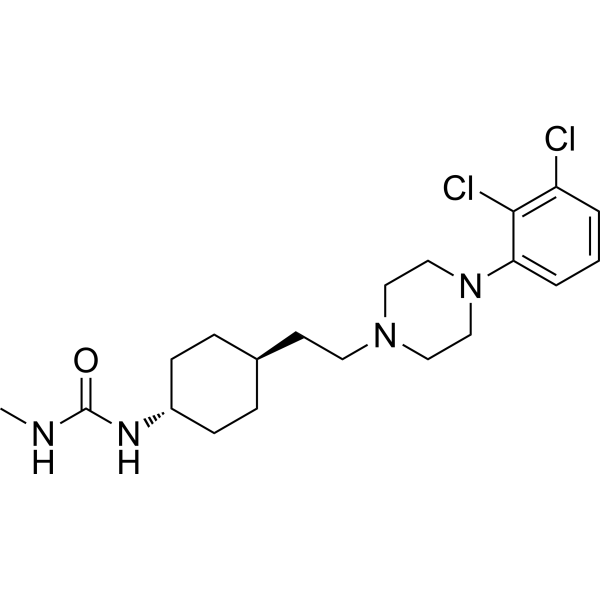
Desmethyl cariprazine is a major active metabolite of cariprazine, with activities at human dopamine receptors and serotonin receptors, showing a pEC50 of 8.90 at human D2 receptors, a pEC50 of 8.09 at D3 receptors, and a pEC50 of 6.28 at 5-HT1A receptors. Desmethyl cariprazine inhibits forskolin-induced cAMP production at D2, D3 and 5-HT1A receptors, and suppresses serotonin-induced Ca 2+ release at 5-HT2B receptors. Desmethyl cariprazine is applicable to research related to schizophrenia, bipolar disorder type I and bipolar disorder.
|
-
-
- HY-156131
-
|
ADL 2-1294
|
Opioid Receptor
|
Neurological Disease
Inflammation/Immunology
|
|
Loperamide (ADL 2-1294) is selective and orally active μ opioid receptor agonist with Ki valuess of 3, 48 and 1156 nM against μ, δ and κ opioid receptor, respectively. Loperamide produces antinociception and antihyperalgesia. Loperamide exhibits peripheral selectivity, enhancing fluid, electrolyte, and glucose absorption, reversing PGE2 (HY-101952)- and Cholera toxin (HY-P1446)-induced intestinal secretion, and reducing intestinal motility. Loperamide can be used for the researches of inflammatory pain and protracted diarrhoea .
|
-

-
- HY-15371R
-
|
Coleonol (Standard); Colforsin (Standard); HL 362 (Standard)
|
Organoid
Reference Standards
Adenylate Cyclase
FXR
Autophagy
PKC
|
Metabolic Disease
Inflammation/Immunology
Endocrinology
Cancer
|
|
Forskolin (Standard) is the analytical standard of Forskolin. This product is intended for research and analytical applications. Forskolin (Coleonol) is a potent adenylate cyclase activator with an IC50 of 41 nM and an EC50 of 0.5 μM for type I adenylyl cyclase . Forskolin is also an inducer of intracellular cAMP formation . Forskolin induces differentiation of various cell types and activates pregnane X receptor (PXR) and FXR . Forskolin exerts a inotropic effect on the heart, and has platelet antiaggregatory and antihypertensive actions. Forskolin also induces autophagy .
|
-

-
- HY-110036
-
|
L768242
|
Cannabinoid Receptor
Endogenous Metabolite
HIF/HIF Prolyl-Hydroxylase
TNF Receptor
Interleukin Related
|
Neurological Disease
Inflammation/Immunology
|
|
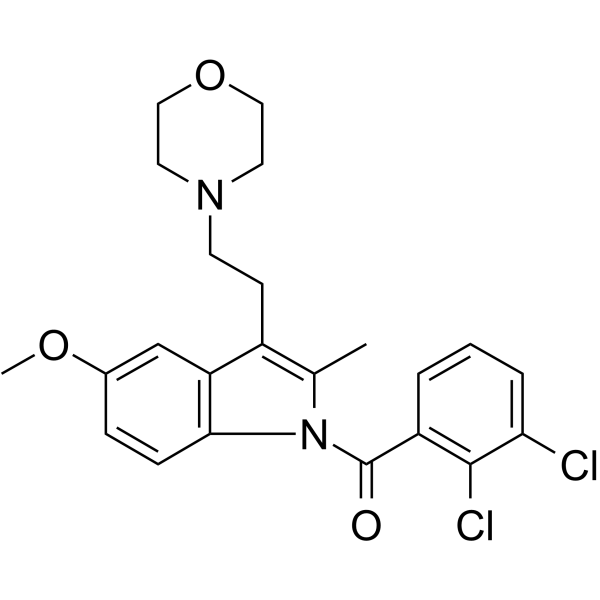
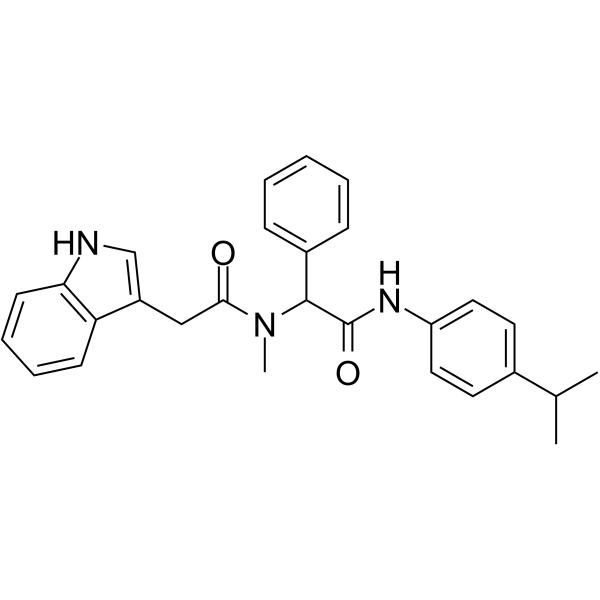
GW-405833 (L768242) is a potent, selective cannabinoid receptor 2 (CB2) agonist. GW405833 has EC50 and Ki values of 0.65 nM and 3.92 nM for CB2, and EC50 and Ki values of 16.1 μM and 4772 nM for CB1. GW-405833 also exhibits non-competitive CB1 antagonist, exerting its analgesic and and anti-inflammatory effect through a CB1 receptor (rather than CB2) dependent mechanism. GW-405833 can significantly inhibit the production of cAMP stimulated by Forskolin (HY-15371). GW405833 inhibits glycolysis by down-regulating HIF-1α, thereby alleviating acute liver failure (ALF) .
|
-
-
- HY-P2197
-
-

-
- HY-123335A
-
|
|
Somatostatin Receptor
|
Neurological Disease
|
|
L-796778 acetate is a selective agonist of the sst3 receptor. In CHO-K1 cells expressing the hsst3 receptor, L-796778 acetate is a partial agonist that inhibits Forskolin (HY-15371)-stimulated cAMP production with an IC50 value of 18 nM. L-796778 acetate has anticonvulsant effect .
|
-

-
- HY-P1237A
-
-
-
- HY-15371G
-
|
Coleonol; Colforsin; HL 362
|
Adenylate Cyclase
FXR
Autophagy
PKC
|
Metabolic Disease
Inflammation/Immunology
Endocrinology
Cancer
|
|
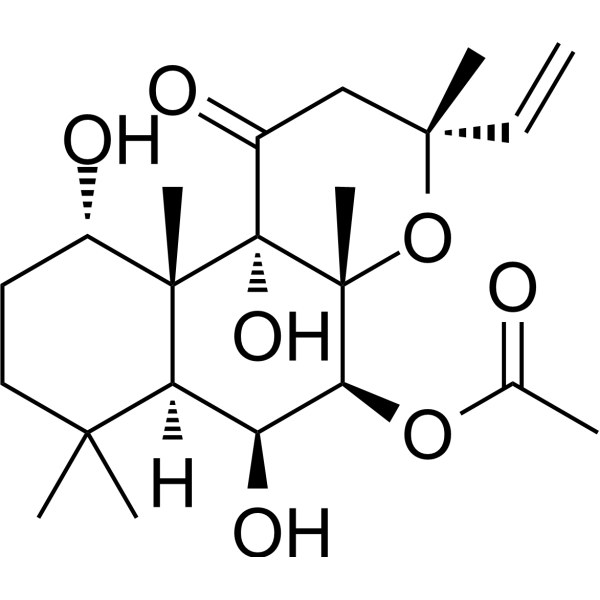
Forskolin (Coleonol) (GMP) is a potent adenylate cyclase activator with an IC50 of 41 nM and an EC50 of 0.5 μM for type I adenylyl cyclase . Forskolin (GMP) is also an inducer of intracellular cAMP formation . Forskolin (GMP) induces differentiation of various cell types and activates pregnane X receptor (PXR) and FXR . Forskolin (GMP) exerts a inotropic effect on the heart, and has platelet antiaggregatory and antihypertensive actions. Forskolin (GMP) also induces autophagy .
|
-
-
- HY-110003
-
|
ACPA
|
Cannabinoid Receptor
|
Neurological Disease
|
|
Arachidonylcyclopropylamide (ACPA) is a potent and selective CB1 receptors agonist. Arachidonylcyclopropylamide inhibits forskolin-stimulated cAMP production in CHO cells transfected with human cannabinoid CB1 receptors (IC50=2 nM) .
|
-

-
- HY-P2249
-
|
|
Arrestin
Apelin Receptor (APJ)
|
Cardiovascular Disease
|
|
ELA-21 (human) is an apelin receptor agonist with a pKi of 8.52. ELA-21 (human) completely inhibits Forskolin-induced cAMP production and stimulates β-arrestin recruitment with subnanomolar potencies. ELA-21 (human) is an agonist in G-protein-dependent and -independent pathways .
|
-
-
- HY-P1250
-
|
Neuropeptide VF(124-131)(human); Neuropeptide NPVF (human)
|
Neuropeptide Y Receptor
|
Neurological Disease
|
|
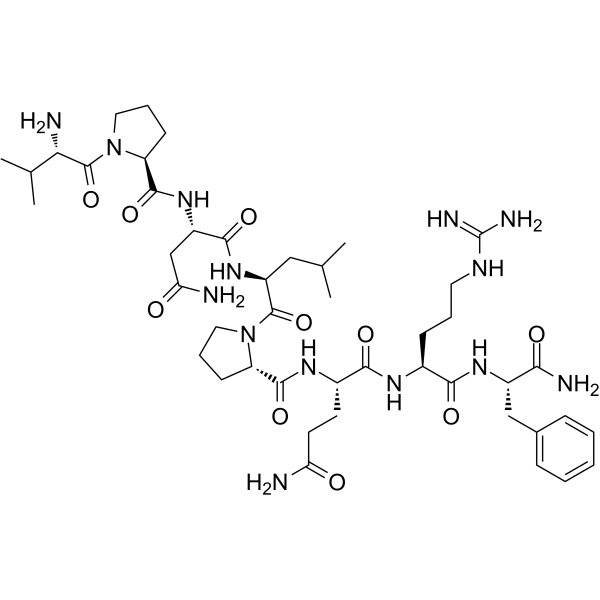
RFRP-3 (Neuropeptide VF(124-131))(human), a human GnIH peptide homolog, is a potent inhibitor of gonadotropin secretion by inhibiting Ca 2+ mobilization. RFRP-3(human) is a NPFF1 receptor agonist, it inhibits forskolin-induced production of cAMP with an IC50 of 0.7 nM .
|
-
-
- HY-121839
-
-

-
- HY-149933
-
|
|
Cannabinoid Receptor
|
Neurological Disease
|
|
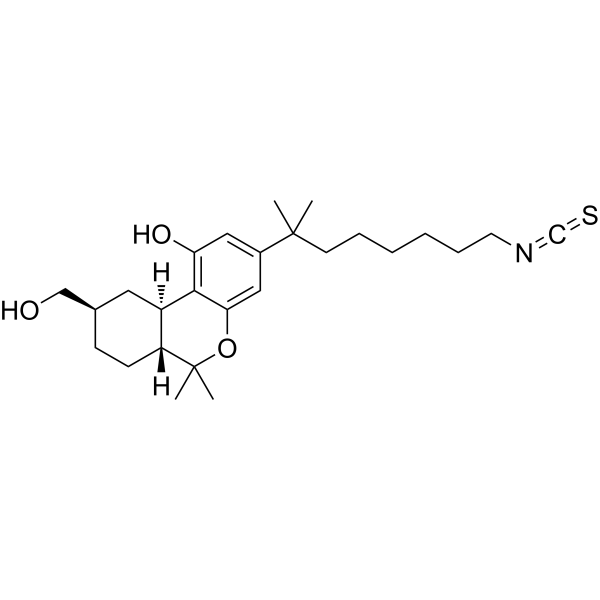
AM841 is a high-affinity electrophilic ligand. AM841 interacts covalently with a cysteine in helix six and activates the CB1 cannabinoid receptor. AM841 reduces Forskolin (HY-15371)-stimulated cAMP accumulation. AM841 also slows gastrointestinal motility .
|
-
-
- HY-121541
-
|
|
Cannabinoid Receptor
|
Cancer
|
|
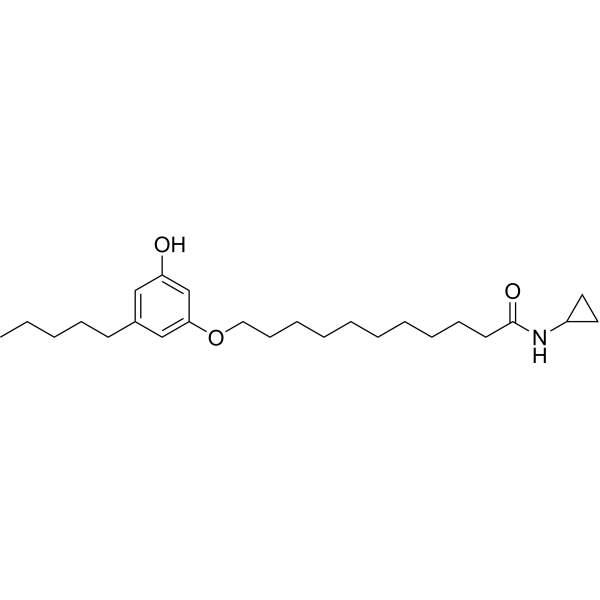
CB-25 is a ligand of CB1 cannabinoid receptors, acting as a partial agonist. CB-25 enhances Forskolin (HY-15371)-induced cAMP formation in cancer cells but not hCB1-CHO cells .
|
-
-
- HY-123335
-
|
|
Somatostatin Receptor
|
Others
|
|
L-796778 is an agonist of the hsst3 receptor. In CHO-K1 cells expressing the hsst3 receptor, L-796778 is a partial agonist that inhibits forskolin (HY-15371)-stimulated cAMP production with an IC50 value of 18 nM .
|
-

-
- HY-N3902
-
|
|
Others
|
Others
|
|
Forskolin G is a Diterpenoids product that can be isolated from the herbs of Coleus forskohlii .
|
-

-
- HY-139486
-
|
|
Apelin Receptor (APJ)
|
Cardiovascular Disease
|
|
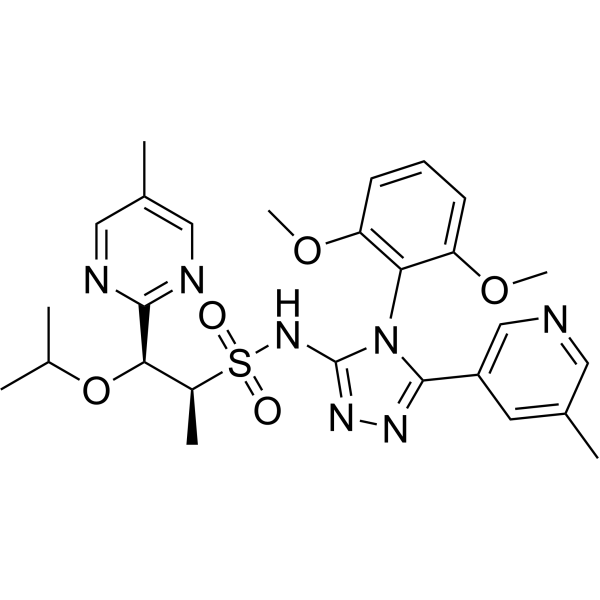
AM-8123 is an orally active and potent APJ agonist. AM-8123 inhibits Forskolin-stimulated cAMP production and promotes Gα protein activation. AM-8123 can be used for the research of cardiovascular disease .
|
-
-
- HY-125382
-
|
|
Somatostatin Receptor
|
Metabolic Disease
|
|
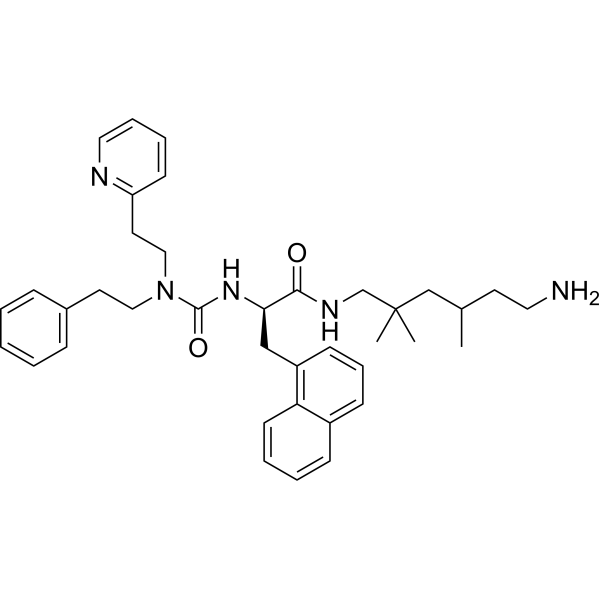
L-797591 is a selective sst1 agonist. L-797591 mimicks the effects of SRIF-14 and SRIF-28 by potently inhibiting either Forskolin (HY-15371)-stimulated or CRH-stimulated cAMP accumulation .
|
-
-
- HY-177122
-
|
|
Dopamine Receptor
|
Neurological Disease
|
|
Raxlaprazine etomoxil is a small molecule compound with dopamine D2 and D3 receptor modulating activity, which has potential application value in research related to mental illnesses. Raxlaprazine etomoxil exhibits high affinity for human recombinant D2L receptors, with an inhibition constant (Ki) of 1.95 nM. Raxlaprazine etomoxil effectively inhibits forskolin-stimulated cAMP accumulation, with an half maximal effective concentration (EC50) of 3.72 nM in functional activity experiments .
|
-

-
- HY-178783
-
|
|
Adenosine Receptor
|
Metabolic Disease
Inflammation/Immunology
Cancer
|
|
MRS8454 is a positive allosteric modulator (PAM) of the A3 adenosine receptor (A3AR). MRS8454 can significantly enhance the maximum effect of the standard agonist Cl-IB-MECA by approximately 286%-300%, and significantly reduce its EC50 value. MRS8454 effectively enhances the ability of A3AR agonists to inhibit the cAMP accumulation induced by Forskolin (HY-15371). MRS8454 can be used for the development of molecular probes .
|
-

-
- HY-123411
-
|
BCI 632
|
mGluR
|
Neurological Disease
|
MGS0039 is a type II group mGluR antagonist. MGS0039 has a high affinity for mGluR2 and mGluR3, with Ki values of 2.2 nM and 4.5 nM, respectively. MGS0039 can attenuate the inhibitory effect of glutamate-induced cyclic AMP formation triggered by Forskolin (HY-15371) in CHO cells expressing mGluR2/mGluR3. MGS0039 shows antidepressant-like activity in rats .
|
-

-
- HY-103369
-
|
|
CFTR
|
Endocrinology
|
|
PG01 is a potent CFTR Cl - channel potentiator. PG01 can correct gating defects of CFTR mutants, is effective on b>E193K, G970R and G551D (CFTR mutants) with Kd values of 0.22 μM, 0.45 μM and 1.94 μM, respectively. PG01 is also effective on ΔF508 (Ka of 0.3 μM). PG01 increases ΔF508-CFTR Cl - current after adding Forskolin .
|
-
-
- HY-110036A
-
|
L768242 hydrochloride
|
Cannabinoid Receptor
Endogenous Metabolite
HIF/HIF Prolyl-Hydroxylase
TNF Receptor
Interleukin Related
|
Neurological Disease
Inflammation/Immunology
|
|
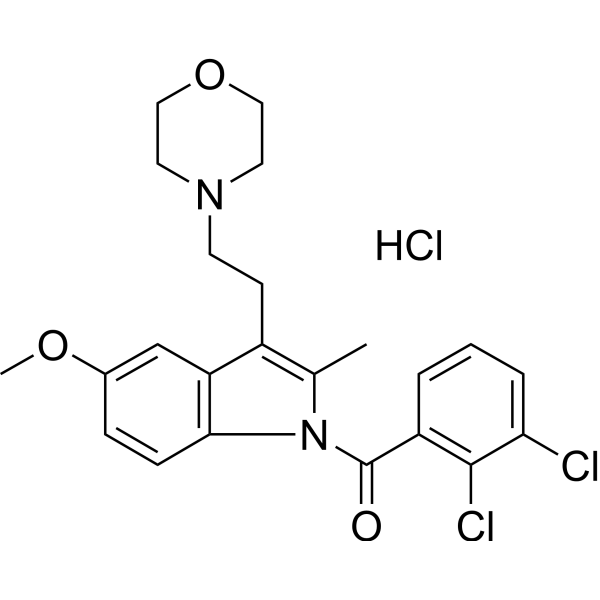
GW405833 (L768242) hydrochloride is a potent, selective cannabinoid receptor 2 (CB2) agonist. GW405833 has EC50 and Ki values of 0.65 nM and 3.92 nM for CB2, and EC50 and Ki values of 16.1 μM and 4772 nM for CB1. GW405833 hydrochloride also exhibits non-competitive CB1 antagonist, exerting its analgesic effect through a CB1 receptor (rather than CB2) dependent mechanism. GW405833 hydrochloride can significantly inhibit the production of cAMP stimulated by Forskolin (HY-15371). GW405833 hydrochloride inhibits glycolysis by down-regulating HIF-1α, thereby alleviating acute liver failure (ALF) .
|
-
-
- HY-116540A
-
|
7DMB-forskolin
|
Adenylate Cyclase
|
Cardiovascular Disease
|
|
L 858051 (7DMB-Forskolin) dihydrochloride, an analog of Forskolin (HY-15371), is an adenylyl cyclase stimulator. L 858051 dihydrochloride directly activates adenylyl cyclase to increase intracellular, cellular, and ciliary cAMP levels. L 858051 dihydrochloride activates recombinant cyclic nucleotide-gated (E583M CNGA2) channels to induce a non-selective, Mg 2+-sensitive current in adult rat ventricular myocytes. L 858051 dihydrochloride maximally stimulates L-type Ca 2+ current in adult rat ventricular myocytes. L 858051 dihydrochloride increases total PDE3 and PDE4 activities in adult rat ventricular myocytes, with effects insensitive to PKA inhibition. L 858051 dihydrochloride serves as a tool to elevate intracellular cAMP for studying subsarcolemmal cAMP dynamics and compartmentation in adult rat ventricular myocytes .
|
-

-
- HY-125382A
-
|
|
Somatostatin Receptor
|
Neurological Disease
|
|
L-797591 hydrochloride is a selective sst1 agonist. L-797591 hydrochloride mimicks the effects of SRIF-14 and SRIF-28 by potently inhibiting either Forskolin (HY-15371)-stimulated or CRH-stimulated cAMP accumulation .
|
-

-
- HY-P5757
-
|
(D-Trp32)-NPY
|
Neuropeptide Y Receptor
|
Neurological Disease
|
|
(D-Trp32)-Neuropeptide Y (porcine) is a highly selective neuropeptide Y (NPY) Y5 receptor agonist. (D-Trp32)-Neuropeptide Y (porcine) has orexigenic activity and inhibits Forskolin (HY-15371)-stimulated cAMP formation .
|
-

-
- HY-122189
-
|
(-)-Akuammine; Vincamajoridine
|
Others
|
Neurological Disease
|
|
Akuammine is an indole alkaloid that has been found in Picralima nitida and has analgesic activity. It selectively binds to the μ- and κ-opioid receptors over the δ-opioid receptor (Kis=0.3, 1.68, and 10.4 μM for the human receptors, respectively). Akuammine inhibits forskolin-induced cAMP production in HEK293 cells expressing human μ- or κ-opioid receptors (IC50s=2.6 and 0.073 μM, respectively). It increases the latency to withdrawal in the tail-flick or hot plate test in mice when administered at a dose of 60 mg/kg.
|
-

-
- HY-N7648
-
|
Atherospermine
|
Parasite
Phosphodiesterase (PDE)
|
Infection
|
|
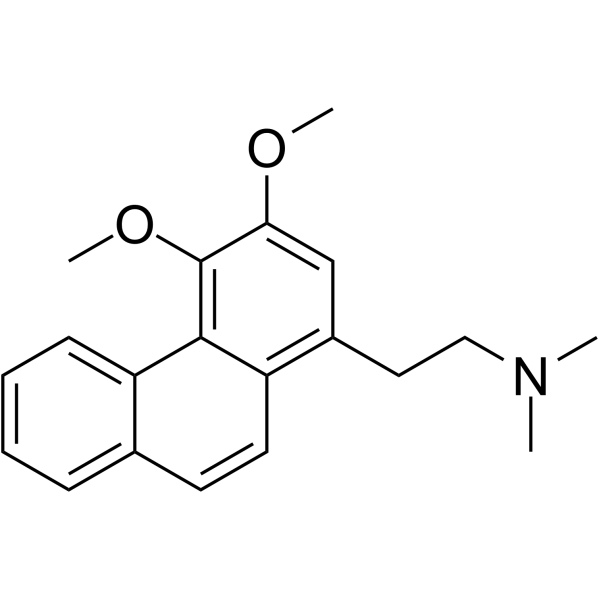
Atherosperminine (Atherospermine) is a phosphodiesterase inhibitor. Atherosperminine inhibits growth of chloroquine-resistant Plasmodium falciparum. Atherosperminine scavenges DPPH free radicals, exhibits ferric reducing power, and chelates metal ions. Atherosperminine can be used for the research of malaria .
|
-
-
- HY-N3903
-
|
6-Acetylforskolin; 6-O-Acetylforskolin
|
Others
|
Others
|
|
Forskolin J (6-Acetylforskolin) is a product that can be isolated from .
|
-

-
- HY-116540
-
|
7DMB-forskolin free base
|
Adenylate Cyclase
|
Cardiovascular Disease
|
|
L 858051 (7DMB-Forskolin free base), an analog of Forskolin (HY-15371), is an adenylyl cyclase stimulator. L 858051 directly activates adenylyl cyclase to increase intracellular, cellular, and ciliary cAMP levels. L 858051 activates recombinant cyclic nucleotide-gated (E583M CNGA2) channels to induce a non-selective, Mg 2+-sensitive current in adult rat ventricular myocytes. L 858051 maximally stimulates L-type Ca 2+ current in adult rat ventricular myocytes. L 858051 increases total PDE3 and PDE4 activities in adult rat ventricular myocytes, with effects insensitive to PKA inhibition. L 858051 serves as a tool to elevate intracellular cAMP for studying subsarcolemmal cAMP dynamics and compartmentation in adult rat ventricular myocytes .
|
-

-
- HY-110040
-
-

-
- HY-137934
-
|
7-Deacetylforskolin
|
Endogenous Metabolite
|
Cardiovascular Disease
|
|
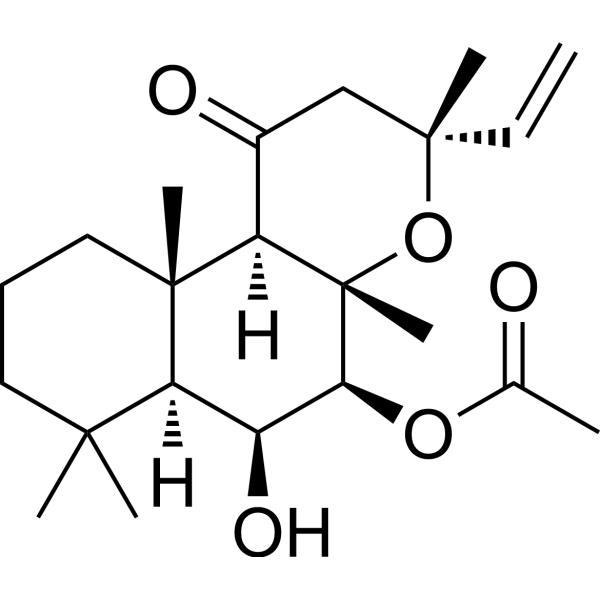
Deacetylforskolin is a deacetylated derivative of forskolin (HY-15371) that can be extracted from C. forskohlii. Deacetylforskolin activates rat adipocyte adenylyl cyclase (IC50 = 20 µM), inhibits glucose transport in rat adipocyte plasma membranes and exhibits antihypertensive activity .
|
-

-
- HY-173215
-
-

-
- HY-103191
-
-
-
- HY-118008A
-
|
|
5-HT Receptor
|
Neurological Disease
|
|
Lesopitron hydrochloride is a 5-HT receptor agonist with potent anxiolytic-like effects. Lesopitron hydrochloride inhibits forskolin-stimulated adenylate cyclase activity with an IC50 value of 125 nM .
|
-

-
- HY-118008
-
|
|
5-HT Receptor
|
Neurological Disease
|
|
Lesopitron (E-4424) is a 5-HT receptor agonist with potent anxiolytic-like effects. Lesopitron inhibits forskolin-stimulated adenylate cyclase activity with an IC50 value of 125 nM .
|
-

-
- HY-100940
-
|
|
Melatonin Receptor
|
Endocrinology
|
|
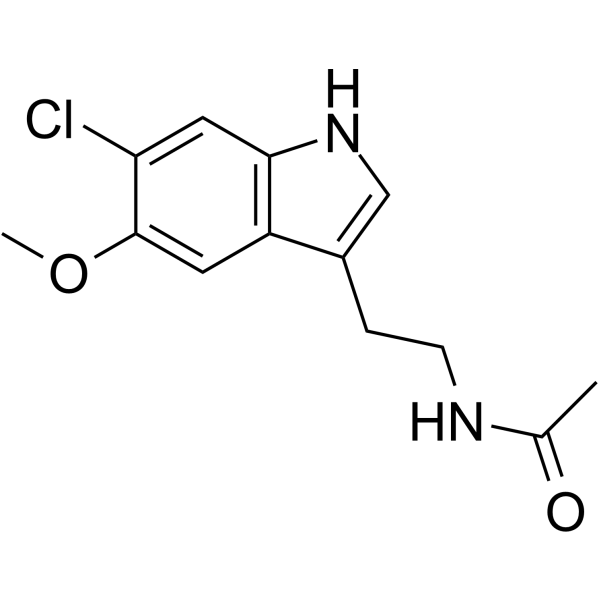
6-Chloromelatonin is a potent melatonin receptor agonist with greater metabolic stability than melatonin. 6-Chloromelatonin compete for [ 3H]-melatonin and 2-[ 125I]-iodomelatonin binding to MT1 receptors (pKi=8.9 and 9.1, respectively). 6-Chloromelatonin compete for [ 3H]-melatonin binding to MT2 receptors (pKi=9.77) .
|
-
-
- HY-129710
-
|
|
GABA Receptor
|
Neurological Disease
|
|
CGP47656 is a potent GABAB receptor agonist that inhibits Forskolin (HY-15371)-stimulated adenylyl cyclase activity and augments noradrenaline-stimulated adenylyl cyclase activity. CGP47656 is promising for research of brain function-related diseases .
|
-

-
- HY-P1250A
-
|
Neuropeptide VF(124-131)(human) TFA; Neuropeptide NPVF (human) TFA
|
Neuropeptide Y Receptor
|
Neurological Disease
|
|
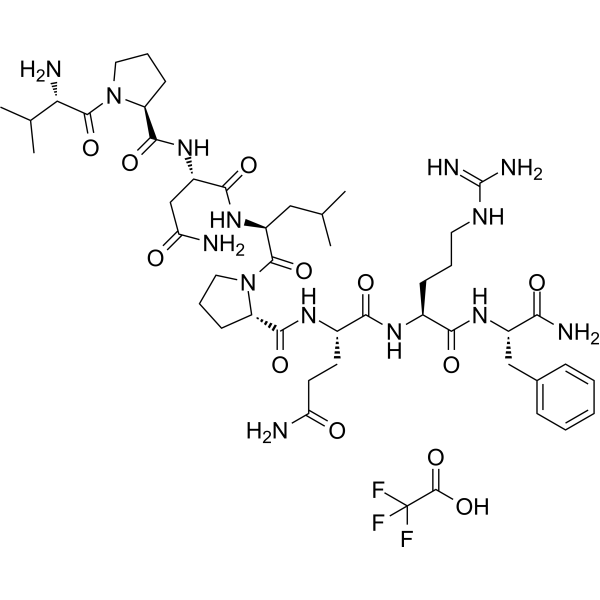
RFRP-3 (Neuropeptide VF(124-131))(human) TFA, a human GnIH peptide homolog, is a potent inhibitor of gonadotropin secretion by inhibiting Ca 2+ mobilization. RFRP-3(human) is a NPFF1 receptor agonist, it inhibits forskolin-induced production of cAMP with an IC50 of 0.7 nM .
|
-
-
- HY-149247
-
|
|
5-HT Receptor
Dopamine Receptor
|
Neurological Disease
|
|
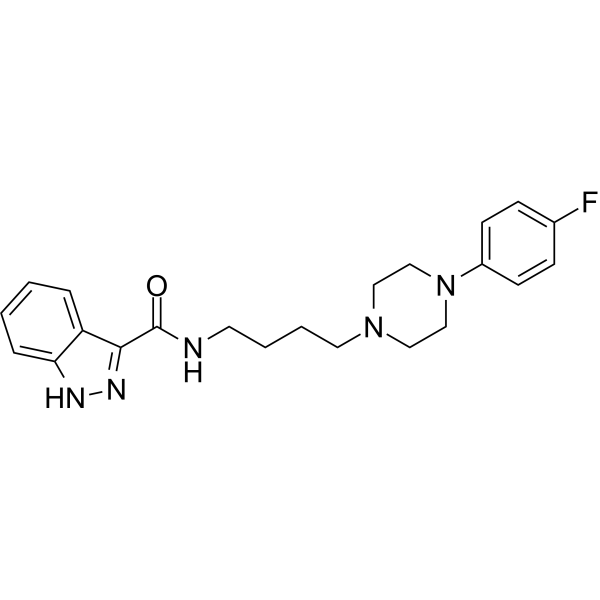
Antipsychotic agent-2 (Compound 11) is a potent antipsychotic agent. Antipsychotic agent-2 shows affinities for 5-HT1A, 5-HT2A, 5-HT2C, D2 and H1 receptors with Kis of 56.6, 66.7, 552, 596 and 1140 nM, respectively. Antipsychotic agent-2 has BBB permeability .
|
-
-
- HY-P2197A
-
|
|
Apelin Receptor (APJ)
|
Inflammation/Immunology
|
|
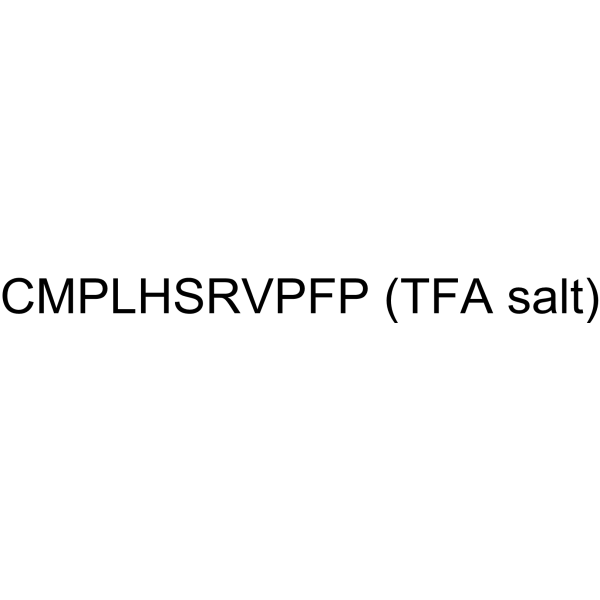
ELA-11(human) TFA is a high affinity apelin receptor agonist (Ki=14 nM). ELA-11(human) TFA is a bioactive fragment of ELA-32. ELA-11(human) TFA inhibits forskolin-induced cAMP production and stimulates β-arrestin recruitment in vitro.
|
-
-
- HY-110041
-
|
|
Cannabinoid Receptor
|
Inflammation/Immunology
|
|
L-759656 is a selective cannabinoid CB2 receptor agonist, with the Ki of 11.8 nM for the human CB2 receptor. L-759656 potently inhibits Forskolin (HY-15371)-stimulated cyclic AMP production in Chinese Hamster Ovary (CHO) cells, with an EC50 of 3.1 nM. L-759656 can be used for the study of immune-related diseases and inflammatory diseases .
|
-

-
- HY-110070
-
|
2-Amino-4-phosphonobutyric acid sodium
|
mGluR
|
Others
Neurological Disease
|
|
DL-AP4 sodium (2-Amino-4-phosphonobutyric acid sodium) is an agonist for metabotropic glutamate receptors (mGluR). DL-AP4 sodium binds to mGluR4, activates the signaling pathway that is negatively correlated with adenylate cyclase, and inhibits the Forskolin (HY-15371)-induced production of cAMP. DL-AP4 sodium is also an inhibitor for ON channel, that reduces the sensitivity of photoreceptors to brightness changes .
|
-

-
- HY-119333
-
|
|
mAChR
|
Neurological Disease
|
|
NNC 11-1607 is a selective M1/M4 muscarinic acetylcholine receptor (mAChR) agonist. NNC 11-1607 inhibits Forskolin (HY-15371)-stimulated cAMP accumulation in Chinese hamster ovary cells expressing the human M2 or M4 mAChR. NNC 11-1607 is promising for research of central nervous system disorders, such as Alzheimer’s disease and schizophrenia .
|
-

-
- HY-N3773
-
|
|
Tyrosinase
|
Cancer
|
|
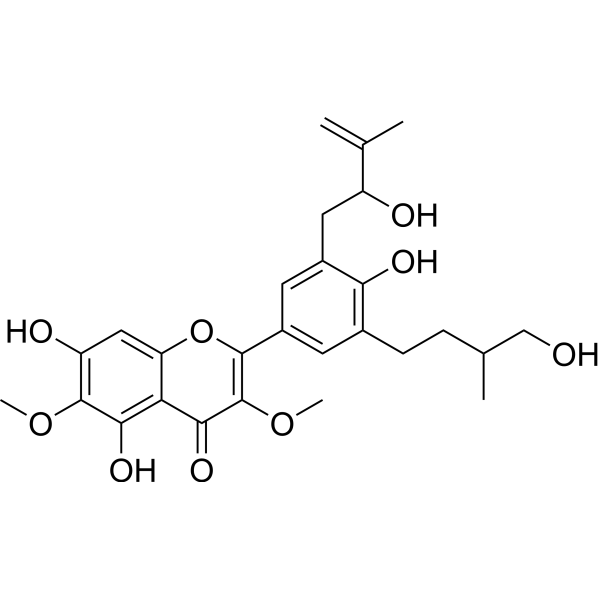
Dodoviscin A is a pigmentation-altering agent, which can be isolated from the aerial parts of Dodonaea viscosa. Dodoviscin A inhibits melanin production in B16-F10 melanoma cells. Dodoviscin A suppresses mushroom tyrosinase activity, and tyrosinase activity induced by 3-isobutyl-1-methylxanthine. Dodoviscin A also inhibits the phorphosylation of cAMP response element binding protein, induced by 3-isobutyl-1-methylxanthine and forskolin .
|
-
-
- HY-175486
-
|
|
Opioid Receptor
|
Neurological Disease
|
|
KOR agonist 6 is a KOR agonist (Ki = 0.25 pM). KOR agonist 6 shows agonistic activity at MOR and DOR in CHO cells and inhibits Forskolin (HY-15371)-stimulated cAMP accumulation. KOR agonist 6 stimulates KOR-mediated [ 35S]GTPγS binding and inhibits cAMP accumulation in KOR-expressing HEK293 cells with potent agonistic activity, while showing lower β-arrestin recruitment potency. KOR agonist 6 demonstrates anti-nociceptive efficacy in mice. KOR agonist 6 can be used for the study of analgesics with reduced central nervous system (CNS) side effects .
|
-

-
- HY-136974
-
|
|
Drug Derivative
|
Others
|
|
9-Deoxyforskolin (compound 2) is a labdane-type diterpenoid, and also a forskolin derivative identified in hairy root cultures of Coleus forskohlii .
|
-

- HY-182714
-
|
N6-Cyclopentyl-9-methyladenine
|
Adenosine Receptor
|
Cardiovascular Disease
Neurological Disease
|
|
N 0840 is a neutral antagonist of adenosine A1 receptor (A1AR), with a Ki value of 279 nM in rats and 1185 nM in humans. N 0840 modulates adenosine A1 receptor to increase forskolin-induced cyclic 3′,5′-adenosine monophosphate production, with a GTP shift value close to 1. N 0840 can be used in studies of neuroprotection, cardiovascular/renal function[1].
|
-

- HY-135079
-
|
|
5-HT Receptor
|
Cardiovascular Disease
Neurological Disease
|
|
Lerimazoline is a selective 5-HT1D receptor agonist with Ki values of 72 and 3480 nM for h5-HT1D and h5-HT1B. Lerimazoline inhibits Forskolin (HY-15371)-stimulated cAMP production and induces contractions in rabbit saphenous vein preparations. Lerimazoline can be used for the research of migraine .
|
-

- HY-W686762
-
|
|
Dopamine Receptor
Adenylate Cyclase
|
Neurological Disease
|
|
m,p-Dimethyl PPE is a D4 dopamine receptor ligand. m,p-Dimethyl PPE promotes GDP/GTP exchange of the G protein α-subunit, dissociates the receptor-G protein complex, stabilizes the low-affinity receptor state, and inhibits adenylate cyclase activity. m,p-Dimethyl PPE inhibits Forskolin (HY-15371)-induced melatonin synthesis in retinal photoreceptor cells and reduces the efficacy of full agonists when used in combination. m,p-Dimethyl PPE can be used in studies related to attention-deficit hyperactivity disorder .
|
-

- HY-133151
-
|
|
CXCR
|
Cancer
|
|
CXCR6 antagonist 1 (Compound 81) is an orally active CXCR6 antagonist. CXCR6 antagonist 1 inhibits the CXCR6 receptor signaling pathway, including β-arrestin recruitment and Forskolin (HY-15371)-induced cAMP production. CXCR6 antagonist 1 reduces tumor growth in a mouse xenograft model of hepatocellular carcinoma. CXCR6 antagonist 1 can be used in research related to hepatocellular carcinoma .
|
-

- HY-103193R
-
|
Colforsin dapropate hydrochloride (Standard)
|
Reference Standards
Adenylate Cyclase
|
Cardiovascular Disease
|
|
NKH477 (Standard) is the analytical standard of NKH477 (HY-103193). This product is intended for research and analytical applications. NKH477 (Colforsin dapropate hydrochloride) directly activates the catalytic unit of adenylate cyclase and increases intracellular cAMP. NKH477 is a forskolin derivative that improves cardiac failure mainly through its beneficial effects on diastolic cardiac function. NKH477 exerts an antiproliferative effect in vivo with an altered cytokine profile to inhibit the acute rejection of rat orthotopic lung allografts .
|
-

- HY-111241
-
|
|
Dopamine Receptor
|
Neurological Disease
|
|
SV 293 is a selective antagonist with neutral antagonist activity. SV 293 binds to human D2 receptors with 100-fold higher affinity and has lower affinity for human D3 and D4 dopamine receptor subtypes. SV 293 was found to block the effects of the full agonist quinpirole in forskolin-dependent adenylate acylase inhibition assays and electrophysiological assays. SV 293 can be used as a useful pharmacological tool to study the role of dopamine D2-like receptor subtypes in dopamine pathways associated with neurological, neuropsychiatric and movement disorders .
|
-

- HY-100656AS
-
|
|
Isotope-Labeled Compounds
Dopamine Receptor
5-HT Receptor
|
Neurological Disease
|
|
Desmethyl cariprazine-d8 is the deuterium labeled Desmethyl cariprazine (HY-100656). Desmethyl cariprazine is a major active metabolite of cariprazine, with activities at human dopamine receptors and serotonin receptors, showing a pEC50 of 8.90 at human D2 receptors, a pEC50 of 8.09 at D3 receptors, and a pEC50 of 6.28 at 5-HT1A receptors. Desmethyl cariprazine inhibits forskolin-induced cAMP production at D2, D3 and 5-HT1A receptors, and suppresses serotonin-induced Ca 2+ release at 5-HT2B receptors. Desmethyl cariprazine is applicable to research related to schizophrenia, bipolar disorder type I and bipolar disorder.
|
-

- HY-137744
-
|
|
Adenylate Cyclase
Nucleoside Antimetabolite/Analog
|
Infection
|
|
MANT-GppNHp is a competitive adenyl cyclase (AC) inhibitor. MANT-GppNHp is a fluorescently labeled GTP (HY-113225) analogue. MANT-GppNHp interacts with the hydrophobic pocket near the AC catalytic site through its MANT group, thereby directly blocking the binding of the substrate ATP. MANT-GppNHp can be used to study diseases related to the increased activity of AC (such as cholera) .
|
-

- HY-W130288
-
|
|
5-HT Receptor
Adenylate Cyclase
Apoptosis
Reactive Oxygen Species (ROS)
|
Cancer
|
|
1-(1-Naphthyl)piperazine is a 5-HT receptor modulator that acts as both a 5-HT2A receptor antagonist and 5-HT1A receptor agonist, and binds to human 5-HT6 receptor with a Ki of 120 nM. 1-(1-Naphthyl)piperazine partially inhibits forskolin-stimulated adenylate cyclase activity in calf substantia nigra. 1-(1-Naphthyl)piperazine inhibits UV-induced immunosuppression. 1-(1-Naphthyl)piperazine induces S-phase cell cycle delay, apoptosis and increases ROS levels, leading to inhibit MNT-1 cell proliferation. 1-(1-Naphthyl)piperazine can be used for melanoma research .
|
-

| Cat. No. |
Nom du produit |
Type |
-
- HY-15371G
-
|
Coleonol; Colforsin; HL 362
|
Fluorescent Dyes
|
|
Forskolin (Coleonol) (GMP) is a potent adenylate cyclase activator with an IC50 of 41 nM and an EC50 of 0.5 μM for type I adenylyl cyclase . Forskolin (GMP) is also an inducer of intracellular cAMP formation . Forskolin (GMP) induces differentiation of various cell types and activates pregnane X receptor (PXR) and FXR . Forskolin (GMP) exerts a inotropic effect on the heart, and has platelet antiaggregatory and antihypertensive actions. Forskolin (GMP) also induces autophagy .
|
| Cat. No. |
Nom du produit |
Type |
-
- HY-15371G
-
|
Coleonol; Colforsin; HL 362
|
Biochemical Assay Reagents
|
|
Forskolin (Coleonol) (GMP) is a potent adenylate cyclase activator with an IC50 of 41 nM and an EC50 of 0.5 μM for type I adenylyl cyclase . Forskolin (GMP) is also an inducer of intracellular cAMP formation . Forskolin (GMP) induces differentiation of various cell types and activates pregnane X receptor (PXR) and FXR . Forskolin (GMP) exerts a inotropic effect on the heart, and has platelet antiaggregatory and antihypertensive actions. Forskolin (GMP) also induces autophagy .
|
| Cat. No. |
Nom du produit |
Target |
Research Area |
-
- HY-P1237
-
|
|
Histamine Receptor
|
Cardiovascular Disease
Neurological Disease
Metabolic Disease
|
|
C-Type Natriuretic Peptide (CNP) (1-22), human, a 1-22 fragment of CNP, is a natriuretic peptide receptor B (NPR-B) agonist. C-Type Natriuretic Peptide (CNP) (1-22), human inhibits cAMP synthesis stimulated by the physiological agonists histamine and 5-HT or directly by Forskolin. CNP is a potent, endothelial-derived relaxant and growthinhibitory factor .
|
-
- HY-P2197
-
-
- HY-P1237A
-
-
- HY-P2249
-
|
|
Arrestin
Apelin Receptor (APJ)
|
Cardiovascular Disease
|
|
ELA-21 (human) is an apelin receptor agonist with a pKi of 8.52. ELA-21 (human) completely inhibits Forskolin-induced cAMP production and stimulates β-arrestin recruitment with subnanomolar potencies. ELA-21 (human) is an agonist in G-protein-dependent and -independent pathways .
|
-
- HY-P1250
-
|
Neuropeptide VF(124-131)(human); Neuropeptide NPVF (human)
|
Neuropeptide Y Receptor
|
Neurological Disease
|
|
RFRP-3 (Neuropeptide VF(124-131))(human), a human GnIH peptide homolog, is a potent inhibitor of gonadotropin secretion by inhibiting Ca 2+ mobilization. RFRP-3(human) is a NPFF1 receptor agonist, it inhibits forskolin-induced production of cAMP with an IC50 of 0.7 nM .
|
-
- HY-P5757
-
|
(D-Trp32)-NPY
|
Neuropeptide Y Receptor
|
Neurological Disease
|
|
(D-Trp32)-Neuropeptide Y (porcine) is a highly selective neuropeptide Y (NPY) Y5 receptor agonist. (D-Trp32)-Neuropeptide Y (porcine) has orexigenic activity and inhibits Forskolin (HY-15371)-stimulated cAMP formation .
|
-
- HY-P1250A
-
|
Neuropeptide VF(124-131)(human) TFA; Neuropeptide NPVF (human) TFA
|
Neuropeptide Y Receptor
|
Neurological Disease
|
|
RFRP-3 (Neuropeptide VF(124-131))(human) TFA, a human GnIH peptide homolog, is a potent inhibitor of gonadotropin secretion by inhibiting Ca 2+ mobilization. RFRP-3(human) is a NPFF1 receptor agonist, it inhibits forskolin-induced production of cAMP with an IC50 of 0.7 nM .
|
-
- HY-P2197A
-
|
|
Apelin Receptor (APJ)
|
Inflammation/Immunology
|
|
ELA-11(human) TFA is a high affinity apelin receptor agonist (Ki=14 nM). ELA-11(human) TFA is a bioactive fragment of ELA-32. ELA-11(human) TFA inhibits forskolin-induced cAMP production and stimulates β-arrestin recruitment in vitro.
|
| Cat. No. |
Nom du produit |
Category |
Target |
Chemical Structure |
| Cat. No. |
Nom du produit |
Chemical Structure |
-
- HY-100656AS
-
|
|
|
Desmethyl cariprazine-d8 is the deuterium labeled Desmethyl cariprazine (HY-100656). Desmethyl cariprazine is a major active metabolite of cariprazine, with activities at human dopamine receptors and serotonin receptors, showing a pEC50 of 8.90 at human D2 receptors, a pEC50 of 8.09 at D3 receptors, and a pEC50 of 6.28 at 5-HT1A receptors. Desmethyl cariprazine inhibits forskolin-induced cAMP production at D2, D3 and 5-HT1A receptors, and suppresses serotonin-induced Ca 2+ release at 5-HT2B receptors. Desmethyl cariprazine is applicable to research related to schizophrenia, bipolar disorder type I and bipolar disorder.
|
-
| Cat. No. |
Nom du produit |
Target |
Áreas de investigación |
Chemical Structure |
-
- HY-15371G
-
|
Coleonol; Colforsin; HL 362
|
Adenylate Cyclase
FXR
Autophagy
PKC
|
Metabolic Disease
Inflammation/Immunology
Endocrinology
Cancer
|
|
Forskolin (Coleonol) (GMP) is a potent adenylate cyclase activator with an IC50 of 41 nM and an EC50 of 0.5 μM for type I adenylyl cyclase . Forskolin (GMP) is also an inducer of intracellular cAMP formation . Forskolin (GMP) induces differentiation of various cell types and activates pregnane X receptor (PXR) and FXR . Forskolin (GMP) exerts a inotropic effect on the heart, and has platelet antiaggregatory and antihypertensive actions. Forskolin (GMP) also induces autophagy .
|
-
Your information is safe with us. * Required Fields.
Inquiry Information
- Nom du produit:
- Cat. No.:
- Quantité:
- MCE Japan Authorized Agent:








