



GW-405833

Based on 1 Customer Validation
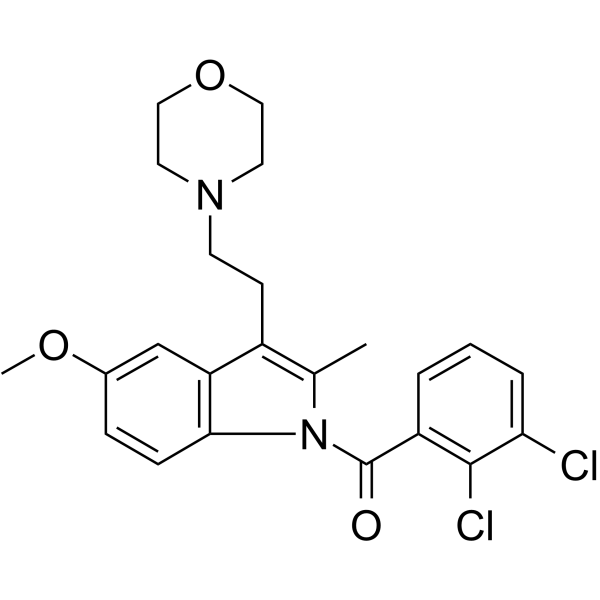
GW-405833 (L768242) is a potent, selective cannabinoid receptor 2 (CB2) agonist. GW405833 has EC50 and Ki values of 0.65 nM and 3.92 nM for CB2, and EC50 and Ki values of 16.1 μM and 4772 nM for CB1. GW-405833 also exhibits non-competitive CB1 antagonist, exerting its analgesic and and anti-inflammatory effect through a CB1 receptor (rather than CB2) dependent mechanism. GW-405833 can significantly inhibit the production of cAMP stimulated by Forskolin (HY-15371). GW405833 inhibits glycolysis by down-regulating HIF-1α, thereby alleviating acute liver failure (ALF).
For research use only. We do not sell to patients.
- Purity : 98.91%
- CAS No.: 180002-83-9
- Formula: C23H24Cl2N2O3
- Molecular Weight:447.35
-
Storage:Powder -20°C, 3 years , 4°C, 2 years ; In solvent -80°C, 6 months , -20°C, 1 month

To place orders, for customer services and technical support, please contact: MedChemExpress USA
Tel: 609-228-6898 E-mail: [email protected] [email protected]


-
 Biological Activity
-
Chemical Information
-
Solvent & Solubility
- Protocols
- Purity & Documentation
- References
-
 Help & FAQs


-
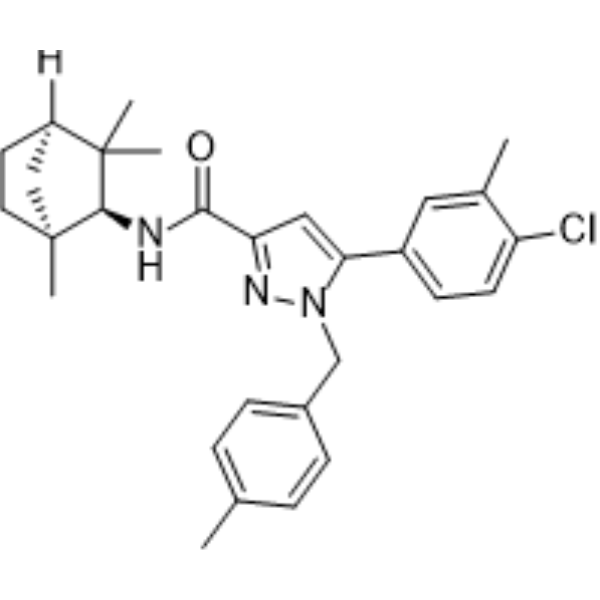
HY-13439
SR144528CB2 Receptor Antagonist -
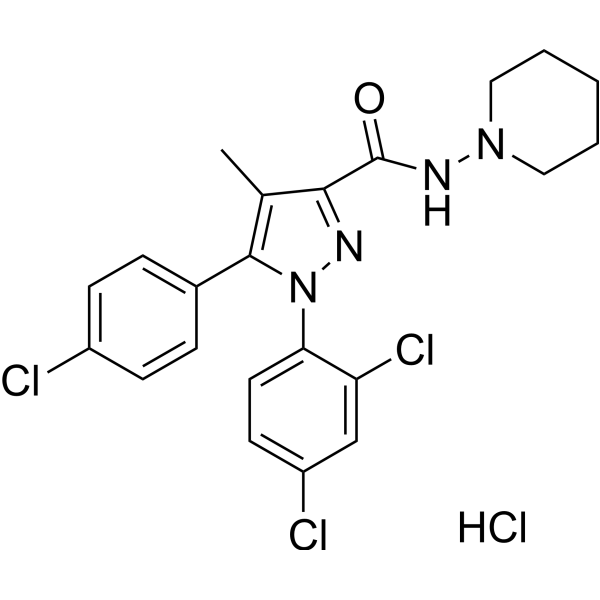
HY-14137
Rimonabant HydrochlorideCB1 Antagonist -
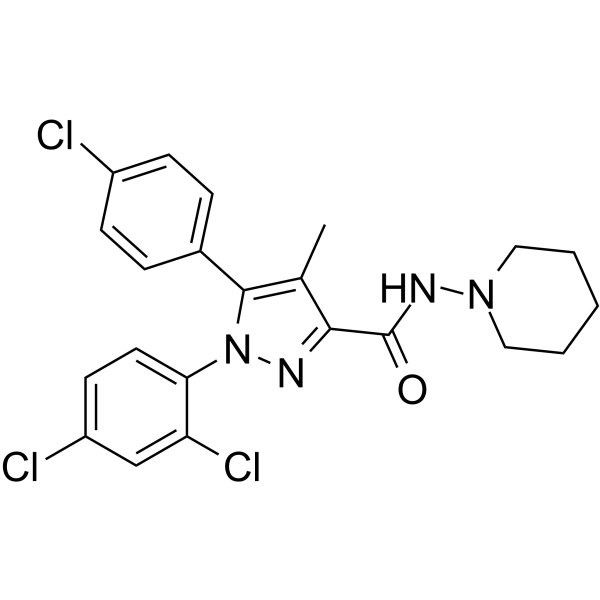
HY-14136
Rimonabant -
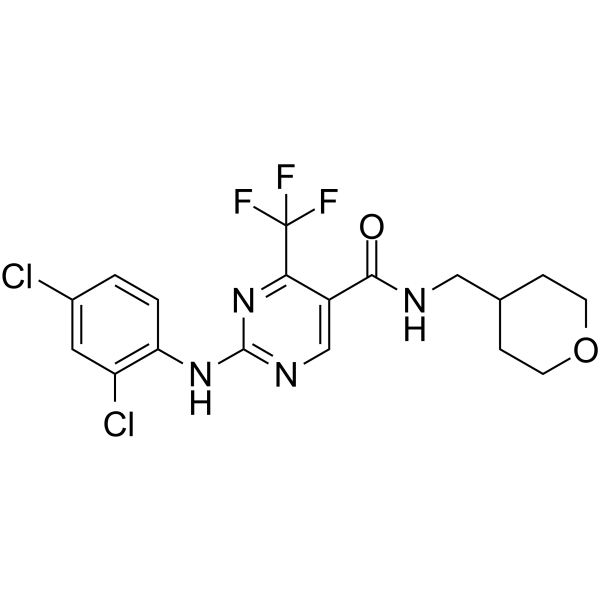
HY-14167
GW842166XCannabinoid Receptor Agonist -
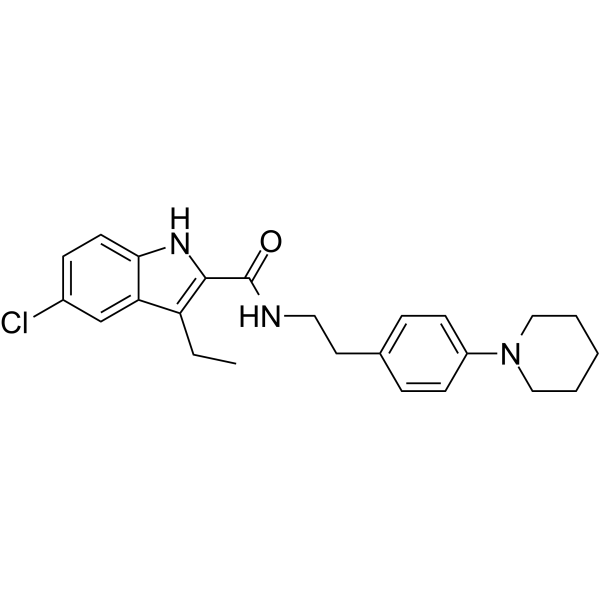
HY-13288
Org 27569Cannabinoid Receptor Modulator -
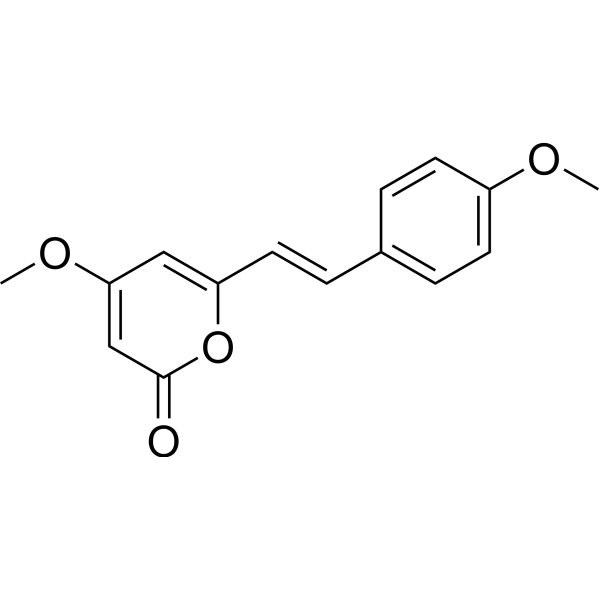
HY-N0919
YangoninCannabinoid Receptor Inhibitor -
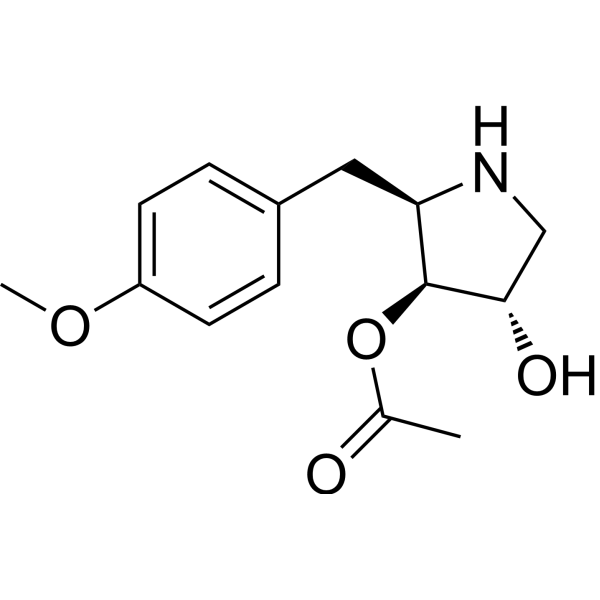
HY-18982
AnisomycinProtein Synthesis Inhibitor -
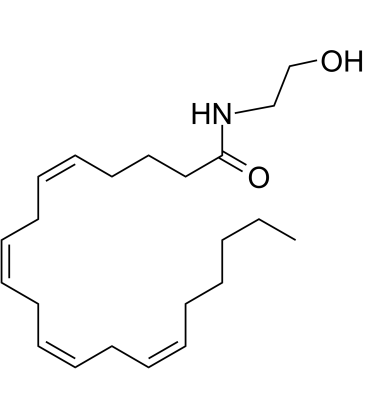
HY-10863
AnandamideCB1/2 Agonist -
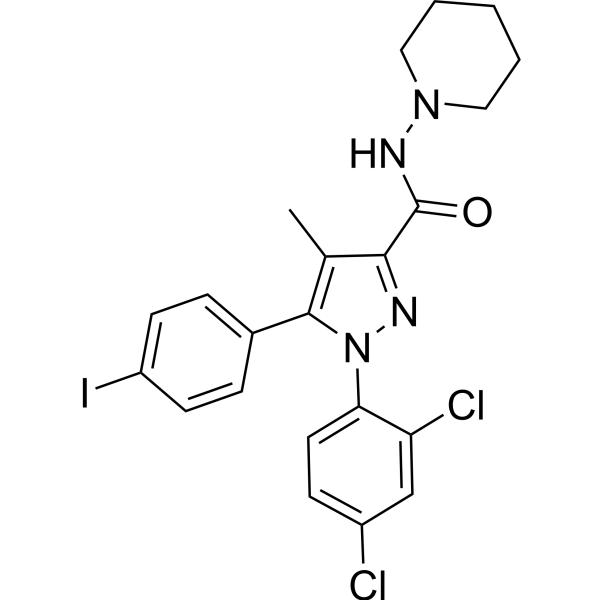
HY-15443
AM251CB1 Receptor Antagonist -
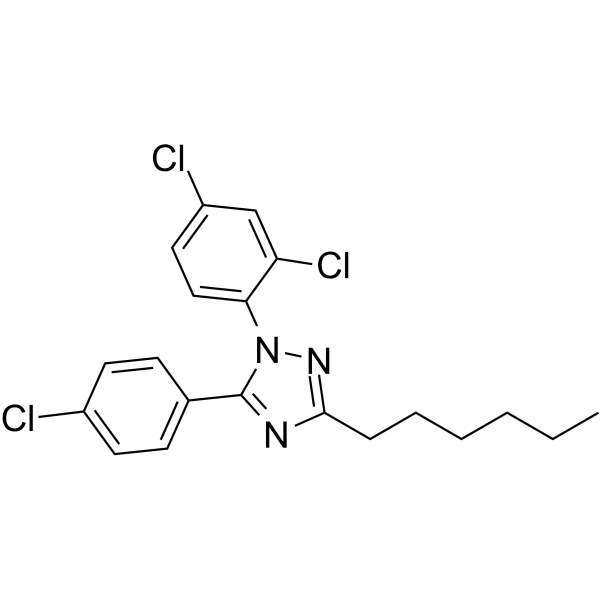
HY-121827
LH21CB1 Receptor Antagonist -
HY-K0010
Protease Inhibitor Cocktail (EDTA-Free, 100× in DMSO) -
HY-13505
AM281CB1 Antagonist


Biological Activity
Description
|
CB2 50.7 nM (EC50) |
CB1 16.1 μM (EC50) |
IL-1β |
HIF-1α |
Cellular Effect
|
Cell Line

|
Type | Value | Description | References |
|---|---|---|---|---|
| CHO | EC50 |
0.65 nM
Compound: 2, GW-405833
|
Agonist activity at human CB2 receptor expressed in CHO cells assessed as inhibition of forskolin-stimulated cAMP level
Agonist activity at human CB2 receptor expressed in CHO cells assessed as inhibition of forskolin-stimulated cAMP level
|
[PMID: 18255291] |
| CHO | EC50 |
50.7 nM
Compound: GW405833; L768242
|
Agonist activity at human CB2 receptor expressed in CHO cells coexpressing Galpha16 assessed as reduction in forsklin-induced cAMP production incubated for 30 mins by cAMP Hunter assay based fluorometric analysis
Agonist activity at human CB2 receptor expressed in CHO cells coexpressing Galpha16 assessed as reduction in forsklin-induced cAMP production incubated for 30 mins by cAMP Hunter assay based fluorometric analysis
|
[PMID: 32952995] |
| CHO | EC50 |
16.1 μM
Compound: GW405833; L768242
|
Agonist activity at human CB1 receptor expressed in CHO cells coexpressing Galpha16 assessed as reduction in forsklin-induced cAMP production incubated for 30 mins by cAMP Hunter assay based fluorometric analysis
Agonist activity at human CB1 receptor expressed in CHO cells coexpressing Galpha16 assessed as reduction in forsklin-induced cAMP production incubated for 30 mins by cAMP Hunter assay based fluorometric analysis
|
[PMID: 32952995] |
| CHO | EC50 |
16.1 x 10³ nM
Compound: GW405833; L768242
|
Agonist activity at human CB1 receptor expressed in CHO cells coexpressing Galpha16 assessed as reduction in forsklin-induced cAMP production incubated for 30 mins by cAMP Hunter assay based fluorometric analysis
Agonist activity at human CB1 receptor expressed in CHO cells coexpressing Galpha16 assessed as reduction in forsklin-induced cAMP production incubated for 30 mins by cAMP Hunter assay based fluorometric analysis
|
[PMID: 32952995] |
In Vitro
GW-405833 behaves as a low-efficacy agonist in spleen membranes from human, mice and rats and exhibits a reverse agonist effect in hCB2-CHO cells[4].
GW-405833 (10 μM, 25 h) inhibits the proliferation of hepatic macrophages through downregulating HIF-1α to inhibit glycolysis[5].
MedChemExpress (MCE) has not independently confirmed the accuracy of these methods. They are for reference only.
-
Cell Line:RAW264.7 macrophages
-
Concentration:10 μM
-
Incubation Time:After 1 hour of pre-treatment, add LPS for 24 h
-
Result:Reduced the expressions of TNF-α and IL-1β.
-
Cell Line:RAW264.7 macrophages
-
Concentration:10 μM
-
Incubation Time:After 1 hour of pre-treatment, add LPS for 24 h
-
Result:Inhibited the expression of HIF-1α, PKM2 and CB2R.
In Vivo
GW-405833 (3 mg/kg, i.v., single dose) inhibits inflammation and footpad edema of rats by reducing cytokine production and oxidative stress[3].
GW-405833 (10 mg/kg, i.p., single dose) protects against cell death in acute liver failure (ALF) rats model through downregulating HIF-1α to inhibit glycolysis[5].
MedChemExpress (MCE) has not independently confirmed the accuracy of these methods. They are for reference only.
-
Animal Model:Partial sciatic nerve ligation (PSNL) model to induce neuropathic pain and inflammatory model induced by complete Freund's adjuvant (CFA) (HY-153808) established in CB1KO mice and CB2KO mice, WT mice[1]
-
Dosage:3, 10 and 30 mg/kg
-
Administration:Intraperitoneal injection (i.p.), single dose
-
Result:Increased the paw withdrawal threshold in CB2KO and WT mice in a dose-dependent manner. Restored mechanical paw withdrawal thresholds relative to baseline in CB2KO and WT mice at doses as low as 10 mg/kg. Retained antiallodynic effects in CB2KO mice. Produced a dose-dependent increase in mechanical threshold in WT mice, but this antiallodynic effect was absent in CB1KO mice. Blocked the antihyperalgesic effect by the CB1 antagonist rimonabant (HY-14136), but not by the CB2 antagonist SR144528 (HY-13439). Did not produce typical cannabinoid-like effects and did not trigger stage symptoms.
-
Animal Model:The footpad edema model induced by Carrageenan (HY-125474) model established in Wistar‑albino rats weighing 200-250 g[3]
-
Dosage:3 mg/kg
-
Administration:Intravenous injection (i.v.), single dose
-
Result:Significantly reduced the levels of serum TNF-α and IL-1β.
Reduced the MDA content in the tissue, increased the GSH level, and inhibited the MPO activity.
Significantly reduced the infiltration of inflammatory cells and restored tissue damage.
-
Animal Model:ALF model established in male Wistars rats(200-350 g)[5]
-
Dosage:10 mg/kg
-
Administration:Intraperitoneal injection (i.p.), single dose
-
Result:Increased the survival rate of mice.
Significantly reduced ALT/AST levels, with a downward trend observed in TBIL but not reaching statistical significance.
Reduced F4/80+, significantly inhibited CD86, and increased CD206.
Reduced the expressions of TNF-α and IL-1β, as well as HIF-1α.
The regulatory effects on liver function, inflammatory factors and HIF-1α completely disappeared in CB2R-/- mice.


Chemical Information
-
CAS No. 180002-83-9
-
Appearance Solid
-
Molecular Weight 447.35
-
Formula C23H24Cl2N2O3
-
Color Light yellow to yellow
-
SMILES
O=C(C1=C(C(Cl)=CC=C1)Cl)N2C3=C(C=C(OC)C=C3)C(CCN4CCOCC4)=C2C
-
Synonyms
L768242
-
Shipping
Room temperature in continental US; may vary elsewhere.
-
Storage
Powder -20°C 3 years 4°C 2 years In solvent -80°C 6 months -20°C 1 month


Solvent & Solubility
In Vitro:
DMSO : 116.67 mg/mL (260.80 mM; ultrasonic and warming and heat to 60°C; Hygroscopic DMSO has a significant impact on the solubility of product, please use newly opened DMSO)
Please refer to the solubility information to select the appropriate solvent. Once prepared, please aliquot and store the solution to prevent product inactivation from repeated freeze-thaw cycles.
Storage method and period of stock solution: -80°C, 6 months; -20°C, 1 month. When stored at -80°C, please use it within 6 months. When stored at -20°C, please use it within 1 month.
Please refer to the solubility information to select the appropriate solvent. Once prepared, please aliquot and store the solution to prevent product inactivation from repeated freeze-thaw cycles.
Storage method and period of stock solution: -80°C, 6 months; -20°C, 1 month. When stored at -80°C, please use it within 6 months. When stored at -20°C, please use it within 1 month.
Concentration (start) × Volume (start) = Concentration (final) × Volume (final)


Purity & Documentation
-
Data Sheet (282 KB)
-
SDS (420 KB)
- English - EN (420 KB)
- Français - FR (420 KB)
- Deutsch - DE (420 KB)
- Norwegian - NO (420 KB)
- Español - ES (420 KB)
- Swedish - SV (420 KB)
- Italian - IT (420 KB)
- Korean - KR (420 KB)
- Portuguese - PT (420 KB)
-
Handling Instructions (2659 KB)
References
[1]. Li AL, et al. Cannabinoid CB2 Agonist GW405833 Suppresses Inflammatory and Neuropathic Pain through a CB1 Mechanism that is Independent of CB2 Receptors in Mice. J Pharmacol Exp Ther. 2017 Aug;362(2):296-305. [Content Brief]
[2]. Li J, et al. Indole compounds with N-ethyl morpholine moieties as CB2 receptor agonists for anti-inflammatory management of pain: synthesis and biological evaluation. Medchemcomm. 2019 Sep 17;10(11):1935-1947. [Content Brief]
[3]. Parlar A, Arslan SO, Doğan MF, et al. The exogenous administration of CB2 specific agonist, GW405833, inhibits inflammation by reducing cytokine production and oxidative stress. Exp Ther Med. 2018;16(6):4900-4908. [Content Brief]
[4]. Marini P, Cascio MG, King A, Pertwee RG, Ross RA. Characterization of cannabinoid receptor ligands in tissues natively expressing cannabinoid CB2 receptors. Br J Pharmacol. 2013;169(4):887-899. [Content Brief]
[5]. Cai SL, et al. CB2R agonist GW405833 alleviates acute liver failure in mice via inhibiting HIF-1α-mediated reprogramming of glycometabolism and macrophage proliferation. Acta Pharmacol Sin. 2023 Jul;44(7):1391-1403. [Content Brief]
[6]. Valenzano KJ, et al. Pharmacological and pharmacokinetic characterization of the cannabinoid receptor 2 agonist, GW405833, utilizing rodent models of acute and chronic pain, anxiety, ataxia and catalepsy. Neuropharmacology. 2005 Apr;48(5):658-72. [Content Brief]


Complete Stock Solution Preparation Table
Please refer to the solubility information to select the appropriate solvent. Once prepared, please aliquot and store the solution to prevent product inactivation from repeated freeze-thaw cycles.
Storage method and period of stock solution: -80°C, 6 months; -20°C, 1 month. When stored at -80°C, please use it within 6 months. When stored at -20°C, please use it within 1 month.
| Optional Solvent | Concentration Solvent Mass | 1 mg | 5 mg | 10 mg | 25 mg |
|---|---|---|---|---|---|
| DMSO | 1 mM | 2.2354 mL | 11.1769 mL | 22.3539 mL | 55.8847 mL |
| 5 mM | 0.4471 mL | 2.2354 mL | 4.4708 mL | 11.1769 mL | |
| 10 mM | 0.2235 mL | 1.1177 mL | 2.2354 mL | 5.5885 mL | |
| 15 mM | 0.1490 mL | 0.7451 mL | 1.4903 mL | 3.7256 mL | |
| 20 mM | 0.1118 mL | 0.5588 mL | 1.1177 mL | 2.7942 mL | |
| 25 mM | 0.0894 mL | 0.4471 mL | 0.8942 mL | 2.2354 mL | |
| 30 mM | 0.0745 mL | 0.3726 mL | 0.7451 mL | 1.8628 mL | |
| 40 mM | 0.0559 mL | 0.2794 mL | 0.5588 mL | 1.3971 mL | |
| 50 mM | 0.0447 mL | 0.2235 mL | 0.4471 mL | 1.1177 mL | |
| 60 mM | 0.0373 mL | 0.1863 mL | 0.3726 mL | 0.9314 mL | |
| 80 mM | 0.0279 mL | 0.1397 mL | 0.2794 mL | 0.6986 mL | |
| 100 mM | 0.0224 mL | 0.1118 mL | 0.2235 mL | 0.5588 mL |


GW-405833 Related Classifications
HY-110036 Related Classifications
 Powered by Bioz