



Forskolin (Standard)

Based on 1 Customer Validation
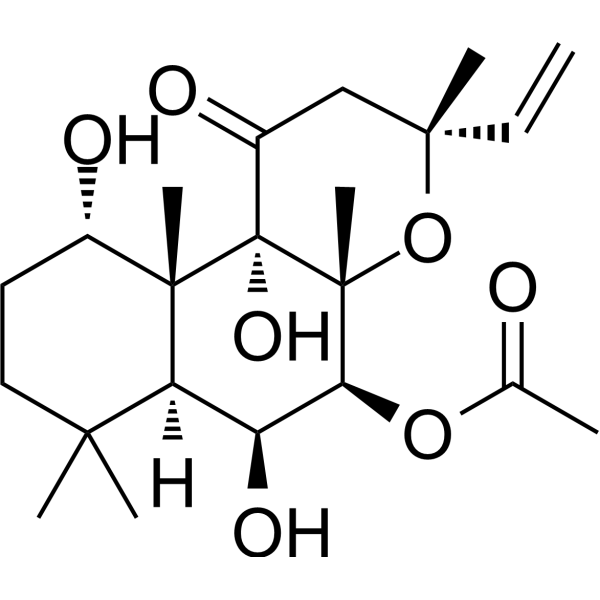
Forskolin (Standard) is the analytical standard of Forskolin. This product is intended for research and analytical applications. Forskolin (Coleonol) is a potent adenylate cyclase activator with an IC50 of 41 nM and an EC50 of 0.5 μM for type I adenylyl cyclase. Forskolin is also an inducer of intracellular cAMP formation. Forskolin induces differentiation of various cell types and activates pregnane X receptor (PXR) and FXR. Forskolin exerts a inotropic effect on the heart, and has platelet antiaggregatory and antihypertensive actions. Forskolin also induces autophagy.
For research use only. We do not sell to patients.
- Purity : 98.54%
- CAS No.: 66575-29-9
- Formula: C22H34O7
- Molecular Weight:410.50
-
Storage:
Please store the product under the recommended conditions in the Certificate of Analysis.


To place orders, for customer services and technical support, please contact: MedChemExpress USA
Tel: 609-228-6898 E-mail: [email protected] [email protected]


-
 Product Information
-
Chemical Information
- Purity & Documentation
-
 Help & FAQs


-
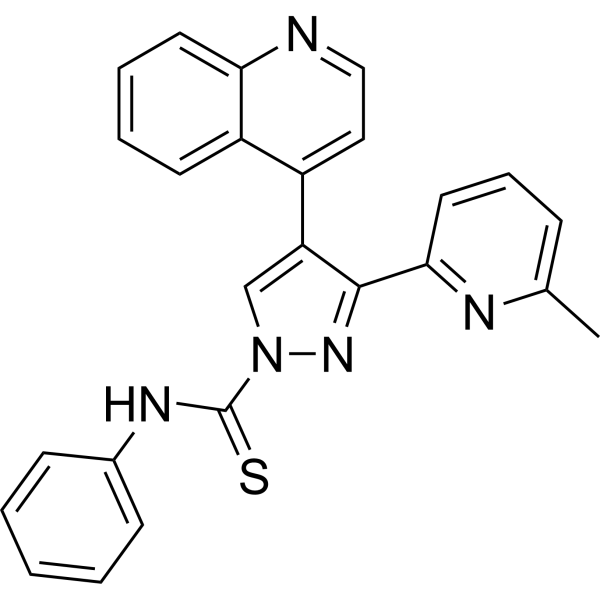
HY-10432
A 83-01ALK4/5/7 Inhibitor -
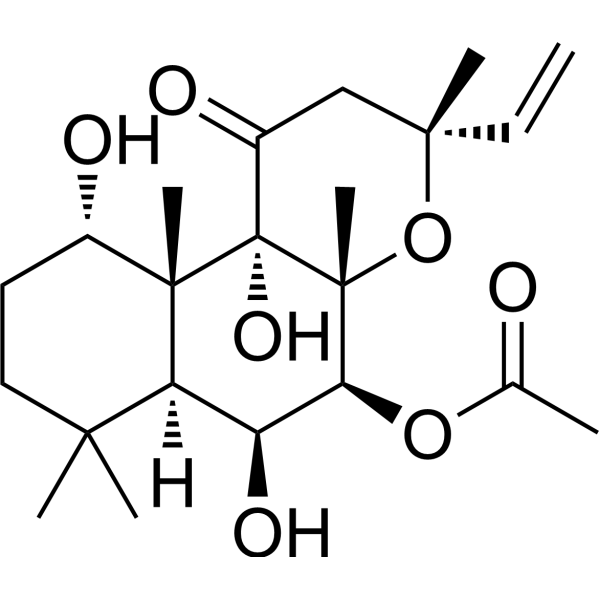
HY-15371
ForskolinAdenylate Cyclase Activator -
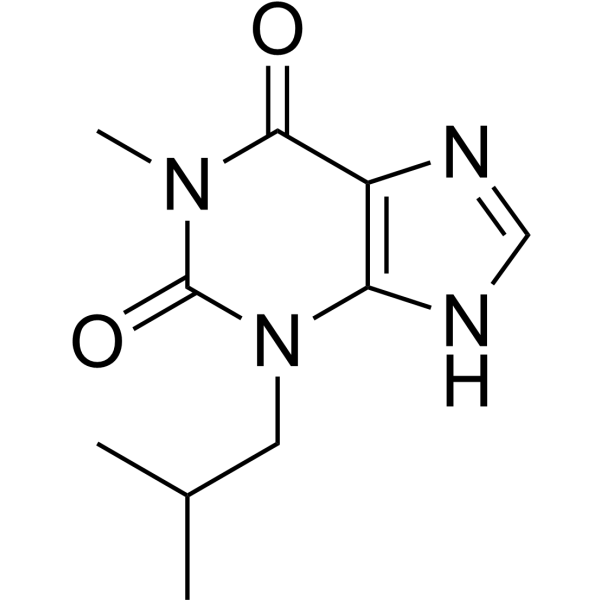
HY-12318
IBMXPDE Inhibitor -

HY-10432R
A 83-01 (Standard)ALK4/5/7 Inhibitor -
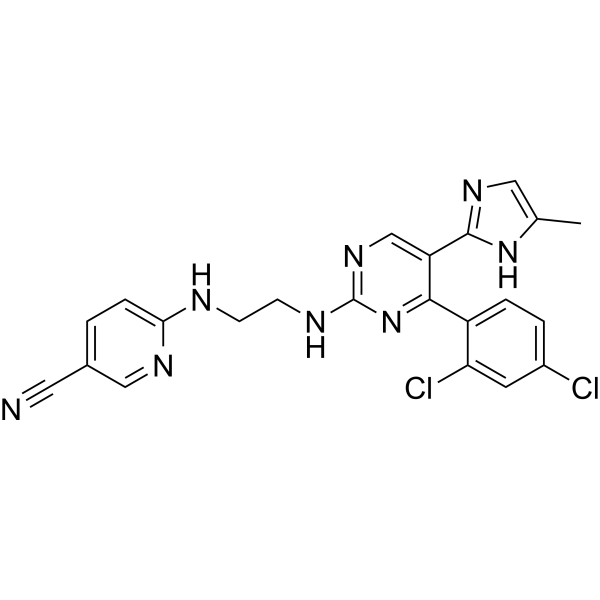
HY-10182
LaduviglusibGSK-3 Inhibitor -
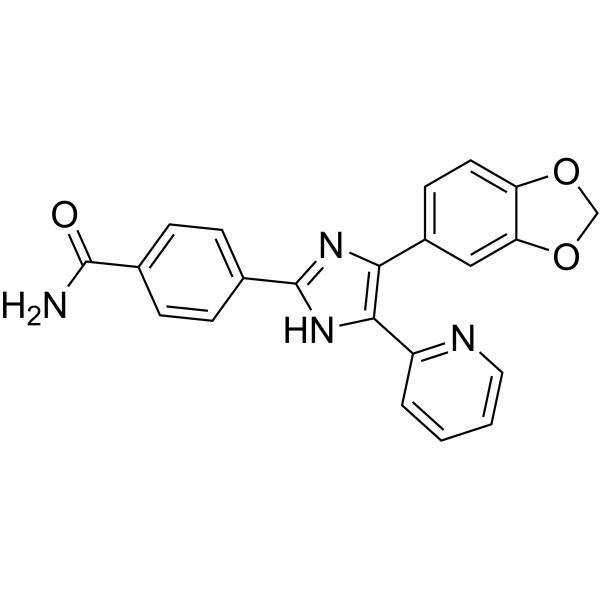
HY-10431
SB-431542TGF-β Receptor Kinase Inhibitor -
HY-15371G
Forskolin (GMP)ACs Activator (GMP) -
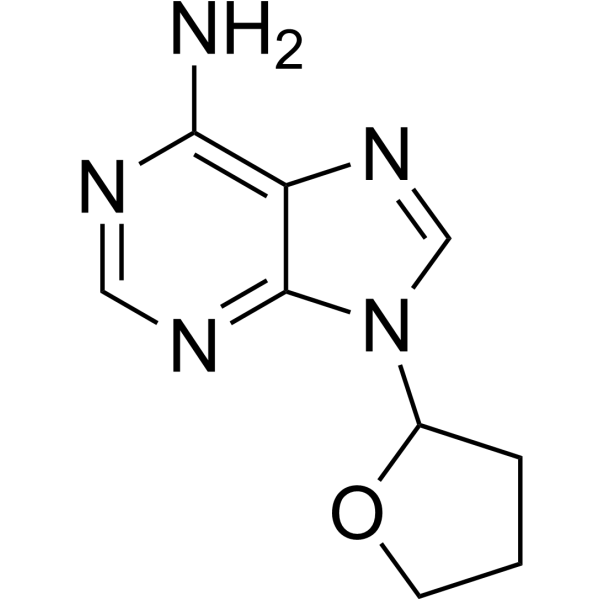
HY-100396
SQ22536Adenylate Cyclase Inhibitor -
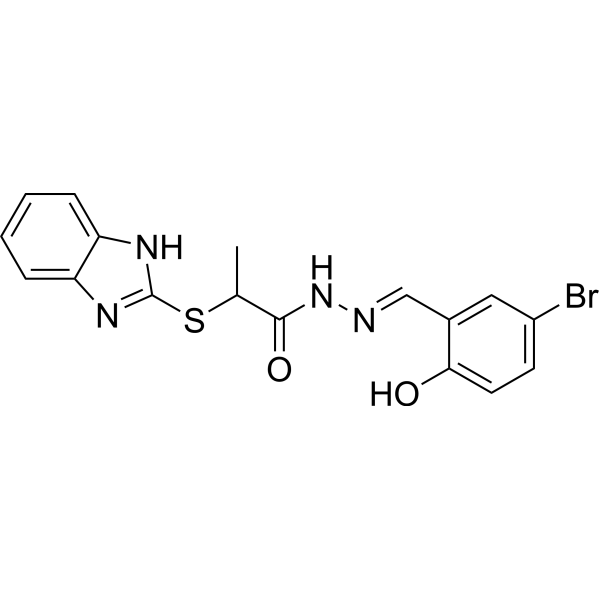
HY-103194
KH7Soluble Adenylyl Cyclase Inhibitor -
HY-10432G
A 83-01 (GMP)ALK4/5/7 Inhibitor -
HY-101279
ST034307AC1 Inhibitor -
HY-P0252
α-MSHMC4R Agonist


Product Information
Information
Application
The compound is the grade of analytical standard, which is the reference standard supplied assay. It is commonly used in qualitative, quantitative and methodological research experiments in HPLC, GC and MS.


Chemical Information
-
CAS No. 66575-29-9
-
Appearance Solid
-
Molecular Weight 410.50
-
Formula C22H34O7
-
Color White to off-white
-
SMILES
O=C1[C@@]2(O)[C@]([C@@H](OC(C)=O)[C@@H](O)[C@@]3([H])C(C)(C)CC[C@H](O)[C@@]32C)(C)O[C@@](C)(C=C)C1
-
Synonyms
Coleonol (Standard); Colforsin (Standard); HL 362 (Standard)
-
Structure Classification
-
Initial Source
-
Shipping
Room temperature in continental US; may vary elsewhere.
-
Storage
Please store the product under the recommended conditions in the Certificate of Analysis.


Purity & Documentation
-
SDS (252 KB)
- English - EN (252 KB)
- Français - FR (252 KB)
- Deutsch - DE (252 KB)
- Norwegian - NO (252 KB)
- Español - ES (252 KB)
- Swedish - SV (252 KB)
- Italian - IT (252 KB)
- Korean - KR (252 KB)
- Portuguese - PT (252 KB)
-
Handling Instructions (2659 KB)
References
[1]. Robbins JD, et al. Forskolin carbamates: binding and activation studies with type I adenylyl cyclase. J Med Chem. 1996 Jul 5;39(14):2745-52. [Content Brief]
[2]. Matsumiya W, et al. Forskolin modifies retinal vascular development in Mrp4-knockout mice. Invest Ophthalmol Vis Sci. 2012 Dec 7;53(13):8029-35. [Content Brief]
[3]. Mayati A, et al. Functional polarization of human hepatoma HepaRG cells in response to forskolin. Sci Rep. 2018 Oct 31;8(1):16115. [Content Brief]
[4]. Awad JA, et al. Interactions of forskolin and adenylate cyclase. Effects on substrate kinetics and protection against inactivation by heat and N-ethylmaleimide. J Biol Chem. 1983 Mar 10;258(5):2960-5. [Content Brief]
[5]. Seamon KB, et al. Structure-activity relationships for activation of adenylate cyclase by the diterpene forskolin and its derivatives. J Med Chem. 1983 Mar;26(3):436-9. [Content Brief]
[6]. Ríos-Silva M, et al. Effect of chronic administration of forskolin on glycemia and oxidative stress in rats with and without experimental diabetes. Int J Med Sci. 2014 Mar 11;11(5):448-52. [Content Brief]
[7]. Rodriguez G, et al. Forskolin-inducible cAMP pathway negatively regulates T-cell proliferation by uncoupling the interleukin-2 receptor complex. J Biol Chem. 2013 Mar 8;288(10):7137-46. [Content Brief]
[8]. Amrita Datta, et al. High-throughput screening identified selective inhibitors of exosome biogenesis and secretion: A drug repurposing strategy for advanced cancer. Sci Rep. 2018 May 25;8(1):8161. [Content Brief]

Calculators
Concentration (start) × Volume (start) = Concentration (final) × Volume (final)


Forskolin (Standard) Related Classifications
HY-15371R Related Classifications
 Powered by Bioz