



MMP
Matrix metalloproteinases
MMP Isoform Specific Products
-
MMP-1
(63)
View all products
-
MMP-2
(145)
View all products
-
MMP-3
(56)
View all products
-
MMP-8
(30)
View all products
-
MMP-9
(183)
View all products
-
MMP-13
(54)
View all products
-
MMP-14
(23)
View all products
-
MMP-17
(3)
View all products
-
ADAM10
(9)
View all products
-
ADAM17
(10)
View all products
-
MMP-7
(22)
View all products
-
MMP-12
(18)
View all products
-
MMP-10
(8)
View all products
-
MMP
(436)
View all products
-
ADAM8
(1)
View all products
-
MMP-19
(1)
View all products
All Product Categories
-
MMP Inhibitors
(592)
View all products
-
MMP Agonists
(2)
View all products
-
MMP Antagonist
(1)
View all products
-
MMP Activators
(35)
View all products
-
MMP Modulators
(3)
View all products
-
MMP Chemicals
(2)
View all products
-
MMP Inducers
(13)
View all products
-
MMP Degrader
(1)
View all products
-
MMP Controls
(5)
View all products
-
MMP Substrates
(14)
View all products
-
MMP Ligands
(3)
View all products
-
Matrix Metalloproteinases Proteins
(41)
View all products
-
MMP-1 Proteins
(2)
View all products
-
MMP-2 Proteins
(7)
View all products
-
MMP-3 Proteins
(2)
View all products
-
MMP-7 Proteins
(2)
View all products
-
MMP-10 Proteins
(1)
View all products
-
MMP-12 Proteins
(2)
View all products
-
MMP-8 Proteins
(7)
View all products
-
MMP-9 Proteins
(11)
View all products
-
MMP-13 Proteins
(1)
View all products
-
MMP-14 Proteins
(1)
View all products
-
ADAM8 Proteins
(4)
View all products
-
ADAM10 Proteins
(1)
View all products
-
ADAM17/TACE Proteins
(3)
View all products
-
MMP Related Products (790)
Related Products (790)

-
Recombinant Proteins (49)
-
Antibodies (15)
-
MMP Isoform Comparison
-
YYRADDA
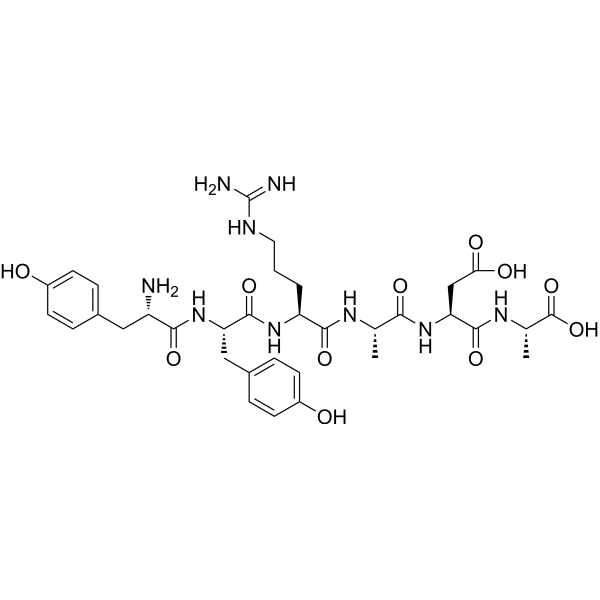 0 ImagesCat. No.: HY-P5263CAS No.: 1082226-36-5YYRADDA is a polypeptide. YYRADDA stimulates the growth of collagen in the extracellular matrix of the skin. YYRADDA improves the appearance of the skin and promotes the healing of damaged skin.
-
BAY-7598
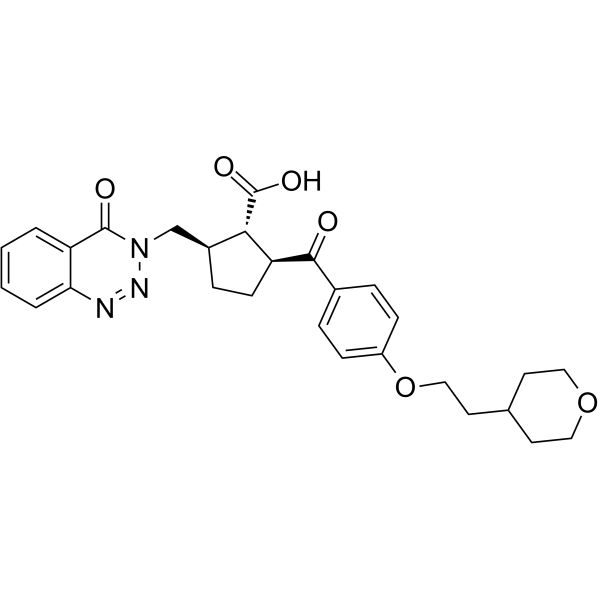 0 ImagesCat. No.: HY-120944CAS No.: 1816257-74-5BAY-7598, a chemical probe, is a potent, orally bioavailable, and selective MMP12 inhibitor with IC50s of 0.085, 0.67 and 1.1 nM for human MMP12, murine MMP12, and rat MMP12, respectively.
-
Anti-ADMAST4 Antibody
 0 ImagesCat. No.: HY-P992186
-
Highly purified Type IX collagen, from chick articular cartilage
 0 ImagesCat. No.: HY-NP114Synonyms: Chick Type IX collagen, immunization gradeHighly purified Type IX collagen, from chick articular cartilage (Chick Type IX collagen, immunization grade) is an immune grade collagen derived from chick articular cartilage, which can stimulate the animal's immune system to produce specific antibodies against this collagen. Collagen is also a substrate for hydrolysis by MMPs.
-
MMP-2 Inhibitor-4
 0 ImagesCat. No.: HY-170604MMP-2 Inhibitor-4 (Compound 5g) is an MMP-2 inhibitor with an IC50 of 152.62 nM. MMP-2 Inhibitor-4 can reduce the levels of MMP-2 in the K562 cell line through stable binding at the MMP-2 active site, and it demonstrates strong antiangiogenic effects in the ACHN cell line. MMP-2 Inhibitor-4 holds promise for research in chronic myeloid leukemia (CML).
-
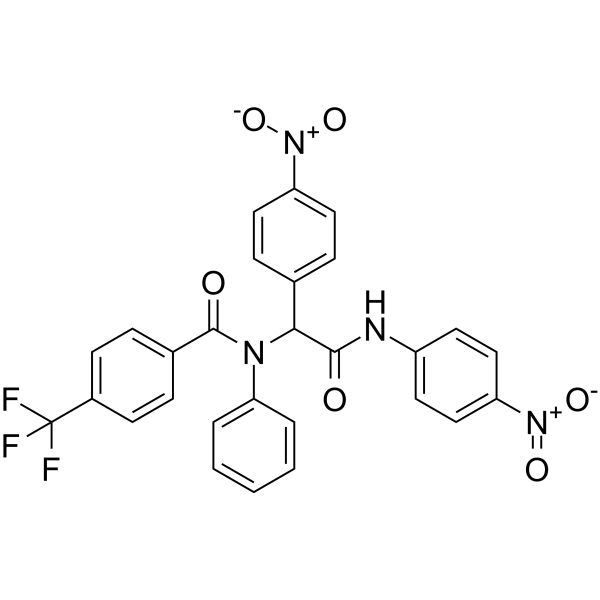
Rilpivirine hydrochloride (Standard)
 0 ImagesSynonyms: TMC-278 hydrochloride (Standard); TMC278 hydrochloride (Standard); TMC 278 hydrochloride (Standard)Rilpivirine (hydrochloride) (Standard) is the analytical standard of Rilpivirine (hydrochloride). This product is intended for research and analytical applications. Rilpivirine (R278474) hydrochloride is a potent and specific diarylpyrimidine (DAPY) non-nucleoside reverse transcriptase inhibitor (NNRTI). Rilpivirine hydrochloride has high antiviral activity against wild-type HIV (EC50=0.4 nM) and mutant viruses (EC50=0.1-2.0 nM). Rilpivirine hydrochloride has a high genetic barrier to resistance development of HIV.
-
Highly purified Type V collagen, from mouse intestine
 0 ImagesCat. No.: HY-NP111Synonyms: Mouse Type V collagen, immunization gradeHighly purified Type V collagen, from mouse intestine (Mouse Type II collagen, immunization grade) is an immune grade collagen derived from mouse intestine, which can stimulate the animal's immune system to produce specific antibodies against this collagen. Collagen is also a substrate for hydrolysis by MMPs.
-
ZM-32
 0 ImagesCat. No.: HY-163760CAS No.: 2667585-44-4ZM-32 is an inhibitor for human antigen R (HuR), that downregulates the expression of VEGF-A and MMP9, and thus inhibits breast cancer tumor angiogenesis. ZM-32 exhibits broad-spectrum anti-proliferative effects in a variety of cancer cell lines, and exhibits antitumor efficacy against MDA-MB-231 in mouse models.
-
Mmp12 Rat Pre-designed siRNA Set A
 0 ImagesCat. No.: HY-RS08524
Mmp12 Rat Pre-designed siRNA Set A contains three designed siRNAs for Mmp12 gene (Rat), as well as a negative control, a positive control, and a FAM-labeled negative control.
-
Antitumor agent-132
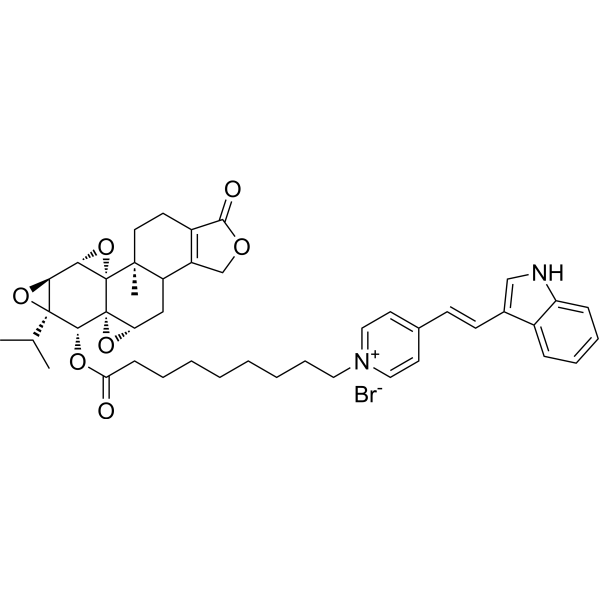 0 ImagesCat. No.: HY-162131Antitumor agent-132 (Compound F9) is an antitumor agent. Antitumor agent-132 induces cell apoptosis and increases intracellular reactive oxygen species and reduces MMP.
-
2-Methoxy-2,4-diphenylfuran-3-one
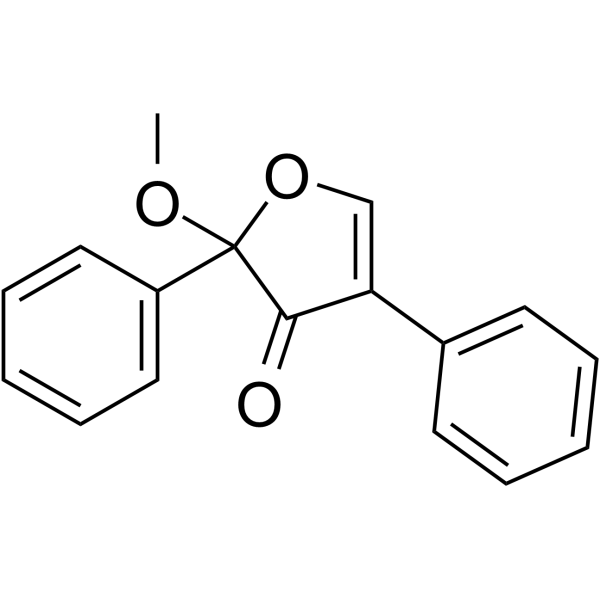 0 ImagesCat. No.: HY-W277900CAS No.: 50632-57-0
-
Edaravone sulfate-d5
 0 ImagesCat. No.: HY-W801479SEdaravone sulfate-d5 is the deuterium labeled Edaravone sulfate. Edaravone is a strong novel free radical scavenger, and inhibits MMP-9-related brain hemorrhage in rats treated with tissue plasminogen activator.
-
CKD-712
 0 ImagesCat. No.: HY-114214CAS No.: 626252-75-3CKD-712 is an orally active multi-target tetrahydroisoquinoline derivatived and a potent inhibitor of the NF-κB pathway. CKD-712 selectively inhibits MMP-9 with no effect on MMP-2, downregulates the expression of TNF-α, IL-6, cyclin A, cyclin B, CDK-1 and other proteins, and activates the PI3K/Akt signaling pathway. CKD-712 blocks the activation and nuclear translocation of NF-κB, downregulates inflammatory factors and pro-tumor metastatic proteins, and induces G2/M phase arrest in tumor cells and thereby inhibits the invasion of cancer cells. CKD-712 can be used for the research of sepsis, myocardial ischemia-reperfusion injury and non-small cell lung cancer.
-
PZ-1657
 0 ImagesCat. No.: HY-179724PZ-1657 (Compound 57) is an orally active, blood-brain barrier permeable, highly selective, and metabolically stable 5-HT7 receptor inverse agonist with a Ki value of 5 nM. PZ-1657 inhibits constitutive cyclic adenosine monophosphate (cAMP) production mediated by the Gs signaling pathway (EC50 value of 2.93 nM). PZ-1657 inhibits CYP3A4 P450 (IC50 = 12.2 μM) and hERG channels. PZ-1657 reduces 5-HT7 receptor-mediated MMP-9 activity. PZ-1657 reverses Phencyclidine-induced cognitive impairment. PZ-1657 possesses antidepressant properties.
-
GIP (22-51) human
 0 ImagesCat. No.: HY-P10972CAS No.: 957470-49-4Synonyms: Glucose-dependent Insulinotropic Peptide (22-51) (human)GIP (22-51) human (Glucose-dependent Insulinotropic Peptide (22-51) human) is a potent proatherosclerotic peptide hormone consisting of 30 amino acids. GIP (22-51) human can activate the NF-κB signaling pathway, promote the expression of MMP-8, and induce the expression of proinflammatory and proatherosclerotic proteins. GIP (22-51) human can also increase the level of intracellular free Ca2+ in THP-1-induced macrophages. GIP (22-51) human can be used in the research of atherosclerosis.
-
D8P1C1
 0 ImagesCat. No.: HY-P992341D8P1C1 is a high-affinity ADAM17 inhibitor (with a Kd of 180 pM targeting ADAM17-ECD) that reduces the shedding and phosphorylation of EGFR ligands. D8P1C1 inhibits cancer cell proliferation in vitro and tumor growth in xenograft models. 89Zr-DFO-D8P1C1 radioimmunological PET imaging shows its substantial accumulation in ovarian tumor xenografts, serving as a platform for generating bispecific T-cell engager derivatives. D8P1C1 can be applied to research on related diseases including triple-negative breast cancer, various types of ovarian cancer, lung adenocarcinoma, glioma, and colon cancer.
-
Colchicine-O-CO-Enyl(Me)-Enyl-Enyl(Me)-Enyl-1,3,3-trimethylcyclohex-1-ene
 0 ImagesCat. No.: HY-180765Colchicine-O-CO-Enyl(Me)-Enyl-Enyl(Me)-Enyl-1,3,3-trimethylcyclohex-1-ene (compound L2) is a lipophilic colchicinoid formulation targeting hepatic stellate cells (HSC). Colchicine-O-CO-Enyl(Me)-Enyl-Enyl(Me)-Enyl-1,3,3-trimethylcyclohex-1-ene increases the levels of MMP2, MMP8 and MMP9, demonstrating the protective effect in tissue remodeling. Colchicine-O-CO-Enyl(Me)-Enyl-Enyl(Me)-Enyl-1,3,3-trimethylcyclohex-1-ene exhibits anti-fibrotic activity in CCL4-induced liver fibrosis (LF) mouse model. Colchicine-O-CO-Enyl(Me)-Enyl-Enyl(Me)-Enyl-1,3,3-trimethylcyclohex-1-ene can be used for LF research.
-
MEDI-3622
 0 ImagesCat. No.: HY-P992406MEDI-3622 is a human monoclonal antibody against ADAM17. MEDI-3622 blocks the ADAM17-mediated shedding of CD16A and CD62L on NK cells, and binds with high specificity to a surface loop unique to the metalloprotease catalytic domain of ADAM17. MEDI-3622 enhances IFNγ production by NK cells when they bind to antibody-coated tumor cells. MEDI-3622 can be used in the research of ovarian cancer, Burkitt lymphoma, head and neck cancer, and colorectal cancer.
-
Mmp13 Rat Pre-designed siRNA Set A
 0 ImagesCat. No.: HY-RS08527
Mmp13 Rat Pre-designed siRNA Set A contains three designed siRNAs for Mmp13 gene (Rat), as well as a negative control, a positive control, and a FAM-labeled negative control.




