



ADAM8
ADAM8 (A Disintegrin and Metalloproteinase 8) is a transmembrane metalloprotease and sheddase that regulates cell-cell and cell-matrix interactions through ectodomain shedding of membrane-associated proteins, with particularly high expression in myeloid and other immune cell populations[1][2]. Mechanistically, ADAM8 functions as a signaling hub that coordinates extracellular, intracellular, and intercellular communication, thereby influencing inflammatory responses, leukocyte migration, and tissue remodeling processes[3][4]. Through proteolytic processing of substrates involved in adhesion and immune regulation, ADAM8 promotes chemotaxis, transendothelial migration, and extracellular matrix interaction in inflammatory settings[2][3]. In disease models, elevated ADAM8 expression has been associated with chronic inflammation, allergic airway disease, neuroinflammatory conditions, and multiple invasive cancers, where it contributes to tumor cell motility, invasion, and tumor-immune cell crosstalk[2][4][5]. Compared with related ADAM family proteases, ADAM8 possesses a relatively restricted validated substrate repertoire, undergoes autocatalytic prodomain removal rather than classical furin-dependent activation, and exhibits catalytic activity that is largely insensitive to tissue inhibitors of metalloproteinases (TIMPs), highlighting distinct regulatory features within the ADAM family[3]. For experimental applications, ADAM8 has emerged as a therapeutic target, and inhibitory strategies including peptide inhibitors and RNA aptamers have demonstrated utility in preclinical models of inflammatory disease and cancer, supporting its value for mechanistic and translational research[3][6].
References:
- [1]. ADAM8 gene information from NCBI.
- [2]. sciencedirect. topics.
- [3]. Cook L, et al. A jack of all trades - ADAM8 as a signaling hub in inflammation and cancer. FEBS J. 2024 Sep;291(18):3989-4008. [Content Brief]
- [4]. Cook L, et al. ADAM8-Dependent Extracellular Signaling in the Tumor Microenvironment Involves Regulated Release of Lipocalin 2 and MMP-9. Int J Mol Sci. 2022 Feb 10;23(4):1976. [Content Brief]
- [5]. Mierke CT. The versatile roles of ADAM8 in cancer cell migration, et al. The versatile roles of ADAM8 in cancer cell migration, mechanics, and extracellular matrix remodeling. Front Cell Dev Biol. 2023 Feb 23;11:1130823. [Content Brief]
- [6]. Mi Z, et al. RNA Aptamer Targeting of Adam8 in Cancer Growth and Metastasis. Cancers (Basel). 2023 Jun 20;15(12):3254. [Content Brief]
All Product Categories
-
ADAM8 Related Products (1)
Related Products (1)

-
Recombinant Proteins (4)
-
JG26
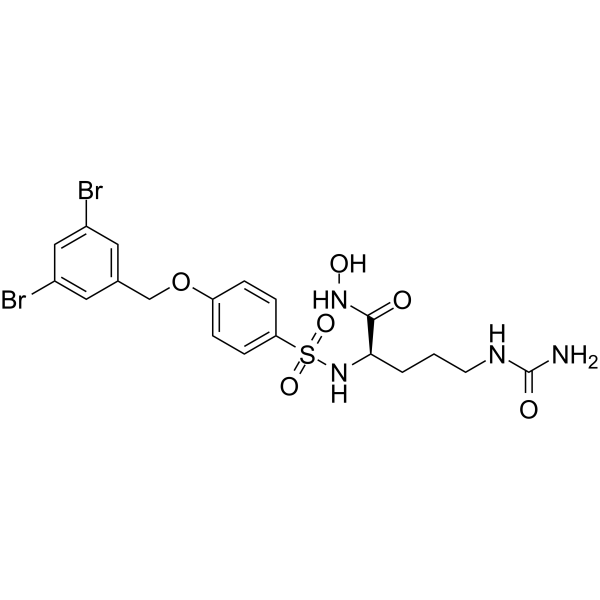 0 ImagesJG26 is an ADAM inhibitor with IC50 values of 12 nM, 1.9 nM, and 150 nM for ADAM8, ADAM17, and ADAM10, respectively. JG26 inhibits MMP-12 with an IC50 value of 9.4 nM. JG26 inhibits AngII (HY-13948)-induced EGFR transactivation and ERK activation. JG26 increases the expression of ACE2, inhibits the cleavage of CD23, reduces the infection of SARS-CoV-2. JG26 inhibits colorectal cancer metastasis. JG26 can be used for research on Hodgkin lymphoma and vascular diseases.




