



MMP-10
MMP-10 (matrix metalloproteinase-10), also known as stromelysin-2, is a member of the matrix metalloproteinase family that participates in extracellular matrix (ECM) turnover by degrading matrix-associated substrates and contributing to tissue remodeling processes[1][2]. Within the broader MMP signaling network, MMP-10 is linked to ECM remodeling during repair, angiogenesis, and pathological tissue reorganization, thereby influencing cellular responses associated with injury and disease progression[2][3]. Mechanistically, increased MMP-10 expression has been reported in acute kidney injury (AKI), chronic kidney disease (CKD), and renal cell carcinoma, supporting a role in tissue injury responses and disease-associated remodeling programs[3]. Disease studies further demonstrate that MMP-10 contributes to pathological phenotypes, including maintenance of lung cancer stem cell functions and promotion of tumor initiation and metastatic potential[4]. In experimental pulmonary arterial hypertension models, active MMP-10 enhances pulmonary artery smooth muscle cell proliferation and migration through increased cyclin D1 and proliferating cell nuclear antigen expression, linking MMP-10 to vascular remodeling mechanisms. Compared with the closely related stromelysin family member MMP-3, MMP-10 may display higher tissue abundance but lower enzymatic activity in certain tumor settings, indicating distinct functional contributions despite structural similarity[5]. For experimental applications, MMP-10 is widely investigated as a mechanistic biomarker and therapeutic target in kidney disease, cancer, and vascular remodeling models, where modulation of MMP-10 activity provides a useful framework for studying ECM-dependent disease processes[3].
References:
- [1]. MMP-10 gene information from NCBI.
- [2]. Chang M. Matrix metalloproteinase profiling and their roles in disease. RSC Adv. 2023;13:6304-6316.
- [3]. Sun X, et al. Matrix Metalloproteinase-10 in Kidney Injury Repair and Disease. Int J Mol Sci. 2022 Feb 15;23(4):2131. [Content Brief]
- [4]. Justilien V, et al. Matrix metalloproteinase-10 is required for lung cancer stem cell maintenance, tumor initiation and metastatic potential. PLoS One. 2012;7(4):e35040. [Content Brief]
- [5]. Kudelski J, et al. Enhanced Expression but Decreased Specific Activity of Matrix Metalloproteinase 10 (MMP-10) in Comparison with Matrix Metalloproteinase 3 (MMP-3) in Human Urinary Bladder Carcinoma. J Clin Med. 2021 Aug 19;10(16):3683. [Content Brief]
-
MMP-10 Related Products (8)
Related Products (8)

-
Recombinant Proteins (1)
-
BI-4394
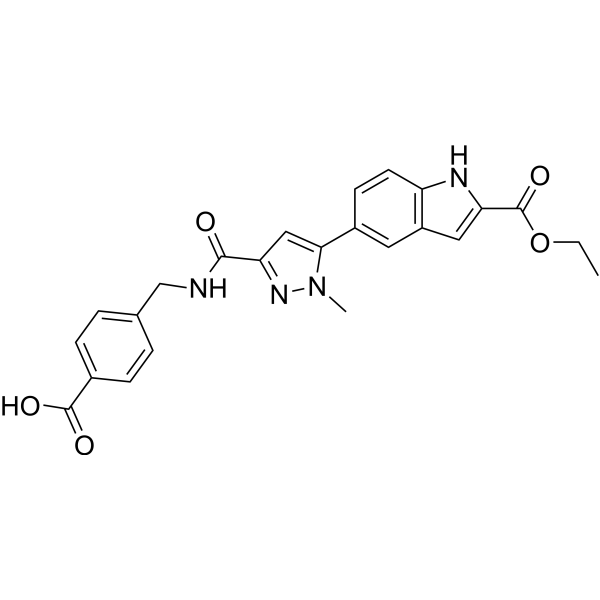 0 ImagesSynonyms: MMP13-IN-3BI-4394 (MMP13-IN-3), a chemical probe, is a potent, selective, and orally active MMP-13 inhibitor (IC50=1 nM) for the potential treatment of osteoarthritis. BI-4394 is >1000 selective over other MMPs.
-
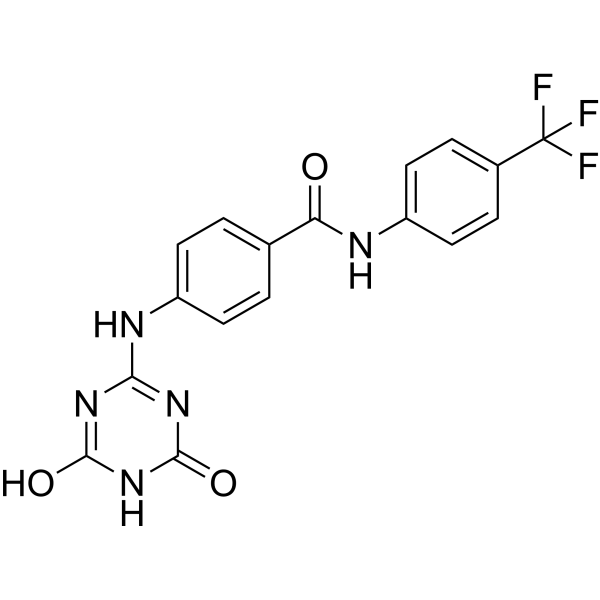
NFF-3 TFA
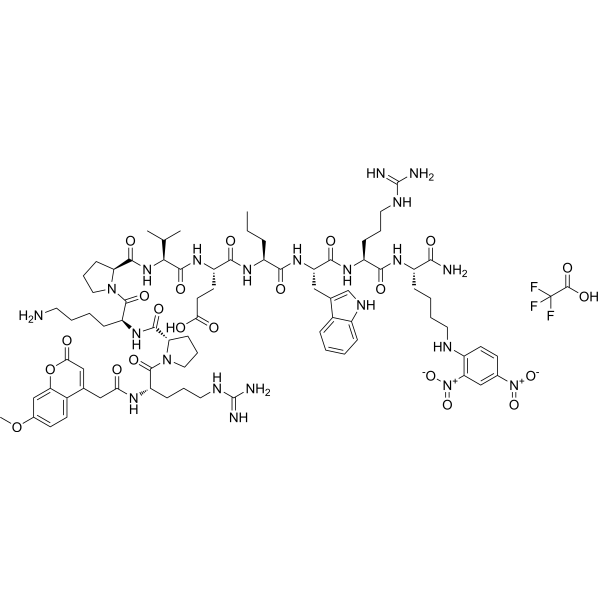 0 ImagesCat. No.: HY-P2185ANFF-3 TFA, the peptide, is a selective MMP substrate. NFF-3 TFA selectively binds to MMP-3 and MMP-10 to be hydrolyzed. NFF-3 TFA is also cleaved by trypsin, hepatocyte growth factor activator, and factor Xa. Label NFF-3 TFA with a CyDye pair, Cy3/Cy5Q, can produce fluorescence in cell assays to detect cell activity.
-
Gestodene
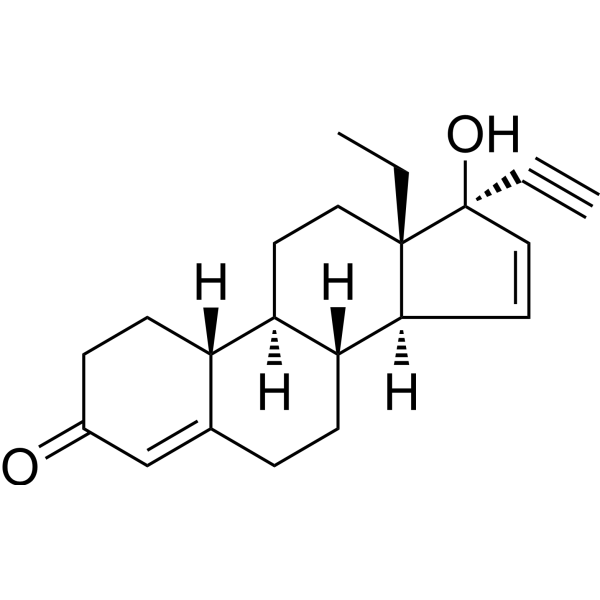 0 ImagesSynonyms: SHB 331; WL 70Gestodene (SHB 331; WL 70) is an orally active synthetic progestogen compound of the 19-nortestosterone class. Gestodene binds with high affinity to the progesterone receptor, inhibits 5α-reductase, binds to androgen and aldosterone receptors, and inactivates CYP3A. Gestodene acts as a positive allosteric modulator of PAR1, enhances PAR1-mediated signaling pathways, and is capable of increasing the activation potency of PAR1-AP toward PAR1, thereby promoting ERK1/2 phosphorylation, receptor internalization, cell morphological changes, and human platelet aggregation. Gestodene and its A-ring reduced metabolites promote the proliferation, differentiation, and mineralization of neonatal rat osteoblasts. Gestodene itself has no binding capacity for estrogen receptors, and this osteogenic activity depends on intracellular metabolism to generate A-ring reduced products with estrogen-like agonistic activity. Gestodene is useful for research on diseases related to progesterone secretion and diseases related to thrombosis.
-
Cathepsin G
 0 ImagesCat. No.: HY-P3012CAS No.: 107200-92-0Cathepsin G is a pH-dependent serine protease. Cathepsin G hydrolyzes diverse synthetic and protein substrates and remodels extracellular matrix. Cathepsin G exerts immunomodulatory effects via recruiting phagocytes, enhancing T cell motility, activating ERK1/2 and p38 MAPK signaling, and mediating PKCζ membrane translocation. Cathepsin G regulates inflammatory responses by cleaving inflammatory mediators. Cathepsin G participates in vascular regulation by converting angiotensin I to angiotensin II. Cathepsin G induces PAR4-dependent platelet activation, facilitates platelet-neutrophil aggregation, and mediates VITT-related NETosis, thrombus formation. Cathepsin G can be used for the research of immune thrombotic thrombocytopenia, cardiovascular disease, and select autoimmune and inflammatory diseases.
-
Snail IN-1
 0 ImagesSnail IN-1 is an orally active Snail inhibitor with a Ka of 0.36 μM.Snail IN-1 disrupts Snail-CBP interaction, accelerates Snail protein degradation, reduces Snail acetylation, increases Snail polyubiquitination, and selectively downregulates Snail protein without altering other EMT transcription factors.Snail IN-1 reduces atherosclerotic plaque burden, modulates inflammation and plaque stability factors, downregulates CCL5, CXCL10, MMP2, and MMP9, and upregulates α-smooth muscle actin.Snail IN-1 exerts anti-inflammatory and plaque-stabilizing properties.Snail IN-1 can be used for the research of atherosclerosis.
-
Linvemastat
 0 ImagesSynonyms: FP-020Linvemastat (Compound FC-4) is an orally active MMP-12 inhibitor (IC50: < 10 nM) with high selectivity of MMP-1, -2, -3, -7, -9, -10 and -14. Linvemastat significantly attenuates lung fibrosis in Bleomycin (HY-108345) induced unilateral lung fibrosis mice model and potently reduces kidney damage, interstitial inflammation or fibrosis in kidney fibrosis model of unilateral ureteral occlusion. Linvemastat can be used for inflammatory diseases research, such as idiopathie pulmonary fibrosis (IPF), inflammatory bowel disease (IBD) and asthma.
-
CM-352
 0 ImagesCat. No.: HY-117464CAS No.: 1664361-37-8CM-352 (compound 5) is an inhibitor of matrix metalloproteinases (MMPs) (MMP-3: IC50=15 nM; MMP-10: IC50=12 nM). CM-352 has significant antifibrinolytic activity (EC50=0.7 nM) and can significantly prolong blood coagulation time. CM-352 can be used in anti-bleeding research.




