



MMP Ligand
-
m-PEG2000-NHS ester
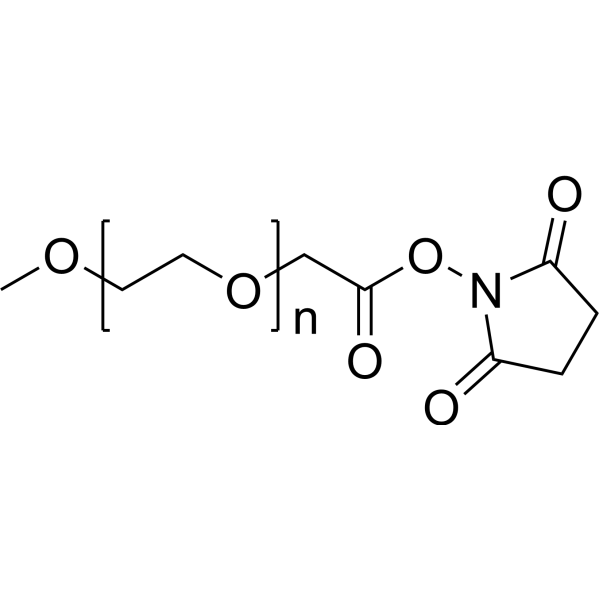 0 ImagesCat. No.: HY-W591424CAS No.: 92451-01-9Synonyms: mPEG2000-SC; mPEG2000-Succinimidyl ester
m-PEG2000-NHS ester (mPEG2000-SC) is a reagent with both cell adhesion inhibition and peptide conjugation functions. The NHS ester group of m-PEG2000-NHS ester forms stable amide bonds with primary amine-containing molecules (e.g., the N-terminus of MMP-2-cleavable octapeptide) to generate mPEG-peptide intermediates for liposome surface modification. When m-PEG2000-NHS ester is immobilized on a cystamine-modified gold surface, it can construct an in vitro model for cell adhesion kinetic studies, and higher PEG density and thicker layers correlate with lower cell adhesion rates. m-PEG2000-NHS ester can synthesize MMP-2-responsive PEGylated lipid conjugates to achieve MMP-triggered dePEGylation in the tumor microenvironment. m-PEG2000-NHS ester can be used in studies related to colon cancer and other conditions.
-
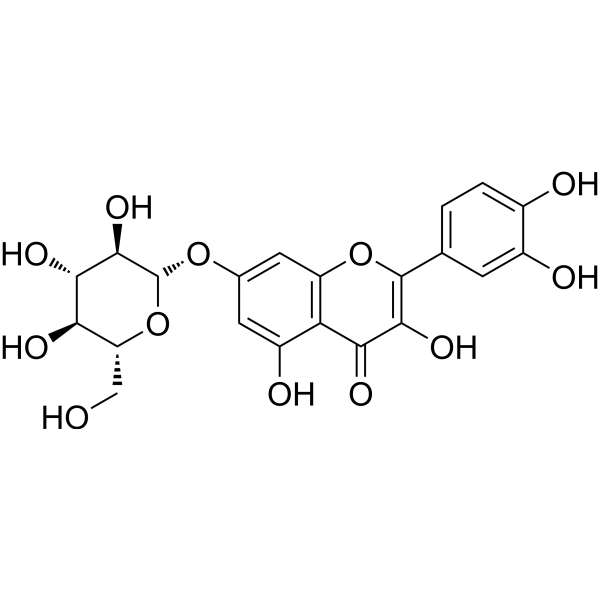
Quercimeritrin
 0 Images
Quercimeritrin (Quercetin-7-O-β-D-glucopyranoside) is an orally active α-glucosidase inhibitor (with an IC50 of 79.88 μM against the Saccharomyces cerevisiae enzyme) and a P-gp substrate, with anti-angiogenic and antioxidant activities. Quercimeritrin does not cross the blood-brain barrier and does not inhibit cytochrome P450 enzymes. Quercimeritrin precisely binds to and inhibits the active sites of c-Kit, MMP-2, Aurora-A kinases and α-glucosidase, thereby disrupting target functions. Quercimeritrin effectively regulates postprandial blood glucose and also exhibits significant anti-angiogenic activity, which inhibits endothelial cell proliferation and microvascular growth. Quercimeritrin can be used in the research of diabetes and breast cancer.

-
CQPQGLAKC
 0 ImagesCat. No.: HY-P12373CAS No.: 1620389-76-5
CQPQGLAKC is a peptide crosslinker and hydrogel component that can be cleaved by MMP. The degradation of CQPQGLAKC is primarily mediated by endogenous MMP-13, with a Km value of 1.10 µM. CQPQGLAKC crosslinks hyaluronic acid hydrogels via Michael-type addition, thereby enabling cell-mediated matrix remodeling and promoting cell survival, proliferation, and endothelial differentiation. CQPQGLAKC can be used in research on rotator cuff tears and ischemic injury.



