



PARP
poly ADP ribose polymerase
PARP is a family of proteins involved in a number of cellular processes involving mainly DNA repair and programmed cell death. The PARP family comprises 17 members. They have all very different structures and functions in the cell. PARP1, PARP2, VPARP (PARP4), Tankyrase-1 and -2 (PARP-5a or TNKS, and PARP-5b or TNKS2) have a confirmed PARP activity. Others include PARP3, PARP6, TIPARP (or PARP7), PARP8, PARP9, PARP10, PARP11, PARP12, PARP14, PARP15, and PARP16. PARP is found in the cell’s nucleus. The main role is to detect and signal single-strand DNA breaks (SSB) to the enzymatic machinery involved in the SSB repair.
PARP Isoform Specific Products
-
PARP
(303)
View all products
-
PARP1
(204)
View all products
-
PARP2
(82)
View all products
-
PARP3
(22)
View all products
-
PARP4
(11)
View all products
-
TNKS1/PARP5A
(40)
View all products
-
TNKS2/PARP5B
(37)
View all products
-
PARP7
(24)
View all products
-
PARP10
(20)
View all products
-
PARP14
(17)
View all products
-
PARP15
(14)
View all products
-
PARP12
(4)
View all products
-
PARP16
(3)
View all products
All Product Categories
-
PARP Inhibitors
(456)
View all products
-
PARP Agonists
(4)
View all products
-
PARP Activators
(104)
View all products
-
PARP Modulators
(11)
View all products
-
PARP Inducers
(20)
View all products
-
PARP Degraders
(23)
View all products
-
PARP Substrate
(1)
View all products
-
PARP Ligands
(4)
View all products
-
PARP Related Products (680)
Related Products (680)

-
Antibodies (11)
-
PARP Isoform Comparison
-
Antitumor agent-72
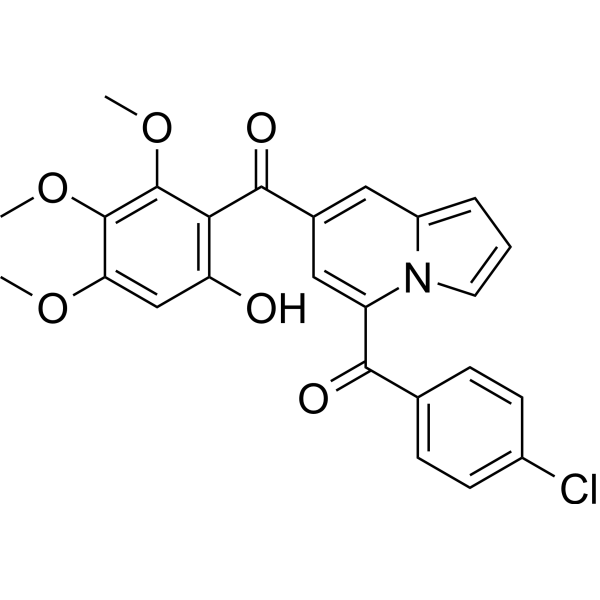 0 ImagesCat. No.: HY-150696CAS No.: 2676942-92-8Antitumor agent-72 (compound 6w) is a potent anticancer agent. Antitumor agent-72 has anticancer activity and induces apoptosis through activation of caspase-3 and cleavage of PARP. Antitumor agent-72 can be used for cancer research.
-
DPQ hydrochloride
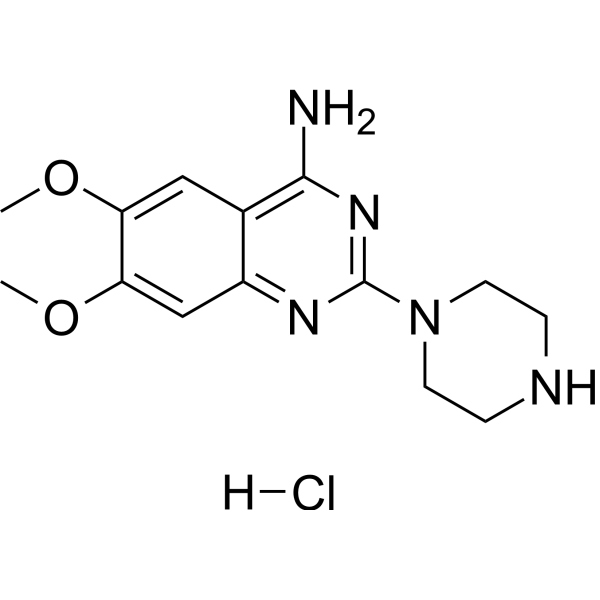 0 ImagesSynonyms: 6,7-Dimethoxy-2-(1-piperazinyl)-4-quinazolinamine hydrochlorideDPQ hydrochloride is a blood-brain barrier permeable and selective PARP-1 inhibitor that blocks PARP-1-mediated DNA damage repair and NAD+/ATP consumption, thereby inhibiting excessive inflammatory responses. DPQ hydrochloride inhibits NF-κB pathway activation, reduces the expression of pro-inflammatory factors (such as TNF-α, IL-6) and oxidative stress. DPQ hydrochloride can be used in inflammation-related studies of acute lung injury, myocardial infarction, and neurodegenerative diseases.
-
Lotixparib
 0 ImagesCat. No.: HY-177100CAS No.: 2640677-63-8Lotixparib (Example 1) is an inhibitor of poly(ADP-ribose)polymerase-1 (PARP-1). Lotixparib has cytoprotective effect against a retinal disease. Lotixparib can be studied in research for PARP-1-associated diseases.
-
TPP-C8-CO-DSG bromide
 0 ImagesCat. No.: HY-184737TPP-C8-CO-DSG bromide is a derivative of Diosgenin (HY-N0177) and an anticancer agent. TPP-C8-CO-DSG bromide downregulates Bcl-2 expression and upregulates Bax expression. TPP-C8-CO-DSG bromide promotes the cleavage of Caspase 9, Caspase 3 and PARP-1. TPP-C8-CO-DSG bromide depolarizes mitochondrial membrane potential, reduces intracellular ATP production, and induces intracellular ROS accumulation. TPP-C8-CO-DSG bromide promotes Apoptosis. TPP-C8-CO-DSG bromide exhibits anticancer activity against prostate cancer, breast cancer, lung adenocarcinoma, cervical cancer and colorectal cancer. TPP-C8-CO-DSG bromide can be used in the research of cervical cancer.
-
XW-17
 0 ImagesCat. No.: HY-183548XW-17 is a PARP14 inhibitor with an IC50 of 3.03 nM and selectivity over other PARP family members.XW-17 suppresses PARP14-mediated mono-ADP-ribosylation, engages and stabilizes endogenous PARP14 protein.XW-17 attenuates skin lesions and decreases expression of IL-4, IL-13, IgE, and IL-17A in an atopic dermatitis-like mouse model.XW-17 can be used for the research of atopic dermatitis.
-
KB-15
 0 ImagesCat. No.: HY-175542KB-15 is a STAT3 inhibitor. KB-15 exhibits potent anti-proliferative activity against AGS gastric cancer cells (IC50 = 0.29 μM) and BGC-823 gastric cancer cells (IC50 = 0.65 μM). KB-15 exerts anti-tumor effects by inhibiting STAT3 phosphorylation, downregulating HO-1 expression, and promoting intracellular ROS accumulation. KB-15 induces G0/G1 phase cell cycle arrest and apoptosis, as well as suppresses colony formation and migration of gastric cancer cells. KB-15 demonstrates excellent anti-tumor efficacy in BGC-823 subcutaneous xenograft model. KB-15 can be used for the study of gastric cancer.
-
IDO1-IN-34
 0 ImagesCat. No.: HY-183317IDO1-IN-34 is a selective IDO1 inhibitor with an IC50 of 0.093 μM. IDO1-IN-34 exhibits cytotoxicity against various cancer cell lines. IDO1-IN-34 inhibits the kynurenine (kynurenine) pathway and activates IL-2. IDO1-IN-34 induces cell apoptosis via the endogenous mitochondrial pathway, while increasing the levels of cytochrome c, caspase-3, caspase-9 and PARP-1. IDO1-IN-34 can be used for research on liver cancer, lung cancer, breast cancer, prostate cancer, colon cancer and leukemia.

-
TNKS-IN-1
 0 ImagesTNKS-IN-1 is a selective and potent tankyrase (TNKS1/TNKS2) inhibitor with IC50 values of 7.9 nM and 8.7 nM. TNKS-IN-1 induces axin2 accumulation with an EC50 of 1500 nM. TNKS-IN-1 can antagonize the Wnt signal transduction pathway by stabilizing axin proteins and promoting β-catenin degradation. TNKS-IN-1 can be used for the research of colorectal cancer.
-
Quinidine polygalacturonate
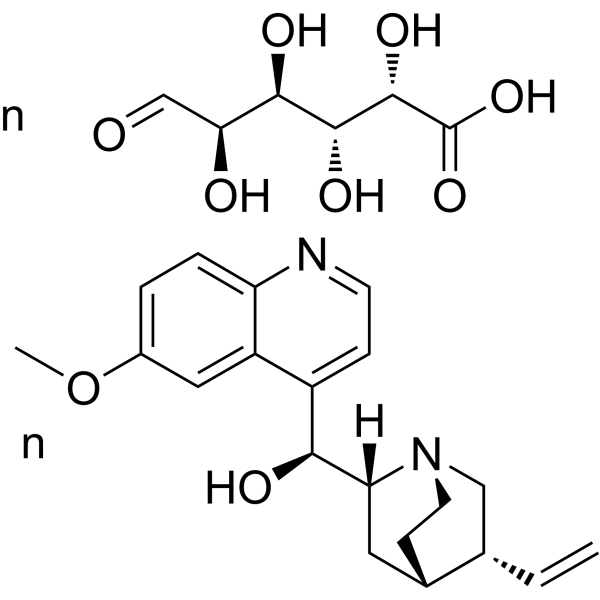 0 ImagesCat. No.: HY-B1751ECAS No.: 27555-34-6Quinidine polygalacturonate is an orally active antiarrhythmic agent. Quinidine polygalacturonate reduces the expression level of P-gp, inhibits P-gp-mediated efflux, increases the intracellular accumulation of P-gp substrates, induces PARP cleavage and Caspase-3 activation, and elevates the proportion of Apoptotic cells at the sub-G1 phase. Quinidine polygalacturonate exerts sustained block and open-channel block effects on IK(f). Quinidine polygalacturonate alters the urinary metabolic ratio of Amphetamine, modulates the Pentylenetetrazol-induced seizure threshold, and regulates the anticonvulsant effect of Dextromethorphan. Quinidine polygalacturonate can be used in studies related to uterine sarcoma and seizures.
-
2-Chlorohexadecanoic acid (Standard)
 0 ImagesCat. No.: HY-131688RCAS No.: 19117-92-1Neomycin (sulfate) (Standard) is the analytical standard of Neomycin (sulfate). This product is intended for research and analytical applications. Neomycin sulfate, an aminoglycoside antibiotic, exerts antibacterial activity through irreversible binding of the nuclear 30S ribosomal subunit, thereby blocking bacterial protein synthesis. Neomycin sulfate is a known phospholipase C (PLC) inhibitor. Neomycin sulfate potently inhibits both nuclear translocation of angiogenin and angiogenin-induced cell proliferation and angiogenesis.

-
PARP1/BRD4-IN-2
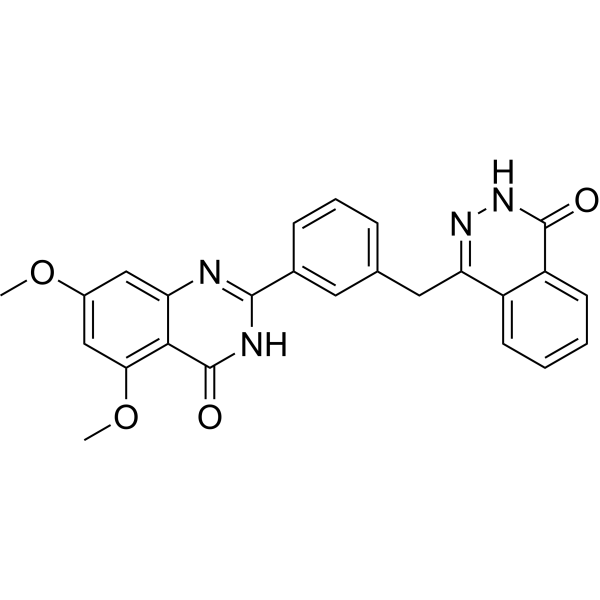 0 ImagesCat. No.: HY-150613CAS No.: 3037993-97-5PARP1/BRD4-IN-2 is a potent and selective PARP1 and BRD4 inhibitor with IC50 values of 197 nM and 238 nM, respectively. PARP1/BRD4-IN-2 inhibits DNA damage repair, arrests G0/G1 transition and induces apoptosis. PARP1/BRD4-IN-2 has anti-tumor activity in MDA-MB-468 xenograft mouse model. PARP1/BRD4-IN-2 can be used for researching triple-negative breast cancer (TNBC).
-
TMLB-C16
 0 ImagesTMLB-C16 is a potent and orally active B3GAT3 inhibitor with a KD of 3.962 μM. TMLB-C16 suppresses proliferation and migration, and induces cell cycle arrest and apoptosis in MHCC-97H (IC50 = 6.53 μM) and HCCLM3 cells (IC50 = 6.22 μM). TMLB-C16 inhibits tumor growth in both MHCC-97H and HCCLM3 xenograft tumor mouse models without causing obvious toxicity. TMLB-C16 can be used for hepatocellular carcinoma research.
-
Antitumor agent-214
 0 ImagesCat. No.: HY-181720CAS No.: 1911631-77-0Antitumor agent-214 is a chalcone analogue with anti-tumor activity. Antitumor agent-214 induces cell cycle arrest and apoptosis in tumor cells, disrupts mitochondrial metabolism, and upregulates the expression of caspase 3, caspase 7 and caspase 9, downregulates PARP1. Antitumor agent-214 can be used for anti-tumor research related to colorectal cancer, breast cancer, lung cancer, and cervical cancer.

-
Sino-C
 0 ImagesCat. No.: HY-179526Sino-C is a Sinomenine (HY-15122) derivative with anticancer activity. Sino-C broadly disrupts cholesterol homeostasis by upregulating key genes such as SREBF2 and HMGCS1, leading to intracellular cholesterol accumulation and lipid droplet formation. Sino-C-induced metabolic dysregulation further triggers lipid peroxidation and endoplasmic reticulum (ER) stress, initiating a unique form of hybrid cell death including apoptotic (cleaved PARP) and necrotic-like features. Sino-C thus serves as a useful compound for research in colorectal cancer, lung cancer and breast cancer.
-
LWY713
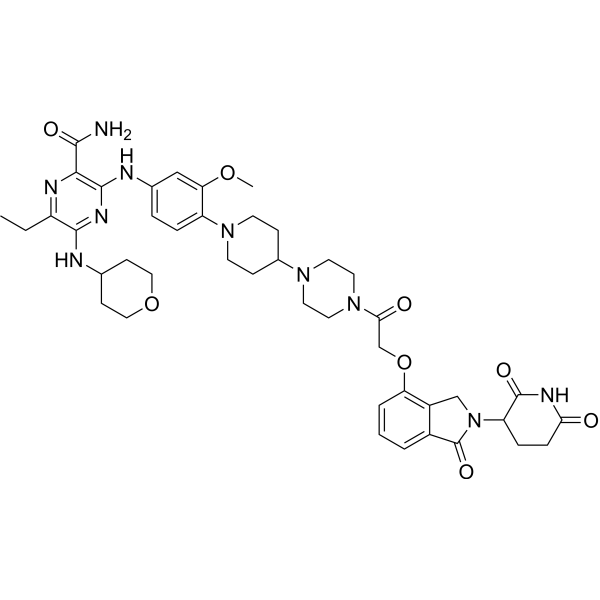 0 ImagesCat. No.: HY-157213LWY713 is a FLT3 PROTAC degrader with a DC50 of 0.64 nM. LWY713 selectively induces FLT3 degradation in a cereblon- and proteasome-dependent manner. LWY713 induces G0/G1 cell cycle arrest and triggers apoptosis. LWY713 upregulates PARP and cleaved caspase 3, and inhibits the phosphorylation of FLT3, STAT5, AKT and Erk. LWY713 exhibits antitumor activity in xenograft mouse models. LWY713 can be used for the research of acute myeloid leukemia.
-
Cyproheptadine hydrochloride (Standard)
 0 ImagesSynonyms: Cyproheptadine HCl (Standard)Cyproheptadine hydrochloride (Standard) (Cyproheptadine HCl (Standard)) is the analytical standard of Cyproheptadine hydrochloride (HY-B0366A). This product is intended for research and analytical applications. Cyproheptadine hydrochloride (Cyproheptadine HCl) acts as a p38 MAP kinase activator, CHK2 activator, histamine H1 receptor inhibitor and serotonin receptor inhibitor. Cyproheptadine hydrochloride mediates cell cycle arrest via G1 phase arrest, G1/S transition arrest, G0/G1 phase arrest, reduced expression of cyclins D1/D2/D3, upregulated expression of HBP1, p16, p21, p27, and decreased phosphorylation of retinoblastoma protein. Cyproheptadine hydrochloride induces Apoptosis by increasing PARP and cleaved PARP, as well as activating the mitochondrial caspase pathway. Cyproheptadine hydrochloride inhibits tumor growth with extremely low toxicity to normal cells. Cyproheptadine hydrochloride can be used in research related to hepatocellular carcinoma, multiple myeloma and acute myeloid leukemia.
-
Tiparp Mouse Pre-designed siRNA Set A
 0 ImagesCat. No.: HY-RS14547
Tiparp Mouse Pre-designed siRNA Set A contains three designed siRNAs for Tiparp gene (Mouse), as well as a negative control, a positive control, and a FAM-labeled negative control.




