



PARP Modulator
- 1
-
LL-K12-18
 0 Images
LL-K12-18 is a CDK12 kinase inhibitor and a dual-site molecular glue. LL-K12-18 inhibits human CDK12 with an IC50 value of 283.9 nM, and selectively degrades cyclin K via the ubiquitin-proteasome system by stabilizing the CDK12-DDB1 complex. LL-K12-18 downregulates DNA damage response genes, reduces the phosphorylation level of CTD Ser2 in RNA polymerase II, and modulates biomarkers such as ATM, RAD51, γ-H2AX and cleaved PARP, thereby effectively inducing apoptosis and inhibiting proliferation of breast cancer cells. LL-K12-18 exhibits high target selectivity and serves as a research tool for studies on triple-negative breast cancer.
-
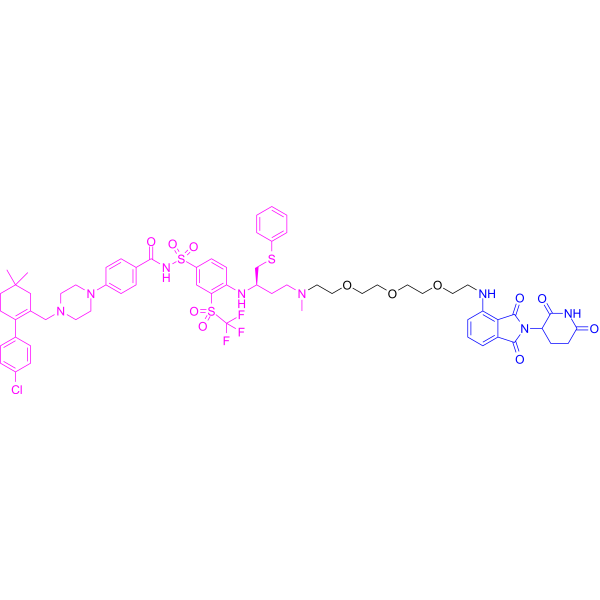
XZ739
 0 Images
XZ739 is a potent and selective BCL-XL PROTAC degrader with a DC50 of 2.5 nM. XZ739 recruits CRBN to ubiquitinate and degrade BCL-XL via the ubiquitin-proteasome system. XZ739 also induces cell cycle arrest and caspase-mediated apoptosis. XZ739 can be used in research related to T-cell acute lymphoblastic leukemia and cholangiocarcinoma.
-
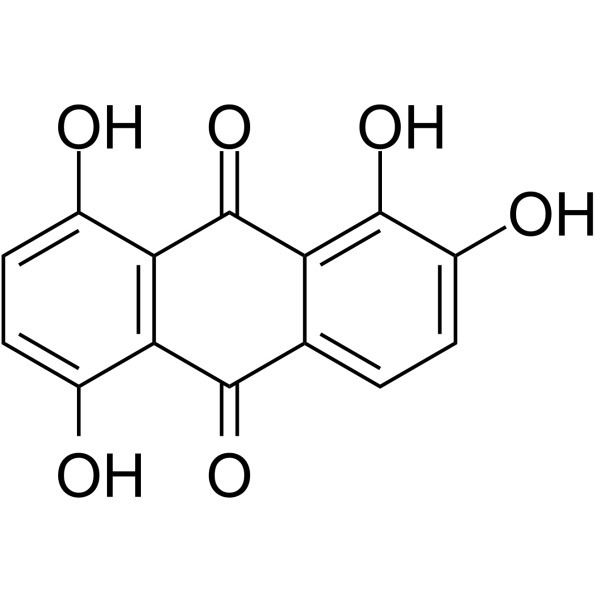
Quinalizarin
 0 Images
Quinalizarin is a protein kinase CK2 inhibitor with a Ki of 0.052 μM. Quinalizarin exhibits antifungal and anticancer activities. Quinalizarin induces ROS production, apoptotic signaling, mitochondrial pathway activation, cell cycle arrest, and cytotoxicity in cancer cells. Quinalizarin inhibits hyphal growth, biofilm formation, and mature biofilm integrity of Candida albicans. Quinalizarin can be used in research related to cancer and fungal infections.
-
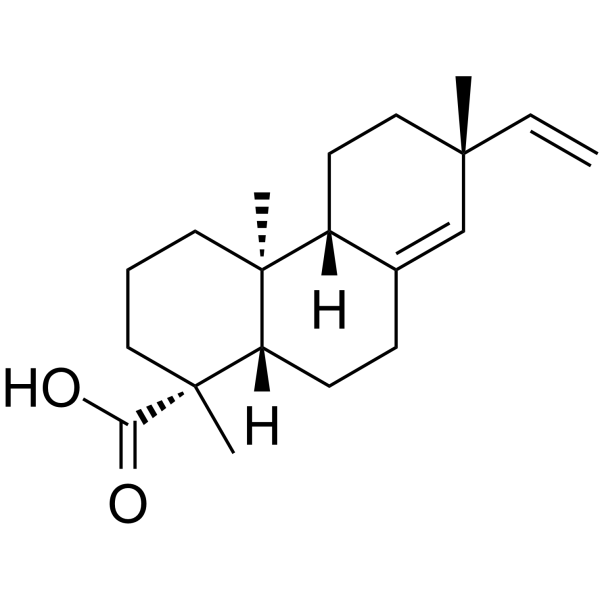
Continentalic acid
 0 Images
Continentalic acid is a diterpenoid organic acid. Continentalic acid exhibits multiple activities including anti-inflammatory, antioxidant, neuroprotective, antibacterial and antitumor effects. Continentalic acid alleviates oxidative stress, reduces pro-inflammatory cytokine production, inhibits MAPK phosphorylation and neutrophil infiltration, and induces growth inhibition and apoptosis of cancer cells. Continentalic acid can be used in research related to traumatic brain injury, cancer, inflammation and infections.
-
MKI-3
 0 ImagesCat. No.: HY-182391CAS No.: 3084702-28-0
MKI-3 is a selective microtubule-associated serine/threonine kinase-like (MASTL) inhibitor with an IC50 of 5.72 nM and a Kd of 1.89 nM. MKI-3 disrupts the MASTL-ENSA-Aurora A signaling axis. MKI-3 induces chromosomal instability, mitotic catastrophe and apoptosis (apoptosis) in cancer cells. MKI-3 is applicable to research related to triple-negative breast cancer.
-
Sargachromanol E
 0 ImagesCat. No.: HY-123364CAS No.: 856414-54-5
Sargachromanol E is an apoptosis inducer, anti-inflammatory agent, and anti-aging agent. Sargachromanol E activates caspase-3, mediates PARP cleavage, downregulates Bcl-xL and upregulates Bax levels, and drives sub-G1 phase cell cycle arrest, inhibits LPS-induced COX-2 and iNOS transcription and expression (NO: IC50 = 6.99 μg/mL), reduces p38 MAPK and ERK1/2 phosphorylation levels, and suppresses the release of pro-inflammatory mediators such as TNF-α, IL-1β, and prostaglandin E2 (PGE2). Sargachromanol E can be used for research on skin aging, leukemia, oral squamous cell carcinoma, and inflammation-related studies.
-
ICA-1S
 0 ImagesCat. No.: HY-183252CAS No.: 90597-15-2
-
Continentalic acid (Standard)
 0 ImagesCat. No.: HY-N6908RCAS No.: 19889-23-7
Continentalic acid (Standard) is the analytical standard of Continentalic acid (HY-N6908). This product is intended for research and analytical applications. Continentalic acid is a diterpenoid organic acid. Continentalic acid exhibits multiple activities including anti-inflammatory, antioxidant, neuroprotective, antibacterial and antitumor effects. Continentalic acid alleviates oxidative stress, reduces pro-inflammatory cytokine production, inhibits MAPK phosphorylation and neutrophil infiltration, and induces growth inhibition and apoptosis of cancer cells. Continentalic acid can be used in research related to traumatic brain injury, cancer, inflammation and infections.
-
CDK9-IN-47
 0 ImagesCat. No.: HY-182069
CDK9-IN-47 is an orally active and selective CDK9 inhibitor with an IC50 of 1.4 nM. CDK9-IN-47 inhibits tumor cell proliferation, migration and invasion, and induces apoptosis. CDK9-IN-47 can be used for the research of triple-negative breast cancer.
-
PROTAC BCL6/GSPT1 Degrader-1
 0 ImagesCat. No.: HY-181084CAS No.: 3039500-55-2
PROTAC BCL6/GSPT1 Degrader-1 is a dual-target PROTAC degrader that targets BCL6 and GSPT1. PROTAC BCL6/GSPT1 Degrader-1 inhibits cell proliferation, promotes DNA damage, and induces cell cycle arrest and apoptosis in diffuse large B-cell lymphoma. PROTAC BCL6/GSPT1 Degrader-1 can be used for research on tumors such as lymphoma.
-
MKI-3 diformate
 0 ImagesCat. No.: HY-182391A
MKI-3 diformate is a selective microtubule-associated serine/threonine kinase-like (MASTL) inhibitor with an IC50 of 5.72 nM and a Kd of 1.89 nM. MKI-3 diformate disrupts the MASTL-ENSA-Aurora A signaling axis. MKI-3 diformate induces chromosomal instability, mitotic catastrophe and apoptosis (apoptosis) in cancer cells. MKI-3 diformate is applicable to research related to triple-negative breast cancer.
-
MNK/PIM-IN-2
 0 ImagesCat. No.: HY-182957CAS No.: 3081482-46-1
MNK/PIM-IN-2 is a Mnk/Pim kinase inhibitor with an IC50 of 32 nM for Mnk1, 3 nM for Mnk2, and 37 nM for Pim1. MNK/PIM-IN-2 reduces the levels of p-eIF4E and p-4EBP1. MNK/PIM-IN-2 induces cell cycle arrest, apoptosis (apoptosis) and exerts antiproliferative effects in leukemia cells. MNK/PIM-IN-2 can be used in studies related to leukemia.
-
NEURL1B-IN-1
 0 ImagesCat. No.: HY-182008CAS No.: 3068938-30-4
NEURL1B-IN-1 is a molecular glue-like NEURL1B degrader with a Kd value of 46.2 nM. NEURL1B-IN-1 binds to Arg422 within the NHR2 domain of NEURL1B, triggers its autoubiquitination and proteasomal degradation, disrupts its interaction with DLL1, and attenuates the Notch signaling pathway. NEURL1B-IN-1 induces cell cycle arrest and apoptosis, and inhibits migration of hepatocellular carcinoma cells. NEURL1B-IN-1 is applicable to research related to hepatocellular carcinoma.
-
PROTAC SHP2 degrader-1
 0 ImagesCat. No.: HY-189468CAS No.: 3128784-74-4
PROTAC SHP2 degrader-1 is a potent SHP2 PROTAC degrader with a DC50 of 7.406 μM. PROTAC SHP2 degrader-1 recruits DCAF16 E3 ligase to induce ubiquitination and proteasomal degradation of SHP2, thereby inhibiting the RAS/MAPK and PI3K/AKT/mTOR signaling pathways while simultaneously inducing IFN-γ/JAK/STAT1, apoptosis, and cell cycle arrest. PROTAC SHP2 degrader-1 can be used for cancer research.
- 1



