



PARP Degrader
- 1
- 2
-
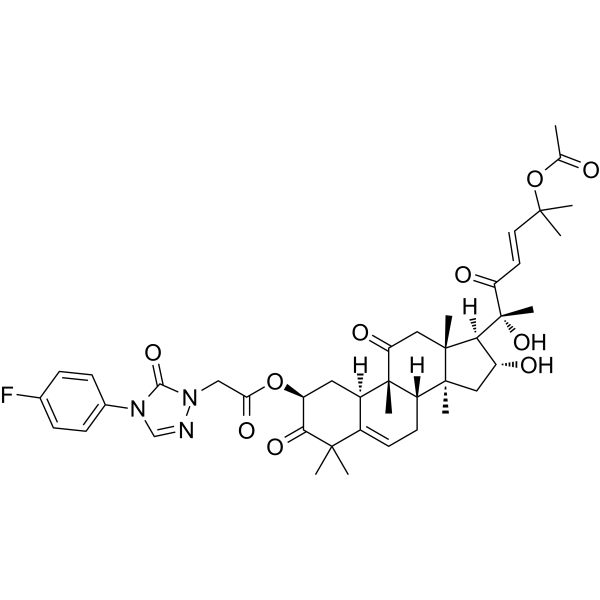
IGF2BP1-IN-1
 0 Images
IGF2BP1-IN-1, a Cucurbitacin B (HY-N0416) derivative, is a potent IGF2BP1 inhibitor (KD = 2.88 nM). IGF2BP1-IN-1 binds directly to IGF2BP1, thereby inducing tumor cell cycle arrest, increasing apoptosis, and reducing autophagy. IGF2BP1-IN-1 can be used in research on NSLSC, colon, breast, liver, ovarian, pancreatic, and cervical cancers.
-
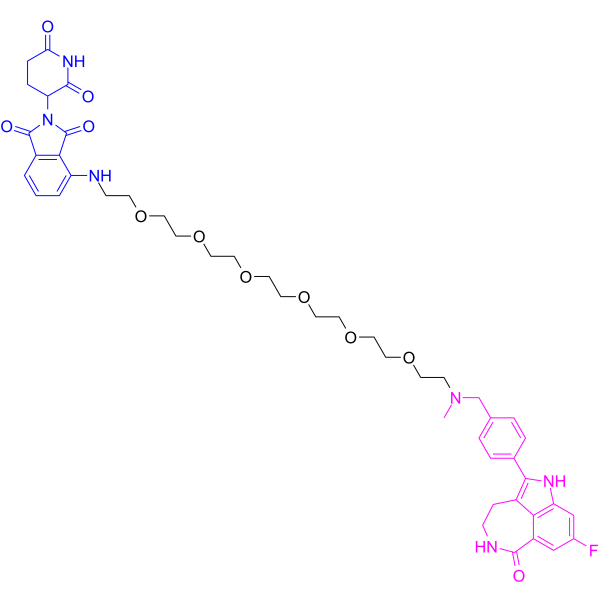
iRucaparib-AP6
 0 Images
iRucaparib-AP6 is a highly efficient and specific PROTAC PARP1 degrader. iRucaparib-AP6, a non-trapping PARP1 degrader, blocks both the catalytic activity and scaffolding effects of PARP1.
-
PARP1 PROTAC 180055
 0 ImagesArt. -Nr.: HY-170620Reinheit: 99.43%
PARP1 PROTAC 180055 is a PARP1 PROTAC degrader that recruits VHL, with DC50 values of 180 nM and 240 nM in T47D and MDA-MB-231 cells, respectively. PARP1 PROTAC 180055 selectively kills BRCA-mutant tumor cells by inducing PARP1 ubiquitination and proteasomal degradation, thereby blocking PARylation, NAD+ depletion and DNA trapping. PARP1 PROTAC 180055 can be used in the research of breast cancer, ovarian cancer, colorectal cancer, acute T-lymphoblastic leukemia, prostate cancer and osteosarcoma.
-
PROTAC PARP1 degrader-1
 0 Images
PROTAC PARP1 degrader-1 is a PARP1 PROTAC degrader with a DC50 value of 252.5 nM. PROTAC PARP1 degrader-1, combined with Daunorubicin (HY-13062A), induces the accumulation of cytoplasmic DNA fragments, activates the cGAS/STING innate immune pathway, and remodels the tumor microenvironment. PROTAC PARP1 degrader-1 can be used in research related to breast cancer.
-
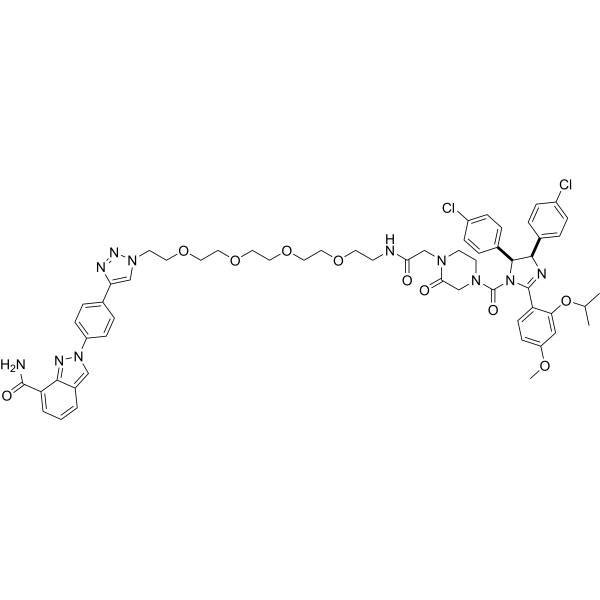
PROTAC PARP1 degrader
 0 Images
PROTAC PARP1 degrader is a PROTAC PARP1 degrader. PROTAC PARP1 degrader mediates the interaction between PARP1 and MDM2 E3 ubiquitin ligase, thereby inducing ubiquitination of PARP1 and subsequent proteasome-mediated degradation. PROTAC PARP1 degrader selectively inhibits the growth of breast cancer cells. PROTAC PARP1 degrader induces cell apoptosis by activating caspase-3 and phosphatidylserine externalization. PROTAC PARP1 degrader can be used in the research of triple-negative breast cancer.
-
RBN012811
 0 Images
RBN012811 is a highly selective PROTAC-based PARP14 degrader. RBN012811 forms a ternary complex with cereblon by binding to the NAD+ site of PARP14, and mediates the specific degradation of PARP14 via the ubiquitin-proteasome pathway (IC50=10 nM). RBN012811 effectively depletes endogenous PARP14 in various cell lines and primary human macrophages, thereby downregulating IL-10 production and IFN-β mRNA levels, increasing phosphorylated STAT1 levels to enhance inflammatory signaling, and inhibiting interferon-induced ADPr condensate formation. RBN012811 also modulates viral replication, exhibiting increased HSV1 replication while reducing VSV replication. RBN012811 has important application value in research related to cancer and viral infections.
-
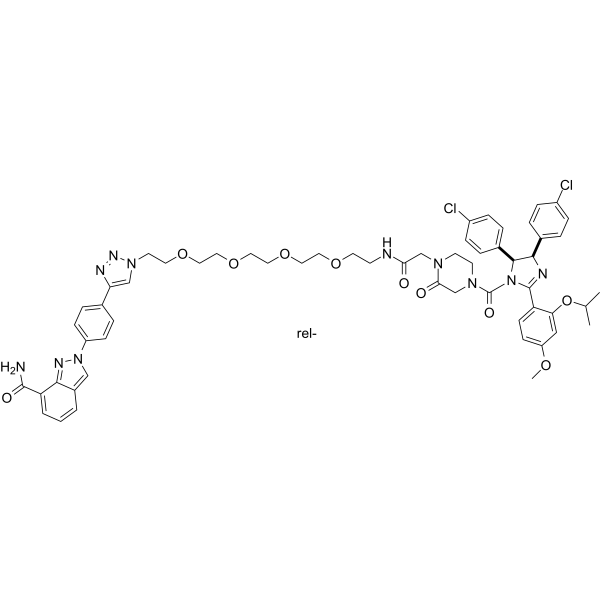
rel-PROTAC PARP1 degrader
 0 ImagesArt. -Nr.: HY-114324AReinheit: 98.32%
rel-PROTAC PARP1 degrader is the relative configuration of ROTAC PARP1 degrader (HY-114324). PROTAC PARP1 degrader is a PROTAC PARP1 degrader. PROTAC PARP1 degrader mediates the interaction between PARP1 and MDM2 E3 ubiquitin ligase, thereby inducing ubiquitination of PARP1 and subsequent proteasome-mediated degradation. PROTAC PARP1 degrader selectively inhibits the growth of breast cancer cells. PROTAC PARP1 degrader induces cell apoptosis by activating caspase-3 and phosphatidylserine externalization. PROTAC PARP1 degrader can be used in the research of triple-negative breast cancer.
-
PROTAC PARP2 degrader-1
 0 Images
PROTAC PARP2 degrader-1 is an orally active PARP2 PROTAC degrader with a DC50 of 2 μM. PROTAC PARP2 degrader-1 potently inhibits the enzymatic activities of PARP1 (IC50 = 2.74 nM) and PARP2 (IC50 = 0.32 nM), with approximately 10-fold higher selectivity for PARP2. PROTAC PARP2 degrader-1 induces cell cycle arrest and apoptosis, and exhibits significant anti-tumor efficacy in mouse models. PROTAC PARP2 degrader-1 can be used for the research of triple-negative breast cancer.
-
iVeliparib-AP6
 0 ImagesArt. -Nr.: HY-130646CAS. Nr.: 2472645-27-3
iVeliparib-AP6 is a proteolysis-targeting chimera (PROTAC) molecule designed based on Veliparib (HY-10129), which targets PARP1/2. The DC50s of iVeliparib-AP6 for inducing the degradation of PARP1 and PARP2 are 36 nM and 63 nM, respectively, and its IC50s are 69 nM and 21 nM, respectively. iVeliparib-AP6 contains a Veliparib-based PARP inhibitor warhead linked to a CRBN E3 ligase binder; it uses Thalidomide (HY-14658) as a ligand to recruit CRBN E3 ubiquitin ligase and exerts the PARP2 degradation mechanism.
-
DDO3602
 0 ImagesArt. -Nr.: HY-178496
DDO3602 is a PARP1 HSPTAC (HSP90-mediated proteolysis-targeting chimera) degrader, with a DC50 of 490.3 nM against PARP1; its Kd values for PARP1 and HSP90 are 66.5 nM and 1.64 nM, respectively. DDO3602 induces the formation of an unnatural PARP1-HSP90 ternary complex, recruits E3 ubiquitin ligase, and promotes PARP1 degradation via the ubiquitin-proteasome pathway. DDO3602 induces G2/M cell cycle arrest, DNA damage, inhibits cell migration, and exhibits antiproliferative activity in breast cancer cells. DDO3602 can be used in breast cancer-related research.
-
2H-Indazole-7-carboxamide
 0 ImagesArt. -Nr.: HY-W973851CAS. Nr.: 952479-70-8
2H-Indazole-7-carboxamide is a PARP1 ligand and can be used for the synthesis of PROTACs, such as PROTAC PARP1 degrader-1 (HY-158045).
-
iRucaparib-TP3
 0 ImagesArt. -Nr.: HY-130645CAS. Nr.: 2410557-01-4

-
Antitumor agent-214
 0 ImagesArt. -Nr.: HY-181720CAS. Nr.: 1911631-77-0
Antitumor agent-214 is a chalcone analogue with anti-tumor activity. Antitumor agent-214 induces cell cycle arrest and apoptosis in tumor cells, disrupts mitochondrial metabolism, and upregulates the expression of caspase 3, caspase 7 and caspase 9, downregulates PARP1. Antitumor agent-214 can be used for anti-tumor research related to colorectal cancer, breast cancer, lung cancer, and cervical cancer.


-
CW-2
 0 ImagesArt. -Nr.: HY-173437
CW-2 is a CRBN-recruited PARP1 PROTAC degrader. CW-2 triggers multiple downstream biological effects including DNA damage accumulation, impaired DNA repair, mitochondrial-mediated apoptosis, intracellular ROS buildup and G1/S cell cycle arrest, as well as the regulation of oxidative phosphorylation, p53, PI3K-Akt and MAPK alongside ubiquitin proteolysis pathways. CW-2 enhances cell membrane permeability and intracellular platinum enrichment, exhibits detectable pharmacokinetic profiles after intraperitoneal administration in rats and drives differential gene expression. CW-2 can be applied to research on triple-negative breast cancer, non-small cell lung cancer, cisplatin-resistant non-small cell lung cancer, colon cancer and pancreatic cancer.
-
PROTAC PARP1 degrader-5
 0 ImagesArt. -Nr.: HY-181967
PROTAC PARP1 degrader-5 is a PARP1 PROTAC degrader with a DC50 of 0.12 μM. PROTAC PARP1 degrader-5 hijacks the ubiquitin-proteasome system via catalytic ternary complex formation to drive sustained PARP1 degradation. PROTAC PARP1 degrader-5 induces DNA damage, drives marginal cytosolic double-stranded DNA accumulation in tumor cells, and up-regulates PD-L1 surface expression in tumor cells. PROTAC PARP1 degrader-5 shows tumor growth inhibition activity in murine melanoma models when encapsulated in lipid nanoparticles. PROTAC PARP1 degrader-5 can be used for the research of cancer, such as melanoma.
-
PARP1 degrader 1
 0 ImagesArt. -Nr.: HY-180276
PARP1 degrader 1 (Compound 2c) is a comparatively potent PARP1 HyT degrader (DC50: 618 nM for intracellular PARP-1). PARP1 degrader 1 is also a HyT-Olaparib (HY-10162) conjugate. PARP1 degrader 1 induces UPR/autophagy, thus facilitating the degradation of PARP-1. PARP1 Degrader 1 can be used in the research of cancer.
-
PARP1 degrader-2
 0 ImagesArt. -Nr.: HY-181460
PARP1 degrader-2 (Compound 11e) is a potent, selective PARP1 HYT degrader (DC50: 2.16 μM). PARP1 degrader-2 selectively binds to and degrades PARP1 but not PARP2. PARP1 degrader-2 mediates the degradation of PARP1 via the ubiquitin-proteasome system (UPS). PARP1 degrader-2 exhibits anticancer activity against triple-negative breast cancer and colon cancer (hydrophobic tag: (HY-W022007); PARP1 ligand: (HY-75706); Linker: (HY-W015300)).
- 1
- 2



