1. 疾患モデリングル製品 Others Epigenetics Immunology/Inflammation Apoptosis Metabolic Enzyme/Protease Anti-infection
  2. Immunology and Inflammatory Disease Models Digestive System Disease Models Parasite Ferroptosis Environmental Pollutants Bacterial Endogenous Metabolite COX Histone Acetyltransferase
  3. Hapten Liver Disease Models
  4. Acetaminophen

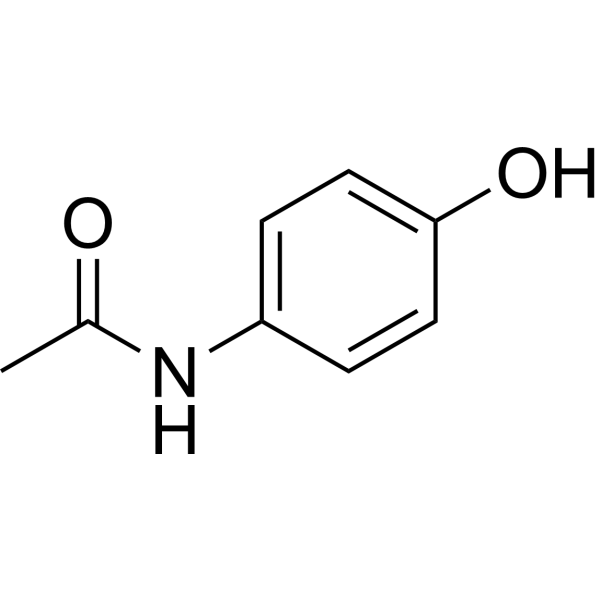
アセトアミノフェン  (Synonyms: Paracetamol; Acetaminophen; 4-Acetamidophenol)

製品番号: HY-66005 純度: 99.97%
COA 取扱説明書 Technical Support

Acetaminophen (Paracetamol) is a selective cyclooxygenase-2 (COX-2) inhibitor with an IC50 of 25.8 μM; is a widely used antipyretic and analgesic agent.. Acetaminophen is a potent hepatic N-acetyltransferase 2 (NAT2) inhibitor. Acetaminophen induces ferroptosis and leads to acute liver injury in mice model.

商品は「研究用試薬」です。人や動物の医療用・臨床診断用・食品用の製品ではありません。
研究用途以外に使用した場合、当社は一切の責任を負いかねます。

CAS 番号 : 103-90-2

容量 価格(税別) 在庫状況 数量
500 mg $50 在庫あり
5 g $60 在庫あり
10 g $96 在庫あり
50 g   お問い合わせ  

* アイテムを追加する前、数量をご選択ください

This product is a controlled substance and not for sale in your territory.

カスタマーレビュー

Based on 69 publication(s) in Google Scholar

Other Forms of Acetaminophen:

Top Publications Citing Use of Products

顧客検証

WB

    Acetaminophen purchased from MedChemExpress. Usage Cited in: Molecules. 2018 Dec 29;24(1). pii: E110.  [Abstract]

    Western analysis of Nrf2 protein expression in L-02 cells with or without the treatment of APAP and SHK.

    Acetaminophen purchased from MedChemExpress. Usage Cited in: Molecules. 2018 Dec 29;24(1). pii: E110.  [Abstract]

    Western analysis of p-Akt protein expression in L-02 cells with or without the treatment of APAP and SHK.

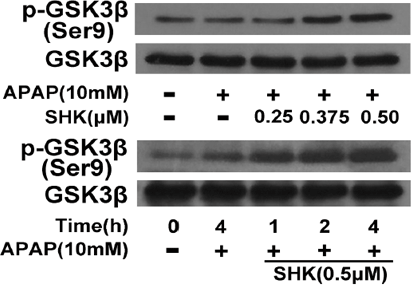
    Acetaminophen purchased from MedChemExpress. Usage Cited in: Molecules. 2018 Dec 29;24(1). pii: E110.  [Abstract]

    Western analysis of p-Akt protein expression with or without the treatment of APAP.

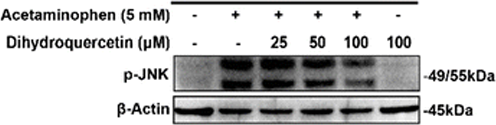
    Acetaminophen purchased from MedChemExpress. Usage Cited in: Appl Microbiol Biotechnol. 2018 Feb;102(3):1443-1453.  [Abstract]

    Dihydroquercetin relieves APAP-induced necrosis and suppressed ERK/JNK stress responses. Western Blot analysis for phosphor-JNK1/2, β-Actin as a lading control.

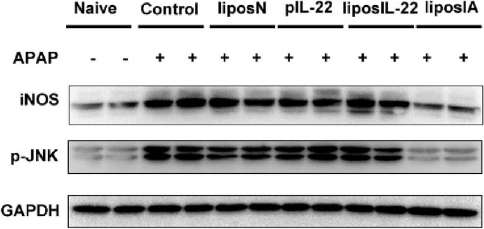
    Acetaminophen purchased from MedChemExpress. Usage Cited in: Theranostics. 2017 Sep 26;7(17):4135-4148.  [Abstract]

    LiposIA inhibits ROS generation and prevents APAP-induced mitochondrial dysfunction in the liver. Immunoblot images of iNOS and p-JNK.

    Parasite アイソフォーム固有の製品をすべて表示:

    Endogenous Metabolite アイソフォーム固有の製品をすべて表示:

    COX アイソフォーム固有の製品をすべて表示:

    Histone Acetyltransferase アイソフォーム固有の製品をすべて表示:

    • 生物活性

    • 純度とドキュメンテーション

    • 参考文献

    • カスタマーレビュー

    製品説明

    Acetaminophen (Paracetamol) is a selective cyclooxygenase-2 (COX-2) inhibitor with an IC50 of 25.8 μM; is a widely used antipyretic and analgesic agent.[1][2][3]. Acetaminophen is a potent hepatic N-acetyltransferase 2 (NAT2) inhibitor[4]. Acetaminophen induces ferroptosis and leads to acute liver injury in mice model[5].

    IC50 & Target[1]

    COX-2

    25.8 μM (IC50)

    COX-1

    113.7 μM (IC50)

    Cellular Effect
    Cell Line Type Value Description References
    HepG2 EC50
    594 3
    Compound: ApAP, Paracetamol
    Cytotoxicity against human HepG2 cells assessed as intracellular ATP level after 24 hrs by luciferase reporter gene assay
    Cytotoxicity against human HepG2 cells assessed as intracellular ATP level after 24 hrs by luciferase reporter gene assay
    [PMID: 24482730]
    HepG2 EC50
    594 3
    Compound: ApAP, Paracetamol
    Cytotoxicity against human HepG2 cells assessed as intracellular ATP level after 24 hrs by luciferase reporter gene assay
    Cytotoxicity against human HepG2 cells assessed as intracellular ATP level after 24 hrs by luciferase reporter gene assay
    [PMID: 24482730]
    RAW264.7 GI50
    1002 3
    Compound: 6a
    Cytotoxicity against mouse RAW264.7 cells assessed as growth inhibition after 48 hrs by trypan blue assay
    Cytotoxicity against mouse RAW264.7 cells assessed as growth inhibition after 48 hrs by trypan blue assay
    10.1039/C3MD00251A
    RAW264.7 GI50
    1002 3
    Compound: 6a
    Cytotoxicity against mouse RAW264.7 cells assessed as growth inhibition after 48 hrs by trypan blue assay
    Cytotoxicity against mouse RAW264.7 cells assessed as growth inhibition after 48 hrs by trypan blue assay
    10.1039/C3MD00251A
    Sf21 IC50
    >1 2
    Compound: Acetaminophen
    Inhibition of Sprague-Dawley rat Bsep expressed in plasma membrane vesicles of Sf21 cells assessed as inhibition of ATP-dependent [3H]taurocholate uptake
    Inhibition of Sprague-Dawley rat Bsep expressed in plasma membrane vesicles of Sf21 cells assessed as inhibition of ATP-dependent [3H]taurocholate uptake
    [PMID: 21965623]
    Sf9 IC50
    200 3
    Compound: Acetaminophen
    Inhibition of human recombinant COX1 expressed in Sf9 cell microsomes assessed as reduction in conversion of arachidonic acid to PGE2 incubated for 5 mins by HTRF assay
    Inhibition of human recombinant COX1 expressed in Sf9 cell microsomes assessed as reduction in conversion of arachidonic acid to PGE2 incubated for 5 mins by HTRF assay
    [PMID: 27046190]
    Sf9 IC50
    200 3
    Compound: Acetaminophen
    Inhibition of human recombinant COX1 expressed in Sf9 cell microsomes assessed as reduction in conversion of arachidonic acid to PGE2 incubated for 5 mins by HTRF assay
    Inhibition of human recombinant COX1 expressed in Sf9 cell microsomes assessed as reduction in conversion of arachidonic acid to PGE2 incubated for 5 mins by HTRF assay
    [PMID: 27046190]
    HepG2 EC50
    594 3
    Compound: ApAP, Paracetamol
    Cytotoxicity against human HepG2 cells assessed as intracellular ATP level after 24 hrs by luciferase reporter gene assay
    Cytotoxicity against human HepG2 cells assessed as intracellular ATP level after 24 hrs by luciferase reporter gene assay
    [PMID: 24482730]
    RAW264.7 GI50
    1002 3
    Compound: 6a
    Cytotoxicity against mouse RAW264.7 cells assessed as growth inhibition after 48 hrs by trypan blue assay
    Cytotoxicity against mouse RAW264.7 cells assessed as growth inhibition after 48 hrs by trypan blue assay
    10.1039/C3MD00251A
    Sf21 IC50
    > 1000 3
    Compound: Acetaminophen
    Inhibition of Sprague-Dawley rat Bsep expressed in plasma membrane vesicles of Sf21 cells assessed as inhibition of ATP-dependent [3H]taurocholate uptake
    Inhibition of Sprague-Dawley rat Bsep expressed in plasma membrane vesicles of Sf21 cells assessed as inhibition of ATP-dependent [3H]taurocholate uptake
    [PMID: 21965623]
    Sf21 IC50
    > 1000 3
    Compound: Acetaminophen
    Inhibition of human BSEP expressed in plasma membrane vesicles of Sf21 cells assessed as inhibition of ATP-dependent [3H]taurocholate uptake
    Inhibition of human BSEP expressed in plasma membrane vesicles of Sf21 cells assessed as inhibition of ATP-dependent [3H]taurocholate uptake
    [PMID: 21965623]
    Sf9 IC50
    200 3
    Compound: Acetaminophen
    Inhibition of human recombinant COX1 expressed in Sf9 cell microsomes assessed as reduction in conversion of arachidonic acid to PGE2 incubated for 5 mins by HTRF assay
    Inhibition of human recombinant COX1 expressed in Sf9 cell microsomes assessed as reduction in conversion of arachidonic acid to PGE2 incubated for 5 mins by HTRF assay
    [PMID: 27046190]
    体外実験

    In vitro, acetaminophen elicites a 4.4-fold selectivity toward COX-2 inhibition (IC50 113.7 μM for COX-1; IC50 25.8 μM for COX-2). Following oral administration of the drug, maximal ex vivo inhibitions are 56% (COX-1) and 83% (COX-2). Acetaminophen plasma concentrations remaine above the in vitro IC50 for COX-2 for at least 5 h postadministration. Ex vivo IC50 values (COX-1: 105.2 μM; COX-2: 26.3 μM) of acetaminophen compared favorably with its in vitro IC50 values. In contrast to previous concepts, acetaminophen inhibited COX-2 by more than 80%, i.e., to a degree comparable to nonsteroidal antiinflammatory drugs (NSAIDs) and selective COX-2 inhibitors. However, a >95% COX-1 blockade relevant for suppression of platelet function is not achieved[1]. MTT assay shows that Acetaminophen (APAP) in a dose of 50 mM significantly (p<0.001) reduces cell viability to 61.5±6.65%. Interestingly, the significant (p<0.01) increase in cell viability to 79.7±2.47% is observed in the Acetaminophen/HV110 co-treated cells, compared to Acetaminophen treated cells[2].

    MedChemExpress (MCE) has not independently confirmed the accuracy of these methods. They are for reference only.

    体内実験

    Note:
    Please do not refer to only one article to determine the experimental conditions. It is recommended to determine the optimal experimental conditions (animal strain, age, dosage, frequency and cycle, detection time and indicators, etc.) through preliminary experiments before the formal experiment.

    Administering Acetaminophen (250 mg/kg, orally; once) to the mice causes significant liver damage and necrosis of cells as evidenced by the elevated serum hepatic enzymes alanine aminotransferase (ALT), aminotransferase (AST), alkaline phosphatase (ALP), and gamma-glutamyl transferase (γGT) compared with normal group[3].
    Acetaminophen (300 mg/kg, i.p., single dose) induces ferroptosis, by enhancing levels of Fe2+ and malondialdehyde (MDA), and decreasing levels of glutathione (GSH) and glutathione peroxidase 4 (GPX4), and induces acut eliver injury in C57BL/6J mice model[5].

    Induction of liver disease model[3]
    Background
    High doses of Acetaminophen lead to acute liver damage. At large doses of Acetaminophen, N-acetyl-p-benzoquinone imine (NAPQI) levels increase and may react with hepatic proteins, resulting in liver injury.
    Specific Modeling Methods
    Mice: Swiss mice • male • (30-40 g)
    Administration: 250 mg/kg • p.o. • single dose
    Note
    (1) After 12?h of administration, serum samples and liver tissue were collected followed by biochemistry and histological analysis.
    (2) Acetaminophen was dissolved in saline that contained 0.1% Tween 80 (HY-Y1891) solution.
    Modeling Indicators
    Gastric tissue macroscopic alterations: Showed prominent mucosal folds and severe erosion, pronounced ulceration and bleeding foci in the gastric mucosa.
    Histopathological changes: Severe necrotic areas were visible in the APAP-treated group, characterized by large areas of necrosis with centrilobular vein congestion, presence of a dense and/or moderate polymorphonuclear infiltrate, and vacuolization of hepatocytes.
    Biochemical changes: Caused significant liver damage and necrosis of cells as evidenced by the elevated serum hepatic enzymes ALT, AST, ALP, and γGT.
    Opposite Product(s): Citral (HY-N7083)

    MedChemExpress (MCE) has not independently confirmed the accuracy of these methods. They are for reference only.

    Animal Model: Acetaminophen induced liver injury in C57BL/6J mice[5]
    Dosage: 300 mg/kg
    Administration: i.p., single dose
    Result: Increased levels of MDA and Fe2+, decreased levels of GSH and GPX4.
    Destoryed the boundary plate, disordered the arrangement of hepatic cords, caused liver cells edema, tissue necrosis and inflammatory cells infiltration
    臨床実験
    分子量

    151.16

    分子式

    C8H9NO2

    CAS 番号
    Appearance

    Solid

    Color

    White to off-white

    SMILES

    O=C(C)NC1=CC=C(O)C=C1

    Structure Classification
    Initial Source
    輸送条件

    Room temperature in continental US; may vary elsewhere.

    保管条件

    Store at room temperature 3 years

    *The compound is unstable in solutions, freshly prepared is recommended.

    溶剤 & 溶解度
    体外: 

    DMSO : 250 mg/mL (1653.88 mM; Need ultrasonic; Hygroscopic DMSO has a significant impact on the solubility of product, please use newly opened DMSO)

    H2O : 10 mg/mL (66.16 mM; Need ultrasonic)

    Preparing
    Stock Solutions
    Concentration Solvent Mass 1 mg 5 mg 10 mg
    1 mM 6.6155 mL 33.0775 mL 66.1551 mL
    5 mM 1.3231 mL 6.6155 mL 13.2310 mL
    10 mM 0.6616 mL 3.3078 mL 6.6155 mL
    View the Complete Stock Solution Preparation Table

    * Please refer to the solubility information to select the appropriate solvent. The compound is unstable in solutions, freshly prepared is recommended.

    * Note: If you choose water as the stock solution, please dilute it to the working solution, then filter and sterilize it with a 0.22 μm filter before use.

    • Molarity Calculator

    • Dilution Calculator

    Mass (g) = Concentration (mol/L) × Volume (L) × Molecular Weight (g/mol)

    Mass
    =
    Concentration
    ×
    Volume
    ×
    Molecular Weight *

    Concentration (start) × Volume (start) = Concentration (final) × Volume (final)

    一般には略語で表示されます:C1V1 = C2V2

    濃度 (開始)

    C1

    ×
    体積 (開始)

    V1

    =
    濃度 (終了)

    C2

    ×
    体積 (終了)

    V2

    体内:

    For the following dissolution methods, please prepare the working solution directly. It is recommended to prepare fresh solutions and use them promptly within a short period of time.
    The percentages shown for the solvents indicate their volumetric ratio in the final prepared solution. If precipitation or phase separation occurs during preparation, heat and/or sonication can be used to aid dissolution.

    • Protocol 1

      Add each solvent one by one:  PBS

      Solubility: 6.67 mg/mL (44.13 mM); Clear solution; Need ultrasonic

    • Protocol 2

      Add each solvent one by one:  50% PEG300    50% Saline

      Solubility: 50 mg/mL (330.78 mM); Clear solution; Need ultrasonic

    In Vivo Dissolution Calculator
    Please enter the basic information of animal experiments:

    Dosage

    mg/kg

    Animal weight
    (per animal)

    g

    Dosing volume
    (per animal)

    μL

    Number of animals

    Recommended: Prepare an additional quantity of animals to account for potential losses during experiments.
    Calculation results:
    Working solution concentration: mg/mL
    純度とドキュメンテーション

    純度: 99.97%

    参考文献

    Complete Stock Solution Preparation Table

    * Please refer to the solubility information to select the appropriate solvent. The compound is unstable in solutions, freshly prepared is recommended.

    Optional Solvent Concentration Solvent Mass 1 mg 5 mg 10 mg 25 mg
    H2O / DMSO 1 mM 6.6155 mL 33.0775 mL 66.1551 mL 165.3877 mL
    5 mM 1.3231 mL 6.6155 mL 13.2310 mL 33.0775 mL
    10 mM 0.6616 mL 3.3078 mL 6.6155 mL 16.5388 mL
    15 mM 0.4410 mL 2.2052 mL 4.4103 mL 11.0258 mL
    20 mM 0.3308 mL 1.6539 mL 3.3078 mL 8.2694 mL
    25 mM 0.2646 mL 1.3231 mL 2.6462 mL 6.6155 mL
    30 mM 0.2205 mL 1.1026 mL 2.2052 mL 5.5129 mL
    40 mM 0.1654 mL 0.8269 mL 1.6539 mL 4.1347 mL
    50 mM 0.1323 mL 0.6616 mL 1.3231 mL 3.3078 mL
    60 mM 0.1103 mL 0.5513 mL 1.1026 mL 2.7565 mL
    DMSO 80 mM 0.0827 mL 0.4135 mL 0.8269 mL 2.0673 mL
    100 mM 0.0662 mL 0.3308 mL 0.6616 mL 1.6539 mL

    * Note: If you choose water as the stock solution, please dilute it to the working solution, then filter and sterilize it with a 0.22 μm filter before use.

    • No file chosen (Maximum size is: 1024 Kb)
    • If you have published this work, please enter the PubMed ID.
    • Your name will appear on the site.
    • Molarity Calculator

    • Dilution Calculator

    The molarity calculator equation

    Mass (g) = Concentration (mol/L) × Volume (L) × Molecular Weight (g/mol)

    質量   濃度   体積   分子量 *
    = × ×

    The dilution calculator equation

    Concentration (start) × Volume (start) = Concentration (final) × Volume (final)

    一般には略語で表示されます:C1V1 = C2V2

    濃度 (開始) × 体積 (開始) = 濃度 (終了) × 体積 (終了)
    × = ×
    C1   V1   C2   V2
    Help & FAQs
    • Do most proteins show cross-species activity?

      Species cross-reactivity must be investigated individually for each product. Many human cytokines will produce a nice response in mouse cell lines, and many mouse proteins will show activity on human cells. Other proteins may have a lower specific activity when used in the opposite species.

    最近チェックした製品:

    オンラインお問い合わせ

    Your information is safe with us. * Required Fields.

    製品名


    カスタマ需要量 *

    お名前 *


    タイトル

    メールアドレス *


    電話番号 *

    デパートメント


    組纖名 *

    市区町村

    都道府県

    国或いは地域 *


    必ず会社名を記載ください。個人への返信は行いません。

    備考

    バルクお問い合わせ

    Inquiry Information

    製品名:
    Acetaminophen
    製品番号:
    HY-66005
    数量:
    MCE 日本正規代理店: