



Pefloxacin mesylate dihydrate
Based on 3 publication(s) in Google Scholar
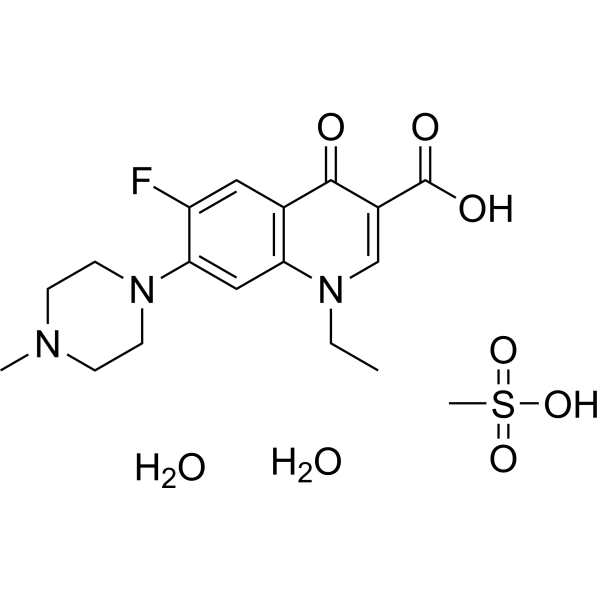
Pefloxacin (Pefloxacinium) mesylate dihydrate is a broad spectrum antibiotic. Pefloxacin mesylate dihydrate blocks DNA replication by inhibiting DNA gyrase. Pefloxacin mesylate dihydrate inhibits DNA relaxation catalyzed by topoisomerase I with an IC50 of 45 μg/mL. Pefloxacin mesylate dihydrate exhibits antibacterial activity against Escherichia coli, Pseudomonas aeruginosa, and Bacteroides fragilis with MIC90s of 0.12, 4, and 16 mg/L, respectively. Pefloxacin mesylate dihydrate has anti-Plasmodium yoelii infection activity. Pefloxacin mesylate dihydrate increase UVA-induced edema and immunesuppression. Pefloxacin mesylate dihydrate can be used for infection studies.
For research use only. We do not sell to patients.
- Purity : 98.11%
- CAS No.: 149676-40-4
- Formula: C18H28FN3O8S
- Molecular Weight:465.49
-
Storage:Powder -20°C, 3 years , 4°C, 2 years ; In solvent -80°C, 6 months , -20°C, 1 month

To place orders, for customer services and technical support, please contact: MedChemExpress USA
Tel: 609-228-6898 E-mail: [email protected] [email protected]


-
 Biological Activity
-
Chemical Information
-
Solvent & Solubility
- Protocols
- Purity & Documentation
- References
-
 Help & FAQs


-
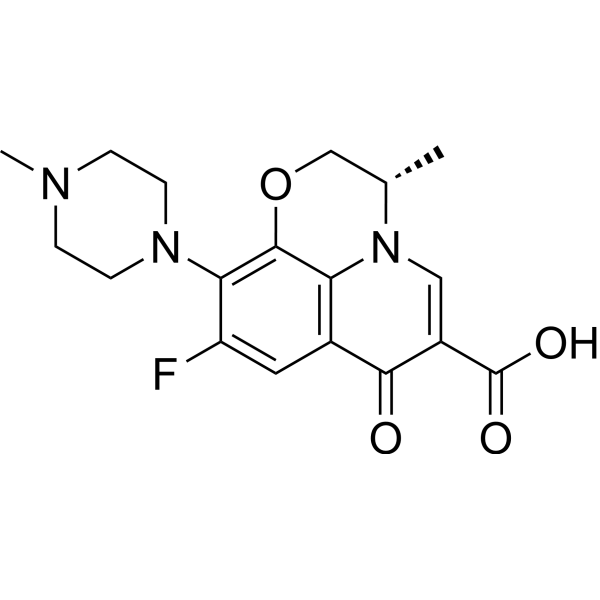
HY-B0330
LevofloxacinDNA Gyrase/Topoisomerase Inhibitor -
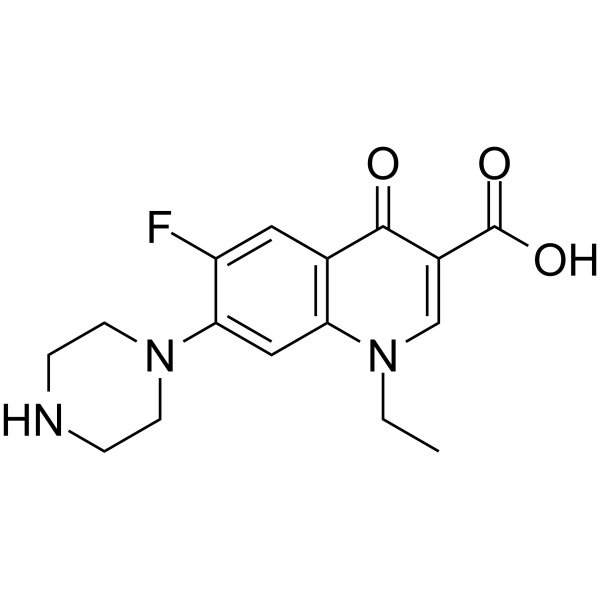
HY-B0132
Norfloxacin -
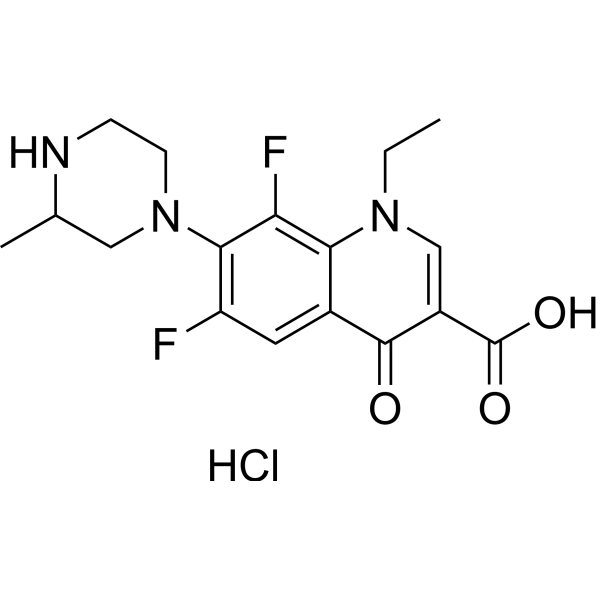
HY-B0455
Lomefloxacin hydrochlorideQuinolone Antibiotic -

HY-B0330R
Levofloxacin (Standard)DNA Gyrase/Topoisomerase Inhibitor -

HY-B0132R
Norfloxacin (Standard) -
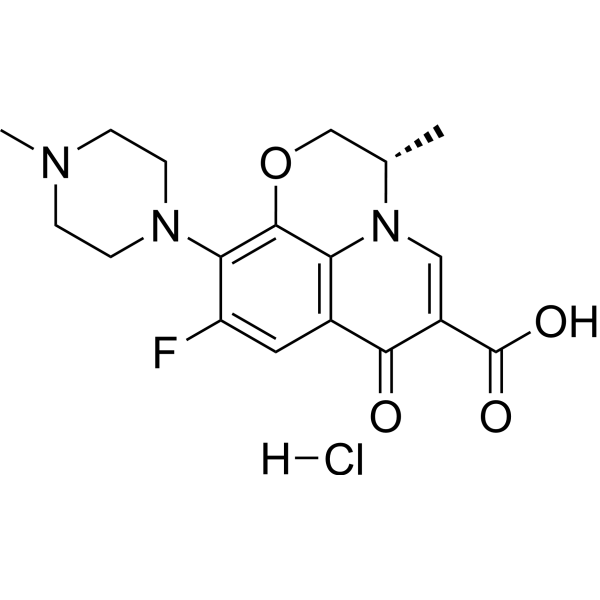
HY-B0330B
Levofloxacin hydrochlorideAntibiotic -
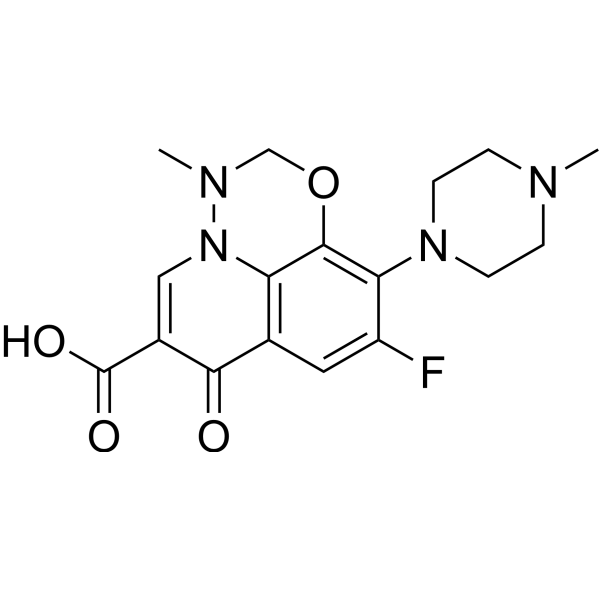
HY-B0126R
Marbofloxacin (Standard)Antimicrobial Agent -
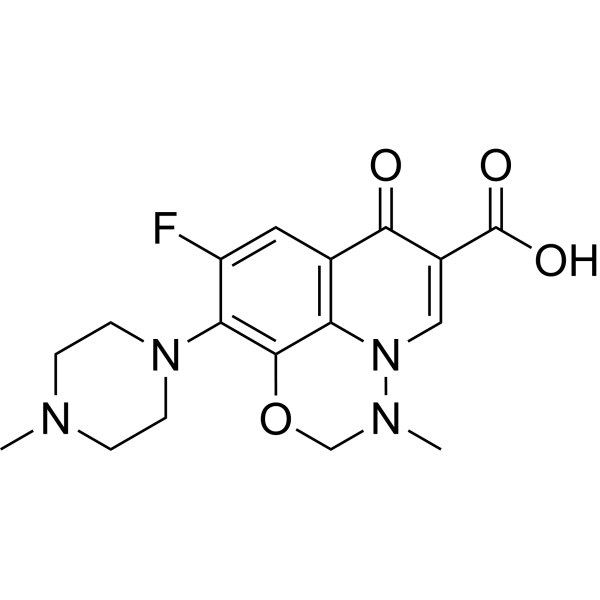
HY-B0126
MarbofloxacinAntimicrobial Agent -

HY-B0330BR
Levofloxacin hydrochloride (Standard)Standard Of Levofloxacin Hydrochloride -

HY-B0147BR
Pefloxacin mesylate dihydrate (Standard)Analytical Standard -
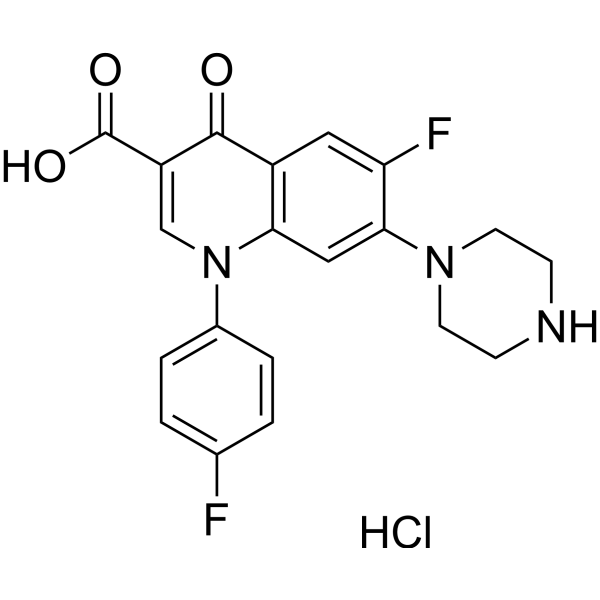
HY-B0343A
Sarafloxacin hydrochlorideAntibacterial Agent -
HY-B0356B
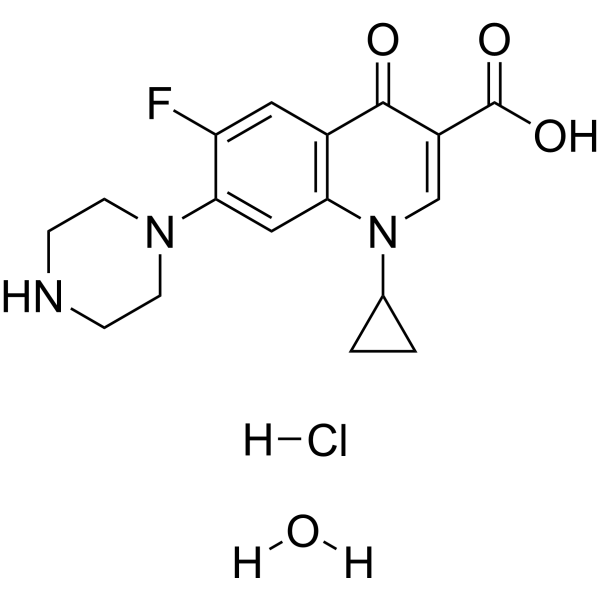
Ciprofloxacin hydrochloride monohydrateTopoisomerase IV Inhibitor
Publications Citing Use of MedChemExpress (MCE) Pefloxacin mesylate dihydrate
MoreAll Topoisomerase Isoforms
MoreAll Antibiotic Isoforms
MoreAll DNA/RNA Synthesis Isoforms
MoreAll Parasite Isoforms
More

Biological Activity
Description
IC50 & Target
|
Quinolone |
In Vitro
Pefloxacin mesylate dihydrate inhibits 90% of strains such as Escherichia coli and Klebsiella pneumoniae at ≤0.5 mg/L, 90% of Pseudomonas aeruginosa at 4 mg/L, and 90% of the Bacteroides fragilis group at 16 mg/L[1].
Pefloxacin (0.06-64 mg/L) mesylate dihydrate shows good activity against many bacteria such as staphylococci and E. coli, but poor activity against bacteria like Gardnerella vaginalis and Mobiluncus spp.[2].
Pefloxacin (5-60 μg/mL; 30 min) can inhibit the DNA relaxation reaction catalyzed by E. coli topoisomerase I, with an IC50 of 45 μg/mL[3].
MedChemExpress (MCE) has not independently confirmed the accuracy of these methods. They are for reference only. Further protocols information, click here.
In Vivo
Pefloxacin (200 mg/kg; s.c.; 2 h before and 5 h after UVA irradiation) can increase UVA-induced back skin swelling, the number of sunburn cells, reduce the number of epidermal Langerhans cells, and inhibit local contact hypersensitivity in mice[5].
Pefloxacin (up to 150 mg/kg; p.o.; daily) is ineffective against Mycobacterium tuberculosis infection in mice[6].
Pefloxacin (40-240 mg/kg; s.c.; every 8-12 h; 3 days) can significantly reduce parasitemia and increase the survival rate of Swiss albino mice infected with Plasmodium yoelii, with superior efficacy to Ciprofloxacin (HY-B0356)[7].
MedChemExpress (MCE) has not independently confirmed the accuracy of these methods. They are for reference only.


Chemical Information
-
CAS No. 149676-40-4
-
Appearance Solid
-
Molecular Weight 465.49
-
Formula C18H28FN3O8S
-
Color White to off-white
-
SMILES
O=C(C1=CN(CC)C2=C(C=C(F)C(N3CCN(C)CC3)=C2)C1=O)O.CS(=O)(O)=O.O.O
-
Synonyms
Pefloxacinium mesylate dihydrate
-
Shipping
Room temperature in continental US; may vary elsewhere.
-
Storage
Powder -20°C 3 years 4°C 2 years In solvent -80°C 6 months -20°C 1 month


Publications (3)
-
Journal Impact Factor
-
Most Recent
-
Food Chem X
Machine learning prioritization of antibiotic residues in aquatic foods reveals exposure-driven genotoxic risk mediated by BCL2. [Abstract]2026 Feb 8:34:103646. PMID: 41756597 -
Xenobiotica
Human total clearance values and volumes of distribution of typical human cytochrome P450 2C9/19 substrates predicted by single-species allometric scaling using pharmacokinetic data sets from common marmosets genotyped for P450 2C19. [Abstract]2021 Apr;51(4):479-493. PMID: 33455494 -
Chemosphere
Mass-balance-model-based evaluation of sewage treatment plant contribution to residual pharmaceuticals in environmental waters. [Abstract]2019 Jun:225:378-387. PMID: 30884299


Solvent & Solubility
In Vitro:
H2O : 116.67 mg/mL (250.64 mM; Need ultrasonic)
Please refer to the solubility information to select the appropriate solvent. Once prepared, please aliquot and store the solution to prevent product inactivation from repeated freeze-thaw cycles.
Storage method and period of stock solution: -80°C, 6 months; -20°C, 1 month. When stored at -80°C, please use it within 6 months. When stored at -20°C, please use it within 1 month.
* Note: If you choose water as the stock solution, please dilute it to the working solution, then filter and sterilize it with a 0.22 μm filter before use.
Please refer to the solubility information to select the appropriate solvent. Once prepared, please aliquot and store the solution to prevent product inactivation from repeated freeze-thaw cycles.
Storage method and period of stock solution: -80°C, 6 months; -20°C, 1 month. When stored at -80°C, please use it within 6 months. When stored at -20°C, please use it within 1 month.
* Note: If you choose water as the stock solution, please dilute it to the working solution, then filter and sterilize it with a 0.22 μm filter before use.
Concentration (start) × Volume (start) = Concentration (final) × Volume (final)

Protocols
-
Research Protocol for Infectious Diseases
Infectious-disease experiments test how pathogens interact with host barriers, innate immune receptors, inflammatory signaling, pathogen replication, and tissue injury; pattern-recognition receptors such as TLRs, RIG-I-like receptors, NOD-like receptors, and inflammasomes detect microbial molecules and activate NF-κB, interferon, and cytokine responses. The central hypothesis is that infection severity reflects the balance between pathogen burden and host response: protective inflammation restricts pathogen growth, whereas excessive or mislocalized inflammation contributes to tissue damage and disease phenotype. Unresolved questions include which host pathways are protective versus pathogenic, why some infection models fail to translate to human disease, and which combined readouts best predict clinically relevant infection outcomes.
-
PCNA Immunodetection Proliferation Assay
PCNA immunodetection measures proliferative activity by detecting proliferating cell nuclear antigen, a nuclear protein associated with DNA polymerase δ function and DNA replication. The assay readout is the proportion of PCNA-positive nuclei among total counted cells, but PCNA labeling is not identical to BrdU labeling because PCNA can mark late G1/early S-associated replication competence and may persist beyond active DNA synthesis depending on fixation and extraction conditions.
-
Cell Cytotoxicity Assay
Cytotoxicity assays are usually based on the assessment of cell membrane damage, which can also be indirectly detected by measuring cell viability. Detection methods include MTT assay, CKK-8 assay, LDH assay and ATP assay, etc.
-
Bacterial live/dead nucleic-acid viability staining
The LIVE/DEAD bacterial viability staining method is based on differential permeability of nucleic-acid-binding fluorescent dyes, most commonly SYTO 9 and propidium iodide (PI), which enables discrimination of bacterial populations with intact versus compromised cytoplasmic membranes. SYTO 9 penetrates both intact and damaged bacterial membranes and binds nucleic acids to produce green fluorescence, whereas propidium iodide penetrates only cells with compromised membranes and fluoresces red while also reducing SYTO 9 signal through competitive binding and fluorescence interactions. The resulting fluorescence pattern is interpreted as a proxy for membrane integrity, which is widely used as an indicator of bacterial viability in microscopy, flow cytometry, and spectroscopic platforms. However, mechanistic studies show that SYTO 9 and PI interactions involve displacement and fluorescence resonance energy transfer effects, which can influence signal interpretation depending on dye ratios a


Purity & Documentation
-
Data Sheet (278 KB)
-
SDS (392 KB)
- English - EN (392 KB)
- Français - FR (392 KB)
- Deutsch - DE (392 KB)
- Norwegian - NO (392 KB)
- Español - ES (392 KB)
- Swedish - SV (392 KB)
- Italian - IT (392 KB)
- Korean - KR (392 KB)
- Portuguese - PT (392 KB)
-
Handling Instructions (2659 KB)
References
[1]. Drlica K, et al. DNA gyrase, topoisomerase IV, and the 4-quinolones. Microbiol Mol Biol Rev. 1997 Sep;61(3):377-92. [Content Brief]
[2]. Hussy P, et al. Effect of 4-quinolones and novobiocin on calf thymus DNA polymerase alpha primase complex, topoisomerases I and II, and growth of mammalian lymphoblasts. Antimicrob Agents Chemother. 1986 Jun;29(6):1073-8. [Content Brief]
[3]. Clarke AM, et al. In-vitro activity of pefloxacin compared to enoxacin, norfloxacin, gentamicin and new beta-lactams. J Antimicrob Chemother. 1985 Jan;15(1):39-44. [Content Brief]
[4]. Jones BM, et al. Activity of pefloxacin and thirteen other antimicrobial agents in vitro against isolates from hospital and genitourinary infections. J Antimicrob Chemother. 1986 Jun;17(6):739-46. [Content Brief]
[5]. Tabary X, et al. Effect of DNA gyrase inhibitors pefloxacin, five other quinolones, novobiocin, and clorobiocin on Escherichia coli topoisomerase I. Antimicrob Agents Chemother. 1987 Dec;31(12):1925-8. [Content Brief]
[6]. Fantin B, et al. Correlation between in vitro and in vivo activity of antimicrobial agents against gram-negative bacilli in a murine infection model. Antimicrob Agents Chemother. 1991 Jul;35(7):1413-22. [Content Brief]
[7]. Sun YW, et al. Pefloxacin and ciprofloxacin increase UVA-induced edema and immune suppression. Photodermatol Photoimmunol Photomed. 2001 Aug;17(4):172-7. [Content Brief]
[8]. Truffot-Pernot C, et al. Activities of pefloxacin and ofloxacin against mycobacteria: in vitro and mouse experiments. Tubercle. 1991 Mar;72(1):57-64. [Content Brief]
[9]. Salmon D, et al. Activities of pefloxacin and ciprofloxacin against experimental malaria in mice. Antimicrob Agents Chemother. 1990 Dec;34(12):2327-30. [Content Brief]


Complete Stock Solution Preparation Table
Please refer to the solubility information to select the appropriate solvent. Once prepared, please aliquot and store the solution to prevent product inactivation from repeated freeze-thaw cycles.
Storage method and period of stock solution: -80°C, 6 months; -20°C, 1 month. When stored at -80°C, please use it within 6 months. When stored at -20°C, please use it within 1 month.
| Optional Solvent | Concentration Solvent Mass | 1 mg | 5 mg | 10 mg | 25 mg |
|---|---|---|---|---|---|
| H2O | 1 mM | 2.1483 mL | 10.7414 mL | 21.4827 mL | 53.7068 mL |
| 5 mM | 0.4297 mL | 2.1483 mL | 4.2965 mL | 10.7414 mL | |
| 10 mM | 0.2148 mL | 1.0741 mL | 2.1483 mL | 5.3707 mL | |
| 15 mM | 0.1432 mL | 0.7161 mL | 1.4322 mL | 3.5805 mL | |
| 20 mM | 0.1074 mL | 0.5371 mL | 1.0741 mL | 2.6853 mL | |
| 25 mM | 0.0859 mL | 0.4297 mL | 0.8593 mL | 2.1483 mL | |
| 30 mM | 0.0716 mL | 0.3580 mL | 0.7161 mL | 1.7902 mL | |
| 40 mM | 0.0537 mL | 0.2685 mL | 0.5371 mL | 1.3427 mL | |
| 50 mM | 0.0430 mL | 0.2148 mL | 0.4297 mL | 1.0741 mL | |
| 60 mM | 0.0358 mL | 0.1790 mL | 0.3580 mL | 0.8951 mL | |
| 80 mM | 0.0269 mL | 0.1343 mL | 0.2685 mL | 0.6713 mL | |
| 100 mM | 0.0215 mL | 0.1074 mL | 0.2148 mL | 0.5371 mL |
* Note: If you choose water as the stock solution, please dilute it to the working solution, then filter and sterilize it with a 0.22 μm filter before use.


Pefloxacin mesylate dihydrate Related Classifications
HY-B0147B Related Classifications
 Powered by Bioz