Search Result
Results for "
16:0-17:0 Cyclo PC
" in MedChemExpress (MCE) Product Catalog:
2
Isotope-Labeled Compounds
| Cat. No. |
Product Name |
Target |
Research Areas |
Chemical Structure |
-
- HY-P0023
-
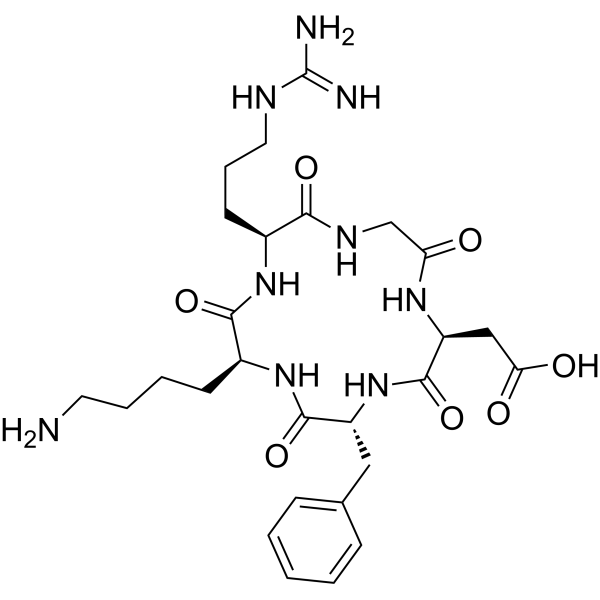
Cyclo(-RGDfK)
Maximum Cited Publications
27 Publications Verification
|
Integrin
|
Cancer
|
|
Cyclo(-RGDfK) is a potent and selective inhibitor of the αvβ3 integrin, with an IC50 of 0.94 nM. Cyclo(-RGDfK) potently targets tumor microvasculature and cancer cells through the specific binding to the αvβ3 integrin on the cell surface .
|
-
-
- HY-100563A
-
|
|
Integrin
|
Cancer
|
|
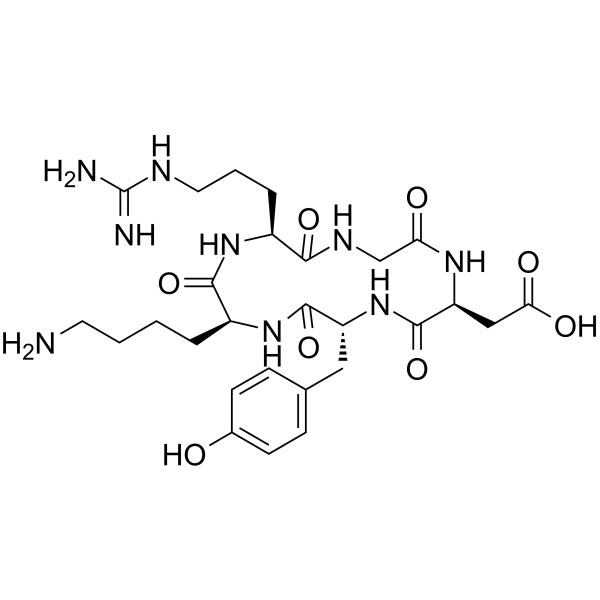
Cyclo(RGDyK) is a potent and selective αVβ3 integrin inhibitor with an IC50 of 20 nM.
|
-
-
- HY-P1934A
-
|
|
Fungal
Bacterial
IFNAR
Reactive Oxygen Species (ROS)
|
Infection
Inflammation/Immunology
Cancer
|
|
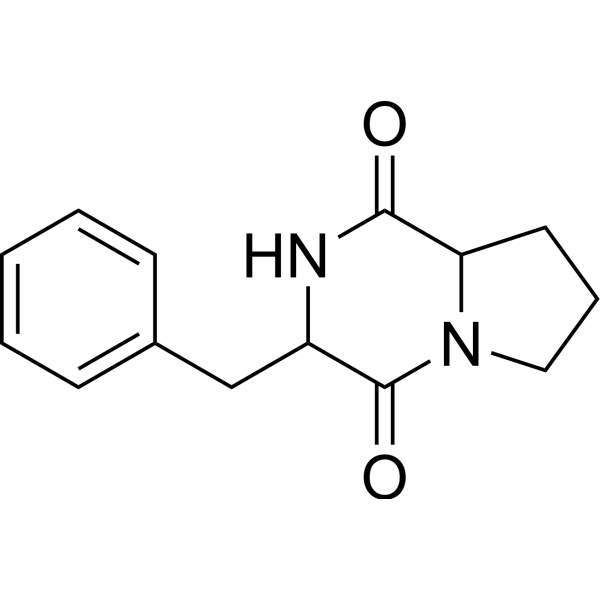
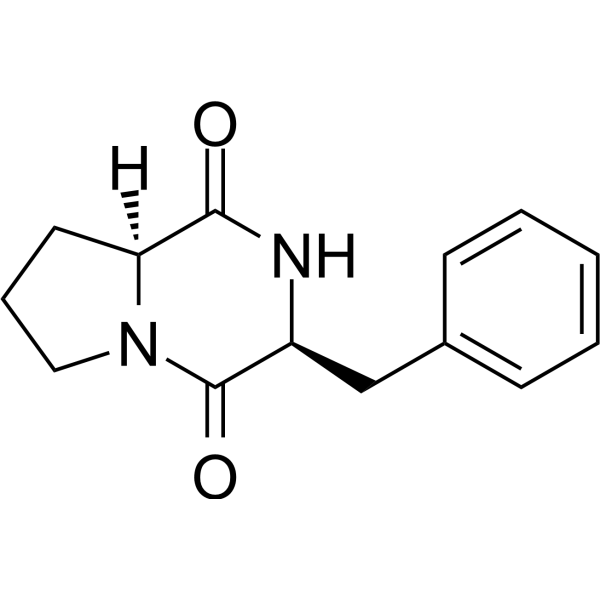
Cyclo(L-Phe-L-Pro), isolated from Pseudomonas fluorescens and Pseudomonas alcaligenes cell-free culture supernatants is an antifungal cyclic dipeptide . Cyclo(L-Phe-L-Pro) inhibits IFN-β production by interfering with retinoic-acid-inducible gene-I (RIG-I) activation . Cyclo(L-Phe-L-Pro) exhibits free-radical scavenging activity with the IC50 of 24 µM in the DPPH assay .
|
-
-
- HY-P2300
-
|
Cyclo(RGDfC)
|
Integrin
|
Cancer
|
|
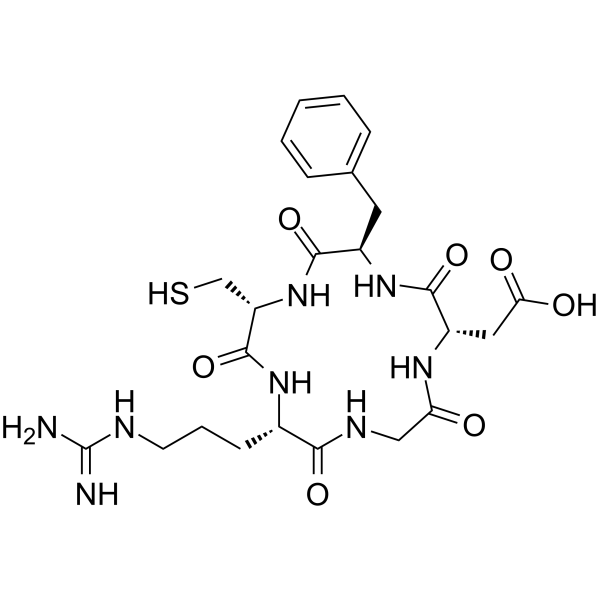
Cyclo(Arg-Gly-Asp-D-Phe-Cys) (Cyclo RGDfC), a cyclic RGD peptide which has high affinity to αvβ3, can disrupt cell integrin interactions. Cyclo(Arg-Gly-Asp-D-Phe-Cys) inhibits pluripotent marker expression in embryonic stem cells (ESCs) and the tumorigenic potential of mESCs in vivo. Cyclo(Arg-Gly-Asp-D-Phe-Cys) can be used in the research of tumors .
|
-
-
- HY-P0023A
-
|
|
Integrin
|
Cancer
|
|
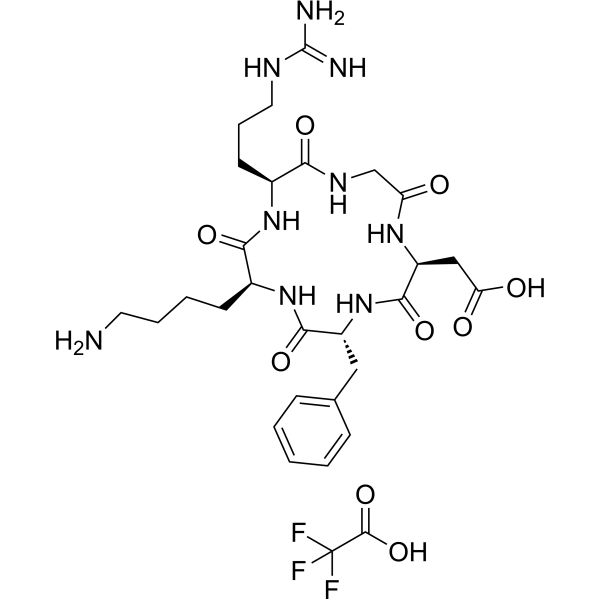
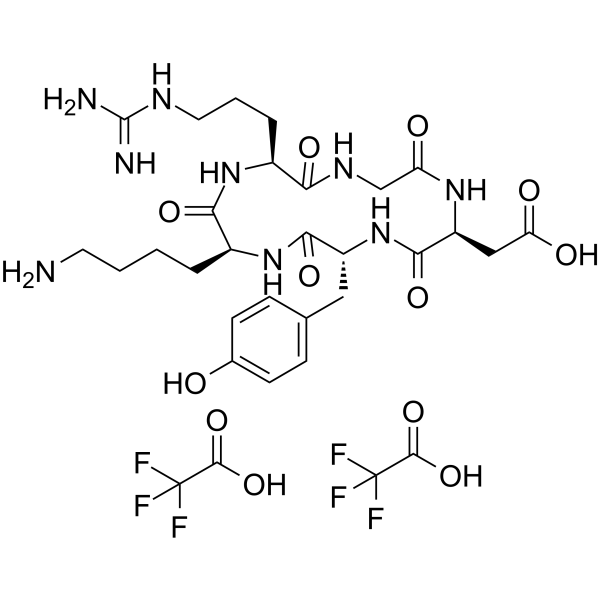
Cyclo(-RGDfK) TFA is a potent and selective inhibitor of the αvβ3 integrin, with an IC50 of 0.94 nM . Cyclo(-RGDfK) TFA potently targets tumor microvasculature and cancer cells through the specific binding to the αvβ3 integrin on the cell surface .
|
-
-
- HY-P1939
-
|
Cyclo(L-prolyl-L-leucyl)
|
Fungal
Bacterial
Influenza Virus
|
Infection
|
|
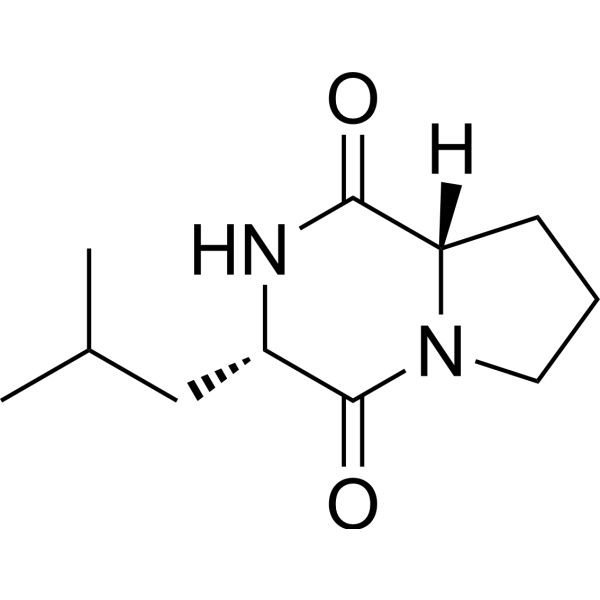
Cyclo(L-Leu-L-Pro) is a cyclic dipeptide with broad-spectrum antibacterial, antiviral and antifungal activities. Its biological activity is highly dependent on the stereoconfiguration and is widely present in microbial metabolites. Cyclo(L-Leu-L-Pro) efficiently and specifically inhibits the production of aflatoxin by Aspergillus flavus. The cis configuration of Cyclo(L-Leu-L-Pro) (cis-cyclo(L-Leu-L-Pro)) has broad-spectrum antibacterial activity against multi-drug resistant bacteria and significantly inhibits the influenza A virus H3N2 .
|
-
-
- HY-P1934
-
|
Cyclo(phenylalanylprolyl); A-64863
|
HCV
Bacterial
Antibiotic
Reactive Oxygen Species (ROS)
|
Infection
|
|
Cyclo(Phe-Pro) (Cyclo(phenylalanylprolyl)) is a quorum-sensing molecule of Vibrio vulnificus that specifically interacts with RIG-I, inhibiting RIG-I polyubiquitination, suppressing IRF-3 activation, and reducing type I interferon production. Cyclo(Phe-Pro) enhances susceptibility to HCV and influenza virus and also alleviates plant aluminum toxicity stress. The mechanism of Cyclo(Phe-Pro) involves the regulation of host immune signaling pathways, bacterial virulence gene expression, and plant antioxidant systems, making it a promising candidate for research in viral infections, bacterial virulence regulation, and agricultural stress resistance .
|
-
-
- HY-P1938
-
|
|
Bacterial
|
Infection
Inflammation/Immunology
|
|
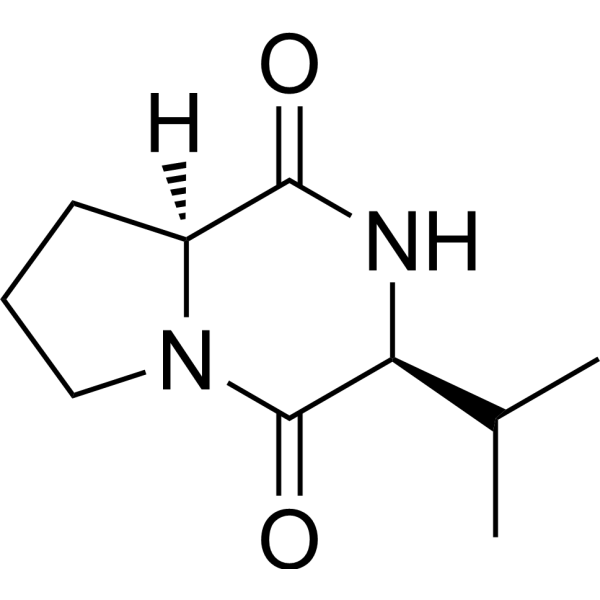
Cyclo(L-Pro-L-Val) is an antimicrobial and anti-inflammatory agent. Cyclo(L-Pro-L-Val) has toxic activity against plant pathogens such as R. fascians LMG 3605, and its potency may be comparable to that of Chloramphenicol (HY-B0239). Cyclo(L-Pro-L-Val) can inhibit the phosphorylation of IKKα, IKKβ, NF-κB, etc., and the activation of iNOS and COX-2, thereby exerting anti-inflammatory activity. Cyclo(L-Pro-L-Val) can be used in the research of biopesticides in the agricultural field, as well as in the research of inflammation-related diseases .
|
-
-
- HY-100563
-
|
|
Integrin
|
Cancer
|
|
Cyclo(RGDyK) trifluoroacetate is a potent and selective αVβ3 integrin inhibitor with an IC50 of 20 nM.
|
-
-
- HY-101402
-
|
Cyclohistidyl-proline; Histidylproline diketopiperazine
|
NF-κB
Endogenous Metabolite
|
Neurological Disease
Inflammation/Immunology
|
|
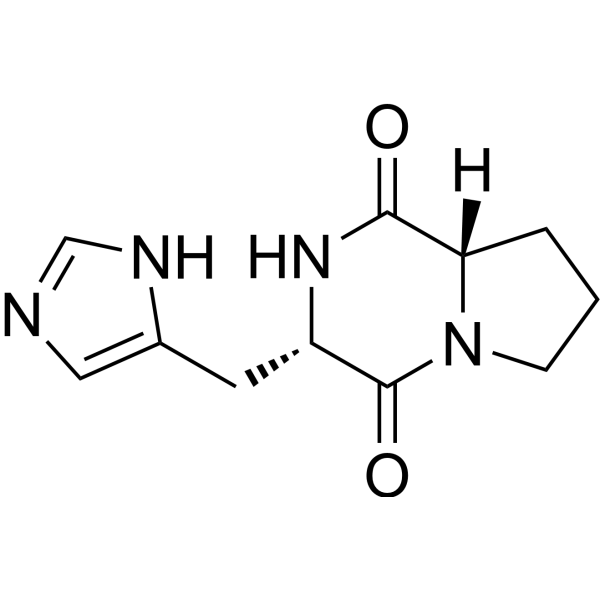
Cyclo(his-pro) (Cyclo(histidyl-proline)) is an orally active cyclic dipeptide structurally related to tyreotropin-releasing hormone . Cyclo(his-pro) could inhibit NF-κB nuclear accumulation. Cyclo(his-pro) can cross the brain-blood-barrier and affect diverse inflammatory and stress responses .
|
-
-
- HY-P10304
-
|
Cyclo(Pro-Arg)
|
Fungal
|
Others
|
|
Cyclo(Arg-Pro) (Cyclo(Pro-Arg)) is an inhibitor for chitinase. Cyclo(Arg-Pro) inhibits cell separation of Saccharomyces cerevisiae, without affecting its growth. Cyclo(Arg-Pro) inhibits the morphological change of Candida albicans from yeast form to filamentous form .
|
-
-
- HY-P1613A
-
|
Cyclo(RGDfV) TFA; C(RGDfV) TFA
|
Integrin
Apoptosis
|
Cancer
|
|
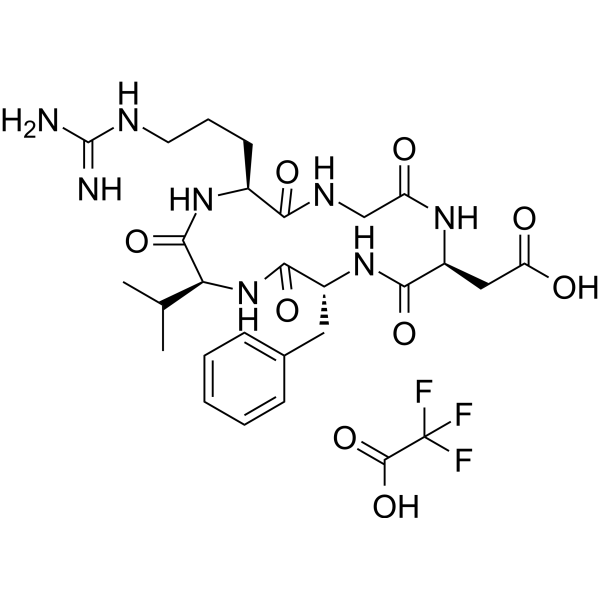
Cyclo(Arg-Gly-Asp-D-Phe-Val) (TFA) (Cyclo(RGDfV) (TFA))is an integrin αvβ3 inhibitor. Cyclo(Arg-Gly-Asp-D-Phe-Val) (TFA) has antitumor activity. Cyclo(Arg-Gly-Asp-D-Phe-Val) (TFA) can be used for the research of acute myeloid leukemia .
|
-
-
- HY-P1676
-
|
BK-1361
|
MMP
|
Cancer
|
|
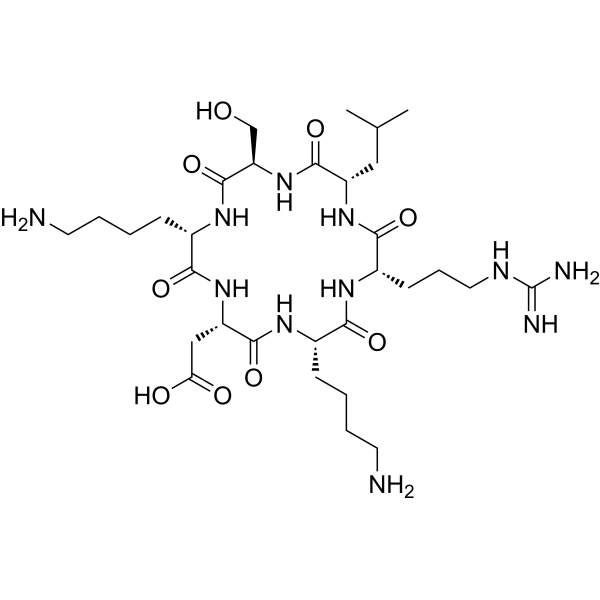
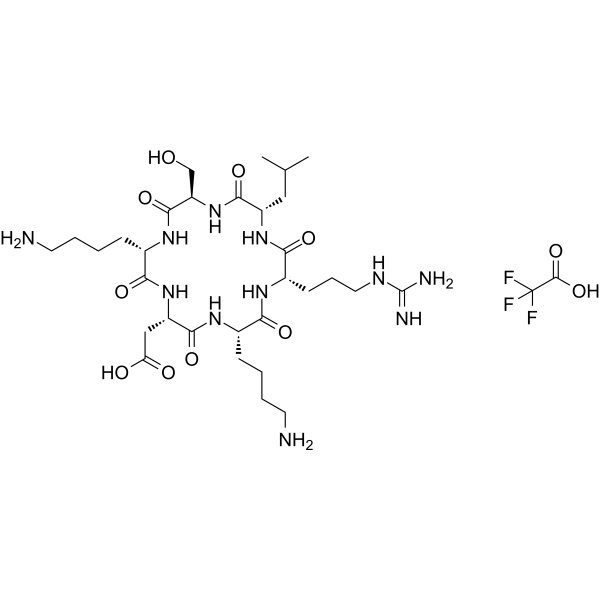
cyclo(RLsKDK) (BK-1361) is a specific inhibitor of metalloproteinase ADAM8 with an IC50 value of 182 nM. cyclo(RLsKDK) has potential applications in inflammatory diseases and cancer .
|
-
-
- HY-P2124
-
|
|
Antibiotic
Bacterial
|
Infection
|
|
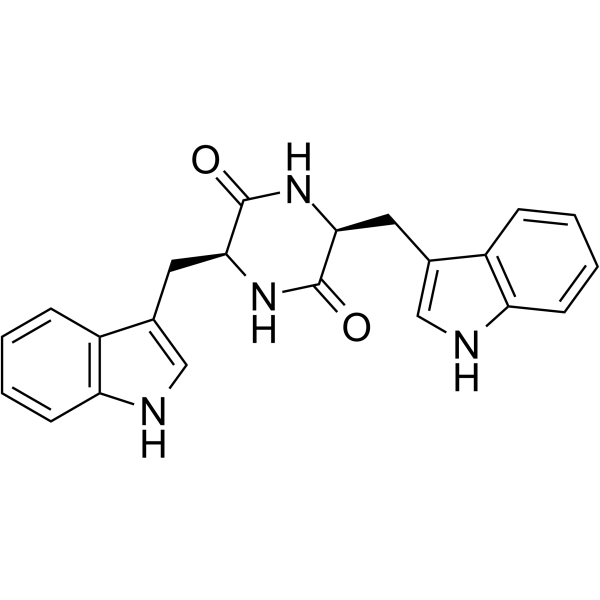
Cyclo(L-Trp-L-Trp) is an antibiotic, and shows antimicrobial activity. Cyclo(L-Trp-L-Trp) can inhibit A. baumannii, as well as Candida albicans, Bacillus subtilis, Micrococcus luteus, Saccharomyces cerevisiae, Aspergillus niger, Staphylococcus aureus. Cyclo(L-Trp-L-Trp) can be used in microbial infection research .
|
-
-
- HY-P10221A
-
|
|
HIF/HIF Prolyl-Hydroxylase
|
Cancer
|
|
Cyclo(CKLIIF) TFA is an inhibitor of HIF-1α and HIF-2α. The KD values of Cyclo(CKLIIF) TFA for the PAS-B domains of HIF1-α and HIF2-α are 2.6 μM and 2.2 μM, respectively. Cyclo(CKLIIF) TFA disrupts the protein-protein interaction between HIF-1α and HIF-1β. Cyclo(CKLIIF) TFA can be used in cancer research .
|
-
-
- HY-P10426
-
|
|
HIF/HIF Prolyl-Hydroxylase
VEGFR
|
Cancer
|
|
cyclo(CLLFVY) is an inhibitor for hypoxia inducible factor-1 (HIF-1), with IC50 of 19 μM (in U2OS) and 16 μM (in MCF-7). cyclo(CLLFVY) binds to the PAS-B domain of HIF-1α, inhibits HIF-1 dimerization and transcriptional activity. cyclo(CLLFVY) downregulates the expression of hypoxia response genes, such as VEGF and CAIX, exhibits antitumor against the HIF-1 associated cancers .
|
-
-
- HY-101402A
-
|
Cyclohistidyl-proline TFA; Histidylproline diketopiperazine TFA
|
NF-κB
Endogenous Metabolite
|
Neurological Disease
Inflammation/Immunology
|
|
Cyclo(his-pro) TFA (Cyclo(histidyl-proline) TFA) is an orally active cyclic dipeptide structurally related to tyreotropin-releasing hormone . Cyclo(his-pro) TFA could inhibit NF-κB nuclear accumulation. Cyclo(his-pro) TFA can cross the brain-blood-barrier and affect diverse inflammatory and stress responses .
|
-
-
- HY-75564
-
|
|
Endogenous Metabolite
|
Cancer
|
|
Cyclo(Ala-Gly), a metabolite of a mangrove endophytic fungus, Penicillium thomi, exhibits cytotoxicity against A549, HepG2 and HT29 cells. The IC50 values range from 9.5 to 18.1 μM .
|
-
-
- HY-P5021
-
|
c(RGDfE)
|
Integrin
|
Cancer
|
|
Cyclo(Arg-Gly-Asp-(D-Phe)-Glu) c(RGDfE) is a cyclic RGD peptide targeting integrin αvβ3. Cyclo(Arg-Gly-Asp-(D-Phe)-Glu) is commonly used for modifying drug loaded nanoparticles. Cyclo(Arg-Gly-Asp-(D-Phe)-Glu) is often used in cancer research, such as pancreatic cancer .
|
-
-
- HY-P2300A
-
|
Cyclo(RGDfC) TFA
|
Integrin
|
Cancer
|
|
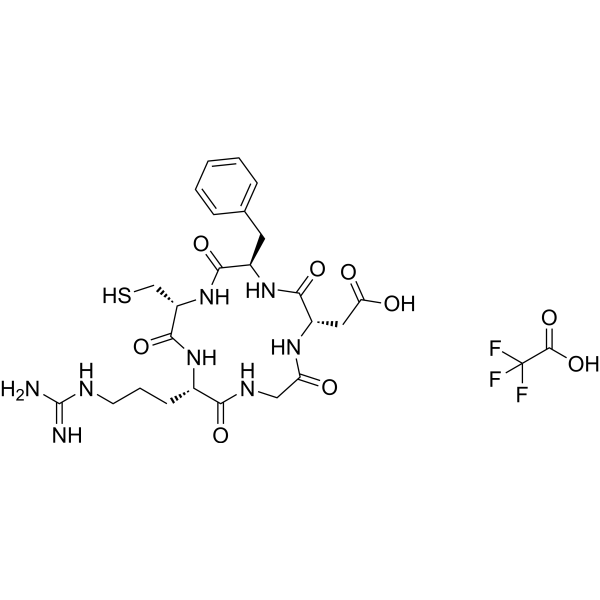
Cyclo(Arg-Gly-Asp-D-Phe-Cys) (Cyclo RGDfC) TFA, a cyclic RGD peptide which has high affinity to αvβ3, can disrupt cell integrin interactions. Cyclo(Arg-Gly-Asp-D-Phe-Cys) TFA inhibits pluripotent marker expression in embryonic stem cells (ESCs) and the tumorigenic potential of mESCs in vivo. Cyclo(Arg-Gly-Asp-D-Phe-Cys) TFA can be used in the research of tumors .
|
-
-
- HY-P5840
-
|
|
Biochemical Assay Reagents
|
Cancer
|
|
Cyclo(RGDyC) is a cyclic pentapeptide with anti-angiogenic abilities. Cyclo(RGDyC) can be combined with liposome delivery systems for research on ocular neovascular diseases and cancer .
|
-
-
- HY-P4047
-
|
|
Drug Derivative
|
Others
|
|
Cyclo(RGDfK(Mal)) is a pentapeptide. Cyclo(RGDfK(Mal)) improves the attachment and infiltration of human pluripotent stem cells. Cyclo(RGDfK(Mal)) can be used for 3D stem cell culture and expansion .
|
-
-
- HY-W152604
-
|
Cyclo(leu-gly)
|
Dopamine Receptor
|
Neurological Disease
|
|
Cyclo(glycyl-L-leucyl) (Cyclo(leu-gly)), a neuropeptide, down-regulates dopamine (DA) receptors and attenuates dopaminergic supersensitivity. Cyclo(glycyl-L-leucyl) inhibits the development of Morphine induced pain relief as well as dopamine receptor supersensitivity in rats. Cyclo(glycyl-L-leucyl) has the potential for the prevention of tardive and/or L-DOPA (HY-N0304)-induced dyskinesias .
|
-
-
- HY-P10304A
-
|
Cyclo(Pro-Arg) TFA
|
Fungal
|
Infection
|
|
Cyclo (Arg-Pro) TFA is a chitinase inhibitor. Cyclo (Arg-Pro) TFA disrupts cell separation and morphological transition of yeast by inhibiting chitinase activity. Cyclo (Arg-Pro) TFA prevents cell separation of Saccharomyces cerevisiae, leading to the formation of grape-like cell clusters, without inhibiting cell growth. Cyclo (Arg-Pro) TFA blocks the morphological transition of Candida albicans from yeast form to hyphal form, without inhibiting cell growth .
|
-
-
- HY-N13371
-
-
-
- HY-P2092
-
-
-
- HY-P0031
-
|
|
Integrin
|
Others
|
|
Cyclo(RADfK) can be used as a control for Cyclo(-RGDfK) (HY-P0023) .
|
-
-
- HY-P10304C
-
|
|
Fungal
|
Infection
|
|
Cyclo(Pro-dArg) is an inhibitor of chitinase. Cyclo(Pro-dArg) inhibits the cell separation of Saccharomyces cerevisiae but does not affect its growth. Cyclo(Pro-dArg) inhibits the transition of Candida albicans from yeast to filamentous morphology.
|
-
-
- HY-P1935
-
-
-
- HY-P1676A
-
|
BK-1361 TFA
|
MMP
|
Cancer
|
|
cyclo(RLsKDK) (TFA) (BK-1361 (TFA)) is a specific inhibitor of metalloproteinase ADAM8 with an IC50 value of 182 nM. cyclo(RLsKDK) (TFA) has potential applications in inflammatory diseases and cancer .
|
-
-
- HY-W549438
-
|
|
Amino Acid Derivatives
|
Others
|
|
Cyclo(Phe-Phe) is a polypeptide that can be found by peptide screening. Peptide screening is a research tool that pools active peptides primarily by immunoassay. Peptide screening can be used for protein interaction, functional analysis, epitope screening, especially in the field of agent research and development .
|
-
-
- HY-P10222
-
|
|
HIF/HIF Prolyl-Hydroxylase
|
Cancer
|
|
Cyclo CRLLIF is a dual inhibitor for hypoxia inducible factor (HIF) 1 and 2, which disrupts the interaction of both HIF1-α and HIF2-α with HIF1-β, with affinity for HIF1-α and HIF2-α PAS-B domains KD of 14.5 and 10.2 μM, respectively .
|
-
-
- HY-P3472
-
|
Cyclo(L-Pro-L-Ile)
|
Amino Acid Derivatives
|
Inflammation/Immunology
|
|
Cyclo(IP) (Cyclo-(L-Pro-L-Ile)), a Diketopiperazine can be derived From Bacillus thuringiensis JCK-1233, results in suppression of PWD severity and increased the expression of defense-related genes similarly to Bacillus thuringiensis JCK-1233 treatment .
|
-
-
- HY-P5023A
-
-
-
- HY-P1613
-
|
Cyclo(RGDfV); C(RGDfV)
|
Integrin
Apoptosis
|
Cancer
|
|
Cyclo(Arg-Gly-Asp-D-Phe-Val) (Cyclo(RGDfV)) is an integrin αvβ3 inhibitor. Cyclo(Arg-Gly-Asp-D-Phe-Val) has antitumor activity. Cyclo(Arg-Gly-Asp-D-Phe-Val) can be used for the research of acute myeloid leukemia .
|
-
-
- HY-N8743
-
|
A 65190; Cyclo-(leucyl-prolyl)
|
Endogenous Metabolite
|
Cancer
|
|
Cyclo(Pro-Leu) (A 65190) is an active metabolite. Cyclo(Pro-Leu) can be isolated from Streptomyces sp. BM8. Cyclo(Pro-Leu) can be used for the research of cancer .
|
-
-
- HY-W836186
-
|
Cyclo(alanine-leucine)
|
Bacterial
|
Others
|
|
Cyclo(Leu-Ala) (Cyclo(alanine-leucine)) is an antimicrobial compound isolated from microorganisms and has antimicrobial activity against some plant pathogens together with other compounds.
|
-
-
- HY-P11431
-
-
-
- HY-P1937
-
|
|
Influenza Virus
|
Infection
|
|
Cyclo(-Met-Pro) is a cyclic dipeptide consisting of the amino acids methionine and proline. Cyclo(-Met-Pro) exhibits weak inhibitory activity against the influenza A virus (H3N2) (5 mM, 2.1% inhibition), while cis-cyclo(Leu-Pro) and cis-cyclo(Phe-Pro) shows significant antiviral activity .
|
-
-
- HY-P11424
-
|
|
Integrin
|
Cancer
|
|
Cyclo(GRGDSPA) is a cyclic RGD peptide targeting αvβ3 integrin. Cyclo(GRGDSPA) reduces the formation of colonies in mice injected with B16-FE7 melanoma cells. Cyclo(GRGDSPA) can be used for melanoma research .
|
-
-
- HY-P5033
-
|
|
Bacterial
|
Cancer
|
Cyclo(Gly-His) is a liposome-encapsulated cyclic dipeptide with antimicrobial and anticancer activity. Cyclo(Gly-His) has cytotoxicity for HeLa and MCF-7 cell with IC50 values of 1.699 mM and 0.358 mM, respectively. Cyclo(Gly-His) can be used for the research of drug delivery systems .
|
-
-
- HY-P11428
-
-
-
- HY-P5038
-
|
c(GRGDSP)
|
Integrin
|
Cancer
|
|
Cyclo(Gly-Arg-Gly-Asp-Ser-Pro) (c(GRGDSP)) is an RGD-containing inhibitory peptide. Cyclo(Gly-Arg-Gly-Asp-Ser-Pro) is a synthetic α5β1 integrin ligand that competitively inhibits the binding of invasin (Inv) to α5β1 integrin expressed on Caco-2 cells .
|
-
-
- HY-P3227
-
|
XJ735
|
Integrin
|
Inflammation/Immunology
|
|
Cyclo(Ala-Arg-Gly-Asp-Mamb) is a selective RGD peptide antagonist and has the potential for Pulmonary arterial hypertension research .
|
-
-
- HY-P10223
-
|
|
HIF/HIF Prolyl-Hydroxylase
|
Cancer
|
|
Cyclo CRVIIF is a dual inhibitor for hypoxia inducible factor (HIF) 1 and 2, which disrupts the interaction of both HIF1-α and HIF2-α with HIF1-β, with affinity for HIF1-α and HIF2-α PAS-B domains KD of 65 and 123 μM, respectively .
|
-
-
- HY-P5025
-
|
Azido-c(RGDyK)
|
Drug Intermediate
|
Others
|
|
Cyclo(Arg-Gly-Asp-D-Tyr-ε-azido-Nle) (Azido-c(RGDyK)) is a polypeptide composed of arginine, glycine, aspartic acid, and tyrosine that can be used for Synthesis of [ 18F]FPyKYNE-c(RGDyK) .
|
-
-
- HY-172540
-
-
-
- HY-118100
-
|
Cyclo(L-Tyr-L-Val)
|
Drug Metabolite
|
Others
|
|
Cyclo(Tyr-Val) (Cyclo(L-Tyr-L-Val)) is a diketopiperazine secondary fungal metabolite originally isolated from N. gilva.
|
-
-
- HY-N12524
-
|
|
Bacterial
|
Infection
Cancer
|
|
Cyclo(prolyltyrosyl) is a natural compound that can be found in various microorganisms and marine sponges. Cyclo(prolyltyrosyl) has antibacterial, phytotoxic and cytotoxic properties .
|
-
-
- HY-P4820
-
|
|
Bacterial
|
Inflammation/Immunology
|
|
SYNV-cyclo(CGGYF) is a Staphylococcus hominis (S. hominis) C5 autoinducing peptide. SYNV-cyclo(CGGYF) inhibits S. aureus activity. SYNV-cyclo(CGGYF) has the potential for the research of S. aureus-mediated epithelial damage and inflammation .
|
-
- HY-P4820A
-
|
|
Bacterial
|
Inflammation/Immunology
|
|
SYNV-cyclo(CGGYF) TFA is a Staphylococcus hominis (S. hominis) C5 autoinducing peptide. SYNV-cyclo(CGGYF) TFA inhibits S. aureus activity. SYNV-cyclo(CGGYF) TFA has the potential for the research of S. aureus-mediated epithelial damage and inflammation .
|
-
- HY-P2306
-
|
|
Biochemical Assay Reagents
|
Others
|
|
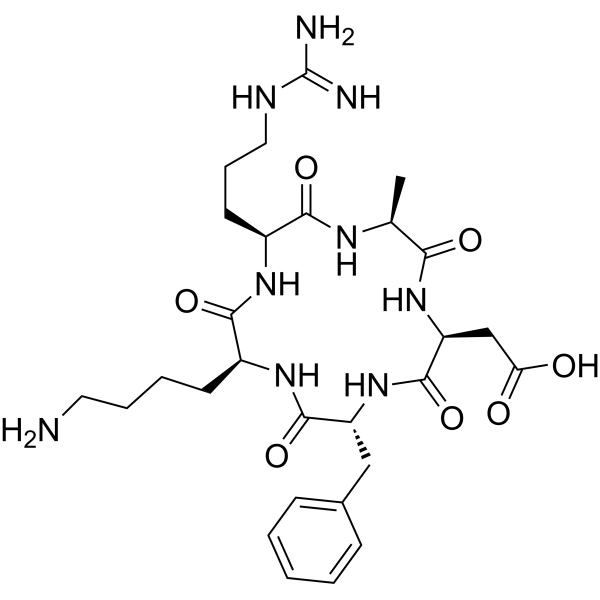
Cyclo(Arg-Ala-Asp-D-Phe-Cys), a cyclic RAD peptide, is a positive or negative control peptide of cyclo(Arg-Gly-Asp-D-Phe-Cys) (HY-P2300). Cyclo(Arg-Ala-Asp-D-Phe-Cys) can be used for multicolor ultrasound molecular imaging (USMI) .
|
-
- HY-P5023
-
-
- HY-P4992
-
|
|
Somatostatin Receptor
|
Cancer
|
|
Tyr-(D-Dab4,Arg5,D-Trp8)-cyclo-Somatostatin-14 (4-11) is a somatostatin agonist that can be used in cancer research .
|
-
- HY-139741
-
|
|
DNA/RNA Synthesis
|
Others
|
|
cyclo(Phe-Ala-Gly-Arg-Arg-Arg-Gly-AEEAc) provides an avenue for developing a nonhormonal male contraceptive by blocking of GRTH/DDX25 phosphorylation.
|
-
- HY-P1938R
-
|
|
Reference Standards
Bacterial
|
Infection
|
|
Cyclo(L-Pro-L-Val) (Standard) is the analytical standard of Cyclo(L-Pro-L-Val). This product is intended for research and analytical applications. Cyclo(L-Pro-L-Val) is a 2,5-diketopiperazine, with toxic activity against phytopathogenic microorganisms (such as R. fascians LMG 3605). Cyclo(L-Pro-L-Val) shows toxicity similar to Chloramphenicol (HY-B0239) with comparable concentration. Cyclo(L-Pro-L-Val) can also inhibit gram-positive phytopathogenic bacterium. Cyclo(L-Pro-L-Val) has potential development as biopesticide[1].
|
-
- HY-N13432
-
-
- HY-N13698
-
-
- HY-N13347
-
-
- HY-N13465
-
-
- HY-P11752
-
|
|
EGFR
|
Cancer
|
|
Cyclo (KLARLLT) is an EGFR ligand with a Kd value of 1.16 μM. Cyclo (KLARLLT) binds to domain I of EGFR and interacts with both the open and closed conformations of EGFR. Cyclo (KLARLLT) is a modified variant of LARLLT (HY-P11078). Cyclo (KLARLLT) can be used in the research of colorectal cancer .
|
-
- HY-P10304D
-
|
|
Fungal
|
Infection
|
|
Cyclo(Pro-dArg) acetate is a chitinase inhibitor. Cyclo(Pro-dArg) acetate inhibits the cell separation of Saccharomyces cerevisiae but does not affect its growth. Cyclo(Pro-dArg) acetate inhibits the transition of Candida albicans from yeast to filamentous morphology .
|
-
- HY-P11626
-
|
|
Collagen
|
Metabolic Disease
|
|
Cyclo(Ala-Hyp) is an orally effective collagen-derived hydroxyproline-containing cyclic dipeptide that can be isolated from the culture supernatant of Lactobacillus plantarum. Cyclo(Ala-Hyp) has an AUC0-6h of 2.350 μg/mL·h, significantly higher than traditional collagen oligopeptides. Cyclo(Ala-Hyp) can be used in research related to liver and kidney function protection, skin care, and joint health.
|
-
- HY-P11757
-
|
|
EGFR
|
Cancer
|
|
Cyclo[K(N3)larllt] is a seven-membered cyclic peptide targeting EGFR, with a Kd value of 5.09 μM, and exhibits binding selectivity toward homologous proteins HER2 and HER3. Cyclo[K(N3)larllt] has no cytotoxicity and shows no growth inhibitory effect on cancer cells overexpressing EGFR. Cyclo[K(N3)larllt] can serve as a ligand for EGFR-targeted fluorescent conjugates, which is applicable to the detection of cancers with EGFR overexpression. Cyclo[K(N3)larllt] can be used in the research of colorectal cancer .
|
-
- HY-P11627
-
|
|
Endogenous Metabolite
|
Others
|
|
Cyclo(Pro-Hyp) is a collagen-derived cyclic dipeptide, and its related collagen breakdown product Gly-Pro-Hyp promotes the growth of skin fibroblasts and participates in tissue reconstruction, exhibiting biological activity.
|
-
- HY-100563AR
-
|
|
Integrin
Reference Standards
|
Cancer
|
|
Cyclo(RGDyK) (Standard) is the analytical standard of Cyclo(RGDyK) (HY-100563A). This product is intended for research and analytical applications. Cyclo(RGDyK) is a potent and selective αVβ3 integrin inhibitor with an IC50 of 20 nM.
|
-
- HY-100563R
-
|
|
Integrin
Reference Standards
|
Cancer
|
|
Cyclo(RGDyK) (trifluoroacetate) (Standard) is the analytical standard of Cyclo(RGDyK) (trifluoroacetate) (HY-100563). This product is intended for research and analytical applications. Cyclo(RGDyK) trifluoroacetate is a potent and selective αVβ3 integrin inhibitor with an IC50 of 20 nM.
|
-
- HY-183971
-
|
|
Drug Intermediate
|
Others
|
|
Cyclo(L-Ser-L-Val) is a cyclic dipeptide (diketopiperazine) that lacks growth-promoting activity for E. coli in SAPI-serum medium [1].Cyclo(L-Ser-L-Val) can be chemically synthesized as a precursor to cyclo(ΔAla-L-Val) .
|
-
- HY-167196
-
-
- HY-W295873R
-
|
|
Bacterial
Reference Standards
|
Infection
Cancer
|
|
Cyclo(Phe-Gly) (Standard) is the analytical standard of Cyclo(Phe-Gly) (HY-W295873). This product is intended for research and analytical applications. Cyclo(Phe-Gly) is a cyclodipeptides with antimicrobial and anticancer activities, isolated from broth culture of endophytic Streptomyces YIM 64018 associated with Paraboea sinensis .
|
-
- HY-P1938S1
-
|
|
Isotope-Labeled Compounds
|
Others
|
|
Cyclo(Pro-Val)-d4 is the deuterium labeled Cyclo(Pro-Val) (HY-N11615). Cyclo(Pro-Val) can be isolated from Pseudomonas fluorescens GcM5-1A and has cytotoxicity .
|
-
- HY-N13450
-
-
- HY-N13459
-
-
- HY-N13372
-
-
- HY-N13453
-
-
- HY-N18989
-
|
|
STAT
Interleukin Related
Endogenous Metabolite
|
Cancer
|
|
Cyclo (L-Ile-D-Leu) (Compound 15) is a STAT3 inhibitor. Cyclo (L-Ile-D-Leu) is isolated from the culture broth of Lactococcus lactis KR-050L. Cyclo (L-Ile-D-Leu) inhibits IL-6-induced STAT3 activation in cancer cells. Cyclo (L-Ile-D-Leu) is applicable to hepatocellular carcinoma research .
|
-
- HY-75564R
-
|
|
Reference Standards
Endogenous Metabolite
|
Cancer
|
|
Cyclo(Ala-Gly) (Standard) is the analytical standard of Cyclo(Ala-Gly). This product is intended for research and analytical applications. Cyclo(Ala-Gly), a metabolite of a mangrove endophytic fungus, Penicillium thomi, exhibits cytotoxicity against A549, HepG2 and HT29 cells. The IC50 values range from 9.5 to 18.1 μM[1].
|
-
| Cat. No. |
Product Name |
Target |
Research Area |
-
- HY-P0023
-
Cyclo(-RGDfK)
Maximum Cited Publications
27 Publications Verification
|
Integrin
|
Cancer
|
|
Cyclo(-RGDfK) is a potent and selective inhibitor of the αvβ3 integrin, with an IC50 of 0.94 nM. Cyclo(-RGDfK) potently targets tumor microvasculature and cancer cells through the specific binding to the αvβ3 integrin on the cell surface .
|
-
- HY-100563A
-
|
|
Integrin
|
Cancer
|
|
Cyclo(RGDyK) is a potent and selective αVβ3 integrin inhibitor with an IC50 of 20 nM.
|
-
- HY-P1934A
-
|
|
Fungal
Bacterial
IFNAR
Reactive Oxygen Species (ROS)
|
Infection
Inflammation/Immunology
Cancer
|
|
Cyclo(L-Phe-L-Pro), isolated from Pseudomonas fluorescens and Pseudomonas alcaligenes cell-free culture supernatants is an antifungal cyclic dipeptide . Cyclo(L-Phe-L-Pro) inhibits IFN-β production by interfering with retinoic-acid-inducible gene-I (RIG-I) activation . Cyclo(L-Phe-L-Pro) exhibits free-radical scavenging activity with the IC50 of 24 µM in the DPPH assay .
|
-
- HY-P2300
-
|
Cyclo(RGDfC)
|
Integrin
|
Cancer
|
|
Cyclo(Arg-Gly-Asp-D-Phe-Cys) (Cyclo RGDfC), a cyclic RGD peptide which has high affinity to αvβ3, can disrupt cell integrin interactions. Cyclo(Arg-Gly-Asp-D-Phe-Cys) inhibits pluripotent marker expression in embryonic stem cells (ESCs) and the tumorigenic potential of mESCs in vivo. Cyclo(Arg-Gly-Asp-D-Phe-Cys) can be used in the research of tumors .
|
-
- HY-P0023A
-
|
|
Integrin
|
Cancer
|
|
Cyclo(-RGDfK) TFA is a potent and selective inhibitor of the αvβ3 integrin, with an IC50 of 0.94 nM . Cyclo(-RGDfK) TFA potently targets tumor microvasculature and cancer cells through the specific binding to the αvβ3 integrin on the cell surface .
|
-
- HY-P1939
-
|
Cyclo(L-prolyl-L-leucyl)
|
Fungal
Bacterial
Influenza Virus
|
Infection
|
|
Cyclo(L-Leu-L-Pro) is a cyclic dipeptide with broad-spectrum antibacterial, antiviral and antifungal activities. Its biological activity is highly dependent on the stereoconfiguration and is widely present in microbial metabolites. Cyclo(L-Leu-L-Pro) efficiently and specifically inhibits the production of aflatoxin by Aspergillus flavus. The cis configuration of Cyclo(L-Leu-L-Pro) (cis-cyclo(L-Leu-L-Pro)) has broad-spectrum antibacterial activity against multi-drug resistant bacteria and significantly inhibits the influenza A virus H3N2 .
|
-
- HY-P1934
-
|
Cyclo(phenylalanylprolyl); A-64863
|
HCV
Bacterial
Antibiotic
Reactive Oxygen Species (ROS)
|
Infection
|
|
Cyclo(Phe-Pro) (Cyclo(phenylalanylprolyl)) is a quorum-sensing molecule of Vibrio vulnificus that specifically interacts with RIG-I, inhibiting RIG-I polyubiquitination, suppressing IRF-3 activation, and reducing type I interferon production. Cyclo(Phe-Pro) enhances susceptibility to HCV and influenza virus and also alleviates plant aluminum toxicity stress. The mechanism of Cyclo(Phe-Pro) involves the regulation of host immune signaling pathways, bacterial virulence gene expression, and plant antioxidant systems, making it a promising candidate for research in viral infections, bacterial virulence regulation, and agricultural stress resistance .
|
-
- HY-P1938
-
|
|
Bacterial
|
Infection
Inflammation/Immunology
|
|
Cyclo(L-Pro-L-Val) is an antimicrobial and anti-inflammatory agent. Cyclo(L-Pro-L-Val) has toxic activity against plant pathogens such as R. fascians LMG 3605, and its potency may be comparable to that of Chloramphenicol (HY-B0239). Cyclo(L-Pro-L-Val) can inhibit the phosphorylation of IKKα, IKKβ, NF-κB, etc., and the activation of iNOS and COX-2, thereby exerting anti-inflammatory activity. Cyclo(L-Pro-L-Val) can be used in the research of biopesticides in the agricultural field, as well as in the research of inflammation-related diseases .
|
-
- HY-100563
-
|
|
Integrin
|
Cancer
|
|
Cyclo(RGDyK) trifluoroacetate is a potent and selective αVβ3 integrin inhibitor with an IC50 of 20 nM.
|
-
- HY-101402
-
|
Cyclohistidyl-proline; Histidylproline diketopiperazine
|
NF-κB
Endogenous Metabolite
|
Neurological Disease
Inflammation/Immunology
|
|
Cyclo(his-pro) (Cyclo(histidyl-proline)) is an orally active cyclic dipeptide structurally related to tyreotropin-releasing hormone . Cyclo(his-pro) could inhibit NF-κB nuclear accumulation. Cyclo(his-pro) can cross the brain-blood-barrier and affect diverse inflammatory and stress responses .
|
-
- HY-P10304
-
|
Cyclo(Pro-Arg)
|
Fungal
|
Others
|
|
Cyclo(Arg-Pro) (Cyclo(Pro-Arg)) is an inhibitor for chitinase. Cyclo(Arg-Pro) inhibits cell separation of Saccharomyces cerevisiae, without affecting its growth. Cyclo(Arg-Pro) inhibits the morphological change of Candida albicans from yeast form to filamentous form .
|
-
- HY-P1613A
-
|
Cyclo(RGDfV) TFA; C(RGDfV) TFA
|
Integrin
Apoptosis
|
Cancer
|
|
Cyclo(Arg-Gly-Asp-D-Phe-Val) (TFA) (Cyclo(RGDfV) (TFA))is an integrin αvβ3 inhibitor. Cyclo(Arg-Gly-Asp-D-Phe-Val) (TFA) has antitumor activity. Cyclo(Arg-Gly-Asp-D-Phe-Val) (TFA) can be used for the research of acute myeloid leukemia .
|
-
- HY-P1676
-
|
BK-1361
|
MMP
|
Cancer
|
|
cyclo(RLsKDK) (BK-1361) is a specific inhibitor of metalloproteinase ADAM8 with an IC50 value of 182 nM. cyclo(RLsKDK) has potential applications in inflammatory diseases and cancer .
|
-
- HY-P1936
-
|
|
Peptides
|
Others
|
|
Cyclo(Gly-L-Pro) is a Alkaloids product that can be isolated from the roots of Panax notoginseng (Burk.)F.H.Chen .
|
-
- HY-P2124
-
|
|
Antibiotic
Bacterial
|
Infection
|
|
Cyclo(L-Trp-L-Trp) is an antibiotic, and shows antimicrobial activity. Cyclo(L-Trp-L-Trp) can inhibit A. baumannii, as well as Candida albicans, Bacillus subtilis, Micrococcus luteus, Saccharomyces cerevisiae, Aspergillus niger, Staphylococcus aureus. Cyclo(L-Trp-L-Trp) can be used in microbial infection research .
|
-
- HY-P10221A
-
|
|
HIF/HIF Prolyl-Hydroxylase
|
Cancer
|
|
Cyclo(CKLIIF) TFA is an inhibitor of HIF-1α and HIF-2α. The KD values of Cyclo(CKLIIF) TFA for the PAS-B domains of HIF1-α and HIF2-α are 2.6 μM and 2.2 μM, respectively. Cyclo(CKLIIF) TFA disrupts the protein-protein interaction between HIF-1α and HIF-1β. Cyclo(CKLIIF) TFA can be used in cancer research .
|
-
- HY-P10426
-
|
|
HIF/HIF Prolyl-Hydroxylase
VEGFR
|
Cancer
|
|
cyclo(CLLFVY) is an inhibitor for hypoxia inducible factor-1 (HIF-1), with IC50 of 19 μM (in U2OS) and 16 μM (in MCF-7). cyclo(CLLFVY) binds to the PAS-B domain of HIF-1α, inhibits HIF-1 dimerization and transcriptional activity. cyclo(CLLFVY) downregulates the expression of hypoxia response genes, such as VEGF and CAIX, exhibits antitumor against the HIF-1 associated cancers .
|
-
- HY-101402A
-
|
Cyclohistidyl-proline TFA; Histidylproline diketopiperazine TFA
|
NF-κB
Endogenous Metabolite
|
Neurological Disease
Inflammation/Immunology
|
|
Cyclo(his-pro) TFA (Cyclo(histidyl-proline) TFA) is an orally active cyclic dipeptide structurally related to tyreotropin-releasing hormone . Cyclo(his-pro) TFA could inhibit NF-κB nuclear accumulation. Cyclo(his-pro) TFA can cross the brain-blood-barrier and affect diverse inflammatory and stress responses .
|
-
- HY-P4617
-
|
|
Peptides
|
Others
|
|
Cyclo(-Leu-Phe) is a cyclic peptide composed of leucine and phenylalanine, forming a ring structure through peptide bonds .
|
-
- HY-75564
-
|
|
Endogenous Metabolite
|
Cancer
|
|
Cyclo(Ala-Gly), a metabolite of a mangrove endophytic fungus, Penicillium thomi, exhibits cytotoxicity against A549, HepG2 and HT29 cells. The IC50 values range from 9.5 to 18.1 μM .
|
-
- HY-P5021
-
|
c(RGDfE)
|
Integrin
|
Cancer
|
|
Cyclo(Arg-Gly-Asp-(D-Phe)-Glu) c(RGDfE) is a cyclic RGD peptide targeting integrin αvβ3. Cyclo(Arg-Gly-Asp-(D-Phe)-Glu) is commonly used for modifying drug loaded nanoparticles. Cyclo(Arg-Gly-Asp-(D-Phe)-Glu) is often used in cancer research, such as pancreatic cancer .
|
-
- HY-P2300A
-
|
Cyclo(RGDfC) TFA
|
Integrin
|
Cancer
|
|
Cyclo(Arg-Gly-Asp-D-Phe-Cys) (Cyclo RGDfC) TFA, a cyclic RGD peptide which has high affinity to αvβ3, can disrupt cell integrin interactions. Cyclo(Arg-Gly-Asp-D-Phe-Cys) TFA inhibits pluripotent marker expression in embryonic stem cells (ESCs) and the tumorigenic potential of mESCs in vivo. Cyclo(Arg-Gly-Asp-D-Phe-Cys) TFA can be used in the research of tumors .
|
-
- HY-P5840
-
|
|
Biochemical Assay Reagents
|
Cancer
|
|
Cyclo(RGDyC) is a cyclic pentapeptide with anti-angiogenic abilities. Cyclo(RGDyC) can be combined with liposome delivery systems for research on ocular neovascular diseases and cancer .
|
-
- HY-131115
-
-
- HY-N9251
-
|
|
Peptides
|
Others
|
|
Cyclo(Ile-Ala) is found in marine actinomycete 11014 I. .
|
-
- HY-P4047
-
|
|
Drug Derivative
|
Others
|
|
Cyclo(RGDfK(Mal)) is a pentapeptide. Cyclo(RGDfK(Mal)) improves the attachment and infiltration of human pluripotent stem cells. Cyclo(RGDfK(Mal)) can be used for 3D stem cell culture and expansion .
|
-
- HY-W152604
-
|
Cyclo(leu-gly)
|
Dopamine Receptor
|
Neurological Disease
|
|
Cyclo(glycyl-L-leucyl) (Cyclo(leu-gly)), a neuropeptide, down-regulates dopamine (DA) receptors and attenuates dopaminergic supersensitivity. Cyclo(glycyl-L-leucyl) inhibits the development of Morphine induced pain relief as well as dopamine receptor supersensitivity in rats. Cyclo(glycyl-L-leucyl) has the potential for the prevention of tardive and/or L-DOPA (HY-N0304)-induced dyskinesias .
|
-
- HY-P10304A
-
|
Cyclo(Pro-Arg) TFA
|
Fungal
|
Infection
|
|
Cyclo (Arg-Pro) TFA is a chitinase inhibitor. Cyclo (Arg-Pro) TFA disrupts cell separation and morphological transition of yeast by inhibiting chitinase activity. Cyclo (Arg-Pro) TFA prevents cell separation of Saccharomyces cerevisiae, leading to the formation of grape-like cell clusters, without inhibiting cell growth. Cyclo (Arg-Pro) TFA blocks the morphological transition of Candida albicans from yeast form to hyphal form, without inhibiting cell growth .
|
-
- HY-P2092
-
-
- HY-P0031
-
|
|
Integrin
|
Others
|
|
Cyclo(RADfK) can be used as a control for Cyclo(-RGDfK) (HY-P0023) .
|
-
- HY-P10304C
-
|
|
Fungal
|
Infection
|
|
Cyclo(Pro-dArg) is an inhibitor of chitinase. Cyclo(Pro-dArg) inhibits the cell separation of Saccharomyces cerevisiae but does not affect its growth. Cyclo(Pro-dArg) inhibits the transition of Candida albicans from yeast to filamentous morphology.
|
-
- HY-131109
-
-
- HY-131111
-
-
- HY-N11955
-
|
|
Peptides
|
Others
|
|
Cyclo(Ile-Leu) is a Alkaloids product that can be isolated from From Penicillium oxalicum .
|
-
- HY-P1935
-
-
- HY-P1676A
-
|
BK-1361 TFA
|
MMP
|
Cancer
|
|
cyclo(RLsKDK) (TFA) (BK-1361 (TFA)) is a specific inhibitor of metalloproteinase ADAM8 with an IC50 value of 182 nM. cyclo(RLsKDK) (TFA) has potential applications in inflammatory diseases and cancer .
|
-
- HY-W549438
-
|
|
Amino Acid Derivatives
|
Others
|
|
Cyclo(Phe-Phe) is a polypeptide that can be found by peptide screening. Peptide screening is a research tool that pools active peptides primarily by immunoassay. Peptide screening can be used for protein interaction, functional analysis, epitope screening, especially in the field of agent research and development .
|
-
- HY-P10222
-
|
|
HIF/HIF Prolyl-Hydroxylase
|
Cancer
|
|
Cyclo CRLLIF is a dual inhibitor for hypoxia inducible factor (HIF) 1 and 2, which disrupts the interaction of both HIF1-α and HIF2-α with HIF1-β, with affinity for HIF1-α and HIF2-α PAS-B domains KD of 14.5 and 10.2 μM, respectively .
|
-
- HY-P5034
-
|
|
Peptides
|
Others
|
|
Cyclo(D-Leu-D-Pro) is a polypeptide that can be found by peptide screening. Peptide screening is a research tool that pools active peptides primarily by immunoassay. Peptide screening can be used for protein interaction, functional analysis, epitope screening, especially in the field of agent research and development .
|
-
- HY-P3472
-
|
Cyclo(L-Pro-L-Ile)
|
Amino Acid Derivatives
|
Inflammation/Immunology
|
|
Cyclo(IP) (Cyclo-(L-Pro-L-Ile)), a Diketopiperazine can be derived From Bacillus thuringiensis JCK-1233, results in suppression of PWD severity and increased the expression of defense-related genes similarly to Bacillus thuringiensis JCK-1233 treatment .
|
-
- HY-P5036
-
-
- HY-P5751
-
|
|
Peptides
|
Others
|
|
Cyclo(Ile-Val) is a Alkaloids product that can be isolated from the roots of Panax notoginseng (Burk.)F.H.Chen .
|
-
- HY-P5050
-
|
|
Peptides
|
Others
|
|
Cyclo(Pro-Thr) is a polypeptide that can be found by peptide screening. Peptide screening is a research tool that pools active peptides primarily by immunoassay. Peptide screening can be used for protein interaction, functional analysis, epitope screening, especially in the field of agent research and development .
|
-
- HY-P5023A
-
-
- HY-P1613
-
|
Cyclo(RGDfV); C(RGDfV)
|
Integrin
Apoptosis
|
Cancer
|
|
Cyclo(Arg-Gly-Asp-D-Phe-Val) (Cyclo(RGDfV)) is an integrin αvβ3 inhibitor. Cyclo(Arg-Gly-Asp-D-Phe-Val) has antitumor activity. Cyclo(Arg-Gly-Asp-D-Phe-Val) can be used for the research of acute myeloid leukemia .
|
-
- HY-W836186
-
|
Cyclo(alanine-leucine)
|
Bacterial
|
Others
|
|
Cyclo(Leu-Ala) (Cyclo(alanine-leucine)) is an antimicrobial compound isolated from microorganisms and has antimicrobial activity against some plant pathogens together with other compounds.
|
-
- HY-P11431
-
-
- HY-P1937
-
|
|
Influenza Virus
|
Infection
|
|
Cyclo(-Met-Pro) is a cyclic dipeptide consisting of the amino acids methionine and proline. Cyclo(-Met-Pro) exhibits weak inhibitory activity against the influenza A virus (H3N2) (5 mM, 2.1% inhibition), while cis-cyclo(Leu-Pro) and cis-cyclo(Phe-Pro) shows significant antiviral activity .
|
-
- HY-P11424
-
|
|
Integrin
|
Cancer
|
|
Cyclo(GRGDSPA) is a cyclic RGD peptide targeting αvβ3 integrin. Cyclo(GRGDSPA) reduces the formation of colonies in mice injected with B16-FE7 melanoma cells. Cyclo(GRGDSPA) can be used for melanoma research .
|
-
- HY-P5033
-
|
|
Bacterial
|
Cancer
|
Cyclo(Gly-His) is a liposome-encapsulated cyclic dipeptide with antimicrobial and anticancer activity. Cyclo(Gly-His) has cytotoxicity for HeLa and MCF-7 cell with IC50 values of 1.699 mM and 0.358 mM, respectively. Cyclo(Gly-His) can be used for the research of drug delivery systems .
|
- HY-P11428
-
- HY-P5038
-
|
c(GRGDSP)
|
Integrin
|
Cancer
|
|
Cyclo(Gly-Arg-Gly-Asp-Ser-Pro) (c(GRGDSP)) is an RGD-containing inhibitory peptide. Cyclo(Gly-Arg-Gly-Asp-Ser-Pro) is a synthetic α5β1 integrin ligand that competitively inhibits the binding of invasin (Inv) to α5β1 integrin expressed on Caco-2 cells .
|
- HY-P3227
-
|
XJ735
|
Integrin
|
Inflammation/Immunology
|
|
Cyclo(Ala-Arg-Gly-Asp-Mamb) is a selective RGD peptide antagonist and has the potential for Pulmonary arterial hypertension research .
|
- HY-P10223
-
|
|
HIF/HIF Prolyl-Hydroxylase
|
Cancer
|
|
Cyclo CRVIIF is a dual inhibitor for hypoxia inducible factor (HIF) 1 and 2, which disrupts the interaction of both HIF1-α and HIF2-α with HIF1-β, with affinity for HIF1-α and HIF2-α PAS-B domains KD of 65 and 123 μM, respectively .
|
- HY-P5031
-
|
|
Peptides
|
Others
|
|
Cyclo(D-Ala-Val) is a polypeptide that can be found by peptide screening. Peptide screening is a research tool that pools active peptides primarily by immunoassay. Peptide screening can be used for protein interaction, functional analysis, epitope screening, especially in the field of agent research and development .
|
- HY-P5025
-
|
Azido-c(RGDyK)
|
Drug Intermediate
|
Others
|
|
Cyclo(Arg-Gly-Asp-D-Tyr-ε-azido-Nle) (Azido-c(RGDyK)) is a polypeptide composed of arginine, glycine, aspartic acid, and tyrosine that can be used for Synthesis of [ 18F]FPyKYNE-c(RGDyK) .
|
- HY-P4820
-
|
|
Bacterial
|
Inflammation/Immunology
|
|
SYNV-cyclo(CGGYF) is a Staphylococcus hominis (S. hominis) C5 autoinducing peptide. SYNV-cyclo(CGGYF) inhibits S. aureus activity. SYNV-cyclo(CGGYF) has the potential for the research of S. aureus-mediated epithelial damage and inflammation .
|
- HY-P5029
-
- HY-P5028
-
- HY-P4820A
-
|
|
Bacterial
|
Inflammation/Immunology
|
|
SYNV-cyclo(CGGYF) TFA is a Staphylococcus hominis (S. hominis) C5 autoinducing peptide. SYNV-cyclo(CGGYF) TFA inhibits S. aureus activity. SYNV-cyclo(CGGYF) TFA has the potential for the research of S. aureus-mediated epithelial damage and inflammation .
|
- HY-P5840A
-
|
|
Peptides
|
Cancer
|
|
Cyclo(RGDyC) TFA is a cyclic pentapeptide with anti-angiogenic abilities. Cyclo(RGDyC) TFA can be combined with liposome delivery systems for research on ocular neovascular diseases and cancer .
|
- HY-P4615
-
|
|
Peptides
|
Others
|
|
Cyclo(-Glu-Glu) is a cyclic peptide, a cyclic structure formed by linking two glutamic acid residues through a peptide bond .
|
- HY-P5035
-
|
c(GRGESP)
|
Peptides
|
Others
|
|
Cyclo(Gly-Arg-Gly-Glu-Ser-Pro) (c(GRGESP)) is a peptide that serves as a control peptide for the inhibitory peptide cyclo-GRGDSP .
|
- HY-P2306
-
|
|
Biochemical Assay Reagents
|
Others
|
|
Cyclo(Arg-Ala-Asp-D-Phe-Cys), a cyclic RAD peptide, is a positive or negative control peptide of cyclo(Arg-Gly-Asp-D-Phe-Cys) (HY-P2300). Cyclo(Arg-Ala-Asp-D-Phe-Cys) can be used for multicolor ultrasound molecular imaging (USMI) .
|
- HY-P5030
-
|
|
Peptides
|
Others
|
|
Cyclo(Met-Met) is a polypeptide that can be found by peptide screening. Peptide screening is a research tool that pools active peptides primarily by immunoassay. Peptide screening can be used for protein interaction, functional analysis, epitope screening, especially in the field of agent research and development .
|
- HY-P5023
-
- HY-P5032
-
|
|
Peptides
|
Others
|
|
Cyclo(D-His-Pro) is a polypeptide that can be found by peptide screening. Peptide screening is a research tool that pools active peptides primarily by immunoassay. Peptide screening can be used for protein interaction, functional analysis, epitope screening, especially in the field of agent research and development .
|
- HY-P4992
-
|
|
Somatostatin Receptor
|
Cancer
|
|
Tyr-(D-Dab4,Arg5,D-Trp8)-cyclo-Somatostatin-14 (4-11) is a somatostatin agonist that can be used in cancer research .
|
- HY-139741
-
|
|
DNA/RNA Synthesis
|
Others
|
|
cyclo(Phe-Ala-Gly-Arg-Arg-Arg-Gly-AEEAc) provides an avenue for developing a nonhormonal male contraceptive by blocking of GRTH/DDX25 phosphorylation.
|
- HY-P1938R
-
|
|
Reference Standards
Bacterial
|
Infection
|
|
Cyclo(L-Pro-L-Val) (Standard) is the analytical standard of Cyclo(L-Pro-L-Val). This product is intended for research and analytical applications. Cyclo(L-Pro-L-Val) is a 2,5-diketopiperazine, with toxic activity against phytopathogenic microorganisms (such as R. fascians LMG 3605). Cyclo(L-Pro-L-Val) shows toxicity similar to Chloramphenicol (HY-B0239) with comparable concentration. Cyclo(L-Pro-L-Val) can also inhibit gram-positive phytopathogenic bacterium. Cyclo(L-Pro-L-Val) has potential development as biopesticide[1].
|
- HY-131110
-
- HY-P11752
-
|
|
EGFR
|
Cancer
|
|
Cyclo (KLARLLT) is an EGFR ligand with a Kd value of 1.16 μM. Cyclo (KLARLLT) binds to domain I of EGFR and interacts with both the open and closed conformations of EGFR. Cyclo (KLARLLT) is a modified variant of LARLLT (HY-P11078). Cyclo (KLARLLT) can be used in the research of colorectal cancer .
|
- HY-P10304D
-
|
|
Fungal
|
Infection
|
|
Cyclo(Pro-dArg) acetate is a chitinase inhibitor. Cyclo(Pro-dArg) acetate inhibits the cell separation of Saccharomyces cerevisiae but does not affect its growth. Cyclo(Pro-dArg) acetate inhibits the transition of Candida albicans from yeast to filamentous morphology .
|
- HY-P11626
-
|
|
Collagen
|
Metabolic Disease
|
|
Cyclo(Ala-Hyp) is an orally effective collagen-derived hydroxyproline-containing cyclic dipeptide that can be isolated from the culture supernatant of Lactobacillus plantarum. Cyclo(Ala-Hyp) has an AUC0-6h of 2.350 μg/mL·h, significantly higher than traditional collagen oligopeptides. Cyclo(Ala-Hyp) can be used in research related to liver and kidney function protection, skin care, and joint health.
|
- HY-136415
-
|
|
Peptides
|
Others
|
|
Cyclo(Ala-Gln) (Compound 7) is a 2,5-diketopiperazine (DKP, cyclic dipeptide) .
|
- HY-P11757
-
|
|
EGFR
|
Cancer
|
|
Cyclo[K(N3)larllt] is a seven-membered cyclic peptide targeting EGFR, with a Kd value of 5.09 μM, and exhibits binding selectivity toward homologous proteins HER2 and HER3. Cyclo[K(N3)larllt] has no cytotoxicity and shows no growth inhibitory effect on cancer cells overexpressing EGFR. Cyclo[K(N3)larllt] can serve as a ligand for EGFR-targeted fluorescent conjugates, which is applicable to the detection of cancers with EGFR overexpression. Cyclo[K(N3)larllt] can be used in the research of colorectal cancer .
|
- HY-P11627
-
|
|
Endogenous Metabolite
|
Others
|
|
Cyclo(Pro-Hyp) is a collagen-derived cyclic dipeptide, and its related collagen breakdown product Gly-Pro-Hyp promotes the growth of skin fibroblasts and participates in tissue reconstruction, exhibiting biological activity.
|
- HY-100563AR
-
|
|
Integrin
Reference Standards
|
Cancer
|
|
Cyclo(RGDyK) (Standard) is the analytical standard of Cyclo(RGDyK) (HY-100563A). This product is intended for research and analytical applications. Cyclo(RGDyK) is a potent and selective αVβ3 integrin inhibitor with an IC50 of 20 nM.
|
- HY-100563R
-
|
|
Integrin
Reference Standards
|
Cancer
|
|
Cyclo(RGDyK) (trifluoroacetate) (Standard) is the analytical standard of Cyclo(RGDyK) (trifluoroacetate) (HY-100563). This product is intended for research and analytical applications. Cyclo(RGDyK) trifluoroacetate is a potent and selective αVβ3 integrin inhibitor with an IC50 of 20 nM.
|
- HY-P11709
-
|
Cyclo(CLPVASC)
|
Peptides
|
Metabolic Disease
|
|
CLPVASC is a kidney-targeting cyclic peptide that preferentially distributes to kidney tissue, with utility to enhance kidney targeting of nanocarriers.CLPVASC preferentially distributes to the kidney when displayed on PEG-b-PPS micelles. CLPVASC can be used for the research of acute kidney injury .
|
- HY-P5028A
-
| Cat. No. |
Product Name |
Category |
Target |
Chemical Structure |
| Cat. No. |
Compare |
Product Name |
Species |
Source |
Image |
Compare Products
|
| Products |
|
| Cat. No. |
|
| Species |
|
| Source |
|
| Tag |
|
| Accession |
|
| Gene ID |
|
| Molecular Weight |
|
| Purity |
|
| Endotoxin Level |
|
| Biological Activity |
|
| Appearance |
|
| Formulation |
|
| Storage & Stability |
|
| Shipping |
|
| Free Sample |
Yes
No
|
| Size |
* This product has been "discontinued".
Optimized version of product available:
|
| Cat. No. |
Product Name |
Chemical Structure |
-
- HY-P11431
-
|
|
|
Cyclo(Gly-Pro) is a cyclic dipeptide. Cyclo(Gly-Pro) can be derived from the Nterminus of the IGF-1. Cyclo(Gly-Pro) attenuates nociceptive behaviour and inflammatory response in mice .
|
-
-
- HY-P1938S1
-
|
|
|
Cyclo(Pro-Val)-d4 is the deuterium labeled Cyclo(Pro-Val) (HY-N11615). Cyclo(Pro-Val) can be isolated from Pseudomonas fluorescens GcM5-1A and has cytotoxicity .
|
-
| Cat. No. |
Product Name |
|
Classification |
-
- HY-P11757
-
|
|
|
Azide
|
|
Cyclo[K(N3)larllt] is a seven-membered cyclic peptide targeting EGFR, with a Kd value of 5.09 μM, and exhibits binding selectivity toward homologous proteins HER2 and HER3. Cyclo[K(N3)larllt] has no cytotoxicity and shows no growth inhibitory effect on cancer cells overexpressing EGFR. Cyclo[K(N3)larllt] can serve as a ligand for EGFR-targeted fluorescent conjugates, which is applicable to the detection of cancers with EGFR overexpression. Cyclo[K(N3)larllt] can be used in the research of colorectal cancer .
|
Your information is safe with us. * Required Fields.
Inquiry Information
- Product Name:
- Cat. No.:
- Quantity:
- MCE Japan Authorized Agent:

