



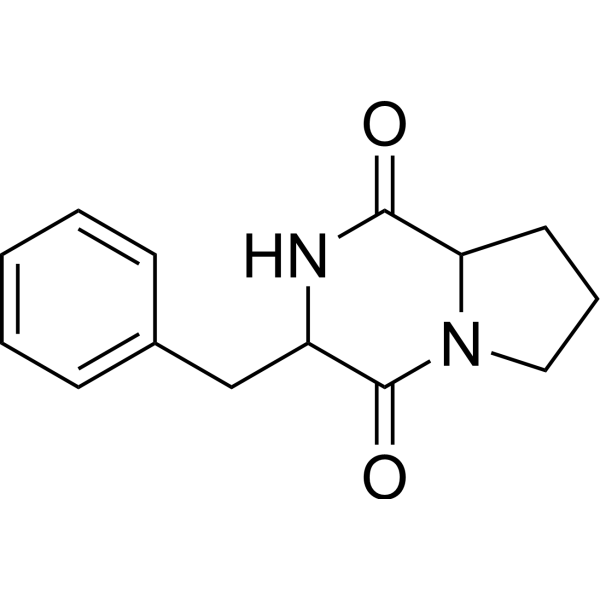
Cyclo(Phe-Pro)
Based on 8 publication(s) in Google Scholar
Cyclo(Phe-Pro) (Cyclo(phenylalanylprolyl)) is a quorum-sensing molecule of Vibrio vulnificus that specifically interacts with RIG-I, inhibiting RIG-I polyubiquitination, suppressing IRF-3 activation, and reducing type I interferon production. Cyclo(Phe-Pro) enhances susceptibility to HCV and influenza virus and also alleviates plant aluminum toxicity stress. The mechanism of Cyclo(Phe-Pro) involves the regulation of host immune signaling pathways, bacterial virulence gene expression, and plant antioxidant systems, making it a promising candidate for research in viral infections, bacterial virulence regulation, and agricultural stress resistance.
연구목적의 판매만을 진행합니다. 환자를 대상으로 한 판매는 하지 않습니다.
- Purity : 99.22%
- CAS No.: 14705-60-3
- 화학식: C14H16N2O2
- 분자량:244.29
-
보관:
Sealed storage, away from moisture.
Powder -80°C, 2 years , -20°C, 1 year* In solvent : -80°C, 6 months; -20°C, 1 month (sealed storage, away from moisture)

To place orders, for customer services and technical support, please contact: MedChemExpress USA
Tel: 609-228-6898 E-mail: [email protected] [email protected]


-
 Biological Activity
-
Chemical Information
-
용액&용해도
- Protocol
- 순도&문서
- References
-
 Help & FAQs


-
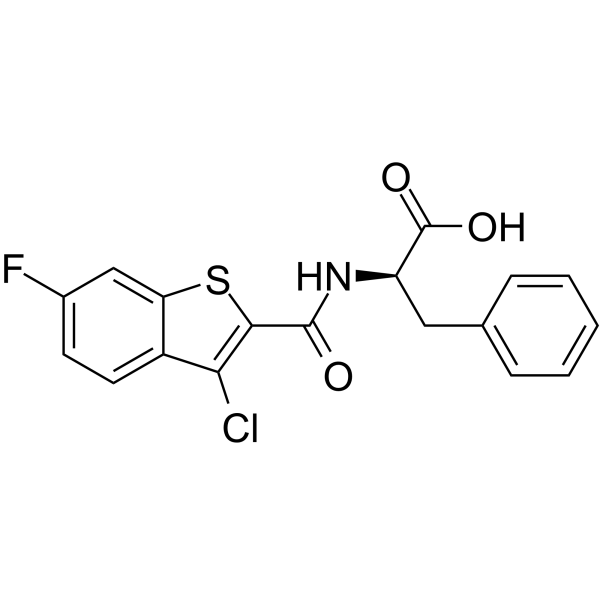
HY-108473
CU-CPT 4aTLR3 Inhibitor -
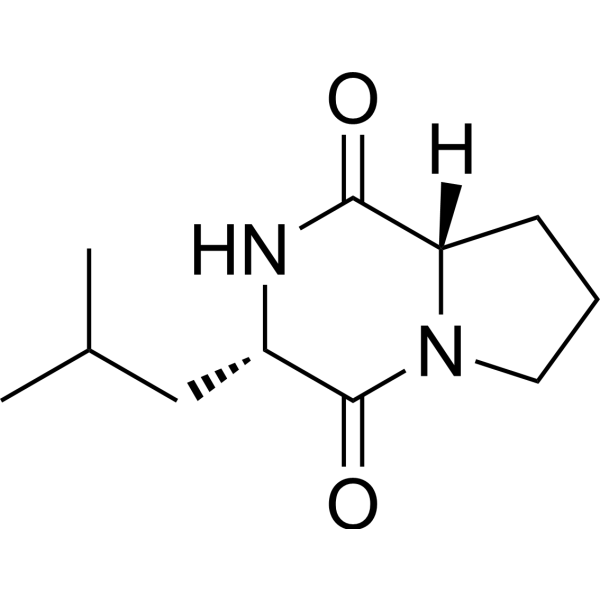
HY-P1939
Cyclo(L-Leu-L-Pro)Antifungal/Antibacterial/Antiviral Agent -
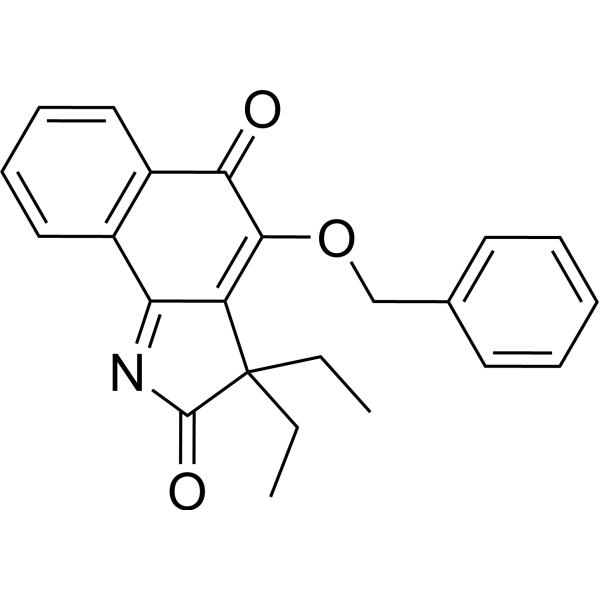
HY-147124
RIG012RIG-I Inhibitor -
HY-107202
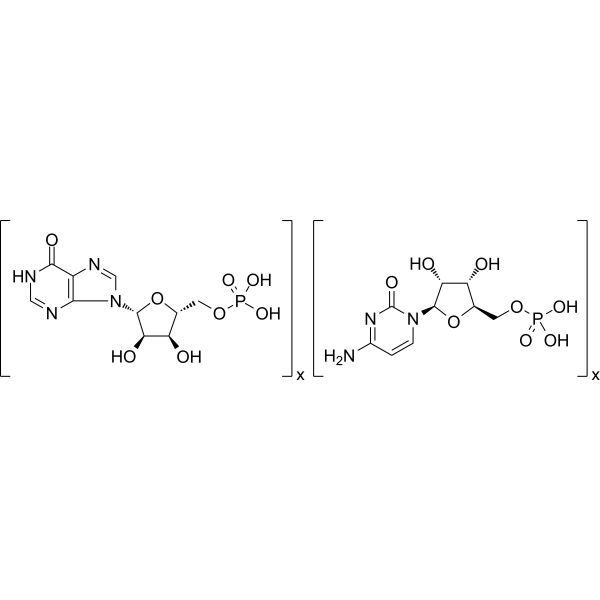
Polyinosinic-polycytidylic acidTLR-3 Agonist -
HY-114180
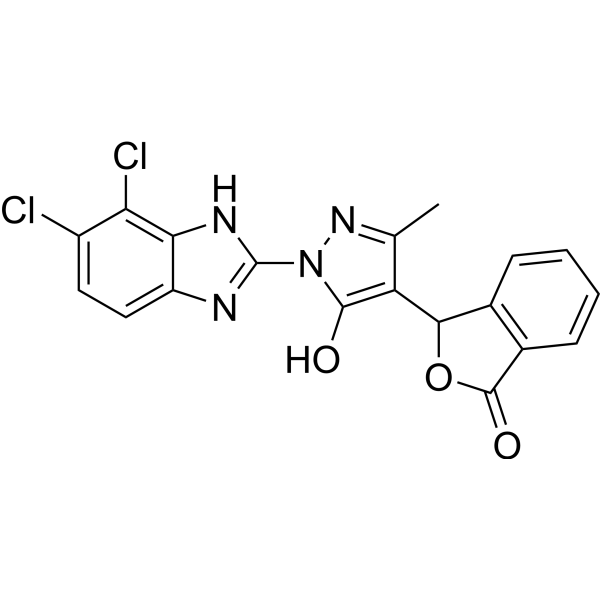
RU.521cGAS Inhibitor -
HY-19961
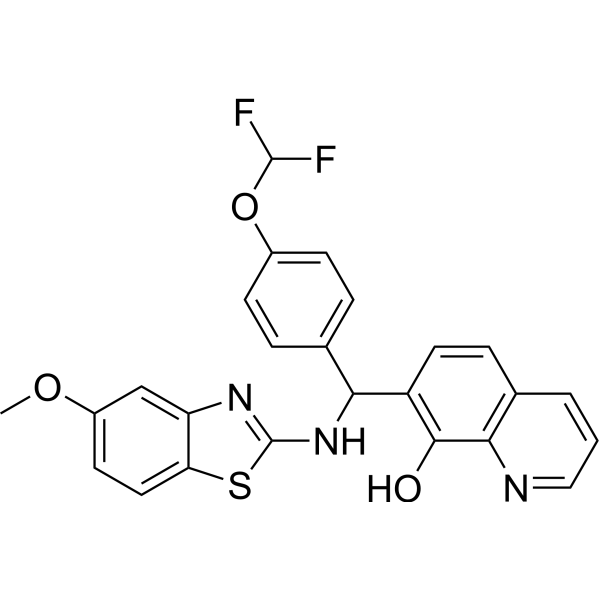
KIN1408RLR Agonist -
HY-P1938
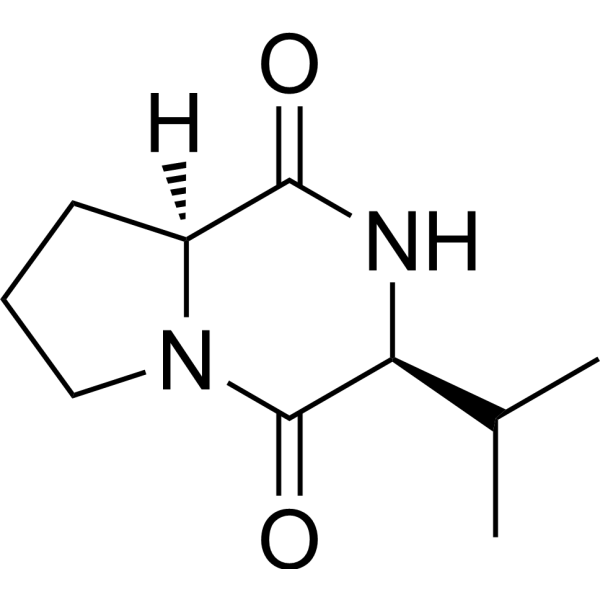
Cyclo(L-Pro-L-Val)Bacterial Inhibitor/Anti-inflammatory Agent -
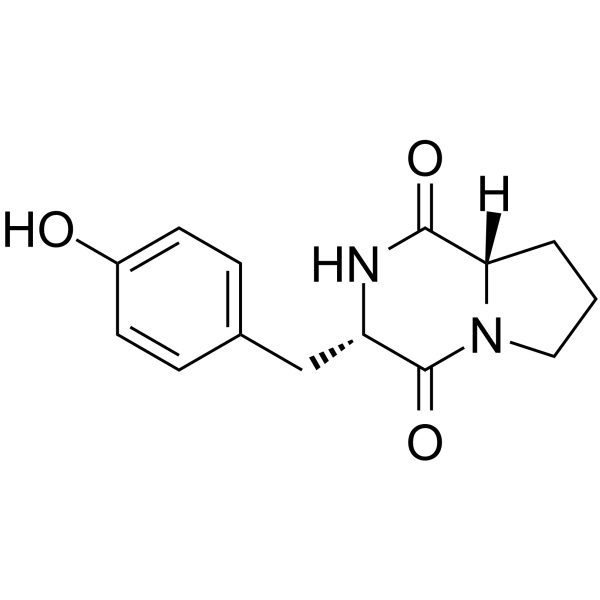
HY-P1940
MaculosinAnti-Bacterial Agent -
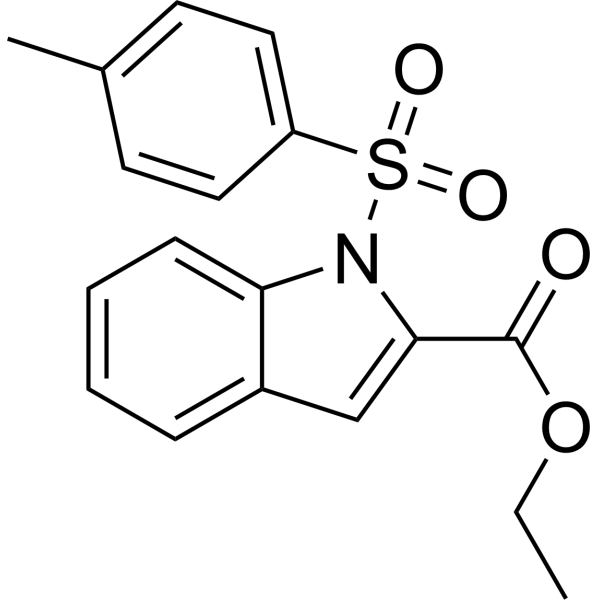
HY-100691
NOD-IN-1NLR Inhibitor -
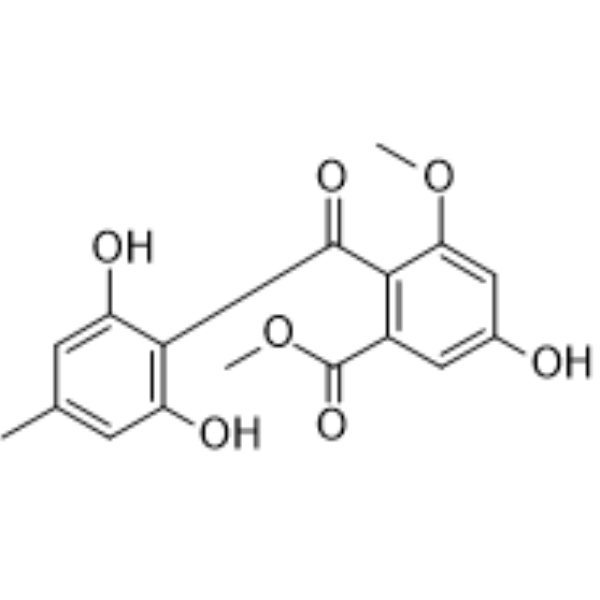
HY-105713
SulochrinAntimicrobial Agent -
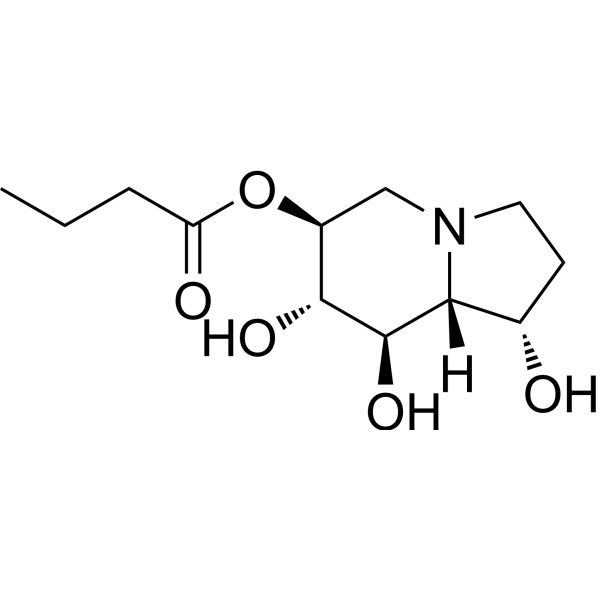
HY-16134
Celgosivirα-Glucosidase I Inhibitor
Publications Citing Use of MedChemExpress (MCE) Cyclo(Phe-Pro)
More- Science. 2026 Feb 26;391(6788):eads4405. [Abstract]
- Cancer Lett. 2024 Mar 31:585:216693. [Abstract]
- Cancer Lett. 2023 Nov 1:576:216410. [Abstract]
- J Exp Med. 2026 Aug 3;223(8):e20251858.
- Mol Ther Oncolytics. 2022 Aug 25:26:413-428. [Abstract]
- Biomolecules. 2026 Feb 25;16(3):345. [Abstract]
- Probiotics Antimicrob Proteins. 2024 Dec;16(6):1966-1978. [Abstract]
- Vet Res. 2025 Nov 5;56(1):210. [Abstract]
All Antibiotic Isoforms
More

Biological Activity
제품 설명
In Vitro
Cyclo(Phe-Pro) (2.5 mM, 24 h) promotes HCV replication by suppressing IFN-β and IRF-3 activation in Huh7 cells[1]. Cyclo(Phe-Pro) (0.5-1.0 mM, 5 h) inhibited the expression of virulence factors cholera toxin (CT) and toxin-coregulated pilus (TCP) in Vibrio cholerae O1 El Tor N16961 and regulated virulence factor expression by downregulating tcpPH transcription, while overexpression of tcpPH alleviated the inhibitory effect of Cyclo(Phe-Pro)[2]. Cyclo(Phe-Pro) (50 μM, 24 h) promotes root growth, reduces aluminum accumulation, alleviates oxidative damage, and enhances antioxidant capacity in the aluminum toxicity wheat root model[3].
MedChemExpress (MCE) has not independently confirmed the accuracy of these methods. They are for reference only.
-
Cell Line:Huh7 cells (HCV-infected)
-
Concentration:2.5 mM
-
Incubation Time:24 h
-
Result:Suppressed IFN-β and IRF3 mRNA expression, significantly increased HCV RNA levels.
-
Cell Line:Huh7 cells (HCV-infected)
-
Concentration:2.5 mM
-
Incubation Time:24 h
-
Result:Inhibited IRF3 phosphorylation (p-IRF3) and IFN-β protein expression, enhanced HCV NS5A protein expression.
In Vivo
MedChemExpress (MCE) has not independently confirmed the accuracy of these methods. They are for reference only.
-
Animal Model:Subcutaneous xenograft model of HCV-infected Huh7 cells in NOD/SCID mice[1]
-
Dosage:50 mg/kg
-
Administration:Intravenous injection (i.v.), once daily for 3 days
-
Result:Reversed poly(I:C)-induced HCV RNA reduction, restoring serum HCV RNA levels.


Chemical Information
-
CAS No. 14705-60-3
-
Appearance Solid
-
분자량 244.29
-
화학식 C14H16N2O2
-
Color White to off-white
-
Synonyms
Cyclo(phenylalanylprolyl); A-64863
-
Sequence
Cyclo(Phe-Pro)
-
Sequence Shortening
Cyclo(FP)
-
선적
Room temperature in continental US; may vary elsewhere.
-
보관
Sealed storage, away from moisture
Powder -80°C 2 years -20°C 1 year * In solvent : -80°C, 6 months; -20°C, 1 month (sealed storage, away from moisture)


Publications (8)
-
Journal Impact Factor
-
Most Recent
-
Science
2026 Feb 26;391(6788):eads4405. PMID: 41747053 -
Cancer Lett
NR4A1 depletion inhibits colorectal cancer progression by promoting necroptosis via the RIG-I-like receptor pathway. [Abstract]2024 Mar 31:585:216693. PMID: 38301909 -
Cancer Lett
Gastric cancer derived exosomal THBS1 enhanced Vγ9Vδ2 T-cell function through activating RIG-I-like receptor signaling pathway in a N6-methyladenosine methylation dependent manner. [Abstract]2023 Nov 1:576:216410. PMID: 37783390 -
-
Mol Ther Oncolytics
TRIM22 orchestrates the proliferation of GBMs and the benefits of TMZ by coordinating the modification and degradation of RIG-I. [Abstract]2022 Aug 25:26:413-428. PMID: 36159777 -
Biomolecules
Targeting G9a Exerts Pleiotropic Suppression in Triple-Negative Breast Cancer Cells: Cooperatively Inducing Pyroptosis and Apoptosis. [Abstract]2026 Feb 25;16(3):345. PMID: 41897283 -
Probiotics Antimicrob Proteins
Lactobacillus rhamnosus GG Regulates Host IFN-I Through the RIG-I Signalling Pathway to Inhibit Herpes Simplex Virus Type 2 Infection. [Abstract]2024 Dec;16(6):1966-1978. PMID: 37624569 -
Vet Res
TRIM7 suppresses transmissible gastroenteritis virus replication by targeting the degradation of N protein and activating RIG-I-mediated type I IFN antiviral response. [Abstract]2025 Nov 5;56(1):210. PMID: 41194212


용액&용해도
In Vitro:
DMSO : 100 mg/mL (409.35 mM; Need ultrasonic; Hygroscopic DMSO has a significant impact on the solubility of product, please use newly opened DMSO)
Please refer to the solubility information to select the appropriate solvent. Once prepared, please aliquot and store the solution to prevent product inactivation from repeated freeze-thaw cycles.
Storage method and period of stock solution: -80°C, 6 months; -20°C, 1 month (sealed storage, away from moisture). When stored at -80°C, please use it within 6 months. When stored at -20°C, please use it within 1 month.
Please refer to the solubility information to select the appropriate solvent. Once prepared, please aliquot and store the solution to prevent product inactivation from repeated freeze-thaw cycles.
Storage method and period of stock solution: -80°C, 6 months; -20°C, 1 month (sealed storage, away from moisture). When stored at -80°C, please use it within 6 months. When stored at -20°C, please use it within 1 month.
Concentration (start) × Volume (start) = Concentration (final) × Volume (final)
In Vivo:
Select the appropriate dissolution method based on your experimental animal and administration route.
- For the following dissolution methods, please ensure to first prepare a clear stock solution using an In Vitro approach and then sequentially add co-solvents:
- To ensure reliable experimental results, the clarified stock solution can be appropriately stored based on storage conditions. As for the working solution for In Vivo experiments, it is recommended to prepare freshly and use it on the same day.
- The percentages shown for the solvents indicate their volumetric ratio in the final prepared solution. If precipitation or phase separation occurs during preparation, heat and/or sonication can be used to aid dissolution.
Add each solvent one by one: 10% DMSO 40% PEG300 5% Tween-80 45% Saline
Solubility: ≥ 2.08 mg/mL (8.51 mM); Clear solution
This protocol yields a clear solution of ≥ 2.08 mg/mL (saturation unknown).
Taking 1 mL working solution as an example, add 100 μL DMSO stock solution (20.8 mg/mL) to 400 μL PEG300, and mix evenly; then add 50 μL Tween-80 and mix evenly; then add 450 μL Saline to adjust the volume to 1 mL.
Preparation of Saline: Dissolve 0.9 g sodium chloride in ddH₂O and dilute to 100 mL to obtain a clear Saline solution.
Add each solvent one by one: 10% DMSO 90% (20% SBE-β-CD in Saline)
Solubility: ≥ 2.08 mg/mL (8.51 mM); Clear solution
This protocol yields a clear solution of ≥ 2.08 mg/mL (saturation unknown).
Taking 1 mL working solution as an example, add 100 μL DMSO stock solution (20.8 mg/mL) to 900 μL 20% SBE-β-CD in Saline, and mix evenly.
Preparation of 20% SBE-β-CD in Saline (4°C, storage for one week): 2 g SBE-β-CD powder is dissolved in 10 mL Saline, completely dissolve until clear.
In Vivo Dissolution Calculator
Please enter the basic information of animal experiments:
-
-
-
-
Recommended: Prepare an additional quantity of animals to account for potential losses during experiments.
Please enter your animal formula composition:
-
%DMSO +
Recommended: Keep the proportion of DMSO in working solution below 2% if your animal is weak.
-
%+
-
+%Tween-80 + +
-
%Saline +
The co-solvents required include: DMSO, . All of co-solvents are available by MedChemExpress (MCE). , Tween 80. All of co-solvents are available by MedChemExpress (MCE).
Working solution concentration: 0.22 mg/mL
Method for preparing stock solution: mg drug dissolved in μL DMSO. Stock solution concentration: mg/mL. * In solvent : -80°C, 6 months; -20°C, 1 month (sealed storage, away from moisture)
1. Take μL DMSO stock solution;
2. Add μL .
μL , mix evenly;
3. Then add μL Tween 80, mix evenly;
4. Then add μL
Please ensure that the stock solution in the first step is dissolved to a clear state, and add co-solvents in sequence. You can use ultrasonic heating (ultrasonic cleaner, recommended frequency 20-40 kHz), vortexing, etc. to assist dissolution.


순도&문서
-
Data Sheet (280 KB)
-
SDS (394 KB)
- English - EN (394 KB)
- Français - FR (394 KB)
- Deutsch - DE (394 KB)
- Norwegian - NO (394 KB)
- Español - ES (394 KB)
- Swedish - SV (394 KB)
- Italian - IT (394 KB)
- Korean - KR (394 KB)
- Portuguese - PT (394 KB)
-
Handling Instructions (2659 KB)
References
[1]. Lee W, et al. Vibrio vulnificus quorum-sensing molecule cyclo(Phe-Pro) inhibits RIG-I-mediated antiviral innate immunity. Nat Commun. 2018 Apr 23;9(1):1606. [Content Brief]
[2]. Bina XR, et al. The cyclic dipeptide cyclo(Phe-Pro) inhibits cholera toxin and toxin-coregulated pilus production in O1 El Tor Vibrio cholerae. J Bacteriol. 2010 Jul;192(14):3829-32. [Content Brief]
[3]. Wang Y, et al. Novel application of cyclo(-Phe-Pro) in mitigating aluminum toxicity through oxidative stress alleviation in wheat roots. Environ Pollut. 2024 Dec 15;363(Pt 2):125241. [Content Brief]


Complete Stock Solution Preparation Table
Please refer to the solubility information to select the appropriate solvent. Once prepared, please aliquot and store the solution to prevent product inactivation from repeated freeze-thaw cycles.
Storage method and period of stock solution: -80°C, 6 months; -20°C, 1 month (sealed storage, away from moisture). When stored at -80°C, please use it within 6 months. When stored at -20°C, please use it within 1 month.
| Optional Solvent | Concentration Solvent Mass | 1 mg | 5 mg | 10 mg | 25 mg |
|---|---|---|---|---|---|
| DMSO | 1 mM | 4.0935 mL | 20.4675 mL | 40.9350 mL | 102.3374 mL |
| 5 mM | 0.8187 mL | 4.0935 mL | 8.1870 mL | 20.4675 mL | |
| 10 mM | 0.4093 mL | 2.0467 mL | 4.0935 mL | 10.2337 mL | |
| 15 mM | 0.2729 mL | 1.3645 mL | 2.7290 mL | 6.8225 mL | |
| 20 mM | 0.2047 mL | 1.0234 mL | 2.0467 mL | 5.1169 mL | |
| 25 mM | 0.1637 mL | 0.8187 mL | 1.6374 mL | 4.0935 mL | |
| 30 mM | 0.1364 mL | 0.6822 mL | 1.3645 mL | 3.4112 mL | |
| 40 mM | 0.1023 mL | 0.5117 mL | 1.0234 mL | 2.5584 mL | |
| 50 mM | 0.0819 mL | 0.4093 mL | 0.8187 mL | 2.0467 mL | |
| 60 mM | 0.0682 mL | 0.3411 mL | 0.6822 mL | 1.7056 mL | |
| 80 mM | 0.0512 mL | 0.2558 mL | 0.5117 mL | 1.2792 mL | |
| 100 mM | 0.0409 mL | 0.2047 mL | 0.4093 mL | 1.0234 mL |


Cyclo(Phe-Pro) Related Classifications
HY-P1934 Related Classifications
 Powered by Bioz