1. Search Result
Search Result
Results for "

Gram-negative bacterial strains

" in MedChemExpress (MCE) Product Catalog:

49

Inhibitors & Agonists

1

Biochemical Assay Reagents

7

Peptides

1

MCE Kits

7

Natural
Products

1

Click Chemistry

Targets Recommended:
Cat. No. Product Name Target Research Areas Chemical Structure
  • HY-B1174

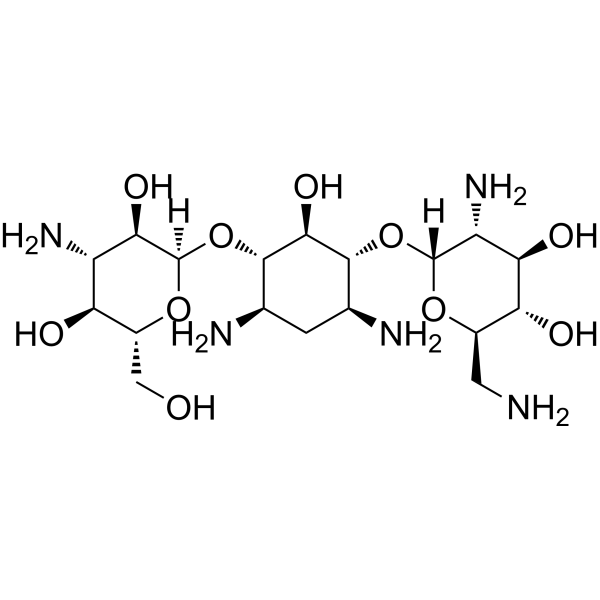
    Kanamycin B

    Antibiotic Bacterial Infection
    Bekanamycin (Kanamycin B) is an aminoglycoside antibiotic produced by Streptomyces kanamyceticus, against an array of Gram-positive and Gram-negative bacterial strain .
    Bekanamycin
  • HY-13234
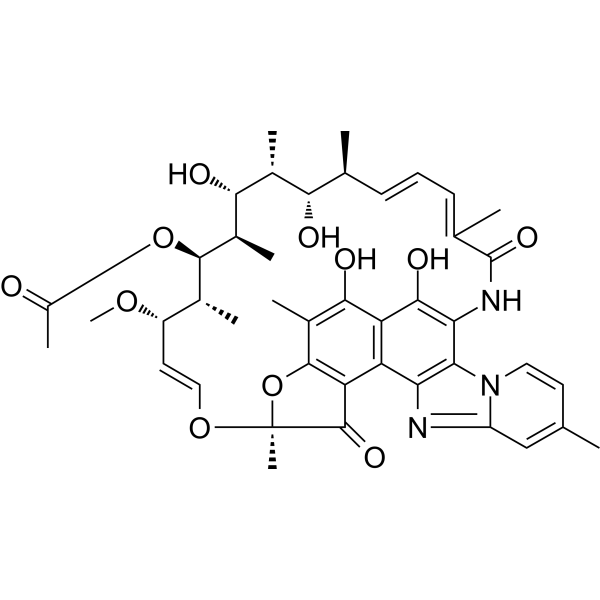
    Rifaximin
    Maximum Cited Publications
    8 Publications Verification

    Bacterial Antibiotic DNA/RNA Synthesis Infection Cancer
    Rifaximin, a gastrointestinal-selective antibiotic, binds the β-subunit of bacterial DNA-dependent RNA polymerase, resulting in inhibition of bacterial RNA synthesis. Rifaximin susceptibility is higher against Gram-positive strains (MIC: 0.03-5 mg/ml) compared to Gram-negative bacteria (MIC: 8-50 mg/mL) .
    Rifaximin
  • HY-B1228
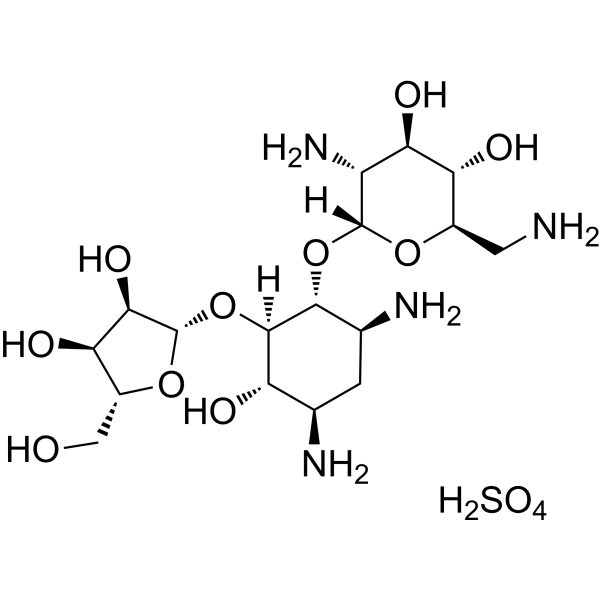
    Ribostamycin sulfate
    1 Publications Verification

    Vistamycin sulfate

    Antibiotic PDI Infection
    Ribostamycin sulfate (Vistamycin sulfate) is a broad-spectrum aminoglycoside Antibiotic with bactericidal activity against Gram-positive cocci, Gram-negative cocci, bacilli, and drug-resistant strains. Ribostamycin sulfate also acts as an inhibitor of protein disulfide isomerase (PDI), with a binding constant KD of 319 μM for bovine PDI. Ribostamycin sulfate targets bacterial 16S ribosomal RNA and the 30S ribosomal subunit, causing translational misreading and thereby inhibiting bacterial protein synthesis. Ribostamycin sulfate disrupts the integrity of bacterial cell membranes, induces membrane pore formation, and leads to bacterial death. Ribostamycin sulfate can be used in studies related to bacterial infections .
    Ribostamycin sulfate
  • HY-17028

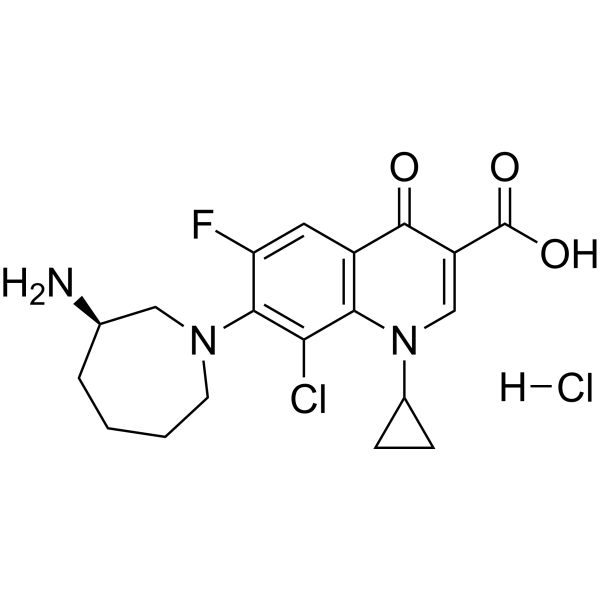
    Bacterial Antibiotic DNA/RNA Synthesis Topoisomerase Infection Inflammation/Immunology
    Besifloxacin Hydrochloride is a fourth generation fluoroquinolone antibiotic. Besifloxacin Hydrochloride is a DNA gyrase and topoisomerase IV inhibitor. Besifloxacin Hydrochloride has broad-spectrum antibacterial activity, it is effective against Gram-negative and Gram-positive aerobic and anaerobic strains and reduces the incidence of drug resistance. Besifloxacin Hydrochloride has anti-inflammatory activity. Besifloxacin Hydrochloride can be used in bacterial conjunctivitis research .
    Besifloxacin Hydrochloride
  • HY-B1824
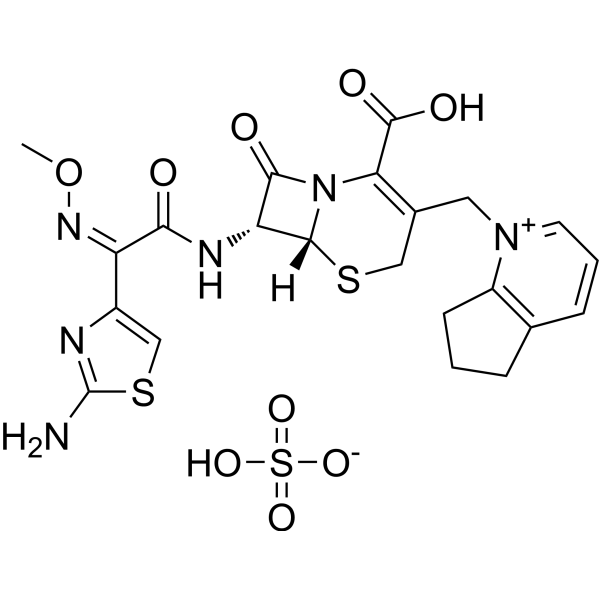
    Cefpirome sulfate
    1 Publications Verification

    HR-810 sulfate

    Bacterial Antibiotic Infection
    Cefpirome (HR-810) sulfate is a cephalosporin antibiotic that can cross cell membranes and the blood-brain barrier. Cefpirome sulfate binds to penicillin-binding proteins with high affinity, thereby inhibiting bacterial cell wall synthesis. Cefpirome sulfate exhibits bactericidal and growth-inhibitory activities against Gram-negative bacteria, Gram-positive bacteria, and susceptible anaerobic bacteria (including some β-lactamase-producing strains) .
    Cefpirome sulfate
  • HY-30170

    Endogenous Metabolite Adrenergic Receptor Neurological Disease
    N-Methylphenethylamine is an indirectly acting sympathomimetic amine that is formed via PNMT-catalyzed N-methylation of phenethylamine (PEA) in the human body. N-Methylphenethylamine exhibits affinity for β-adrenergic receptors on the surface of cancer cells or bacterial cells. N-Methylphenethylamine can be used for neurotransmitter research or as a pharmaceutical intermediate .
    N-Methylphenethylamine
  • HY-111664A

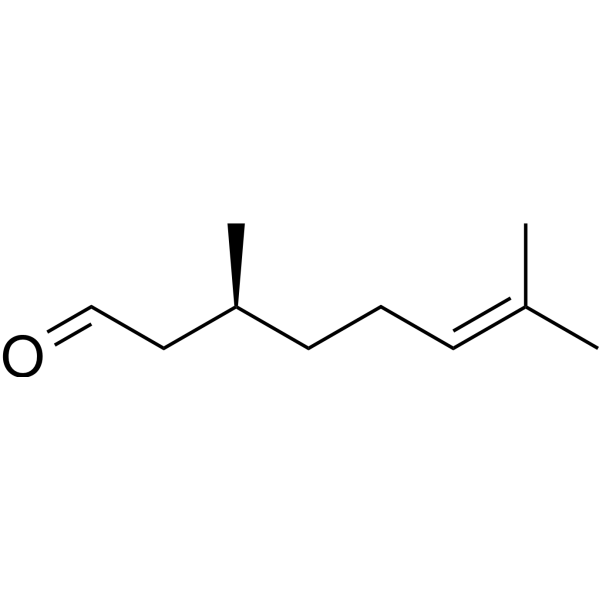
    (-​)​-​Citronellal

    Drug Isomer Cancer
    (S)-(-)-Citronellal ((-​)​-​Citronellal) is an oxygenated monoterpenoid found in Citrus limon (L.) Burm. F. essential oils. (S)-(-)-Citronellal is a chiral isomers of (R)-(+)-Citronellal (HY-111664) and does not possess microtubule-disrupting activity. (S)-(-)-Citronellal can be used for cancer research .
    (S)​-​(-​)​-​Citronellal
  • HY-125576

    Bacterial Infection
    Griselimycin is a cyclic lipopeptide produced by Streptomyces. Griselimycin specifically binds to the sliding clamp of bacterial DNA polymerase and does not interact with human PCNA. Griselimycin exhibits potent antibacterial activity against Mycobacterium tuberculosis (including drug-resistant strains) and a variety of Gram-negative bacteria .
    Griselimycin
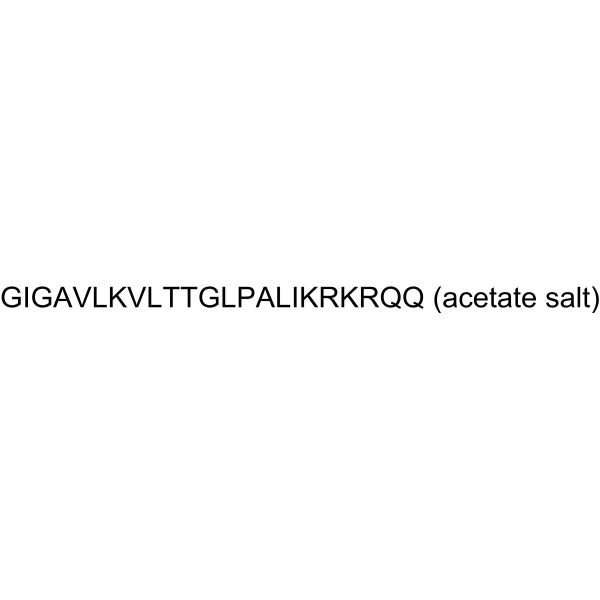
  • HY-P3328A

    Bacterial Infection
    MDP1 acetate, a Melittin-derived peptide, alters the integrity of both Gram-positive and Gram-negative bacterial membranes and kills the bacteria via membrane damages. MDP1 acetate has a high-antibacterial activity against multidrug resistant (MDR) and reference strains of S. aureus, E. coli, and P. aeruginosa .
    MDP1 acetate
  • HY-Y0850U5

    Polyvinyl alcohol (Mw 27000, 98-99% hydrolyzed, ~600 polymerization); Poly(Ethenol) (Mw 27000, 98-99% hydrolyzed, ~600 polymerization)

    Biochemical Assay Reagents Fungal Infection
    PVA (Polyvinyl alcohol) (Mw 27000, 98-99% hydrolyzed, ~600 polymerization) is a nonionic ethanol homopolymer with hydrophilicity, water solubility and biodegradability. PVA (Mw 27000, 98-99% hydrolyzed, ~600 polymerization) exhibits biocompatibility, non-toxicity and non-carcinogenicity, as well as antibacterial activity against Gram-positive bacteria, Gram-negative bacteria and fungal strains. PVA (Mw 27000, 98-99% hydrolyzed, ~600 polymerization) can serve as a solubilizer, stabilizer, mucoadhesive agent and sustained-release agent, and has a synergistic solubilizing effect on voriconazole/sulfobutyl ether β-cyclodextrin complexes. By stabilizing such complexes, PVA (Mw 27000, 98-99% hydrolyzed, ~600 polymerization) forms freeze-thaw hydrogels with high mucoadhesion, sustained drug release and ex vivo corneal permeability. When compounded with hyaluronic acid hydrogels, PVA (Mw 27000, 98-99% hydrolyzed, ~600 polymerization) supports chondrocyte growth in vitro, and also forms complexes with Cu 2+, Co 2+, Ni 2+ and Zn 2+ ions. PVA (Mw 27000, 98-99% hydrolyzed, ~600 polymerization) can be used in studies related to fungal keratitis, bacterial infections and fungal infections .
    PVA (Mw 27000, 98-99% hydrolyzed, ~600 polymerization)
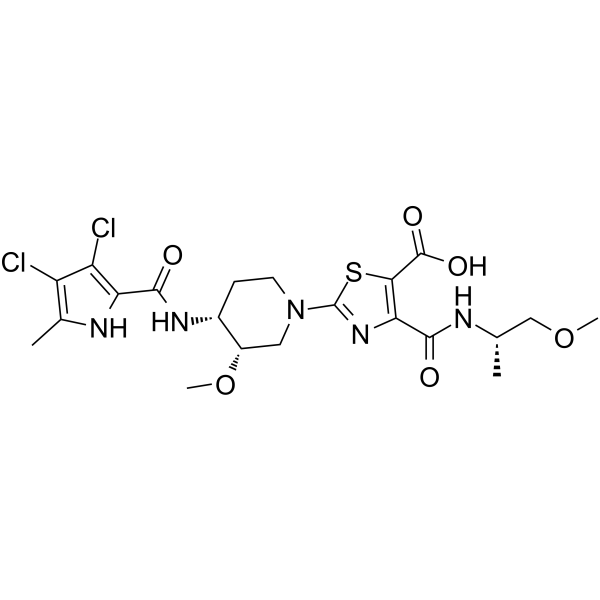
  • HY-172734

    Bacterial Infection
    FG-2101 is a selective and orally active non-hydroxamate LpxC inhibitor with an IC50 of ~1 nM. FG-2101 exhibits exquisite selectivity over other bacterial and human metalloenzymes. FG-2101 can be used for the study of Gram-negative bacteria infections including drug-resistant strains .
    FG-2101
  • HY-B1824R

    HR-810 sulfate (Standard)

    Reference Standards Antibiotic Bacterial Infection
    Cefpirome (HR-810) sulfate (Standard) is the analytical standard of Cefpirome sulfate. This product is intended for research and analytical applications. Cefpirome sulfate is a cephalosporin antibiotic that can cross cell membranes and the blood-brain barrier. Cefpirome sulfate binds to penicillin-binding proteins with high affinity, thereby inhibiting bacterial cell wall synthesis. Cefpirome sulfate exhibits bactericidal and growth-inhibitory activities against Gram-negative bacteria, Gram-positive bacteria, and susceptible anaerobic bacteria (including some β-lactamase-producing strains).
    Cefpirome sulfate (Standard)
  • HY-105048A

    Bacterial Infection
    Omiganan pentahydrochloride is a cationic peptide compound with a broad antibacterial profile. Omiganan pentahydrochloride is capable of inhibiting a variety of bacteria, including yeast, and is active against both gram-positive and gram-negative bacteria. Omiganan pentahydrochloride is able to interact with the bacterial cell membrane, causing the destruction of the cell membrane and the death of the bacteria. Omiganan pentahydrochloride can be used for the study of antimicrobial activity against pathogens commonly associated with catheter-associated infections, including strains with drug-resistant phenotypes .
    Omiganan pentahydrochloride
  • HY-106998

    Bacterial Antibiotic Infection
    DC-756 is a fluoroquinolone antibiotic. DC-756 possesses potent activity against Gram-positive and Gram-negative pathogens comparable to Trovafloxacin (HY-A0170), with MIC, against Ofloxacin (HY-B0125)-resistant strains 16-fold better than Trovafloxacin. DC-756 is well absorbed orally in rats and found to have good photostability. DC-756 can be used to study bacterial resistance .
    DC-756
  • HY-178504

    Bacterial Infection
    Lug-15 is a rapid bactericidal agent. Lug-15 exhibits strong antibacterial activity against both Gram-positive and Gram-negative bacteria, including drug-resistant strains. Lug-15 rapidly kills bacteria primarily through membrane disruption and had a very low propensity to induce bacterial resistance. Lug-15 demonstrates low hemolytic toxicity and significant therapeutic potential in various infection models. Lug-15 can be used for research on combating infections caused by multi-drug resistant bacteria .
    Lug-15
  • HY-178952

    Bacterial Infection
    Anti-infective agent 12 (Compound A09) is a competitive inhibitor of type I signal peptidease (SPase I), with an IC50 of 4.475 μM and a Kd of 16.3 μM. Anti-infective agent 12 has the ability to disrupt bacterial membranes and remove biofilms. Anti-infective agent 12 exhibits potent bactericidal activity against Gram-positive bacteria, with MIC values of 4, 4, 8, and 8 μg/mL for Staphylococcus aureus, Enterococcus faecalis, Enterococcus faecium, and Streptococcus suis, respectively. Anti-infective agent 12 remains effective against multi-drug resistant strains, but has weaker activity against Gram-negative bacteria (such as Escherichia coli and Salmonella), with MIC values > 64 μg/mL. Anti-infective agent 12 has low hemolytic activity and shows significant efficacy in mouse skin infection models .
    Anti-infective agent 12
  • HY-161689

    Bacterial Infection
    Antibacterial agent 220 is a potent antibacterial agent that can directly destroy bacterial cell membranes. Antibacterial agent 220 effectively combats Gram-positive and and Gram-negative pathogens, including drug-resistant strains .
    Antibacterial agent 220
  • HY-B1174R

    Kanamycin B (Standard)

    Reference Standards Antibiotic Bacterial Infection
    Bekanamycin (Standard) is the analytical standard of Bekanamycin. This product is intended for research and analytical applications. Bekanamycin (Kanamycin B) is an aminoglycoside antibiotic produced by Streptomyces kanamyceticus, against an array of Gram-positive and Gram-negative bacterial strain .
    Bekanamycin (Standard)
  • HY-P3328

    Bacterial Infection
    MDP1, a Melittin-derived peptide, alters the integrity of both Gram-positive and Gram-negative bacterial membranes and kills the bacteria via membrane damages. MDP1 has a high-antibacterial activity against multidrug resistant (MDR) and reference strains of S. aureus, E. coli, and P. aeruginosa .
    MDP1
  • HY-149925

    Bacterial DNA/RNA Synthesis Topoisomerase Infection
    Antibacterial agent 138 is a benzothiazole inhibitor of bacterial DNA gyrase and topoisomerase IV. Antibacterial agent 138 exhibits favorable solubility and plasma protein binding. Antibacterial agent 138 has antibacterial activity against Gram-positive and Gram-negative strains. Antibacterial agent 138 is a dual GyrB and ParE inhibitor .
    DNA Gyrase-IN-6
  • HY-13234R

    Reference Standards Bacterial Antibiotic DNA/RNA Synthesis Infection Cancer
    Rifaximin (Standard) is the analytical standard of Rifaximin. This product is intended for research and analytical applications. Rifaximin, a gastrointestinal-selective antibiotic, binds the β-subunit of bacterial DNA-dependent RNA polymerase, resulting in inhibition of bacterial RNA synthesis. Rifaximin susceptibility is higher against Gram-positive strains (MIC: 0.03-5 mg/ml) compared to Gram-negative bacteria (MIC: 8-50 mg/mL) .
    Rifaximin (Standard)
  • HY-143415

    Beta-lactamase Bacterial Infection
    Metallo-β-lactamase-IN-7 is a potent VIM-Type metallo-β-lactamase inhibitor with IC50s of 0.019 μM, 13.64 μM, 0.38 μM for VIM-2, VIM-1 and VIM-5. Metallo-β-lactamase-IN-7 potentiate antibacterial activity of Meropenem against the Gram-negative bacterial strains .
    Metallo-β-lactamase-IN-7
  • HY-17028A

    Bacterial Antibiotic DNA/RNA Synthesis Topoisomerase Infection Inflammation/Immunology
    (Rac)-Besifloxacin Hydrochloride is a fourth generation fluoroquinolone antibiotic. (Rac)-Besifloxacin Hydrochloride is a DNA gyrase and topoisomerase IV inhibitor. (Rac)-Besifloxacin Hydrochloride has broad-spectrum antibacterial activity, it is effective against Gram-negative and Gram-positive aerobic and anaerobic strains and reduces the incidence of drug resistance. (Rac)-Besifloxacin Hydrochloride has anti-inflammatory activity. Besifloxacin Hydrochloride can be used in bacterial conjunctivitis research .
    (Rac)-Besifloxacin hydrochloride
  • HY-172962

    DNA/RNA Synthesis Bacterial Infection
    DNA Gyrase-IN-17 (Compound 5C) is a DNA Gyrase inhibitor. DNA Gyrase-IN-17 exhibits significant antibacterial activity against a variety of Gram-positive and Gram-negative strains (such as Enterococcus faecalis, Escherichia coli, Pseudomonas aeruginosa, etc.), with a MIC value of 62.5 μg/mL. DNA Gyrase-IN-17 interferes with DNA replication by inhibiting bacterial DNA gyrase. DNA Gyrase-IN-17 can be used in the development of antibacterial drugs, especially for the study of drug-resistant strains .
    DNA Gyrase-IN-17
  • HY-17028R

    Reference Standards Bacterial Antibiotic DNA/RNA Synthesis Topoisomerase Infection
    Besifloxacin (Hydrochloride) (Standard) is a fourth generation fluoroquinolone antibiotic. Besifloxacin Hydrochloride (Standard) is a DNA gyrase and topoisomerase IV inhibitor. Besifloxacin Hydrochloride (Standard) has broad-spectrum antibacterial activity, it is effective against Gram-negative and Gram-positive aerobic and anaerobic strains and reduces the incidence of drug resistance. Besifloxacin Hydrochloride (Standard) has anti-inflammatory activity. Besifloxacin Hydrochloride (Standard) can be used in bacterial conjunctivitis research .
    Besifloxacin Hydrochloride (Standard)
  • HY-115693

    Bacterial Infection
    CAP 3 is a cholic acid-peptide conjugate (CAP) antimicrobial agent. CAP 3 effectively inhibits Gram-negative bacteria, with MIC99 (minimum inhibitory concentration for 99% bacterial killing) values of 8 μM, 16 μM, and 16 μM against E. coli, Klebsiella pneumoniae and Acinetobacter baumannii, respectively. CAP 3 exerts its antibacterial effects by disrupting the structural integrity of the bacterial lipopolysaccharide (LPS) outer membrane. CAP 3 rapidly kills bacteria, inhibits biofilm formation, and effectively combats drug-resistant strains and persistent bacterial infections .
    CAP 3
  • HY-178738

    Antibiotic Bacterial Topoisomerase DNA/RNA Synthesis Infection
    GC-072 is an orally active, 4-oxoquinolizine antibiotic that selectively inhibits bacterial DNA gyrase and Topo IV enzymes. GC-072 does not inhibit human topoisomerases I and II. GC-072 demonstrates strong antimicrobial activity against various bacterial strains, including Gram-positive, Gram-negative, and resistant bacteria. GC-072 also exhibits bactericidal activity against Burkholderia pseudomallei both extracellularly and intracellularly, leading to dose-dependent survival in mice exposed to lethal inhalational models of B. pseudomallei infection. GC-072 can be used for the research of melioidosis .
    GC-072
  • HY-155007

    Bacterial Infection
    DNA gyrase B-IN-2 (Compound E) is a 2-aminobenzothiazole-based DNA gyrase B inhibitor with promising activity against ESKAPE bacterial pathogens. DNA gyrase B-IN-2 showed low nanomolar inhibition of DNA gyrase (IC50 < 10 nM) and broad-spectrum antibacterial activity against pathogens belonging to the ESKAPE group, with the minimum inhibitory concentration < 0.03 μg/mL for most Gram-positive strains and 4–16 μg/mL against Gram-negative E. coli, Acinetobacter baumannii, Pseudomonas aeruginosa, and Klebsiella pneumoniae.DNA gyrase B-IN-2 can be used for the research of infection .
    DNA gyrase B-IN-2
  • HY-144280

    Bacterial Infection
    MsbA-IN-2 (compound 12) is a potent lipopolysaccharide transporter MsbA inhibitor with an IC50 of 2 nM for E. coli MsbA .
    MsbA-IN-2
  • HY-164766

    Fluorescent Dye Infection
    ICG-DBCO-1-Maltotriose is a specific imaging agent for detecting bacterial infections. ICG-DBCO-1-Maltotriose is composed of the fluorescent dye Indocyanine green (ICG) (HY-D0711) and a maltotriose sugar .
    ICG-DBCO-1-Maltotriose
  • HY-W077690

    Bacterial Infection
    3-(2-Hydroxyethyl)quinazoline-2,4(1H,3H)-dione is an metal chelating agent and anti-bacterial agent. 3-(2-Hydroxyethyl)quinazoline-2,4(1H,3H)-dione shows inhibitory activity against gram-positive and gram-negative bacterial strains .
    3-(2-Hydroxyethyl)quinazoline-2,4(1H,3H)-dione
  • HY-181674

    Aminopeptidase Bacterial Infection
    ZHO-197 is a dual bacterial peptide deformylase and methionine aminopeptidase inhibitor with antibacterial activity. ZHO-197 exhibits an Escherichia coli peptide deformylase IC50 of 0.021 μM and a human peptide deformylase IC50 of 3.289 μM. ZHO-197 displays broad-spectrum antibacterial activity against gram-positive and gram-negative bacterial strains. ZHO-197 can be used for the research of bacterial infection .
    ZHO-197
  • HY-N9907

    Bacterial Infection
    7,3′-Dihydroxy-8,4′-dimethoxyisoflavone is an isoflavone Antibacterial agent. 7,3′-Dihydroxy-8,4′-dimethoxyisoflavone is isolated from the stems of S. parviflorus. 7,3′-Dihydroxy-8,4′-dimethoxyisoflavone exhibits weak antibacterial activity against Gram-positive and Gram-negative bacterial strains. 7,3′-Dihydroxy-8,4′-dimethoxyisoflavone can be used in the research of bacterial infections .
    7,3′-Dihydroxy-8,4′-dimethoxyisoflavone
  • HY-102072

    Bacterial DNA/RNA Synthesis Infection
    GKL003 is a bacterial transcription inhibitor that targets the RNAP-σ interaction interface, with a Ki of 5.79 nM. GKL003 specifically binds to the RNAP β' clamp helix region at the σ A factor binding site, blocks the formation of RNAP holoenzyme, and inhibits the formation of bacterial transcription initiation complexes. GKL003 inhibits the growth of both Gram-positive and Gram-negative bacterial cells, and also exhibits activity against drug-resistant strains .
    GKL003
  • HY-181770

    Phosphodiesterase (PDE) Bacterial Infection Inflammation/Immunology
    PDE4B-IN-7 is a PDE-4B inhibitor with an IC50 of 160 nM. PDE4B-IN-7 can form a firm and stable binding with the active site of PDE-4B. PDE4B-IN-7 inhibits acetylcholine-induced bronchospasm in guinea pigs. PDE4B-IN-7 exerts activity against susceptible Gram-positive and Gram-negative bacterial strains. PDE4B-IN-7 can be used for the researches of asthma and bacterial agent .
    PDE4B-IN-7
  • HY-181820

    Topoisomerase DNA Glycosylase Bacterial Infection
    Topoisomerase IV-IN-3 is a Staphylococcus aureus Topoisomerase IV inhibitor, DNA gyrase inhibitor and antibacterial agent. Topoisomerase IV-IN-3 has IC50 values of 1.32 μM and 0.48 μM against topoisomerase IV, and 0.88 μM and 0.54 μM against DNA gyrase. Topoisomerase IV-IN-3 inhibits decatenation, ATPase, and supercoiling activities of its target enzymes. Topoisomerase IV-IN-3 exerts antibacterial activity against Gram-positive and Gram-negative bacterial strains. Topoisomerase IV-IN-3 exhibits low cytotoxicity toward human fibroblast cells. Topoisomerase IV-IN-3 can be used for the research of bacterial infections .
    Topoisomerase IV-IN-3
  • HY-W683763

    HSR-903 free base

    Bacterial Infection
    Olamufloxacin (HSR-903) is an orally active fluoroquinolone antibacterial agent. Olamufloxacin inhibits DNA supercoiling activity. Olamufloxacin exhibits activity against Gram-positive, Gram-negative, chlamydial, and quinolone-resistant bacterial strains. Olamufloxacin can be used for the research of bacterial infections .
    Olamufloxacin
  • HY-182622

    Antibiotic Bacterial Infection
    Etimicin is a fourth-generation semisynthetic aminoglycoside antibiotic. Etimicin exhibits broad spectrum of activity against gram-positive, gram-negative, and aminoglycoside-resistant bacterial strains, with lower ototoxicity and nephrotoxicity. Etimicin exerts rapid, concentration-dependent bactericidal activity against bacteria. Etimicin can be used for the research of bacterial infections .
    Etimicin
  • HY-P11659

    Antibiotic Bacterial Infection
    B26 peptoid is a ptoid antibiotic. B26 peptoid exhibits excellent broad-spectrum activity and high selectivity toward a panel of Gram-positive and Gram-negative bacterial strains. B26 peptoid disrupts bacterial membranes and has bactericidal activity. B26 peptoid shows low propensity for bacterial drug resistance. B26 peptoid can be used for the research of bacterial infection .
    B26 peptoid
  • HY-W683763A

    HSR-903

    Bacterial Infection
    Olamufloxacin (HSR-903) methanesulfonate is an orally active fluoroquinolone antibacterial agent. Olamufloxacin methanesulfonate inhibits DNA supercoiling activity. Olamufloxacin methanesulfonate exhibits activity against Gram-positive, Gram-negative, chlamydial, and quinolone-resistant bacterial strains. Olamufloxacin methanesulfonate can be used for the research of bacterial infections .
    Olamufloxacin methanesulfonate
  • HY-P11592

    Bacterial Infection
    KIKIKPWWWPKIKIK-NH2 is a β-turn antimicrobial peptide. KIKIKPWWWPKIKIK-NH2 can inhibit bacterial biofilm formation and bind to lipopolysaccharid. KIKIKPWWWPKIKIK-NH2 shows wound-healing ability in mice bacteria-infected full-thickness wound models. KIKIKPWWWPKIKIK-NH2 can be used for the research of bacterial infection .
    KIKIKPWWWPKIKIK-NH2
  • HY-180399

    Bacterial Infection
    Antibacterial agent 323 is an antifbacterial agent with weak activity. Antibacterial agent 323 can be used for the research of bacterial nfection, such as Acinetobacter baumannii strains .
    Antibacterial agent 323
  • HY-P11657

    Bacterial Infection
    GN-2 peptoid is a 9-mer cationic amphipathic peptoid and bactericidal agent with an overall net charge of +4, broad-spectrum antimicrobial activity, and low hemolytic and cytotoxic activity against mammalian cells. GN-2 peptoid exerts bactericidal action against Escherichia coli in a concentration-dependent manner. GN-2 peptoid exhibits antimicrobial activity against Gram-positive Staphylococcus aureus and Gram-negative Escherichia coli, Pseudomonas aeruginosa strains. GN-2 peptoid shows low toxicity against human red blood cells and HeLa cells. GN-2 peptoid maintains antimicrobial activity in the presence of 50% human blood plasma. GN-2 peptoid can be used for the research of bacterial infections .
    GN-2 peptoid
  • HY-185351

    Ampicillin/Sulbactam combination

    Bacterial Antibiotic Infection
    Ampicillin sodium and Sulbactam sodium are formed by mixing HY-B0522A Ampicillin sodium with HY-B0334A Sulbactam sodium (each 1.5 g of this product contains 1 g amoxicillin sodium and 0.5 g sulbactam sodium). Ampicillin is a β-lactam antimicrobial, whereas sulbactam is a β-lactamase inhibitor. Ampicillin has a broad spectrum of bactericidal activity against many gram-positive and gram-negative aerobic and anaerobic bacteria. However, ampicillin is degraded by beta-lactamases. The combination of ampicillin and sulbactam demonstrates synergy in addressing bacterial strains resistant to ampicillin, thus providing broader coverage. Bacteria susceptible to ampicillin/sulbactam include Haemophilus influenzae, Escherichia coli, Acinetobacter, Klebsiella, Staphylococcus aureus, Enterobacter, and anaerobes.
    Ampicillin sodium and Sulbactam sodium
  • HY-182027

    Bacterial Reactive Oxygen Species (ROS) Lactate Dehydrogenase DNA/RNA Synthesis Infection
    Antibacterial agent 330 is an antibacterial agent. Antibacterial agent 330 triggers ROS accumulation, forms DNA supramolecular complex by intercalation to block DNA replication and inhibits LDH to
    disturb metabolism, and further prompts bacterial cell rupture to induce the leakage of intracellular content, ultimately causing bacterial death. Antibacterial agent 330 displays antibacterial activity and promotes wound healing in both G. Mellonella larval and murine wound infection models. Antibacterial agent 330 can be used for the research of bacterial infections .
    Antibacterial agent 330
  • HY-W034984

    Bacterial Infection
    (1,5-Cyclooctadiene) dimethylplatinum (II) (Compound Pt3) is an Antibacterial agent. (1,5-Cyclooctadiene) dimethylplatinum (II) exhibits limited but selective activity against some Gram-positive Staphylococcus aureus strains, including methicillin-resistant Staphylococcus aureus (MRSA) and Glycopeptide-intermediate Staphylococcus aureus (GISA). (1,5-Cyclooctadiene) dimethylplatinum (II) shows no hemolytic activity .
    (1,5-Cyclooctadiene)dimethylplatinum(II)
  • HY-181819

    Bacterial Topoisomerase Infection
    Antibacterial agent 327 (Compound 6f) is an Antibacterial agent. Antibacterial agent 327 potently inhibits the supercoiling activity of Staphylococcus aureus DNA gyrase with an IC50 of 0.28 μM. It also inhibits the ATPase activities of DNA gyrase and Topoisomerase IV, as well as the decatenation activity of Topoisomerase IV (IC50: 0.43 μM, 0.73 μM, and 2.31 μM, respectively). Antibacterial agent 327 potently inhibits Clostridioides difficile and methicillin-resistant Staphylococcus aureus (HY-121544), with an MIC of 0.78 μg/mL for both. Antibacterial agent 327 inhibits Escherichia coli with an MIC50 of 0.78 μg/mL .
    Antibacterial agent 327
  • HY-Y1805

    1,2,3,4-Tetrahydronaphthalene

    Environmental Pollutants Biochemical Assay Reagents Bacterial Infection
    Tetralin (1,2,3,4-Tetrahydronaphthalene) is an Antibacterial agent. Tetralin inhibits the growth of E. coli and Arthrobacter strain T2. Tetralin serves as a probe molecule for cracking and hydrotreating the light cycle oil .
    Tetralin
  • HY-149456

    Bacterial Infection
    Xanthoangelol F is a prenylated (geranylated) chalcone and Antibacterial agent. Xanthoangelol F can be isolated from Angelica keiskei. Xanthoangelol F inhibits the growth of Gram-positive bacteria Bacillus subtilis, Staphylococcus epidermidis, and Micrococcus luteus, with an MIC of 64 μg/mL .
    Xanthoangelol F

Inquiry Online

Your information is safe with us. * Required Fields.

Salutation


Country or Region *

Applicant Name *


Organization Name *

Department *


Email Address *


Product Name *

Cat. No.


Requested quantity *

Phone Number *


Remarks

Inquiry Online

Inquiry Information

Product Name:
Cat. No.:
Quantity:
MCE Japan Authorized Agent:

