Search Result
Results for "
alkyl chain
" in MedChemExpress (MCE) Product Catalog:
1
Biochemical Assay Reagents
7
Isotope-Labeled Compounds
| Cat. No. |
Product Name |
Target |
Research Areas |
Chemical Structure |
-
- HY-140341
-
|
|
PROTAC Linkers
|
Cancer
|
|
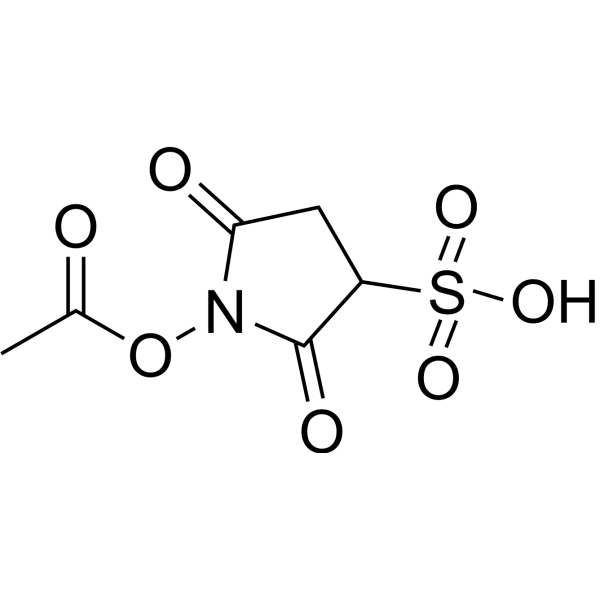
Sulfo-NHS-Acetate is an alkyl chain-based PROTAC linker that can be used in the synthesis of PROTACs .
|
-
-
- HY-40171
-
|
PROTAC Linker 22
|
PROTAC Linkers
|
Cancer
|
|
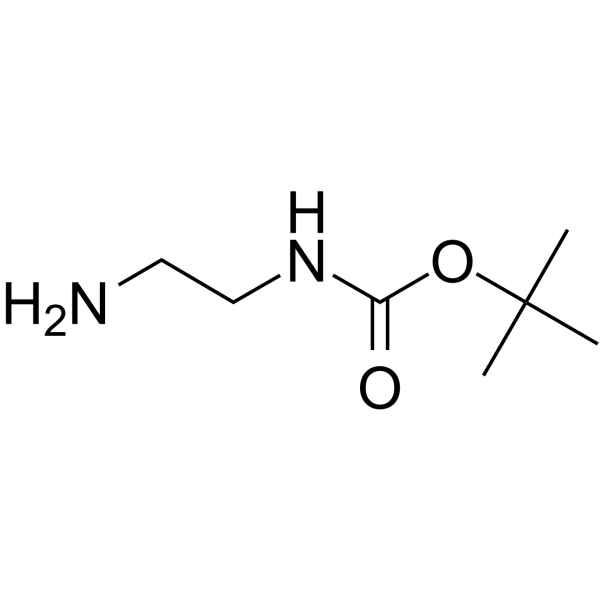
NH2-C2-NH-Boc (PROTAC Linker 22) is a alkyl chain-based PROTAC linker can be used in the synthesis of PROTACs .
|
-
-
- HY-141263
-
|
|
PROTAC Linkers
|
Cancer
|
|
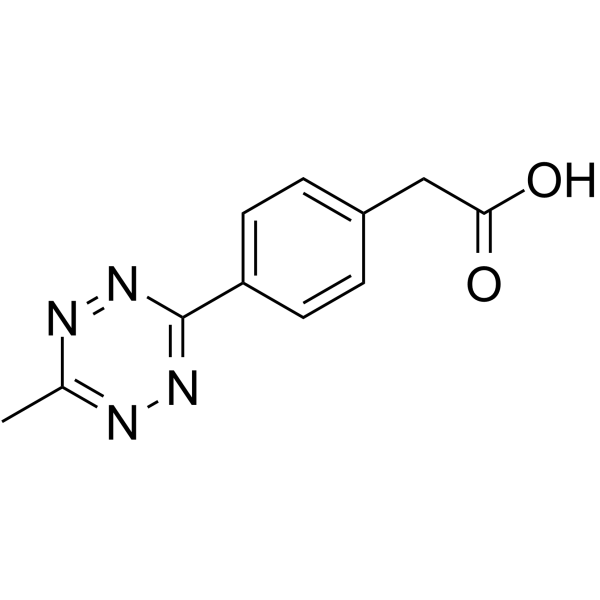
Methyltetrazine-acid is an alkyl chain-based PROTAC linker that can be used in the synthesis of PROTACs .
|
-
-
- HY-W125504
-
|
|
ADC Linker
PROTAC Linkers
|
Cancer
|
|
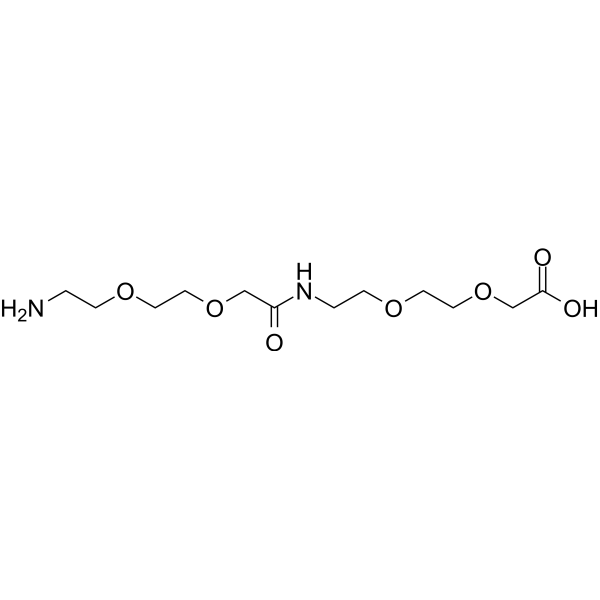
AEEA-AEEA is a non-cleavable ADC linker used in the synthesis of antibody-drug conjugates (ADCs). AEEA-AEEA is also a alkyl chain-based PROTAC linker that can be used in the synthesis of PROTACs.
|
-
-
- HY-I0781
-
|
|
ADC Linker
PROTAC Linkers
|
Cancer
|
|
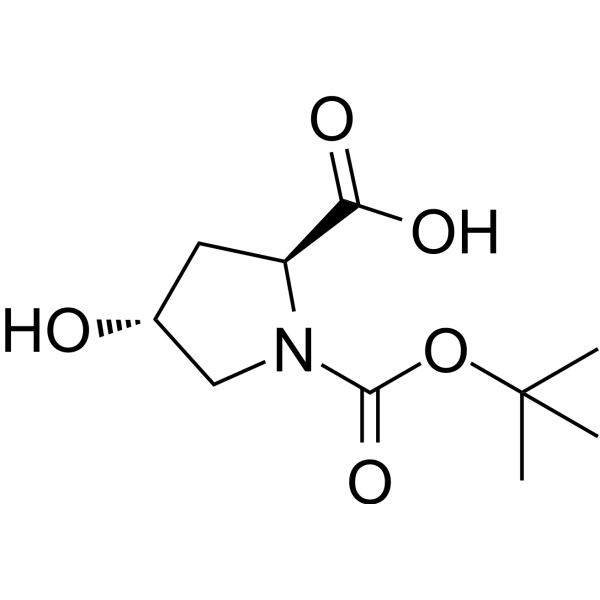
Boc-Hyp-OH is a non-cleavable ADC linker used in the synthesis of antibody-drug conjugates (ADCs). Boc-Hyp-OH is also a alkyl chain-based PROTAC linker that can be used in the synthesis of PROTACs[2]
|
-
-
- HY-140345
-
|
|
PROTAC Linkers
|
Cancer
|
|
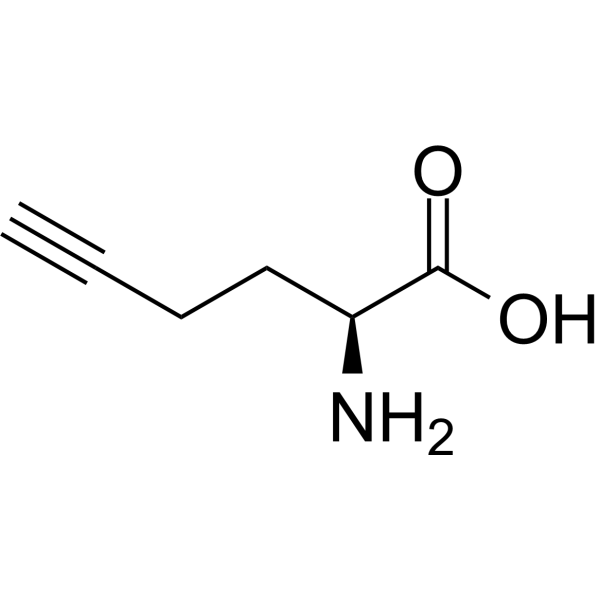
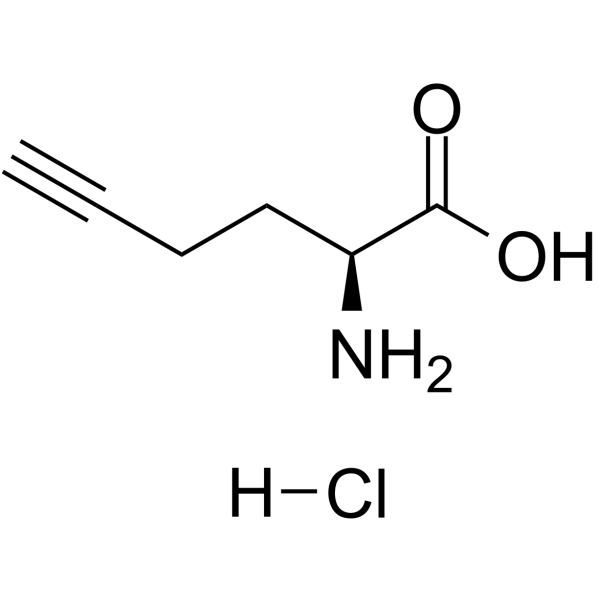
L-Homopropargylglycine is an alkyl chain-based PROTAC linker that can be used in the synthesis of PROTACs. L-homopropargylglycine is an amino acid analog of methionine containing an alkyne moiety that can undergo a classic click chemical reaction with azide containing Alexa Fluor .
|
-
-
- HY-141186
-
|
|
PROTAC Linkers
|
Cancer
|
|
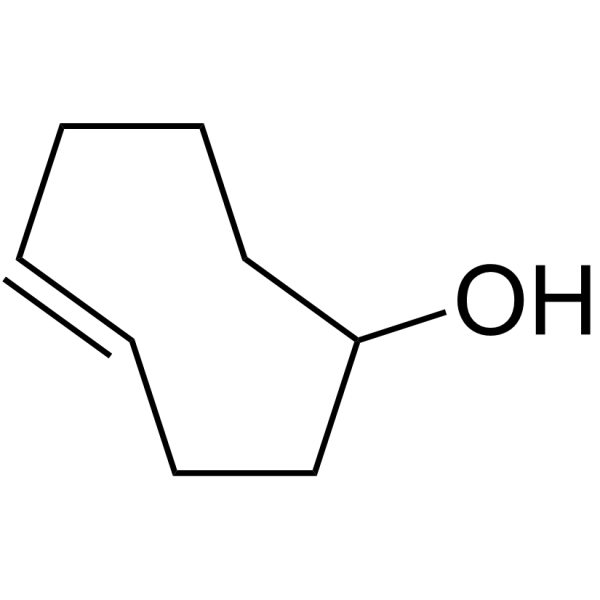
TCO-OH is an alkyl chain-based PROTAC linker that can be used in the synthesis of PROTACs .
|
-
-
- HY-W010975
-
|
|
ADC Linker
PROTAC Linkers
|
Cancer
|
|
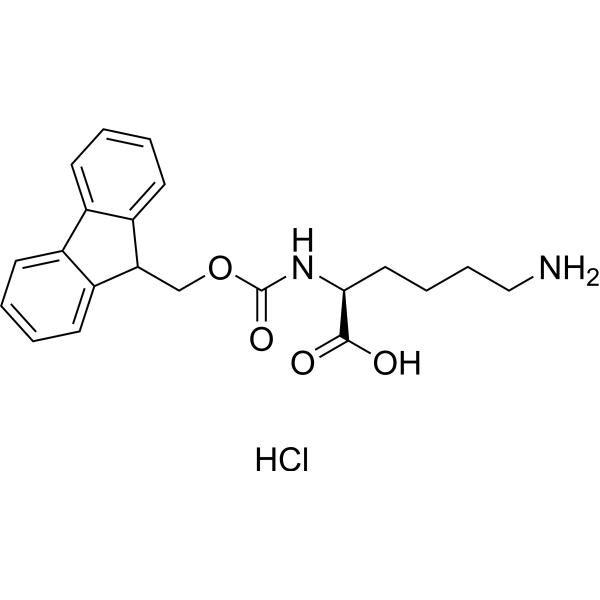
Fmoc-Lys-OH hydrochloride is a cleavable ADC linker used in the synthesis of antibody-drug conjugates (ADCs). Fmoc-Lys-OH hydrochloride is also a alkyl chain-based PROTAC linker that can be used in the synthesis of PROTACs.
|
-
-
- HY-107608
-
-
-
- HY-140335
-
|
|
PROTAC Linkers
|
Cancer
|
|
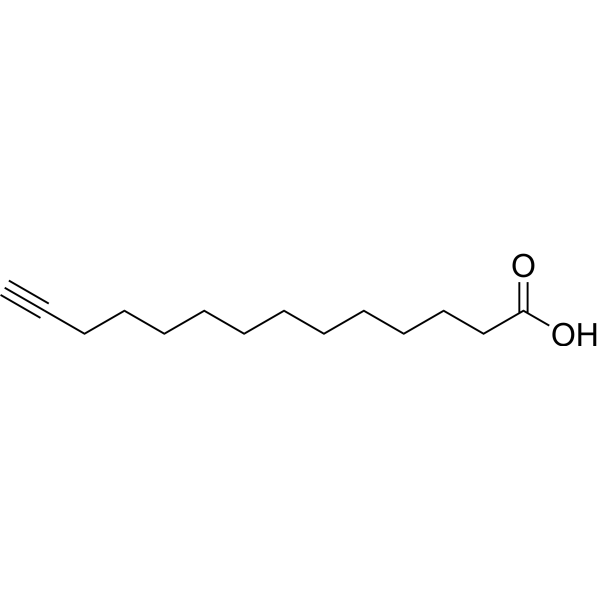
Alkynyl myristic acid is an alkyl chain-based PROTAC linker that can be used in the synthesis of PROTACs . Alkynyl myristic acid is a click chemistry reagent, it contains an Alkyne group and can undergo copper-catalyzed azide-alkyne cycloaddition (CuAAc) with molecules containing Azide groups.
|
-
-
- HY-123916
-
|
|
PROTAC Linkers
|
Cancer
|
|
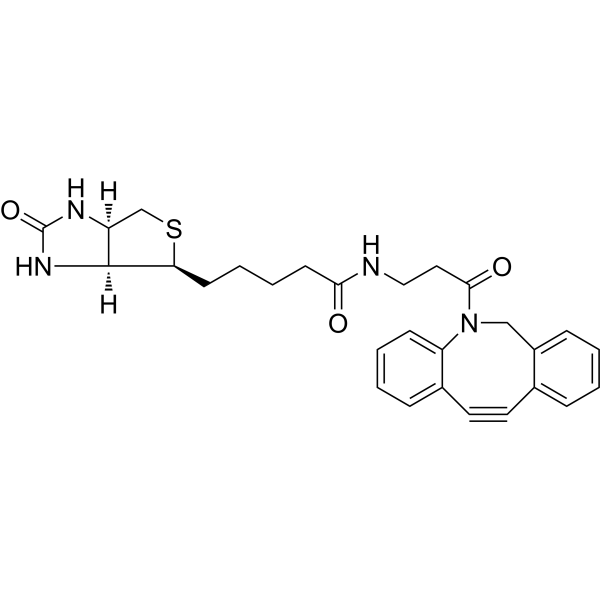
DBCO-Biotin is an alkyl chain-based PROTAC linker that can be used in the synthesis of PROTACs . DBCO-Biotin is a click chemistry reagent, it contains a DBCO group that can undergo strain-promoted alkyne-azide cycloaddition (SPAAC) with molecules containing Azide groups.
|
-
-
- HY-Y0786
-
-
-
- HY-W011848
-
|
2-((Benzyloxy)carbonyl)benzoic acid
|
Drug Metabolite
|
Metabolic Disease
|
|
Monobenzyl phthalate is a phthalate metabolite (aromatic alkyl chain monophthalate) with oral activity, which acts as a male reproductive development inhibitor and antiandrogen in rat fetuses .
|
-
-
- HY-W004710
-
|
PROTAC Linker 23
|
PROTAC Linkers
|
Cancer
|
|
NH2-C5-NH-Boc (PROTAC Linker 23) is an alkyl chain-based PROTAC linker can be used in the synthesis of PROTACs .
|
-
-
- HY-65039
-
|
|
ADC Linker
PROTAC Linkers
|
Cancer
|
|
Boc-Hyp-OMe is a non-cleavable ADC linker used in the synthesis of antibody-drug conjugates (ADCs). Boc-Hyp-OMe is also a alkyl chain-based PROTAC linker that can be used in the synthesis of PROTACs .
|
-
-
- HY-W018154
-
|
|
ADC Linker
PROTAC Linkers
|
Cancer
|
|
H-Glu-OtBu is a non-cleavable ADC linker used in the synthesis of antibody-drug conjugates (ADCs). H-Glu-OtBu is also a alkyl chain-based PROTAC linker that can be used in the synthesis of PROTACs[2
|
-
-
- HY-Y0530
-
|
|
Environmental Pollutants
ADC Linker
PROTAC Linkers
|
Cancer
|
|
Azetidine-3-carboxylic acid is a non-cleavable ADC linker used in the synthesis of antibody-drug conjugates (ADCs). Azetidine-3-carboxylic acid is also a alkyl chain-based PROTAC linker that can be used in the synthesis of PROTACs[2
|
-
-
- HY-W034599
-
|
|
ADC Linker
PROTAC Linkers
|
Cancer
|
|
Boc-C14-COOH is a non-cleavable ADC linker used in the synthesis of antibody-drug conjugates (ADCs). Boc-C14-COOH is also a alkyl chain-based PROTAC linker that can be used in the synthesis of PROTACs.
|
-
-
- HY-W045822
-
|
|
ADC Linker
PROTAC Linkers
|
Cancer
|
|
Fmoc-Lys(Pal-Glu-OtBu)-OH is a non-cleavable ADC linker used in the synthesis of antibody-drug conjugates (ADCs). Fmoc-Lys(Pal-Glu-OtBu)-OH is also a alkyl chain-based PROTAC linker that can be used in the synthesis of PROTACs.
|
-
-
- HY-130893
-
|
|
PROTAC Linkers
|
Cancer
|
|
Biotin-EDA is an alkyl chain-based PROTAC linker that can be used in the synthesis of PROTACs .
|
-
-
- HY-140988
-
|
|
PROTAC Linkers
|
Cancer
|
|
Mal-NH2 (TFA) is an alkyl chain-based PROTAC linker that can be used in the synthesis of PROTACs .
|
-
-
- HY-W007803
-
|
|
PROTAC Linkers
|
Cancer
|
|
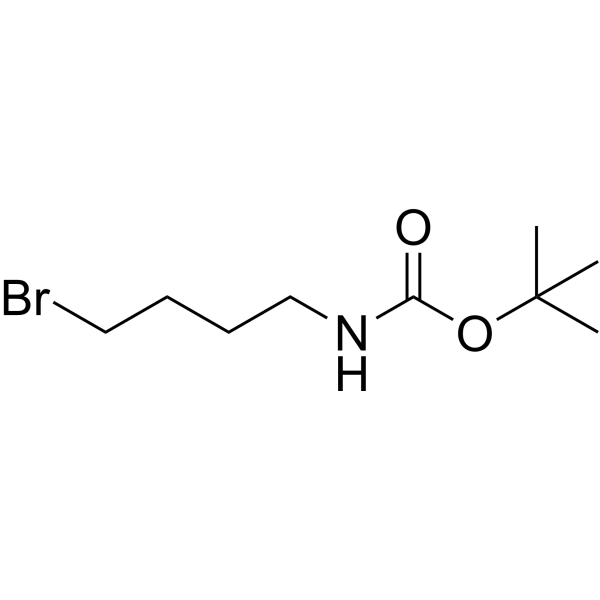
Boc-NH-C4-Br is an alkyl chain-based PROTAC linker that can be used in the synthesis of PROTACs .
|
-
-
- HY-W017882
-
|
|
ADC Linker
PROTAC Linkers
|
Cancer
|
|
Boc-trans-D-Hyp-OMe is a non-cleavable ADC linker used in the synthesis of antibody-drug conjugates (ADCs). Boc-trans-D-Hyp-OMe is also a alkyl chain-based PROTAC linker that can be used in the synthesis of PROTACs.
|
-
-
- HY-140345A
-
|
|
PROTAC Linkers
|
Cancer
|
|
L-Homopropargylglycine hydrochloride is an alkyl chain-based PROTAC linker that can be used in the synthesis of PROTACs. L-homopropargylglycine hydrochloride is an amino acid analog of methionine containing an alkyne moiety that can undergo a classic click chemical reaction with azide containing Alexa Fluor .
|
-
-
- HY-W045598
-
|
|
ADC Linker
PROTAC Linkers
|
Cancer
|
|
Boc-C16-COOH is a non-cleavable ADC linker used in the synthesis of antibody-drug conjugates (ADCs). Boc-C16-COOH is also a alkyl chain-based PROTAC linker that can be used in the synthesis of PROTACs
|
-
-
- HY-42145
-
|
|
PROTAC Linkers
|
Cancer
|
|
3-Maleimidopropionic acid is an alkyl chain-based PROTAC linker that can be used in the synthesis of PROTACs .
|
-
-
- HY-W013458
-
|
|
PROTAC Linkers
|
Cancer
|
|
Bis2-bromoethyl ether is an alkyl chain-based PROTAC linker that can be used in the synthesis of PROTACs .
|
-
-
- HY-W034595
-
|
|
ADC Linker
PROTAC Linkers
|
Cancer
|
|
Eicosanedioic acid is a non-cleavable ADC linker used in the synthesis of antibody-drug conjugates (ADCs). Eicosanedioic acid is also a alkyl chain-based PROTAC linker that can be used in the synthesis
|
-
-
- HY-141274
-
|
|
PROTAC Linkers
|
Cancer
|
|
4-(6-Methyl-1,2,4,5-tetrazin-3-yl)phenol is an alkyl chain-based PROTAC linker that can be used in the synthesis of PROTACs .
|
-
-
- HY-40144
-
|
|
ADC Linker
PROTAC Linkers
|
Cancer
|
|
Azetidin-3-ol hydrochloride is a non-cleavable ADC linker used in the synthesis of antibody-drug conjugates (ADCs). Azetidin-3-ol hydrochloride is also a alkyl chain-based PROTAC linker that can be used in the synthes PROTAC.
|
-
-
- HY-33615
-
|
|
ADC Linker
PROTAC Linkers
|
Cancer
|
|
Methyl azetidine-3-carboxylate hydrochloride is a non-cleavable ADC linker used in the synthesis of antibody-drug conjugates (ADCs). Methyl azetidine-3-carboxylate hydrochloride is also a alkyl chain-based PROTAC linker that can be used in the synthesis of PROTACs<
|
-
-
- HY-113336B
-
|
|
PROTAC Linkers
|
Cancer
|
|
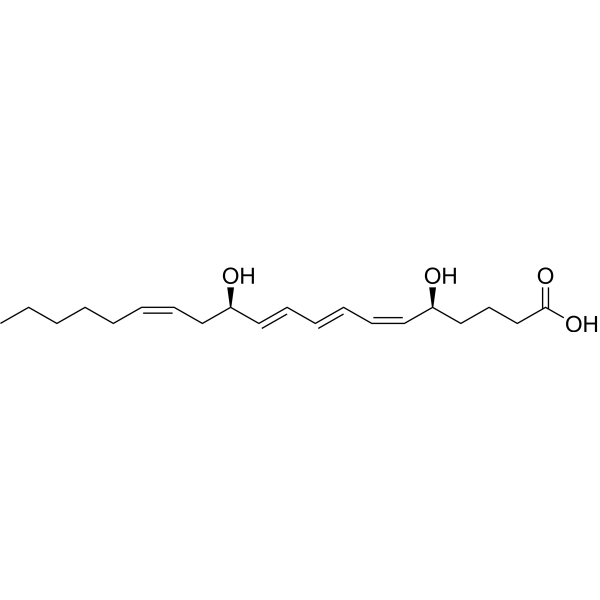
(±)15-HETE is an alkyl chain-based PROTAC linker that can be used in the synthesis of PROTACs .
|
-
-
- HY-77959
-
|
|
PROTAC Linkers
|
Cancer
|
|
6-Maleimidocapronic acid is an alkyl chain-based PROTAC linker that can be used in the synthesis of PROTACs .
|
-
-
- HY-W037355
-
|
|
PROTAC Linkers
|
Cancer
|
|
4-Maleimidobutyric acid is an alkyl chain-based PROTAC linker that can be used in the synthesis of PROTACs .
|
-
-
- HY-42359
-
|
|
PROTAC Linkers
|
Cancer
|
|
N-(4-Carboxycyclohexylmethyl)maleimide is an alkyl chain-based PROTAC linker that can be used in the synthesis of PROTACs .
|
-
-
- HY-76043
-
|
|
ADC Linker
PROTAC Linkers
|
Cancer
|
|
H-Hyp-OMe hydrochloride is a non-cleavable ADC linker used in the synthesis of antibody-drug conjugates (ADCs). H-Hyp-OMe hydrochloride is also a alkyl chain-based PROTAC linker that can be used in the synthesis of PROTACs[1]<
|
-
-
- HY-79125
-
|
|
ADC Linker
PROTAC Linkers
|
Cancer
|
|
Fmoc-Hyp(Bom)-OH is a non-cleavable ADC linker used in the synthesis of antibody-drug conjugates (ADCs). Fmoc-Hyp(Bom)-OH is also a alkyl chain-based PROTAC linker that can be used in the synthesis of PROTACs<
|
-
-
- HY-140341A
-
|
|
PROTAC Linkers
|
Others
|
|
Sulfo-NHS-Acetate sodium is an alkyl chain-based PROTAC linker. Sulfo-NHS-Acetate sodium can be used in the synthesis of PROTACs .
|
-
-
- HY-43721
-
|
|
PROTAC Linkers
|
Cancer
|
|
N-Boc-4-pentyne-1-amine is a PROTAC linker, which refers to the alkyl chain composition. N-Boc-4-pentyne-1-amine can be used in the synthesis of the PROTAC MG-277 (HY-130122) . N-Boc-4-pentyne-1-amine is a click chemistry reagent, it contains an Alkyne group and can undergo copper-catalyzed azide-alkyne cycloaddition (CuAAc) with molecules containing Azide groups.
|
-
-
- HY-W014831
-
|
|
PROTAC Linkers
|
Cancer
|
|
11-Aminoundecanoic acid is an alkyl chain based PROTAC linker can be used in the synthesis of PROTACs.
|
-
-
- HY-141099
-
|
|
PROTAC Linkers
|
Cancer
|
|
Di(N-succinimidyl)adipate is an alkyl chain-based PROTAC linker that can be used in the synthesis of PROTACs .
|
-
-
- HY-W017755
-
|
|
ADC Linker
PROTAC Linkers
|
Cancer
|
|
(R)-Azetidine-2-carboxylic acid is a non-cleavable ADC linker used in the synthesis of antibody-drug conjugates (ADCs). (R)-Azetidine-2-carboxylic acid is also a alkyl chain-based PROTAC linker that can be
|
-
-
- HY-141293
-
|
|
PROTAC Linkers
|
Cancer
|
|
Oleic-DBCO is an alkyl chain-based PROTAC linker that can be used in the synthesis of PROTACs . Oleic-DBCO is a click chemistry reagent, it contains a DBCO group that can undergo strain-promoted alkyne-azide cycloaddition (SPAAC) with molecules containing Azide groups.
|
-
-
- HY-W048209
-
|
|
Amino Acid Derivatives
|
Others
|
|
Fmoc-Lys(Palmitoyl)-OH is a Fmoc-amino acid with long alkyl chains. Fmoc-Lys(Palmitoyl)-OH can be used for peptide synthesis .
|
-
-
- HY-W034918
-
|
|
ADC Linker
PROTAC Linkers
|
Cancer
|
|
Docosanedioic acid is a non-cleavable ADC linker used in the synthesis of antibody-drug conjugates (ADCs). Docosanedioic acid is also a alkyl chain-based PROTAC linker that can be used in the synthesis of PROTACs.
|
-
-
- HY-W016429
-
|
|
ADC Linker
PROTAC Linkers
|
Cancer
|
|
H-cis-Hyp-OMe hydrochloride is a non-cleavable ADC linker used in the synthesis of antibody-drug conjugates (ADCs). H-cis-Hyp-OMe hydrochloride is also a alkyl chain-based PROTAC linker that can be used in the synthesis of PR
|
-
-
- HY-W011277
-
|
|
ADC Linker
PROTAC Linkers
|
Cancer
|
|
Fmoc-azetidine-3-carboxylic acid is a cleavable ADC linker used in the synthesis of antibody-drug conjugates (ADCs). Fmoc-azetidine-3-carboxylic acid is also a alkyl chain-based PROTAC linker that can be used in the synthesis of PROTACs.
|
-
-
- HY-124480
-
|
|
PROTAC Linkers
|
Cancer
|
|
Tetrazine-Ph-acid is an alkyl chain-based PROTAC linker that can be used in the synthesis of PROTACs . Tetrazine-Ph-acid is a click chemistry reagent, it contains a Tetrazine group that can undergo an inverse electron demand Diels-Alder reaction (iEDDA) with molecules containing TCO groups.
|
-
-
- HY-N8082
-
|
|
HSV
|
Infection
|
|
Stearyl gallate is an alkyl gallate with a long alkyl chain (carbon number of 18). Stearyl gallate has an antioxidant activity, and a weak antiviral activity against HSV-1 .
|
-
-
- HY-130887
-
|
|
PROTAC Linkers
|
Cancer
|
|
(+)-Biotin-SLC is an alkyl chain-based PROTAC linker that can be used in the synthesis of PROTACs .
|
-
- HY-130157
-
|
|
PROTAC Linkers
|
Cancer
|
|
3-(2-Pyridyldithio)propanoic Acid is an alkyl chain-based PROTAC linker that can be used in the synthesis of PROTACs .
|
-
- HY-133410A
-
|
|
PROTAC Linkers
|
Cancer
|
|
Mal-C2-cyclohexylcarboxyl-hydrazide hydrochloride is an alkyl chain-based PROTAC linker that can be used in the synthesis of PROTACs .
|
-
- HY-140324
-
|
|
PROTAC Linkers
|
Cancer
|
|
Tetraethyl octane-1,8-diylbis(phosphonate) is an alkyl chain-based PROTAC linker that can be used in the synthesis of PROTACs .
|
-
- HY-133407
-
|
|
PROTAC Linkers
|
Cancer
|
|
β-Estradiol-6-one 6-(O-carboxymethyloxime) is an alkyl chain-based PROTAC linker that can be used in the synthesis of PROTACs .
|
-
- HY-141379
-
|
|
PROTAC Linkers
ADC Linker
|
Cancer
|
|
N-Bromoacetyl-β-alanine is an alkyl chain-based PROTAC linker that can be used in the synthesis of PROTACs . N-Bromoacetyl-β-alanine is also a cleavable ADC linker used in the synthesis of antibody-drug conjugates (ADCs) .
|
-
- HY-130888
-
|
(+)-Biotin 4-nitrophenyl ester
|
PROTAC Linkers
|
Cancer
|
|
(+)-Biotin-ONP is an alkyl chain-based PROTAC linker that can be used in the synthesis of PROTACs .
|
-
- HY-141260
-
|
|
PROTAC Linkers
|
Cancer
|
|
Methyltetrazine-propylamine is an alkyl chain-based PROTAC linker that can be used in the synthesis of PROTACs .
|
-
- HY-141136
-
|
|
PROTAC Linkers
|
Cancer
|
|
Ac4GlcNAlk is an alkyl chain-based PROTAC linker that can be used in the synthesis of PROTACs .
|
-
- HY-140330
-
|
|
PROTAC Linkers
|
Cancer
|
|
(10-BRomodecyl)phosphonic acid is an alkyl chain-based PROTAC linker that can be used in the synthesis of PROTACs .
|
-
- HY-140334
-
|
|
PROTAC Linkers
|
Cancer
|
|
Diethyl 12-bromododecylphosphonate is an alkyl chain-based PROTAC linker that can be used in the synthesis of PROTACs .
|
-
- HY-116924A
-
|
|
PROTAC Linkers
|
Cancer
|
|
1,3-Bis-aminooxy propane dihydrochloride is an alkyl chain-based PROTAC linker that can be used in the synthesis of PROTACs .
|
-
- HY-140326
-
|
|
PROTAC Linkers
|
Cancer
|
|
Hexane-1,6-diyldiphosphonic acid is an alkyl chain-based PROTAC linker that can be used in the synthesis of PROTACs .
|
-
- HY-W075674
-
|
|
MOFs
PROTAC Linkers
|
Cancer
|
|
Butane-1,4-diyldiphosphonic acid is an alkyl chain-based PROTAC linker that can be used in the synthesis of PROTACs .
|
-
- HY-W018291
-
|
|
PROTAC Linkers
|
Cancer
|
|
Mal-C6-amine (TFA) is an alkyl chain-based PROTAC linker that can be used in the synthesis of PROTACs .
|
-
- HY-135916
-
|
|
PROTAC Linkers
|
Cancer
|
|
Biotin-C5-amino-C5-amino is an alkyl chain-based PROTAC linker that can be used in the synthesis of PROTACs .
|
-
- HY-141137
-
|
|
PROTAC Linkers
|
Cancer
|
|
2,3,4,6-Tetra-o-acetyl-alpha-galactosylpyranosyl bromide is an alkyl chain-based PROTAC linker that can be used in the synthesis of PROTACs .
|
-
- HY-129968
-
|
|
PROTAC Linkers
|
Cancer
|
|
AM-Imidazole-PA-Boc is an alkyl chain-based PROTAC linker can be used in the synthesis of PROTAC IRAK4 degrader-1 (HY-129966) .
|
-
- HY-W030545
-
|
|
PROTAC Linkers
|
Cancer
|
|
(4-Oxo-4H-quinazolin-3-yl)-acetic acid is an alkyl chain-based PROTAC linker that can be used in the synthesis of PROTACs .
|
-
- HY-130621
-
|
|
PROTAC Linkers
|
Cancer
|
|
OTs-C6-OBn is an alkyl chain-based PROTAC linker can be used in the synthesis of PROTAC SGK3 degrader-1 (HY-125878) .
|
-
- HY-128931
-
|
PROTAC Linker 31
|
PROTAC Linkers
|
Cancer
|
|
NH2-Ph-C4-acid-NH2-Me (PROTAC Linker 31) is an alkyl chain-based PROTAC linker can be used in the synthesis of PROTACs .
|
-
- HY-140338
-
|
|
PROTAC Linkers
|
Cancer
|
|
Benzenedimethanamine-diethylamine is an alkyl chain-based PROTAC linker that can be used in the synthesis of PROTACs .
|
-
- HY-124531
-
|
|
PROTAC Linkers
|
Cancer
|
|
Tetra(cyanoethoxymethyl) methane is an alkyl chain-based PROTAC linker that can be used in the synthesis of PROTACs .
|
-
- HY-140329
-
|
|
PROTAC Linkers
|
Cancer
|
|
6-Bromohexylphosphonic acid is an alkyl chain-based PROTAC linker that can be used in the synthesis of PROTACs .
|
-
- HY-140328
-
|
|
PROTAC Linkers
|
Cancer
|
|
4-Bromobutylphosphonic acid is an alkyl chain-based PROTAC linker that can be used in the synthesis of PROTACs .
|
-
- HY-W035417
-
|
|
PROTAC Linkers
|
Cancer
|
|
Diethyl 7-bromoheptylphosphonate is an alkyl chain-based PROTAC linker that can be used in the synthesis of PROTACs .
|
-
- HY-140332
-
|
|
PROTAC Linkers
|
Cancer
|
|
Diethyl 8-bromooctylphosphonate is an alkyl chain-based PROTAC linker that can be used in the synthesis of PROTACs .
|
-
- HY-133425
-
|
|
PROTAC Linkers
|
Cancer
|
|
2-Phthalimidehydroxy-acetic acid is an alkyl chain-based PROTAC linker that can be used in the synthesis of PROTACs .
|
-
- HY-140333
-
|
|
PROTAC Linkers
|
Cancer
|
|
Diethyl 10-bromodecylphosphonate is an alkyl chain-based PROTAC linker that can be used in the synthesis of PROTACs .
|
-
- HY-140990
-
|
|
PROTAC Linkers
|
Cancer
|
|
6-Maleimidocaproic acid-PFP ester is an alkyl chain-based PROTAC linker that can be used in the synthesis of PROTACs .
|
-
- HY-116924
-
|
|
PROTAC Linkers
|
Cancer
|
|
1,3-Bis-aminooxy propane is an alkyl chain-based PROTAC linker that can be used in the synthesis of PROTACs .
|
-
- HY-141291
-
|
|
PROTAC Linkers
|
Cancer
|
|
N'-Boc-N-(Gly-Oleoyl)-Lys is an alkyl chain-based PROTAC linker that can be used in the synthesis of PROTACs .
|
-
- HY-140327
-
|
|
PROTAC Linkers
|
Cancer
|
|
[10-(Diethoxy-phosphoryl)-decyl]-phosphonic acid is an alkyl chain-based PROTAC linker that can be used in the synthesis of PROTACs .
|
-
- HY-141323
-
|
|
PROTAC Linkers
|
Cancer
|
|
C2-Bis-phosphoramidic acid diethyl ester is an alkyl chain-based PROTAC linker that can be used in the synthesis of PROTACs .
|
-
- HY-141325
-
|
|
PROTAC Linkers
|
Cancer
|
|
C6-Bis-phosphoramidic acid diethyl ester is an alkyl chain-based PROTAC linker that can be used in the synthesis of PROTACs .
|
-
- HY-133410
-
|
|
PROTAC Linkers
|
Cancer
|
|
Mal-C2-cyclohexylcarboxyl-hydrazide (TFA) is an alkyl chain-based PROTAC linker that can be used in the synthesis of PROTACs .
|
-
- HY-140003
-
|
|
PROTAC Linkers
|
Cancer
|
|
Tetraethyl butane-1,4-diylbis(phosphonate) is an alkyl chain-based PROTAC linker that can be used in the synthesis of PROTACs .
|
-
- HY-140323
-
|
|
PROTAC Linkers
|
Cancer
|
|
Tetraethyl heptane-1,7-diylbis(phosphonate) is an alkyl chain-based PROTAC linker that can be used in the synthesis of PROTACs .
|
-
- HY-140325
-
|
|
PROTAC Linkers
|
Cancer
|
|
Tetraethyl decane-1,10-diylbis(phosphonate) is an alkyl chain-based PROTAC linker that can be used in the synthesis of PROTACs .
|
-
- HY-141324
-
|
|
PROTAC Linkers
|
Cancer
|
|
Tetraethyl butane-1,4-diylbis(phosphoramidate) is an alkyl chain-based PROTAC linker that can be used in the synthesis of PROTACs .
|
-
- HY-140340
-
|
|
PROTAC Linkers
|
Cancer
|
|
Fmoc-NH-pentanoic acid-NHS-SO3Na is an alkyl chain-based PROTAC linker that can be used in the synthesis of PROTACs .
|
-
- HY-133411A
-
|
6-Aminooxy-hexanoic acid hydrobromide
|
PROTAC Linkers
|
Cancer
|
|
NH2-O-C5-COOH (hydrobromide) is an alkyl chain-based PROTAC linker that can be used in the synthesis of PROTACs .
|
-
- HY-140337
-
|
|
PROTAC Linkers
|
Cancer
|
|
Ph-Bis(C1-N-(C2-NH-Boc)2) is an alkyl chain-based PROTAC linker that can be used in the synthesis of PROTACs .
|
-
- HY-141139
-
|
|
PROTAC Linkers
|
Cancer
|
|
1-(Isopropylthio)-2,3,4,6-tetra-o-Ac-beta-D-glucosylpyranose is an alkyl chain-based PROTAC linker that can be used in the synthesis of PROTACs .
|
-
- HY-147232
-
|
|
Fluorescent Dye
|
Others
|
|
N-Acryloyl-1-pyrenebutylamine is a potent fluorescent derivatization agent. N-Acryloyl-1-pyrenebutylamine combines with an alkyl-acrylamide side-chain to give fluorescence function on the polymer. .
|
-
- HY-W714429
-
-
- HY-N3874
-
|
|
Others
|
Others
|
|
Ethyl rutinoside is a short-chain alkyl glycoside synthesized by rutin-degrading enzymes from tartary buckwheat (Fagopyrum tataricum Gaertner) seeds .
|
-
- HY-179851
-
|
|
Biochemical Assay Reagents
|
|
|
Mal(11.2) is a new type of detergent that contains a short branched alkyl chain at the interface between the polar head and the non-polar tail.
|
-
- HY-179852
-
|
|
Biochemical Assay Reagents
|
|
|
Mal(12.1) is a new type of detergent that contains a short branched alkyl chain at the interface between the polar head and the non-polar tail.
|
-
- HY-179850
-
|
|
Biochemical Assay Reagents
|
|
|
Mal(11.1) is a new type of detergent that contains a short branched alkyl chain at the interface between the polar head and the non-polar tail.
|
-
- HY-W332206
-
|
|
Herbicide
|
Metabolic Disease
|
|
Cafenstrole acts as a herbicide. Cafenstrole is a potent inhibitor of microsomal elongase enzyme involved in the biosynthesis of fatty acids with alkyl chains longer han C18 .
|
-
- HY-141176
-
|
|
PROTAC Linkers
|
Cancer
|
|
TCO-amine is an alkyl chain-based PROTAC linker that can be used in the synthesis of PROTACs . TCO-amine is a click chemistry reagent, it contains a TCO group that can undergo an inverse electron demand Diels-Alder reaction (iEDDA) with molecules containing Tetrazine groups.
|
-
- HY-W003511
-
|
|
ADC Linker
PROTAC Linkers
|
Cancer
|
|
tans-4-Hydroxy-D-proline hydrochloride is a non-cleavable ADC linker used in the synthesis of antibody-drug conjugates (ADCs). tans-4-Hydroxy-D-proline hydrochloride is also a alkyl chain-based PROTAC linker that can be used in the synthesis of PR
|
-
- HY-76105
-
|
|
ADC Linker
PROTAC Linkers
|
Cancer
|
|
D-Proline, 4-hydroxy-, methyl ester hydrochloride is a non-cleavable ADC linker used in the synthesis of antibody-drug conjugates (ADCs). D-Proline, 4-hydroxy-, methyl ester hydrochloride is also a alkyl chain-based PROTAC linker that can be used in the synthesis of PROTACs[2
|
-
- HY-W052600
-
|
|
ADC Linker
PROTAC Linkers
|
Cancer
|
|
Ethyl azetidine-3-carboxylate hydrochloride is a non-cleavable ADC linker used in the synthesis of antibody-drug conjugates (ADCs). Ethyl azetidine-3-carboxylate hydrochloride is also a alkyl chain-based PROTAC linker that can be used in the synthesis of PROTACs[2]
|
-
- HY-127056
-
|
|
PROTAC Linkers
|
Cancer
|
|
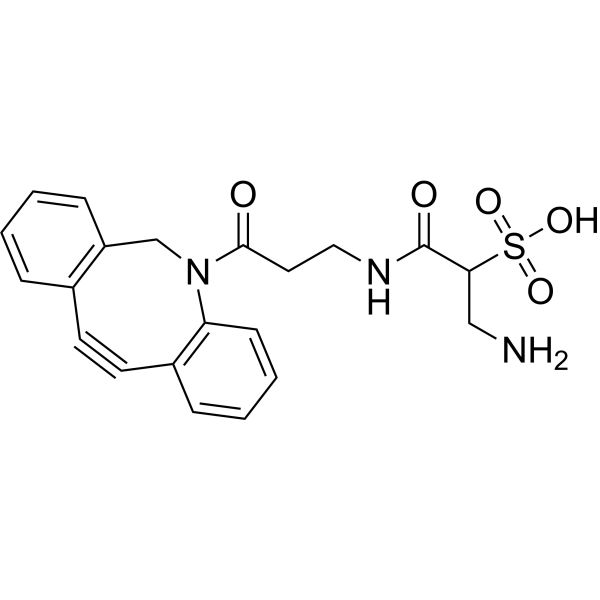
Sulfo DBCO-amine is an alkyl chain-based PROTAC linker that can be used in the synthesis of PROTACs . Sulfo DBCO-amine is a click chemistry reagent, it contains a DBCO group that can undergo strain-promoted alkyne-azide cycloaddition (SPAAC) with molecules containing Azide groups.
|
-
- HY-165473
-
|
|
Calcium Channel
|
Cancer
|
|
Hexadecylphosphoserine is a phospholipid molecule that contains a long-chain alkyl (hexadecyl) and a phosphoserine group, giving it a high affinity for the cell membrane. Hexadecylphosphoserine can exert antitumor activity by modulating [Ca ++]i and its related signaling pathways, making it useful for research in the field of breast cancer .
|
-
- HY-76104
-
|
|
ADC Linker
PROTAC Linkers
|
Cancer
|
|
cis-4-Hydroxy-D-proline hydrochloride is a non-cleavable ADC linker used in the synthesis of antibody-drug conjugates (ADCs). cis-4-Hydroxy-D-proline hydrochloride is also a alkyl chain-based PROTAC linker that can be used in the synthesis of PROTACs.
|
-
- HY-140348
-
|
|
PROTAC Linkers
|
Cancer
|
|
APN- NH2 is an alkyl chain-based PROTAC linker that can be used in the synthesis of PROTACs . APN- NH2 is a click chemistry reagent, it contains an Alkyne group and can undergo copper-catalyzed azide-alkyne cycloaddition (CuAAc) with molecules containing Azide groups.
|
-
- HY-140343
-
|
|
PROTAC Linkers
|
Cancer
|
|
Ac4GalNAl is an alkyl chain-based PROTAC linker that can be used in the synthesis of PROTACs . Ac4GalNAl is a click chemistry reagent, it contains an Alkyne group and can undergo copper-catalyzed azide-alkyne cycloaddition (CuAAc) with molecules containing Azide groups.
|
-
- HY-77475
-
|
|
ADC Linker
PROTAC Linkers
|
Cancer
|
|
1-Cbz-3-Hydroxyazetidine is a non-cleavable ADC linker used in the synthesis of antibody-drug conjugates (ADCs). 1-Cbz-3-Hydroxyazetidine is also a alkyl chain-based PROTAC linker that can be used in the synthesis of PROTACs.
|
-
- HY-141186A
-
|
|
PROTAC Linkers
|
Cancer
|
|
(R)-TCO-OH is an alkyl chain-based PROTAC linker that can be used in the synthesis of PROTACs . (R)-TCO-OH is a click chemistry reagent, it contains a TCO group that can undergo an inverse electron demand Diels-Alder reaction (iEDDA) with molecules containing Tetrazine groups.
|
-
- HY-W046348
-
|
|
ADC Linker
PROTAC Linkers
|
Cancer
|
|
22-(tert-Butoxy)-22-oxodocosanoic acid is a non-cleavable ADC linker used in the synthesis of antibody-drug conjugates (ADCs). 22-(tert-Butoxy)-22-oxodocosanoic acid is also a alkyl chain-based PROTAC linker that can be used in t
|
-
- HY-165473A
-
|
|
Calcium Channel
|
Cancer
|
|
Hexadecylphosphoserine TFA is a phospholipid molecule that contains a long-chain alkyl (hexadecyl) and a phosphoserine group, giving it a high affinity for the cell membrane. Hexadecylphosphoserine TFA can exert antitumor activity by modulating [Ca ++]i and its related signaling pathways, making it useful for research in the field of breast cancer .
|
-
- HY-W034597
-
|
|
ADC Linker
PROTAC Linkers
|
Cancer
|
|
20-(tert-Butoxy)-20-oxoicosanoic acid is a non-cleavable ADC linker used in the synthesis of antibody-drug conjugates (ADCs). 20-(tert-Butoxy)-20-oxoicosanoic acid is also a alkyl chain-based PROTAC linker that can be used in the synthesis of PROTACs
|
-
- HY-W040304
-
|
Alk-C16
|
PROTAC Linkers
|
Cancer
|
|
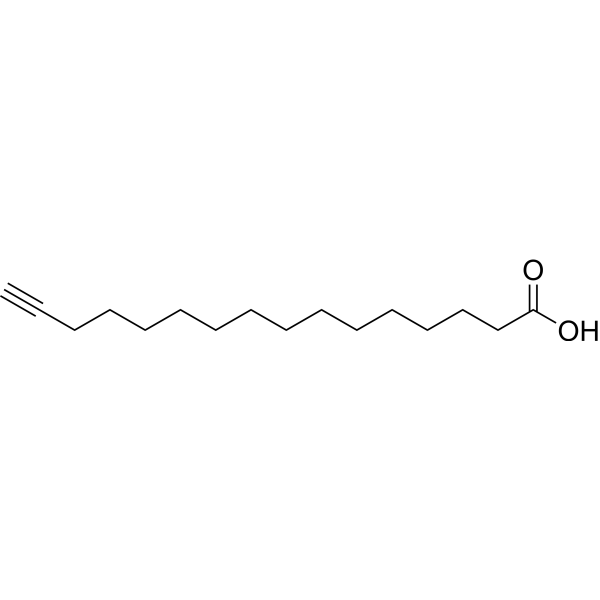
Alkynyl Palmitic Acid (Alk-C16) is an alkyl chain-based PROTAC linker that can be used in the synthesis of PROTACs . Alkynyl Palmitic Acid is a click chemistry reagent, it contains an Alkyne group and can undergo copper-catalyzed azide-alkyne cycloaddition (CuAAc) with molecules containing Azide groups.
|
-
- HY-W034918R
-
|
|
ADC Linker
Reference Standards
PROTAC Linkers
|
Cancer
|
|
Docosanedioic acid (Standard) is the analytical standard of Docosanedioic acid (HY-W034918). This product is intended for research and analytical applications. Docosanedioic acid is a non-cleavable ADC linker used in the synthesis of antibody-drug conjugates (ADCs). Docosanedioic acid is also a alkyl chain-based PROTAC linker that can be used in the synthesis of PROTACs.
|
-
- HY-40142
-
|
|
ADC Linker
PROTAC Linkers
|
Cancer
|
|
1-N-Boc-3-hydroxyazetidine is a non-cleavable ADC linker used in the synthesis of antibody-drug conjugates (ADCs). 1-N-Boc-3-hydroxyazetidine is also a alkyl chain-based PROTAC linker that can be used in the synthesis of PROTACs
|
-
- HY-402648
-
|
|
Drug Derivative
ADC Linker
PROTAC Linkers
|
Cancer
|
|
Fmoc-L-Lys(Boc-AEEA-AEEA)-OH is the derivative of AEEA-AEEA (HY-W125504). AEEA-AEEA is a non-cleavable ADC linker used in the synthesis of antibody-drug conjugates (ADCs). AEEA-AEEA is also an alkyl chain-based PROTAC linker that can be used in the synthesis of PROTACs.
|
-
- HY-176893
-
|
|
ADC Linker
|
Others
|
|
Mm-C3-OSu (Methyl Maleate-C3-N-Hydroxysuccinimide Ester) is a structurally defined linker intermediate with a cis-configured methyl maleate (Mm) core and a C3 alkyl chain terminated by an N-hydroxysuccinimide (OSu) reactive group, designed for constructing stable antibody-drug conjugates (ADCs).
|
-
- HY-40141
-
|
|
ADC Linker
PROTAC Linkers
|
Cancer
|
|
1-Boc-azetidine-3-carboxylic acid is a non-cleavable ADC linker used in the synthesis of antibody-drug conjugates (ADCs). 1-Boc-azetidine-3-carboxylic acid is also a alkyl chain-based PROTAC linker that can be used in the synthesis of PROTACs[2]
|
-
- HY-140350
-
|
|
PROTAC Linkers
|
Cancer
|
|
5-endo-BCN-pentanoic acid is an alkyl chain-based PROTAC linker that can be used in the synthesis of PROTACs . 5-endo-BCN-pentanoic acid is a click chemistry reagent, it contains a BCN group that can undergo strain-promoted alkyne-azide cycloaddition (SPAAC) with molecules containing Azide groups.
|
-
- HY-W002886
-
|
|
ADC Linker
PROTAC Linkers
|
Cancer
|
|
N-Boc-cis-4-hydroxy-L-proline is a non-cleavable ADC linker used in the synthesis of antibody-drug conjugates (ADCs). N-Boc-cis-4-hydroxy-L-proline is also a alkyl chain-based PROTAC linker that can be used in the synthesis of PROTACs[2
|
-
- HY-W004868
-
|
|
ADC Linker
PROTAC Linkers
|
Cancer
|
|
1-Cbz-azetidine-3-carboxylic acid is a non-cleavable ADC linker used in the synthesis of antibody-drug conjugates (ADCs). 1-Cbz-azetidine-3-carboxylic acid is also a alkyl chain-based PROTAC linker that can be used in the synthesis of PROTACs[1]
|
-
- HY-40151
-
|
|
ADC Linker
PROTAC Linkers
|
Cancer
|
|
Methyl 1-Boc-azetidine-3-carboxylate is a non-cleavable ADC linker used in the synthesis of antibody-drug conjugates (ADCs). Methyl 1-Boc-azetidine-3-carboxylate is also a alkyl chain-based PROTAC linker that can be used in the synthesis of PROTACs [1
|
-
- HY-W002887
-
|
|
ADC Linker
PROTAC Linkers
|
Cancer
|
|
N-Boc-cis-4-Hydroxy-D-proline is a non-cleavable ADC linker used in the synthesis of antibody-drug conjugates (ADCs). N-Boc-cis-4-Hydroxy-D-proline is also a alkyl chain-based PROTAC linker that can be used in the Synthesis of ADCs or PROTACs.
|
-
- HY-W006629
-
|
|
ADC Linker
PROTAC Linkers
|
Cancer
|
|
(4S)-4-Hydroxy-D-proline methyl ester hydrochloride is a non-cleavable ADC linker used in the synthesis of antibody-drug conjugates (ADCs). (4S)-4-Hydroxy-D-proline methyl ester hydrochloride is also a alkyl chain-based PROTAC linker that can be used in the synthesis of PROTACs.
|
-
- HY-40152
-
|
|
ADC Linker
PROTAC Linkers
|
Cancer
|
|
1-Boc-azetidine-3-yl-methanol is a non-cleavable ADC linker used in the synthesis of antibody-drug conjugates (ADCs). 1-Boc-azetidine-3-yl-methanol is also a alkyl chain-based PROTAC linker that can be used in the synthesis of PROTACs[1]
|
-
- HY-W019226
-
|
|
ADC Linker
PROTAC Linkers
|
Cancer
|
|
Methyl 1-Cbz-azetidine-3-carboxylate is a non-cleavable ADC linker used in the synthesis of antibody-drug conjugates (ADCs). Methyl 1-Cbz-azetidine-3-carboxylate is also a alkyl chain-based PROTAC linker that can be used in the synthesis of PROTACs[1
|
-
- HY-77593
-
|
|
ADC Linker
PROTAC Linkers
|
Cancer
|
|
N-tert-Butoxycarbonyl-trans-4-hydroxy-D-proline is a non-cleavable ADC linker used in the synthesis of antibody-drug conjugates (ADCs). N-tert-Butoxycarbonyl-trans-4-hydroxy-D-proline is also a alkyl chain-based PROTAC linker that can be used in the synthesis of PROTACs.
|
-
- HY-Y0755
-
|
|
ADC Linker
PROTAC Linkers
|
Cancer
|
|
N-Boc-cis-4-hydroxy-L-proline methyl ester is a non-cleavable ADC linker used in the synthesis of antibody-drug conjugates (ADCs). N-Boc-cis-4-hydroxy-L-proline methyl ester is also a alkyl chain-based PROTAC linker that can be used in the synthesis of PROTACs[2
|
-
- HY-D3419
-
|
|
Fluorescent Dye
|
Neurological Disease
|
|
Neuro-DiO 4-chlorobenzenesulfonate is a hydrophobic C18 alkyl chain carbocyanine dye with green fluorescence, commonly used as a vascular marker, cell internalizer and deposition agent. Neuro-DiO 4-chlorobenzenesulfonate inserts its alkyl chain into the endothelial plasma membrane via liposome-mediated perfusion to achieve vascular labeling. Neuro-DiO chlorobenzenesulfonate can also stain the cell membrane and cytoplasm of cancer cells to assist in confocal microscopy observations. Neuro-DiO chlorobenzenesulfonate can be released from nanosponges and accumulate on the surface of mouse retina, then internalize into retinal ganglion cells, which is applicable to researches related to glaucoma and other diseases. It should be noted that during liposome-mediated vascular staining in mice, Neuro-DiO 4-chlorobenzenesulfonate may cause leakage of airway lavage fluid .
|
-
- HY-133371
-
|
|
PROTAC Linkers
|
Cancer
|
|
DBCO-NHCO-C4-NHS ester is an alkyl chain-based PROTAC linker that can be used in the synthesis of PROTACs . DBCO-NHCO-C4-NHS ester is a click chemistry reagent, it contains a DBCO group that can undergo strain-promoted alkyne-azide cycloaddition (SPAAC) with molecules containing Azide groups.
|
-
- HY-W002680
-
|
|
ADC Linker
PROTAC Linkers
|
Cancer
|
|
N-Boc-cis-4-hydroxy-D-proline methyl ester is a non-cleavable ADC linker used in the synthesis of antibody-drug conjugates (ADCs). N-Boc-cis-4-hydroxy-D-proline methyl ester is also a alkyl chain-based PROTAC linker that can be used in the synthesis of PROTACs[1
|
-
- HY-129197
-
|
|
Environmental Pollutants
Bacterial
|
Infection
|
|
Stearyldiethanolamine is a typical amine-based surfactant used in development for antibacterial freshness-keeping film or antibacterial nonwoven fabric. Stearyldiethanolamine can be used as a collector towards the surfaces of quartz and malachite, to recover efficiently malachite from quartz. Stearyldiethanolamine can disrupt bacterial cell membrane with the alkyl chain, leading to irreversible damage and cell death .
|
-
- HY-65039A
-
|
|
Others
|
Cancer
|
|
rel-Boc-Hyp-OMe is the isomer of Boc-Hyp-OMe (HY-65039), and can be used as an experimental control. Boc-Hyp-OMe is a non-cleavable ADC linker used in the synthesis of antibody-drug conjugates (ADCs). Boc-Hyp-OMe is also a alkyl chain-based PROTAC linker that can be used in the synthesis of PROTACs .
|
-
- HY-141176B
-
|
|
Drug Isomer
|
Others
|
|
cis-Cyclooctene-amine is the cis isomer of TCO-amine (HY-141176). TCO-amine is an alkyl chain-based PROTAC linker that can be used in the synthesis of PROTACs. TCO-amine is a click chemistry reagent, it contains a TCO group that can undergo an inverse electron demand Diels-Alder reaction (iEDDA) with molecules containing Tetrazine groups.
|
-
- HY-141176C
-
|
|
Drug Isomer
|
Others
|
|
cis-Cyclooctene-amine hydrochloride is the cis isomer of TCO-amine hydrochloride (HY-141176A). TCO-amine hydrochloride is an alkyl chain-based PROTAC linker that can be used in the synthesis of PROTACs. TCO-amine hydrochloride is a click chemistry reagent, it contains a TCO group that can undergo an inverse electron demand Diels-Alder reaction (iEDDA) with molecules containing Tetrazine groups.
|
-
- HY-130846
-
|
|
PROTAC Linkers
|
Cancer
|
|
Pip-alkyne-Ph-COOCH3 is an alkyl chain-based PROTAC linker can be used in the synthesis of PROTAC ARD-266 . Pip-alkyne-Ph-COOCH3 is a click chemistry reagent, it contains an Alkyne group and can undergo copper-catalyzed azide-alkyne cycloaddition (CuAAc) with molecules containing Azide groups.
|
-
- HY-W008574A
-
|
|
PROTAC Linkers
|
Inflammation/Immunology
Cancer
|
|
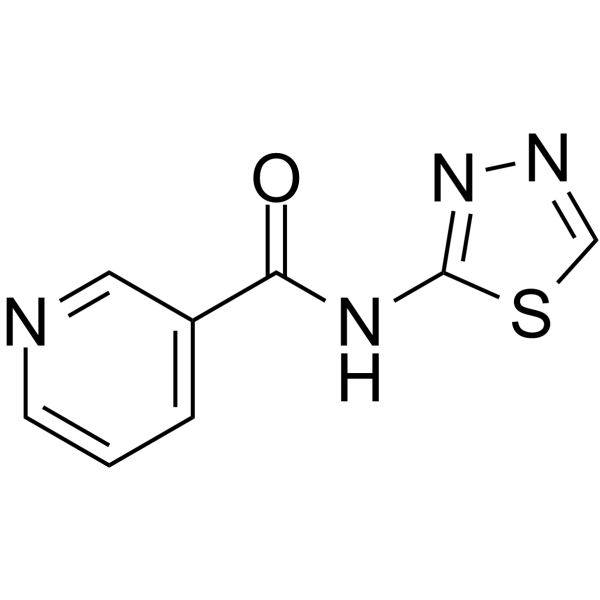
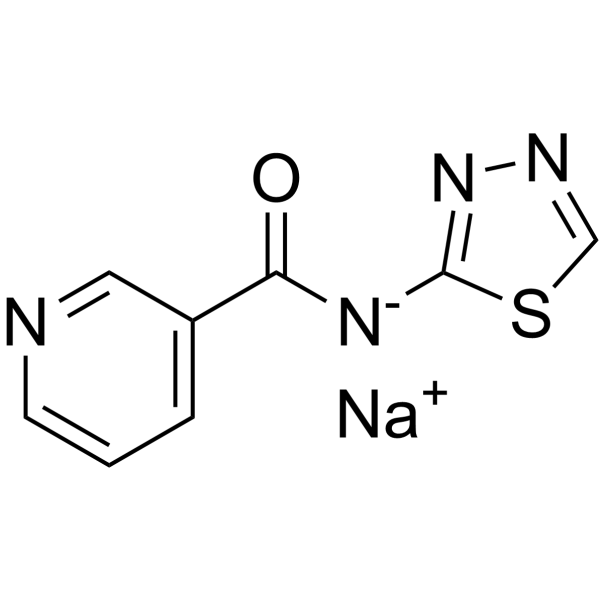
TGN-020 sodium is a selective Aquaporin 4 (AQP4) inhibitor with an IC50 of 3.1 μM . TGN-020 sodium is an alkyl chain-based PROTAC linker that can be used in the synthesis of PROTACs . TGN-020 sodium alleviates edema and inhibits glial scar formation after spinal cord compression injury in rats .
|
-
- HY-107608S
-
|
LTB4-d4; 5(S),12(R)-DiHETE-d4
|
PROTAC Linkers
Endogenous Metabolite
Leukotriene Receptor
|
Inflammation/Immunology
Cancer
|
|
Leukotriene B4-d4 is the deuterium labeled Leukotriene B4. Leukotriene B4 (LTB4) is known as one of the most potent chemoattractants and activators of leukocytes and is involved in inflammatory diseases. Leukotriene B4 is also an alkyl chain-based PROTAC linker that can be used in the synthesis of PROTACs .
|
-
- HY-W008574
-
|
|
PROTAC Linkers
|
Inflammation/Immunology
Cancer
|
|
TGN-020 is a selective Aquaporin 4 (AQP4) inhibitor with an IC50 of 3.1 μM . TGN-020 is an alkyl chain-based PROTAC linker that can be used in the synthesis of PROTACs .TGN-020 alleviates edema and inhibits glial scar formation after spinal cord compression injury in rats .
|
-
- HY-130912
-
|
|
PROTAC Linkers
|
Cancer
|
|
DBCO-NH-(CH2)4COOH is an alkyl chain-based PROTAC linker that can be used in the synthesis of PROTACs . DBCO-NH-(CH2)4COOH is a click chemistry reagent, it contains a DBCO group that can undergo strain-promoted alkyne-azide cycloaddition (SPAAC) with molecules containing Azide groups.
|
-
- HY-40171S
-
|
PROTAC Linker 22-d4
|
PROTAC Linkers
|
Cancer
|
|
NH2-C2-NH-Boc-d4 is the deuterium labeled NH2-C2-NH-Boc . NH2-C2-NH-Boc (PROTAC Linker 22) is a alkyl chain-based PROTAC linker can be used in the synthesis of PROTACs .
|
-
- HY-140346
-
|
|
PROTAC Linkers
|
Cancer
|
|
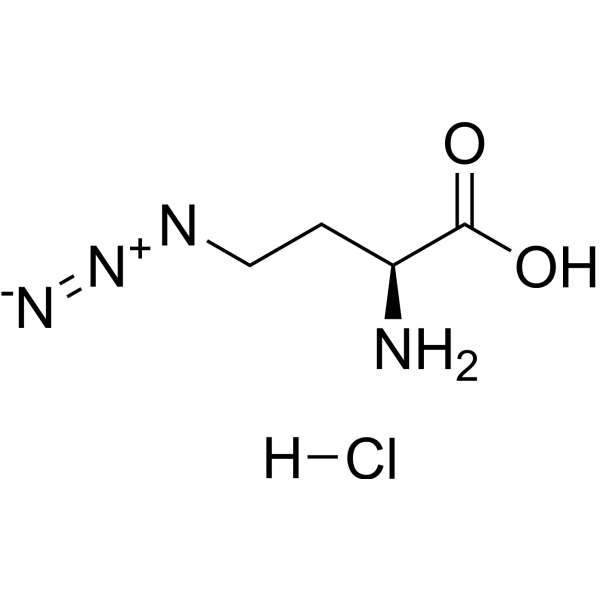
L-Azidohomoalanine is an alkyl chain-based PROTAC linker that can be used in the synthesis of PROTACs . L-Azidohomoalanine is a click chemistry reagent, it contains an Azide group and can undergo copper-catalyzed azide-alkyne cycloaddition reaction (CuAAc) with molecules containing Alkyne groups. It can also undergo strain-promoted alkyne-azide cycloaddition (SPAAC) reactions with molecules containing DBCO or BCN groups.
|
-
- HY-129942
-
|
|
ADC Linker
|
Cancer
|
|
S-(1-Hydroxy-2-methylpropan-2-yl) methanesulfonothioate is a glutathione cleavable ADC linker used for the antibody-drug conjugates (ADCs) and refers to the Alkyl-Chain composition. S-(1-Hydroxy-2-methylpropan-2-yl) methanesulfonothioate is the linker portions of the molecules employed for mAb attachment purposes .
|
-
- HY-140346A
-
|
|
PROTAC Linkers
|
Cancer
|
|
L-Azidohomoalanine hydrochloride is an alkyl chain-based PROTAC linker that can be used in the synthesis of PROTACs . L-Azidohomoalanine (hydrochloride) is a click chemistry reagent, it contains an Azide group and can undergo copper-catalyzed azide-alkyne cycloaddition reaction (CuAAc) with molecules containing Alkyne groups. It can also undergo strain-promoted alkyne-azide cycloaddition (SPAAC) reactions with molecules containing DBCO or BCN groups.
|
-
- HY-134695
-
|
|
PROTAC Linkers
|
Cancer
|
|
5-Biotinamidopentylazide is an alkyl chain-based PROTAC linker that can be used in the synthesis of PROTACs . 5-(Biotinamido)pentylazide is a click chemistry reagent, it contains an Azide group and can undergo copper-catalyzed azide-alkyne cycloaddition reaction (CuAAc) with molecules containing Alkyne groups. It can also undergo strain-promoted alkyne-azide cycloaddition (SPAAC) reactions with molecules containing DBCO or BCN groups.
|
-
- HY-141128
-
|
|
PROTAC Linkers
|
Cancer
|
|
Ac4GalNAz is an alkyl chain-based PROTAC linker that can be used in the synthesis of PROTACs . Ac4GalNAz is a click chemistry reagent, it contains an Azide group and can undergo copper-catalyzed azide-alkyne cycloaddition reaction (CuAAc) with molecules containing Alkyne groups. It can also undergo strain-promoted alkyne-azide cycloaddition (SPAAC) reactions with molecules containing DBCO or BCN groups.
|
-
- HY-W140555
-
|
|
Biochemical Assay Reagents
Bacterial
|
Infection
|
|
5,7-Dimethoxyphthalide, a dimethoxy derivative of phthalide, can undergo nucleophilic substitution reactions with functionalized long-chain alkyl iodides. 5,7-Dimethoxyphthalide acts as a synthetic building block to prepare anti-Helicobacter pylori products including CJ molecule and sporotricale methyl ether. 5,7-Dimethoxyphthalide can be utilized for relevant researches on Helicobacter pylori infection and structure-activity relationship (SAR) .
|
-
- HY-107608S1
-
-
- HY-178106
-
|
|
Drug Intermediate
|
Cancer
|
|
SCN2 is a esterase-responsive prodrug-based amphiphile composed of SN38 (HY-13704) and di-(triazole-[12]aneN3, N) moiety through a 7‑carbon alkyl chains. SCN2 has excellent self-assembly and reversible siRNA condensation capabilities as well as anti-proliferation activity against cancer cells. SCN2 can be used for synthesis of nanoparticles for drug delivery of lung cancer .
|
-
- HY-140349
-
|
|
PROTAC Linkers
|
Cancer
|
|
AZD-CO-C2-Ph-amido-Ph-azide is an alkyl chain-based PROTAC linker that can be used in the synthesis of PROTACs . AZD-CO-C2-Ph-amido-Ph-azide is a click chemistry reagent, it contains an Azide group and can undergo copper-catalyzed azide-alkyne cycloaddition reaction (CuAAc) with molecules containing Alkyne groups. It can also undergo strain-promoted alkyne-azide cycloaddition (SPAAC) reactions with molecules containing DBCO or BCN groups.
|
-
- HY-112766
-
|
|
Liposome
|
Others
|
|
DPyPE is a neutral phosphatidylethanolamine lipid composed of a polyisoprene alkyl chain with two pyridine-containing phosphine ligands. DPyPE is mainly used in liposome formulations and to enhance the efficiency of gene delivery in vitro and in vivo. For example, DPyPE can be mixed with cationic lipids such as VC1052 (HY-156616) (in a 1:1 ratio) to form the vaccine adjuvant Vaxfectin (HY-142998). DPyPE assists VC1052 in binding to negatively charged pDNA to form a uniform liposome complex by regulating the fluidity and stability of the liposome membrane .
|
-
- HY-137294
-
|
Y6
|
Endogenous Metabolite
|
Others
|
|
BTPTT-4F (Y6) is a non-fullerene acceptor-donor-acceptor (A-D-A) type small molecular acceptor (SMA) characterized by its flexible alkyl chains and centrally fused ring structure. Featuring a ladder-type electron-deficient core, BTPTT-4F can be effectively blended with PM6, showcasing significant potential for enhancing the performance of organic photovoltaic applications. Its tailored optical properties and adjustable electronic energy levels contribute to improved thermal and photochemical stability, making it a promising candidate for next-generation high-performance organic solar cells.
|
-
- HY-118411
-
|
EdU
|
PROTAC Linkers
|
Cancer
|
|
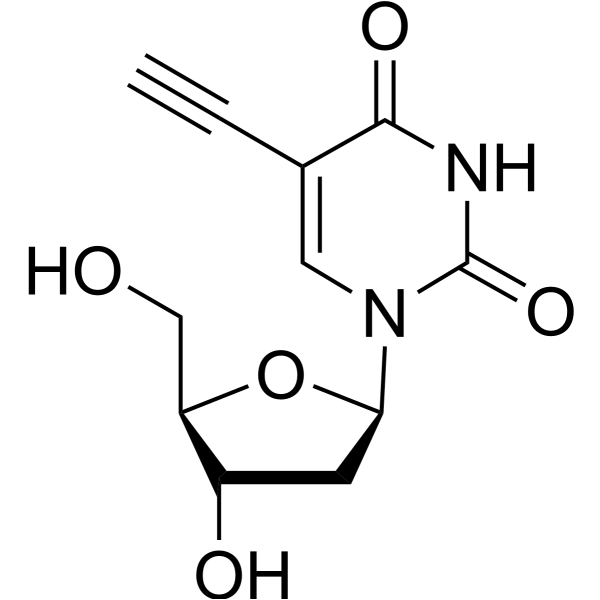
5-Ethynyl-2'-deoxyuridine (EdU), a thymidine analogue, is incorporated into cellular DNA during DNA replication and the subsequent reaction of EdU with a fluorescent azide in a “Click” reaction. EdU staining is a fast, sensitive and reproducible method to study cell proliferation . 5-Ethynyl-2'-deoxyuridine is an alkyl chain-based PROTAC linker that can be used in the synthesis of PROTACs . 5-Ethynyl-2'-deoxyuridine is a click chemistry reagent, it contains an Alkyne group and can undergo copper-catalyzed azide-alkyne cycloaddition (CuAAc) with molecules containing Azide groups.
|
-
- HY-140346AS
-
|
|
Isotope-Labeled Compounds
PROTAC Linkers
|
Cancer
|
|
L-Azidohomoalanine-1,2,3,4- 13C4 (hydrochloride) is the 13C- and 15N-labeled L-Azidohomoalanine hydrochloride. L-Azidohomoalanine hydrochloride is an alkyl chain-based PROTAC linker that can be used in the synthesis of PROTACs . L-Azidohomoalanine-1,2,3,4-13C4 (hydrochloride) is a click chemistry reagent, it contains an Azide group and can undergo copper-catalyzed azide-alkyne cycloaddition reaction (CuAAc) with molecules containing Alkyne groups. It can also undergo strain-promoted alkyne-azide cycloaddition (SPAAC) reactions with molecules containing DBCO or BCN groups.
|
-
- HY-108374
-
|
|
PROTAC Linkers
|
Cancer
|
|
4-Azidobutylamine is a PROTAC linker, which refers to the alkyl chain composition. 4-Azidobutylamine can be used in the synthesis of a series of PROTACs. PROTACs contain two different ligands connected by a linker; one is a ligand for an E3 ubiquitin ligase and the other is for the target protein. PROTACs exploit the intracellular ubiquitin-proteasome system to selectively degrade target proteins . 4-Azidobutylamine is a click chemistry reagent, it contains an Azide group and can undergo copper-catalyzed azide-alkyne cycloaddition reaction (CuAAc) with molecules containing Alkyne groups. It can also undergo strain-promoted alkyne-azide cycloaddition (SPAAC) reactions with molecules containing DBCO or BCN groups.
|
-
- HY-41982
-
|
D-Glucurono-6,3-lactone; D-Glucurono-γ-lactone; D-Glucuronolactone; Dicurone; Glucoxy; Glucurolactone; Glucurone
|
Environmental Pollutants
Endogenous Metabolite
Drug Derivative
|
Cardiovascular Disease
Metabolic Disease
|
|
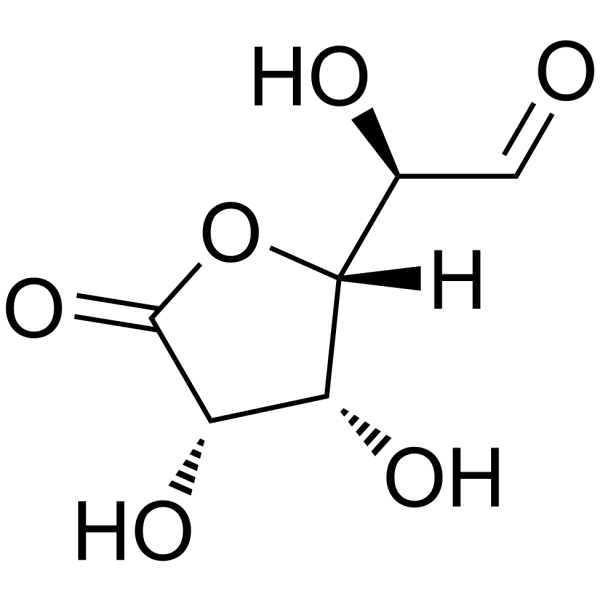
D-Glucuronic acid lactone (D-Glucurono-6,3-lactone; D-Glucurono-γ-lactone; D-Glucuronolactone; Dicurone; Glucoxy; Glucurolactone; Glucurone) is an endogenous metabolite and a glucuronic acid derivative. D-Glucuronic acid lactone serves as a starting reagent for the synthesis of 2,3,4-tris (tert-butyldimethylsilyl) glucuronic acid trichloroethyl ester, which is used to prepare 1-O-acyl glucuronic acids for the anti-inflammatory agent mL-3000 (HY-B1452), synthesize optically active glucuronic acids, and produce long-chain alkyl glucuronides. D-Glucuronic acid lactone shows potential for use in studies of reversible cerebral vasoconstriction syndrome (RCVS) .
|
-
- HY-118411S
-
|
EdU-13C
|
Isotope-Labeled Compounds
PROTAC Linkers
|
Cancer
|
|
5-Ethynyl-2'-deoxyuridine- 13C1 (EdU- 13C1) is the 13C-labeled 5-Ethynyl-2'-deoxyuridine (HY-118411). 5-Ethynyl-2'-deoxyuridine (EdU), a thymidine analogue, is incorporated into cellular DNA during DNA replication and the subsequent reaction of EdU with a fluorescent azide in a “Click” reaction. EdU staining is a fast, sensitive and reproducible method to study cell proliferation . 5-Ethynyl-2'-deoxyuridine is an alkyl chain-based PROTAC linker that can be used in the synthesis of PROTACs . 5-Ethynyl-2'-deoxyuridine is a click chemistry reagent, it contains an Alkyne group and can undergo copper-catalyzed azide-alkyne cycloaddition (CuAAc) with molecules containing Azide groups.
|
-
- HY-118411S1
-
|
EdU-13C2
|
Isotope-Labeled Compounds
PROTAC Linkers
|
Cancer
|
|
5-Ethynyl-2'-deoxyuridine- 13C2 (EdU- 13C2) is the 13C-labeled 5-Ethynyl-2'-deoxyuridine (HY-118411). 5-Ethynyl-2'-deoxyuridine (EdU), a thymidine analogue, is incorporated into cellular DNA during DNA replication and the subsequent reaction of EdU with a fluorescent azide in a “Click” reaction. EdU staining is a fast, sensitive and reproducible method to study cell proliferation . 5-Ethynyl-2'-deoxyuridine is an alkyl chain-based PROTAC linker that can be used in the synthesis of PROTACs . 5-Ethynyl-2'-deoxyuridine is a click chemistry reagent, it contains an Alkyne group and can undergo copper-catalyzed azide-alkyne cycloaddition (CuAAc) with molecules containing Azide groups.
|
-
- HY-108374R
-
|
|
Reference Standards
PROTAC Linkers
|
Cancer
|
|
4-Azidobutylamine (Standard) is the analytical standard of 4-Azidobutylamine (HY-108374). This product is intended for research and analytical applications. 4-Azidobutylamine is a PROTAC linker, which refers to the alkyl chain composition. 4-Azidobutylamine can be used in the synthesis of a series of PROTACs. PROTACs contain two different ligands connected by a linker; one is a ligand for an E3 ubiquitin ligase and the other is for the target protein. PROTACs exploit the intracellular ubiquitin-proteasome system to selectively degrade target proteins . 4-Azidobutylamine is a click chemistry reagent, it contains an Azide group and can undergo copper-catalyzed azide-alkyne cycloaddition reaction (CuAAc) with molecules containing Alkyne groups. It can also undergo strain-promoted alkyne-azide cycloaddition (SPAAC) reactions with molecules containing DBCO or BCN groups.
|
-
- HY-W276164
-
|
Sodium stearyl sulfate
|
Biochemical Assay Reagents
|
Others
|
|
Sodium octadecyl sulfate (Sodium stearyl sulfate) is a long-chain alkyl sodium sulfate that functions as an emulsifier, crosslinking agent, and regulator. Sodium octadecyl sulfate has high safety, with a LD50 greater than 3.00 Gm./Kg for both intraperitoneal injection in mice and oral administration in rats. Sodium octadecyl sulfate enhances continuous contraction of the gastrocnemius muscle in frogs and boosts intestinal smooth muscle activity in albino rats. However, Sodium octadecyl sulfate exerts no significant effect on isolated tortoise myocardium and does not alter the conduction function of frog sciatic nerves. Sodium octadecyl sulfate can also be used to coat the surface of starch aggregates, promote crosslinking and increase aggregate size through hydrophobic and electrostatic interactions, and further form a coexistent B-V type crystalline structure with acid-hydrolyzed gelatinized starch, thereby effectively modifying the structure and surface properties of high-starch systems .
|
-
- HY-175991S
-
|
Sodium stearyl sulfate sulfate-d37
|
Isotope-Labeled Compounds
Biochemical Assay Reagents
|
Others
|
|
Sodium octadecyl sulfate-d37 (Sodium stearyl sulfate-d37) is the deuterium labeled Sodium octadecyl sulfate (HY-W276164). Sodium octadecyl sulfate (Sodium stearyl sulfate) is a long-chain alkyl sodium sulfate that functions as an emulsifier, crosslinking agent, and regulator. Sodium octadecyl sulfate has high safety, with a LD50 greater than 3.00 Gm./Kg for both intraperitoneal injection in mice and oral administration in rats. Sodium octadecyl sulfate enhances continuous contraction of the gastrocnemius muscle in frogs and boosts intestinal smooth muscle activity in albino rats. However, Sodium octadecyl sulfate exerts no significant effect on isolated tortoise myocardium and does not alter the conduction function of frog sciatic nerves. Sodium octadecyl sulfate can also be used to coat the surface of starch aggregates, promote crosslinking and increase aggregate size through hydrophobic and electrostatic interactions, and further form a coexistent B-V type crystalline structure with acid-hydrolyzed gelatinized starch, thereby effectively modifying the structure and surface properties of high-starch systems .
|
-
| Cat. No. |
Product Name |
Type |
-
- HY-D3419
-
|
|
Fluorescent Dyes
|
|
Neuro-DiO 4-chlorobenzenesulfonate is a hydrophobic C18 alkyl chain carbocyanine dye with green fluorescence, commonly used as a vascular marker, cell internalizer and deposition agent. Neuro-DiO 4-chlorobenzenesulfonate inserts its alkyl chain into the endothelial plasma membrane via liposome-mediated perfusion to achieve vascular labeling. Neuro-DiO chlorobenzenesulfonate can also stain the cell membrane and cytoplasm of cancer cells to assist in confocal microscopy observations. Neuro-DiO chlorobenzenesulfonate can be released from nanosponges and accumulate on the surface of mouse retina, then internalize into retinal ganglion cells, which is applicable to researches related to glaucoma and other diseases. It should be noted that during liposome-mediated vascular staining in mice, Neuro-DiO 4-chlorobenzenesulfonate may cause leakage of airway lavage fluid .
|
| Cat. No. |
Product Name |
Type |
-
- HY-W276164
-
|
Sodium stearyl sulfate
|
Biochemical Assay Reagents
|
|
Sodium octadecyl sulfate (Sodium stearyl sulfate) is a long-chain alkyl sodium sulfate that functions as an emulsifier, crosslinking agent, and regulator. Sodium octadecyl sulfate has high safety, with a LD50 greater than 3.00 Gm./Kg for both intraperitoneal injection in mice and oral administration in rats. Sodium octadecyl sulfate enhances continuous contraction of the gastrocnemius muscle in frogs and boosts intestinal smooth muscle activity in albino rats. However, Sodium octadecyl sulfate exerts no significant effect on isolated tortoise myocardium and does not alter the conduction function of frog sciatic nerves. Sodium octadecyl sulfate can also be used to coat the surface of starch aggregates, promote crosslinking and increase aggregate size through hydrophobic and electrostatic interactions, and further form a coexistent B-V type crystalline structure with acid-hydrolyzed gelatinized starch, thereby effectively modifying the structure and surface properties of high-starch systems .
|
| Cat. No. |
Product Name |
Target |
Research Area |
| Cat. No. |
Product Name |
Category |
Target |
Chemical Structure |
| Cat. No. |
Product Name |
Chemical Structure |
-
- HY-107608S
-
|
|
|
Leukotriene B4-d4 is the deuterium labeled Leukotriene B4. Leukotriene B4 (LTB4) is known as one of the most potent chemoattractants and activators of leukocytes and is involved in inflammatory diseases. Leukotriene B4 is also an alkyl chain-based PROTAC linker that can be used in the synthesis of PROTACs .
|
-
-
- HY-140346AS
-
|
|
|
L-Azidohomoalanine-1,2,3,4- 13C4 (hydrochloride) is the 13C- and 15N-labeled L-Azidohomoalanine hydrochloride. L-Azidohomoalanine hydrochloride is an alkyl chain-based PROTAC linker that can be used in the synthesis of PROTACs . L-Azidohomoalanine-1,2,3,4-13C4 (hydrochloride) is a click chemistry reagent, it contains an Azide group and can undergo copper-catalyzed azide-alkyne cycloaddition reaction (CuAAc) with molecules containing Alkyne groups. It can also undergo strain-promoted alkyne-azide cycloaddition (SPAAC) reactions with molecules containing DBCO or BCN groups.
|
-
-
- HY-40171S
-
|
|
|
NH2-C2-NH-Boc-d4 is the deuterium labeled NH2-C2-NH-Boc . NH2-C2-NH-Boc (PROTAC Linker 22) is a alkyl chain-based PROTAC linker can be used in the synthesis of PROTACs .
|
-
-
- HY-107608S1
-
|
|
|
Leukotriene B4-d5 (LTB4-d5) is deuterium labeled Leukotriene B4. Leukotriene B4 (LTB4) is known as one of the most potent chemoattractants and activators of leukocytes and is involved in inflammatory diseases. Leukotriene B4 is also an alkyl chain-based PROTAC linker that can be used in the synthesis of PROTACs .
|
-
-
- HY-118411S
-
|
|
|
5-Ethynyl-2'-deoxyuridine- 13C1 (EdU- 13C1) is the 13C-labeled 5-Ethynyl-2'-deoxyuridine (HY-118411). 5-Ethynyl-2'-deoxyuridine (EdU), a thymidine analogue, is incorporated into cellular DNA during DNA replication and the subsequent reaction of EdU with a fluorescent azide in a “Click” reaction. EdU staining is a fast, sensitive and reproducible method to study cell proliferation . 5-Ethynyl-2'-deoxyuridine is an alkyl chain-based PROTAC linker that can be used in the synthesis of PROTACs . 5-Ethynyl-2'-deoxyuridine is a click chemistry reagent, it contains an Alkyne group and can undergo copper-catalyzed azide-alkyne cycloaddition (CuAAc) with molecules containing Azide groups.
|
-
-
- HY-118411S1
-
|
|
|
5-Ethynyl-2'-deoxyuridine- 13C2 (EdU- 13C2) is the 13C-labeled 5-Ethynyl-2'-deoxyuridine (HY-118411). 5-Ethynyl-2'-deoxyuridine (EdU), a thymidine analogue, is incorporated into cellular DNA during DNA replication and the subsequent reaction of EdU with a fluorescent azide in a “Click” reaction. EdU staining is a fast, sensitive and reproducible method to study cell proliferation . 5-Ethynyl-2'-deoxyuridine is an alkyl chain-based PROTAC linker that can be used in the synthesis of PROTACs . 5-Ethynyl-2'-deoxyuridine is a click chemistry reagent, it contains an Alkyne group and can undergo copper-catalyzed azide-alkyne cycloaddition (CuAAc) with molecules containing Azide groups.
|
-
-
- HY-175991S
-
|
|
|
Sodium octadecyl sulfate-d37 (Sodium stearyl sulfate-d37) is the deuterium labeled Sodium octadecyl sulfate (HY-W276164). Sodium octadecyl sulfate (Sodium stearyl sulfate) is a long-chain alkyl sodium sulfate that functions as an emulsifier, crosslinking agent, and regulator. Sodium octadecyl sulfate has high safety, with a LD50 greater than 3.00 Gm./Kg for both intraperitoneal injection in mice and oral administration in rats. Sodium octadecyl sulfate enhances continuous contraction of the gastrocnemius muscle in frogs and boosts intestinal smooth muscle activity in albino rats. However, Sodium octadecyl sulfate exerts no significant effect on isolated tortoise myocardium and does not alter the conduction function of frog sciatic nerves. Sodium octadecyl sulfate can also be used to coat the surface of starch aggregates, promote crosslinking and increase aggregate size through hydrophobic and electrostatic interactions, and further form a coexistent B-V type crystalline structure with acid-hydrolyzed gelatinized starch, thereby effectively modifying the structure and surface properties of high-starch systems .
|
-
| Cat. No. |
Product Name |
|
Classification |
-
- HY-118411
-
|
EdU
|
|
PROTAC Synthesis
Alkynes
|
|
5-Ethynyl-2'-deoxyuridine (EdU), a thymidine analogue, is incorporated into cellular DNA during DNA replication and the subsequent reaction of EdU with a fluorescent azide in a “Click” reaction. EdU staining is a fast, sensitive and reproducible method to study cell proliferation . 5-Ethynyl-2'-deoxyuridine is an alkyl chain-based PROTAC linker that can be used in the synthesis of PROTACs . 5-Ethynyl-2'-deoxyuridine is a click chemistry reagent, it contains an Alkyne group and can undergo copper-catalyzed azide-alkyne cycloaddition (CuAAc) with molecules containing Azide groups.
|
-
- HY-W040304
-
|
Alk-C16
|
|
PROTAC Synthesis
Alkynes
|
|
Alkynyl Palmitic Acid (Alk-C16) is an alkyl chain-based PROTAC linker that can be used in the synthesis of PROTACs . Alkynyl Palmitic Acid is a click chemistry reagent, it contains an Alkyne group and can undergo copper-catalyzed azide-alkyne cycloaddition (CuAAc) with molecules containing Azide groups.
|
-
- HY-141128
-
|
|
|
Azide
PROTAC Synthesis
|
|
Ac4GalNAz is an alkyl chain-based PROTAC linker that can be used in the synthesis of PROTACs . Ac4GalNAz is a click chemistry reagent, it contains an Azide group and can undergo copper-catalyzed azide-alkyne cycloaddition reaction (CuAAc) with molecules containing Alkyne groups. It can also undergo strain-promoted alkyne-azide cycloaddition (SPAAC) reactions with molecules containing DBCO or BCN groups.
|
-
- HY-140346A
-
|
|
|
Azide
PROTAC Synthesis
|
|
L-Azidohomoalanine hydrochloride is an alkyl chain-based PROTAC linker that can be used in the synthesis of PROTACs . L-Azidohomoalanine (hydrochloride) is a click chemistry reagent, it contains an Azide group and can undergo copper-catalyzed azide-alkyne cycloaddition reaction (CuAAc) with molecules containing Alkyne groups. It can also undergo strain-promoted alkyne-azide cycloaddition (SPAAC) reactions with molecules containing DBCO or BCN groups.
|
-
- HY-141263
-
|
|
|
Tetrazine
|
|
Methyltetrazine-acid is an alkyl chain-based PROTAC linker that can be used in the synthesis of PROTACs .
|
-
- HY-140345
-
|
|
|
PROTAC Synthesis
Alkynes
|
|
L-Homopropargylglycine is an alkyl chain-based PROTAC linker that can be used in the synthesis of PROTACs. L-homopropargylglycine is an amino acid analog of methionine containing an alkyne moiety that can undergo a classic click chemical reaction with azide containing Alexa Fluor .
|
-
- HY-141186
-
|
|
|
TCO
PROTAC Synthesis
|
|
TCO-OH is an alkyl chain-based PROTAC linker that can be used in the synthesis of PROTACs .
|
-
- HY-123916
-
|
|
|
PROTAC Synthesis
DBCO
|
|
DBCO-Biotin is an alkyl chain-based PROTAC linker that can be used in the synthesis of PROTACs . DBCO-Biotin is a click chemistry reagent, it contains a DBCO group that can undergo strain-promoted alkyne-azide cycloaddition (SPAAC) with molecules containing Azide groups.
|
-
- HY-140345A
-
|
|
|
Alkynes
|
|
L-Homopropargylglycine hydrochloride is an alkyl chain-based PROTAC linker that can be used in the synthesis of PROTACs. L-homopropargylglycine hydrochloride is an amino acid analog of methionine containing an alkyne moiety that can undergo a classic click chemical reaction with azide containing Alexa Fluor .
|
-
- HY-141274
-
|
|
|
Tetrazine
|
|
4-(6-Methyl-1,2,4,5-tetrazin-3-yl)phenol is an alkyl chain-based PROTAC linker that can be used in the synthesis of PROTACs .
|
-
- HY-108374
-
|
|
|
PROTAC Synthesis
Azide
|
|
4-Azidobutylamine is a PROTAC linker, which refers to the alkyl chain composition. 4-Azidobutylamine can be used in the synthesis of a series of PROTACs. PROTACs contain two different ligands connected by a linker; one is a ligand for an E3 ubiquitin ligase and the other is for the target protein. PROTACs exploit the intracellular ubiquitin-proteasome system to selectively degrade target proteins . 4-Azidobutylamine is a click chemistry reagent, it contains an Azide group and can undergo copper-catalyzed azide-alkyne cycloaddition reaction (CuAAc) with molecules containing Alkyne groups. It can also undergo strain-promoted alkyne-azide cycloaddition (SPAAC) reactions with molecules containing DBCO or BCN groups.
|
-
- HY-127056
-
|
|
|
PROTAC Synthesis
DBCO
|
|
Sulfo DBCO-amine is an alkyl chain-based PROTAC linker that can be used in the synthesis of PROTACs . Sulfo DBCO-amine is a click chemistry reagent, it contains a DBCO group that can undergo strain-promoted alkyne-azide cycloaddition (SPAAC) with molecules containing Azide groups.
|
-
- HY-43721
-
|
|
|
Alkynes
PROTAC Synthesis
|
|
N-Boc-4-pentyne-1-amine is a PROTAC linker, which refers to the alkyl chain composition. N-Boc-4-pentyne-1-amine can be used in the synthesis of the PROTAC MG-277 (HY-130122) . N-Boc-4-pentyne-1-amine is a click chemistry reagent, it contains an Alkyne group and can undergo copper-catalyzed azide-alkyne cycloaddition (CuAAc) with molecules containing Azide groups.
|
-
- HY-141293
-
|
|
|
DBCO
PROTAC Synthesis
|
|
Oleic-DBCO is an alkyl chain-based PROTAC linker that can be used in the synthesis of PROTACs . Oleic-DBCO is a click chemistry reagent, it contains a DBCO group that can undergo strain-promoted alkyne-azide cycloaddition (SPAAC) with molecules containing Azide groups.
|
-
- HY-141176
-
|
|
|
PROTAC Synthesis
TCO
|
|
TCO-amine is an alkyl chain-based PROTAC linker that can be used in the synthesis of PROTACs . TCO-amine is a click chemistry reagent, it contains a TCO group that can undergo an inverse electron demand Diels-Alder reaction (iEDDA) with molecules containing Tetrazine groups.
|
-
- HY-124480
-
|
|
|
Tetrazine
PROTAC Synthesis
|
|
Tetrazine-Ph-acid is an alkyl chain-based PROTAC linker that can be used in the synthesis of PROTACs . Tetrazine-Ph-acid is a click chemistry reagent, it contains a Tetrazine group that can undergo an inverse electron demand Diels-Alder reaction (iEDDA) with molecules containing TCO groups.
|
-
- HY-140346
-
|
|
|
PROTAC Synthesis
Azide
|
|
L-Azidohomoalanine is an alkyl chain-based PROTAC linker that can be used in the synthesis of PROTACs . L-Azidohomoalanine is a click chemistry reagent, it contains an Azide group and can undergo copper-catalyzed azide-alkyne cycloaddition reaction (CuAAc) with molecules containing Alkyne groups. It can also undergo strain-promoted alkyne-azide cycloaddition (SPAAC) reactions with molecules containing DBCO or BCN groups.
|
-
- HY-140343
-
|
|
|
Alkynes
PROTAC Synthesis
|
|
Ac4GalNAl is an alkyl chain-based PROTAC linker that can be used in the synthesis of PROTACs . Ac4GalNAl is a click chemistry reagent, it contains an Alkyne group and can undergo copper-catalyzed azide-alkyne cycloaddition (CuAAc) with molecules containing Azide groups.
|
-
- HY-141260
-
|
|
|
Tetrazine
|
|
Methyltetrazine-propylamine is an alkyl chain-based PROTAC linker that can be used in the synthesis of PROTACs .
|
-
- HY-141136
-
|
|
|
Alkynes
|
|
Ac4GlcNAlk is an alkyl chain-based PROTAC linker that can be used in the synthesis of PROTACs .
|
-
- HY-141186A
-
|
|
|
TCO
PROTAC Synthesis
|
|
(R)-TCO-OH is an alkyl chain-based PROTAC linker that can be used in the synthesis of PROTACs . (R)-TCO-OH is a click chemistry reagent, it contains a TCO group that can undergo an inverse electron demand Diels-Alder reaction (iEDDA) with molecules containing Tetrazine groups.
|
-
- HY-140350
-
|
|
|
BCN
PROTAC Synthesis
|
|
5-endo-BCN-pentanoic acid is an alkyl chain-based PROTAC linker that can be used in the synthesis of PROTACs . 5-endo-BCN-pentanoic acid is a click chemistry reagent, it contains a BCN group that can undergo strain-promoted alkyne-azide cycloaddition (SPAAC) with molecules containing Azide groups.
|
-
- HY-130912
-
|
|
|
DBCO
PROTAC Synthesis
|
|
DBCO-NH-(CH2)4COOH is an alkyl chain-based PROTAC linker that can be used in the synthesis of PROTACs . DBCO-NH-(CH2)4COOH is a click chemistry reagent, it contains a DBCO group that can undergo strain-promoted alkyne-azide cycloaddition (SPAAC) with molecules containing Azide groups.
|
-
- HY-140346AS
-
|
|
|
Azide
PROTAC Synthesis
|
|
L-Azidohomoalanine-1,2,3,4- 13C4 (hydrochloride) is the 13C- and 15N-labeled L-Azidohomoalanine hydrochloride. L-Azidohomoalanine hydrochloride is an alkyl chain-based PROTAC linker that can be used in the synthesis of PROTACs . L-Azidohomoalanine-1,2,3,4-13C4 (hydrochloride) is a click chemistry reagent, it contains an Azide group and can undergo copper-catalyzed azide-alkyne cycloaddition reaction (CuAAc) with molecules containing Alkyne groups. It can also undergo strain-promoted alkyne-azide cycloaddition (SPAAC) reactions with molecules containing DBCO or BCN groups.
|
-
- HY-133371
-
|
|
|
PROTAC Synthesis
DBCO
|
|
DBCO-NHCO-C4-NHS ester is an alkyl chain-based PROTAC linker that can be used in the synthesis of PROTACs . DBCO-NHCO-C4-NHS ester is a click chemistry reagent, it contains a DBCO group that can undergo strain-promoted alkyne-azide cycloaddition (SPAAC) with molecules containing Azide groups.
|
-
- HY-134695
-
|
|
|
Azide
PROTAC Synthesis
|
|
5-Biotinamidopentylazide is an alkyl chain-based PROTAC linker that can be used in the synthesis of PROTACs . 5-(Biotinamido)pentylazide is a click chemistry reagent, it contains an Azide group and can undergo copper-catalyzed azide-alkyne cycloaddition reaction (CuAAc) with molecules containing Alkyne groups. It can also undergo strain-promoted alkyne-azide cycloaddition (SPAAC) reactions with molecules containing DBCO or BCN groups.
|
-
- HY-140349
-
|
|
|
Azide
PROTAC Synthesis
|
|
AZD-CO-C2-Ph-amido-Ph-azide is an alkyl chain-based PROTAC linker that can be used in the synthesis of PROTACs . AZD-CO-C2-Ph-amido-Ph-azide is a click chemistry reagent, it contains an Azide group and can undergo copper-catalyzed azide-alkyne cycloaddition reaction (CuAAc) with molecules containing Alkyne groups. It can also undergo strain-promoted alkyne-azide cycloaddition (SPAAC) reactions with molecules containing DBCO or BCN groups.
|
-
- HY-118411S
-
|
EdU-13C
|
|
Alkynes
|
|
5-Ethynyl-2'-deoxyuridine- 13C1 (EdU- 13C1) is the 13C-labeled 5-Ethynyl-2'-deoxyuridine (HY-118411). 5-Ethynyl-2'-deoxyuridine (EdU), a thymidine analogue, is incorporated into cellular DNA during DNA replication and the subsequent reaction of EdU with a fluorescent azide in a “Click” reaction. EdU staining is a fast, sensitive and reproducible method to study cell proliferation . 5-Ethynyl-2'-deoxyuridine is an alkyl chain-based PROTAC linker that can be used in the synthesis of PROTACs . 5-Ethynyl-2'-deoxyuridine is a click chemistry reagent, it contains an Alkyne group and can undergo copper-catalyzed azide-alkyne cycloaddition (CuAAc) with molecules containing Azide groups.
|
-
- HY-118411S1
-
|
EdU-13C2
|
|
Alkynes
|
|
5-Ethynyl-2'-deoxyuridine- 13C2 (EdU- 13C2) is the 13C-labeled 5-Ethynyl-2'-deoxyuridine (HY-118411). 5-Ethynyl-2'-deoxyuridine (EdU), a thymidine analogue, is incorporated into cellular DNA during DNA replication and the subsequent reaction of EdU with a fluorescent azide in a “Click” reaction. EdU staining is a fast, sensitive and reproducible method to study cell proliferation . 5-Ethynyl-2'-deoxyuridine is an alkyl chain-based PROTAC linker that can be used in the synthesis of PROTACs . 5-Ethynyl-2'-deoxyuridine is a click chemistry reagent, it contains an Alkyne group and can undergo copper-catalyzed azide-alkyne cycloaddition (CuAAc) with molecules containing Azide groups.
|
| Cat. No. |
Product Name |
|
Classification |
-
- HY-112766
-
|
|
|
Phospholipids
|
|
DPyPE is a neutral phosphatidylethanolamine lipid composed of a polyisoprene alkyl chain with two pyridine-containing phosphine ligands. DPyPE is mainly used in liposome formulations and to enhance the efficiency of gene delivery in vitro and in vivo. For example, DPyPE can be mixed with cationic lipids such as VC1052 (HY-156616) (in a 1:1 ratio) to form the vaccine adjuvant Vaxfectin (HY-142998). DPyPE assists VC1052 in binding to negatively charged pDNA to form a uniform liposome complex by regulating the fluidity and stability of the liposome membrane .
|
Your information is safe with us. * Required Fields.
Inquiry Information
- Product Name:
- Cat. No.:
- Quantity:
- MCE Japan Authorized Agent:

