



Alkynyl Palmitic Acid
Based on 3 publication(s) in Google Scholar
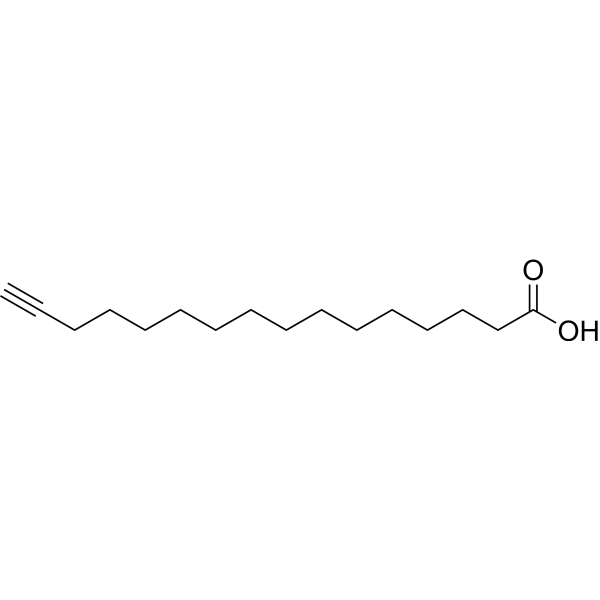
Alkynyl Palmitic Acid (Alk-C16) is an alkyl chain-based PROTAC linker that can be used in the synthesis of PROTACs. Alkynyl Palmitic Acid is a click chemistry reagent, it contains an Alkyne group and can undergo copper-catalyzed azide-alkyne cycloaddition (CuAAc) with molecules containing Azide groups.
For research use only. We do not sell to patients.
- Purity : 99.90%
- CAS No.: 99208-90-9
- Formula: C16H28O2
- Molecular Weight:252.39
-
Storage:Powder -20°C, 3 years ; In solvent -80°C, 6 months , -20°C, 1 month

To place orders, for customer services and technical support, please contact: MedChemExpress USA
Tel: 609-228-6898 E-mail: [email protected] [email protected]


-
 Biological Activity
-
Chemical Information
-
Solvent & Solubility
- Protocols
- Purity & Documentation
- References
-
 Help & FAQs


-
HY-140335
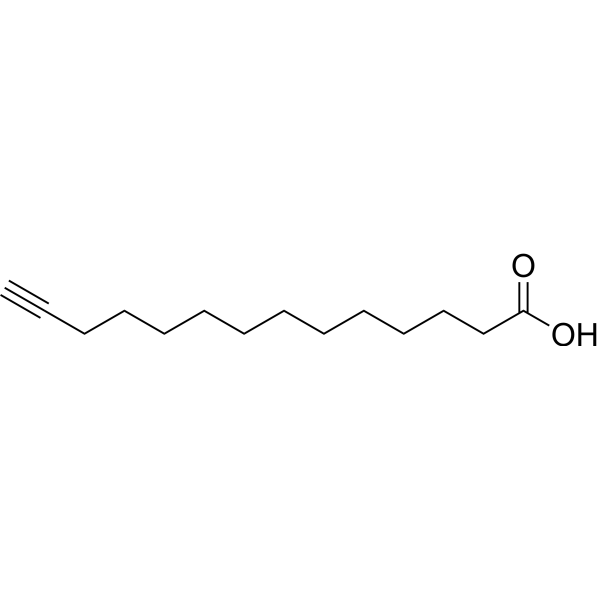
Alkynyl myristic acidPROTAC Linkers -
HY-129832
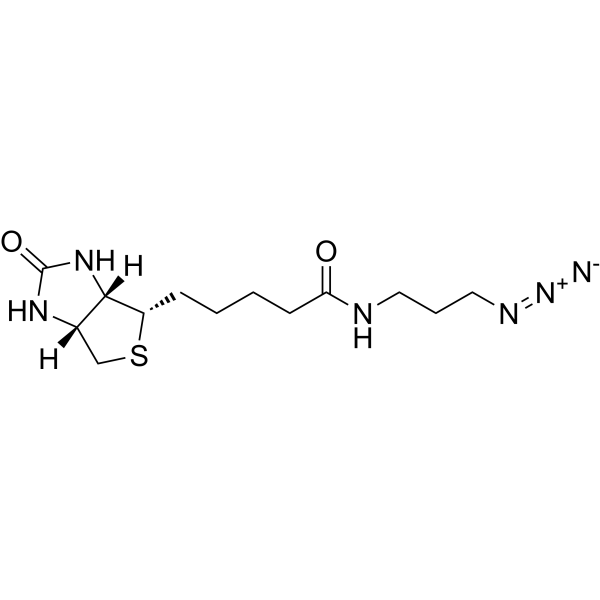
Biotin-azideClick Chemical Reagent -
HY-116677
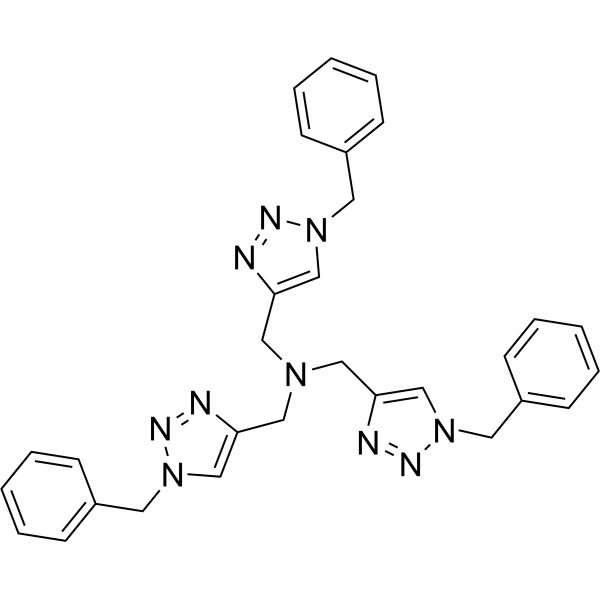
Tris(benzyltriazolylmethyl)amineBiochemical Tool -
HY-W011500
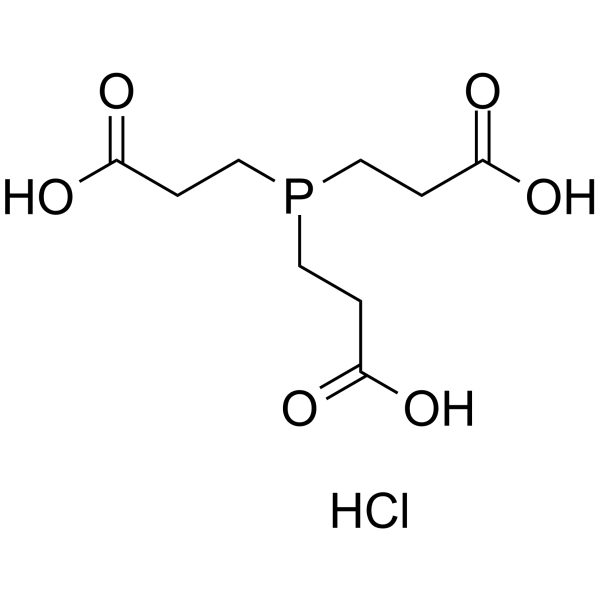
TCEP hydrochlorideNon-Thiol Reducing Agent -
HY-101016
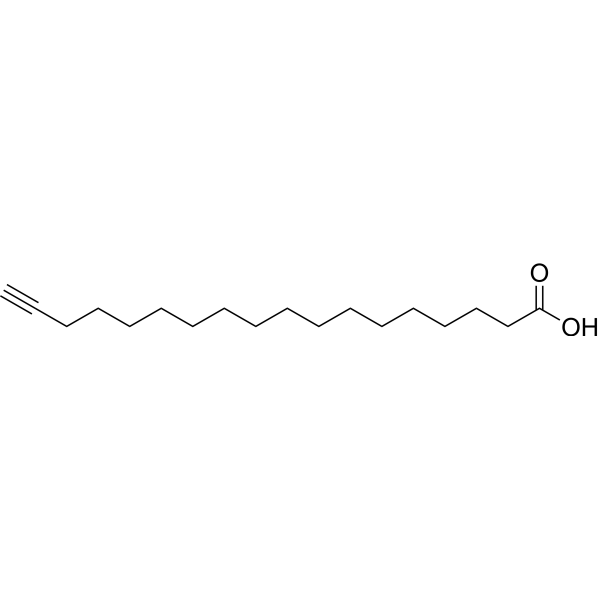
17-ODYACYP450 ω-Hydroxylase Inhibitor -
HY-151857
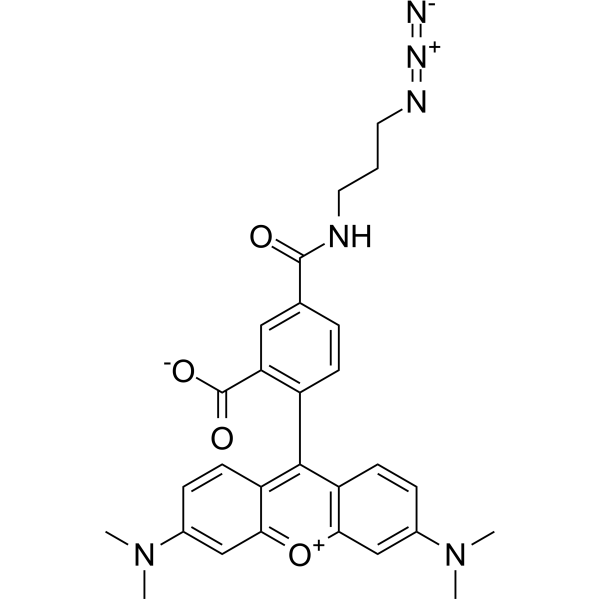
TAMRA azide, 5-isomerAzide Compound -
HY-118411
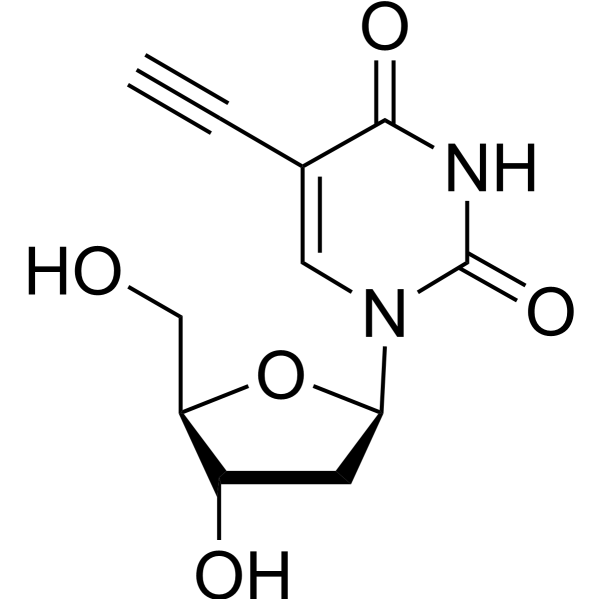
5-Ethynyl-2'-deoxyuridinePROTAC Linkers -
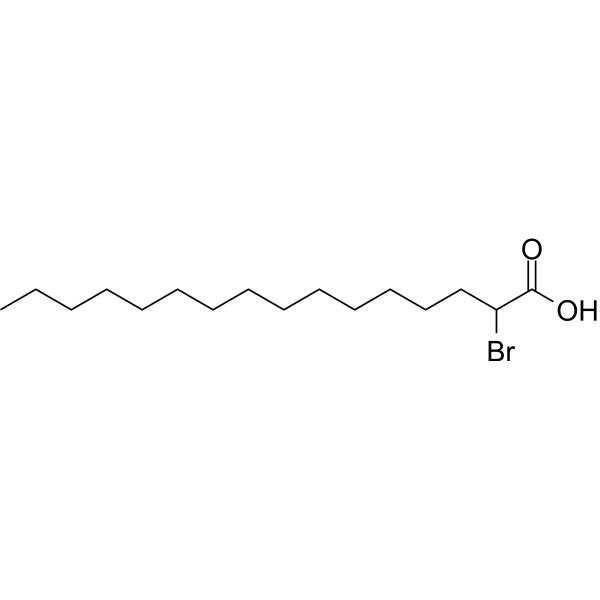
HY-111770
2-Bromohexadecanoic acidPyroptosis Inhibitor -

HY-Y1878C
Copper sulfate anhydrous, 99%Bactericide -
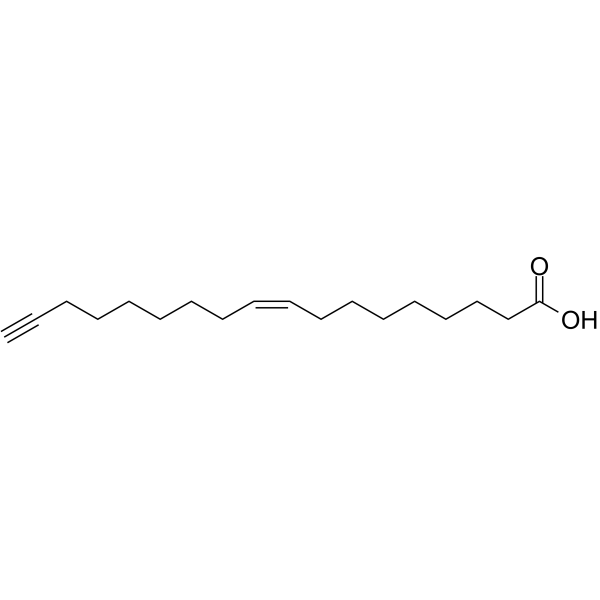
HY-127112
Oleic acid alkyneOleic Acid Analog -
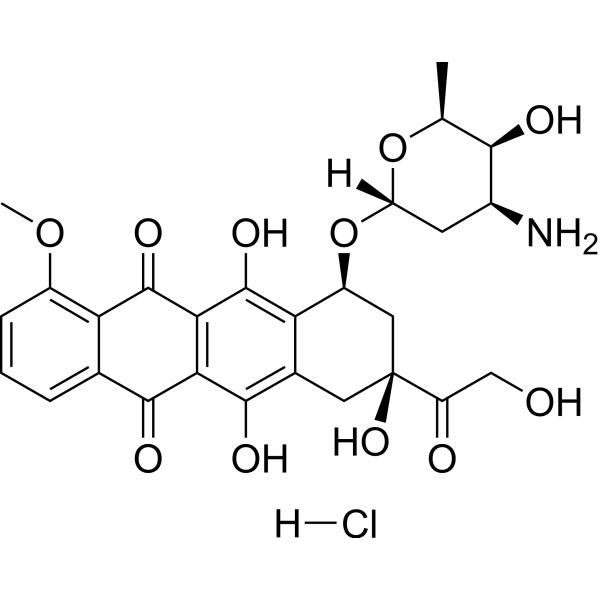
HY-15142
Doxorubicin hydrochlorideTopoisomerase Inhibitor -
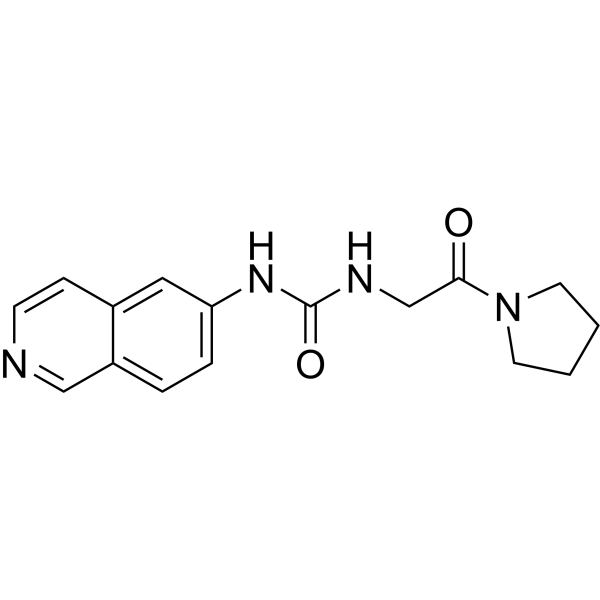
HY-19715
SGC707PRMT3 Inhibitor
Publications Citing Use of MedChemExpress (MCE) Alkynyl Palmitic Acid
More Customer Validation & Images

-
WB
-
WB
-
WB
-
WB
-
WB
All PROTAC Linkers Isoforms
More

Biological Activity
Description
IC50 & Target
|
Alkyl-Chain |
In Vitro
PROTACs contain two different ligands connected by a linker; one is a ligand for an E3 ubiquitin ligase and the other is for the target protein. PROTACs exploit the intracellular ubiquitin-proteasome system to selectively degrade target proteins[1].
MedChemExpress (MCE) has not independently confirmed the accuracy of these methods. They are for reference only. Further protocols information, click here.


Chemical Information
-
CAS No. 99208-90-9
-
Appearance Solid
-
Molecular Weight 252.39
-
Formula C16H28O2
-
Color White to off-white
-
SMILES
C#CCCCCCCCCCCCCCC(O)=O
-
Synonyms
Alk-C16
-
Shipping
Room temperature in continental US; may vary elsewhere.
-
Storage
Powder -20°C 3 years In solvent -80°C 6 months -20°C 1 month


Publications (3)
-
Journal Impact Factor
-
Most Recent
-
Adv Sci (Weinh)
Iron Overload Mediates the Differential Cell Fate of Astrocytes from Neurons and Its Regulatory Mechanisms in Ischemic Stroke. [Abstract]2025 Nov 6:e07384. PMID: 41195589 -
J Virol
Palmitoylation enhances the stability of porcine epidemic diarrhea virus spike protein by antagonizing its degradation via chaperone-mediated autophagy to facilitate viral proliferation. [Abstract]2025 Jun 17;99(6):e0034725. PMID: 40401979
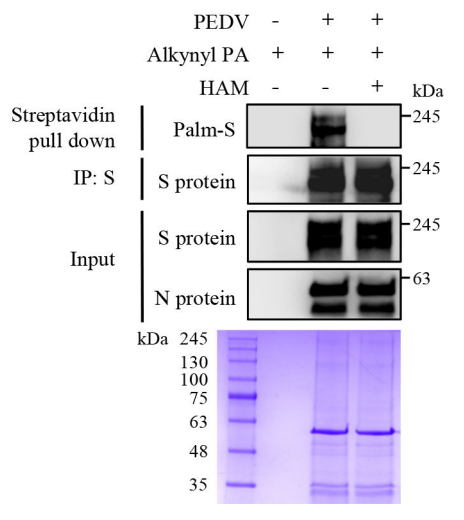
Alkynyl Palmitic Acid purchased from MedChemExpress. Usage Cited in: J Virol. 2025 Jun 17;99(6):e0034725. [Abstract]
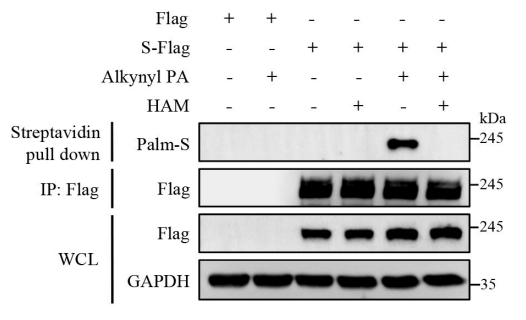
HEK-293T cells expressing PEDV S-Flag were labeled with Alkynyl Palmitic Acid (Alkynyl PA) (50 μM; 8 h), then subjected to IP, click chemistry (± HAM), streptavidin pull-down, and IB analysis.
Alkynyl Palmitic Acid purchased from MedChemExpress. Usage Cited in: J Virol. 2025 Jun 17;99(6):e0034725. [Abstract]
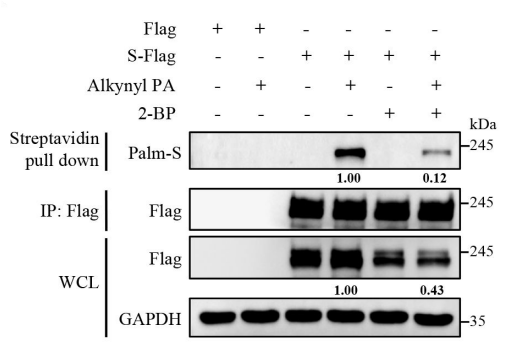
HEK-293T cells expressing PEDV S-Flag were treated with 40 µM 2-BP for 24 h, labeled with Alkynyl Palmitic Acid (Alkynyl PA) (50 μM; 8 h), then subjected to IP, click chemistry, streptavidin pull-down, and IB analysis.
Alkynyl Palmitic Acid purchased from MedChemExpress. Usage Cited in: J Virol. 2025 Jun 17;99(6):e0034725. [Abstract]
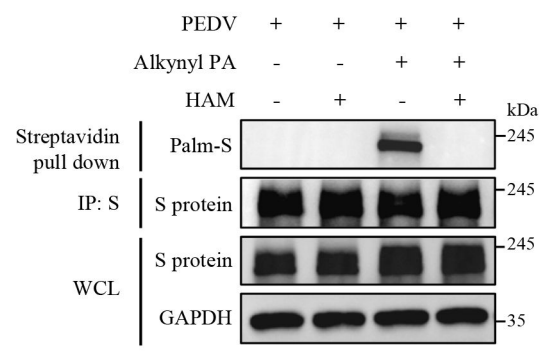
Vero cells were infected with PEDV (MOI=0.05) for 12 h, then metabolically labeled with Alkynyl Palmitic Acid (Alkynyl PA) (50 μM; 8 h). Cell lysates were immunoprecipitated with anti-PEDV S mAb and protein G beads, subjected to click chemistry (± HAM), eluted with glycine-HCl, pulled down with streptavidin beads, and analyzed by IB.
Alkynyl Palmitic Acid purchased from MedChemExpress. Usage Cited in: J Virol. 2025 Jun 17;99(6):e0034725. [Abstract]
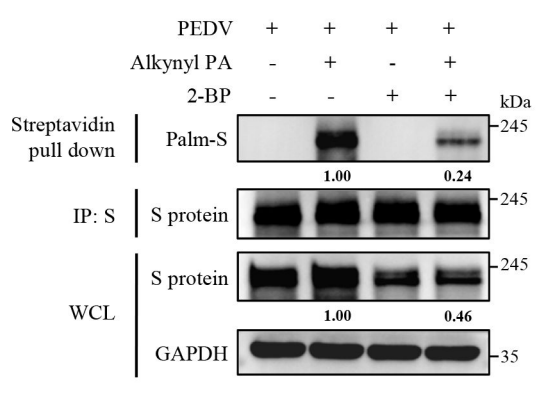
Vero cells were infected with PEDV (MOI=0.05) for 12 h, treated with or without 6 µM 2-BP, then metabolically labeled with Alkynyl Palmitic Acid (Alkynyl PA) (50 μM; 8 h), subjected to IP, click chemistry, streptavidin pull-down, and IB analysis.
Alkynyl Palmitic Acid purchased from MedChemExpress. Usage Cited in: J Virol. 2025 Jun 17;99(6):e0034725. [Abstract]
Vero cells were infected with PEDV (MOI=0.05) for 12 h, then metabolically labeled with Alkynyl Palmitic Acid (Alkynyl PA) (50 μM; 8 h). Mature virions were purified from the supernatant by sucrose gradient ultracentrifugation, then subjected to IP, click chemistry (± HAM), streptavidin pull-down, and IB analysis.
-
J Immunol
Palmitoylation of NLRP3 Modulates Inflammasome Activation and Inflammatory Bowel Disease Development. [Abstract]2024 Aug 15;213(4):481-493. PMID: 38949555


Solvent & Solubility
In Vitro:
DMSO : 100 mg/mL (396.21 mM; Need ultrasonic; Hygroscopic DMSO has a significant impact on the solubility of product, please use newly opened DMSO)
Ethanol : 50 mg/mL (198.11 mM; Need ultrasonic)
Please refer to the solubility information to select the appropriate solvent. Once prepared, please aliquot and store the solution to prevent product inactivation from repeated freeze-thaw cycles.
Storage method and period of stock solution: -80°C, 6 months; -20°C, 1 month. When stored at -80°C, please use it within 6 months. When stored at -20°C, please use it within 1 month.
Please refer to the solubility information to select the appropriate solvent. Once prepared, please aliquot and store the solution to prevent product inactivation from repeated freeze-thaw cycles.
Storage method and period of stock solution: -80°C, 6 months; -20°C, 1 month. When stored at -80°C, please use it within 6 months. When stored at -20°C, please use it within 1 month.
Concentration (start) × Volume (start) = Concentration (final) × Volume (final)
In Vivo:
Select the appropriate dissolution method based on your experimental animal and administration route.
- For the following dissolution methods, please ensure to first prepare a clear stock solution using an In Vitro approach and then sequentially add co-solvents:
- To ensure reliable experimental results, the clarified stock solution can be appropriately stored based on storage conditions. As for the working solution for In Vivo experiments, it is recommended to prepare freshly and use it on the same day.
- The percentages shown for the solvents indicate their volumetric ratio in the final prepared solution. If precipitation or phase separation occurs during preparation, heat and/or sonication can be used to aid dissolution.
Add each solvent one by one: 10% DMSO 40% PEG300 5% Tween-80 45% Saline
Solubility: 2.5 mg/mL (9.91 mM); Suspended solution; Need ultrasonic
This protocol yields a suspended solution of 2.5 mg/mL. Suspended solution can be used for oral and intraperitoneal injection.
Taking 1 mL working solution as an example, add 100 μL DMSO stock solution (25.0 mg/mL) to 400 μL PEG300, and mix evenly; then add 50 μL Tween-80 and mix evenly; then add 450 μL Saline to adjust the volume to 1 mL.
Preparation of Saline: Dissolve 0.9 g sodium chloride in ddH₂O and dilute to 100 mL to obtain a clear Saline solution.
Add each solvent one by one: 10% DMSO 90% (20% SBE-β-CD in Saline)
Solubility: 2.5 mg/mL (9.91 mM); Suspended solution; Need ultrasonic
This protocol yields a suspended solution of 2.5 mg/mL. Suspended solution can be used for oral and intraperitoneal injection.
Taking 1 mL working solution as an example, add 100 μL DMSO stock solution (25.0 mg/mL) to 900 μL 20% SBE-β-CD in Saline, and mix evenly.
Preparation of 20% SBE-β-CD in Saline (4°C, storage for one week): 2 g SBE-β-CD powder is dissolved in 10 mL Saline, completely dissolve until clear.
In Vivo Dissolution Calculator
Please enter the basic information of animal experiments:
-
-
-
-
Recommended: Prepare an additional quantity of animals to account for potential losses during experiments.
Please enter your animal formula composition:
-
%DMSO +
Recommended: Keep the proportion of DMSO in working solution below 2% if your animal is weak.
-
%+
-
+%Tween-80 + +
-
%Saline +
The co-solvents required include: DMSO, . All of co-solvents are available by MedChemExpress (MCE). , Tween 80. All of co-solvents are available by MedChemExpress (MCE).
Working solution concentration: 0.22 mg/mL
Method for preparing stock solution: mg drug dissolved in μL DMSO. Stock solution concentration: mg/mL.
1. Take μL DMSO stock solution;
2. Add μL .
μL , mix evenly;
3. Then add μL Tween 80, mix evenly;
4. Then add μL
Please ensure that the stock solution in the first step is dissolved to a clear state, and add co-solvents in sequence. You can use ultrasonic heating (ultrasonic cleaner, recommended frequency 20-40 kHz), vortexing, etc. to assist dissolution.

Protocols
-
EdU Incorporation Assay (Click Chemistry-Based DNA Synthesis Measurement)
The EdU incorporation assay measures DNA synthesis by adding the thymidine analog 5-ethynyl-2′-deoxyuridine to cells or tissues, where it is incorporated into newly synthesized DNA during S phase. Incorporated EdU is detected by copper-catalyzed azide-alkyne cycloaddition, in which a fluorescent azide covalently reacts with the ethynyl group on EdU, allowing S-phase cells to be detected by fluorescence microscopy, flow cytometry, or high-content imaging. EdU detection does not require DNA denaturation or anti-BrdU antibody access, which preserves sample structure and improves compatibility with immunostaining and multiparameter cytometry compared with BrdU-based detection. EdU can be cytotoxic in a cell-type- and exposure-dependent manner, so pulse duration, concentration, and continuous-labeling designs should be validated for each cell type.


Purity & Documentation
-
Data Sheet (267 KB)
-
SDS (396 KB)
- English - EN (396 KB)
- Français - FR (396 KB)
- Deutsch - DE (396 KB)
- Norwegian - NO (396 KB)
- Español - ES (396 KB)
- Swedish - SV (396 KB)
- Italian - IT (396 KB)
- Korean - KR (396 KB)
- Portuguese - PT (396 KB)
-
Handling Instructions (2659 KB)
References


Complete Stock Solution Preparation Table
Please refer to the solubility information to select the appropriate solvent. Once prepared, please aliquot and store the solution to prevent product inactivation from repeated freeze-thaw cycles.
Storage method and period of stock solution: -80°C, 6 months; -20°C, 1 month. When stored at -80°C, please use it within 6 months. When stored at -20°C, please use it within 1 month.
| Optional Solvent | Concentration Solvent Mass | 1 mg | 5 mg | 10 mg | 25 mg |
|---|---|---|---|---|---|
| Ethanol / DMSO | 1 mM | 3.9621 mL | 19.8106 mL | 39.6212 mL | 99.0531 mL |
| 5 mM | 0.7924 mL | 3.9621 mL | 7.9242 mL | 19.8106 mL | |
| 10 mM | 0.3962 mL | 1.9811 mL | 3.9621 mL | 9.9053 mL | |
| 15 mM | 0.2641 mL | 1.3207 mL | 2.6414 mL | 6.6035 mL | |
| 20 mM | 0.1981 mL | 0.9905 mL | 1.9811 mL | 4.9527 mL | |
| 25 mM | 0.1585 mL | 0.7924 mL | 1.5848 mL | 3.9621 mL | |
| 30 mM | 0.1321 mL | 0.6604 mL | 1.3207 mL | 3.3018 mL | |
| 40 mM | 0.0991 mL | 0.4953 mL | 0.9905 mL | 2.4763 mL | |
| 50 mM | 0.0792 mL | 0.3962 mL | 0.7924 mL | 1.9811 mL | |
| 60 mM | 0.0660 mL | 0.3302 mL | 0.6604 mL | 1.6509 mL | |
| 80 mM | 0.0495 mL | 0.2476 mL | 0.4953 mL | 1.2382 mL | |
| 100 mM | 0.0396 mL | 0.1981 mL | 0.3962 mL | 0.9905 mL |


Alkynyl Palmitic Acid Related Classifications
HY-W040304 Related Classifications
 Powered by Bioz