



TGN-020
Based on 26 publication(s) in Google Scholar
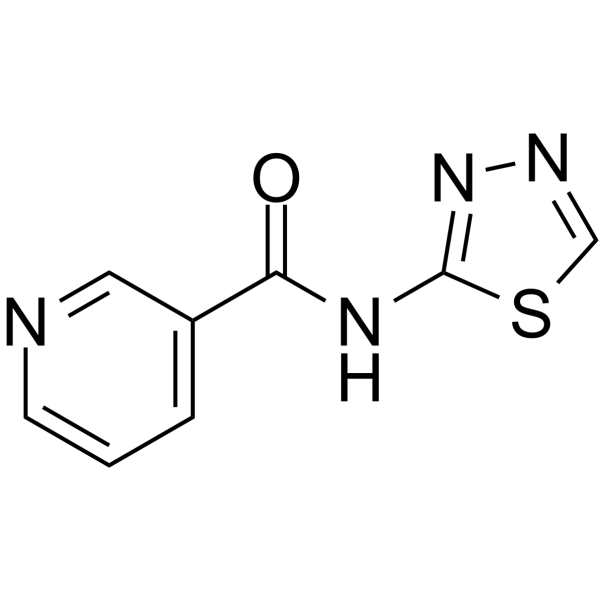
TGN-020 is a selective Aquaporin 4 (AQP4) inhibitor with an IC50 of 3.1 μM. TGN-020 is an alkyl chain-based PROTAC linker that can be used in the synthesis of PROTACs.TGN-020 alleviates edema and inhibits glial scar formation after spinal cord compression injury in rats.
For research use only. We do not sell to patients.
- Purity : 99.97%
- CAS No.: 51987-99-6
- Formula: C8H6N4OS
- Molecular Weight:206.23
-
Storage:
Store at room temperature 3 years.
In solvent -80°C, 2 years , -20°C, 1 year

To place orders, for customer services and technical support, please contact: MedChemExpress USA
Tel: 609-228-6898 E-mail: [email protected] [email protected]


-
 Biological Activity
-
Chemical Information
-
Solvent & Solubility
- Purity & Documentation
- References
-
 Help & FAQs


-
HY-17031
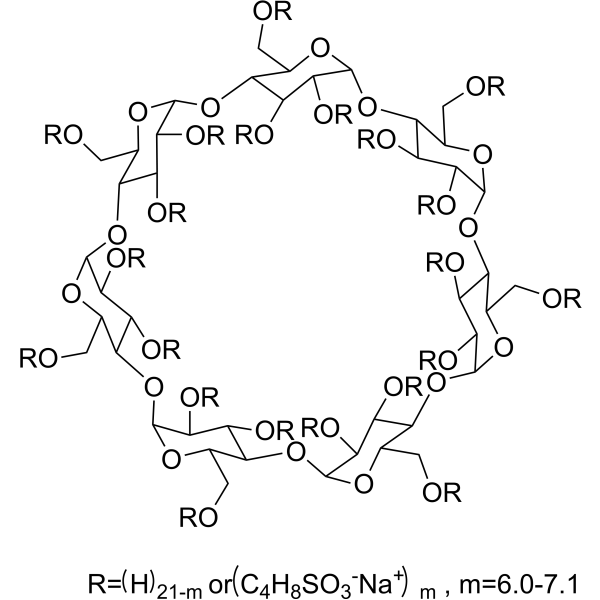
SBE-β-CDExcipient -
HY-126073
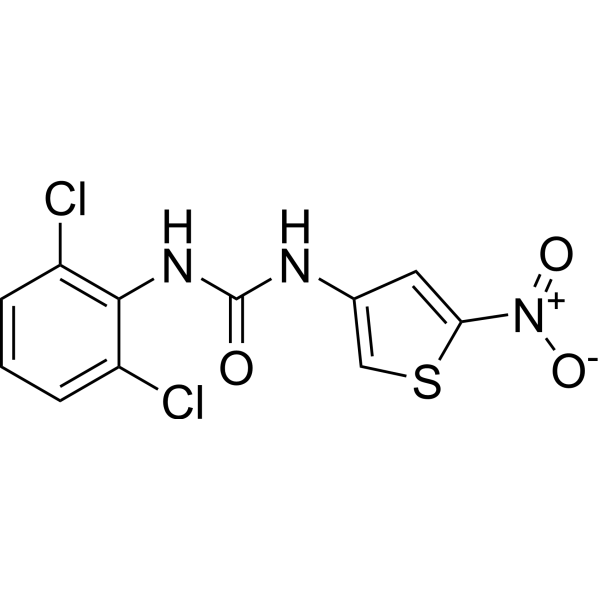
DFP00173AQP3 Inhibitor -
HY-110200
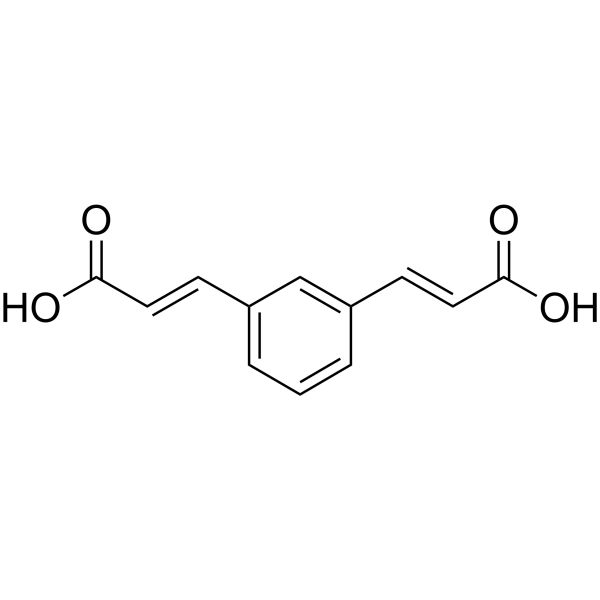
TC AQP1 1AQP1 Inhibitor -
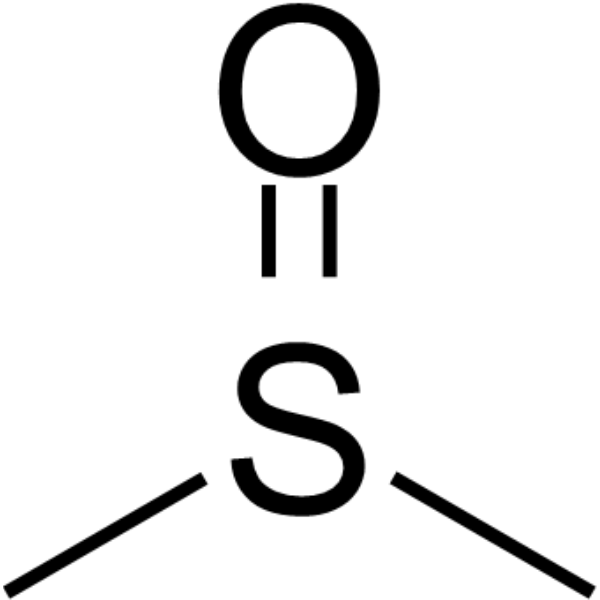
HY-Y0320
Dimethyl sulfoxide, meets analytical specification of Ch.P.Aprotic Solvent -
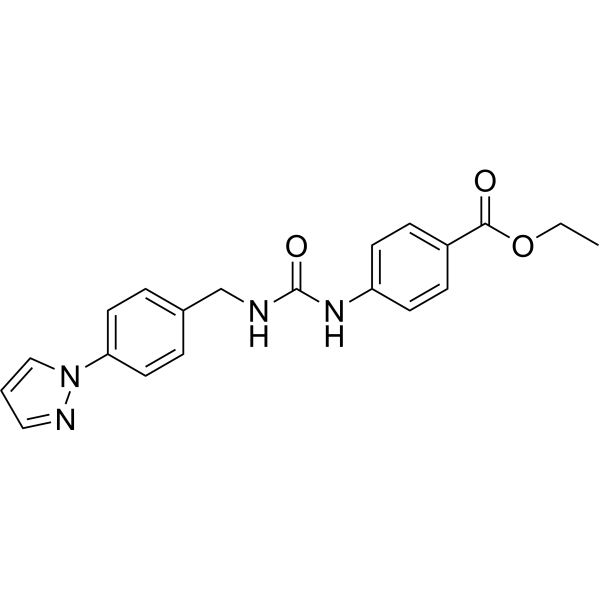
HY-126074
Z433927330AQP7 Inhibitor -

HY-Y1888
Corn oil -

HY-Y1890
Cremophor EL-40Surfactant -
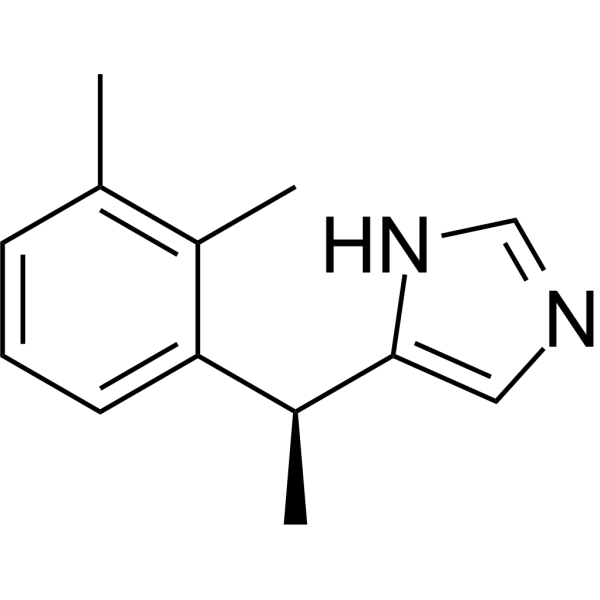
HY-12719
Dexmedetomidineα2-adrenoceptor Agonist -

HY-Y1891
Tween 80 -
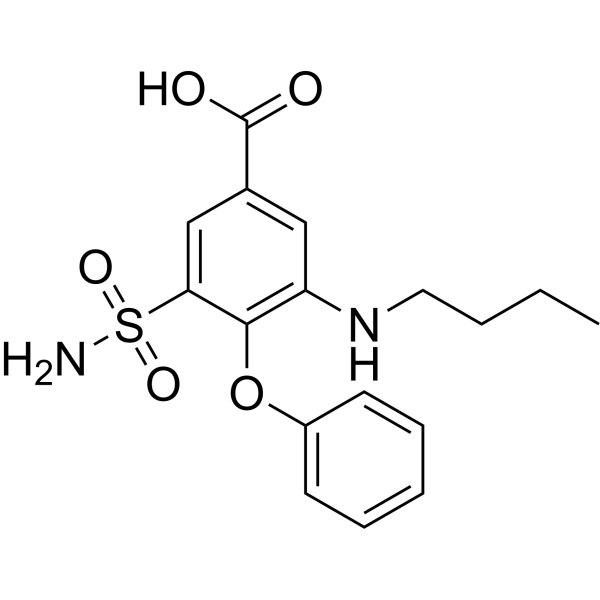
HY-17468
BumetanideNKCC1 Inhibitor -
HY-Y1889A
Sodium carboxymethyl cellulose (MW 250000)Anti-adhesion agent -
HY-P1471
Adrenomedullin (AM) (22-52), humanAdrenomedullin Receptor Antagonist
Publications Citing Use of MedChemExpress (MCE) TGN-020
More- ACS Nano. 2026 Aug 18;20(32):22505-22516.
- J Adv Res. 2025 May 20:S2090-1232(25)00316-9. [Abstract]
- J Adv Res. 2024 Feb:56:125-136. [Abstract]
- Adv Sci (Weinh). 2025 Oct 5:e03576. [Abstract]
- Brain Behav Immun. 2026 May 8:106797. [Abstract]
- Transl Psychiatry. 2023 Oct 6;13(1):310. [Abstract]
- Chin Med. 2023 Oct 10;18(1):128. [Abstract]
- Fluids Barriers CNS. 2025 Apr 14;22(1):37. [Abstract]
- Neurosci Bull. 2025 Nov 18. [Abstract]
- Neurosci Bull. 2022 Feb;38(2):181-199. [Abstract]
- CNS Neurosci Ther. 2025 Jan;31(1):e70140. [Abstract]
- Mol Neurobiol. 2025 Jan;62(1):1079-1093. [Abstract]
- Mol Neurobiol. 2024 Feb;61(2):1175-1186. [Abstract]
- Inflammation. 2025 Apr;48(2):713-729. [Abstract]
- Microchem J. 2026 May 1;225:118246.
- J Cereb Blood Flow Metab. 2024 Aug;44(8):1450-1466. [Abstract]
- Biochim Biophys Acta Mol Cell Res. 2024 Oct 21;1872(1):119866. [Abstract]
- Dis Model Mech. 2023 Oct 1;16(10):dmm050206. [Abstract]
- Neuroscience. 2023 Sep 15:528:64-74. [Abstract]
- Behav Brain Res. 2024 Oct 18:475:115220. [Abstract]
- Photodiagnosis Photodyn Ther. 2024 Dec:50:104364. [Abstract]
- J Stroke Cerebrovasc Dis. 2022 Aug;31(8):106570. [Abstract]
- Res Sq. 2026 Jun 13.
- Res Sq. 2026 Apr 29.
- SSRN. 2025 Dec 9.
- SSRN. 2025 Nov 11.
 Customer Validation & Images

-
In Vivo Efficacy Study
-
Histological Imaging/Staining
-
WB
-
WB
-
IF
All PROTAC Linkers Isoforms
More

Biological Activity
Description
IC50 & Target
|
Alkyl-Chain |
Cellular Effect
|
Cell Line

|
Type | Value | Description | References |
|---|---|---|---|---|
| Oocyte | IC50 |
3.1 μM
Compound: 9
|
Inhibition of human aquaporin 4 M23 isoform expressed in Xenopus laevis oocytes
Inhibition of human aquaporin 4 M23 isoform expressed in Xenopus laevis oocytes
|
[PMID: 18182301] |
In Vitro
PROTACs contain two different ligands connected by a linker; one is a ligand for an E3 ubiquitin ligase and the other is for the target protein. PROTACs exploit the intracellular ubiquitin-proteasome system to selectively degrade target proteins[3].
MedChemExpress (MCE) has not independently confirmed the accuracy of these methods. They are for reference only.
In Vivo
TGN-020 (100 mg/kg; ip; single dose immediately followed SCI) promotes functional recovery at days 3, 7, 14, 21, and 28, as well as reduces the degree of edema and inhibits the expression of AQP4, GFAP, PCNA at days 3 after SCI. TGN-020 inhibits the glial scar formation and upregulates GAP-43 expression in adult female Sprague-Dawley rats (180-220 g, 9-10 weeks old) with SCI[4].
MedChemExpress (MCE) has not independently confirmed the accuracy of these methods. They are for reference only.


Chemical Information
-
CAS No. 51987-99-6
-
Appearance Solid
-
Molecular Weight 206.23
-
Formula C8H6N4OS
-
Color White to off-white
-
SMILES
O=C(C1=CC=CN=C1)NC2=NN=CS2
-
Shipping
Room temperature in continental US; may vary elsewhere.
-
Storage
Store at room temperature 3 years
In solvent -80°C 2 years -20°C 1 year


Publications (26)
-
Journal Impact Factor
-
Most Recent
-
-
J Adv Res
Aquaporin 4 and its isoforms regulation ameliorate AQP4 Mis-localization-induced glymphatic dysfunction in ischemic stroke. [Abstract]2025 May 20:S2090-1232(25)00316-9. PMID: 40403843
TGN-020 purchased from MedChemExpress. Usage Cited in: J Adv Res. 2025 May 20:S2090-1232(25)00316-9. [Abstract]
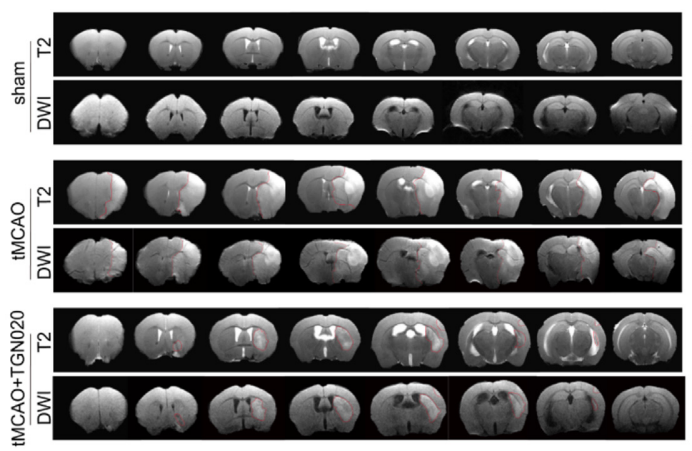
TGN-020 (0.1 mg/20 g, administered via intraperitoneal injection every 12 h). Representative T2WI and DWI images of three distinct mouse groups.
TGN-020 purchased from MedChemExpress. Usage Cited in: J Adv Res. 2025 May 20:S2090-1232(25)00316-9. [Abstract]
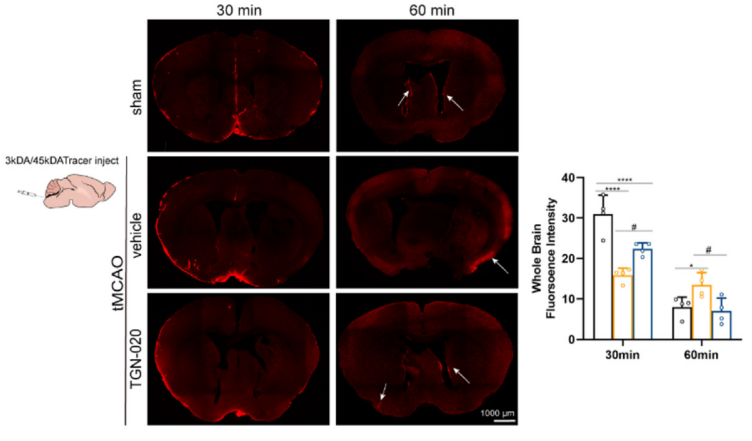
Schematic of intracerebral injection procedure in mice. Representative fluorescence microscopy images show Ovalbumin (45-kDa, red) inflow into CSF at 30- and 60-minute. The white arrow indicates the residual tracer deposition. Scale bar: 1000 μm. Quantification of Ovalbumin inflow at 30- and 60-minute in brain sections (n = 4 mice per group).
TGN-020 purchased from MedChemExpress. Usage Cited in: J Adv Res. 2025 May 20:S2090-1232(25)00316-9. [Abstract]
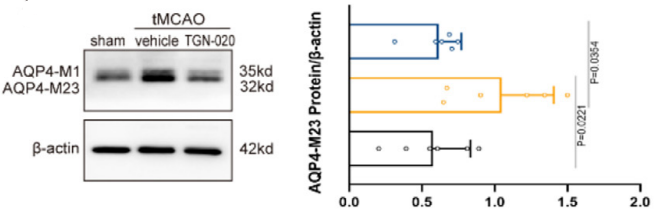
TGN-020 (0.1 mg/20 g, administered via intraperitoneal injection every 12 h). Representative Western blot bands and densitometric quantification of AQP4-M1 and AQP4-M23 in the peri-infarction area (n = 6 per group).
-
J Adv Res
Matrix metalloproteinase-9 inhibition prevents aquaporin-4 depolarization-mediated glymphatic dysfunction in Parkinson's disease. [Abstract]2024 Feb:56:125-136. PMID: 36940850
TGN-020 purchased from MedChemExpress. Usage Cited in: J Adv Res. 2024 Feb:56:125-136. [Abstract]
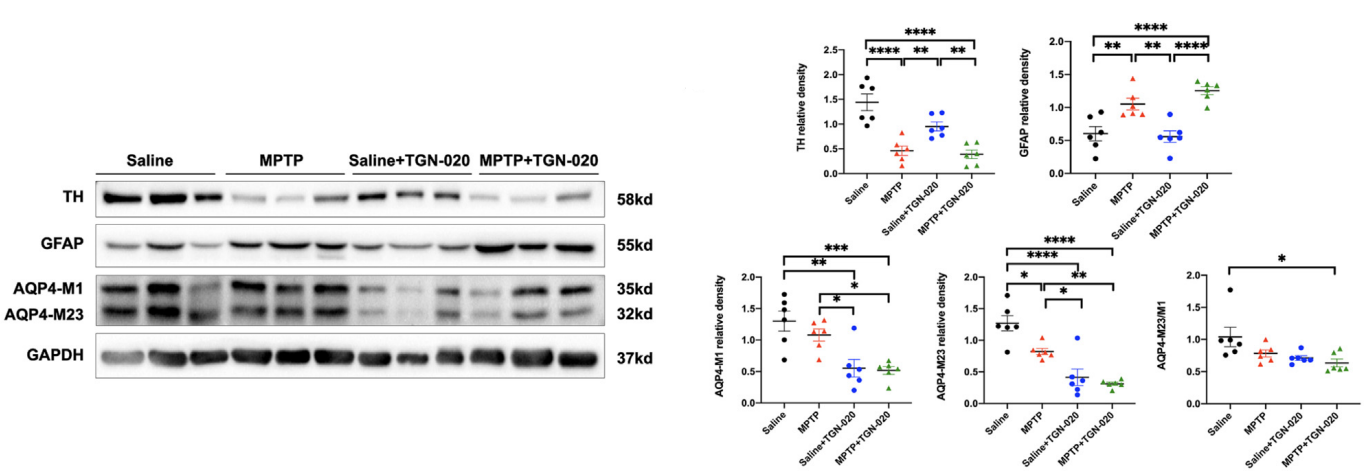
TGN-020 (100 mg/kg, i.p.,on the third day) Representative immunoblot bands and densitometric quantification of TH, GFAP, AQP4-M1, AQP4-M23, and AQP4-M23/M1 (n = 6 per group).
TGN-020 purchased from MedChemExpress. Usage Cited in: J Adv Res. 2024 Feb:56:125-136. [Abstract]
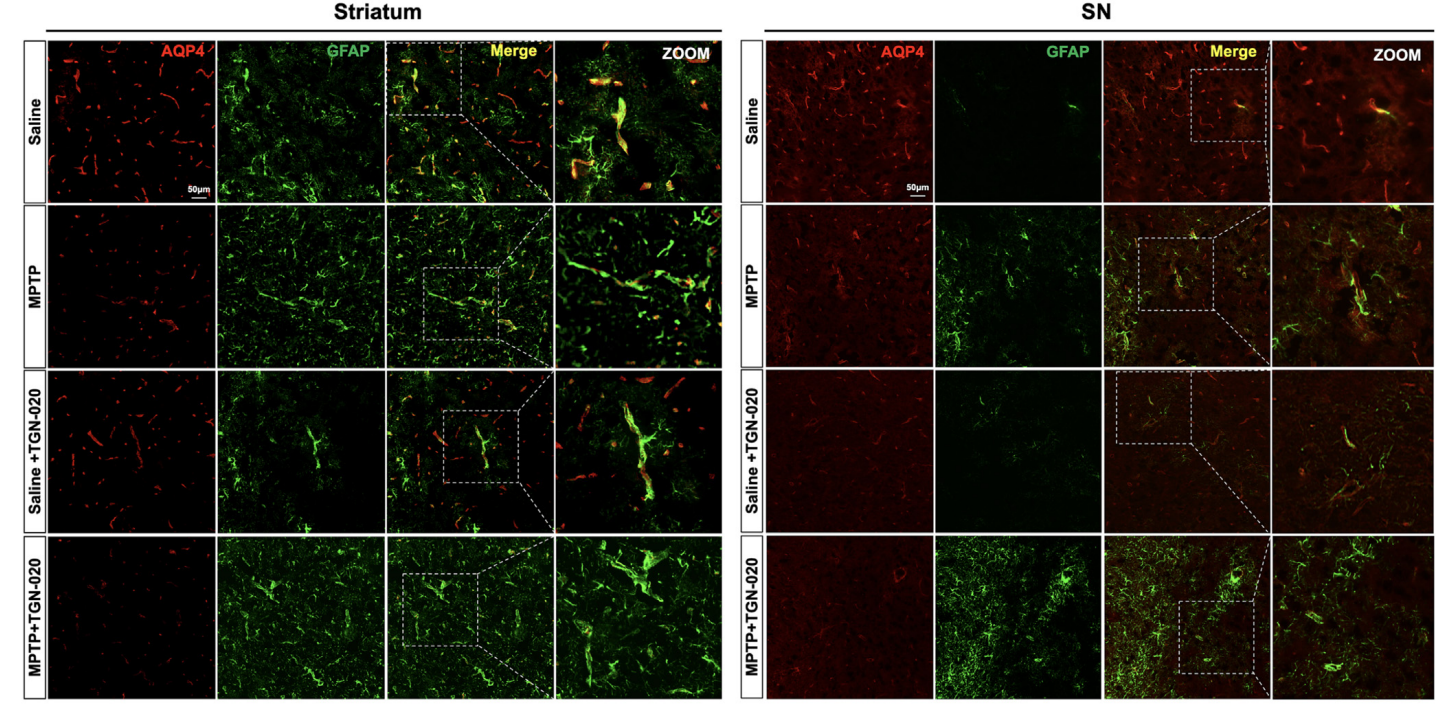
TGN-020 (100 mg/kg, i.p., on the third day).Representative 20 × magnification immunofluorescence images of AQP4 (red) and GFAP (green) in the striatum and SN. White dotted squares show the colocalization of AQP4 with astrocyte endfeet.
TGN-020 purchased from MedChemExpress. Usage Cited in: J Adv Res. 2024 Feb:56:125-136. [Abstract]
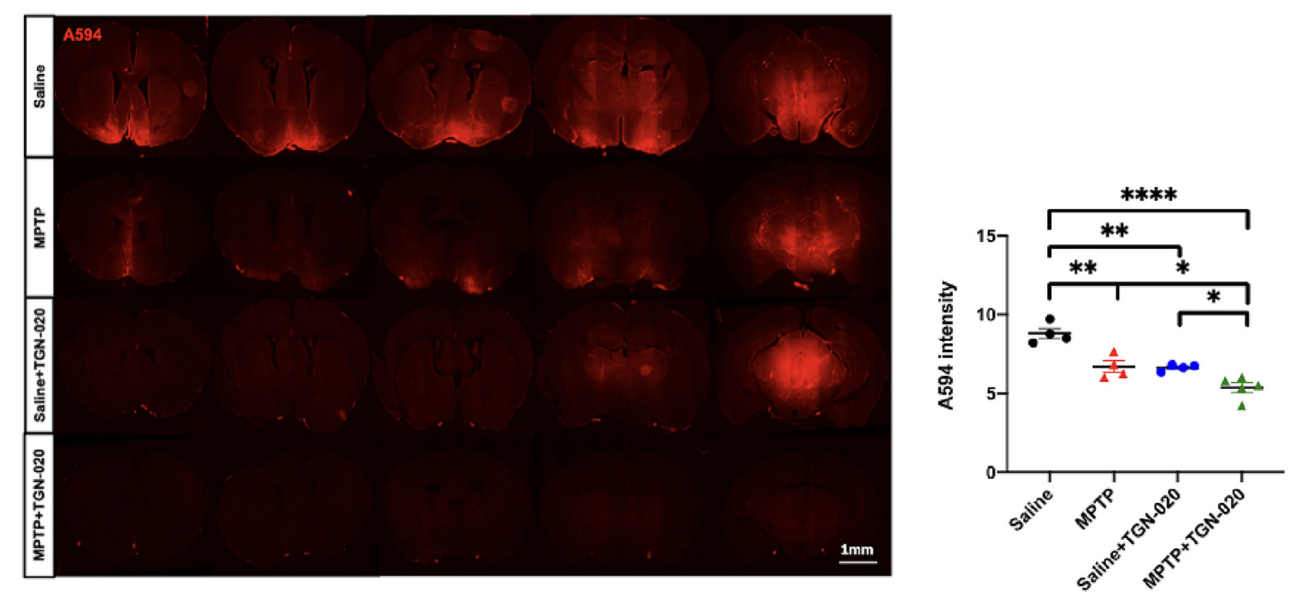
Quantification of the mean intensity of A594 penetration into the whole brain parenchyma in both Saline and MPTP groups after inhibition of TGN-020 (100 mg/kg, i.p., on the third day) (n = 4–5 per group).
-
Adv Sci (Weinh)
2025 Oct 5:e03576. PMID: 41047470 -
Brain Behav Immun
Role of AQP4 mediated glymphatic system dysfunction in postoperative neuroinflammation and cognitive dysfunction. [Abstract]2026 May 8:106797. PMID: 42107812 -
Transl Psychiatry
Melatonin alleviates depression-like behaviors and cognitive dysfunction in mice by regulating the circadian rhythm of AQP4 polarization. [Abstract]2023 Oct 6;13(1):310. PMID: 37802998 -
Chin Med
Isoforskolin modulates AQP4-SPP1-PIK3C3 related pathway for chronic obstructive pulmonary disease via cAMP signaling. [Abstract]2023 Oct 10;18(1):128. PMID: 37817209 -
Fluids Barriers CNS
Reactive astrocyte-derived exosomes enhance intracranial lymphatic drainage in mice after intracranial hemorrhage. [Abstract]2025 Apr 14;22(1):37. PMID: 40229887 -
Neurosci Bull
Agomelatine Targets Aquaporin-4 Polarization to Rescue Glymphatic Dysfunction in Parkinson's Disease. [Abstract]2025 Nov 18. PMID: 41251938 -
Neurosci Bull
Digoxin Ameliorates Glymphatic Transport and Cognitive Impairment in a Mouse Model of Chronic Cerebral Hypoperfusion. [Abstract]2022 Feb;38(2):181-199. PMID: 34704235 -
CNS Neurosci Ther
2025 Jan;31(1):e70140. PMID: 39853935 -
Mol Neurobiol
2025 Jan;62(1):1079-1093. PMID: 38958889 -
Mol Neurobiol
TGN-020 Alleviate Inflammation and Apoptosis After Cerebral Ischemia-Reperfusion Injury in Mice Through Glymphatic and ERK1/2 Signaling Pathway. [Abstract]2024 Feb;61(2):1175-1186. PMID: 37695472 -
Inflammation
Neuroprotective Effects of AER-271 in a tMCAO Mouse Model: Modulation of Autophagy, Apoptosis, and Inflammation. [Abstract]2025 Apr;48(2):713-729. PMID: 39117789 -
-
J Cereb Blood Flow Metab
Long-term isoflurane anesthesia induces cognitive deficits via AQP4 depolarization mediated blunted glymphatic inflammatory proteins clearance. [Abstract]2024 Aug;44(8):1450-1466. PMID: 38443763 -
Biochim Biophys Acta Mol Cell Res
Involvement of aquaporins in Shiga toxin-induced swelling and water transport dysfunction in human renal microvascular endothelial cells. [Abstract]2024 Oct 21;1872(1):119866. PMID: 39442808 -
Dis Model Mech
Glycosphingolipids are linked to elevated neurotransmission and neurodegeneration in a Drosophila model of Niemann Pick type C. [Abstract]2023 Oct 1;16(10):dmm050206. PMID: 37815467 -
Neuroscience
2023 Sep 15:528:64-74. PMID: 37516436 -
Behav Brain Res
AQP4 is upregulated in schizophrenia and Its inhibition attenuates MK-801-induced schizophrenia-like behaviors in mice. [Abstract]2024 Oct 18:475:115220. PMID: 39214422 -
Photodiagnosis Photodyn Ther
Photobiomodulation reduces spinal cord edema by decreasing the expression of AQP4 in the astrocytes of male spinal cord injury rats via the JAK2/STAT3 signaling pathway. [Abstract]2024 Dec:50:104364. PMID: 39401645 -
J Stroke Cerebrovasc Dis
Downregulation of NF-κB by Shp-1 Alleviates Cerebral Venous Sinus Thrombosis-Induced Brain Edema Via Suppression of AQP4. [Abstract]2022 Aug;31(8):106570. PMID: 35636226 -
-
-
-


Solvent & Solubility
In Vitro:
DMSO : 16.67 mg/mL (80.83 mM; Need ultrasonic; Hygroscopic DMSO has a significant impact on the solubility of product, please use newly opened DMSO)
Please refer to the solubility information to select the appropriate solvent. Once prepared, please aliquot and store the solution to prevent product inactivation from repeated freeze-thaw cycles.
Storage method and period of stock solution: -80°C, 2 years; -20°C, 1 year. When stored at -80°C, please use it within 2 years. When stored at -20°C, please use it within 1 year.
Please refer to the solubility information to select the appropriate solvent. Once prepared, please aliquot and store the solution to prevent product inactivation from repeated freeze-thaw cycles.
Storage method and period of stock solution: -80°C, 2 years; -20°C, 1 year. When stored at -80°C, please use it within 2 years. When stored at -20°C, please use it within 1 year.
Concentration (start) × Volume (start) = Concentration (final) × Volume (final)
In Vivo:
Select the appropriate dissolution method based on your experimental animal and administration route.
- For the following dissolution methods, please ensure to first prepare a clear stock solution using an In Vitro approach and then sequentially add co-solvents:
- To ensure reliable experimental results, the clarified stock solution can be appropriately stored based on storage conditions. As for the working solution for In Vivo experiments, it is recommended to prepare freshly and use it on the same day.
- The percentages shown for the solvents indicate their volumetric ratio in the final prepared solution. If precipitation or phase separation occurs during preparation, heat and/or sonication can be used to aid dissolution.
For the following dissolution methods, please prepare the working solution directly:
It is recommended to prepare fresh solutions and use them promptly within a short period of time.
The percentages shown for the solvents indicate their volumetric ratio in the final prepared solution. If precipitation or phase separation occurs during preparation, heat and/or sonication can be used to aid dissolution.
Add each solvent one by one: 0.5% Methyl cellulose/0.5% Tween-80 in Saline water
Solubility: 5 mg/mL (24.24 mM); Suspended solution; Need ultrasonic
Add each solvent one by one: 15% Cremophor EL 85% Saline
Solubility: 25 mg/mL (121.22 mM); Suspended solution; Need ultrasonic
In Vivo Dissolution Calculator
Please enter the basic information of animal experiments:
-
-
-
-
Recommended: Prepare an additional quantity of animals to account for potential losses during experiments.
Please enter your animal formula composition:
-
%DMSO +
Recommended: Keep the proportion of DMSO in working solution below 2% if your animal is weak.
-
%+
-
+%Tween-80 + +
-
%Saline +
The co-solvents required include: DMSO, . All of co-solvents are available by MedChemExpress (MCE). , Tween 80. All of co-solvents are available by MedChemExpress (MCE).
Working solution concentration: 0.22 mg/mL
Method for preparing stock solution: mg drug dissolved in μL DMSO. Stock solution concentration: mg/mL.
1. Take μL DMSO stock solution;
2. Add μL .
μL , mix evenly;
3. Then add μL Tween 80, mix evenly;
4. Then add μL
Please ensure that the stock solution in the first step is dissolved to a clear state, and add co-solvents in sequence. You can use ultrasonic heating (ultrasonic cleaner, recommended frequency 20-40 kHz), vortexing, etc. to assist dissolution.


Purity & Documentation
-
Data Sheet (277 KB)
-
SDS (392 KB)
- English - EN (392 KB)
- Français - FR (392 KB)
- Deutsch - DE (392 KB)
- Norwegian - NO (392 KB)
- Español - ES (392 KB)
- Swedish - SV (392 KB)
- Italian - IT (392 KB)
- Korean - KR (392 KB)
- Portuguese - PT (392 KB)
-
Handling Instructions (2659 KB)
References
[1]. Vincent J Huber, et al. Identification of aquaporin 4 inhibitors using in vitro and in silico methods. Bioorg Med Chem. 2009 Jan 1;17(1):411-7. [Content Brief]
[2]. Shou Oosuka, et al. Effects of an Aquaporin 4 Inhibitor, TGN-020, on Murine Diabetic Retina. Int J Mol Sci. 2020 Mar 27;21(7):2324. [Content Brief]
[3]. An S, et al. Small-molecule PROTACs: An emerging and promising approach for the development of targeted therapy drugs. EBioMedicine. 2018 Oct;36:553-562 [Content Brief]
[4]. Jian Li, et al. TGN-020 alleviates edema and inhibits astrocyte activation and glial scar formation after spinal cord compression injury in rats. Life Sci. 2019 Apr 1;222:148-157. [Content Brief]


Complete Stock Solution Preparation Table
Please refer to the solubility information to select the appropriate solvent. Once prepared, please aliquot and store the solution to prevent product inactivation from repeated freeze-thaw cycles.
Storage method and period of stock solution: -80°C, 2 years; -20°C, 1 year. When stored at -80°C, please use it within 2 years. When stored at -20°C, please use it within 1 year.
| Optional Solvent | Concentration Solvent Mass | 1 mg | 5 mg | 10 mg | 25 mg |
|---|---|---|---|---|---|
| DMSO | 1 mM | 4.8490 mL | 24.2448 mL | 48.4896 mL | 121.2239 mL |
| 5 mM | 0.9698 mL | 4.8490 mL | 9.6979 mL | 24.2448 mL | |
| 10 mM | 0.4849 mL | 2.4245 mL | 4.8490 mL | 12.1224 mL | |
| 15 mM | 0.3233 mL | 1.6163 mL | 3.2326 mL | 8.0816 mL | |
| 20 mM | 0.2424 mL | 1.2122 mL | 2.4245 mL | 6.0612 mL | |
| 25 mM | 0.1940 mL | 0.9698 mL | 1.9396 mL | 4.8490 mL | |
| 30 mM | 0.1616 mL | 0.8082 mL | 1.6163 mL | 4.0408 mL | |
| 40 mM | 0.1212 mL | 0.6061 mL | 1.2122 mL | 3.0306 mL | |
| 50 mM | 0.0970 mL | 0.4849 mL | 0.9698 mL | 2.4245 mL | |
| 60 mM | 0.0808 mL | 0.4041 mL | 0.8082 mL | 2.0204 mL | |
| 80 mM | 0.0606 mL | 0.3031 mL | 0.6061 mL | 1.5153 mL |


TGN-020 Related Classifications
HY-W008574 Related Classifications
 Powered by Bioz